

The DOI matches its Crossref record; 142 of the 143 references it cites were found in a registry or an index, and 1 are not checked yet.
Microglial TYROBP/DAP12 in Alzheimer's Disease: Transduction of Physiological and Pathological Signals Across TREM2
Open accessAbstract
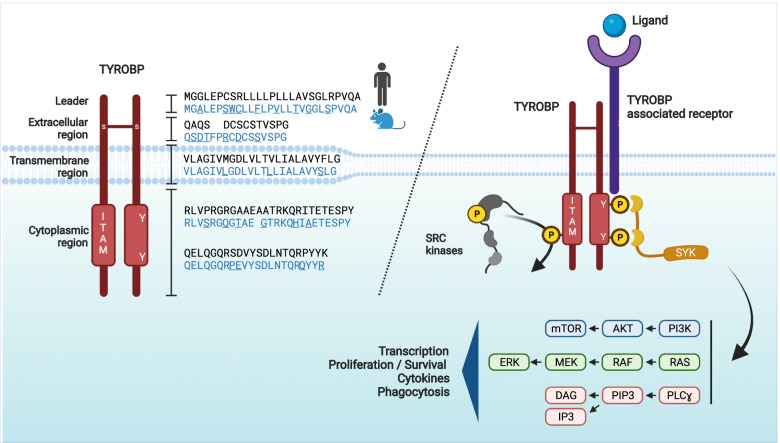
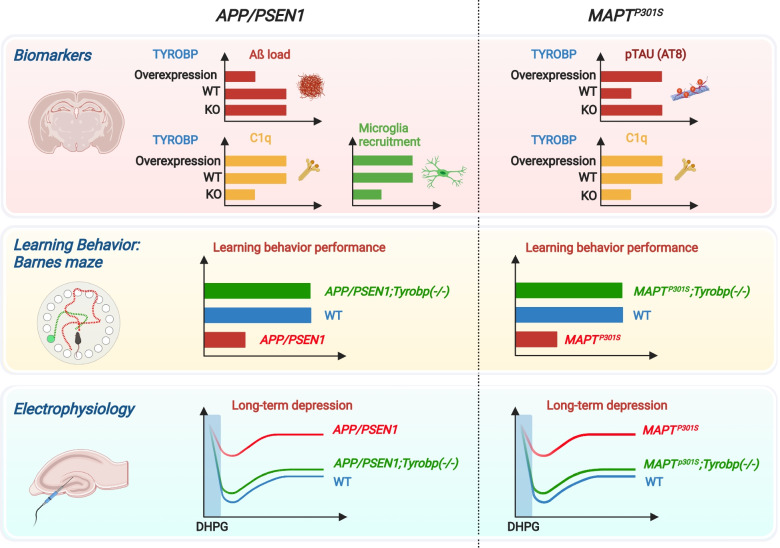
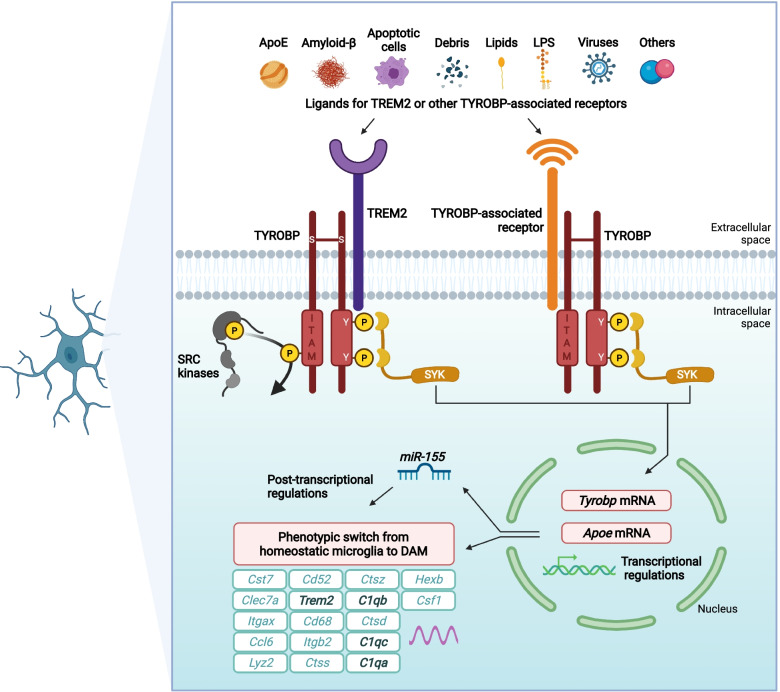
TYROBP (also known as DAP12 or KARAP) is a transmembrane adaptor protein initially described as a receptor-activating subunit component of natural killer (NK) cells. TYROBP is expressed in numerous cell types, including peripheral blood monocytes, macrophages, dendritic cells, and osteoclasts, but a key point of recent interest is related to the critical role played by TYROBP in the function of many receptors expressed on the plasma membrane of microglia. TYROBP is the downstream adaptor and putative signaling partner for several receptors implicated in Alzheimer’s disease (AD), including SIRP1β, CD33, CR3, and TREM2. TYROBP has received much of its current notoriety because of its importance in brain homeostasis by signal transduction across those receptors. In this review, we provide an overview of evidence indicating that the biology of TYROBP extends beyond its interaction with these four ligand-binding ectodomain-intramembranous domain molecules. In addition to reviewing the structure and localization of TYROBP, we discuss our recent progress using mouse models of either cerebral amyloidosis or tauopathy that were engineered to be TYROBP-deficient or TYROBP-overexpressing. Remarkably, constitutively TYROBP-deficient mice provided a model of genetic resilience to either of the defining proteinopathies of AD. Learning behavior and synaptic electrophysiological function were preserved at normal physiological levels even in the face of robust cerebral amyloidosis (in APP/PSEN1 ; Tyrobp −/− mice) or tauopathy (in MAPT P301S ; Tyrobp −/− mice). A fundamental underpinning of the functional synaptic dysfunction associated with each proteotype was an accumulation of complement C1q. TYROBP deficiency prevented C1q accumulation associated with either proteinopathy. Based on these data, we speculate that TYROBP plays a key role in the microglial sensome and the emergence of the disease-associated microglia (DAM) phenotype. TYROBP may also play a key role in the loss of markers of synaptic integrity (e.g., synaptophysin-like immunoreactivity) that has long been held to be the feature of human AD molecular neuropathology that most closely correlates with concurrent clinical cognitive function.
Overview
The claims and statistics of this paper haven’t been checked yet.
Run the check — free, no account needed. It reads the open-access text and checks the sources it cites.
Integrity signals
Registry
Cites
Statistics
Figures
Verification
Claims the paper makes
The claims and statistics of this paper haven’t been checked yet.
Run the check — free, no account needed. It reads the open-access text and checks the sources it cites.
Claims other papers make about this one
Each is checked against this paper’s own text: does it say what the citing paper says it does?
The source backs part of the claim, not all of it — or backs it for a different population, condition or comparison.
In the citing paper
“As shown in Figure 1, previous studies showed that PU.1 induces the transcription of several surface receptors, such as Integrin subunit alpha M (ITGAM, also known as CD11b), vascular cell adhesion molecule 1 (VCAM1, also known as CD106), TREM2, and TYROBP [32, 55], thereby enhancing microglial phagocytic capacity for Aβ clearance [56, 57].”
From Targeting Microglial Transcriptional Reprogramming as a Therapy Strategy for Alzheimer's Disease (2026) · cites this paper as [56]
Experimental — accuracy not yet measuredThe source backs part of the claim, not all of it — or backs it for a different population, condition or comparison.
In the citing paper
“TYROBP is a key regulator of this gene-network module, driving the expression of other genes.”
From The effect of Abi3 locus deletion on the progression of Alzheimer’s disease-related pathologies (2023) · cites this paper as [48]
Experimental — accuracy not yet measuredThe source backs part of the claim, not all of it — or backs it for a different population, condition or comparison.
In the citing paper
“Interestingly, it is also the downstream signaling mediator of several microglial receptors that are implicated in AD, such as TREM2 and CD33 (41, 48).”
From The effect of Abi3 locus deletion on the progression of Alzheimer’s disease-related pathologies (2023) · cites this paper as [48]
Experimental — accuracy not yet measured
Self-check
Percentages, sums and reported differences re-computed from the paper’s own numbers.
The self-check needs the paper’s full text.
Citations
Cites
A Unique Microglia Type Associated with Restricting Development of Alzheimer’s Disease
Keren-Shaul, H., Spinrad, A., Weiner, A., Matcovitch-Natan, O., Dvir-Szternfeld, R., Ulland, T. K., David, E., Baruch, K., Lara-Astaiso, D., Toth, B., et al. (2017) · Cell · doi:10.1016/j.cell.2017.05.018 · Cited by 5,493
Meta-Analysis of 74,046 Individuals Identifies 11 New Susceptibility Loci for Alzheimer’s Disease
(EADI), E. A. D. I., Lambert, J.-C., (GERAD), G. A. E. R. I. A. D., Alzheimer's Disease Genetic Consortium (ADGC), (CHARGE), C. F. H. A. A. R. I. G. E., Ibrahim-Verbaas, C. A., Harold, D., Naj, A. C., Sims, R., Bellenguez, C., et al. (2013) · Nature Genetics · doi:10.1038/ng.2802 · Cited by 4,336
Synaptic Pruning by Microglia Is Necessary for Normal Brain Development
Paolicelli, R. C., Bolasco, G., Pagani, F., Maggi, L., Scianni, M., Panzanelli, P., Giustetto, M., Ferreira, T. A., Guiducci, E., Dumas, L., et al. (2011) · Science · doi:10.1126/science.1202529 · Cited by 4,244
Microglia Sculpt Postnatal Neural Circuits in an Activity and Complement-Dependent Manner
Schafer, D. P., Lehrman, E. K., Kautzman, A. G., Koyama, R., Mardinly, A. R., Yamasaki, R., Ransohoff, R. M., Greenberg, M. E., Barres, B. A., & Stevens, B. (2012) · Neuron · doi:10.1016/j.neuron.2012.03.026 · Cited by 4,089
Complement and microglia mediate early synapse loss in Alzheimer mouse models
Hong, S., Beja-Glasser, V. F., Nfonoyim, B. M., Frouin, A., Li, S., Ramakrishnan, S., Merry, K. M., Shi, Q., Rosenthal, A., Barres, B. A., et al. (2016) · Science · doi:10.1126/science.aad8373 · Cited by 3,343 · cited 3×
“This decrease is associated with the maintenance of normal learning behavior and electrophysiological properties, supporting suggestions from others that C1q is a target of interest in the treatment of neurodegenerative diseases [11, 18].”
BackgroundHarold, D., Abraham, R., Hollingworth, P., Sims, R., Gerrish, A., Hamshere, M. L., Pahwa, J. S., Moskvina, V., Dowzell, K., Williams, A., et al. (2009) · Nature Genetics · doi:10.1038/ng.440 · Cited by 3,326
The Classical Complement Cascade Mediates CNS Synapse Elimination
Stevens, B., Allen, N. J., Vazquez, L. E., Howell, G. R., Christopherson, K. S., Nouri, N., Micheva, K. D., Mehalow, A. K., Huberman, A. D., Stafford, B., et al. (2007) · Cell · doi:10.1016/j.cell.2007.10.036 · Cited by 3,313
TREM2 Variants in Alzheimer's Disease
Guerreiro, R., Wojtas, A., Bras, J., Carrasquillo, M., Rogaeva, E., Majounie, E., Cruchaga, C., Sassi, C., Kauwe, J. S. K., Younkin, S., et al. (2013) · New England Journal of Medicine · doi:10.1056/nejmoa1211851 · Cited by 3,020
Krasemann, S., Madore, C., Cialic, R., Baufeld, C., Calcagno, N., El Fatimy, R., Beckers, L., O’Loughlin, E., Xu, Y., Fanek, Z., et al. (2017) · Immunity · doi:10.1016/j.immuni.2017.08.008 · Cited by 2,979
Variant of TREM2 Associated with the Risk of Alzheimer's Disease
Jonsson, T., Stefansson, H., Steinberg, S., Jonsdottir, I., Jonsson, P. V., Snaedal, J., Bjornsson, S., Huttenlocher, J., Levey, A. I., Lah, J. J., et al. (2013) · New England Journal of Medicine · doi:10.1056/nejmoa1211103 · Cited by 2,558
Research works printed but not linked: 1
- Tomasello E, Cant C, Buhring HJ, Vely F, Andre P, Seiffert M, et al. Association of signal-regulatory proteins beta with KARAP/DAP-12. Eur J Immunol. 2000;30:2147–56. · DOI
Cited by
Sorted by citations
Microbiota–gut–brain axis and its therapeutic applications in neurodegenerative diseases
Loh, J. S., Mak, W. Q., Tan, L. K. S., Ng, C. X., Chan, H. H., Yeow, S. H., Foo, J. B., Ong, Y. S., How, C. W., & Khaw, K. Y. (2024) · Signal Transduction and Targeted Therapy · doi:10.1038/s41392-024-01743-1 · Cited by 1,193
Glial Cell-Mediated Neuroinflammation in Alzheimer’s Disease
Al-Ghraiybah, N. F., Wang, J., Alkhalifa, A. E., Roberts, A. B., Raj, R., Yang, E., & Kaddoumi, A. (2022) · International Journal of Molecular Sciences · doi:10.3390/ijms231810572 · Cited by 217
Microglial mechanisms drive amyloid-β clearance in immunized patients with Alzheimer’s disease
van Olst, L., Simonton, B., Edwards, A. J., Forsyth, A. V., Boles, J. S., Jamshidi, P., Watson, T. H., Shepard, N., Krainc, T., Argue, B. M., et al. (2025) · Nature Medicine · doi:10.1038/s41591-025-03574-1 · Cited by 164
Fang, C., Zhong, R., Lu, S., Yu, G., Liu, Z., Yan, C., Gao, J., Tang, Y., Wang, Y., Zhao, Q., et al. (2024) · International Journal of Biological Sciences · doi:10.7150/ijbs.91519 · Cited by 127
Microglial Activation and Priming in Alzheimer’s Disease: State of the Art and Future Perspectives
Bivona, G., Iemmolo, M., Agnello, L., Sasso, B. L., Gambino, C. M., Giglio, R. V., Scazzone, C., Ghersi, G., & Ciaccio, M. (2023) · International Journal of Molecular Sciences · doi:10.3390/ijms24010884 · Cited by 74
The Involvement of Neuroinflammation in the Onset and Progression of Parkinson’s Disease
Jurcău, A., Andronie-Cioară, F. L., Nistor-Cseppento, C. D., Pașcalău, N., Rus, M., Vasca, E., & Jurcău, M. C. (2023) · International Journal of Molecular Sciences · doi:10.3390/ijms241914582 · Cited by 58
Microglial MHC-I induction with aging and Alzheimer’s is conserved in mouse models and humans
Kellogg, C. M., Pham, K. D., Machalinski, A. H., Porter, H. L., Blankenship, H. E., Tooley, K. B., Stout, M. B., Rice, H. C., Sharpe, A. L., Beckstead, M. J., et al. (2023) · GeroScience · doi:10.1007/s11357-023-00859-6 · Cited by 51
C1q and central nervous system disorders
Zhang, W., Chen, Y., & Pei, H. (2023) · Frontiers in Immunology · doi:10.3389/fimmu.2023.1145649 · Cited by 49
Knowing the enemy: strategic targeting of complement to treat Alzheimer disease
Tenner, A. J., & Petrisko, T. J. (2025) · Nature Reviews Neurology · doi:10.1038/s41582-025-01073-y · Cited by 49
TREM2 is associated with tumor immunity and implies poor prognosis in glioma
Yu, M., Chang, Y., Zhai, Y., Pang, B., Wang, P., Li, G., Jiang, T., & Zeng, F. (2023) · Frontiers in Immunology · doi:10.3389/fimmu.2022.1089266 · Cited by 40
Tang, C. K., Lei, X., Ding, Y., Yang, S., Ma, Y., & He, D. (2024) · Frontiers in Immunology · doi:10.3389/fimmu.2024.1339649 · Cited by 37
Microglial phagocytosis in Alzheimer disease
Brown, G. C., St George-Hyslop, P., Paolicelli, R. C., & Lemke, G. (2026) · Nature Reviews Neurology · doi:10.1038/s41582-025-01162-y · Cited by 36
Wang, Z., Hu, D., Pei, G., Zeng, R., & Yao, Y. (2023) · Frontiers in Immunology · doi:10.3389/fimmu.2023.1288699 · Cited by 27
Wu, D., Bi, X., & Chow, H. (2024) · Journal of Neuroinflammation · doi:10.1186/s12974-023-02987-4 · Cited by 31
Exploring the Disease-Associated Microglia State in Amyotrophic Lateral Sclerosis
Jauregui, C., Blanco‐Luquin, I., Macías, M., Roldán, M., Caballero, C., Pagola, I., Mendióroz, M., & Jericó, I. (2023) · Biomedicines · doi:10.3390/biomedicines11112994 · Cited by 27
TREM2 regulates microglial phagocytosis of synapses in innate immune tolerance
Meng, J., Han, L., Xu, H., Zhang, L., Liu, Z., Zhou, Y., Zhang, X., Luo, H., & Zhang, Y. (2023) · International Immunopharmacology · doi:10.1016/j.intimp.2023.111445 · Cited by 25
Berberine modulates microglial polarization by activating TYROBP in Alzheimer's disease
Yu, Y., Wu, J., Jia, L., Feng, S., Qi, Z., Yu, H., Wu, Y., & Wang, S. (2024) · Phytomedicine · doi:10.1016/j.phymed.2024.156237 · Cited by 24
Mary, A., Barale, S., Eysert, F., Valverde, A., Lacas‐Gervais, S., Bauer, C., Eddarkaoui, S., Buée, L., Buée‐Scherrer, V., Checler, F., et al. (2025) · Alzheimer s Research & Therapy · doi:10.1186/s13195-025-01772-0 · Cited by 27
Synaptic pruning by microglia: lessons from genetic studies in mice
de Deus, J. L., Faborode, O. S., & Nandi, S. (2024) · Developmental Neuroscience · doi:10.1159/000541379 · Cited by 23
Single cell sequencing of the mouse anterior palate reveals mesenchymal heterogeneity
Ozekin, Y. H., O’Rourke, R., & Bates, E. A. (2023) · Developmental Dynamics · doi:10.1002/dvdy.573 · Cited by 23
The effect of Abi3 locus deletion on the progression of Alzheimer’s disease-related pathologies
Karahan, H., Smith, D. C., Kim, B., McCord, B., Mantor, J., John, S. K., Al-Amin, M. M., Dabin, L. C., & Kim, J. (2023) · Frontiers in Immunology · doi:10.3389/fimmu.2023.1102530 · Cited by 20
Zhao, Y., Guo, Q., Tian, J., Liu, W., & Wang, X. (2024) · Ageing Research Reviews · doi:10.1016/j.arr.2024.102596 · Cited by 23
Prosperi, G., Marchetti, N., D'Elia, A., Massari, R., Giusto, M., Pietrodangelo, A., Rossi, T., Nucara, A., Scavizzi, F., Strimpakos, G., et al. (2025) · The Science of The Total Environment · doi:10.1016/j.scitotenv.2025.178853 · Cited by 22
Zhang, Z., Wu, M., Yao, L., Zhou, W., Liu, X., Chen, Z., Hua, P., Xu, L., Lv, L., Liu, C.-Y., et al. (2024) · Arteriosclerosis Thrombosis and Vascular Biology · doi:10.1161/atvbaha.124.321429 · Cited by 21
Mondal, M., Chouksey, A., Gurjar, V., Tiwari, R. R., Srivasatava, R. K., & Mishra, P. K. (2025) · Neurotoxicology and Teratology · doi:10.1016/j.ntt.2025.107521 · Cited by 20
The innate immune response in tauopathies
Johnson, A. M., & Lukens, J. R. (2023) · European Journal of Immunology · doi:10.1002/eji.202250266 · Cited by 22
Zhou, X., Song, H., He, J., Han, W., & Li, Q. (2024) · Molecular Medicine Reports · doi:10.3892/mmr.2024.13228 · Cited by 19
TREM2 variants that cause early dementia and increase Alzheimer’s disease risk affect gene splicing
Kiianitsa, K., Lukes, M. E., Hayes, B. J., Brutman, J. N., Valdmanis, P. N., Bird, T. D., Raskind, W. H., & Korvatska, O. (2024) · Brain · doi:10.1093/brain/awae014 · Cited by 18
Kang, J., Liu, M., Yang, Q., Dang, X., Li, Q., Wang, T., Qiu, B., Zhang, Y., Guo, X., Li, X., et al. (2025) · Frontiers in Aging Neuroscience · doi:10.3389/fnagi.2025.1558078 · Cited by 21
Immune response of BV-2 microglial cells is impacted by peroxisomal beta-oxidation
Tawbeh, A., Raas, Q., Tahri-Joutey, M., Keime, C., Kaiser, R., Trompier, D., Nasser, B., Bellanger, E., Dessard, M., Hamon, Y., et al. (2023) · Frontiers in Molecular Neuroscience · doi:10.3389/fnmol.2023.1299314 · Cited by 18
Microglia in Brain Aging and Age-Related Diseases: Friends or Foes?
Ishikawa, K., Fujikawa, R., Okita, K., Kimura, F., Watanabe, T., Katsurabayashi, S., & Iwasaki, K. (2025) · International Journal of Molecular Sciences · doi:10.3390/ijms262311494 · Cited by 18
Bace1 Deletion in the Adult Reverses Epileptiform Activity and Sleep–wake Disturbances in AD Mice
Yao, A. Y., Halloran, P. J., Ge, Y., Singh, N., Zhou, J., Galske, J., He, W., Yan, R., & Hu, X. (2023) · Journal of Neuroscience · doi:10.1523/jneurosci.2124-22.2023 · Cited by 17
An, W., Zhou, J., Qiu, Z., Wang, P., Han, X., Cheng, Y., He, Z., An, Y., & Li, S. (2024) · Frontiers in Immunology · doi:10.3389/fimmu.2024.1443464 · Cited by 18
Emerging microglial biology highlights potential therapeutic targets for Alzheimer's disease
Fan, X., Chen, H., He, W., & Zhang, J. (2024) · Ageing Research Reviews · doi:10.1016/j.arr.2024.102471 · Cited by 16
Wei, Z., Ding, S., & Yang, Y.-C. (2023) · Frontiers in Oncology · doi:10.3389/fonc.2023.1200203 · Cited by 14
The role of peripheral innate immune cells in Alzheimer’s disease progression
Cao, Y., Tang, K., Ma, P., Zhang, R., Yang, Y., Li, T., Zhang, Y., & Peng, X. (2025) · Frontiers in Immunology · doi:10.3389/fimmu.2025.1616939 · Cited by 15
Yan, Q., Zhang, X., Xie, Y., Yang, J., Liu, C., Zhang, M., Zheng, W., Lin, X., Huang, H.-T., Liu, X., et al. (2024) · Communications Biology · doi:10.1038/s42003-024-05837-y · Cited by 15
Advances in proteomic phenotyping of microglia in neurodegeneration
Sunna, S. N., Bowen, C. A., Ramelow, C. C., Santiago, J. V., Kumar, P., & Rangaraju, S. (2023) · PROTEOMICS · doi:10.1002/pmic.202200183 · Cited by 13
Dong, M., Qian, Y., Geng, Y., Wang, R., Wang, Y., Cai, J., Wang, X., Huang, Y., Liu, Y., Liu, W., et al. (2025) · Journal of Alzheimer s Disease · doi:10.1177/13872877251378007 · Cited by 12
Wang, Q., Cao, Y., Ye, S., Ding, M., Ge, W., Liang, Y., & Chen, J. (2024) · PLoS Pathogens · doi:10.1371/journal.ppat.1012543 · Cited by 12
Zhang, L., Liu, Y., Wang, X., Wu, H., Xie, J., & Liu, Y. (2025) · Brain Research Bulletin · doi:10.1016/j.brainresbull.2025.111280 · Cited by 12
Role of TREM2 in immune and neurological diseases: Structure, function, and implications
Yin, P., Su, Z., Shu, X., Dong, Z., & Tian, Y. (2024) · International Immunopharmacology · doi:10.1016/j.intimp.2024.113286 · Cited by 14
Ma, Y., Wu, S., Lai, J., Wan, Q., Hu, J., Liu, Y., Zhou, Z., & Wu, J. (2025) · Scientific Reports · doi:10.1038/s41598-025-85112-0 · Cited by 11
Yang, S., Miyazaki, H., Wannakul, T., Amo, E., Saido, T. C., Saito, T., Sasaguri, H., Maekawa, M., & Owada, Y. (2025) · Molecular Neurobiology · doi:10.1007/s12035-025-05052-8 · Cited by 11
Keshvari, S., Masson, J. J. R., Ferrari-Cestari, M., Bodea, L., Nooru‐Mohamed, F., Tse, B. W.-C., Sokolowski, K. A., Batoon, L., Patkar, O. L., Sullivan, M. A., et al. (2023) · American Journal of Physiology-Endocrinology and Metabolism · doi:10.1152/ajpendo.00347.2023 · Cited by 10
Tian, L., Cao, G., Zhu, X., Wang, L., Hou, J., Zhang, Y., Xu, H., Wang, L., Wang, S., Zhao, C., et al. (2024) · Molecular Neurobiology · doi:10.1007/s12035-024-04016-8 · Cited by 10
Li, Y., Zhang, J., Qiu, X., Zhang, Y., Wu, J., Bi, Q., Sun, Z., & Wang, W. (2024) · Renal Failure · doi:10.1080/0886022x.2024.2435487 · Cited by 9
Transcriptional Regulation of Microglial Metabolic and Activation States by P2RY12
Lopez‐Ortiz, A. O., Doceti, M., Thomas, J., Duffy, A., Coburn, M., Okojie, A. K., Lee, A., Sou, E. A., Gaultier, A., & Eyo, U. B. (2025) · Glia · doi:10.1002/glia.70078 · Cited by 12
Low TYROBP expression predicts poor prognosis in multiple myeloma
Luo, H., Pan, C., Wang, L., Zheng, L., Cao, S., Hu, X., Hu, T., Zhao, N., Shang, Q., & Wang, J. (2024) · Cancer Cell International · doi:10.1186/s12935-024-03304-6 · Cited by 9
Jang, M., Lee, H., Seo, E. U., & Kim, H. N. (2025) · Biomaterials · doi:10.1016/j.biomaterials.2025.123504 · Cited by 8
Arcos-Encarnación, B., Cortes-Flores, E., Barón-Mendoza, I., Almazán, J. L., Valle‐García, D., de León‐Guerrero, S. D., Hovan, L., Meza‐Sosa, K. F., Camacho‐Concha, N., Gil, J., et al. (2025) · Journal of Neuroinflammation · doi:10.1186/s12974-025-03426-2 · Cited by 8
Trivedi, M. R., Joshi, A. M., Shah, J., Readhead, B. P., Wilson, M. A., Su, Y., Reiman, E. M., Wu, T., & Wang, Q. (2025) · npj Aging · doi:10.1038/s41514-025-00258-5 · Cited by 9
Chen, H., Fan, L., Guo, Q., Wong, M. Y., Zhu, J., Foxe, N. R., Wang, W. T., Nessim, A., Carling, G., Liu, B., et al. (2025) · Molecular Neurodegeneration · doi:10.1186/s13024-025-00903-3 · Cited by 10
Liao, Y., Mu, G., Deng, S., Lu, B. F., & Zheng, M. (2025) · Journal of Translational Medicine · doi:10.1186/s12967-025-07604-x · Cited by 8
Ma, Y., Lai, J., Wan, Q., Chen, Z., Liqiang, S., Zhang, Q., Guan, C., Li, Q., & Wu, J. (2024) · Skin Research and Technology · doi:10.1111/srt.13808 · Cited by 8
Xue, H., Chen, J., Zeng, L., & Fan, W. (2024) · Experimental Gerontology · doi:10.1016/j.exger.2024.112371 · Cited by 9
Zhou, X., Liu, Z., Li, S., Song, Y., Sun, M., Si, Z., & Zhu, W. (2025) · Inflammation Research · doi:10.1007/s00011-025-02155-9 · Cited by 7
CD33 Ameliorates Surgery-Induced Spatial Learning and Memory Impairments Through TREM2
Zou, J., Wang, Y., Zhang, X., Pan, X., Fang, T., Cai, D., Guo, L., Li, Y., He, Y., & Cao, X. (2024) · Molecular Neurobiology · doi:10.1007/s12035-024-04410-2 · Cited by 8
Chen, C., Zheng, L., Zeng, G., Chen, Y., Liu, W., & Song, W. (2023) · Journal of Orthopaedic Surgery and Research · doi:10.1186/s13018-023-04279-2 · Cited by 6
Adaptor molecules mediate negative regulation of macrophage inflammatory pathways: a closer look
Baig, M. S., Barmpoutsi, S., Bharti, S., Weigert, A., Hirani, N., Atre, R., Khabiya, R., Sharma, R., Sarup, S., & Savai, R. (2024) · Frontiers in Immunology · doi:10.3389/fimmu.2024.1355012 · Cited by 7
Chen, N., & Luan, Y. (2025) · Journal of Affective Disorders · doi:10.1016/j.jad.2025.04.140 · Cited by 6
TYROBP promotes the spread of pancreatic cancer by causing M2 TAM polarization
Zhong, D., Liao, Y., Chen, W., Huang, X., Liu, J., & Wang, Z. (2024) · Journal of Gastroenterology and Hepatology · doi:10.1111/jgh.16783 · Cited by 5
Soluble TREM2 drives triple-negative breast cancer progression via activation of the AKT pathway
Yin, P., Jiang, Y., Ji, X., Lin, X., Su, Z., & Tian, Y. (2024) · International Immunopharmacology · doi:10.1016/j.intimp.2024.113750 · Cited by 5
Inniss, M. C., Smith, S. G., Li, D. J., Primack, B., Sun, D., Olinger, G. Y., Sheahan, K.-L., Ross, T., Langley, M., Young, V., et al. (2025) · Communications Biology · doi:10.1038/s42003-024-07410-z · Cited by 5
Li, H., Jing, F., Xu, W., Peng, Y., Yan, P.-J., Xu, Y., Qin, G., & Teng, F. (2025) · International Immunopharmacology · doi:10.1016/j.intimp.2025.114509 · Cited by 8
Wu, W., Chen, W., Wan, S., Luo, X., Yang, D., Wang, C., Zhu, H., Yu, H., Li, N., & Hua, J. (2025) · Research in Veterinary Science · doi:10.1016/j.rvsc.2025.105750 · Cited by 5
Li, H., Xie, Z., Tian, Y., Zhou, R., Yang, Y., Lin, B., Chen, S., Wu, J., Deng, Z., Li, J., et al. (2025) · Molecular Psychiatry · doi:10.1038/s41380-025-03318-0 · Cited by 7
Vavougios, G. D., Mavridis, T., Doskas, T. K., Papaggeli, O., Foka, P., & Hadjigeorgiou, G. M. (2024) · Current Issues in Molecular Biology · doi:10.3390/cimb46050277 · Cited by 5
Microvessel isolation protocol for RNA visualization and profiling
Naranjo, O., Osborne, O., Torices, S., Schmidlin, S., Tiburcio, D., Park, M., & Toborek, M. J. (2024) · Scientific Reports · doi:10.1038/s41598-024-77501-8 · Cited by 5
Fu, X., Chen, S., Lian, H.-W., Deng, Y., Duan, R., Zhang, Y., & Jiang, T. (2023) · Brain Sciences · doi:10.3390/brainsci13040642 · Cited by 5
Puype, H., Deschildre, J., & Vermeirssen, V. (2023) · bioRxiv (Cold Spring Harbor Laboratory) · doi:10.1101/2023.02.23.529626 · Cited by 4
Hou, K., An, Z., Xu, Y., Wang, J., Zhou, M., Liu, Y., Zhu, X., & Wei, J. (2026) · npj Parkinson s Disease · doi:10.1038/s41531-025-01247-x · Cited by 5
γ-Secretase fanning the fire of innate immunity
Liu, C., Nikain, C., & Li, Y.-M. (2023) · Biochemical Society Transactions · doi:10.1042/bst20221445 · Cited by 4
Tinel, C., Varin, A., Anglicheau, D., Callemeyn, J., Loor, J. D., Gwinner, W., Marquet, P., Rabant, M., Sauvaget, V., Loon, E. V., et al. (2025) · Kidney International · doi:10.1016/j.kint.2025.06.017 · Cited by 4
Pan, Y., Sun, X., Tan, J., Deng, C., Wu, C., Osterhoff, G., & Schopow, N. (2025) · Biomedicines · doi:10.3390/biomedicines13010090 · Cited by 5
Luo, W., Chen, H., Fan, L., Guo, Q., Wong, M. Y., Yu, F., Foxe, N. R., Wang, W. T., Nessim, A., Carling, G., et al. (2023) · Research Square · doi:10.21203/rs.3.rs-3454358/v1 · Cited by 4
Yu, J., Bao, X., Shan, C., Yu, Z., Yu, Y., Wang, H., & Zhang, Y. (2025) · Frontiers in Cellular Neuroscience · doi:10.3389/fncel.2025.1691253 · Cited by 3
Wu, Z., Yu, S., Tian, D., Li, C., & Jing, J. (2025) · Frontiers in Cellular Neuroscience · doi:10.3389/fncel.2025.1705069 · Cited by 3
The Role of Disease-Associated Microglia in Neurodegenerative Disease: A Review
Labuda, V., & Sundara, M. A. (2024) · Undergraduate Research in Natural and Clinical Science and Technology (URNCST) Journal · doi:10.26685/urncst.575 · Cited by 2
Honda, K., Takahashi, H., Hata, S., Abe, R., Saito, T., Saido, T. C., Taru, H., Sobu, Y., Ando, K., Yamamoto, T., et al. (2024) · Scientific Reports · doi:10.1038/s41598-024-69400-9 · Cited by 3
Zhang, M., Duan, Y., Gan, H. K., Jiang, N., Qin, L., Luo, Y., Palahati, A., He, Y., Li, C., & Zhai, X. (2024) · Scientific Reports · doi:10.1038/s41598-024-71132-9 · Cited by 3
Jiang, Y., Zhang, R., Guo, J., Qian, L.-L., Ji, J., Wu, Y., Ji, Z., Yang, Z., Zhang, Y., Chen, X., et al. (2023) · Adipocyte · doi:10.1080/21623945.2023.2169227 · Cited by 3
Aubert, A., Mendoza-Ferri, M. G., Bramoulle, A., Stüder, F., Colombo, B. M., & Mendoza-Parra, M. A. (2023) · bioRxiv (Cold Spring Harbor Laboratory) · doi:10.1101/2023.10.08.561397 · Cited by 3
Li, H., Zheng, J., Tan, K.-W., Su, J., Chen, W., Pang, R.-K., Wu, G., Qiu, Y.-H., Li, X., Cai, Y., et al. (2025) · International Immunopharmacology · doi:10.1016/j.intimp.2025.114461 · Cited by 2
Xu, Y., Wu, T., Lo, L. T., Ko, C., Wang, X., & Ma, C. H. E. (2025) · Advanced Science · doi:10.1002/advs.202505421 · Cited by 2
Impaired TGFβ Signaling in Plaque-Associated Microglia
Krzyzan, O., Kuhla, A., Spittau, B., & Vidovic, N. (2026) · Biomolecules · doi:10.3390/biom16020248 · Cited by 3
Wang, W., Wang, H., Wan, X., Cao, J., Wang, R., & Hou, M. (2026) · Platelets · doi:10.1080/09537104.2026.2651849 · Cited by 2
Yang, H.-C., Deng, Y.-S., Zhang, J., Zhang, T., Song, W., Qin, Q., Chen, O., & Tang, Y. (2026) · Journal of Alzheimer s Disease · doi:10.1177/13872877261437264 · Cited by 2
Gao, Y., Wu, H., Liu, T., Pu, X., Ren, T., Chen, A., Zhang, H., & Yang, J. (2026) · Frontiers in Immunology · doi:10.3389/fimmu.2026.1796382 · Cited by 2
The role of DAP12 in immune-related inflammatory diseases
Lu, J., Shi, L., Jin, G., Yang, Y., Zhu, F., & Zhou, G. (2026) · Inflammation Research · doi:10.1007/s00011-026-02256-z · Cited by 3
Karthivashan, G., Wang, S., Wu, Q., Dahal, A., Li, X., Galleguillos, D., Sipione, S., Thinakaran, G., & Kar, S. (2026) · Alzheimer s & Dementia · doi:10.1002/alz.71348 · Cited by 2
Nada, H., Yuan, S., Gaamouch, F. E., Cho, S., & Gabr, M. T. (2026) · European Journal of Medicinal Chemistry Reports · doi:10.1016/j.ejmcr.2026.100354 · Cited by 3
de Souza, M. R. M., Lindner, M. R., Mladinich, M. C., Gorbunova, E. E., Kirillov, V., Byrne, A. G., Laird, A. Y., Finnerty, C. E., Ikeda, P., Vorkas, C. K., et al. (2026) · mBio · doi:10.1128/mbio.01294-26 · Cited by 2
Population-scale immune multiome atlas reveals regulatory disease mechanisms
Kanai, M., Delorey, T. M., Jarno, H., Rodosthenous, R. S., Juvila, J., Murphy, S., Teixeira-Soldano, I., Hwang, H. S., Karjalainen, J. M., Halonen, J., et al. (2026) · Nature · doi:10.1038/s41586-026-11078-2 · Cited by 16
Identification of Differentially Expressed Genes in Cold Storage–associated Kidney Transplantation
Zhu, J., Xiang, X., Shi, L., Song, Z., & Dong, Z. (2024) · Transplantation · doi:10.1097/tp.0000000000005016 · Cited by 3
Reduced Expression of CLEC4G in Neurons Is Associated with Alzheimer’s Disease
Feng, X., Qi, F., Huang, Y., Zhang, G., & Deng, W. (2024) · International Journal of Molecular Sciences · doi:10.3390/ijms25094621 · Cited by 2
Mei, J., Wang, S., Zhao, Y., Xu, T., Luo, Y., & Xiong, L. (2024) · Ibrain · doi:10.1002/ibra.12179 · Cited by 2
Tian, M., Huang, J., Xiao, H., Jiang, P., Ma, X., Lin, Y., Tang, X., Wang, Y., Dai, M., Tong, W., et al. (2024) · Frontiers in Molecular Neuroscience · doi:10.3389/fnmol.2024.1487364 · Cited by 2
Xie, B., Pang, S., Xie, Y., Tan, Q., Li, S., Jili, M., Huang, Y., Zhao, B., Yuan, H., Mi, J., et al. (2024) · Frontiers in Genetics · doi:10.3389/fgene.2024.1516513 · Cited by 2
Hub genes and key pathways of Graves’ disease: bioinformatics analysis and validation
Zhuang, D.-R., Hu, X., & Huang, H. (2025) · HORMONES · doi:10.1007/s42000-025-00668-w · Cited by 2
Metadata
- Authors
- Haure-Mirande, J.-V., Audrain, M., Ehrlich, M. E., & Gandy, S.
- Affiliations
- Icahn School of Medicine at Mount Sinai (US)
- James J. Peters VA Medical Center (US)
- Corresponding author
- Ehrlich, Michelle E.
- Gandy, Sam
- Venue
- Molecular Neurodegeneration
- Published
- 2022-08-24
- Volume
- 17
- Issue
- 1
- Pages
- 55-55
- ISSN
- 1750-1326 (ISSN-L)
- PMC
- PMC9404585
- OpenAlex
- W4292939095
- Cited by
- 159
- References
- 142
- Citations by year
- 2026: 41 · 2025: 41 · 2024: 47 · 2023: 28 · 2022: 2
- FWCI
- 3.07
- Type
- journal article
- Language
- en
- Open access
- gold
- doi.org
- Locations
- Molecular Neurodegeneration (publishedVersion, cc-by)
- PubMed Central (publishedVersion, cc-by)
- PubMed (publishedVersion)
- DOAJ (DOAJ: Directory of Open Access Journals) (submittedVersion, cc-by-sa)
- Funders
- National Institute on Aging (U01AG046170, R01AG057907, R03AG070710)
- Cure Alzheimer's Fund
- BrightFocus Foundation (A2018253F, A2016482F)
- Mount Sinai Alzheimer’s Disease Research Center (AG005138, P30AG066514)
- Topics
- Life Sciences › Neuroscience › Neurology › Neuroinflammation and Neurodegeneration Mechanisms
- Life Sciences › Neuroscience › Cellular and Molecular Neuroscience › Alzheimer's disease research and treatments
- Life Sciences › Neuroscience › Cellular and Molecular Neuroscience › Neuroscience and Neuropharmacology Research
- Keywords
- TYROBP, DAP12, Alzheimer's disease, microglia, TREM2, C1q, cerebral amyloidosis, tauopathy, disease-associated microglia, synaptic dysfunction, synaptophysin, receptor signaling
- MeSH terms
- Alzheimer Disease, Amyloidosis, Animals, Brain, Disease Models, Animal, Membrane Glycoproteins, Membrane Proteins, Receptors, Immunologic, Microglia, Tauopathies, Adaptor Proteins, Signal Transducing, Mice
About these checks
Registry, retraction, Cites and statistics results are computed, not judged, with one exception: a printed reference that no index lists is read once by a model before it counts as a citation error. Claims are extracted by a model and kept only when their quote appears verbatim in the text; each cited source is then checked, with a model’s help, for whether it says what the claim relies on. Those verdicts can be wrong — read the claim’s quote and the cited source before relying on one.
Statistics and arithmetic are recomputed, not judged.
Confidence bands are shown only for fields calibrated on our annotated test set. None is calibrated yet, so no band is shown.
What counts as a claim ›How we measure confidence ›How we check this ›
Are you an author, or do you see a problem with this page? Request a review
