

The DOI matches its Crossref record; 142 of the 143 references it cites were found in a registry or an index, and 1 are not checked yet.
Microglial TYROBP/DAP12 in Alzheimer's Disease: Transduction of Physiological and Pathological Signals Across TREM2
Open accessAbstract
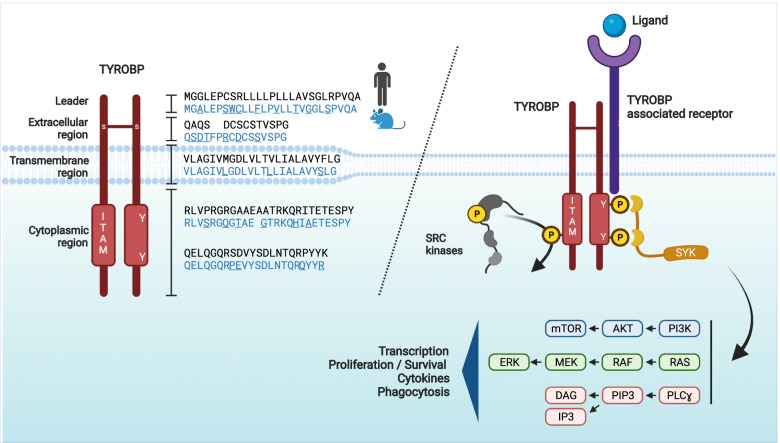
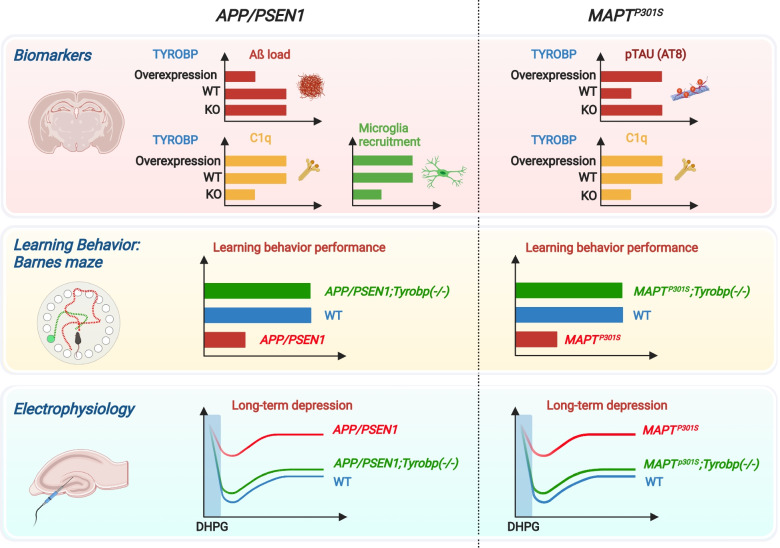
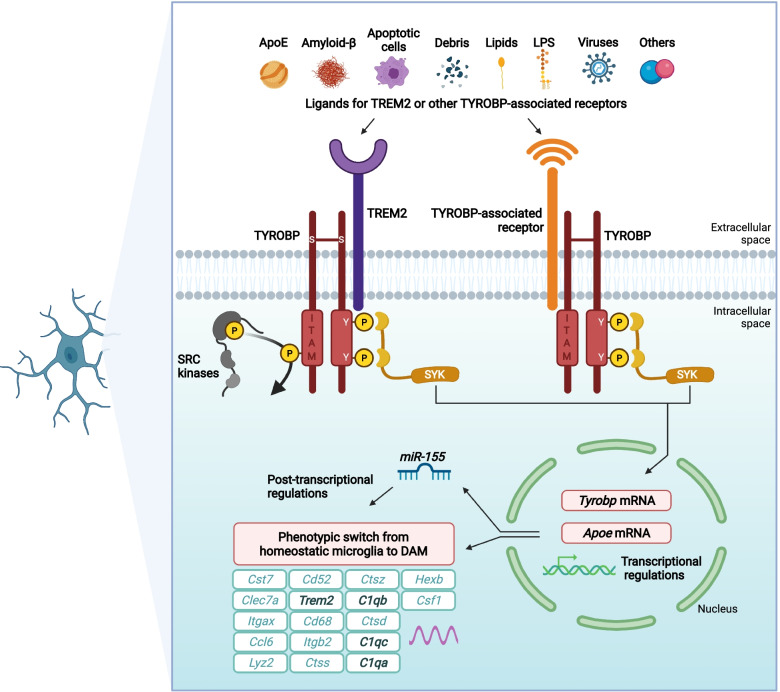
TYROBP (also known as DAP12 or KARAP) is a transmembrane adaptor protein initially described as a receptor-activating subunit component of natural killer (NK) cells. TYROBP is expressed in numerous cell types, including peripheral blood monocytes, macrophages, dendritic cells, and osteoclasts, but a key point of recent interest is related to the critical role played by TYROBP in the function of many receptors expressed on the plasma membrane of microglia. TYROBP is the downstream adaptor and putative signaling partner for several receptors implicated in Alzheimer’s disease (AD), including SIRP1β, CD33, CR3, and TREM2. TYROBP has received much of its current notoriety because of its importance in brain homeostasis by signal transduction across those receptors. In this review, we provide an overview of evidence indicating that the biology of TYROBP extends beyond its interaction with these four ligand-binding ectodomain-intramembranous domain molecules. In addition to reviewing the structure and localization of TYROBP, we discuss our recent progress using mouse models of either cerebral amyloidosis or tauopathy that were engineered to be TYROBP-deficient or TYROBP-overexpressing. Remarkably, constitutively TYROBP-deficient mice provided a model of genetic resilience to either of the defining proteinopathies of AD. Learning behavior and synaptic electrophysiological function were preserved at normal physiological levels even in the face of robust cerebral amyloidosis (in APP/PSEN1 ; Tyrobp −/− mice) or tauopathy (in MAPT P301S ; Tyrobp −/− mice). A fundamental underpinning of the functional synaptic dysfunction associated with each proteotype was an accumulation of complement C1q. TYROBP deficiency prevented C1q accumulation associated with either proteinopathy. Based on these data, we speculate that TYROBP plays a key role in the microglial sensome and the emergence of the disease-associated microglia (DAM) phenotype. TYROBP may also play a key role in the loss of markers of synaptic integrity (e.g., synaptophysin-like immunoreactivity) that has long been held to be the feature of human AD molecular neuropathology that most closely correlates with concurrent clinical cognitive function.
Overview
The claims and statistics of this paper haven’t been checked yet.
Run the check — free, no account needed. It reads the open-access text and checks the sources it cites.
Integrity signals
Registry
Cites
Statistics
Figures
Verification
Claims the paper makes
The claims and statistics of this paper haven’t been checked yet.
Run the check — free, no account needed. It reads the open-access text and checks the sources it cites.
Claims other papers make about this one
Each is checked against this paper’s own text: does it say what the citing paper says it does?
The source backs part of the claim, not all of it — or backs it for a different population, condition or comparison.
In the citing paper
“As shown in Figure 1, previous studies showed that PU.1 induces the transcription of several surface receptors, such as Integrin subunit alpha M (ITGAM, also known as CD11b), vascular cell adhesion molecule 1 (VCAM1, also known as CD106), TREM2, and TYROBP [32, 55], thereby enhancing microglial phagocytic capacity for Aβ clearance [56, 57].”
From Targeting Microglial Transcriptional Reprogramming as a Therapy Strategy for Alzheimer's Disease (2026) · cites this paper as [56]
Experimental — accuracy not yet measuredThe source backs part of the claim, not all of it — or backs it for a different population, condition or comparison.
In the citing paper
“TYROBP is a key regulator of this gene-network module, driving the expression of other genes.”
From The effect of Abi3 locus deletion on the progression of Alzheimer’s disease-related pathologies (2023) · cites this paper as [48]
Experimental — accuracy not yet measuredThe source backs part of the claim, not all of it — or backs it for a different population, condition or comparison.
In the citing paper
“Interestingly, it is also the downstream signaling mediator of several microglial receptors that are implicated in AD, such as TREM2 and CD33 (41, 48).”
From The effect of Abi3 locus deletion on the progression of Alzheimer’s disease-related pathologies (2023) · cites this paper as [48]
Experimental — accuracy not yet measured
Self-check
Percentages, sums and reported differences re-computed from the paper’s own numbers.
The self-check needs the paper’s full text.
Citations
Cites
A Unique Microglia Type Associated with Restricting Development of Alzheimer’s Disease
Keren-Shaul, H., Spinrad, A., Weiner, A., Matcovitch-Natan, O., Dvir-Szternfeld, R., Ulland, T. K., David, E., Baruch, K., Lara-Astaiso, D., Toth, B., et al. (2017) · Cell · doi:10.1016/j.cell.2017.05.018 · Cited by 5,493
Meta-Analysis of 74,046 Individuals Identifies 11 New Susceptibility Loci for Alzheimer’s Disease
(EADI), E. A. D. I., Lambert, J.-C., (GERAD), G. A. E. R. I. A. D., Alzheimer's Disease Genetic Consortium (ADGC), (CHARGE), C. F. H. A. A. R. I. G. E., Ibrahim-Verbaas, C. A., Harold, D., Naj, A. C., Sims, R., Bellenguez, C., et al. (2013) · Nature Genetics · doi:10.1038/ng.2802 · Cited by 4,336
Synaptic Pruning by Microglia Is Necessary for Normal Brain Development
Paolicelli, R. C., Bolasco, G., Pagani, F., Maggi, L., Scianni, M., Panzanelli, P., Giustetto, M., Ferreira, T. A., Guiducci, E., Dumas, L., et al. (2011) · Science · doi:10.1126/science.1202529 · Cited by 4,244
Microglia Sculpt Postnatal Neural Circuits in an Activity and Complement-Dependent Manner
Schafer, D. P., Lehrman, E. K., Kautzman, A. G., Koyama, R., Mardinly, A. R., Yamasaki, R., Ransohoff, R. M., Greenberg, M. E., Barres, B. A., & Stevens, B. (2012) · Neuron · doi:10.1016/j.neuron.2012.03.026 · Cited by 4,089
Complement and microglia mediate early synapse loss in Alzheimer mouse models
Hong, S., Beja-Glasser, V. F., Nfonoyim, B. M., Frouin, A., Li, S., Ramakrishnan, S., Merry, K. M., Shi, Q., Rosenthal, A., Barres, B. A., et al. (2016) · Science · doi:10.1126/science.aad8373 · Cited by 3,343 · cited 3×
“This decrease is associated with the maintenance of normal learning behavior and electrophysiological properties, supporting suggestions from others that C1q is a target of interest in the treatment of neurodegenerative diseases [11, 18].”
BackgroundHarold, D., Abraham, R., Hollingworth, P., Sims, R., Gerrish, A., Hamshere, M. L., Pahwa, J. S., Moskvina, V., Dowzell, K., Williams, A., et al. (2009) · Nature Genetics · doi:10.1038/ng.440 · Cited by 3,326
The Classical Complement Cascade Mediates CNS Synapse Elimination
Stevens, B., Allen, N. J., Vazquez, L. E., Howell, G. R., Christopherson, K. S., Nouri, N., Micheva, K. D., Mehalow, A. K., Huberman, A. D., Stafford, B., et al. (2007) · Cell · doi:10.1016/j.cell.2007.10.036 · Cited by 3,313
TREM2 Variants in Alzheimer's Disease
Guerreiro, R., Wojtas, A., Bras, J., Carrasquillo, M., Rogaeva, E., Majounie, E., Cruchaga, C., Sassi, C., Kauwe, J. S. K., Younkin, S., et al. (2013) · New England Journal of Medicine · doi:10.1056/nejmoa1211851 · Cited by 3,020
Krasemann, S., Madore, C., Cialic, R., Baufeld, C., Calcagno, N., El Fatimy, R., Beckers, L., O’Loughlin, E., Xu, Y., Fanek, Z., et al. (2017) · Immunity · doi:10.1016/j.immuni.2017.08.008 · Cited by 2,979
Variant of TREM2 Associated with the Risk of Alzheimer's Disease
Jonsson, T., Stefansson, H., Steinberg, S., Jonsdottir, I., Jonsson, P. V., Snaedal, J., Bjornsson, S., Huttenlocher, J., Levey, A. I., Lah, J. J., et al. (2013) · New England Journal of Medicine · doi:10.1056/nejmoa1211103 · Cited by 2,558
Jansen, I. E., Savage, J. E., Watanabe, K., Bryois, J., Williams, D. M., Steinberg, S., Sealock, J., Karlsson, I. K., Hägg, S., Athanasiu, L., et al. (2019) · Nature Genetics · doi:10.1038/s41588-018-0311-9 · Cited by 2,277
Genome-wide association study identifies variants at CLU and CR1 associated with Alzheimer's disease
the European Alzheimer's Disease Initiative Investigators, Lambert, J.-C., Heath, S., Even, G., Campion, D., Sleegers, K., Hiltunen, M., Combarros, O., Zelenika, D., Bullido, M. J., et al. (2009) · Nature Genetics · doi:10.1038/ng.439 · Cited by 2,234
Integrated Systems Approach Identifies Genetic Nodes and Networks in Late-Onset Alzheimer’s Disease
Zhang, B., Gaiteri, C., Bodea, L.-G., Wang, Z., McElwee, J., Podtelezhnikov, A. A., Zhang, C., Xie, T., Tran, L., Dobrin, R., et al. (2013) · Cell · doi:10.1016/j.cell.2013.03.030 · Cited by 1,657
The microglial sensome revealed by direct RNA sequencing
Hickman, S. E., Kingery, N. D., Ohsumi, T. K., Borowsky, M. L., Wang, L.-C., Means, T. K., & El Khoury, J. (2013) · Nature Neuroscience · doi:10.1038/nn.3554 · Cited by 1,511
Microglia emerge from erythromyeloid precursors via Pu.1- and Irf8-dependent pathways
Kierdorf, K., Erny, D., Goldmann, T., Sander, V., Schulz, C., Perdiguero, E. G., Wieghofer, P., Heinrich, A., Riemke, P., Hölscher, C., et al. (2013) · Nature Neuroscience · doi:10.1038/nn.3318 · Cited by 1,457
Microglial Dysfunction and Defective β-Amyloid Clearance Pathways in Aging Alzheimer's Disease Mice
Hickman, S. E., Allison, E. K., & El Khoury, J. (2008) · The Journal of Neuroscience · doi:10.1523/jneurosci.0616-08.2008 · Cited by 1,329 · cited 1×
“Despite their roles as “first responder” cells, the microglia arriving at the sites of AD-related proteinopathies can soon see their clean-up capacities outstripped, which, associated with the production of proinflammatory cytokines, can contribute to disease progression and neurodegeneration [9].”
BackgroundBouchon, A., Dietrich, J., & Colonna, M. (2000) · The Journal of Immunology · doi:10.4049/jimmunol.164.10.4991 · Cited by 1,284 · cited 1×
“Of note, while a low level of TREM3 is detected in mouse microglia, TREM3 in humans is present as a pseudogene [56, 70, 106].”
BackgroundTREM-1 amplifies inflammation and is a crucial mediator of septic shock
Bouchon, A., Facchetti, F., Weigand, M. A., & Colonna, M. (2001) · Nature · doi:10.1038/35074114 · Cited by 1,092
The Lewy body variant of Alzheimer's disease: A clinical and pathologic entity
Hansen, L., Salmon, D., Galasko, D., Masliah, E., Katzman, R., DeTeresa, R., Thal, L., Pay, M. M., Hofstetter, R., Klauber, M., et al. (1990) · Neurology · doi:10.1212/wnl.40.1.1 · Cited by 1,068
Alzheimer’s Disease Risk Gene CD33 Inhibits Microglial Uptake of Amyloid Beta
Griciuc, A., Serrano-Pozo, A., Parrado, A. R., Lesinski, A. N., Asselin, C. N., Mullin, K., Hooli, B., Choi, S. H., Hyman, B. T., & Tanzi, R. E. (2013) · Neuron · doi:10.1016/j.neuron.2013.04.014 · Cited by 1,004
The Role of Microglia in the Healthy Brain: Figure 1.
Tremblay, M.-È., Stevens, B., Sierra, A., Wake, H., Bessis, A., & Nimmerjahn, A. (2011) · The Journal of Neuroscience · doi:10.1523/jneurosci.4158-11.2011 · Cited by 992
Negative feedback control of neuronal activity by microglia
Badimon, A., Strasburger, H. J., Ayata, P., Chen, X., Nair, A., Ikegami, A., Hwang, P., Chan, A. T., Graves, S. M., Uweru, J. O., et al. (2020) · Nature · doi:10.1038/s41586-020-2777-8 · Cited by 979
Spatial Transcriptomics and In Situ Sequencing to Study Alzheimer’s Disease
Chen, W.-T., Lu, A., Craessaerts, K., Pavie, B., Sala Frigerio, C., Corthout, N., Qian, X., Laláková, J., Kühnemund, M., Voytyuk, I., et al. (2020) · Cell · doi:10.1016/j.cell.2020.06.038 · Cited by 949 · cited 4×
“, averaging the transcriptomes between microglia which are and are not recruited around the amyloid plaques [114].”
BackgroundInfluentialYeh, F. L., Wang, Y., Tom, I., Gonzalez, L. C., & Sheng, M. (2016) · Neuron · doi:10.1016/j.neuron.2016.06.015 · Cited by 943
Immunoreceptor DAP12 bearing a tyrosine-based activation motif is involved in activating NK cells
Lanier, L. L., Corliss, B. C., Wu, J., Leong, C. C., & Phillips, J. H. (1998) · Nature · doi:10.1038/35642 · Cited by 907
Structural Classification of Toxic Amyloid Oligomers
Glabe, C. G. (2008) · Journal of Biological Chemistry · doi:10.1074/jbc.r800016200 · Cited by 783
Hamilton, R. L. (2000) · Brain Pathology · doi:10.1111/j.1750-3639.2000.tb00269.x · Cited by 754
Griffin, W. S. T., Sheng, J. G., Royston, M. C., Gentleman, S., McKenzie, J. E., Graham, D. I., Roberts, G. W., & Mrak, R. E. (1998) · Brain Pathology · doi:10.1111/j.1750-3639.1998.tb00136.x · Cited by 712
Cutting Edge: TREM-2 Attenuates Macrophage Activation
Turnbull, I. R., Gilfillan, S., Cella, M., Aoshi, T., Miller, M., Piccio, L., Hernandez, M., & Colonna, M. (2006) · The Journal of Immunology · doi:10.4049/jimmunol.177.6.3520 · Cited by 688
Complement C3 deficiency protects against neurodegeneration in aged plaque-rich APP/PS1 mice
Shi, Q., Chowdhury, S., Ma, R., Le, K. X., Hong, S., Caldarone, B. J., Stevens, B., & Lemere, C. A. (2017) · Science Translational Medicine · doi:10.1126/scitranslmed.aaf6295 · Cited by 593
Apolipoprotein E Is a Ligand for Triggering Receptor Expressed on Myeloid Cells 2 (TREM2)
Atagi, Y., Liu, C.-C., Painter, M. M., Chen, X.-F., Verbeeck, C., Zheng, H., Li, X., Rademakers, R., Kang, S. S., Xu, H., et al. (2015) · Journal of Biological Chemistry · doi:10.1074/jbc.m115.679043 · Cited by 587
Um, J. W., Kaufman, A. C., Kostylev, M., Heiss, J. K., Stagi, M., Takahashi, H., Kerrisk, M. E., Vortmeyer, A., Wisniewski, T., Koleske, A. J., et al. (2013) · Neuron · doi:10.1016/j.neuron.2013.06.036 · Cited by 572
Rademakers, R., Baker, M., Nicholson, A. M., Rutherford, N. J., Finch, N., Soto-Ortolaza, A., Lash, J., Wider, C., Wojtas, A., DeJesus-Hernandez, M., et al. (2012) · Nature Genetics · doi:10.1038/ng.1027 · Cited by 571
Type I interferon response drives neuroinflammation and synapse loss in Alzheimer disease
Roy, E. R., Wang, B., Wan, Y.-W., Chiu, G., Cole, A., Yin, Z., Propson, N. E., Xu, Y., Jankowsky, J. L., Liu, Z., et al. (2020) · Journal of Clinical Investigation · doi:10.1172/jci133737 · Cited by 563
Loss of TREM2 function increases amyloid seeding but reduces plaque-associated ApoE
Parhizkar, S., Arzberger, T., Brendel, M., Kleinberger, G., Deussing, M., Focke, C., Nuscher, B., Xiong, M., Ghasemigharagoz, A., Katzmarski, N., et al. (2019) · Nature Neuroscience · doi:10.1038/s41593-018-0296-9 · Cited by 555
Dejanovic, B., Huntley, M. A., De Mazière, A., Meilandt, W. J., Wu, T., Srinivasan, K., Jiang, Z., Gandham, V., Friedman, B. A., Ngu, H., et al. (2018) · Neuron · doi:10.1016/j.neuron.2018.10.014 · Cited by 517
Microglia use TAM receptors to detect and engulf amyloid β plaques
Huang, Y., Happonen, K. E., Burrola, P. G., O’Connor, C., Hah, N., Huang, L., Nimmerjahn, A., & Lemke, G. (2021) · Nature Immunology · doi:10.1038/s41590-021-00913-5 · Cited by 483
Loss-of-function mutations in TYROBP (DAP12) result in a presenile dementia with bone cysts
Paloneva, J., Kestilä, M., Wu, J., Salminen, A., Böhling, T., Ruotsalainen, V., Hakola, P., Bakker, A. B. H., Phillips, J. H., Pekkarinen, P., et al. (2000) · Nature Genetics · doi:10.1038/77153 · Cited by 460
Bouchon, A., Hernández-Munain, C., Cella, M., & Colonna, M. (2001) · The Journal of Experimental Medicine · doi:10.1084/jem.194.8.1111 · Cited by 460
Hamerman, J. A., Jarjoura, J. R., Humphrey, M. B., Nakamura, M. C., Seaman, W. E., & Lanier, L. L. (2006) · The Journal of Immunology · doi:10.4049/jimmunol.177.4.2051 · Cited by 440
TREM and TREM-like receptors in inflammation and disease
Ford, J. W., & McVicar, D. W. (2009) · Current Opinion in Immunology · doi:10.1016/j.coi.2009.01.009 · Cited by 434
A Dramatic Increase of C1q Protein in the CNS during Normal Aging
Stephan, A. H., Madison, D. V., Mateos, J. M., Fraser, D. A., Lovelett, E. A., Coutellier, L., Kim, L., Tsai, H.-H., Huang, E. J., Rowitch, D. H., et al. (2013) · The Journal of Neuroscience · doi:10.1523/jneurosci.1333-13.2013 · Cited by 423
Singh‐Jasuja, H., Scherer, H. U., Hilf, N., Arnold-Schild, D., Rammensee, H., Toes, R. E. M., & Schild, H. (2000) · European Journal of Immunology · doi:10.1002/1521-4141(2000)30:18 · Cited by 382
Directed differentiation of human pluripotent stem cells to microglia
Douvaras, P., Sun, B., Wang, M., Kruglikov, I., Lallos, G., Zimmer, M., Terrenoire, C., Zhang, B., Gandy, S., Schadt, E., et al. (2017) · Stem Cell Reports · doi:10.1016/j.stemcr.2017.04.023 · Cited by 381
Self-citationTREM2 Acts Downstream of CD33 in Modulating Microglial Pathology in Alzheimer's Disease
Griciuc, A., Patel, S., Federico, A. N., Choi, S. H., Innes, B. J., Oram, M. K., Cereghetti, G., McGinty, D., Anselmo, A., Sadreyev, R. I., et al. (2019) · Neuron · doi:10.1016/j.neuron.2019.06.010 · Cited by 378
Mócsai, A., Abram, C. L., Jakus, Z., Hu, Y., Lanier, L. L., & Lowell, C. A. (2006) · Nature Immunology · doi:10.1038/ni1407 · Cited by 376
α-synuclein in the pathophysiology of Alzheimer’s disease
Twohig, D., & Nielsen, H. M. (2019) · Molecular Neurodegeneration · doi:10.1186/s13024-019-0320-x · Cited by 374
Soluble TREM2 induces inflammatory responses and enhances microglial survival
Zhong, L., Chen, X., Wang, T., Wang, Z., Liao, C., Wang, Z., Huang, R., Wang, D., Li, X., Wu, L., et al. (2017) · The Journal of Experimental Medicine · doi:10.1084/jem.20160844 · Cited by 372
Targeting mi R‐155 restores abnormal microglia and attenuates disease in SOD 1 mice
Butovsky, O., Jedrychowski, M. P., Cialic, R., Krasemann, S., Murugaiyan, G., Fanek, Z., Greco, D. J., Wu, P. M., Doykan, C. E., Kiner, O., et al. (2015) · Annals of Neurology · doi:10.1002/ana.24304 · Cited by 358
Microglia-Mediated Synapse Loss in Alzheimer's Disease
Rajendran, L., & Paolicelli, R. C. (2018) · The Journal of Neuroscience · doi:10.1523/jneurosci.1136-17.2017 · Cited by 355
Chakrabarty, P., Li, A., Ceballos-Diaz, C., Eddy, J. A., Funk, C. C., Moore, B., DiNunno, N., Rosario, A. M., Cruz, P. E., Verbeeck, C., et al. (2015) · Neuron · doi:10.1016/j.neuron.2014.11.020 · Cited by 354
Microglia Function in Central Nervous System Development and Plasticity
Schafer, D. P., & Stevens, B. (2015) · Cold Spring Harbor Perspectives in Biology · doi:10.1101/cshperspect.a020545 · Cited by 353
Loss of TREM2 function increases amyloid seeding but reduces plaque-associated ApoE
Parhizkar, S., Arzberger, T., Brendel, M., Kleinberger, G., Deußing, M., Focke, C., Nuscher, B., Xiong, M., Ghasemigharagoz, A., Katzmarski, N., et al. (2019) · doi:10.7892/boris.125653 · Cited by 352
Wakselman, S., Béchade, C., Roumier, A., Bernard, D., Triller, A., & Bessis, A. (2008) · The Journal of Neuroscience · doi:10.1523/jneurosci.1006-08.2008 · Cited by 351
Initiative, F. T. A. D. N., Suárez-Calvet, M., Morenas-Rodríguez, E., Kleinberger, G., Schlepckow, K., Araque Caballero, M. Á., Franzmeier, N., Capell, A., Fellerer, K., Nuscher, B., et al. (2019) · Molecular Neurodegeneration · doi:10.1186/s13024-018-0301-5 · Cited by 347
IRF8 Is a Critical Transcription Factor for Transforming Microglia into a Reactive Phenotype
Masuda, T., Tsuda, M., Yoshinaga, R., Tozaki-Saitoh, H., Ozato, K., Tamura, T., & Inoue, K. (2012) · Cell Reports · doi:10.1016/j.celrep.2012.02.014 · Cited by 338
Cell-specific deletion of C1qa identifies microglia as the dominant source of C1q in mouse brain
Fonseca, M. I., Chu, S.-H., Hernandez, M. X., Fang, M. J., Modarresi, L., Selvan, P., MacGregor, G. R., & Tenner, A. J. (2017) · Journal of Neuroinflammation · doi:10.1186/s12974-017-0814-9 · Cited by 337
DAP10‐ and DAP12‐associated receptors in innate immunity
Lanier, L. L. (2008) · Immunological Reviews · doi:10.1111/j.1600-065x.2008.00720.x · Cited by 332
Enhanced Toll-like receptor responses in the absence of signaling adaptor DAP12
Hamerman, J. A., Tchao, N. K., Lowell, C. A., & Lanier, L. L. (2005) · Nature Immunology · doi:10.1038/ni1204 · Cited by 325
Otero, K., Turnbull, I. R., Poliani, P. L., Vermi, W., Cerutti, E., Aoshi, T., Tassi, I., Takai, T., Stanley, S. L., Miller, M., et al. (2009) · Nature Immunology · doi:10.1038/ni.1744 · Cited by 315
Heneka, M. T., Sastre, M., Dumitrescu-Ozimek, L., Dewachter, I., Walter, J., Klockgether, T., & Van Leuven, F. (2005) · Journal of Neuroinflammation · doi:10.1186/1742-2094-2-22 · Cited by 309
The Triggering Receptor Expressed on Myeloid Cells 2 Binds Apolipoprotein E
Bailey, C. C., DeVaux, L. B., & Farzan, M. (2015) · Journal of Biological Chemistry · doi:10.1074/jbc.m115.677286 · Cited by 303
Pattern Recognition by TREM-2: Binding of Anionic Ligands
Daws, M. R., Sullam, P. M., Niemi, E. C., Chen, T. T., Tchao, N. K., & Seaman, W. E. (2003) · The Journal of Immunology · doi:10.4049/jimmunol.171.2.594 · Cited by 291
Ly-49D and Ly-49H associate with mouse DAP12 and form activating receptors.
Smith, K. M., Wu, J., Bakker, A. B. H., Phillips, J. H., & Lanier, L. L. (1998) · PubMed · Cited by 277
Activating and inhibitory functions of DAP12
Turnbull, I. R., & Colonna, M. (2007) · Nature Reviews Immunology · doi:10.1038/nri2014 · Cited by 273
Zhang, J., Raper, A., Sugita, N., Hingorani, R., Salio, M., Palmowski, M. J., Cerundolo, V., & Crocker, P. R. (2006) · Blood · doi:10.1182/blood-2005-09-3842 · Cited by 265
Olcese, L., Cambiaggi, A., Semenzato, G., Bottino, C., Moretta, A., & Vivier, É. (1997) · The Journal of Immunology · doi:10.4049/jimmunol.158.11.5083 · Cited by 262
Siglec-H is an IPC-specific receptor that modulates type I IFN secretion through DAP12
Blasius, A. L., Cella, M., Maldonado, J., Takai, T., & Colonna, M. (2005) · Blood · doi:10.1182/blood-2005-09-3746 · Cited by 258
Cutting Edge: Ly-49D and Ly-49H Associate with Mouse DAP12 and Form Activating Receptors
Smith, K. M., Wu, J., Bakker, A. B. H., Phillips, J. H., & Lanier, L. L. (1998) · The Journal of Immunology · doi:10.4049/jimmunol.161.1.7 · Cited by 249
Interaction of SLP adaptors with the SH2 domain of Tec family kinases
Su, Y., Zhang, Y., Schweikert, J., Koretzky, G. A., Reth, M. G., & Wienands, J. (1999) · European Journal of Immunology · doi:10.1002/(sici)1521-4141(199911)29:11 · Cited by 242
Cross-regulation of signaling by ITAM-associated receptors
Ivashkiv, L. B. (2009) · Nature Immunology · doi:10.1038/ni.1706 · Cited by 219
Microglia contribute to the propagation of Aβ into unaffected brain tissue
d’Errico, P., Ziegler-Waldkirch, S., Aires, V., Hoffmann, P., Mezö, C., Erny, D., Monasor, L. S., Liebscher, S., Ravi, V. M., Joseph, K., et al. (2022) · Nature Neuroscience · doi:10.1038/s41593-021-00951-0 · Cited by 214
Bakker, A. B. H., Baker, E. G., Sutherland, G. R., Phillips, J. H., & Lanier, L. L. (1999) · Proceedings of the National Academy of Sciences · doi:10.1073/pnas.96.17.9792 · Cited by 210
Siglec-15: an immune system Siglec conserved throughout vertebrate evolution
Angata, T., Tabuchi, Y., Nakamura, K., & Nakamura, M. (2007) · Glycobiology · doi:10.1093/glycob/cwm049 · Cited by 205
Paul, S. P., Taylor, L. S., Stansbury, E. K., & McVicar, D. W. (2000) · Blood · doi:10.1182/blood.v96.2.483 · Cited by 204
Draper-dependent glial phagocytic activity is mediated by Src and Syk family kinase signalling
Ziegenfuss, J. S., Biswas, R., Avery, M. A., Hong, K., Sheehan, A. E., Yeung, Y.-G., Stanley, E. R., & Freeman, M. R. (2008) · Nature · doi:10.1038/nature06901 · Cited by 202
Paul, S. P., Taylor, L. S., Stansbury, E. K., & McVicar, D. W. (2000) · Blood · doi:10.1182/blood.v96.2.483.014k40_483_490 · Cited by 202
Taylor, V., Buckley, C. D., Douglas, M., Cody, A. J., Simmons, D. L., & Freeman, S. D. (1999) · Journal of Biological Chemistry · doi:10.1074/jbc.274.17.11505 · Cited by 186
Nasu, T., Tsukahara, Y., & Terayama, K. (1973) · Acta Pathologica Japonica · doi:10.1111/j.1440-1827.1973.tb01223.x · Cited by 184
The structural basis for intramembrane assembly of an activating immunoreceptor complex
Call, M. E., Wucherpfennig, K. W., & Chou, J. J. (2010) · Nature Immunology · doi:10.1038/ni.1943 · Cited by 181
Elmezayen, R., Gazzar, M. E., Seeds, M. C., McCall, C. E., Dreskin, S. C., & Nicolls, M. R. (2007) · Immunology Letters · doi:10.1016/j.imlet.2007.04.011 · Cited by 178
Angata, T., Hayakawa, T., Yamanaka, M., Varki, A. P., & Nakamura, M. (2006) · The FASEB Journal · doi:10.1096/fj.06-5800com · Cited by 174
Heterozygous TREM2 mutations in frontotemporal dementia
Borroni, B., Ferrari, F., Galimberti, D., Nacmias, B., Barone, C., Bagnoli, S., Fenoglio, C., Piaceri, I., Archetti, S., Bonvicini, C., et al. (2014) · Neurobiology of Aging · doi:10.1016/j.neurobiolaging.2013.09.017 · Cited by 173
Dietrich, J., Cella, M., Seiffert, M., Bühring, H., & Colonna, M. (2000) · The Journal of Immunology · doi:10.4049/jimmunol.164.1.9 · Cited by 172
Paradoxic inhibition of human natural interferon-producing cells by the activating receptor NKp44
Fuchs, A. G., Cella, M., Kondo, T., & Colonna, M. (2005) · Blood · doi:10.1182/blood-2004-12-4802 · Cited by 171
Aβ-induced Golgi fragmentation in Alzheimer’s disease enhances Aβ production
Joshi, G., Chi, Y., Huang, Z.-P., & Wang, Y.-Z. (2014) · Proceedings of the National Academy of Sciences of the United States of America · doi:10.1073/pnas.1320192111 · Cited by 169
TREM2 R47H Variant as a Risk Factor for Early-Onset Alzheimer's Disease
Pottier, C. P., collaborators, G., Wallon, D., Rousseau, S., Rovelet‐Lecrux, A., Richard, A., Rollin‐Sillaire, A., Frébourg, T., Campion, D., & Hannequin, D. (2013) · Journal of Alzheimer s Disease · doi:10.3233/jad-122311 · Cited by 162
Cutting Edge: Identification of Neutrophil PGLYRP1 as a Ligand for TREM-1
Read, C. B., Kuijper, J. L., Hjorth, S. A., Heipel, M., Tang, X., Fleetwood, A. J., Dantzler, J. L., Grell, S. N., Kastrup, J., Wang, C., et al. (2015) · The Journal of Immunology · doi:10.4049/jimmunol.1402303 · Cited by 158
High‐affinity interactions and signal transduction between Aβ oligomers and TREM2
Lessard, C. B., Malnik, S. L., Zhou, Y., Ladd, T. B., Cruz, P. E., Ran, Y., Chakrabaty, P., Mahan, T. E., Holtzman, D. M., Ulrich, J. D., et al. (2018) · EMBO Molecular Medicine · doi:10.15252/emmm.201809027 · Cited by 156
Alzheimer's disease: The right drug, the right time
Golde, T. E., DeKosky, S. T., & Galasko, D. (2018) · Science · doi:10.1126/science.aau0437 · Cited by 148
Konishi, H., Kobayashi, M., Kunisawa, T., Imai, K., Sayo, A., MALISSEN, B., Crocker, P. R., Sato, K., & Kiyama, H. (2017) · Glia · doi:10.1002/glia.23204 · Cited by 141
Ringheim, G., Szczepanik, A. M., Petko, W., Burgher, K. L., Zhu, S. Z., & Chao, C. (1998) · Brain Research. Molecular Brain Research · doi:10.1016/s0169-328x(97)00356-2 · Cited by 140
CD33/Siglec-3 Binding Specificity, Expression Pattern, and Consequences of Gene Deletion in Mice
der Linden, E. C. M. B.-V., Angata, T., Reynolds, S. A., Powell, L. D., Hedrick, S. Μ., & Varki, A. P. (2003) · Molecular and Cellular Biology · doi:10.1128/mcb.23.12.4199-4206.2003 · Cited by 133
Shiratori, I., Ogasawara, K., Saito, T., Lanier, L. L., & Arase, H. (2004) · The Journal of Experimental Medicine · doi:10.1084/jem.20031885 · Cited by 132
Haure-Mirande, J.-V., Audrain, M., Fanutza, T., Kim, S. H., Klein, W. L., Glabe, C., Readhead, B., Dudley, J. T., Blitzer, R. D., Wang, M., et al. (2017) · Acta Neuropathologica · doi:10.1007/s00401-017-1737-3 · Cited by 127
Self-citationBlasius, A. L., Vermi, W., Krug, A., Facchetti, F., Cella, M., & Colonna, M. (2003) · Blood · doi:10.1182/blood-2003-09-3108 · Cited by 123
TREM2 ectodomain and its soluble form in Alzheimer’s disease
Yang, J., Fu, Z., Zhang, X., Xiong, M., Meng, L., & Zhang, Z. (2020) · Journal of Neuroinflammation · doi:10.1186/s12974-020-01878-2 · Cited by 113
CMRF-35-Like Molecule-1, a Novel Mouse Myeloid Receptor, Can Inhibit Osteoclast Formation
Chung, D.-H., Humphrey, M. B., Nakamura, M. C., Ginzinger, D. G., Seaman, W. E., & Daws, M. R. (2003) · The Journal of Immunology · doi:10.4049/jimmunol.171.12.6541 · Cited by 113
Cao, H., Lakner, U., de Bono, B., Traherne, J. A., Trowsdale, J., & Barrow, A. D. (2008) · European Journal of Immunology · doi:10.1002/eji.200738078 · Cited by 111
Deletion polymorphism of SIGLEC14 and its functional implications
Yamanaka, M., Kato, Y., Angata, T., & Narimatsu, H. (2009) · Glycobiology · doi:10.1093/glycob/cwp052 · Cited by 109
Mousseau, D. D., Banville, D., L’Abbé, D., Bouchard, P., & Shen, S. (2000) · Journal of Biological Chemistry · doi:10.1074/jbc.275.6.4467 · Cited by 95
TYROBP genetic variants in early-onset Alzheimer's disease
Pottier, C., Ravenscroft, T. A., Brown, P. H., Finch, N. A., Baker, M., Parsons, M., Asmann, Y. W., Ren, Y., Christopher, E., Levitch, D., et al. (2016) · Neurobiology of Aging · doi:10.1016/j.neurobiolaging.2016.07.028 · Cited by 94
Walker, D. G., Whetzel, A. M., Serrano, G., Sue, L. I., Beach, T. G., & Lue, L.-F. (2015) · Neurobiology of Aging · doi:10.1016/j.neurobiolaging.2014.09.023 · Cited by 93
Lagler, H., Sharif, O., Haslinger, I., Matt, U., Stich, K., Furtner, T., Doninger, B., Schmid, K., Gattringer, R., de Vos, A. F., et al. (2009) · The Journal of Immunology · doi:10.4049/jimmunol.0803862 · Cited by 90
Gaikwad, S. M., Larionov, S., Wang, Y., Dannenberg, H., Matozaki, T., Monsonego, A., Thal, D. R., & Neumann, H. (2009) · American Journal Of Pathology · doi:10.2353/ajpath.2009.090147 · Cited by 86
Haure-Mirande, J.-V., Wang, M., Audrain, M., Fanutza, T., Kim, S. H., Heja, S., Readhead, B., Dudley, J. T., Blitzer, R. D., Schadt, E. E., et al. (2019) · Molecular Psychiatry · doi:10.1038/s41380-018-0255-6 · Cited by 84
Self-citationHiruma, Y., Tsuda, E., Maeda, N., Okada, A., Kabasawa, N., Miyamoto, M., Hattori, H., & Fukuda, C. (2012) · Bone · doi:10.1016/j.bone.2012.11.036 · Cited by 79
Positive Regulation of Phagocytosis by SIRPβ and Its Signaling Mechanism in Macrophages
Hayashi, A., Ohnishi, H., Okazawa, H., Nakazawa, S., Ikeda, H., Motegi, S., Aoki, N., Kimura, S., Mikuni, M., & Matozaki, T. (2004) · Journal of Biological Chemistry · doi:10.1074/jbc.m400950200 · Cited by 79
Acute Trem2 reduction triggers increased microglial phagocytosis, slowing amyloid deposition in mice
Schoch, K. M., Ezerskiy, L. A., Morhaus, M. M., Bannon, R. N., Sauerbeck, A. D., Shabsovich, M., Jafar-nejad, P., Rigo, F., & Miller, T. M. (2021) · Proceedings of the National Academy of Sciences · doi:10.1073/pnas.2100356118 · Cited by 78
Franitza, S., Kollet, Ó., Brill, A. G., Vaday, G. G., Petit, I., Lapidot, T., Alon, R., & Lider, O. (2002) · European Journal of Immunology · doi:10.1002/1521-4141(200201)32:1 · Cited by 77
Vilalta, A., Zhou, Y., Sevalle, J., Griffin, J. K., Satoh, K., Allendorf, D. H., De, S., Puigdellívol, M., Bruzas, A., Burguillos, M. A., et al. (2021) · Journal of Biological Chemistry · doi:10.1016/j.jbc.2021.100631 · Cited by 77
The Assembly of Diverse Immune Receptors Is Focused on a Polar Membrane-Embedded Interaction Site
Feng, J. A., Call, M. E., & Wucherpfennig, K. W. (2006) · PLoS Biology · doi:10.1371/journal.pbio.0040142 · Cited by 75
Evidence for opposing roles of Celsr3 and Vangl2 in glutamatergic synapse formation
Thakar, S., Wang, L., Yu, T., Ye, M., Onishi, K., Scott, J. C., Qi, J., Fernandes, C., Han, X., Yates, J. R., et al. (2017) · Proceedings of the National Academy of Sciences · doi:10.1073/pnas.1612062114 · Cited by 75
Identification of Siglec Ligands Using a Proximity Labeling Method
Chang, L., Chen, Y., Fan, C.-Y., Tang, C.-J., Chen, Y.-H., Low, P.-Y., Ventura, A., Lin, C., Chen, Y., & Angata, T. (2017) · Journal of Proteome Research · doi:10.1021/acs.jproteome.7b00625 · Cited by 75
An Italian family affected by Nasu-Hakola disease with a novel genetic mutation in the TREM2 gene
Soragna, D. (2003) · Journal of Neurology, Neurosurgery & Psychiatry · doi:10.1136/jnnp.74.6.825-a · Cited by 75
CSF concentrations of soluble TREM2 as a marker of microglial activation in HIV-1 infection
Gisslén, M., Heslegrave, A., Veleva, E., Yilmaz, A., Andersson, L., Hagberg, L., Spudich, S., Fuchs, D., Price, R. W., & Zetterberg, H. (2018) · Neurology Neuroimmunology & Neuroinflammation · doi:10.1212/nxi.0000000000000512 · Cited by 74
CLEC2 and CLEC5A: Pathogenic Host Factors in Acute Viral Infections
Sung, P., & Hsieh, S.-L. E. (2019) · Frontiers in Immunology · doi:10.3389/fimmu.2019.02867 · Cited by 71
Fowler, A. J., Hebron, M. L., Missner, A. A., Wang, R., Gao, X., Kurd-Misto, B. T., Liu, X., & Moussa, C. (2019) · Drugs in R&D · doi:10.1007/s40268-019-0266-z · Cited by 70
Audrain, M., Haure-Mirande, J.-V., Wang, M., Kim, S. H., Fanutza, T., Chakrabarty, P., Fraser, P., St George-Hyslop, P. H., Golde, T. E., Blitzer, R. D., et al. (2019) · Molecular Psychiatry · doi:10.1038/s41380-018-0258-3 · Cited by 68
Self-citationTREM-1 interaction with the LPS/TLR4 receptor complex
Arts, R. J. W., Joosten, L. A. B., Dinarello, C. A., Kullberg, B. J., van der Meer, J. W. M., & Netea, M. G. (2011) · European Cytokine Network · doi:10.1684/ecn.2011.0274 · Cited by 66
Kumagai, H., Oki, T., Tamitsu, K., Feng, S.-Z., Ono, M., Nakajima, H., Bao, Y.-C., Kawakami, Y., Nagayoshi, K., Copeland, N. G., et al. (2003) · Biochemical and Biophysical Research Communications · doi:10.1016/s0006-291x(03)01245-2 · Cited by 65
Audrain, M., Haure‐Mirande, J., Mleczko, J., Wang, M., Griffin, J. K., St George‐Hyslop, P. H., Fraser, P., Zhang, B., Gandy, S., & Ehrlich, M. E. (2021) · Alzheimer's & Dementia · doi:10.1002/alz.12256 · Cited by 65
Self-citationMolecular Characterization of a Novel Immune Receptor Restricted to the Monocytic Lineage
Aguilar, H., Álvarez‐Errico, D., García‐Montero, A. C., Órfão, A., Sayós, J., & López‐Botet, M. (2004) · The Journal of Immunology · doi:10.4049/jimmunol.173.11.6703 · Cited by 60
Teng, O., Chen, S.-T., Hsu, T.-L., Sia, S. F., Cole, S., Valkenburg, S. A., Hsu, T.-Y., Zheng, J. T., Tu, W., Bruzzone, R., et al. (2016) · Journal of Virology · doi:10.1128/jvi.01813-16 · Cited by 53
Jiang, J., Ding, Y., Wu, M., Lyu, X., Wang, H., Chen, Y., Wang, H., & Teng, L. (2020) · Frontiers in Oncology · doi:10.3389/fonc.2020.01765 · Cited by 52
Yamanishi, Y., Kitaura, J., Izawa, K., Matsuoka, T., Oki, T., Yang, L., Shibata, F., Yamazaki, S., Kumagai, H., Nakajima, H., et al. (2007) · Blood · doi:10.1182/blood-2007-04-085787 · Cited by 50
Fu, L., Li, H., Xie, C., Li, W., Lin, L., Pan, S.-S., Zhou, Y., Li, Z., Jin, M., & Zhang, A. (2017) · Frontiers in Immunology · doi:10.3389/fimmu.2017.00917 · Cited by 47
Martínez‐Barriocanal, Á., & Sayós, J. (2006) · The Journal of Immunology · doi:10.4049/jimmunol.177.5.2819 · Cited by 40
Raka, F., Sebastiano, A. R. D., Kulhawy, S. C., Ribeiro, F. M., Godin, C. M., Caetano, F. A., Angers, S., & Ferguson, S. S. G. (2015) · Molecular Brain · doi:10.1186/s13041-015-0111-4 · Cited by 39
Wortham, B. W., Eppert, B. L., Flury, J. L., García, S. M., Donica, W. R. F., Osterburg, A. R., Joyce-Shaikh, B., Cua, D. J., & Borchers, M. T. (2016) · The Journal of Immunology · doi:10.4049/jimmunol.1500978 · Cited by 38
Feng, B., Freitas, A. E., Gorodetski, L., Wang, J., Tian, R., Lee, Y. R., Grewal, A. S., & Zou, Y. (2021) · Science Advances · doi:10.1126/sciadv.abh2307 · Cited by 38
miR155 regulation of behavior, neuropathology, and cortical transcriptomics in Alzheimer's disease
Readhead, B., Haure-Mirande, J.-V., Mastroeni, D., Audrain, M., Fanutza, T., Kim, S. H., Blitzer, R. D., Gandy, S., Dudley, J. T., & Ehrlich, M. E. (2020) · Acta Neuropathologica · doi:10.1007/s00401-020-02185-z · Cited by 37
Self-citationFerrara, S. J., Chaudhary, P., DeBell, M. J., Marracci, G., Miller, H. I., Calkins, E., Pocius, E., Napier, B. A., Emery, B., BOURDETTE, D. N., et al. (2021) · Cell chemical biology · doi:10.1016/j.chembiol.2021.07.014 · Cited by 36
Wang, J., Shiratori, I., Satoh, T., Lanier, L. L., & Arase, H. (2008) · The Journal of Immunology · doi:10.4049/jimmunol.180.3.1686 · Cited by 36
Biophysical Characterization of O-Glycosylated CD99 Recognition by Paired Ig-like Type 2 Receptors
Tabata, S., Kuroki, K., Wang, J., Kajikawa, M., Shiratori, I., Kohda, D., Arase, H., & Maenaka, K. (2008) · Journal of Biological Chemistry · doi:10.1074/jbc.m709793200 · Cited by 33
Evidence of CNS β-amyloid deposition in Nasu-Hakola disease due to the TREM2 Q33X mutation
Ghezzi, L., Carandini, T., Arighi, A., Fenoglio, C., Arcaro, M., Riz, M. A. D., Pietroboni, A. M., Fumagalli, G., Basilico, P., Calvi, A., et al. (2017) · Neurology · doi:10.1212/wnl.0000000000004747 · Cited by 31
Siglecs that Associate with DAP12
Angata, T. (2020) · Advances in experimental medicine and biology · doi:10.1007/978-981-15-1580-4_9 · Cited by 30
Collusion of α-Synuclein and Aβ aggravating co-morbidities in a novel prion-type mouse model
Lloyd, G. M., Dhillon, J.-K. S., Gorion, K.-M. M., Riffe, C. J., Fromholt, S., Xia, Y., Giasson, B. I., & Borchelt, D. (2021) · Molecular Neurodegeneration · doi:10.1186/s13024-021-00486-9 · Cited by 29
Hakola, H. P. A., & Iivanainen, M. (1973) · Neuroradiology · doi:10.1007/bf00340444 · Cited by 27
Luo, K., Zhang, W., Sui, L., Li, N., Zhang, M., Ma, X., Zhang, L., & Cao, X. (2001) · Biochemical and Biophysical Research Communications · doi:10.1006/bbrc.2001.5539 · Cited by 27
Alzheimer's disease pathology in Nasu-Hakola disease brains
Satoh, J., Kino, Y., Yanaizu, M., & Saito, Y. (2018) · Intractable & Rare Diseases Research · doi:10.5582/irdr.2017.01088 · Cited by 24
CSF-1R, DAP12 and β-catenin: a ménage à trois
McVicar, D. W., & Trinchieri, G. (2009) · Nature Immunology · doi:10.1038/ni0709-681 · Cited by 19
Daws (2001) · doi:10.1002/1521-4141(200103)31:3
Research works printed but not linked: 1
- Tomasello E, Cant C, Buhring HJ, Vely F, Andre P, Seiffert M, et al. Association of signal-regulatory proteins beta with KARAP/DAP-12. Eur J Immunol. 2000;30:2147–56. · DOI
Cited by
Sorted by citations
Microbiota–gut–brain axis and its therapeutic applications in neurodegenerative diseases
Loh, J. S., Mak, W. Q., Tan, L. K. S., Ng, C. X., Chan, H. H., Yeow, S. H., Foo, J. B., Ong, Y. S., How, C. W., & Khaw, K. Y. (2024) · Signal Transduction and Targeted Therapy · doi:10.1038/s41392-024-01743-1 · Cited by 1,193
Glial Cell-Mediated Neuroinflammation in Alzheimer’s Disease
Al-Ghraiybah, N. F., Wang, J., Alkhalifa, A. E., Roberts, A. B., Raj, R., Yang, E., & Kaddoumi, A. (2022) · International Journal of Molecular Sciences · doi:10.3390/ijms231810572 · Cited by 217
Microglial mechanisms drive amyloid-β clearance in immunized patients with Alzheimer’s disease
van Olst, L., Simonton, B., Edwards, A. J., Forsyth, A. V., Boles, J. S., Jamshidi, P., Watson, T. H., Shepard, N., Krainc, T., Argue, B. M., et al. (2025) · Nature Medicine · doi:10.1038/s41591-025-03574-1 · Cited by 164
Fang, C., Zhong, R., Lu, S., Yu, G., Liu, Z., Yan, C., Gao, J., Tang, Y., Wang, Y., Zhao, Q., et al. (2024) · International Journal of Biological Sciences · doi:10.7150/ijbs.91519 · Cited by 127
Microglial Activation and Priming in Alzheimer’s Disease: State of the Art and Future Perspectives
Bivona, G., Iemmolo, M., Agnello, L., Sasso, B. L., Gambino, C. M., Giglio, R. V., Scazzone, C., Ghersi, G., & Ciaccio, M. (2023) · International Journal of Molecular Sciences · doi:10.3390/ijms24010884 · Cited by 74
Metadata
- Authors
- Haure-Mirande, J.-V., Audrain, M., Ehrlich, M. E., & Gandy, S.
- Affiliations
- Icahn School of Medicine at Mount Sinai (US)
- James J. Peters VA Medical Center (US)
- Corresponding author
- Ehrlich, Michelle E.
- Gandy, Sam
- Venue
- Molecular Neurodegeneration
- Published
- 2022-08-24
- Volume
- 17
- Issue
- 1
- Pages
- 55-55
- ISSN
- 1750-1326 (ISSN-L)
- PMC
- PMC9404585
- OpenAlex
- W4292939095
- Cited by
- 159
- References
- 142
- Citations by year
- 2026: 41 · 2025: 41 · 2024: 47 · 2023: 28 · 2022: 2
- FWCI
- 3.07
- Type
- journal article
- Language
- en
- Open access
- gold
- doi.org
- Locations
- Molecular Neurodegeneration (publishedVersion, cc-by)
- PubMed Central (publishedVersion, cc-by)
- PubMed (publishedVersion)
- DOAJ (DOAJ: Directory of Open Access Journals) (submittedVersion, cc-by-sa)
- Funders
- National Institute on Aging (U01AG046170, R01AG057907, R03AG070710)
- Cure Alzheimer's Fund
- BrightFocus Foundation (A2018253F, A2016482F)
- Mount Sinai Alzheimer’s Disease Research Center (AG005138, P30AG066514)
- Topics
- Life Sciences › Neuroscience › Neurology › Neuroinflammation and Neurodegeneration Mechanisms
- Life Sciences › Neuroscience › Cellular and Molecular Neuroscience › Alzheimer's disease research and treatments
- Life Sciences › Neuroscience › Cellular and Molecular Neuroscience › Neuroscience and Neuropharmacology Research
- Keywords
- TYROBP, DAP12, Alzheimer's disease, microglia, TREM2, C1q, cerebral amyloidosis, tauopathy, disease-associated microglia, synaptic dysfunction, synaptophysin, receptor signaling
- MeSH terms
- Alzheimer Disease, Amyloidosis, Animals, Brain, Disease Models, Animal, Membrane Glycoproteins, Membrane Proteins, Receptors, Immunologic, Microglia, Tauopathies, Adaptor Proteins, Signal Transducing, Mice
About these checks
Registry, retraction, Cites and statistics results are computed, not judged, with one exception: a printed reference that no index lists is read once by a model before it counts as a citation error. Claims are extracted by a model and kept only when their quote appears verbatim in the text; each cited source is then checked, with a model’s help, for whether it says what the claim relies on. Those verdicts can be wrong — read the claim’s quote and the cited source before relying on one.
Statistics and arithmetic are recomputed, not judged.
Confidence bands are shown only for fields calibrated on our annotated test set. None is calibrated yet, so no band is shown.
What counts as a claim ›How we measure confidence ›How we check this ›
Are you an author, or do you see a problem with this page? Request a review
