

Mechanism and therapeutic potential of targeting cGAS-STING signaling in neurological disorders
Open accessThe DOI matches its Crossref record; 136 of the 136 references it cites were found in a registry or an index.
Abstract
DNA sensing is a pivotal component of the innate immune system that is responsible for detecting mislocalized DNA and triggering downstream inflammatory pathways. Among the DNA sensors, cyclic GMP-AMP synthase (cGAS) is a primary player in detecting cytosolic DNA, including foreign DNA from pathogens and self-DNA released during cellular damage, culminating in a type I interferon (IFN-I) response through stimulator of interferon genes (STING) activation. IFN-I cytokines are essential in mediating neuroinflammation, which is widely observed in CNS injury, neurodegeneration, and aging, suggesting an upstream role for the cGAS DNA sensing pathway. In this review, we summarize the latest developments on the cGAS-STING DNA-driven immune response in various neurological diseases and conditions. Our review covers the current understanding of the molecular mechanisms of cGAS activation and highlights cGAS-STING signaling in various cell types of central and peripheral nervous systems, such as resident brain immune cells, neurons, and glial cells. We then discuss the role of cGAS-STING signaling in different neurodegenerative conditions, including tauopathies, Alzheimer’s disease, Parkinson’s disease, and amyotrophic lateral sclerosis, as well as aging and senescence. Finally, we lay out the current advancements in research and development of cGAS inhibitors and assess the prospects of targeting cGAS and STING as therapeutic strategies for a wide spectrum of neurological diseases.
Overview
The claims and statistics of this paper haven’t been checked yet.
Free: it reads the open-access text and checks the first 5 claims that cite a source we can check. Create a free account to check every claim.
Integrity signals
Registry
Cites
Statistics
Figures
Verification
Claims the paper makes
The claims and statistics of this paper haven’t been checked yet.
Free: it reads the open-access text and checks the first 5 claims that cite a source we can check. Create a free account to check every claim.
Claims other papers make about this one
Each is checked against this paper’s own text: does it say what the citing paper says it does?
The cited source says what the claim attributes to it.
In the citing paper
“Studies by Xie et al. found that the abnormal accumulation of double-stranded DNA in the cytoplasm may bind to the cytoplasmic DNA sensor (cGAS), thereby specifically triggering the STING-interferon (IFN) signaling pathway in microglia, promoting the expression and secretion of inflammatory cytokines.”
From Recent advances in Alzheimer's disease: Mechanisms, clinical trials and new drug development strategies. (2024) · cites this paper as [254]
In the citing paper
“dsRNA-induced inflammation also has significant downstream overlap with the better described dsDNA response to mitochondrial damage that activates type I interferons via the cGAS-STING pathway (reviewed in [39]).”
From High throughput identification of genetic regulators of microglial inflammatory processes in Alzheimer's disease (2025) · cites this paper as [39]
In the citing paper
“dsRNA-induced inflammation also has significant downstream overlap with the better described dsDNA response to mitochondrial damage that activates type I interferons via the cGAS-STING pathway (reviewed in [39]).”
From High throughput identification of genetic regulators of microglial inflammatory processes in Alzheimer’s disease (2025) · cites this paper as [39]
Self-check
Percentages, sums and reported differences re-computed from the paper’s own numbers.
The self-check needs the paper’s full text.
Citations
Cites
1 retracted
RETRACTED ARTICLE: Parkin and PINK1 mitigate STING-induced inflammation
Sliter, D. A., Martinez, J., Hao, L., Chen, X., Sun, N., Fischer, T. D., Burman, J. L., Li, Y., Zhang, Z., Narendra, D. P., et al. (2018) · Nature · doi:10.1038/s41586-018-0448-9 · Cited by 1,287 · cited 5×
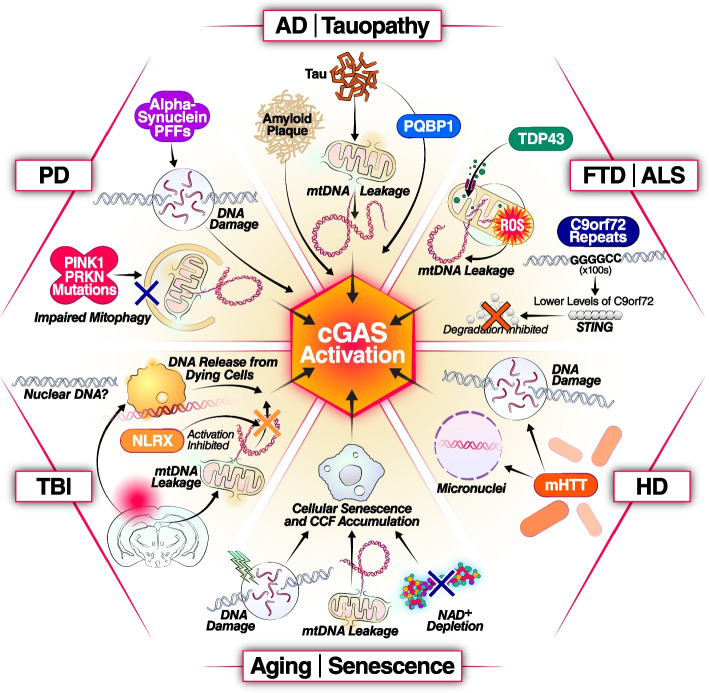
“Parkin or PINK1 deficiency impairs mitophagy, inducing mtDNA release, and activation of the cGAS-STING IFN-I response [24].”
BackgroundInfluentialRetractedA Toll-like receptor recognizes bacterial DNA
Hemmi, H., Takeuchi, O., Kawai, T., Kaisho, T., Sato, S., Sanjo, H., Matsumoto, M., Hoshino, K., Wagner, H., Takeda, K., et al. (2000) · Nature · doi:10.1038/35047123 · Cited by 6,491
The senescence-associated secretory phenotype: the dark side of tumor suppression
Coppé, J.-P., Desprez, P.-Y., Krtolica, A., & Campisi, J. (2010) · Annual Review of Pathology: Mechanisms of Disease · doi:10.1146/annurev-pathol-121808-102144 · Cited by 5,206 · cited 1×
“Senescent cells exhibit several hallmarks, including the upregulation of senescence-associated β-galactosidase (SA-β-Gal) activity and the induction of a senescence-associated secretory phenotype (SASP) [72].”
BackgroundCyclic GMP-AMP Synthase Is a Cytosolic DNA Sensor That Activates the Type I Interferon Pathway
Sun, L., Wu, J., Du, F., Chen, X., & Chen, Z. J. (2013) · Science · doi:10.1126/science.1232458 · Cited by 4,996
STING is an endoplasmic reticulum adaptor that facilitates innate immune signalling
Ishikawa, H., & Barber, G. N. (2008) · Nature · doi:10.1038/nature07317 · Cited by 3,576 · cited 3×
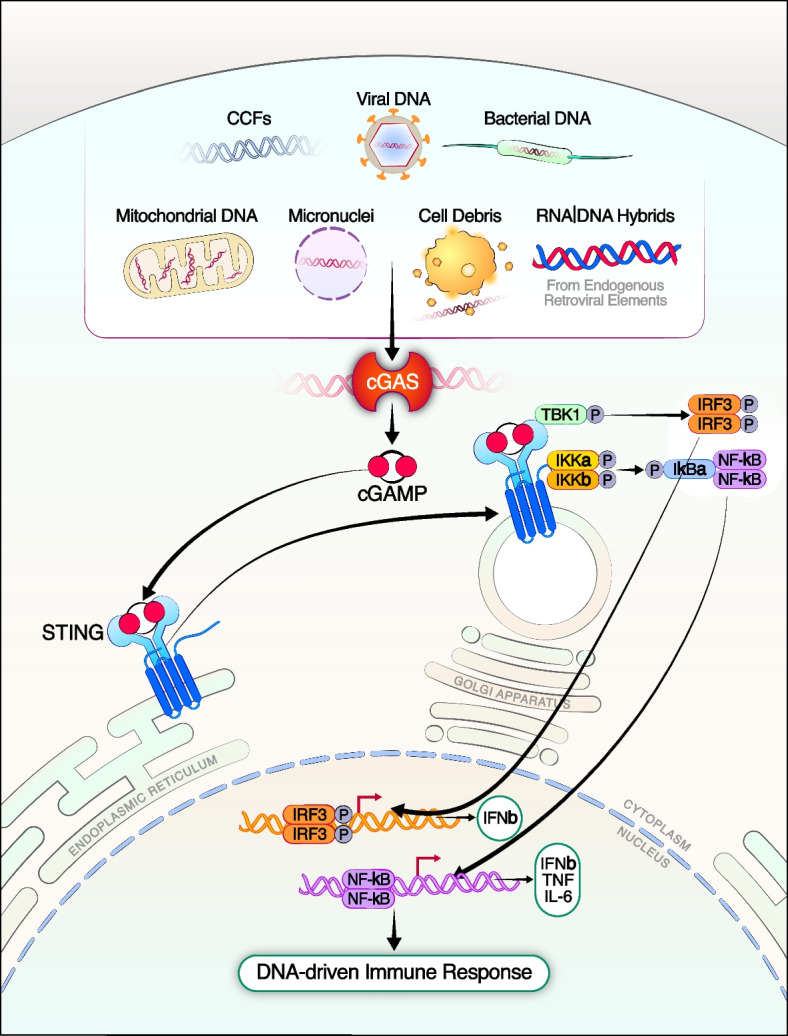
“The degradation of IκBα leads to rapid and transient nuclear translocation of canonical NF-κB, resulting in the production of pro-inflammatory cytokines and chemokines [13] (Fig.”
BackgroundCyclic GMP-AMP Is an Endogenous Second Messenger in Innate Immune Signaling by Cytosolic DNA
Wu, J., Sun, L., Chen, X., Du, F., Shi, H., Chen, C., & Chen, Z. J. (2013) · Science · doi:10.1126/science.1229963 · Cited by 2,541 · cited 2×
“Recognizing DNA is a fundamental mechanism of host defense that involves various PRRs, including Toll-like receptor 9 (TLR9), IFI16, RNA polymerase III, and cyclic GMP-AMP synthase (cGAS) [1–4].”
BackgroundCellular senescence in aging and age-related disease: from mechanisms to therapy
Childs, B. G., Durik, M., Baker, D. J., & van Deursen, J. M. (2015) · Nature Medicine · doi:10.1038/nm.4000 · Cited by 2,363 · cited 1×
“Cellular senescence is a natural process, whereby cells enter an irreversible state of cell-cycle arrest, limiting the growth of abnormal cells and serving as a critical mechanism to prevent tumorigenesis [71].”
BackgroundThe cGAS–STING pathway as a therapeutic target in inflammatory diseases
Decout, A., Katz, J. D., Venkatraman, S., & Ablasser, A. (2021) · Nature Reviews Immunology · doi:10.1038/s41577-021-00524-z · Cited by 2,309 · cited 3×
“cGAS and STING proteins are two key targets of the innate immune cGAS-STING signaling pathway [92, 93].”
BackgroundOxidized mitochondrial DNA activates the NLRP3 inflammasome during apoptosis
Shimada, K., Crother, T. R., Karlin, J., Dagvadorj, J., Chiba, N., Chen, S., Ramanujan, V. K., Wolf, A. J., Vergnes, L., Ojcius, D. M., et al. (2012) · Immunity · doi:10.1016/j.immuni.2012.01.009 · Cited by 2,282 · cited 1×
“Mitochondrial oxidative stress leads to release of oxidized mtDNA to the cytosol, triggering innate immune signaling, such as IFN-I and NLRP3 inflammasome activation [21–23].”
BackgroundInflammation as a central mechanism in Alzheimer's disease
Kinney, J. W., Bemiller, S. M., Murtishaw, A. S., Leisgang, A. M., Salazar, A. M., & Lamb, B. T. (2018) · Alzheimer's & Dementia: Translational Research & Clinical Interventions · doi:10.1016/j.trci.2018.06.014 · Cited by 2,253 · cited 2×
“Sustained neuroin-flammation in response to pathogenic proteins through activation of immune cells, especially microglia, has been recognized as another hallmark of AD [38].”
Background
Cited by
Items 101–180 of 180
Honda, N., Watanabe, Y., Honda, H., Uemoto, M., Fukuhara, H., & Hanajima, R. (2025) · Cureus · doi:10.7759/cureus.81045 · Cited by 4
“In contrast, type 1 IFN responses are widely observed not only in neurodegeneration but also in aging and senescence [48].”
PRRs-Dependent and Independent Mechanisms of STING Signaling in Inflammatory and Autoimmune Diseases
Xu, L., Li, J. Y., Zhu, X., Zhou, L., Sun, Z., Zhang, Z., Xu, W., & Song, Y. (2025) · Biomedicines · doi:10.3390/biomedicines13102533 · Cited by 6
“Damaged neurons release dsDNA and mtDNA, activating cGAS-STING and exacerbating parkinsonism [184–186].”
Chaperone‐Mediated Autophagy: A Critical Regulator of Neuroinflammation and Neurodegeneration
Han, Y., Huang, X., Su, Y., Ma, J., & Wu, J. (2025) · Advanced Biology · doi:10.1002/adbi.202500191 · Cited by 4
Pharmacologically targeting cGAS-STING: a novel therapeutic opportunities in kidney diseases
Wang, Y., Zhu, Y., Dou, L., Li, D., Wang, C. X., Chen, J., & Wang, H. (2025) · European Journal of Pharmacology · doi:10.1016/j.ejphar.2025.178296 · Cited by 3
Zhou, Y., Ying, M., Qi, B., Chen, Y., Lin, W., Zhang, C., Lin, J., Zhang, Y., Yang, Z., Huang, Z., et al. (2026) · The FASEB Journal · doi:10.1096/fj.202503913r · Cited by 3
“In addition to its key role in antiviral immune response, the cGAS-STING signaling pathway has also been shown to be involved in several other important biological processes, including cellular senescence [31, 32], neurological disorders [33], and myocardial infarct-associated inflammation [34].”
Sokač, M., Skračić, B., Kučak, D., & Mršić, L. (2024) · Machine Learning and Knowledge Extraction · doi:10.3390/make6030100 · Cited by 4
Tan, D. X. (2024) · Mitochondrion · doi:10.1016/j.mito.2024.101886 · Cited by 3
Harnessing cGAS-STING signaling to counteract the genotoxic-immune nexus in tauopathyPreprint
Singh, H., Khan, S., Xiao, J., Nguyen, N., Das, A., Johnson, D. L., Fang-Liao, F., Frautschy, S. A., McDonald, M. P., Pourmotabbed, T., et al. (2025) · bioRxiv (Cold Spring Harbor Laboratory) · doi:10.1101/2025.09.27.678980 · Cited by 3
Tahmasebinia, F., & Wu, Z. (2025) · BioEssays · doi:10.1002/bies.70054 · Cited by 3
“The significant implications of ribosome recycling dysfunction are underscored by dysregulated mTORC1/2 signaling, misassembled stress granules, and perturbations in the cGAS-STING pathway [112–114].”
Alarcón‐Espósito, J., Nagiri, R. K., Wang, S., Larson, C. S., Carvallo-Torres, L., Singh, V. K., Glickman, J. F., Gan, L., & Sinha, S. C. (2025) · ACS Chemical Biology · doi:10.1021/acschembio.5c00649 · Cited by 2
Self-citationDevale, T., Katuri, L., Mishra, G., Acharya, A., Manivannan, P., Hibbard, B. R., & Malathi, K. (2026) · Cells · doi:10.3390/cells15020139 · Cited by 2
Roles and Mechanisms of TRIM Family Proteins in Inflammation in the Brain and Beyond
Gerasimova, T., Kotok, A. Y., Saltykova, S., Stepanenko, E. A., Валерьевич, Е. А., Novosadova, E. V., Tarantul, V. Z., & Nenasheva, V. V. (2026) · International Journal of Molecular Sciences · doi:10.3390/ijms27031135 · Cited by 2
“Postmortem analyses of brains from patients with PD and AD reveal upregulated IFN-I signaling, which may result from impaired mitophagy leading to the release of mitochondrial DNA into the cytosol and the subsequent activation of cGAS/STING [65].”
Wu, Z., Jia, R., Zhang, Q., Huang, L.-Y., Yan, J.-T., Zhang, Y. H., & Fan, Y. (2026) · Biomarker Research · doi:10.1186/s40364-026-00906-2 · Cited by 3
Epigenetic dynamics of cellular senescence: From mechanistic insights to precision senotherapy
Hu, X., Lai, W., Liu, M., & Wang, B. (2026) · Chinese Medical Journal · doi:10.1097/cm9.0000000000004042 · Cited by 2
“[172] Consequently, senescent microglia adopt a pro-inflammatory phenotype, secreting cytokines (tumor necrosis factor-alpha [TNF-α ] and IL-1 β ) at levels 2.5 times higher than young microglia, which adversely affect synaptic function and exacerbate neuronal loss.”
InfluentialBarrett, J. P., Henry, R. J., Vaida, M. L., Shirey, K. A., Vogel, S. N., Faden, A. I., & Stoica, B. A. (2026) · Journal of Neurotrauma · doi:10.1177/08977151261434894 · Cited by 2
“52,53 DNA sensors, including IFN-inducible I fi 204 , can activate STING complementary to cGAS.”
Hao, J.-P., Cheng, Z.-Z., Wang, M., Zhu, Y.-P., Chen, N., Zhu, D., Zhang, L., Li, L., Li, L., Bai, Z., et al. (2026) · Journal of Neuroinflammation · doi:10.1186/s12974-026-03820-4 · Cited by 2
“In recent years, the cyclic GMP-AMP synthase (cGAS) and stimulator of interferon genes (STING) signaling pathway has emerged as a crucial intracellular immune response mechanism, attracting more attention for its role in the pathogenesis of AD [16–18].”
Du, Y., Wang, S., Pan, Y. L., Ma, H., Zhao, Y., Wei, Z., Lu, H., Xie, D., & Zhang, Y. J. (2026) · Chinese Medical Journal · doi:10.1097/cm9.0000000000004019 · Cited by 2
“[16] In this study, we aim to elucidate the therapeutic potential of tPBM in the context of ICH by investigating its effects on neuroinflammation, specifically through the modulation of the cGAS-STING pathway.”
Feng, Y., 张彩利, Wei, Y., Liu, E., Sun, H., Flatt, P., Gault, V. A., Irwin, N., Hölscher, C., Hao, L., et al. (2026) · Biochemical Pharmacology · doi:10.1016/j.bcp.2026.118074 · Cited by 2
Song, Y., Xie, X., Lin, J., Jiang, D., Wang, X., Xie, Y., Wu, Y., Liang, J., Chen, S., & Yang, L. (2026) · International Immunopharmacology · doi:10.1016/j.intimp.2026.116862 · Cited by 2
Shi, G., Tan, R., Xu, J., Zhu, Y., Cao, Y., Zhang, X., Chen, B., Li, Q., Zhang, L., 郑秀珏, et al. (2026) · International Journal of Biological Sciences · doi:10.7150/ijbs.130882 · Cited by 2
“STING signaling promotes mitochondrial stress, ROS generation, iron dysregulation, and lipid peroxidation, and has been implicated in neuronal ferroptosis across central nervous system (CNS) injury models[35, 36].”
Huang, F., Sun, K., Diao, L., Lu, K., Fan, Y., & Xie, G. (2026) · Frontiers in Immunology · doi:10.3389/fimmu.2026.1928003 · Cited by 2
“Downstream activation generates 2 ’ 3 ’ - cGAMP, which engages STING to induce IFN-a / b and pro-in fl ammatory cytokine expression (155).”
Wang, M., Li, J., Wang, X., Chai, X., Luo, J., Zhang, Y., Chang, X., Sun, Y., & Wang, H. (2026) · Cytokine & Growth Factor Reviews · doi:10.1016/j.cytogfr.2026.101537 · Cited by 2
Mattei, D., Brophy, E., Rosén, M., Majos, O. N., Domingo, A., Meijia, E., Sanctis, C. D., Jang, B., Khashan, T., Yang, M., et al. (2025) · Research Square · doi:10.1101/2025.10.08.25337448 · Cited by 2
“Damaged mitochondria can release mitochondrial RNA (mtRNA), which can form double-stranded RNA (dsRNA) structures 63 , and mitochondrial DNA (mtDNA) into the cytosol 64 .”
STING Signaling Pathway as a Target for Neuroprotective Therapy in Parkinson’s Disease
Usenko, T. S. (2025) · Journal of Evolutionary Biochemistry and Physiology · doi:10.1134/s0022093025030019 · Cited by 1
“At the same time, their potential in the therapy of neurodegenerative dis(cid:2) eases is under active investigation [116].”
Single Cell Sequencing Reveals Cellular Heterogeneity in Mouse Dorsal Root Ganglion
Chen, Y., Wang, Y., zhu, Y., Zheng, X., Wang, J., Nong, X., Chen, X., Wang, L., Tao, A., & Liu, X. (2025) · Journal of Neurochemistry · doi:10.1111/jnc.70180 · Cited by 1
Xie, V. S., Franco, M. C., & Martin, L. J. (2025) · Biomolecules · doi:10.3390/biom15121637 · Cited by 1
“Mitochondria can release mtDNA as a potent damage-associated molecular pattern [68,69] that can stimulate cyclic GMP-AMP synthase-stimulator of interferon gamma signaling-dependent T-cell-mediated cytolysis [70,71].”
Zaroon, Z., D’Ambrosio, C., & de Nigris, F. (2026) · Biomolecules · doi:10.3390/biom16010120 · Cited by 1
“Cytosolic mtDNA can also activate the cGAS–STING pathway, leading to type I interferon responses and sustained inflammation [37].”
He, X., Guo, Y., Guo, B., 捷, 包., Ye, S., & Li, Z. (2026) · Journal of Chemical Information and Modeling · doi:10.1021/acs.jcim.5c03227 · Cited by 1
Bezrukova, A. I., Basharova, K. S., Galkina, E. S., Epifanivskaya, O. S., Baydakova, G. V., Zakharova, E. Y., Pchelina, S. N., & Т.С., У. (2026) · Biomeditsinskaya Khimiya · doi:10.18097/pbmcr1616 · Cited by 1
Abuhassan, Q., Saeed, T. N., Al-Hussainy, A. F., Roopashree, R., Mishra, S., Nanda, A., Mukherjee, G., Rizaev, J., Taher, S. G., Alwan, M., et al. (2026) · Journal of Molecular Neuroscience · doi:10.1007/s12031-026-02532-x · Cited by 1
“However, the ubiquitous role of cGAS-STING signaling across major neurodegenerative disorders implies that broad inhibition could be risky, as it would compromise a critical antiviral defense pathway (Huang et al. 2023; J. Zhang et al. 2025a, b).”
Wu, M., Wu, Y., Feng, X., Huang, Y., Chen, L., Li, G., Zhang, D.-Q., Zhao, W., & Chen, Y. (2026) · Peptides · doi:10.1016/j.peptides.2026.171491 · Cited by 1
Self-citationKim, D.-Y., Kim, S.-E., Park, J.-E., Leem, Y., Park, J., & Kim, H.-S. (2026) · Biomedicine & Pharmacotherapy · doi:10.1016/j.biopha.2026.119596 · Cited by 1
Wu, X., Zhong, B., Xu, Y., Lai, Y., & Wen, X. (2026) · Brain Research · doi:10.1016/j.brainres.2026.150432 · Cited by 1
Li, Q., Peng, Y., Liu, D., Ma, X. F., & Wu, Y. J. (2026) · Frontiers in Immunology · doi:10.3389/fimmu.2026.1881282 · Cited by 1
“Representative inhibitors, such as PF-06928215, RU.521, perylaldehyde, and quinacillin, show promise for treating autoimmune and neurodegenerative disorders (95, 96).”
Rahim, A., Zubair, S. M., Ahamed, M., Das, S., Patel, R., Debnath, B., & Porel, P. (2026) · Journal of Neuroimmune Pharmacology · doi:10.1007/s11481-026-10307-9 · Cited by 1
“Recent research indicates that oxidative stress, cellular excitotoxicity, neuroinflammation, and cell death mechanisms are all part of the pathogenesis of ischemic stroke (Huang et al. 2023).”
STING–IFN–CH25H lipid axis links innate immune activation to tau pathology
Chen, H., Fan, L., Wong, M. Y., Ambaw, Y. A., Zhu, J., Norman, K., Ye, P., Foxe, N., Zhu, D., Wan, Y., et al. (2026) · Nature Communications · doi:10.64898/2025.12.16.694702 · Cited by 2
Self-citationA Study on Alzheimer’s — Model Organism: Drosophila Melanogaster
Cui, D. (2024) · Current Research in Medical Sciences · doi:10.56397/crms.2024.06.13
Neuronal VPS13D loss drives microglial activation
Basu, H., Holliday, C., & Chiu, I. M. (2025) · Nature Structural & Molecular Biology · doi:10.1038/s41594-025-01623-4
MARK2 in glial cells suppresses inflammatory responses and mitigates tau toxicityPreprint
Fukuchi, A., Nakajima, S., Asada, A., Saito, T., & Ando, K. (2025) · bioRxiv (Cold Spring Harbor Laboratory) · doi:10.1101/2025.07.21.665902
“…synthase (cGAS)-stimulator of interferon genes (STING) pathway, the RIG-I-like Receptor (RLR) pathway, inducing translocation of nuclear factor κB (NF-κB) to nuclei and cytokine transcription (Akinduro et al., 2025; Aravalli et al., 2007; Gern et al., 2024; Gulen et al., 2023; Huang et al., 2023).”
Suppression of interferon signaling via small-molecule modulation of TFAM
Sideris, D. P., Lee, H., Olson, L., Nallaparaju, K. C., Okuyama, K., Ciavarri, J., Lafyatis, R., Larsen, M. B., Lin, B., Alfaras, I., et al. (2026) · eLife · doi:10.7554/elife.108742.2
Recombinant Walnut-Derived Peptide Ameliorates d -Galactose-Induced Cognitive Deficits
Li, C., Zheng, D., Zhang, T., Qian, S., Liu, X., Yang, Z., Lim, K., Min, W., Huang, J., Yang, Y., et al. (2025) · Journal of Agricultural and Food Chemistry · doi:10.1021/acs.jafc.5c05601 · Cited by 2
FAHD1 prevents neuronal ferroptosis by modulating R-loop and the cGAS–STING pathway
Wang, B., Yang, Y., Zeng, Z., Ma, B., Zhou, Y., Li, Z., Chen, J., Tang, C., Hao, J., & Zhou, X. (2025) · Open Medicine · doi:10.1515/med-2025-1200 · Cited by 1
“The cGAS – STING pathway has been identi fi ed as a potential contributor to a range of neurological disorders, including neurodegenerative diseases [25] and CNS injury [26].”
Suppression of interferon signaling via small molecule modulation of TFAMPreprint
Sideris, D. P., Lee, H., Olson, L., Nallaparaju, K. C., Okuyama, K., Ciavarri, J., Lafyatis, R., Larsen, M. B., Lin, B., Alfaras, I., et al. (2025) · eLife · doi:10.7554/elife.108742.1
Utami, K. H., Kozaki, T., Morimoto, S., Watanabe, H., Okada, K., Tham, N., Takahashi, S., Mitsukura, Y., & Okano, H. (2026) · bioRxiv (Cold Spring Harbor Laboratory) · doi:10.64898/2026.03.07.710283
Zhu, M.-Q., Yang, Y.-Q., & Wang, X. (2026) · Micro and Nanostructures · doi:10.1016/j.micrna.2026.208666
Leveraging the replication stress response to optimize hepatocarcinoma therapy
Fang, J. (2024) · theses.fr (ABES) · doi:10.70675/e829496azb11ez4563zb5c8z74b7e8e8ff61
Wanschoor, P. (2024) · theses.fr (ABES) · doi:10.70675/614376b0zfaeaz4c04zb17cz1a95b6904fe2
The IL ‐1β‐ STING Signaling Axis Drives Neuromyelitis Optica Pathogenesis in a Murine Model
Han, S., Liang, Z., Zhang, C., Yang, S., Li, J., Jiang, W., Xu, H., Li, H., Xiang, X., Guo, R., et al. (2026) · Annals of Neurology · doi:10.1002/ana.78233
“32,56,57 These fi ndings underscore the need to clarify the cell-speci fi c upstream triggers and downstream consequences of STING activation across distinct disease contexts.”
Decoding Parkinson’s disease: Insights from machine learning-based transcriptomic analysis
Aafrine, S., & Hossain, S. M. (2026) · Gene Reports · doi:10.1016/j.genrep.2026.102549
Early-onset neuroinflammation drives neurodegeneration caused by lysosomal PI(3,5)P2 insufficiency
Wong, B., Payne, M., Silva, A., Kurniawan, E., Eidman, A. S., Pizzo, D. P., Rajupalem, R., Lenk, G. M., Paulo, J. A., Khan, T., et al. (2026) · Neurobiology of Disease · doi:10.1016/j.nbd.2026.107467
Nosrati, F., Seo, J. E., Jo, M.-J., Kim, H.-Y., & Kim, S. (2026) · Korean Journal of Acupuncture · doi:10.14406/acu.2026.013
Neuroinflammation and Tauopathies
Zeenny, M.-N., Salame, I., Maatouk, L., & Akoury, E. (2026) · Molecular Biology Reports · doi:10.1007/s11033-026-12253-4 · Cited by 1
“Damaged mitochondria release mitochondrial DNA (mtDNA) into the cytosol, where it acts as a potent ligand for cGAS activation, thereby sustaining inflammatory signaling and type I IFN production [ 73, 74 ].”
Qian, Z., Hu, Z., Li, Y. C., Zuo, D., He, R., & Ye, K. (2026) · Pharmacological Research · doi:10.1016/j.phrs.2026.108337
Ahmad, A., & Khan, M. M. (2026) · Molecular Neurobiology · doi:10.1007/s12035-026-06061-x
“Phosphorylated IRF3 and NF-κB translocate to the nucleus, where they induce transcription of IFN-I genes, chemokines, and pro-inflammatory cytokines [6, 12, 15].”
Kumar, N., & Yarlagadda, V. (2026) · ACS Chemical Neuroscience · doi:10.1021/acschemneuro.6c00255
Zhang, H., Wei, D., Xh, H., Wu, W., Liu, X., & Xu, M. (2026) · Biomedicines · doi:10.3390/biomedicines14081665
“Its activation drives the expression of type I interferons and pro-inflammatory cytokines, playing a pivotal role in initiating and amplifying neuroinflammation, which makes it a promising therapeutic target for these diseases [31].”
Ya, J., Liu, M., Ji, Y., Tong, Z., Luo, B., Bai, J., Ren, J., & Qu, X. (2026) · Small · doi:10.1002/smll.74610
Lian, Y., Pu, H., Sun, J.-F., Yuan, Q., Tian, J.-Y., Ji, Y., Wang, X.-F., Li, L., Yu, Z., & Shao-qing, L. (2026) · International Immunopharmacology · doi:10.1016/j.intimp.2026.117188
Xinyuan, Y. U., Song, Y. A. O., Xu, P., & Wang, A. (2026) · Journal of Zhejiang University (Medical Sciences) · doi:10.3724/zdxbyxb-2026-0036
Hu, S., Xiao, X., Cheng, X., Huang, Y., Cui, T., Shen, S., Cui, C., Xiao, L., Tan, H., Qiu, W., et al. (2026) · CNS Neuroscience & Therapeutics · doi:10.1002/cns.71091
“As the predominant glial population, astrocytes have also been implicated in the pathology of Parkinson's disease, amyotrophic lateral sclerosis, and Alzheimer's models through mechanisms mediated by cGAS– STING activation [15–17].”
Self-citationTang, L., & Fan, D. (2026) · Translational Neurodegeneration · doi:10.1186/s40035-026-00572-2
“Emerging evidence further suggests cell-autonomous activation of this pathway within vulnerable motor neurons themselves [125].”
Mitochondrial homeostasis and aging: the mtDNA-cGAS-STING axis
Wang, L., Zhang, Z., Xia, B., Li, J., & You, H. (2026) · Frontiers in Immunology · doi:10.3389/fimmu.2026.1917296
“The pathway recognizes both exogenous DNA from pathogens (PAMPs) and DAMPs, using them as signals to initiate a robust in fl ammatory response (10).”
The cGAS-STING pathway in inflammaging and neuroinflammation
Zhang, C., Liu, C., Zhao, Y., Wang, H., Fang, Z., He, Z., Mao, Y., & Yang, H. (2026) · Science China Life Sciences · doi:10.1007/s11427-026-3414-8
“…of dementia, is clinically characterized by progressive decline in memory and cognitive function and pathologically by extracellular deposition of β -amyloid (A β ) plaques and intracellular neurofibrillary tangles composed of hyperphosphorylated tau (Huang et al., 2023; Knopman et al., 2021).”
InfluentialAkhter, F., Akhter, A., Zhou, J., Xi, M., & Zhu, D. (2026) · Free Radical Biology and Medicine · doi:10.1016/j.freeradbiomed.2026.08.054
The cGAS-STING Pathway: A Double-Edged Regulator of Neuroinflammation and Myelin Regeneration
Chen, X., Yu, X., Cao, X., Feng, J., Meng, Z., & Wang, X. (2026) · Molecular Neurobiology · doi:10.1007/s12035-026-06174-3
“cGAS is a cytosolic dsDNA sensor that acts upstream of STING and is primarily expressed in microglia, astrocytes, and infiltrating peripheral macrophages [3].”
Virobiome-mediated regulation of microbiota–gut–brain axis signaling and neuroimmune homeostasis
Afkhamian, A., Natanzi, A. S., Jafaridarabjerdi, M., Aghaei, S., Haghjou, A., Shafiei, M., Bashkandi, A. H., Shahraki, S., Reiter, R. J., Kashani, H. H., et al. (2026) · Cell Communication and Signaling · doi:10.1186/s12964-026-03067-9
“Thus, the cGAS-STING axis represents a critical mechanism by which both viral and bacterial nucleic acids contribute to the immune cascade that underlies neurological disorders [166] (Table 2).”
Nadarajah, C. J., Li, M. Y., Park, S., Lawrence, J. H., Sharma, A., Danhash, E., Karch, C. M. M., & Musiek, E. S. (2026) · bioRxiv (Cold Spring Harbor Laboratory) · doi:10.64898/2026.09.09.750237
“35,36 Therefore, we measured the pathology-induced glial reactivity in the C4 WT and C4 KO 5XFAD+ mice.”
Du, X., & Qiao, H. (2026) · Frontiers in Cell and Developmental Biology · doi:10.3389/fcell.2026.1935200
“The cGAS–STING signaling cascade is an emerging pathway of sterile inflammation and mtDNA-mediated immune activation (Huang et al., 2023; Mahajan et al., 2026).”
Differential DNA damage vulnerability in human neuropathies
Xue, S.-S., Cai, G., & Wang, Z. (2026) · DNA repair · doi:10.1016/j.dnarep.2026.103959
Zanella, I., Fornari, C., Cesanelli, F., Tiecco, G., Zacchi, E., Bouros, C., Codenotti, S., Ferraro, R. M., Fanzani, A., Giliani, S., et al. (2026) · GeroScience · doi:10.1007/s11357-026-02561-9
Nirala, N., Kuwar, O. K., Rana, D., Padhy, D. S., & Choudhary, R. K. (2026) · Acta Diabetologica · doi:10.1007/s00592-026-02802-5
Zhang, C., & Li, Q. (2026) · Frontiers in Neurology · doi:10.3389/fneur.2026.1979957
Feng, X., Cao, W., Shen, X., Yu, H., Shen, G., Qian, Q., Xu, Y., Fang, J., Xu, D., & Xu, Y. (2026) · Antioxidants and Redox Signaling · doi:10.1177/15230864261496716
Mitochondrial dysfunction in microglia: a novel perspective of depression pathogenesis
Jia, Y., Zhao, S., Miao, F., Yang, Z., Zhao, S., Wu, Q., Wang, Y., & Xia, X. (2026) · Inflammation and Regeneration · doi:10.1186/s41232-026-00444-2
“Upon binding cytosolic mtDNA, cGAS-STING activation initiates innate immune signaling and promotes interferon regulatory factor 3 (IRF3)-driven transcription, culminating in type I interferon (IFN-I) secretion [118].”
Wang, X., 张富荣, Liu, Z., Qiang, Y., Ye, Y., Liu, R., Song, M., Lou, J., & Song, F. (2026) · Experimental Neurology · doi:10.1016/j.expneurol.2026.116105
Shi, Y., Zhang, N., Zhuo, Y., Liao, Y., Ma, C., Pan, Y., Luo, Y., Zang, S., Dong, X., Yang, C., et al. (2026) · Visual Neuroscience · doi:10.48130/vns-0026-0046
Zhao, H., Wang, Y., Wang, Q., Ma, X., Zhao, K., Zhai, X., Wang, R., Han, M., Cui, L., & Sun, Y. (2026) · Hearing Research · doi:10.1016/j.heares.2026.109851
Liu, J., Shan, X., Li, S., Li, X., Wang, C., Gu, L., & Zhang, X. (2026) · Frontiers in Pharmacology · doi:10.3389/fphar.2026.1983598
Context-dependent cGAS–STING signaling drives disease pathogenesis and therapeutic innovation
Wang, C., Yao, T., Zhou, Z., Shi, Y., Zhu, Z., Wang, G., & Li, X. (2026) · Targetome · doi:10.48130/targetome-0026-0058
Wang, S., Shi, X., Xiong, T., Zheng, W., Li, R., Lin, Y., Liu, M., Wei, J., Li, F., Huang, Q., et al. (2026) · 中国科学通报:英文版 · doi:10.1016/j.scib.2026.11.010
Metadata
- Authors
- Huang, Y., Liu, B., Sinha, S. C., Amin, S., & Gan, L.
- Affiliations
- Weill Cornell Medicine (US)
- Corresponding author
- Gan, Li
- Venue
- Molecular Neurodegeneration
- Published
- 2023-11-08
- Volume
- 18
- Issue
- 1
- Pages
- 79-79
- ISSN
- 1750-1326 (ISSN-L)
- PMC
- PMC10634099
- OpenAlex
- W4388483815
- Semantic Scholar
- b247daddef3d0ad4514f19127abcc66cc927a0f0
- Cited by
- 164
- References
- 135
- Citations by year
- 2026: 60 · 2025: 70 · 2024: 34
- FWCI
- 4.56
- Type
- journal article
- Language
- en
- Open access
- gold
- doi.org
- Licence
- cc-by
- creativecommons.org/licenses/by/4.0 (tdm)
- creativecommons.org/licenses/by/4.0 (vor)
- Locations
- Molecular Neurodegeneration (publishedVersion, cc-by)
- PubMed Central (publishedVersion, cc-by)
- PubMed (publishedVersion)
- DOAJ (DOAJ: Directory of Open Access Journals) (submittedVersion, cc-by-sa)
- Funders
- National Institute on Aging (R01AG072758, R01AG054214, R01AG074541)
- Tau Consortium
- JPB Foundation
- Cure Alzheimer's Fund
- BrightFocus Foundation (A20201312F)
- Topics
- Life Sciences › Immunology and Microbiology › Immunology › interferon and immune responses
- Life Sciences › Neuroscience › Neurology › Neuroinflammation and Neurodegeneration Mechanisms
- Life Sciences › Biochemistry, Genetics and Molecular Biology › Molecular Biology › Inflammasome and immune disorders
- Keywords
- cGAS-STING pathway, DNA sensing, cytosolic DNA, type I interferon, neuroinflammation, neurodegenerative diseases, tauopathy, Alzheimer's disease, Parkinson's disease, amyotrophic lateral sclerosis, aging, cellular senescence, cGAS inhibitors, therapeutic targeting, glial cells, neurons, innate immunity
- MeSH terms
- DNA, Humans, Interferon Type I, Nervous System Diseases, Nucleotidyltransferases, Signal Transduction
About these checks
Registry, retraction, Cites and statistics results are computed, not judged, with one exception: a printed reference that no index lists is read once by a model before it counts as a citation error. Claims are extracted by a model and kept only when their quote appears verbatim in the text; each cited source is then checked, with a model’s help, for whether it says what the claim relies on. Those verdicts can be wrong — read the claim’s quote and the cited source before relying on one.
Statistics and arithmetic are recomputed, not judged.
Confidence bands are shown only for fields calibrated on our annotated test set. None is calibrated yet, so no band is shown.
What counts as a claim ›How we measure confidence ›How we check this ›
Are you an author, or do you see a problem with this page? Request a review
Data sources
Bibliographic data: Semantic Scholar, OpenAlex, Crossref.
Contains information from the Semantic Scholar Academic Graph Datasets, made available under the ODC Attribution License (ODC-BY 1.0).
Semantic Scholar’s data is described in: Kinney, R., et al. (2023). The Semantic Scholar Open Data Platform. arXiv:2301.10140.
