

Mechanism and therapeutic potential of targeting cGAS-STING signaling in neurological disorders
Open accessThe DOI matches its Crossref record; 136 of the 136 references it cites were found in a registry or an index.
Abstract
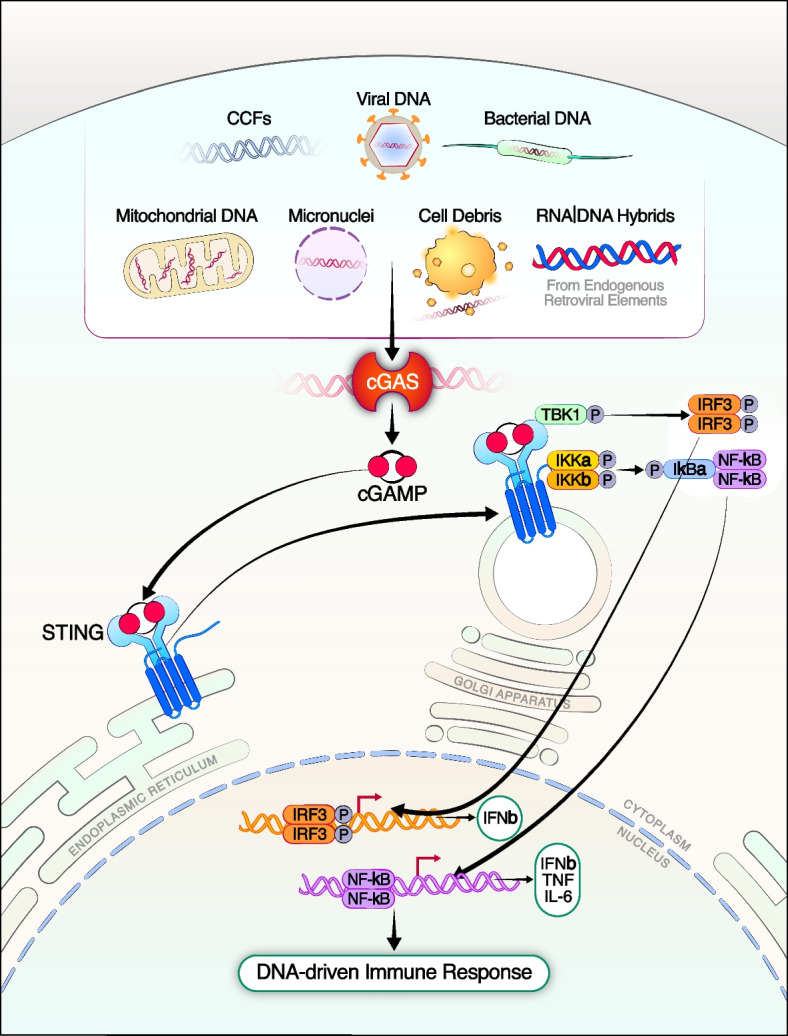
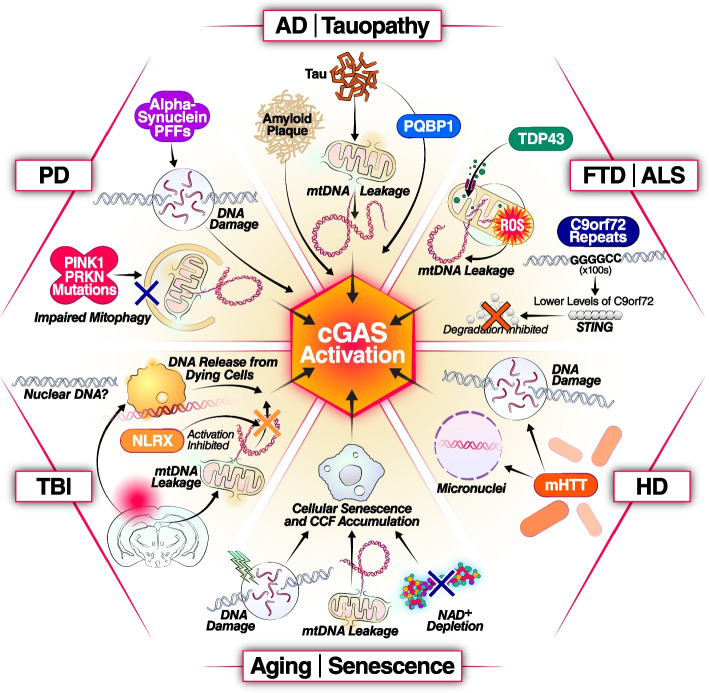
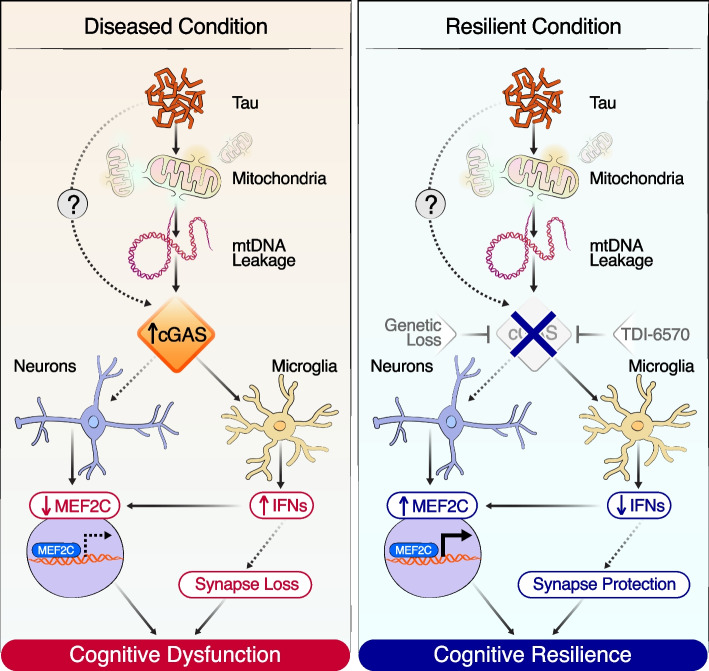
DNA sensing is a pivotal component of the innate immune system that is responsible for detecting mislocalized DNA and triggering downstream inflammatory pathways. Among the DNA sensors, cyclic GMP-AMP synthase (cGAS) is a primary player in detecting cytosolic DNA, including foreign DNA from pathogens and self-DNA released during cellular damage, culminating in a type I interferon (IFN-I) response through stimulator of interferon genes (STING) activation. IFN-I cytokines are essential in mediating neuroinflammation, which is widely observed in CNS injury, neurodegeneration, and aging, suggesting an upstream role for the cGAS DNA sensing pathway. In this review, we summarize the latest developments on the cGAS-STING DNA-driven immune response in various neurological diseases and conditions. Our review covers the current understanding of the molecular mechanisms of cGAS activation and highlights cGAS-STING signaling in various cell types of central and peripheral nervous systems, such as resident brain immune cells, neurons, and glial cells. We then discuss the role of cGAS-STING signaling in different neurodegenerative conditions, including tauopathies, Alzheimer’s disease, Parkinson’s disease, and amyotrophic lateral sclerosis, as well as aging and senescence. Finally, we lay out the current advancements in research and development of cGAS inhibitors and assess the prospects of targeting cGAS and STING as therapeutic strategies for a wide spectrum of neurological diseases.
Overview
The claims and statistics of this paper haven’t been checked yet.
Free: it reads the open-access text and checks the first 5 claims that cite a source we can check. Create a free account to check every claim.
Integrity signals
Registry
Cites
Statistics
Figures
Verification
Claims the paper makes
The claims and statistics of this paper haven’t been checked yet.
Free: it reads the open-access text and checks the first 5 claims that cite a source we can check. Create a free account to check every claim.
Claims other papers make about this one
Each is checked against this paper’s own text: does it say what the citing paper says it does?
The cited source says what the claim attributes to it.
In the citing paper
“Studies by Xie et al. found that the abnormal accumulation of double-stranded DNA in the cytoplasm may bind to the cytoplasmic DNA sensor (cGAS), thereby specifically triggering the STING-interferon (IFN) signaling pathway in microglia, promoting the expression and secretion of inflammatory cytokines.”
From Recent advances in Alzheimer's disease: Mechanisms, clinical trials and new drug development strategies. (2024) · cites this paper as [254]
In the citing paper
“dsRNA-induced inflammation also has significant downstream overlap with the better described dsDNA response to mitochondrial damage that activates type I interferons via the cGAS-STING pathway (reviewed in [39]).”
From High throughput identification of genetic regulators of microglial inflammatory processes in Alzheimer's disease (2025) · cites this paper as [39]
In the citing paper
“dsRNA-induced inflammation also has significant downstream overlap with the better described dsDNA response to mitochondrial damage that activates type I interferons via the cGAS-STING pathway (reviewed in [39]).”
From High throughput identification of genetic regulators of microglial inflammatory processes in Alzheimer’s disease (2025) · cites this paper as [39]
Self-check
Percentages, sums and reported differences re-computed from the paper’s own numbers.
The self-check needs the paper’s full text.
Citations
Cites
1 retracted
RETRACTED ARTICLE: Parkin and PINK1 mitigate STING-induced inflammation
Sliter, D. A., Martinez, J., Hao, L., Chen, X., Sun, N., Fischer, T. D., Burman, J. L., Li, Y., Zhang, Z., Narendra, D. P., et al. (2018) · Nature · doi:10.1038/s41586-018-0448-9 · Cited by 1,287 · cited 5×
“Parkin or PINK1 deficiency impairs mitophagy, inducing mtDNA release, and activation of the cGAS-STING IFN-I response [24].”
BackgroundInfluentialRetractedA Toll-like receptor recognizes bacterial DNA
Hemmi, H., Takeuchi, O., Kawai, T., Kaisho, T., Sato, S., Sanjo, H., Matsumoto, M., Hoshino, K., Wagner, H., Takeda, K., et al. (2000) · Nature · doi:10.1038/35047123 · Cited by 6,491
The senescence-associated secretory phenotype: the dark side of tumor suppression
Coppé, J.-P., Desprez, P.-Y., Krtolica, A., & Campisi, J. (2010) · Annual Review of Pathology: Mechanisms of Disease · doi:10.1146/annurev-pathol-121808-102144 · Cited by 5,206 · cited 1×
“Senescent cells exhibit several hallmarks, including the upregulation of senescence-associated β-galactosidase (SA-β-Gal) activity and the induction of a senescence-associated secretory phenotype (SASP) [72].”
BackgroundCyclic GMP-AMP Synthase Is a Cytosolic DNA Sensor That Activates the Type I Interferon Pathway
Sun, L., Wu, J., Du, F., Chen, X., & Chen, Z. J. (2013) · Science · doi:10.1126/science.1232458 · Cited by 4,996
STING is an endoplasmic reticulum adaptor that facilitates innate immune signalling
Ishikawa, H., & Barber, G. N. (2008) · Nature · doi:10.1038/nature07317 · Cited by 3,576 · cited 3×
“The degradation of IκBα leads to rapid and transient nuclear translocation of canonical NF-κB, resulting in the production of pro-inflammatory cytokines and chemokines [13] (Fig.”
BackgroundCyclic GMP-AMP Is an Endogenous Second Messenger in Innate Immune Signaling by Cytosolic DNA
Wu, J., Sun, L., Chen, X., Du, F., Shi, H., Chen, C., & Chen, Z. J. (2013) · Science · doi:10.1126/science.1229963 · Cited by 2,541 · cited 2×
“Recognizing DNA is a fundamental mechanism of host defense that involves various PRRs, including Toll-like receptor 9 (TLR9), IFI16, RNA polymerase III, and cyclic GMP-AMP synthase (cGAS) [1–4].”
BackgroundCellular senescence in aging and age-related disease: from mechanisms to therapy
Childs, B. G., Durik, M., Baker, D. J., & van Deursen, J. M. (2015) · Nature Medicine · doi:10.1038/nm.4000 · Cited by 2,363 · cited 1×
“Cellular senescence is a natural process, whereby cells enter an irreversible state of cell-cycle arrest, limiting the growth of abnormal cells and serving as a critical mechanism to prevent tumorigenesis [71].”
BackgroundThe cGAS–STING pathway as a therapeutic target in inflammatory diseases
Decout, A., Katz, J. D., Venkatraman, S., & Ablasser, A. (2021) · Nature Reviews Immunology · doi:10.1038/s41577-021-00524-z · Cited by 2,309 · cited 3×
“cGAS and STING proteins are two key targets of the innate immune cGAS-STING signaling pathway [92, 93].”
BackgroundOxidized mitochondrial DNA activates the NLRP3 inflammasome during apoptosis
Shimada, K., Crother, T. R., Karlin, J., Dagvadorj, J., Chiba, N., Chen, S., Ramanujan, V. K., Wolf, A. J., Vergnes, L., Ojcius, D. M., et al. (2012) · Immunity · doi:10.1016/j.immuni.2012.01.009 · Cited by 2,282 · cited 1×
“Mitochondrial oxidative stress leads to release of oxidized mtDNA to the cytosol, triggering innate immune signaling, such as IFN-I and NLRP3 inflammasome activation [21–23].”
BackgroundInflammation as a central mechanism in Alzheimer's disease
Kinney, J. W., Bemiller, S. M., Murtishaw, A. S., Leisgang, A. M., Salazar, A. M., & Lamb, B. T. (2018) · Alzheimer's & Dementia: Translational Research & Clinical Interventions · doi:10.1016/j.trci.2018.06.014 · Cited by 2,253 · cited 2×
“Sustained neuroin-flammation in response to pathogenic proteins through activation of immune cells, especially microglia, has been recognized as another hallmark of AD [38].”
Background
Cited by
Zhang, J., Zhang, Y., Wang, J., Xia, Y., Zhang, J., & Chen, L. (2024) · Signal Transduction and Targeted Therapy · doi:10.1038/s41392-024-01911-3 · Cited by 1,138
“253,254 254 – 256 A recent study using a special 3D human neuroimmune axis model explored the interactions between in fi ltrative peripheral immune cells and innate immune cells in AD.”
BackgroundAutophagy, aging, and age-related neurodegeneration
Palmer, J. E., Wilson, N., Son, S. M., Obrocki, P., Wrobel, L., Rob, M., Takla, M., Korolchuk, V. I., & Rubinsztein, D. C. (2025) · Neuron · doi:10.1016/j.neuron.2024.09.015 · Cited by 241
Cellular and pathological functions of tau
Parra Bravo, C., Naguib, S. A., & Gan, L. (2024) · Nature Reviews Molecular Cell Biology · doi:10.1038/s41580-024-00753-9 · Cited by 238
“We refer readers to other recent reviews for further reading on specific aspects of tau research, such as tau and amyloid-β 20 , tau and α-synuclein 21 , tau and synaptic dysfunction 22 and tau and adaptive immunity 23 .”
Self-citationInnate immune activation in neurodegenerative diseases
Castro-Gomez, S., & Heneka, M. T. (2024) · Immunity · doi:10.1016/j.immuni.2024.03.010 · Cited by 162
Quan, S., Fu, X., Cai, H., Ren, Z., Xu, Y., & Jia, L. (2025) · Molecular Neurodegeneration · doi:10.1186/s13024-025-00815-2 · Cited by 117
“…alleviating and inhibiting the abnormal release of mtDNA or other dsDNA caused by mitochondrial stress and autophagy imbalance [233], blocking the transmission of cGAS-STING signaling and the activation of its downstream inflammatory signals may represent a feasible approach for AD therapy [218].”
Thadathil, N., Delotterie, D. F., Xiao, J., Hori, R., McDonald, M. P., & Khan, M. M. (2021) · Molecular Neurobiology · doi:10.1007/s12035-020-02109-8 · Cited by 94
Carling, G. K., Fan, L., Foxe, N. R., Norman, K., Wong, M. Y., Zhu, D., Corona, C., Razzoli, A., Yu, F., Yarahmady, A., et al. (2024) · Neuron · doi:10.1016/j.neuron.2024.09.006 · Cited by 89
Self-citationZhang, G., Wei, H., Zhao, A., Xu, Y., Zhang, X., Gan, J., Guo, M., Wang, J., Zhang, F., Jiang, Y., et al. (2025) · Journal of Neuroinflammation · doi:10.1186/s12974-025-03363-0 · Cited by 88
“Recent years have seen significant advances in the development of cGAS and STING inhibitors for addressing neurological disorders [13].”
Agonists and Inhibitors of the cGAS-STING Pathway
Yu, X., Cai, L., Yao, J., Li, C., & Wang, X. (2024) · Molecules · doi:10.3390/molecules29133121 · Cited by 82
“Furthermore, neurological disorders such as Alzheimer’s disease, Parkinson’s disease, amyotrophic lateral sclerosis, traumatic brain injury, and age-related diseases are closely associated with abnormal activation of this pathway [114]. activation of this pathway [114].”
BackgroundLi, H., Cai, R., Zhou, Y., Jiang, Y., & Tan, S. (2025) · Journal of Neuroinflammation · doi:10.1186/s12974-025-03563-8 · Cited by 79
“…in immune defense, and are the brain-resident immune cell type with the highest expression of cGAS-STING and the most direct functional roles [46]. cGAS-STING pathway is closely related to microglia mediated neuroinflammation and abnormal activation of microglia has been reported in a…”
cGAS/STING signalling pathway in senescence and oncogenesis
Yu, L., & Liu, P. (2024) · Seminars in Cancer Biology · doi:10.1016/j.semcancer.2024.08.007 · Cited by 73
Relationship between the cGAS−STING and NF-κB pathways-role in neurotoxicity
Zhong, S., Zhou, Q., Yang, J., Zhang, Z., Zhang, X., Liu, J., Chang, X., & Wang, H. (2024) · Biomedicine & Pharmacotherapy · doi:10.1016/j.biopha.2024.116698 · Cited by 69
Liu, M., Pan, J., Li, X., Zhang, X., Tian, F., Li, M., Wu, X., Zhang, L., & Qin, C. (2024) · Journal of Neuroinflammation · doi:10.1186/s12974-024-03277-3 · Cited by 68
“Studies have shown that the cGAS-STING pathway is activated in the brains of AD patients [28], AD mouse models [29, 30], and aged mice [28, 31].”
BackgroundYue, B., Gao, W., Lovell, J. F., Jin, H., & Huang, J. (2025) · Essays in Biochemistry · doi:10.1042/ebc20253006 · Cited by 63
cGAS-STING and neurodegenerative diseases: A molecular crosstalk and therapeutic perspective
Dhapola, R., Paidlewar, M., Kumari, S., Sharma, P., Vellingiri, B., Medhi, B., & HariKrishnaReddy, D. (2025) · International Immunopharmacology · doi:10.1016/j.intimp.2025.114902 · Cited by 63
cGAS-STING targeting offers novel therapeutic opportunities in neurological diseases
Wang, H., Fleishman, J. S., Wu, S., Wang, G., Du, L., Li, J., & Du, J. (2025) · Ageing Research Reviews · doi:10.1016/j.arr.2025.102691 · Cited by 59
Interplay of cGAS-STING and ferroptosis: crosstalk, molecular mechanisms, and therapeutic prospects
Wang, Y., Wu, S., Wang, Y., Wang, C. X., Zheng, W., Xia, Y. F., Wang, Z., Zhang, J., Du, L., & Wang, H. (2025) · Archives of Toxicology · doi:10.1007/s00204-025-04150-9 · Cited by 51
“…chronic cGAS-STING activation drives inflammatory/autoimmune disorders and accelerates neurological disease progression (Ferecskó et al. 2023; Fryer et al. 2021; Huang et al. 2023; Motwani et al. 2019; Paul et al. 2021; Skopelja-Gardner et al. 2022; Zhang and Zhang 2025; Zhang et al. 2022).”
Interferon signaling pathways in health and disease
Wen, C., Lan, Q., Wang, Y., Ni, Y., Wong, A. S. T., & Liu, D. (2025) · Molecular Biomedicine · doi:10.1186/s43556-025-00381-5 · Cited by 52
“McCauley et al. showed that STING blockade suppressed the hyperactive type I interferon response in C9orf72-deficient mice [202].”
Neuroinflammation in Age-Related Neurodegenerative Diseases: Role of Mitochondrial Oxidative Stress
Abadin, X., de Dios, C., Zubillaga, M., Ivars, E., Puigròs, M., Marí, M., Morales, A., Vizuete, M., Vitórica, J., Trullás, R., et al. (2024) · Antioxidants · doi:10.3390/antiox13121440 · Cited by 47
The role of cGAS-STING signaling pathway in ferroptosis
Ding, L., Zhang, R., Du, W., Wang, Q., & Pei, D. (2024) · Journal of Advanced Research · doi:10.1016/j.jare.2024.12.028 · Cited by 48
cGAS-STING targeting offers a novel therapeutic paradigm in cardiovascular diseases
Wang, Y., Wang, W., Zhang, Y., Gao, P., Fleishman, J. S., & Wang, H. (2025) · European Journal of Pharmaceutical Sciences · doi:10.1016/j.ejps.2025.107137 · Cited by 42
Kumari, S., Dhapola, R., Sharma, P., Paidlewar, M., Vellingiri, B., Medhi, B., & HariKrishnaReddy, D. (2025) · Ageing Research Reviews · doi:10.1016/j.arr.2025.102883 · Cited by 37
Xie, F., Shen, B., Luo, Y., Zhou, H., Xie, Z., Zhu, S., Wei, X., Chang, Z., Zhu, Z., Ding, C., et al. (2024) · Molecular Neurodegeneration · doi:10.1186/s13024-024-00770-4 · Cited by 35
cGAS-STING Targeting Offers Novel Therapeutic Opportunities in Liver Diseases
Wang, Y., Yang, R., Cao, Y., Li, Y., Zhu, Y., Zhang, Z., Fleishman, J. S., Chen, J., & Ding, M. (2025) · Drug Design Development and Therapy · doi:10.2147/dddt.s521397 · Cited by 34
The promise of GLP-1 receptor agonists for neurodegenerative diseases
Athauda, D. S., Greig, N. H., Meissner, W. G., Foltynie, T., & Gandhi, S. (2026) · Journal of Clinical Investigation · doi:10.1172/jci194745 · Cited by 44
“Another emerging mechanism involves the cGAS/STING pathway; mitochondrial stress and defective autophagy cause cytosolic leakage of mtDNA, activating STING and proinflammatory cytokines, and STING dysfunction has been identified as a key player in NDDs (84, 85).”
Therapeutic approaches targeting aging and cellular senescence in Huntington's disease
Bhat, A. A., Moglad, E. H. O., Afzal, M., Thapa, R., Almalki, W. H., Kazmi, I. A., Alzarea, S. I., Ali, H., Pant, K., Singh, T. G., et al. (2024) · CNS Neuroscience & Therapeutics · doi:10.1111/cns.70053 · Cited by 33
Khan, S., Delotterie, D. F., Xiao, J., Thangavel, R., Hori, R. T., Koprich, J. B., Alway, S. E., McDonald, M. P., & Khan, M. M. (2025) · Brain Behavior and Immunity · doi:10.1016/j.bbi.2025.106065 · Cited by 34
Peripheral mitochondrial DNA as a neuroinflammatory biomarker for major depressive disorder
Ye, J., Duan, C., Han, J., Chen, J., Sun, N., Li, Y., Yuan, T., & Peng, D. (2024) · Neural Regeneration Research · doi:10.4103/nrr.nrr-d-23-01878 · Cited by 35
Multiple System Atrophy: Pathology, Pathogenesis, and Path Forward
Ndayisaba, A., Halliday, G. M., & Khurana, V. (2024) · Annual Review of Pathology Mechanisms of Disease · doi:10.1146/annurev-pathmechdis-051122-104528 · Cited by 35
Zhou, Q., Luo, J., Chai, X., Yang, J., Zhong, S., Zhang, Z., Chang, X., & Wang, H. (2025) · International Immunopharmacology · doi:10.1016/j.intimp.2025.114679 · Cited by 33
cGAS-STING targeting offers therapy choice in lung diseases
Wang, Y., Zhang, X., Wang, W., Zhang, Y., Fleishman, J. S., & Wang, H. (2025) · Biology Direct · doi:10.1186/s13062-025-00611-4 · Cited by 31
The activation of cGAS-STING pathway offers novel therapeutic opportunities in cancers
Wang, Y., Zhu, Y., Cao, Y., Li, Y., Zhang, Z., Fleishman, J. S., Cheng, S., Chen, J., & Ding, M. (2025) · Frontiers in Immunology · doi:10.3389/fimmu.2025.1579832 · Cited by 46
Gąssowska-Dobrowolska, M., Olech-Kochańczyk, G., Culmsee, C., & Adamczyk, A. (2024) · Journal of Inflammation Research · doi:10.2147/jir.s468609 · Cited by 31
“30 Beyond its involvement in host defence against infectious microbes (as cGAS–STING has emerged as a key player against pathogens by detecting cytosolic foreign DNA and prompting a robust innate immune response), 31 cGAS is also the main sensor that detects self-DNA, including genomic and…”
BackgroundEndosomal traffic disorders: a driving force behind neurodegenerative diseases
Dong, J., Tong, W., Liu, M., Liu, M., Liu, J., Jin, X., Chen, J., Jia, H., Gao, M., Wei, M., et al. (2024) · Translational Neurodegeneration · doi:10.1186/s40035-024-00460-7 · Cited by 29
“It is well established that neuroinflammation plays a crucial role in the pathogenesis of NDDs [196–198].”
Sheng, W., Wu, Z., Wei, J., Wang, J., Zhang, S., Ding, Z., Zhong, J., Deng, D., Zhong, Z., Yin, Y., et al. (2025) · Cell Death Discovery · doi:10.1038/s41420-025-02658-8 · Cited by 27
“In recent years, cytoplasmic DNA-sensing pattern have attracted much attention in nervous system diseases [14, 15]. cGAS recognizes exogenous and endogenous dsDNA in the cytoplasm, regardless of DNA sequence [16].”
STING Deletion Protects Against Amyloid β‐induced Alzheimer's Disease Pathogenesis
Thanos, J. M., Campbell, O. C., Cowan, M. N., Bruch, K. R., Moore, K. A., Ennerfelt, H. E., Natale, N. R., Mangalmurti, A., Kerur, N., & Lukens, J. R. (2025) · Alzheimer's & Dementia · doi:10.1002/alz.70305 · Cited by 26
Gene and RNA Editing: Revolutionary Approaches to Treating Diseases
Li, J., Huang, J., Liao, Y., Hu, T., Wang, C., Zhang, W., & Huang, C. (2025) · MedComm · doi:10.1002/mco2.70389 · Cited by 31
Kaur, A., & Aran, K. R. (2025) · Neuroscience · doi:10.1016/j.neuroscience.2025.04.001 · Cited by 25
Crosstalk between cGAS-STING and pyroptosis: From molecular mechanisms to therapeutic strategies
Wang, H., Wu, S., Zhang, X., Zheng, W., Wang, Z., An, C., Wang, Y., & Zhang, J. (2026) · International Immunopharmacology · doi:10.1016/j.intimp.2026.116203 · Cited by 25
Neurodegeneration rewires the tumor microenvironment via the neuro–immune–cancer axis
Bautista, J., Coral-Riofrio, E. C., Urresta, S. S., Palacios-Zavala, D., Echeverría, C. E., Araujo‐Abad, S., & López‐Cortés, A. (2025) · iScience · doi:10.1016/j.isci.2025.113550 · Cited by 22
“47,49 Conversely, in peripheral tissues and the TME, STING activation plays dual roles.”
cGAS-STING signaling in Alzheimer's disease: Microglial mechanisms and therapeutic opportunities
Fazal, F., Dar, N. J., Ahamad, S., Khan, S., Bano, N., Saha, S., Nazir, A., & Bhat, S. A. (2026) · Molecular Aspects of Medicine · doi:10.1016/j.mam.2025.101444 · Cited by 24
Mitochondrial DNA: a molecular switch driving sterile neuroinflammation
Jauhari, A., Singh, T., Carlisle, D. L., & Friedlander, R. M. (2026) · Translational Neurodegeneration · doi:10.1186/s40035-026-00540-w · Cited by 23
“Complemen-tarily, microglial cGAS deletion significantly curbs early plaque formation and cognitive decline in AD models, underscoring the central role of this innate immune sensor in disease progression [156, 157].”
Wu, J., Xu, W., Su, Y., Wang, G., & Ma, J. (2024) · Acta Pharmacologica Sinica · doi:10.1038/s41401-024-01416-3 · Cited by 23
“Notably, microglia and astrocytes, investigated extensively within the context of the brain, are recognized as integral innate immune cells that contribute to neuroin fl ammation [55 – 57].”
Lee, H., Pearse, R. V., Lish, A. M., Pan, C., Augur, Z. M., Terzioğlu, G., Gaur, P., Liao, M., Fujita, M., Tio, E. S., et al. (2025) · Glia · doi:10.1002/glia.24677 · Cited by 21
Zhang, H., Ya, J., Sun, M., Du, X., Ren, J., & Qu, X. (2025) · Chemical Science · doi:10.1039/d4sc07963a · Cited by 22
Jin, Y., Fleishman, J. S., Ma, Y., Jing, X., Guo, Q., Shang, W., & Wang, H. (2025) · Drug Design Development and Therapy · doi:10.2147/dddt.s506537 · Cited by 20
Emerging roles for innate and adaptive immunity in tauopathies
Johnson, A. M., & Lukens, J. R. (2025) · Cell Reports · doi:10.1016/j.celrep.2025.116232 · Cited by 20
“37 However, as the tauopathy field stands, cGAS-STING is the predominant DNA damage immune pathway implicated. cGAS is one of many sensors capable of detecting cytoplasmic double-stranded DNA (dsDNA).”
Microglial apolipoprotein E particles contribute to neuronal senescence and synaptotoxicity
Wang, N., Cai, L., Pei, X., Lin, Z., Huang, L., Liang, C., Wei, M., Shao, L., Guo, T., Huang, F., et al. (2024) · iScience · doi:10.1016/j.isci.2024.110006 · Cited by 18
“58 Targeting microglia and their associated pathways has emerged as a highly promising approach to mitigate the phenotypes associated with AD, 32,53,59,60 given that microglia are the primary cell type implicated in brain inflammation.”
Unraveling Parkinson's disease: The mystery of mitochondria and the role of aging
Liu, T., Li, J., Wu, H., Qiao, J., & Wei, J. (2025) · Genes & Diseases · doi:10.1016/j.gendis.2025.101719 · Cited by 23
Alipour-Khezri, E., Moqadami, A., Vahed, S. Z., & Barzegari, A. (2025) · Biomedicine & Pharmacotherapy · doi:10.1016/j.biopha.2025.118790 · Cited by 23
Tau proteins and senescent Cells: Targeting aging pathways in Alzheimer’s disease
Singh, M., Ali, H., Jyothi, S. R., Kaur, I., Kumar, S., Sharma, N., Prasad, G. V. S., Pramanik, A., Almalki, W. H., & Imran, M. (2024) · Brain Research · doi:10.1016/j.brainres.2024.149165 · Cited by 18
Li, B., Wang, L., Yan, X., Tang, Z., Wang, Y., Sun, T., & Qi, X. (2025) · Journal of Neuroinflammation · doi:10.1186/s12974-025-03506-3 · Cited by 19
“Emerging evidence links STING-mediated immune responses to the pathogenesis of neurodegenerative disorders and inflammatory pain [21–23].”
Guo, N., Geng, Q., Wang, Y., Sun, Y., Xu, H., Wu, S., Li, Y., Leng, R., Qin, W., Chen, S., et al. (2025) · The American Journal of Chinese Medicine · doi:10.1142/s0192415x25500582 · Cited by 17
In sickness and in health—Type I interferon and the brain
Cao, W. (2024) · Frontiers in Aging Neuroscience · doi:10.3389/fnagi.2024.1403142 · Cited by 18
Identification and development of cGAS inhibitors and their uses to treat Alzheimer's disease
Alarcón‐Espósito, J., Nagiri, R. K., Gan, L., & Sinha, S. C. (2025) · Neurotherapeutics · doi:10.1016/j.neurot.2025.e00536 · Cited by 18
Self-citationTherapeutic Targets in Innate Immunity to Tackle Alzheimer’s Disease
Serradas, M. L., Ding, Y., Martorell, P., Kulińska, I., & Castro‐Gomez, S. (2024) · Cells · doi:10.3390/cells13171426 · Cited by 17
“In the CNS, cGAS and STING are mainly found in microglial cells, but recent findings have shown expression in other cell types, such as astrocytes, oligodendrocytes, and neurons under specific conditions, such as chronic inflammation and aging [212,246].”
BackgroundUnraveling the Gut‐Brain‐Immune Interplay in Herpes Simplex Virus‐Associated Neurodegeneration
Bautista, J., Ávila‐Coello, D., Hidalgo‐Tinoco, C., Bueno‐Miño, J., & López‐Cortés, A. (2025) · Journal of Medical Virology · doi:10.1002/jmv.70504 · Cited by 16
“These molecules, in turn, influence microglial proteostasis ‐ related pathways, including ubiquitin ‐ proteasome system modulation and lysosomal degradation capacity, potentially aggravating HSV ‐ 1 ‐ induced proteotoxic stress in the brain [49, 51, 58].”
Wang, W., Wang, L., Zhong, X., Dong, L., Zhang, L., & Hu, J. X. (2025) · Cell Biochemistry and Function · doi:10.1002/cbf.70146 · Cited by 16
“These molecules enhance APC activation and T cell responses [199, 213].”
Huang, X.-L., Hu, Y., Wu, J., Jiang, J., Zou, W., Zhang, P., & Tang, X. (2024) · Experimental Neurology · doi:10.1016/j.expneurol.2024.115093 · Cited by 16
Chen, J., Zhu, T., Yang, X., Yang, Z., Shen, M., Gu, B., Wang, D., Zhang, Y., Zhang, M., Sun, S., et al. (2025) · Free Radical Biology and Medicine · doi:10.1016/j.freeradbiomed.2025.07.034 · Cited by 13
Age-dependent regenerative mechanisms in the brain
Vanacore, G., Christensen, J. B., & Bayin, N. S. (2024) · Biochemical Society Transactions · doi:10.1042/bst20230547 · Cited by 12
Therapeutic modulation of cGAS-STING pathway in neurodegeneration
Sharma, V., Verma, R., Sharma, P., & Singh, T. G. (2025) · Brain Research · doi:10.1016/j.brainres.2025.149784 · Cited by 13
Cardona, C. L., Wei, L., Kim, J., Angeles, E., Singh, G., Chen, S., Patel, R., Ifediora, N., Canoll, P., Teich, A. F., et al. (2025) · Journal of Neuroinflammation · doi:10.1186/s12974-025-03562-9 · Cited by 12
“…damage, which can promote the senescence-associated secretory phenotype (SASP) [38]. dsRNA-induced inflammation also has significant downstream overlap with the better described dsDNA response to mitochondrial damage that activates type I interferons via the cGAS-STING pathway (reviewed in [39]).”
Cardona, C. L., Wei, L., Kim, J., Angeles, E., Singh, G., Chen, S., Patel, R., Ifediora, N., Canoll, P., Teich, A. F., et al. (2025) · doi:10.1101/2025.03.09.642133 · Cited by 12
Jiao, P., An, Y., Wu, S., Li, H., & Li, G.-L. (2024) · Parkinson s Disease · doi:10.1155/padi/9973140 · Cited by 12
“During the pathogenesis of PD, neuroinfammation is activated mainly through brain-resident immune cells in the pathophysiology of PD [19].”
Solving the Amyloid Paradox: Unveiling the Complex Pathogenicity of Amyloid Fibrils
Sulatsky, M. I., Stepanenko, O. V., Stepanenko, O. V., & Sulatskaya, A. I. (2025) · Aggregate · doi:10.1002/agt2.70078 · Cited by 11
cGAS–STING pathway modulation: A new hope for neural regeneration
Zhang, J., Sun, M., Luo, Y., Räisänen, M. P., Peng, L., Qin, L., Yu, M., & Shi, H. (2025) · Neural Regeneration Research · doi:10.4103/nrr.nrr-d-24-01516 · Cited by 14
“Then search strategies are formulated for the role of the cGAS–STING pathway in neurological disorders/injuries: (ALL=(cGAS–STING pathway) AND ALL=(neurological disorders); ALL=(cGAS–STING pathway) AND ALL=(nerve injuries); ALL=(cGAS–STING pathway) AND ALL=(neuroinflammation); ALL=(cGAS–STING…”
Guo, Y., Xue, T., Meng, X.-F., Yan, P., Zhang, M., Zhang, Q., Li, T., Shi, K., & Zhang, N. (2025) · Phytomedicine · doi:10.1016/j.phymed.2025.157399 · Cited by 12
Cáceres-Palomo, L., Sánchez‐Mejías, E., Trujillo‐Estrada, L., Pérez-Moreno, J. J., Lopez-Oliva, E., Lim, T. E., DeFlitch, L., Chang, S. H., Kampman, L., Corces, M. R., et al. (2025) · Journal of Neuroinflammation · doi:10.1186/s12974-025-03607-z · Cited by 13
“The lack of mitochondrial homeostasis may lead to the disruption of mitochondrial integrity and unleashing of mitochondrial DNA into the cytoplasm, activating DNA sensing mechanisms as the cGAS-STING signaling, strongly associated to aging [72, 73] and neurodegenerative conditions [74–77].”
Tian, M., Li, F., & Pei, H. (2024) · Biomedicines · doi:10.3390/biomedicines12081728 · Cited by 11
“This pathway plays a significant role in anti-infective defense, autoimmune and inflammatory diseases, and cancer immunotherapy [3].”
BackgroundRetractedSolomon, J., Mandal, S., & Aran, K. R. (2026) · Gene · doi:10.1016/j.gene.2026.150000 · Cited by 10
Liu, H., Hu, C., Liu, H., Gong, Z., Jiang, S., Xie, J., Li, Y., Liu, C., Wang, Y., Zou, C., et al. (2026) · Journal of Neuroinflammation · doi:10.1186/s12974-026-03815-1 · Cited by 10
“Oligodendroglial sensitivity to IFN-rich environments IFN-biased inflammatory states can inhibit OPC differentiation and myelination [108, 121], providing a route by which sustained microglial IFN programs sec-ondarily impair white-matter support and circuit resilience.”
Myotis bat STING attenuates aging-related inflammation in female mice
Wang, X., 中国科学院武汉病毒研究所, 湖. 武. 4., Jia, J.-K., Wang, Q., Gong, J., Li, A., Su, J., Zhou, P., 广东省广州市广州国际生物岛广州国家实验室, 广. 广., 中国科学院大学, 北. 1., et al. (2024) · 动物学研究 · doi:10.24272/j.issn.2095-8137.2024.030 · Cited by 10
Aging-associated mechanisms of atrial fibrillation progression and their therapeutic potential
Zhao, S., Johnston, A. M., Yiu, C. H. K., Moreira, L. M., Reilly, S. N., & Wehrens, X. H. T. (2024) · The Journal of Cardiovascular Aging · doi:10.20517/jca.2024.12 · Cited by 11
“Notably, in recent years, the cyclic GMP-AMP synthase (cGAS)-stimulator of interferon genes (STING) pathway, activated by the leakage of double-stranded DNA molecules, has emerged as an important link between senescence and inflammaging by contributing to the SASP [Figure 4] [112,113] .”
The contribution of type-I IFN-mediated neuroinflammation to Parkinson's disease progression
Chen, S., Crack, P. J., & Taylor, J. M. (2025) · Brain Behavior & Immunity - Health · doi:10.1016/j.bbih.2025.101017 · Cited by 12
“…is likely that targeting this signalling could yield a synergistic improvement in age-related neuro-degenerative condition like PD, nevertheless this requires further characterisation of the drug molecules regarding the safety and pharmacokinetic profiles (Huang et al., 2023; Decout et al., 2021).”
Fu, G., Li, T., Zhao, Y., Zhang, S., Xue, X., Yang, Y., Li, T., Luo, S., Yue, G.-X., & Tong, L. (2025) · Chinese Medicine · doi:10.1186/s13020-025-01135-9 · Cited by 9
“The cGAS-STING pathway driven immune responses play an important role in PD, and targeting cGAS-STING pathway serves as a promising strategy for PD treatment [29].”
Proteostasis and Neuroinflammation in Alzheimer’s Disease
Potokiri, A., & Wang, H. (2025) · Journal of Integrative Neuroscience · doi:10.31083/jin39826 · Cited by 10
“Research indicates that this pathway is activated in many neurodegenerative diseases [65].”
Operationalizing Chronic Inflammation: An Endotype-to-Care Framework for Precision and Equity
Ramos‐Niño, M. E. (2025) · Clinics and Practice · doi:10.3390/clinpract15120233 · Cited by 9
“These receptors, particularly TLRs and NLRs, tend to skew to the transcriptional programs associated with persistent NF-κ B and interferon regulatory factor (IRF) activation with chronic cytokine production [4,7,9–11].”
Brown, R. E., Coxon, M., Larsen, B., Allison, M. J., Chadha, A., Mittelstadt, I., Mertz, T. M., Roberts, S. A., & Freudenreich, C. H. (2025) · Proceedings of the National Academy of Sciences · doi:10.1073/pnas.2408179122 · Cited by 9
“We speculate that APOBECs could be activated in neural cells during an innate immune response triggered by DNA damage and self - nucleic acids or exogenous pathogenic infection ( 55 , 56 ).”
Zhu, S., Wang, N., Chen, S., Zou, J., & Tan, S. (2025) · Neurochemistry International · doi:10.1016/j.neuint.2025.106014 · Cited by 8
The cGAS–STING Pathway in Dementia: An Emerging Mechanism of Neuroinflammation
Min, Y., Lee, Y.-S., Lee, J.-W., Keum, D.-Y., Gwag, J.-Y., Jeon, S., Jo, H., & Kang, S.-U. (2025) · Brain Sciences · doi:10.3390/brainsci15111241 · Cited by 8
“In the context of neurodegenerative diseases, such as AD and other types of dementia, the activation of the cGAS-STING pathway has gained increasing attention as a key mediator of neuroinflammation [9,14].”
Mi, S., Nakashima, H., & Nakashima, K. (2025) · Epigenomes · doi:10.3390/epigenomes9040038 · Cited by 8
“It has been also reported that aggregated α -syn induces an increase of endogenous DNA ligands (e.g., mtDNA and gDNA), activating the cGAS–STING pathway [117].”
Pittman, M. N., Nelsen, M. B., Thompson, M. K., & Prakash, A. (2026) · Genes · doi:10.3390/genes17010082 · Cited by 6
“Inhibitors of the cGAS-STING pathway and the NLRP3 inflammasome are now being assessed in preclinical models for their ability to blunt DAMP-induced neuroinflammation [204–212].”
Wei, Y., Cai, S., Ji, Y., Wang, J., Shang, T., Dai, B., & Sun, H. (2026) · Biochemical Pharmacology · doi:10.1016/j.bcp.2026.118317 · Cited by 12
Wang, W., Zhao, F., Torres, S. L., Harris, P. L. R., Wang, X., Peng, L., Siedlak, S. L., & Zhu, X. (2024) · Journal of Alzheimer s Disease · doi:10.3233/jad-240570 · Cited by 6
“34 We looked at the microglia population in the hippocampus in the 9-month-old non-IR mice and compared them to the 0.5 Gy treated 9-month-old mice.”
InfluentialMarkers of Type 2 Inflammation and Immunosenescence Are Upregulated in Localized Scleroderma
Khoury, L., Prosty, C. J., Ghazal, S., Gabrielli, S., Torok, K. S., Osman, M., Martinez-Jaramillo, E., Lefrançois, P., & Netchiporouk, E. (2025) · International Journal of Molecular Sciences · doi:10.3390/ijms26031258 · Cited by 7
“…stress markers, including the up-regulation of DNA damage response pathways and increased fusion transcript events, which have not been previously reported in LS. cGAS-STING pathway activation, driven by cytoplasmic DNA fragments, could be a potential mechanism for the observed IFN release [39].”
Almalki, S., Salama, M. E., Taylor, M. J., Ahmed, Z., & Tuxworth, R. I. (2025) · Frontiers in Molecular Neuroscience · doi:10.3389/fnmol.2025.1671906 · Cited by 6
“These findings may contribute to the existing body of evidence regarding the dysregulation of immunity in ALS disease, highlighting nuclear DNA damage as a key factor that trigger innate immune responses (Tan et al., 2022; Huang et al., 2023).”
Ma, S., Yi, S., Zou, H. L., Fan, S., & Xiao, Y. (2024) · European Journal of Pharmaceutical Sciences · doi:10.1016/j.ejps.2024.106958 · Cited by 5
Genotype-specific interferon signatures in amyotrophic lateral sclerosis relate to disease severity
Carletta, O., Perfetto, C., Rifai, O. M., Manganelli, F., Waldron, F. M., Maniatis, T., Gregory, J. M., & Gerbino, V. (2025) · Brain · doi:10.1093/brain/awaf324 · Cited by 5
Suppression of interferon signaling via small-molecule modulation of TFAMPreprint
Sideris, D. P., Lee, H., Olson, L., Nallaparaju, K. C., Okuyama, K., Ciavarri, J., Lafyatis, R., Larsen, M. B., Lin, B., Alfaras, I., et al. (2026) · eLife · doi:10.7554/elife.108742 · Cited by 5
The cGAS-STING pathway in age-related ocular diseases: Mechanisms and therapeutic opportunities
Shang, Z., Qin, D., Liu, X., Li, H., Liu, C., Zhang, R., Sun, T., Pan, Z., Feng, W., & You, X.-G. (2025) · Cellular Signalling · doi:10.1016/j.cellsig.2025.112069 · Cited by 5
Wei, J., Wang, L., Wang, D., Chen, W., Guo, L., Ren, M., Guo, F., Ruan, S., Hu, H., Zheng, Y., et al. (2025) · npj Parkinson s Disease · doi:10.1038/s41531-025-01135-4 · Cited by 6
Jiang, T., Zhuang, Y., Jian, J., Wang, J., Ding, Z., Liu, W., Wu, T., & Yang, M. (2025) · Brain Research Bulletin · doi:10.1016/j.brainresbull.2025.111633 · Cited by 4
Gong, Z., Chen, Z., Sang, S., Yang, L., Qin, H., Li, Q., & Jia, Y. (2026) · Free Radical Biology and Medicine · doi:10.1016/j.freeradbiomed.2026.01.019 · Cited by 5
Wang, R., Feng, Y., Zhou, Z., Jiang, J., Zhang, R., Zou, W., Yang, H., Lv, W., & Shen, Y. (2026) · Frontiers in Aging Neuroscience · doi:10.3389/fnagi.2026.1748418 · Cited by 7
“The cGAS-STING signaling pathway is typically activated in response to cytoplasmic DNA, such as mitochondrial DNA or viral DNA, thereby driving type I interferon responses and neuroinflammatory reactions (Huang et al., 2023; Paul et al., 2021; Quan et al., 2025).”
cGAS-STING and PANoptosis: Interplay, Underlying Mechanisms, and Therapeutic Targets
Wang, Y., CHEN, J., Feng, W., Li, N., Zhang, X., Zhao, S., Shi, K., Wang, E., & Jin, Y. (2026) · Drug Design Development and Therapy · doi:10.2147/dddt.s593380 · Cited by 6
“42,44 45–49 In the cardiovascular system, DNA released from dying cells within atherosclerotic plaques or infarcted myocardium triggers STING-dependent inflammation, driving plaque instability, maladaptive cardiac remodeling, and heart failure.”
Sex-dependent interferon signaling contributes to female-biased vulnerability in Alzheimer’s disease
López-López, V., Iniesta, G., Galán-Ganga, M., Exposito-Coca, A., Durán-Laforet, V., Bhojwani-Cabrera, A. M., Navarrón, C. M., Guillot-Fernández, M., Venero, J. L., Sanchez-Mut, J. V., et al. (2026) · Journal of Neuroinflammation · doi:10.1186/s12974-026-03840-0 · Cited by 4
“Activation of cGAS-STING has been reported in both human AD brain tissue and experimental models, where it promotes interferon responses and neuroinflammation [53, 55, 56, 88, 95].”
Oriquat, G., Abdulqader, A. F., Farid, H., Ashurov, Z., Sottarov, A., Ghafl, N. Y., Bainsal, N., & Singh, R. (2026) · Brain Research Bulletin · doi:10.1016/j.brainresbull.2026.111963 · Cited by 4
Spotlight on cGAS-STING: role in disease pathogenesis and therapeutic potential
Yan, D., Hu, J., Liu, Z. H., & Ouyang, W. (2026) · Molecular Biomedicine · doi:10.1186/s43556-026-00478-5 · Cited by 4
“In AD, microglia, the resident macrophages of the CNS, drive neuroinflammation through cGAS-STING activation [144–146].”
Role of PQBP1 in Pathogen Recognition—Impact on Innate Immunity
Wiench, L., Rizzo, D., Sinay, Z., Nacsa, Z., Fuchs, N. V., & König, R. (2024) · Viruses · doi:10.3390/v16081340 · Cited by 4
“Since PQBP1 is an IDP, lacking secondary and tertiary structure despite the well-conserved WW domain [19], it is quite difficult to obtain molecular insights.”
Background
Metadata
- Authors
- Huang, Y., Liu, B., Sinha, S. C., Amin, S., & Gan, L.
- Affiliations
- Weill Cornell Medicine (US)
- Corresponding author
- Gan, Li
- Venue
- Molecular Neurodegeneration
- Published
- 2023-11-08
- Volume
- 18
- Issue
- 1
- Pages
- 79-79
- ISSN
- 1750-1326 (ISSN-L)
- PMC
- PMC10634099
- OpenAlex
- W4388483815
- Semantic Scholar
- b247daddef3d0ad4514f19127abcc66cc927a0f0
- Cited by
- 164
- References
- 135
- Citations by year
- 2026: 60 · 2025: 70 · 2024: 34
- FWCI
- 4.56
- Type
- journal article
- Language
- en
- Open access
- gold
- doi.org
- Licence
- cc-by
- creativecommons.org/licenses/by/4.0 (tdm)
- creativecommons.org/licenses/by/4.0 (vor)
- Locations
- Molecular Neurodegeneration (publishedVersion, cc-by)
- PubMed Central (publishedVersion, cc-by)
- PubMed (publishedVersion)
- DOAJ (DOAJ: Directory of Open Access Journals) (submittedVersion, cc-by-sa)
- Funders
- National Institute on Aging (R01AG072758, R01AG054214, R01AG074541)
- Tau Consortium
- JPB Foundation
- Cure Alzheimer's Fund
- BrightFocus Foundation (A20201312F)
- Topics
- Life Sciences › Immunology and Microbiology › Immunology › interferon and immune responses
- Life Sciences › Neuroscience › Neurology › Neuroinflammation and Neurodegeneration Mechanisms
- Life Sciences › Biochemistry, Genetics and Molecular Biology › Molecular Biology › Inflammasome and immune disorders
- Keywords
- cGAS-STING pathway, DNA sensing, cytosolic DNA, type I interferon, neuroinflammation, neurodegenerative diseases, tauopathy, Alzheimer's disease, Parkinson's disease, amyotrophic lateral sclerosis, aging, cellular senescence, cGAS inhibitors, therapeutic targeting, glial cells, neurons, innate immunity
- MeSH terms
- DNA, Humans, Interferon Type I, Nervous System Diseases, Nucleotidyltransferases, Signal Transduction
About these checks
Registry, retraction, Cites and statistics results are computed, not judged, with one exception: a printed reference that no index lists is read once by a model before it counts as a citation error. Claims are extracted by a model and kept only when their quote appears verbatim in the text; each cited source is then checked, with a model’s help, for whether it says what the claim relies on. Those verdicts can be wrong — read the claim’s quote and the cited source before relying on one.
Statistics and arithmetic are recomputed, not judged.
Confidence bands are shown only for fields calibrated on our annotated test set. None is calibrated yet, so no band is shown.
What counts as a claim ›How we measure confidence ›How we check this ›
Are you an author, or do you see a problem with this page? Request a review
Data sources
Bibliographic data: Semantic Scholar, OpenAlex, Crossref.
Contains information from the Semantic Scholar Academic Graph Datasets, made available under the ODC Attribution License (ODC-BY 1.0).
Semantic Scholar’s data is described in: Kinney, R., et al. (2023). The Semantic Scholar Open Data Platform. arXiv:2301.10140.
