

Mechanism and therapeutic potential of targeting cGAS-STING signaling in neurological disorders
Open accessThe DOI matches its Crossref record; 136 of the 136 references it cites were found in a registry or an index.
Abstract
DNA sensing is a pivotal component of the innate immune system that is responsible for detecting mislocalized DNA and triggering downstream inflammatory pathways. Among the DNA sensors, cyclic GMP-AMP synthase (cGAS) is a primary player in detecting cytosolic DNA, including foreign DNA from pathogens and self-DNA released during cellular damage, culminating in a type I interferon (IFN-I) response through stimulator of interferon genes (STING) activation. IFN-I cytokines are essential in mediating neuroinflammation, which is widely observed in CNS injury, neurodegeneration, and aging, suggesting an upstream role for the cGAS DNA sensing pathway. In this review, we summarize the latest developments on the cGAS-STING DNA-driven immune response in various neurological diseases and conditions. Our review covers the current understanding of the molecular mechanisms of cGAS activation and highlights cGAS-STING signaling in various cell types of central and peripheral nervous systems, such as resident brain immune cells, neurons, and glial cells. We then discuss the role of cGAS-STING signaling in different neurodegenerative conditions, including tauopathies, Alzheimer’s disease, Parkinson’s disease, and amyotrophic lateral sclerosis, as well as aging and senescence. Finally, we lay out the current advancements in research and development of cGAS inhibitors and assess the prospects of targeting cGAS and STING as therapeutic strategies for a wide spectrum of neurological diseases.
Overview
The claims and statistics of this paper haven’t been checked yet.
Free: it reads the open-access text and checks the first 5 claims that cite a source we can check. Create a free account to check every claim.
Integrity signals
Registry
Cites
Statistics
Figures
Verification
Claims the paper makes
The claims and statistics of this paper haven’t been checked yet.
Free: it reads the open-access text and checks the first 5 claims that cite a source we can check. Create a free account to check every claim.
Claims other papers make about this one
Each is checked against this paper’s own text: does it say what the citing paper says it does?
The cited source says what the claim attributes to it.
In the citing paper
“Studies by Xie et al. found that the abnormal accumulation of double-stranded DNA in the cytoplasm may bind to the cytoplasmic DNA sensor (cGAS), thereby specifically triggering the STING-interferon (IFN) signaling pathway in microglia, promoting the expression and secretion of inflammatory cytokines.”
From Recent advances in Alzheimer's disease: Mechanisms, clinical trials and new drug development strategies. (2024) · cites this paper as [254]
Self-check
Percentages, sums and reported differences re-computed from the paper’s own numbers.
The self-check needs the paper’s full text.
Citations
Cites
1 retracted
RETRACTED ARTICLE: Parkin and PINK1 mitigate STING-induced inflammation
Sliter, D. A., Martinez, J., Hao, L., Chen, X., Sun, N., Fischer, T. D., Burman, J. L., Li, Y., Zhang, Z., Narendra, D. P., et al. (2018) · Nature · doi:10.1038/s41586-018-0448-9 · Cited by 1,287 · cited 5×
“Parkin or PINK1 deficiency impairs mitophagy, inducing mtDNA release, and activation of the cGAS-STING IFN-I response [24].”
BackgroundInfluentialRetractedA Toll-like receptor recognizes bacterial DNA
Hemmi, H., Takeuchi, O., Kawai, T., Kaisho, T., Sato, S., Sanjo, H., Matsumoto, M., Hoshino, K., Wagner, H., Takeda, K., et al. (2000) · Nature · doi:10.1038/35047123 · Cited by 6,491
The senescence-associated secretory phenotype: the dark side of tumor suppression
Coppé, J.-P., Desprez, P.-Y., Krtolica, A., & Campisi, J. (2010) · Annual Review of Pathology: Mechanisms of Disease · doi:10.1146/annurev-pathol-121808-102144 · Cited by 5,206 · cited 1×
“Senescent cells exhibit several hallmarks, including the upregulation of senescence-associated β-galactosidase (SA-β-Gal) activity and the induction of a senescence-associated secretory phenotype (SASP) [72].”
BackgroundCyclic GMP-AMP Synthase Is a Cytosolic DNA Sensor That Activates the Type I Interferon Pathway
Sun, L., Wu, J., Du, F., Chen, X., & Chen, Z. J. (2013) · Science · doi:10.1126/science.1232458 · Cited by 4,996
STING is an endoplasmic reticulum adaptor that facilitates innate immune signalling
Ishikawa, H., & Barber, G. N. (2008) · Nature · doi:10.1038/nature07317 · Cited by 3,576 · cited 3×
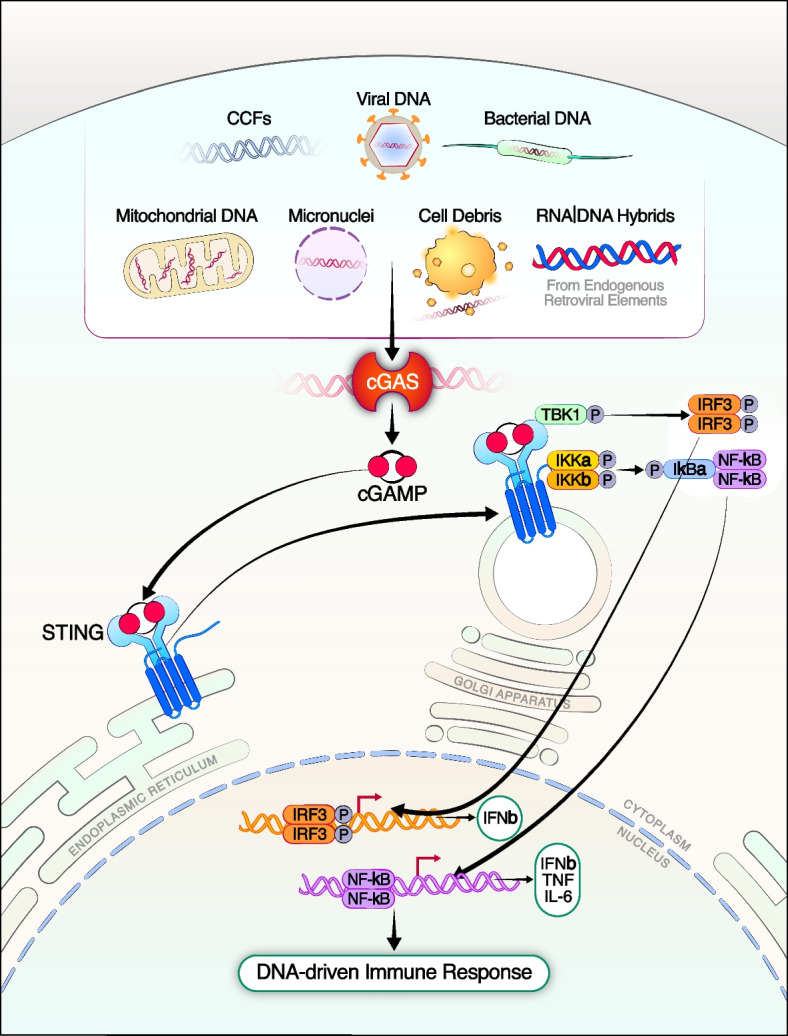
“The degradation of IκBα leads to rapid and transient nuclear translocation of canonical NF-κB, resulting in the production of pro-inflammatory cytokines and chemokines [13] (Fig.”
BackgroundCyclic GMP-AMP Is an Endogenous Second Messenger in Innate Immune Signaling by Cytosolic DNA
Wu, J., Sun, L., Chen, X., Du, F., Shi, H., Chen, C., & Chen, Z. J. (2013) · Science · doi:10.1126/science.1229963 · Cited by 2,541 · cited 2×
“Recognizing DNA is a fundamental mechanism of host defense that involves various PRRs, including Toll-like receptor 9 (TLR9), IFI16, RNA polymerase III, and cyclic GMP-AMP synthase (cGAS) [1–4].”
BackgroundCellular senescence in aging and age-related disease: from mechanisms to therapy
Childs, B. G., Durik, M., Baker, D. J., & van Deursen, J. M. (2015) · Nature Medicine · doi:10.1038/nm.4000 · Cited by 2,363 · cited 1×
“Cellular senescence is a natural process, whereby cells enter an irreversible state of cell-cycle arrest, limiting the growth of abnormal cells and serving as a critical mechanism to prevent tumorigenesis [71].”
BackgroundThe cGAS–STING pathway as a therapeutic target in inflammatory diseases
Decout, A., Katz, J. D., Venkatraman, S., & Ablasser, A. (2021) · Nature Reviews Immunology · doi:10.1038/s41577-021-00524-z · Cited by 2,309 · cited 3×
“cGAS and STING proteins are two key targets of the innate immune cGAS-STING signaling pathway [92, 93].”
BackgroundOxidized mitochondrial DNA activates the NLRP3 inflammasome during apoptosis
Shimada, K., Crother, T. R., Karlin, J., Dagvadorj, J., Chiba, N., Chen, S., Ramanujan, V. K., Wolf, A. J., Vergnes, L., Ojcius, D. M., et al. (2012) · Immunity · doi:10.1016/j.immuni.2012.01.009 · Cited by 2,282 · cited 1×
“Mitochondrial oxidative stress leads to release of oxidized mtDNA to the cytosol, triggering innate immune signaling, such as IFN-I and NLRP3 inflammasome activation [21–23].”
BackgroundInflammation as a central mechanism in Alzheimer's disease
Kinney, J. W., Bemiller, S. M., Murtishaw, A. S., Leisgang, A. M., Salazar, A. M., & Lamb, B. T. (2018) · Alzheimer's & Dementia: Translational Research & Clinical Interventions · doi:10.1016/j.trci.2018.06.014 · Cited by 2,253 · cited 2×
“Sustained neuroin-flammation in response to pathogenic proteins through activation of immune cells, especially microglia, has been recognized as another hallmark of AD [38].”
BackgroundMolecular mechanisms and cellular functions of cGAS–STING signalling
Hopfner, K.-P., & Hornung, V. (2020) · Nature Reviews Molecular Cell Biology · doi:10.1038/s41580-020-0244-x · Cited by 2,052 · cited 2×
“Indeed, the development of STING antagonists started several years ago when Aduro Biotech described cyclic-di-nucleotide (CDN) compounds, but not much was done until recently [135, 137].”
BackgroundMitochondrial DNA stress primes the antiviral innate immune response
West, A. P., Khoury-Hanold, W., Staron, M., Tal, M. C., Pineda, C. M., Lang, S. M., Bestwick, M., Duguay, B. A., Raimundo, N., MacDuff, D. A., et al. (2015) · Nature · doi:10.1038/nature14156 · Cited by 1,975 · cited 4×
“They could originate from microbial pathogens, such as bacteria and DNA viruses, during an infection, as these organisms carry dsDNA in their genomes [14, 15].”
BackgroundInfluentialSTING-Dependent Cytosolic DNA Sensing Mediates Innate Immune Recognition of Immunogenic Tumors
Woo, S.-R., Fuertes, M. B., Corrales, L., Spranger, S., Furdyna, M. J., Leung, M. Y. K., Duggan, R., Wang, Y., Barber, G. N., Fitzgerald, K. A., et al. (2014) · Immunity · doi:10.1016/j.immuni.2014.10.017 · Cited by 1,917 · cited 1×
“In the context of cancer, endogenous DNA, such as the DNA within debris of dead tumor cells, comprises an important component of innate immunity against tumors [16].”
BackgroundcGAS surveillance of micronuclei links genome instability to innate immunity
Mackenzie, K. J., Carroll, P., Martin, C.-A., Murina, O., Fluteau, A., Simpson, D. J., Olova, N., Sutcliffe, H., Rainger, J. K., Leitch, A., et al. (2017) · Nature · doi:10.1038/nature23449 · Cited by 1,752 · cited 2×
“The rupture of these micronuclei releases chromosomal DNA into the cytosol, triggering cGAS activation [17].”
BackgroundCGAS produces a 2′-5′-linked cyclic dinucleotide second messenger that activates STING.
Ablasser, A., Goldeck, M., Cavlar, T., Deimling, T., Witte, G., Röhl, I., Hopfner, K.-P., Ludwig, J., & Hornung, V. (2013) · Nature · doi:10.1038/nature12306 · Cited by 1,695 · cited 1×
“Activated cGAS produces cyclic GMP-AMP (cGAMP) from ATP and GTP [4, 10].”
BackgroundIFI16 is an innate immune sensor for intracellular DNA
Unterholzner, L., Keating, S. E., Baran, M., Horan, K. A., Jensen, S. B., Sharma, S., Sirois, C. M., Jin, T., Latz, E., Xiao, T. S., et al. (2010) · Nature Immunology · doi:10.1038/ni.1932 · Cited by 1,643
Neuroinflammation: The Devil Is in the Details
DiSabato, D. J., Quan, N., & Godbout, J. P. (2016) · Journal of Neurochemistry · doi:10.1111/jnc.13607 · Cited by 1,640 · cited 1×
“Neuroinflammation is the activation of an inflammatory response in the brain and is characterized by the expression of ISGs, production of proinflammatory cytokines, chemokines, ROS, and secondary messengers [37].”
BackgroundLood, C., Blanco, L. P., Purmalek, M. M., Carmona-Rivera, C., De Ravin, S. S., Smith, C. K., Malech, H. L., Ledbetter, J. A., Elkon, K. B., & Kaplan, M. J. (2016) · Nature Medicine · doi:10.1038/nm.4027 · Cited by 1,570
Mitotic progression following DNA damage enables pattern recognition within micronuclei
Harding, S. M., Benci, J. L., Irianto, J., Discher, D. E., Minn, A. J., & Greenberg, R. A. (2017) · Nature · doi:10.1038/nature23470 · Cited by 1,508 · cited 1×
“Although the mechanisms by which variable stressors induce senescence are distinct, the presence of cytosolic DNA, in the form of CCFs or micronuclei, is a key factor in the development of senescence and SASP [82, 83].”
BackgroundDNA sensing by the cGAS–STING pathway in health and disease
Motwani, M., Pesiridis, S., & Fitzgerald, K. A. (2019) · Nature Reviews Genetics · doi:10.1038/s41576-019-0151-1 · Cited by 1,467 · cited 2×
“Originally identified as a crucial component of the innate immune host-defense system, cGAS-STING signaling has more recently been recognized as a key pathway in the initiation and pathogenesis of inflammatory diseases, including cancer, autoimmune and neurodegenerative diseases [5].”
BackgroundCytoplasmic chromatin triggers inflammation in senescence and cancer
Dou, Z., Ghosh, K., Vizioli, M. G., Zhu, J., Sen, P., Wangensteen, K. J., Simithy, J., Lan, Y., Lin, Y., Zhou, Z., et al. (2017) · Nature · doi:10.1038/nature24050 · Cited by 1,335 · cited 1×
“The composition of SASP varies across different cell types and depends on the specific senescence-inducing stimuli, but most of the factors are regulated by NF-κB pathway, at least partially via cGAS-STING activation [13, 18, 84, 85].”
BackgroundSTING Specifies IRF3 Phosphorylation by TBK1 in the Cytosolic DNA Signaling Pathway
Tanaka, Y., & Chen, Z. J. (2012) · Science Signaling · doi:10.1126/scisignal.2002521 · Cited by 1,317 · cited 2×
“Phosphorylated STING, in turn, recruits interferon regulatory factor 3 (IRF3), leading to IRF3 phosphorylation by TBK1 [12].”
BackgroundClearance of senescent glial cells prevents tau-dependent pathology and cognitive decline
Bussian, T. J., Aziz, A., Meyer, C. F., Swenson, B. L., van Deursen, J. M., & Baker, D. J. (2018) · Nature · doi:10.1038/s41586-018-0543-y · Cited by 1,289 · cited 1×
“Specifically, the accumulation of senescent glial cells, including microglia, astrocyte, and oligodendrocyte progenitor cells, has been implicated in Aβ and tauopathy models of AD, resulting in inflammation and cognitive deficit [79, 89].”
BackgroundAutophagy induction via STING trafficking is a primordial function of the cGAS pathway
Gui, X., Yang, H., Li, T., Tan, X., Shi, P., Li, M., Du, F., & Chen, Z. J. (2019) · Nature · doi:10.1038/s41586-019-1006-9 · Cited by 1,269 · cited 1×
“For instance, studies have revealed the crosstalk between cGAS-STING and autophagy and lipid metabolism pathways, both of which are highly dysregulated in neurodegenerative diseases [156, 157].”
BackgroundL1 drives IFN in senescent cells and promotes age-associated inflammation
De Cecco, M., Ito, T., Petrashen, A. P., Elias, A. E., Skvir, N. J., Criscione, S. W., Caligiana, A., Brocculi, G., Adney, E. M., Boeke, J. D., et al. (2019) · Nature · doi:10.1038/s41586-018-0784-9 · Cited by 1,255
New mitochondrial DNA synthesis enables NLRP3 inflammasome activation
Zhong, Z., Liang, S., Sanchez-Lopez, E., He, F., Shalapour, S., Lin, X.-J., Wong, J., Ding, S., Seki, E., Schnabl, B., et al. (2018) · Nature · doi:10.1038/s41586-018-0372-z · Cited by 1,208
Innate immune sensing of cytosolic chromatin fragments through cGAS promotes senescence
Glück, S., Guey, B., Gulen, M. F., Wolter, K., Kang, T.-W., Schmacke, N. A., Bridgeman, A., Rehwinkel, J., Zender, L., & Ablasser, A. (2017) · Nature Cell Biology · doi:10.1038/ncb3586 · Cited by 1,196 · cited 4×
“The composition of SASP varies across different cell types and depends on the specific senescence-inducing stimuli, but most of the factors are regulated by NF-κB pathway, at least partially via cGAS-STING activation [13, 18, 84, 85].”
BackgroundInfluentialTargeting cellular senescence prevents age-related bone loss in mice
Farr, J. N., Xu, M., Weivoda, M. M., Monroe, D. G., Fraser, D. G., Onken, J. L., Negley, B. A., Sfeir, J. G., Ogrodnik, M. B., Hachfeld, C. M., et al. (2017) · Nature Medicine · doi:10.1038/nm.4385 · Cited by 1,182
Targeting STING with covalent small-molecule inhibitors
Haag, S. M., Gulen, M. F., Reymond, L., Gibelin, A., Abrami, L., Decout, A., Heymann, M., van der Goot, F. G., Turcatti, G., Behrendt, R., et al. (2018) · Nature · doi:10.1038/s41586-018-0287-8 · Cited by 1,178 · cited 1×
“Palmitoylation at C88/91 is a post-translational modification that activates the STING protein and is inhibited with nitrofurans and indole ureas (such as compound H-151) [141], nitro fatty acids [142], and acrylamides [143].”
BackgroundRNA Polymerase III Detects Cytosolic DNA and Induces Type I Interferons through the RIG-I Pathway
Chiu, Y.-H., MacMillan, J. B., & Chen, Z. J. (2009) · Cell · doi:10.1016/j.cell.2009.06.015 · Cited by 1,174 · cited 1×
“Additionally, Boehringer Ingelheim International Gmbh and Bellbrook lab described cGAS inhibitors with a substituted benzofuro[3,2-d ]pyrimidine pharmacophore [125, 126], and Bellbrook lab and Immune Sensor, Inc, reported quinoline derivatives [126, 127].”
BackgroundcGAS–STING drives ageing-related inflammation and neurodegeneration
Gulen, M. F., Samson, N., Keller, A., Schwabenland, M., Liu, C., Glück, S., Thacker, V. V., Favre, L., Mangeat, B., Kroese, L. J., et al. (2023) · Nature · doi:10.1038/s41586-023-06373-1 · Cited by 1,104 · cited 2×
“This study further supports the pivotal role of cGAS-STING, specifically in microglia, as a potent driver of aging-related neuroinflammation and neurodegeneration [56].”
BackgroundResultStructural basis of STING binding with and phosphorylation by TBK1
Zhang, C., Shang, G., Gui, X., Zhang, X., Bai, X.-C., & Chen, Z. J. (2019) · Nature · doi:10.1038/s41586-019-1000-2 · Cited by 1,095 · cited 1×
“STING then translocates to the Golgi apparatus and recruits TANK-binding kinase 1 (TBK1), which phosphorylates STING at Ser366 (in human) or Ser365 (in mice) [11].”
BackgroundCellular senescence drives age-dependent hepatic steatosis
Ogrodnik, M., Miwa, S., Tchkonia, T., Tiniakos, D., Wilson, C. L., Lahat, A., Day, C. P., Burt, A., Palmer, A., Anstee, Q. M., et al. (2017) · Nature Communications · doi:10.1038/ncomms15691 · Cited by 1,044 · cited 1×
“Animal models have shown that the removal of senescent cells through senolytic therapy can alleviate symptoms associated with aging-related diseases, including AD [77–79].”
BackgroundTDP-43 Triggers Mitochondrial DNA Release via mPTP to Activate cGAS/STING in ALS
Yu, C.-H., Davidson, S., Harapas, C. R., Hilton, J. B., Mlodzianoski, M. J., Laohamonthonkul, P., Louis, C., Low, R. R. J., Moecking, J., De Nardo, D., et al. (2020) · Cell · doi:10.1016/j.cell.2020.09.020 · Cited by 1,019 · cited 4×
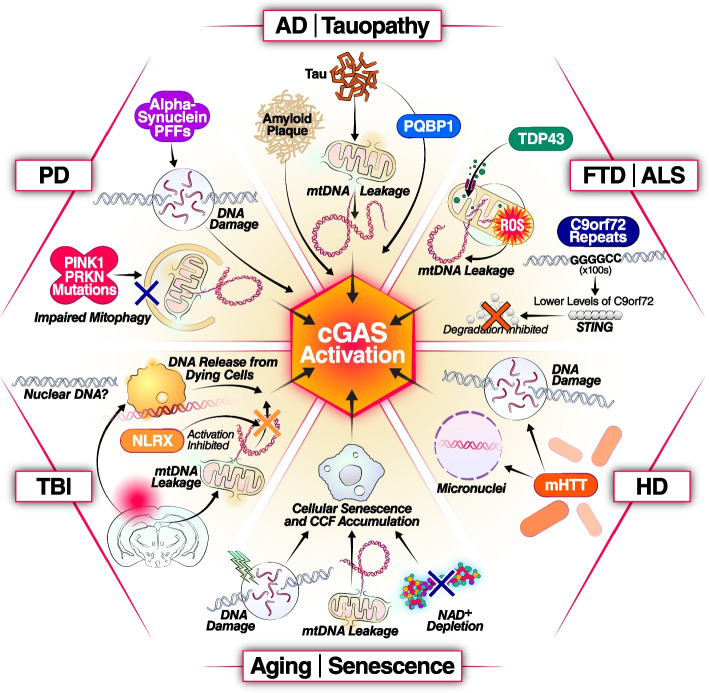
“In amyotrophic lateral sclerosis (ALS) , TDP-43 accumulates in the mitochondria of neurons and causes mtDNA release into the cytoplasm via the MPT pore, leading to cGAS-STING activation and the upregulation of NFκB and IFN-I pathways [29].”
BackgroundInfluentialcGAS is essential for cellular senescence
Yang, H., Wang, H., Ren, J., Chen, Q., & Chen, Z. J. (2017) · Proceedings of the National Academy of Sciences · doi:10.1073/pnas.1705499114 · Cited by 1,009 · cited 2×
“The deletion of cGAS reduced the senescence signatures, including SA-β-Gal signaling and SASP, induced by DNA damage in mouse fibroblasts [54].”
BackgroundCyclic GMP-AMP Synthase Is an Innate Immune Sensor of HIV and Other Retroviruses
Gao, D., Wu, J., Wu, Y.-T., Du, F., Aroh, C., Yan, N., Sun, L., & Chen, Z. J. (2013) · Science · doi:10.1126/science.1240933 · Cited by 992 · cited 1×
“Reverse transcribed HIV DNA has been reported to trigger the innate immune response through the cGAS-STING and IFN-I pathway [36].”
BackgroundApoptotic Caspases Suppress mtDNA-Induced STING-Mediated Type I IFN Production
White, M. J., McArthur, K., Metcalf, D., Lane, R. M., Cambier, J. C., Herold, M. J., van Delft, M. F., Bedoui, S., Lessene, G., Ritchie, M. E., et al. (2014) · Cell · doi:10.1016/j.cell.2014.11.036 · Cited by 983 · cited 1×
“This leads to release of mtDNA that is recognized by the cGAS-STING pathway [25, 26]. mtDNA fragments can also be released from the mitochondrial permeability transition (MPT) pore [27, 28].”
BackgroundZhang, P., Kishimoto, Y., Grammatikakis, I., Gottimukkala, K., Cutler, R. G., Zhang, S., Abdelmohsen, K., Bohr, V. A., Misra Sen, J., Gorospe, M., et al. (2019) · Nature Neuroscience · doi:10.1038/s41593-019-0372-9 · Cited by 977 · cited 2×
“Specifically, the accumulation of senescent glial cells, including microglia, astrocyte, and oligodendrocyte progenitor cells, has been implicated in Aβ and tauopathy models of AD, resulting in inflammation and cognitive deficit [79, 89].”
BackgroundApoptotic Caspases Prevent the Induction of Type I Interferons by Mitochondrial DNA
Rongvaux, A., Jackson, R., Harman, C. C. D., Li, T., West, A. P., de Zoete, M. R., Wu, Y., Yordy, B., Lakhani, S. A., Kuan, C.-Y., et al. (2014) · Cell · doi:10.1016/j.cell.2014.11.037 · Cited by 847 · cited 1×
“This leads to release of mtDNA that is recognized by the cGAS-STING pathway [25, 26]. mtDNA fragments can also be released from the mitochondrial permeability transition (MPT) pore [27, 28].”
BackgroundVDAC oligomers form mitochondrial pores to release mtDNA fragments and promote lupus-like disease
Kim, J., Gupta, R., Blanco, L. P., Yang, S., Shteinfer-Kuzmine, A., Wang, K., Zhu, J., Yoon, H. E., Wang, X., Kerkhofs, M., et al. (2019) · Science · doi:10.1126/science.aav4011 · Cited by 793 · cited 1×
“…innate immune response, including transcription of IFN-I and other immunomodulatory genes via phosphorylating IRF3 or activating NF-κB, respectively stress, mtDNA can escape through macropores formed by oligomerization of voltage-dependent anion channels (VDACs) and trigger IFN-I response [30].”
BackgroundR-Loops as Cellular Regulators and Genomic Threats
Crossley, M. P., Bocek, M., & Cimprich, K. A. (2019) · Molecular Cell · doi:10.1016/j.molcel.2019.01.024 · Cited by 746 · cited 1×
“Further, RNA:DNA hybrids, such as R-loops, form during transcription and are restricted to the nucleus under normal physiological conditions [32].”
BackgroundCognitive deficits in people who have recovered from COVID-19
Hampshire, A., Trender, W., Chamberlain, S. R., Jolly, A. E., Grant, J. E., Patrick, F., Mazibuko, N., Williams, S. C., Barnby, J. M., Hellyer, P., et al. (2021) · EClinicalMedicine · doi:10.1016/j.eclinm.2021.101044 · Cited by 701
Apoptotic stress causes mtDNA release during senescence and drives the SASP
Victorelli, S., Salmonowicz, H., Chapman, J., Martini, H., Vizioli, M. G., Riley, J. S., Cloix, C., Hall-Younger, E., Machado Espindola-Netto, J., Jurk, D., et al. (2023) · Nature · doi:10.1038/s41586-023-06621-4 · Cited by 676 · cited 3×
“Importantly, a recent study by Victorelli et al. [57] directly shows that cGAS– STING activation, triggered by mtDNA release, is a potent driver of SASP.”
BackgroundIdentification of Genetic Factors that Modify Clinical Onset of Huntington’s Disease
Lee, J.-M., Wheeler, V. C., Chao, M. J., Vonsattel, J. P. G., Pinto, R. M., Lucente, D., Abu-Elneel, K., Ramos, E. M., Mysore, J. S., Gillis, T., et al. (2015) · Cell · doi:10.1016/j.cell.2015.07.003 · Cited by 655
Björkqvist, M., Wild, E. J., Thiele, J., Silvestroni, A., Andre, R., Lahiri, N., Raibon, E., Lee, R. V., Benn, C. L., Soulet, D., et al. (2008) · The Journal of Experimental Medicine · doi:10.1084/jem.20080178 · Cited by 650 · cited 1×
“Inflammation has been implicated in the pathogenesis of HD, as proinflammatory cytokines (such as IL6, IL-8, and TNF-α) are elevated in the plasma of HD patients and correlate with disease progression [62].”
BackgroundDysregulation of brain and choroid plexus cell types in severe COVID-19
Yang, A. C., Kern, F., Losada, P. M., Agam, M. R., Maat, C. A., Schmartz, G. P., Fehlmann, T., Stein, J. A., Schaum, N., Lee, D. P., et al. (2021) · Nature · doi:10.1038/s41586-021-03710-0 · Cited by 620 · cited 1×
“This response leads to the release of IFN-β, complement proteins, and CCL/CXCL chemokines, subsequently activating glial cells [42, 43].”
BackgroundAging-induced type I interferon response at the choroid plexus negatively affects brain function
Baruch, K., Deczkowska, A., David, E., Castellano, J. M., Miller, O., Kertser, A., Berkutzki, T., Barnett-Itzhaki, Z., Bezalel, D., Wyss-Coray, T., et al. (2014) · Science · doi:10.1126/science.1252945 · Cited by 615 · cited 1×
“Additionally, the IFN-I signature in the choroid plexus has been shown to facilitate the age-dependent cognitive decline [86].”
BackgroundTau protein aggregation is associated with cellular senescence in the brain
Musi, N., Valentine, J. M., Sickora, K. R., Baeuerle, E., Thompson, C. S., Shen, Q., & Orr, M. E. (2018) · Aging Cell · doi:10.1111/acel.12840 · Cited by 595 · cited 1×
“These studies suggest a potential connection between senescence and the onset of age-dependent neurodegenerative disorders [81].”
BackgroundTraumatic Brain Injury: Current Treatment Strategies and Future Endeavors
Galgano, M., Toshkezi, G., Qiu, X., Russell, T., Chin, L., & Zhao, L.-R. (2017) · Cell Transplantation · doi:10.1177/0963689717714102 · Cited by 582
Impaired immune surveillance accelerates accumulation of senescent cells and aging
Ovadya, Y., Landsberger, T., Leins, H., Vadai, E., Gal, H., Biran, A., Yosef, R., Sagiv, A., Agrawal, A., Shapira, A., et al. (2018) · Nature Communications · doi:10.1038/s41467-018-07825-3 · Cited by 578 · cited 1×
“Nevertheless, senescent cells persist and accumulate within the numerous tissues, as the capacity of the immune system diminishes with age [75, 76].”
BackgroundType I interferon response drives neuroinflammation and synapse loss in Alzheimer disease
Roy, E. R., Wang, B., Wan, Y.-W., Chiu, G., Cole, A., Yin, Z., Propson, N. E., Xu, Y., Jankowsky, J. L., Liu, Z., et al. (2020) · Journal of Clinical Investigation · doi:10.1172/jci133737 · Cited by 563 · cited 2×
“The blockade of IFNAR with an IFNAR antibody, on the other hand, significantly dampened the activation of microglia, suggesting the involvement of nucleic-acid sensing innate immune pathway in the pathogenesis of AD [66].”
BackgroundEarly and Progressive Accumulation of Reactive Microglia in the Huntington Disease Brain
Sapp, E., Kegel, K. B., Aronin, N., Hashikawa, T., Uchiyama, Y., Tohyama, K., Bhide, P. G., Vonsattel, J. P., & Difiglia, M. (2001) · Journal of Neuropathology & Experimental Neurology · doi:10.1093/jnen/60.2.161 · Cited by 540 · cited 1×
“Furthermore, microglial activation and an increased number of microglia were reported in HD clinical studies and postmortem brain samples [63, 64].”
BackgroundThe cGAS–STING pathway drives type I IFN immunopathology in COVID-19
Domizio, J. D., Gulen, M. F., Saidoune, F., Thacker, V. V., Yatim, A., Sharma, K., Nass, T., Guenova, E., Schaller, M., Conrad, C., et al. (2022) · Nature · doi:10.1038/s41586-022-04421-w · Cited by 538 · cited 1×
“cGAS-STING signaling has been observed to be activated in endothelial cells of human patient skin and lung tissues following infection with SARS-CoV-2, the RNA virus responsible for the global COVID-19 pandemic [40].”
BackgroundHou, Y., Wei, Y., Lautrup, S., Yang, B., Wang, Y., Cordonnier, S., Mattson, M. P., Croteau, D. L., & Bohr, V. A. (2021) · Proceedings of the National Academy of Sciences · doi:10.1073/pnas.2011226118 · Cited by 530 · cited 1×
“NAD + supplementation has been demonstrated to reduce cellular senescence, partly by normalizing the activation of the cGAS-STING pathway in an AD mouse model [55].”
BackgroundMild respiratory COVID can cause multi-lineage neural cell and myelin dysregulation
Fernández-Castañeda, A., Lu, P., Geraghty, A. C., Song, E., Lee, M.-H., Wood, J., O’Dea, M. R., Dutton, S., Shamardani, K., Nwangwu, K., et al. (2022) · Cell · doi:10.1016/j.cell.2022.06.008 · Cited by 521 · cited 1×
“This response leads to the release of IFN-β, complement proteins, and CCL/CXCL chemokines, subsequently activating glial cells [42, 43].”
BackgroundZhang, X., Wu, J., Du, F., Xu, H., Sun, L., Chen, Z., Brautigam, C. A., Zhang, X., & Chen, Z. J. (2014) · Cell Reports · doi:10.1016/j.celrep.2014.01.003 · Cited by 510 · cited 1×
“…pathogenic DNA, one of which is cGAS. cGAS was first discovered by Sun et al. for its function as a cytosolic DNA sensor that activates the IFN-I response [8]. cGAS binds to DNA, undergoes switch-like conformational changes at the activation loop, and forms an oligomeric complex with DNA [9] (Fig.”
BackgroundStrategies for targeting senescent cells in human disease
Gasek, N. S., Kuchel, G. A., Kirkland, J. L., & Xu, M. (2021) · Nature Aging · doi:10.1038/s43587-021-00121-8 · Cited by 501 · cited 1×
“Another characteristic of senescent cells is the resistance to programmed cell death through senescent cell anti-apoptotic pathways (SCAPs) [73, 74], which necessitates active clearance of senescent cells by the immune system.”
BackgroundLINE1 Derepression in aged wild-type and SIRT6-deficient mice drives inflammation
Simon, M., Van Meter, M., Ablaeva, J., Ke, Z., Gonzalez, R. S., Taguchi, T., De Cecco, M., Leonova, K. I., Kogan, V., Helfand, S. L., et al. (2019) · Cell Metabolism · doi:10.1016/j.cmet.2019.02.014 · Cited by 498 · cited 1×
“During aging and cellular senescence, LINE-1 becomes transcriptionally derepressed, resulting in the accumulation of cytoplasmic RNA:DNA hybrids due to retrotranscrip-tion of LINE-1 elements and activating IFN-I response through cGAS-STING [19, 35].”
BackgroundSenescent cell clearance by the immune system: Emerging therapeutic opportunities
Prata, L. G. P. L., Ovsyannikova, I. G., Tchkonia, T., & Kirkland, J. L. (2018) · Seminars in Immunology · doi:10.1016/j.smim.2019.04.003 · Cited by 497 · cited 1×
“Nevertheless, senescent cells persist and accumulate within the numerous tissues, as the capacity of the immune system diminishes with age [75, 76].”
Background(1995) · PubMed · Cited by 496
Microglial activation correlates with severity in Huntington disease: A clinical and PET study
Pavese, N., Gerhard, A., Tai, Y. F., Ho, A. K., Turkheimer, F., Barker, R. A., Brooks, D. J., & Piccini, P. (2006) · Neurology · doi:10.1212/01.wnl.0000222734.56412.17 · Cited by 462
Davies, B. W., Bogard, R. W., Young, T. S., & Mekalanos, J. J. (2012) · Cell · doi:10.1016/j.cell.2012.01.053 · Cited by 431 · cited 1×
“All of these cyclic and oligonucleotides bind and activate the STING protein, along with various other receptors, to promote a wide range of physiological response [97–99].”
BackgroundSTING: a master regulator in the cancer-immunity cycle
Zhu, Y., An, X., Zhang, X., Qiao, Y., Zheng, T., & Li, X. (2019) · Molecular Cancer · doi:10.1186/s12943-019-1087-y · Cited by 431 · cited 1×
“[136, 137].”
Sensing of HSV-1 by the cGAS-STING pathway in microglia orchestrates antiviral defence in the CNS
Reinert, L. S., Lopušná, K., Winther, H., Sun, C., Thomsen, M. K., Nandakumar, R., Mogensen, T. H., Meyer, M., Vægter, C., Nyengaard, J. R., et al. (2016) · Nature Communications · doi:10.1038/ncomms13348 · Cited by 397 · cited 6×
“They could originate from microbial pathogens, such as bacteria and DNA viruses, during an infection, as these organisms carry dsDNA in their genomes [14, 15].”
BackgroundInfluentialTransient RNA-DNA Hybrids Are Required for Efficient Double-Strand Break Repair
Ohle, C., Tesorero, R., Schermann, G., Dobrev, N., Sinning, I., & Fischer, T. (2016) · Cell · doi:10.1016/j.cell.2016.10.001 · Cited by 395 · cited 1×
“R-loops also participate in DNA repair at dsDNA breaks [34].”
BackgroundStructure of the Human cGAS–DNA Complex Reveals Enhanced Control of Immune Surveillance
Zhou, W., Whiteley, A. T., de Oliveira Mann, C. C., Morehouse, B. R., Nowak, R. P., Fischer, E. S., Gray, N. S., Mekalanos, J. J., & Kranzusch, P. J. (2018) · Cell · doi:10.1016/j.cell.2018.06.026 · Cited by 387 · cited 1×
“Exciting progress has been made in the development of inhibitors for murine or human cGAS, considering the substantial differences between these two orthologs [121].”
BackgroundStructure of Human cGAS Reveals a Conserved Family of Second-Messenger Enzymes in Innate Immunity
Kranzusch, P. J., Lee, A. S.-Y., Berger, J. M., & Doudna, J. A. (2013) · Cell Reports · doi:10.1016/j.celrep.2013.05.008 · Cited by 384 · cited 1×
“These distinctions include variations in as many as 116 amino acid residues within their enzymatic domains, resulting in less than 60% overall sequence similarity between the two [122].”
BackgroundAcetylation Blocks cGAS Activity and Inhibits Self-DNA-Induced Autoimmunity
Dai, J., Huang, Y.-J., He, X., Zhao, M., Wang, X., Liu, Z.-S., Xue, W., Cai, H., Zhan, X.-Y., Huang, S.-Y., et al. (2019) · Cell · doi:10.1016/j.cell.2019.01.016 · Cited by 371 · cited 1×
“Other strategies, such as blocking cGAS dimerization, post-translational modification of the N-terminal dsDNA binding domain, or an indirect regulation by other targets, have also been explored [113–115].”
BackgroundSelf-citationVincent, J., Adura, C., Gao, P., Luz, A., Lama, L., Asano, Y., Okamoto, R., Imaeda, T., Aida, J., Rothamel, K., et al. (2017) · Nature Communications · doi:10.1038/s41467-017-00833-9 · Cited by 370 · cited 2×
“One inhibitor subtype targets the cGAS active site [107–110], and the second targets the cGAS-dsDNA interaction either through binding directly to the enzyme or to dsDNA [111, 112].”
BackgroundCytosolic RNA:DNA hybrids activate the cGAS –STING axis
Mankan, A. K., Schmidt, T., Chauhan, D., Goldeck, M., Höning, K., Gaidt, M., Kubarenko, A. V., Andreeva, L., Hopfner, K., & Hornung, V. (2014) · The EMBO Journal · doi:10.15252/embj.201488726 · Cited by 359 · cited 1×
“Notably, cGAS is not limited to sensing dsDNA; it can also detect RNA:DNA hybrids, which can originate from retrotranscription of retroviruses or endogenous retroviral elements, among other potential sources [19, 20].”
BackgroundAn Activity-Guided Map of Electrophile-Cysteine Interactions in Primary Human T Cells
Vinogradova, E. V., Zhang, X., Remillard, D., Lazar, D. C., Suciu, R. M., Wang, Y., Bianco, G., Yamashita, Y., Crowley, V. M., Schafroth, M. A., et al. (2020) · Cell · doi:10.1016/j.cell.2020.07.001 · Cited by 351 · cited 1×
“Palmitoylation at C88/91 is a post-translational modification that activates the STING protein and is inhibited with nitrofurans and indole ureas (such as compound H-151) [141], nitro fatty acids [142], and acrylamides [143].”
BackgroundTakahashi, A., Loo, T. M., Okada, R., Kamachi, F., Watanabe, Y., Wakita, M., Watanabe, S., Kawamoto, S., Miyata, K., Barber, G. N., et al. (2018) · Nature Communications · doi:10.1038/s41467-018-03555-8 · Cited by 350 · cited 1×
“During senescence, the expression of cytoplasmic DNases, such as DNase2 and TREX1, is downregulated, resulting in the cytoplasmic accumulation of nuclear DNA and aberrant activation of the cGAS-STING pathway [31].”
BackgroundSenolytic therapy in mild Alzheimer's disease: a phase 1 feasibility trial
Gonzales, M. M., Garbarino, V. R., Kautz, T. F., Palavicini, J. P., Lopez-Cruzan, M., Dehkordi, S. K., Mathews, J. J., Zare, H., Xu, P., Zhang, B., et al. (2023) · Nature Medicine · doi:10.1038/s41591-023-02543-w · Cited by 334 · cited 1×
“Notably, a phase I clinical trial evaluated the feasibility of senolytic therapy in mild AD, and the results suggest safety and tolerability of the therapy in AD patients [80].”
BackgroundOrr, M., Gonzales, M., Garbarino, V., Kautz, T., Palavicini, J., Lopez-Cruzan, M., Dehkordi, S. K., Mathews, J., Zare, H., Xu, P., et al. (2023) · doi:10.21203/rs.3.rs-2809973/v1 · Cited by 319
Signaling by cGAS–STING in Neurodegeneration, Neuroinflammation, and Aging
Paul, B. D., Snyder, S. H., & Bohr, V. A. (2021) · Trends in Neurosciences · doi:10.1016/j.tins.2020.10.008 · Cited by 314 · cited 1×
“Research interest has been growing in the role of cGAS-STING in the CNS, as neuroinflammation has proved to be a key player in neurological and neuro-degenerative diseases [6, 7].”
BackgroundBai, J., Cervantes, C., Liu, J., He, S., Zhou, H., Zhang, B., Cai, H., Yin, D., Hu, D., Li, Z., et al. (2017) · Proceedings of the National Academy of Sciences · doi:10.1073/pnas.1708744114 · Cited by 310 · cited 1×
“For instance, studies have revealed the crosstalk between cGAS-STING and autophagy and lipid metabolism pathways, both of which are highly dysregulated in neurodegenerative diseases [156, 157].”
BackgroundSmall molecules targeting the innate immune cGAS‒STING‒TBK1 signaling pathway
Ding, C., Song, Z., Shen, A., Chen, T., & Zhang, A. (2020) · Acta Pharmaceutica Sinica B · doi:10.1016/j.apsb.2020.03.001 · Cited by 306 · cited 2×
“Additionally, a few anti-sense oligonucleotides designed to reduce cGAS expression have been developed [105, 106].”
BackgroundLama, L., Adura, C., Xie, W., Tomita, D., Kamei, T., Kuryavyi, V., Gogakos, T., Steinberg, J. I., Miller, M., Ramos-Espiritu, L., et al. (2019) · Nature Communications · doi:10.1038/s41467-019-08620-4 · Cited by 303 · cited 4×
“Meanwhile, a potent human cGAS inhibitor, G-001, and its derivatives G-140 (TDI-8077), G-150 (TDI-8087), and TDI-8246, have demonstrated more efficient inhibition of human cGAS compared to the mouse counterpart [109].”
BackgroundMethodInfluentialR-loop-derived cytoplasmic RNA–DNA hybrids activate an immune response
Crossley, M. P., Song, C., Bocek, M. J., Choi, J.-H., Kousouros, J. N., Sathirachinda, A., Lin, C., Brickner, J. R., Bai, G., Lans, H., et al. (2023) · Nature · doi:10.1038/s41586-022-05545-9 · Cited by 301 · cited 1×
“However, dysregulation of R-loop processing, such as loss of function mutation in RNA–DNA helicase senataxin (SETX), leads to the accumulation of cytoplasmic RNA:DNA hybrids [33].”
BackgroundHansen, A. L., Buchan, G. J., Rühl, M., Mukai, K., Salvatore, S. R., Ogawa, E., Andersen, S. D., Iversen, M. B., Thielke, A. L., Gunderstofte, C., et al. (2018) · Proceedings of the National Academy of Sciences · doi:10.1073/pnas.1806239115 · Cited by 299 · cited 1×
“Palmitoylation at C88/91 is a post-translational modification that activates the STING protein and is inhibited with nitrofurans and indole ureas (such as compound H-151) [141], nitro fatty acids [142], and acrylamides [143].”
BackgroundC9orf72 in myeloid cells suppresses STING-induced inflammation
McCauley, M. E., O’Rourke, J. G., Yáñez, A., Markman, J. L., Ho, R., Wang, X., Chen, S., Lall, D., Jin, M., Muhammad, A. K. M. G., et al. (2020) · Nature · doi:10.1038/s41586-020-2625-x · Cited by 298 · cited 3×
“McCauley et al. [50] reported that dendritic cells from C9orf72 -/- mice show early activation of the IFN-I response through STING.”
BackgroundInfluentialNetwork Organization of the Huntingtin Proteomic Interactome in Mammalian Brain
Shirasaki, D. I., Greiner, E. R., Al-Ramahi, I., Gray, M., Boontheung, P., Geschwind, D. H., Botas, J., Coppola, G., Horvath, S., Loo, J. A., et al. (2012) · Neuron · doi:10.1016/j.neuron.2012.05.024 · Cited by 297 · cited 1×
“The mutant HTT protein (mHTT) is ubiquitously present and affects multiple cellular processes, including transcriptional regulation, microtubule-based transport, and proteostasis, leading to damage in the brain’s striatum and resulting in motor, psychiatric, and cognitive deficits [61].”
Activation of innate immune cGAS-STING pathway contributes to Alzheimer’s pathogenesis in 5×FAD mice
Xie, X., Ma, G., Li, X., Zhao, J., Zhao, Z., & Zeng, J. (2023) · Nature Aging · doi:10.1038/s43587-022-00337-2 · Cited by 292 · cited 7×
“They further suggest that the STING-IFN-I response is predominantly observed in microglia, which could then transfer inflammatory signaling to other neural cells [46].”
BackgroundResultInfluentialG3BP1 promotes DNA binding and activation of cGAS
Liu, Z.-S., Cai, H., Xue, W., Wang, M., Xia, T., Li, W.-J., Xing, J.-Q., Zhao, M., Huang, Y.-J., Chen, S., et al. (2019) · Nature Immunology · doi:10.1038/s41590-018-0262-4 · Cited by 290
Self-citationTau Activation of Microglial cGAS–IFN Reduces MEF2C‐mediated Cognitive Resilience
Udeochu, J. C., Amin, S., Huang, Y., Fan, L., Torres, E. R. S., Carling, G. K., Liu, B., McGurran, H., Coronas-Samano, G., Kauwe, G., et al. (2023) · Nature Neuroscience · doi:10.1038/s41593-023-01315-6 · Cited by 289 · cited 10×
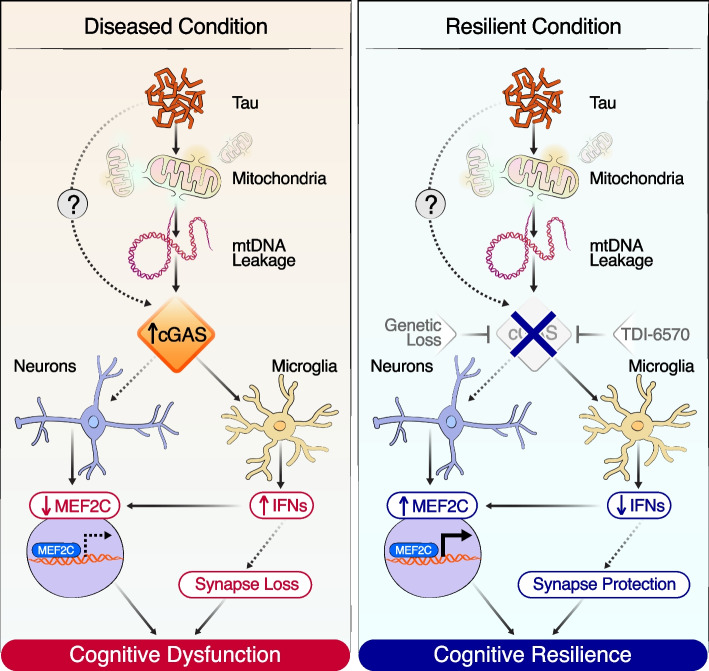
“Inhibition of cGAS blocked STING phosphorylation and the IFN-inducible cytokines CXCL10 and CCL5 in response to tau, supporting cGAS inhibi - tion as a promising therapeutic approach to improve cognition in AD [47].”
BackgroundMethodInfluentialSelf-citationSTING inhibitors target the cyclic dinucleotide binding pocket
Hong, Z., Mei, J., Li, C., Bai, G., Maimaiti, M., Hu, H., Yu, W., Sun, L., Zhang, L., Cheng, D., et al. (2021) · Proceedings of the National Academy of Sciences · doi:10.1073/pnas.2105465118 · Cited by 273 · cited 1×
“The STING antagonists targeting the LBD include tetrahydroisoqui-noline derivatives [138], a cyclopeptide natural product, Astin C [139], and a series of sulfonamide derivatives such as SN11, one of the most potent STING inhibitors identified so far [140].”
BackgroundThe Cyclopeptide Astin C Specifically Inhibits the Innate Immune CDN Sensor STING
Li, S., Hong, Z., Wang, Z., Li, F., Mei, J., Huang, L., Lou, X., Zhao, S., Song, L., Chen, W., et al. (2018) · Cell Reports · doi:10.1016/j.celrep.2018.11.097 · Cited by 267 · cited 1×
“The STING antagonists targeting the LBD include tetrahydroisoqui-noline derivatives [138], a cyclopeptide natural product, Astin C [139], and a series of sulfonamide derivatives such as SN11, one of the most potent STING inhibitors identified so far [140].”
BackgroundDNA damage-induced type I interferon promotes senescence and inhibits stem cell function
Yu, Q., Katlinskaya, Y. V., Carbone, C. J., Zhao, B., Katlinski, K. V., Zheng, H., Guha, M., Li, N., Chen, Q., Yang, T., et al. (2015) · Cell Reports · doi:10.1016/j.celrep.2015.03.069 · Cited by 260 · cited 1×
“Consistently, neutralization of IFN-β alleviates cel - lular senescence induced by DNA DSBs [88].”
BackgroundSTING controls nociception via type I interferon signalling in sensory neurons
Donnelly, C. R., Jiang, C., Andriessen, A. S., Wang, K., Wang, Z., Ding, H., Zhao, J., Luo, X., Lee, M. S., Lei, Y. L., et al. (2021) · Nature · doi:10.1038/s41586-020-03151-1 · Cited by 249 · cited 1×
“In contrast, the intrathecal administration of STING agonists leads to an IFN-I response and suppresses pain and nociceptor excitability in mice and non-human primates [44].”
BackgroundSTING mediates neurodegeneration and neuroinflammation in nigrostriatal α-synucleinopathy
Hinkle, J. T., Patel, J., Panicker, N., Karuppagounder, S. S., Biswas, D., Belingon, B., Chen, R., Brahmachari, S., Pletnikova, O., Troncoso, J. C., et al. (2022) · Proceedings of the National Academy of Sciences · doi:10.1073/pnas.2118819119 · Cited by 240 · cited 1×
“STING inactivation in the αSyn-PFF mice attenuated IFN-I signaling, α-Syn PFF-induced motor deficits, pathological αSyn accumulation, and dopaminergic neuron loss [59].”
BackgroundCrystal structures of STING protein reveal basis for recognition of cyclic di-GMP
Shang, G., Zhu, D., Li, N., Zhang, J., Zhu, C., Lu, D., Liu, C., Yu, Q., Zhao, Y., Xu, S., et al. (2012) · Nature Structural & Molecular Biology · doi:10.1038/nsmb.2332 · Cited by 233 · cited 1×
“STING, a trans-membrane protein, possesses a ligand-binding domain (LBD) that exists as a constitutive dimer [100, 101].”
BackgroundTau activates microglia via the PQBP1-cGAS-STING pathway to promote brain inflammation
Jin, M., Shiwaku, H., Tanaka, H., Obita, T., Ohuchi, S., Yoshioka, Y., Jin, X., Kondo, K., Fujita, K., Homma, H., et al. (2021) · Nature Communications · doi:10.1038/s41467-021-26851-2 · Cited by 223 · cited 2×
“In AD, the accumulation of tau tangles and amyloid plaques can lead to the activation of cGAS [46–48].”
BackgroundGrieves, J. L., Fye, J. M., Harvey, S., Grayson, J. M., Hollis, T., & Perrino, F. W. (2015) · Proceedings of the National Academy of Sciences · doi:10.1073/pnas.1423804112 · Cited by 181 · cited 1×
“Selective activation or inhibition of other targets/pathways or processes, including TREX1 catalyzed degradation of dsDNA [158], ENPP1 (Ecto-nucleotide pyrophosphatase phosphodiesterase 1) mediated degradation of cGAMP Others [145, 146] a Include dimeric benzimidazoles, dimeric furan-2-ones,…”
BackgroundDiscovery of a Novel cGAMP Competitive Ligand of the Inactive Form of STING
Siu, T., Altman, M. D., Baltus, G. A., Childers, M., Ellis, J. M., Gunaydin, H., Hatch, H., Ho, T., Jewell, J., Lacey, B. M., et al. (2019) · ACS Medicinal Chemistry Letters · doi:10.1021/acsmedchemlett.8b00466 · Cited by 179 · cited 1×
“The STING antagonists targeting the LBD include tetrahydroisoqui-noline derivatives [138], a cyclopeptide natural product, Astin C [139], and a series of sulfonamide derivatives such as SN11, one of the most potent STING inhibitors identified so far [140].”
BackgroundStructural insights into cGAMP degradation by Ecto-nucleotide pyrophosphatase phosphodiesterase 1
Kato, K., Nishimasu, H., Oikawa, D., Hirano, S., Hirano, H., Kasuya, G., Ishitani, R., Tokunaga, F., & Nureki, O. (2018) · Nature Communications · doi:10.1038/s41467-018-06922-7 · Cited by 176 · cited 1×
“…degradation of cGAMP Others [145, 146] a Include dimeric benzimidazoles, dimeric furan-2-ones, 6,5-heterocyclic derivatives, purines, diadenosine triphosphate, and STING degraders [159], and TBK1-STING-IRF3 interactions [12], could be carefully examined as the potential therapeutic strategies.”
BackgroundMitochondrial permeability transition triggers the release of mtDNA fragments
Patrushev, M., Kasymov, V., Patrusheva, V., Ushakova, T., Gogvadze, V., & Gaziev, A. (2004) · Cellular and Molecular Life Sciences · doi:10.1007/s00018-004-4424-1 · Cited by 168 · cited 1×
“This leads to release of mtDNA that is recognized by the cGAS-STING pathway [25, 26]. mtDNA fragments can also be released from the mitochondrial permeability transition (MPT) pore [27, 28].”
BackgroundHall, J., Brault, A., Vincent, F., Weng, S., Wang, H., Dumlao, D., Aulabaugh, A., Aivazian, D., Castro, D., Chen, M., et al. (2017) · PLOS ONE · doi:10.1371/journal.pone.0184843 · Cited by 167 · cited 1×
“One notable cGAS inhibitor, PF-06928215, was initially identified by the Pfizer group in 2017 using a novel fluorescence polarization assay [108].”
MethodCyclic GMP-AMP synthase promotes the inflammatory and autophagy responses in Huntington disease
Sharma, M., Rajendrarao, S., Shahani, N., Ramírez-Jarquín, U. N., & Subramaniam, S. (2020) · Proceedings of the National Academy of Sciences · doi:10.1073/pnas.2002144117 · Cited by 155 · cited 3×
“In Huntington’s disease (HD), cGAS activation is induced by DNA damage caused by mutant HTT protein (mHTT) [51].”
BackgroundInfluentialNan, Y., Wu, C., & Zhang, Y.-J. (2017) · Frontiers in Immunology · doi:10.3389/fimmu.2017.01758 · Cited by 146 · cited 1×
“This cascade results in the secretion of proinflammatory cytokines and chemokines and more IFNs [39].”
BackgroundAntimalarial Drugs as Immune Modulators: New Mechanisms for Old Drugs
An, J., Minie, M., Sasaki, T., Woodward, J. J., & Elkon, K. B. (2017) · Annual Review of Medicine · doi:10.1146/annurev-med-043015-123453 · Cited by 140 · cited 1×
“One inhibitor subtype targets the cGAS active site [107–110], and the second targets the cGAS-dsDNA interaction either through binding directly to the enzyme or to dsDNA [111, 112].”
BackgroundSuramin Potently Inhibits cGAMP Synthase, cGAS, in THP1 Cells to Modulate IFN-β Levels
Wang, M., Sooreshjani, M. A., Mikek, C., Opoku-Temeng, C., & Sintim, H. O. (2018) · Future Medicinal Chemistry · doi:10.4155/fmc-2017-0322 · Cited by 137 · cited 1×
“One inhibitor subtype targets the cGAS active site [107–110], and the second targets the cGAS-dsDNA interaction either through binding directly to the enzyme or to dsDNA [111, 112].”
BackgroundMicroglial-to-neuronal CCR5 signaling regulates autophagy in neurodegeneration
Festa, B. P., Siddiqi, F. H., Jimenez-Sanchez, M., Won, H., Rob, M., Djajadikerta, A., Stamatakou, E., & Rubinsztein, D. C. (2023) · Neuron · doi:10.1016/j.neuron.2023.04.006 · Cited by 129 · cited 2×
“The activated microglial CCL5 to neuronal CCR5 signaling exacerbates protein aggregation in tauopathy [68].”
BackgroundMethodBarrett, J. P., Henry, R. J., Shirey, K. A., Doran, S. J., Makarevich, O. D., Ritzel, R. M., Meadows, V. A., Vogel, S. N., Faden, A. I., Stoica, B. A., et al. (2020) · The Journal of Neuroscience · doi:10.1523/jneurosci.2516-19.2020 · Cited by 123 · cited 1×
“Moreover, Ifnb − / − TBI mice showed lower levels of long-term microglial activation, motor, and cognitive deficits than wildtype mice [70].”
BackgroundMcFarland, A. P., Luo, S., Ahmed-Qadri, F., Zuck, M., Thayer, E. F., Goo, Y. A., Hybiske, K., Tong, L., & Woodward, J. J. (2017) · Immunity · doi:10.1016/j.immuni.2017.02.014 · Cited by 117
Activation of interferon signaling pathways in spinal cord astrocytes from an ALS mouse model
Wang, R., Yang, B., & Zhang, D. (2011) · Glia · doi:10.1002/glia.21167 · Cited by 115 · cited 1×
“Specifically, an upregulation of ISGs was observed in astrocytes surrounding motor neurons in the spinal cord [60].”
BackgroundCCR5 closes the temporal window for memory linking
Shen, Y., Zhou, M., Cai, D., Filho, D. A., Fernandes, G., Cai, Y., de Sousa, A. F., Tian, M., Kim, N., Lee, J., et al. (2022) · Nature · doi:10.1038/s41586-022-04783-1 · Cited by 115 · cited 2×
“C chemokine receptor type 5 (CCR5) signaling was found to have a negative impact on resilience, and its activity tends to increase with aging, leading to impaired memory function [67].”
BackgroundMethodA genetic link between risk for Alzheimer's disease and severe COVID-19 outcomes via the OAS1 gene
Magusali, N., Graham, A. C., Piers, T. M., Panichnantakul, P., Yaman, U., Shoai, M., Reynolds, R. H., Botia, J. A., Brookes, K. J., Guetta-Baranes, T., et al. (2021) · Brain · doi:10.1093/brain/awab337 · Cited by 111 · cited 1×
“These enzymes possess architecture similarity to another NTase, 2 ′ 5 ′ -oligoadenylate synthase (OAS1) [95], which is a genetic risk factor for AD and severe COVID-19 outcomes [96], and produce diverse cyclic and oligonucleotides.”
BackgroundGarcía, N., & Chávez, E. (2007) · Life Sciences · doi:10.1016/j.lfs.2007.08.019 · Cited by 97 · cited 1×
“This leads to release of mtDNA that is recognized by the cGAS-STING pathway [25, 26]. mtDNA fragments can also be released from the mitochondrial permeability transition (MPT) pore [27, 28].”
BackgroundTargeting STING oligomerization with small-molecule inhibitors
Humphries, F., Shmuel-Galia, L., Jiang, Z., Zhou, J. Y., Barasa, L., Mondal, S., Wilson, R., Sultana, N., Shaffer, S. A., Ng, S., et al. (2023) · Proceedings of the National Academy of Sciences · doi:10.1073/pnas.2305420120 · Cited by 96
Discovery of Small-Molecule Cyclic GMP-AMP Synthase Inhibitors
Padilla‐Salinas, R., Sun, L., Anderson, R. L., Yang, X., Zhang, S., Chen, Z. J., & Yin, H. H. (2019) · The Journal of Organic Chemistry · doi:10.1021/acs.joc.9b02666 · Cited by 94 · cited 1×
“Other strategies, such as blocking cGAS dimerization, post-translational modification of the N-terminal dsDNA binding domain, or an indirect regulation by other targets, have also been explored [113–115].”
BackgroundChromatin basis of the senescence-associated secretory phenotype
Hao, X., Wang, C., & Zhang, R. (2022) · Trends in Cell Biology · doi:10.1016/j.tcb.2021.12.003 · Cited by 94 · cited 1×
“The composition of SASP varies across different cell types and depends on the specific senescence-inducing stimuli, but most of the factors are regulated by NF-κB pathway, at least partially via cGAS-STING activation [13, 18, 84, 85].”
BackgroundMain, B. S., Zhang, M., Brody, K. M., Ayton, S., Frugier, T., Steer, D., Finkelstein, D., Crack, P. J., & Taylor, J. M. (2016) · Glia · doi:10.1002/glia.23028 · Cited by 92 · cited 1×
“Deletion of the IFN-I receptor ( Ifnar1 − / − ) reduced MPTP-induced IFN-I response, activated microglia (CD11b, CD86, CD32, CD16), and rescued the loss of tyrosine hydroxylase (TH)-positive dopaminergic neurons, suggesting the deleterious role of IFN-I signaling in PD pathogenesis [58].”
BackgroundAguado, J., Chaggar, H. K., Gómez‐Inclán, C., Shaker, M. R., Leeson, H. C., Mackay‐Sim, A., & Wolvetang, E. J. (2021) · Aging Cell · doi:10.1111/acel.13468 · Cited by 92 · cited 1×
“In a human brain organoid model of ataxia-telangiectasia, suppressing the cGAS-STING pathway resulted in a reduction of the SASP and its related neuropathology [91].”
BackgroundWang, X., Yang, C., Wang, X., Miao, J., Chen, W., Zhou, Y., Xu, Y., An, Y., Cheng, A., Ye, W., et al. (2022) · Neuron · doi:10.1016/j.neuron.2022.10.028 · Cited by 91 · cited 1×
“IFNγ secreted by injured axons upregulates cGAS expression in Schwann cells and blood cells. cGAS produces cGAMP in response to DNA damage that acts an immunotransmitter and activates neuronal STING to promote axon regeneration [45].”
BackgroundKong, X., Zuo, H., Huang, H., Zhang, Q., Chen, J., He, C., & Hu, Y. (2022) · Journal of Advanced Research · doi:10.1016/j.jare.2022.05.006 · Cited by 87 · cited 2×
“[136, 137].”
BackgroundTraumatic Brain Injury Induces cGAS Activation and Type I Interferon Signaling in Aged Mice
Barrett, J. P., Knoblach, S. M., Bhattacharya, S., Gordish-Dressman, H., Stoica, B. A., & Loane, D. J. (2021) · Frontiers in Immunology · doi:10.3389/fimmu.2021.710608 · Cited by 84 · cited 2×
“Specifically, older mice exhibited a robust increase in cGAS protein expression and an enhanced IFN-I signature in the cortex after TBI compared to young TBI mice [52].”
BackgroundResultWelch, G. M., Boix, C. A., Schmauch, E., Davila-Velderrain, J., Victor, M. B., Dileep, V., Bozzelli, P. L., Su, Q., Cheng, J. D., Lee, A., et al. (2022) · Science Advances · doi:10.1126/sciadv.abo4662 · Cited by 84 · cited 1×
“In neurons with compromised genome integrity and heightened DSBs, the detection of elevated cGAS expression suggests its role as an upstream regulator that activates the NF-κB pathway in an AD model [90].”
BackgroundOAS-RNase L innate immune pathway mediates the cytotoxicity of a DNA-demethylating drug
Banerjee, S., Gusho, E., Gaughan, C., Dong, B., Gu, X., Holvey-Bates, E., Talukdar, M., Li, Y., Weiss, S. R., Sicheri, F., et al. (2019) · Proceedings of the National Academy of Sciences · doi:10.1073/pnas.1815071116 · Cited by 81 · cited 1×
“These enzymes possess architecture similarity to another NTase, 2 ′ 5 ′ -oligoadenylate synthase (OAS1) [95], which is a genetic risk factor for AD and severe COVID-19 outcomes [96], and produce diverse cyclic and oligonucleotides.”
BackgroundNeuroinflammation and the cGAS-STING pathway
Chin, A. C. (2019) · Journal of Neurophysiology · doi:10.1152/jn.00848.2018 · Cited by 70
The Complexity of the cGAS-STING Pathway in CNS Pathologies
Fryer, A. L., Abdullah, A., Taylor, J. M., & Crack, P. J. (2021) · Frontiers in Neuroscience · doi:10.3389/fnins.2021.621501 · Cited by 64 · cited 1×
“cGAS and STING proteins are two key targets of the innate immune cGAS-STING signaling pathway [92, 93].”
BackgroundActivation of STING Based on Its Structural Features
Hussain, B., Xie, Y., Jabeen, U., Lu, D., Yang, B., Wu, C., & Shang, G. (2022) · Frontiers in Immunology · doi:10.3389/fimmu.2022.808607 · Cited by 63 · cited 1×
“STING, a trans-membrane protein, possesses a ligand-binding domain (LBD) that exists as a constitutive dimer [100, 101].”
BackgroundTan, J., Wu, B., Chen, T., Chen, F., Zhao, J., Xiong, C., Feng, C., Xiao, R., Ding, C., Tang, W., et al. (2021) · Journal of Medicinal Chemistry · doi:10.1021/acs.jmedchem.1c00398 · Cited by 62 · cited 1×
“One inhibitor subtype targets the cGAS active site [107–110], and the second targets the cGAS-dsDNA interaction either through binding directly to the enzyme or to dsDNA [111, 112].”
BackgroundType I Interferon Response Is Mediated by NLRX1-cGAS-STING Signaling in Brain Injury
Fritsch, L. E., Ju, J., Basso, E. K. G., Soliman, E., Paul, S., Chen, J., Kaloss, A. M., Kowalski, E., Tuhy, T. C., Somaiya, R. D., et al. (2022) · Frontiers in Molecular Neuroscience · doi:10.3389/fnmol.2022.852243 · Cited by 61 · cited 4×
“Importantly, the results showed that Cgas –/– and Sting –/– mice exhibited reduced neural damage and had a subdued inflammatory response 24 h after the injury [53].”
BackgroundInfluentialCytoplasmic chromatin fragments-from mechanisms to therapeutic potential.
Miller, K. N., Dasgupta, N., Liu, T., Adams, P. D., & Vizioli, M. G. (2021) · eLife · doi:10.7554/elife.63728 · Cited by 55 · cited 1×
“Although the mechanisms by which variable stressors induce senescence are distinct, the presence of cytosolic DNA, in the form of CCFs or micronuclei, is a key factor in the development of senescence and SASP [82, 83].”
BackgroundLi, F., Cimdins, A., Rohde, M., Jänsch, L., Kaever, V., Nimtz, M., & Römling, U. (2019) · mBio · doi:10.1128/mbio.02492-18 · Cited by 53 · cited 1×
“All of these cyclic and oligonucleotides bind and activate the STING protein, along with various other receptors, to promote a wide range of physiological response [97–99].”
BackgroundHuffman, B. J., Chen, S., Schwarz, J. L., Plata, R. E., Chin, E. N., Lairson, L. L., Houk, K. N., & Shenvi, R. A. (2020) · Nature Chemistry · doi:10.1038/s41557-019-0413-8 · Cited by 52 · cited 1×
“Other compounds that modulate cGAS-STING pathway through an unknown mechanism include butanolide heterodimers recently described by Huffman et al. [144].”
BackgroundTherapeutic Development by Targeting the cGAS-STING Pathway in Autoimmune Disease and Cancer
Li, Q., Tian, S., Liang, J., Fan, J., Lai, J., & Chen, Q. (2021) · Frontiers in Pharmacology · doi:10.3389/fphar.2021.779425 · Cited by 51 · cited 1×
“Over the last few years, numerous cGAS inhibitors to block cGAS activity have been developed [102].”
BackgroundSTAT3-mediated SMAD3 activation underlies Oncostatin M-induced Senescence
Bryson, B. L., Junk, D. J., Cipriano, R., & Jackson, M. W. (2017) · Cell Cycle · doi:10.1080/15384101.2016.1259037 · Cited by 48 · cited 1×
“For example, the IL-6-related cytokine, oncostatin-M, induces senescence via activating TGF-β/Smad3 through the STAT3 pathway [87].”
BackgroundPotential Therapeutic Value of the STING Inhibitors
Zhang, S., Zheng, R., Pan, Y., & Sun, H. (2023) · Molecules · doi:10.3390/molecules28073127 · Cited by 45 · cited 1×
“…TREX1 catalyzed degradation of dsDNA [158], ENPP1 (Ecto-nucleotide pyrophosphatase phosphodiesterase 1) mediated degradation of cGAMP Others [145, 146] a Include dimeric benzimidazoles, dimeric furan-2-ones, 6,5-heterocyclic derivatives, purines, diadenosine triphosphate, and STING degraders…”
BackgroundMedicinal chemistry perspective on cGAS-STING signaling pathway with small molecule inhibitors
Tian, X., Xu, F., Zhu, Q., Feng, Z., Dai, W., Zhou, Y.-L., You, Q., & Xu, X. (2022) · European Journal of Medicinal Chemistry · doi:10.1016/j.ejmech.2022.114791 · Cited by 44 · cited 1×
“Most inhibitors were developed synthetically [103], but some natu-ral products also inhibit cGAS [104].”
BackgroundPerillaldehyde Inhibition of cGAS Reduces dsDNA-Induced Interferon Response
Chu, L., Li, C., Li, Y., Yu, Q., Yu, H., Li, C., Meng, W., Zhu, J., Wang, Q., Wang, C., et al. (2021) · Frontiers in Immunology · doi:10.3389/fimmu.2021.655637 · Cited by 41 · cited 1×
“Most inhibitors were developed synthetically [103], but some natu-ral products also inhibit cGAS [104].”
BackgroundSequence-dependent inhibition of cGAS and TLR9 DNA sensing by 2′- O -methyl gapmer oligonucleotides
Valentin, R., Wong, C., Alharbi, A. S., Pradeloux, S., Morros, M. P., Lennox, K. A., Ellyard, J. I., Garcin, A., Ullah, T. R., Kusuma, G. D., et al. (2021) · Nucleic Acids Research · doi:10.1093/nar/gkab451 · Cited by 40 · cited 3×
“Additionally, a few anti-sense oligonucleotides designed to reduce cGAS expression have been developed [105, 106].”
BackgroundAlpha-synuclein–mediated DNA damage, STING activation, and neuroinflammation in Parkinson’s disease
Standaert, D. G., & Childers, G. M. (2022) · Proceedings of the National Academy of Sciences · doi:10.1073/pnas.2204058119 · Cited by 40 · cited 1×
“In PD, PINK1 and PRKN mutations and αSyn preformed fibril (αSyn-PFF) can induce cGAS activation [24, 49].”
BackgroundGelsevirine is a novel STING-specific inhibitor and mitigates STING-related inflammation in sepsis
Chen, Y., Bian, H., Lv, J., Song, W., Xing, C., Hui, C., Zhang, D., Zhang, C., Zhao, L., Li, Y., et al. (2023) · Frontiers in Immunology · doi:10.3389/fimmu.2023.1190707 · Cited by 38
Recent advances in the development of STING inhibitors: an updated patent review
Shen, A., Chen, M., Chen, Q., Liu, Z., & Zhang, A. (2022) · Expert Opinion on Therapeutic Patents · doi:10.1080/13543776.2022.2144220 · Cited by 24 · cited 1×
“…TREX1 catalyzed degradation of dsDNA [158], ENPP1 (Ecto-nucleotide pyrophosphatase phosphodiesterase 1) mediated degradation of cGAMP Others [145, 146] a Include dimeric benzimidazoles, dimeric furan-2-ones, 6,5-heterocyclic derivatives, purines, diadenosine triphosphate, and STING…”
BackgroundCyclic dinucleotides mediate bacterial immunity by dinucleotide cyclase in Vibrio
Lu, Z., Fu, Y., Zhou, X., Du, H., & Chen, Q. (2022) · Frontiers in Microbiology · doi:10.3389/fmicb.2022.1065945 · Cited by 5 · cited 1×
“The cGAS enzyme is a structural homolog of the bacterial DncV (dinucleotide cyclase in Vibrio ) and both enzymes belong to the cGAS/DncV-like cyclic dinucleotide synthase (CD-NTase) superfamily [94].”
Background
Cited by
Zhang, J., Zhang, Y., Wang, J., Xia, Y., Zhang, J., & Chen, L. (2024) · Signal Transduction and Targeted Therapy · doi:10.1038/s41392-024-01911-3 · Cited by 1,138
“253,254 254 – 256 A recent study using a special 3D human neuroimmune axis model explored the interactions between in fi ltrative peripheral immune cells and innate immune cells in AD.”
BackgroundAutophagy, aging, and age-related neurodegeneration
Palmer, J. E., Wilson, N., Son, S. M., Obrocki, P., Wrobel, L., Rob, M., Takla, M., Korolchuk, V. I., & Rubinsztein, D. C. (2025) · Neuron · doi:10.1016/j.neuron.2024.09.015 · Cited by 241
Cellular and pathological functions of tau
Parra Bravo, C., Naguib, S. A., & Gan, L. (2024) · Nature Reviews Molecular Cell Biology · doi:10.1038/s41580-024-00753-9 · Cited by 238
“We refer readers to other recent reviews for further reading on specific aspects of tau research, such as tau and amyloid-β 20 , tau and α-synuclein 21 , tau and synaptic dysfunction 22 and tau and adaptive immunity 23 .”
Self-citationInnate immune activation in neurodegenerative diseases
Castro-Gomez, S., & Heneka, M. T. (2024) · Immunity · doi:10.1016/j.immuni.2024.03.010 · Cited by 162
Quan, S., Fu, X., Cai, H., Ren, Z., Xu, Y., & Jia, L. (2025) · Molecular Neurodegeneration · doi:10.1186/s13024-025-00815-2 · Cited by 117
“…alleviating and inhibiting the abnormal release of mtDNA or other dsDNA caused by mitochondrial stress and autophagy imbalance [233], blocking the transmission of cGAS-STING signaling and the activation of its downstream inflammatory signals may represent a feasible approach for AD therapy [218].”
Metadata
- Authors
- Huang, Y., Liu, B., Sinha, S. C., Amin, S., & Gan, L.
- Affiliations
- Weill Cornell Medicine (US)
- Corresponding author
- Gan, Li
- Venue
- Molecular Neurodegeneration
- Published
- 2023-11-08
- Volume
- 18
- Issue
- 1
- Pages
- 79-79
- ISSN
- 1750-1326 (ISSN-L)
- PMC
- PMC10634099
- OpenAlex
- W4388483815
- Cited by
- 164
- References
- 135
- Citations by year
- 2026: 60 · 2025: 70 · 2024: 34
- FWCI
- 4.56
- Type
- journal article
- Language
- en
- Open access
- gold
- doi.org
- Licence
- cc-by
- creativecommons.org/licenses/by/4.0 (tdm)
- creativecommons.org/licenses/by/4.0 (vor)
- Locations
- Molecular Neurodegeneration (publishedVersion, cc-by)
- PubMed Central (publishedVersion, cc-by)
- PubMed (publishedVersion)
- DOAJ (DOAJ: Directory of Open Access Journals) (submittedVersion, cc-by-sa)
- Funders
- National Institute on Aging (R01AG072758, R01AG054214, R01AG074541)
- Tau Consortium
- JPB Foundation
- Cure Alzheimer's Fund
- BrightFocus Foundation (A20201312F)
- Topics
- Life Sciences › Immunology and Microbiology › Immunology › interferon and immune responses
- Life Sciences › Neuroscience › Neurology › Neuroinflammation and Neurodegeneration Mechanisms
- Life Sciences › Biochemistry, Genetics and Molecular Biology › Molecular Biology › Inflammasome and immune disorders
- Keywords
- cGAS-STING pathway, DNA sensing, cytosolic DNA, type I interferon, neuroinflammation, neurodegenerative diseases, tauopathy, Alzheimer's disease, Parkinson's disease, amyotrophic lateral sclerosis, aging, cellular senescence, cGAS inhibitors, therapeutic targeting, glial cells, neurons, innate immunity
- MeSH terms
- DNA, Humans, Interferon Type I, Nervous System Diseases, Nucleotidyltransferases, Signal Transduction
About these checks
Registry, retraction, Cites and statistics results are computed, not judged, with one exception: a printed reference that no index lists is read once by a model before it counts as a citation error. Claims are extracted by a model and kept only when their quote appears verbatim in the text; each cited source is then checked, with a model’s help, for whether it says what the claim relies on. Those verdicts can be wrong — read the claim’s quote and the cited source before relying on one.
Statistics and arithmetic are recomputed, not judged.
Confidence bands are shown only for fields calibrated on our annotated test set. None is calibrated yet, so no band is shown.
What counts as a claim ›How we measure confidence ›How we check this ›
Are you an author, or do you see a problem with this page? Request a review
Data sources
Bibliographic data: Semantic Scholar, OpenAlex, Crossref.
Contains information from the Semantic Scholar Academic Graph Datasets, made available under the ODC Attribution License (ODC-BY 1.0).
Semantic Scholar’s data is described in: Kinney, R., et al. (2023). The Semantic Scholar Open Data Platform. arXiv:2301.10140.
