

Key attributes of integrated community-based youth service hubs for mental health: a scoping review
Open accessThe DOI matches its Crossref record; 113 of the 113 references it cites were found in a registry or an index.
Abstract
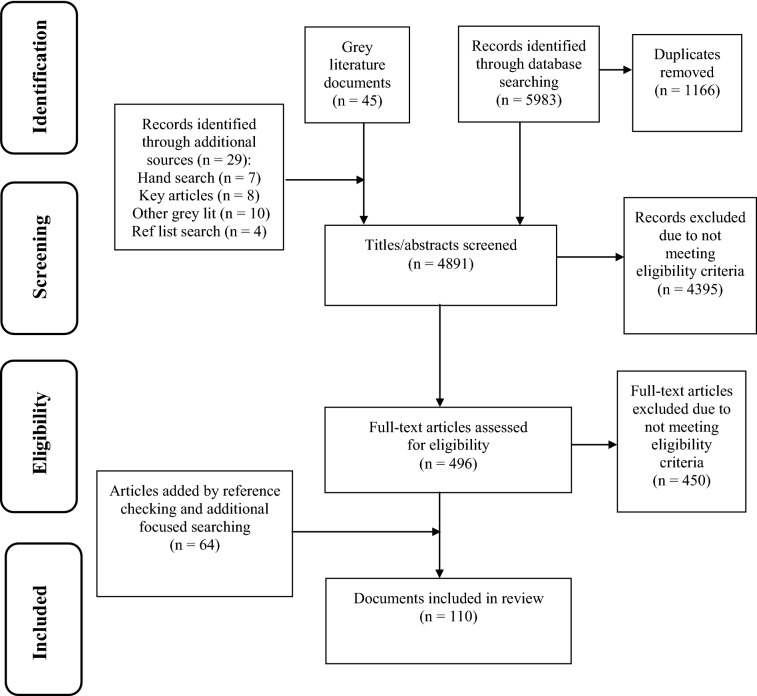
BACKGROUND: Community-based, integrated youth service hubs have the potential to address some of the longstanding issues with mental health services for youth, including problems with access and system fragmentation. Better understanding of these approaches, particularly efforts to create a single point of entry to comprehensive, evidence-based services through youth service hubs, is needed to help guide future implementation and evaluation. This scoping review identifies the key principles and characteristics of these models of care, as well as the state of the literature, particularly with regard to implementation and replicability. METHOD: Electronic databases and grey literature sources were searched for material from 2001 to 2019, with diverse search terms capturing the concept of "integrated" or "one-stop shop" youth mental health services. Title/abstract and full text review were conducted, as well as additional focused searching. After screening 4891 texts at the title/abstract level and 496 at the full-text level, 110 documents were included for data extraction. RESULTS: Several integrated care hub models for youth mental health services and related frameworks were identified internationally, largely in high-income countries. Common principles included an emphasis on rapid access to care and early intervention, youth and family engagement, youth-friendly settings and services, evidence-informed approaches, and partnerships and collaboration. Program characteristics also revealed similarities (e.g., providing evidence-informed or evidence-based services in youth-friendly spaces), with some differences (e.g., care coordination methods, types of service providers), potentially attributable to lack of available information about key ingredients. Outcome research was limited, with few rigorous evaluations of youth outcomes. Moreover, sufficient information for replication, community evaluation of feasibility or actual implementation was rarely provided. CONCLUSION: Internationally, integrated youth service hubs were found to share common key principles, while providing comprehensive services to youth with mental health difficulties. There is a great need for common language and measurement framework to facilitate replication, rigorous evaluation of outcomes, knowledge exchange, and dissemination of findings.
Overview
The claims and statistics of this paper haven’t been checked yet.
Free: it reads the open-access text and checks the first 5 claims that cite a source we can check. Create a free account to check every claim.
Integrity signals
Registry
Cites
Statistics
Figures
Verification
Claims the paper makes
The claims and statistics of this paper haven’t been checked yet.
Free: it reads the open-access text and checks the first 5 claims that cite a source we can check. Create a free account to check every claim.
Claims other papers make about this one
Each is checked against this paper’s own text: does it say what the citing paper says it does?
The source backs part of the claim, not all of it — or backs it for a different population, condition or comparison.
In the citing paper
“Codesign (by which the model of care benefits from the ideas and views of young people with lived experience of mental ill health) and youth partnership (in which young people have an ongoing role in the operation of the service) are underlying principles and are essential elements for building a trusted brand (table 2). 208,209,286”
From The Lancet Psychiatry Commission on youth mental health (2024) · cites this paper as [286]
Experimental — accuracy not yet measuredThe source backs part of the claim, not all of it — or backs it for a different population, condition or comparison.
In the citing paper
“Although primary care services are predominantly designed for young people with mild-to-moderate needs, individuals with higher or more complex needs are increasingly accessing these services.”
From The Lancet Psychiatry Commission on youth mental health (2024) · cites this paper as [286]
Experimental — accuracy not yet measuredThe source backs part of the claim, not all of it — or backs it for a different population, condition or comparison.
In the citing paper
“Peer or lay workers are a core component of the youth mental health workforce across all resource settings, 29,286,343 complementing traditional clinical roles rather than merely filling staff shortages.”
From The Lancet Psychiatry Commission on youth mental health (2024) · cites this paper as [286]
Experimental — accuracy not yet measuredThe cited source says what the claim attributes to it.
In the citing paper
“Within the past two decades, a range of integrated youth mental health care services have emerged internationally, although reform has largely occurred in high-resource settings. 209,250,286”
From The Lancet Psychiatry Commission on youth mental health (2024) · cites this paper as [286]
Self-check
Percentages, sums and reported differences re-computed from the paper’s own numbers.
The self-check needs the paper’s full text.
Citations
Cites
Scoping studies: towards a methodological framework
Arksey, H., & O'Malley, L. (2005) · International Journal of Social Research Methodology · doi:10.1080/1364557032000119616 · Cited by 36,742 · cited 1×
“Scoping reviews comprehensively identify important concepts in a structured manner [20], including the extent, range, and nature of research activity in areas in which the available range of materials is unknown [21], e.”
BackgroundKessler, R. C., Berglund, P., Demler, O., Jin, R., Merikangas, K. R., & Walters, E. E. (2005) · Archives of General Psychiatry · doi:10.1001/archpsyc.62.6.593 · Cited by 20,391 · cited 2×
“Worldwide, approximately 10–20% of children and adolescents experience mental health disorders [3, 4] and cumulative lifetime prevalence approaches 50% among adolescents and young adults in developed countries [1, 5, 6].”
BackgroundScoping studies: advancing the methodology
Levac, D., Colquhoun, H., & O'Brien, K. K. (2010) · Implementation Science · doi:10.1186/1748-5908-5-69 · Cited by 15,268
Hoffmann, T. C., Glasziou, P. P., Boutron, I., Milne, R., Perera, R., Moher, D., Altman, D. G., Barbour, V., Macdonald, H., Johnston, M., et al. (2014) · BMJ · doi:10.1136/bmj.g1687 · Cited by 10,548 · cited 1×
“Future reporting should follow TIDieR guidelines in order to facilitate replication, evaluation and implementation [91].”
MethodMerikangas, K. R., He, J.-P., Burstein, M., Swanson, S. A., Avenevoli, S., Cui, L., Benjet, C., Georgiades, K., & Swendsen, J. (2010) · Journal of the American Academy of Child & Adolescent Psychiatry · doi:10.1016/j.jaac.2010.05.017 · Cited by 6,278
Whiteford, H. A., Degenhardt, L., Rehm, J., Baxter, A. J., Ferrari, A. J., Erskine, H. E., Charlson, F. J., Norman, R. E., Flaxman, A. D., Johns, N., et al. (2013) · The Lancet · doi:10.1016/s0140-6736(13)61611-6 · Cited by 6,006
Polanczyk, G. V., Salum, G. A., Sugaya, L. S., Caye, A., & Rohde, L. A. (2015) · Journal of Child Psychology and Psychiatry · doi:10.1111/jcpp.12381 · Cited by 3,990 · cited 1×
“Worldwide, approximately 10–20% of children and adolescents experience mental health disorders [3, 4] and cumulative lifetime prevalence approaches 50% among adolescents and young adults in developed countries [1, 5, 6].”
BackgroundChild and adolescent mental health worldwide: evidence for action
Kieling, C., Baker-Henningham, H., Belfer, M., Conti, G., Ertem, I., Omigbodun, O., Rohde, L. A., Srinath, S., Ulkuer, N., & Rahman, A. (2011) · The Lancet · doi:10.1016/s0140-6736(11)60827-1 · Cited by 2,449 · cited 1×
“Worldwide, approximately 10–20% of children and adolescents experience mental health disorders [3, 4] and cumulative lifetime prevalence approaches 50% among adolescents and young adults in developed countries [1, 5, 6].”
BackgroundKim-Cohen, J., Caspi, A., Moffitt, T. E., Harrington, H., Milne, B. J., & Poulton, R. (2003) · Archives of General Psychiatry · doi:10.1001/archpsyc.60.7.709 · Cited by 2,025 · cited 1×
“Int J Ment Health Syst (2019) 13:52 Introduction Mental health problems commonly start during childhood or adolescence, with about half of all lifetime cases starting by ages 14–15 and three-quarters by ages 18–24 [1, 2].”
BackgroundThe COMET Handbook: version 1.0
Williamson, P. R., Altman, D. G., Bagley, H., Barnes, K. L., Blazeby, J. M., Brookes, S. T., Clarke, M., Gargon, E., Gorst, S., Harman, N., et al. (2017) · Trials · doi:10.1186/s13063-017-1978-4 · Cited by 2,011 · cited 1×
“Finally, using common, core outcome measures [95] to track outcomes and other aspects of ICYSHs would help facilitate collaborative research efforts, support future meta-analyses, and more rapidly advance the field.”
Method
Research works printed but not linked: 7
- Ontario Ministry of Health and Long Term Care Ontario providing faster access to mental health services for thousands of people 2017 Toronto Ontario Ministry of Health and Long-Term Care
- Bates T Illback RJ Scanlan F Carroll L Somewhere to turn to, someone to talk to. Headstrong—The National Centre for Youth Mental Health 2009 Dublin Headstrong
- Szatmari P Henderson J Cheung A Cleverley K Chaim G Hawke L Transforming youth mental health services in Canada: YouthCan IMPACT World Child Adolesc Psychiatry. 2016 10 14 15
- Hopkins G The Wight stuff Community Care. 2004 1550 38 39
- Gwynne K Zilibowitz M Spilstead model of early intervention for vulnerable families J Paediatr Child Health 2010 46 6 7
- Tobon JI, Jeffs L, editors. Bridging gaps in youth mental health: who is presenting to the youth wellness centre in Hamilton, Ontario? Paper presented at the research and policy in child, youth, and youth adult mental health conference, Tampa, Florida. 2017.
- Tee K Oyedele O Salmon A Helfrich W Banjo J Berger M Foundry—transforming access through integrated youth services in British Columbia, Canada Early Interv Psychiatry. 2018 12 Suppl. 1 230
Cited by
The Lancet Psychiatry Commission on youth mental health
McGorry, P. D., Mei, C., Dalal, N., Alvarez-Jimenez, M., Blakemore, S.-J., Browne, V., Dooley, B., Hickie, I. B., Jones, P. B., McDaid, D., et al. (2024) · The Lancet Psychiatry · doi:10.1016/s2215-0366(24)00163-9 · Cited by 663
Self-citationDesigning and scaling up integrated youth mental health care
McGorry, P. D., Mei, C., Chanen, A., Hodges, C., Alvarez‐Jimenez, M., & Killackey, E. (2022) · World Psychiatry · doi:10.1002/wps.20938 · Cited by 546
Alderwick, H., Hutchings, A., Briggs, A., & Mays, N. (2021) · BMC Public Health · doi:10.1186/s12889-021-10630-1 · Cited by 386
Hawke, L. D., Sheikhan, N. Y., MacCon, K., & Henderson, J. L. (2021) · BMC Health Services Research · doi:10.1186/s12913-021-06321-7 · Cited by 112
“to address many of these barriers by creating integrated, youth-friendly service delivery models [24, 25].”
BackgroundSelf-citationFoundry: early learnings from the implementation of an integrated youth service network
Mathias, S., Tee, K., Helfrich, W., Gerty, K., Chan, G., & Barbic, S. P. (2022) · Early Intervention in Psychiatry · doi:10.1111/eip.13181 · Cited by 70
“Finally, our findings contribute to an emerging body of literature on integrated youth health services (Hetrick et al., 2017; McGorry et al., 2019; Mei et al., 2020; Rickwood et al., 2019; Settipani et al., 2019).”
BackgroundImpacts of the COVID ‐19 pandemic on youth mental health among youth with physical health challenges
Hawke, L. D., Monga, S., Korczak, D. J., Hayes, E., Relihan, J., Darnay, K., Cleverley, K., Lunsky, Y., Szatmári, P., & Henderson, J. L. (2020) · Early Intervention in Psychiatry · doi:10.1111/eip.13052 · Cited by 80
“In the emerging model of integrated youth mental health service hubs, physical health services are considered a core component (Hetrick et al., 2017; Settipani et al., 2019).”
BackgroundSelf-citationBerger, M., Fernando, S., Churchill, A., Cornish, P. A., Henderson, J. L., Shah, J. L., Tee, K. A., & Salmon, A. (2021) · Early Intervention in Psychiatry · doi:10.1111/eip.13180 · Cited by 83
Self-citationValente, P. K., Bazzi, A. R., Childs, E., Salhaney, P., Earlywine, J. J., Olson, J., Biancarelli, D. L., Marshall, B. D. L., & Biello, K. B. (2020) · International Journal of Drug Policy · doi:10.1016/j.drugpo.2020.102934 · Cited by 67
“For example, integrated care models including fast access to primary care, case navigation, peer support groups, and specialized mental health services, such as psychiatric care, have shown promising results for management of substance use and mental health disorders among youth in North America, although rigorous eva…”
BackgroundJeppesen, P., Wolf, R. T., Nielsen, S. M., Christensen, R., Plessen, K. J., Bilenberg, N., Thomsen, P. H., Thastum, M., Neumer, S., Puggaard, L. B., et al. (2020) · JAMA Psychiatry · doi:10.1001/jamapsychiatry.2020.4045 · Cited by 70
Hawke, L. D., & Henderson, J. (2021) · Journal of Substance Abuse Treatment · doi:10.1016/j.jsat.2021.108340 · Cited by 44
Self-citationOspina-Pinillos, L., Davenport, T., Iorfino, F., Tickell, A., Cross, S., Scott, E. M., & Hickie, I. B. (2018) · Journal of Medical Internet Research · doi:10.2196/jmir.9966 · Cited by 42
Lee, N., Bae, Y., Jang, S., Lee, D. W., & Lee, S. W. (2025) · Healthcare · doi:10.3390/healthcare13162077 · Cited by 68
The Impact of Community Mental Health Programs for Australian Youth: A Systematic Review
Savaglio, M., O’Donnell, R., Hatzikiriakidis, K., Vicary, D., & Skouteris, H. (2022) · Clinical Child and Family Psychology Review · doi:10.1007/s10567-022-00384-6 · Cited by 48
Glover‐Wright, C., Coupe, K., Campbell, A. C., Keen, C., Lawrence, P., Kinner, S. A., & Young, J. T. (2023) · Drug and Alcohol Review · doi:10.1111/dar.13651 · Cited by 47
“Another prior review reported a similar lack of evidence to establish health outcomes related to co-located and integrated youth mental health care and AOD service hubs, and the key attributes of these hubs that predict their effectiveness [82].”
BackgroundEvolution of Jigsaw ‐ a National Youth Mental Health Service
O’Reilly, A., O'Brien, G., Moore, J., Duffy, J., Longmore, P., Cullinan, S., & McGrory, S. (2021) · Early Intervention in Psychiatry · doi:10.1111/eip.13218 · Cited by 48
Halsall, T., Daley, M., Hawke, L. D., Henderson, J. L., & Matheson, K. (2022) · BMC Health Services Research · doi:10.1186/s12913-022-08743-3 · Cited by 47
“Youth peer support is often positioned as a complementary service within more formalized supports [6, 21] and peer roles often involve a range of skills and responsibilities, including skill-building, emotional support, service navigation, mental health education and promotion, action planning, engagement, coordinatio…”
BackgroundSelf-citationHenderson, J. L., Chiodo, D., Varatharasan, N., Andari, S., Luce, J., & Wolfe, J. (2023) · Early Intervention in Psychiatry · doi:10.1111/eip.13315 · Cited by 36
“In line with the best available evidence in integration (Hetrick et al., 2017; Nooteboom et al., 2021; Settipani et al., 2019), YWHO integration is enacted through co-location, integrated governance, shared funding, joint service planning and service delivery (e.g., groups co-led by service…”
BackgroundInfluentialSelf-citationPuffer, E. S., & Ayuku, D. (2022) · Perspectives on Psychological Science · doi:10.1177/17456916211049362 · Cited by 46
Leung, B. M. Y., Wandler, C., Pringsheim, T. M., & Santana, M. (2021) · Journal of Child Health Care · doi:10.1177/13674935211028694 · Cited by 45
“Care coordination has a positive effect on timeliness of care (Miller, 2014), including rapid access and early interventions (Settipani et al., 2019), and promotes favourable attitudes by the care team for the children in their care (Young et al., 2020).”
BackgroundInfluentialMurphy, R., Huggard, L., Fitzgerald, A., Hennessy, E., & Booth, A. (2023) · Journal of Community Psychology · doi:10.1002/jcop.23090 · Cited by 50
Sheikhan, N. Y., Hawke, L. D., Cleverley, K., Darnay, K., Courey, L., Szatmári, P., Cheung, A., & Henderson, J. L. (2021) · Health Expectations · doi:10.1111/hex.13206 · Cited by 25
Self-citationWestberg, K. H., Nygren, J. M., Nyholm, M., Carlsson, I.-M., & Svedberg, P. (2020) · Archives of Public Health · doi:10.1186/s13690-020-00471-6 · Cited by 22
Halsall, T., Daley, M., Hawke, L. D., & Henderson, J. L. (2021) · International Journal of Qualitative Methods · doi:10.1177/1609406921995680 · Cited by 26
“Experts have called for systems reform to support increased integration of services, access to timely supports and that take advantage of complementary services, such as peer supports (Malla et al., 2018; Settipani et al., 2019).”
BackgroundSelf-citationGlowacki, K., Whyte, M., Weinstein, J., Marchand, K., Barbic, D., Scheuermeyer, F. X., Mathias, S., & Barbic, S. P. (2022) · BMC Health Services Research · doi:10.1186/s12913-022-07990-8 · Cited by 29
Takubo, Y., Nemoto, T., Iwai, M., Kashima, M., Yamaguchi, E., Maruyama, A., Miura, S., Saito, H., Tsujino, N., & Mizuno, M. (2020) · BMC Psychiatry · doi:10.1186/s12888-020-02951-z · Cited by 25
Youth Perspectives on Integrated Youth Services: A Discrete Choice Conjoint Experiment
Henderson, J., Hawke, L. D., Iyer, S. N., Hayes, E., Darnay, K., Mathias, S., & Thabane, L. (2022) · The Canadian Journal of Psychiatry · doi:10.1177/07067437211044717 · Cited by 20
Self-citationO’Reilly, A., McKenna, N., & Fitzgerald, A. (2021) · Child and Adolescent Mental Health · doi:10.1111/camh.12489 · Cited by 22
Bennett, S. D., Kerry, E., Fifield, K., Ching, B. C. F., Catanzano, M., Liang, H., Heyman, I., Coughtrey, A. E., Sanderson, C., Rojas, N. K., et al. (2021) · JCPP Advances · doi:10.1002/jcv2.12046 · Cited by 24
“The advantages of mental health drop‐in centres have been reported in the general population (Barwick et al., 2013; Nath et al., 2016; Settipani et al., 2019), however, studies have yet to explore the use of a mental health drop‐in centre in a paediatric hospital setting.”
BackgroundTuaf, H., & Orkibi, H. (2023) · Frontiers in Public Health · doi:10.3389/fpubh.2023.1241469 · Cited by 38
Broersen, M., Frieswijk, N., Kroon, H., Vermulst, A. A., & Creemers, D. H. M. (2020) · Frontiers in Psychiatry · doi:10.3389/fpsyt.2020.609120 · Cited by 25
Canas, E., Wathen, C. N., Berman, H., Reaume‐Zimmer, P., & Iyer, S. N. (2021) · Health Expectations · doi:10.1111/hex.13302 · Cited by 22
Libon, J., Alganion, J., & Hilario, C. T. (2022) · Western Journal of Nursing Research · doi:10.1177/01939459221115695 · Cited by 20
“Previous research has found that integrated youth mental health care models can facilitate early prevention, community engagement, partnerships, and collaboration (Settipani et al., 2019).”
BackgroundThe New Wave of Youth Mental Health Services: Time for Reflection and Caution
MALLA, A. K., Boksa, P., & Joober, R. (2020) · The Canadian Journal of Psychiatry · doi:10.1177/0706743720984382 · Cited by 26
Integrating substance use care into primary care for adolescents and young adults: Lessons learned
Bagley, S. M., Hadland, S. E., Schoenberger, S. F., Gai, M. J., Topp, D., Hallett, E., Ashe, E. M., Samet, J. H., & Walley, A. Y. (2021) · Journal of Substance Abuse Treatment · doi:10.1016/j.jsat.2021.108376 · Cited by 19
Hawke, L. D., Thabane, L., Wilkins, L. K., Mathias, S., Iyer, S. N., & Henderson, J. L. (2021) · Patient · doi:10.1007/s40271-021-00510-6 · Cited by 20
“Engagement is a core component of IYSH development and is considered key to developing services that are responsive to youth and family needs [25].”
BackgroundMethodInfluentialSelf-citationMcCalman, J., Fagan, R., McDonald, T., Jose, S., Neal, P., Blignault, I., Askew, D. A., & Cadet‐James, Y. (2022) · International Journal of Environmental Research and Public Health · doi:10.3390/ijerph20010375 · Cited by 20
“As has been found lsew ere, Yarrabah youth were reluctant to seek help [26,40].”
BackgroundInfluentialAppleton, R., Barnett, P., Clarke, C., Yang, J., Begum, S., Edbrooke-Childs, J. H., Emptage, I., Foye, U., Griffiths, J., Hanson, I., et al. (2025) · BMC Medicine · doi:10.1186/s12916-025-04438-8 · Cited by 20
“Some models integrated evidence-informed mental health support along-side additional holistic services to suit need, in line with research establishing common principles of “integrated community-based youth service hubs” [91].”
Kourgiantakis, T., Lee, E., Kosar, A. K. T., Tait, C., Lau, C., McNeil, S. R., Craig, S. L., Ashcroft, R., Williams, C. C., Goldstein, A. L., et al. (2023) · Substance Abuse Treatment Prevention and Policy · doi:10.1186/s13011-023-00550-1 · Cited by 27
“Integrated youth services have been proposed and implemented as a response to these service gaps and system challenges globally [99, 100].”
BackgroundSelf-citationHow much is enough? Considering minimally important change in youth mental health outcomes
Krause, K. R., Hetrick, S. E., Courtney, D. B., Cost, K. T., Butcher, N. J., Offringa, M., Monga, S., Henderson, J., & Szatmari, P. (2022) · The Lancet Psychiatry · doi:10.1016/s2215-0366(22)00338-8 · Cited by 15
Self-citationBroersen, M., Frieswijk, N., Coolen, R., Creemers, D. H. M., & Kroon, H. (2022) · Frontiers in Psychiatry · doi:10.3389/fpsyt.2022.903523 · Cited by 17
Effects of Youth Flexible Assertive Community Treatment: outcomes of an 18-month observational study
Broersen, M., Creemers, D. H. M., Frieswijk, N., Vermulst, A. A., & Kroon, H. (2023) · Social Psychiatry and Psychiatric Epidemiology · doi:10.1007/s00127-023-02508-x · Cited by 19
Early intervention services for non-psychotic mental health disorders: a scoping review protocol
Richards, K., Austin, A., Allen, K., & Schmidt, U. (2019) · BMJ Open · doi:10.1136/bmjopen-2019-033656 · Cited by 15
Adams, W. E., Rogers, E. S., McKnight, L., & Lynde, D. (2023) · Administration and Policy in Mental Health and Mental Health Services Research · doi:10.1007/s10488-023-01267-w · Cited by 16
Wolf, R. T., Puggaard, L. B., Pedersen, M. M. A., Pagsberg, A. K., Silverman, W. K., Correll, C. U., Plessen, K. J., Neumer, S., Gyrd‐Hansen, D., Thastum, M., et al. (2021) · European Child & Adolescent Psychiatry · doi:10.1007/s00787-021-01718-5 · Cited by 16
Stubbing, J., & Gibson, K. L. (2021) · International Journal of Environmental Research and Public Health · doi:10.3390/ijerph18199983 · Cited by 24
Hawke, L. D., Thabane, L., Iyer, S. N., Jaouich, A., Reaume-Zimmer, P., & Henderson, J. (2021) · BMC Health Services Research · doi:10.1186/s12913-021-07038-3 · Cited by 14
Self-citationMarchand, K., Turuba, R., Katan, C., Brasset, C., Fogarty, O., Tallon, C., Fairbank, J., Mathias, S., & Barbic, S. P. (2022) · Substance Abuse Treatment Prevention and Policy · doi:10.1186/s13011-022-00466-2 · Cited by 14
“, Foundry in BC, Youth Wellness Hubs Ontario, allcove in California, Jigsaw in Ireland, headspace in Australia), which are increasingly being implemented to address longstanding challenges with the appropriateness and accessibility of youth mental health and substance use service provision and engagement [48].”
BackgroundMethodHui, C. L. M., Suen, Y. N., Lam, B. Y., Wong, S. M. Y., Wong, C. S. M., Lui, S. S. Y., Chan, K., Wong, M. T. H., Chan, S. K. W., Lee, E. H. M., et al. (2021) · Early Intervention in Psychiatry · doi:10.1111/eip.13261 · Cited by 15
“Youth services are aiming to integrate mental health services and other social services into one multidisciplinary, community-based setting, addressing issues such as poor accessibility or interruption of care during transition to adulthood in traditional primary care services (Hetrick et al., 2017; Settipani et al.,…”
BackgroundBarriers and Facilitators to the Implementation of an Integrated Youth Services Network in Ontario
Chiodo, D., Lu, S. K., Varatharajan, T., Costello, M. J., Rush, B. R., & Henderson, J. L. (2022) · International Journal of Integrated Care · doi:10.5334/ijic.6737 · Cited by 16
Self-citationSavaglio, M., Yap, M. B. H., Smith, T., Vincent, A., & Skouteris, H. (2023) · Child and Adolescent Psychiatry and Mental Health · doi:10.1186/s13034-023-00621-y · Cited by 13
Sverdlichenko, I., Hawke, L. D., & Henderson, J. L. (2021) · Journal of Substance Abuse Treatment · doi:10.1016/j.jsat.2021.108592 · Cited by 15
Self-citationBrown, V., Bowie, M., Bales, D. W., Scheyett, A., Thomas, R., & Cook, G. (2023) · SSM - Mental Health · doi:10.1016/j.ssmmh.2023.100191 · Cited by 10
Wittevrongel, E., van Winkel, R., Jackers, M., Colman, L., Versyck, M., Camp, E., Everaert, G., Vrijens, M., Baeyens, D., & Danckaerts, M. (2023) · Health Expectations · doi:10.1111/hex.13832 · Cited by 12
“21 Moreover, especially young people should be heard given that involving them in service development, design and delivery helps to improve access and increases engagement in and satisfaction with services.”
BackgroundRemodeling Broken Systems: Addressing the National Emergency in Child and Adolescent Mental Health
Richards, M., Benson, N. M., Kozloff, N., & Franklin, M. S. (2023) · Psychiatric Services · doi:10.1176/appi.ps.20220283 · Cited by 11
Sundberg, L. R., Gotfredsen, A. C., Christianson, M., Wiklund, M., Hurtig, A., & Goicolea, I. (2024) · BMC Health Services Research · doi:10.1186/s12913-024-10757-y · Cited by 24
“Collaboration is not a panacea and will not compensate for an under-resourced youth mental health system. collaborative models, such as the community youth mental health hubs [29–31].”
BackgroundJohansen, M., Stuen, H. K., Brekke, E., Jensen, C. A., & Landheim, A. S. (2024) · Frontiers in Psychiatry · doi:10.3389/fpsyt.2024.1478345 · Cited by 11
Henderson, J. L., Szatmári, P., Cleverley, K., Ma, C., Hawke, L. D., Cheung, A., Relihan, J., Dixon, M., Quinlan-Davidson, M., Moretti, M. E., et al. (2025) · JAMA Network Open · doi:10.1001/jamanetworkopen.2025.9565 · Cited by 20
Self-citationNash, L. M., Isobel, S., Thomas, M. L., Nguyen, T. P., & van der Pol, R. (2021) · Early Intervention in Psychiatry · doi:10.1111/eip.13104 · Cited by 9
Holmen, I. C., Waibel, S., & Kaarbøe, O. M. (2023) · BMC Health Services Research · doi:10.1186/s12913-023-09858-x · Cited by 10
“These findings are supported by other studies [9, 10] and trends in various countries (e.g., Australia, Ire-land and Great Britain [45, 46]).”
ResultBoonstra, A., van Amelsvoort, T., Klaassen, R. M. C., Popma, A., Mil, N. H. G., Veling, W., de Winter, R. F. P., Boonstra, N., & Leijdesdorff, S. M. J. (2024) · BJPsych Open · doi:10.1192/bjo.2024.58 · Cited by 12
“14 The present study was the very first exploration of changes in psychological distress, functioning, support use and school absenteeism among @ease visitors, forming a basis for future research.”
BackgroundBsteh, G., Macher, S., Krajnc, N., Marik, W., Michl, M., Müller, N., Zaic, S., Harreiter, J., Novak, K., Wöber, C., et al. (2024) · European Journal of Neurology · doi:10.1111/ene.16401 · Cited by 11
“…possible explanation may be the facilitated access to specialized care in one-stop outpatient clinics, which is otherwise difficult due to the scarcity of services, particularly for underprivileged patient groups, a phenomenon well known in other chronic diseases with complex management [ 37, 38 ].”
BackgroundHenderson, J. L., Wilkins, L. K., Hawke, L. D., Wang, W., Sanches, M., Brownlie, E. B., & Beitchman, J. H. (2021) · PubMed · Cited by 14
Self-citationZhu, N., Hawke, L. D., Prebeg, M., Hayes, E., Darnay, K., Iyer, S. N., & Henderson, J. L. (2022) · BMC Psychology · doi:10.1186/s40359-022-00887-5 · Cited by 10
“Alongside IPS, Integrated Youth Service (IYS) models constitute a growing international movement toward providing integrated, coordinated services for youth mental health, substance use, physical health, and other social support domains [38].”
BackgroundSelf-citationOjeda, V. D., Berliant, E., Parker, T., Lyles, M., Edwards, T. M., Jimenez, C., Linke, S., Hiller-Venegas, S., & Lister, Z. D. (2021) · International Journal of Offender Therapy and Comparative Criminology · doi:10.1177/0306624x211013739 · Cited by 11
“Evaluations of integrated service models for youth living with mental illness are growing, including outside the U.S., yet additional research is needed to determine their effectiveness for justice-involved YA (Settipani et al., 2019).”
BackgroundComplex Interventions for Youth Mental Health: A way Forward
Castle, D. J., Hawke, L. D., Henderson, J. L., Husain, M. O., Lusicic, A., & Szatmári, P. (2022) · The Canadian Journal of Psychiatry · doi:10.1177/07067437221093396 · Cited by 9
“For example, the integrated youth services model uses stepped-care intervention pathways that address symptoms and functioning, but integrates various psychosocial services to address social and contextual factors.(7) CHR lends itself particularly to this approach.”
BackgroundSelf-citationBroersen, M., Creemers, D. H. M., Frieswijk, N., Vermulst, A. A., & Kroon, H. (2020) · BMJ Open · doi:10.1136/bmjopen-2019-035146 · Cited by 7
Hawke, L. D., Hayes, E., Iyer, S. N., Killackey, E. J., Chinnery, G. L., Gariépy, G., Thabane, L., Darnay, K., Alagaratnam, A., Tucker‐Kilfoil, S., et al. (2020) · Early Intervention in Psychiatry · doi:10.1111/eip.13039 · Cited by 7
“IYSHs are a growing focus of research and implementation around the world (Hetrick et al., 2017; Settipani et al., 2019).”
BackgroundSelf-citationBarnhoorn-Bos, A. M., Heek, E., Mulder, E. A., Vermeiren, R. R. J. M., Soenen, S., Simons, I., & Nooteboom, L. A. (2025) · International Journal of Integrated Care · doi:10.5334/ijic.8576 · Cited by 8
Wittevrongel, E., Kessels, R., Everaert, G., Vrijens, M., Danckaerts, M., & van Winkel, R. (2024) · Early Intervention in Psychiatry · doi:10.1111/eip.13584 · Cited by 10
“Instead of having a transition point at 18 years, new integrated youth health care services broadly focus on the age group between 12 and 25 years, with some differences in age ranges in different countries (Settipani et al., 2019).”
Dionne, É., Haggerty, J. L., Scott, C. M., Doucet, S. A., Stewart, T. L., Quesnel‐Vallée, A., Montelpare, W. J., Urquhart, R., Sutherland, J. M., & Yves, Y. (2023) · Healthcare policy · doi:10.12927/hcpol.2023.27181 · Cited by 7
Patterns of service utilization among youth with substance use service need: a cohort study
Ow, N., Marchand, K., Liu, G., Mallia, E., Mathias, S., Sutherland, J. M., & Barbic, S. P. (2023) · Substance Abuse Treatment Prevention and Policy · doi:10.1186/s13011-023-00572-9 · Cited by 7
“IYS networks also commonly have collaboration and partnerships with various agencies and stakeholders to help provide multidisciplinary care like social, educational, employment services, housing support, and income assistance [24].”
BackgroundChoi, N. G., Marti, C. N., & Choi, B. Y. (2024) · Children and Youth Services Review · doi:10.1016/j.childyouth.2024.107665 · Cited by 6
Exploration of Mental Health Issues of Students among University Health Science Academics in Japan
McMaster, R., Adachi, K., Yada, H., Odachi, R., Omura, M., & Cleary, M. L. (2021) · Issues in Mental Health Nursing · doi:10.1080/01612840.2021.1894617 · Cited by 12
“Mental health disorders and illnesses tend to commence prior to the age of 25 years and then continue into adulthood (Fusar-Poli, 2019; Settipani et al., 2019).”
BackgroundHalladay, J., Stead, V., McCarron, C., Kennedy, M., King, K., Venantius, M., Carter, A., Syan, S., Matthews, M., Khoshroo, S., et al. (2022) · medRxiv · doi:10.1101/2022.10.21.22281362 · Cited by 5
“15 (29, 30, 76-78) indicate improvements in quality of life is perceived as more important than”
BackgroundVaratharasan, N., Chiodo, D., Hanna, M. T., & Henderson, J. L. (2024) · International Journal of Integrated Care · doi:10.5334/ijic.7605 · Cited by 9
Self-citationMughal, S., Alègre, M.-P., Sanchez-Allakhverdieva, A., Amoura, L., Liu, Y. S., Iyer, S. N., Capon, W., Iorfino, F., & Shah, J. L. (2025) · Psychiatric Services · doi:10.1176/appi.ps.20250050 · Cited by 8
Key service components for age‐appropriate mental health service planning for young adults
Gossip, K., John, J., Comben, C., Page, I. S., Erskine, H. E., Scott, J. G., & Diminic, S. (2021) · Early Intervention in Psychiatry · doi:10.1111/eip.13253 · Cited by 5
“This included services, such as mental health services, drug and alcohol services, vocational support programs, recreational and social programs, housing support services and specific psychological interventions such as mindfulness, cognitive behavioural therapy and supportive counselling (Settipani et al., 2019).”
BackgroundInfluentialOostermeijer, S., Williamson, M. K., Nicholas, A., Machlin, A., & Bassilios, B. (2022) · International Journal of Environmental Research and Public Health · doi:10.3390/ijerph191710494 · Cited by 5
“A recent scoping review identified key requirements for youthspecific mental health services (youth ‘service hubs’ mostly across high-income Western countries) including: an emphasis on rapid access to care and early intervention, youth and family engagement, youth-friendly and non-stigmatizing settings and services,…”
BackgroundHodgins, M., McHugh, C. M., Eapen, V., Georgiou, G., Curtis, J., & Lingam, R. (2024) · International Journal of Integrated Care · doi:10.5334/ijic.7730 · Cited by 6
“While emerging evidence for integrated care models to meet the current needs of the YMH system appears promising [20, 51], more work is needed to determine whether comprehensive integrated, co-located services for mental and physical (including sexual) health, substance use, vocational and social…”
BackgroundHawke, L. D., Zhu, N., Relihan, J., Darnay, K., & Henderson, J. L. (2022) · The Canadian Journal of Addiction · doi:10.1097/cxa.0000000000000148 · Cited by 6
Self-citationSawrikar, V., Buchan, K., & Gillespie‐Smith, K. (2025) · Health Policy and Technology · doi:10.1016/j.hlpt.2025.101028 · Cited by 4
Defining youth-centred practice in mental health care
Cook, A., Hunt, R., Silcox, J., Canas, E., & MacDougall, A. G. (2025) · BMC Psychiatry · doi:10.1186/s12888-025-06864-7 · Cited by 7
“Although there is considerable variance among these types of programs both nationally and internationally, a common attribute many of these models have is the application of “youth-friendly” approaches [18].”
InfluentialLee, J., Barnett, P., Goldsmith, L. P., Yang, J., Appleton, R., Lloyd‐Evans, B., Hahn, J. S., Rich, N., Francis, E., Mitchell, L., et al. (2026) · BMC Medicine · doi:10.1186/s12916-026-04617-1 · Cited by 6
“Of the 21 included reviews, three were quantitative systematic reviews with narrative syntheses [156–158], three were scoping reviews [21, 159, 160], seven were quantitative systematic reviews with meta-analyses [161–163], two were rapid reviews [164, 165], two were systematic reviews and narrative…”
InfluentialGoicolea, I., Wiklund, M., Linander, I., & Sundberg, L. R. (2022) · BMC Health Services Research · doi:10.1186/s12913-022-08259-w · Cited by 6
“Similar models of integrated community-based youth service hubs face the problem of how to respond to young people who present with complex mental healthcare needs to services that were initially designed with promotion and prevention in focus [14, 19, 20].”
BackgroundInfluentialDisparities in Youth and Family Experiences of System-of-Care Principles by Level of Youth Need
Williams, N. J., Beauchemin, J. D., Griffis, J., & Marcus, S. C. (2023) · Community Mental Health Journal · doi:10.1007/s10597-023-01126-w · Cited by 6
“, 2022), integration of schools and primary care settings with specialty care (Dillon-Naftolin et al., 2017; Hoover & Bostic, 2021; Settipani et al., 2019), and the integration of community-based systems-of-care with hospital- or residential-based services.”
BackgroundNurochim, N. (2021) · Jurnal Konseling dan Pendidikan · doi:10.29210/151800 · Cited by 4
Appleton, R., Barnett, P., Clarke, C., Yang, J., Begum, S., Edbrooke-Childs, J. H., Emptage, I., Foye, U., Griffiths, J., Hanson, I., et al. (2025) · medRxiv · doi:10.1101/2025.02.07.25321864 · Cited by 4
Dhonnagáin, N. M., O’Reilly, A., Shevlin, M. E., & Dooley, B. A. (2022) · Child Psychiatry & Human Development · doi:10.1007/s10578-022-01436-2 · Cited by 3
“Typically, these services provide mental health support at primary care [42].”
BackgroundMethodPredicting Reliable Improvements in Primary Care Youth Mental Health
Moore, J., Doyle, E., Carey, E., Blix, A., Booth, A., Rossouw, J., O’Reilly, A., O’Brien, S., & Duffy, J. (2025) · Early Intervention in Psychiatry · doi:10.1111/eip.13637 · Cited by 3
“Evaluations of these innovative services have shown promising outcomes, including symptom reduction and high satisfaction among youth (Hetrick et al. 2017; Rickwood et al. 2023; Settipani et al. 2019).”
Henderson, J. L., & Chiodo, D. (2023) · Canadian Journal of Community Mental Health · doi:10.7870/cjcmh-2023-011 · Cited by 4
Self-citationHenderson, J. L., de Oliveira, C., & Mathias, S. (2024) · The Canadian Journal of Psychiatry · doi:10.1177/07067437241301008 · Cited by 3
Self-citationMoghimi, E., Belfry, K., Farr, S., Stafford, S., Bogdan, A., Brush, M., Canning, C., & Kim, S. (2025) · BMC Health Services Research · doi:10.1186/s12913-024-12101-w · Cited by 10
Halsall, T., Manion, I. G., Henderson, J. L., Robeson, P., Purcell, R., Liversidge, P., & Iyer, S. N. (2020) · Health Research Policy and Systems · doi:10.1186/s12961-020-0535-x · Cited by 4
Self-citationDickson, K. S., Sklar, M., Chen, S. Z., & Kim, B. (2022) · BMC Health Services Research · doi:10.1186/s12913-022-07748-2 · Cited by 6
“While taking a whole-person orientation that is inclusive of an individual’s physical and mental health is encouraged [9, 32], few studies examine care transitions within the inpatient to outpatient mental health context span across broader multi-services settings contexts.”
BackgroundInfusing wellness opportunities into integrated youth services
Glowacki, K., Affolder, J., Macnab, B., Ewert, A., Tee, K. A., Wenger, M., Chan, G., Mathias, S., & Barbic, S. P. (2023) · BMC Psychiatry · doi:10.1186/s12888-023-04809-6 · Cited by 8
“Integrated Youth Services (IYS) are community-based (preferably in a single location), youth- and familycentred, and provide multidisciplinary care in a youthfriendly environment [6, 22, 23].”
Background“Friendly, local and welcoming” – evaluation of a community mental health early intervention service
Parry, S. L., Eve, Z., Stamou, V., Brockway, A., & Basilio, D. D. (2023) · Journal of Children s Services · doi:10.1108/jcs-12-2021-0053 · Cited by 2
Harris-Lane, L. M., King, A. C., Bérubé, S., Burke, K., Churchill, A., Cornish, P. A., Jaouich, A., Michaud, M., Losier, A., Shah, J. L., et al. (2024) · International Journal of Mental Health and Addiction · doi:10.1007/s11469-024-01339-4 · Cited by 4
Hui, C. L. M., Chen, E. Y. H., Wong, S. M. Y., Wong, G. H.-Y., Chan, S. K. W., Sham, P. C., Wong, M. T. H., Chan, K., Cheung, C., Lai, G., et al. (2024) · Psychiatry Research · doi:10.1016/j.psychres.2024.116279 · Cited by 3
Increasing Latinx Youth Engagement Across Different Types of After-School Organizations
Moncloa, F., Erbstein, N., & Subramaniam, A. (2021) · Journal of Youth Development · doi:10.5195/jyd.2021.1084 · Cited by 2
“Organizations engage marginalized youth and family members to address current and emerging multidimensional issues of families and communities (Trask et al., 2006; Settipani et al., 2019.”
Glowacki, K., Whyte, M., Weinstein, J., Marchand, K., Barbic, D., Scheuermeyer, F. X., Mathias, S., & Barbic, S. P. (2022) · Research Square · doi:10.21203/rs.3.rs-1239811/v1 · Cited by 3
Metadata
- Authors
- Settipani, C. A., Hawke, L. D., Cleverley, K., Chaim, G., Cheung, A., Mehra, K., Rice, M., Szatmari, P., & Henderson, J.
- Affiliations
- Centre for Addiction and Mental Health (CA)
- University of Toronto (CA)
- McMaster University (CA)
- Corresponding author
- Henderson, Joanna
- ORCID
- Venue
- International Journal of Mental Health Systems
- Published
- 2019-07-23
- Volume
- 13
- Issue
- 1
- Pages
- 52-52
- ISSN
- 1752-4458 (ISSN-L)
- PMC
- PMC6651922
- OpenAlex
- W2962760934
- Cited by
- 172
- References
- 113
- Citations by year
- 2026: 19 · 2025: 25 · 2024: 32 · 2023: 25 · 2022: 23 · 2021: 34 · 2020: 11 · 2019: 2
- FWCI
- 2.77
- Type
- journal article
- Language
- en
- Open access
- gold
- doi.org
- Licence
- cc-by
- creativecommons.org/licenses/by/4.0/ (tdm)
- creativecommons.org/licenses/by/4.0/ (vor)
- Locations
- International Journal of Mental Health Systems (publishedVersion, cc-by)
- PubMed Central (publishedVersion, cc-by)
- PubMed (publishedVersion)
- TSpace (University of Toronto) (submittedVersion, other-oa)
- DOAJ (DOAJ: Directory of Open Access Journals) (submittedVersion, cc-by-sa)
- Funders
- Ontario SPOR Support Unit
- Topics
- Social Sciences › Psychology › Clinical Psychology › Psychiatric care and mental health services
- Health Sciences › Medicine › Psychiatry and Mental health › Mental Health Treatment and Access
- Health Sciences › Health Professions › General Health Professions › Health Policy Implementation Science
- Keywords
- child and adolescent mental health services, one-stop service, community-based services, access to mental health care, care coordination, early intervention, youth participation, family involvement, service fragmentation, implementation, replicability
About these checks
Registry, retraction, Cites and statistics results are computed, not judged, with one exception: a printed reference that no index lists is read once by a model before it counts as a citation error. Claims are extracted by a model and kept only when their quote appears verbatim in the text; each cited source is then checked, with a model’s help, for whether it says what the claim relies on. Those verdicts can be wrong — read the claim’s quote and the cited source before relying on one.
Statistics and arithmetic are recomputed, not judged.
Confidence bands are shown only for fields calibrated on our annotated test set. None is calibrated yet, so no band is shown.
What counts as a claim ›How we measure confidence ›How we check this ›
Are you an author, or do you see a problem with this page? Request a review
Data sources
Bibliographic data: Semantic Scholar, OpenAlex, Crossref.
Contains information from the Semantic Scholar Academic Graph Datasets, made available under the ODC Attribution License (ODC-BY 1.0).
Semantic Scholar’s data is described in: Kinney, R., et al. (2023). The Semantic Scholar Open Data Platform. arXiv:2301.10140.
