

Suicide among youth and young adults in Canada: bereaved parents' perspectives on the systems of care
Open accessThe DOI matches its Crossref record; 74 of the 74 references it cites were found in a registry or an index; 36 of the 102 sources its claims cite were checked for support.
Abstract
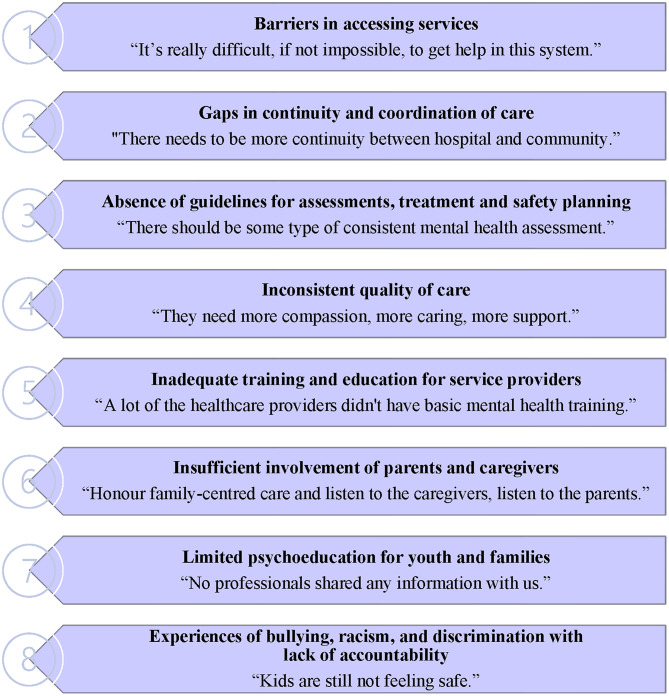
BACKGROUND: Suicide is the second leading cause of death among youth and young adults aged 15–24 in Canada. Emergency departments often serve as the first point of contact for identifying suicide risk, particularly for youth and young adults, partly due to the inaccessibility and unavailability of community mental health services. Almost half of the youth who die by suicide visit an emergency department in the year preceding their death, and up to 90% have untreated mental health and substance use concerns. Studies have found that parents describe youth mental health services as harmful, fragmented, inaccessible, and inadequate in meeting their children’s needs. Significant gaps remain in our understanding of the experiences with the systems of care for youth who die by suicide. Parents are uniquely positioned to provide vital insights, enhancing our understanding of the role that systems of care play in addressing and preventing suicide. The aim of this study was to better understand how bereaved parents describe the systems of care that provided services to their youth prior to the suicide. METHODS: This qualitative study used a community-based participatory research approach in partnership with Eli’s Place, a rural residential treatment centre currently in development for young adults with serious mental illness. Participants were eligible if they were parents or caregivers residing in Ontario, Canada, of a youth or young adult under the age of 30 who died by suicide. Semi-structured interviews were conducted, and data were analyzed using thematic analysis. RESULTS: Seventeen participants took part in the study, including 12 mothers and five fathers. The ages of the youth ranged from 12 to 29 years, with a mean age of 18. Most of the youth had diagnosed mental health and addiction-related concerns, and most had received mental health services. Our analysis of parents’ experiences and perspectives identified eight key themes, highlighting critical gaps in the mental health systems involved in their youth’s care: (1) barriers in accessing services; (2) gaps in continuity and coordination of care; (3) absence of guidelines for assessments, treatment, and safety planning; (4) inconsistent quality of care; (5) inadequate training and education for service providers; (6) insufficient involvement of parents and caregivers; (7) limited psychoeducation for youth and families; and (8) experiences of bullying, racism, and discrimination, with a lack of accountability. CONCLUSIONS: Youth suicide is a serious public health concern that requires a systems of care approach, incorporating integrated services with coordinated care and child- and family-centred approaches. In 2024, Canada introduced its first National Suicide Prevention Action Plan, marking a significant and promising advancement in suicide prevention. However, its effectiveness in reducing suicides across Canada will depend on robust implementation, supported by strong political leadership, dedicated funding and resources, and multisectoral collaboration.
Overview
CoChat Summary
TL;DR
This qualitative study interviewed 17 bereaved parents in Ontario about the systems of care that engaged with their youth before suicide, identifying eight major gaps in mental health services. Parents described inaccessible, fragmented, inconsistent, and non-family-centred care, with calls for integrated systems, better training, and accountability.
Key findings
- Seventeen parents participated: 12 mothers and 5 fathers; youth ages ranged from 12 to 29 years, with a mean age of 18.
- Most youth had mental health and addiction-related concerns: 16/17 had mental health concerns, 16/17 had received mental health or social services, and 10/17 had previous suicide attempts.
- Eight themes emerged: (1) barriers in accessing services; (2) gaps in continuity and coordination of care; (3) absence of guidelines for assessments, treatment, and safety planning; (4) inconsistent quality of care; (5) inadequate training and education for service providers; (6) insufficient involvement of parents and caregivers; (7) limited psychoeducation for youth and families; and (8) experiences of bullying, racism, and discrimination, with a lack of accountability.
- Parents reported long waitlists, narrow admission criteria, poor hospital-to-community transitions, dismissive or stigmatizing provider attitudes, and exclusion from care despite being primary supports.
Methods
- Exploratory, descriptive qualitative study using a community-based participatory research approach in partnership with Eli’s Place; participants were parents or caregivers in Ontario, Canada, of a youth or young adult under 30 who died by suicide.
- Data were collected from January 13, 2023, to June 5, 2023, through an online sociodemographic questionnaire and semi-structured individual interviews approximately 90 minutes long via Zoom.
- Thematic analysis followed Braun and Clarke’s six stages; Dedoose was used for coding, transcripts were double-coded by two independent research assistants and reviewed by the principal investigator, with weekly team meetings to resolve discrepancies.
Limitations
- The paper states that findings reflect the perspectives of participating parents and may not be fully representative of other caregivers or families who experienced the suicide of a young person; parents who participated may have been more comfortable sharing their experiences, which may limit transferability.
- Evident from the text: the sample was small (17), Ontario-only, based solely on parent/caregiver retrospective accounts, and predominantly White (14/17) and mothers (12/17), which further limits generalizability and does not include youth perspectives.
Model-written summary. Check it against the paper before relying on it.
Integrity signals
Registry
Cites
Statistics
Figures
Verification
Claims the paper makes
26 Valid · 0 Not valid · 37 Not checked · 92 Own results and interpretations
Every source the paper cites for this claim was checked and supports it.
In the paper
“Significant gaps remain in our understanding of the experiences with the systems of care for youth who die by suicide [19].”
§ Suicide among youth and young adults in Canada: bereaved parents’ perspectives on the systems of care > Abstract > Conclusions
What the sources say
- Supportedcites [19] Renaud J, Séguin M, Lesage AD, Marquette C, Choo B, Turecki G, et al. Service use and unmet needs in youth suicide: A study of trajectories. Can J Psychiatry. 2014;59:523–30. 25565685 PMC4197786 source
The Abstract says that little research or documentation exists on the adequacy of services for people who die by suicide. The paper addresses that gap by examining young suicide victims’ service use and unmet needs, supporting the citing sentence’s broad claim about gaps in understanding their experiences with systems of care. (LLM, conf=0.89)
plain- Asserted: passes — The authors put it forward as true.
- Checkable: passes — It can be checked against evidence.
- Load-bearing: passes — The paper’s conclusions depend on it.
- Based: passes — The paper gives a reason why it holds.
- Supported
The cited sources support only part of this claim — read each source’s verdict below.
In the paper
“Furthermore, many mental health professionals lack the necessary knowledge, attitudes, skills, and confidence to screen, assess, and address suicide risk with patients [64–66].”
§ Suicide among youth and young adults in Canada: bereaved parents’ perspectives on the systems of care > Discussion
What the sources say
- Partly supportedcites [64] Schulz P, Zapata I, Huzij T. Examination of medical student and physician attitudes towards suicide reveals need for required training. Front Public Health. 2024;12:1331208. 38633234 PMC11021567 sourceExperimental — accuracy not yet measured
The Introduction and Discussion describe negative attitudes, limited training, skill deficits, and low confidence in suicide-risk assessment among medical students and physicians, particularly primary care providers. They do not establish this pattern for mental health professionals generally; the Introduction also says physicians’ hesitation to assess risk is not due to a lack of knowledge of suicide risk factors. No page numbers are provided in our copy. (LLM, conf=0.87)
- Partly supportedcites [65] Solin P, Tamminen N, Partonen T. Suicide prevention training: self-perceived competence among primary healthcare professionals. Scand J Prim Health Care. 2021;39:332–8. 34340646 PMC8475147 sourceExperimental — accuracy not yet measured
The Introduction and Discussion describe gaps in knowledge, communication skills, beliefs, and confidence that can hinder primary healthcare professionals’ care of suicidal patients. The Materials and methods section also assesses their perceived competence in screening, evaluating, and responding to suicide risk. The claim extends these points to “many mental health professionals,” a population the paper does not establish as having these deficits. (LLM, conf=0.87)
- Not checked — no full text of the sourcecites [66] Dabkowski E, Porter JE. An exploration into suicide prevention initiatives for mental health nurses: A systematic literature review. Int J Ment Health Nurs. 2021;30:610–23. 33856744 source
plain- Asserted: passes — The authors put it forward as true.
- Checkable: passes — It can be checked against evidence.
- Load-bearing: passes — The paper’s conclusions depend on it.
- Based: passes — The paper gives a reason why it holds.
- Partly supported
The sources with a verdict support this claim; the rest weren’t checked yet, have no full text we could read, or their verdicts aren’t rated yet.
In the paper
“some parents have difficulty interpreting distress signals in youth”
§ Suicide among youth and young adults in Canada: bereaved parents’ perspectives on the systems of care > Abstract > Conclusions
What the sources say
- Not checked — no full text of the sourcecites [33] Betz ME, Wintersteen M, Boudreaux ED, Brown G, Capoccia L, Currier G, et al. Reducing suicide risk: challenges and opportunities in the emergency department. Ann Emerg Med. 2016;68:758–65. 27451339 source
- Supportedcites [34] Owens C, Owen G, Belam J, Lloyd K, Rapport F, Donovan J, et al. Recognising and responding to suicidal crisis within family and social networks: qualitative study. BMJ (Online). 2011;343:d5801. 22010126 PMC3273734 source
In Results, under “Difficulties in interpreting and heeding distress signals,” a mother describes mistaking her daughter’s withdrawal and irritability for ordinary teenage behaviour. Another mother’s account describes failing to recognise how much help her son needed. Page numbers are not provided in our copy. (LLM, conf=0.91)
- Not checked — no full text of the sourcecites [35] Slovak K, Singer JB. Engaging parents of suicidal youth in a rural environment. Child Fam Soc Work. 2012;17:212–21. source
plain- Asserted: passes — The authors put it forward as true.
- Checkable: passes — It can be checked against evidence.
- Load-bearing: passes — The paper’s conclusions depend on it.
- Based: passes — The paper gives a reason why it holds.
The sources with a verdict support this claim; the rest weren’t checked yet, have no full text we could read, or their verdicts aren’t rated yet.
In the paper
“Although several audits have been conducted in Québec [17, 21, 22] and one in New Brunswick [18], most have not focused specifically on youth and young adults.”
§ Suicide among youth and young adults in Canada: bereaved parents’ perspectives on the systems of care > Abstract > Conclusions
What the sources say
- Not checked — no full text of the sourcecites [17] Fortin G, Ligier F, Van Haaster I, Doyon C, Daneau D, Lesage A. Systematic suicide audit: an enhanced method to assess system gaps and mobilize leaders for prevention. Qual Manag Health Care. 2021;30:97–103. 33633004 source
- Supportedcites [21] Lesage A, Fortin G, Ligier F, Van Haaster I, Doyon C, Brouillard C, et al. Implementing a suicide audit in montreal: taking suicide review further to make concrete recommendations for suicide prevention. Arch Suicide Res. 2023;27:29–42. 34470592 source
The Abstract (p. 3) describes an audit of 39 consecutive suicides in Montreal, not an audit restricted to youth or young adults. The Results (p. 7) report a mean age of 52. This source supports the citing sentence as an example of an audit without a youth-specific focus; it does not, by itself, establish the claim about most audits. (LLM, conf=0.90)
- Supportedcites [22] Ligier F, Rassy J, Fortin G, Van Haaster I, Doyon C, Brouillard C, et al. Being pro-active in meeting the needs of suicide-bereaved survivors: results from a systematic audit in Montréal. BMC Public Health. 2020;20:15–34. 33036601 PMC7547412 source
The Methods section describes a systematic audit of consecutive suicide cases in Montréal, Québec, with no age-based inclusion or exclusion criteria. This paper therefore supports its use as an example of a Québec audit that did not focus specifically on youth and young adults. (LLM, conf=0.88)
- Not checked — no full text of the sourcecites [18] Lesage A, Séguin M, Guy A, Daigle F, Marie-Noëlle B, Chawky N, et al. Systematic services audit of consecutive suicides in new brunswick: the case for coordinating specialist mental health and addiction services. Can J Psychiatry. 2008;53:671–8. 18940035 source
plain- Asserted: passes — The authors put it forward as true.
- Checkable: passes — It can be checked against evidence.
- Load-bearing: passes — The paper’s conclusions depend on it.
- Based: passes — The paper gives a reason why it holds.
The cited sources support only part of this claim — read each source’s verdict below.
In the paper
“Emergency departments (ED) are often the first point of contact to identify and address suicide risk across Canada, especially for youth and young adults [12, 13].”
§ Suicide among youth and young adults in Canada: bereaved parents’ perspectives on the systems of care > Abstract > Conclusions
What the sources say
- Not matchedcites [12] Butler A, Kurdyak P, Vigod S, Smith M, Lesage A, Bolton J et al. Toward Quality Mental Health Services in Canada: A Comparison of Performance Indicators across 5 Provinces. 2017. Retrieved from: https://www.sfu.ca/content/dam/sfu/carmha/resources/2017-toward-quality-mh/CARMHA%20REPORT_29%20Aug_Final.pdf
We searched by its title and found no matching paper.
- Partly supportedcites [13] Kurdyak P, Gandhi S, Holder L, Rashid M, Saunders N, Chiu M, et al. Incidence of access to ambulatory mental health care prior to a psychiatric emergency department visit among adults in ontario, 2010–2018. JAMA Netw Open. 2021;4:e215902. 33852001 PMC8047734 sourceExperimental — accuracy not yet measured
The Conclusions (page unavailable) say that EDs are increasingly a first point of contact for people seeking care for mental illnesses and addictions; the Discussion also identifies access barriers for transitional-age youth. The paper studies Ontario patients aged 16 and older, however, and does not establish that EDs identify and address suicide risk across Canada or that this role is especially pronounced for youth and young adults. (LLM, conf=0.87)
plainstates an association- Asserted: passes — The authors put it forward as true.
- Checkable: passes — It can be checked against evidence.
- Load-bearing: unclear — It is unclear whether the paper’s conclusions depend on it.
- Based: passes — The paper gives a reason why it holds.
- Not matched
53 more claims · 4 with their cited sources checked
Create a free account to see all 155 claims and to verify the 12 references still open.
- It may state two separate claims as one. 59
- Probably not a substantial claim. 60
Self-check
Percentages, sums and reported differences re-computed from the paper’s own numbers.
Each contradiction between two passages listed here was confirmed by an independent check.
Rated major: it would touch a result — a value a result rests on, reported and recomputed p-values on opposite sides of the significance level, two passages that conflict with no sign which is right, or a cited work retracted before this paper was published.
In the paper
§ Suicide among youth and young adults in Canada: bereaved parents’ perspectives on the systems of care > Results
“Twelve parents spoke about their sons and five about their daughters.”
§ Suicide among youth and young adults in Canada: bereaved parents’ perspectives on the systems of care > Results
“| Son | 14 (82%) | | Daughter | 3 (18%) |”
Rated major: it would touch a result — a value a result rests on, reported and recomputed p-values on opposite sides of the significance level, two passages that conflict with no sign which is right, or a cited work retracted before this paper was published.
In the paper
§ Suicide among youth and young adults in Canada: bereaved parents’ perspectives on the systems of care > Results
“In terms of gender, parents identified the youth as boys/men (n = 12), girls/women (n = 3), nonbinary/trans (n = 1), and questioning (n = 1).”
§ Suicide among youth and young adults in Canada: bereaved parents’ perspectives on the systems of care > Results
“| Boys / men | 10 (59%) | | Girl / women | 5 (29%) |”
Rated minor: it would not touch a result — a value no result rests on, a p-value that stays on the same side of the significance level, or a conflict that is clerical, resolved elsewhere in the paper, or outside its own findings.
In the paper
“| Attention-deficit/hyperactivity disorder | 3 (17%) |”
§ Suicide among youth and young adults in Canada: bereaved parents’ perspectives on the systems of care > Results
Reported 17 · recomputed 17.647059
Rated minor: it would not touch a result — a value no result rests on, a p-value that stays on the same side of the significance level, or a conflict that is clerical, resolved elsewhere in the paper, or outside its own findings.
In the paper
“| Questioning | 3 (17%) |”
§ Suicide among youth and young adults in Canada: bereaved parents’ perspectives on the systems of care > Results
Reported 17 · recomputed 17.647059
Rated minor: it would not touch a result — a value no result rests on, a p-value that stays on the same side of the significance level, or a conflict that is clerical, resolved elsewhere in the paper, or outside its own findings.
In the paper
§ Suicide among youth and young adults in Canada: bereaved parents’ perspectives on the systems of care > Results
“Among the seven who had not, four had experienced suicidal ideation, and two had engaged in self-harming behaviours that posed a risk to their safety.”
§ Suicide among youth and young adults in Canada: bereaved parents’ perspectives on the systems of care > Results
“| No (n = 5 had suicidal ideation, n = 2 had self-harming behaviours) | 7 (41%) |”
Citations
Cites
Using thematic analysis in psychology
Braun, V., & Clarke, V. (2006) · Qualitative Research in Psychology · doi:10.1191/1478088706qp063oa · Cited by 194,414
Lincoln, Y. S., Guba, E. G., & Pilotta, J. J. (1985) · International Journal of Intercultural Relations · doi:10.1016/0147-1767(85)90062-8 · Cited by 45,787
(2017) · Cited by 16,036
What's in a name? Qualitative description revisited
Sandelowski, M. (2010) · Research in Nursing & Health · doi:10.1002/nur.20362 · Cited by 4,975 · cited 1×
“This study used an exploratory, descriptive qualitative research design, which is suitable for topics with limited prior exploration [40] and used an inductive approach to develop a deeper understanding.”
Levesque, J.-F., Harris, M. F., & Russell, G. (2013) · International Journal for Equity in Health · doi:10.1186/1475-9276-12-18 · Cited by 3,484
Employing a Qualitative Description Approach in Health Care Research
Bradshaw, C., Atkinson, S., & Doody, O. (2017) · Global Qualitative Nursing Research · doi:10.1177/2333393617742282 · Cited by 2,475 · cited 2×
“This approach adopts an emic stance, starting from the perspective of research participants, empowering them to actively contribute to the advancement of new knowledge in the area of study [41].”
Safety planning intervention: a brief intervention to mitigate suicide risk.
Stanley, B., & Brown, G. K. (2012) · Cognitive and Behavioral Practice · doi:10.1016/j.cbpra.2011.01.001 · Cited by 1,267 · cited 3×
“The Safety Planning Intervention (SPI), developed by Stanley and Brown [51], is listed as one of the brief interventions for managing suicidal crises by the American Foundation for Suicide Prevention [52].”
Suicide Attempt as a Risk Factor for Completed Suicide: Even More Lethal Than We Knew
Bostwick, J. M., Pabbati, C., Geske, J. R., & McKean, A. J. (2016) · American Journal of Psychiatry · doi:10.1176/appi.ajp.2016.15070854 · Cited by 759
Mars, B., Heron, J., Klonsky, E. D., Moran, P., O'Connor, R. C., Tilling, K., Wilkinson, P., & Gunnell, D. (2019) · The Lancet Psychiatry · doi:10.1016/s2215-0366(19)30030-6 · Cited by 546 · cited 1×
“Girls have a higher rate of suicide attempts than boys [2, 3], and there is robust evidence that suicidal ideation, prior suicide attempts, and self-harm are risk factors and strong predictors of suicide among youth [3–5].”
Compassion: a scoping review of the healthcare literature
Sinclair, S., Norris, J. M., McConnell, S. J., Chochinov, H. M., Hack, T. F., Hagen, N. A., McClement, S., & Bouchal, S. R. (2016) · BMC Palliative Care · doi:10.1186/s12904-016-0080-0 · Cited by 507
Compassion in Health Care: An Empirical Model
Sinclair, S., McClement, S., Raffin-Bouchal, S., Hack, T. F., Hagen, N. A., McConnell, S., & Chochinov, H. M. (2016) · Journal of Pain and Symptom Management · doi:10.1016/j.jpainsymman.2015.10.009 · Cited by 328 · cited 1×
“Compassion is defined as a response that “seeks to address the suffering and needs of a person through relational understanding and action” [55, 56].”
The American Foundation for Suicide Prevention
Haas, A. P., Gebbia, R., & Clayton, P. J. (2009) · Oxford Textbook of Suicidology and Suicide Prevention · doi:10.1093/med/9780198570059.003.0102 · Cited by 276
Media: A Catalyst for Resilience in Lesbian, Gay, Bisexual, Transgender, and Queer Youth
Craig, S. L., McInroy, L., McCready, L. T., & Alaggia, R. (2015) · Journal of LGBT Youth · doi:10.1080/19361653.2015.1040193 · Cited by 268
Self-citationMadigan, S., Korczak, D. J., Vaillancourt, T., Racine, N., Hopkins, W. G., Pador, P., Hewitt, J. M. A., AlMousawi, B., McDonald, S., & Neville, R. D. (2023) · The Lancet Psychiatry · doi:10.1016/s2215-0366(23)00036-6 · Cited by 242 · cited 2×
“Emergency department visits for self-harm increased by 7.4% in 2020 compared to 2018–2019 among 11–18-year-olds [27], with girls showing the highest increase in rates of emergency department visits and hospitalizations [25, 27].”
InfluentialBarker, B., Goodman, A., & DeBeck, K. (2017) · Canadian Journal of Public Health · doi:10.17269/cjph.108.5754 · Cited by 203 · cited 1×
“High suicide rates among Indigenous youth have been linked to the loss of cultures and identities resulting from historical and intergenerational trauma, colonization, and marginalization [10, 11].”
Suicidality Among Transgender Youth: Elucidating the Role of Interpersonal Risk Factors
Austin, A., Craig, S. L., D’Souza, S., & McInroy, L. B. (2022) · Journal of Interpersonal Violence · doi:10.1177/0886260520915554 · Cited by 186 · cited 1×
“Sexual and gender minority youth (SGMY) experience higher levels of childhood adversity [71, 72], vic-timization, rejection, and discrimination, and are also at increased risk of suicide [6, 73, 74].”
Self-citationFrequencies and patterns of adverse childhood events in LGBTQ+ youth
Craig, S. L., Austin, A., Levenson, J., Leung, V. W. Y., Eaton, A. D., & D’Souza, S. A. (2020) · Child Abuse & Neglect · doi:10.1016/j.chiabu.2020.104623 · Cited by 164
Self-citationSocial Work Education in Suicide Intervention and Prevention: An Unmet Need?
Feldman, B. N., & Freedenthal, S. (2006) · Suicide and Life-Threatening Behavior · doi:10.1521/suli.2006.36.4.467 · Cited by 153
Alvarez, K., Polanco-Roman, L., Samuel Breslow, A., & Molock, S. (2022) · American Journal of Psychiatry · doi:10.1176/appi.ajp.21101001 · Cited by 139 · cited 1×
“Alvarez et al. [79] explain that addressing structural racism is essential to preventing suicide among ethnoracially minoritized youth.”
Recognising and responding to suicidal crisis within family and social networks: qualitative study
Owens, C., Owen, G., Belam, J., Lloyd, K., Rapport, F., Donovan, J., & Lambert, H. (2011) · BMJ · doi:10.1136/bmj.d5801 · Cited by 138
Austin, A., Craig, S. L., Navega, N., & McInroy, L. B. (2020) · International Journal of Transgender Health · doi:10.1080/15532739.2019.1700202 · Cited by 106 · cited 1×
“Specifically, creating and leveraging safer, affirming spaces [6, 75, 76], reducing barriers to mental health services, supporting community-based interventions, and delivering evidence-based interventions tailored to SGMY identities, experiences, and mental health needs [77], can reduce the risks…”
Understanding suicide among sexual minority youth in America: An ecological systems analysis
Hong, J. S., Espelage, D. L., & Kral, M. J. (2011) · Journal of Adolescence · doi:10.1016/j.adolescence.2011.01.002 · Cited by 97 · cited 1×
“Sexual and gender minority youth (SGMY) experience higher levels of childhood adversity [71, 72], vic-timization, rejection, and discrimination, and are also at increased risk of suicide [6, 73, 74].”
People Who Die by Suicide Without Receiving Mental Health Services: A Systematic Review
Tang, S., Reily, N. M., Arena, A. F., Batterham, P. J., Calear, A. L., Carter, G. L., Mackinnon, A. J., & Christensen, H. (2022) · Frontiers in Public Health · doi:10.3389/fpubh.2021.736948 · Cited by 89 · cited 1×
“Access to mental health services has been identified as a critical issue in several studies [19, 21, 26, 47].”
Reducing Suicide Risk: Challenges and Opportunities in the Emergency Department
Betz, M. E., Wintersteen, M., Boudreaux, E. D., Brown, G., Capoccia, L., Currier, G., Goldstein, J., King, C., Manton, A., Stanley, B., et al. (2016) · Annals of Emergency Medicine · doi:10.1016/j.annemergmed.2016.05.030 · Cited by 88 · cited 1×
“Moreover, some parents have difficulty interpreting distress signals in youth, may feel uncertain about how to respond to suicidal behaviours [33–35], and would like to better understand factors contributing to suicidal behaviour [36, 37].”
Craig, S. L., Eaton, A. D., Leung, V. W. Y., Iacono, G., Pang, N., Dillon, F., Austin, A., Pascoe, R., & Dobinson, C. (2021) · BMC Psychology · doi:10.1186/s40359-021-00595-6 · Cited by 88 · cited 1×
“…and leveraging safer, affirming spaces [6, 75, 76], reducing barriers to mental health services, supporting community-based interventions, and delivering evidence-based interventions tailored to SGMY identities, experiences, and mental health needs [77], can reduce the risks of suicide [8].”
Self-citationA Youth Suicide Prevention Plan for Canada: A Systematic Review of Reviews
Bennett, K., Rhodes, A. E., Duda, S., Cheung, A. H., Manassis, K., Links, P., Mushquash, C., Braunberger, P., Newton, A. S., Kutcher, S., et al. (2015) · The Canadian Journal of Psychiatry · doi:10.1177/070674371506000603 · Cited by 83 · cited 1×
“Up to 90% of these youth have untreated mental health and substance use concerns [15].”
The failure of suicide prevention in primary care: family and GP perspectives – a qualitative study
Leavey, G., Mallon, S., Rondon-Sulbaran, J., Galway, K., Rosato, M., & Hughes, L. (2017) · BMC Psychiatry · doi:10.1186/s12888-017-1508-7 · Cited by 78 · cited 2×
“Parents are often closely involved in their child’s mental health journey, navigating services, advo-cating for care, and witnessing variability in the quality, coordination, and responsiveness of care [29, 30].”
Trout, L., McEachern, D., Mullany, A., White, L., & Wexler, L. (2018) · American Journal of Community Psychology · doi:10.1002/ajcp.12293 · Cited by 63 · cited 1×
“High suicide rates among Indigenous youth have been linked to the loss of cultures and identities resulting from historical and intergenerational trauma, colonization, and marginalization [10, 11].”
Mitchell, S. M., Taylor, N. J., Jahn, D. R., Roush, J. F., Brown, S. L., Ries, R., & Quinnett, P. (2020) · Crisis · doi:10.1027/0227-5910/a000647 · Cited by 59 · cited 3×
“For example, Mitchell et al. [61] reported that only 50% of psychology interns and 25% of social workers have received suicide training in their programs.”
Evidence-Based Interventions for Youth Suicide Risk
Busby, D. R., Hatkevich, C., McGuire, T. C., & King, C. A. (2020) · Current Psychiatry Reports · doi:10.1007/s11920-020-1129-6 · Cited by 59 · cited 1×
“An article examining evidence-based interventions for youth suicide risk highlights the need for clinicians to provide tailored psychoeducation to both youth and caregivers [69].”
Turner, B. J., Robillard, C. L., Ames, M. E., & Craig, S. G. (2021) · The Canadian Journal of Psychiatry · doi:10.1177/07067437211036612 · Cited by 58 · cited 2×
“There has been an increase in emergency department visits for suicidal ideation, deliberate self-harm, and suicide attempts [23, 25], along with growing issues accessing mental health services [26].”
Self-citationLesage, A., Séguin, M., Guy, A., Daigle, F., Bayle, M.-N., Chawky, N., Tremblay, N., & Turecki, G. (2008) · The Canadian Journal of Psychiatry · doi:10.1177/070674370805301006 · Cited by 57 · cited 3×
“In an audit of suicides in New Brunswick, Lesage [18, p.673] noted that “comorbidity was the rule rather than the exception” and recommended integrated services that address both mental health and addiction concerns.”
Kourgiantakis, T., Markoulakis, R., Lee, E., Hussain, A., Lau, C., Ashcroft, R., Goldstein, A. L., Kodeeswaran, S., Williams, C. C., & Levitt, A. (2023) · International Journal of Mental Health Systems · doi:10.1186/s13033-023-00572-z · Cited by 57 · cited 2×
“There has been an increase in emergency department visits for suicidal ideation, deliberate self-harm, and suicide attempts [23, 25], along with growing issues accessing mental health services [26].”
Self-citationChiu, M., Gatov, E., Fung, K., Kurdyak, P., & Guttmann, A. (2020) · Health Affairs · doi:10.1377/hlthaff.2020.00232 · Cited by 56 · cited 1×
“The rates of mental health or addiction-related ED visits among children and youth increased by 89.1% between 2006 and 2017, with the greatest increase among those with high acuity, those with mood disorders, and those aged 14 to 21 [16].”
Influential(2017) · PubMed Central · Cited by 55
Abbott‐Smith, S., Ring, N., Dougall, N., & Davey, J. (2023) · Journal of Psychiatric and Mental Health Nursing · doi:10.1111/jpm.12928 · Cited by 50
Social Work Education and Training in Mental Health, Addictions, and Suicide: A Scoping Review
Kourgiantakis, T., Sewell, K. M., McNeil, S., Lee, E., Logan, J., Kuehl, D., McCormick, M., Adamson, K., & Kirvan, A. (2022) · Journal of Social Work Education · doi:10.1080/10437797.2020.1773363 · Cited by 45 · cited 1×
“Studies have shown that graduate education programs offer very little in suicide prevention and intervention [61–63].”
Self-citationService Use and Unmet Needs in Youth Suicide: A Study of Trajectories
Renaud, J., Séguin, M., Lesage, A. D., Marquette, C., Choo, B., & Turecki, G. (2014) · The Canadian Journal of Psychiatry · doi:10.1177/070674371405901005 · Cited by 41 · cited 8×
“Additionally, Renaud et al. [19] examined unmet needs for youth who died by suicide and recommended shortening waitlists and increasing access to school counselors and psychologists.”
InfluentialTreatment For Suicidal Thoughts and Behavior: A Review of Family‐Based Interventions
Frey, L. M., & Hunt, Q. A. (2018) · Journal of Marital and Family Therapy · doi:10.1111/jmft.12234 · Cited by 39 · cited 1×
“Most of the research on youth suicide that has included parents' experiences has focused on bereavement [38].”
Kurdyak, P., Gandhi, S., Holder, L., Rashid, M., Saunders, N., Chiu, M., Guttmann, A., & Vigod, S. (2021) · JAMA Network Open · doi:10.1001/jamanetworkopen.2021.5902 · Cited by 38 · cited 1×
“Emergency departments (ED) are often the first point of contact to identify and address suicide risk across Canada, especially for youth and young adults [12, 13].”
Suicide prevention training: self-perceived competence among primary healthcare professionals
Solin, P., Tamminen, N., & Partonen, T. (2021) · Scandinavian Journal of Primary Health Care · doi:10.1080/02813432.2021.1958462 · Cited by 37
Grant, C., Ballard, E. D., & Olson-Madden, J. H. (2015) · The Family Journal · doi:10.1177/1066480715572962 · Cited by 35
Craig, S. L., & McInroy, L. (2013) · Journal of Community Psychology · doi:10.1002/jcop.21570 · Cited by 32 · cited 1×
“Sexual and gender minority youth (SGMY) experience higher levels of childhood adversity [71, 72], vic-timization, rejection, and discrimination, and are also at increased risk of suicide [6, 73, 74].”
Self-citationEmergency Department Presentations and Youth Suicide: A Case-Control Study
Rhodes, A. E., Sinyor, M., Boyle, M. H., Bridge, J. A., Katz, L. Y., Bethell, J., Newton, A. S., Cheung, A., Bennett, K., Links, P. S., et al. (2019) · The Canadian Journal of Psychiatry · doi:10.1177/0706743718802799 · Cited by 28 · cited 1×
“Almost half of Ontario youth who died by suicide had presented to an ED in the year preceding their death [14], and approximately 50% had seen a primary care provider in the six months prior.”
Vandewalle, J., Van Bos, L., Goossens, P., Beeckman, D., Van Hecke, A., Deproost, E., & Verhaeghe, S. (2020) · International Journal of Nursing Studies · doi:10.1016/j.ijnurstu.2020.103692 · Cited by 28 · cited 2×
“Studies have shown that it is an important part of the quality-of-care ratings in EDs [56, 57] and have also highlighted the need for individuals experiencing suicidality to have positive interactions with service providers who listen with compassion and foster a sense of hope [58, 59].”
Inscoe, A. B., Donisch, K., Cheek, S., Stokes, C., Goldston, D. B., & Asarnow, J. R. (2022) · Psychological Trauma: Theory, Research, Practice, and Policy · doi:10.1037/tra0001054 · Cited by 26 · cited 2×
“Parents are often closely involved in their child’s mental health journey, navigating services, advo-cating for care, and witnessing variability in the quality, coordination, and responsiveness of care [29, 30].”
Ligier, F., Rassy, J., Fortin, G., van Haaster, I., Doyon, C., Brouillard, C., Séguin, M., & Lesage, A. (2020) · BMC Public Health · doi:10.1186/s12889-020-09636-y · Cited by 25 · cited 2×
“The need for improved training is a recurring recommendation in suicide audits conducted in Canada [17–19, 21, 22], which specifically call for training professionals in both primary and specialized mental health care settings, due to a pervasive lack of understanding about how substance use…”
Caregiver Strain and Youth Suicide Attempt: Are They Related?
Barksdale, C. L., Walrath, C. M., Compton, J. S., & Goldston, D. B. (2009) · Suicide and Life-Threatening Behavior · doi:10.1521/suli.2009.39.2.152 · Cited by 24 · cited 1×
“Parents supporting children with complex mental health needs face significant burdens, which intensify when the child has attempted suicide [67].”
Qualitative Evidence in Suicide Ideation, Attempts, and Suicide Prevention
White, J. (2016) · Handbooks in Health, Work, and Disability · doi:10.1007/978-1-4939-2920-7_20 · Cited by 24 · cited 1×
“There have been very few qualitative studies examining family perspectives on the formal and informal systems of care that supported a youth who died by suicide [39].”
Engaging parents of suicidal youth in a rural environment
Slovak, K., & Singer, J. B. (2012) · Child & Family Social Work · doi:10.1111/j.1365-2206.2012.00826.x · Cited by 23 · cited 1×
“Moreover, some parents have difficulty interpreting distress signals in youth, may feel uncertain about how to respond to suicidal behaviours [33–35], and would like to better understand factors contributing to suicidal behaviour [36, 37].”
Self-citationSuicide Risk Monitoring: the Missing Piece in Suicide Risk Assessment
Erbacher, T. A., & Singer, J. B. (2018) · Contemporary School Psychology · doi:10.1007/s40688-017-0164-8 · Cited by 22 · cited 2×
“These plans include warning signs and triggers, coping skills, distractions, social and emotional informal supports, professional support, methods to restrict access to lethal means, and reasons for living [49–51 , 53 ].”
Self-citationBettis, A. H., Donise, K. R., MacPherson, H. A., Bagatelas, P., & Wolff, J. C. (2020) · Psychiatric Services · doi:10.1176/appi.ps.201900563 · Cited by 21 · cited 1×
“These plans include warning signs and triggers, coping skills, distractions, social and emotional informal supports, professional support, methods to restrict access to lethal means, and reasons for living [49–51 , 53 ].”
The psychosocial needs of parents of adolescents who attempt suicide
Ngwane, V. E., & van der Wath, A. E. (2019) · Journal of Psychology in Africa · doi:10.1080/14330237.2019.1647494 · Cited by 20 · cited 1×
“Moreover, some parents have difficulty interpreting distress signals in youth, may feel uncertain about how to respond to suicidal behaviours [33–35], and would like to better understand factors contributing to suicidal behaviour [36, 37].”
Continuity of care in suicide prevention: current status and future directions
Arnon, S., Shahar, G., & Brunstein Klomek, A. (2024) · Frontiers in Public Health · doi:10.3389/fpubh.2023.1266717 · Cited by 20 · cited 2×
“Suicide research has underlined the critical role of continuity of care [19, 48].”
It is time to mobilize suicide prevention for sexual and gender minorities in Canada
Ferlatte, O., Salway, T. J., Oliffe, J. L., Saewyc, E., Holmes, C., Schick, L., Purdie, A., Damstrom-Albach, D., Mantler, E., Ho, D., et al. (2020) · Canadian Journal of Public Health · doi:10.17269/s41997-020-00316-3 · Cited by 19 · cited 2×
“For sexual and gender minority youth (SGMY), suicide rates are three times higher than those of heterosexual and cisgen-der youth [6, 7], partly due to discrimination, marginal-ization, and lack of safety in society [8].”
Schultz, T. R., Zoucha, R., & Sekula, L. K. (2022) · Journal of Pediatric Nursing · doi:10.1016/j.pedn.2021.10.008 · Cited by 18
Boss, H., MacInnis, C., Simon, R., Jackson, J., Lahtinen, M., & Sinclair, S. (2024) · BMC Emergency Medicine · doi:10.1186/s12873-024-01040-8 · Cited by 18 · cited 1×
“Studies have shown that it is an important part of the quality-of-care ratings in EDs [56, 57] and have also highlighted the need for individuals experiencing suicidality to have positive interactions with service providers who listen with compassion and foster a sense of hope [58, 59].”
Dabkowski, E., & Porter, J. E. (2021) · International Journal of Mental Health Nursing · doi:10.1111/inm.12872 · Cited by 17 · cited 1×
“Furthermore, many mental health professionals lack the necessary knowledge, attitudes, skills, and confidence to screen, assess, and address suicide risk with patients [64– 66].”
Craig, S. L., & Austin, A. (2017) · Springer eBooks · doi:10.1007/978-3-319-54509-7_6 · Cited by 15
Self-citationMiller, K., Sukhera, J., Lynch, J., & Wardrop, N. (2017) · Families in Society: The Journal of Contemporary Social Services · doi:10.1606/1044-3894.2017.98.36 · Cited by 14
Brousseau-Paradis, C., Genest, C., Maltais, N., Séguin, M., & Rassy, J. (2024) · International Emergency Nursing · doi:10.1016/j.ienj.2024.101449 · Cited by 14 · cited 2×
“This study also found that hospitals presented an uncomfortable physical environment and inadequate organization of care, leaving many individuals in distress, alone, and unattended for lengthy periods of time [58].”
Liu, L., Contreras, G. A., Pollock, N. J., Tonmyr, L., & Thompson, W. (2023) · Health Promotion and Chronic Disease Prevention in Canada · doi:10.24095/hpcdp.43.5.05 · Cited by 13 · cited 1×
“In 2021, the prevalence of suicidal ideation among young adults aged 18–24 was 10.7%, more than double the 4.2% prevalence for the general adult population [24].”
InfluentialSchulz, P., Zapata, I., & Huzij, T. (2024) · Frontiers in Public Health · doi:10.3389/fpubh.2024.1331208 · Cited by 13 · cited 1×
“Furthermore, many mental health professionals lack the necessary knowledge, attitudes, skills, and confidence to screen, assess, and address suicide risk with patients [64– 66].”
Les soins médicaux de jeunes hommes et de jeunes femmes qui décèdent par suicide
Rhodes, A. E., Boyle, M. H., Bridge, J. A., Sinyor, M., Katz, L. Y., Bennett, K., Newton, A. S., Links, P. S., Tonmyr, L., Skinner, R., et al. (2018) · The Canadian Journal of Psychiatry · doi:10.1177/0706743717741060 · Cited by 12 · cited 4×
“Suicide audits have been conducted in Canada to better understand the trajectories of individuals who died by suicide, determine unmet needs and service gaps, and generate recommendations for suicide prevention [17–20].”
InfluentialThe Development, Progress, and Impact of National Suicide Prevention Strategies Worldwide
Sinyor, M., Ming Chan, P. P., Niederkrotenthaler, T., Scott, V., & Platt, S. (2024) · Crisis · doi:10.1027/0227-5910/a000948 · Cited by 12 · cited 1×
“At the national level, the 2024 release of Canada’s first suicide prevention action plan is a promising step [82]; however, its effectiveness will depend on adequate implementation, including sustained funding, clear roles, cross-sector collaboration, and strong political leadership [83, 84].”
Issues Most Important to Parents After Their Children's Suicide Attempt: A Pilot Delphi Study
Hickey, K., Rossetti, J., Strom, J., & Bryant, K. (2015) · Journal of Child and Adolescent Psychiatric Nursing · doi:10.1111/jcap.12124 · Cited by 12 · cited 1×
“Moreover, some parents have difficulty interpreting distress signals in youth, may feel uncertain about how to respond to suicidal behaviours [33–35], and would like to better understand factors contributing to suicidal behaviour [36, 37].”
Near-Fatal Self-Harm Among Canadian Adolescents
Mitchell, R. H., Ani, C., Cyr, C., Irvine, J., Joffe, A. R., Skinner, R., Wong, S., Stang, A. S., Laffin, M., & Korczak, D. J. (2022) · The Canadian Journal of Psychiatry · doi:10.1177/07067437211058602 · Cited by 12
Saxena, S., Liu, L., Pollock, N. J., & McFaull, S. R. (2023) · Injury Epidemiology · doi:10.1186/s40621-022-00411-8 · Cited by 12 · cited 1×
“Emergency department visits for self-harm increased by 7.4% in 2020 compared to 2018–2019 among 11–18-year-olds [27], with girls showing the highest increase in rates of emergency department visits and hospitalizations [25, 27].”
InfluentialEvaluating Population-Level Interventions and Exposures for Suicide Prevention
Spittal, M. J., Gunnell, D., Sinyor, M., Clapperton, A., Roberts, L. J., Pirkis, J., & Niederkrotenthaler, T. (2024) · Crisis · doi:10.1027/0227-5910/a000961 · Cited by 12
Staff competence in caring for LGBTQ+ patients in the paediatric emergency department
Kelleher, S. T., Barrett, M. J., Durnin, S., Fitzpatrick, P., Higgins, A., & Hall, D. (2023) · Archives of Disease in Childhood · doi:10.1136/archdischild-2022-325151 · Cited by 11
Lesage, A., Fortin, G., Ligier, F., Van Haaster, I., Doyon, C., Brouillard, C., Daneau, D., & Rassy, J. (2023) · Archives of Suicide Research · doi:10.1080/13811118.2021.1965058 · Cited by 8
Fortin, G., Ligier, F., Van Haaster, I., Doyon, C., Daneau, D., & Lesage, A. (2021) · Quality Management in Health Care · doi:10.1097/qmh.0000000000000302 · Cited by 7 · cited 4×
“Suicide audits have been conducted in Canada to better understand the trajectories of individuals who died by suicide, determine unmet needs and service gaps, and generate recommendations for suicide prevention [17–20].”
InfluentialSafety Planning for Youth With Suicide Risk: A Clinical Audit
Jacups, S. P., & Kozlowski, W. (. (2023) · Australian Social Work · doi:10.1080/0312407x.2021.1950788 · Cited by 5
Pettersen, R., Omerov, P., Steineck, G., Titelman, D., Dyregrov, A., Nyberg, T., & Nyberg, U. (2015) · Crisis · doi:10.1027/0227-5910/a000312 · Cited by 4
Research works printed but not linked: 2
- Flett GL. Mattering matters in youth suicidality: implications for implementing in practice. Child Prot Pract. 2024;2:100041.
- Ansloos J. Rethinking Indigenous suicide. Int J Indig Health. 2018;13:8–28.
Cited by
Punjani, N. S., Hirani, S. S., Basuray, N., Selvakumar, R., Karim, S., Salami, B. O., Wells, K., & Dow‐Fleisner, S. (2025) · Canadian Journal of Community Mental Health · doi:10.7870/cjcmh-2025-030 · Cited by 1
Kourgiantakis, T., Mercier, É., Côté, M., Tousignant, R.-N., Michaud, A.-A. D., Maltais, N., Rassy, J., & LESAGE, A. D. (2026) · BMJ Open · doi:10.1136/bmjopen-2025-115584
Self-citationSuicide bereavement in men: A qualitative study of barriers and enablers to seeking support
Andriessen, K., Logan, N., Ball, S.-A., Goey, T. D., & Krysinska, K. E. (2026) · Death Studies · doi:10.1080/07481187.2026.2649284 · Cited by 3
The need for support among mothers with suicidal children—a qualitative interview study
Ekwall, A. K., & Nylander, A. F. (2026) · Nordic Journal of Psychiatry · doi:10.1080/08039488.2026.2686826
“The need to be involved in care was also reported among parents whose children died by suicide [7].”
Bunch, M. G., Crowder, A., & Muller, D. (2026) · The Family Journal · doi:10.1177/10664807261483730
Metadata
- Authors
- Kourgiantakis, T., Cooper, D., Cooper, D., Craig, S., Lee, E., Jones, J., Lau, C. K. Y., Tousignant, R.-N., Singer, J. B., Johnstone, M., & Zaheer, J.
- Affiliations
- Université Laval (CA)
- University of Toronto (CA)
- Loyola University Chicago (US)
- Dalhousie University (CA)
- Centre for Addiction and Mental Health (CA)
- Corresponding author
- Kourgiantakis, Toula
- ORCID
- Venue
- International Journal of Mental Health Systems
- Published
- 2025-08-19
- Volume
- 19
- Issue
- 1
- Pages
- 26-26
- ISSN
- 1752-4458 (ISSN-L)
- PMC
- PMC12363134
- OpenAlex
- W4413303757
- Cited by
- 7
- References
- 73
- Citations by year
- 2026: 6 · 2025: 1
- FWCI
- 8.27
- Type
- journal article
- Language
- en
- Open access
- gold
- doi.org
- Licence
- cc-by-nc-nd
- creativecommons.org/licenses/by-nc-nd/4.0 (tdm)
- creativecommons.org/licenses/by-nc-nd/4.0 (vor)
- Locations
- International Journal of Mental Health Systems (publishedVersion, cc-by-nc-nd)
- PubMed Central (publishedVersion, cc-by-nc-nd)
- PubMed (publishedVersion)
- Loyola eCommons (Loyola University of Chicago) (submittedVersion, cc-by-nc-nd)
- DOAJ (DOAJ: Directory of Open Access Journals) (submittedVersion, cc-by-sa)
- Funders
- Social Sciences and Humanities Research Council (430-2022-00058)
- Topics
- Social Sciences › Psychology › Clinical Psychology › Suicide and Self-Harm Studies
- Social Sciences › Psychology › Clinical Psychology › Grief, Bereavement, and Mental Health
- Health Sciences › Medicine › Psychiatry and Mental health › Mental Health Treatment and Access
- Keywords
- youth suicide, young adult suicide, bereaved parents, parents' perspectives, systems of care, mental health treatment gap, access to mental health care, continuity of care, care coordination, quality of care, service provider training, psychoeducation, bullying, racism and discrimination, suicide prevention, Ontario
About these checks
Registry, retraction, Cites and statistics results are computed, not judged, with one exception: a printed reference that no index lists is read once by a model before it counts as a citation error. Claims are extracted by a model and kept only when their quote appears verbatim in the text; each cited source is then checked, with a model’s help, for whether it says what the claim relies on. Those verdicts can be wrong — read the claim’s quote and the cited source before relying on one.
The claim verdicts this report counts are experimental: their accuracy is not yet measured.
A language model drew the claims from the paper on 2026-10-10, under version 3 of the claim definition (model deepseek-v4.1-flash, prompt extract-v3).
A second model labelled each claim on 2026-10-10 (model jev-1.13-20260917, definition revision gold-guideline-v0.2).
Cited sources are checked with a language model’s help (gpt-6-sol).
Statistics and arithmetic are recomputed, not judged.
Confidence bands are shown only for fields calibrated on our annotated test set. None is calibrated yet, so no band is shown.
What counts as a claim ›How we measure confidence ›How we check this ›
Are you an author, or do you see a problem with this page? Request a review
Data sources
Bibliographic data: Semantic Scholar, OpenAlex, Crossref.
Contains information from the Semantic Scholar Academic Graph Datasets, made available under the ODC Attribution License (ODC-BY 1.0).
Semantic Scholar’s data is described in: Kinney, R., et al. (2023). The Semantic Scholar Open Data Platform. arXiv:2301.10140.
