

Current issues in patient safety in surgery: a review
Open accessThe DOI matches its Crossref record; 67 of the 69 references it cites were found in a registry or an index.
Abstract
Current surgical safety guidelines and checklists are generic and are not specifically tailored to address patient issues and risk factors in surgical subspecialties. Patient safety in surgical subspecialties should be templated on general patient safety guidelines from other areas of medicine and mental health but include and develop specific processes dedicated for the care of the surgical patients. Safety redundant systems must be in place to decrease errors in surgery. Therefore, different surgical subspecialties should develop a specific curriculum in patient safety addressing training in academic centers and application of these guidelines in all practices. Clearly, redundant safety systems must be in place to decrease errors in surgery, in analogy to safety measures in other high-risk industries. Specific surgical subspecialties are encouraged to develop a specific patient safety curriculum that address training in academic centers and applicability to daily practice, with the goal of keeping our surgical patients safe in all disciplines. The present review article is designed to outline patient safety practices that should be adapted and followed to fit particular specialties.
Overview
The claims and statistics of this paper haven’t been checked yet.
Free: it reads the open-access text and checks the first 5 claims that cite a source we can check. Create a free account to check every claim.
Integrity signals
Registry
Cites
Statistics
Figures
Verification
Claims the paper makes
The claims and statistics of this paper haven’t been checked yet.
Free: it reads the open-access text and checks the first 5 claims that cite a source we can check. Create a free account to check every claim.
Claims other papers make about this one
Each is checked against this paper’s own text: does it say what the citing paper says it does?
The source backs part of the claim, not all of it — or backs it for a different population, condition or comparison.
In the citing paper
“Surgical errors account for many adverse events, including near misses and adverse events leading to patient harm (12).”
From Application of zero trust model in preventing medical errors (2024) · cites this paper as [12]
Experimental — accuracy not yet measured
Self-check
Percentages, sums and reported differences re-computed from the paper’s own numbers.
The self-check needs the paper’s full text.
Citations
Cites
To Err Is Human: Building a Safer Health System
(2000) · National Academies Press eBooks · doi:10.17226/9728 · Cited by 14,044
Human error: models and management
Reason, J. (2000) · BMJ · doi:10.1136/bmj.320.7237.768 · Cited by 5,665 · cited 2×
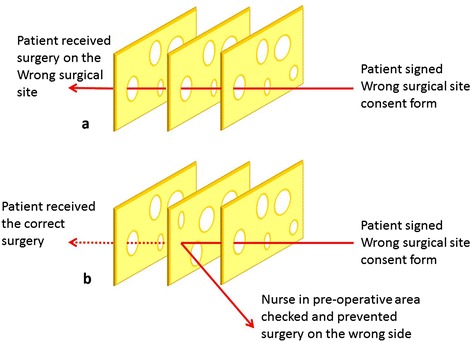
“Reason of the University of Manchester, what he referred to as system failure model [11].”
BackgroundTo Err Is Human : Building A Safer Health System
Kohn, L. T., Corrigan, J. M., & Donaldson, M. S. (2000) · Cited by 2,830
Patterns of Communication Breakdowns Resulting in Injury to Surgical Patients
Greenberg, C. C., Regenbogen, S. E., Studdert, D. M., Lipsitz, S. R., Rogers, S. O., Zinner, M. J., & Gawande, A. A. (2007) · Journal of the American College of Surgeons · doi:10.1016/j.jamcollsurg.2007.01.010 · Cited by 857
Discharge planning from hospital to home
Shepperd, S., Lannin, N. A., Clemson, L. M., McCluskey, A., Cameron, I. D., & Barras, S. L. (2013) · Cochrane Database of Systematic Reviews · doi:10.1002/14651858.cd000313.pub4 · Cited by 847 · cited 1×
“Discharge planning has been shown to impact patient safety, patient outcomes, and can prevent readmissions and improve patient satisfaction [44–46].”
BackgroundSurgical checklists: a systematic review of impacts and implementation
Treadwell, J. R., Lucas, S., & Tsou, A. Y. (2014) · BMJ Quality & Safety · doi:10.1136/bmjqs-2012-001797 · Cited by 566 · cited 1×
“Full implementation of safety checklists in surgery has been linked to improved outcomes [9, 13, 34, 35].”
BackgroundDiagnostic Errors—The Next Frontier for Patient Safety
Newman-Toker, D. E. (2009) · JAMA · doi:10.1001/jama.2009.249 · Cited by 433 · cited 1×
“treatment or failure to treat [6–8].”
National Trends in Patient Safety for Four Common Conditions, 2005–2011
Wang, Y., Eldridge, N., Metersky, M. L., Verzier, N. R., Meehan, T. P., Pandolfi, M. M., Foody, J. M., Ho, S.-Y., Galusha, D., Kliman, R. E., et al. (2014) · New England Journal of Medicine · doi:10.1056/nejmsa1300991 · Cited by 252
Medication errors: prevention using information technology systems
Agrawal, A. (2009) · British Journal of Clinical Pharmacology · doi:10.1111/j.1365-2125.2009.03427.x · Cited by 227 · cited 1×
“Systems that use information technology, such as computerized physician order entry, automated dispensing, barcode medication administration, electronic medication reconciliation, and personal health records are vital in the prevention of medication errors [58].”
BackgroundEffective Health Care Teams: A model of six characteristics developed from shared perceptions
Mickan, S. M., & Rodger, S. A. (2005) · Journal of Interprofessional Care · doi:10.1080/13561820500165142 · Cited by 212 · cited 2×
“Ineffective team communication, especially in the operation room (OR), is a major root cause of these errors [14].”
Background
Research works printed but not linked: 1
- Stahel P The 10th year of the “Universal Protocol”: are our patients safer today? Bone Joint 2014 360 3 7 10
Cited by
Why do surgeons continue to perform unnecessary surgery?
Stahel, P. F., VanderHeiden, T. F., & Kim, F. J. (2017) · Patient Safety in Surgery · doi:10.1186/s13037-016-0117-6 · Cited by 74
Self-citationPatient Safety Attitude of Nurses Working in Surgical Units: A Cross-Sectional Study in Turkey
Ünver, S., & Yeniğün, S. C. (2020) · Journal of PeriAnesthesia Nursing · doi:10.1016/j.jopan.2020.03.012 · Cited by 43
Patient safety competencies of nursing students
Kılıç, H. F., & Cevheroğlu, S. (2022) · Nurse Education Today · doi:10.1016/j.nedt.2022.105666 · Cited by 29
Munthali, J., Pittalis, C., Bijlmakers, L. A., Kachimba, J. S., Cheelo, M., Brugha, R., & Gajewski, J. (2022) · BMC Health Services Research · doi:10.1186/s12913-022-08257-y · Cited by 44
Intraoperative surgery room management: A deep learning perspective
Tanzi, L., Piazzolla, P., & Vezzetti, E. (2020) · International Journal of Medical Robotics and Computer Assisted Surgery · doi:10.1002/rcs.2136 · Cited by 25
Weprin, S. A., Meyer, D., Li, R., Carbonara, U., Crocerossa, F., Kim, F. J., Riccardo Autorino, B., Speich, J. E., & Klausner, A. P. (2021) · Patient Safety in Surgery · doi:10.1186/s13037-021-00287-5 · Cited by 21
Self-citationIntroductory Chapter: Developing Patient Safety Champions
Tolentino, J. C., Martins, N. B., Sweeney, J., Marchionni, C., Valenza, P., McGinely, T. C., Wojda, T. R., Firstenberg, M. S., & Stawicki, S. P. (2018) · InTech eBooks · doi:10.5772/intechopen.70582 · Cited by 22
A comparative study of patient safety in the intensive care units
Atashzadeh‐Shoorideh, F., Farahani, A. S., Pishgooie, A. H., Babaie, M., Hadi, N., Beheshti, M., Zadeh, E. F., & Skerrett, V. (2022) · Nursing Open · doi:10.1002/nop2.1252 · Cited by 20
“While this dimension is very important, especially in the field of medication administration (Shahrokhi, Ebrahimpour, & Ghodousi, 2013; Truter et al., 2017), surgery (Kim et al., 2015) and medical imaging and radiology (Zhou, Boyd, & Lawson, 2015).”
BackgroundBeattie, W. S., Culwick, M. D., & Grocott, H. P. (2018) · Canadian Journal of Anesthesia/Journal canadien d anesthésie · doi:10.1007/s12630-018-1141-z · Cited by 19
A structured pathway for developing your complex abdominal hernia service: our York pathway
Smith, O., MacLeod, T., Lim, P., Chitsabesan, P., & Chintapatla, S. (2021) · Hernia · doi:10.1007/s10029-020-02354-9 · Cited by 18
Evaluation of operating room staff's attitudes related to patient safety: A questionnaire study
Önler, E., & Akyolcu, N. (2019) · Journal of Interprofessional Education & Practice · doi:10.1016/j.xjep.2019.100287 · Cited by 19
“Spine Surgery Checklist”: A Step towards Perfection through Protocols
Kulkarni, A. G., Patel, J., Asati, S., & Mewara, N. (2021) · Asian Spine Journal · doi:10.31616/asj.2020.0432 · Cited by 17
“[2] suggested that different surgical subspecialties should develop specific guidelines in order to effectively manage their respective patients.”
BackgroundInfluentialJe-Bog, Y., Chung, S. E., & Oh, J. (2020) · Journal of PeriAnesthesia Nursing · doi:10.1016/j.jopan.2020.04.009 · Cited by 25
An evidence-based intraoperative communication tool for emergency general surgery: a pilot study
Columbus, A. B., Castillo‐Angeles, M., Berry, W. R., Haider, A. H., Salim, A., & Havens, J. M. (2018) · Journal of Surgical Research · doi:10.1016/j.jss.2018.03.007 · Cited by 14
Video-Assisted Thoracoscopic Surgery: A Model Global Learning Framework
Subramaniam, S. D., Chaudry, M. A., & Lau, K. (2021) · ATS Scholar · doi:10.34197/ats-scholar.2020-0090oc · Cited by 8
“A significant proportion of surgical mortality is due to a lack of nontechnical skills (13, 14).”
BackgroundKhajeh, E., Fakour, S., Ünal, U. K., Sabetkish, N., Leins, J., Ramouz, A., Mieth, M., Sabagh, M., Dezfouli, S. A., Golriz, M., et al. (2023) · European Journal of Surgical Oncology · doi:10.1016/j.ejso.2023.107080 · Cited by 8
In Search of Vital Signs: A Comparative Study of EHR Documentation.
Duncan, B. J., Zheng, L., Furniss, S. K., Solomon, A. J., Doebbeling, B. N., Grando, G., Burton, M. M., Poterack, K. A., Miksch, T. A., Helmers, R. A., et al. (2018) · Europe PMC (PubMed Central) · Cited by 9
Chandler-Jeanville, S., Ahouah, M., Margat, A., & Rothan‐Tondeur, M. (2021) · Medicine · doi:10.1097/md.0000000000026018 · Cited by 15
“in this particular context, outpatients must be partners of healthcare providers through shared decision making (SDM), because a lack of engagement in their care can harm their safety and thus, day surgery performance.([6]) Furthermore, failures can occur in the preoperative period due to nonrespect of preoperative in…”
Munakomi, S., Shah, R., & Shrestha, S. (2018) · F1000Research · doi:10.12688/f1000research.13699.1 · Cited by 8
Risk Analysis for Patient Safety in Surgical Departments: Cross-Sectional Design Usefulness
Aranaz-Ostáriz, V., de Castro, M. T. G. V., López-Rodríguez-Arias, F., Martín, J. V., Remón, C. A., Puche, J. R., Pérez, C. D.-A., Compañ, A., & Andrés, J. M. A. (2020) · International Journal of Environmental Research and Public Health · doi:10.3390/ijerph17072516 · Cited by 9
Peterson, H., Uibu, E., & Kangasniemi, M. K. (2021) · Scandinavian Journal of Caring Sciences · doi:10.1111/scs.12987 · Cited by 9
Workflow interruptions in an era of instant messaging: A detailed analysis
Pierson, C. S., Kennedy, T. A., Bruce, R. J., & Yu, J. J. (2024) · Clinical Imaging · doi:10.1016/j.clinimag.2024.110117 · Cited by 7
The Culture of Patient Safety Practice: Systematic Review
Van, K. A., Nogueira, L., Gustafson, D., Tieu, W., Averch, T. D., & Kim, F. J. (2016) · Urology Practice · doi:10.1016/j.urpr.2016.08.003 · Cited by 6
Self-citationPatient handover – the poor relation of medical training?
Hinding, B., Deis, N., Gornostayeva, M., Götz, C. W., & Jünger, J. (2019) · GMS journal for medical education · doi:10.3205/zma001227 · Cited by 8
“Übergaben sinkt die Häufigkeit von Behandlungsfehlern, die Qualität der Behandlung und die Patientensicherheit werden verbessert und die Patienten- und Mitarbeiterzufriedenheit erhöht [11], [12], [13], [14], [15].”
BackgroundNovel quantitative and objective structured assessment of technical skill for slip knotting
Watanabe, S., Kitagawa, T., Tachibana, K., Kurosawa, H., Chiba, K., Ito, J., Hibino, M., Taira, M., Taguchi, T., & Nishimura, M. (2019) · General Thoracic and Cardiovascular Surgery · doi:10.1007/s11748-019-01222-3 · Cited by 5
Automated medical surgical trolley
Saad, N. M., Abdullah, A. R., Noor, N. S. M., Hamid, N. B. A., Syahmi, M. A. M., & Ali, N. M. (2019) · International Journal of Electrical and Computer Engineering (IJECE) · doi:10.11591/ijece.v9i3.pp1822-1831 · Cited by 5
“Recently, there are many careless cases occurred in the hospital for instance in the operating theatre [1], [2].”
BackgroundRole of Peer Learning in Students’ Skill Acquisition and Interest in Plastic Surgery
ElHawary, H., Salimi, A., Abdelhamid, K., Sarfaraz, Z. K., & Gilardino, M. S. (2019) · Plastic & Reconstructive Surgery Global Open · doi:10.1097/gox.0000000000002560 · Cited by 5
Serou, N., Slight, R. D., Husband, A., Forrest, S., & Slight, S. P. (2021) · Journal of Patient Safety · doi:10.1097/pts.0000000000000931 · Cited by 4
“Every step in invasive procedures either in surgery or in anesthesia is deemed critical, and efforts need to be made from all staff levels to keep noises and distractions to minimum.(43) The detailed analysis of the included incidents in this study was dependent on the information stored within each of the 14 records.”
BackgroundBerhe, Y. W., Ferede, Y. A., Tegegne, B. A., Belayneh, T., Abereha, A. Y., Arefayne, N. R., & Bizuneh, Y. B. (2024) · International Journal for Quality in Health Care · doi:10.1093/intqhc/mzae051 · Cited by 4
Alhazmi, A. M., Alduraibi, A. A., Alhemaid, M., Albreakan, A., & Alshaqha, R. (2023) · World Family Medicine Journal/Middle East Journal of Family Medicine · doi:10.5742/mewfm.2023.95256038 · Cited by 8
Maharaj, A. D., Evans, S., Zalcberg, J. R., Ioannou, L., Graco, M., Croagh, D. G., Pilgrim, C. H. C., Dodson, T., Goldstein, D., Philip, J. A. M., et al. (2020) · PLoS ONE · doi:10.1371/journal.pone.0243312 · Cited by 4
“Organisational protocols should also be revised and kept up-to-date with current evidence [32].”
BackgroundApplication of zero trust model in preventing medical errors
Sood, N., Parlapalli, R., Sharma, P., & Kashyap, R. (2024) · Frontiers in Health Services · doi:10.3389/frhs.2024.1453804 · Cited by 3
“Surgical errors account for many adverse events, including near misses and adverse events leading to patient harm (12).”
BackgroundSjamsudin, E., Ruslin, M., Hanafiah, O. A., Stevanie, C., Kurniawan, S., Anshar, M., Boffano, P., Forouzanfar, T., & Sukotjo, C. (2025) · JMIR Research Protocols · doi:10.2196/74978 · Cited by 4
Safety of surgery: quality assessment of meta-analyses on the WHO checklist
Mariño, M. A. G. (2024) · Annals of Medicine and Surgery · doi:10.1097/ms9.0000000000002006 · Cited by 4
Using a Stop/Go Protocol in the Preoperative Area to Increase Patient Safety
Harris, A. M., Preece, K., & Harris, C. (2016) · Journal of Perioperative Practice · doi:10.1177/175045891602601004 · Cited by 3
“Over 200 million surgeries are performed each year and, despite significant improvements in technology and operative care, approximately 15% of cases will have an adverse event (Kim et al 2015, Gawande et al 2003).”
BackgroundThe Impact of Human Factors on the Safety of Operating Rooms and everyday Surgical Practice
Tsianos, G. I. (2020) · Journal of Advanced Research in Medical Science & Technology · doi:10.24321/2394.6539.202002 · Cited by 2
Sarkar, N. (2024) · Benchmarking An International Journal · doi:10.1108/bij-03-2024-0212 · Cited by 6
Mobile Trolley for Medical Applications
Saad, N. M., Sudirman, R., Abdullah, A. R., Hamid, N. B. A., Omar, C., & Sabri, M. I. A. (2020) · IEEE International Conference on Computing, Engineering and Design (ICCED) · doi:10.1109/icced51276.2020.9415813 · Cited by 3
“Recently, there are many careless cases occurred in the hospital for instance in the operating theater [1].”
BackgroundQuality framework for perioperative care: rapid review and participatory exercise
Wanyonyi, K., Martin, G., Ball, S., Cunnington, P., Boney, O., Moonesinghe, R., & Dixon‐Woods, M. (2026) · BMJ Quality & Safety · doi:10.1136/bmjqs-2025-019452 · Cited by 4
Hafez, A., Omar, I., Ang, A. T. W., Aly, M., Pouwels, S., & Smeenk, F. W. J. M. (2023) · International Journal of Risk & Safety in Medicine · doi:10.3233/jrs-220030 · Cited by 2
“Moreover, the negative consequences of these surgical errors do well extend to the surgical teams and healthcare care provider facilities [8].”
Patients’ Perceptions of Experiences of Postoperative Chest Drain Tube Insertion: A Pilot Survey
Kruk, A., Dziedzic, R., Terech, S., Piotrkowska, R., & Mędrzycka-Dąbrowska, W. A. (2023) · International Journal of Environmental Research and Public Health · doi:10.3390/ijerph20053773 · Cited by 3
Ullah, U., Shaheen, A. B., Akbar, K., Ullah, A., Umer, M., Alam, M. A., & Sulaiman, M. A. (2023) · Journal of Health and Rehabilitation Research · doi:10.61919/jhrr.v3i2.280 · Cited by 3
Packaging, Container, and Closure of Ophthalmic Products
Jenita⃰, J. J. L., Rathore, S. S. S., Manjula, D., & Wilson, B. (2025) · Springer eBooks · doi:10.1007/978-981-96-6306-4_12 · Cited by 3
Reinisch, A., Holzer, K., Bojunga, J., Bechstein, W. O., & Habbe, N. (2016) · Acta Endocrinologica (Bucharest) · doi:10.4183/aeb.2016.475 · Cited by 2
“Besides large scale political programs, small steps in the everyday life in the operation room have been taken to lower complication rates and improve patients’ outcome (1).”
BackgroundHow Regulators Assess and Accredit Safety and Quality in Surgical Services
Leyshon, S., Bach, T. L., Turk, E., Orr, A., Ray-Sannerud, B. N., & Barach, P. R. (2017) · Springer eBooks · doi:10.1007/978-3-319-44010-1_45 · Cited by 2
Lau, C. Y., Seymann, G., Imershein, S., Amin, A., Afsarmanesh, N., Uppington, J., Aledia, A. S., Pretanvil, S., Wilson, B., Wong, J., et al. (2020) · Journal for Healthcare Quality · doi:10.1097/jhq.0000000000000246 · Cited by 2
Erdemir, D. S., & Şenturan, L. (2020) · Pain Management Nursing · doi:10.1016/j.pmn.2020.06.003 · Cited by 2
Wang, C.-X., & Wu, C. (2023) · Medicine · doi:10.1097/md.0000000000033679 · Cited by 2
Keefe, N., Patel, N., Mody, P., Smith, K. A. B., Quist‐Nelson, J., Kaufman, C. S., Kohi, M. P., & Salazar, G. (2024) · Seminars in Interventional Radiology · doi:10.1055/s-0044-1790559 · Cited by 2
Principles of Surgical Patient Safety
Stahel, P. F., & Stahel, V. P. (2022) · Springer eBooks · doi:10.1007/978-3-030-95906-7_44 · Cited by 2
Uma, V., Shruthikamal, V., & Jasmine, J. (2020) · Journal of Evolution of Medical and Dental Sciences · doi:10.14260/jemds/2020/544 · Cited by 1
Rohrmeier, C., Al-Masry, N. A., Keerl, R., Bohr, C., & Mueller, S. (2022) · European Archives of Oto-Rhino-Laryngology · doi:10.1007/s00405-022-07448-x · Cited by 2
“Then, in 2008, the WHO Surgical Safety Checklist was published as part of the WHO’s Safe Surgery Lives campaign, which also required marking of the site to be operated on [8].”
BackgroundMethodInfluentialAlsharif, Z. M., Jawhari, A. M., Al-halab, S. K., Alsharif, S. K., Koursan, S. M., Alotaibi, M. T., & Khalik, E. S. A. (2023) · World Family Medicine Journal/Middle East Journal of Family Medicine · doi:10.5742/mewfm.2023.95256015 · Cited by 2
Abdulrahman, K. A. B., Alhamlan, H. N., Alqraini, Y. M., Alhoshan, Y. I., Shuraym, A. H., & Alkanhal, F. A. (2023) · World Family Medicine Journal/Middle East Journal of Family Medicine · doi:10.5742/mewfm.2023.95256040 · Cited by 1
Quality Improvement in Pediatric Surgical Ward Rounds after Implementation of Checklist
Jayakumar, T. K., Sikchi, R., Rathod, K. J., & Sinha, A. K. (2023) · Journal of Indian Association of Pediatric Surgeons · doi:10.4103/jiaps.jiaps_169_21 · Cited by 1
Alshaban, J., Kabbani, A., Alyousef, Z., Basabrain, A., Alsbeey, M., Abuaziz, R. M., Harisi, M., & Alshammari, A. (2019) · International Journal of Medicine in Developing Countries · doi:10.24911/ijmdc.51-1568035639 · Cited by 1
Checklist para cirurgia cardíaca segura: revisão integrativa
Thomé, A. R. C. S., Bernardo, T. H. L., Araújo, R. J. D. S., & Costa, C. R. B. (2021) · Research Society and Development · doi:10.33448/rsd-v10i15.23213 · Cited by 1
Almutairi, H. A., Alyousef, S. M., & Lalithabai, D. S. (2023) · World Family Medicine Journal/Middle East Journal of Family Medicine · doi:10.5742/mewfm.2023.95256018 · Cited by 3
Almalki, D. M., Kotb, M. A., Saqyan, T. M. B., Alkahtani, S. M., Alshaikhi, A. M., & Alanazi, L. (2023) · World Family Medicine Journal/Middle East Journal of Family Medicine · doi:10.5742/mewfm.2023.95256027 · Cited by 2
Self-management behaviours and glycemic control in diabetic patients. A cross sectional study
Moussa, R., Mahmud, S. S., Okar, L., Aldeeb, M. A., Rezek, M., Shawesh, A., Kalash, T., & Aseel, M. T. (2023) · World Family Medicine Journal/Middle East Journal of Family Medicine · doi:10.5742/mewfm.2023.95256025 · Cited by 1
Awareness of the Indications and Complications of Sleeve Gastrectomy in Riyadh, Saudi Arabia
Abdulrahman, K. A. B., Suayb, A. S. B., Albarrak, M. S., Almedemegh, N. I., & Alkublan, R. M. K. (2023) · World Family Medicine Journal/Middle East Journal of Family Medicine · doi:10.5742/mewfm.2023.95256014 · Cited by 2
Training the registrar or the fellow? Time to choose?
Ng, S. C., & Ong, W. M. (2019) · ANZ Journal of Surgery · doi:10.1111/ans.15215 · Cited by 1
“After all, if unspoken concerns plaguing our training environment are not addressed and actioned upon timely, the repercussions of ineffective training are felt the strongest by the general public requiring medical care.(9)”
BackgroundPatient and Parent Engagement in Preoperative Telephone Call for Efficiency in Elective Surgery
Frederick, K. (2020) · Journal of Pediatric Surgical Nursing · doi:10.1097/jps.0000000000000233 · Cited by 1
“…results in longer working days for surgeons and staff, leading to increased fatigue and opportunity for medication, specimen, and procedure-related errors (Anton, Montero, Howley, Brown, & Stefanidis, 2015; Hallbeck et al., 2017; Kim et al., 2015; Roja, Kalkis, & Roja, 2015; Stucky et al., 2018).”
BackgroundNeural Monitoring for Robotic Abdominal Wall Reconstruction
Halpern, D. K., Liu, H. H., Howell, R. S., Halpern, R. A., Akerman, M. B., Conlon, J., & Weidler, C. (2020) · JSLS Journal of the Society of Laparoscopic & Robotic Surgeons · doi:10.4293/jsls.2020.00009 · Cited by 1
Patient Safety Attitude in Iranian Health Care Workers: A Systematic Review
Mousavipour, S. S., Golitaleb, M., Kia, M. K., Akbari, F. A., Yousefi, K., & Sahebi, A. (2022) · International Journal of Musculoskeletal Pain Prevention · doi:10.52547/ijmpp.7.1.2 · Cited by 1
Hariri, N. H. (2023) · World Family Medicine Journal/Middle East Journal of Family Medicine · doi:10.5742/mewfm.2023.95256020 · Cited by 4
Boeckmann, L. M. M. (2016) · RIUnB Institutional Repository (University of Brasília) · doi:10.26512/2016.07.t.22091 · Cited by 1
Siddharth, V., Sahran, D., & Satpathy, S. (2018) · Journal of Patient Safety & Infection Control · doi:10.4103/jpsic.jpsic_14_18
Lennon, R., & Smith, A. P. (2019) · Journal of Perioperative Practice · doi:10.1177/1750458918818999 · Cited by 2
Preoperative Medical Referral Prior to Hepatopancreatic Surgery—Is It Worth it?
Paredes, A. Z., Hyer, J. M., Tsilimigras, D. I., & Pawlik, T. M. (2020) · Journal of Gastrointestinal Surgery · doi:10.1007/s11605-020-04590-x · Cited by 2
“In light of the ongoing risks associated with surgery, various agencies including the World Health Organization and Joint Commission have called for continued process improvement to ensure the safety of all surgical patients.(6,7) In turn, several groups including the American College of Surgeons have developed algori…”
BackgroundIdentifying Opportunities to Improve Processes in Emergency General Surgery
Kisat, M. T., & Salim, A. (2020) · Springer eBooks · doi:10.1007/978-3-030-53127-0_15
Gharagozloo, F., Reed, M. P., Meyer, M., Tempesta, B. J., Hallman-Quirk, H., & Gruessner, S. (2021) · Springer eBooks · doi:10.1007/978-3-030-53594-0_4
Evolution of Patient Safety in Surgery
Tani, S. I., & Haldipur, N. (2021) · Indian Journal of Vascular and Endovascular Surgery · doi:10.4103/ijves.ijves_115_20
Bilateral brachial plexopathy following hyperabduction of arms.
Mukherji, J. D., Sawhney, I. M. S., Bhansali, A., & Dash, R. J. (1995) · PubMed
Elementos que integram listas de verificação para cirurgia cardíaca segura
Thomé, A. R. C. S., & Bernardo, T. H. L. (2022) · Research Society and Development · doi:10.33448/rsd-v11i1.24795
Awan, F. A., & Ahmed, A. A. (2023) · World Family Medicine Journal/Middle East Journal of Family Medicine · doi:10.5742/mewfm.2023.95256021
Medical students’ syndrome among medical students in Riyadh, Saudi Arabia
Abdulrahman, K. A. B., Bahmaid, R. A., Alrajhi, D. M., Alturki, B. A., Alhazani, F. A., & Alayed, F. T. (2023) · World Family Medicine Journal/Middle East Journal of Family Medicine · doi:10.5742/mewfm.2023.95256035 · Cited by 7
Cockroach Allergy: Is It Common in Jeddah City? A retrospective study
Tayeb, M. M. S. (2023) · World Family Medicine Journal/Middle East Journal of Family Medicine · doi:10.5742/mewfm.2023.95256028 · Cited by 1
Irritable gastrointestinal syndrome
Helvacı, M. R., Kayabasi, Y., Ceylan, A., Dede, G., Abyad, A., & Pocock, L. (2023) · World Family Medicine Journal/Middle East Journal of Family Medicine · doi:10.5742/mewfm.2023.95256024
Symmetrical Posterior Lower Limb Bruising in A Qatar 2022 FIFA World Cup Fan – A Case Report
Awan, F. A., & Bhatti, S. T. (2023) · World Family Medicine Journal/Middle East Journal of Family Medicine · doi:10.5742/mewfm.2023.95256034
Diabetic Care Challenges during COVID-19 Pandemic: Primary Healthcare Physicians’ Perspective
Alshahrani, A. (2023) · World Family Medicine Journal/Middle East Journal of Family Medicine · doi:10.5742/mewfm.2023.95256032 · Cited by 1
http://www.mejfm.com/February%202023/Seasonal%20influenza.htm
Alfalogy, E. H., Hariri, N. H., Alqashqri, H. S., Alturki, Y., Alzhrani, R. M., & Alaboud, S. A. (2023) · World Family Medicine Journal/Middle East Journal of Family Medicine · doi:10.5742/mewfm.2023.95256016
SHARMA, A. K., & Parekh, S. G. (2023) · National Journal of Clinical Orthopaedics · doi:10.33545/orthor.2023.v7.i2a.404
Understanding Patient Safety and Reducing Medical Risks
., & Alquthami, H. M. M. (2023) · International Journal of Pharmaceutical and Bio-Medical Science · doi:10.47191/ijpbms/v3-i8-09
Reporting of ADRs Across the Globe: India, USA, EU, and Non-EU
Sharma, P., Nandave, M., & Kumar, A. (2024) · Springer eBooks · doi:10.1007/978-981-99-8949-2_6
Ensuring Patient Safety and Optimal Outcomes: A Surgeon’s Perspective on Safe Surgery Practices
Varshney, A., Dwivedi, S. K., & Naga, R. (2025) · Journal of Marine Medical Society · doi:10.4103/jmms.jmms_21_25
Arthroplasty Surgical Checklist: Simple Protocols Leading to Perfection!
Tawri, P. S., Chaudhary, S. D., Sakharkar, N. S., & Munshi, P. (2025) · Indian Journal of Arthroplasty · doi:10.5005/ijoa-11025-0027
Munthali, J., Pittalis, C., Bijlmakers, L. A., Kachimba, J. S., Cheelo, M., Brugha, R., & Gajewski, J. (2022) · Figshare · doi:10.6084/m9.figshare.20282040
Tlili, M. A., Aouicha, W., Idoudi, M., Haoues, M., Gambashidze, N., Lamine, H., Dardouri, M., Alboliteeh, M., Alkubati, S., Alshammari, B., et al. (2026) · Healthcare · doi:10.3390/healthcare14111465
“This complexity arises from demanding management protocols, sophisticated technologies, and the high level of coordination required to respond effectively to rapidly changing clinical conditions [3,4].”
Influential
Metadata
- Authors
- Kim, F. J., da Silva, R. D., Gustafson, D., Nogueira, L., Harlin, T., & Paul, D. L.
- Affiliations
- Denver Health Medical Center (US)
- University of Denver (US)
- Corresponding author
- Kim, Fernando J.
- ORCID
- Kim, Fernando J.
- Venue
- Patient Safety in Surgery
- Published
- 2015-06-05
- Volume
- 9
- Issue
- 1
- Pages
- 26-26
- ISSN
- 1754-9493 (ISSN-L)
- PMC
- PMC4455056
- OpenAlex
- W1522874927
- Semantic Scholar
- 4a6bb554a07aeae3b350c54d065fbaa6a5437543
- Cited by
- 90
- References
- 69
- Citations by year
- 2026: 2 · 2025: 4 · 2024: 7 · 2023: 23 · 2022: 9 · 2021: 10 · 2020: 14 · 2019: 8 · 2018: 6 · 2017: 2 · 2016: 4
- FWCI
- 0.96
- Type
- journal article
- Language
- en
- Open access
- gold
- doi.org
- Locations
- Patient Safety in Surgery (publishedVersion, cc-by)
- PubMed Central (publishedVersion, cc-by)
- PubMed (publishedVersion)
- Topics
- Health Sciences › Medicine › Public Health, Environmental and Occupational Health › Patient Safety and Medication Errors
- Health Sciences › Nursing › Leadership and Management › Hospital Admissions and Outcomes
- Health Sciences › Medicine › Cardiology and Cardiovascular Medicine › Cardiac, Anesthesia and Surgical Outcomes
- Keywords
- patient safety, surgical safety checklist, surgical subspecialties, safety culture, surgical errors, academic centers
About these checks
Registry, retraction, Cites and statistics results are computed, not judged, with one exception: a printed reference that no index lists is read once by a model before it counts as a citation error. Claims are extracted by a model and kept only when their quote appears verbatim in the text; each cited source is then checked, with a model’s help, for whether it says what the claim relies on. Those verdicts can be wrong — read the claim’s quote and the cited source before relying on one.
Statistics and arithmetic are recomputed, not judged.
Confidence bands are shown only for fields calibrated on our annotated test set. None is calibrated yet, so no band is shown.
What counts as a claim ›How we measure confidence ›How we check this ›
Are you an author, or do you see a problem with this page? Request a review
Data sources
Bibliographic data: Semantic Scholar, OpenAlex, Crossref.
Contains information from the Semantic Scholar Academic Graph Datasets, made available under the ODC Attribution License (ODC-BY 1.0).
Semantic Scholar’s data is described in: Kinney, R., et al. (2023). The Semantic Scholar Open Data Platform. arXiv:2301.10140.
