

Current issues in patient safety in surgery: a review
Open accessThe DOI matches its Crossref record; 67 of the 69 references it cites were found in a registry or an index.
Abstract
Current surgical safety guidelines and checklists are generic and are not specifically tailored to address patient issues and risk factors in surgical subspecialties. Patient safety in surgical subspecialties should be templated on general patient safety guidelines from other areas of medicine and mental health but include and develop specific processes dedicated for the care of the surgical patients. Safety redundant systems must be in place to decrease errors in surgery. Therefore, different surgical subspecialties should develop a specific curriculum in patient safety addressing training in academic centers and application of these guidelines in all practices. Clearly, redundant safety systems must be in place to decrease errors in surgery, in analogy to safety measures in other high-risk industries. Specific surgical subspecialties are encouraged to develop a specific patient safety curriculum that address training in academic centers and applicability to daily practice, with the goal of keeping our surgical patients safe in all disciplines. The present review article is designed to outline patient safety practices that should be adapted and followed to fit particular specialties.
Overview
The claims and statistics of this paper haven’t been checked yet.
Free: it reads the open-access text and checks the first 5 claims that cite a source we can check. Create a free account to check every claim.
Integrity signals
Registry
Cites
Statistics
Figures
Verification
Claims the paper makes
The claims and statistics of this paper haven’t been checked yet.
Free: it reads the open-access text and checks the first 5 claims that cite a source we can check. Create a free account to check every claim.
Claims other papers make about this one
Each is checked against this paper’s own text: does it say what the citing paper says it does?
The source backs part of the claim, not all of it — or backs it for a different population, condition or comparison.
In the citing paper
“Surgical errors account for many adverse events, including near misses and adverse events leading to patient harm (12).”
From Application of zero trust model in preventing medical errors (2024) · cites this paper as [12]
Experimental — accuracy not yet measured
Self-check
Percentages, sums and reported differences re-computed from the paper’s own numbers.
The self-check needs the paper’s full text.
Citations
Cites
To Err Is Human: Building a Safer Health System
(2000) · National Academies Press eBooks · doi:10.17226/9728 · Cited by 14,044
Human error: models and management
Reason, J. (2000) · BMJ · doi:10.1136/bmj.320.7237.768 · Cited by 5,665 · cited 2×
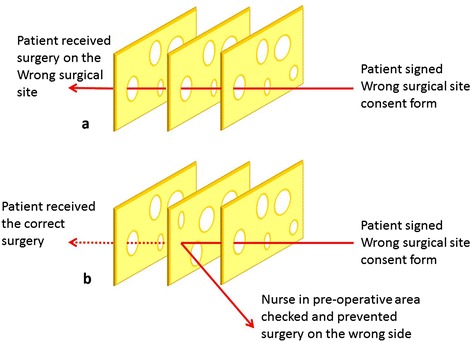
“Reason of the University of Manchester, what he referred to as system failure model [11].”
BackgroundTo Err Is Human : Building A Safer Health System
Kohn, L. T., Corrigan, J. M., & Donaldson, M. S. (2000) · Cited by 2,830
Patterns of Communication Breakdowns Resulting in Injury to Surgical Patients
Greenberg, C. C., Regenbogen, S. E., Studdert, D. M., Lipsitz, S. R., Rogers, S. O., Zinner, M. J., & Gawande, A. A. (2007) · Journal of the American College of Surgeons · doi:10.1016/j.jamcollsurg.2007.01.010 · Cited by 857
Discharge planning from hospital to home
Shepperd, S., Lannin, N. A., Clemson, L. M., McCluskey, A., Cameron, I. D., & Barras, S. L. (2013) · Cochrane Database of Systematic Reviews · doi:10.1002/14651858.cd000313.pub4 · Cited by 847 · cited 1×
“Discharge planning has been shown to impact patient safety, patient outcomes, and can prevent readmissions and improve patient satisfaction [44–46].”
BackgroundSurgical checklists: a systematic review of impacts and implementation
Treadwell, J. R., Lucas, S., & Tsou, A. Y. (2014) · BMJ Quality & Safety · doi:10.1136/bmjqs-2012-001797 · Cited by 566 · cited 1×
“Full implementation of safety checklists in surgery has been linked to improved outcomes [9, 13, 34, 35].”
BackgroundDiagnostic Errors—The Next Frontier for Patient Safety
Newman-Toker, D. E. (2009) · JAMA · doi:10.1001/jama.2009.249 · Cited by 433 · cited 1×
“treatment or failure to treat [6–8].”
National Trends in Patient Safety for Four Common Conditions, 2005–2011
Wang, Y., Eldridge, N., Metersky, M. L., Verzier, N. R., Meehan, T. P., Pandolfi, M. M., Foody, J. M., Ho, S.-Y., Galusha, D., Kliman, R. E., et al. (2014) · New England Journal of Medicine · doi:10.1056/nejmsa1300991 · Cited by 252
Medication errors: prevention using information technology systems
Agrawal, A. (2009) · British Journal of Clinical Pharmacology · doi:10.1111/j.1365-2125.2009.03427.x · Cited by 227 · cited 1×
“Systems that use information technology, such as computerized physician order entry, automated dispensing, barcode medication administration, electronic medication reconciliation, and personal health records are vital in the prevention of medication errors [58].”
BackgroundEffective Health Care Teams: A model of six characteristics developed from shared perceptions
Mickan, S. M., & Rodger, S. A. (2005) · Journal of Interprofessional Care · doi:10.1080/13561820500165142 · Cited by 212 · cited 2×
“Ineffective team communication, especially in the operation room (OR), is a major root cause of these errors [14].”
BackgroundDiagnosis of safety culture in safety management audits
Grote, G., & Künzler, C. (2000) · Safety Science · doi:10.1016/s0925-7535(00)00010-2 · Cited by 211 · cited 1×
“described how the absence of shared cultural norms and infrequent communication across the organization could compromise the organization’s safety [12].”
BackgroundCauses, consequences, detection, and prevention of identification errors in laboratory diagnostics
Lippi, G., Blanckaert, N., Bonini, P., Green, S., Kitchen, S., Palicka, V., Vassault, A. J., Mattiuzzi, C., & Plebani, M. (2009) · Clinical Chemistry and Laboratory Medicine · doi:10.1515/cclm.2009.045 · Cited by 167 · cited 1×
“Approximately 1 % of general laboratory specimens are misidentified and can lead to serious harm for patients [52].”
BackgroundRuss, S., Rout, S., Caris, J., Mansell, J., Davies, R., Mayer, E., Moorthy, K., Darzi, A., Vincent, C., & Sevdalis, N. (2015) · Journal of the American College of Surgeons · doi:10.1016/j.jamcollsurg.2014.09.021 · Cited by 166 · cited 4×
“It clearly addresses patient safety issues, like allergies, that can be overlooked and lead to severe consequences [9, 13].”
BackgroundInfluentialChallenges Faced by Patients with Low Socioeconomic Status During the Post-Hospital Transition
Kangovi, S., Barg, F. K., Carter, T., Levy, K. L., Sellman, J., Long, J. A., & Grande, D. (2013) · Journal of General Internal Medicine · doi:10.1007/s11606-013-2571-5 · Cited by 151 · cited 1×
“Heath care workers must be aware that language barriers, socioeconomic status, and age can impact patient comprehension of instructions [49–51].”
BackgroundDrug interactions evaluation: An integrated part of risk assessment of therapeutics
Zhang, L., Reynolds, K. S., Zhao, P., & Huang, S.-M. (2010) · Toxicology and Applied Pharmacology · doi:10.1016/j.taap.2009.12.016 · Cited by 125 · cited 1×
“Drug interactions can lead to serious adverse events or decrease drug efficacy [62].”
BackgroundWell leg compartment syndrome after pelvic and perineal surgery in the lithotomy position
Simms, M. S., & Terry, T. R. (2005) · Postgraduate Medical Journal · doi:10.1136/pgmj.2004.030965 · Cited by 121 · cited 1×
“Urologists must be careful to avoid possible compartment syndrome (limbs) when positioning patients for open, endoscopic, and laparoscopic surgeries [41–43].”
BackgroundAssessment of legibility and completeness of handwritten and electronic prescriptions
Albarrak, A. I., Rashidi, E. A. A., Fatani, R. K., Ageel, S. I. A., & Mohammed, R. (2014) · Saudi Pharmaceutical Journal · doi:10.1016/j.jsps.2014.02.013 · Cited by 117
Complications Associated With Patient Positioning in Urologic Surgery
Akhavan, A., Gainsburg, D. M., & Stock, J. (2010) · Urology · doi:10.1016/j.urology.2010.02.060 · Cited by 107
Hospital Discharge Instructions: Comprehension and Compliance Among Older Adults
Albrecht, J. S., Gruber‐Baldini, A. L., Hirshon, J. M., Brown, C. H., Goldberg, R. W., Rosenberg, J. H., Comer, A. C., & Furuno, J. P. (2014) · Journal of General Internal Medicine · doi:10.1007/s11606-014-2956-0 · Cited by 94 · cited 2×
“Patient education can reduce complications and improve patient quality of life after surgical procedures [47–49].”
BackgroundSurgical checklists: the human factor
O'Connor, P. E., Reddin, C., O’Sullivan, M., O'Duffy, F., & Keogh, I. J. (2013) · Patient Safety in Surgery · doi:10.1186/1754-9493-7-14 · Cited by 93
Lower Limb (Well Leg) Compartment Syndrome After Urological Pelvic Surgery
Raza, A., Byrne, D. J., & Townell, N. (2004) · The Journal of Urology · doi:10.1097/01.ju.0000098654.13746.c4 · Cited by 92 · cited 1×
“Urologists must be careful to avoid possible compartment syndrome (limbs) when positioning patients for open, endoscopic, and laparoscopic surgeries [41–43].”
BackgroundThe American College of Surgeons’ Closed Claims Study: New Insights for Improving Care
Griffen, D. F., Stephens, L. S., Alexander, J. B., Bailey, R. H., Maizel, S. E., Sutton, B. H., & Posner, K. L. (2007) · Journal of the American College of Surgeons · doi:10.1016/j.jamcollsurg.2007.01.013 · Cited by 91 · cited 1×
“treatment or failure to treat [6–8].”
Prielipp, R. C., Morell, R. C., Walker, F. O., Santos, C. C., Bennett, J., & Butterworth, J. F. I. (1999) · Anesthesiology · doi:10.1097/00000542-199908000-00006 · Cited by 79 · cited 1×
“Neurological complications can be avoided by placing forearms in neutral position or slightly supinated to minimize pressure in the cubital tunnel [40].”
BackgroundShaw, L. F., Chang, P.-C., Lee, J.-F., Kung, H.-Y., & Tung, T. (2014) · BioMed Research International · doi:10.1155/2014/416896 · Cited by 78
Influence of Saline on Temperature Profile of Laser Lithotripsy Activation
Molina, W., Nunes‐Silva, I., da Silva, R. D., Gustafson, D., Sehrt, D., & Kim, F. J. (2014) · Journal of Endourology · doi:10.1089/end.2014.0305 · Cited by 73
Self-citationPreventing Readmissions Through Comprehensive Discharge Planning
Hunter, T., Nelson, J. “., & Birmingham, J. (2013) · Professional Case Management · doi:10.1097/ncm.0b013e31827de1ce · Cited by 62 · cited 1×
“Discharge planning has been shown to impact patient safety, patient outcomes, and can prevent readmissions and improve patient satisfaction [44–46].”
BackgroundNovis, D. A. (2004) · Clinics in Laboratory Medicine · doi:10.1016/j.cll.2004.09.001 · Cited by 57
Experience of wrong site surgery and surgical marking practices among clinicians in the UK
Giles, S. J., Rhodes, P., Clements, G., Cook, G. A., Hayton, R., Maxwell, M. J., Sheldon, T. A., & Wright, J. (2006) · Quality and Safety in Health Care · doi:10.1136/qshc.2006.018333 · Cited by 56
Braham, D. L., Richardson, A. L., & Malik, I. S. (2014) · Clinical Medicine · doi:10.7861/clinmedicine.14-5-468 · Cited by 54 · cited 1×
“Full implementation of safety checklists in surgery has been linked to improved outcomes [9, 13, 34, 35].”
BackgroundDischarge planning from hospital to home
Parkes, J., & Shepperd, S. (2000) · The Cochrane Database of Systematic Reviews · doi:10.1002/14651858.cd000313 · Cited by 51
Surgical ethics and the challenge of surgical innovation
Angelos, P. (2014) · The American Journal of Surgery · doi:10.1016/j.amjsurg.2014.09.013 · Cited by 46 · cited 1×
“The informed consent must be received prior to the procedure and the patient must fully understand their procedure including things such as complications, additional procedures, placement of stents, and important alternative treatments that may be used in the present case [19, 20, 24, 25].”
BackgroundStandardized Discharge Planning Assessments
Holland, D. E., & Bowles, K. H. (2012) · Journal of Nursing Care Quality · doi:10.1097/ncq.0b013e31824ebc59 · Cited by 41 · cited 1×
“Discharge planning has been shown to impact patient safety, patient outcomes, and can prevent readmissions and improve patient satisfaction [44–46].”
BackgroundPeterson, J. F., Kripalani, S., Danciu, I., Harrell, D., Marvanova, M., Mixon, A. S., Rodriguez, C., & Powers, J. S. (2014) · Journal of the American Geriatrics Society · doi:10.1111/jgs.13057 · Cited by 41 · cited 1×
“Electronic medical records provide pharmacists with the ability to rapidly screen the medication regimens of hospitalized patients and deliver timely, point-of-care intervention when indicated [61].”
BackgroundMedical Malpractice in Endourology: Analysis of Closed Cases From the State of New York
Duty, B. D., Okhunov, Z., Okeke, Z., & Smith, A. D. (2011) · The Journal of Urology · doi:10.1016/j.juro.2011.10.045 · Cited by 39 · cited 1×
“The informed consent must be received prior to the procedure and the patient must fully understand their procedure including things such as complications, additional procedures, placement of stents, and important alternative treatments that may be used in the present case [19, 20, 24, 25].”
BackgroundBeaudoin, F. L., Merchant, R. C., Janicki, A., McKaig, D., & Babu, K. M. (2014) · Annals of Emergency Medicine · doi:10.1016/j.annemergmed.2014.11.016 · Cited by 39 · cited 1×
“Electronic medical records helped to decrease medication error and medication reconciliation by up to 50 % [59, 60].”
BackgroundAtzema, C. L., Austin, P. C., Wu, L., Brzozowski, M., Feldman, M. J., McDonnell, M., & Mazurik, L. A. (2013) · PLoS ONE · doi:10.1371/journal.pone.0077057 · Cited by 39 · cited 1×
“Heath care workers must be aware that language barriers, socioeconomic status, and age can impact patient comprehension of instructions [49–51].”
BackgroundWrong‐site sinus surgery in otolaryngology
Shah, R. K., Nussenbaum, B. A., Kienstra, M. A., Glenn, M. G., Brereton, J. M., Patel, M. M., Nielsen, D., & Roberson, D. W. (2010) · Otolaryngology · doi:10.1016/j.otohns.2010.04.003 · Cited by 38 · cited 1×
“In the era of digital images, displaying the CT-scan, X-ray, and all other pertinent images during the procedure on an auxiliary monitor can improve patient safety [36, 37].”
BackgroundBuilding continuity in handovers with shorter residency duty hours
Arora, V. M., Reed, D. A., & Fletcher, K. E. (2014) · BMC Medical Education · doi:10.1186/1472-6920-14-s1-s16 · Cited by 38 · cited 1×
“Medical educators and clinicians should work toward adopting and testing principles of optimal handovers processes in their local practices applying the knowledge of patient safety issues discussed in this report [72].”
BackgroundProper Patient Positioning and Complication Prevention in Orthopaedic Surgery
Bonnaig, N. S., Dailey, S. K., & Archdeacon, M. T. (2014) · Journal of Bone and Joint Surgery · doi:10.2106/jbjs.m.01267 · Cited by 38 · cited 2×
“The consequences of positioning related injuries are preventable but can be profound and can result in morbidity and litigation [38].”
BackgroundSingh, P., Turner, E. J., Cornish, J. A., & Bhangu, A. A. (2014) · Surgery · doi:10.1016/j.surg.2014.04.007 · Cited by 37
Mascherek, A., Schwappach, D. L. B., & Bezzola, P. (2013) · Patient Safety in Surgery · doi:10.1186/1754-9493-7-36 · Cited by 35
Hawley, G., Jackson, C. L., Hepworth, J., & Wilkinson, S. A. (2014) · BMC Health Services Research · doi:10.1186/s12913-014-0650-x · Cited by 30
Wrong-Side Thoracentesis: Lessons Learned From Root Cause Analysis
Miller, K., Mims, M., Paull, D. E., Williams, L. C., Neily, J. B., Mills, P. D., Lee, C. Z., & Hemphill, R. R. (2014) · JAMA Surgery · doi:10.1001/jamasurg.2014.146 · Cited by 30 · cited 1×
“In the era of digital images, displaying the CT-scan, X-ray, and all other pertinent images during the procedure on an auxiliary monitor can improve patient safety [36, 37].”
BackgroundResident/fellow assistance in the operating room for endocrine surgery in the era of fellowships
Goldfarb, M. R., Gondek, S. P., Hodin, R. A., & Parangi, S. (2010) · Surgery · doi:10.1016/j.surg.2010.09.010 · Cited by 28 · cited 1×
“Residents and fellows provide extra assistance while also strengthening their skills to become knowledgeable and confident doctors [68–71].”
BackgroundAdrenalectomy Outcomes Are Superior with the Participation of Residents and Fellows
Seib, C. D., Greenblatt, D. Y., Campbell, M. J., Shen, W. T., Gosnell, J. E., Clark, O. H., & Duh, Q. (2014) · Journal of the American College of Surgeons · doi:10.1016/j.jamcollsurg.2014.02.020 · Cited by 27 · cited 1×
“Residents and fellows provide extra assistance while also strengthening their skills to become knowledgeable and confident doctors [68–71].”
BackgroundResident participation and postoperative outcomes in adrenal surgery
Venkat, R., Valdivia, P. L., & Guerrero, M. A. (2014) · Journal of Surgical Research · doi:10.1016/j.jss.2014.05.025 · Cited by 27 · cited 1×
“Residents and fellows provide extra assistance while also strengthening their skills to become knowledgeable and confident doctors [68–71].”
BackgroundLim, S. H., Chan, S. W., Lai, J. H., & He, H. G. (2014) · Journal of Advanced Nursing · doi:10.1111/jan.12595 · Cited by 27 · cited 1×
“Patient education can reduce complications and improve patient quality of life after surgical procedures [47–49].”
BackgroundCederholm, S., Hill, G. R., Asiimwe, A., Bate, A., Bhayat, F., Brobert, G., Bergvall, T., Ansell, D., Star, K., & Norén, G. N. (2014) · Drug Safety · doi:10.1007/s40264-014-0251-y · Cited by 24 · cited 1×
“Electronic medical records can improve the safety process, reducing misunderstandings and missing documents [21–23].”
BackgroundAn audit of the knowledge and attitudes of doctors towards Surgical Informed Consent (SIC)
Ashraf, B., Tasnim, N., Saaiq, M., & Zaman, K.-U. (2014) · International Journal of Health Policy and Management · doi:10.15171/ijhpm.2014.109 · Cited by 24 · cited 1×
“The informed consent must be received prior to the procedure and the patient must fully understand their procedure including things such as complications, additional procedures, placement of stents, and important alternative treatments that may be used in the present case [19, 20, 24, 25].”
BackgroundShoji, M., Ohdaira, T., & Nagai, H. (2003) · Surgical Endoscopy · doi:10.1007/s00464-002-8597-0 · Cited by 17 · cited 1×
“Alternatively, radiopaque markers can be used in the procedures involving fluoroscopy [29, 31, 32].”
MethodBatra, R., Wolbach-Lowes, J., Swindells, S., Scarsi, K. K., Podany, A. T., Sayles, H. R., & Sandkovsky, U. (2014) · Antiviral Therapy · doi:10.3851/imp2930 · Cited by 16 · cited 1×
“Electronic medical records helped to decrease medication error and medication reconciliation by up to 50 % [59, 60].”
BackgroundClassification and Detection of Errors in Minimally Invasive Surgery
Rassweiler, M.-C., Mamoulakis, C., Kenngott, H., Rassweiler, J. J., de la Rosette, J. J. M. C. H., & Laguna, M. P. (2011) · Journal of Endourology · doi:10.1089/end.2011.0068 · Cited by 16 · cited 1×
“) should be verified prior to surgery and checked to ensure that they are the appropriate size for the patient [33].”
BackgroundAlnawaiseh, M., Alten, F., Hülsken, G., Rentmeister, G., Lange, M., Claes, T., Wente, S., Kreuznacht, D., Eter, N., & Roeder, N. (2014) · Der Ophthalmologe · doi:10.1007/s00347-014-3124-y · Cited by 15
Schell, W. (2014) · Professional Case Management · doi:10.1097/ncm.0000000000000040 · Cited by 15 · cited 1×
“Patient education can reduce complications and improve patient quality of life after surgical procedures [47–49].”
BackgroundKim, F. J., Sehrt, D., da Silva, R. D., Gustafson, D., Nogueira, L., & Molina, W. (2014) · Surgical Endoscopy · doi:10.1007/s00464-014-3787-0 · Cited by 13 · cited 1×
“Devices need to be extensively evaluated in research before and after FDA approval [63–67].”
BackgroundSelf-citationSignificance of Surgical Plume Obstruction During Laparoscopy
da Silva, R. D., Sehrt, D., Molina, W., Moss, J., Park, S. H., & Kim, F. J. (2014) · JSLS Journal of the Society of Laparoscopic & Robotic Surgeons · doi:10.4293/jsls.2014.00269 · Cited by 12
Self-citationConfusion—specimen mix-up in dermatopathology and measures to prevent and detect it
Weyers, W. (2014) · Dermatology Practical & Conceptual · doi:10.5826/dpc.0401a04 · Cited by 12 · cited 3×
“Procedures that involve biopsy and tissue sampling a specimen may pass through the hands of more than twenty individuals in several workplaces until the final pathology report is given [54].”
BackgroundMethodThe importance of side marking in preventing surgical site errors
Pikkel, D., Sharabi‐Nov, A., & Pikkel, J. (2014) · International Journal of Risk & Safety in Medicine · doi:10.3233/jrs-140621 · Cited by 8 · cited 1×
“Preferentially, site marking should be performed with the patient’s involvement [26, 27].”
BackgroundLast call for informed consent: confused proxies in extra-emergency conditions
Vyshka, G., Seferi, A., Myftari, K., & Halili, V. (2014) · Indian Journal of Medical Ethics · doi:10.20529/ijme.2014.064 · Cited by 8 · cited 1×
“The informed consent must be received prior to the procedure and the patient must fully understand their procedure including things such as complications, additional procedures, placement of stents, and important alternative treatments that may be used in the present case [19, 20, 24, 25].”
BackgroundMarking wire placement for improved accuracy in thoracic spinal surgery
Ahmadi, S. A., Slotty, P. J., Schröter, C., Kröpil, P., Steiger, H., & Eicker, S. O. (2014) · Clinical Neurology and Neurosurgery · doi:10.1016/j.clineuro.2014.01.025 · Cited by 7
How I do it: prostate cryoablation (PCry).
da Silva, R. D., Jaworski, P. E. D., Gustafson, D., Nogueira, L., Molina, W., & Kim, F. J. (2014) · PubMed · Cited by 7
Self-citationHow I do it: laparoscopic renal cryoablation (LRC).
da Silva, R. D., Jaworski, P. E. D., Gustafson, D., Nogueira, L., Kang, F., Molina, W., & Kim, F. J. (2014) · PubMed · Cited by 7
Self-citationEarnshaw, J. J., & Alderson, D. (2013) · British journal of surgery · doi:10.1002/bjs.9406 · Cited by 5 · cited 1×
“Introduction More than 200 million surgeries are performed worldwide each year and recent reports reveal that adverse event rates for surgical conditions remain unacceptably high, despite multiple nationwide and global patient safety initiatives over the past decade [1, 2].”
BackgroundConflicting pathology reports: a diagnostic dilemma
Shahar, T., Rozovski, U., Shapira, Y., Nossek, E. Z., Zelikovich, B., Jossiphov, J., Ram, Z., Kanner, A. A., Siegal, T., Blumenthal, D. T., et al. (2014) · Journal of neurosurgery · doi:10.3171/2014.10.jns131518 · Cited by 4 · cited 1×
“DNA analysis to assist with correct identification can be used when recollection is not available [56].”
BackgroundPrevention of Wrong Site Surgery During Upper Tract Endoscopy
Warren, G. J. W., Roberts, W. W., Hollingsworth, J. M., Wolf, J. S., & Faerber, G. J. (2012) · Urology · doi:10.1016/j.urology.2011.10.055 · Cited by 4 · cited 1×
“), the institution should have a written process to ensure that the correct site is operated on [29, 30].”
BackgroundProcess reengineering of preoperative verification, site marking and time-out for patient safety.
Dayuta, J. C. D., Ong, L. T., Pang, N. L., Chia, S. N., Tan, H. K. K., Gomez, J. M., & Tan, K. H. (2013) · PubMed · Cited by 2
The technology is there: options for preventing lab labeling and tracking errors.
Strobel (2013) · PubMed · Cited by 1
Research works printed but not linked: 1
- Stahel P The 10th year of the “Universal Protocol”: are our patients safer today? Bone Joint 2014 360 3 7 10
Cited by
Why do surgeons continue to perform unnecessary surgery?
Stahel, P. F., VanderHeiden, T. F., & Kim, F. J. (2017) · Patient Safety in Surgery · doi:10.1186/s13037-016-0117-6 · Cited by 74
Self-citationPatient Safety Attitude of Nurses Working in Surgical Units: A Cross-Sectional Study in Turkey
Ünver, S., & Yeniğün, S. C. (2020) · Journal of PeriAnesthesia Nursing · doi:10.1016/j.jopan.2020.03.012 · Cited by 43
Patient safety competencies of nursing students
Kılıç, H. F., & Cevheroğlu, S. (2022) · Nurse Education Today · doi:10.1016/j.nedt.2022.105666 · Cited by 29
Munthali, J., Pittalis, C., Bijlmakers, L. A., Kachimba, J. S., Cheelo, M., Brugha, R., & Gajewski, J. (2022) · BMC Health Services Research · doi:10.1186/s12913-022-08257-y · Cited by 44
Intraoperative surgery room management: A deep learning perspective
Tanzi, L., Piazzolla, P., & Vezzetti, E. (2020) · International Journal of Medical Robotics and Computer Assisted Surgery · doi:10.1002/rcs.2136 · Cited by 25
Metadata
- Authors
- Kim, F. J., da Silva, R. D., Gustafson, D., Nogueira, L., Harlin, T., & Paul, D. L.
- Affiliations
- Denver Health Medical Center (US)
- University of Denver (US)
- Corresponding author
- Kim, Fernando J.
- ORCID
- Kim, Fernando J.
- Venue
- Patient Safety in Surgery
- Published
- 2015-06-05
- Volume
- 9
- Issue
- 1
- Pages
- 26-26
- ISSN
- 1754-9493 (ISSN-L)
- PMC
- PMC4455056
- OpenAlex
- W1522874927
- Semantic Scholar
- 4a6bb554a07aeae3b350c54d065fbaa6a5437543
- Cited by
- 90
- References
- 69
- Citations by year
- 2026: 2 · 2025: 4 · 2024: 7 · 2023: 23 · 2022: 9 · 2021: 10 · 2020: 14 · 2019: 8 · 2018: 6 · 2017: 2 · 2016: 4
- FWCI
- 0.96
- Type
- journal article
- Language
- en
- Open access
- gold
- doi.org
- Locations
- Patient Safety in Surgery (publishedVersion, cc-by)
- PubMed Central (publishedVersion, cc-by)
- PubMed (publishedVersion)
- Topics
- Health Sciences › Medicine › Public Health, Environmental and Occupational Health › Patient Safety and Medication Errors
- Health Sciences › Nursing › Leadership and Management › Hospital Admissions and Outcomes
- Health Sciences › Medicine › Cardiology and Cardiovascular Medicine › Cardiac, Anesthesia and Surgical Outcomes
- Keywords
- patient safety, surgical safety checklist, surgical subspecialties, safety culture, surgical errors, academic centers
About these checks
Registry, retraction, Cites and statistics results are computed, not judged, with one exception: a printed reference that no index lists is read once by a model before it counts as a citation error. Claims are extracted by a model and kept only when their quote appears verbatim in the text; each cited source is then checked, with a model’s help, for whether it says what the claim relies on. Those verdicts can be wrong — read the claim’s quote and the cited source before relying on one.
Statistics and arithmetic are recomputed, not judged.
Confidence bands are shown only for fields calibrated on our annotated test set. None is calibrated yet, so no band is shown.
What counts as a claim ›How we measure confidence ›How we check this ›
Are you an author, or do you see a problem with this page? Request a review
Data sources
Bibliographic data: Semantic Scholar, OpenAlex, Crossref.
Contains information from the Semantic Scholar Academic Graph Datasets, made available under the ODC Attribution License (ODC-BY 1.0).
Semantic Scholar’s data is described in: Kinney, R., et al. (2023). The Semantic Scholar Open Data Platform. arXiv:2301.10140.
