

The DOI matches its Crossref record; 50 of the 50 references it cites were found in a registry or an index.
Elevation of brain magnesium prevents synaptic loss and reverses cognitive deficits in Alzheimer’s disease mouse model
Open accessAbstract
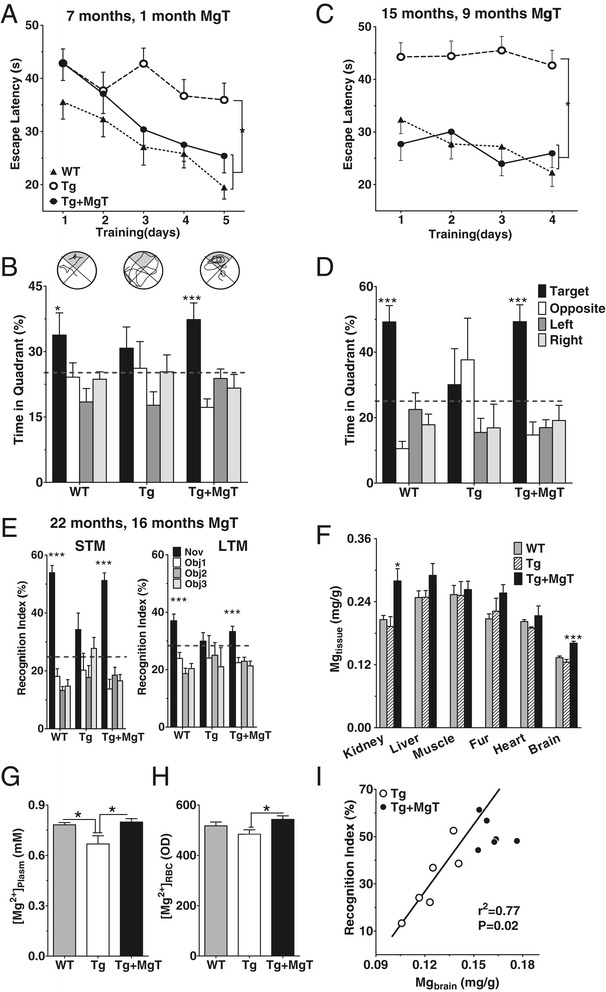
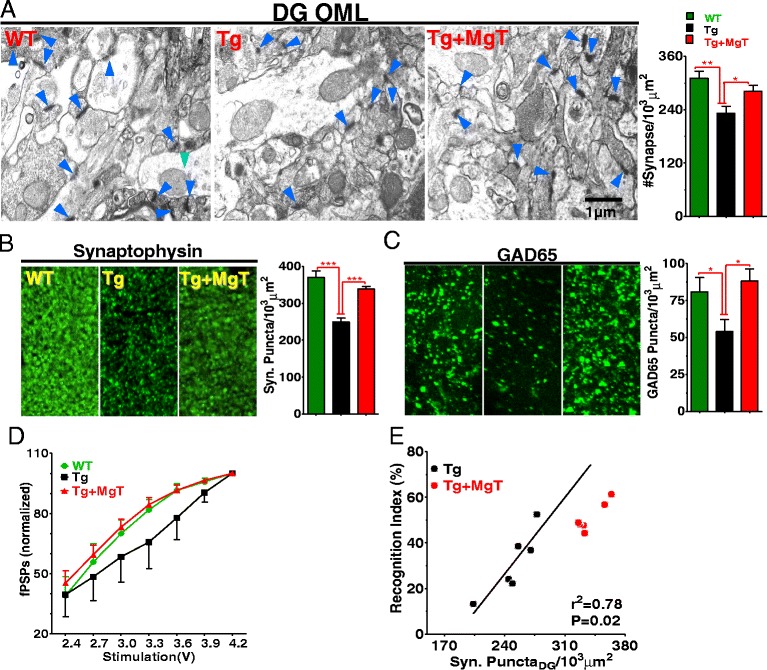
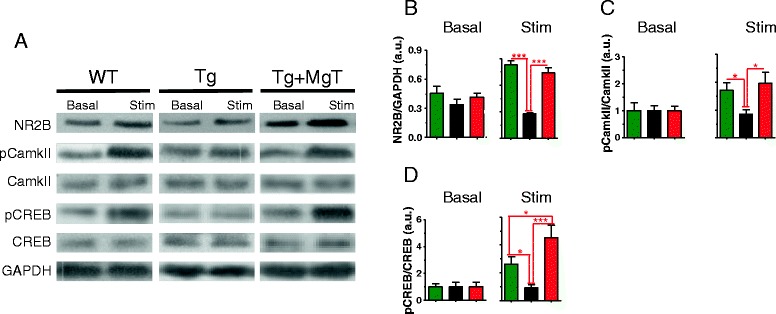
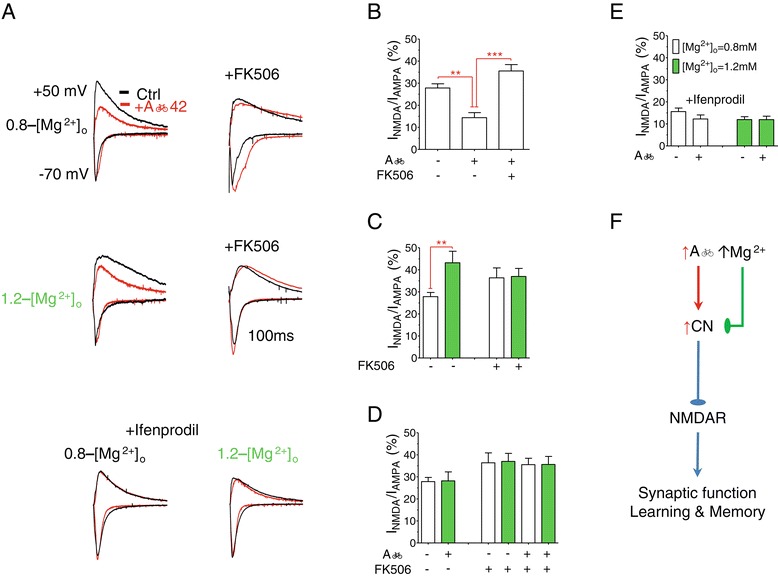
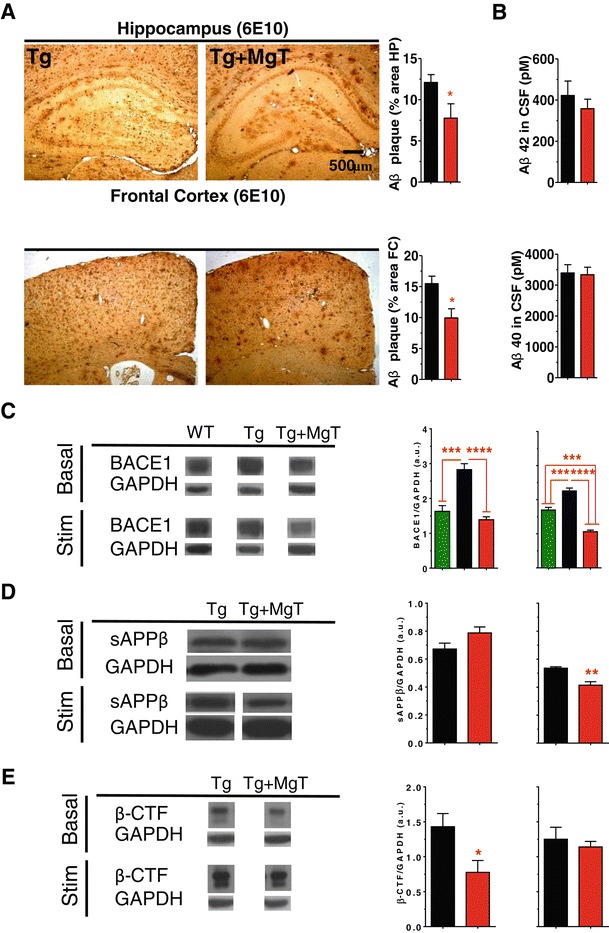
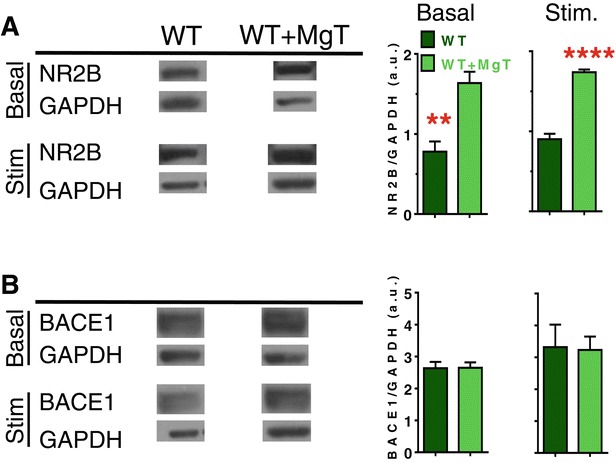
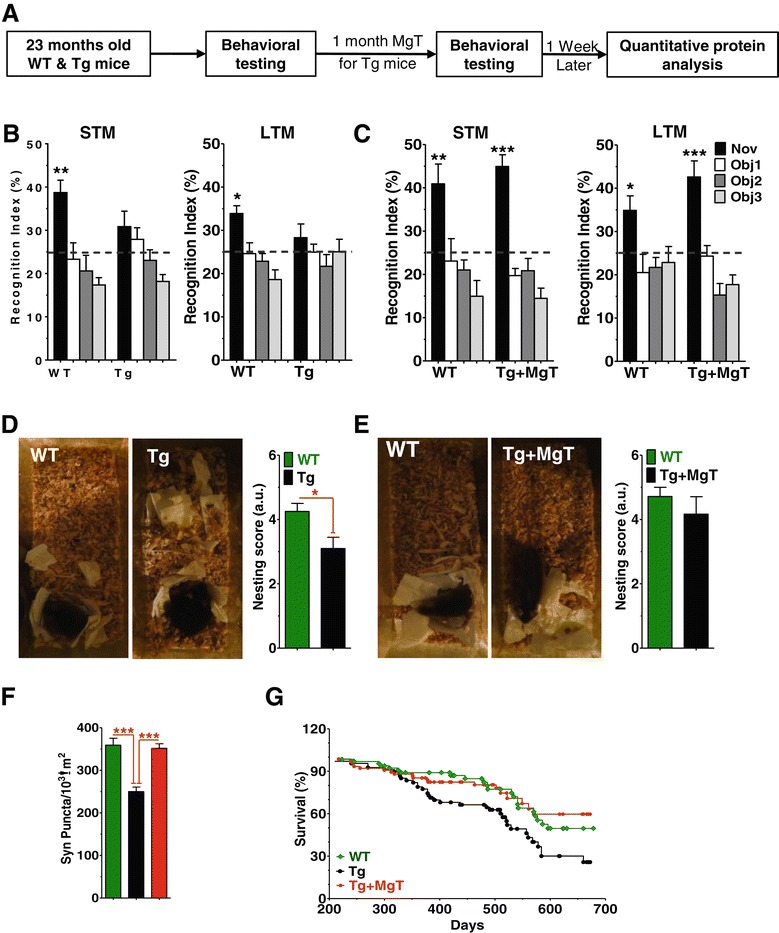
BACKGROUND: Profound synapse loss is one of the major pathological hallmarks associated with Alzheimer's disease, which might underlie memory impairment. Our previous work demonstrates that magnesium ion is a critical factor in controlling synapse density/plasticity. Here, we tested whether elevation of brain magnesium, using a recently developed compound (magnesium-L-threonate, MgT), can ameliorate the AD-like pathologies and cognitive deficits in the APPswe/PS1dE9 mice, a transgenic mouse model of Alzheimer's disease. RESULTS: MgT treatment reduced Aβ-plaque, prevented synapse loss and memory decline in the transgenic mice. Strikingly, MgT treatment was effective even when the treatment was given to the mice at the end-stage of their Alzheimer's disease-like pathological progression. To explore how elevation of brain magnesium ameliorates the AD-like pathologies in the brain of transgenic mice, we studied molecules critical for APP metabolism and signaling pathways implicated in synaptic plasticity/density. In the transgenic mice, the NMDAR signaling pathway was downregulated, while the BACE1 expression were upregulated. MgT treatment prevented the impairment of these signaling pathways, stabilized BACE1 expression and reduced sAPPβ and β-CTF in the transgenic mice. At the molecular level, elevation of extracellular magnesium prevented the high Aβ-induced reductions in synaptic NMDARs by preventing calcineurin overactivation in hippocampal slices. CONCLUSIONS: Our results suggest that elevation of brain magnesium exerts substantial synaptoprotective effects in a mouse model of Alzheimer's disease, and hence it might have therapeutic potential for treating Alzheimer's disease.
Overview
The claims and statistics of this paper haven’t been checked yet.
Run the check — free, no account needed. It reads the open-access text and checks the sources it cites.
Integrity signals
Registry
Cites
Statistics
Figures
Verification
Claims the paper makes
The claims and statistics of this paper haven’t been checked yet.
Run the check — free, no account needed. It reads the open-access text and checks the sources it cites.
Claims other papers make about this one
Each is checked against this paper’s own text: does it say what the citing paper says it does?
In the citing paper
“In addition, Mg2+ treatment can reduce soluble Aβ by stabilizing BACE-1 expression, thus reversing cognitive impairment and synaptic loss in AD mice [551].”
From Molecular and cellular mechanisms underlying the pathogenesis of Alzheimer’s disease (2020) · cites this paper as [551]
Self-check
Percentages, sums and reported differences re-computed from the paper’s own numbers.
The self-check needs the paper’s full text.
Citations
Cites
1 retracted
RETRACTED ARTICLE: APP binds DR6 to trigger axon pruning and neuron death via distinct caspases
Nikolaev, A., McLaughlin, T., O’Leary, D. D. M., & Tessier-Lavigne, M. (2009) · Nature · doi:10.1038/nature07767 · Cited by 992
RetractedDose translation from animal to human studies revisited.
Reagan‐Shaw, S., Nihal, M., & Ahmad, N. (2008) · The FASEB Journal · doi:10.1096/fj.07-9574lsf · Cited by 6,524
Place navigation impaired in rats with hippocampal lesions
Morris, R. G. M., Garrud, P., Rawlins, J. N. P., & O'Keefe, J. (1982) · Nature · doi:10.1038/297681a0 · Cited by 6,340
Hypothetical model of dynamic biomarkers of the Alzheimer's pathological cascade
Jack, C. R., Knopman, D. S., Jagust, W. J., Shaw, L. M., Aisen, P. S., Weiner, M. W., Petersen, R. C., & Trojanowski, J. Q. (2010) · The Lancet Neurology · doi:10.1016/s1474-4422(09)70299-6 · Cited by 4,806
Alzheimer's Disease Is a Synaptic Failure
Selkoe, D. J. (2002) · Science · doi:10.1126/science.1074069 · Cited by 4,420
Terry, R. D., Masliah, E., Salmon, D. P., Butters, N., DeTeresa, R., Hill, R., Hansen, L. A., & Katzman, R. (1991) · Annals of Neurology · doi:10.1002/ana.410300410 · Cited by 4,397
A new one-trial test for neurobiological studies of memory in rats. 1: behavioral data
Ennaceur, A., & Delacour, J. (1988) · Behavioural Brain Research · doi:10.1016/0166-4328(88)90157-x · Cited by 3,223
Synaptic Plasticity and Memory: An Evaluation of the Hypothesis
Martin, S. J., Grimwood, P. D., & Morris, R. G. M. (2000) · Annual Review of Neuroscience · doi:10.1146/annurev.neuro.23.1.649 · Cited by 2,794
Palop, J. J., Chin, J., Roberson, E. D., Wang, J., Thwin, M. T., Bien-Ly, N., Yoo, J., Ho, K. O., Yu, G.-Q., Kreitzer, A., et al. (2007) · Neuron · doi:10.1016/j.neuron.2007.07.025 · Cited by 1,653
Amyloid-β–induced neuronal dysfunction in Alzheimer's disease: from synapses toward neural networks
Palop, J. J., & Mucke, L. (2010) · Nature Neuroscience · doi:10.1038/nn.2583 · Cited by 1,651
Cited by
Sorted by citations
Items 101–146 of 146
Wang, L. P., Yan, Z., Yalavarthi, S., Abdul‐Rashid, Y., Parker, K., Nowlin, K. S., Li, E., Mack, J., Wei, J., Vu, H., et al. (2025) · Advanced Science · doi:10.1002/advs.202513798 · Cited by 5
Aging Reduces ATP-Binding Cassette Transporter Expression in Brain Microvessels of Mice
Wada, Y., Inoko, M., Ishihara, K., Fukumoto, K., Tsurudome, Y., Horiguchi, M., Fujimura, A., & Ushijima, K. (2025) · Pharmaceuticals · doi:10.3390/ph18020191 · Cited by 5
Li, S., Yi, H., Yuan, F., Zhang, X., Zhong, Y., & Huang, Y. (2024) · Brain Research · doi:10.1016/j.brainres.2024.148910 · Cited by 5
Shamsi, H. S. S. A., Gardener, S. L., Rainey‐Smith, S. R., Sohrabi, H. R., Taddei, K., Masters, C. L., Doré, V., Rowe, C. C., Fernando, W. M. A. D. B., & Martins, R. N. (2025) · Alzheimer s & Dementia · doi:10.1002/alz.70560 · Cited by 4
Lifestyle medicine for healthy cognitive aging: A narrative review
Halma, M. T. J., Marik, P. E., Gazda, S., & Tuszyński, J. A. (2024) · Brain Behavior and Immunity Integrative · doi:10.1016/j.bbii.2024.100077 · Cited by 5
A synapse perspective on the function of the amyloid precursor protein
Kruse, P., Eichler, A., Klukas, L., & Lenz, M. (2025) · Science Progress · doi:10.1177/00368504251360728 · Cited by 5
“95,96 These observations relied on calcium-dependent 97,98 and microRNA signaling.”
Guan, P.-P., Jia, J.-F., & Wang, P. (2021) · Journal of Functional Foods · doi:10.1016/j.jff.2021.104527 · Cited by 4
Nechifor, M. (2024) · Journal of Trace Elements and Minerals · doi:10.1016/j.jtemin.2024.100194 · Cited by 4
Shome, A., Jha, K. T., Chahat, Chawla, V., & Chawla, P. A. (2024) · CNS & Neurological Disorders - Drug Targets · doi:10.2174/0118715273315191241002115155 · Cited by 4
Beyond cognition and sleep: Stop the domino effect
Amin, S. N., Khashaba, A. S., Alazzam, A. Y., ALKHAWALDAH, H. M., ALBAKRI, K. A., ALMAJDOUBAH, O. A., Alabdallat, Y. J., & SEIF, A. S. A. (2023) · Journal of Experimental and Clinical Medicine · doi:10.52142/omujecm.40.1.28 · Cited by 6
Lopresti, A. L., & Smith, S. J. (2026) · Frontiers in Nutrition · doi:10.3389/fnut.2025.1729164 · Cited by 3
Kumar, A., Mehan, S., Gupta, S., Gupta, G. D., Samant, R., & Tongra, M. (2026) · NeuroMolecular Medicine · doi:10.1007/s12017-026-08929-6 · Cited by 4
Neurochemical Aspects of Alzheimer’s Type of Dementia
Farooqui, A. A. (2019) · Elsevier eBooks · doi:10.1016/b978-0-12-816347-4.00003-9 · Cited by 4
Gao, X., Sun, Y., Huang, X., Zhou, Y., Zhu, H., Li, Q., & Ma, Y. (2023) · Nutritional Neuroscience · doi:10.1080/1028415x.2023.2169986 · Cited by 4
“In humans and in animal models, dietary magnesium intake and serum magnesium levels may reduce the risk of cognitive impairment, regardless of whether magnesium is consumed via food or supplementation [29,30].”
BackgroundSelf-citationAlateeq, K., Walsh, E., & Cherbuin, N. (2024) · International Journal of Molecular Sciences · doi:10.3390/ijms252211859 · Cited by 4
Deep Sea Water Alleviates Tau Phosphorylation and Cognitive Impairment via PI3K/Akt/GSK-3β Pathway
He, S., Peng, W.-B., Fu, X., Zhou, H., & Wang, Z. (2022) · Marine Biotechnology · doi:10.1007/s10126-021-10087-8 · Cited by 3
Metal Transporters in Neurodegeneration
Jiang, H. F. (2017) · Elsevier eBooks · doi:10.1016/b978-0-12-804562-6.00016-6 · Cited by 3
TUSC3 regulates ERMA-mediated Mg2+ uptake for synaptic function and neurodevelopment
Park, G., Kim, N. H., Kim, S.-Y., Lee, H., Li, C. M., Seol, J. H., Choi, S., & Jung, Y. (2025) · Nature Communications · doi:10.1038/s41467-025-65668-1 · Cited by 2
The mechanisms and strategies for Alzheimer’s disease prevention: An update
Han, M., Wang, N., Song, M., Liu, C., Wu, Y., Yin, J., Jin, L., Jin, W., & Gao, Z. (2026) · Acta Pharmaceutica Sinica B · doi:10.1016/j.apsb.2026.04.007 · Cited by 3
Neurochemical Aspects of Alzheimer Disease
Farooqui, A. A. (2016) · Springer eBooks · doi:10.1007/978-3-319-15889-1_1 · Cited by 2
Коган, М. И., & Jeong, H.-S. (2017) · Elsevier eBooks · doi:10.1016/b978-0-323-35868-2.00011-6 · Cited by 2
Brain of miyoshi myopathy/dysferlinopathy patients presents with structural and metabolic anomalies
Hnilicová, P., Grendár, M., Koprušáková, M. T., Kralova, A. T., Harsányiová, J., Krššák, M., Just, I., Misovicova, N., Hikkelová, M., Grossmann, J. K., et al. (2024) · Scientific Reports · doi:10.1038/s41598-024-69966-4 · Cited by 3
LC–MS/MS method with chemical derivatization for quantitation of L‐threonate in human plasma
Zhang, Q., & Adam, K. (2019) · Biomedical Chromatography · doi:10.1002/bmc.4636 · Cited by 2
A Nutritional Genomics Approach to Epigenetic Influences on Chronic Disease
Williamson, C. B., & Pizano, J. M. (2020) · Springer eBooks · doi:10.1007/978-3-030-30730-1_17 · Cited by 2
Tekin, E., Küçük, A., & Arslan, M. (2024) · Gazi Medical Journal · doi:10.12996/gmj.galenos.2023.3865 · Cited by 1
The role of individual neuronutrients in optimizing nutritional therapy for neurological patients
Орлова, С. В., Никитина, Е. А., Balashova, N. V., Грибакин, С. Г., Prokopenko, E. V., Vodolazkaya, A. N., & Pigareva, Y. A. (2023) · Medical alphabet · doi:10.33667/2078-5631-2023-8-36-47 · Cited by 1
Roundoc Rx: Mild Cognitive Impairment and Memory Loss
ROUNTREE, R. L. (2015) · Alternative and Complementary Therapies · doi:10.1089/act.2015.21209
The Effect of Magnesium on Visual Evoked Potentials in L-NAME-Induced Hypertensive Rats
Özsoy, Ö., Aras, S., Ülker, P., Ülker, S. N., Koçer, G., Şentürk, Ü. K., Basralı, F., Yargıçoğlu, P., Özyurt, D., & Ağar, A. (2015) · Biological Trace Element Research · doi:10.1007/s12011-015-0599-6
Kesmati, M., Torabi, M., Pourreza, N., Abdollahzadeh, R., Rahiminezhadseta, R., & Banitorof, M. B. (2020) · Neurophysiology · doi:10.1007/s11062-020-09847-4
Tepung Pisang Berlin Unripe Meningkatkan Fungsi Kognitif Tikus Yang Diinduksi High Fat Diet
Damayati, R. P., Agustin, F., & Febriyatna, A. (2020) · Indonesian Journal of Human Nutrition · doi:10.21776/ub.ijhn.2020.007.02.1
Wang, J., Wang, W., Zheng, G., Shi, F., Wu, S., & Zhang, Y. (2022) · Research Square · doi:10.21203/rs.3.rs-1920485/v1
Fu, C., Huang, L., Xu, L., Yue, J., Li, H., Liao, S., Lian, C., Jiang, L., Lin, P., Yang, J., et al. (2022) · Research Square · doi:10.21203/rs.3.rs-2243136/v1
Magnesium and Alzheimer's disease
Toffa, D. H., & Li, J. (2023) · Elsevier eBooks · doi:10.1016/b978-0-323-89835-5.00032-6
Savithri, Y., Ravi Sekhar, P., & Kumari, D. (2023) · UTTAR PRADESH JOURNAL OF ZOOLOGY · doi:10.56557/upjoz/2023/v44i243803
Magnesium and Memory: Unraveling the Physiological Tapestry of Alzheimer's Disease
Uddin, S. F., Waheed, K., Chohan, H.-U.-R., Sheikh, S., Noor, N., Shankar, B., Zain-ul-abdeen, S., & Mahnoor, S. (2024) · Journal of Scientific Research and Reports · doi:10.9734/jsrr/2024/v30i51940
Nechifor, M., & Vormann, J. (2025) · Springer eBooks · doi:10.1007/978-3-662-70835-4_9
Akkaya, E. C., Ilgın, R., Adil, H., & Çelik, A. (2025) · Molecular Neurobiology · doi:10.1007/s12035-025-05322-5
Magnesium-containing materials for brain and neural repair: advances and perspectives
Zhao, X., Yu, W., Wang, J., Zhang, Y., Zhao, L., Yang, H., & Zhang, N. (2025) · Frontiers of Materials Science · doi:10.1007/s11706-025-0745-9
Gao, J., Zhou, N., Wu, Y., Lu, M., Wang, Q., Xia, C., Zhou, M., & Xu, Y. (2021) · Figshare · doi:10.6084/m9.figshare.15179405
Kozin, S. V., Kravtsov, A. A., Aksenov, N. A., Lyasota, O. M., Rubaylo, A. D., Kozlova, E. A., Герасименко, Е. О., Kindop, V. K., Беспалов, А. В., Vasilevskaya, E. R., et al. (2025) · Russian Journal of General Chemistry · doi:10.1134/s1070363225607859
Can Nutrition Modulate the Progression of Alzheimer’s Disease? A Narrative Review
Jankowski, W. M., Fichna, J., & Tarasiuk, A. (2026) · Current Nutrition Reports · doi:10.1007/s13668-026-00733-9
SİS, Ç. Ö., Yıldız, O., ELÇİ, M. P., Fatsa, T., & ÖREN, S. (2026) · Brain Research · doi:10.1016/j.brainres.2026.150341
Dizdar, M., Obučić, M., Crnčević, N., Dinić, S., Uskoković, A. S., Јovanović, J. A., Borković-Mitić, S., Mladenović, A., Milanović, D., Todorovic, S. T., et al. (2026) · International Journal of Molecular Sciences · doi:10.3390/ijms27156581
Sun, H., Zhou, L., Luo, T., Li, C., Ma, R., Xiong, H., Zhang, J., & Yang, M.-M. (2026) · Investigative Ophthalmology & Visual Science · doi:10.1167/iovs.67.11.51
Saha, T., & Mehan, S. (2026) · Naunyn-Schmiedeberg s Archives of Pharmacology · doi:10.1007/s00210-026-05948-9
Metadata
- Authors
- Li, W., Yu, J., Liu, Y., Huang, X., Abumaria, N., Zhu, Y., Huang, X., Xiong, W., Ren, C., Liu, X.-G., Chui, D., & Liu, G.
- Affiliations
- Tsinghua University (CN)
- Sun Yat-sen University (CN)
- Peking University (CN)
- Corresponding author
- Liu, Guosong
- Venue
- Molecular Brain
- Published
- 2014-09-13
- Volume
- 7
- Issue
- 1
- Pages
- 65-65
- ISSN
- 1756-6606 (ISSN-L)
- PMC
- PMC4172865
- OpenAlex
- W2124506047
- Cited by
- 146
- References
- 50
- Citations by year
- 2026: 8 · 2025: 13 · 2024: 20 · 2023: 9 · 2022: 13 · 2021: 15 · 2020: 16 · 2019: 8 · 2018: 5 · 2017: 14 · 2016: 11 · 2015: 14
- FWCI
- 8.64
- Type
- journal article
- Language
- en
- Open access
- gold
- doi.org
- Locations
- Molecular Brain (publishedVersion, cc-by)
- PubMed Central (publishedVersion, cc-by)
- PubMed (publishedVersion)
- Funders
- National Natural Science Foundation of China (973 Program, 2013CB835102, 81270048, 30970957)
- National Key Research and Development Program of China (2011CB302201, 2009CB941303)
- Topics
- Life Sciences › Neuroscience › Cellular and Molecular Neuroscience › Alzheimer's disease research and treatments
- Life Sciences › Neuroscience › Cellular and Molecular Neuroscience › Neuroscience and Neuropharmacology Research
- Health Sciences › Medicine › Psychiatry and Mental health › Dementia and Cognitive Impairment Research
- Keywords
- Alzheimer's disease, magnesium L-threonate, synaptic loss, cognitive impairment, APP/PS1 mice, amyloid plaques, NMDA receptor signaling, BACE1, APP processing, calcineurin, hippocampus, memory impairment
- MeSH terms
- Aging, Alzheimer Disease, Analysis of Variance, Animals, Body Weight, Brain, Butyrates, Cognition Disorders, Disease Models, Animal, Female, Hippocampus, Humans, Learning, Male, Memory Disorders, Mice, Transgenic, Motor Activity, Synaptic Transmission, Synapses, Signal Transduction, Down-Regulation, Receptors, N-Methyl-D-Aspartate, Amyloid beta-Peptides, Aspartic Acid Endopeptidases, Amyloid Precursor Protein Secretases, Plaque, Amyloid
About these checks
Registry, retraction, Cites and statistics results are computed, not judged, with one exception: a printed reference that no index lists is read once by a model before it counts as a citation error. Claims are extracted by a model and kept only when their quote appears verbatim in the text; each cited source is then checked, with a model’s help, for whether it says what the claim relies on. Those verdicts can be wrong — read the claim’s quote and the cited source before relying on one.
Statistics and arithmetic are recomputed, not judged.
Confidence bands are shown only for fields calibrated on our annotated test set. None is calibrated yet, so no band is shown.
What counts as a claim ›How we measure confidence ›How we check this ›
Are you an author, or do you see a problem with this page? Request a review
