

The DOI matches its Crossref record; 190 of the 190 references it cites were found in a registry or an index.
The role of 5-HT receptors in depression
Open accessAbstract
Depression is a polygenic and highly complex psychiatric disorder that remains a major burden on society. Antidepressants, such as selective serotonin reuptake inhibitors (SSRIs), are some of the most commonly prescribed drugs worldwide. In this review, we will discuss the evidence that links serotonin and serotonin receptors to the etiology of depression and the mechanisms underlying response to antidepressant treatment. We will then revisit the role of serotonin in three distinct hypotheses that have been proposed over the last several decades to explain the pathophysiology of depression: the monoamine, neurotrophic, and neurogenic hypotheses. Finally, we will discuss how recent studies into serotonin receptors have implicated specific neural circuitry in mediating the antidepressant response, with a focus being placed on the hippocampus.
Overview
The claims and statistics of this paper haven’t been checked yet.
Run the check — free, no account needed. It reads the open-access text and checks the sources it cites.
Integrity signals
Registry
Cites
Statistics
Figures
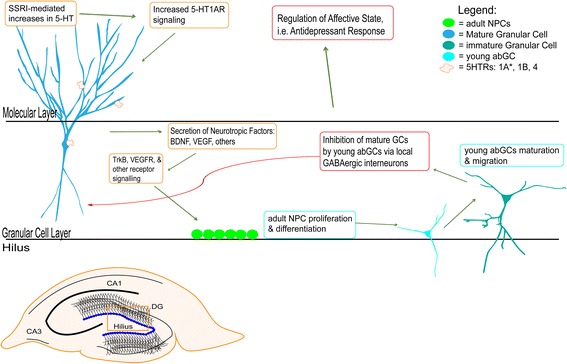
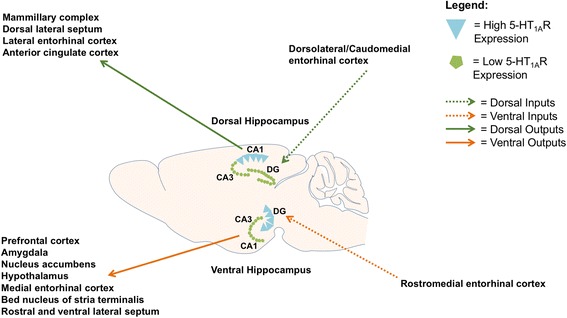
Verification
Claims the paper makes
The claims and statistics of this paper haven’t been checked yet.
Run the check — free, no account needed. It reads the open-access text and checks the sources it cites.
Claims other papers make about this one
Each is checked against this paper’s own text: does it say what the citing paper says it does?
The cited source says what the claim attributes to it.
In the citing paper
“the effects of serotonin receptors have been linked to antidepressant effects(Yohn et al., 2017)”
From Efficacy, acceptability and side-effects of oral versus long-acting- injectables antipsychotics: Systematic review and network meta-analysis (2024) · cites this paper as Yohn et al., 2017
Self-check
Percentages, sums and reported differences re-computed from the paper’s own numbers.
The self-check needs the paper’s full text.
Citations
Cites
Molecular Mechanisms of Depression: Perspectives on New Treatment Strategies
Lang, U. E., & Borgwardt, S. (2013) · Cellular Physiology and Biochemistry · doi:10.1159/000350094 · Cited by 8,526
Influence of life stress on depression: moderation by a polymorphism in the 5-HTT gene
Caspi, A., Sugden, K., Moffitt, T. E., Taylor, A., Craig, I. W., Harrington, H., McClay, J., Mill, J., Martin, J., Braithwaite, A., et al. (2003) · Science · doi:10.1126/science.1083968 · Cited by 8,120
Rush, A. J., Trivedi, M. H., Wisniewski, S. R., Nierenberg, A. A., Stewart, J. W., Warden, D., Niederehe, G., Thase, M. E., Lavori, P. W., Lebowitz, B. D., et al. (2006) · American Journal of Psychiatry · doi:10.1176/ajp.2006.163.11.1905 · Cited by 5,643
Lesch, K.-P., Bengel, D., Heils, A., Sabol, S. Z., Greenberg, B. D., Petri, S., Benjamin, J., Müller, C. R., Hamer, D. H., & Murphy, D. L. (1996) · Science · doi:10.1126/science.274.5292.1527 · Cited by 5,162
Requirement of hippocampal neurogenesis for the behavioral effects of antidepressants
Santarelli, L., Saxe, M., Gross, C., Surget, A., Battaglia, F., Dulawa, S., Weisstaub, N., Lee, J., Duman, R., Arancio, O., et al. (2003) · Science · doi:10.1126/science.1083328 · Cited by 4,321
da Luz, A. C. D. D. S., Dias, G. P., Bevilaqua, M. C. D. N., Cocks, G. D., Gardino, P. F., Thuret, S., & Nardi, A. E. (2013) · Neuropsychobiology · doi:10.1159/000353269 · Cited by 4,015
Antidepressant effects of ketamine in depressed patients
Berman, R. M., Cappiello, A., Anand, A., Oren, D. A., Heninger, G. R., Charney, D. S., & Krystal, J. H. (2000) · Biological Psychiatry · doi:10.1016/s0006-3223(99)00230-9 · Cited by 3,856
A randomized trial of an N-methyl-D-aspartate antagonist in treatment-resistant major depression.
Zarate, C. A., Singh, J. B., Carlson, P. J., Brutsche, N. E., Ameli, R., Luckenbaugh, D. A., Charney, D. S., & Manji, H. K. (2006) · Archives of General Psychiatry · doi:10.1001/archpsyc.63.8.856 · Cited by 3,766
The Neuroendocrinology of Stress: A Never Ending Story
Lightman, S. L. (2008) · Journal of Neuroendocrinology · doi:10.1111/j.1365-2826.2008.01711.x · Cited by 3,588
A Neurotrophic Model for Stress-Related Mood Disorders
Duman, R. S., & Monteggia, L. M. (2006) · Biological Psychiatry · doi:10.1016/j.biopsych.2006.02.013 · Cited by 3,375
Research works printed but not linked: 1
- Feighner JP, Boyer WF. Selective serotonin reuptake inhibitors, 2nd edition: advances in basic research and clinical practice. Chichester: Wiley; 1996.
Cited by
Sorted by citations
Items 301–400 of 489
Liu, Y. U., Wu, M., Sun, Z., Li, Q., Jiang, R., Meng, F., Liu, J., Wang, W., Dai, J., Li, C., et al. (2021) · Brain Research Bulletin · doi:10.1016/j.brainresbull.2021.12.001 · Cited by 6
A Bibliometric and Visual Analysis of Single Nucleotide Polymorphism Studies in Depression
Zhang, Z. M., Yang, Y., Kong, W., Huang, S., Tan, Y., Huang, S., Zhang, M., Lu, H., Li, Y., Li, X., et al. (2023) · Current Neuropharmacology · doi:10.2174/1570159x21666230815125430 · Cited by 5
Peng, Q., Shi, L., Kong, Y., Yan, Y. C., Zhan, J., Wen, Y., Liu, W., De-xian, Y., Zhou, Z., & Yan, H. (2020) · Brain Research · doi:10.1016/j.brainres.2020.146801 · Cited by 6
Wang, J., Gao, F., Wang, Z.-L., Wang, X.-C., Yang, J., Ma, B.-R., Wang, H., Xie, W., Guo, Y., & Zhang, L. (2021) · Brain Research · doi:10.1016/j.brainres.2021.147426 · Cited by 6
Jha, P., Chaturvedi, S., Bhat, R., Jain, N., & Mishra, A. K. (2021) · Journal of Biomolecular Structure and Dynamics · doi:10.1080/07391102.2021.1961865 · Cited by 6
Dorsal raphe neurons signal integrated value during multi-attribute decision-makingPreprint
Feng, Y.-Y., Bromberg-Martin, E. S., & Monosov, I. E. (2023) · bioRxiv (Cold Spring Harbor Laboratory) · doi:10.1101/2023.08.17.553745 · Cited by 6
Baek, J.-S., Ma, X., Park, H.-S., Lee, D.-Y., & Kim, D.-H. (2025) · Cells · doi:10.3390/cells14191547 · Cited by 8
Pires, C. S., da Rocha, M. J., Presa, M. H., Zuge, N. P., Kuntz, N. E. B., Godoi, B., Bortolatto, C. F., & Brüning, C. A. (2024) · Psychopharmacology · doi:10.1007/s00213-024-06588-8 · Cited by 5
Neurochemistry of the Central Nervous System
Ascenzi, B. M., Myers, M. W., & Buccilli, B. (2024) · Elsevier eBooks · doi:10.1016/b978-0-12-822404-5.00016-4 · Cited by 5
Shi, Z., Wang, Q., Li, Q., Jia, F., & Xu, W. (2025) · Drug Design Development and Therapy · doi:10.2147/dddt.s484567 · Cited by 5
Neurotransmitters and Neurotransmission
Pichai, E., & Lakshmanan, M. (2021) · Introduction to Basics of Pharmacology and Toxicology · doi:10.1007/978-981-33-6009-9_5 · Cited by 5
Relationship between physical activity and risk of depression in a married group
Ni, R. J., & Yu, Y. W.-Y. (2024) · BMC Public Health · doi:10.1186/s12889-024-18339-7 · Cited by 5
Kiyokawa, Y., Ootaki, M., Kambe, Y., Tanaka, K. D., Kimura, G., Tanikawa, T., & Takeuchi, Y. (2024) · Neuroscience · doi:10.1016/j.neuroscience.2024.05.003 · Cited by 5
Improved intensive care lighting and staff wellbeing: A pilot feasibility service evaluation
Weerakkody, S., Teji, J. U., Barrett, E. M., Kousteni, M., Flores-Villa, L., Jenkins, E., & Montgomery, H. (2025) · Journal of the Intensive Care Society · doi:10.1177/17511437251315570 · Cited by 5
Piotrowska, A., Siwek, A., Wolak, M., & Nowak, G. (2019) · Biological Trace Element Research · doi:10.1007/s12011-019-01924-y · Cited by 5
Miyagishi, H., Tsuji, M., Miyagawa, K., Kurokawa, K., Mochida-Saito, A., Takahashi, K., Ishige, K., & Takeda, H. (2020) · Neuroscience Letters · doi:10.1016/j.neulet.2020.135082 · Cited by 5
Zheng, R.-Y., Xiong, W., He, J., Wang, X., Wang, R., & Yu, H. (2020) · Journal of Traditional Chinese Medical Sciences · doi:10.1016/j.jtcms.2020.07.009 · Cited by 5
Enterogenic metabolomics signatures of depression: what are the possibilities for the future
Zhang, Y., Chen, X., Mo, X., Xiao, R., Cheng, Q., Wang, H., Liu, L., & Xie, P. (2023) · Expert Review of Proteomics · doi:10.1080/14789450.2023.2279984 · Cited by 5
Zebrafish models: Charting promising platform and illuminating the depths of depression
Yang, B., Han, Y., Yang, Y., Li, Y., & Zhu, X. (2025) · Pharmacology Biochemistry and Behavior · doi:10.1016/j.pbb.2025.174097 · Cited by 5
Barabássy, Á., Csehi, R., Dombi, Z. B., Szatmári, B., Brevig, T., & Németh, G. (2025) · Pharmaceuticals · doi:10.3390/ph18070995 · Cited by 4
Pekarskaya, E. A., Holt, E. S., Gingrich, J. A., Ansorge, M. S., Javitch, J. A., & Canetta, S. (2021) · Scientific Reports · doi:10.1038/s41598-021-02074-9 · Cited by 5
Could dehydroepiandrosterone (DHEA) be a novel target for depression?
Souza‐Teodoro, L. H., Andrade, L. H., & Carvalho, L. A. (2022) · Journal of Affective Disorders Reports · doi:10.1016/j.jadr.2022.100340 · Cited by 4
Yamalı, C., Nenni, M., Sakarya, M. T., & Kaplan, H. A. (2024) · Mini-Reviews in Medicinal Chemistry · doi:10.2174/0113895575319878240612070850 · Cited by 4
Therapeutic potential of cannabidiol in depression
Guldager, M. B., Filho, A. M. C., Biojone, C., & Joca, S. R. L. (2024) · International review of neurobiology · doi:10.1016/bs.irn.2024.06.001 · Cited by 6
Ghrelin in Depression: A Promising Therapeutic Target
Kore, M. S., Mamsa, R., Patil, D., & Bhatt, L. K. (2024) · Molecular Neurobiology · doi:10.1007/s12035-024-04554-1 · Cited by 4
Solak, H., Görmüş, Z. I. S., Koca, R. Ö., Güneş, C. E., Iyısoy, M. S., Kurar, E., & Kutlu, S. (2024) · Metabolic Brain Disease · doi:10.1007/s11011-024-01445-1 · Cited by 4
Zhao, W., Zhu, D., Zhang, Y., Zhang, Y., Shen, Y., Yu, Y., & Zhu, J. (2025) · Human Brain Mapping · doi:10.1002/hbm.70371 · Cited by 4
Constantino, B., da Silva, J. C., Michels, M. D. S., & Mastroeni, M. F. (2019) · Early Child Development and Care · doi:10.1080/03004430.2019.1678608 · Cited by 4
Zhao, X., Ma, R., Zhang, X., Wang, B., Rong, B., Jiang, N., Feng, W., Chen, M., Huo, Z., Li, S., et al. (2021) · Journal of Ethnopharmacology · doi:10.1016/j.jep.2021.114298 · Cited by 4
Partial agonists of dopamine receptors: receptor theory and the dopamine hypothesis of psychosis
Cookson, J., & Pimm, J. (2021) · BJPsych Advances · doi:10.1192/bja.2021.39 · Cited by 4
de Santana, J. H., Rodrigues, T. D. O., de Lima, F. A. S., Silva, D. G. M., de Lemos, M. D. T. B., Silva, S. C. D. A., & Lagranha, C. J. (2023) · International Journal of Developmental Neuroscience · doi:10.1002/jdn.10257 · Cited by 4
Marine natural products: potential agents for depression treatment
Wang, X., Yang, C., Zhang, X., Ye, C., Liu, W., & Wang, C. (2024) · Acta Biochimica Polonica · doi:10.3389/abp.2024.12569 · Cited by 4
González-Gutiérrez, J. P., Pessoa-Mahana, H. A., Iturriaga‐Vásquez, P., Reyes-Parada, M. I., Guerra-Díaz, N., Hödar-Salazar, M., Viscarra, F., Paillali, P., Núñez, G., Lorca, M., et al. (2019) · Molecules · doi:10.3390/molecules24203808 · Cited by 4
Black cohosh associated mania in a patient with unipolar depression
Yalçın, M., Oğuz, A., Beştepe, E. E., Sağlam, N. G. U., & Ergelen, M. (2020) · The International Journal of Psychiatry in Medicine · doi:10.1177/0091217420961185 · Cited by 4
Javelle, F., Suhrkamp, J., Wählen, L., Donath, L., & Bloch, W. (2025) · NeuroImage · doi:10.1016/j.neuroimage.2025.121386 · Cited by 4
Ye, L., Peng, L., Tian, J., & Ma, H. (2026) · Frontiers in Neuroscience · doi:10.3389/fnins.2026.1698851 · Cited by 3
Deciphering the role of siRNA in anxiety and depression
Bale, R., & Doshi, G. (2024) · European Journal of Pharmacology · doi:10.1016/j.ejphar.2024.176868 · Cited by 3
Zhao, J., Ouyang, Y., Hu, S., Tian, G., Kong, X., Pan, F., Wu, H., Tang, L., & Yang, H. (2024) · Science of Traditional Chinese Medicine · doi:10.1097/st9.0000000000000044 · Cited by 3
Yu, Z., Feng, C., Chen, Y., Wang, W., & Zhao, X. (2025) · The Journal of Steroid Biochemistry and Molecular Biology · doi:10.1016/j.jsbmb.2025.106696 · Cited by 3
Advances in targeting neurotransmitter systems in dystonia
Steel, D., Reid, K. M., Pisani, A., Hess, E. J., Fox, S. H., & Kurian, M. A. (2023) · International review of neurobiology · doi:10.1016/bs.irn.2023.06.002 · Cited by 2
Lee, Y., Yeo, S., Kim, B., Holzapfel, W. H., & Kang, H. (2023) · Journal of Functional Foods · doi:10.1016/j.jff.2023.105692 · Cited by 6
Kurnianingsih, N., Harbiyanti, N. T., Prakosa, A. G., & Ratnawati, R. (2023) · Journal of Materials in Life Sciences (JOMALISC) · doi:10.11113/jomalisc.v2.29 · Cited by 3
Antidepressant-like effects of Jieyu Chufan capsules in the olfactory bulbectomy rat model
Zhao, C. Y., Wang, M., Li, T., Song, T., Cui, W., Zhang, Q.-Y., & Hou, Y. (2023) · Brain Research · doi:10.1016/j.brainres.2023.148676 · Cited by 3
McLaughlin, L. (2023) · Cornell Undergraduate Research Journal · doi:10.37513/curj.v2i1.715 · Cited by 3
Abdelmissih, S., Abdelgwad, M., Ali, D. M. E., Negm, M. S., Eshra, M. A., & Youssef, A. (2024) · Journal of Pharmacology and Experimental Therapeutics · doi:10.1124/jpet.123.002087 · Cited by 3
Juvenile chronic social defeat stress reduces prosocial behavior in adult male mice
Zhao, Z., Zhang, M., Tang, Q., Lu, M., An, X., Cui, Y., Zhao, M., Qian, N., Shao, J., Shi, H., et al. (2024) · Pharmacology Biochemistry and Behavior · doi:10.1016/j.pbb.2024.173941 · Cited by 3
Oh, J.-H., Yoo, J. R., Ko, S. Y., Kang, J. H., Lee, S. K., Jeong, W., Seong, G. M., Lee, H. J., & Song, S. W. (2020) · Safety and Health at Work · doi:10.1016/j.shaw.2020.10.004 · Cited by 3
A New Class of 5-HT 1A Receptor Antagonists With Procognitive and Antidepressant Properties
Jankowska, A., Satała, G., Świerczek, A., Pociecha, K., Partyka, A., Jastrzębska‐Więsek, M., Głuch‐Lutwin, M., Bojarski, A. J., Wyska, E., & Chłoń‐Rzepa, G. (2021) · Future Medicinal Chemistry · doi:10.4155/fmc-2020-0363 · Cited by 3
Si, X.-M., Tian, Y., Zhang, S., Gao, H., Liu, K., & Jin, J. (2018) · Acta Pharmaceutica · doi:10.2478/acph-2018-0028 · Cited by 3
Kędzierska, E., Fiorino, F., Gibuła‐Tarłowska, E., Corvino, A., Giordano, F., Herbet, M., Dudka, J., Poleszak, E., Właź, P., & Kotlinska, J. H. (2018) · Fundamental and Clinical Pharmacology · doi:10.1111/fcp.12443 · Cited by 3
Serotonin – lipid interactions and their role in behavior
Kalinichenko, L. S., Gulbins, E., Kornhuber, J., & Müller, C. P. (2020) · Handbook of behavioral neuroscience · doi:10.1016/b978-0-444-64125-0.00016-5 · Cited by 3
Furukawa, M., Izumo, N., Toho, M., Aoki, R., Nishijima, H., Nakamura, Y., Sakai, Y., Ishibashi, Y., Kurono, H., Manabe, T., et al. (2025) · IBRO Neuroscience Reports · doi:10.1016/j.ibneur.2025.04.017 · Cited by 2
The Impact of Physical Activity on Suicide Attempt in Children: A Systematic Review
Patel, M., Branjerdporn, G., & Woerwag‐Mehta, S. (2025) · Children · doi:10.3390/children12070890 · Cited by 2
CD38 connects the heart and brain
Tao, Y., Duan, J., Huang, K., Wang, R., Feng, Q., Yang, C., Zhang, X., & Yang, L. (2025) · Translational Psychiatry · doi:10.1038/s41398-025-03597-9 · Cited by 2
Fluoxetine ameliorates affective- and pain-related responses in adult zebrafish
Canzian, J., da Silva, R. M., Mohammed, K. A., Resmim, C. M., Gonçalves, F. L. S., do Nascimento, K. F., Pretzel, C. W., Müller, M. L., Moraes, H. S., Fontana, B. D., et al. (2025) · Progress in Neuro-Psychopharmacology and Biological Psychiatry · doi:10.1016/j.pnpbp.2025.111505 · Cited by 2
Li, S.-J., Yuan, Q., Wu, W., Chen, Z., Chen, D., Shan, H., Chu, Q.-Y., Hu, W., Wu, K., Liu, T., et al. (2025) · Research · doi:10.34133/research.0987 · Cited by 2
Emam, H. T., & Abu-Raia, N. (2020) · International Journal of Basic & Clinical Pharmacology · doi:10.18203/2319-2003.ijbcp20205532 · Cited by 2
Xu, X., Jiang, J., Bai, H., & Tian, T. (2021) · Computational and Mathematical Methods in Medicine · doi:10.1155/2021/7850281 · Cited by 2
Wu, X., Tu, M., Chen, N., Yang, J., Jin, J., Qu, S., Xiong, S., Cao, Z., Xu, M., Pei, S., et al. (2023) · Frontiers in Psychiatry · doi:10.3389/fpsyt.2023.1181947 · Cited by 2
Galindo, S. L., Nimbalkar, S., Oyawale, A., Bunnell, J., Cuacuas, O. N., Montgomery‐Walsh, R., Rohatgi, A., Cariappa, B. K., Gautam, A., Peguero-Garcia, K., et al. (2024) · C – Journal of Carbon Research · doi:10.3390/c10030068 · Cited by 2
Mou, Y., Zhao, W. M., Pan, W., Li, X., Sun, M., Bo, Y., Zhao, Y., Hu, Y., Peng, J., Deana, C., et al. (2024) · Gland Surgery · doi:10.21037/gs-24-175 · Cited by 2
Andhikaputra, G., Deng, L.-W., Hsiao, H.-Y., Lin, Y., Chan, T., Chao, H. A., & Wang, Y.-C. (2025) · International Journal of Biometeorology · doi:10.1007/s00484-025-02966-9 · Cited by 4
Cao, M., Fan, B.-B., Xu, L., Xu, J., & Zhang, Y. (2025) · Scientific Reports · doi:10.1038/s41598-025-22692-x · Cited by 2
Михайленко, В. А., & Буткевич, И. П. (2018) · Journal of Evolutionary Biochemistry and Physiology · doi:10.1134/s0022093018040099 · Cited by 2
Su, Z., Chen, Z., Cao, J., Li, C., Duan, J., Zhou, T., Yang, Z., Cheng, Y., Xiao, Z., & Xu, F. (2024) · Clinical Psychopharmacology and Neuroscience · doi:10.9758/cpn.24.1167 · Cited by 3
Fan, J., Xu, Z.-Q., Chen, Y., Lu, W.-J., Xie, X., Wang, Y., & Zhuang, L. (2022) · Evidence-based Complementary and Alternative Medicine · doi:10.1155/2022/5180193 · Cited by 3
Chapter 12. Depressive Disorders
Parikh, S. V., Riba, M., & Greden, J. F. (2019) · American Psychiatric Association Publishing eBooks · doi:10.1176/appi.books.9781615372980.lr12 · Cited by 2
Short but Continuous Natural Pain for Depression Treatment and BeyondPreprint
Huang, M. (2018) · Preprints.org · doi:10.20944/preprints201805.0411.v1 · Cited by 1
Cannabinoids For Fibromyalgia: An Updated Systematic ReviewPreprint
Scicluna, J. C., & Giovanni, G. D. (2022) · medRxiv · doi:10.1101/2022.05.17.22275200 · Cited by 2
CURRENT UNDERSTANDING OF THE ROLE OF THE MONOAMINERGIC NEUROTRANSMITTER SYSTEM IN ANXIOGENESIS
Луценко, Р. В. (2022) · The Medical and Ecological Problems · doi:10.31718/mep.2022.26.5-6.09 · Cited by 1
Dietary texture-driven masticatory activity and its impact on stress tolerance
Kamate, M., Teranishi, H., Umeda, R., Shikano, K., Kitaoka, S., Hanada, T., Hikida, T., Kawano, K., & Hanada, R. (2025) · Journal of Oral Biosciences · doi:10.1016/j.job.2025.100628 · Cited by 1
Yu, Q., Li, H., Cui, X., Zhou, L., Xie, Z., Wang, S., Deng, D., Zhao, J., Sun, P., Shi, Y., et al. (2025) · Frontiers in Pharmacology · doi:10.3389/fphar.2025.1508037 · Cited by 1
Luduvico, K. P., de Mello, J. E., Custódio, S. V., Besckow, E. M., Brüning, C. A., Bortolatto, C. F., de Souza, L. P., Domingues, W. B., Campos, V. F., Spanevello, R. M., et al. (2025) · Molecular Neurobiology · doi:10.1007/s12035-025-05065-3 · Cited by 1
Gholami, M., Salmani, R. H. G., Madadlou, S. K., Khoshraftar, P., Buttar, H. S., Abbasi-Maleki, S., & Kaur, P. (2025) · Elsevier eBooks · doi:10.1016/b978-0-443-22300-6.00018-8 · Cited by 1
Koç, D., Nørgaard, M., Ganz, M., Muetzel, R. L., Marroun, H. E., Tiemeier, H. W., & Frøkjær, V. G. (2025) · NeuroImage Clinical · doi:10.1016/j.nicl.2025.103851 · Cited by 1
Soltani, F., Kiani, A., Bahrami, M. T., & Abbasi-Maleki, S. (2025) · Next research. · doi:10.1016/j.nexres.2025.100837 · Cited by 1
Christoforou, L., & Sutcliffe, K. (2025) · BMC Health Services Research · doi:10.1186/s12913-025-13445-7 · Cited by 2
Sousa-Ho, R. L., Demchenko, I., Baltazar, V. A., Tailor, I., Dunkley, B. T., Schweizer, T. A., Kennedy, S. H., Boutet, A., Lozano, A. M., Fatt, C. C., et al. (2026) · Progress in Neuro-Psychopharmacology and Biological Psychiatry · doi:10.1016/j.pnpbp.2026.111616 · Cited by 1
Zhao, Y.-L., Yi, H., Hou, X.-M., La, X.-C., Baba, S. S., Guo, Y.-X., Yao, R.-R., Yuan, X., Zhang, Q.-R., Jia, H., et al. (2026) · Neurochemistry International · doi:10.1016/j.neuint.2026.106133 · Cited by 1
The Effect of Sertraline on Oxidative Stress in Patients with Depression
Neaimy, K. A. A., & Alkasso, R. S. (2021) · Mağallaẗ al-Mawṣil li-l-tamrīḍ/Mosul journal of nursing · doi:10.33899/mjn.2021.169851 · Cited by 1
Parikh, S. V., Riba, M., & Greden, J. F. (2019) · American Psychiatric Association Publishing eBooks · doi:10.1176/appi.books.9781615371501.lr12 · Cited by 1
Mitchell, E. A., Zhang, D., Thompson, J., Liu, C., Leversha, A., & Milne, B. J. (2022) · Archives of Disease in Childhood · doi:10.1136/archdischild-2021-323006 · Cited by 1
Sun, J., Wu, D., Xu, G., Chen, F., Ding, X., Xie, L., Yu, Z., & Jin, X. (2022) · Bioscience Reports · doi:10.1042/bsr20220804 · Cited by 1
Monoamine Neurotransmitters and Drug Addiction
Zimny, E. (2023) · Science Insights · doi:10.15354/si.23.re216 · Cited by 1
محمد, ب. ا. ف. ا., & محمد, س. ا. ف. ا. (2022) · Journal of Pure & Applied Sciences · doi:10.51984/jopas.v21i4.2132 · Cited by 1
base genética de los trastornos depresivos
Gutiérrez, J., & Garcı́a, P. (2024) · Ambiociencias · doi:10.18002/ambioc.i21.8180 · Cited by 1
Lychee peel extract attenuates depression-like behavior in a rat model of chronic restraint stress
Phachonpai, W., Preedapirom, W., Wuthiyan, K., Junkaew, A., & Tong-un, T. (2024) · Journal of Applied Pharmaceutical Science · doi:10.7324/japs.2024.148021 · Cited by 1
GSK4716 enhances 5-HT1AR expression by glucocorticoid receptor signaling in hippocampal HT22 cells
Lim, J. C., Park, J., Lee, W., & Choi, H. J. (2024) · Neurological Research · doi:10.1080/01616412.2024.2322180 · Cited by 1
Majeed, O. A., AlLami, M. Q., & AlGawwam, G. (2024) · Journal of Angiotherapy · doi:10.25163/angiotherapy.859642 · Cited by 1
Kim, J., Kang, H., Kim, J., Kim, H. Y., Jhon, M., Lee, J., Kim, S., & Shin, I. (2025) · Progress in Neuro-Psychopharmacology and Biological Psychiatry · doi:10.1016/j.pnpbp.2025.111328 · Cited by 1
Neurotransmitter Modulation and Cognitive Enhancement
Kumar, D., Singh, R. K., & Mishra, A. K. (2025) · Springer eBooks · doi:10.1007/978-981-95-0125-0_4 · Cited by 1
TPH2: A Key Gene Risk Factor and Potential Therapy Target in Depression
Zhang, X., & Wang, Y. (2021) · E3S Web of Conferences · doi:10.1051/e3sconf/202127103070 · Cited by 1
Impact of COVID-19 Pandemic on Mental Health among Health Sciences Students: A single centre study
Mahmud, M. H., Tajuddin, M. A., Deh, K. H., & Anuar, K. A. K. (2022) · Environment-Behaviour Proceedings Journal · doi:10.21834/ebpj.v7i21.3709 · Cited by 1
Short but Continuous Natural Pain for Depression Treatment and BeyondPreprint
Huang, M. (2018) · Preprints.org · doi:10.20944/preprints201805.0411.v2
Буткевич, И. П., Михайленко, В. А., Shimarayeva, T. N., & Kochubeev, A. V. (2018) · Pediatrician (St Petersburg) · doi:10.17816/ped9357-63 · Cited by 1
Short but Continuous Natural Pain during Meditation Sittings for Depression Treatment: A Case ReportPreprint
Huang, M. (2018) · Preprints.org · doi:10.20944/preprints201805.0451.v1 · Cited by 1
Thorne, B. N. (2023) · Open Access Victoria University of Wellington | Te Herenga Waka (Figshare) · doi:10.26686/wgtn.22714660 · Cited by 1
Mu, L., Liao, J., Gong, Y., Xiao, R., Liu, M., Ding, H., & Qingqing, M. (2024) · Research Square · doi:10.21203/rs.3.rs-4706131/v1 · Cited by 1
The influence of 5-HT1A receptors in the dorsal raphé nucleus on genioglossus activity
Zou, Y., Wang, W., Jin, H., Nie, X., Xu, J., Liu, Y., & Kang, J. (2017) · Respiratory Physiology & Neurobiology · doi:10.1016/j.resp.2017.11.009
Short but Continuous Natural Pain during Meditation Sittings for Depression Treatment: A Case ReportPreprint
Huang, M. (2018) · Preprints.org · doi:10.20944/preprints201805.0451.v2
Metadata
- Authors
- Yohn, C. N., Gergues, M. M., & Samuels, B. A.
- Affiliations
- Rutgers, The State University of New Jersey (US)
- Corresponding author
- Samuels, Benjamin Adam
- Venue
- Molecular Brain
- Published
- 2017-06-24
- Volume
- 10
- Issue
- 1
- Pages
- 28-28
- ISSN
- 1756-6606 (ISSN-L)
- PMC
- PMC5483313
- OpenAlex
- W2695471189
- Cited by
- 485
- References
- 190
- Citations by year
- 2026: 28 · 2025: 53 · 2024: 69 · 2023: 72 · 2022: 60 · 2021: 75 · 2020: 59 · 2019: 38 · 2018: 26 · 2017: 5
- FWCI
- 4.44
- Type
- journal article
- Language
- en
- Open access
- gold
- doi.org
- Locations
- Molecular Brain (publishedVersion, cc-by)
- Europe PMC (PubMed Central) (publishedVersion, cc-by)
- PubMed Central (publishedVersion, cc-by)
- PubMed (publishedVersion)
- Rutgers University Community Repository (Rutgers University) (submittedVersion, cc-by)
- DOAJ (DOAJ: Directory of Open Access Journals) (submittedVersion)
- Funders
- Brain and Behavior Research Foundation (NARSAD Young Investigator)
- National Institute of Mental Health (R01 MH112861)
- Topics
- Health Sciences › Medicine › Pharmacology (medical) › Treatment of Major Depression
- Life Sciences › Neuroscience › Cellular and Molecular Neuroscience › Neurotransmitter Receptor Influence on Behavior
- Life Sciences › Neuroscience › Biological Psychiatry › Tryptophan and brain disorders
- Keywords
- depression, serotonin receptors, serotonin, selective serotonin reuptake inhibitors, antidepressant response, monoamine hypothesis, neurotrophic hypothesis, hippocampus, neural circuits, depression pathophysiology
- MeSH terms
- Animals, Depression, Hippocampus, Humans, Models, Biological, Receptors, Serotonin, Serotonin, Neurogenesis
About these checks
Registry, retraction, Cites and statistics results are computed, not judged, with one exception: a printed reference that no index lists is read once by a model before it counts as a citation error. Claims are extracted by a model and kept only when their quote appears verbatim in the text; each cited source is then checked, with a model’s help, for whether it says what the claim relies on. Those verdicts can be wrong — read the claim’s quote and the cited source before relying on one.
Statistics and arithmetic are recomputed, not judged.
Confidence bands are shown only for fields calibrated on our annotated test set. None is calibrated yet, so no band is shown.
What counts as a claim ›How we measure confidence ›How we check this ›
Are you an author, or do you see a problem with this page? Request a review
