

Ketamine and its metabolite, (2R,6R)-HNK, restore hippocampal LTP and long-term spatial memory in the Wistar-Kyoto rat model of depression
Open accessThe DOI matches its Crossref record; 112 of the 112 references it cites were found in a registry or an index.
Abstract
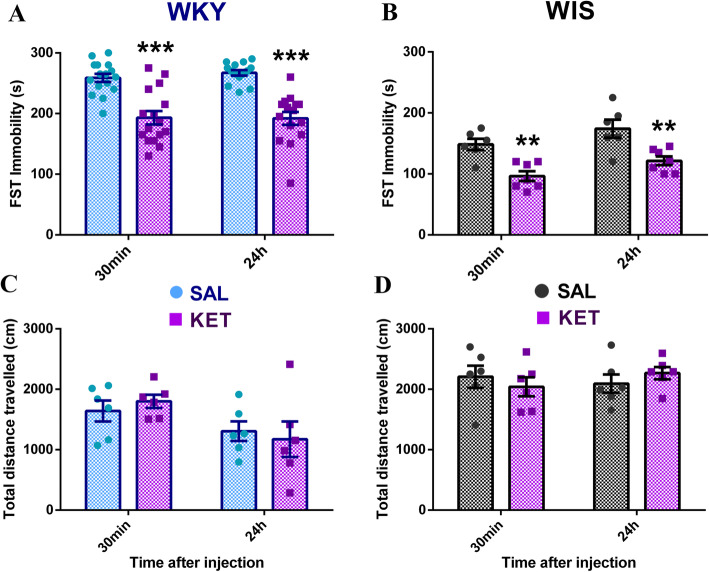
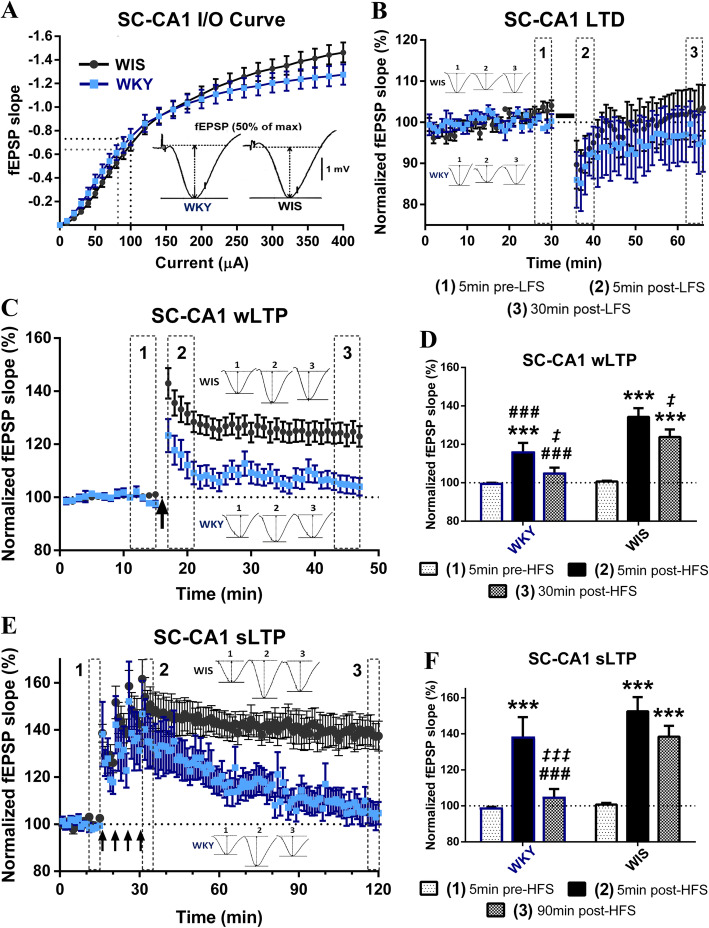
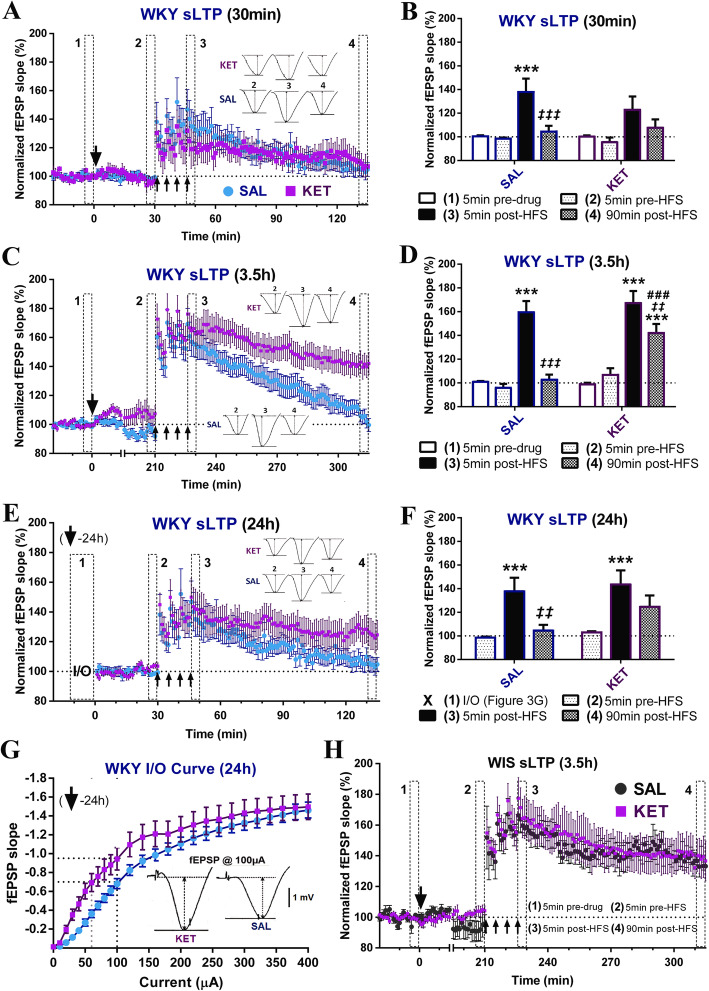
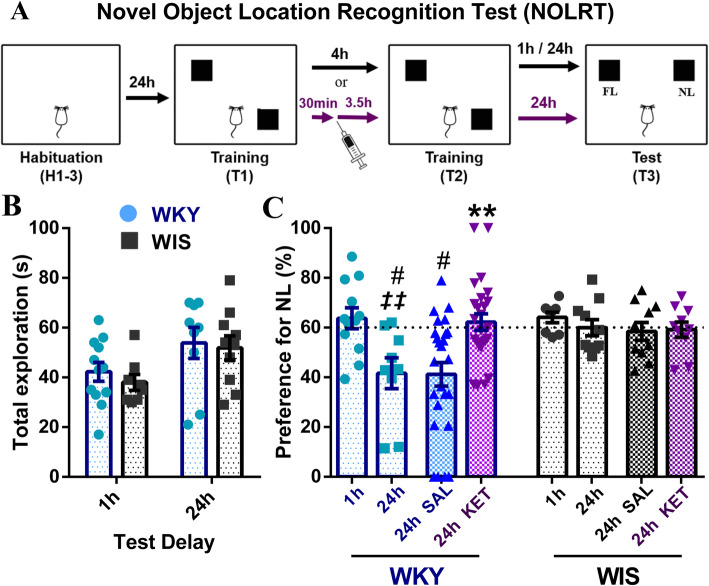
Accumulating evidence implicates dysregulation of hippocampal synaptic plasticity in the pathophysiology of depression. However, the effects of ketamine on synaptic plasticity and their contribution to its mechanism of action as an antidepressant, are still unclear. We investigated ketamine’s effects on in vivo dorsal hippocampal (dHPC) synaptic plasticity and their role in mediating aspects of antidepressant activity in the Wistar-Kyoto (WKY) model of depression. dHPC long-term potentiation (LTP) was significantly impaired in WKY rats compared to Wistar controls. Importantly, a single low dose (5 mg/kg, ip) of ketamine or its metabolite, (2R,6R)-HNK, rescued the LTP deficit in WKY rats at 3.5 h but not 30 min following injection, with residual effects at 24 h, indicating a delayed, sustained facilitatory effect on dHPC synaptic plasticity. Consistent with the observed dHPC LTP deficit, WKY rats exhibited impaired hippocampal-dependent long-term spatial memory as measured by the novel object location recognition test (NOLRT), which was effectively restored by pre-treatment with both ketamine or (2R,6R)-HNK. In contrast, in WKYs, which display abnormal stress coping, ketamine, but not (2R,6R)-HNK, had rapid and sustained effects in the forced swim test (FST), a commonly used preclinical screen for antidepressant-like activity. The differential effects of (2R,6R)-HNK observed here reveal a dissociation between drug effects on FST immobility and dHPC synaptic plasticity. Therefore, in the WKY rat model, restoring dHPC LTP was not correlated with ketamine’s effects in FST, but importantly, may have contributed to the reversal of hippocampal-dependent cognitive deficits, which are critical features of clinical depression. Our findings support the theory that ketamine may reverse the stress-induced loss of connectivity in key neural circuits by engaging synaptic plasticity processes to “reset the system”.
Overview
The claims and statistics of this paper haven’t been checked yet.
Free: it reads the open-access text and checks the first 5 claims that cite a source we can check. Create a free account to check every claim.
Integrity signals
Registry
Cites
Statistics
Figures
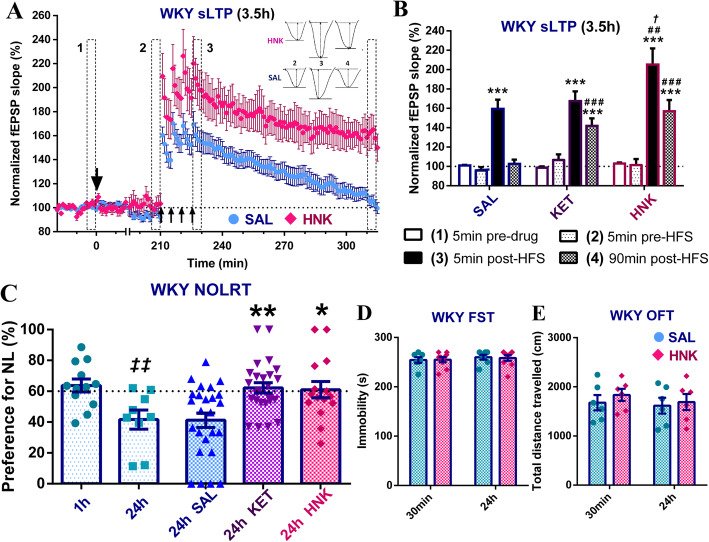
Verification
Claims the paper makes
The claims and statistics of this paper haven’t been checked yet.
Free: it reads the open-access text and checks the first 5 claims that cite a source we can check. Create a free account to check every claim.
Claims other papers make about this one
Each is checked against this paper’s own text: does it say what the citing paper says it does?
The source backs part of the claim, not all of it — or backs it for a different population, condition or comparison.
In the citing paper
“S-ketamine has been reported to reverse elements of depressive-like symptoms in the WK model, for example, by increasing mobility in the FST, rescuing long-term potentiation in the hippocampus as well as long-term spatial memory, and attenuating dopamine-related synaptic deficits (Belujon and Grace, 2014; Aleksandrova et al., 2020).”
From A single subanaesthetic dose of the rapid-acting antidepressant S-ketamine raises presynaptic SV2A density in limbic regions of the Wistar Kyoto rat model of depression (2024) · cites this paper as Aleksandrova et al., 2020
Experimental — accuracy not yet measured
Self-check
Percentages, sums and reported differences re-computed from the paper’s own numbers.
The self-check needs the paper’s full text.
Citations
Cites
Azevedo, R. S. S., de Sousa, J. R., Araujo, M. T. F., Martins Filho, A. J., de Alcantara, B. N., Araujo, F. M. C., Queiroz, M. G. L., Cruz, A. C. R., Vasconcelos, B. H. B., Chiang, J. O., et al. (2018) · Scientific Reports · doi:10.1038/s41598-017-17765-5 · Cited by 3,478
Are the Dorsal and Ventral Hippocampus Functionally Distinct Structures?
Fanselow, M. S., & Dong, H.-W. (2010) · Neuron · doi:10.1016/j.neuron.2009.11.031 · Cited by 3,358
Cognitive impairment in depression: a systematic review and meta-analysis
Rock, P. L., Roiser, J. P., Riedel, W. J., & Blackwell, A. D. (2014) · Psychological Medicine · doi:10.1017/s0033291713002535 · Cited by 2,161
NMDA receptor blockade at rest triggers rapid behavioural antidepressant responses
Autry, A. E., Adachi, M., Nosyreva, E., Na, E. S., Los, M. F., Cheng, P.-F., Kavalali, E. T., & Monteggia, L. M. (2011) · Nature · doi:10.1038/nature10130 · Cited by 1,926
Stress, Depression, and Neuroplasticity: A Convergence of Mechanisms
Pittenger, C., & Duman, R. S. (2008) · Neuropsychopharmacology · doi:10.1038/sj.npp.1301574 · Cited by 1,795
Synaptic plasticity and depression: new insights from stress and rapid-acting antidepressants
Duman, R. S., Aghajanian, G. K., Sanacora, G., & Krystal, J. H. (2016) · Nature Medicine · doi:10.1038/nm.4050 · Cited by 1,750
NMDAR inhibition-independent antidepressant actions of ketamine metabolites
Zanos, P., Moaddel, R., Morris, P. J., Georgiou, P., Fischell, J., Elmer, G. I., Alkondon, M., Yuan, P., Pribut, H. J., Singh, N. S., et al. (2016) · Nature · doi:10.1038/nature17998 · Cited by 1,609
The stressed hippocampus, synaptic plasticity and lost memories
Kim, J. J., & Diamond, D. M. (2002) · Nature Reviews Neuroscience · doi:10.1038/nrn849 · Cited by 1,543
Ketamine and Ketamine Metabolite Pharmacology: Insights into Therapeutic Mechanisms
Zanos, P., Moaddel, R., Morris, P. J., Riggs, L. M., Highland, J. N., Georgiou, P., Pereira, E. F. R., Albuquerque, E. X., Thomas, C. J., Zarate, C. A., et al. (2018) · Pharmacological Reviews · doi:10.1124/pr.117.015198 · Cited by 1,260
Maeng, S., Zarate, C. A., Du, J., Schloesser, R. J., McCammon, J., Chen, G., & Manji, H. K. (2008) · Biological Psychiatry · doi:10.1016/j.biopsych.2007.05.028 · Cited by 1,103 · cited 1×
“sustained antidepressant effects in rodents [21, 61].”
Cited by
Neuroplasticity as a convergent mechanism of ketamine and classical psychedelics
Aleksandrova, L. R., & Phillips, A. G. (2021) · Trends in Pharmacological Sciences · doi:10.1016/j.tips.2021.08.003 · Cited by 276
Self-citationZanos, P., Brown, K. A., Georgiou, P., Yuan, P., Zarate, C. A., Thompson, S. M., & Gould, T. D. (2023) · The Journal of Neuroscience · doi:10.1523/jneurosci.1316-22.2022 · Cited by 115
Hydroxynorketamines: Pharmacology and Potential Therapeutic Applications
Highland, J. N., Zanos, P., Riggs, L. M., Georgiou, P., Clark, S. M., Morris, P. J., Moaddel, R., Thomas, C. J., Zarate, C. A., Pereira, E. F. R., et al. (2021) · Pharmacological Reviews · doi:10.1124/pharmrev.120.000149 · Cited by 92
“In rats, no changes in locomotor activity were observed after an intraperitoneal injection of 5 mg/kg (2R,6R)-HNK (Aleksandrova et al., 2020).”
BackgroundA unified model of ketamine’s dissociative and psychedelic properties
Marguilho, M., Figueiredo, I., & Castro-Rodrigues, P. (2022) · Journal of Psychopharmacology · doi:10.1177/02698811221140011 · Cited by 78
“5 mg/kg) is able to rescue long-term potentiation deficits in a rat model of stress susceptibility, with consequent synaptic strengthening on the day after (Aleksandrova et al., 2020).”
BackgroundInfluentialTargeting metaplasticity mechanisms to promote sustained antidepressant actions
Brown, K. A., & Gould, T. D. (2024) · Molecular Psychiatry · doi:10.1038/s41380-023-02397-1 · Cited by 49
Ketamine’s rapid antidepressant effects are mediated by Ca2+-permeable AMPA receptors
Zaytseva, A., Bouckova, E., Wiles, M. J., Wustrau, M. H., Schmidt, I. G., Mendez-Vazquez, H., Khatri, L., & Kim, S. (2023) · eLife · doi:10.7554/elife.86022 · Cited by 48
“The main mechanism by which ketamine and other antidepressants produce their therapeutic benefits on mood recovery is the promotion of neuronal plasticity in the hippocampus (Aleksandrova et al., 2020; Grieco et al., 2022; Kavalali & Monteggia, 2020; Miller et al., 2016).”
BackgroundInfluentialWang, Y., Zhang, N., Liu, L., Jiang, H., Hu, D., Wang, Z., Chen, N., & Zhang, Y. (2022) · Biochemical and Biophysical Research Communications · doi:10.1016/j.bbrc.2022.01.024 · Cited by 52
Self-citationAgnorelli, C., Spriggs, M. J., Godfrey, K., Sawicka, G., Bohl, B., Douglass, H. M., Fagiolini, A. M., Hashemi, P., Carhart-Harris, R. L., Nutt, D. J., et al. (2025) · Neuroscience & Biobehavioral Reviews · doi:10.1016/j.neubiorev.2025.106132 · Cited by 69
“The neurophysiological effects observed in the depressed model were associated with antidepressant-like response and improvement of hippocampal-dependent long-term spatial memory and contextual fear conditioning (Yang et al., 2018; Aleksandrova et al., 2020).”
InfluentialThe role of neurotrophic factors in novel, rapid psychiatric treatments
Kim, J., He, M. J., Widmann, A. K., & Lee, F. S. (2023) · Neuropsychopharmacology · doi:10.1038/s41386-023-01717-x · Cited by 51
“Controversially, other studies have suggested that one of ketamine ’ s secondary metabolites, (2S,6S;2R,6R)-hydroxynorketamine (HNK), is the form that is mediating the antidepressant effects via a completely NMDAR inhibition-independent mechanism [154 – 156].”
BackgroundTarget deconvolution studies of (2R,6R)-hydroxynorketamine: an elusive search
Bonaventura, J., Gomez, J. L., Carlton, M. L., Lam, S., Sánchez‐Soto, M., Morris, P. J., Moaddel, R., Kang, H. J., Zanos, P., Gould, T. D., et al. (2022) · Molecular Psychiatry · doi:10.1038/s41380-022-01673-w · Cited by 49
Ketamine and Calcium Signaling—A Crosstalk for Neuronal Physiology and Pathology
Lisek, M., Żylińska, L., & Boczek, T. (2020) · International Journal of Molecular Sciences · doi:10.3390/ijms21218410 · Cited by 44
“Prolonged stress conditions can impair LTP and enhance LTD in rat hippocampus [156].”
BackgroundA translational perspective on the anti-anhedonic effect of ketamine and its neural underpinnings
Pulcu, E., Guinea, C., Cowen, P. J., Murphy, S. E., & Harmer, C. J. (2022) · Molecular Psychiatry · doi:10.1038/s41380-021-01183-1 · Cited by 35
The Wistar Kyoto Rat: A Model of Depression Traits
Redei, E. E., Udell, M. E., Woods, L. C. S., & Chen, H. (2022) · Current Neuropharmacology · doi:10.2174/1570159x21666221129120902 · Cited by 41
“Other therapies that reduce anhedonia in stressed WKYs include deep brain stimulation [234, 247, 248] and low doses of ketamine [234, 249-251], which have shown similar clinical efficacy in treating pharmacoresistant MDD patients [252, 253].”
BackgroundKetamine and the Disinhibition Hypothesis: Neurotrophic Factor-Mediated Treatment of Depression
Borsellino, P., Krider, R. I., Chea, D., Grinnell, R., & Vida, T. A. (2023) · Pharmaceuticals · doi:10.3390/ph16050742 · Cited by 34
Zhu, X., Zhang, F., You, Y., Wang, H., Yuan, S., Wu, B., Zhu, R., Liu, D., Yan, F., & Wang, Z. (2022) · Cellular and Molecular Neurobiology · doi:10.1007/s10571-021-01180-6 · Cited by 26
“Several studies have shown that ketamine can increase synaptogenesis, up-regulate the expression of synaptic proteins, such as α-amino-3-hydroxy-5-methyl-4isoxazole-propionic acid (AMPA) receptor and PSD95 in the hippocampus of animals, and induce LTP- like changes (Li et al. 2011, 2019; Aleksandrova et al. 2020).”
BackgroundSex-specific effects of social isolation stress and ketamine on hippocampal plasticity
Logue, J. B., Schoepfer, K. J., Guerrero, A. B., Zhou, Y., & Kabbaj, M. (2021) · Neuroscience Letters · doi:10.1016/j.neulet.2021.136301 · Cited by 26
Ketamine induced synaptic plasticity operates independently of long-term potentiation
Piazza, M. K., Kavalali, E. T., & Monteggia, L. M. (2024) · Neuropsychopharmacology · doi:10.1038/s41386-024-01895-2 · Cited by 25
Ni, R., 四川大学华西医院精神医学研究室和精神卫生中心, 四. 成., Gao, T.-H., Wang, Y., Tian, Y., Wei, J., Zhao, L., Ni, P., Ma, X., Li, T., et al. (2022) · 动物学研究 · doi:10.24272/j.issn.2095-8137.2022.278 · Cited by 21
“Experimental evidence suggests that low-dose ketamine administration has no effect on locomotor activity in mice (Akillioglu et al., 2012; Aleksandrova et al., 2020; Khakpai et al., 2019).”
Self-citationPreclinical models of treatment-resistant depression: challenges and perspectives
Kolasa, M., & Faron‐Górecka, A. (2023) · Pharmacological Reports · doi:10.1007/s43440-023-00542-9 · Cited by 27
“Conversely, in WKY rats that demonstrate maladaptive stress responses, ketamine, but not (2R,6R)-HNK, elicited rapid and persistent effects in the FST, a widely utilized preclinical measure of antidepressant-like activity [76].”
BackgroundLewis, V., Rodrigue, B., Arsenault, E., Zhang, M., Taghavi‐Abkuh, F., Silva, W. C. C., Myers, M., Matta‐Camacho, E., & Aguilar‐Valles, A. (2022) · Journal of Neurochemistry · doi:10.1111/jnc.15652 · Cited by 21
“Wistar– Kyoto rats that received ketamine showed significant improvement in performance 24 h after training, restoring their performance to levels seen in Wistar rats (Aleksandrova et al., 2020).”
The curious interpretation of novel object recognition tests
Swiercz, A. P., Tsuda, M. C., & Cameron, H. A. (2025) · Trends in Neurosciences · doi:10.1016/j.tins.2025.02.003 · Cited by 28
Ketamine as a pharmacological tool for the preclinical study of memory deficit in schizophrenia
Suárez-Santiago, J. E., Roldán, G., & Picazo, O. (2022) · Behavioural Pharmacology · doi:10.1097/fbp.0000000000000689 · Cited by 21
Riggs, L. M., An, X., Pereira, E. F. R., & Gould, T. D. (2021) · Translational Psychiatry · doi:10.1038/s41398-021-01685-0 · Cited by 18
Du, Z., Zang, Z., Luo, J., Liu, T., Yang, L., Cai, Y., Wang, L., Zhang, D., Zhao, J., Gao, J., et al. (2023) · Journal of Hazardous Materials · doi:10.1016/j.jhazmat.2023.131379 · Cited by 20
Philipp-Muller, A. E., Stephenson, C., Moghimi, E., Shirazi, A. H., Milev, R. V., Vázquez, G. H., Reshetukha, T., & Alavi, N. (2023) · The Journal of Clinical Psychiatry · doi:10.4088/jcp.22br14564 · Cited by 25
Pałucha-Poniewiera, A., Bobula, B., & Rafało-Ulińska, A. (2023) · Pharmaceuticals · doi:10.3390/ph16020288 · Cited by 15
“5 h following injection, with residual effects at 24 h [34].”
BackgroundRole of group II metabotropic glutamate receptors in ketamine's antidepressant actions
Onisiforou, A., Georgiou, P., & Zanos, P. (2023) · Pharmacology Biochemistry and Behavior · doi:10.1016/j.pbb.2023.173531 · Cited by 12
Li, Y., Wang, Y., Sun, Q., Li, M.-Y., Xu, J.-Z., Li, Y., & Zhang, H. (2024) · Neurochemistry International · doi:10.1016/j.neuint.2024.105789 · Cited by 17
Self-citationBrown, K. A., Ajibola, M. I., & Gould, T. D. (2025) · Neuropsychopharmacology · doi:10.1038/s41386-025-02085-4 · Cited by 17
“We developed a slice incubation model with fi delity to HNK ’ s rapid effects observed during bath application [21, 26, 27, 36] and its sustained ex vivo effects [43] to delineate mechanisms engaged by its time-sensitive antidepressant pharmacology.”
InfluentialAcevedo, J., Mugarura, N. E., Welter, A. L., Johnson, E. M., & Siegel, J. A. (2022) · Neuroscience · doi:10.1016/j.neuroscience.2022.12.002 · Cited by 16
Riggs, L. M., Pereira, E. F. R., Thompson, S. M., & Gould, T. D. (2023) · Journal of Neurophysiology · doi:10.1152/jn.00326.2023 · Cited by 15
Riggs, L. M., Thompson, S. M., & Gould, T. D. (2022) · Neuropharmacology · doi:10.1016/j.neuropharm.2022.109153 · Cited by 16
Carboni, E., & Carta, A. R. (2022) · Journal of Integrative Neuroscience · doi:10.31083/j.jin2105144 · Cited by 17
Ren, L., Zhang, H., Tao, W., Xue, W., Yin, C., Zou, Z., Guo, X., Shen, Q., Wang, W., Jiang, H., et al. (2023) · Neuropeptides · doi:10.1016/j.npep.2023.102350 · Cited by 14
(2R,6R)-hydroxynorketamine targeting the basolateral amygdala regulates fear memory
Xu, Y., Yu, Z., Chen, S. X., Li, Z., Long, X., Chen, M., Lee, C., Peng, H., Lin, T., Hsieh, M., et al. (2022) · Neuropharmacology · doi:10.1016/j.neuropharm.2022.109402 · Cited by 14
Ready for a “breakthrough” with ketamine? A look at recent pharmacological insights!
Himmelseher, S., & Kochs, E. F. (2021) · Current Opinion in Anaesthesiology · doi:10.1097/aco.0000000000001017 · Cited by 10
Flowers, J. C., Vetter, P. E., Wiles, M. J., Roh, S. H., Black, E. R., Bouckova, E., Wustrau, M. H., Lee, R., Lee, S.-H., & Kim, S. (2025) · The FASEB Journal · doi:10.1096/fj.202501763r · Cited by 11
“An increase in hippocampal activity reverses stress-induced memory impairment, social dysfunction, and mood disorder-associated behaviors [16–18, 47–51, 82].”
InfluentialSynaptic priming: A framework for pharmacotherapy in depression
Brown, K. A., Ajibola, M. I., Medeiros, G. C., & Gould, T. D. (2025) · Neuron · doi:10.1016/j.neuron.2025.09.010 · Cited by 13
Portal, B., Södergren, M., Borrell, T. P. I., Giraud, R., Metzendorf, N. G., Hultqvist, G., Nilsson, P., & Lindskog, M. (2024) · Journal of Alzheimer s Disease · doi:10.3233/jad-231461 · Cited by 10
Li, Q., Zhao, W., Liu, S., Zhao, Y., Pan, W. X., Wang, X., Liu, Z., & Xu, Y. J. (2022) · Journal of Psychiatric Research · doi:10.1016/j.jpsychires.2022.04.010 · Cited by 11
(2R,6R)-Hydroxynorketamine Treatment of Rats Exposed to Repetitive Low-Level Blast Injury
Garcia, G. S. P., Perez, G. M., Gasperi, R. D., Sosa, M. A. G., Otero‐Pagan, A., Abutarboush, R., Kawoos, U., Statz, J. K., Patterson, J., Zhu, C. W., et al. (2023) · Neurotrauma Reports · doi:10.1089/neur.2022.0088 · Cited by 9
Zhang, X., Li, L.-L., Chen, J., Hu, M., Zhang, Y., Zhang, X., & Lü, Y. (2023) · Frontiers in Pharmacology · doi:10.3389/fphar.2023.1239197 · Cited by 10
Lv, S., Yang, N., Lu, Y., Zhang, G., Zhong, X., Cui, Y., Huang, Y., Jing, T., & Sai, Y. (2024) · Frontiers in Pharmacology · doi:10.3389/fphar.2024.1426769 · Cited by 11
Kang, H., Park, P., Han, M., Tidball, P., Georgiou, J., Bortolotto, Z. A., Lodge, D., Kaang, B., & Collingridge, G. L. (2020) · Brain and Neuroscience Advances · doi:10.1177/2398212820957847 · Cited by 8
Bærentzen, S. L., Waszkiewicz, A. L., Thomsen, M., Knudsen, C., Elfving, B., & Landau, A. M. (2024) · Neuroscience Applied · doi:10.1016/j.nsa.2024.104079 · Cited by 7
The therapeutic potential of psilocybin beyond psychedelia through shared mechanisms with ketamine
Park, D., Lee, G., Lee, W.-G., Kim, B. S., Lee, Y., & Kim, J. (2025) · Molecular Psychiatry · doi:10.1038/s41380-025-03100-2 · Cited by 14
“For example, it facilitates long-term potentiation (LTP) in the hippocampal Schaffer collateral – CA1 pathway following high-frequency stimulation [194 – 197] and restores impaired LTP in rodent models of depression [195].”
Le, G. H., Wong, S., Johnson, D. E., Lu, A., Orsini, D. K., Chisamore, N., Luch, S. D. D., Rosenblat, J. D., & McIntyre, R. S. (2025) · Journal of Affective Disorders · doi:10.1016/j.jad.2025.121081 · Cited by 7
Forti, L., Ndoj, E., Mingardi, J., Secchi, E., Bonifacino, T., Schiavon, E., Carini, G., Via, L. L., Russo, I., Milanese, M., et al. (2023) · International Journal of Molecular Sciences · doi:10.3390/ijms24108718 · Cited by 6
“Intriguingly, previous studies reported that ketamine restores hippocampal LTP in animal models of depression [38,39], but, to the best of our knowledge, the effect of ketamine on hippocampal plasticity after acute traumatic stress has never been assessed before.”
BackgroundYang, Q., Yao, Y., Yuan, X., Chen, C., Wang, Y., Liu, H., & Zhang, K. (2024) · Journal of Affective Disorders · doi:10.1016/j.jad.2024.09.162 · Cited by 5
Self-citation5-HT1B receptor activation produces rapid antidepressant-like effects in rodents
Clark, E. A., Wang, L., Hanania, T., Kretschmannova, K., Bianchi, M., Jagger, E., Hu, T., Li, F., Gallero-Salas, Y., Koblan, K. S., et al. (2024) · Pharmacology Biochemistry and Behavior · doi:10.1016/j.pbb.2024.173917 · Cited by 5
Pałucha-Poniewiera, A., Bobula, B., Rafało-Ulińska, A., & Kaczorowska, K. (2024) · Psychopharmacology · doi:10.1007/s00213-024-06724-4 · Cited by 6
“A similar mechanism has been found in the hip - pocampus after ketamine, (S) -ketamine or (2R,6R)-HNK treatment (Aleksandrova et al. 2020 ; Yang et al. 2018 ).”
Soudy, R., Kimura, R., Fu, W., Patel, A., & Jhamandas, J. H. (2022) · PLoS ONE · doi:10.1371/journal.pone.0267164 · Cited by 5
Lysergic Acid Diethylamide Alters the Effects of Brain Stimulation in Rodents
Dwiel, L. L., Henricks, A. M., Bragg, E. M., Nicol, J., Gui, J., & Doucette, W. T. (2023) · Psychedelic Medicine · doi:10.1089/psymed.2022.0014 · Cited by 5
“However, there is a growing pool of evidence that ketamine is able to facilitate long-term potentiation both in vitro 47–49 and in vivo , 50,51 with the discrepancies between studies being attributed to differing doses of ketamine, differing time points, the concurrent use of anesthetics, and the…”
Miranda-Riestra, A., Cercós, M. G., Trueta, C., Oikawa‐Sala, J., Argueta, J., Constantino-Jonapa, L. A., Cruz‐Garduño, R., Benítez‐King, G., & Estrada‐Reyes, R. (2024) · Molecular Pharmacology · doi:10.1124/molpharm.124.000890 · Cited by 5
Riggs, L. M., Aronson, S., Mou, T.-C. M., Pereira, E. F. R., Thompson, S. M., & Gould, T. D. (2025) · Cell Reports · doi:10.1016/j.celrep.2025.115743 · Cited by 4
Park, D., Lee, G., Kim, B. S., Seong, M., & Kim, J. (2025) · Neuropsychopharmacology · doi:10.1038/s41386-025-02288-9 · Cited by 4
“In Wistar-Kyoto rats, which exhibit corticosterone-induced impairment of LTP at CA3 – CA1 synapses, ketamine reinstated LTP within 3.5 h and improved cognitive performance 24 h post-treatment [151].”
InfluentialSharma, A., & Singh, T. G. (2026) · Molecular and Cellular Neuroscience · doi:10.1016/j.mcn.2026.104097 · Cited by 7
Understanding the variability in ketamine’s efficacy in managing treatment-resistant depression
Bryan, J. (2024) · Discover Psychology · doi:10.1007/s44202-024-00277-5 · Cited by 3
“Conversely, HNK is believed to play a significant role in the sustained antidepressant effects of ketamine via enhancing neuroplasticity and restoring maladaptive brain connectivity [2].”
Zhang, W., Zhao, M., Dai, J., Zhuo, L., Ye, H., Wang, J., & Wang, W. (2024) · bioRxiv (Cold Spring Harbor Laboratory) · doi:10.1101/2024.04.24.590964 · Cited by 3
Coutellier, L. D., Musazzi, L., & Pavlovic, Z. M. (2022) · Springer eBooks · doi:10.1007/978-3-030-87480-3_4 · Cited by 2
de Miranda, A. S., Toscano, E. C. D. B., Venna, V. R., Graeff, F. G., & Teixeira, A. L. (2025) · Expert Opinion on Drug Discovery · doi:10.1080/17460441.2025.2460674 · Cited by 4
“Similarly to ketamine, psilocybin can also activate AMPAR, triggering a signaling pathway that increases BDNF levels in the PFC and promotes synaptogenesis [42].”
The impact of depressive symptoms on cognitive impairments in chronic ketamine users
Zhang, C., Zhang, B., Xu, Y., Hao, W., & Tang, W. K. (2023) · Comprehensive Psychiatry · doi:10.1016/j.comppsych.2023.152448 · Cited by 2
Tingting, J. I. N., Ng, H. L. L., Jiang, Y., Ho, I. H. T., Zou, Y., Li, Q., Zhang, L., Chen, H., Wang, J., Zhou, J., et al. (2022) · Research Square · doi:10.21203/rs.3.rs-2261014/v1 · Cited by 2
Contreras, C. M., & Gutiérrez‐García, A. G. (2025) · Behavioural Brain Research · doi:10.1016/j.bbr.2025.115712 · Cited by 1
Trippel, A., Gubser, L. P., Engeli, E., Conradi, H. J., Haugg, A., Zoelch, N., & Herdener, M. (2025) · Trials · doi:10.1186/s13063-025-08982-9 · Cited by 1
“…mine is thought to increase synaptic neuroplasticity by promoting long-term potentiation (LTP) and inhibiting long-term depression (LTD) in neurons [32, 33], key substrates of learning-and memory-related synaptic plasticity typically involving the activation of NMDA and…”
Lemeshova, A., Patel, K. A., Bloom, A. J., Golan, L., Haidari, H., Limbada, A., Zhao, C., & Honeycutt, J. A. (2025) · Pharmacology Biochemistry and Behavior · doi:10.1016/j.pbb.2025.174144 · Cited by 3
Ge, Y., Tian, T., Li, B., Axerio-Cilies, P., Chen, W., Qin, X. Y., Zhao, M., Sun, Q., Li, J., Floresco, S., et al. (2026) · Science Advances · doi:10.1126/sciadv.ady3891 · Cited by 3
Self-citationMartínez‐Ricós, J., Merino, E., Cervera‐Ferri, A., Lanuza, E., Cabanu, S., Pilar-Cuéllar, F., Adell, A., Teruel‐Martí, V., & Martínez‐Ricós, J. (2026) · European Journal of Pharmacology · doi:10.1016/j.ejphar.2026.178994 · Cited by 1
Gould, T. D., Mathew, S. J., Fava, M., & Shekhar, A. (2026) · Journal of Psychopharmacology · doi:10.1177/02698811261456206 · Cited by 1
“…rodents has been reported to enhance the capacity for synaptic plasticity (i.e., exert metaplasticity) at time points long after drug elimination (Aleksandrova et al., 2020; Burgdorf et al., 2013; Graef et al., 2015; Le et al., 2026; Widman et al., 2018), and consistent with canonical LTP…”
Ketamine prolongs survival in symptomatic SOD1-G93A mice
Stanford, J. A., Macaluso, M., Barohn, R. J., & Peck, L. (2021) · RRNMF Neuromuscular Journal · doi:10.17161/rrnmf.v2i2.15108
The Role of Rapid-Acting Antidepressants in Suicidal Crisis Management
Lengvenytė, A., Sarchiapone, M., Iosue, M., & Courtet, P. (2024) · Cambridge University Press eBooks · doi:10.1017/9781009067287.016
Martínez‐Ricós, J., Merino, E., Cervera‐Ferri, A., Lanuza, E., Cabanu, S., Pilar-Cuéllar, F., Adell, A., Teruel‐Martí, V., & Martínez‐Ricós, J. (2024) · Research Square · doi:10.21203/rs.3.rs-4449427/v1
Belov, D., Fesenko, Z. S., Lakstygal, A. M., Efimov, A., & Tikhonravov, D. L. (2024) · Cerebral Cortex · doi:10.1093/cercor/bhae249
Intermittent Ketamine and Neuromodulation Treatment Evoke Synergistic Antidepressant-Relevant Action
Brown, K. A., & Gould, T. D. (2025) · Biological Psychiatry · doi:10.1016/j.biopsych.2025.10.009 · Cited by 1
“Similarly, preclinical reports have demonstrated that a single subanesthetic ketamine dose increases electrically induced LTP magnitude at SC-CA1 3 to 24 hours postadministration (20,55–59).”
Es-Safi, S., Bourcier‐Lucas, C., Abrial, E., Cathala, A., Lesté-Lasserre, T., Deurwaerdère, P. D., Revest, J., Mazella, J., Haddjeri, N., & Lucas, G. (2025) · bioRxiv (Cold Spring Harbor Laboratory) · doi:10.1101/2025.10.24.684353
“More importantly, and in striking similarity with our present results, this effect was observed 3.5 h after the drug injection, but not when it had been administered only 30 min before the induction of LTP (66).”
InfluentialBruzos-Cidón, C., Llamosas, N., Bengoetxea, H., Lafuente, J. V., Ugedo, L., & Torrecilla, M. (2026) · bioRxiv (Cold Spring Harbor Laboratory) · doi:10.64898/2026.01.05.697635
“WKY rats show deficits in long-term potentiation at Schaffer collateral–CA1 synapses (Aleksandrova et al., 2020) and decreased synaptic protein expression, correlating with depressive-like behaviors (Li et al., 2022).”
Brown, K. A., Morris, P. J., Thomas, C. J., & Gould, T. D. (2026) · Journal of Neuroscience · doi:10.1523/jneurosci.0958-25.2026 · Cited by 1
Duan, Y., Zhou, S., Zeng, D., Shi, S., Chen, A., Du, F., Wu, Y., Wang, J., Yu, S., & Zhang, J. (2026) · iScience · doi:10.1016/j.isci.2026.115069
“63 The fluctuation in synaptic numbers and the expression of synaptic proteins build up the structural foundation of synaptic plasticity.”
Decoding the molecular network communication mechanism of ketamine’s antidepressant effects
Li, Y., Cheng, Q., Lin, G., Duan, K., & Wang, S. (2026) · Psychopharmacology · doi:10.1007/s00213-026-07028-5
Ketamine and Evolving Neuroplasticity
Prabakar, A. (2026) · Clinical Drug Investigation · doi:10.1007/s40261-026-01565-9
Xie, J., Dong, J., Liao, H., Liu, S., He, Z., & Zeng, C. (2026) · Behavioural Pharmacology · doi:10.1097/fbp.0000000000000890
Models of depression for preclinical drug discovery and development: an update of the literature
Pavlidi, P., Kalampokis, D., Ioannidi, I., Skourti, K., Sotiropoulos, I., Antoniou, K., Dalla, C., & Kokras, N. (2026) · Expert Opinion on Drug Discovery · doi:10.1080/17460441.2026.2716135
“Predictive validity is supported by the responsiveness of WKY rats to both conventional and fast acting antidepressants [191], which reverse increased behavioral abnormalities and restore synaptic and neuroplasticity-related abnormalities.”
Veleanu, M., Schuberth, L. E., Kilias, A., Weber, J., Warneke, J., Würz, L. M., Schwär, T., Heck, R., Müller, J., Sarrazin, D. H., et al. (2026) · Nature Communications · doi:10.1038/s41467-026-77248-y · Cited by 1
“This restoration of plasticity reproduces the effects of ketamine or long-term selective serotonin reuptakeinhibitortreatment 28,61 ,whichisconsideredacrucialcriterion for antidepressant response 62 .”
Jia, X., Gong, Q., Xiong, B., Hu, Y., Ali, T., Zheng, C., Wei, S., Huang, J., Wang, Z., Feng, J., et al. (2026) · Brain Behavior and Immunity · doi:10.1016/j.bbi.2026.106988
Decoding Depression: Advances in Selectively Bred Rodent Models
Iglesias, L. P., Wegener, G., & Godoy, L. D. (2026) · Neuromethods · doi:10.1007/978-1-0716-5599-3_19
Vestring, S., Veleanu, M., Weber, J., Schwär, T., Schuberth, L., Sarrazin, D., Anselin, M., Rutke, L., Suarez-Marchi, G. J., Zimmermann, S., et al. (2025) · doi:10.21203/rs.3.rs-6348176/v1
Metadata
- Authors
- Aleksandrova, L. R., Wang, Y. T., & Phillips, A. G.
- Affiliations
- University of British Columbia (CA)
- Corresponding author
- Wang, Yu Tian
- Venue
- Molecular Brain
- Published
- 2020-06-16
- Volume
- 13
- Issue
- 1
- Pages
- 92-92
- ISSN
- 1756-6606 (ISSN-L)
- PMC
- PMC7296711
- OpenAlex
- W3034916355
- Cited by
- 85
- References
- 112
- Citations by year
- 2026: 14 · 2025: 15 · 2024: 15 · 2023: 16 · 2022: 16 · 2021: 7 · 2020: 2
- FWCI
- 6.14
- Type
- journal article
- Language
- en
- Open access
- gold
- doi.org
- Licence
- cc-by
- creativecommons.org/licenses/by/4.0 (tdm)
- creativecommons.org/licenses/by/4.0 (vor)
- Locations
- Molecular Brain (publishedVersion, cc-by)
- PubMed Central (publishedVersion, cc-by)
- PubMed (publishedVersion)
- cIRcle (University of British Columbia) (submittedVersion, cc-by)
- DOAJ (DOAJ: Directory of Open Access Journals) (submittedVersion, cc-by-sa)
- Funders
- CIHR (PJT-156302, FND-154286)
- University of British Columbia (4 year fellowship)
- Topics
- Health Sciences › Medicine › Pharmacology (medical) › Treatment of Major Depression
- Life Sciences › Neuroscience › Cellular and Molecular Neuroscience › Neuroscience and Neuropharmacology Research
- Life Sciences › Neuroscience › Cognitive Neuroscience › Memory and Neural Mechanisms
- Keywords
- ketamine, hippocampal long-term potentiation, synaptic plasticity, depression, Wistar-Kyoto rats, spatial memory, forced swim test, antidepressant mechanism, ketamine metabolites, stress coping
- MeSH terms
- Open Field Test, Animals, Depression, Disease Models, Animal, Hippocampus, Immobilization, Ketamine, Male, Motor Activity, Synaptic Transmission, Rats, Inbred WKY, Stress, Psychological, Swimming, Long-Term Potentiation, Spatial Memory
About these checks
Registry, retraction, Cites and statistics results are computed, not judged, with one exception: a printed reference that no index lists is read once by a model before it counts as a citation error. Claims are extracted by a model and kept only when their quote appears verbatim in the text; each cited source is then checked, with a model’s help, for whether it says what the claim relies on. Those verdicts can be wrong — read the claim’s quote and the cited source before relying on one.
Statistics and arithmetic are recomputed, not judged.
Confidence bands are shown only for fields calibrated on our annotated test set. None is calibrated yet, so no band is shown.
What counts as a claim ›How we measure confidence ›How we check this ›
Are you an author, or do you see a problem with this page? Request a review
Data sources
Bibliographic data: Semantic Scholar, OpenAlex, Crossref.
Contains information from the Semantic Scholar Academic Graph Datasets, made available under the ODC Attribution License (ODC-BY 1.0).
Semantic Scholar’s data is described in: Kinney, R., et al. (2023). The Semantic Scholar Open Data Platform. arXiv:2301.10140.
