

Ketamine and its metabolite, (2R,6R)-HNK, restore hippocampal LTP and long-term spatial memory in the Wistar-Kyoto rat model of depression
Open accessThe DOI matches its Crossref record; 112 of the 112 references it cites were found in a registry or an index.
Abstract
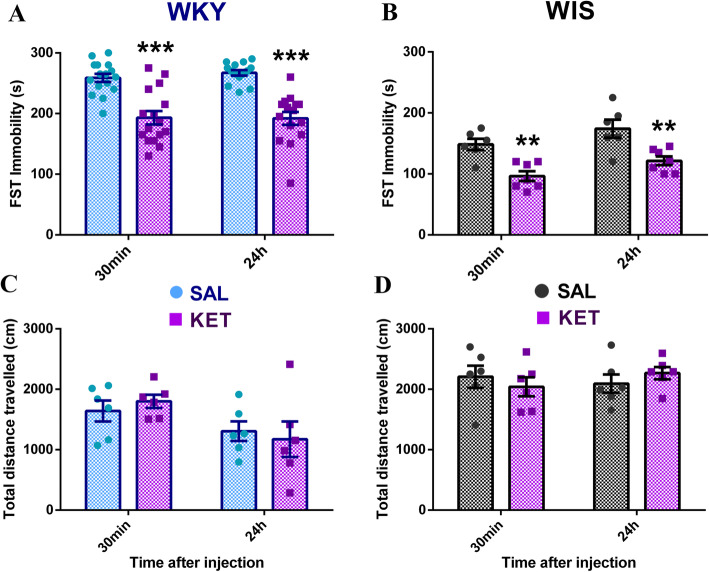
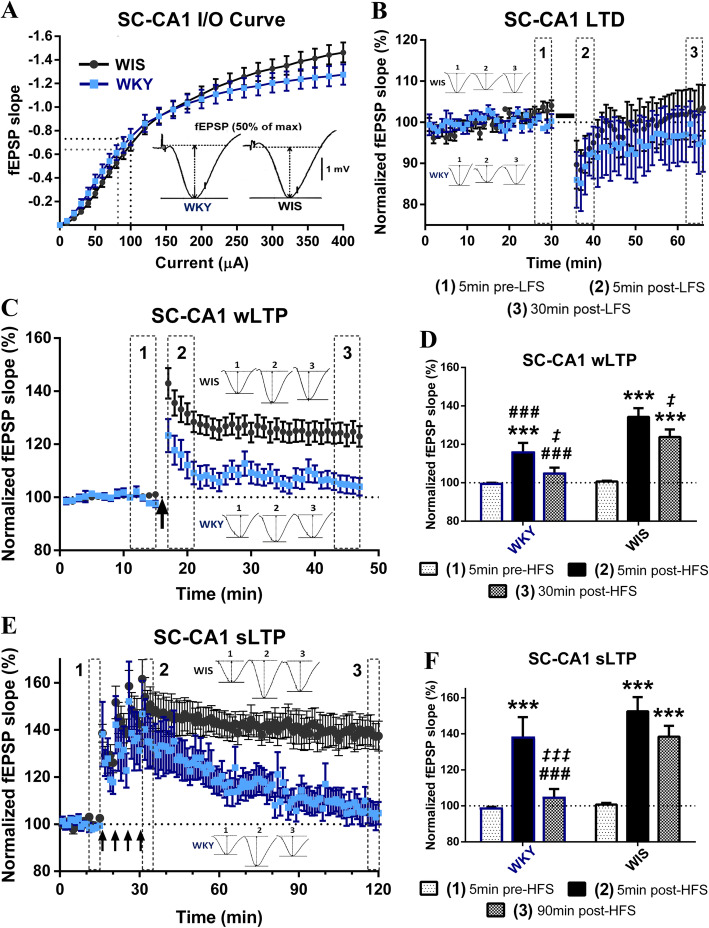
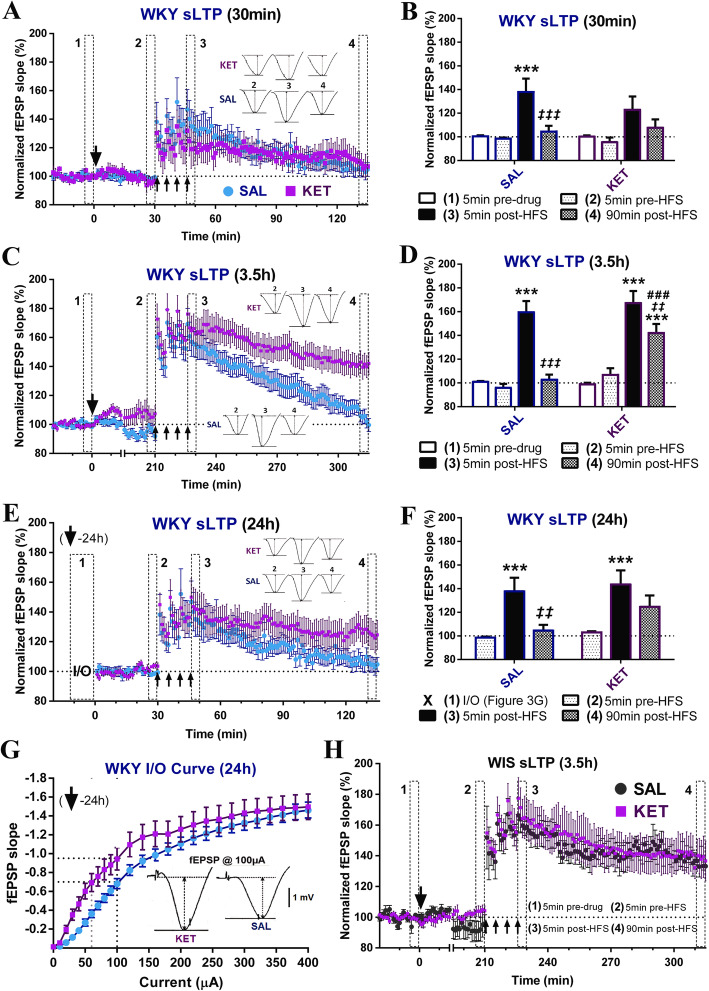
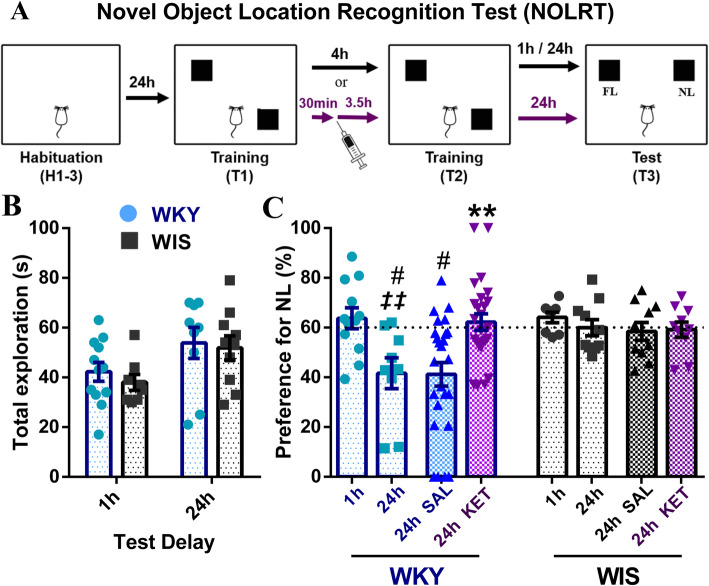
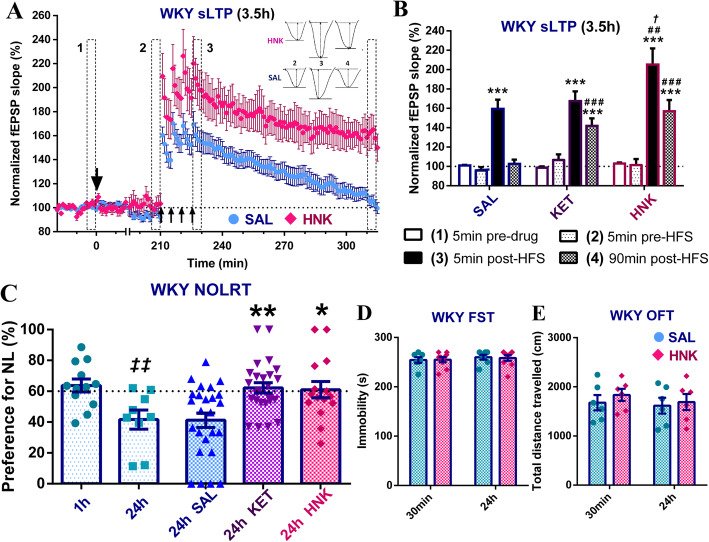
Accumulating evidence implicates dysregulation of hippocampal synaptic plasticity in the pathophysiology of depression. However, the effects of ketamine on synaptic plasticity and their contribution to its mechanism of action as an antidepressant, are still unclear. We investigated ketamine’s effects on in vivo dorsal hippocampal (dHPC) synaptic plasticity and their role in mediating aspects of antidepressant activity in the Wistar-Kyoto (WKY) model of depression. dHPC long-term potentiation (LTP) was significantly impaired in WKY rats compared to Wistar controls. Importantly, a single low dose (5 mg/kg, ip) of ketamine or its metabolite, (2R,6R)-HNK, rescued the LTP deficit in WKY rats at 3.5 h but not 30 min following injection, with residual effects at 24 h, indicating a delayed, sustained facilitatory effect on dHPC synaptic plasticity. Consistent with the observed dHPC LTP deficit, WKY rats exhibited impaired hippocampal-dependent long-term spatial memory as measured by the novel object location recognition test (NOLRT), which was effectively restored by pre-treatment with both ketamine or (2R,6R)-HNK. In contrast, in WKYs, which display abnormal stress coping, ketamine, but not (2R,6R)-HNK, had rapid and sustained effects in the forced swim test (FST), a commonly used preclinical screen for antidepressant-like activity. The differential effects of (2R,6R)-HNK observed here reveal a dissociation between drug effects on FST immobility and dHPC synaptic plasticity. Therefore, in the WKY rat model, restoring dHPC LTP was not correlated with ketamine’s effects in FST, but importantly, may have contributed to the reversal of hippocampal-dependent cognitive deficits, which are critical features of clinical depression. Our findings support the theory that ketamine may reverse the stress-induced loss of connectivity in key neural circuits by engaging synaptic plasticity processes to “reset the system”.
Overview
The claims and statistics of this paper haven’t been checked yet.
Free: it reads the open-access text and checks the first 5 claims that cite a source we can check. Create a free account to check every claim.
Integrity signals
Registry
Cites
Statistics
Figures
Verification
Claims the paper makes
The claims and statistics of this paper haven’t been checked yet.
Free: it reads the open-access text and checks the first 5 claims that cite a source we can check. Create a free account to check every claim.
Claims other papers make about this one
Each is checked against this paper’s own text: does it say what the citing paper says it does?
The source backs part of the claim, not all of it — or backs it for a different population, condition or comparison.
In the citing paper
“S-ketamine has been reported to reverse elements of depressive-like symptoms in the WK model, for example, by increasing mobility in the FST, rescuing long-term potentiation in the hippocampus as well as long-term spatial memory, and attenuating dopamine-related synaptic deficits (Belujon and Grace, 2014; Aleksandrova et al., 2020).”
From A single subanaesthetic dose of the rapid-acting antidepressant S-ketamine raises presynaptic SV2A density in limbic regions of the Wistar Kyoto rat model of depression (2024) · cites this paper as Aleksandrova et al., 2020
Experimental — accuracy not yet measured
Self-check
Percentages, sums and reported differences re-computed from the paper’s own numbers.
The self-check needs the paper’s full text.
Citations
Cites
Azevedo, R. S. S., de Sousa, J. R., Araujo, M. T. F., Martins Filho, A. J., de Alcantara, B. N., Araujo, F. M. C., Queiroz, M. G. L., Cruz, A. C. R., Vasconcelos, B. H. B., Chiang, J. O., et al. (2018) · Scientific Reports · doi:10.1038/s41598-017-17765-5 · Cited by 3,478
Are the Dorsal and Ventral Hippocampus Functionally Distinct Structures?
Fanselow, M. S., & Dong, H.-W. (2010) · Neuron · doi:10.1016/j.neuron.2009.11.031 · Cited by 3,358
Cognitive impairment in depression: a systematic review and meta-analysis
Rock, P. L., Roiser, J. P., Riedel, W. J., & Blackwell, A. D. (2014) · Psychological Medicine · doi:10.1017/s0033291713002535 · Cited by 2,161
NMDA receptor blockade at rest triggers rapid behavioural antidepressant responses
Autry, A. E., Adachi, M., Nosyreva, E., Na, E. S., Los, M. F., Cheng, P.-F., Kavalali, E. T., & Monteggia, L. M. (2011) · Nature · doi:10.1038/nature10130 · Cited by 1,926
Stress, Depression, and Neuroplasticity: A Convergence of Mechanisms
Pittenger, C., & Duman, R. S. (2008) · Neuropsychopharmacology · doi:10.1038/sj.npp.1301574 · Cited by 1,795
Synaptic plasticity and depression: new insights from stress and rapid-acting antidepressants
Duman, R. S., Aghajanian, G. K., Sanacora, G., & Krystal, J. H. (2016) · Nature Medicine · doi:10.1038/nm.4050 · Cited by 1,750
NMDAR inhibition-independent antidepressant actions of ketamine metabolites
Zanos, P., Moaddel, R., Morris, P. J., Georgiou, P., Fischell, J., Elmer, G. I., Alkondon, M., Yuan, P., Pribut, H. J., Singh, N. S., et al. (2016) · Nature · doi:10.1038/nature17998 · Cited by 1,609
The stressed hippocampus, synaptic plasticity and lost memories
Kim, J. J., & Diamond, D. M. (2002) · Nature Reviews Neuroscience · doi:10.1038/nrn849 · Cited by 1,543
Ketamine and Ketamine Metabolite Pharmacology: Insights into Therapeutic Mechanisms
Zanos, P., Moaddel, R., Morris, P. J., Riggs, L. M., Highland, J. N., Georgiou, P., Pereira, E. F. R., Albuquerque, E. X., Thomas, C. J., Zarate, C. A., et al. (2018) · Pharmacological Reviews · doi:10.1124/pr.117.015198 · Cited by 1,260
Maeng, S., Zarate, C. A., Du, J., Schloesser, R. J., McCammon, J., Chen, G., & Manji, H. K. (2008) · Biological Psychiatry · doi:10.1016/j.biopsych.2007.05.028 · Cited by 1,103 · cited 1×
“sustained antidepressant effects in rodents [21, 61].”
Li, N., Liu, R.-J., Dwyer, J. M., Banasr, M., Lee, B., Son, H., Li, X.-Y., Aghajanian, G., & Duman, R. S. (2011) · Biological Psychiatry · doi:10.1016/j.biopsych.2010.12.015 · Cited by 1,082
Long-term depression in the CNS
Collingridge, G. L., Peineau, S., Howland, J. G., & Wang, Y. T. (2010) · Nature Reviews Neuroscience · doi:10.1038/nrn2867 · Cited by 926
Self-citationThe role of the hippocampus in the pathophysiology of major depression
Campbell, S., & MacQueen, G. (2004) · Journal of Psychiatry and Neuroscience · doi:10.1139/jpn.0441 · Cited by 880 · cited 1×
“Since LTP, which facilitates spine formation/enlargement, is significantly impaired, whereas LTD, associated with spine shrinkage/retraction, appeared to be unaffected in the WKY HPC, there may be a higher propensity toward synaptic destabilization, loss of connectivity and eventually, neuronal atrophy in this key neu…”
BackgroundConrad, C. D., Galea, L. A. M., Kuroda, Y., & McEwen, B. S. (1996) · Behavioral Neuroscience · doi:10.1037/0735-7044.110.6.1321 · Cited by 784
Stress weakens prefrontal networks: molecular insults to higher cognition
Arnsten, A. F. T. (2015) · Nature Neuroscience · doi:10.1038/nn.4087 · Cited by 752
Cognitive function following a major depressive episode: a systematic review and meta-analysis
Semkovska, M., Quinlivan, L., O'Grady, T., Johnson, R., Collins, A., O'Connor, J., Knittle, H., Ahern, E., & Gload, T. (2019) · The Lancet Psychiatry · doi:10.1016/s2215-0366(19)30291-3 · Cited by 631
R-ketamine: a rapid-onset and sustained antidepressant without psychotomimetic side effects
Yang, C., Shirayama, Y., Zhang, J.-C., Ren, Q., Yao, W., Ma, M., Dong, C., & Hashimoto, K. (2015) · Translational Psychiatry · doi:10.1038/tp.2015.136 · Cited by 605
Ketamine and other NMDA antagonists: early clinical trials and possible mechanisms in depression.
Newport, D. J., Carpenter, L. L., McDonald, W. M., Potash, J. B., Tohen, M., Nemeroff, C. B., & The APA Council of Research Task Force on Novel Biomarkers and Treatments (2015) · American Journal of Psychiatry · doi:10.1176/appi.ajp.2015.15040465 · Cited by 598
Water associated zero maze: a novel rat test for long term traumatic re-experiencing
Ritov, G., & Richter-Levin, G. (2014) · Frontiers in Behavioral Neuroscience · doi:10.3389/fnbeh.2014.00001 · Cited by 579
Manji, H. K., Quiroz, J. A., Sporn, J., Payne, J. L., Denicoff, K., A. Gray, N., Zarate, C. A., & Charney, D. S. (2003) · Biological Psychiatry · doi:10.1016/s0006-3223(03)00117-3 · Cited by 505
Top-down modulation of the auditory steady-state response in a task-switch paradigm
Müller, N. (2009) · Frontiers in Human Neuroscience · doi:10.3389/neuro.09.001.2009 · Cited by 493
Cognitive functioning in major depression – a summary
Hammar, Å. (2009) · Frontiers in Human Neuroscience · doi:10.3389/neuro.09.026.2009 · Cited by 491
Lener, M. S., Niciu, M. J., Ballard, E. D., Park, M., Park, L. T., Nugent, A. C., & Zarate, C. A. (2017) · Biological Psychiatry · doi:10.1016/j.biopsych.2016.05.005 · Cited by 468
The validity of animal models of predisposition to depression
Willner, P., & Mitchell, P. J. (2002) · Behavioural Pharmacology · doi:10.1097/00008877-200205000-00001 · Cited by 428
The aerobic diagenesis of Mesoproterozoic organic matter
Wang, X., Zhao, W., Zhang, S., Wang, H., Su, J., Canfield, D. E., & Hammarlund, E. U. (2018) · Scientific Reports · doi:10.1038/s41598-018-31378-6 · Cited by 428
Abdallah, C. G., Sanacora, G., Duman, R. S., & Krystal, J. H. (2015) · Annual Review of Medicine · doi:10.1146/annurev-med-053013-062946 · Cited by 422
Zhou, W., Wang, N., Yang, C., Li, X.-M., Zhou, Z.-Q., & Yang, J.-J. (2014) · European Psychiatry · doi:10.1016/j.eurpsy.2013.10.005 · Cited by 390
Miller, O. H., Yang, L., Wang, C.-C., Hargroder, E. A., Zhang, Y., Delpire, E., & Hall, B. J. (2014) · eLife · doi:10.7554/elife.03581 · Cited by 358
Hot and cold cognition in depression
Roiser, J. P., & Sahakian, B. J. (2013) · CNS Spectrums · doi:10.1017/s1092852913000072 · Cited by 354
Koike, H., Iijima, M., & Chaki, S. (2011) · Behavioural Brain Research · doi:10.1016/j.bbr.2011.05.035 · Cited by 346
Song, L., Che, W., Min-wei, W., Murakami, Y., & Matsumoto, K. (2006) · Pharmacology Biochemistry and Behavior · doi:10.1016/j.pbb.2006.01.004 · Cited by 332
Synaptic plasticity in depression: Molecular, cellular and functional correlates
Marsden, W. N. (2013) · Progress in Neuro-Psychopharmacology and Biological Psychiatry · doi:10.1016/j.pnpbp.2012.12.012 · Cited by 317
Effects of chronic stress on hippocampal long‐term potentiation
Pavlides, C., Nivón, L. G., & McEwen, B. S. (2002) · Hippocampus · doi:10.1002/hipo.1116 · Cited by 316
Burgdorf, J., Zhang, X.-L., Nicholson, K. L., Balster, R. L., David Leander, J., Stanton, P. K., Gross, A. L., Kroes, R. A., & Moskal, J. R. (2013) · Neuropsychopharmacology · doi:10.1038/npp.2012.246 · Cited by 284
PKMζ maintains memories by regulating GluR2-dependent AMPA receptor trafficking
Migues, P. V., Hardt, O., Wu, D. C., Gamache, K., Sacktor, T. C., Wang, Y. T., & Nader, K. (2010) · Nature Neuroscience · doi:10.1038/nn.2531 · Cited by 283
Self-citationEmerging treatment mechanisms for depression: focus on glutamate and synaptic plasticity
Gerhard, D. M., Wohleb, E. S., & Duman, R. S. (2016) · Drug Discovery Today · doi:10.1016/j.drudis.2016.01.016 · Cited by 261
Alfarez, D. N., Joëls, M., & Krugers, H. J. (2003) · European Journal of Neuroscience · doi:10.1046/j.1460-9568.2003.02622.x · Cited by 258
Antidepressant Potential of (R)-Ketamine in Rodent Models: Comparison with (S)-Ketamine
Fukumoto, K., Toki, H., Iijima, M., Hashihayata, T., Yamaguchi, J.-I., Hashimoto, K., & Chaki, S. (2017) · The Journal of Pharmacology and Experimental Therapeutics · doi:10.1124/jpet.116.239228 · Cited by 252
Duman, R. S. (2014) · Dialogues in Clinical Neuroscience · doi:10.31887/dcns.2014.16.1/rduman · Cited by 249
Aleksandrova, L. R., Phillips, A. G., & Wang, Y. T. (2017) · Journal of Psychiatry and Neuroscience · doi:10.1503/jpn.160175 · Cited by 228 · cited 1×
“Ketamine recruits intracellular signaling cascades, particularly those involving the brain-derived neurotrophic factor (BDNF) and the mammalian target of rapamycin (mTOR), and is thought to initiate an LTP-like process involving acute activation of the glutamate α-amino-3hydroxy-5-methyl-4-isoxazolepropionic acid rece…”
BackgroundSelf-citationBelujon, P., & Grace, A. A. (2014) · Biological Psychiatry · doi:10.1016/j.biopsych.2014.04.014 · Cited by 225
Hippocampal long-term depression mediates acute stress-induced spatial memory retrieval impairment
Wong, T. P., Howland, J. G., Robillard, J. M., Ge, Y., Yu, W., Titterness, A. K., Brebner, K., Liu, L., Weinberg, J., Christie, B. R., et al. (2007) · Proceedings of the National Academy of Sciences · doi:10.1073/pnas.0702308104 · Cited by 221
Self-citationPerrone, R., & Silva, A. C. (2018) · Frontiers in Behavioral Neuroscience · doi:10.3389/fnbeh.2018.00001 · Cited by 211
Miller, O. H., Moran, J. T., & Hall, B. J. (2016) · Neuropharmacology · doi:10.1016/j.neuropharm.2015.07.028 · Cited by 200
Tizabi, Y., Bhatti, B. H., Manaye, K. F., Das, J. R., & Akinfiresoye, L. (2012) · Neuroscience · doi:10.1016/j.neuroscience.2012.03.052 · Cited by 173
Yang, C., Hu, Y.-M., Zhou, Z.-Q., Zhang, G.-F., & Yang, J.-J. (2013) · Upsala Journal of Medical Sciences · doi:10.3109/03009734.2012.724118 · Cited by 173
Convergent Mechanisms Underlying Rapid Antidepressant Action
Zanos, P., Thompson, S. M., Duman, R. S., Zarate, C. A., & Gould, T. D. (2018) · CNS Drugs · doi:10.1007/s40263-018-0492-x · Cited by 171
Treatment-resistant depression: are animal models of depression fit for purpose?
Willner, P., & Belzung, C. (2015) · Psychopharmacology · doi:10.1007/s00213-015-4034-7 · Cited by 164
ZARATE, C. A., DU, J., QUIROZ, J., GRAY, N. A., DENICOFF, K. D., SINGH, J., CHARNEY, D. S., & MANJI, H. K. (2003) · Annals of the New York Academy of Sciences · doi:10.1196/annals.1300.017 · Cited by 164
Yang, C., Qu, Y., Abe, M., Nozawa, D., Chaki, S., & Hashimoto, K. (2017) · Biological Psychiatry · doi:10.1016/j.biopsych.2016.12.020 · Cited by 162
Remodeling of axo-spinous synapses in the pathophysiology and treatment of depression
Licznerski, P., & Duman, R. S. (2013) · Neuroscience · doi:10.1016/j.neuroscience.2012.09.057 · Cited by 157
New targets for rapid antidepressant action
Machado-Vieira, R., Henter, I. D., & Zarate Jr., C. A. (2017) · Progress in Neurobiology · doi:10.1016/j.pneurobio.2015.12.001 · Cited by 154
Migues, P. V., Liu, L., Archbold, G. E. B., Einarsson, E. Ö., Wong, J., Bonasia, K., Ko, S. H., Wang, Y. T., & Hardt, O. (2016) · The Journal of Neuroscience · doi:10.1523/jneurosci.3333-15.2016 · Cited by 153
Self-citationAkinfiresoye, L., & Tizabi, Y. (2013) · Psychopharmacology · doi:10.1007/s00213-013-3153-2 · Cited by 149
Neuronal correlates of depression
Chaudhury, D., Liu, H., & Han, M.-H. (2015) · Cellular and Molecular Life Sciences · doi:10.1007/s00018-015-2044-6 · Cited by 144
Lara, D. R., Bisol, L. W., & Munari, L. R. (2013) · International Journal of Neuropsychopharmacology · doi:10.1017/s1461145713000485 · Cited by 138
Learning and memory impairments in a neuroendocrine mouse model of anxiety/depression
Darcet, F., Mendez-David, I., Tritschler, L., Gardier, A. M., Guilloux, J.-P., & David, D. J. (2014) · Frontiers in Behavioral Neuroscience · doi:10.3389/fnbeh.2014.00136 · Cited by 129
Riga, D., Kramvis, I., Koskinen, M. K., van Bokhoven, P., van der Harst, J. E., Heistek, T. S., Jaap Timmerman, A., van Nierop, P., van der Schors, R. C., Pieneman, A. W., et al. (2017) · Science Translational Medicine · doi:10.1126/scitranslmed.aai8753 · Cited by 128
Yang, J., Hou, C., Ma, N., Liu, J., Zhang, Y., Zhou, J., Xu, L., & Li, L. (2007) · Neurobiology of Learning and Memory · doi:10.1016/j.nlm.2006.09.001 · Cited by 127
Ketamine for treatment-resistant depression: recent developments and clinical applications
Schwartz, J., Murrough, J. W., & Iosifescu, D. V. (2016) · Evidence Based Mental Health · doi:10.1136/eb-2016-102355 · Cited by 117
Aleksandrova, L. R., Wang, Y. T., & Phillips, A. G. (2019) · Neuroscience & Biobehavioral Reviews · doi:10.1016/j.neubiorev.2019.07.007 · Cited by 114
Self-citationShirayama, Y., & Hashimoto, K. (2018) · International Journal of Neuropsychopharmacology · doi:10.1093/ijnp/pyx108 · Cited by 111
Prohedonic effect of cannabidiol in a rat model of depression
Shoval, G., Shbiro, L., Hershkovitz, L., Hazut, N., Zalsman, G., Mechoulam, R., & Weller, A. (2016) · Neuropsychobiology · doi:10.1159/000443890 · Cited by 110
Elimination of long-term potentiation in the hippocampus by phencyclidine and ketamine
Stringer, J. L., & Guyenet, P. G. (1983) · Brain Research · doi:10.1016/0006-8993(83)91244-1 · Cited by 102
Cornwell, B. R., Salvadore, G., Colon-Rosario, V., Latov, D. R., Holroyd, T., Carver, F. W., Coppola, R., Manji, H. K., Zarate, C. A., & Grillon, C. (2010) · American Journal of Psychiatry · doi:10.1176/appi.ajp.2009.09050614 · Cited by 97
Burgdorf, J., Zhang, X.-L., Weiss, C., Matthews, E., Disterhoft, J. F., Stanton, P. K., & Moskal, J. R. (2011) · Neurobiology of Aging · doi:10.1016/j.neurobiolaging.2009.04.012 · Cited by 94
Effects of sub-anesthetic doses of ketamine on rats' spatial and non-spatial recognition memory
Pitsikas, N., Boultadakis, A., & Sakellaridis, N. (2008) · Neuroscience · doi:10.1016/j.neuroscience.2008.04.001 · Cited by 89
Willner, P., Gruca, P., Lason, M., Tota-Glowczyk, K., Litwa, E., Niemczyk, M., & Papp, M. (2019) · Behavioural Pharmacology · doi:10.1097/fbp.0000000000000431 · Cited by 87
Chen, M.-H., Li, C.-T., Lin, W.-C., Hong, C.-J., Tu, P.-C., Bai, Y.-M., Cheng, C.-M., & Su, T.-P. (2018) · Journal of Affective Disorders · doi:10.1016/j.jad.2018.07.033 · Cited by 86
Jiménez-Sánchez, L., Campa, L., Auberson, Y. P., & Adell, A. (2014) · Neuropsychopharmacology · doi:10.1038/npp.2014.123 · Cited by 85
Hardt, O., Nader, K., & Wang, Y.-T. (2014) · Philosophical Transactions of the Royal Society B: Biological Sciences · doi:10.1098/rstb.2013.0141 · Cited by 84
Self-citationStrasburger, S. E., Bhimani, P. M., Kaabe, J. H., Krysiak, J. T., Nanchanatt, D. L., Nguyen, T. N., Pough, K. A., Prince, T. A., Ramsey, N. S., Savsani, K. H., et al. (2017) · Journal of Clinical Pharmacy and Therapeutics · doi:10.1111/jcpt.12497 · Cited by 84
The Role of the Hippocampus in Avoidance Learning and Anxiety Vulnerability
Cominski, T. P., Jiao, X., Catuzzi, J. E., Stewart, A. L., & Pang, K. C. H. (2014) · Frontiers in Behavioral Neuroscience · doi:10.3389/fnbeh.2014.00273 · Cited by 83
Jett, J. D., Boley, A. M., Girotti, M., Shah, A., Lodge, D. J., & Morilak, D. A. (2015) · Psychopharmacology · doi:10.1007/s00213-015-3957-3 · Cited by 75
Wistar-Kyoto rats in the Morris water maze: Impaired working memory and hyper-reactivity to stress
Grauer, E., & Kapon, Y. (1993) · Behavioural Brain Research · doi:10.1016/0166-4328(93)90161-i · Cited by 75
Yang, Y., Ju, W., Zhang, H., & Sun, L. (2018) · Frontiers in Behavioral Neuroscience · doi:10.3389/fnbeh.2018.00229 · Cited by 75 · cited 2×
“sociated spatial working memory at 24 h in mice subjected to chronic social defeat [57].”
BackgroundKiss, J., Szász, B. K., Fodor, L., Mike, Á., Lenkey, N., Kurkó, D., Nagy, J., & Vizi, E. S. (2011) · Neurochemistry International · doi:10.1016/j.neuint.2011.12.005 · Cited by 72
Han, X., Wu, H., Yin, P., Chen, Z., Cao, X., Duan, Y., Xu, J., Lao, L., & Xu, S. (2018) · Brain Research Bulletin · doi:10.1016/j.brainresbull.2018.03.004 · Cited by 70
Lima‐Ojeda, J. M., Vogt, M. A., Pfeiffer, N., Dormann, C., Köhr, G., Sprengel, R., Gass, P., & Inta, D. (2013) · Progress in Neuro-Psychopharmacology and Biological Psychiatry · doi:10.1016/j.pnpbp.2013.04.017 · Cited by 69
Diana, G., Domenici, M. R., Loizzo, A., de Carolis, A. S., & Sagratella, S. (1994) · Neuroscience Letters · doi:10.1016/0304-3940(94)90618-1 · Cited by 66
Metaplastic Effects of Subanesthetic Ketamine on CA1 Hippocampal Function
Izumi, Y., & Zorumski, C. F. (2014) · Neuropharmacology · doi:10.1016/j.neuropharm.2014.08.002 · Cited by 63
Papp, M., Gruca, P., Lason-Tyburkiewicz, M., & Willner, P. (2017) · Behavioural Pharmacology · doi:10.1097/fbp.0000000000000259 · Cited by 63
Duan, T., Tan, J., Yuan, Q., Cao, J., Zhou, Q., & Xu, L. (2013) · Psychopharmacology · doi:10.1007/s00213-013-3048-2 · Cited by 61
(2007) · The International Journal of Neuropsychopharmacology · doi:10.1017/s1461145706006705 · Cited by 60
Boultadakis, A., & Pitsikas, N. (2010) · Neuropsychopharmacology · doi:10.1038/npp.2010.109 · Cited by 59
Moosavi, M., Yadollahikhales, G., Rastegar, K., & Zarifkar, A. (2011) · European Journal of Pharmacology · doi:10.1016/j.ejphar.2011.12.021 · Cited by 52
Rodent models of treatment-resistant depression
Caldarone, B. J., Zachariou, V., & King, S. L. (2015) · European Journal of Pharmacology · doi:10.1016/j.ejphar.2014.10.063 · Cited by 50
Riaz, M. S., Bohlen, M. O., Gunter, B. W., Henry, Q., Stockmeier, C. A., & Paul, I. A. (2015) · Physiology & Behavior · doi:10.1016/j.physbeh.2015.09.005 · Cited by 49
Lack of metabolism in (R)-ketamine’s antidepressant actions in a chronic social defeat stress model
Zhang, K., Fujita, Y., & Hashimoto, K. (2018) · Scientific Reports · doi:10.1038/s41598-018-22449-9 · Cited by 49
Xiong, Z., Fujita, Y., Zhang, K., Pu, Y., Chang, L., Ma, M., Chen, J., & Hashimoto, K. (2019) · Behavioural Brain Research · doi:10.1016/j.bbr.2019.111904 · Cited by 49
Effect of acute NR2B antagonist treatment on long-term potentiation in the rat hippocampus
Graef, J. D., Newberry, K. S., Newton, A. E., Pieschl, R. L., Shields, E. E., Luan, F.-N., Simmermacher, J., Luchetti, D., Schaeffer, E., Li, Y., et al. (2015) · Brain Research · doi:10.1016/j.brainres.2015.03.019 · Cited by 47 · cited 1×
“Specifically, two previous studies confirm that ketamine (3–10 mg/kg, IV) enhances SC-CA1 fEPSP wLTP following sub-maximal HFS in hippocampal slices obtained from normal outbred rats at 24 h post-injection [55, 56], similar to our observations in stress-prone WKY rats.”
ResultPitsikas, N., & Boultadakis, A. (2009) · Neuropharmacology · doi:10.1016/j.neuropharm.2009.03.015 · Cited by 47
Patton, M. S., Lodge, D. J., Morilak, D. A., & Girotti, M. (2017) · Neuropsychopharmacology · doi:10.1038/npp.2016.236 · Cited by 44
Wang, J., Jing, L., Toledo-Salas, J.-C., & Xu, L. (2014) · Neuroscience Bulletin · doi:10.1007/s12264-014-1484-6 · Cited by 42
She, Y., Xu, J., Duan, Y., Su, N., Sun, Y., Cao, X., Lao, L., Zhang, R.-X., & Xu, S. (2015) · Brain Research · doi:10.1016/j.brainres.2015.10.033 · Cited by 40 · cited 4×
“Consistent with findings from stress-based models of depression, the normal balance in hippocampal synaptic plasticity is innately perturbed in the WKY rat [7, 35, 40].”
BackgroundResultInfluentialSingle Ketamine Infusion and Neurocognitive Performance in Bipolar Depression
Permoda-Osip, A., Kisielewski, J., Bartkowska-Sniatkowska, A., & Rybakowski, J. (2014) · Pharmacopsychiatry · doi:10.1055/s-0034-1394399 · Cited by 40
Yan, W., Liu, J.-F., Han, Y., Zhang, W., Luo, Y.-X., Xue, Y.-X., Zhu, W.-L., Yang, C., Chen, W.-H., Guo, H. L., et al. (2017) · Molecular Psychiatry · doi:10.1038/mp.2017.219 · Cited by 38 · cited 3×
“Accordingly, PKMζ warrants further investigation as a potential critical mediator of depressive-like behavior, synaptic plasticity across different brain regions and antidepressant effects of novel drugs including ketamine [71].”
BackgroundInfluentialFortress, A. M., Smith, I. M., & Pang, K. C. H. (2018) · Neuropharmacology · doi:10.1016/j.neuropharm.2018.05.009 · Cited by 38
Impaired Spatial Memory after Ketamine Administration in Chronic Low Doses
Venancio, C., Magalhaes, A., Antunes, L., & Summavielle, T. (2011) · Current Neuropharmacology · doi:10.2174/157015911795016912 · Cited by 37
Lin, J.-C., Chan, M., Lee, M.-Y., Chen, Y.-C., & Chen, H. (2016) · Progress in Neuro-Psychopharmacology and Biological Psychiatry · doi:10.1016/j.pnpbp.2016.06.002 · Cited by 37
Fragale, J. E. C., Khariv, V., Gregor, D. M., Smith, I. M., Jiao, X., Elkabes, S., Servatius, R. J., Pang, K. C. H., & Beck, K. D. (2016) · Experimental Neurology · doi:10.1016/j.expneurol.2015.11.002 · Cited by 36
Willner, P., Scheel-Krüger, J., & Belzung, C. (2014) · Behavioural Pharmacology · doi:10.1097/fbp.0000000000000066 · Cited by 36
Ingram, R., Kang, H., Lightman, S., Jane, D. E., Bortolotto, Z. A., Collingridge, G. L., Lodge, D., & Volianskis, A. (2018) · Neuropharmacology · doi:10.1016/j.neuropharm.2018.06.008 · Cited by 36
Ribeiro, P. O., Tomé, Â. R., Silva, H. B. L., Cunha, R. A., & Antunes, L. M. (2014) · Brain Research · doi:10.1016/j.brainres.2014.03.004 · Cited by 35
Min, S., Luo, J., Cao, J., Wang, B., Li, P., Dong, J., Liu, Y., & Wei, K. (2014) · Neuropsychiatric Disease and Treatment · doi:10.2147/ndt.s67108 · Cited by 34
Kanzari, A., Bourcier-Lucas, C., Freyssin, A., Abrous, D. N., Haddjeri, N., & Lucas, G. (2018) · Molecular Psychiatry · doi:10.1038/mp.2017.94 · Cited by 33
Examination of ketamine-induced deficits in sensorimotor gating and spatial learning
Sabbagh, J. J., Heaney, C. F., Bolton, M. M., Murtishaw, A. S., & Kinney, J. W. (2012) · Physiology & Behavior · doi:10.1016/j.physbeh.2012.08.007 · Cited by 30
Michaëlsson, H., Andersson, M., Svensson, J., Karlsson, L., Ehn, J., Culley, G., Engström, A., Bergström, N., Savvidi, P., Kuhn, H., et al. (2019) · Acta Physiologica · doi:10.1111/apha.13211 · Cited by 28
Ketamine Protects Gamma Oscillations by Inhibiting Hippocampal LTD
Huang, L., Yang, X., Huang, Y., Sun, E. Y., & Sun, M. (2016) · PLoS ONE · doi:10.1371/journal.pone.0159192 · Cited by 24
Schumacher, A., Sivanandan, B., Tolledo, E. C., Woldegabriel, J. T., & Ito, R. (2016) · Progress in Neuro-Psychopharmacology and Biological Psychiatry · doi:10.1016/j.pnpbp.2016.03.007 · Cited by 23
Aleksandrova, L. R., Wang, Y. T., & Phillips, A. G. (2017) · Chronic Stress · doi:10.1177/2470547017743511 · Cited by 20
Self-citationMiller, O. H., Yang, L., Wang, C.-C., Hargroder, E. A., Zhang, Y., Delpire, E. J., & Hall, B. J. (2014) · eLife · doi:10.7554/elife.03581.009 · Cited by 9
Cited by
Neuroplasticity as a convergent mechanism of ketamine and classical psychedelics
Aleksandrova, L. R., & Phillips, A. G. (2021) · Trends in Pharmacological Sciences · doi:10.1016/j.tips.2021.08.003 · Cited by 276
Self-citationZanos, P., Brown, K. A., Georgiou, P., Yuan, P., Zarate, C. A., Thompson, S. M., & Gould, T. D. (2023) · The Journal of Neuroscience · doi:10.1523/jneurosci.1316-22.2022 · Cited by 115
Hydroxynorketamines: Pharmacology and Potential Therapeutic Applications
Highland, J. N., Zanos, P., Riggs, L. M., Georgiou, P., Clark, S. M., Morris, P. J., Moaddel, R., Thomas, C. J., Zarate, C. A., Pereira, E. F. R., et al. (2021) · Pharmacological Reviews · doi:10.1124/pharmrev.120.000149 · Cited by 92
“In rats, no changes in locomotor activity were observed after an intraperitoneal injection of 5 mg/kg (2R,6R)-HNK (Aleksandrova et al., 2020).”
BackgroundA unified model of ketamine’s dissociative and psychedelic properties
Marguilho, M., Figueiredo, I., & Castro-Rodrigues, P. (2022) · Journal of Psychopharmacology · doi:10.1177/02698811221140011 · Cited by 78
“5 mg/kg) is able to rescue long-term potentiation deficits in a rat model of stress susceptibility, with consequent synaptic strengthening on the day after (Aleksandrova et al., 2020).”
BackgroundInfluentialTargeting metaplasticity mechanisms to promote sustained antidepressant actions
Brown, K. A., & Gould, T. D. (2024) · Molecular Psychiatry · doi:10.1038/s41380-023-02397-1 · Cited by 49
Metadata
- Authors
- Aleksandrova, L. R., Wang, Y. T., & Phillips, A. G.
- Affiliations
- University of British Columbia (CA)
- Corresponding author
- Wang, Yu Tian
- Venue
- Molecular Brain
- Published
- 2020-06-16
- Volume
- 13
- Issue
- 1
- Pages
- 92-92
- ISSN
- 1756-6606 (ISSN-L)
- PMC
- PMC7296711
- OpenAlex
- W3034916355
- Cited by
- 85
- References
- 112
- Citations by year
- 2026: 14 · 2025: 15 · 2024: 15 · 2023: 16 · 2022: 16 · 2021: 7 · 2020: 2
- FWCI
- 6.14
- Type
- journal article
- Language
- en
- Open access
- gold
- doi.org
- Licence
- cc-by
- creativecommons.org/licenses/by/4.0 (tdm)
- creativecommons.org/licenses/by/4.0 (vor)
- Locations
- Molecular Brain (publishedVersion, cc-by)
- PubMed Central (publishedVersion, cc-by)
- PubMed (publishedVersion)
- cIRcle (University of British Columbia) (submittedVersion, cc-by)
- DOAJ (DOAJ: Directory of Open Access Journals) (submittedVersion, cc-by-sa)
- Funders
- CIHR (PJT-156302, FND-154286)
- University of British Columbia (4 year fellowship)
- Topics
- Health Sciences › Medicine › Pharmacology (medical) › Treatment of Major Depression
- Life Sciences › Neuroscience › Cellular and Molecular Neuroscience › Neuroscience and Neuropharmacology Research
- Life Sciences › Neuroscience › Cognitive Neuroscience › Memory and Neural Mechanisms
- Keywords
- ketamine, hippocampal long-term potentiation, synaptic plasticity, depression, Wistar-Kyoto rats, spatial memory, forced swim test, antidepressant mechanism, ketamine metabolites, stress coping
- MeSH terms
- Open Field Test, Animals, Depression, Disease Models, Animal, Hippocampus, Immobilization, Ketamine, Male, Motor Activity, Synaptic Transmission, Rats, Inbred WKY, Stress, Psychological, Swimming, Long-Term Potentiation, Spatial Memory
About these checks
Registry, retraction, Cites and statistics results are computed, not judged, with one exception: a printed reference that no index lists is read once by a model before it counts as a citation error. Claims are extracted by a model and kept only when their quote appears verbatim in the text; each cited source is then checked, with a model’s help, for whether it says what the claim relies on. Those verdicts can be wrong — read the claim’s quote and the cited source before relying on one.
Statistics and arithmetic are recomputed, not judged.
Confidence bands are shown only for fields calibrated on our annotated test set. None is calibrated yet, so no band is shown.
What counts as a claim ›How we measure confidence ›How we check this ›
Are you an author, or do you see a problem with this page? Request a review
Data sources
Bibliographic data: Semantic Scholar, OpenAlex, Crossref.
Contains information from the Semantic Scholar Academic Graph Datasets, made available under the ODC Attribution License (ODC-BY 1.0).
Semantic Scholar’s data is described in: Kinney, R., et al. (2023). The Semantic Scholar Open Data Platform. arXiv:2301.10140.
