

The DOI matches its Crossref record; 130 of the 130 references it cites were found in a registry or an index.
Prospects for combining immune checkpoint blockade with PARP inhibition
Open accessAbstract
The immunogenicity of a cancer cell is derived from accumulated somatic mutations. However, on the contrary to increased immunogenicity, anti-cancer immune response tends to be feeble. This impaired anti-cancer immunity could be attributed to multiple factors including loss of immunodominant epitopes, downregulation of major histocompatibility complex, and immunosuppressive microenvironment, as well as aberrant negative co-stimulatory signals. Immune checkpoint inhibitors block negative co-stimulatory signals such as programmed cell death-1 and cytotoxic T-lymphocyte-associated protein 4, ultimately reactivating anti-cancer immunity. Immune checkpoint inhibitors elicit potent anti-cancer effect and have been approved for multiple cancers. Nevertheless, there still are significant potential improvements for the applications of checkpoint inhibitor, especially considering frequent resistance. Recent studies demonstrated that additional PARP inhibition could alleviate resistance and enhance efficacy of immune checkpoint blockade therapy via promoting cross-presentation and modifying immune microenvironment. We proposed that PARP inhibitors could enhance the priming and tumor-killing activities of T cell, boost the whole cancer-immunity cycle, and thereby improve the response to immune checkpoint blockade. In this review, we focused the latest understanding of the effect of PARP inhibitors on anti-cancer immunity and PARP inhibitors combining immune checkpoint blockade therapy. Moreover, we summarized the preclinical and clinical evidence and discussed the feasibility of this combination therapy in future clinical practice.
Overview
The claims and statistics of this paper haven’t been checked yet.
Run the check — free, no account needed. It reads the open-access text and checks the sources it cites.
Integrity signals
Registry
Cites
Statistics
Figures
Verification
Claims the paper makes
The claims and statistics of this paper haven’t been checked yet.
Run the check — free, no account needed. It reads the open-access text and checks the sources it cites.
Claims other papers make about this one
Each is checked against this paper’s own text: does it say what the citing paper says it does?
In the citing paper
“However, some HR-deficient (e.g. BRCA1/2 mutant) cancer cells only repair DSB by nonhomologous end joining, which is a low fidelity repair pathway [219].”
From Combination strategies with PD-1/PD-L1 blockade: current advances and future directions (2022) · cites this paper as [219]
In the citing paper
“Normal cells preferentially repair double strand break (DSB) via homologous recombination (HR).”
From Combination strategies with PD-1/PD-L1 blockade: current advances and future directions (2022) · cites this paper as [219]
Self-check
Percentages, sums and reported differences re-computed from the paper’s own numbers.
The self-check needs the paper’s full text.
Citations
Cites
PD-1 and PD-L1 Immune Checkpoint Blockade to Treat Breast Cancer
Hartkopf, A. D., Taran, F., Wallwiener, M., Walter, C. B., Krämer, B., Grischke, E., & Brucker, S. Y. (2016) · Breast Care · doi:10.1159/000453569 · Cited by 30,989
Pembrolizumab versus Chemotherapy for PD-L1-Positive Non-Small-Cell Lung Cancer
Reck, M., Rodríguez-Abreu, D., Robinson, A. G., Hui, R., Csőszi, T., Fülöp, A., Gottfried, M., Peled, N., Tafreshi, A., Cuffe, S., et al. (2016) · New England Journal of Medicine · doi:10.1056/nejmoa1606774 · Cited by 10,089 · cited 1×
“The level of PD-L1 is a vital biomarker predicting the efficacy of anti-PD-1/PD-L1 efficacy [86, 113].”
BackgroundOncology meets immunology: the cancer-immunity cycle.
Chen, D. S., & Mellman, I. (2013) · Immunity · doi:10.1016/j.immuni.2013.07.012 · Cited by 6,929 · cited 2×
“TAAs and neoantigens determine cancer immunogenicity and initiate the cancer-immunity cycle [6].”
BackgroundTargeting the DNA repair defect in BRCA mutant cells as a therapeutic strategy
Farmer, H., McCabe, N., Lord, C. J., Tutt, A. N. J., Johnson, D. A., Richardson, T. B., Santarosa, M., Dillon, K. J., Hickson, I., Knights, C., et al. (2005) · Nature · doi:10.1038/nature03445 · Cited by 6,683 · cited 9×
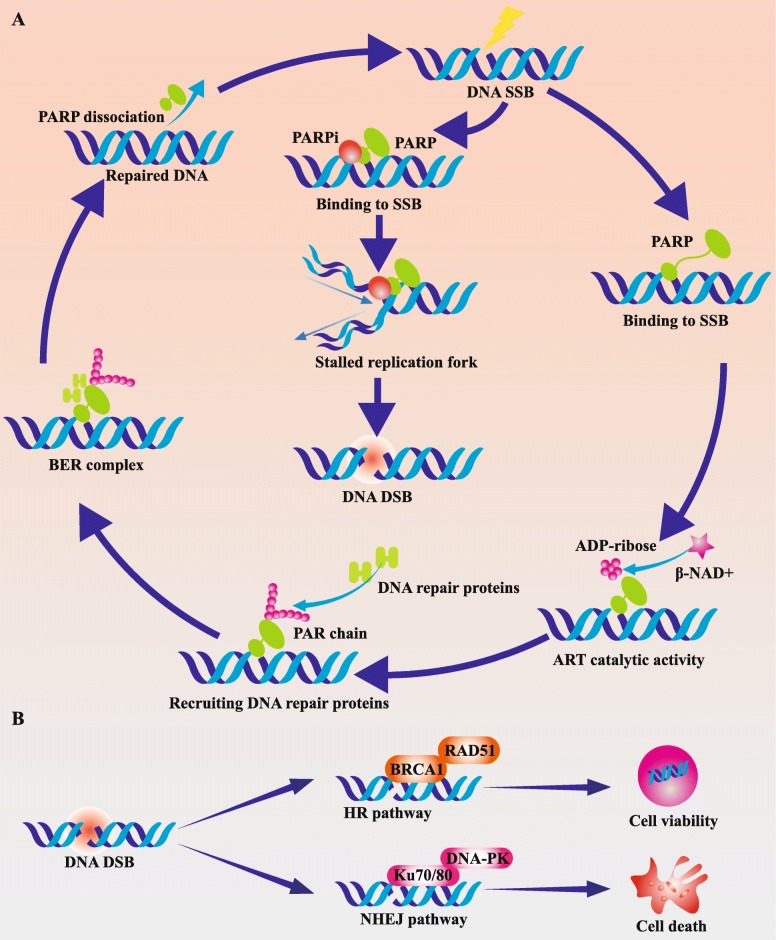
“Normal cells could detect and repair DNA damages by multiple pathways: (1) DNA singlestrand break (SSB) repair pathways including base excision repair (BER), nucleotide excision repair (NER), and mismatch repair (MMR) and (2) DNA double-strand break (DSB) repair pathways such as HR and nonhomologous end joining (NHEJ)…”
BackgroundInfluentialThe DNA-damage response in human biology and disease
Jackson, S. P., & Bartek, J. (2009) · Nature · doi:10.1038/nature08467 · Cited by 6,092 · cited 9×
“Normal cells could detect and repair DNA damages by multiple pathways: (1) DNA singlestrand break (SSB) repair pathways including base excision repair (BER), nucleotide excision repair (NER), and mismatch repair (MMR) and (2) DNA double-strand break (DSB) repair pathways such as HR and nonhomologous end joining (NHEJ)…”
BackgroundInfluentialPD-1 and Its Ligands in Tolerance and Immunity
Keir, M. E., Butte, M. J., Freeman, G. J., & Sharpe, A. H. (2008) · Annual Review of Immunology · doi:10.1146/annurev.immunol.26.021607.090331 · Cited by 5,378 · cited 1×
“As the main ligand of PD-1, PD-L1 is constitutively expressed on a wide variety of immune cells and non-immune cells [63, 64].”
BackgroundElements of cancer immunity and the cancer–immune set point
Chen, D. S., & Mellman, I. (2017) · Nature · doi:10.1038/nature21349 · Cited by 5,352 · cited 1×
“An effective anti-cancer immune response relies on the robust cascade reaction including release and presentation of cancer antigens, priming and activation of T cells, trafficking and infiltration of T cells, and recognizing and killing tumor cells [8].”
BackgroundIpilimumab plus Dacarbazine for Previously Untreated Metastatic Melanoma
Robert, C., Thomas, L., Bondarenko, I., O'Day, S., Weber, J., Garbe, C., Lebbe, C., Baurain, J.-F., Testori, A., Grob, J.-J., et al. (2011) · New England Journal of Medicine · doi:10.1056/nejmoa1104621 · Cited by 4,496 · cited 1×
“Since the first ICI was approved for metastatic melanoma patients in 2011, numerous ICIs have entered clinical practice [75, 76].”
BackgroundFirst-line atezolizumab plus chemotherapy in extensive-stage small-cell lung cancer
Horn, L., Mansfield, A. S., Szczęsna, A., Havel, L., Krzakowski, M., Hochmair, M. J., Huemer, F., Losonczy, G., Johnson, M. L., Nishio, M., et al. (2018) · New England Journal of Medicine · doi:10.1056/nejmoa1809064 · Cited by 3,586
Olaparib for Metastatic Breast Cancer in Patients with a Germline BRCA Mutation
Robson, M., Im, S.-A., Senkus, E., Xu, B., Domchek, S. M., Masuda, N., Delaloge, S., Li, W., Tung, N., Armstrong, A., et al. (2017) · New England Journal of Medicine · doi:10.1056/nejmoa1706450 · Cited by 3,294
Cited by
Sorted by citations
Items 101–146 of 146
Yang, X., Wang, G., Gu, R., Xu, X., & Zhu, G. (2020) · PeerJ · doi:10.7717/peerj.10418 · Cited by 7
Zhao, Y., & Jiang, Y. (2022) · OncoTargets and Therapy · doi:10.2147/ott.s362267 · Cited by 6
Latest Advancements of Natural Products in Combating Ovarian Cancer
Lu, Y., Huang, H., Chen, Y., He, K., Fang, M., Xu, Y., Zhou, Y., & Tao, F. (2025) · Journal of Cancer · doi:10.7150/jca.118209 · Cited by 5
“Notably, PARPi not only directly kill cancer cells through DNA damage but also activate the natural immune response, driving a Th1-polarized immune response (e.g., IFN-γ secretion), promoting dendritic cell maturation and T-cell infiltration, and synergizing with immune checkpoint inhibitors [23].”
Zhang, Y., Chen, X., Wang, D., Zhou, X., Wang, Y., Zhang, G., & Liu, X. (2025) · Frontiers in Oncology · doi:10.3389/fonc.2025.1680921 · Cited by 4
“Clinical trials, such as the phase II study of olaparib and durvalumab (NCT02484404), provide early evidence supporting this approach (66).”
Pyroptosis as Inflammatory Cell Death
Арташевна, В. А., & Kosorukov, V. S. (2020) · Clinical oncohematology · doi:10.21320/2500-2139-2020-13-2-129-135 · Cited by 6
Fernandes, M. P., Oliveira, C., de Sousa, H. M. L., & Oliveira, J. (2023) · International Journal of Molecular Sciences · doi:10.3390/ijms24044044 · Cited by 4
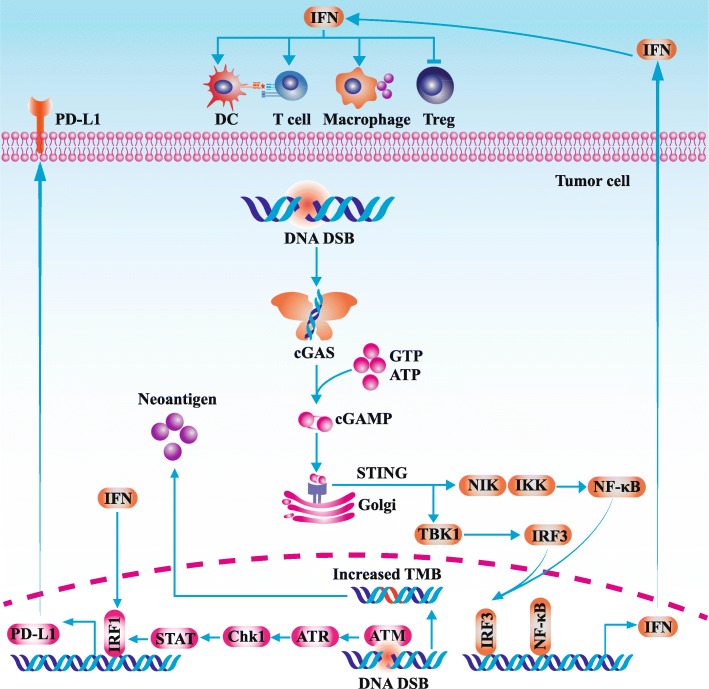
“Finally, the ATM-to-ATR switch activates CHEK1 which further leads to Janus Kinase/Signal Transducer and Activator of Transcription proteins (JAK/STAT) signaling activation and upregulation of PD-L1 expression [68,98].”
BackgroundCurrent state and perspectives of checkpoint inhibitors in ovarian cancer treatment
Bartl, T., Paspalj, V., Polterauer, S., & Grimm, C. (2020) · memo - Magazine of European Medical Oncology · doi:10.1007/s12254-020-00579-z · Cited by 4
Immune Checkpoint Inhibitors Therapy in Prostate Cancer: Lessons Learnt
Chandok, M. R. (2020) · Annals of Immunology & Immunotherapy · doi:10.23880/aii-16000119 · Cited by 3
Nishio, S., Nishikawa, T., Mori, M., Kamiura, S., Sumi, T., Yunokawa, M., Imai, Y., Kondo, E., Takehara, K., Takano, H., et al. (2025) · Journal of Gynecologic Oncology · doi:10.3802/jgo.2025.36.e118 · Cited by 3
Wang, W., Liu, Y., Chen, D., Pang, J., Lai, C., Gu, M., Zhai, M., Yu, Q., Wang, Y., Bao, X., et al. (2024) · Nano Today · doi:10.1016/j.nantod.2024.102598 · Cited by 3
PARP1 in melanoma: Mechanistic insights and implications for basic and clinical research
Marranci, A., Maresca, L., Lodovichi, S., di Rorà, A. G. L., Stecca, B. A., & Poliseno, L. (2025) · Cancer Letters · doi:10.1016/j.canlet.2025.217599 · Cited by 3
Tsai, M.-Y., Lu, C.-K., Shu, L., Liu, H.-T., Wu, Y.-H., Lin, Y., Yang, Y.-H., Shih, W., Lee, I., Wu, Y.-H., et al. (2025) · International Journal of Molecular Sciences · doi:10.3390/ijms26062684 · Cited by 3
“Of notable interest is the synergistic potential observed when combining anti-PD-L1 agents with therapies aimed at mitigating myeloid-derived suppressor cell activity or inhibiting poly ADP-ribose polymerase, especially in cases of castration-resistant prostate cancer [18,19].”
Immunotherapy, Immunobiomarkers and Gene Analysis Role in the Improvement of Lung Cancer Treatment
Wael, M., Wael, M., Hosam, M., Youssef, A., Ellackany, R., & Alzahabi, A. (2022) · Radiotherapy and Clinical Oncology · doi:10.31487/j.rco.2022.01.01 · Cited by 2
Liu, M., Gao, P., Liu, F., Li, D., Wang, Y., & Yu, J. (2026) · Frontiers in Oncology · doi:10.3389/fonc.2026.1767999 · Cited by 2
“Enhanced genomic injury can activate innate immune signaling cascades, including the STING pathway, which may potentiate the antitumor effects of atezolizumab (42, 43).”
Advanced Mucosal Melanoma Therapies: Current Status and Future Directions
Zhang, Y., Zhao, D., & Wu, D. (2026) · Current Treatment Options in Oncology · doi:10.1007/s11864-025-01372-y · Cited by 2
“Poly-ADP-ribose polymerase (PARP) is a core DNA damage sensor in DDR, which binds to damaged DNA lesions, and recruits DNA repair-related protein complex [ 122].”
"Modern approaches for antiandrogen-resistant prostate cancer therapy
Voinea, F., Mazilu, L., Micu, I., Suceveanu, A. P., Iliescu, M. G., Dumitru, A. I., Constantin, V. D., Păunică, I., & Suceveanu, A. (2021) · Journal of Mind and Medical Sciences · doi:10.22543/7674.81.p7175 · Cited by 2
“The latest clinical trials in the field support the theory according to which certain genetic mutations such as microsatellite instability/mismatch repair gene deficiency may increase the susceptibility to immune checkpoint blockade [10,11].”
BackgroundLiu, Q., Zhang, C., Gao, Y., Feng, D., Deng, D., & Pan, Y. (2025) · Advanced Biology · doi:10.1002/adbi.202400720 · Cited by 1
PARPs in tumor immunology: Signal transduction and combination therapy for the future
Jiang, L., Peng, X., Yuan, W., Qu, J., Tan, J. W., Jiao, Q., Li, Y., Peng, Y., Cao, X., & Guo, Y. (2025) · European Journal of Pharmacology · doi:10.1016/j.ejphar.2025.178298 · Cited by 1
Huang, Y., Yang, Y., Zhang, Q., & Wang, S. (2026) · Critical Reviews in Oncology/Hematology · doi:10.1016/j.critrevonc.2026.105278 · Cited by 1
Immunotherapy in Pancreatic Cancer
El‐Rayes, B. F., & Akce, M. (2020) · Digestive Disease Interventions · doi:10.1055/s-0040-1718904 · Cited by 2
An overview on precision therapy in bladder cancer
Sayed, A., Munir, M., Eweis, N., Wael, D., Shazly, O., Awad, A. K., Elbadawy, M. A., & Eissa, S. (2020) · Expert Review of Precision Medicine and Drug Development · doi:10.1080/23808993.2020.1801346
PARP inhibition in ovarian cancer: what is still missing?
Morotti, M., & Ghisoni, E. (2022) · European Journal of Gynaecological Oncology · doi:10.31083/j.ejgo4301016
“eral ongoing clinical trials are evaluating the impact of this combination in ovarian cancer (OC) patients (reviewed in detail elsewhere [21]).”
Background(2020) · PeerJ · doi:10.7287/peerj.10418v0.1/reviews/4
“Targeted inhibition of the function of specific genes in DNA damage repair response has potential for clinical applications and the development of targeted drugs (Li et al., 2019; Nickoloff et al., 2017; O’Connor, 2015; Tarantini et al., 2019).”
BackgroundCerniglia, M., Xiu, J., Grothey, A. F., Pishvaian, M. J., Baca, Y., Hwang, J. J., Marshall, J. L., Vanderwalde, A. M., Shields, A. F., Lenz, H., et al. (2023) · doi:10.1158/1535-7163.22522527.v1
Cerniglia, M., Xiu, J., Grothey, A. F., Pishvaian, M. J., Baca, Y., Hwang, J. J., Marshall, J. L., Vanderwalde, A. M., Shields, A. F., Lenz, H., et al. (2023) · doi:10.1158/1535-7163.c.6543417.v1
Cerniglia, M., Xiu, J., Grothey, A. F., Pishvaian, M. J., Baca, Y., Hwang, J. J., Marshall, J. L., Vanderwalde, A. M., Shields, A. F., Lenz, H., et al. (2023) · doi:10.1158/1535-7163.c.6543417
Sarkar, S., Saha, S. A., Sarkar, P., Banerjee, S., & Mitra, P. (2023) · bioRxiv (Cold Spring Harbor Laboratory) · doi:10.1101/2023.06.19.545525
Yi, M., Niu, M., Zhang, J., Li, S., Zhu, S., Yan, Y., Li, N., Zhou, P., Chu, Q., & Wu, K. (2021) · Figshare · doi:10.6084/m9.figshare.16625386
Self-citationSarkar, S., Saha, S. A., Swarnakar, A., Chakrabarty, A., Dey, A., Sarkar, P., Banerjee, S., & Mitra, P. (2024) · Figshare · doi:10.6084/m9.figshare.26756983
Yi, M., Zhang, J., Li, A., Niu, M., Yan, Y., Jiao, Y., Luo, S., Zhou, P., & Wu, K. (2021) · Figshare · doi:10.6084/m9.figshare.14053438
Self-citationYi, M., Niu, M., Zhang, J., Li, S., Zhu, S., Yan, Y., Li, N., Zhou, P., Chu, Q., & Wu, K. (2021) · Figshare · doi:10.6084/m9.figshare.16625383
Self-citationKim, S. I., Cho, H., Choi, C. H., Jeong-Yeol, P. A. R. K., Lee, J. B., KIM, J.-W., Kim, B., Kim, J., & Lee, J. (2025) · Journal of Gynecologic Oncology · doi:10.3802/jgo.2026.37.e50
Neoadjuvant immunotherapy in breast cancer: Progress and challenges
de Graaf, M., Caluwé, A. D., Buisseret, L., & Kok, M. (2026) · Trends in cancer · doi:10.1016/j.trecan.2026.06.009
ICBcDrug: An online resource and tool for screening and predicting immunotherapy combination drugs
Lin, Y. Y., Sun, W., Xia, Y., Zhang, Z., Liao, Y., Shen, W., Tan, Z., Du, W., Lei, Q., & Guo, A. (2026) · Chinese Medical Journal · doi:10.1097/cm9.0000000000004160
Nutraceuticals in Uro-Oncology: A Structured Expert Review and Precision-Oriented Framework
Erten, F., Kalemoglu, E., Küçük, Ö., & Şahin, K. (2026) · Nutrients · doi:10.3390/nu18152411
Synthetic lethality in cancer: mechanisms, therapeutic exploitation and clinical translation
Camps-Fajol, C., Minguillón, J., & Surrallés, J. (2026) · Signal Transduction and Targeted Therapy · doi:10.1038/s41392-026-02954-4 · Cited by 1
“120 In fact, PARP inhibition in BRCA1/2 -def fi cient TNBC cells reduced DDR and induced neoantigens and cytosolic DNA, activating the IFN pathway via STING, resulting in the tumors ’ sensitization to ICIs.”
Karthikeyan, M. C., Viswanathan, Y., Dinakaran, P., Manivannan, S., & Arockiam, A. J. V. (2026) · SN Comprehensive Clinical Medicine · doi:10.1007/s42399-026-02789-8
“Combining PARPi (niraparib, olaparib) with immunotherapy is generally safe and shows early promise in enhancing antitumor immunity, but more evidence from ongoing phase III clinical trials is essential to confirm its effectiveness across different solid tumors [144 – 148].”
BindingDB Entry 50013431: Synthetic Lethality through the Lens of Medicinal Chemistry.
BindingDB (2022) · UC San Diego · doi:10.7270/q2gx4g9m
Metadata
- Authors
- Li, A., Yi, M., Qin, S., Chu, Q., Luo, S., & Wu, K.
- Affiliations
- Zhengzhou University (CN)
- Tongji Hospital (CN)
- Corresponding author
- Luo, Suxia
- Wu, Kongming
- Venue
- Journal of Hematology & Oncology
- Published
- 2019-09-14
- Volume
- 12
- Issue
- 1
- Pages
- 98-98
- ISSN
- 1756-8722 (ISSN-L)
- PMC
- PMC6744711
- OpenAlex
- W2972535107
- Cited by
- 143
- References
- 130
- Citations by year
- 2026: 10 · 2025: 14 · 2024: 14 · 2023: 16 · 2022: 21 · 2021: 36 · 2020: 30 · 2019: 2
- FWCI
- 2.17
- Type
- journal article
- Language
- en
- Open access
- gold
- doi.org
- Locations
- Journal of Hematology & Oncology (publishedVersion, cc-by)
- PubMed Central (publishedVersion, cc-by)
- PubMed (publishedVersion)
- DOAJ (DOAJ: Directory of Open Access Journals) (submittedVersion, cc-by-sa)
- Funders
- National Natural Science Foundation of China (81874120, 81572608, 81672984)
- Wuhan Municipal Science and Technology Bureau (2017060201010170)
- Topics
- Health Sciences › Medicine › Oncology › Cancer Immunotherapy and Biomarkers
- Health Sciences › Medicine › Oncology › PARP inhibition in cancer therapy
- Life Sciences › Immunology and Microbiology › Immunology › Immunotherapy and Immune Responses
- Keywords
- immune checkpoint blockade, PARP inhibitors, combination therapy, cancer immunotherapy, tumor immune microenvironment, PD-1, CTLA-4, immunosuppression, tumor immunogenicity, T cell priming, cross-presentation, drug resistance, cancer-immunity cycle
- MeSH terms
- Poly(ADP-ribose) Polymerase Inhibitors, Antineoplastic Agents, Humans, Immunotherapy, Poly(ADP-ribose) Polymerases
About these checks
Registry, retraction, Cites and statistics results are computed, not judged, with one exception: a printed reference that no index lists is read once by a model before it counts as a citation error. Claims are extracted by a model and kept only when their quote appears verbatim in the text; each cited source is then checked, with a model’s help, for whether it says what the claim relies on. Those verdicts can be wrong — read the claim’s quote and the cited source before relying on one.
Statistics and arithmetic are recomputed, not judged.
Confidence bands are shown only for fields calibrated on our annotated test set. None is calibrated yet, so no band is shown.
What counts as a claim ›How we measure confidence ›How we check this ›
Are you an author, or do you see a problem with this page? Request a review
