

Emerging organoid models: leaping forward in cancer research
Open accessThe DOI matches its Crossref record; 71 of the 71 references it cites were found in a registry or an index.
Abstract
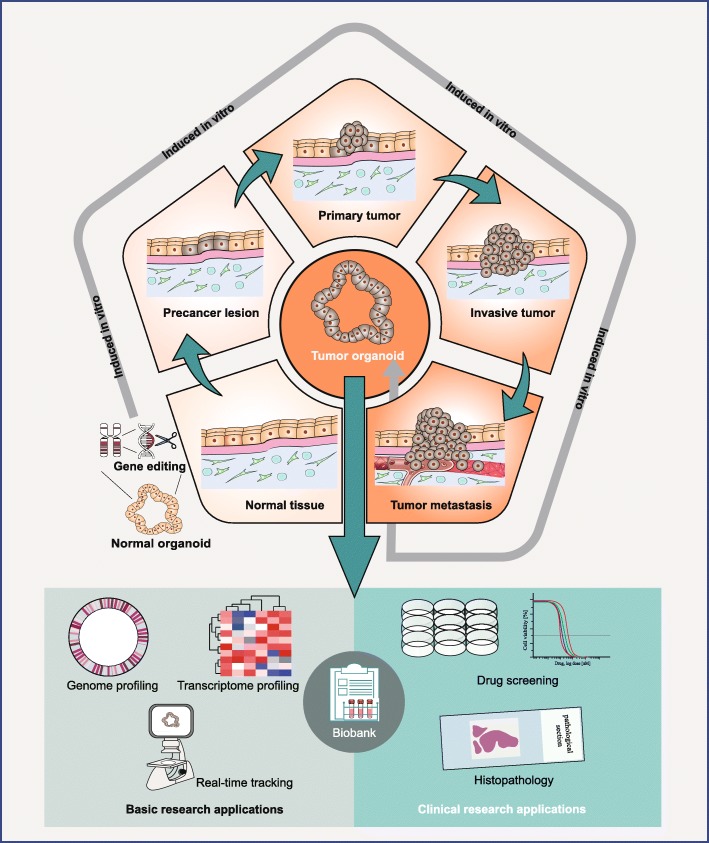
Cancer heterogeneity is regarded as the main reason for the failure of conventional cancer therapy. The ability to reconstruct intra- and interpatient heterogeneity in cancer models is crucial for understanding cancer biology as well as for developing personalized anti-cancer therapy. Cancer organoids represent an emerging approach for creating patient-derived in vitro cancer models that closely recapitulate the pathophysiological features of natural tumorigenesis and metastasis. Meanwhile, cancer organoids have recently been utilized in the discovery of personalized anti-cancer therapy and prognostic biomarkers. Further, the synergistic combination of cancer organoids with organ-on-a-chip and 3D bioprinting presents a new avenue in the development of more sophisticated and optimized model systems to recapitulate complex cancer-stroma or multiorgan metastasis. Here, we summarize the recent advances in cancer organoids from a perspective of the in vitro emulation of natural cancer evolution and the applications in personalized cancer theranostics. We also discuss the challenges and trends in reconstructing more comprehensive cancer models for basic and clinical cancer research.
Overview
The claims and statistics of this paper haven’t been checked yet.
Free: it reads the open-access text and checks the first 5 claims that cite a source we can check. Create a free account to check every claim.
Integrity signals
Registry
Cites
Statistics
Figures
Verification
Claims the paper makes
The claims and statistics of this paper haven’t been checked yet.
Free: it reads the open-access text and checks the first 5 claims that cite a source we can check. Create a free account to check every claim.
Claims other papers make about this one
Each is checked against this paper’s own text: does it say what the citing paper says it does?
The source backs part of the claim, not all of it — or backs it for a different population, condition or comparison.
In the citing paper
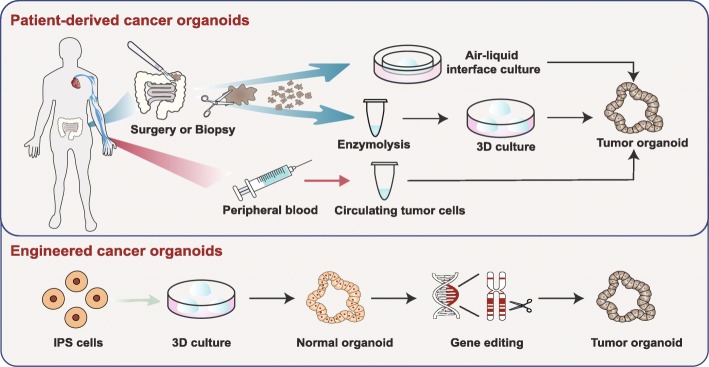
“Tumor organoids can be generated from patient/mouse-derived tumor cells or by engineering induced pluripotent stem cells (iPSCs) followed by gene editing to transform a normal organoid into a cancer organoid [33,59].”
From 3D In Vitro Model (R)evolution: Unveiling Tumor–Stroma Interactions (2021) · cites this paper as [59]
Experimental — accuracy not yet measuredThe source backs part of the claim, not all of it — or backs it for a different population, condition or comparison.
In the citing paper
“Moreover, organoids are more advantageous due to the ease of culturing and closer resemblance to the TME, thus being more pathophysiologically relevant as compared to the patient‐derived tumor xenograft (PDX) model and other tumor‐bearing animal models, which are more tedious and expensive to maintain [384, 395].”
From Tumor microenvironment signaling and therapeutics in cancer progression (2023) · cites this paper as [384]
Experimental — accuracy not yet measuredThe cited source says what the claim attributes to it.
In the citing paper
“Moreover, organoids can be ef fi ciently cultured with a patient ' s own cells, and are thus a better alternative to expensive and labor-intensive patient-derived tumor xenografts [59], and are also more cost-effective and physiologically relevant than animal models.”
From 3D In Vitro Model (R)evolution: Unveiling Tumor–Stroma Interactions (2021) · cites this paper as [59]
The cited source says what the claim attributes to it.
In the citing paper
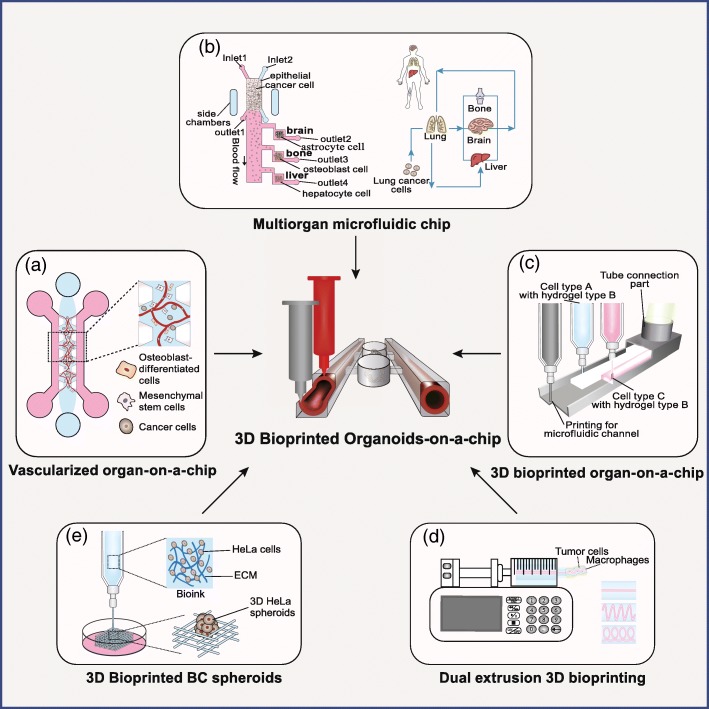
“3D bioprinting can also be used with organoids to form sophisticated organoid culture systems [59].”
From 3D In Vitro Model (R)evolution: Unveiling Tumor–Stroma Interactions (2021) · cites this paper as [59]
The cited source says what the claim attributes to it.
In the citing paper
“By contrast, organoid models usually only contain progenitor cells of epithelial origin, hence there is a lack of an immune-competent microenvironment and stromal components in tumor organoid models [59].”
From 3D In Vitro Model (R)evolution: Unveiling Tumor–Stroma Interactions (2021) · cites this paper as [59]
1 more claim about this paper
Create a free account to see every claim other papers make about this one.
Self-check
Percentages, sums and reported differences re-computed from the paper’s own numbers.
The self-check needs the paper’s full text.
Citations
Cites
Cancer immunotherapy using checkpoint blockade
Ribas, A., & Wolchok, J. D. (2018) · Science · doi:10.1126/science.aar4060 · Cited by 6,791
Neoantigens in cancer immunotherapy
Schumacher, T. N., & Schreiber, R. D. (2015) · Science · doi:10.1126/science.aaa4971 · Cited by 4,783
Clonal heterogeneity and tumor evolution: past, present, and the future
McGranahan, N., & Swanton, C. (2017) · Cell · doi:10.1016/j.cell.2017.01.018 · Cited by 2,840 · cited 1×
“The tumor heterogeneity results in significant differences in the tumor growth rate, invasion ability, drug sensitivity, and prognosis among individual patients [2].”
BackgroundClinical development success rates for investigational drugs
Hay, M., Thomas, D. W., Craighead, J. L., Economides, C., & Rosenthal, J. (2014) · Nature Biotechnology · doi:10.1038/nbt.2786 · Cited by 2,536 · cited 1×
“Moreover, even FDA-approved anticarcinogens display heterogeneous therapeutic responses and prognosis across individual patients [57].”
BackgroundProspective Derivation of a Living Organoid Biobank of Colorectal Cancer Patients
van de Wetering, M., Francies, H. E., Francis, J. M., Bounova, G., Iorio, F., Pronk, A., van Houdt, W., van Gorp, J., Taylor-Weiner, A., Kester, L., et al. (2015) · Cell · doi:10.1016/j.cell.2015.03.053 · Cited by 2,408 · cited 3×
“CRC 22 cancer organoids from 27 tumor samples ~90% Surgically resected Support Royal Netherlands Academy of Arts and Sciences, Holland [9]”
BackgroundOrganoid models of human and mouse ductal pancreatic cancer
Boj, S. F., Hwang, C.-I., Baker, L. A., Chio, I. I. C., Engle, D. D., Corbo, V., Jager, M., Ponz-Sarvise, M., Tiriac, H., Spector, M. S., et al. (2015) · Cell · doi:10.1016/j.cell.2014.12.021 · Cited by 2,150 · cited 2×
“Prostate cancer organoids Patient, Mouse Organoid culture and xenotransplantation Show the role of nucleoporins in the progression of pancreatic cancer [29]”
BackgroundPatient-derived organoids model treatment response of metastatic gastrointestinal cancers
Vlachogiannis, G., Hedayat, S., Vatsiou, A., Jamin, Y., Fernández-Mateos, J., Khan, K., Lampis, A., Eason, K., Huntingford, I., Burke, R., et al. (2018) · Science · doi:10.1126/science.aao2774 · Cited by 2,096 · cited 2×
“Cancer organoids derived from patients’ biopsies displayed the 100% sensitivity, 93% specificity, 88% positive predictive value, and 100% negative predictive value, compared to the drug responses in the corresponding patients [62].”
BackgroundResultA living biobank of breast cancer organoids captures disease heterogeneity
Sachs, N., de Ligt, J., Kopper, O., Gogola, E., Bounova, G., Weeber, F., Balgobind, A. V., Wind, K., Gracanin, A., Begthel, H., et al. (2018) · Cell · doi:10.1016/j.cell.2017.11.010 · Cited by 1,973 · cited 4×
“By comparing the therapeutic responses of anticarcinogen in the BC organoids and the corresponding patients, they found that the sensitivity to tamoxifen in the BC organoids was closely correlated with that in the original patients with metastatic BC [10].”
BackgroundResultInfluentialPatient-Derived Xenograft Models: An Emerging Platform for Translational Cancer Research
Hidalgo, M., Amant, F., Biankin, A. V., Budinská, E., Byrne, A. T., Caldas, C., Clarke, R. B., de Jong, S., Jonkers, J., Mælandsmo, G. M., et al. (2014) · Cancer Discovery · doi:10.1158/2159-8290.cd-14-0001 · Cited by 1,742
Organoid Cultures Derived from Patients with Advanced Prostate Cancer
Gao, D., Vela, I., Sboner, A., Iaquinta, P. J., Karthaus, W. R., Gopalan, A., Dowling, C., Wanjala, J. N., Undvall, E. A., Arora, V. K., et al. (2014) · Cell · doi:10.1016/j.cell.2014.08.016 · Cited by 1,559 · cited 3×
“In the repository, cancer organoids can be passaged and cryopreserved, just like immortal cell lines (Table 3) [30].”
Background
Research works printed but not linked: 1
- Society AC Global Cancer Facts & Figures 3rd Edition Am Cancer Soc 2015 800 1 64
Cited by
Hofer, M., & Lutolf, M. P. (2021) · Nature Reviews Materials · doi:10.1038/s41578-021-00279-y · Cited by 1,184
Signaling pathways in cancer-associated fibroblasts and targeted therapy for cancer
Wu, F., Yang, J., Liu, J., Wang, Y., Mu, J., Zeng, Q., Deng, S., & Zhou, H. (2021) · Signal Transduction and Targeted Therapy · doi:10.1038/s41392-021-00641-0 · Cited by 773
“However, organoids commonly contained only epithelial cells and lack fibroblasts and types of other cells, such as immune and endothelial cells.(77) To overcome these limitations of organoids, a multilayer bladder called an “assembloids” has been created by reconstituting tissue stem cells with stromal components repr…”
Background3D In Vitro Model (R)evolution: Unveiling Tumor–Stroma Interactions
Rodrigues, J., Heinrich, M. A., Teixeira, L. M., & Prakash, J. (2021) · Trends in Cancer · doi:10.1016/j.trecan.2020.10.009 · Cited by 405
“Moreover, organoids can be efficiently cultured with a patient’s own cells, and are thus a better alternative to expensive and labor-intensive patient-derived tumor xenografts [59], and are also more cost-effective and physiologically relevant than animal models.”
BackgroundInfluentialTumor microenvironment: barrier or opportunity towards effective cancer therapy
Tiwari, A., Trivedi, R., & Lin, S.-Y. (2022) · Journal of Biomedical Science · doi:10.1186/s12929-022-00866-3 · Cited by 377
“These tumor model systems have removed the bottleneck of extrapolation of results from animal and patientderived xenografts (PDX) models [210, 211].”
BackgroundTumor microenvironment signaling and therapeutics in cancer progression
Goenka, A., Khan, F., Verma, B., Sinha, P., Dmello, C. C., Jogalekar, M. P., Gangadaran, P., & Ahn, B. (2023) · Cancer Communications · doi:10.1002/cac2.12416 · Cited by 323
Organoids: The current status and biomedical applications
Yang, S., Hu, H., Kung, H., Zou, R., Dai, Y., Hu, Y., Wang, T., Lv, T., Yu, J., & Li, F. (2023) · MedComm · doi:10.1002/mco2.274 · Cited by 266
Modeling neoplastic disease with spheroids and organoids
Zanoni, M., Cortesi, M., Zamagni, A., Arienti, C., Pignatta, S., & Tesei, A. (2020) · Journal of Hematology & Oncology · doi:10.1186/s13045-020-00931-0 · Cited by 261
“Recent studies have reported the potential of combining organoids and organon-a-chip models, taking advantage of the best features of both systems [170, 183, 184].”
BackgroundThorel, L., Perréard, M., Florent, R., Divoux, J., Coffy, S., Vincent, A., Gaggioli, C., Guasch, G., Gidrol, X., Weiswald, L.-B., et al. (2024) · Experimental & Molecular Medicine · doi:10.1038/s12276-024-01272-5 · Cited by 236
“PDTO can also be obtained by introducing tumorigenic alterations via genetic engineering 16 in pluripotent stem cells, induced or embryonic stem cells, tissue-speci fi c stem cells (adult stem cells), or normal organoids 17 .”
BackgroundQu, J., Kalyani, F. S., Liu, L., Cheng, T., & Chen, L. (2021) · Cancer Communications · doi:10.1002/cac2.12224 · Cited by 159
“Organoids have now been established for a wide range of tumor types [21,22].”
BackgroundPromising Applications of Tumor Spheroids and Organoids for Personalized Medicine
Gilazieva, Z., Ponomarev, A., Rutland, C., Rizvanov, A., & Solovyeva, V. (2020) · Cancers · doi:10.3390/cancers12102727 · Cited by 151
“Presumably, tumor organoids can also be obtained from normal organoids using gene-editing techniques [87].”
Background3D Bioprinting and the Future of Surgery
Jovic, T. H., Combellack, E. J., Jessop, Z. M., & Whitaker, I. S. (2020) · Frontiers in Surgery · doi:10.3389/fsurg.2020.609836 · Cited by 138
Harnessing the predictive power of preclinical models for oncology drug development
Honkala, A., Malhotra, S. V., Kummar, S., & Junttila, M. R. (2022) · Nature Reviews Drug Discovery · doi:10.1038/s41573-021-00301-6 · Cited by 121
Translating complexity and heterogeneity of pancreatic tumor: 3D in vitro to in vivo models
Heinrich, M. A., Mostafa, A. M. R. H., Morton, J. P., Hawinkels, L. J. A. C., & Prakash, J. (2021) · Advanced Drug Delivery Reviews · doi:10.1016/j.addr.2021.04.018 · Cited by 126
Sakalem, M. E., Síbio, M. T. D., da Costa, F. A. D. S., & de Oliveira, M. (2021) · Biotechnology Journal · doi:10.1002/biot.202000463 · Cited by 122
Landscape of human organoids: Ideal model in clinics and research
Han, X., Cai, C., Deng, W., Shi, Y., Li, L., Wang, C., Zhang, J., Rong, M., Liu, J., Fang, B., et al. (2024) · The Innovation · doi:10.1016/j.xinn.2024.100620 · Cited by 163
Bertassoni, L. E. (2021) · Advanced Materials · doi:10.1002/adma.202101321 · Cited by 103
Advances in Gold Nanoparticle-Based Combined Cancer Therapy
Bromma, K., & Chithrani, D. B. (2020) · Nanomaterials · doi:10.3390/nano10091671 · Cited by 102
“This can be achieved through the use of three-dimensional organoid models [180].”
BackgroundHof, L., Moreth, T., Koch, M., Liebisch, T., Kurtz, M., Tarnick, J., Lissek, S. M., Verstegen, M. M. A., van der Laan, L. J. W., Huch, M., et al. (2021) · BMC Biology · doi:10.1186/s12915-021-00958-w · Cited by 111
Microfluidic Organoids-on-a-Chip: Quantum Leap in Cancer Research
Duzagac, F., Saorin, G., Memeo, L., Canzonieri, V., & Rizzolio, F. (2021) · Cancers · doi:10.3390/cancers13040737 · Cited by 96
Clinical translation of patient-derived tumour organoids- bottlenecks and strategies
Foo, M. A., You, M., Chan, S. L., Sethi, G., Bonney, G. K., Yong, W.-P., Chow, E. K.-H., Fong, E. L. S., Wang, L., & Goh, B.-C. (2022) · Biomarker Research · doi:10.1186/s40364-022-00356-6 · Cited by 92
“Tissue acquisition PDTOs are established from surgically resected tissue, biopsied tissues or circulating tumour cells [9].”
BackgroundInfluentialDynamic Cancer Cell Heterogeneity: Diagnostic and Therapeutic Implications
Jacquemin, V., Antoine, M., Dom, G., Detours, V., Maenhaut, C., & Dumont, J. E. (2022) · Cancers · doi:10.3390/cancers14020280 · Cited by 103
Zhu, J., Ji, L., Chen, Y., Li, H., Huang, M., Dai, Z., Wang, J., Xiang, D., Fu, G., Lei, Z., et al. (2023) · Cell Death Discovery · doi:10.1038/s41420-023-01354-9 · Cited by 96
“The fusion of these two distinct but complementary technologies has been accepted by most scientists [81, 120, 121].”
BackgroundConstruction of tumor organoids and their application to cancer research and therapy
Lv, J., Du, X., Wang, M., Su, J., Wei, Y., & Xu, C. (2024) · Theranostics · doi:10.7150/thno.91362 · Cited by 97
“The recent tendency in the synergistic employment of organoids with organ-on-a-chip allows the establishment of more sophisticated tumor models to study tumor multiorgan metastasis and tumor-stroma interactions [86].”
Background3D Culture Systems for Exploring Cancer Immunology
Fitzgerald, A. A., Li, E., & Weiner, L. M. (2020) · Cancers · doi:10.3390/cancers13010056 · Cited by 91
Experimental Models of Hepatocellular Carcinoma—A Preclinical Perspective
Blidișel, A., Marcovici, I., Coricovac, D. E., Huţ, E. F., Dehelean, C. A., & Cretu, O. M. (2021) · Cancers · doi:10.3390/cancers13153651 · Cited by 83
“Over the last few decades, substantial progress has been made in the establishment of highly accurate cancer systems [12], a wide range of HCC models being available.”
Background3D-bioprinted cancer-on-a-chip: level-up organotypic in vitro models
Monteiro, M. V., Zhang, Y. S., Gaspar, V. M., & Mano, J. F. (2021) · Trends in biotechnology · doi:10.1016/j.tibtech.2021.08.007 · Cited by 82
Green Metallic Nanoparticles for Cancer Therapy: Evaluation Models and Cancer Applications
Tinajero‐Díaz, E., Leza, D. S., González, C., Martínez‐Velázquez, M., López, Z., Madrigal, J. B., Knauth, P., Hernández, F., Herrera-Rodríguez, S. E., Navarro, R. E., et al. (2021) · Pharmaceutics · doi:10.3390/pharmaceutics13101719 · Cited by 84
“MNPs can remodel the tumor microenvironment (TME) by changing unfavorable conditions into therapeutically accessible ones, which may be reached by applying external stimuli, such as light, heat, ultrasonic radiation, or magnetic fields.”
BackgroundMethodInfluentialAdvances in development and application of human organoids
Shankaran, A., Prasad, K., Chaudhari, S., Brand, A. M., & Satyamoorthy, K. (2021) · 3 Biotech · doi:10.1007/s13205-021-02815-7 · Cited by 82
“This tumor heterogeneity can also be a result of differences in epigenetic alterations, gene expression profiles, metabolic differences, metastatic potential and rates of proliferation of cells, and is considered the main reason for the failure of conventional cancer therapy (McGranahan and Swanton 2015; Fan et al. 20…”
BackgroundJung, M., Ghamrawi, S., Du, E. Y., Gooding, J. J., & Kavallaris, M. (2022) · Advanced Healthcare Materials · doi:10.1002/adhm.202200690 · Cited by 82
Tumor-on-a-chip platform to interrogate the role of macrophages in tumor progression
Bi, Y., Shirure, V. S., Liu, R., Cunningham, C., Ding, L., Meacham, J. M., Goedegebuure, S. P., George, S. C., & Fields, R. C. (2020) · Integrative Biology · doi:10.1093/intbio/zyaa017 · Cited by 70
Biomaterial-guided stem cell organoid engineering for modeling development and diseases
Hoang, P., & Ma, Z. (2021) · Acta Biomaterialia · doi:10.1016/j.actbio.2021.01.026 · Cited by 77
Patient‐derived cancer organoids for drug screening: Basic technology and clinical application
Ren, X., Chen, W., Yang, Q., Li, X., & Xu, L. (2022) · Journal of Gastroenterology and Hepatology · doi:10.1111/jgh.15930 · Cited by 78
Human Spinal Organoid-on-a-Chip to Model Nociceptive Circuitry for Pain Therapeutics Discovery
Ao, Z., Cai, H., Wu, Z., Krzesniak, J., Tian, C., Lai, Y. Y., Mackie, K., & Guo, F. (2022) · Analytical Chemistry · doi:10.1021/acs.analchem.1c04641 · Cited by 61
Cancer organoids: A platform in basic and translational research
Ma, X., Wang, Q. L., Li, G., Li, H., Xu, S., & Pang, D. (2023) · Genes & Diseases · doi:10.1016/j.gendis.2023.02.052 · Cited by 68
An overview of neuroblastoma cell lineage phenotypes and in vitro models
Cogo, S. C., do Nascimento, T. G. F. D. C., Pinhatti, F. D. A. B., de França, N., Rodrigues, B. S., Cavalli, L. R., & Elífio-Esposito, S. (2020) · Experimental Biology and Medicine · doi:10.1177/1535370220949237 · Cited by 60
“However, their application in medicine can be limited, due to its high cost and long processing time.(155,156) More recently, patient derived tumor organoids (PDTO) have been promising superior models, as they comprehend three-dimensional in vitro cellular structures derived from cancer stem cells that present self-re…”
BackgroundReconstructing the tumor architecture into organoids
Luo, Z., Zhou, X., Mandal, K., He, N., Wennerberg, W., Qu, M., Jiang, X., Sun, W., & Khademhosseini, A. (2021) · Advanced Drug Delivery Reviews · doi:10.1016/j.addr.2021.113839 · Cited by 52
Recent advances in organoid engineering: A comprehensive review
Unagolla, J. M., & Jayasuriya, A. C. (2022) · Applied Materials Today · doi:10.1016/j.apmt.2022.101582 · Cited by 51
Granchi, C., Bononi, G., Ferrisi, R., Gori, E., Mantini, G., Glasmacher, S., Poli, G., Palazzolo, S., Caligiuri, I., Rizzolio, F., et al. (2020) · European Journal of Medicinal Chemistry · doi:10.1016/j.ejmech.2020.112857 · Cited by 46
Vivarelli, S., Candido, S., Caruso, G., Falzone, L., & Libra, M. (2020) · Cancers · doi:10.3390/cancers12123636 · Cited by 46
“On the other end, human two-dimensional (2D) cell culture is a valid platform for high-throughput drug screening, but it misses the overall complexity and heterogeneity of the original tumor [9].”
BackgroundPatient-Derived Cancer Organoids for Precision Oncology Treatment
Pernik, M. N., Bird, C. E., Traylor, J. I., Shi, D. D., Richardson, T. E., McBrayer, S. K., & Abdullah, K. G. (2021) · Journal of Personalized Medicine · doi:10.3390/jpm11050423 · Cited by 48
Modeling Pancreatic Cancer with Patient-Derived Organoids Integrating Cancer-Associated Fibroblasts
Go, Y.-H., Choi, W. H., Bae, W. J., Jung, S., Cho, C., Lee, S. A., Park, J. S., Ahn, J. M., Kim, S. W., Lee, K. J., et al. (2022) · Cancers · doi:10.3390/cancers14092077 · Cited by 43
“The 3D tumor model is mor ffective for th development of medicatio s and biomarkers than the classical 2D model using cancer cell lines [27], and organoid culture is a well-established method for modeling tumors in vitro [28,29].”
MethodLung cancer organoids, a promising model still with long way to go
Ma, H., Zhu, Y.-J., Zhou, R., Yu, Y., Xiao, Z., & Zhang, H.-B. (2022) · Critical Reviews in Oncology/Hematology · doi:10.1016/j.critrevonc.2022.103610 · Cited by 45
Membrane tension buffering by caveolae: a role in cancer?
Singh, V., & Lamaze, C. (2020) · Cancer and Metastasis Reviews · doi:10.1007/s10555-020-09899-2 · Cited by 40
“3D organoids have emerged as a powerful technology to culture tumoral and non-tumoral tissues in conditions preserving their initial characteristics [145, 146].”
BackgroundAdvances in 3D bioprinting for the biofabrication of tumor models
Sánchez-Salazar, M. G., Álvarez, M. M., & Santiago, G. T. (2020) · Bioprinting · doi:10.1016/j.bprint.2020.e00120 · Cited by 39
Regenerative Engineering: Current Applications and Future Perspectives
Goldenberg, D., McLaughlin, C., Koduru, S. V., & Ravnic, D. J. (2021) · Frontiers in Surgery · doi:10.3389/fsurg.2021.731031 · Cited by 42
Ren, J., Hu, P., Ma, E., Zhou, X., Wang, W., Zheng, S., & Wang, H. (2022) · Applied Materials Today · doi:10.1016/j.apmt.2022.101445 · Cited by 36
Farhat, J., Pandey, I., & Alwahsh, M. (2021) · Cells · doi:10.3390/cells10071657 · Cited by 38
3D bioprinting for in vitro models of oral cancer: Toward development and validation
Almela, T., Tayebi, L., & Moharamzadeh, K. (2021) · Bioprinting · doi:10.1016/j.bprint.2021.e00132 · Cited by 38
“the TME entails the inclusion of diverse cellular components as well as the modulation of matrix properties to fit with the emulated tumor.”
BackgroundInfluentialGlobal hotspots and emerging trends in 3D bioprinting research
Ding, Z., Tang, N., Huang, J., Cao, X., & Wu, S. (2023) · Frontiers in Bioengineering and Biotechnology · doi:10.3389/fbioe.2023.1169893 · Cited by 39
“Moreover, owing to its unique advantages, 3D bioprinting plays a key role in the construction of common disease in vitro models and organoids (Fan et al. 2019; Guagliano et al. 2022; Joddar et al. 2022; Jubelin et al. 2022; Neufeld et al. 2022; Shakir et al. 2022).”
BackgroundEliahoo, P., Setayesh, H., Hoffman, T., Wu, Y., Li, S., & Treweek, J. B. (2024) · ACS Materials Au · doi:10.1021/acsmaterialsau.3c00038 · Cited by 38
Dai, R., Chen, W., Chen, Y., Jin, J., Zhang, S., Zhang, C., & Liu, J. (2024) · Biofabrication · doi:10.1088/1758-5090/ad51a6 · Cited by 41
“These advantages facilitate their large-scale application and timely drug reference for patients, thereby highlighting the promising prospects of tumor organoids [3–6].”
BackgroundEstablishment of a patient-derived organoid model and living biobank for nasopharyngeal carcinoma
Wang, X., Xia, T., Tang, H., Liu, X., Han, R., Zou, X., Zhao, Y.-T., Chen, M., & Li, G. (2022) · Annals of Translational Medicine · doi:10.21037/atm-22-1076 · Cited by 32
“A tumor organoid biobank can recapitulate tumor heterogeneity and personalized genetic information (26-28), and a living biobank provides a rich resource and convenient platform for studying disease pathogenesis and enables the development of precision medicine (29).”
BackgroundPreclinical Models of Hepatocellular Carcinoma: Current Utility, Limitations, and Challenges
Cigliano, A., Liao, W., Deiana, G. A., Rizzo, D., Chen, X., & Calvisi, D. F. (2024) · Biomedicines · doi:10.3390/biomedicines12071624 · Cited by 41
“Moreover, organoids became promising disease models, and cancer organoids revealed themselves as a critical tool for better understanding carcinogenesis, metastasis formation, drug screening, and resistance to therapy to discover more in-line, personalized anticancer treatments [41].”
BackgroundCui, Y., Zhao, H., Wu, S., & Li, X. (2020) · Stem Cell Reviews and Reports · doi:10.1007/s12015-020-10039-0 · Cited by 31
“A few miniaturized organs have been established through these two methods, such as bioprinting bone marrow cells within bio ink [59], heart-on-a-chip with adult heart-like functions [60], and cancer metastasis models [61].”
MethodArthroscopic meniscal repair. Inside-out technique and results.
Cannon, W. D. (1996) · PubMed · Cited by 30
Trends in Bone Metastasis Modeling
Laranga, R., Duchi, S., Ibrahim, T., Guerrieri, A. N., Donati, D. M., & Lucarelli, E. (2020) · Cancers · doi:10.3390/cancers12082315 · Cited by 32
“In turn, the incorporation of metastatic tumor organoids with other OOCs presents a better way for studying cancer multiorgan metastasis [131].”
BackgroundHigh-throughput solutions in tumor organoids: from culture to drug screening
Zuo, J., Fang, Y., Wang, R., & Liang, S. (2024) · Stem Cells · doi:10.1093/stmcls/sxae070 · Cited by 34
Cheikh, I. A., El‐Baba, C., Youssef, A., Saliba, N. A., Ghantous, A., & Darwiche, N. (2022) · Expert Opinion on Drug Discovery · doi:10.1080/17460441.2023.2147920 · Cited by 30
Park, C. S., Nguyen, L. P., & Yong, D. (2020) · Cells · doi:10.3390/cells9102209 · Cited by 29
“In addition, cancer organoids also play an important role in elucidating cancer biology, diagnostic, and prognostic markers [37].”
BackgroundInfluentialChoi, S., Choi, S., Choi, Y., Cho, N., Kim, S.-Y., Lee, C. H., Park, H., Oh, W. K., Kim, K. K., & Kim, E. (2021) · Ecotoxicology and Environmental Safety · doi:10.1016/j.ecoenv.2021.113094 · Cited by 29
Harnessing preclinical models for the interrogation of ovarian cancer
Qin, T., Fan, J., Lu, F., Zhang, L., Liu, C., Xiong, Q., Zhao, Y., Chen, G., & Sun, C. (2022) · Journal of Experimental & Clinical Cancer Research · doi:10.1186/s13046-022-02486-z · Cited by 32
“For OC, Hill SJ et al. devised a short-term HGSOC PDO platform to functionally profile DNA repair defects and further predict the therapeutic effects of drugs targeting DNA damage response (DDR) [114].”
MethodInfluentialAbdolahinia, E. D., & Han, X. (2023) · Cancers · doi:10.3390/cancers15174266 · Cited by 30
New diagnostic molecular markers and biomarkers in odontogenic tumors
Farshbaf, A., Zare, R., Mohajertehran, F., & Mohtasham, N. (2021) · Molecular Biology Reports · doi:10.1007/s11033-021-06286-0 · Cited by 28
“In addition, organoid represents in vitro tumor model-study for metastasis and invasion, drug screening, immunotherapy, clinical trial, hallmarks association with prognosis and evolution of personalized anti-cancer therapy [31].”
BackgroundRecapitulating Tumorigenesis in vitro: Opportunities and Challenges of 3D Bioprinting
Kronemberger, G. S., Miranda, G. A. S. C., Tavares, R. S. N., Montenegro, B. M., Kopke, Ú. D. A., & Baptista, L. S. (2021) · Frontiers in Bioengineering and Biotechnology · doi:10.3389/fbioe.2021.682498 · Cited by 28
Establishment of gastric signet ring cell carcinoma organoid for the therapeutic drug testing
Li, G., Ma, S., Wu, Q., Kong, D., Yang, Z., Gu, Z., Feng, L., Zhang, K., Cheng, S., Tian, Y., et al. (2022) · Cell Death Discovery · doi:10.1038/s41420-021-00803-7 · Cited by 30
Ghorbaninejad, M., Asadzadeh‐Aghdaei, H., Baharvand, H., & Meyfour, A. (2023) · Life Sciences · doi:10.1016/j.lfs.2023.121506 · Cited by 31
Sun, H., Yang, H., & Mao, Y. (2023) · Frontiers in Pharmacology · doi:10.3389/fphar.2023.1150151 · Cited by 35
Marshall, L. J., Triunfol, M., & Seidle, T. (2020) · Animals · doi:10.3390/ani10101923 · Cited by 31
Wang, T., Green, R. J., Howell, M., Martinez, T. E., Dutta, R., Mohapatra, S., & Mohapatra, S. S. (2020) · Nanomedicine Nanotechnology Biology and Medicine · doi:10.1016/j.nano.2020.102294 · Cited by 27
Patent bibliometric analysis for global trend of organoid technologies in the past decade
Zhu, L., Fan, Y., Huang, X., Chen, T., Xu, X., Xu, F., Gong, Y., & Chen, P. (2022) · iScience · doi:10.1016/j.isci.2022.104728 · Cited by 28
“Organoid cancer models can effectively maintain the tumor phenotype and heterogeneity, and emulate the pathophysiologic process of tumor genesis and metastasis, in the original patients with cancer (Fan et al., 2019).”
BackgroundSelf-citationPatient-Derived Multiple Myeloma 3D Models for Personalized Medicine—Are We There Yet?
Lourenço, D., Lopes, R., Pestana, C., Queirós, A. C., Joao, C. M., & Carneiro, E. A. (2022) · International Journal of Molecular Sciences · doi:10.3390/ijms232112888 · Cited by 25
Microfluidics for High Throughput Screening of Biological Agents and Therapeutics
Bhusal, A., Yogeshwaran, S., Hosseinabadi, H. G., Çeçen, B., & Miri, A. K. (2024) · Biomedical Materials & Devices · doi:10.1007/s44174-024-00169-1 · Cited by 30
“Another promising direction involves the introduction of multi-organ chips, an extension of the organ-on-a-chip concept, which interconnects diverse organ microarchitectures to facilitate the study of drug metabolism and disease progression [157–159].”
MSDRP: a deep learning model based on multisource data for predicting drug response
Zhao, H., Zhang, X., Zhao, Q., Li, Y., & Wang, J. (2023) · Bioinformatics · doi:10.1093/bioinformatics/btad514 · Cited by 24
“Cancer heterogeneity leads to differences in tumor growth rate, invasion ability, drug sensitivity, and prognosis, which greatly limits many therapeutic strategies (Fan et al. 2019).”
Modeling cancer progression using human pluripotent stem cell-derived cells and organoids
Zhang, M., Vandana, J. J., Lacko, L. A., & Chen, S. (2020) · Stem Cell Research · doi:10.1016/j.scr.2020.102063 · Cited by 24
“Tumor organoids can be generated directly from the tumor tissues of patients suffering from carcinomas (Fan et al., 2019).”
BackgroundMicrodissection tools to generate organoids for modeling the tumor immune microenvironment
Cordts, S. C., Yuki, K., Echeverri, M. F. H., Narasimhan, B., Kuo, C. J., & Tang, S. K. Y. (2024) · Microsystems & Nanoengineering · doi:10.1038/s41378-024-00756-8 · Cited by 22
“A promising alternative is patient-derived explants or organoids involving ex vivo culture of fresh tumor tissue 8 – 10 .”
Lee, J., Lee, J., Kim, S., Kang, D., & Yoo, H. M. (2020) · Journal of Visualized Experiments · doi:10.3791/61285 · Cited by 22
Engineering of biomaterials for tumor modeling
Choi, S. R., Yang, Y., Huang, K., Kong, H., Flick, M. J., & Han, B. (2020) · Materials Today Advances · doi:10.1016/j.mtadv.2020.100117 · Cited by 23
Using Liver Organoids as Models to Study the Pathobiology of Rare Liver Diseases
Obeid, D. A., Mir, T. A., Alzhrani, A., Altuhami, A., Shamma, T., Ahmed, S. G., Kazmi, S., Fujitsuka, I., Ikhlaq, M., Mir, M. S., et al. (2024) · Biomedicines · doi:10.3390/biomedicines12020446 · Cited by 20
Hu, H., Sun, C., Chen, J., & Li, Z. (2024) · Journal of Cancer Research and Clinical Oncology · doi:10.1007/s00432-024-05654-0 · Cited by 21
“…heterogeneity of primary tumors, retaining the genetic and molecular features of the tumor, such as mutations, gene expression, and drug resistance (Fan et al. 2019), which allows them to serve as invaluable tools for gaining insights into tumor behavior and evaluating potential therapeutic…”
BackgroundChai, X., Tao, Q., & Li, L. (2025) · International Journal of Molecular Sciences · doi:10.3390/ijms26146901 · Cited by 23
“Organ-on-a-chip (OOC) systems are microfluidic platforms that recapitulate key physiological and pathological features of human organs, integrating living cells within engineered extracellular matrices and dynamic fluid flow to mimic tissue–tissue interactions and organ-level functions [214].”
Chan, W. S., Mo, X.-T., Ip, P. P. C., & Tse, K. Y. (2023) · Cancer Medicine · doi:10.1002/cam4.6521 · Cited by 23
“120 Yet, CAFs can suppress the immune environment.”
BackgroundArakawa, Y., Jo, U., Kumar, S., Sun, N.-Y., Elloumi, F., Thomas, A., Roper, N., Varghese, D. G., Takebe, N., Zhang, X., et al. (2024) · Cancer Research Communications · doi:10.1158/2767-9764.crc-24-0085 · Cited by 20
Organoid Models for Cancer Research—From Bed to Bench Side and Back
Kastner, C., Hendricks, A., Deinlein, H., Hankir, M. K., Germer, C., Schmidt, S., & Wiegering, A. (2021) · Cancers · doi:10.3390/cancers13194812 · Cited by 18
An off-the-shelf multi-well scaffold-supported platform for tumour organoid-based tissues
Li, N. T., Wu, N. C., Cao, R., Cadavid, J. L., Latour, S., Lu, X., Zhu, Y., Mijalkovic, M., Roozitalab, R., Landon‐Brace, N., et al. (2022) · Biomaterials · doi:10.1016/j.biomaterials.2022.121883 · Cited by 24
Ross, C. R., Szczepanek, K., Lee, M. Y., Yang, H. H., Peer, C. J., Kindrick, J. D., Shankarappa, P. S., Lin, Z.-W., Sanford, J. D., Figg, W. D., et al. (2020) · Molecular Cancer Research · doi:10.1158/1541-7786.mcr-20-0046 · Cited by 17
Irrechukwu, O., Yeager, R., David, R. M., Ekert, J., Saravanakumar, A., & Choi, C. K. (2023) · ALTEX · doi:10.14573/altex.2204071 · Cited by 25
“Shear stress in these devices has been shown to increase proliferation and viability of cancer cells (Fan et al., 2019), while interstitial pressure was shown as an important factor controlling cell migration (Polacheck et al., 2014).”
BackgroundInfluentialProgress and perspective of organoid technology in cancer-related translational medicine
Lin, Y., Jiang, L., He, Q., Yuan, M., & Cao, J. (2022) · Biomedicine & Pharmacotherapy · doi:10.1016/j.biopha.2022.112869 · Cited by 19
Microenvironmental modulation of the developing tumour: an immune‐stromal dialogue
Jones, J. O., Moody, W. M., & Shields, J. D. (2020) · Molecular Oncology · doi:10.1002/1878-0261.12773 · Cited by 18
Ex Vivo Analysis of Primary Tumor Specimens for Evaluation of Cancer Therapeutics
Tognon, C. E., Sears, R. C., Mills, G. B., Gray, J. W., & Tyner, J. W. (2020) · Annual Review of Cancer Biology · doi:10.1146/annurev-cancerbio-043020-125955 · Cited by 17
“Reviews of these three-dimensional bio-printing techniques have been recently published(Ashok et al 2020, Brancato et al 2020, Fan et al 2019, Schneeberger et al 2017).”
MethodPharmacokinetic and Pharmacodynamic Assessment of Hydroxychloroquine in Breast Cancer
Eaton, K. M. V., & Gustafson, D. L. (2021) · Journal of Pharmacology and Experimental Therapeutics · doi:10.1124/jpet.121.000730 · Cited by 18
“In addition, tumor organoids can accurately recapitulate in vivo drug responses, simplify experiments, and save time and money (Bleijs et al., 2019, Fan et al., 2019, Sasmita and Wong 2018).”
BackgroundJurj, A. M., Paşca, S., Braicu, C., Rusu, I., Korban, S. S., & Berindan‐Neagoe, I. (2021) · Seminars in Cancer Biology · doi:10.1016/j.semcancer.2021.12.002 · Cited by 17
Three-dimensional models: a novel approach for lymphoma research
Rossi, M., Alviano, F., Righi, S., Sabattini, E., & Agostinelli, C. (2022) · Journal of Cancer Research and Clinical Oncology · doi:10.1007/s00432-021-03897-9 · Cited by 19
Tumor organoids in cancer medicine: from model systems to natural compound screening
Cong, R., Lu, C., Li, X., Xu, Z., Wang, Y., & Sun, S. (2025) · Pharmaceutical Biology · doi:10.1080/13880209.2025.2458149 · Cited by 17
“Traditional in vivo animal models, two-dimensional (2D) cultured cell lines, and patient-derived tumor xenografts (PDTXs) are commonly used in contemporary cancer research (Fan et al. 2019; Mazzocchi et al. 2019; Yang et al. 2023).”
Wnt/β-Catenin Inhibition by CWP232291 as a Novel Therapeutic Strategy in Ovarian Cancer
Wang, W., Cho, U., Yoo, A., Jung, C.-L., Kim, B., Kim, H., Lee, J., Jo, H., Han, Y., Song, M.-H., et al. (2022) · Frontiers in Oncology · doi:10.3389/fonc.2022.852260 · Cited by 23
Application and research progress of organoids in cholangiocarcinoma and gallbladder carcinoma.
Huang, Y.-P., Liu, K., Wang, Y., Yang, Y., Xiong, L., Zhang, Z., & Wen, Y. (2021) · American Journal of Cancer Research · Cited by 14
Advances in the use of 3D colorectal cancer models for novel drug discovery
Baião, A., Dias, S., Soares, A. F., Pereira, C. L., Oliveíra, C., & Sarmento, B. F. C. C. (2022) · Expert Opinion on Drug Discovery · doi:10.1080/17460441.2022.2056162 · Cited by 14
“Tumor organoids have also advantages over animal models since they are more costeffective and physiologically relevant [48].”
BackgroundChen, C., Lu, F., Huang, H., & Pan, Y. (2024) · iScience · doi:10.1016/j.isci.2024.111478 · Cited by 14
“107 No model perfectly captures human tumor biology.”
Application of Organoids in Carcinogenesis Modeling and Tumor Vaccination
Wang, Z., Zhao, S., Lin, X., Chen, G., Kang, J., Ma, Z., Wang, Y., Li, Z., Xiao, X., He, A., et al. (2022) · Frontiers in Oncology · doi:10.3389/fonc.2022.855996 · Cited by 15
Living human lung slices for ex vivo modelling of lung cancer
Mansouri, S., Karger, A., Ruppert, C., Schneider, M. A., Weigert, A., Nandigama, R., Aliraj, B., Strotmann, L., Cherian, A. V., Pruefer, D., et al. (2025) · JCI Insight · doi:10.1172/jci.insight.190703 · Cited by 11
“Organoid models are typically derived from epithelial progenitor cells and therefore lack an immune-competent microenvironment and stromal components (25).”
Zhang, J., Marciano, D., Wang, L., Wang, W., Gossen, M., Yang, M., Peng, T., Gautrot, J. E., Xu, X., & Ma, N. (2024) · Advanced Materials Interfaces · doi:10.1002/admi.202400194 · Cited by 13
Metadata
- Authors
- Fan, H., Demirci, U., & Chen, P.
- Affiliations
- Stanford Medicine (US)
- Wuhan University (CN)
- Corresponding author
- Demirci, Utkan
- Chen, Pu
- Venue
- Journal of Hematology & Oncology
- Published
- 2019-12
- Volume
- 12
- Issue
- 1
- Pages
- 142-142
- ISSN
- 1756-8722 (ISSN-L)
- PMC
- PMC6936115
- OpenAlex
- W2997819890
- Cited by
- 199
- References
- 71
- Citations by year
- 2026: 10 · 2025: 23 · 2024: 27 · 2023: 17 · 2022: 40 · 2021: 55 · 2020: 26
- FWCI
- 2.88
- Type
- journal article
- Language
- en
- Open access
- gold
- doi.org
- Licence
- cc-by
- creativecommons.org/licenses/by/4.0/ (tdm)
- creativecommons.org/licenses/by/4.0/ (vor, 28 d)
- Locations
- Journal of Hematology & Oncology (publishedVersion, cc-by)
- PubMed Central (publishedVersion, cc-by)
- PubMed (publishedVersion)
- DOAJ (DOAJ: Directory of Open Access Journals) (submittedVersion, cc-by-sa)
- Funders
- National Key Research and Development Program of China (2018YFA0109000)
- Applied Foundational Research Program of Wuhan Municipal Science and Technology Bureau (2018010401011296)
- Topics
- Health Sciences › Medicine › Oncology › Cancer Cells and Metastasis
- Physical Sciences › Engineering › Biomedical Engineering › 3D Printing in Biomedical Research
- Life Sciences › Biochemistry, Genetics and Molecular Biology › Cancer Research › Cancer Genomics and Diagnostics
- Keywords
- tumor organoids, patient-derived tumor models, tumor heterogeneity, precision oncology, organ-on-a-chip, 3D bioprinting, metastasis, tumor microenvironment, prognostic factors, cancer theranostics, in vitro tumor model
- MeSH terms
- Animals, Drug Evaluation, Preclinical, Humans, Models, Biological, Neoplasms, Organoids, Tissue Engineering, Precision Medicine
About these checks
Registry, retraction, Cites and statistics results are computed, not judged, with one exception: a printed reference that no index lists is read once by a model before it counts as a citation error. Claims are extracted by a model and kept only when their quote appears verbatim in the text; each cited source is then checked, with a model’s help, for whether it says what the claim relies on. Those verdicts can be wrong — read the claim’s quote and the cited source before relying on one.
Statistics and arithmetic are recomputed, not judged.
Confidence bands are shown only for fields calibrated on our annotated test set. None is calibrated yet, so no band is shown.
What counts as a claim ›How we measure confidence ›How we check this ›
Are you an author, or do you see a problem with this page? Request a review
Data sources
Bibliographic data: Semantic Scholar, OpenAlex, Crossref.
Contains information from the Semantic Scholar Academic Graph Datasets, made available under the ODC Attribution License (ODC-BY 1.0).
Semantic Scholar’s data is described in: Kinney, R., et al. (2023). The Semantic Scholar Open Data Platform. arXiv:2301.10140.
