

The DOI matches its Crossref record; 205 of the 205 references it cites were found in a registry or an index.
Mesenchymal stem/stromal cells in cancer therapy
Open accessAbstract
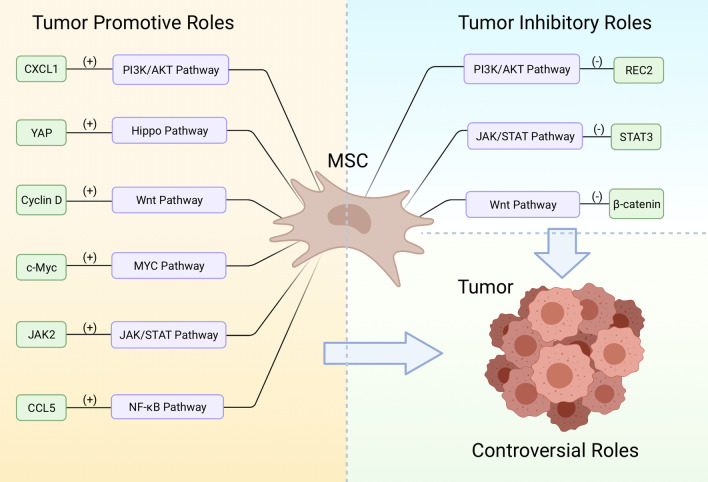
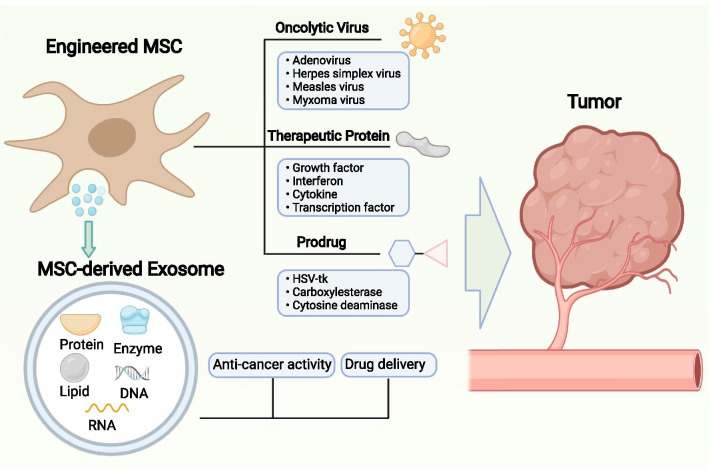
The multipotent mesenchymal stem/stromal cells (MSCs), initially discovered from bone marrow in 1976, have been identified in nearly all tissues of human body now. The multipotency of MSCs allows them to give rise to osteocytes, chondrocytes, adipocytes, and other lineages. Moreover, armed with the immunomodulation capacity and tumor-homing property, MSCs are of special relevance for cell-based therapies in the treatment of cancer. However, hampered by lack of knowledge about the controversial roles that MSC plays in the crosstalk with tumors, limited progress has been made with regard to translational medicine. Therefore, in this review, we discuss the prospects of MSC-associated anticancer strategies in light of therapeutic mechanisms and signal transduction pathways. In addition, the clinical trials designed to appraise the efficacy and safety of MSC-based anticancer therapies will be assessed according to published data.
Overview
The claims and statistics of this paper haven’t been checked yet.
Run the check — free, no account needed. It reads the open-access text and checks the sources it cites.
Integrity signals
Registry
Cites
Statistics
Figures
Verification
Claims the paper makes
The claims and statistics of this paper haven’t been checked yet.
Run the check — free, no account needed. It reads the open-access text and checks the sources it cites.
Claims other papers make about this one
Each is checked against this paper’s own text: does it say what the citing paper says it does?
The source backs part of the claim, not all of it — or backs it for a different population, condition or comparison.
In the citing paper
“The adaptability of MSCs, although beneficial in regenerative medicine, may elevate the risk of these cells unintentionally developing tumorigenic characteristics in the context of malignancy [300, 301].”
From Mesenchymal stromal cells in bone marrow niche of patients with multiple myeloma: a double-edged sword (2025) · cites this paper as [300]
Experimental — accuracy not yet measuredThe source backs part of the claim, not all of it — or backs it for a different population, condition or comparison.
In the citing paper
“A recent meta-analysis of MSC therapies in oncology revealed that modified MSCs may develop tumorigenic properties under prolonged culture conditions, especially with extensive passaging or exposure to pro-inflammatory cytokines.”
From Mesenchymal stromal cells in bone marrow niche of patients with multiple myeloma: a double-edged sword (2025) · cites this paper as [300]
Experimental — accuracy not yet measuredThe source backs part of the claim, not all of it — or backs it for a different population, condition or comparison.
In the citing paper
“Studies indicate that genetic modifications intended to enhance the regenerative potential of mesenchymal stem cells (MSCs), such as the overexpression of fibroblast growth factor-2 (FGF-2) or hepatocyte growth factor (HGF), may unintentionally promote tumor growth.”
From Mesenchymal stromal cells in bone marrow niche of patients with multiple myeloma: a double-edged sword (2025) · cites this paper as [300]
Experimental — accuracy not yet measuredThe cited source says what the claim attributes to it.
In the citing paper
“Recent investigations have demonstrated that MSCs possess significant plasticity, enabling them to adapt dynamically to their microenvironment.”
From Mesenchymal stromal cells in bone marrow niche of patients with multiple myeloma: a double-edged sword (2025) · cites this paper as [300]
The check wasn’t confident either way, so it gives no verdict — never disputed.
In the citing paper
“Studies indicate that MSCs derived from MM patients possess genetic mutations that increase their susceptibility to malignant transformation.”
From Mesenchymal stromal cells in bone marrow niche of patients with multiple myeloma: a double-edged sword (2025) · cites this paper as [300]
Experimental — accuracy not yet measured
Self-check
Percentages, sums and reported differences re-computed from the paper’s own numbers.
The self-check needs the paper’s full text.
Citations
Cites
Multilineage potential of adult human mesenchymal stem cells
Pittenger, M. F., Mackay, A. M., Beck, S. C., Jaiswal, R. K., Douglas, R., Mosca, J. D., Moorman, M. A., Simonetti, D. W., Craig, S., & Marshak, D. R. (1999) · Science · doi:10.1126/science.284.5411.143 · Cited by 21,052
Siegel, R. L., Miller, K. D., Fuchs, H. E., & Jemal, A. (2021) · CA: A Cancer Journal for Clinicians · doi:10.3322/caac.21654 · Cited by 16,522
Molecular Mechanisms of Stress-Responsive Changes in Collagen and Elastin Networks in Skin
Aziz, J., Shezali, H., Radzi, Z., Yahya, N. A., Abu Kassim, N. H., Czernuszka, J., & Rahman, M. T. (2016) · Skin Pharmacology and Physiology · doi:10.1159/000447017 · Cited by 7,323
Human Adipose Tissue Is a Source of Multipotent Stem Cells
Zuk, P. A., Zhu, M., Ashjian, P. H., Ugarte, D. A. D., Huang, J. I., Mizuno, H., Alfonso, Z. C., Fraser, J. K., Benhaim, P., & Hedrick, M. H. (2002) · Molecular Biology of the Cell · doi:10.1091/mbc.e02-02-0105 · Cited by 6,762
Role of YAP/TAZ in mechanotransduction
Dupont, S., Morsut, L., Aragona, M., Enzo, E., Giulitti, S., Cordenonsi, M., Zanconato, F., Le Digabel, J., Forcato, M., Bicciato, S., et al. (2011) · Nature · doi:10.1038/nature10137 · Cited by 5,979
Stöckl, S., Göttl, C., Grifka, J. K., & Grässel, S. (2013) · Cellular Physiology and Biochemistry · doi:10.1159/000350089 · Cited by 4,670
Tumors: Wounds That Do Not Heal
Flier, J. S., Underhill, L. H., & Dvorak, H. F. (1986) · New England Journal of Medicine · doi:10.1056/nejm198612253152606 · Cited by 4,391 · cited 1×
“The tumor homing property of MSCs Since the development of cancer shares multiple similarities with wound healing, tumors are also known as “wounds that do not heal” [109].”
BackgroundMatrix Crosslinking Forces Tumor Progression by Enhancing Integrin Signaling
Levental, K. R., Yu, H., Kass, L., Lakins, J. N., Egeblad, M., Erler, J. T., Fong, S. F. T., Csiszar, K., Giaccia, A., Weninger, W., et al. (2009) · Cell · doi:10.1016/j.cell.2009.10.027 · Cited by 4,101
Wnt signalling in stem cells and cancer
Reya, T., & Clevers, H. (2005) · Nature · doi:10.1038/nature03319 · Cited by 3,666
The complexity of NF-κB signaling in inflammation and cancer
Hoesel, B., & Schmid, J. A. (2013) · Molecular Cancer · doi:10.1186/1476-4598-12-86 · Cited by 3,277
Research works printed but not linked: 2
- Khakoo AY, Pati S, Anderson SA, Reid W, Elshal MF, Rovira II, et al. Human mesenchymal stem cells exert potent antitumorigenic effects in a model of Kaposi’s sarcoma. J Exp Med. 2006;203(5):1235–47. · DOI · Paper page
- Wang W, Zhong W, Yuan J, Yan C, Hu S, Tong Y, et al. Involvement of Wnt/β-catenin signaling in the mesenchymal stem cells promote metastatic growth and chemoresistance of cholangiocarcinoma. Oncotarget. 2015;6(39):42276–89. · DOI
Cited by
Sorted by citations
Stromal cells in the tumor microenvironment: accomplices of tumor progression?
Zhao, Y. F., Shen, M., Wu, L., Yang, H., Yao, Y., Yang, Q., Du, J., Liu, L., Li, Y., & Bai, Y. (2023) · Cell Death and Disease · doi:10.1038/s41419-023-06110-6 · Cited by 487
Emerging role of exosomes in cancer therapy: progress and challenges
Li, J., Wang, J., & Chen, Z. (2025) · Molecular Cancer · doi:10.1186/s12943-024-02215-4 · Cited by 297
Yu, L., Zhu, G., Zhang, Z., Yu, Y., Zeng, L., Xu, Z., Weng, J., Xia, J., Li, J., & Pathak, J. L. (2023) · Journal of Nanobiotechnology · doi:10.1186/s12951-023-01969-1 · Cited by 200
Cancer Resistance to Immunotherapy: Comprehensive Insights with Future Perspectives
Said, S. S., & Ibrahim, W. N. (2023) · Pharmaceutics · doi:10.3390/pharmaceutics15041143 · Cited by 134
Hallmarks of cancer resistance
Tufail, M., Hu, J.-J., Liang, J., He, C., Wan, W., Huang, Y., Jiang, C., Wu, H., & Li, N. (2024) · iScience · doi:10.1016/j.isci.2024.109979 · Cited by 137
Metadata
- Authors
- Lan, T., Luo, M., & Wei, X.
- Affiliations
- Sichuan University (CN)
- Corresponding author
- Luo, Min
- Wei, Xiawei
- ORCID
- Venue
- Journal of Hematology & Oncology
- Published
- 2021-11-17
- Volume
- 14
- Issue
- 1
- Pages
- 195-195
- ISSN
- 1756-8722 (ISSN-L)
- PMC
- PMC8596342
- OpenAlex
- W3211554128
- Cited by
- 374
- References
- 205
- Citations by year
- 2026: 63 · 2025: 105 · 2024: 103 · 2023: 91 · 2022: 12
- FWCI
- 7.34
- Type
- journal article
- Language
- en
- Open access
- gold
- doi.org
- Locations
- Journal of Hematology & Oncology (publishedVersion, cc-by)
- PubMed Central (publishedVersion, cc-by)
- PubMed (publishedVersion)
- DOAJ (DOAJ: Directory of Open Access Journals) (submittedVersion, cc-by-sa)
- Funders
- National Natural Science Foundation Regional Innovation and Development (U19A2003)
- National Major Scientific and Technological Special Project for “Significant New Drugs Development” (2018ZX09733001)
- Excellent Youth Foundation of the Sichuan Scientific Committee Grant in China (2019JDJQ008)
- Development Program of China (2016YFA0201402)
- National Natural Science Foundation of China (31800773)
- Sichuan Science and Technology Program (2019YJ0063)
- Topics
- Life Sciences › Biochemistry, Genetics and Molecular Biology › Cell Biology › Mesenchymal stem cell research
- Health Sciences › Medicine › Oncology › Cancer Cells and Metastasis
- Life Sciences › Biochemistry, Genetics and Molecular Biology › Biotechnology › Bacterial Cancer Therapy
- Keywords
- mesenchymal stem cells, cancer therapy, cell therapy, immunomodulation, tumor homing, signaling pathways, clinical trials, translational medicine
- MeSH terms
- Translational Science, Biomedical, Animals, Humans, Neoplasms, Mesenchymal Stem Cell Transplantation, Immunomodulation, Mesenchymal Stem Cells
About these checks
Registry, retraction, Cites and statistics results are computed, not judged, with one exception: a printed reference that no index lists is read once by a model before it counts as a citation error. Claims are extracted by a model and kept only when their quote appears verbatim in the text; each cited source is then checked, with a model’s help, for whether it says what the claim relies on. Those verdicts can be wrong — read the claim’s quote and the cited source before relying on one.
Statistics and arithmetic are recomputed, not judged.
Confidence bands are shown only for fields calibrated on our annotated test set. None is calibrated yet, so no band is shown.
What counts as a claim ›How we measure confidence ›How we check this ›
Are you an author, or do you see a problem with this page? Request a review
