

The DOI matches its Crossref record; 89 of the 89 references it cites were found in a registry or an index.
Metabolic reprogramming: the emerging concept and associated therapeutic strategies
Open accessAbstract
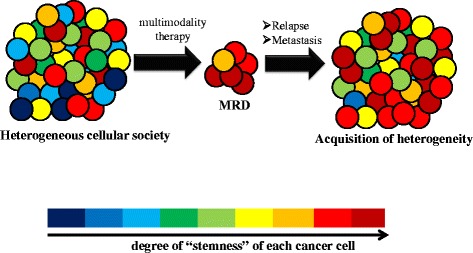
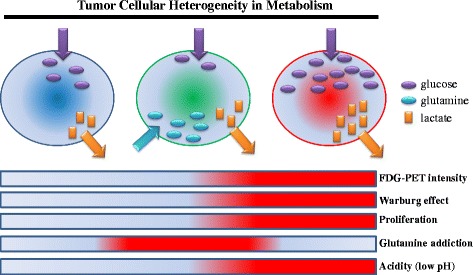
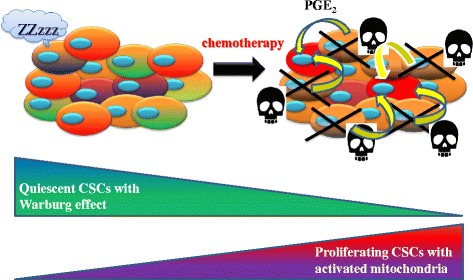
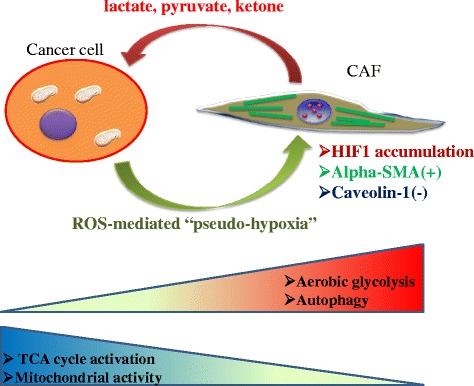
Tumor tissue is composed of cancer cells and surrounding stromal cells with diverse genetic/epigenetic backgrounds, a situation known as intra-tumoral heterogeneity. Cancer cells are surrounded by a totally different microenvironment than that of normal cells; consequently, tumor cells must exhibit rapidly adaptive responses to hypoxia and hypo-nutrient conditions. This phenomenon of changes of tumor cellular bioenergetics, called "metabolic reprogramming", has been recognized as one of 10 hallmarks of cancer. Metabolic reprogramming is required for both malignant transformation and tumor development, including invasion and metastasis. Although the Warburg effect has been widely accepted as a common feature of metabolic reprogramming, accumulating evidence has revealed that tumor cells depend on mitochondrial metabolism as well as aerobic glycolysis. Remarkably, cancer-associated fibroblasts in tumor stroma tend to activate both glycolysis and autophagy in contrast to neighboring cancer cells, which leads to a reverse Warburg effect. Heterogeneity of monocarboxylate transporter expression reflects cellular metabolic heterogeneity with respect to the production and uptake of lactate. In tumor tissue, metabolic heterogeneity induces metabolic symbiosis, which is responsible for adaptation to drastic changes in the nutrient microenvironment resulting from chemotherapy. In addition, metabolic heterogeneity is responsible for the failure to induce the same therapeutic effect against cancer cells as a whole. In particular, cancer stem cells exhibit several biological features responsible for resistance to conventional anti-tumor therapies. Consequently, cancer stem cells tend to form minimal residual disease after chemotherapy and exhibit metastatic potential with additional metabolic reprogramming. This type of altered metabolic reprogramming leads to adaptive/acquired resistance to anti-tumor therapy. Collectively, complex and dynamic metabolic reprogramming should be regarded as a reflection of the "robustness" of tumor cells against unfavorable conditions. This review focuses on the concept of metabolic reprogramming in heterogeneous tumor tissue, and further emphasizes the importance of developing novel therapeutic strategies based on drug repositioning.
Overview
The claims and statistics of this paper haven’t been checked yet.
Run the check — free, no account needed. It reads the open-access text and checks the sources it cites.
Integrity signals
Registry
Cites
Statistics
Figures
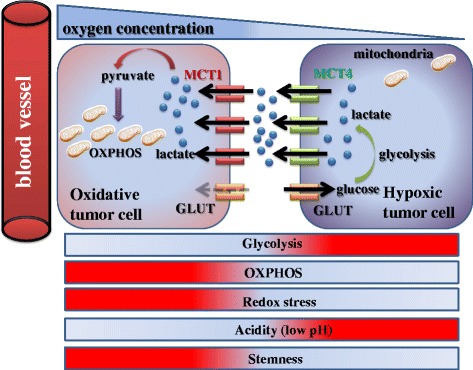
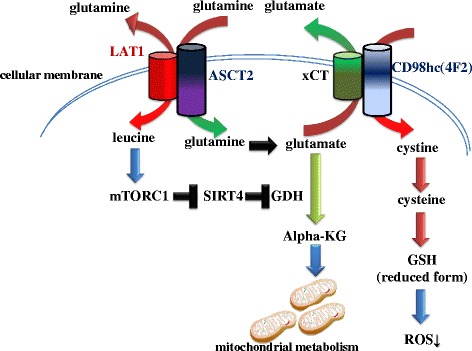
Verification
Claims the paper makes
The claims and statistics of this paper haven’t been checked yet.
Run the check — free, no account needed. It reads the open-access text and checks the sources it cites.
Claims other papers make about this one
Each is checked against this paper’s own text: does it say what the citing paper says it does?
In the citing paper
“In oxygenated environment, tumorous or even normal cells can consume the excreted metabolites of other cells located in the stroma.”
From Hypoxia Signaling in Cancer: From Basics to Clinical Practice (2021) · cites this paper as [37]
In the citing paper
“lactate produced during “lactic glycolysis” of hypoxic or pseudo-hypoxic cells can be utilized in this manner [37] (Figure 6).”
From Hypoxia Signaling in Cancer: From Basics to Clinical Practice (2021) · cites this paper as [37]
Self-check
Percentages, sums and reported differences re-computed from the paper’s own numbers.
The self-check needs the paper’s full text.
Citations
Cites
Hallmarks of Cancer: The Next Generation
Hanahan, D., & Weinberg, R. A. (2011) · Cell · doi:10.1016/j.cell.2011.02.013 · Cited by 66,590
Warburg, O. (1956) · Science · doi:10.1126/science.123.3191.309 · Cited by 13,425
TOR signaling in growth and metabolism
Wullschleger, S., Loewith, R., & Hall, M. N. (2006) · Cell · doi:10.1016/j.cell.2006.01.016 · Cited by 5,787
Kalluri, R., & Zeisberg, M. (2006) · Nature Reviews Cancer · doi:10.1038/nrc1877 · Cited by 4,538
The metabolism of tumors in the body
Warburg, O., Wind, F., & Negelein, E. (1927) · Journal of General Physiology · doi:10.1085/jgp.8.6.519 · Cited by 4,416
Otto Warburg's contributions to current concepts of cancer metabolism
Koppenol, W. H., Bounds, P. L., & Dang, C. V. (2011) · Nature Reviews Cancer · doi:10.1038/nrc3038 · Cited by 3,427
Metabolic Reprogramming: A Cancer Hallmark Even Warburg Did Not Anticipate
Ward, P. S., & Thompson, C. B. (2012) · Cancer Cell · doi:10.1016/j.ccr.2012.02.014 · Cited by 3,233
Role of the Vascular Endothelial Growth Factor Pathway in Tumor Growth and Angiogenesis
Hicklin, D. J., & Ellis, L. M. (2004) · Journal of Clinical Oncology · doi:10.1200/jco.2005.06.081 · Cited by 3,057
Influence of tumour micro-environment heterogeneity on therapeutic response
Junttila, M. R., & de Sauvage, F. J. (2013) · Nature · doi:10.1038/nature12626 · Cited by 2,694
Autophagy in Human Health and Disease
Choi, A. M. K., Ryter, S. W., & Levine, B. (2013) · New England Journal of Medicine · doi:10.1056/nejmra1205406 · Cited by 2,583
Cited by
Sorted by citations
Ferroptosis, a new form of cell death: opportunities and challenges in cancer
Mou, Y., Wang, J., Wu, J., He, D., Zhang, C., Duan, C., & Li, B. (2019) · Journal of Hematology & Oncology · doi:10.1186/s13045-019-0720-y · Cited by 1,964
Anand, U., Dey, A., Chandel, A. K. S., Sanyal, R., Mishra, A., Pandey, D. K., Falco, V. D., Upadhyay, A., Kandimalla, R. J. L., Chaudhary, A., et al. (2022) · Genes & Diseases · doi:10.1016/j.gendis.2022.02.007 · Cited by 2,011
Signaling pathways in cancer-associated fibroblasts and targeted therapy for cancer
Wu, F., Yang, J., Liu, J., Wang, Y., Mu, J., Zeng, Q., Deng, S., & Zhou, H. (2021) · Signal Transduction and Targeted Therapy · doi:10.1038/s41392-021-00641-0 · Cited by 773
Emerging roles and the regulation of aerobic glycolysis in hepatocellular carcinoma
Feng, J., Li, J., Wu, L., Yu, Q., Ji, J., Wu, J., Dai, W., & Guo, C. (2020) · Journal of Experimental & Clinical Cancer Research · doi:10.1186/s13046-020-01629-4 · Cited by 706
Lee, S. Y., Jeong, E. K., Ju, M. K., Jeon, H. M., Kim, M. Y., Kim, C. H., Park, H. G., Han, S. I., & Kang, H. S. (2017) · Molecular Cancer · doi:10.1186/s12943-016-0577-4 · Cited by 592
Metadata
- Authors
- Yoshida, G. J.
- Affiliations
- Tokyo Medical and Dental University (JP)
- Corresponding author
- Yoshida, Go J.
- ORCID
- Yoshida, Go J.
- Venue
- Journal of Experimental & Clinical Cancer Research
- Published
- 2015-10-06
- Volume
- 34
- Issue
- 1
- Pages
- 111-111
- ISSN
- 0392-9078 (ISSN-L)
- 1756-9966
- PMC
- PMC4595070
- OpenAlex
- W2114090713
- Cited by
- 716
- References
- 89
- Citations by year
- 2026: 60 · 2025: 83 · 2024: 99 · 2023: 77 · 2022: 80 · 2021: 91 · 2020: 71 · 2019: 46 · 2018: 45 · 2017: 35 · 2016: 27 · 2015: 2
- FWCI
- 3.55
- Type
- journal article
- Language
- en
- Open access
- gold
- doi.org
- Licence
- cc-by
- Locations
- Journal of Experimental & Clinical Cancer Research (publishedVersion, cc-by)
- PubMed Central (publishedVersion, cc-by)
- PubMed (publishedVersion)
- Funders
- Keio University
- Japan Society for the Promotion of Science (15J02898)
- Topics
- Life Sciences › Biochemistry, Genetics and Molecular Biology › Cancer Research › Cancer, Hypoxia, and Metabolism
- Life Sciences › Biochemistry, Genetics and Molecular Biology › Molecular Biology › Metabolism, Diabetes, and Cancer
- Health Sciences › Medicine › Oncology › Cancer Cells and Metastasis
- Keywords
- metabolic reprogramming, Warburg effect, aerobic glycolysis, mitochondrial metabolism, tumor microenvironment, cancer-associated fibroblasts, reverse Warburg effect, monocarboxylate transporters, lactate, metabolic heterogeneity, metabolic symbiosis, cancer stem cells, chemoresistance, drug repurposing, tumor stroma, tumor heterogeneity
- MeSH terms
- Cellular Reprogramming Techniques, Antineoplastic Agents, Cell Transformation, Neoplastic, Energy Metabolism, Glycolysis, Humans, Mitochondria, Neoplasms, Oxidative Phosphorylation, Neoplastic Stem Cells, Drug Resistance, Neoplasm, Tumor Microenvironment
About these checks
Registry, retraction, Cites and statistics results are computed, not judged, with one exception: a printed reference that no index lists is read once by a model before it counts as a citation error. Claims are extracted by a model and kept only when their quote appears verbatim in the text; each cited source is then checked, with a model’s help, for whether it says what the claim relies on. Those verdicts can be wrong — read the claim’s quote and the cited source before relying on one.
Statistics and arithmetic are recomputed, not judged.
Confidence bands are shown only for fields calibrated on our annotated test set. None is calibrated yet, so no band is shown.
What counts as a claim ›How we measure confidence ›How we check this ›
Are you an author, or do you see a problem with this page? Request a review
