

Resistance to anti-EGFR therapies in metastatic colorectal cancer: underlying mechanisms and reversal strategies
Open accessThe DOI matches its Crossref record; 155 of the 156 references it cites were found in a registry or an index, and 1 are not checked yet; 37 of the 185 sources its claims cite were checked for support.
Abstract
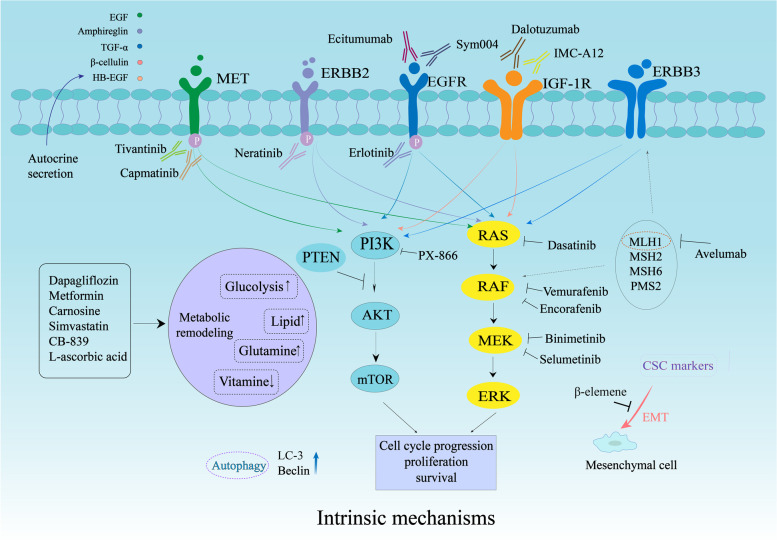
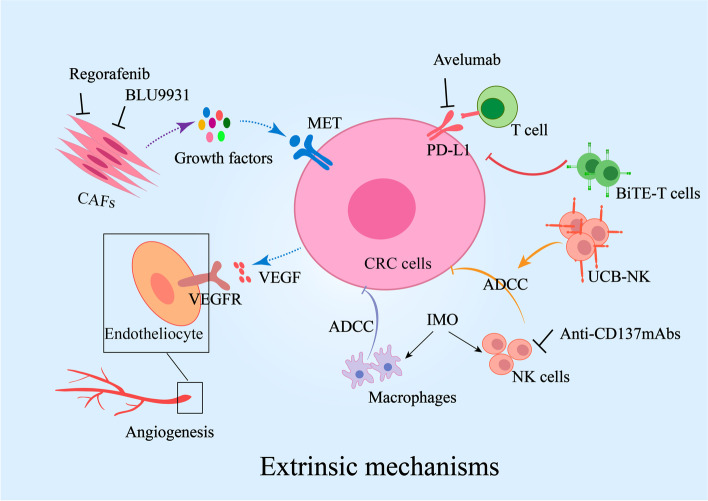
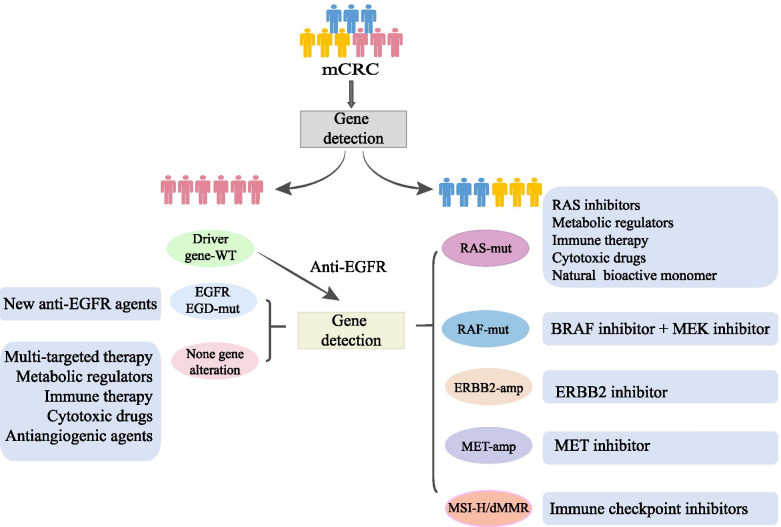
Cetuximab and panitumumab are monoclonal antibodies (mAbs) against epidermal growth factor receptor (EGFR) that are effective agents for metastatic colorectal cancer (mCRC). Cetuximab can prolong survival by 8.2 months in RAS wild-type (WT) mCRC patients. Unfortunately, resistance to targeted therapy impairs clinical use and efficiency. The mechanisms of resistance refer to intrinsic and extrinsic alterations of tumours. Multiple therapeutic strategies have been investigated extensively to overcome resistance to anti-EGFR mAbs. The intrinsic mechanisms include EGFR ligand overexpression, EGFR alteration,RAS/RAF/PI3K gene mutations, ERBB2/MET/IGF-1R activation, metabolic remodelling, microsatellite instability and autophagy. For intrinsic mechanisms, therapies mainly cover the following: new EGFR-targeted inhibitors, a combination of multitargeted inhibitors, and metabolic regulators. In addition, new cytotoxic drugs and small molecule compounds increase the efficiency of cetuximab. Extrinsic alterations mainly disrupt the tumour microenvironment, specifically immune cells, cancer-associated fibroblasts (CAFs) and angiogenesis. The directions include the modification or activation of immune cells and suppression of CAFs and anti-VEGFR agents. In this review, we focus on the mechanisms of resistance to anti-EGFR monoclonal antibodies (anti-EGFR mAbs) and discuss diverse approaches to reverse resistance to this therapy in hopes of identifying more mCRC treatment possibilities.
Verified 2026-10-06 · 1 reference not checked yet
Overview
CoChat Summary
TL;DR
This review summarizes intrinsic and extrinsic mechanisms of resistance to anti-EGFR monoclonal antibodies in metastatic colorectal cancer and discusses preclinical and clinical strategies to reverse that resistance. It emphasizes that resistance is driven by genetic alterations, compensatory signaling, metabolic remodeling, immune microenvironment changes, CAFs, and angiogenesis, with combination and multitargeted approaches showing the most promise.
Key findings
- Anti-EGFR mAbs benefit only a subset of mCRC patients: cetuximab plus FOLFIRI reduced progression risk by 15% and increased OS by 8.2 months in KRAS WT mCRC versus FOLFIRI alone, but clinical benefit in responders lasts only 8–10 months, and approximately 80% of responders develop resistance.
- Intrinsic resistance mechanisms include EGFR ligand overexpression, EGFR extracellular domain mutations (e.g., G465R, G465E, S468R, S492R), RAS/RAF/PI3K pathway mutations, ERBB2/MET/IGF-1R activation, metabolic remodeling, microsatellite instability, autophagy, CSCs, and EMT.
- Reversal strategies include new anti-EGFR antibodies (necitumumab, Sym004, GC1118, MM-151), multitargeted inhibitors, metabolic regulators, immune therapies, CAF suppression, and antiangiogenic agents. Notable reported results include encorafenib + binimetinib + cetuximab in BRAF V600E mCRC (ORR 26% vs 2%; mOS 9.0 vs 5.4 months), capmatinib + gefitinib in MET-amplified disease (ORR 47%), and tivantinib + cetuximab (ORR 9.8%, mPFS 2.6 months, mOS 9.2 months).
- Extrinsic resistance involves impaired ADCC, dysfunctional NK/T cells, CAF-secreted growth factors, and angiogenesis; avelumab + cetuximab in RAS WT acquired resistance gave mPFS 3.6 months and mOS 11.6 months, while regorafenib + cetuximab produced partial response in 1/17 and stable disease in 7/17 patients.
Methods
- Narrative review of published literature on mechanisms of resistance to anti-EGFR mAbs in mCRC and strategies to reverse resistance.
- Synthesizes preclinical and clinical evidence, including two summary tables: Table 1 for clinical trials and Table 2 for preclinical studies.
- No primary experimental data, systematic search strategy, or meta-analysis is described.
Limitations
- The paper does not state formal limitations.
- Evident from the text: as a review, it provides no new primary data, and conclusions depend on cited studies that include small, early-phase, case-report, and preclinical evidence.
- Evident from the text: several strategies show conflicting or negative results (e.g., vemurafenib studies, PX-866 plus cetuximab, selumetinib plus cetuximab, dalotuzumab/IMC-A12), and the paper notes that more clinical studies are needed for MEK inhibitors, new anti-EGFR mAbs, and cytotoxic agents before clinical application.
Model-written summary. Check it against the paper before relying on it.
Integrity signals
Registry
Cites
Statistics
Figures
Verification
Claims the paper makes
25 Valid · 2 Not valid · 105 Not checked · 21 Own results and interpretations
Some cited sources support this claim and some don’t — read each source’s verdict below.
In the paper
“EGFR somatic sequence changes, including G465R, G465E, S468R and S492R, located at the extracellular domains (ECDs) of the EGFR-mAb interaction interface, confer resistance to cetuximab and panitumumab by preventing mAb binding [10, 67, 68].”
§ Resistance to anti-EGFR therapies in metastatic colorectal cancer: underlying mechanisms and reversal strategies > Intrinsic mechanisms of resistance to targeted therapy and related strategies > EGFR ligands and EGFR
What the sources say
- Partly supportedcites [10] Bertotti A Papp E Jones S Adleff V Anagnostou V Lupo B Sausen M Phallen J Hruban CA Tokheim C The genomic landscape of response to EGFR blockade in colorectal cancer Nature. 2015 526 7572 263 267 10.1038/nature14969 26416732 PMC4878148 sourceExperimental — accuracy not yet measured
The paper’s discussion of EGFR ectodomain alterations and Extended Data Figure 2 identify G465R and G465E at the antibody-binding interface and link them to cetuximab resistance; it also reports poor panitumumab sensitivity for G465E tumorgrafts. But the paper says S492R-altered tumors remain sensitive to panitumumab, does not identify S468R in the passages retrieved, and describes impaired binding as a structural inference rather than demonstrating prevention of binding for all four changes. No page numbers are provided in our copy. (LLM, conf=0.90)
- Partly supportedcites [67] Van Emburgh BO Arena S Siravegna G Lazzari L Crisafulli G Corti G Mussolin B Baldi F Buscarino M Bartolini A Acquired RAS or EGFR mutations and duration of response to EGFR blockade in colorectal cancer Nat Commun 2016 7 13665 10.1038/ncomms13665 27929064 PMC5155160 sourceExperimental — accuracy not yet measured
The introductory passage says EGFR extracellular-domain variants impair anti-EGFR antibody binding, and the Discussion identifies mutations in the antibody-binding site as a resistance mechanism. The Results identify S492R in cells exposed to cetuximab. Our copy does not identify G465R, G465E, or S468R, or establish that each listed change prevents binding of both cetuximab and panitumumab. (LLM, conf=0.85)
- Disputedcites [68] Price T Ang A Boedigheimer M Kim TW Li J Cascinu S Ruff P Satya SA Thomas A Tjulandin S Frequency of S492R mutations in the epidermal growth factor receptor: analysis of plasma DNA from patients with metastatic colorectal cancer treated with panitumumab or cetuximab monotherapy Cancer Biol Ther 2020 21 10 891 898 10.1080/15384047.2020.1798695 33026965 PMC7583702 sourceExperimental — accuracy not yet measured
The Results (In vitro receptor binding and activity; page unavailable) show that panitumumab, but not cetuximab, bound to and inhibited S492R mutant EGFR. Thus the claim that S492R prevents binding and confers resistance to both antibodies contradicts this paper. The Discussion mentions G465R resistance to cetuximab, but the retrieved passages do not establish the claimed effects of G465E or S468R. (LLM, conf=0.90)
Checked by a reasoning model — may be wrong.
plainstates a cause- Asserted: passes — The authors put it forward as true.
- Checkable: passes — It can be checked against evidence.
- Load-bearing: passes — The paper’s conclusions depend on it.
- Based: passes — The paper gives a reason why it holds.
- Partly supported
At least one cited source doesn’t support this claim or points to a different paper, and none confirmed it — see the verdicts below.
In the paper
“The hotspot BRAF V600E mutation at codon 600 of exon 15 increases the activity of BRAF kinase by 130- to 700-fold [26, 93–95].”
§ Resistance to anti-EGFR therapies in metastatic colorectal cancer: underlying mechanisms and reversal strategies > Intrinsic mechanisms of resistance to targeted therapy and related strategies > Compensatory feedback loop signalling
What the sources say
- Not checked yetcites [26] Shinozaki E Yoshino T Yamazaki K Muro K Yamaguchi K Nishina T Yuki S Shitara K Bando H Mimaki S Clinical significance of BRAF non-V600E mutations on the therapeutic effects of anti-EGFR monoclonal antibody treatment in patients with pretreated metastatic colorectal cancer: the biomarker research for anti-EGFR monoclonal antibodies by comprehensive Cancer genomics (BREAC) study Br J Cancer 2017 117 10 1450 1458 10.1038/bjc.2017.308 28972961 PMC5680457 source
- Could not verifycites [93] Vinagre J Almeida A Populo H Batista R Lyra J Pinto V Coelho R Celestino R Prazeres H Lima L Frequency of TERT promoter mutations in human cancers Nat Commun 2013 4 2185 10.1038/ncomms3185 23887589 sourceExperimental — accuracy not yet measured
The Results section reports the presence of BRAF V600E in melanomas, but does not discuss its effect on BRAF kinase activity. Searches for exon 15, codon 600, and a 130- to 700-fold activity increase found no passage addressing those parts of the claim; page numbers were unavailable in our copy. (LLM, conf=0.76)
- Not checked yetcites [94] Pakneshan S Salajegheh A Smith RA Lam AK Clinicopathological relevance of BRAF mutations in human cancer Pathology. 2013 45 4 346 356 10.1097/PAT.0b013e328360b61d 23594689 source
- Disputedcites [95] Davies H Bignell GR Cox C Stephens P Edkins S Clegg S Teague J Woffendin H Garnett MJ Bottomley W Mutations of the BRAF gene in human cancer Nature. 2002 417 6892 949 954 10.1038/nature00766 12068308 sourceExperimental — accuracy not yet measured
The kinase assay in “letters to nature” (p. 3) reports that V599E BRAF had about 10.7-fold the basal kinase activity of wild-type BRAF, not 130- to 700-fold. The same page reports a 70- to 138-fold increase in cell transformation, which is a different measure from kinase activity. Our copy calls the mutation V599E. (LLM, conf=0.88)
Checked by a reasoning model — may be wrong.
plainstates a cause- Asserted: passes — The authors put it forward as true.
- Checkable: passes — It can be checked against evidence.
- Load-bearing: unclear — It is unclear whether the paper’s conclusions depend on it.
- Based: passes — The paper gives a reason why it holds.
The cited sources support only part of this claim — read each source’s verdict below.
In the paper
“Mutations in exons 2, 3 and 4 of KRAS and exons 2, 3, and 4 of NRAS are powerful predictors for cetuximab and panitumumab response in mCRC [81, 82].”
§ Resistance to anti-EGFR therapies in metastatic colorectal cancer: underlying mechanisms and reversal strategies > Intrinsic mechanisms of resistance to targeted therapy and related strategies > Compensatory feedback loop signalling
What the sources say
- Partly supportedcites [81] Bokemeyer C Köhne CH Ciardiello F Lenz HJ Heinemann V Klinkhardt U Beier F Duecker K van Krieken JH Tejpar S FOLFOX4 plus cetuximab treatment and RAS mutations in colorectal cancer Eur J Cancer 2015 51 10 1243 1252 10.1016/j.ejca.2015.04.007 25937522 PMC7508202 sourceExperimental — accuracy not yet measured
The Introduction reports poorer outcomes with KRAS exon 2 mutations for both cetuximab and panitumumab and cites evidence linking other RAS mutations to poorer panitumumab outcomes. But this paper directly studies cetuximab, not panitumumab, and its Results say the small subgroup with other RAS mutations did not permit a formal assessment of predictive effects; calling mutations across all the listed exons “powerful predictors” overstates its findings. Page numbers are not available in our copy. (LLM, conf=0.88)
- Partly supportedcites [82] Blons H Emile JF Le Malicot K Julié C Zaanan A Tabernero J Mini E Folprecht G Van Laethem JL Thaler J Prognostic value of KRAS mutations in stage III colon cancer: post hoc analysis of the PETACC8 phase III trial dataset Ann Oncol 2014 25 12 2378 2385 10.1093/annonc/mdu464 25294886 sourceExperimental — accuracy not yet measured
The Introduction (p. 2) says KRAS status predicts resistance to EGFR inhibitors in metastatic colorectal cancer. It does not establish the claimed predictive value for KRAS and NRAS mutations across exons 2, 3, and 4, or specifically address response to both cetuximab and panitumumab; the Discussion (p. 5) describes testing KRAS exon 2 and BRAF mutations for prognosis in stage III disease. (LLM, conf=0.88)
boostedstates an association- Asserted: passes — The authors put it forward as true.
- Checkable: passes — It can be checked against evidence.
- Load-bearing: passes — The paper’s conclusions depend on it.
- Based: passes — The paper gives a reason why it holds.
- Partly supported
The sources with a verdict support this claim; the rest weren’t checked yet, have no full text we could read, or their verdicts aren’t rated yet.
In the paper
“Gene mutations downstream of the EGFR signalling pathway, including RAS/RAF/MEK and PI3K/AKT/mTOR, significantly contribute to drug resistance [9–11].”
§ Resistance to anti-EGFR therapies in metastatic colorectal cancer: underlying mechanisms and reversal strategies > Background
What the sources say
- Not checked yetcites [9] Karapetis CS Khambata-Ford S Jonker DJ O'Callaghan CJ Tu D Tebbutt NC Simes RJ Chalchal H Shapiro JD Robitaille S K-ras mutations and benefit from cetuximab in advanced colorectal cancer N Engl J Med 2008 359 17 1757 1765 10.1056/NEJMoa0804385 18946061 source
- Supportedcites [10] Bertotti A Papp E Jones S Adleff V Anagnostou V Lupo B Sausen M Phallen J Hruban CA Tokheim C The genomic landscape of response to EGFR blockade in colorectal cancer Nature. 2015 526 7572 263 267 10.1038/nature14969 26416732 PMC4878148 source
The Abstract (Results passage) states that in KRAS wild-type CRC tumorgrafts, alterations in all genes known to be involved in EGFR therapeutic resistance — NRAS, BRAF V600E, MET, ERBB2, plus PIK3CA exon 20 and PTEN truncating/deletion alterations — were detected in cetuximab-resistant tumors, and that 'the enrichment of mutations in these pathways in the resistant tumorgrafts was statistically significant (p<0.001)' and 'alterations in any of these members may be sufficient to render cells insensitive to EGFR inhibition'. Extended Data Fig. 1 is titled 'EGFR signaling pathway genes involved in cetuximab resistance or sensitivity' and depicts members of the RAS and PI3K pathways, while Extended Data Fig. 4 shows ectopic expression of resistance-associated mutations (EGFR G465E, MAP2K1 K57N) inducing cetuximab resistance — supporting a causal contribution of RAS/RAF/MEK and PI3K pathway mutations to anti-EGFR antibody resistance. The pathway naming 'PI3K/AKT/mTOR' is a generic label; our copy documents PIK3CA/PTEN (and AKT signalling via IRS2) rather than MTOR mutations, which does not weaken the attributed point. (LLM, conf=0.85)
- Not checked yetcites [11] De Roock W Claes B Bernasconi D De Schutter J Biesmans B Fountzilas G Kalogeras KT Kotoula V Papamichael D Laurent-Puig P Effects of KRAS, BRAF, NRAS, and PIK3CA mutations on the efficacy of cetuximab plus chemotherapy in chemotherapy-refractory metastatic colorectal cancer: a retrospective consortium analysis Lancet Oncol. 2010 11 8 753 762 10.1016/S1470-2045(10)70130-3 20619739 source
plainstates a cause- Asserted: passes — The authors put it forward as true.
- Checkable: passes — It can be checked against evidence.
- Load-bearing: passes — The paper’s conclusions depend on it.
- Based: passes — The paper gives a reason why it holds.
Every source the paper cites for this claim was checked and supports it.
In the paper
“Progression-free survival (PFS) and OS of patients taking necitumumab plus mFOLFOX6 were comparable to those of the cetuximab and FOLFOX regimens [21].”
§ Resistance to anti-EGFR therapies in metastatic colorectal cancer: underlying mechanisms and reversal strategies > Intrinsic mechanisms of resistance to targeted therapy and related strategies > EGFR ligands and EGFR
What the sources say
- Supportedcites [21] Elez E Hendlisz A Delaunoit T Sastre J Cervantes A Varea R Chao G Wallin J Tabernero J Phase II study of necitumumab plus modified FOLFOX6 as first-line treatment in patients with locally advanced or metastatic colorectal cancer Br J Cancer 2016 114 4 372 380 10.1038/bjc.2015.480 26766738 PMC4815776 source
The Discussion explicitly states that OS and PFS with necitumumab plus mFOLFOX6 were comparable with those reported in previous studies of cetuximab combined with FOLFOX regimens. This is a cross-trial comparison, not a head-to-head finding. (LLM, conf=0.94)
plain- Asserted: passes — The authors put it forward as true.
- Checkable: passes — It can be checked against evidence.
- Load-bearing: unclear — It is unclear whether the paper’s conclusions depend on it.
- Based: passes — The paper gives a reason why it holds.
- Supported
106 more claims · 17 with their cited sources checked
Create a free account to see all 153 claims and to verify the 148 references still open.
- Probably not a substantial claim. 6
- It may state two separate claims as one. 38
Claims other papers make about this one
Each is checked against this paper’s own text: does it say what the citing paper says it does?
In the citing paper
“Progressive disease following anti-EGFR therapy may result from acquired resistance [45,46], which may result from any one of several causes [47].”
From Recent Advances in Therapeutic Strategies to Improve Colorectal Cancer Treatment (2024) · cites this paper as [47]
Self-check
Percentages, sums and reported differences re-computed from the paper’s own numbers.
Each contradiction between two passages listed here was confirmed by an independent check.
Rated minor: it would not touch a result — a value no result rests on, a p-value that stays on the same side of the significance level, or a conflict that is clerical, resolved elsewhere in the paper, or outside its own findings.
In the paper
§ Resistance to anti-EGFR therapies in metastatic colorectal cancer: underlying mechanisms and reversal strategies > Intrinsic mechanisms of resistance to targeted therapy and related strategies
“| Immunity therapy | CAFs | BLU9931 | Cell | Unselected | BLU9931 + cetuximab VS cetuximab | Sensitive VS insensitive | [58] |”
§ Resistance to anti-EGFR therapies in metastatic colorectal cancer: underlying mechanisms and reversal strategies > Extrinsic mechanisms of resistance to targeted therapy and related strategies > CAFs and inhibitors
“The combination of BLU9931,an FGFR4 inhibitor, with cetuximab presented profound antitumour activity compared to cetuximab alone [57]. Regorafenib, a multikinase inhibitor targeting FGFR, VEGF and PDGFR-β, was found to overcome cetuximab resistance in GEO-CR and SW48-CR cells in vitro and in vivo [58].”
Rated minor: it would not touch a result — a value no result rests on, a p-value that stays on the same side of the significance level, or a conflict that is clerical, resolved elsewhere in the paper, or outside its own findings.
In the paper
§ Resistance to anti-EGFR therapies in metastatic colorectal cancer: underlying mechanisms and reversal strategies > Intrinsic mechanisms of resistance to targeted therapy and related strategies
“| MET inhibitors | MET | Tivantinib | Phase II | mCRC | KRAS mutation | Tivantinib + cetuximab | ORR: 9.8%, mPFS: 2.6m,mOS:9.2m | [33] |”
§ Resistance to anti-EGFR therapies in metastatic colorectal cancer: underlying mechanisms and reversal strategies > References
“33. Rimassa L Bozzarelli S Pietrantonio F Cordio S Lonardi S Toppo L Zaniboni A Bordonaro R Di Bartolomeo M Tomasello G Phase II study of Tivantinib and Cetuximab in patients with KRAS wild-type metastatic colorectal Cancer with acquired resistance to EGFR inhibitors and emergence of MET overexpression:”
Rated minor: it would not touch a result — a value no result rests on, a p-value that stays on the same side of the significance level, or a conflict that is clerical, resolved elsewhere in the paper, or outside its own findings.
In the paper
§ Resistance to anti-EGFR therapies in metastatic colorectal cancer: underlying mechanisms and reversal strategies > Intrinsic mechanisms of resistance to targeted therapy and related strategies
“| MET inhibitors | MET | Capmatinib | Phase II | mCRC | MET amplification | Capmatinib + gefitinib | ORR: 47% | [34] |”
§ Resistance to anti-EGFR therapies in metastatic colorectal cancer: underlying mechanisms and reversal strategies > References
“34. Wu YL Zhang L Kim DW Liu X Lee DH Yang JC Ahn MJ Vansteenkiste JF Su WC Felip E Phase Ib/II study of Capmatinib (INC280) plus Gefitinib after failure of epidermal growth factor receptor (EGFR) inhibitor therapy in patients with EGFR-mutated, MET factor-dysregulated non-small-cell lung Cancer”
Rated minor: it would not touch a result — a value no result rests on, a p-value that stays on the same side of the significance level, or a conflict that is clerical, resolved elsewhere in the paper, or outside its own findings.
In the paper
§ Resistance to anti-EGFR therapies in metastatic colorectal cancer: underlying mechanisms and reversal strategies > Intrinsic mechanisms of resistance to targeted therapy and related strategies
“| New anti-EGFR mAbs | EGFR ECD | Sym004 | Phase I | mCRC | KRAS WT | Sym004 or investigator’s choice | mOS: 12.8m VS 7.3m | [22] |”
§ Resistance to anti-EGFR therapies in metastatic colorectal cancer: underlying mechanisms and reversal strategies > Intrinsic mechanisms of resistance to targeted therapy and related strategies > EGFR ligands and EGFR
“A multicentre, phase 2 clinical trial further confirmed that Sym004 improved the OS of anti-EGFR-refractory mCRC by 5.5 months [22].”
Rated minor: it would not touch a result — a value no result rests on, a p-value that stays on the same side of the significance level, or a conflict that is clerical, resolved elsewhere in the paper, or outside its own findings.
In the paper
§ Resistance to anti-EGFR therapies in metastatic colorectal cancer: underlying mechanisms and reversal strategies > Intrinsic mechanisms of resistance to targeted therapy and related strategies
“| IGF-1R inhibitors | IGF-1R | IMC-A12 | Phase II | mCRC | Unselected | IMC-A12 + cetuximab VS IMC-A12 | Non response | [36] |”
§ Resistance to anti-EGFR therapies in metastatic colorectal cancer: underlying mechanisms and reversal strategies > References
“36. Sclafani F Kim TY Cunningham D Kim TW Tabernero J Schmoll HJ Roh JK Kim SY Park YS Guren TK A randomized phase II/III study of Dalotuzumab in combination with Cetuximab and irinotecan”
2 more findings
Create a free account to see every finding of this check.
Citations
Cites
1 retracted
Targeting CD137 enhances the efficacy of cetuximab
Kohrt, H. E., Colevas, A. D., Houot, R., Weiskopf, K., Goldstein, M. J., Lund, P., Mueller, A., Sagiv-Barfi, I., Marabelle, A., Lira, R., et al. (2014) · Journal of Clinical Investigation · doi:10.1172/jci73014 · Cited by 160
RetractedBray, F., Ferlay, J., Soerjomataram, I., Siegel, R. L., Torre, L. A., & Jemal, A. (2018) · CA: A Cancer Journal for Clinicians · doi:10.3322/caac.21492 · Cited by 84,109
Mutations of the BRAF gene in human cancer
Davies, H., Bignell, G. R., Cox, C., Stephens, P., Edkins, S., Clegg, S., Teague, J., Woffendin, H., Garnett, M. J., Bottomley, W., et al. (2002) · Nature · doi:10.1038/nature00766 · Cited by 10,674
Improved survival with vemurafenib in melanoma with BRAF V600E mutation
Chapman, P. B., Hauschild, A., Robert, C., Haanen, J. B., Ascierto, P., Larkin, J., Dummer, R., Garbe, C., Testori, A., Maio, M., et al. (2011) · New England Journal of Medicine · doi:10.1056/nejmoa1103782 · Cited by 7,720
Cetuximab and Chemotherapy as Initial Treatment for Metastatic Colorectal Cancer
Van Cutsem, E., Köhne, C.-H., Hitre, E., Zaluski, J., Chang Chien, C.-R., Makhson, A., D'Haens, G., Pintér, T., Lim, R., Bodoky, G., et al. (2009) · New England Journal of Medicine · doi:10.1056/nejmoa0805019 · Cited by 3,877
K-ras Mutations and Benefit from Cetuximab in Advanced Colorectal Cancer
Karapetis, C. S., Khambata-Ford, S., Jonker, D. J., O'Callaghan, C. J., Tu, D., Tebbutt, N. C., Simes, R. J., Chalchal, H., Shapiro, J. D., Robitaille, S., et al. (2008) · New England Journal of Medicine · doi:10.1056/nejmoa0804385 · Cited by 3,622
Microsatellite Instability in Colorectal Cancer
Boland, C. R., & Goel, A. (2010) · Gastroenterology · doi:10.1053/j.gastro.2009.12.064 · Cited by 2,456
De Roock, W., Claes, B., Bernasconi, D., De Schutter, J., Biesmans, B., Fountzilas, G., Kalogeras, K. T., Kotoula, V., Papamichael, D., Laurent-Puig, P., et al. (2010) · The Lancet Oncology · doi:10.1016/s1470-2045(10)70130-3 · Cited by 2,144
Unresponsiveness of colon cancer to BRAF(V600E) inhibition through feedback activation of EGFR
Prahallad, A., Sun, C., Huang, S., Di Nicolantonio, F., Salazar, R., Zecchin, D., Beijersbergen, R. L., Bardelli, A., & Bernards, R. (2012) · Nature · doi:10.1038/nature10868 · Cited by 2,051
Van Cutsem, E., Köhne, C.-H., Láng, I., Folprecht, G., Nowacki, M. P., Cascinu, S., Shchepotin, I., Maurel, J., Cunningham, D., Tejpar, S., et al. (2011) · Journal of Clinical Oncology · doi:10.1200/jco.2010.33.5091 · Cited by 1,882
Cited by
Items 101–200 of 247
Chen, Y., & Tang, D. (2025) · Future Oncology · doi:10.1080/14796694.2025.2558287 · Cited by 6
Valladares‐Ayerbes, M., Safont, M. J., González‐Flores, E., Alfonso, P. G., Aranda, E., Muñoz, A.-M. L., Ferrer, E. F., Nogueras, L. C., Rodríguez-Salas, N., Aparicio, J., et al. (2024) · Clinical & Translational Oncology · doi:10.1007/s12094-024-03487-4 · Cited by 8
“The most common are the emergence of RAS, BRAF or EGFR mutations [3–5].”
BackgroundYutao, F. E. N. G., Li, Y., Fen, M. A., Wu, E., CHENG, Z., Shiling, Z. H. O. U., Wang, Z., Li, Y. A. N. G., Xun, S. U. N., & Zhang, J. (2024) · Chinese Journal of Natural Medicines · doi:10.1016/s1875-5364(24)60623-0 · Cited by 7
Zhang, X., Zhou, W., Wu, C., Jiang, J., Guo, Q., Feng, L., Cheng, X., & Zhang, X. (2024) · Scientific Reports · doi:10.1038/s41598-024-59676-2 · Cited by 7
Extracellular RNA in oncogenesis, metastasis and drug resistance
Nelson, H. M., Qu, S., Franklin, J. L., Liu, Q., Pua, H. H., Vickers, K. C., Weaver, A. M., Coffey, R. J., & Patton, J. G. (2024) · RNA Biology · doi:10.1080/15476286.2024.2385607 · Cited by 5
Discovery of potent allosteric antibodies inhibiting EGFR
Fournier, L., Pekar, L., Leuthner, B., Kolmar, H., Toleikis, L., & Becker, S. (2024) · mAbs · doi:10.1080/19420862.2024.2406548 · Cited by 6
Photodynamic Therapy against Colorectal Cancer Using Porphin-Loaded Arene Ruthenium Cages
Ghaddar, S., Pinon, A., Gallardo‐Villagrán, M., Massoud, J., Ouk, C., Carrion, C., Diab‐Assaf, M., Therrien, B., & Liagre, B. (2024) · International Journal of Molecular Sciences · doi:10.3390/ijms251910847 · Cited by 7
Kamynina, М., Rozenberg, J. M., Kushchenko, A. S., Dmitriev, S. E., Modestov, A., Kamashev, D., Гайфуллин, Н., Shaban, N., Suntsova, M., Emelianova, A. A., et al. (2024) · International Journal of Molecular Sciences · doi:10.3390/ijms252212049 · Cited by 7
“However, when activating hotspot KRAS mutation is present, cetuximab is inefficient, as the downstream proliferative signaling is aberrantly activated [44].”
A dynamic molecular landscape in colorectal cancer progression at single-cell resolution
Sheng, J., Li, N., Li, S., Ye, Y., Liao, Y., Zhang, Y., Chen, H., Tu, M., Zhong, G., Xiong, C., et al. (2025) · Journal of Translational Medicine · doi:10.1186/s12967-025-06785-9 · Cited by 10
Scarabel, L., Bignucolo, A., Toffoli, G., Cecchin, E., & Mattia, E. D. (2022) · Pharmaceutics · doi:10.3390/pharmaceutics14112468 · Cited by 6
LINC01485 contributes to colorectal cancer progression by targeting miR ‐383‐5p/ KRT80 axis
Gao, X., Wang, G., Zhang, M., Zhang, X., Zhang, S., & Long, H. (2023) · Environmental Toxicology · doi:10.1002/tox.23983 · Cited by 7
“8 These lncRNAs are competitive endogenous RNAs (ceRNAs) that modulate miRNA/mRNA interactions and participate in many biological processes in cancers such as CRC. 9 For example, the lncRNA terminal differentiation-induced non-coding RNA (TINCR) regulates cluster of differentiation (CD36) expression by sponging miR-10…”
BackgroundInfluentialReprogramming tumor-associated macrophages: The role of MEK-STAT3 inhibition in lung cancer
Rawat, S., Moglad, E. H. O., Afzal, M., Goyal, A., Roopashree, R., Bansal, P., Mishra, S., Prasad, G. V. S., Pramanik, A., Alzarea, S. I., et al. (2024) · Pathology - Research and Practice · doi:10.1016/j.prp.2024.155748 · Cited by 6
Liao, W., Hu, X., Du, Z., Wang, P., & Ding, K. (2022) · Glycoconjugate Journal · doi:10.1007/s10719-022-10088-2 · Cited by 7
Muhammad, F. A., Shareef, A., Jyothi, S. R., Kumar, S., Chauhan, A. S., Gautam, A., Джамшедовна, А. М., Sameer, H. N., Yaseen, A., Athab, Z. H., et al. (2025) · Immunological Investigations · doi:10.1080/08820139.2025.2529970 · Cited by 10
EGFR-targeted tyrosine kinase inhibitors: advancements in cancer therapy
Ali, S., Ilyas, A., Nazar, S., Jha, M., Mathur, V., Tanweer, S., Grover, S., & Alam, O. (2025) · Naunyn-Schmiedeberg s Archives of Pharmacology · doi:10.1007/s00210-025-04596-9 · Cited by 8
Yong-jun, Y., Xiong, Z., Li, W., Lin, Y., Huang, W., & Zhang, S. (2023) · Biochemical and Biophysical Research Communications · doi:10.1016/j.bbrc.2023.08.059 · Cited by 5
Abbas, N., Mourad, M., Smaily, H., Al Mahmasani, L., & Shamseddine, A. (2026) · International Journal of Molecular Sciences · doi:10.3390/ijms27073265 · Cited by 4
“For instance, mutations such as S492R, K467T, and R451C may respond to panitumumab, whereas G465E S464L, G465R, and I491M are associated with resistance [118,132].”
García-Román, S., Garzón‐Ibáñez, M., Bertrán-Alamillo, J., Jordana‐Ariza, N., Giménez-Capitán, A. A., García‐Peláez, B., Vives-Usano, M., Codony‐Servat, J., d'Hondt, E., Rosell, R., et al. (2024) · Translational Oncology · doi:10.1016/j.tranon.2024.101878 · Cited by 5
Corrò, C., Carvalho, J. V. M., Rapti, M., Angelino, P., Tihy, M., Bakaric, A., Puppa, G., Wirapati, P., Durham, A., Ris, F., et al. (2025) · iScience · doi:10.1016/j.isci.2025.114455 · Cited by 4
“21 This underscores the need for future research to explore the therapeutic targeting of these pathways, particularly in the context of immune checkpoint inhibitors.”
A Review and Update on Therapy of Gastrointestinal Tract Tumors: From the Bench to Clinical Practice
Fernández‐Aceñero, M. J., Hernández, D., & del Arco, C. D. (2024) · Journal of Clinical and Translational Pathology · doi:10.14218/jctp.2024.00007 · Cited by 7
“53,54 Most CRCs are sporadic, but there are also familial and hereditary cases linked to some genetic abnormalities.”
Wang, S., Ma, Z., Lv, L., Qian, Y., Liu, S., & Lu, Y. (2025) · Critical Reviews in Oncology/Hematology · doi:10.1016/j.critrevonc.2025.105001 · Cited by 7
Predicting drug response and toxicity in metastatic colorectal cancer: the role of germline markers
Bignucolo, A., Scarabel, L., Toffoli, G., Cecchin, E., & Mattia, E. D. (2022) · Expert Review of Clinical Pharmacology · doi:10.1080/17512433.2022.2101447 · Cited by 4
Chen, C., Cui, H., Liu, H., Wu, Y., Ding, N., Weng, Y., Zhang, W., & Cui, Y. (2022) · Cancers · doi:10.3390/cancers14246021 · Cited by 4
“Furthermore, the heterogeneity of esophageal cancer and drug resistance developed during treatment may also be responsible for the poor efficacy of molecularly targeted drugs [41].”
BackgroundCutshaw, G., Joshi, N., Wen, X., Quam, E., Bogatcheva, G. T., Hassan, N. A., Uthaman, S., Waite, J. R., Sarkar, S., Singh, B., et al. (2024) · Angewandte Chemie · doi:10.1002/ange.202410919 · Cited by 6
Usui, T., Miyake, T., Watabe, T., Kato, H., Yoshii, Y., Naka, S., Abe, K., Masuyama, M., Masunaga, N., Yoshinami, T., et al. (2025) · Breast Cancer Research · doi:10.1186/s13058-025-01972-4 · Cited by 5
“In this study, we anticipated that cetuximab would selectively accumulate in metastatic lesions [23], potentially resulting in a higher SUV max in metastasis-positive SLNs than in negative ones, and that the elevated SUV max would be sustained over time.”
Szemitko, M., Golubinska-Szemitko, E., Sieńko, J., Falkowski, A., & Wiernicki, I. (2023) · Cancers · doi:10.3390/cancers15020541 · Cited by 5
“develops in more than 80% of cases, with the most commonly suggested mechanism being EGFR ligand overexpression [24,25].”
BackgroundLi, W., Yang, Z., Ding, L., Wang, Y., Zhao, X., Chu, J. J., Ji, Q., Yao, M., & Wang, J. (2023) · Acta Pharmaceutica · doi:10.2478/acph-2023-0025 · Cited by 4
Self-citationDang, W., Wu, S., Liu, X., Shen, H., Chen, Y., Zhang, Z., Wang, H., Cai, Z., Li, M., Sun, M., et al. (2024) · BMC Cancer · doi:10.1186/s12885-024-13338-8 · Cited by 6
Jang, S., Jun, H., Eom, S., Zhao, S., Murthy, N., Kang, S., & Kim, H. (2025) · International Journal of Biological Macromolecules · doi:10.1016/j.ijbiomac.2025.142167 · Cited by 3
miR-196b strictly regulates and reliably predicts the response to cetuximab in colorectal cancer
Chen, S., Tan, Z.-L., Lin, Y., Pang, F., Wu, X., Li, X., Cui, Y., Man, W., Li, Y., Li, Y., et al. (2025) · Cellular & Molecular Biology Letters · doi:10.1186/s11658-025-00740-8 · Cited by 5
“Other genes such as EGFR , KRAS , NRAS , BRAF , PIK3 CA , and MET have also been implicated in cetuximab resistance [5–7].”
Pan, Z.-K., Wu, M.-H., Shi, H., Ni, Y.-J., Geng, Q.-L., & Ye, J. (2025) · Clinical Proteomics · doi:10.1186/s12014-025-09545-5 · Cited by 5
Zhang, Z., Wang, H., Zhang, Y., Wang, J., An, Z., Du, Z., Yu, J., & Gong, Y. (2025) · Journal of Drug Delivery Science and Technology · doi:10.1016/j.jddst.2025.107185 · Cited by 3
Gao, C., He, J., Zhao, J., Ni, X., & Xu, Y. (2025) · Cell Death Discovery · doi:10.1038/s41420-025-02577-8 · Cited by 3
“Cetuximab, an anti-epidermal growth factor receptor (EGFR) monoclonal antibody, is ef fi cient for treating metastatic CRC [3].”
Ding, C., Yao, R., Wang, Y., Liu, H., Li, C., & Xie, H. (2025) · Frontiers in Pharmacology · doi:10.3389/fphar.2025.1656372 · Cited by 7
“However, in RAS wild-type patients, alterations in colorectal cancer-related genes during anti-EGFR therapy can lead to drug resistance (Zhou et al., 2021; Ciappina et al., 2025).”
Liu, J., Zeng, J., Zhou, T., Wu, M., & Weng, X. (2025) · Cancer Immunology Immunotherapy · doi:10.1007/s00262-025-04214-w · Cited by 4
“While surgery remains a potentially curative option for early-stage CRC, radiotherapy, chemotherapy, and targeted therapies generally fall short of achieving a cure [3].”
Kawczak, P., & Bączek, T. (2026) · Journal of Clinical Medicine · doi:10.3390/jcm15062387 · Cited by 6
“Given the epithelial origin of CRC and the dependence of many tumors on EGFR-driven signaling, inhibition of this pathway is both biologically rational and clinically validated [52].”
Recent progress in metal-based drugs for colorectal cancer therapy
Liu, X., Zhang, Q., Yang, X., Liang, J., He, Y., Chao, H., & Pan, Y. (2026) · Coordination Chemistry Reviews · doi:10.1016/j.ccr.2026.217971 · Cited by 3
Lee, K., Han, S., Kim, T. W., Ahn, J. B., Baek, J. Y., Cho, S., Lee, H., Kim, J. W., Kim, J., Kim, T., et al. (2023) · Cancer Research and Treatment · doi:10.4143/crt.2023.1117 · Cited by 4
“Unfortunately, innate or acquired resistance following the treatment is an issue that still needs to be addressed [7,8].”
InfluentialZhang, W., Yue, K.-L., Wang, J.-Z., & Zhang, Y. (2023) · World Journal of Gastrointestinal Oncology · doi:10.4251/wjgo.v15.i12.2150 · Cited by 3
“We have previously identified HSF4 as an oncogenic gene in CRC[18].”
InfluentialPetit, J. A., Carroll, G. M., Zhao, J., Pockney, P. G., & Scott, R. J. (2024) · Gastroenterology Insights · doi:10.3390/gastroent15010008 · Cited by 3
“There is evidence that the emergence of resistance to anti-EGFR treatment can be overcome if combined with other therapies simultaneously, such as MEK pathway inhibition [50,51].”
BackgroundValladares, C. T., Valenzuela, G., González, E., Maureira, I., Toro, J., Freire, M., Sepúlveda-Hermosilla, G., Ampuero, D., Blanco, A., Gallegos, I., et al. (2024) · International Journal of Molecular Sciences · doi:10.3390/ijms25094695 · Cited by 6
“Although there is no current clinical recommendation for PIK3CA testing in CRC samples, mutations in this gene could confer resistance to anti-EGFR therapies and, on the other side, represent an opportunity for therapy [25,26].”
BackgroundZhou, Y., Wu, S., & Qu, F.-J. (2024) · World Journal of Gastrointestinal Oncology · doi:10.4251/wjgo.v16.i6.2362 · Cited by 3
“…are usually related to EGFR dependence, activation by EGFR bypass or downstream signaling pathways, and histological phenotypic transformation [22], hyperactivation of other pathways, such as vascular endothelial growth factor and angiogenesis, could potentially contribute to the emergence of…”
Li, D., Bao, X., Lei, S., Cao, W., Zeng, Z., & Chen, T. (2024) · Biology · doi:10.3390/biology13080633 · Cited by 3
“Research has indicated that RAS mutations serve as a reliable indicator of tumor resistance to cetuximab or panitumumab [10].”
BackgroundChen, S., Shi, X., Liu, S. Q., Pei, P., Yang, K., & Hu, L. (2024) · Journal of intelligent medicine. · doi:10.1002/jim4.16 · Cited by 3
Tang, Y., She, Y., Chen, D., Zhou, Y., Liu, Z., Chen, Z., Wan, J., & Yu, R. (2025) · Frontiers in Immunology · doi:10.3389/fimmu.2025.1658535 · Cited by 3
“This relationship likely stems from impaired renal tubular magnesium reabsorption induced by EGFR inhibition, a mechanism validated in colorectal cancer cohorts (35, 36),although its relevance in HNC remains unresolved.”
Rahman, N. I. A., Tham, C. L., & Hamid, R. A. (2024) · Chemico-Biological Interactions · doi:10.1016/j.cbi.2024.111151 · Cited by 5
Recent advances in the treatment of non-small cell lung cancer with MET inhibitors
Zhang, D., Zhang, W., Liu, H., Liu, P., Li, C., Liu, Y., Han, J., & Zhu, G. (2024) · Frontiers in Chemistry · doi:10.3389/fchem.2024.1501844 · Cited by 4
Arora, P. K., Kumar, S., Bansal, S. K., & Sharma, P. C. (2023) · RASAYAN Journal of Chemistry · doi:10.31788/rjc.2023.1638343 · Cited by 4
ERBB4 Drives the Proliferation of BRAF-WT Melanoma Cell LinesPreprint
Lucas, L. M., Cullum, R. L., Woggerman, J. N., Dwivedi, V., Markham, J. A., Kelley, C. M., Knerr, E. L., Cook, L. J., Lucas, H. C., Waits, D. S., et al. (2022) · medRxiv · doi:10.1101/2022.06.20.22276663 · Cited by 4
“antibodies and small molecular tyrosine kinase inhibitors have been approved to treat tumors dependent on these receptors [8-23].”
BackgroundGenomic and micro-environmental insights into drug resistance in colorectal cancer liver metastases
Kuang, J., Li, J., Zhou, S., Li, Y., Lin, J., Huang, W., & Xia, Y. (2025) · Discover Oncology · doi:10.1007/s12672-025-01976-8 · Cited by 2
“In this regard, examining epidermal growth factor receptor (EGFR)-associated molecular expressions is promising due to the critical role of the EGFR signaling pathway in CRC progression and treatment outcomes [26, 27].”
McKenzie, J., Wong, V., Mendis, S. R., Wong, R., Kosmider, S., To, Y. H., Nott, L. M., Shapiro, J. D., Torres, J., Lee, B., et al. (2025) · Clinical Colorectal Cancer · doi:10.1016/j.clcc.2025.04.001 · Cited by 4
Bielo, L. B., Napolitano, S., Avallone, A., Pietrantonio, F., Bordonaro, R., Maiello, E., Pisconti, S., Tamburini, E., Lotesoriere, C., Tortora, G., et al. (2025) · ESMO Open · doi:10.1016/j.esmoop.2025.105877 · Cited by 2
Wang, J., Yu, S., Liang, Q., Wu, Y., Zhang, W., & Awadasseid, A. (2025) · ChemMedChem · doi:10.1002/cmdc.202500738 · Cited by 3
Perspectives of EGFR co-targeting with nanocarriers for anti-TNBC purposes
Białecki, P., Adamiak, M., Pędziwiatr‐Werbicka, E., & Robaszkiewicz, A. (2026) · Genes & Diseases · doi:10.1016/j.gendis.2025.102026 · Cited by 4
“31 Another notable factor is the EGFRvIII mutation, characterized by the deletion of exons 2 — 7, which renders the receptor incapable of ligand binding.”
Zhang, Y., Han, Y., Li, S., Shan, R., Lin, L., Gu, Z., wang, R., Chen, Y., Xiao, J., an, F., et al. (2026) · Redox Biology · doi:10.1016/j.redox.2025.103993 · Cited by 3
“Despite advancements in early detection and treatment strategies, the prognosis for CRC patients remains poor, especially in advanced and metastatic stages [1,6,7,45 – 47].”
Bernacchi, A., Valerii, M. C., Spigarelli, R., Dussias, N. K., Rizzello, F., & Spisni, E. (2026) · International Journal of Molecular Sciences · doi:10.3390/ijms27020649 · Cited by 3
“Drug resistance can be induced by the tumor microenvironment and by mutations within critical signaling cascades, such as the PI3K/AKT and Wnt pathways [11,12].”
EGFR-targeted therapies based on antibody engineering and nanotechnology for colorectal cancer
Shang, X., Zhang, Z., Wu, T., Nan, Y., & Ju, D. (2026) · Biomaterials · doi:10.1016/j.biomaterials.2026.124210 · Cited by 4
Pastor, P. G., Gonzalez, N. S., Salvà, F., Ros, J., Baraibar, I., Rodríguez-Castells, M., de Torres, C. S., García, A., Alcaráz, A., Vaghi, C., et al. (2026) · Genes · doi:10.3390/genes17040460 · Cited by 4
Liang, K., chen, C., Xu, L., Ma, S., Ta, Y., Wang, R., Xiao, C., Zhang, X., Hao, F., Gao, Y., et al. (2026) · Chinese Journal of Natural Medicines · doi:10.1016/s1875-5364(26)61184-3 · Cited by 5
Promoting intestinal regeneration without tumor risk in immune-mediated inflammatory diseases
Díaz‐Basabe, A., He, N., & Villablanca, E. J. (2026) · Trends in Immunology · doi:10.1016/j.it.2026.05.004 · Cited by 2
Jafarlou, M., Jafarlou, V., Nouri, S., Alizadeh, N., Tabrizi, Z. A., Iravani, M., Ghorbaninezhad, F., Shakiba, D., & Baradaran, B. (2026) · Cancer Cell International · doi:10.1186/s12935-026-04385-1 · Cited by 5
“…are most useful for tumors driven by EGFR signaling and can enhance immune effector mechanisms through antibody-dependent cellular cytotoxicity, but their benefit is restricted by RAS/BRAF mutations and acquired bypass signaling through EGFR ectodomain mutations, HER2, or MET activation [108].”
InfluentialLin, L., Tang, Z., Luo, P., Tang, R., Li, H., He, G., Guo, J., & Ding, S. (2026) · Toxicology and Applied Pharmacology · doi:10.1016/j.taap.2026.117981 · Cited by 2
Zhang, Y., Guo, T., Li, S., Ren, Z., Gao, S., Lu, H., Ma, X., Liu, D., Liu, Y., Kong, D., et al. (2023) · Discover Oncology · doi:10.1007/s12672-023-00688-1 · Cited by 2
“Despite advances in targeted chemotherapies, such as cetuximab and bevacizumab, having greatly improved the CRC clinical response over the past few decades, disease relapse and therapeutic resistance are still problems that urgently need to be resolved [3, 4].”
BackgroundSalama, Y., Munakata, S., Osada, T., Takahashi, S., Hattori, K., & Heissig, B. (2024) · Cell Death and Disease · doi:10.1038/s41419-024-07126-2 · Cited by 2
“[14]) and the progression of colonic adenocarcinoma [15]. miR-221 is a downstream target of the EGFR1-RAS-RAF-MEK pathway, and miR-221 is a negative regulator of EGFR expression [16].”
Wei, Y., Qin, L., Wu, X., Li, D., Qian, D., Jiang, H., & Geng, Q. (2025) · BMJ Open · doi:10.1136/bmjopen-2024-094366 · Cited by 4
Personalized therapy in metastatic colorectal cancer: biomarker-driven use of biologics
Sullo, F. G., Gallio, C., Matteucci, L., Bittoni, A., Muratore, M., Esposito, L., Ceredi, B., Gallo, G., Ulivi, P., Rapposelli, I. G., et al. (2025) · Expert Opinion on Biological Therapy · doi:10.1080/14712598.2025.2556911 · Cited by 4
“Although EGFR inhibitors provide clinical benefits, their efficacy is limited by both primary and acquired (secondary) resistance [18].”
Anti-ENO1 antibody combined with metformin against tumor resistance: a novel antibody-based platform
Shu, X., Zhang, H., Liu, S. Y., Sun, L. X., Zhang, T., & Ran, Y. L. (2024) · PeerJ · doi:10.7717/peerj.16817 · Cited by 4
“Of note, drug resistance to CTX in other cancers also raises concerns ( Zhou, Ji & Li, 2021 ).”
BackgroundRen, A., Liu, M., Huang, M., Zhang, S., Fu, Y., & Shi, W. (2024) · Journal of Experimental and Clinical Application of Chinese Medicine · doi:10.62767/jecacm502.1121 · Cited by 1
Targeting long non-coding RNAs as new modulators in anti-EGFR resistance mechanisms
Akbarzadeh-Khiavi, M., Safary, A., & Omidi, Y. (2023) · Bioimpacts · doi:10.34172/bi.2023.27696 · Cited by 2
“11 Numerous genetic factors contribute to the development of resistance mechanisms in cancer cells against anti-EGFR mAbs.”
BackgroundHenrykowska, G., Bartusik-Aebisher, D., Dynarowicz, K., Ramesh, T. S., Smolak, B., & Aebisher, D. (2026) · Pharmaceuticals · doi:10.3390/ph19071041 · Cited by 1
“Such mechanisms include angiogenic escape and epithelial-to-mesenchymal transition (EMT) [25–27].”
Yu, Q.-X., Fu, P.-Y., Zhang, C., Li, L., & Huang, W.-T. (2024) · World Journal of Gastrointestinal Surgery · doi:10.4240/wjgs.v16.i5.1395 · Cited by 3
“In CRC, the most commonly discussed function of MET amplification is an acquired feedback of the activation of PI3K/AKT and MAPK cascades in patients with resistance to anti-epidermal growth factor receptor (EGFR) therapies[10,11].”
Hu, S., Wang, Z. D., Ding, X., Yao, D., Du, Y., & Kong, X. (2025) · Cellular Signalling · doi:10.1016/j.cellsig.2025.111620 · Cited by 1
Hawwas, M. M., Mancy, A. S., Ramadan, M. A., Ibrahim, T. S., Bayoumi, A. H., & Alswah, M. (2025) · Molecular Diversity · doi:10.1007/s11030-025-11127-4 · Cited by 2
Masoudi-Khoram, N., Cheraghi, S., Nazari, M., & Khamseh, M. E. (2025) · Medical Oncology · doi:10.1007/s12032-025-02788-0 · Cited by 1
“Among these molecular alterations, RAS, BRAF, and NTRK mutations, which frequently occur in thyroid cancer, are associated with resistance to targeted therapy [126].”
Erciyestepe, M., Aydın, O., Sonuşen, Ş. D., Öztürk, A. E., Çelik, E., Atçı, M. M., & Ertürk, K. (2025) · Anti-Cancer Drugs · doi:10.1097/cad.0000000000001755 · Cited by 1
BDH2 promotes GLIPR1 promoter methylation and thus increases 5-FU sensitivity in colorectal cancer
Lu, D., Ma, L., Zhang, Q., Xing, C., & Li, Y. (2025) · Biochemical Pharmacology · doi:10.1016/j.bcp.2025.117153 · Cited by 1
Salama, W. M., Radwan, S. O., & Salim, E. I. (2025) · Journal of the Egyptian National Cancer Institute · doi:10.1186/s43046-025-00311-0 · Cited by 4
Gui, P., Han, Z., Yin, Z., Cao, P., Zhou, X., & Li, Y. (2025) · Frontiers in Genetics · doi:10.3389/fgene.2025.1593314 · Cited by 1
“The main mechanisms for EGFR -TKI resistance include EGFR mutations and EGFR overexpression (Karlsen et al., 2021; Zhou et al., 2021; Tian et al., 2022; Blaquier et al., 2023).”
New insights into the effects of microbiome and its derived metabolites on targeted immunotherapy
El-Ghannam, M., Hassanien, M. H., Ameen, Y. A., Turky, E. A., ELattar, G. M., Ray, A. A. E., & Eltalkawy, M. D. (2025) · Journal of the Egyptian National Cancer Institute · doi:10.1186/s43046-025-00330-x · Cited by 1
Fernández‐Simón, E., Tejedera‐Villafranca, A., Fernández‐Garibay, X., Clark, J., Monceau, A., Villalobos, E., Cox, D., Ramón‐Azcón, J., Fernández‐Costa, J. M., & Díaz‐Manera, J. (2026) · Cell Death and Disease · doi:10.1038/s41419-025-08193-9 · Cited by 3
“EGF signaling has been involved in a myriad of cellular processed such as migration of cancer cells and the invasion of tissues, development of myelin, and differentiation of oligodendrocytes [23, 24].”
Wang, Y., Zhao, Y., Ding, K., Zhang, B., Li, M., Chen, J., Yuan, W., Zheng, Q., Fang, M., & 王水明 (2026) · Journal of Ethnopharmacology · doi:10.1016/j.jep.2026.121280 · Cited by 1
Böhm, A. K., Skrip, L. M., Klein, O., Strobl, F., Wieland, J., Arnold, A., Zhou, Y., Papke, B., Sers, C., Modest, D. P., et al. (2026) · Journal of Translational Medicine · doi:10.1186/s12967-026-07945-1 · Cited by 1
“Given that metastatic recurrence affects up to 70% of patients, identifying specific molecular patterns linked to treatment response may prove decisive for improving outcomes [9].”
InfluentialHu, L., Song, Y., Xu, Y., Yao, K., Wang, X., Xu, J., Li, Y., & Hu, S. (2026) · Journal of Molecular Structure · doi:10.1016/j.molstruc.2026.145856 · Cited by 1
Zhao, Z., Ge, G., Gong, M., Liu, Y., Ma, L., Zhang, D., Sun, L., & Song, Y. (2026) · Redox Biology · doi:10.1016/j.redox.2026.104179 · Cited by 2
“…Transition factor (MET) or Human Epidermal growth factor Receptor 2 (HER2) amplification in Epidermal Growth Factor Receptor (EGFR)-targeted therapy, and Insulin-like Growth Factor (cid:0) 1 Receptor (IGF-1R) pathway activation in HER2-positive breast cancer treatment [42 – 45].”
The role of cancer-associated fibroblasts in various cancer drug resistance
Dang, F., Na, J., Xiao, L., Tian, X., Shao, J., Zhong, L., & Zhao, Y. (2026) · Cancer Letters · doi:10.1016/j.canlet.2026.218584 · Cited by 2
Harmych, S. J., Joshi, N., Tanaka, H., Bogatcheva, G. T., Ramirez, M. A., Graves‐Deal, R., Tydings, C. W., Elia, M. T., Mueller, H. R. L., Silvestri, I. M., et al. (2026) · Cancer Letters · doi:10.1016/j.canlet.2026.218607 · Cited by 1
Zhang, Y., Cao, H., Yu, D., Feng, W., 曹守根, Zhou, Y. B., Lau, K. S., & Li, Z. R. (2026) · Technology in Cancer Research & Treatment · doi:10.1177/15330338261461720 · Cited by 1
“36 Targeting TIPE3 therefore represents a promising strategy to overcome resistance, particularly L-OHP resistance in CRC.”
Antibody-drug conjugates in colorectal cancer: advances, challenges, and prospectives
Zeng, L., Zhu, Y., Zhang, K., Liu, B., & Ding, J. (2026) · Biochemical Pharmacology · doi:10.1016/j.bcp.2026.118270 · Cited by 1
Tao, H., Shen, M., Zhang, X., Wang, M., Wu, Y., Sun, H., Chen, L., Yang, Y., Chen, K., & Li, D. (2022) · Journal of Gastrointestinal Oncology · doi:10.21037/jgo-22-1237 · Cited by 1
“GC1118, MM-151), a combination of multitargeted inhibitors, metabolic regulators, new cytotoxic drugs, modification or activation of immune cells, suppression of cancer-associated fibroblasts and anti-VEGFR agents (39).”
HER2 Status in RAS and BRAF Wild-Type Metastatic Colorectal Cancer: A Portuguese Study
Fraga, T., Sousa, M. J., Magalhães, J. C., Basto, R., de Paulo, J. V., Bonito, N., Magalhães, J. P., Figueiredo, P., & SOUSA, G. M. C. D. (2023) · Cureus · doi:10.7759/cureus.42536 · Cited by 2
“5% of patients; KAS wild-type CRC is more prevalent and occurs more frequently on the left side [10,11,14,15,17-19].”
Background李, 鹏. (2024) · World Journal of Cancer Research · doi:10.12677/wjcr.2024.141005 · Cited by 1
Zhai, K., Liu, G., Cao, C., & Wang, X. (2025) · Oncology Letters · doi:10.3892/ol.2025.14908 · Cited by 3
“However, cancer cells can develop resistance to these chemotherapeutic drugs through mechanisms such as drug inactivation, alterations in drug influx and efflux and overexpression of ATP‑binding cassette transport proteins (2).”
Mo, S., Pan, B., Qin, L., Wang, S., Wang, Y., Xu, M., Xia, F., & Gu, W. (2025) · JCO Precision Oncology · doi:10.1200/po-24-00744 · Cited by 2
Understanding Aberrant Signaling to Elude Therapy Escape Mechanisms in Myeloproliferative Neoplasms
Bochicchio, M. T., Battista, V. D., Poggio, P., Carrà, G., Morotti, A., Brancaccio, M., & Lucchesi, A. (2022) · Cancers · doi:10.3390/cancers14040972 · Cited by 1
Lucas, L. M., Cullum, R. L., Woggerman, J. N., Dwivedi, V., Markham, J. A., Kelley, C. M., Knerr, E. L., Cook, L. J., Jacobi, M. A., Taylor, D. C., et al. (2022) · medRxiv · doi:10.1101/2022.06.21.22276707
Integrative Transcriptomics Analysis of Early-Onset and Late-Onset Colorectal CancerPreprint
Al‐Madhagi, H. (2023) · Research Square · doi:10.21203/rs.3.rs-2865282/v1
Borrelli, C., Roberts, M., Eletto, D., Lafzi, A., Kretz, J. A., Fazilaty, H., Hussherr, M., Vinzoni, E. G., Handler, K., Michler, J., et al. (2023) · bioRxiv (Cold Spring Harbor Laboratory) · doi:10.1101/2023.05.15.540681
THE ROLE OF CYTOKINES AND CHEMOKINES IN COLORECTAL CANCER DEVELOPMENT
Kit, O. I., Vladimirova, L. Y., Sagakyants, A. B., Викторовна, Т. А., Zlatnik, E. Y., Dzhenkova, E. A., & Novikova, I. A. (2023) · Современные проблемы науки и образования · doi:10.17513/spno.32805
Kuznetsova, O. A., Lebedeva, A., Kavun, A., Belova, E., Fedyanin, M. Y., Mileyko, V., Ivanov, M. V., & Nosov, D. (2023) · PubMed Central · Cited by 2
Integrative transcriptomics analysis of early-onset and late-onset colorectal cancer
Al‐Madhagi, H. (2023) · Informatics in Medicine Unlocked · doi:10.1016/j.imu.2023.101408
Metadata
- Authors
- Zhou, J., Ji, Q., & Li, Q.
- Affiliations
- Shanghai University of Traditional Chinese Medicine (CN)
- Corresponding author
- Ji, Qing
- Li, Qi
- Venue
- Journal of Experimental & Clinical Cancer Research
- Published
- 2021-10-18
- Volume
- 40
- Issue
- 1
- Pages
- 328-328
- ISSN
- 0392-9078 (ISSN-L)
- 1756-9966
- PMC
- PMC8522158
- OpenAlex
- W3207379781
- Cited by
- 246
- References
- 156
- Citations by year
- 2026: 53 · 2025: 71 · 2024: 60 · 2023: 38 · 2022: 24
- FWCI
- 3.70
- Type
- journal article
- Language
- en
- Open access
- gold
- doi.org
- Licence
- cc-by
- creativecommons.org/licenses/by/4.0 (tdm)
- creativecommons.org/licenses/by/4.0 (vor)
- Locations
- Journal of Experimental & Clinical Cancer Research (publishedVersion, cc-by)
- PubMed Central (publishedVersion, cc-by)
- PubMed (publishedVersion)
- DOAJ (DOAJ: Directory of Open Access Journals) (submittedVersion, cc-by-sa)
- Funders
- national natural science foundation of china (81830120, 82074225)
- Topics
- Health Sciences › Medicine › Oncology › Colorectal Cancer Treatments and Studies
- Health Sciences › Medicine › Pulmonary and Respiratory Medicine › Lung Cancer Treatments and Mutations
- Health Sciences › Medicine › Oncology › HER2/EGFR in Cancer Research
- Keywords
- metastatic colorectal cancer, anti-EGFR monoclonal antibody, cetuximab, panitumumab, anti-EGFR therapy resistance, metabolic remodeling, microsatellite instability, autophagy, tumor microenvironment, cancer-associated fibroblasts, angiogenesis, immune cells, combination therapy
- MeSH terms
- Clinical Decision-Making, Drug Development, Animals, Antineoplastic Agents, Clinical Trials as Topic, Energy Metabolism, Gene Amplification, Humans, Ligands, Mutation, Neovascularization, Pathologic, Protein Binding, Colorectal Neoplasms, Signal Transduction, Treatment Outcome, Drug Resistance, Neoplasm, Disease Management, Protein Kinase Inhibitors, Microsatellite Instability, Molecular Targeted Therapy, Tumor Microenvironment, ErbB Receptors
About these checks
Registry, retraction, Cites and statistics results are computed, not judged, with one exception: a printed reference that no index lists is read once by a model before it counts as a citation error. Claims are extracted by a model and kept only when their quote appears verbatim in the text; each cited source is then checked, with a model’s help, for whether it says what the claim relies on. Those verdicts can be wrong — read the claim’s quote and the cited source before relying on one.
The claim verdicts this report counts are experimental: their accuracy is not yet measured.
A language model drew the claims from the paper on 2026-10-06, under version 3 of the claim definition (model deepseek-v4.1-flash, prompt extract-v3).
A second model labelled each claim on 2026-10-06 (model jev-1.13-20260917, definition revision gold-guideline-v0.2).
Cited sources are checked with a language model’s help (gpt-6-sol and qwen3.8-omni-flash).
Statistics and arithmetic are recomputed, not judged.
Confidence bands are shown only for fields calibrated on our annotated test set. None is calibrated yet, so no band is shown.
What counts as a claim ›How we measure confidence ›How we check this ›
Are you an author, or do you see a problem with this page? Request a review
Data sources
Bibliographic data: Semantic Scholar, OpenAlex, Crossref.
Contains information from the Semantic Scholar Academic Graph Datasets, made available under the ODC Attribution License (ODC-BY 1.0).
Semantic Scholar’s data is described in: Kinney, R., et al. (2023). The Semantic Scholar Open Data Platform. arXiv:2301.10140.
