

Strong synergy with APR-246 and DNA-damaging drugs in primary cancer cells from patients with TP53 mutant High-Grade Serous ovarian cancer
Open accessThe DOI matches its Crossref record; 41 of the 41 references it cites were found in a registry or an index.
Abstract
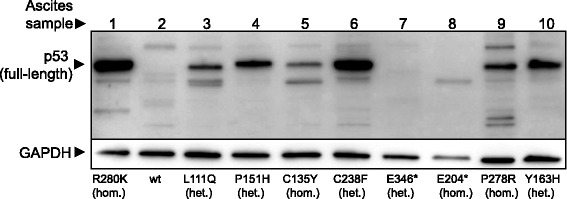
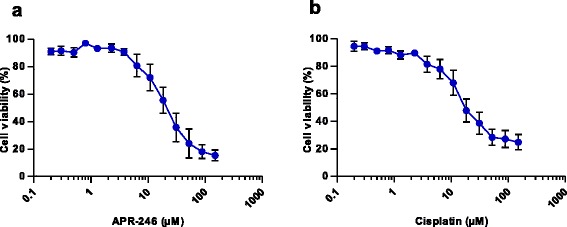
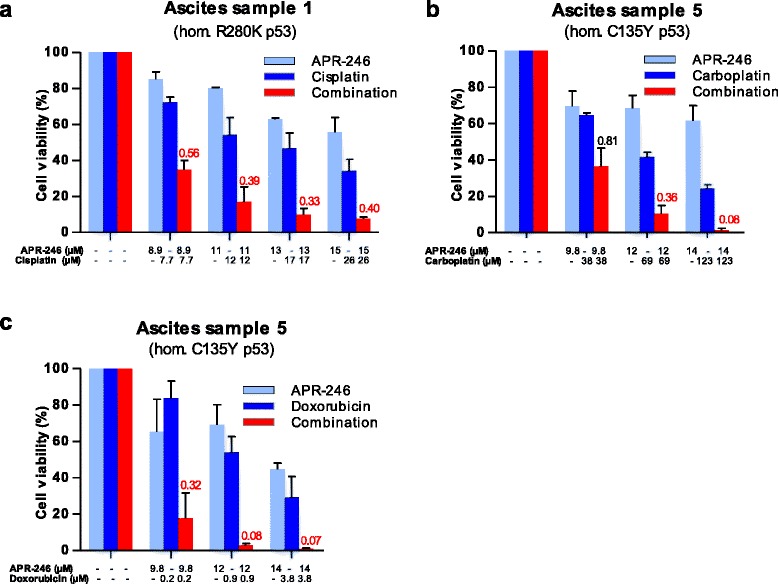
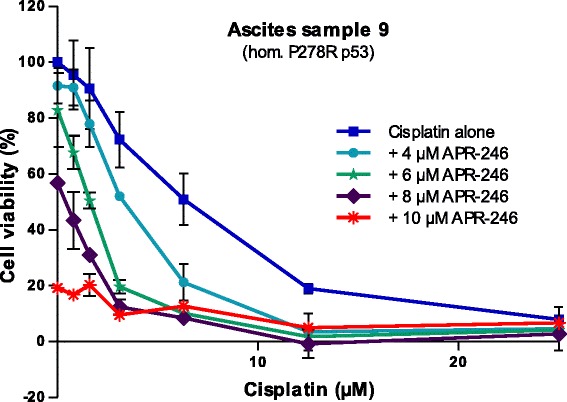
BACKGROUND: Mutation in the tumor suppressor gene TP53 is an early event in the development of high-grade serous (HGS) ovarian cancer and is identified in more than 96 % of HGS cancer patients. APR-246 (PRIMA-1(MET)) is the first clinical-stage compound that reactivates mutant p53 protein by refolding it to wild type conformation, thus inducing apoptosis. APR-246 has been tested as monotherapy in a Phase I/IIa clinical study in hematological malignancies and prostate cancer with promising results, and a Phase Ib/II study in combination with platinum-based therapy in ovarian cancer is ongoing. In the present study, we investigated the anticancer effects of APR-246 in combination with conventional chemotherapy in primary cancer cells isolated from ascitic fluid from 10 ovarian, fallopian tube, or peritoneal cancer patients, 8 of which had HGS cancer. METHODS: Cell viability was assessed with fluorometric microculture cytotoxicity assay (FMCA) and Combination Index was calculated using the Additive model. p53 status was determined by Sanger sequencing and single strand conformation analysis, and p53 protein expression by western blotting. RESULTS: We observed strong synergy with APR-246 and cisplatin in all tumor samples carrying a TP53 missense mutation, while synergistic or additive effects were found in cells with wild type or TP53 nonsense mutations. Strong synergy was also observed with carboplatin or doxorubicin. Moreover, APR-246 sensitized TP53 mutant primary ovarian cancer cells, isolated from a clinically platinum-resistant patient, to cisplatin; the IC50 value of cisplatin decreased 3.6 fold from 6.5 to 1.8 μM in the presence of clinically relevant concentration of APR-246. CONCLUSION: These results suggest that combination treatment with APR-246 and DNA-damaging drugs could significantly improve the treatment of patients with TP53 mutant HGS cancer, and thus provide strong support for the ongoing clinical study with APR-246 in combination with carboplatin and pegylated liposomal doxorubicin in patients with recurrent HGS cancer.
Overview
The claims and statistics of this paper haven’t been checked yet.
Free: it reads the open-access text and checks the first 5 claims that cite a source we can check. Create a free account to check every claim.
Integrity signals
Registry
Cites
Statistics
Figures
Verification
Claims the paper makes
The claims and statistics of this paper haven’t been checked yet.
Free: it reads the open-access text and checks the first 5 claims that cite a source we can check. Create a free account to check every claim.
Claims other papers make about this one
Each is checked against this paper’s own text: does it say what the citing paper says it does?
The source backs part of the claim, not all of it — or backs it for a different population, condition or comparison.
In the citing paper
“The most apparent sensitization effect was observed with APR-246 (PRIMA-1Met/Eprenetapopt) (14)(15)(16)(17)(18).”
From Ovarian cancers with low CIP2A tumor expression constitute an APR-246 sensitive disease subtype (2021) · cites this paper as [14]
Experimental — accuracy not yet measuredThe cited source says what the claim attributes to it.
In the citing paper
“The most apparent sensitization effect was observed with APR-246 (PRIMA-1Met/Eprenetapopt) (15,19–22). Whereas HEY-CTLshRNA cells were practically insensitive to APR-246, HEY-CIP2AshRNA cells showed a >50% reduction in cell viability (Fig. 1A).”
From Ovarian Cancers with Low CIP2A Tumor Expression Constitute an APR-246–Sensitive Disease Subtype (2022) · cites this paper as [19]
Self-check
Percentages, sums and reported differences re-computed from the paper’s own numbers.
The self-check needs the paper’s full text.
Citations
Cites
2 retracted
PRIMA-1MET induces mitochondrial apoptosis through activation of caspase-2
Shen, J., Vakifahmetoglu, H., Stridh, H., Zhivotovsky, B., & Wiman, K. G. (2008) · Oncogene · doi:10.1038/onc.2008.249 · Cited by 57
Self-citationRetractedErratum: PRIMA-1Met induces mitochondrial apoptosis through activation of caspase-2
Shen, J., Vakifahmetoglu, H., Stridh, H., Zhivotovsky, B., & Wiman, K. G. (2016) · Oncogene · doi:10.1038/onc.2016.210 · Cited by 55 · cited 2×
“This induces activation of caspase-2 and expression of p53-target genes, including, PUMA, NOXA, and BAX, leading to mitochondrial apoptosis [9, 10, 30].”
BackgroundSelf-citationRetractedThe resurgence of platinum-based cancer chemotherapy
Kelland, L. (2007) · Nature Reviews Cancer · doi:10.1038/nrc2167 · Cited by 4,717 · cited 2×
“Platinum-based drugs have for decades been used for effective treatment of many solid tumors, including ovarian cancer [25, 26].”
BackgroundOrita, M., Suzuki, Y., Sekiya, T., & Hayashi, K. (1989) · Genomics · doi:10.1016/0888-7543(89)90129-8 · Cited by 3,434 · cited 1×
“The TP53 gene status (exons 2–11) was analyzed by PCR amplification and sequencing, followed by single-strand conformation analysis (SSCA) according to the original protocol [22], and samples displaying gel mobility shifts were sequenced to confirm the nucleotide change.”
MethodCisplatin: mode of cytotoxic action and molecular basis of resistance
Siddik, Z. H. (2003) · Oncogene · doi:10.1038/sj.onc.1206933 · Cited by 3,335 · cited 1×
“Platinum-based drugs have for decades been used for effective treatment of many solid tumors, including ovarian cancer [25, 26].”
BackgroundBlinded by the Light: The Growing Complexity of p53
Vousden, K. H., & Prives, C. (2009) · Cell · doi:10.1016/j.cell.2009.04.037 · Cited by 3,163 · cited 1×
“Mutations in TP53 are identified in about 50 % of all tumors and are associated with increased resistance to chemotherapy and reduced survival in many tumor types [7, 8].”
BackgroundDNA Topoisomerases and Their Poisoning by Anticancer and Antibacterial Drugs
Pommier, Y., Leo, E., Zhang, H., & Marchand, C. (2010) · Chemistry & Biology · doi:10.1016/j.chembiol.2010.04.012 · Cited by 1,829 · cited 1×
“The main mechanisms of action of doxorubicin are inhibition of DNA and RNA synthesis by intercalation between base pairs of the DNA/RNA strands, and interference with the topoisomerase II enzyme, leading to double-strand breaks [35].”
BackgroundOvarian Cancer Development and Metastasis
Lengyel, E. (2010) · The American Journal of Pathology · doi:10.2353/ajpath.2010.100105 · Cited by 1,672 · cited 2×
“Cancer cells in ascites mirror most of the molecular characteristics of cells in the primary tumor and at metastatic sites [32].”
BackgroundMolecular mechanisms of resistance and toxicity associated with platinating agents
Rabik, C. A., & Dolan, M. E. (2007) · Cancer Treatment Reviews · doi:10.1016/j.ctrv.2006.09.006 · Cited by 1,564 · cited 1×
“drug-induced increase in intracellular glutathione (GSH) levels leading to enhanced efflux of platinum compounds, reduced drug uptake, increased drug inactivation, as well as inactivation of the tumor suppressor protein p53 [26–29].”
BackgroundEvaluating cell lines as tumour models by comparison of genomic profiles
Domcke, S., Sinha, R., Levine, D. A., Sander, C., & Schultz, N. (2013) · Nature Communications · doi:10.1038/ncomms3126 · Cited by 1,418 · cited 1×
“Indeed, pronounced differences between some of the most commonly used HGS ovarian cancer cell line models and the majority of HGS ovarian cancer samples have been revealed [14, 15].”
Background
Cited by
Drugging p53 in cancer: one protein, many targets
Hassin, O., & Oren, M. (2023) · Nature Reviews Drug Discovery · doi:10.1038/s41573-022-00571-8 · Cited by 697
Targeting Transcription Factors for Cancer Treatment
Lambert, M., Jambon, S., Depauw, S., & David-Cordonnier, M.-H. (2018) · Molecules · doi:10.3390/molecules23061479 · Cited by 352
Richardson, D. L., Eskander, R. N., & O’Malley, D. M. (2023) · JAMA Oncology · doi:10.1001/jamaoncol.2023.0197 · Cited by 226
Maslah, N., Salomao, N., Drevon, L., Verger, E., Partouche, N., Ly, P., Aubin, P., Naoui, N., Schlageter, M.-H., Bally, C., et al. (2020) · Haematologica · doi:10.3324/haematol.2019.218453 · Cited by 132
Chen, P., Liu, X.-Q., Lin, X., Gao, L., Zhang, S., & Huang, X. (2021) · Molecular Therapy — Oncolytics · doi:10.1016/j.omto.2021.01.001 · Cited by 142
“The evaluation of synergistic effects by GLS inhibitor and cisplatin was conducted using the algorithm described by Fransson et al.(25) Synergy is determined by calculating a CI.”
MethodPerdrix, A., Najem, A., Saussez, S., Awada, A., Journe, F., Ghanem, G., & Krayem, M. (2017) · Cancers · doi:10.3390/cancers9120172 · Cited by 126
“The effect of PRIMA-1/APR-246 on the inhibition of cell proliferation and vitality, have been documented in vitro using tetrazolium salts based tests [8,17,24,25,27,31,32,38,39,41,43,44,54–56,60, 63,65], sulforhodamine assay [50], sulforhodamine assay [62], vital stainings [12,19,26,47,48,58,60, 66], fluorometric micr…”
BackgroundMethodInfluentialDrugs Targeting p53 Mutations with FDA Approval and in Clinical Trials
Nishikawa, S., & Iwakuma, T. (2023) · Cancers · doi:10.3390/cancers15020429 · Cited by 115
“[44] demonstrated synergetic effects of APR-246 with DNAdamaging drugs (cisplatin, carboplatin, doxorubicin) using 10 primary ovarian cancer cells from patients.”
MethodMolecular Mechanisms of p53 Deregulation in Cancer: An Overview in Multiple Myeloma
Herrero, A., Rojas, E., Misiewicz-Krzeminska, I., Krzeminski, P., & Gutiérrez, N. (2016) · International Journal of Molecular Sciences · doi:10.3390/ijms17122003 · Cited by 98
“This drug has been shown to have good efficacy against small cell lung carcinoma [164], breast cancer [165], thyroid cancer [166], acute promyelocytic leukemia [167], high-grade serous ovarian cancer [168], acute myeloid leukemia cells [169], epithelial ovarian cancer cells [170], soft-tissue sarcomas cell independent…”
BackgroundMolecularly targeted therapies for p53-mutant cancers
Zhao, D., Tahaney, W. M., Mazumdar, A., Savage, M. I., & Brown, P. H. (2017) · Cellular and Molecular Life Sciences · doi:10.1007/s00018-017-2575-0 · Cited by 87
Reviving the guardian of the genome: Small molecule activators of p53
Nguyen, D., Liao, W., Zeng, S. X., & Lu, H. (2017) · Pharmacology & Therapeutics · doi:10.1016/j.pharmthera.2017.03.013 · Cited by 79
Programmed cell death, redox imbalance, and cancer therapeutics
Dai, X., Wang, D., & Zhang, J. (2021) · APOPTOSIS · doi:10.1007/s10495-021-01682-0 · Cited by 88
Deben, C., Deschoolmeester, V., Waele, J. D., Jacobs, J., den Bossche, J. V., Wouters, A., Peeters, M., Rolfo, C. D., Smits, E., Lardon, F., et al. (2018) · Cancers · doi:10.3390/cancers10040126 · Cited by 64
Therapeutic targeting of mutant p53 in pediatric acute lymphoblastic leukemia
Demir, S., Boldrin, E., Sun, Q., Hampp, S., Tausch, E., Eckert, C., Ebinger, M., Handgretinger, R., Kronnie, G. T., Wiesmüller, L., et al. (2020) · Haematologica · doi:10.3324/haematol.2018.199364 · Cited by 55
Cellular Mechanism of Gene Mutations and Potential Therapeutic Targets in Ovarian Cancer
Guo, T., Dong, X., Xie, S., Zhang, L., Zeng, P., & Zhang, L. (2021) · Cancer Management and Research · doi:10.2147/cmar.s292992 · Cited by 63
Targeting Mutant p53 for Cancer Treatment: Moving Closer to Clinical Use?
Duffy, M. J., Tang, M., Rajaram, S., O’Grady, S., & Crown, J. P. (2022) · Cancers · doi:10.3390/cancers14184499 · Cited by 55
Matteoni, S., Matarrese, P., Ascione, B., Buccarelli, M., Ricci‐Vitiani, L., Pallini, R., Villani, V., Pace, A., Paggi, M. G., & Abbruzzese, C. (2021) · Frontiers in Oncology · doi:10.3389/fonc.2021.635472 · Cited by 44
“(28), to assess if the effect of the combination of CPZ and TMZ was synergistic, additive or antagonist.”
BackgroundMethodComprehensive genomic profiling for oncological advancements by precision medicine
Pankiw, M., Brezden‐Masley, C., & Charames, G. S. (2023) · Medical Oncology · doi:10.1007/s12032-023-02228-x · Cited by 62
Awakening the “guardian of genome”: reactivation of mutant p53
Binayke, A., Mishra, S., Suman, P., Das, S., & Chander, H. (2018) · Cancer Chemotherapy and Pharmacology · doi:10.1007/s00280-018-3701-x · Cited by 43
Mutant p53R270H drives altered metabolism and increased invasion in pancreatic ductal adenocarcinoma
Schofield, H. K., Zeller, J., Espinoza, C. E., Halbrook, C. J., Vecchio, A. D., Magnuson, B., Fabo, T., Daylan, A. E. C., Kovalenko, I., Lee, H., et al. (2018) · JCI Insight · doi:10.1172/jci.insight.97422 · Cited by 44
Rapid Evaluation of Small Molecule Cellular Target Engagement with a Luminescent Thermal Shift Assay
Mortison, J. D., Cornella‐Taracido, I., Venkatchalam, G., Partridge, A. W., Siriwardana, N. S., & Bushell, S. M. (2021) · ACS Medicinal Chemistry Letters · doi:10.1021/acsmedchemlett.1c00276 · Cited by 43
Catalogna, G., Talarico, C., Dattilo, V., Gangemi, V., Calabria, F. F., D’Antona, L., Schenone, S., Musumeci, F., Bianco, C., Perrotti, N., et al. (2017) · Cellular Physiology and Biochemistry · doi:10.1159/000480328 · Cited by 36
p65BTK is a novel potential actionable target in KRAS-mutated/EGFR-wild type lung adenocarcinoma
Giordano, F., Vaira, V., Cortinovis, D. L., Bonomo, S., Goedmakers, J., Brena, F., Cialdella, A., Ianzano, L., Forno, I., Cerrito, M. G., et al. (2019) · Journal of Experimental & Clinical Cancer Research · doi:10.1186/s13046-019-1199-7 · Cited by 38
Ovejero-Sánchez, M., González‐Sarmiento, R., & Herrero, A. B. (2023) · Cancers · doi:10.3390/cancers15020448 · Cited by 40
Kobayashi, T., Makino, T., Yamashita, K., Saito, T., Tanaka, K., Takahashi, T., Kurokawa, Y., Yamasaki, M., Nakajima, K., Morii, E., et al. (2021) · British Journal of Cancer · doi:10.1038/s41416-021-01561-0 · Cited by 37
Influence of p53 Isoform Expression on Survival in High-Grade Serous Ovarian Cancers
Bischof, K., Knappskog, S., Hjelle, S. M., Stefansson, I. M., Woie, K., Salvesen, H. B., Gjertsen, B. T., & Bjørge, L. (2019) · Scientific Reports · doi:10.1038/s41598-019-41706-z · Cited by 32
Matteoni, S., Abbruzzese, C., Matarrese, P., Luca, G. D., Mileo, A. M., Miccadei, S., Schenone, S., Musumeci, F., Haas, T. L., Sette, G., et al. (2019) · Journal of Experimental & Clinical Cancer Research · doi:10.1186/s13046-019-1212-1 · Cited by 34
BTK inhibitors synergise with 5‐FU to treat drug‐resistant TP53‐null colon cancers
Lavitrano, M., Ianzano, L., Bonomo, S., Cialdella, A., Cerrito, M. G., Pisano, F., Missaglia, C., Giovannoni, R., Romano, G., McLean, C. M., et al. (2019) · The Journal of Pathology · doi:10.1002/path.5347 · Cited by 32
The Potential of Targeting Ribosome Biogenesis in High-Grade Serous Ovarian Cancer
Yan, S., Frank, D. O., Son, J., Hannan, K. M., Hannan, R. D., Chan, K. T., Pearson, R. B., & Sanij, E. (2017) · International Journal of Molecular Sciences · doi:10.3390/ijms18010210 · Cited by 35
Abbruzzese, C., Catalogna, G., Gallo, E., Martino, S. D., Mileo, A. M., Carosi, M., Dattilo, V., Schenone, S., Musumeci, F., Lavia, P., et al. (2017) · Oncotarget · doi:10.18632/oncotarget.22500 · Cited by 30
“[24], we analyzed the outcome of the combinations SI113/VCR, SI113/EPO-A, SI113/EPO-B or SI113/ISP compared with that of each of the compounds used as single agents.”
ResultMakhale, A., Nanayakkara, D. M., Raninga, P. V., Khanna, K. K., & Kalimutho, M. (2021) · International Journal of Molecular Sciences · doi:10.3390/ijms22115782 · Cited by 32
Sasaki, M., Chiwaki, F., Kuroda, T., Komatsu, M., Matsusaki, K., Kohno, T., Sasaki, H., & Ogiwara, H. (2019) · Biochemical and Biophysical Research Communications · doi:10.1016/j.bbrc.2019.11.078 · Cited by 28
Salvation of the fallen angel: Reactivating mutant p53
Yang, L., Wang, Z., Chen, Y., Petersen, R. B., Zheng, L., & Huang, K. (2019) · British Journal of Pharmacology · doi:10.1111/bph.14572 · Cited by 28
“Also, the combination of mutp53 reactivators and traditional anticancer drugs may exhibit synergetic effects, as conventional anticancer drugs usually depend on an intact p53 pathway (Deben et al., 2016; Fransson et al., 2016), which expands the application of mutp53 reactivators.”
BackgroundOpportunities for Ferroptosis in Cancer Therapy
Fujihara, K. M., Zhang, B. Z., & Clemons, N. J. (2021) · Antioxidants · doi:10.3390/antiox10060986 · Cited by 28
Xie, T., Dickson, K.-A., Yee, C., Ma, Y., Ford, C. E., Bowden, N. A., & Marsh, D. J. (2022) · Cancers · doi:10.3390/cancers14194621 · Cited by 28
Bischof, K., Knappskog, S., Stefansson, I. M., McCormack, E., Trovik, J., Werner, H. M. J., Woie, K., Gjertsen, B. T., & Bjørge, L. (2018) · BMC Cancer · doi:10.1186/s12885-018-4591-3 · Cited by 27
“[24] Thus, the highly abrogated p53 pathway may represent an attractive future therapeutic target [25, 26].”
BackgroundMileo, A. M., Venere, D. D., Mardente, S., & Miccadei, S. (2020) · Oxidative Medicine and Cellular Longevity · doi:10.1155/2020/7965435 · Cited by 27
“[51] to calculate the combination index (CI), we analyzed the effect of AEs plus PTX, ADR, and CDDP compared with that of the single agents.”
ResultInterrogating the Genomic Landscape of Uterine Leiomyosarcoma: A Potential for Patient Benefit
Dall, G., Hamilton, A. L., Ratnayake, G., Scott, C. L., & Barker, H. E. (2022) · Cancers · doi:10.3390/cancers14061561 · Cited by 26
Timofeev, O. N., & Stiewe, T. (2021) · Cancers · doi:10.3390/cancers13102422 · Cited by 19
Yang, X., Zhang, K., Zhang, C., Peng, R., & Sun, C. (2019) · BMC Cancer · doi:10.1186/s12885-019-5698-x · Cited by 19
de la Rosa, J., Urdiciain, A., Zelaya, M. V., Zazpe, I., Meléndez, B., REY, J. A., Idoate, M. A., & Castresana, J. S. (2021) · International Journal of Oncology · doi:10.3892/ijo.2021.5177 · Cited by 16
Abrams, S. L., Duda, P., Akula, S. M., Steelman, L. S., Follo, M. L., Cocco, L., Ratti, S., Martelli, A. M., Montalto, G., Emma, M. R., et al. (2022) · Cells · doi:10.3390/cells11050794 · Cited by 17
“Additionally, it was demonstrated that APR-246 treatment restored the sensitivity of drug-resistant ovarian cancer to doxorubicin [54,55].”
BackgroundJiang, M.-M., Zhao, F., & Lou, T.-T. (2021) · International Journal of General Medicine · doi:10.2147/ijgm.s314911 · Cited by 17
APR-246 Enhances Colorectal Cancer Sensitivity to Radiotherapy
Xie, X., Fan, C., Luo, B., Zhang, J., Jensen, L. D., Burman, J., Jönsson, C., Ljusberg, A., Larsson, P., Zhao, Z., et al. (2023) · Molecular Cancer Therapeutics · doi:10.1158/1535-7163.mct-22-0275 · Cited by 19
“Furthermore, APR-246 had been demonstrated to interact with a wide range of p53 mutant proteins (such as R175H, R273H, R248Q, R280K, and P278R) in various cancer types, for example, hematopoietic malignancy (14, 62), breast cancer (63), colorectal cancer (64), glioblastoma (65), ovarian cancer (27), and small and non–…”
Silva, J. L., de Andrade, G. C., Petronilho, E. C., de Sousa, G. D. S., Mota, M. F., Quarti, J., Guedes-da-Silva, F. H., Ferretti, G. D. S., Rangel, L. P., Vieira, T. C. R. G., et al. (2025) · Journal of Neurochemistry · doi:10.1111/jnc.70055 · Cited by 12
Strategic Combination Therapies for Ovarian Cancer
Li, X., Ng, A. S. N., Mak, V. C. Y., Chan, K. K. L., Cheung, A., & Cheung, L. W. T. (2020) · Current Cancer Drug Targets · doi:10.2174/1568009620666200511084007 · Cited by 15
Prima-1 and APR-246 in Cancer Therapy
Zatloukalová, P., Galoczová, M., & Vojtěšek, B. (2018) · Klinicka onkologie · doi:10.14735/amko20182s71 · Cited by 11
Silva, V. L., Saxena, J., Nicolini, F., Hoare, J. I., Metcalf, S., Martin, S. A., & Lockley, M. (2021) · Cell Death and Disease · doi:10.1038/s41419-021-03665-0 · Cited by 12
Exploring the Clinical Impact of Predictive Biomarkers in Serous Ovarian Carcinomas
Page, C. L., Chung, J. W., Rahimi, K., Köbel, M., Provencher, D. M., & Mes‐Masson, A. (2019) · Current Drug Targets · doi:10.2174/1389450120666191016143836 · Cited by 12
McCubrey, J. A., Abrams, S. L., Steelman, L. S., Cocco, L., Ratti, S., Martelli, A. M., Lombardi, P., Gizak, A., & Duda, P. (2022) · Biomolecules · doi:10.3390/biom12020276 · Cited by 10
“In addition, the abilities of APR-246 to suppress proliferation in breast cancer [34,35], colorectal cancer (CRC) [36], glioblastoma [37], head and neck cancers [38], melanoma [39], ovarian cancer [40,41], PDAC [42,43], and small and non-small cell lung cancer cells have been demonstrated [44,45].”
BackgroundDai, S., Zhang, G.-C.-X., Xiang, Y., Liu, Y., Wang, H., Zhao, F., & Shu, Q. (2024) · Journal of Ethnopharmacology · doi:10.1016/j.jep.2024.118586 · Cited by 8
Lin, X., Xu, L., Tan, H., Zhang, X., Shao, H., Li, Y., & Huang, X. (2022) · Heliyon · doi:10.1016/j.heliyon.2022.e11305 · Cited by 8
Jašková, Z., Pavlová, Š., Malčíková, J., Brychtová, Y., & Trbušek, M. (2019) · Leukemia Research · doi:10.1016/j.leukres.2019.106288 · Cited by 9
Ovarian Cancers with Low CIP2A Tumor Expression Constitute an APR-246–Sensitive Disease Subtype
Cvrljevic, A. N., Butt, U., Huhtinen, K., Grönroos, T. J., Böckelman, C., Lassus, H., Butzow, R., Haglund, C., Kaipio, K., Arsiola, T., et al. (2022) · Molecular Cancer Therapeutics · doi:10.1158/1535-7163.mct-21-0622 · Cited by 5
Ovarian cancers with low CIP2A tumor expression constitute an APR-246 sensitive disease subtype
Cvrljevic, A. N., Butt, U., Huhtinen, K., Grönroos, T. J., Böckelman, C., Lassus, H., Kaipio, K., Arsiola, T., Laajala, T. D., Connolly, D. C., et al. (2021) · bioRxiv (Cold Spring Harbor Laboratory) · doi:10.1101/2021.03.31.437804 · Cited by 5
TP53-MUTATED MYELODYSPLASIA AND ACUTE MYELOID LEUKEMIA
Testa, U., Castelli, G., & Pelosi, E. (2023) · Mediterranean Journal of Hematology and Infectious Diseases · doi:10.4084/mjhid.2023.038 · Cited by 7
Mardente, S., Aventaggiato, M., Mari, E., Francioso, A., Tafani, M., Mosca, L., Zicari, A., Malyshev, I. Y., Kuznetsova, L. V., & Valentini, F. (2020) · International Journal of Molecular Sciences · doi:10.3390/ijms21176430 · Cited by 6
van Megesen, K., Stefan, A., Kieboom, M. M., Amico, R., Jansen, A. M. L., Rinkes, I. H. M. B., & Kranenburg, O. (2026) · British Journal of Cancer · doi:10.1038/s41416-025-03310-z · Cited by 2
“MMC induced yH2AX foci to some extent, but this was signi fi cantly increased following MMC-berzosertib combination treatment (Fig.”
InfluentialXie, B., Qiu, Y., Zhou, J., Du, D., Ma, H., Ji, J., Zhu, L., & Zhang, W. (2022) · Clinical & Translational Oncology · doi:10.1007/s12094-022-02884-x · Cited by 2
“Previous study demonstrated that the p53 activator APR-246 could refold the mutant p53 protein into a wild-type conformation, thus inducing apoptosis of cells with mutant p53 protein [24].”
BackgroundLi, X., Zhou, J., Tang, N. X., Chai, Y. X., Zhou, M., Gao, A., Lu, Z., & Min, H. (2025) · Cancer Medicine · doi:10.1002/cam4.70530 · Cited by 5
Approaches to anticancer therapy based on modulation of DNA methylation
Павловна, М. В., Makus, J. V., Popova, V. G., Usalka, O., Belitsky, G. A., Геннадиевна, Я. М., & Игоревич, К. К. (2024) · Siberian Journal of Oncology · doi:10.21294/1814-4861-2024-23-4-125-140 · Cited by 1
Cyclin E1 as a therapeutic target in high grade serous ovarian cancer
Au‐Yeung, G. (2017) · Minerva Access (University of Melbourne)
Making sense from nonsense and missense : pharmacological rescue of mutant tumor suppressor p53
Zhang, M. (2018) · Figshare
Design, Synthesis, and Biological Evaluation of Compounds for DNA Targeted Therapy
Elmenoufy, A. H. (2020) · ERA: Education and Research Archive (University of Alberta) · doi:10.7939/r3-6fj5-kb12
Cvrljevic, A. N., Butt, U., Huhtinen, K., Grönroos, T. J., Böckelman, C., Lassus, H. J., Bützow, R. C., Haglund, C. H., Kaipio, K., Arsiola, T., et al. (2023) · doi:10.1158/1535-7163.c.6543912
Targeting transcription factors in cancers
Hu, L., Zhang, J., & Wu, X. (2025) · Elsevier eBooks · doi:10.1016/b978-0-443-29808-0.00043-1
Al‐Zoubi, R. M., Elaarag, M., Zarour, A. A., Garada, K., Al-Zoubi, S. R., Fares, Z. E., Al-Qudimat, A. R., Shkoor, M., Khan, A., Sawali, M. A., et al. (2026) · Drug Development Research · doi:10.1002/ddr.70246 · Cited by 1
“Furthermore, Fransson et al. exhibited synergistic effects of APR‐246 with DNA‐damaging medicines (cisplatin, carboplatin, and doxorubicin) in 10 primary ovarian cancer cells from patients (Fransson et al. 2016).”
佐々木, 麻. (2020) · Institutional Repositories DataBase (IRDB)
Metadata
- Authors
- Fransson, Å., Glaessgen, D., Alfredsson, J., Wiman, K. G., Bajalica-Lagercrantz, S., & Mohell, N.
- Affiliations
- Karolinska University Hospital (SE)
- Karolinska Institutet (SE)
- Corresponding author
- Mohell, Nina
- ORCID
- Wiman, Klas G.
- Venue
- Journal of Ovarian Research
- Published
- 2016-05-14
- Volume
- 9
- Issue
- 1
- Pages
- 27-27
- ISSN
- 1757-2215 (ISSN-L)
- PMC
- PMC4868029
- OpenAlex
- W2355389606
- Cited by
- 65
- References
- 41
- Citations by year
- 2026: 2 · 2025: 3 · 2024: 2 · 2023: 7 · 2022: 9 · 2021: 12 · 2020: 4 · 2019: 11 · 2018: 7 · 2017: 7 · 2016: 1
- FWCI
- 11.52
- Type
- journal article
- Language
- en
- Open access
- gold
- doi.org
- Licence
- cc-by
- Locations
- Journal of Ovarian Research (publishedVersion, cc-by)
- PubMed Central (publishedVersion, cc-by)
- PubMed (publishedVersion)
- Funders
- the Swedish Cancer Society (130260, 140616)
- Topics
- Health Sciences › Medicine › Oncology › Ovarian cancer diagnosis and treatment
- Health Sciences › Medicine › Oncology › Cancer-related Molecular Pathways
- Health Sciences › Medicine › Oncology › PARP inhibition in cancer therapy
- Keywords
- APR-246, TP53 mutation, high-grade serous ovarian cancer, cisplatin, carboplatin, doxorubicin, DNA-damaging chemotherapy, drug synergy, p53 reactivation, platinum resistance, primary tumor cells, combination therapy
- MeSH terms
- Antineoplastic Agents, Cell Survival, Cisplatin, DNA Damage, Drug Synergism, Female, Humans, Mutation, Neoplasm Staging, Ovarian Neoplasms, Quinuclidines, Tumor Suppressor Protein p53, Cystadenocarcinoma, Serous, Drug Resistance, Neoplasm, Inhibitory Concentration 50, Neoplasm Grading
About these checks
Registry, retraction, Cites and statistics results are computed, not judged, with one exception: a printed reference that no index lists is read once by a model before it counts as a citation error. Claims are extracted by a model and kept only when their quote appears verbatim in the text; each cited source is then checked, with a model’s help, for whether it says what the claim relies on. Those verdicts can be wrong — read the claim’s quote and the cited source before relying on one.
Statistics and arithmetic are recomputed, not judged.
Confidence bands are shown only for fields calibrated on our annotated test set. None is calibrated yet, so no band is shown.
What counts as a claim ›How we measure confidence ›How we check this ›
Are you an author, or do you see a problem with this page? Request a review
Data sources
Bibliographic data: Semantic Scholar, OpenAlex, Crossref.
Contains information from the Semantic Scholar Academic Graph Datasets, made available under the ODC Attribution License (ODC-BY 1.0).
Semantic Scholar’s data is described in: Kinney, R., et al. (2023). The Semantic Scholar Open Data Platform. arXiv:2301.10140.
