

The DOI matches its Crossref record; 40 of the 40 references it cites were found in a registry or an index.
Early high protein intake is associated with low mortality and energy overfeeding with high mortality in non-septic mechanically ventilated critically ill patients
Open accessAbstract
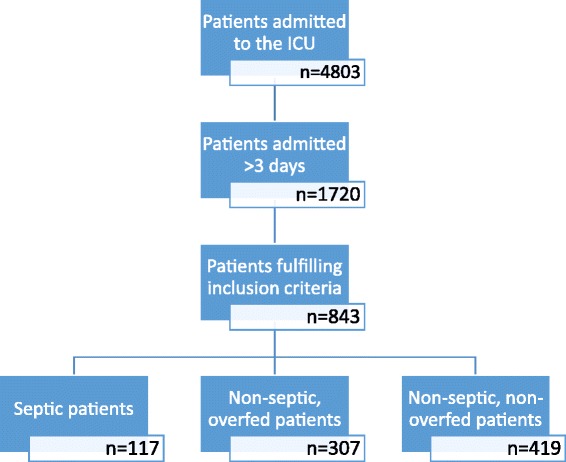
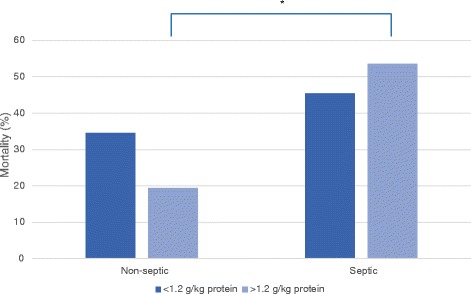
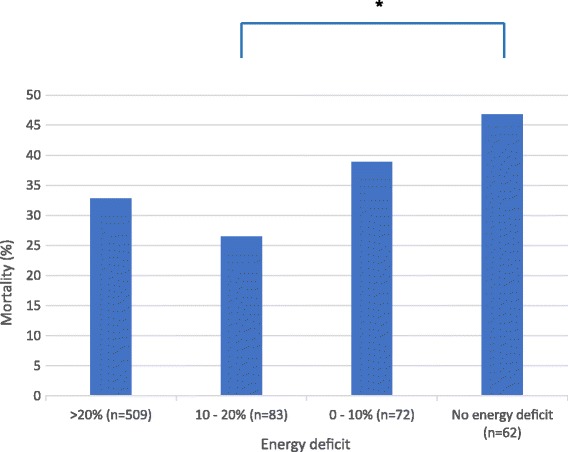
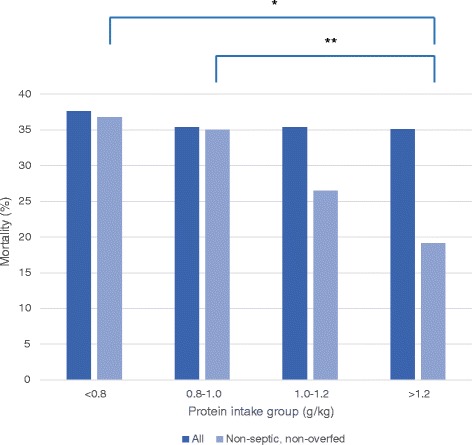
Introduction: Early protein and energy feeding in critically ill patients is heavily debated and early protein feeding hardly studied. Methods: A prospective database with mixed medical-surgical critically ill patients with prolonged mechanical ventilation (>72 hours) and measured energy expenditure was used in this study. Logistic regression analysis was used to analyse the relation between admission day-4 protein intake group (with cutoffs 0.8, 1.0, and 1.2 g/kg), energy overfeeding (ratio energy intake/measured energy expenditure > 1.1), and admission diagnosis of sepsis with hospital mortality after adjustment for APACHE II (Acute Physiology and Chronic Health Evaluation II) score. Results: A total of 843 patients were included. Of these, 117 had sepsis. Of the 736 non-septic patients 307 were overfed. Mean day-4 protein intake was 1.0 g/kg pre-admission weight per day and hospital mortality was 36%. In the total cohort, day-4 protein intake group (odds ratio (OR) 0.85; 95% confidence interval (CI) 0.73 to 0.99; P = 0.047), energy overfeeding (OR 1.62; 95%CI 1.07 to 2.44; P = 0.022), and sepsis (OR 1.77; 95%CI 1.18 to 2.65; P = 0.005) were independent risk factors for mortality besides APACHE II score. In patients with sepsis or energy overfeeding, day-4 protein intake was not associated with mortality. For non-septic, non-overfed patients (n = 419), mortality decreased with higher protein intake group: 37% for <0.8 g/kg, 35% for 0.8 to 1.0 g/kg, 27% for 1.0 to 1.2 g/kg, and 19% for ≥1.2 g/kg ( P = 0.033). For these, a protein intake level of ≥1.2 g/kg was significantly associated with lower mortality (OR 0.42, 95%CI 0.21 to 0.83, P = 0.013). Conclusions: In non-septic critically ill patients, early high protein intake was associated with lower mortality and early energy overfeeding with higher mortality. In septic patients early high protein intake had no beneficial effect on mortality.
Overview
The claims and statistics of this paper haven’t been checked yet.
Run the check — free, no account needed. It reads the open-access text and checks the sources it cites.
Integrity signals
Registry
Cites
Statistics
Figures
Verification
Claims the paper makes
The claims and statistics of this paper haven’t been checked yet.
Run the check — free, no account needed. It reads the open-access text and checks the sources it cites.
Claims other papers make about this one
Each is checked against this paper’s own text: does it say what the citing paper says it does?
The source backs part of the claim, not all of it — or backs it for a different population, condition or comparison.
In the citing paper
“Weijs et al. [24] prospectively studied 843 critically ill patients and found an overall mortality benefit of early high protein intake in non-septic subjects only.”
From Nutrition in Sepsis: A Bench-to-Bedside Review. (2020) · cites this paper as [24]
Experimental — accuracy not yet measuredThe source backs part of the claim, not all of it — or backs it for a different population, condition or comparison.
In the citing paper
“Heiddeger et al. ( 128) measured EE at day 3 and adapted the calorie intake accordingly, comparing supplemental PN from day four to an EN only group.The intervention group had a lower late nosocomial infection rate after day 9.”
From ESPEN guideline on clinical nutrition in the intensive care unit. (2019) · cites this paper as [128]
Experimental — accuracy not yet measuredThe source backs part of the claim, not all of it — or backs it for a different population, condition or comparison.
In the citing paper
“Undernutrition or over-nutrition is deleterious to outcome according to these large observational studies.”
From ESPEN practical and partially revised guideline: Clinical nutrition in the intensive care unit (2023) · cites this paper as [55]
Experimental — accuracy not yet measuredThe source backs part of the claim, not all of it — or backs it for a different population, condition or comparison.
In the citing paper
“A larger database analysis suggested that energy intake is associated with significantly improved survival when it is close to measured EE [55] or between 70 and 100% of the repeatedly measured resting EE [56].”
From ESPEN practical and partially revised guideline: Clinical nutrition in the intensive care unit (2023) · cites this paper as [55]
Experimental — accuracy not yet measuredThe cited source says what the claim attributes to it.
In the citing paper
“Some of the other studies addressing supplemental PN (128, 154, 155) did not show similar findings to the EPaNIC study.”
From ESPEN guideline on clinical nutrition in the intensive care unit. (2019) · cites this paper as [128]
Self-check
Percentages, sums and reported differences re-computed from the paper’s own numbers.
The self-check needs the paper’s full text.
Citations
Cites
Surviving Sepsis Campaign: International Guidelines for Management of Severe Sepsis and Septic Shock
Dellinger, R. P., Levy, M. M., Rhodes, A., Annane, D., Gerlach, H., Opal, S. M., Sevransky, J. E., Sprung, C. L., Douglas, I. S., Jaeschke, R., et al. (2013) · Critical Care Medicine · doi:10.1097/ccm.0b013e31827e83af · Cited by 9,694
Dellinger, R. P., Levy, M. M., Carlet, J. M., Bion, J., Parker, M. M., Jaeschke, R., Reinhart, K., Angus, D. C., Brun‐Buisson, C., Beale, R. J., et al. (2007) · Intensive Care Medicine · doi:10.1007/s00134-007-0934-2 · Cited by 6,789
Surviving Sepsis Campaign guidelines for management of severe sepsis and septic shock
Dellinger, R. P., Carlet, J. M., Masur, H., Gerlach, H., Calandra, T., Cohen, J., Gea‐Banacloche, J., Keh, D., Marshall, J. C., Parker, M. M., et al. (2004) · Intensive Care Medicine · doi:10.1007/s00134-004-2210-z · Cited by 3,309
Surviving Sepsis Campaign guidelines for management of severe sepsis and septic shock
Dellinger, R. P., Carlet, J. M., Masur, H., Gerlach, H., Calandra, T., Cohen, J., Gea‐Banacloche, J., Keh, D., Marshall, J. C., Parker, M. M., et al. (2004) · Critical Care Medicine · doi:10.1097/01.ccm.0000117317.18092.e4 · Cited by 3,038
Acute skeletal muscle wasting in critical illness
Puthucheary, Z. A., Rawal, J., McPhail, M., Connolly, B., Ratnayake, G., Chan, P., Hopkinson, N. S., Padhke, R., Dew, T., Sidhu, P. S., et al. (2013) · JAMA · doi:10.1001/jama.2013.278481 · Cited by 2,103
ESPEN guidelines on parenteral nutrition: intensive care
Singer, P., Berger, M. M., Van den Berghe, G., Biolo, G., Calder, P., Forbes, A., Griffiths, R., Kreyman, G., Leverve, X., & Pichard, C. (2009) · Clinical Nutrition · doi:10.1016/j.clnu.2009.04.024 · Cited by 1,907
Dellinger, R. P. (2004) · Critical Care Medicine · Cited by 1,848
Early versus late parenteral nutrition in critically ill adults
Casaer, M. P., Mesotten, D., Hermans, G., Wouters, P. J., Schetz, M., Meyfroidt, G., Van Cromphaut, S., Ingels, C., Meersseman, P., Muller, J., et al. (2011) · New England Journal of Medicine · doi:10.1056/nejmoa1102662 · Cited by 1,696 · cited 4×
“Of note, the increased rate of infections and longer duration of mechanical ventilation and renal replacement therapy found in the EPaNIC trial [1] could partially be explained by a component of overfeeding, because energy needs were not measured but calculated, and rather high energy targets were attained.”
InfluentialAutophagy is required to maintain muscle mass.
Masiero, E., Agatea, L., Mammucari, C., Blaauw, B., Loro, E., Komatsu, M., Metzger, D., Reggiani, C., Schiaffino, S., & Sandri, M. (2009) · Cell Metabolism · doi:10.1016/j.cmet.2009.10.008 · Cited by 1,282
The National Heart, L., Rice, T. W., Wheeler, A. P., Thompson, B. T., Steingrub, J., Hite, R. D., Moss, M., Morris, A., Dong, N., & Rock, P. (2012) · JAMA: The Journal of the American Medical Association · doi:10.1001/jama.2012.137 · Cited by 935
Cited by
Sorted by citations
Items 201–300 of 358
Floro, G. C., Schwenger, K. J. P., Ghorbani, Y., Zidar, D. J., & Allard, J. P. (2023) · Nutrition in Clinical Practice · doi:10.1002/ncp.11019 · Cited by 4
Gehri, L., Schmidbauer, M. L., Putz, T., Ratkovic, L., Maskos, A., Zeisberger, C., Zibold, J., Dimitriadis, K. A., & on behalf of the IGNITE Study Group (2024) · Journal of Clinical Medicine · doi:10.3390/jcm13020447 · Cited by 4
Metabolismo y nutrición del paciente en estado crítico
Savino, P., & Patiño, J. F. (2016) · Revista Colombiana de Cirugía · doi:10.30944/20117582.257 · Cited by 4
Advances in nutrition for the surgical patient
Yeh, D. D., Martin, M. J., Sakran, J. V., Meier, K., Mendoza, A. E., Grant, A. A., Parks, J. J., Byerly, S. E., Lee, E. E., McKinley, W. I., et al. (2019) · Current Problems in Surgery · doi:10.1067/j.cpsurg.2019.04.003 · Cited by 4
Stoppe, C., van Gassel, R. J. J., Jonckheer, J., Garcia-Velasquez, E., Girolamo, F. G. D., Chapela, S. P., Wichansawakun, S., Albay, A. B., Friede, T., Martindale, R. G., et al. (2020) · Clinical Nutrition ESPEN · doi:10.1016/j.clnesp.2020.09.006 · Cited by 5
Lheureux, O., & Preiser, J. (2019) · Current Opinion in Clinical Nutrition & Metabolic Care · doi:10.1097/mco.0000000000000626 · Cited by 4
Wittholz, K., Fetterplace, K., Abdelhamid, Y. A., Presneill, J., Beach, L. J., Thomson, B. N. J., Read, D. J., Koopman, R., & Deane, A. M. (2022) · Pilot and Feasibility Studies · doi:10.1186/s40814-022-00990-9 · Cited by 4
Route, early or energy? … Protein improves protein balance in critically ill patients
Weijs, P. J. M. (2018) · Critical Care · doi:10.1186/s13054-018-2015-z · Cited by 4
Self-citationNutritional therapy in patients with sepsis: is less really more?
de Koning, M.-S. L. Y., van Zanten, F. J. L., & van Zanten, A. R. H. (2020) · Critical Care · doi:10.1186/s13054-020-02949-9 · Cited by 4
Nutritional support in trauma and critically ill patients
González-Castillo, A. M., Picazo, L., Manzo, E., Marcucci, F., & Latifi, R. (2025) · European surgery. Supplement/European surgery · doi:10.1007/s10353-025-00872-3 · Cited by 6
Elkalawy, H., Sekhar, P., Fayad, M., Barrima, M. A. E., & Abdullah, M. (2025) · Acute and Critical Care · doi:10.4266/acc.001025 · Cited by 4
Issues of energy and protein feeding in critically ill: the permissive underfeeding trial.
Weijs, P. J. M. (2015) · PubMed Central · doi:10.3978/j.issn.2072-1439.2015.08.23 · Cited by 3
Self-citationMiyajima, I., Yatabe, T., Kuroiwa, H., Tamura, T., & Yokoyama, M. (2019) · Clinical Nutrition · doi:10.1016/j.clnu.2019.01.010 · Cited by 3
Protein in der klinischen Ernährung kritisch kranker Patienten
Kreymann, K. G., & de Heer, G. (2019) · Aktuelle Ernährungsmedizin · doi:10.1055/a-0843-6733 · Cited by 3
Reconsidering Nutritional Support in Critically Ill Patients
Korwin, A. S., & Honiden, S. (2019) · Seminars in Respiratory and Critical Care Medicine · doi:10.1055/s-0039-1697967 · Cited by 3
Геннадьевич, С. О. (2020) · General Reanimatology · doi:10.15360/1813-9779-2020-4-32-39 · Cited by 3
Optimal Enteral Nutrition Support Preserved Muscle Mass in Critically Ill Children
Sirianansopa, K., Rassameehirun, C., Chomtho, S., Suteerojntrakool, O., & Kongkiattikul, L. (2022) · Journal of Nutrition and Metabolism · doi:10.1155/2022/7004543 · Cited by 3
Ochoa, J. B., Berger, A. L., Hussein, R., & Huhmann, M. B. (2022) · Clinical Nutrition · doi:10.1016/j.clnu.2022.10.020 · Cited by 7
Krzych, Ł. J., Taborek, M., Winiarska, K., Danel, J. K., Nowotarska, A., & Jaworski, T. (2023) · Nutrients · doi:10.3390/nu15051086 · Cited by 3
Capistrano, V. L. M., Gurgel, D. C., Loureiro, L. L., Oliveira, S. P. M., de Souza, M. L. R., Montenegro, R. C., & de Moraes, M. E. A. (2023) · Clinical Nutrition ESPEN · doi:10.1016/j.clnesp.2023.08.014 · Cited by 3
Raphaeli, O., Singer, P., Robinson, E., Statlender, L., & Kagan, I. (2024) · Nutrients · doi:10.3390/nu16193258 · Cited by 5
Higher protein intake may benefit in patients with prolonged mechanical ventilation
Chang, C., Lin, C., Lo, Y., Lin, T., Hung, C., Hsieh, M., Fang, Y., Huang, H.-Y., Lin, S., & Lin, H. (2024) · Frontiers in Nutrition · doi:10.3389/fnut.2024.1449240 · Cited by 3
Blesa-Malpica, A., Martín-Luengo, A. I., & Robles-González, A. R. (2020) · Medicina Intensiva (English Edition) · doi:10.1016/j.medine.2020.01.004 · Cited by 3
The Role of Indirect Calorimetry in Care of the Surgical Patient
Byerly, S. E., & Yeh, D. D. (2022) · Current Surgery Reports · doi:10.1007/s40137-022-00326-9 · Cited by 6
Nutrition in the critically ill patient
Koekkoek, W. A. C. (2023) · Utrecht University Repository (Utrecht University) · doi:10.33540/1675 · Cited by 3
Ketogenic diet in treating sepsis-related acquired weakness: is it friend or foe?
Miao, Y., Xie, L., Chen, S., Zhang, X., Liu, W., & Xie, P. (2024) · Frontiers in Nutrition · doi:10.3389/fnut.2024.1484856 · Cited by 6
Toloi, J. M., Laranja, A. C. G., Toledo, D. O., Treml, R. E., Malbouisson, L. M. S., Manzanares, W., & Silva, J. M. (2025) · Nutrients · doi:10.3390/nu17172742 · Cited by 4
Du, Q., Congcong, Q., Guochen, L., Qianyu, B., Batejin, Shuanglin, Z., Bagena, B., Meiyu, B., Yimin, Z., Meiling, S., et al. (2026) · Frontiers in Medicine · doi:10.3389/fmed.2026.1770345 · Cited by 4
Blesa-Malpica, A., Martín-Luengo, A. I., & Robles-González, A. R. (2020) · Medicina Intensiva · doi:10.1016/j.medin.2020.01.001 · Cited by 2
Wong, J. J., Ong, J. S. M., Ong, C., Allen, J., Gandhi, M., Fan, L., Taylor, R., Lim, J. K. B., Poh, P., Chiou, F. K., et al. (2022) · BMJ Open · doi:10.1136/bmjopen-2020-047907 · Cited by 2
Impact of Critical Care Registered Dietitian on Clinical Outcomes of Neurocritically Ill Patients
Kwon, H., Kim, H., & Ryu, J.-A. (2023) · Journal of Neurointensive Care · doi:10.32587/jnic.2023.00647 · Cited by 2
Slingerland-Boot, R., Kummerow, M., Arbous, M. S., & van Zanten, A. R. H. (2023) · Clinical Nutrition · doi:10.1016/j.clnu.2023.10.029 · Cited by 2
Popoff, B., Occhiali, É., Demailly, Z., Beduneau, G., Carpentier, D., Girault, C., Gouin, P., Grall, M., Jolly, G., Clavier, T., et al. (2023) · Clinical Nutrition Open Science · doi:10.1016/j.nutos.2023.12.006 · Cited by 2
Nutrition of ICU Patients as Affected by Staffing With a Registered Dietitian
Hatakeyama, J., & Aso, S. (2025) · Topics in Clinical Nutrition · doi:10.1097/tin.0000000000000369 · Cited by 2
Nutritional support in reoperative surgical patients
Lawrence, J. C., Radow, B. S., & O’Neill, P. J. (2025) · European surgery. Supplement/European surgery · doi:10.1007/s10353-025-00867-0 · Cited by 2
Rosenthal, M. D., Kamel, A. Y., Brown, M. P., Young, A. C., Patel, J. J., & Moore, F. A. (2019) · Springer eBooks · doi:10.1007/978-3-030-16073-9_20 · Cited by 2
Significant Published Articles for Pharmacy Nutrition Support Practice in 2019
Dickerson, R. N., Bingham, A. L., Canada, T. W., Chan, L. N., Cober, M. P., Cogle, S. V., Tucker, A. M., & Kumpf, V. J. (2020) · Hospital Pharmacy · doi:10.1177/0018578720928264 · Cited by 2
Saijo, T., Yasumoto, K., Ryomoto, K., Momoki, C., & Habu, D. (2022) · Clinical Nutrition ESPEN · doi:10.1016/j.clnesp.2022.12.025 · Cited by 2
Carr, E. A., Fecteau, M., & Linton, M. (2020) · Elsevier eBooks · doi:10.1016/b978-0-323-55445-9.00050-1 · Cited by 2
van Ruijven, I. M., Brunsveld‐Reinders, A. H., Stapel, S. N., & Weijs, P. J. M. (2023) · Clinical Nutrition · doi:10.1016/j.clnu.2023.11.035 · Cited by 2
Self-citationÜbertherapie in der Intensivmedizin
Druml, W., & Druml, C. (2019) · Wiener klinisches Magazin · doi:10.1007/s00740-019-0288-8 · Cited by 1
Nikolova, S., Kyosebekirov, E., Mitkovski, E., Kazakov, D., Stoilov, V., Pavlov, G., & Stefanov, C. (2023) · Folia Medica · doi:10.3897/folmed.65.e100965 · Cited by 1
Die Rolle des muskuloadipösen Status bei der Beurteilung des Risikoprofils vor Lebertransplantation
Deeb, A. A., Rauchfuß, F., & Settmacher, U. (2024) · Die Chirurgie · doi:10.1007/s00104-024-02111-z · Cited by 1
do Amaral, C. M. S. S. B., Valente, J., Goulart, C. D. L., da Silva, B. M., Neto, A. S., Cubas-Vega, N. C., Rezende, A. G., Fernandes, E., Borba, M. G. S., Sampaio, V. D. S., et al. (2024) · International Journal of Environmental Research and Public Health · doi:10.3390/ijerph22010049 · Cited by 1
de Watteville, A., Pielmeier, U., Marco, M. D., Gayet‐Ageron, A., Siegenthaler, N., Parel, N., Wozniak, H., Primmaz, S., Pugin, J., Andreassen, S., et al. (2025) · PLoS ONE · doi:10.1371/journal.pone.0316624 · Cited by 1
Is there really no harm in trying? The Cahill cycle and high-dose protein in critical illness
Puthucheary, Z., & van de Poll, M. C. G. (2026) · American Journal of Respiratory and Critical Care Medicine · doi:10.1093/ajrccm/aamag108 · Cited by 1
You, Z., Li, Q., Pu, Y., Hou, H., He, S., Yu, Z., Xue, C., Li, Y., & Wen, C. (2026) · Frontiers in Nutrition · doi:10.3389/fnut.2026.1788894 · Cited by 2
Corsetti, G., & Pasini, E. (2026) · Nutrients · doi:10.3390/nu18111703 · Cited by 2
Pernollet, F., Chanséaume, C., Dugat, E., Grapin, K., Bouennec, J. C., Dusmenil, M., Gosset, C., Ruault, A., Calvet, L., Souweine, B., et al. (2026) · Clinical Nutrition ESPEN · doi:10.1016/j.clnesp.2026.103386 · Cited by 1
Bitzani, M. (2016) · Intensive Care Medicine · doi:10.1007/s00134-016-4248-0 · Cited by 1
Fraipont, V., & Preiser, J. (2016) · Nutrition Clinique et Métabolisme · doi:10.1016/j.nupar.2016.03.002 · Cited by 1
Current Trend of Nutritional Support Treatment Guidelines for Critically Ill Patients
Choi, Y. J., & Lee, J. M. (2017) · Journal of Clinical Nutrition · doi:10.15747/jcn.2017.9.2.38 · Cited by 1
Nutrition of the Critically Ill Adult with Congenital Heart Disease and Nutritional Rehabilitation
Dolgner, S. J., & Deen, J. F. (2018) · Congenital heart disease in adolescents and adults · doi:10.1007/978-3-319-94171-4_24 · Cited by 1
Nutrition and Metabolic Support of the ACS Patient: Understanding Goals and Ways to Achieve Them
Rosenthal, M. D., & Moore, F. A. (2019) · Hot topics in acute care surgery and trauma · doi:10.1007/978-3-030-11830-3_12 · Cited by 1
Merriweather, J. L. (2020) · Springer eBooks · doi:10.1007/978-3-030-38916-1_4 · Cited by 2
Bear, D. E., Wandrag, L., Merriweather, J. L., Connolly, B. A., Hart, N., & Grocott, M. P. W. (2021) · Clinical nutrition and metabolism · doi:10.17816/clinutr96169 · Cited by 2
Wybrane zagadnienia z zakresu bromatologii t.2
Babicz, M., Kropiwiec-Domańska, K., & Szymonowska, U. (2022) · doi:10.24326/mon.2022.6 · Cited by 1
Lima, J., Bernardes, S., Stello, B. B., Richrot, T. S., Milanez, D. S. J., & Silva, F. M. (2023) · Nutrition in Clinical Practice · doi:10.1002/ncp.11003 · Cited by 1
Londoño-Londoño, L. M., Montoya-Bernal, Á. P., Arango, F., Escobar-Serna, J. F., Pérez, M. C. F., & Trejos-Gallego, D. M. (2024) · Revista de Nutrición Clínica y Metabolismo · doi:10.35454/rncm.v7n1.496 · Cited by 1
The influence of nutrition on muscle wasting in critically ill patients: A pilot study
Andonovska, B., Andonovski, A. G., Кузмановска, Б., Kartalov, A., & Temelkovski, Z. (2018) · SANAMED · doi:10.24125/sanamed.v13i3.259 · Cited by 1
Yoğun Bakım Hastalarında Deksmedetomidin İnfüzyonunun Oksijen ve Enerji Tüketimi Üzerine Olan Etkisi
Zincircioğlu, Ç., Bor, C., Demırağ, K., & Uyar, M. (2019) · Türk yoğun bakım derneği dergisi/Türk yoğun bakım dergisi · doi:10.4274/tybd.galenos.2019.22448 · Cited by 1
Burns as the Outlier in Early Enteral Nutrition in Critical Illness
Bruenderman, E. H., Webb, J. J., & Bozeman, M. C. (2020) · Current Surgery Reports · doi:10.1007/s40137-019-0246-9 · Cited by 1
Montes, M. C., Simeón, R. M. G., & Rodríguez, E. P. (2020) · Medicina Intensiva · doi:10.1016/j.medin.2019.12.003 · Cited by 1
Nutrition for the Hospitalized Patient and the Importance of Nutritional Assessment in Critical Care
Okada, Y., & Delaney, S. J. (2020) · Advances in Small Animal Care · doi:10.1016/j.yasa.2020.07.014 · Cited by 1
Factum, C. S., Moreira, T. H. D. S., Rocha, C. D. N., Saldanha, M. F., Silva, F. M., & Jansen, A. K. (2020) · Revista chilena de nutrición · doi:10.4067/s0717-75182020000600916 · Cited by 1
García, F. R., Giménez-Martínez, R., & López-Viota, M. (2022) · Ars Pharmaceutica (Internet) · doi:10.30827/ars.v63i4.25339 · Cited by 1
Feeding route or learning route for nutrition in critically ill
Weijs, P. J. M. (2018) · Journal of Thoracic Disease · doi:10.21037/jtd.2017.12.43 · Cited by 1
Self-citationNutrition support in critical care
Wandrag, L., & Bear, D. E. (2018) · Wiley eBooks · doi:10.1002/9781118993880.ch5.13 · Cited by 1
Looijaard, W. G. P. M., Weijs, P. J. M., & Straaten, H. M. O. (2018) · Clinical Nutrition · doi:10.1016/j.clnu.2018.06.968 · Cited by 1
Self-citationBadpeyma, M., Malekahmadi, M., Sedaghat, A., Ostad, A. N., Khadem‐Rezaiyan, M., Pahlavani, N., Salami, F., & Moghaddam, A. B. (2022) · Research Square · doi:10.21203/rs.3.rs-1990524/v1 · Cited by 1
Protein Metabolism and Requirement in Intensive Care Units and Septic Patients
Weijs, P. J. M. (2016) · Elsevier eBooks · doi:10.1016/b978-0-12-802167-5.00010-4
Self-citationda Silva, J. H. (2016) · Digital Library of Theses and Dissertations (Universidade de São Paulo) · doi:10.11606/t.17.2016.tde-22042015-210949
Blaser, A. R., & Straaten, H. M. O. (2017) · Springer eBooks · doi:10.1007/978-3-319-58652-6_4
Besoins et apport en protéines des adultes en état critique : état actuel de la question
Soguel, L., & Desrosiers, T. (2018) · Nutrition, science en évolution · doi:10.7202/1044056ar
Protein provision in critically ill adults requiring enteral feeding
Mitchell, A., Clemente, R., Downer, C., Greer‐Rogers, F., Allan, K., Collinson, A., & Taylor, S. J. (2018) · Clinical Nutrition · doi:10.1016/j.clnu.2018.06.1217
Comment je prends en charge la nutrition d’un patient en état de choc
Tamion, F., & Bohé, J. (2018) · Médecine Intensive Réanimation · doi:10.3166/rea-2018-0068
Методичні рекомендації ESPEN щодо клінічного харчування у відділенні інтенсивної терапії
Singer, P., Blaser, A. R., Berger, M. M., Alhazzani, W. A., Calder, P. C., Casaer, M. P., Hiesmayr, M., Mayer, K., Montejo, J. C., Pichard, C., et al. (2019) · Pain anesthesia and intensive care · doi:10.25284/2519-2078.2(87).2019.171009
Anabolic response to amino acid supplementation in critical illness
Liebau, F. (2019) · Figshare
Protein delivery in critical care
Dey, R. (2019) · Journal of Renal Nutrition and Metabolism · doi:10.4103/jrnm.jrnm_44_19
Ortiz‐Reyes, L., & Heyland, D. K. (2019) · Revista de Nutrición Clínica y Metabolismo · doi:10.35454/rncm.v2n1.058
Montes, M. C., Simeón, R. M. G., & Rodríguez, E. P. (2020) · Medicina Intensiva (English Edition) · doi:10.1016/j.medine.2019.12.010
Yusuf, M. M., Chowdhury, M. A., & Alam, J. (2020) · Dhaka Shishu (Children) Hospital Journal · doi:10.3329/dshj.v35i2.49689
Чепур, С. В., Nn, P., Chubar, O. V., Cygan, V. N., Сергеевна, Б. Л., Sidorov, S. P., Bazhenov, M. V., Mosin, A. V., Vinogradov, M. V., & Семакин, Р. В. (2020) · Reviews on Clinical Pharmacology and Drug Therapy · doi:10.17816/rcf183197-212
脳卒中患者に対する1.5kcal/mLの高たんぱく消化態栄養剤およびPHGG配合栄養剤を用いた急性期栄養プロトコールの有益性~後方視的調査による1.0kcal/mL標準組成栄養剤との比較に基づく検討~
Onodera, H., Mogamiya, T., 森, み., 千壽, 川., 真由美, 金., 松嶋真哉, 川畑, 亜., & 朋子, 清. (2020) · doi:10.11244/ejspen.2.2_103
Significant Published Articles in 2020 for Pharmacy Nutrition Support Practice
Dickerson, R. N., Bingham, A. L., Canada, T. W., Chan, L. N., Cober, M. P., Cogle, S. V., Tucker, A. M., & Kumpf, V. J. (2021) · Hospital Pharmacy · doi:10.1177/00185787211016363
Critically Ill Patients with Acute Kidney Injury: Focus on Nutrition
Foti, L., Villa, G., & Romagnoli, S. (2021) · Annual update in intensive care and emergency medicine · doi:10.1007/978-3-030-73231-8_20
Wittholz, K., Fetterplace, K., Abdelhamid, Y. A., Presneill, J., Beach, L. J., Thomson, B. N. J., Read, D. J., Koopman, R., & Deane, A. M. (2021) · Research Square · doi:10.21203/rs.3.rs-847282/v1
Estado nutricional de pacientes críticos com úlcera por pressão em terapia enteral internados em UTI
Batista, T. S. A., Santos, R. K. F., da Rocha, B. R. S., Freire, A. R. S., & Pires, L. V. (2021) · Conjecturas · doi:10.53660/conj-088-110
Cha, J. K., Kim, H.-S., Kim, E. J., Lee, E., Lee, J., & Song, I. (2021) · Research Square · doi:10.21203/rs.3.rs-871621/v1
有輝, 飯., & 真規, 陳. (2020) · The Japanese Journal of SURGICAL METABOLISM and NUTRITION · doi:10.11638/jssmn.54.3_134
Latronico, N. (2019) · Faculty Opinions – Post-Publication Peer Review of the Biomedical Literature · doi:10.3410/f.727475823.793558847
Duan, K., Gao, X., Wei, L., Gong, M., Zhou, J. Q., & Zhu, D. (2020) · doi:10.21203/rs.3.rs-60117/v1
Zhou, X., Fang, H., Hu, C., Xu, J., Wang, H., Pan, J., Sha, Y., & Xu, Z. (2021) · Medicina Intensiva (English Edition) · doi:10.1016/j.medine.2019.10.009
Ernæring på intensivavdelingen og proteinkvalitet i sondemat
Karlsson, M. (2021) · Norsk tidsskrift for ernæring · doi:10.18261/ntfe.19.1.14
Arabi, Y. M., Al‐Dorzi, H. M., Sadat, M., Muharib, D., Algethamy, H. M., Al-Hameed, F. M., Mady, A. M., Alghamdi, A., Mekhlafi, G. A. A., Al-Fares, A. A., et al. (2022) · medRxiv · doi:10.1101/2022.11.10.22282161
Should Anabolic Agents be Used for Resolving Catabolism in Post-ICU Recovery?
Vanzant, E. L., Frayman, R., Hensley, S. E., & Rosenthal, M. D. (2022) · Current Surgery Reports · doi:10.1007/s40137-022-00336-7
Nutrition Characteristics and Delivery in Relation to 28-day Mortality in Critically Ill Patients
Raheem, A. A., Yusof, B. N. M., Lee, Z., Ibrahim, N. A., & Latheef, A. A. (2022) · Malaysian Journal of Medicine and Health Sciences · doi:10.47836//mjmhs18.4.15
Duan, Y.-Y., Zhou, Q., Dang, W., Ma, Y., Huang, L., & Hu, A. (2022) · Topics in Clinical Nutrition · doi:10.1097/tin.0000000000000305
中西, 信., & 小谷, 穣. (2022) · The Japanese Journal of SURGICAL METABOLISM and NUTRITION · doi:10.11638/jssmn.56.6_229
Metadata
- Authors
- Weijs, P. J., Looijaard, W. G., Beishuizen, A., Girbes, A. R., & Oudemans-van Straaten, H. M.
- Affiliations
- Amsterdam University of Applied Sciences (NL)
- Amsterdam UMC Location Vrije Universiteit Amsterdam (NL)
- Medisch Spectrum Twente (NL)
- Amsterdam Cardiovascular Sciences (NL)
- Corresponding author
- Weijs, Peter JM
- Venue
- Critical Care
- Published
- 2014-12-14
- Volume
- 18
- Issue
- 6
- Pages
- 701-701
- ISSN
- 1364-8535 (ISSN-L)
- PMC
- PMC4279460
- OpenAlex
- W1981313739
- Cited by
- 358
- References
- 40
- Citations by year
- 2026: 18 · 2025: 17 · 2024: 48 · 2023: 30 · 2022: 35 · 2021: 30 · 2020: 38 · 2019: 43 · 2018: 43 · 2017: 24 · 2016: 26 · 2015: 6
- FWCI
- 17.38
- Type
- journal article
- Language
- en
- Open access
- gold
- doi.org
- Locations
- Critical Care (publishedVersion, cc-by)
- PubMed Central (publishedVersion, cc-by)
- PubMed (publishedVersion)
- Amsterdam UMC (VU Amsterdam) - Institutional Repository (publishedVersion)
- Data Archiving and Networked Services (DANS) (submittedVersion, cc-by)
- Pure Amsterdam UMC (submittedVersion)
- Data Archiving and Networked Services (DANS) (submittedVersion, other-oa)
- Data Archiving and Networked Services (DANS) (submittedVersion)
- Topics
- Health Sciences › Nursing › Nutrition and Dietetics › Clinical Nutrition and Gastroenterology
- Health Sciences › Medicine › Critical Care and Intensive Care Medicine › Sepsis Diagnosis and Treatment
- Health Sciences › Medicine › Endocrinology, Diabetes and Metabolism › Hyperglycemia and glycemic control in critically ill and hospitalized patients
- Keywords
- mechanical ventilation, critically ill patients, sepsis, in-hospital mortality, energy expenditure, protein intake, nutritional support, mortality risk factors, APACHE II score, prolonged mechanical ventilation, intensive care unit patients, mortality prediction model, prognostic factors, prognostic score, prognostic score validation, prognostic score comparison
- MeSH terms
- Adult, Aged, Aged, 80 and over, Energy Intake, Dietary Proteins, Female, Humans, Male, Middle Aged, Prospective Studies, Respiration, Artificial, Cohort Studies, Critical Illness, Hospital Mortality, Overnutrition
About these checks
Registry, retraction, Cites and statistics results are computed, not judged, with one exception: a printed reference that no index lists is read once by a model before it counts as a citation error. Claims are extracted by a model and kept only when their quote appears verbatim in the text; each cited source is then checked, with a model’s help, for whether it says what the claim relies on. Those verdicts can be wrong — read the claim’s quote and the cited source before relying on one.
Statistics and arithmetic are recomputed, not judged.
Confidence bands are shown only for fields calibrated on our annotated test set. None is calibrated yet, so no band is shown.
What counts as a claim ›How we measure confidence ›How we check this ›
Are you an author, or do you see a problem with this page? Request a review
