

Surviving critical illness: What is next? An expert consensus statement on physical rehabilitation after hospital discharge.
Open accessThe DOI matches its Crossref record; 42 of the 42 references it cites were found in a registry or an index.
Abstract
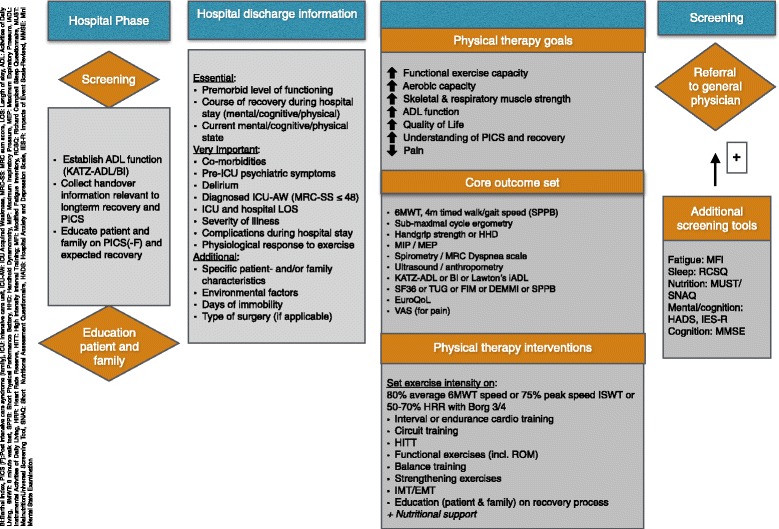
BACKGROUND: The study objective was to obtain consensus on physical therapy (PT) in the rehabilitation of critical illness survivors after hospital discharge. Research questions were: what are PT goals, what are recommended measurement tools, and what constitutes an optimal PT intervention for survivors of critical illness? METHODS: A Delphi consensus study was conducted. Panelists were included based on relevant fields of expertise, years of clinical experience, and publication record. A literature review determined five themes, forming the basis for Delphi round one, which was aimed at generating ideas. Statements were drafted and ranked on a 5-point Likert scale in two additional rounds with the objective to reach consensus. Results were expressed as median and semi-interquartile range, with the consensus threshold set at ≤0.5. RESULTS: Ten internationally established researchers and clinicians participated in this Delphi panel, with a response rate of 80 %, 100 %, and 100 % across three rounds. Consensus was reached on 88.5 % of the statements, resulting in a framework for PT after hospital discharge. Essential handover information should include information on 15 parameters. A core set of outcomes should test exercise capacity, skeletal muscle strength, function in activities of daily living, mobility, quality of life, and pain. PT interventions should include functional exercises, circuit and endurance training, strengthening exercises for limb and respiratory muscles, education on recovery, and a nutritional component. Screening tools to identify impairments in other health domains and referral to specialists are proposed. CONCLUSIONS: A consensus-based framework for optimal PT after hospital discharge is proposed. Future research should focus on feasibility testing of this framework, developing risk stratification tools and validating core outcome measures for ICU survivors.
Overview
The claims and statistics of this paper haven’t been checked yet.
Free: it reads the open-access text and checks the first 5 claims that cite a source we can check. Create a free account to check every claim.
Integrity signals
Registry
Cites
Statistics
Figures
Verification
Claims the paper makes
The claims and statistics of this paper haven’t been checked yet.
Free: it reads the open-access text and checks the first 5 claims that cite a source we can check. Create a free account to check every claim.
Claims other papers make about this one
Each is checked against this paper’s own text: does it say what the citing paper says it does?
The source backs part of the claim, not all of it — or backs it for a different population, condition or comparison.
In the citing paper
“Several randomized studies have assessed physical rehabilitation programs for survivors of critical illness (581,606,(644)(645)(646)(647)(648)(649)(650)(651).”
From Surviving Sepsis Campaign: International Guidelines for Management of Sepsis and Septic Shock 2021. (2021) · cites this paper as [649]
Experimental — accuracy not yet measuredThe check wasn’t confident either way, so it gives no verdict — never disputed.
In the citing paper
“In several qualitative studies, ICU survivors described peer support as a helpful aid to recovery (559-563).”
From Surviving Sepsis Campaign: International Guidelines for Management of Sepsis and Septic Shock 2021. (2021) · cites this paper as [562]
Experimental — accuracy not yet measured
Self-check
Percentages, sums and reported differences re-computed from the paper’s own numbers.
The self-check needs the paper’s full text.
Citations
Cites
Hao (2015) · doi:10.1002/14651858 · Cited by 11,321
Diamond, I. R., Grant, R. C., Feldman, B. M., Pencharz, P. B., Ling, S. C., Moore, A. M., & Wales, P. W. (2014) · Journal of Clinical Epidemiology · doi:10.1016/j.jclinepi.2013.12.002 · Cited by 3,740 · cited 3×
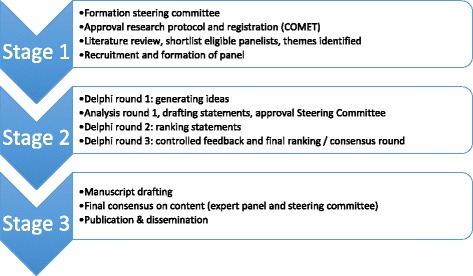
“The need for a minimum of three online Delphi rounds was estimated prior to the start, as per literature recommendations in situations where the quantity of scientific research is limited [21, 22].”
Functional Disability 5 Years after Acute Respiratory Distress Syndrome
Herridge, M. S., Tansey, C. M., Matté, A., Tomlinson, G., Diaz-Granados, N., Cooper, A., Guest, C. B., Mazer, C. D., Mehta, S., Stewart, T. E., et al. (2011) · New England Journal of Medicine · doi:10.1056/nejmoa1011802 · Cited by 2,847
Needham, D. M., Davidson, J., Cohen, H., Hopkins, R. O., Weinert, C., Wunsch, H., Zawistowski, C., Bemis-Dougherty, A., Berney, S. C., Bienvenu, O. J., et al. (2012) · Critical Care Medicine · doi:10.1097/ccm.0b013e318232da75 · Cited by 2,639 · cited 1×
“Long-term impairments in physical and mental health associated with prolonged ICU stay and impeding recovery have now been characterized as post-intensive care syndrome (PICS) [9].”
Self-citationBoulkedid, R., Abdoul, H., Loustau, M., Sibony, O., & Alberti, C. (2011) · PLoS ONE · doi:10.1371/journal.pone.0020476 · Cited by 2,045 · cited 1×
“The need for a minimum of three online Delphi rounds was estimated prior to the start, as per literature recommendations in situations where the quantity of scientific research is limited [21, 22].”
Consensus measurement in Delphi studies
von der Gracht, H. A. (2012) · Technological Forecasting and Social Change · doi:10.1016/j.techfore.2012.04.013 · Cited by 1,831
Developing core outcome sets for clinical trials: issues to consider
Williamson, P. R., Altman, D. G., Blazeby, J. M., Clarke, M., Devane, D., Gargon, E., & Tugwell, P. (2012) · Trials · doi:10.1186/1745-6215-13-132 · Cited by 1,661 · cited 1×
“Measuring the core outcomes is essential, while additional measurements can be undertaken dependent on individual patient needs [17].”
Development of a shuttle walking test of disability in patients with chronic airways obstruction.
Singh, S. J., Morgan, M. D., Scott, S., Walters, D., & Hardman, A. E. (1992) · Thorax · doi:10.1136/thx.47.12.1019 · Cited by 1,455 · cited 1×
“Predicting maximum exercise capacity by means of the ISWT may be an appropriate alternative, because criterion validity against the CPET was established [40 – 42] and psychometric properties of the ISWT in similar populations yield promising results.”
Posttraumatic stress disorder in general intensive care unit survivors: a systematic review
Davydow, D. S., Gifford, J. M., Desai, S. V., Needham, D. M., & Bienvenu, O. J. (2008) · General Hospital Psychiatry · doi:10.1016/j.genhosppsych.2008.05.006 · Cited by 676
Self-citationHodgson, C. L., Stiller, K., Needham, D. M., Tipping, C. J., Harrold, M., Baldwin, C. E., Bradley, S., Berney, S., Caruana, L. R., Elliott, D., et al. (2014) · Critical Care · doi:10.1186/s13054-014-0658-y · Cited by 657 · cited 2×
“Interdisciplinary interventions directed towards early mobilization of critically ill patients within ICUs are implemented in many hospitals across the world [1, 2].”
Self-citation
Cited by
Items 101–141 of 141
Fresenko, L. E., Rutherfurd, C., Robinson, L., Robinson, C. M., Montgomery-Yates, A. A., Hogg‐Graham, R., Morris, P. E., Eaton, T. L., McPeake, J. M., & Mayer, K. P. (2024) · Critical Care Explorations · doi:10.1097/cce.0000000000001184 · Cited by 7
Rehabilitation of Chronic Pain in Post-Critical Care Patients. A Narrative Review
Asimakopoulou, E., & Zavridis, P. (2023) · OBM Neurobiology · doi:10.21926/obm.neurobiol.2304194 · Cited by 3
Shimizu, M., Yoshihiro, S., Watanabe, S., Aikawa, G., Fujinami, Y., Kawamura, Y., Matsuoka, A., Nakanishi, N., Shida, H., Sugimoto, K., et al. (2024) · Cureus · doi:10.7759/cureus.75184 · Cited by 5
Rousseau, A., Farnir, F., Cavalier, E., Luis, G., Kellens, I., Lambermont, B. C., & Boemer, F. (2025) · Frontiers in Medicine · doi:10.3389/fmed.2025.1622116 · Cited by 1
de Mol, M., Oonk, H., & Vloet, L. C. M. (2017) · International Journal of Psychology & Behavior Analysis · doi:10.15344/2455-3867/2017/134 · Cited by 1
“Hospitals have introduced new methods of aftercare such as rehabilitation treatment, post ICU clinics, and peer support [2, 9, 10].”
MethodPulmonary rehabilitation following the 2019 novel Coronavirus infection
Haddaoui, S. E., Amekran, Y., & Hangouche, A. J. E. (2020) · Pneumologia · doi:10.2478/pneum-2021-0013 · Cited by 1
Risk Factors for Physical Function Impairments in Postintensive Care Syndrome: A Scoping Review
Ding, M., Yang, C., & Li, Y. (2022) · Frontiers in Pediatrics · doi:10.3389/fped.2022.905167 · Cited by 1
Michalski, A., Souza-Barros, L., Robles, P., Cameron, J., Herridge, M. S., & Mathur, S. (2022) · Cardiopulmonary Physical Therapy Journal · doi:10.1097/cpt.0000000000000207 · Cited by 3
Introductory Chapter: Shock is a Physiological State of War
Stawicki, S. P., Papadimos, T. J., & Swaroop, M. (2020) · IntechOpen eBooks · doi:10.5772/intechopen.88686 · Cited by 2
Core outcome set for pulmonary rehabilitation of patients with COPD
Souto‐Miranda, S. (2023) · Research Publications (Maastricht University) · doi:10.26481/dis.20230616sm · Cited by 3
Modalities for Physical Rehabilitation
Gosselink, R., Hollebeke, M. V., Clerckx, B., & Langer, D. (2019) · Lessons from the ICU · doi:10.1007/978-3-030-24250-3_19
Self-citationMcWilliams, D. J., & Gustafson, O. D. (2020) · Springer eBooks · doi:10.1007/978-3-030-38916-1_6
Self-citationA Comprehensive Guide to Lung Transplantation for the Recipient With Pulmonary Fibrosis
Kolaitis, N. A., & Shah, R. (2021) · Elsevier eBooks · doi:10.1016/b978-0-08-102723-3.00080-9
Mental Illness Diagnoses After Intensive Care
Sivanathan, L. (2019) · TSpace (University of Toronto)
Luna, E. C. W. (2020) · Digital Library of Theses and Dissertations (Universidade de São Paulo) · doi:10.11606/t.17.2020.tde-07042021-150453
Latronico, N. (2019) · Faculty Opinions – Post-Publication Peer Review of the Biomedical Literature · doi:10.3410/f.727650528.793558848
Acute inpatient rehabilitation for COVID-19 survivors: A retrospective case series
Lijo, M., Hamilton, A., Russell, M. E., & Wren, N. (2023) · Physiotherapy Theory and Practice · doi:10.1080/09593985.2023.2213773
“Physical and occupational therapy interventions were focused on restorative and compensatory training to improve independence with functional mobility and ADL tasks (Major et al., 2016; Smith et al., 2020).”
McWilliams, D. J., & Gustafson, O. D. (2024) · Springer eBooks · doi:10.1007/978-3-031-53019-7_6
Self-citationGonzález-Seguel, F., Haezebrouck, E., Fresenko, L. E., Sevin, C. M., Slone, S. A., Montgomery-Yates, A. A., Kalema, A. G., Ginoza, L. M., Martinez, C. A., Biehl, M., et al. (2025) · Archives of Rehabilitation Research and Clinical Translation · doi:10.1016/j.arrct.2025.100484
“14,16 Nonetheless, physical rehabilitation after ICU admission is highly recommended in modi fi ed Delphi expert initiatives.”
Six-month trajectory of physical function in ICU survivors: Experience from an Eastern Cape centre
van der Merwe, E., Stroud, L. A., Sharp, G., Vuuren, N. V., & Paruk, F. (2025) · South African Journal of Physiotherapy · doi:10.4102/sajp.v81i1.2228
“…there is no consensus regarding the optimal assessment and screening tools for general physical impairment post ICU, the 6MWT exhibits the highest rating among experts as a performance-based test for survivors of respiratory failure and critical illness (Major et al. 2016; Needham et al. 2017).”
Lai, D. J., Liu, Z., Johnston, E., Dikomitis, L., D’Oliveira, T. C., & Shergill, S. S. (2024) · Figshare · doi:10.6084/m9.figshare.27123994
Rousseau, A.-F., Minguet, P., Colson, C., Kellens, I., Chaabane, S., Delanaye, P., Cavalier, E., Chase, J. G., Lambermont, B., & Misset, B. (2021) · Figshare · doi:10.6084/m9.figshare.15079552
Woodbridge, H. R., McCarthy, C. J., Jones, M., Willis, M., Antcliffe, D. B., Alexander, C. M., & Gordon, A. C. (2024) · Figshare · doi:10.6084/m9.figshare.26714488
Pandolfi, F., Brun‐Buisson, C., Guillemot, D., & Watier, L. (2024) · Figshare · doi:10.6084/m9.figshare.26638446
Major, M. E., Dettling-Ihnenfeldt, D. S., Ramaekers, S. P. J., Engelbert, R., & van der Schaaf, M. (2021) · Figshare · doi:10.6084/m9.figshare.15123703
Self-citationAdditional file 1 of The effect of comprehensive rehabilitation on post-COVID-19 syndrome
Kesikburun, B., Ata, A. M., Borman, P., Özdemir, E. E., Becenen, E., Metin, N., & Alemdaroğlu, E. (2023) · Figshare · doi:10.6084/m9.figshare.24708918
S3-Leitlinie Sepsis – Prävention, Diagnose, Therapie und Nachsorge – Update 2025
Brunkhorst, F. M., Adamzik, M., Axer, H., Bauer, M., Bode, C., Bone, H.-G., Brenner, T., Bucher, M., David, S., Dietrich, M., et al. (2025) · RWTH Publications (RWTH Aachen) · doi:10.5167/uzh-280465
Health Equity and the Social Model of Disability
Scheunemann, L. P., Naiditch, H., & Elnema, G. (2026) · Cambridge University Press eBooks · doi:10.1017/9781009501477.025
Functional Impairments in Survivors of Critical Illness
Green, S., Williamson, M. L., Shoemaker, M. N., & Isenberg, A. S. (2026) · Cambridge University Press eBooks · doi:10.1017/9781009501477.043
PICS in Older Survivors of Critical Illness
Ikeji, C., & Scheunemann, L. P. (2026) · Cambridge University Press eBooks · doi:10.1017/9781009501477.051
Physical Impairments in Survivors of Critical Illness
Dorn, S., González-Seguel, F., Mayer, K. P., Parry, S. M., & Zeleznik, H. (2026) · Cambridge University Press eBooks · doi:10.1017/9781009501477.042
Schaller, S. J., Cardoso, T., Eggmann, S., Hermann, M., Hickmann, C., Naef, R., van Mol, M. M. C., Piva, S., Rodríguez‐Ruiz, E., Sadjadi, M., et al. (2026) · Intensive Care Medicine · doi:10.1007/s00134-026-08600-5
Self-citationMobility in ICU survivors: A concept analysis
Yan, Y., Peng, S., Jiayan, Z., Qiu, J., Cheng, L., & Ge, X. (2026) · Intensive and Critical Care Nursing · doi:10.1016/j.iccn.2026.104593
Reignier, J., Benguerfi, S., Corbin, E., Maugars, D., Thibault, R., Jirka, A., Cattagni, T., Nordez, A., Argaud, L., Badie, J. C., et al. (2026) · BMJ Open · doi:10.1136/bmjopen-2026-127985
Edwards-Clark, G., Breach, L., Wyer, N., & McWilliams, D. J. (2026) · International Journal of Nursing Sciences · doi:10.1016/j.ijnss.2026.10.004
Self-citation
Metadata
- Authors
- Major, M. E., Kwakman, R., Kho, M. E., Connolly, B., McWilliams, D., Denehy, L., Hanekom, S., Patman, S., Gosselink, R., Jones, C., Nollet, F., Needham, D. M., Engelbert, R. H. H., & van der Schaaf, M.
- Affiliations
- Amsterdam University of Applied Sciences (NL)
- McMaster University (CA)
- King's College London (GB)
- University Hospitals Birmingham NHS Foundation Trust (GB)
- The University of Melbourne (AU)
- Stellenbosch University (ZA)
- The University of Notre Dame Australia (AU)
- KU Leuven (BE)
- University of Liverpool (GB)
- Amsterdam UMC Location University of Amsterdam (NL)
- Johns Hopkins University (US)
- ORCID
- Venue
- Critical Care
- Published
- 2016-10-29
- Volume
- 20
- Issue
- 1
- Pages
- 354-354
- ISSN
- 1364-8535 (ISSN-L)
- PMC
- PMC5086052
- OpenAlex
- W2545717629
- Semantic Scholar
- d547684992ff14b981aedc42e14b077e4d1a9dcc
- Cited by
- 141
- References
- 41
- Citations by year
- 2026: 8 · 2025: 11 · 2024: 18 · 2023: 24 · 2022: 11 · 2021: 19 · 2020: 19 · 2019: 14 · 2018: 8 · 2017: 9
- FWCI
- 9.40
- Type
- journal article
- Language
- en
- Open access
- gold
- doi.org
- Licence
- cc-by
- Locations
- Critical Care (publishedVersion, cc-by)
- PubMed Central (publishedVersion, cc-by)
- PubMed (publishedVersion)
- Pure Amsterdam UMC (publishedVersion, other-oa)
- Data Archiving and Networked Services (DANS) (submittedVersion)
- Minerva Access (University of Melbourne) (submittedVersion, cc-by)
- Lirias (submittedVersion, cc-by)
- ResearchOnline@ND (The University of Notre Dame) (submittedVersion)
- Data Archiving and Networked Services (DANS) (submittedVersion, cc-by)
- SUNScholar (Stellenbosch University) (submittedVersion)
- Funders
- Nederlandse Organisatie voor Wetenschappelijk Onderzoek
- Canada Research Chairs
- Topics
- Health Sciences › Medicine › Critical Care and Intensive Care Medicine › Intensive Care Unit Cognitive Disorders
- Health Sciences › Health Professions › Physical Therapy, Sports Therapy and Rehabilitation › Medical Practices and Rehabilitation
- Health Sciences › Nursing › Nutrition and Dietetics › Clinical Nutrition and Gastroenterology
- Keywords
- critical illness survivors, physical rehabilitation, physiotherapy, hospital discharge, intensive care unit survivors, rehabilitation goals, outcome measures, exercise capacity, skeletal muscle strength, functional training, respiratory muscle training, nutritional support, screening tool, quality of life, pain, mobility (physical function)
- MeSH terms
- Activities of Daily Living, Delphi Technique, Humans, Patient Discharge, Rehabilitation, Critical Illness, Survivors, Physical Therapy Modalities, Consensus
About these checks
Registry, retraction, Cites and statistics results are computed, not judged, with one exception: a printed reference that no index lists is read once by a model before it counts as a citation error. Claims are extracted by a model and kept only when their quote appears verbatim in the text; each cited source is then checked, with a model’s help, for whether it says what the claim relies on. Those verdicts can be wrong — read the claim’s quote and the cited source before relying on one.
Statistics and arithmetic are recomputed, not judged.
Confidence bands are shown only for fields calibrated on our annotated test set. None is calibrated yet, so no band is shown.
What counts as a claim ›How we measure confidence ›How we check this ›
Are you an author, or do you see a problem with this page? Request a review
Data sources
Bibliographic data: Semantic Scholar, OpenAlex, Crossref.
Contains information from the Semantic Scholar Academic Graph Datasets, made available under the ODC Attribution License (ODC-BY 1.0).
Semantic Scholar’s data is described in: Kinney, R., et al. (2023). The Semantic Scholar Open Data Platform. arXiv:2301.10140.
