

Surviving critical illness: What is next? An expert consensus statement on physical rehabilitation after hospital discharge.
Open accessThe DOI matches its Crossref record; 42 of the 42 references it cites were found in a registry or an index.
Abstract
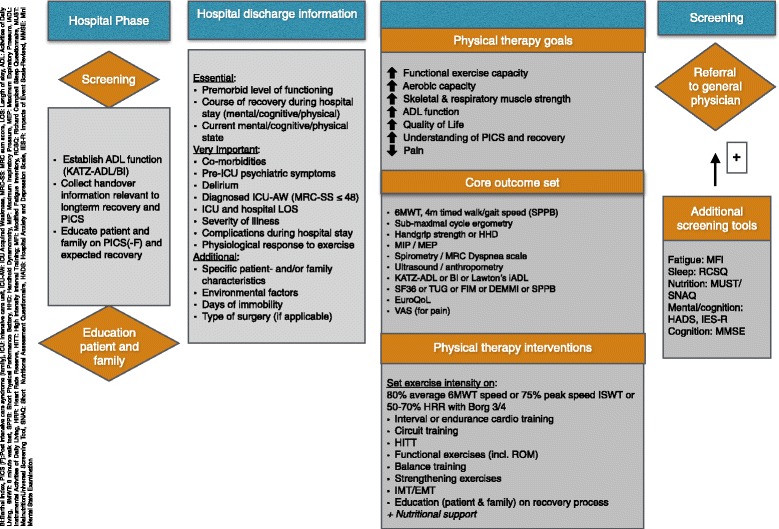
BACKGROUND: The study objective was to obtain consensus on physical therapy (PT) in the rehabilitation of critical illness survivors after hospital discharge. Research questions were: what are PT goals, what are recommended measurement tools, and what constitutes an optimal PT intervention for survivors of critical illness? METHODS: A Delphi consensus study was conducted. Panelists were included based on relevant fields of expertise, years of clinical experience, and publication record. A literature review determined five themes, forming the basis for Delphi round one, which was aimed at generating ideas. Statements were drafted and ranked on a 5-point Likert scale in two additional rounds with the objective to reach consensus. Results were expressed as median and semi-interquartile range, with the consensus threshold set at ≤0.5. RESULTS: Ten internationally established researchers and clinicians participated in this Delphi panel, with a response rate of 80 %, 100 %, and 100 % across three rounds. Consensus was reached on 88.5 % of the statements, resulting in a framework for PT after hospital discharge. Essential handover information should include information on 15 parameters. A core set of outcomes should test exercise capacity, skeletal muscle strength, function in activities of daily living, mobility, quality of life, and pain. PT interventions should include functional exercises, circuit and endurance training, strengthening exercises for limb and respiratory muscles, education on recovery, and a nutritional component. Screening tools to identify impairments in other health domains and referral to specialists are proposed. CONCLUSIONS: A consensus-based framework for optimal PT after hospital discharge is proposed. Future research should focus on feasibility testing of this framework, developing risk stratification tools and validating core outcome measures for ICU survivors.
Overview
The claims and statistics of this paper haven’t been checked yet.
Free: it reads the open-access text and checks the first 5 claims that cite a source we can check. Create a free account to check every claim.
Integrity signals
Registry
Cites
Statistics
Figures
Verification
Claims the paper makes
The claims and statistics of this paper haven’t been checked yet.
Free: it reads the open-access text and checks the first 5 claims that cite a source we can check. Create a free account to check every claim.
Claims other papers make about this one
Each is checked against this paper’s own text: does it say what the citing paper says it does?
The source backs part of the claim, not all of it — or backs it for a different population, condition or comparison.
In the citing paper
“Several randomized studies have assessed physical rehabilitation programs for survivors of critical illness (581,606,(644)(645)(646)(647)(648)(649)(650)(651).”
From Surviving Sepsis Campaign: International Guidelines for Management of Sepsis and Septic Shock 2021. (2021) · cites this paper as [649]
Experimental — accuracy not yet measuredThe check wasn’t confident either way, so it gives no verdict — never disputed.
In the citing paper
“In several qualitative studies, ICU survivors described peer support as a helpful aid to recovery (559-563).”
From Surviving Sepsis Campaign: International Guidelines for Management of Sepsis and Septic Shock 2021. (2021) · cites this paper as [562]
Experimental — accuracy not yet measured
Self-check
Percentages, sums and reported differences re-computed from the paper’s own numbers.
The self-check needs the paper’s full text.
Citations
Cites
Hao (2015) · doi:10.1002/14651858 · Cited by 11,321
Diamond, I. R., Grant, R. C., Feldman, B. M., Pencharz, P. B., Ling, S. C., Moore, A. M., & Wales, P. W. (2014) · Journal of Clinical Epidemiology · doi:10.1016/j.jclinepi.2013.12.002 · Cited by 3,740 · cited 3×
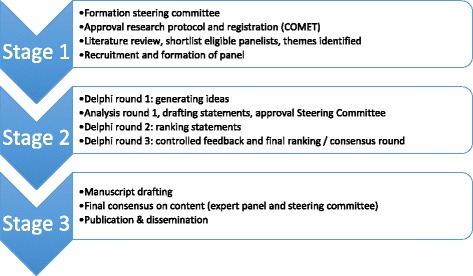
“The need for a minimum of three online Delphi rounds was estimated prior to the start, as per literature recommendations in situations where the quantity of scientific research is limited [21, 22].”
Functional Disability 5 Years after Acute Respiratory Distress Syndrome
Herridge, M. S., Tansey, C. M., Matté, A., Tomlinson, G., Diaz-Granados, N., Cooper, A., Guest, C. B., Mazer, C. D., Mehta, S., Stewart, T. E., et al. (2011) · New England Journal of Medicine · doi:10.1056/nejmoa1011802 · Cited by 2,847
Needham, D. M., Davidson, J., Cohen, H., Hopkins, R. O., Weinert, C., Wunsch, H., Zawistowski, C., Bemis-Dougherty, A., Berney, S. C., Bienvenu, O. J., et al. (2012) · Critical Care Medicine · doi:10.1097/ccm.0b013e318232da75 · Cited by 2,639 · cited 1×
“Long-term impairments in physical and mental health associated with prolonged ICU stay and impeding recovery have now been characterized as post-intensive care syndrome (PICS) [9].”
Self-citationBoulkedid, R., Abdoul, H., Loustau, M., Sibony, O., & Alberti, C. (2011) · PLoS ONE · doi:10.1371/journal.pone.0020476 · Cited by 2,045 · cited 1×
“The need for a minimum of three online Delphi rounds was estimated prior to the start, as per literature recommendations in situations where the quantity of scientific research is limited [21, 22].”
Consensus measurement in Delphi studies
von der Gracht, H. A. (2012) · Technological Forecasting and Social Change · doi:10.1016/j.techfore.2012.04.013 · Cited by 1,831
Developing core outcome sets for clinical trials: issues to consider
Williamson, P. R., Altman, D. G., Blazeby, J. M., Clarke, M., Devane, D., Gargon, E., & Tugwell, P. (2012) · Trials · doi:10.1186/1745-6215-13-132 · Cited by 1,661 · cited 1×
“Measuring the core outcomes is essential, while additional measurements can be undertaken dependent on individual patient needs [17].”
Development of a shuttle walking test of disability in patients with chronic airways obstruction.
Singh, S. J., Morgan, M. D., Scott, S., Walters, D., & Hardman, A. E. (1992) · Thorax · doi:10.1136/thx.47.12.1019 · Cited by 1,455 · cited 1×
“Predicting maximum exercise capacity by means of the ISWT may be an appropriate alternative, because criterion validity against the CPET was established [40 – 42] and psychometric properties of the ISWT in similar populations yield promising results.”
Posttraumatic stress disorder in general intensive care unit survivors: a systematic review
Davydow, D. S., Gifford, J. M., Desai, S. V., Needham, D. M., & Bienvenu, O. J. (2008) · General Hospital Psychiatry · doi:10.1016/j.genhosppsych.2008.05.006 · Cited by 676
Self-citationHodgson, C. L., Stiller, K., Needham, D. M., Tipping, C. J., Harrold, M., Baldwin, C. E., Bradley, S., Berney, S., Caruana, L. R., Elliott, D., et al. (2014) · Critical Care · doi:10.1186/s13054-014-0658-y · Cited by 657 · cited 2×
“Interdisciplinary interventions directed towards early mobilization of critically ill patients within ICUs are implemented in many hospitals across the world [1, 2].”
Self-citationQuality of life in adult survivors of critical illness: A systematic review of the literature
Dowdy, D. W., Eid, M. P., Sedrakyan, A., Mendez-Tellez, P. A., Pronovost, P. J., Herridge, M. S., & Needham, D. M. (2005) · Intensive Care Medicine · doi:10.1007/s00134-005-2592-6 · Cited by 544 · cited 1×
“Serious functional decline associated with immobility, sedation, pharmacological treatment, and mechanical ventilation has been shown in recent publications [3–8].”
Self-citationUse of Standardized Outcome Measures in Physical Therapist Practice: Perceptions and Applications
Jette, D. U., Halbert, J., Iverson, C., Miceli, E., & Shah, P. (2009) · Physical Therapy · doi:10.2522/ptj.20080234 · Cited by 491 · cited 1×
“A ‘COS for clinical practice’ likely differs from a ‘COS for trials’ because instruments used in physical therapy (PT) practice must be practical and feasible, as well as psychometrically solid to contribute to an evidence-based clinical decision-making process [19, 20].”
Elliott, D., Davidson, J. E., Harvey, M. A., Bemis-Dougherty, A., Hopkins, R. O., Iwashyna, T. J., Wagner, J., Weinert, C., Wunsch, H., Bienvenu, O. J., et al. (2014) · Critical Care Medicine · doi:10.1097/ccm.0000000000000525 · Cited by 425 · cited 13×
“Although critical illness survivors might seek PT without referral in countries with direct access [7, 8], a formal and structured care pathway may more appropriately address patients’ comprehensive rehabilitation needs [10].”
InfluentialSelf-citationHerridge, M. S., Chu, L. M., Matte, A., Tomlinson, G., Chan, L., Thomas, C., Friedrich, J. O., Mehta, S., Lamontagne, F., Levasseur, M., et al. (2016) · American Journal of Respiratory and Critical Care Medicine · doi:10.1164/rccm.201512-2343oc · Cited by 415
Bellet, R. N., Adams, L., & Morris, N. R. (2012) · Physiotherapy · doi:10.1016/j.physio.2011.11.003 · Cited by 319 · cited 1×
“Criterion validity has not so far been established [39].”
Sommers, J., Engelbert, R. H., Dettling-Ihnenfeldt, D., Gosselink, R., Spronk, P. E., Nollet, F., & van der Schaaf, M. (2015) · Clinical Rehabilitation · doi:10.1177/0269215514567156 · Cited by 272 · cited 2×
“Interdisciplinary interventions directed towards early mobilization of critically ill patients within ICUs are implemented in many hospitals across the world [1, 2].”
Self-citationBienvenu, O. J., Colantuoni, E., Mendez-Tellez, P. A., Dinglas, V. D., Shanholtz, C., Husain, N., Dennison, C. R., Herridge, M. S., Pronovost, P. J., & Needham, D. M. (2012) · American Journal of Respiratory and Critical Care Medicine · doi:10.1164/rccm.201103-0503oc · Cited by 235 · cited 1×
“Serious functional decline associated with immobility, sedation, pharmacological treatment, and mechanical ventilation has been shown in recent publications [3–8].”
Self-citationTurnbull, A. E., Rabiee, A., Davis, W. E., Nasser, M. F., Venna, V. R., Lolitha, R., Hopkins, R. O., Bienvenu, O. J., Robinson, K. A., & Needham, D. M. (2016) · Critical Care Medicine · doi:10.1097/ccm.0000000000001651 · Cited by 227 · cited 1×
“The need for standardized sets of outcome measures or a core outcome set (COS) for survivors of critical illness has been highlighted in recent publications [13 – 16].”
Self-citationvan Loon, R. B., Veen, G., Baur, L. H. B., Kamp, O., Bronzwaer, J. G. F., Twisk, J. W. R., Verheugt, F. W. A., & van Rossum, A. C. (2012) · Trials · doi:10.1186/1745-6215-13-1 · Cited by 203
Parry, S. M., Granger, C. L., Berney, S., Jones, J., Beach, L., El-Ansary, D., Koopman, R., & Denehy, L. (2015) · Intensive Care Medicine · doi:10.1007/s00134-015-3672-x · Cited by 183 · cited 1×
“The 6MWT is a widely used test, is feasible, and is validated for the population of ICU survivors [14, 37, 38].”
Self-citationExercise rehabilitation following intensive care unit discharge for recovery from critical illness
Connolly, B., Salisbury, L., O'Neill, B., Geneen, L. J., Douiri, A., Grocott, M. P., Hart, N., Walsh, T. S., Blackwood, B., & for the ERACIP Group (2015) · Cochrane Database of Systematic Reviews · doi:10.1002/14651858.cd008632.pub2 · Cited by 176
Self-citationRelationship between field walking tests and incremental cycle ergometry in COPD
LUXTON, N., ALISON, J. A., WU, J., & MACKEY, M. G. (2008) · Respirology · doi:10.1111/j.1440-1843.2008.01355.x · Cited by 136 · cited 1×
“The first method, commonly practiced in pulmonary rehabilitation [26, 27], recommends to set the starting exercise intensity for walking on a treadmill at 80 % of the average 6MWT speed or 75 % of the peak Incremental Shuttle Walk Test (ISWT) speed.”
van der Schaaf, M., Beelen, A., Dongelmans, D., Vroom, M., & Nollet, F. (2009) · Journal of Rehabilitation Medicine · doi:10.2340/16501977-0333 · Cited by 133
Self-citationMeasurement Properties of the Incremental Shuttle Walk Test
Parreira, V. F., Janaudis‐Ferreira, T., Evans, R. A., Mathur, S., Goldstein, R. S., & Brooks, D. (2014) · CHEST Journal · doi:10.1378/chest.13-2071 · Cited by 129 · cited 1×
“Predicting maximum exercise capacity by means of the ISWT may be an appropriate alternative, because criterion validity against the CPET was established [40 – 42] and psychometric properties of the ISWT in similar populations yield promising results.”
Hanekom, S., Gosselink, R., Dean, E., van Aswegen, H., Roos, R., Ambrosino, N., & Louw, Q. (2011) · Clinical Rehabilitation · doi:10.1177/0269215510397677 · Cited by 127 · cited 3×
“Round two required panelists to rank each statement on an ordinal scale from 1 to 5 (1 = essential, 2 = very important, 3 = important, 4 = unimportant, and 5 = undesirable) [23].”
Self-citationPoor functional recovery after a critical illness: A longitudinal study
van der Schaaf, M., Beelen, A., Dongelmans, D., Vroom, M., & Nollet, F. (2009) · Journal of Rehabilitation Medicine · doi:10.2340/16501977-0443 · Cited by 115
Self-citationJones, C., EDDLESTON, J. M., McCairn, A., Dowling, S., McWilliams, D. J., Coughlan, E., & Griffiths, R. (2015) · Journal of Critical Care · doi:10.1016/j.jcrc.2015.05.002 · Cited by 110 · cited 1×
“A combined exercise and nutrition intervention was not addressed in this Delphi project but a recently published RCT showed positive effects of such an intervention on walking distance at 3 months [36].”
Self-citationChan, K. S., Pfoh, E. R., Denehy, L., Elliott, D., Holland, A. E., Dinglas, V. D., & Needham, D. M. (2015) · CHEST Journal · doi:10.1378/chest.14-1808 · Cited by 101 · cited 1×
“The 6MWT is a widely used test, is feasible, and is validated for the population of ICU survivors [14, 37, 38].”
Self-citationGriffith, D. M., Lewis, S. C., Rossi, A. G., Rennie, J., Salisbury, L., Merriweather, J. L., Templeton, K. E., & Walsh, T. S. (2016) · Thorax · doi:10.1136/thoraxjnl-2015-208114 · Cited by 92 · cited 1×
“illness, medical interventions, and persistent systemic inflammation [12]— rehabilitation needs likely extend beyond the physical domain.”
Rehabilitation after critical illness: summary of NICE guidance
Tan, T., Brett, S. J., Stokes, T., & on behalf of the Guideline Development Group (2009) · BMJ · doi:10.1136/bmj.b822 · Cited by 78
Physical, Cognitive, and Psychological Disability Following Critical Illness: What Is the Risk?
Erb, C. T., Jackson, J. C., & Jutte, J. E. (2015) · Seminars in Respiratory and Critical Care Medicine · doi:10.1055/s-0035-1566002 · Cited by 75 · cited 1×
“Promising results in recent publications clarify patient-specific, ICU-specific, and environmental-specific factors affecting long-term outcomes [31 – 34].”
Colquhoun, H. L., Lamontagne, M., Duncan, E., Fiander, M., Champagne, C., & Grimshaw, J. (2016) · Clinical Rehabilitation · doi:10.1177/0269215516644309 · Cited by 71 · cited 1×
“A ‘COS for clinical practice’ likely differs from a ‘COS for trials’ because instruments used in physical therapy (PT) practice must be practical and feasible, as well as psychometrically solid to contribute to an evidence-based clinical decision-making process [19, 20].”
Puthucheary, Z., & Denehy, L. (2015) · American Journal of Respiratory and Critical Care Medicine · doi:10.1164/rccm.201410-1907le · Cited by 67 · cited 1×
“Risk stratification based on pre-existing chronic disease, ICU LOS, or age might predict recovery outcomes and health care usage and may assist in determining tailor-made rehabilitation interventions within this proposed framework [33, 34].”
Self-citationAlison, J. A., Kenny, P., King, M. T., McKinley, S., Aitken, L. M., Leslie, G. D., & Elliott, D. (2012) · Physical Therapy · doi:10.2522/ptj.20110410 · Cited by 57 · cited 1×
“The 6MWT is a widely used test, is feasible, and is validated for the population of ICU survivors [14, 37, 38].”
Arnardóttir, R. H., Emtner, M., Hedenström, H., Larsson, K., & Boman, G. (2006) · Respiratory Research · doi:10.1186/1465-9921-7-127 · Cited by 52 · cited 1×
“The first method, commonly practiced in pulmonary rehabilitation [26, 27], recommends to set the starting exercise intensity for walking on a treadmill at 80 % of the average 6MWT speed or 75 % of the peak Incremental Shuttle Walk Test (ISWT) speed.”
de Morton Mobility Index Is Feasible, Reliable, and Valid in Patients With Critical Illness
Sommers, J., Vredeveld, T., Lindeboom, R., Nollet, F., Engelbert, R., & van der Schaaf, M. (2016) · Physical Therapy · doi:10.2522/ptj.20150339 · Cited by 52
Self-citationGranger, C. L., Denehy, L., Parry, S. M., Martin, J. R., Dimitriadis, T., Sorohan, M., & Irving, L. B. (2015) · BMC Pulmonary Medicine · doi:10.1186/s12890-015-0075-2 · Cited by 49 · cited 1×
“Predicting maximum exercise capacity by means of the ISWT may be an appropriate alternative, because criterion validity against the CPET was established [40–42] and psychometric properties of the ISWT in similar populations yield promising results.”
Self-citationSchandl, A. R., Bottai, M., Holdar, U., Hellgren, E., & Sackey, P. (2014) · Critical Care · doi:10.1186/s13054-014-0455-7 · Cited by 46 · cited 1×
“Promising results in recent publications clarify patientspecific, ICU-specific, and environmental-specific factors affecting long-term outcomes [31–34].”
on behalf of the Practice Recommendations Development Group, Achttien, R. J., Staal, J. B., van der Voort, S., Kemps, H. M., Koers, H., Jongert, M. W. A., & Hendriks, E. J. M. (2015) · Netherlands Heart Journal · doi:10.1007/s12471-014-0612-2 · Cited by 44 · cited 1×
“clinical expertise with patients within the cardiopulmonary scope of practice, for which such evidence does exist [11].”
Weissman, G. E., Harhay, M. O., Lugo, R. M., Fuchs, B. D., Halpern, S. D., & Mikkelsen, M. E. (2016) · Annals of the American Thoracic Society · doi:10.1513/annalsats.201602-131oc · Cited by 35
Understanding and Improving Clinical Trial Outcome Measures in Acute Respiratory Failure
Needham, D. M. (2014) · American Journal of Respiratory and Critical Care Medicine · doi:10.1164/rccm.201402-0362ed · Cited by 32 · cited 1×
“a core outcome set (COS) for survivors of critical illness has been highlighted in recent publications [13–16].”
Self-citationDettling-Ihnenfeldt, D. S., de Graaff, A. E., Nollet, F., & van der Schaaf, M. (2015) · PubMed · Cited by 19
Self-citation
Cited by
Surviving sepsis campaign: international guidelines for management of sepsis and septic shock 2021
Evans, L., Rhodes, A., Alhazzani, W., Antonelli, M., Coopersmith, C. M., French, C., Machado, F. R., Mcintyre, L., Ostermann, M., Prescott, H. C., et al. (2021) · Intensive Care Medicine · doi:10.1007/s00134-021-06506-y · Cited by 5,082
Surviving Sepsis Campaign: International Guidelines for Management of Sepsis and Septic Shock 2021.
Evans, L., Rhodes, A., Alhazzani, W., Antonelli, M., Coopersmith, C. M., French, C., Machado, F. R., Mcintyre, L., Ostermann, M., Prescott, H. C., et al. (2021) · Critical Care Medicine · doi:10.1097/ccm.0000000000005337 · Cited by 2,935
Enhancing Recovery From Sepsis: A Review
Prescott, H. C., & Angus, D. C. (2018) · JAMA · doi:10.1001/jama.2017.17687 · Cited by 1,059
“The goals of rehabilitation, as in analogous clinical situations, in- clude improving exercise capacity, strengthening skeletal and re- spiratory muscles, and promoting independent completion of ADLs.81 Potential tools to screen for new functional disability war- rantingreferral includetheKatz IndexofADLs,TimedUpandGo…”
Needham, D. M., Sepulveda, K. A., Dinglas, V. D., Chessare, C. M., Friedman, L. A., Bingham, C. O., & Turnbull, A. E. (2017) · American Journal of Respiratory and Critical Care Medicine · doi:10.1164/rccm.201702-0372oc · Cited by 464
“other pain-specific instruments, including a visual analogue scale, as recommended by an expert group [29]) is recommended as part of a future research agenda (Figure 2).”
BackgroundSelf-citationThe ICM research agenda on intensive care unit-acquired weakness
Latronico, N., Herridge, M., Hopkins, R. O., Angus, D., Hart, N., Hermans, G., Iwashyna, T., Arabi, Y., Citerio, G., Wesley Ely, E., et al. (2017) · Intensive Care Medicine · doi:10.1007/s00134-017-4757-5 · Cited by 256
“Background Persistent pain is a major problem in survivors of critical illness [64], and pain assessment in these patients was rated as “very important” in a recent expert consensus for physical rehabilitation in ICU survivors [33].”
BackgroundSelf-citation
Metadata
- Authors
- Major, M. E., Kwakman, R., Kho, M. E., Connolly, B., McWilliams, D., Denehy, L., Hanekom, S., Patman, S., Gosselink, R., Jones, C., Nollet, F., Needham, D. M., Engelbert, R. H. H., & van der Schaaf, M.
- Affiliations
- Amsterdam University of Applied Sciences (NL)
- McMaster University (CA)
- King's College London (GB)
- University Hospitals Birmingham NHS Foundation Trust (GB)
- The University of Melbourne (AU)
- Stellenbosch University (ZA)
- The University of Notre Dame Australia (AU)
- KU Leuven (BE)
- University of Liverpool (GB)
- Amsterdam UMC Location University of Amsterdam (NL)
- Johns Hopkins University (US)
- ORCID
- Venue
- Critical Care
- Published
- 2016-10-29
- Volume
- 20
- Issue
- 1
- Pages
- 354-354
- ISSN
- 1364-8535 (ISSN-L)
- PMC
- PMC5086052
- OpenAlex
- W2545717629
- Semantic Scholar
- d547684992ff14b981aedc42e14b077e4d1a9dcc
- Cited by
- 141
- References
- 41
- Citations by year
- 2026: 8 · 2025: 11 · 2024: 18 · 2023: 24 · 2022: 11 · 2021: 19 · 2020: 19 · 2019: 14 · 2018: 8 · 2017: 9
- FWCI
- 9.40
- Type
- journal article
- Language
- en
- Open access
- gold
- doi.org
- Licence
- cc-by
- Locations
- Critical Care (publishedVersion, cc-by)
- PubMed Central (publishedVersion, cc-by)
- PubMed (publishedVersion)
- Pure Amsterdam UMC (publishedVersion, other-oa)
- Data Archiving and Networked Services (DANS) (submittedVersion)
- Minerva Access (University of Melbourne) (submittedVersion, cc-by)
- Lirias (submittedVersion, cc-by)
- ResearchOnline@ND (The University of Notre Dame) (submittedVersion)
- Data Archiving and Networked Services (DANS) (submittedVersion, cc-by)
- SUNScholar (Stellenbosch University) (submittedVersion)
- Funders
- Nederlandse Organisatie voor Wetenschappelijk Onderzoek
- Canada Research Chairs
- Topics
- Health Sciences › Medicine › Critical Care and Intensive Care Medicine › Intensive Care Unit Cognitive Disorders
- Health Sciences › Health Professions › Physical Therapy, Sports Therapy and Rehabilitation › Medical Practices and Rehabilitation
- Health Sciences › Nursing › Nutrition and Dietetics › Clinical Nutrition and Gastroenterology
- Keywords
- critical illness survivors, physical rehabilitation, physiotherapy, hospital discharge, intensive care unit survivors, rehabilitation goals, outcome measures, exercise capacity, skeletal muscle strength, functional training, respiratory muscle training, nutritional support, screening tool, quality of life, pain, mobility (physical function)
- MeSH terms
- Activities of Daily Living, Delphi Technique, Humans, Patient Discharge, Rehabilitation, Critical Illness, Survivors, Physical Therapy Modalities, Consensus
About these checks
Registry, retraction, Cites and statistics results are computed, not judged, with one exception: a printed reference that no index lists is read once by a model before it counts as a citation error. Claims are extracted by a model and kept only when their quote appears verbatim in the text; each cited source is then checked, with a model’s help, for whether it says what the claim relies on. Those verdicts can be wrong — read the claim’s quote and the cited source before relying on one.
Statistics and arithmetic are recomputed, not judged.
Confidence bands are shown only for fields calibrated on our annotated test set. None is calibrated yet, so no band is shown.
What counts as a claim ›How we measure confidence ›How we check this ›
Are you an author, or do you see a problem with this page? Request a review
Data sources
Bibliographic data: Semantic Scholar, OpenAlex, Crossref.
Contains information from the Semantic Scholar Academic Graph Datasets, made available under the ODC Attribution License (ODC-BY 1.0).
Semantic Scholar’s data is described in: Kinney, R., et al. (2023). The Semantic Scholar Open Data Platform. arXiv:2301.10140.
