

Prevalence of post-traumatic stress disorder symptoms in adult critical care survivors: a systematic review and meta-analysis
Open accessThe DOI matches its Crossref record; 79 of the 80 references it cites were found in a registry or an index.
Abstract
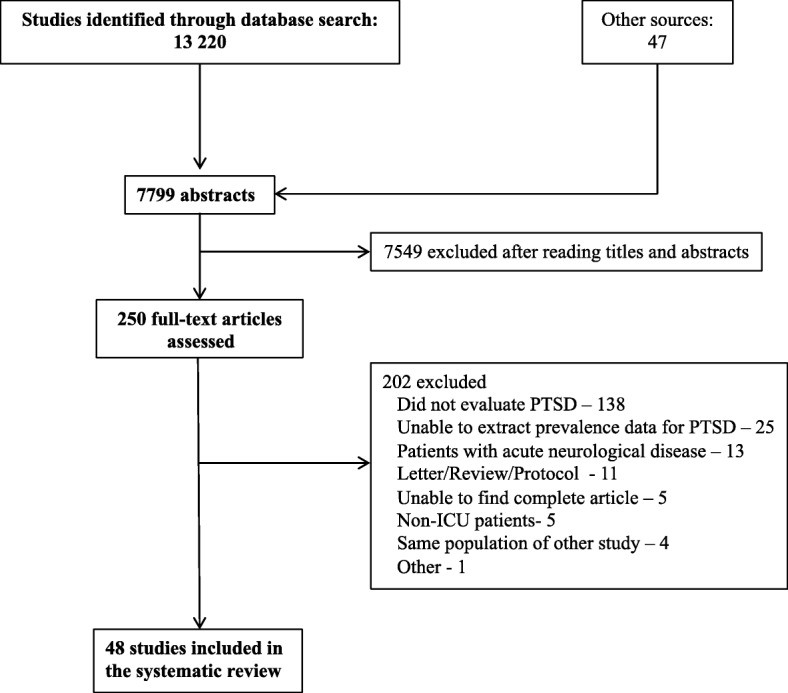
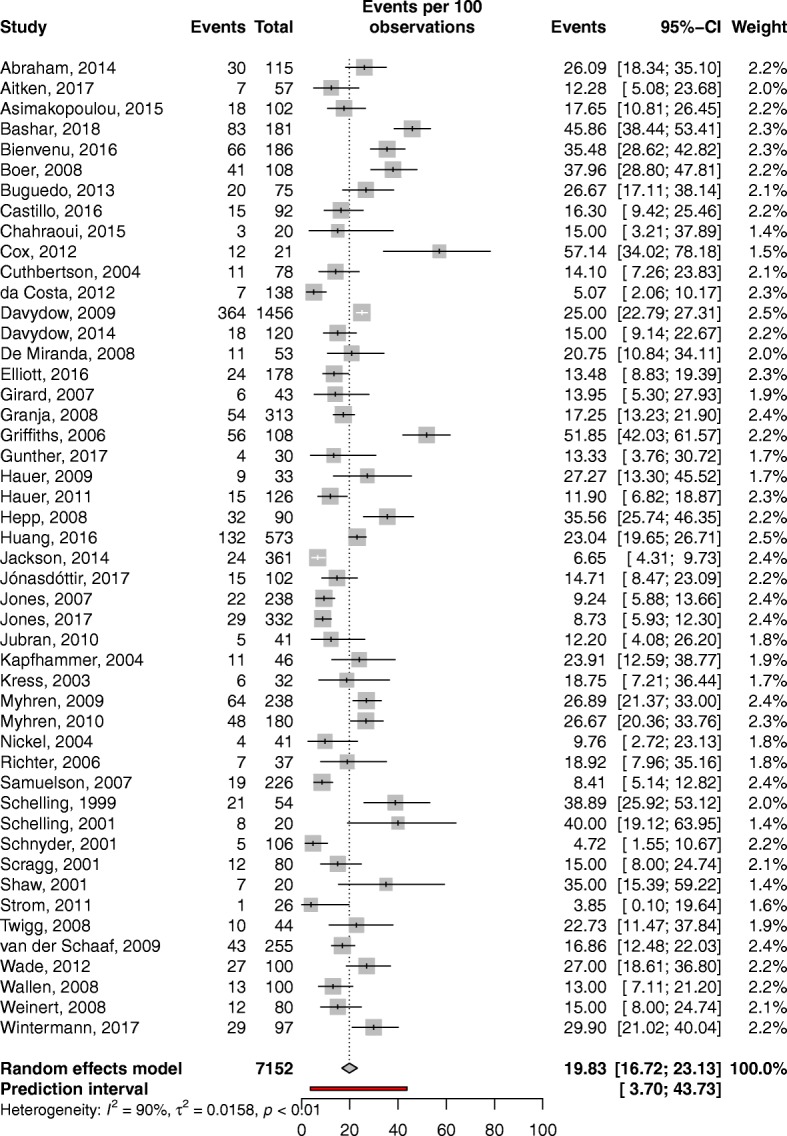
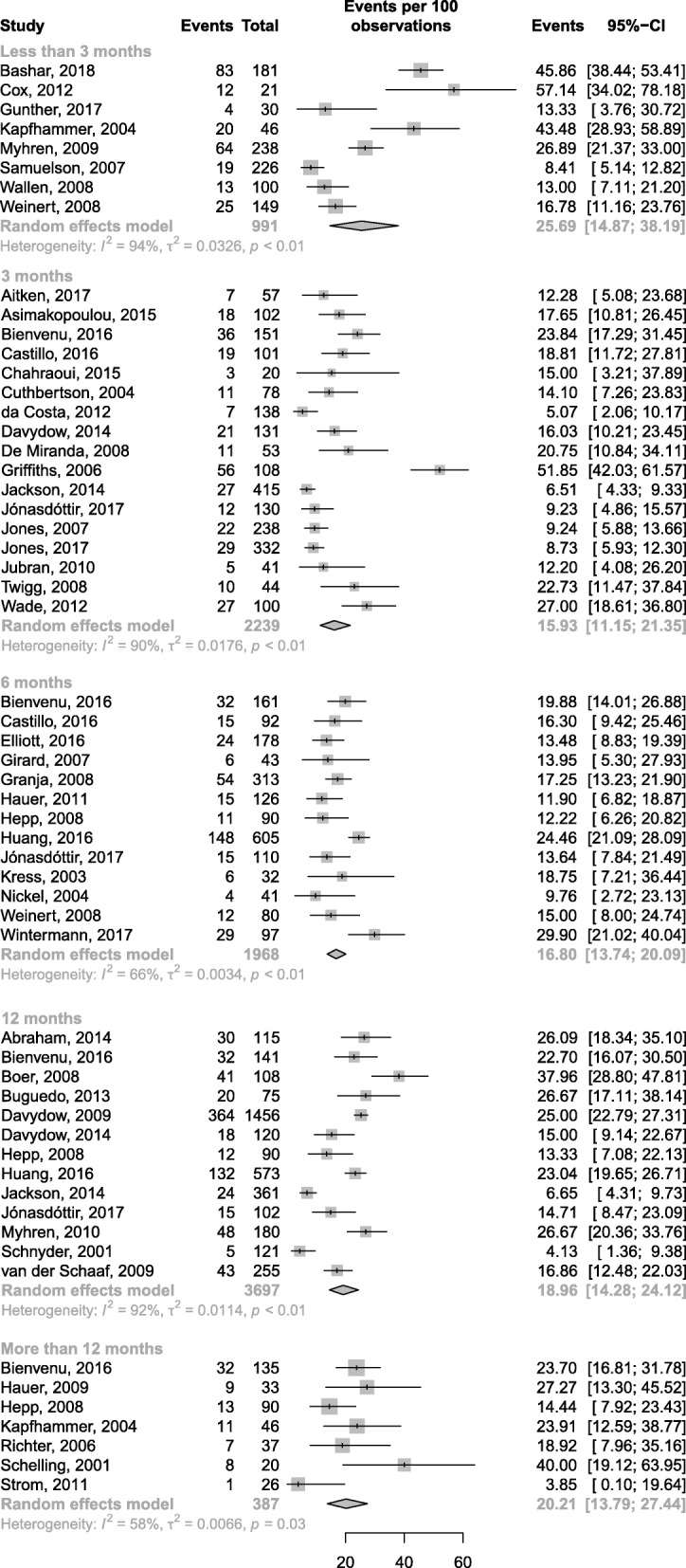
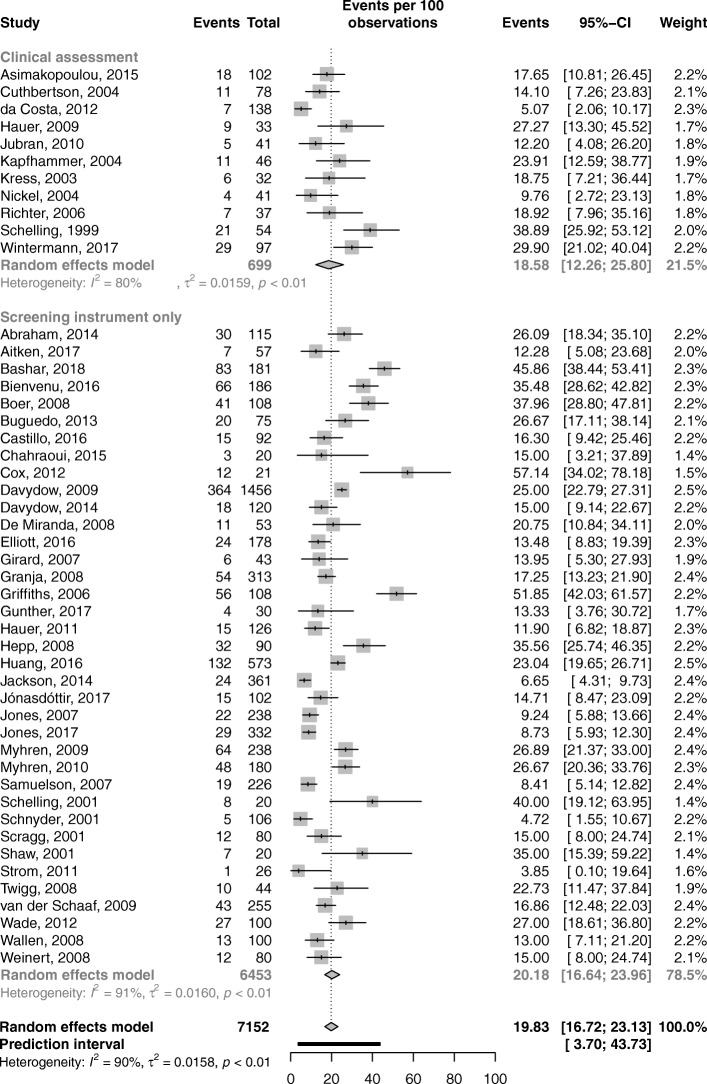
As more patients are surviving intensive care, mental health concerns in survivors have become a research priority. Among these, post-traumatic stress disorder (PTSD) can have an important impact on the quality of life of critical care survivors. However, data on its burden are conflicting. Therefore, this systematic review and meta-analysis aimed to evaluate the prevalence of PTSD symptoms in adult critical care patients after intensive care unit (ICU) discharge. We searched MEDLINE, EMBASE, LILACS, Web of Science, PsycNET, and Scopus databases from inception to September 2018. We included observational studies assessing the prevalence of PTSD symptoms in adult critical care survivors. Two reviewers independently screened studies and extracted data. Studies were meta-analyzed using a random-effects model to estimate PTSD symptom prevalence at different time points, also estimating confidence and prediction intervals. Subgroup and meta-regression analyses were performed to explore heterogeneity. Risk of bias was assessed using the Joanna Briggs Institute tool and the GRADE approach. Of 13,267 studies retrieved, 48 were included in this review. Overall prevalence of PTSD symptoms was 19.83% (95% confidence interval [CI], 16.72–23.13; I2 = 90%, low quality of evidence). Prevalence varied widely across studies, with a wide range of expected prevalence (from 3.70 to 43.73% in 95% of settings). Point prevalence estimates were 15.93% (95% CI, 11.15–21.35; I2 = 90%; 17 studies), 16.80% (95% CI, 13.74–20.09; I2 = 66%; 13 studies), 18.96% (95% CI, 14.28–24.12; I2 = 92%; 13 studies), and 20.21% (95% CI, 13.79–27.44; I2 = 58%; 7 studies) at 3, 6, 12, and > 12 months after discharge, respectively. PTSD symptoms may affect 1 in every 5 adult critical care survivors, with a high expected prevalence 12 months after discharge. ICU survivors should be screened for PTSD symptoms and cared for accordingly, given the potential negative impact of PTSD on quality of life. In addition, action should be taken to further explore the causal relationship between ICU stay and PTSD, as well as to propose early measures to prevent PTSD in this population. PROSPERO, CRD42017075124 , Registered 6 December 2017.
Overview
The claims and statistics of this paper haven’t been checked yet.
Free: it reads the open-access text and checks the first 5 claims that cite a source we can check. Create a free account to check every claim.
Integrity signals
Registry
Cites
Statistics
Figures
Verification
Claims the paper makes
The claims and statistics of this paper haven’t been checked yet.
Free: it reads the open-access text and checks the first 5 claims that cite a source we can check. Create a free account to check every claim.
Claims other papers make about this one
Each is checked against this paper’s own text: does it say what the citing paper says it does?
The source backs part of the claim, not all of it — or backs it for a different population, condition or comparison.
In the citing paper
“Prolonged exposure to stressful hospitalization, complex medical examination procedures, and worries about the difficulty of returning to normal life can lead to long-term psychological harm [44].”
From Mindfulness-based online intervention on mental health and quality of life among COVID-19 patients in China: an intervention design (2021) · cites this paper as [44]
Experimental — accuracy not yet measuredThe cited source says what the claim attributes to it.
In the citing paper
“The estimated psychological morbidity for Intensive Care Unit (ICU) survivors is 55%: with approximately 20%–30% experiencing PTSD; 46% depression, and 44% anxiety.1 –3”
From “It saved me”: A thematic analysis of experiences of psychological therapy following critical illness and intensive care (2024) · cites this paper as [2]
The check wasn’t confident either way, so it gives no verdict — never disputed.
In the citing paper
“The estimated psychological morbidity for Intensive Care Unit (ICU) survivors is 55%: with approximately 20%–30% experiencing PTSD; 46% depression, and 44% anxiety.1 –3”
From “It saved me”: A thematic analysis of experiences of psychological therapy following critical illness and intensive care (2024) · cites this paper as [2]
Experimental — accuracy not yet measuredThe check wasn’t confident either way, so it gives no verdict — never disputed.
In the citing paper
“The estimated psychological morbidity for Intensive Care Unit (ICU) survivors is 55%: with approximately 20%–30% experiencing PTSD; 46% depression, and 44% anxiety.1 –3”
From “It saved me”: A thematic analysis of experiences of psychological therapy following critical illness and intensive care (2024) · cites this paper as [2]
Experimental — accuracy not yet measured
Self-check
Percentages, sums and reported differences re-computed from the paper’s own numbers.
The self-check needs the paper’s full text.
Citations
Cites
Diagnostic and Statistical Manual of Mental Disorders
American Psychiatric Association (2013) · doi:10.1176/appi.books.9780890425596 · Cited by 116,369
Diagnostic and Statistical Manual of Mental Disorders
Williams, J. B. W., & First, M. (2013) · Encyclopedia of Social Work · doi:10.1093/acrefore/9780199975839.013.104 · Cited by 109,519
Preferred Reporting Items for Systematic Reviews and Meta-Analyses: the PRISMA statement
Moher, D., Liberati, A., Tetzlaff, J., Altman, D. G., & for the PRISMA Group (2009) · BMJ · doi:10.1136/bmj.b2535 · Cited by 83,823
Preferred reporting items for systematic reviews and meta-analyses: the PRISMA Statement.
(2009) · PubMed Central · Cited by 44,859
Wickham, H. (2016) · Use R! · doi:10.1007/978-3-319-24277-4 · Cited by 33,115
Liberati, A., Altman, D. G., Tetzlaff, J., Mulrow, C., Gøtzsche, P. C., Ioannidis, J. P. A., Clarke, M., Devereaux, P. J., Kleijnen, J., & Moher, D. (2009) · PLoS Medicine · doi:10.1371/journal.pmed.1000100 · Cited by 28,164
Liberati, A., Altman, D. G., Tetzlaff, J., Mulrow, C., Gotzsche, P. C., Ioannidis, J. P. A., Clarke, M., Devereaux, P. J., Kleijnen, J., & Moher, D. (2009) · BMJ · doi:10.1136/bmj.b2700 · Cited by 17,648
ggplot2: Elegant Graphics for Data Analysis
Wickham, H. (2009) · doi:10.1007/978-0-387-98141-3 · Cited by 14,447
GRADE guidelines: 3. Rating the quality of evidence
Balshem, H., Helfand, M., Schünemann, H. J., Oxman, A. D., Kunz, R., Brozek, J., Vist, G. E., Falck-Ytter, Y., Meerpohl, J., & Norris, S. (2011) · Journal of Clinical Epidemiology · doi:10.1016/j.jclinepi.2010.07.015 · Cited by 8,285
Munn, Z., Moola, S., Lisy, K., Riitano, D., & Tufanaru, C. (2015) · International Journal of Evidence-Based Healthcare · doi:10.1097/xeb.0000000000000054 · Cited by 3,131
Research works printed but not linked: 2
- Joanna Briggs Institute Joanna Briggs Institute reviewers’ manual: 2014 edition 2014 Australia The Joanna Briggs Institute
- Schwarzer G meta: an R package for meta-analysis R News 2007 7 40 45
Cited by
Items 101–200 of 318
Rossi, A. A., Pizzoli, S. F. M., Fernández, I., Invernizzi, R., Panzeri, A., Taccini, F., & Mannarini, S. (2024) · Behavioral Sciences · doi:10.3390/bs14100901 · Cited by 19
“Life-threatening situations that can have varying degrees of traumatic impact include wars, natural disasters, severe injuries, and illnesses such as cancer, stroke, or COVID-19 [8–10].”
BackgroundSpada, M. S., Biffi, A. M., Belotti, L., Cremaschi, L., Palumbo, C., Locatelli, C., Cesana, B. M., & Bondi, E. (2022) · Journal of Affective Disorders · doi:10.1016/j.jad.2022.08.086 · Cited by 15
Anticipating ICU discharge and long-term follow-up
Rosa, R. G., Teixeira, C., Piva, S., & Morandi, A. (2024) · Current Opinion in Critical Care · doi:10.1097/mcc.0000000000001136 · Cited by 23
“survivors experience anxiety [19], 29–34% deal with depression [20], and 16–23% exhibit symptoms of posttraumatic stress disorder [21].”
BackgroundSelf-citationBouzgarrou, R., Farigon, N., Morlat, L., Bouaziz, S., Philipponnet, C., Laurichesse, G., Calvet, L., Cassagnes, L., Costes, F., Souweine, B., et al. (2024) · Scientific Reports · doi:10.1038/s41598-024-78686-8 · Cited by 17
Friberg, K., Hofsø, K., Raeder, J. C., Rustøen, T., Småstuen, M. C., & Olsen, B. F. (2023) · Australian Critical Care · doi:10.1016/j.aucc.2023.06.005 · Cited by 20
Intensive Care Unit (ICU)-Related Post-traumatic Stress Disorder: A Literature Review
ABDELBAKY, A., & Eldelpshany, M. S. (2024) · Cureus · doi:10.7759/cureus.57049 · Cited by 35
“They further revealed that PTSD may affect one person out of every five ICU survivors [18].”
BackgroundDam, E. B.-V., Shepherd, L., van de Schoot, R., Engelhard, I. M., & Loey, N. E. E. V. (2024) · Health Psychology Review · doi:10.1080/17437199.2024.2423725 · Cited by 12
“Yet, a meta-analysis on PTSD point prevalences in critical care survivors suggested an increase over time, from 15.9% at 3 months to 20.2% > 12 months (Righy et al., 2019).”
InfluentialGensichen, J., Schmidt, K. F. R., Sanftenberg, L., Kosilek, R. P., Friemel, C. M., Beutel, A., Dohmann, J., Heintze, C., Prescott, H. C., Reips, U., et al. (2025) · BMJ · doi:10.1136/bmj-2024-082092 · Cited by 14
Impact of Music Therapy on Patients in the Critical Care Unit: A Qualitative Study
Saldaña‐Ortiz, V., Recio-Vivas, A. M., Domínguez, J. M. M., & Miguel, E. M. (2025) · Nursing in Critical Care · doi:10.1111/nicc.70099 · Cited by 13
Psychological evaluation and support in COVID-19 critically ill patients: a feasibility study
Prével, R., Coelho, J., Orieux, A., Philip, P., Gruson, D., & Bioulac, S. (2021) · Critical Care · doi:10.1186/s13054-021-03642-1 · Cited by 12
“About 20% of acute respiratory distress syndrome (ARDS) survivors suffer from anxiety, depression or post-traumatic stress disorder (PTSD) [1] with a negative impact on long-term quality of life [2].”
BackgroundInfluentialSkinner, J. P., & Moran, L. V. (2023) · Journal of Medical Virology · doi:10.1002/jmv.28491 · Cited by 12
“Specifically, one study with patients who required ICU care for COVID‐19 found that 61%, 57%, and 76% experienced impaired mobility, self‐care, and ability to do usual activities respectively and that 90% of patients experience at least one impairment that impacted quality of life.21 Additionally, a systematic review…”
ResultInfluentialJu, X., Li, J., Yang, J., Zheng, Q., & Liu, X. (2024) · Heart & Lung · doi:10.1016/j.hrtlng.2024.11.014 · Cited by 11
Iljazi, A., Ashina, H., Al-Khazali, H. M., Ashina, M., Winther Schytz, H., & Ashina, S. (2020) · Brain Injury · doi:10.1080/02699052.2020.1764104 · Cited by 9
“Certain events such as motorvehicle accidents (MVA) and hospitalization may contribute to development of symptoms of PTSD (25,26).”
BackgroundPosttraumatic stress phenomena in critical illness and intensive care survivors
Bienvenu, O. J. (2021) · International Review of Psychiatry · doi:10.1080/09540261.2021.2017863 · Cited by 12
“As noted in a recent systematic review and meta-analysis (Righy et al., 2019), nonrandomized studies suggest benefits of ICU follow-up in survival, functional status, satisfaction, and anxiety, depression, and PTSD symptoms.”
BackgroundSokoll, P. R., Migliavaca, C. B., Siebert, U., Schmid, D., & Arvandi, M. (2023) · Sexually Transmitted Infections · doi:10.1136/sextrans-2022-055687 · Cited by 12
Self-citationFjone, K. S., Buanes, E. A., Småstuen, M. C., Laake, J. H., Stubberud, J., & Hofsø, K. (2023) · Journal of Clinical Nursing · doi:10.1111/jocn.16665 · Cited by 13
Melkam, M., Tinsae, T., Andualem, F., & Nakie, G. (2023) · SAGE Open Medicine · doi:10.1177/20503121231160884 · Cited by 12
Communication in critical care tracheostomy patients dependent upon cuff inflation: A scoping review
McClintock, C., McAuley, D. F., McIlmurray, L., Alnajada, A., Connolly, B. A., & Blackwood, B. (2024) · Australian Critical Care · doi:10.1016/j.aucc.2024.02.009 · Cited by 13
Vlake, J. H., van Bommel, J., Wils, E., Korevaar, T. I. M., Taccone, F. S., Schut, A. F., Elderman, J. H., Labout, J. A. M., Raben, A., Dijkstra, A., et al. (2022) · BMJ Open · doi:10.1136/bmjopen-2022-061876 · Cited by 14
Cognitive Health and Quality of Life After Surviving Sepsis: A Narrative Review
Ackermann, K., Aryal, N. R., Westbrook, J. I., & Li, L. (2025) · Journal of Intensive Care Medicine · doi:10.1177/08850666251340631 · Cited by 10
Kooken, R. W. J., Tilburgs, B., Slooter, A. J. C., & van den Boogaard, M. (2025) · Intensive Care Medicine · doi:10.1007/s00134-025-08132-4 · Cited by 13
“Colored lines represent 95% confidence intervals is similar to levels reported in other studies [43].”
Kostov, S. G., Kornovski, Y. D., Yordanov, A. D., Slavchev, S. H., Ivanova, Y., Alkatout, İ., & Watrowski, R. (2025) · Journal of Clinical Medicine · doi:10.3390/jcm14207207 · Cited by 8
“Persistent pain and psychological sequelae are also frequent after major trauma; meta-analytic data in ICU/trauma survivors show PTSD and depressive symptoms in 20–30% at 6–12 months [112].”
The Psychiatric Domain of Post-Intensive Care Syndrome: A Review for the Intensivist
Rhodes, A., Wilson, C., Zelenkov, D., Adams, K., Poyant, J., Han, X., Faugno, A. J., & Montalvo, C. (2024) · Journal of Intensive Care Medicine · doi:10.1177/08850666241275582 · Cited by 9
“99,100 However, given the limited feasibility of implementing some of these tools, one scoping review suggested that the briefer IES-6 could improve ef fi ciency while maintaining adequate screening for PTSD symptoms.”
Vrettou, C. S., Mantziou, V., Ilias, Ι., Vassiliou, A. G., Orfanos, S. E., Kotanidou, Α., & Dimopoulou, I. (2021) · Healthcare · doi:10.3390/healthcare9070849 · Cited by 8
“In a recent meta-analysis, the one-year prevalence of PTSD was reported to be approximately 20% [26].”
BackgroundThe examination of stress symptoms and posttraumatic growth in the patients diagnosed with Covid-19
Özgüç, S., Tanrıverdi, D., Güner, M., & Kaplan, S. N. (2022) · Intensive and Critical Care Nursing · doi:10.1016/j.iccn.2022.103274 · Cited by 11
El-Azzab, S., & El-Nady, M. T. (2021) · Egyptian Journal of Health Care · doi:10.21608/ejhc.2021.173651 · Cited by 8
“(Righy et al., 2019).”
Postintensive care syndrome in COVID-19. Unicentric pilot study. Calm does not come after the storm
Rodríguez, E. M., Gimeno, F. P., Angulo, A. E., Samper, J. A., Ruiz, C. S., & Alarcón, M. D. L. (2022) · Medicina Clínica (English Edition) · doi:10.1016/j.medcle.2021.11.013 · Cited by 14
“Hyperglycaemia 14% (4) Vasoactive drugs 66% (19)”
Papini, S., Iturralde, E., Lu, Y., Greene, J., Barreda, F. X., Sterling, S., & Liu, V. X. (2023) · Translational Psychiatry · doi:10.1038/s41398-023-02699-6 · Cited by 8
“Given systematic reviews and meta-analyses found long-term rates of prevalence of psychiatric outcomes among critical-illness survivors [2, 21, 22], a 12-month follow-up window was selected to capture cases that may have delayed emergence (or reporting) of symptoms.”
BackgroundChrisman, M., Chesnut, S. R., Thompson, M., Hopper, A., & Lasiter, S. (2023) · Intensive and Critical Care Nursing · doi:10.1016/j.iccn.2023.103608 · Cited by 10
Pediatric Medical Traumatic Stress in Individuals With Craniofacial Conditions
Crerand, C. E., Feragen, K. B., Johns, A. L., Umbaugh, H. M., McClinchie, M. G., Drake, A. F., Heike, C. L., Yi‐Frazier, J. P., & Stock, N. M. (2024) · Perspectives of the ASHA Special Interest Groups · doi:10.1044/2024_persp-23-00236 · Cited by 7
Rose, L., Schultz, M. J., Cardwell, C. R., Paulus, F., Couper, K., Jouvet, P. A., & Blackwood, B. (2025) · Cochrane Database of Systematic Reviews · doi:10.1002/14651858.cd009235.pub4 · Cited by 10
Psychiatric management of Patients in intensive care units
Marwale, A. V., Phadke, S. S., & Kocher, A. S. (2022) · Indian Journal of Psychiatry · doi:10.4103/indianjpsychiatry.indianjpsychiatry_28_22 · Cited by 8
“The point prevalence of PTSD symptoms in the ICU patients ranged from 15% to 20% after 3–12 months of discharge as shown by recent meta-analysis of 48 studies, [8] and the psychiatrist should be vigilant for timely management of the same.”
Scales to measure post intensive care syndrome, a scoping review
Narváez-Martínez, M. A., Tovar, L. O. G., & Henao-Castaño, Á. M. (2022) · Enfermería Clínica (English Edition) · doi:10.1016/j.enfcle.2022.07.003 · Cited by 12
Mansi, E. T., Rentsch, C. T., Bourne, R. S., Guthrie, B., & Lone, N. (2024) · Pharmacoepidemiology and Drug Safety · doi:10.1002/pds.70056 · Cited by 7
Zuo, J., Li, J., Cai, L., Zhen, H., Yao, X., Sun, T., & Ye, X. (2025) · Journal of Clinical Nursing · doi:10.1111/jocn.17832 · Cited by 8
Instrumentos para valorar el síndrome pos cuidado intensivo, revisión de alcance
Narváez-Martínez, M. A., Tovar, L. O. G., & Henao-Castaño, Á. M. (2022) · Enfermería Clínica · doi:10.1016/j.enfcli.2022.07.003 · Cited by 8
Castro-Ávila, A. C., Merino-Osorio, C., González-Seguel, F., Camus-Molina, A., Muñoz-Muñoz, F., Leppe, J., & on behalf of the IMPACCT COVID-19 study group (2023) · PLoS ONE · doi:10.1371/journal.pone.0294631 · Cited by 8
Claus, L., Berends, K., Waele, E. D., van den Ameele, S., Crunelle, C. L., & Vanderbruggen, N. (2022) · Psychiatria Danubina · doi:10.24869/psyd.2022.602 · Cited by 6
“A recent meta-analysis revealed that PTSD symptoms may affect 1 in 5 ICU-survivors (Righy et al. 2019).”
Post-intensive care syndrome: A review for the primary care NP
Dunn, H., Balas, M. C., Hetland, B. D., & Krupp, A. E. (2022) · The Nurse Practitioner · doi:10.1097/01.npr.0000884864.28090.c9 · Cited by 9
“Recent meta-analysis results indicate that one out of every fi ve adult ICU survivors will develop PTSD in the year following ICU discharge, comparable to PTSD rates of civilian survivors of confl icts of war.(16) The development of PTSD among ICU survivors has been reported to be delayed by as long as a year.”
BackgroundLi, R., Zhou, Y., Liu, X., Huang, J., Chen, L., Zhang, H., & Li, Y. (2021) · Journal of Thoracic Disease · doi:10.21037/jtd-20-2622 · Cited by 11
“A recent review and meta-analysis found that PTSD symptoms may affect one in every five adult critical care survivors, with a high prevalence expected 12 months after discharge (7).”
BackgroundPost-traumatic Stress Disorder and Acute Stress Disorder
Rakitzi, S. (2023) · Springer eBooks · doi:10.1007/978-3-031-27837-2_12 · Cited by 6
Zacharelou, A., Samarin, R. M., Mikulcic, K., Brčina, A., Friganović, A., Jones, C., Nydahl, P., & van Mol, M. M. C. (2025) · Nursing and Health Sciences · doi:10.1111/nhs.70135 · Cited by 6
“…(Hermans et al. 2014; Fan et al. 2014; Bakhru et al. 2018), while cognitive impairments in attention, concentration, and memory, as well as psychological symptoms of posttraumatic stress disorder (PTSD), anxiety, and depression (Wade et al. 2013; Righy et al. 2019) have been reported frequently.”
Saida, I. B., Zghidi, M., Fathallah, S., & Boussarsar, M. (2025) · Acute and Critical Care · doi:10.4266/acc.000150 · Cited by 8
“Severe stress, respiratory insufficiency, lack of communication, and sleep disturbance can predispose patients to functional and psychiatric disorders [3].”
InfluentialTrudzinski, F. C., Neetz, B., Dahlhoff, J. C., Wilkens, F. M., Katzenschlager, S., Fähndrich, S., Kempa, A. T., Neurohr, C., Schneider, A., Joves, B., et al. (2024) · Respiration · doi:10.1159/000541965 · Cited by 9
“…aspect of prolonged weaning is therefore assessment of the psychological situation, including symptoms of post-traumatic stress disorder (PTSD) [48, 49], anxiety [50, 51], depression [52], and delirium [53, 54], the latter often manifesting in hypokinetic forms which are dif fi cult to diagnose…”
Cantellow, S., Balcerzak, Ł., den Berg, A. S.-V., Dabrowska, D., Guasch, E., Jörnvall, H., Lucas, N., Mercier, F. J., Weiniger, C. F., & Krawczyk, P. (2025) · International Journal of Obstetric Anesthesia · doi:10.1016/j.ijoa.2025.104737 · Cited by 7
Kim, S., Jeong, S. H., Shin, H. Y., & Kim, S. W. (2022) · Frontiers in Neurology · doi:10.3389/fneur.2022.847873 · Cited by 5
van der Merwe, E., Stroud, L. A., Sharp, G., Vuuren, N. V., Mosola, M., Fodo, T., & Paruk, F. (2024) · South African Medical Journal · doi:10.7196/samj.2024.v114i17.1988 · Cited by 9
Enhancing Family-Centered Care in Cardiothoracic Surgery
Thompson-Brazill, K. A., Tierney, C. C., Brien, L. D., Wininger, J. W., & Williams, J. B. (2020) · Critical Care Nursing Clinics of North America · doi:10.1016/j.cnc.2020.02.010 · Cited by 7
Pilot exploration of post‐traumatic stress symptoms in intensive care unit survivors in Cyprus
Karanikola, M. N. K., Alexandrou, G., Mpouzika, M. D. A., Chatzittofis, A., Kusi‐Appiah, E., & Papathanassoglou, E. D. E. (2020) · Nursing in Critical Care · doi:10.1111/nicc.12574 · Cited by 6
Unvaccinated COVID-19 patients in the ICU: Views from both sides of the barrier
Vianello, A., Guarnieri, G., & Lionello, F. (2022) · Pulmonology · doi:10.1016/j.pulmoe.2022.01.008 · Cited by 5
Receipt of Recovery-Oriented Care Practices During Hospitalization for Sepsis
Watson, M. A., Anderson, C. E., Karlic, K. J., Hogan, C. K., Seelye, S. M., Taylor, S. P., & Prescott, H. C. (2022) · Critical Care Explorations · doi:10.1097/cce.0000000000000766 · Cited by 6
Clarke, R., Weare, V., Chow, H., Bowering-Sheehan, L., & Hitchcock, C. (2024) · Journal of the Intensive Care Society · doi:10.1177/17511437241241243 · Cited by 7
Giannelou, E., Papathanassoglou, E. D. E., Karanikola, M. N. K., Giannakopoulou, M. D., Bozas, E., Skopeliti, N., & Mpouzika, M. D. A. (2025) · Intensive and Critical Care Nursing · doi:10.1016/j.iccn.2025.104003 · Cited by 7
“PTSD is a psychiatric disorder that can occur in people who have experienced or witnessed a traumatic event, and ICU admission has been cited as an experience that may induce PTSD [14,15].”
Leprosy relapse after multidrug therapy: Systematic review and meta-analysis
da Silva, F. V., de Sousa, G. S., Ferreira, E. A. B., Silva, P. R. D. S., Takahashi, J. A., Espinosa, O. A., Ignotti, E., Pinheiro, R. O., Püschel, V. A. D. A., Anastácio, Z. F. C., et al. (2025) · PLoS neglected tropical diseases · doi:10.1371/journal.pntd.0011870 · Cited by 7
“Studies were classified as high quality when the methods were appropriate across all 3 domains [24,25].”
Post-intensive care syndrome: a state-of-the-art review
Lau, Y. H., Chong, S. H., Kayambu, G., Lim, W. S., Poh, P., Wong, S. R., & See, K. C. (2026) · Singapore Medical Journal · doi:10.4103/singaporemedj.smj-2025-099 · Cited by 8
“[62] The use of physical restraints in the ICU may be associated with PTSD, delirium and longer duration of mechanical ventilation; this may be reduced with nursing education and family presence.”
Current knowledge and challenges of sepsis-associated encephalopathy
Shankar‐Hari, M., Benghanem, S., Bourhy, L., Cunningham, C. M., Ehler, J., Girard, T. D., Gofton, T. E., Hermann, B., Jiwaji, Z., Mazeraud, A., et al. (2026) · Intensive Care Medicine · doi:10.1007/s00134-026-08489-0 · Cited by 9
Self-citationWong, H. Z., Brusseleers, M., Hall, K. A., Maiden, M. J., Chapple, L. S., Chapman, M. J., Hodgson, C. L., & Gluck, S. (2021) · Australian Critical Care · doi:10.1016/j.aucc.2021.04.006 · Cited by 4
Stedman, W., Donaldson, L., Garside, T., Green, S., Donoghoe, S. F., Whitfield, V., Bass, F. E., Delaney, A. P., & Hammond, N. E. (2023) · Australian Critical Care · doi:10.1016/j.aucc.2023.10.003 · Cited by 4
Rai, S., Neeman, T. M., Brown, R. F., Sundararajan, K., Rajamani, A., Miu, M., Panwar, R., Nourse, M., van Haren, F. M. P., Mitchell, I., et al. (2023) · Critical Care and Resuscitation · doi:10.1016/j.ccrj.2023.10.011 · Cited by 6
Mossberg, R., Ahlström, B., & Lipcsey, M. (2024) · Scientific Reports · doi:10.1038/s41598-024-55102-9 · Cited by 4
The Mental Health Impact of COVID-19: Salisbury District Hospital
Carta, S., & Ng, F. (2021) · Psychology · doi:10.4236/psych.2021.127068 · Cited by 4
“In a review by Righy et al. (2019), rates of post-traumatic stress disorder (PTSD) after a prolonged ICU stay were similar to those in civil war survivors and humanitarian disasters, and persisted even 12 months afterwards.”
Posttraumatic Stress Symptoms Among COVID-19 Survivors After Hospitalization
Sobczak, E., Swafford, E. P., Samano, D., Bass, D., Ghamasaee, P., Kottapally, M., Merenda, A., O’Phelan, K. H., Romano, J. G., Sacco, R. L., et al. (2023) · Journal of Neuropsychiatry · doi:10.1176/appi.neuropsych.20220126 · Cited by 5
Longitudinal changes in mental health outcomes after COVID-19 hospitalization: A prospective study
Shirakawa, C., Tachikawa, R., Yamamoto, R., Miyakoshi, C., Iwata, K., Endo, K., Shimada, Y., Shima, Y., Matsunashi, A., Osaki, M., et al. (2023) · Respiratory Investigation · doi:10.1016/j.resinv.2022.12.010 · Cited by 4
“[18] Righy C, Rosa RG, da Silva RTA, Kochhann R, Migliavaca CB, Robinson CC, et al.”
Ahmadipour, M., Lashkari, M., & Ahmadinejad, M. (2023) · PubMed Central · Cited by 12
Kalfon, P., El‐Hage, W., Geantot, M.-A., Favier, C., Bodet-Contentin, L., Kuteifan, K., Olivier, P., Thévenin, D., Pottecher, J., Crozon-Clauzel, J., et al. (2024) · Critical Care · doi:10.1186/s13054-024-04826-1 · Cited by 5
“In this prospective cohort study involving critically ill adult patients hospitalized in France in the ICU during the first wave of the COVID-19 pandemic, regardless of Regarding PTSD, we found a lower prevalence in both cohorts compared with previous studies [20, 22, 45, 46].”
BackgroundResultSmall, A. J., Fernando, A., Tan, W., Karlin, D. M., & Aboulhosn, J. (2020) · International Journal of Cardiology Congenital Heart Disease · doi:10.1016/j.ijcchd.2020.100055 · Cited by 5
Neurological, Psychological, and Cognitive Manifestations of Long-COVID
Cascella, M., & Blasio, E. D. (2021) · Springer eBooks · doi:10.1007/978-3-030-86705-8_4 · Cited by 8
Carpenter, L., Solomons, L. C., Grabe, H. J., & Pavord, S. R. (2022) · Seminars in Hematology · doi:10.1053/j.seminhematol.2022.02.003 · Cited by 4
Tan, W., Duan, R., Zeng, C., Yang, Z., Dai, L. M., Xu, T., Zhu, L., & Sun, D. (2025) · Nursing in Critical Care · doi:10.1111/nicc.70130 · Cited by 4
Li, L. L., Pan, X., Tong, Q., Gao, H., Yuan, Y., Zhang, X., Chen, J., Chang, Y., Zhang, T., & Hu, R. (2024) · BMJ Open · doi:10.1136/bmjopen-2024-084924 · Cited by 5
Kléber, M., Meunier‐Beillard, N., Fournel, I., Ksiazek, E., Jacquier, M., Ecarnot, F., Rigaud, J., Declercq, P.-L., Quenot, J., & Labruyère, M. (2025) · PLoS ONE · doi:10.1371/journal.pone.0316318 · Cited by 3
“Conversely, physical symptoms (notably muscle weakness) [6], psychological symptoms (anxiety, depression, post-traumatic stress disorder) [7], and cognitive impairment (memory loss, loss of verbal fluency, attention disorders, impaired executive function) [8], collectively known as post-intensive…”
Hermann, M., Filipsky, R., Bukowski, N., Gerger, G., Hermann, A., Krenn, K., Teufel, A., Kimberger, O., Laxar, D., Maleczek, M., et al. (2025) · Journal of Clinical Medicine · doi:10.3390/jcm14103358 · Cited by 4
“PTSD symptoms typically emerge within the first few months after ICU discharge, with prevalence peaking between 3 and 9 months and persisting in about 20% of patients at one year after ICU discharge [52–54].”
Kar, N., & Tripathy, S. (2022) · Psychiatry Research Communications · doi:10.1016/j.psycom.2022.100035 · Cited by 7
Corporeal rehabilitation to manage acute stress in critically ill patients
Bourgeon-Ghittori, I., Couette, M., Marini, S., Ouedraogo, R., Alves, A., Razazi, K., Carras, D., Pallud, A.-C., Kentish‐Barnes, N., & Dessap, A. M. (2022) · Annals of Intensive Care · doi:10.1186/s13613-022-01019-3 · Cited by 5
“The latter encompasses physiological sequelae, cognitive and psychiatric disorders like depression, stress, and post-traumatic stress disorder with a high prevalence long after ICU discharge (around 20%) [36].”
BackgroundTugnoli, S., Spadaro, S., Corte, F. D., Valpiani, G., Volta, C. A., & Caracciolo, S. (2022) · Health · doi:10.4236/health.2022.145037 · Cited by 3
“[49] found that 1 in every 5 adult ICU survivors develops PTSD symptoms in the year following discharge, with an overall pooled prevalence of 19.”
BackgroundTracheostomy for COVID-19: Evolving Best Practice
Williams, T., & McGrath, B. A. (2021) · Annual update in intensive care and emergency medicine · doi:10.1007/978-3-030-73231-8_12 · Cited by 3
Reducing Severity of Posttraumatic Stress Disorder in Intensive Care Unit Survivors
Pinkas, J., & Horowitz, A. (2020) · Dimensions of Critical Care Nursing · doi:10.1097/dcc.0000000000000439 · Cited by 7
Cuninghame, S., Gorsky, K., Francoeur, C., Withington, D. E., Burry, L. D., Jerath, A., & Slessarev, M. (2022) · BMJ Open · doi:10.1136/bmjopen-2021-052893 · Cited by 3
The Mental health impact of COVID-19: Salisbury District Hospital
Carta, S. F. (2021) · Science Progress and Research · doi:10.52152/spr/2021.130 · Cited by 3
Mesina, R. S., Rustøen, T., Hagen, M. C., Laake, J. H., & Hofsø, K. (2025) · Intensive and Critical Care Nursing · doi:10.1016/j.iccn.2025.104184 · Cited by 2
Teles, J., Almendra, F. S. R., Ramos, J. G. R., Teixeira, Z. C., Maia, M. P., de Oliveira, L. C., Rech, G. S., Mocellin, D., Rosa, R. G., Teles, R. M., et al. (2025) · Critical Care Science · doi:10.62675/2965-2774.20250407 · Cited by 2
Self-citationAl-Ariki, M. K., Karpenko, I. G., Esion, G., Djumanov, A. K., Dadaev, S., Saghir, H., Khorunzhaya, D., Kurant, Z., Gevorgian, V., Badlaeva, A. V., et al. (2025) · Cureus · doi:10.7759/cureus.100379 · Cited by 2
“Likewise, ICU survivors, including those admitted for cardiac indications, exhibit persistent PTSD symptoms, with meta-analytic data indicating approximately one in five developing such symptoms after discharge [33,34].”
Prats-Arimon, M., Llobet, M. P., Eseverri-Rovira, M., Gallart, E., Téllez-Velasco, D., Sánchez‐Balcells, S., Agüera, Z., El-Abidi, K., Lluch‐Canut, T., Hidalgo-Blanco, M. Á., et al. (2026) · Journal of Clinical Medicine · doi:10.3390/jcm15031154 · Cited by 4
“In addition, exposure https://doi.org/10.3390/jcm15031154 to the ICU environment can precipitate symptoms of post-traumatic stress, such as intrusive memories and avoidance behaviors [18].”
InfluentialDepression, Anxiety, and Post-traumatic Stress Disorder in ICU Survivors
Rasooli, F., Alijanpour, E., Moudi, S., & Bijani, A. (2022) · Zahedan Journal of Research in Medical Sciences · doi:10.5812/zjrms-109435 · Cited by 3
“Literature review reveals a wide range of psychiatric symptoms in ICU survivors across different studies (7, 8).”
BackgroundFaramarzi, M., Chehrazi, M., Kheirkhah, F., Hamidia, A., Gheisari, F., Khoozan, M., Hemzepour, R., Sefidchian, A., Hosseini, S. D., Azizi, A., et al. (2023) · Oman Medical Journal · doi:10.5001/omj.2023.59 · Cited by 3
Transtorno do estresse pós-traumático em pacientes após internamento em Unidade de Terapia Intensiva
Moraes, D. A. D. A., Filho, C. F. S., Oliveira, M. B., Sena, Y. A. C. D., Boureau, V. G., de Ataíde, M. G., Vieira, C. B. C., Campos, P. L., Amora, D. D. S. L., & Martins, J. S. (2023) · Revista Eletrônica Acervo Saúde · doi:10.25248/reas.e13293.2023 · Cited by 5
Friberg, K., Hofsø, K., Rustøen, T., Raeder, J. C., Hagen, M., Puntillo, K., & Olsen, B. F. (2024) · Heart & Lung · doi:10.1016/j.hrtlng.2024.02.011 · Cited by 3
Kilian, K. K., Panayi, A. C., Matar, D. Y., Hamwi, C. M., Bigdeli, A. K., Kneser, U., & Vollbach, F. H. (2024) · JPRAS Open · doi:10.1016/j.jpra.2024.03.013 · Cited by 3
Peach, B. C., & Cox, C. (2024) · Critical Care Nurse · doi:10.4037/ccn2024513 · Cited by 3
Creuzet, G., Boukobza, M., Ilic-Habensus, E., Lalloué, B., Préau, M., Alfaiate, T., Peiffer‐Smadja, N., Mazighi, M., Tubiana, S., Laissy, J., et al. (2025) · Journal of Infection · doi:10.1016/j.jinf.2025.106560 · Cited by 2
Acute Stress and Posttraumatic Stress Disorder in Critical Care
Braford, M. B., Fisher, D. R., Capt, U. A. F., & Matta, S. E. (2025) · Psychiatric Annals · doi:10.3928/00485713-20250528-03 · Cited by 2
PTSD symptoms, driving stress, and anxious driving behavior among novice drivers
Corlătianu, M., Măirean, C., & Maftei, A. (2022) · Psihologija · doi:10.2298/psi220616035c · Cited by 1
Pre- and Post-Transplantation Post-Traumatic Stress Disorder (PTSD)
Nash, R. P., Laughon, S. L., & Burker, E. J. (2022) · Springer eBooks · doi:10.1007/978-3-031-15052-4_7 · Cited by 4
Prevalence and risk factors of posttraumatic stress disorder in COVID-19
Medina, Ó., Gil, A. O., Arenas-Villamizar, V. V., Ortega, Á., Rojas, M., Chávez-Castillo, M., & Araque-Castellanos, F. (2023) · F1000Research · doi:10.12688/f1000research.128811.1 · Cited by 3
Katla, N., Ilavarasu, J. V., Pradhan, B., Bhargav, H., Holla, B., Ramsahaye, A., Thulasi, A., & Zaidi, Z. (2023) · Advances in Integrative Medicine · doi:10.1016/j.aimed.2023.10.005 · Cited by 2
Socio-Economic Reintegration After Critical Illness
Henderson, P., Robinson, C., & Quasim, T. (2021) · Springer eBooks · doi:10.1007/978-3-030-68680-2_18 · Cited by 2
Self-citationZisopoulos, G., Roussi, P., & Anisoglou, S. (2022) · Health Psychology Report · doi:10.5114/hpr.2022.113515 · Cited by 1
“Systematic reviews show that the prevalence of post-traumatic stress disorder (PTSD) symptoms varies between 11% and 21% (Righy et al., 2019) among ICU survivors three months after the ICU stay.”
BackgroundMethodKapfhammer, H. (2022) · Springer eBooks · doi:10.1007/978-3-662-65873-4_13 · Cited by 1
Bates, A. S., Golding, H., Rushbrook, S. C., Highfield, J. A., Pattison, N. A., Baldwin, D. S., Grocott, M. P. W., & Cusack, R. (2024) · BMJ Open · doi:10.1136/bmjopen-2023-081969 · Cited by 1
Memories of ICU stay in patients admitted for severe COVID-19
Salve, G., Mongodi, S., Mangiagalli, M., Lobato, C. T., & Mojoli, F. (2024) · Intensive Care Medicine · doi:10.1007/s00134-024-07365-z · Cited by 1
“Dear Editor, High prevalence of anxiety and Post Traumatic Stress Disorder (PTSD) has been described in intensive care unit (ICU) survivors after coronavirus disease 2019 (COVID-19) [1–5].”
Metadata
- Authors
- Righy, C., Rosa, R. G., da Silva, R. T. A., Kochhann, R., Migliavaca, C. B., Robinson, C. C., Teche, S. P., Teixeira, C., Bozza, F. A., & Falavigna, M.
- Affiliations
- Instituto Estadual do Cérebro Paulo Niemeyer (BR)
- Universidade Federal do Rio Grande do Sul (BR)
- Hospital Moinhos de Vento (BR)
- D’Or Institute for Research and Education (BR)
- ORCID
- Venue
- Critical Care
- Published
- 2019-06-11
- Volume
- 23
- Issue
- 1
- Pages
- 213-213
- ISSN
- 1364-8535 (ISSN-L)
- PMC
- PMC6560853
- OpenAlex
- W2953174290
- Cited by
- 319
- References
- 80
- Citations by year
- 2026: 39 · 2025: 45 · 2024: 61 · 2023: 39 · 2022: 47 · 2021: 62 · 2020: 23 · 2019: 2
- FWCI
- 6.02
- Type
- journal article
- Language
- en
- Open access
- gold
- doi.org
- Licence
- cc-by
- creativecommons.org/licenses/by/4.0/ (tdm)
- creativecommons.org/licenses/by/4.0/ (vor)
- Locations
- Critical Care (publishedVersion, cc-by)
- PubMed Central (publishedVersion, cc-by)
- PubMed (publishedVersion)
- LA Referencia (Red Federada de Repositorios Institucionales de Publicaciones Científicas) (publishedVersion, other-oa)
- Americanae (AECID Library) (submittedVersion, other-oa)
- Arca - Repositório Institucional da Fiocruz (submittedVersion, other-oa)
- DOAJ (DOAJ: Directory of Open Access Journals) (submittedVersion, cc-by-sa)
- Funders
- Ministério da Saúde
- Topics
- Health Sciences › Medicine › Critical Care and Intensive Care Medicine › Intensive Care Unit Cognitive Disorders
- Social Sciences › Psychology › Clinical Psychology › Posttraumatic Stress Disorder Research
- Health Sciences › Medicine › Critical Care and Intensive Care Medicine › Family and Patient Care in Intensive Care Units
- Keywords
- post-traumatic stress disorder, critical illness survivors, intensive care unit discharge, post-intensive care syndrome, PTSD screening, quality of life, adult ICU patients, heterogeneity of prevalence estimates
- MeSH terms
- Adult, Humans, Quality of Life, Stress Disorders, Post-Traumatic, Prevalence, Critical Illness, Survivors
About these checks
Registry, retraction, Cites and statistics results are computed, not judged, with one exception: a printed reference that no index lists is read once by a model before it counts as a citation error. Claims are extracted by a model and kept only when their quote appears verbatim in the text; each cited source is then checked, with a model’s help, for whether it says what the claim relies on. Those verdicts can be wrong — read the claim’s quote and the cited source before relying on one.
Statistics and arithmetic are recomputed, not judged.
Confidence bands are shown only for fields calibrated on our annotated test set. None is calibrated yet, so no band is shown.
What counts as a claim ›How we measure confidence ›How we check this ›
Are you an author, or do you see a problem with this page? Request a review
Data sources
Bibliographic data: Semantic Scholar, OpenAlex, Crossref.
Contains information from the Semantic Scholar Academic Graph Datasets, made available under the ODC Attribution License (ODC-BY 1.0).
Semantic Scholar’s data is described in: Kinney, R., et al. (2023). The Semantic Scholar Open Data Platform. arXiv:2301.10140.
