

Prevalence of post-traumatic stress disorder symptoms in adult critical care survivors: a systematic review and meta-analysis
Open accessThe DOI matches its Crossref record; 79 of the 80 references it cites were found in a registry or an index.
Abstract
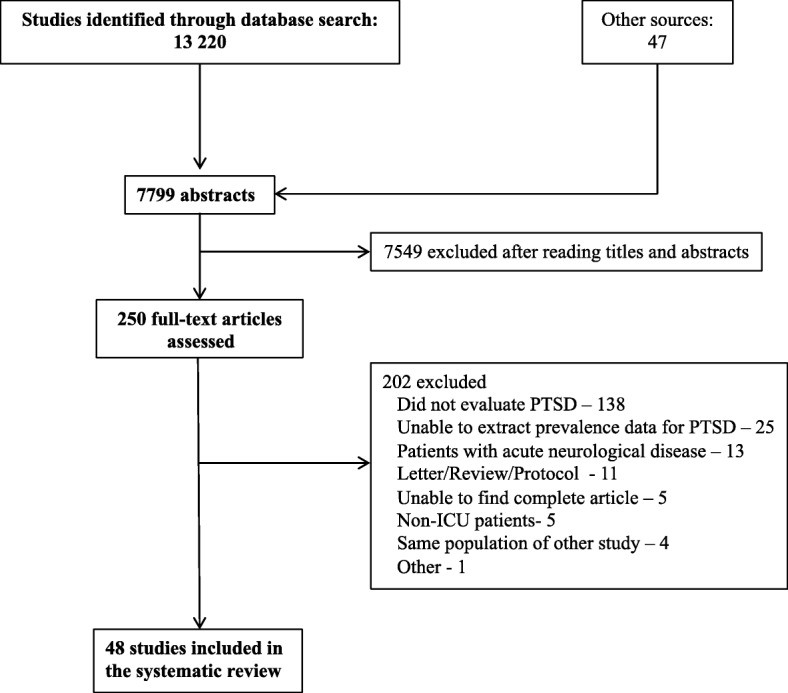
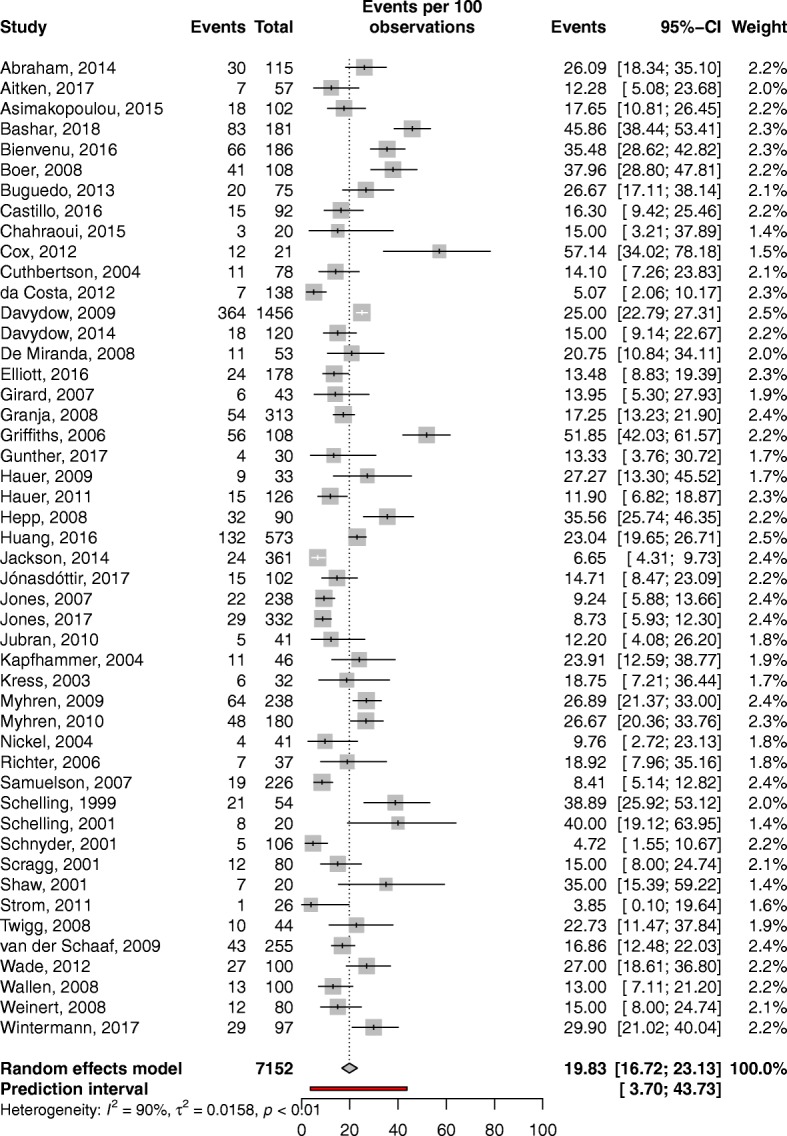
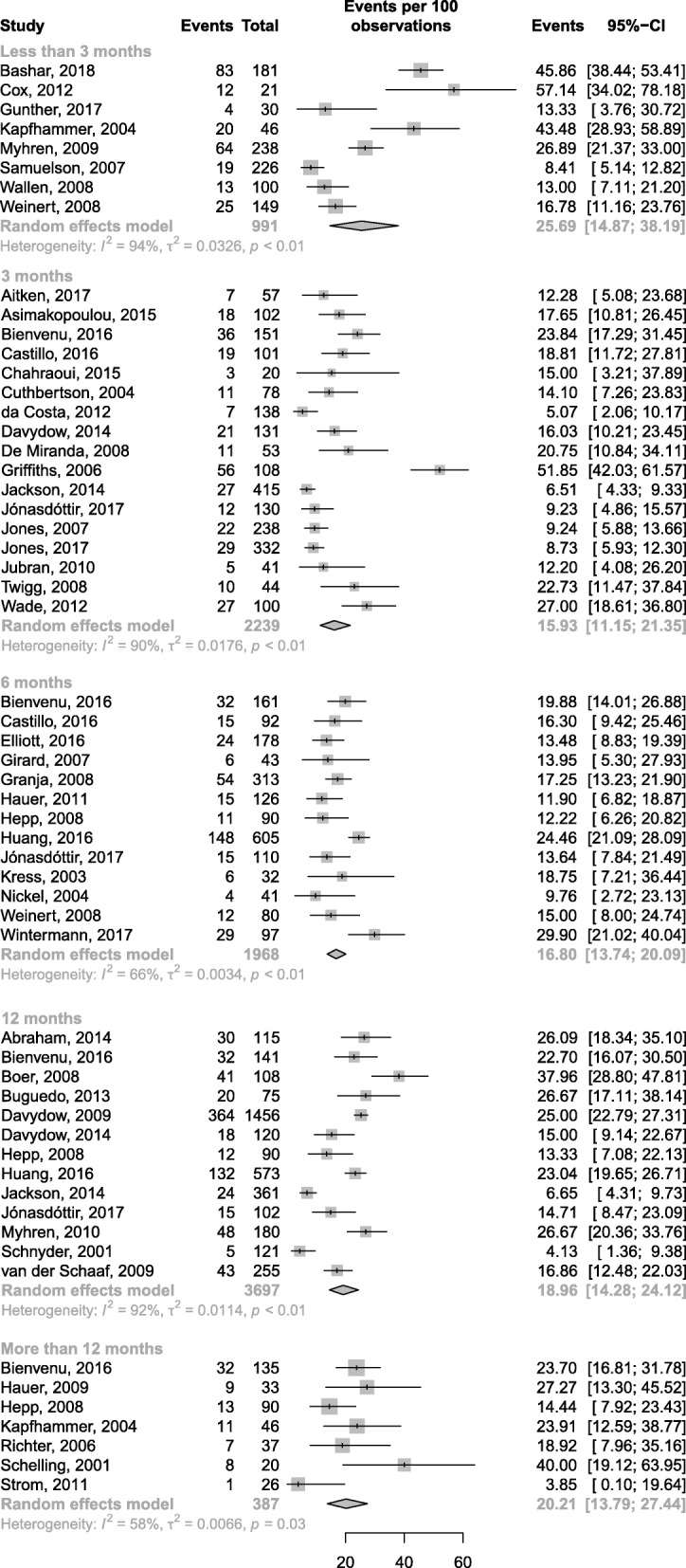
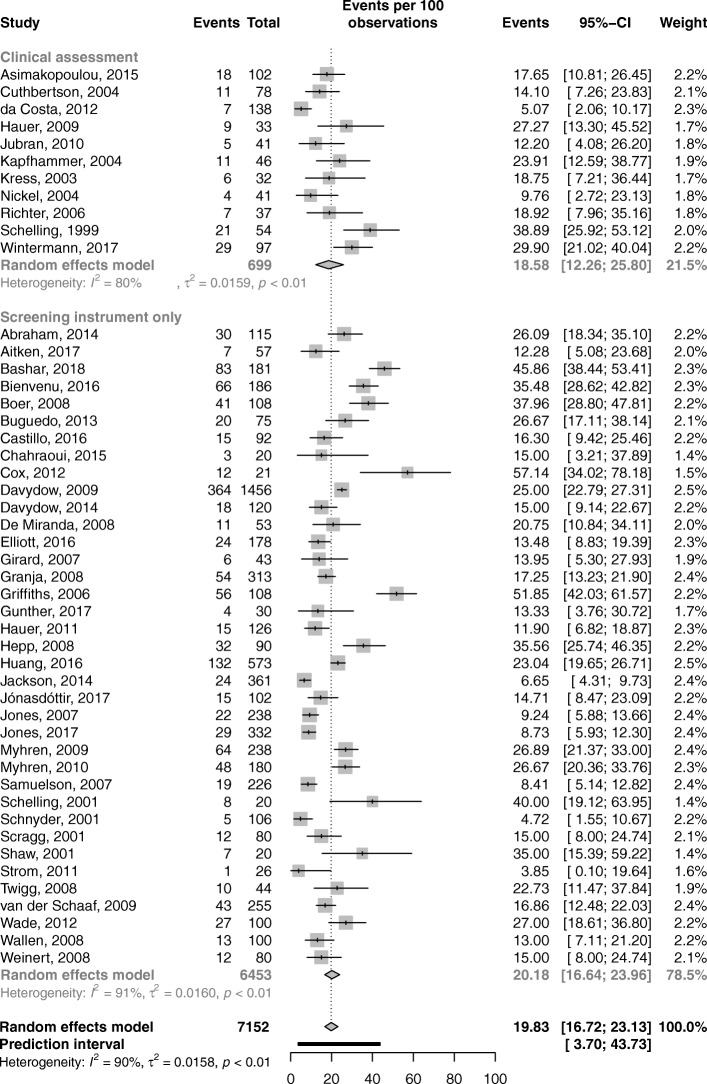
As more patients are surviving intensive care, mental health concerns in survivors have become a research priority. Among these, post-traumatic stress disorder (PTSD) can have an important impact on the quality of life of critical care survivors. However, data on its burden are conflicting. Therefore, this systematic review and meta-analysis aimed to evaluate the prevalence of PTSD symptoms in adult critical care patients after intensive care unit (ICU) discharge. We searched MEDLINE, EMBASE, LILACS, Web of Science, PsycNET, and Scopus databases from inception to September 2018. We included observational studies assessing the prevalence of PTSD symptoms in adult critical care survivors. Two reviewers independently screened studies and extracted data. Studies were meta-analyzed using a random-effects model to estimate PTSD symptom prevalence at different time points, also estimating confidence and prediction intervals. Subgroup and meta-regression analyses were performed to explore heterogeneity. Risk of bias was assessed using the Joanna Briggs Institute tool and the GRADE approach. Of 13,267 studies retrieved, 48 were included in this review. Overall prevalence of PTSD symptoms was 19.83% (95% confidence interval [CI], 16.72–23.13; I2 = 90%, low quality of evidence). Prevalence varied widely across studies, with a wide range of expected prevalence (from 3.70 to 43.73% in 95% of settings). Point prevalence estimates were 15.93% (95% CI, 11.15–21.35; I2 = 90%; 17 studies), 16.80% (95% CI, 13.74–20.09; I2 = 66%; 13 studies), 18.96% (95% CI, 14.28–24.12; I2 = 92%; 13 studies), and 20.21% (95% CI, 13.79–27.44; I2 = 58%; 7 studies) at 3, 6, 12, and > 12 months after discharge, respectively. PTSD symptoms may affect 1 in every 5 adult critical care survivors, with a high expected prevalence 12 months after discharge. ICU survivors should be screened for PTSD symptoms and cared for accordingly, given the potential negative impact of PTSD on quality of life. In addition, action should be taken to further explore the causal relationship between ICU stay and PTSD, as well as to propose early measures to prevent PTSD in this population. PROSPERO, CRD42017075124 , Registered 6 December 2017.
Overview
The claims and statistics of this paper haven’t been checked yet.
Free: it reads the open-access text and checks the first 5 claims that cite a source we can check. Create a free account to check every claim.
Integrity signals
Registry
Cites
Statistics
Figures
Verification
Claims the paper makes
The claims and statistics of this paper haven’t been checked yet.
Free: it reads the open-access text and checks the first 5 claims that cite a source we can check. Create a free account to check every claim.
Claims other papers make about this one
Each is checked against this paper’s own text: does it say what the citing paper says it does?
The source backs part of the claim, not all of it — or backs it for a different population, condition or comparison.
In the citing paper
“Prolonged exposure to stressful hospitalization, complex medical examination procedures, and worries about the difficulty of returning to normal life can lead to long-term psychological harm [44].”
From Mindfulness-based online intervention on mental health and quality of life among COVID-19 patients in China: an intervention design (2021) · cites this paper as [44]
Experimental — accuracy not yet measuredThe cited source says what the claim attributes to it.
In the citing paper
“The estimated psychological morbidity for Intensive Care Unit (ICU) survivors is 55%: with approximately 20%–30% experiencing PTSD; 46% depression, and 44% anxiety.1 –3”
From “It saved me”: A thematic analysis of experiences of psychological therapy following critical illness and intensive care (2024) · cites this paper as [2]
The check wasn’t confident either way, so it gives no verdict — never disputed.
In the citing paper
“The estimated psychological morbidity for Intensive Care Unit (ICU) survivors is 55%: with approximately 20%–30% experiencing PTSD; 46% depression, and 44% anxiety.1 –3”
From “It saved me”: A thematic analysis of experiences of psychological therapy following critical illness and intensive care (2024) · cites this paper as [2]
Experimental — accuracy not yet measuredThe check wasn’t confident either way, so it gives no verdict — never disputed.
In the citing paper
“The estimated psychological morbidity for Intensive Care Unit (ICU) survivors is 55%: with approximately 20%–30% experiencing PTSD; 46% depression, and 44% anxiety.1 –3”
From “It saved me”: A thematic analysis of experiences of psychological therapy following critical illness and intensive care (2024) · cites this paper as [2]
Experimental — accuracy not yet measured
Self-check
Percentages, sums and reported differences re-computed from the paper’s own numbers.
The self-check needs the paper’s full text.
Citations
Cites
Diagnostic and Statistical Manual of Mental Disorders
American Psychiatric Association (2013) · doi:10.1176/appi.books.9780890425596 · Cited by 116,369
Diagnostic and Statistical Manual of Mental Disorders
Williams, J. B. W., & First, M. (2013) · Encyclopedia of Social Work · doi:10.1093/acrefore/9780199975839.013.104 · Cited by 109,519
Preferred Reporting Items for Systematic Reviews and Meta-Analyses: the PRISMA statement
Moher, D., Liberati, A., Tetzlaff, J., Altman, D. G., & for the PRISMA Group (2009) · BMJ · doi:10.1136/bmj.b2535 · Cited by 83,823
Preferred reporting items for systematic reviews and meta-analyses: the PRISMA Statement.
(2009) · PubMed Central · Cited by 44,859
Wickham, H. (2016) · Use R! · doi:10.1007/978-3-319-24277-4 · Cited by 33,115
Liberati, A., Altman, D. G., Tetzlaff, J., Mulrow, C., Gøtzsche, P. C., Ioannidis, J. P. A., Clarke, M., Devereaux, P. J., Kleijnen, J., & Moher, D. (2009) · PLoS Medicine · doi:10.1371/journal.pmed.1000100 · Cited by 28,164
Liberati, A., Altman, D. G., Tetzlaff, J., Mulrow, C., Gotzsche, P. C., Ioannidis, J. P. A., Clarke, M., Devereaux, P. J., Kleijnen, J., & Moher, D. (2009) · BMJ · doi:10.1136/bmj.b2700 · Cited by 17,648
ggplot2: Elegant Graphics for Data Analysis
Wickham, H. (2009) · doi:10.1007/978-0-387-98141-3 · Cited by 14,447
GRADE guidelines: 3. Rating the quality of evidence
Balshem, H., Helfand, M., Schünemann, H. J., Oxman, A. D., Kunz, R., Brozek, J., Vist, G. E., Falck-Ytter, Y., Meerpohl, J., & Norris, S. (2011) · Journal of Clinical Epidemiology · doi:10.1016/j.jclinepi.2010.07.015 · Cited by 8,285
Munn, Z., Moola, S., Lisy, K., Riitano, D., & Tufanaru, C. (2015) · International Journal of Evidence-Based Healthcare · doi:10.1097/xeb.0000000000000054 · Cited by 3,131
Research works printed but not linked: 2
- Joanna Briggs Institute Joanna Briggs Institute reviewers’ manual: 2014 edition 2014 Australia The Joanna Briggs Institute
- Schwarzer G meta: an R package for meta-analysis R News 2007 7 40 45
Cited by
Barker, T. H., Migliavaca, C. B., Stein, C., Colpani, V., Falavigna, M., Aromataris, E., & Munn, Z. (2021) · BMC Medical Research Methodology · doi:10.1186/s12874-021-01381-z · Cited by 738
“Differences between subgroups can be compared and contrasted using the Chi(2) test, and an example of how this can be facilitated in practice can be observed in the work of Righy, Rosa [41].”
MethodSelf-citationSeptic-Associated Encephalopathy: a Comprehensive Review
Mazeraud, A., Righy, C., Bouchereau, E., Benghanem, S., Bozza, F. A., & Sharshar, T. (2020) · Neurotherapeutics · doi:10.1007/s13311-020-00862-1 · Cited by 328
Self-citationA Second Pandemic: Mental Health Spillover From the Novel Coronavirus (COVID-19)
Choi, K. R., Heilemann, M. V., Fauer, A., & Mead, M. (2020) · Journal of the American Psychiatric Nurses Association · doi:10.1177/1078390320919803 · Cited by 219
“Prolonged exposure to stressful environments, invasive procedures, and the perception of threats in an intensive care unit (ICU) can be experienced as traumatic, leading to long-term psychological harm (Righy et al., 2019).”
BackgroundTarsitani, L., Vassalini, P., Koukopoulos, A., Borrazzo, C., Alessi, F., Di Nicolantonio, C., Serra, R., Alessandri, F., Ceccarelli, G., Mastroianni, C. M., et al. (2021) · Journal of General Internal Medicine · doi:10.1007/s11606-021-06731-7 · Cited by 156
Neuropsychiatric Complications of COVID-19
Nakamura, Z. M., Nash, R. P., Laughon, S. L., & Rosenstein, D. L. (2021) · Current Psychiatry Reports · doi:10.1007/s11920-021-01237-9 · Cited by 165
The Impact of Long COVID-19 on Mental Health: Observational 6-Month Follow-Up Study
Houben‐Wilke, S., Goërtz, Y. M. J., Delbressine, J. M., Vaes, A. W., Meys, R., Machado, F. V. C., Herck, M. V., Burtin, C., Posthuma, R., Franssen, F. M. E., et al. (2022) · JMIR Mental Health · doi:10.2196/33704 · Cited by 171
“In addition, a meta-analysis suggested that around 20% of adult critical care survivors experience PTSD [32], while in previous coronavirus pandemics (SARS and MERS outbreaks), PTSD occurred in 32.”
BackgroundKawakami, D., Fujitani, S., Morimoto, T., Dote, H., Takita, M., Takaba, A., Hino, M., Nakamura, M., Irie, H., Adachi, T., et al. (2021) · Critical Care · doi:10.1186/s13054-021-03501-z · Cited by 156
Valerio, L., Zane, F., Sacco, C., Granziera, S., Nicoletti, T. F., Russo, M., Corsi, G., Holm, K., Hotz, M. A., Righini, C. A., et al. (2020) · Journal of Internal Medicine · doi:10.1111/joim.13114 · Cited by 134
Surace, T., Fusar‐Poli, L., Vozza, L., Cavone, V., Arcidiacono, C., Mammano, R., Basile, L., Rodolico, A., Bisicchia, P., Caponnetto, P., et al. (2020) · European Child & Adolescent Psychiatry · doi:10.1007/s00787-020-01508-5 · Cited by 152
“Similar to a well-conducted meta-analysis on prevalence recently published [26], we divided the checklist questions in three domains: participants (questions 1, 2, 4, 9, and 10), outcome measurement (6 and 7), and statistics (3, 5, and 8).”
MethodFranks, Z. M., Alcock, J. A., Lam, T., Haines, K. J., Arora, N., & Ramanan, M. (2020) · Annals of the American Thoracic Society · doi:10.1513/annalsats.202006-738oc · Cited by 118
Vlake, J. H., Wesselius, S., van Genderen, M. E., van Bommel, J., Klerk, B. M. B., & Wils, E. (2021) · PLoS ONE · doi:10.1371/journal.pone.0255774 · Cited by 114
Nakanishi, N., Liu, K., Kawakami, D., Kawai, Y., Morisawa, T., Nishida, T., Sumita, H., Unoki, T., Hifumi, T., Iida, Y., et al. (2021) · Journal of Clinical Medicine · doi:10.3390/jcm10173870 · Cited by 99
“The prevalence of PTSD was less frequent than anxiety and depression, and the prevalence was 19% at 12 months [21].”
BackgroundVrettou, C. S., Mantziou, V., Vassiliou, A. G., Orfanos, S. E., Kotanidou, Α., & Dimopoulou, I. (2022) · Life · doi:10.3390/life12010107 · Cited by 142
“Impact of Event Scale—revised (IES-R) [34] Post-Traumatic Stress Disorder Checklist for a Specific event (PCL-S) [28] Post-Traumatic Stress Disorder Check List—Civilian version (PCL-C) [28] Clinician-Administered Post-Traumatic Stress Disorder Scale (CAPS) [35] Davidson Trauma Scale (DTS) [35] Posttraumatic Stress Dia…”
MethodTeixeira, C., Rosa, R. G., Sganzerla, D., Sanchez, É. C., Robinson, C. C., Dietrich, C., Kochhann, R., de Souza, D., Rech, G. S., dos Santos, R. D. R., et al. (2021) · CHEST Journal · doi:10.1016/j.chest.2021.02.034 · Cited by 88
Self-citationGhezzi, E. S., Sharman, R. L. S., Selvanayagam, J. B., Psaltis, P. J., Sanders, P., Astley, J. M., Knayfati, S., Batra, V., & Keage, H. A. D. (2023) · Europace · doi:10.1093/europace/euad130 · Cited by 73
“• Rates of mood disorders are high in ICD patients: 15% depression, 23% anxiety, and 12% PTSD. • Rates were higher in ICD patients who experienced shocks but did not vary relative to indication group (primary vs. secondary).”
BackgroundInfluentialPost–Intensive Care Unit Syndrome in a Cohort of COVID-19 Survivors in New York City
Weidman, K., LaFond, E., Hoffman, K. L., Goyal, P., Parkhurst, C. N., Derry, H. M., Schenck, E., & Lief, L. (2022) · Annals of the American Thoracic Society · doi:10.1513/annalsats.202104-520oc · Cited by 80
Dyspnoea in acutely ill mechanically ventilated adult patients: an ERS/ESICM statement
Demoule, A., Decavèle, M., Antonelli, M. M., Camporota, L., Abroug, F., Adler, D., Azoulay, É., Başoğlu, M., Campbell, M., Grasselli, G., et al. (2024) · Intensive Care Medicine · doi:10.1007/s00134-023-07246-x · Cited by 80
“The combination of a distressing threat to life and a feeling of helplessness may generate trauma and subsequent post-traumatic stress disorder (PTSD) [30], which concerns approximately 20% of patients [116].”
Domingo, F. R., Waddell, L. A., Cheung, A. M., Cooper, C., Belcourt, V. J., Zuckermann, A. M. E., Corrin, T., Ahmad, R., Boland, L., Laprise, C., et al. (2021) · medRxiv · doi:10.1101/2021.06.03.21258317 · Cited by 80
Sun, X., Huang, D., Zeng, F. J., Ye, Q., Xiao, H., Lv, D., Zhao, P., & Cui, X. (2021) · Journal of Advanced Nursing · doi:10.1111/jan.14706 · Cited by 74
Wang, S., Xin, H.-N., Chiang, C. L. V., Liao, J., Li, S., Xie, N., & Hu, R. (2020) · Critical Care · doi:10.1186/s13054-020-2797-7 · Cited by 69
Taft, T., Quinton, S., Jedel, S., Simons, M. L., Mutlu, E., & Hanauer, S. B. (2021) · Inflammatory Bowel Diseases · doi:10.1093/ibd/izab152 · Cited by 58
Sharshar, T., Grimaldi‐Bensouda, L., Siami, S., Cariou, A., Salah, A. B., Kalfon, P., Sonneville, R., Meunier‐Beillard, N., Quenot, J., Mégarbane, B., et al. (2024) · Intensive Care Medicine · doi:10.1007/s00134-024-07359-x · Cited by 63
Tracheostomy for COVID-19: evolving best practice
Williams, T., & McGrath, B. A. (2021) · Critical Care · doi:10.1186/s13054-021-03674-7 · Cited by 55
Qiu, D., Li, Y., Li, L., He, J., Ouyang, F., & Xiao, S. (2021) · European Psychiatry · doi:10.1192/j.eurpsy.2021.24 · Cited by 60
“Also, post-traumatic stress symptoms among people exposed to the trauma resulting from COVID-19 outbreak were higher in the immediate aftermath of the outbreak (0 – 4 weeks), but the difference was not significant, which was inconsistent with other studies [109,111,112].”
Gut-brain axis in the pathogenesis of sepsis-associated encephalopathy
Wang, X., Wen, X., Yuan, S., & Zhang, J. (2024) · Neurobiology of Disease · doi:10.1016/j.nbd.2024.106499 · Cited by 47
“…ICU, and survivors often grapple with persistent cognitive impairments, such as memory issues, attention deficits, reduced speech fluency (Iwashyna et al., 2010), and psychological disorders, including depression, anxiety, and post-traumatic stress disorder (Hatch et al., 2018; Righy et al., 2019).”
High prevalence of acute stress disorder and persisting symptoms in ICU survivors after COVID-19
the COVID-19 Post-ICU team, Mongodi, S., Unit, C.-1. P. C., Salve, G., Tavazzi, G., Politi, P., & Mojoli, F. (2021) · Intensive Care Medicine · doi:10.1007/s00134-021-06349-7 · Cited by 46
Pant, U., Vyas, K., Meghani, S. T., Park, T., Norris, C. M., & Papathanassoglou, E. D. E. (2022) · Australian Critical Care · doi:10.1016/j.aucc.2022.09.007 · Cited by 60
Tang, S. T., Huang, C.-C., Hu, T., Chou, W., Chuang, L., & Chiang, M.-C. (2021) · Critical Care · doi:10.1186/s13054-021-03719-x · Cited by 49
“0%) among adult critical care survivors [43], 3.”
BackgroundScoping review of the use of virtual reality in intensive care units
Hill, J. E., Twamley, J., Breed, H., Kenyon, R., Casey, R., Zhang, J., & Clegg, A. J. (2021) · Nursing in Critical Care · doi:10.1111/nicc.12732 · Cited by 44
Yu, Y., Li, Y., Han, D., Gong, C., Wang, L., Li, B., Yao, R., & Zhu, Y. (2023) · JAMA Network Open · doi:10.1001/jamanetworkopen.2023.18611 · Cited by 53
COVID-19 and lockdown: Delayed effects on health
Andrade, C. (2020) · Indian Journal of Psychiatry · doi:10.4103/psychiatry.indianjpsychiatry_379_20 · Cited by 39
“Extrapolations from previous research suggest that the risk of PTSD may be as high as 20% in the months after discharge from the intensive care unit (ICU);[9,10] the more stressful the events in the ICU, the higher the risk.”
BackgroundMethodTronstad, O., Flaws, D., Lye, I., Fraser, J. F., & Patterson, S. (2020) · Australian Critical Care · doi:10.1016/j.aucc.2020.06.006 · Cited by 48
Gawlytta, R., Kesselmeier, M., Scherag, A., Niemeyer, H., Böttche, M., Knaevelsrud, C., & Rosendahl, J. (2022) · BMJ Open · doi:10.1136/bmjopen-2021-050305 · Cited by 53
Idzerda, L., Gariépy, G., Corrin, T., Tarasuk, V. S., McIntyre, L., Neil‐Sztramko, S., Dobbins, M., Gariépy, G., & Garcia, A. J. (2022) · Health Promotion and Chronic Disease Prevention in Canada · doi:10.24095/hpcdp.42.5.01 · Cited by 53
Pant, U., Frishkopf, M., Park, T., Norris, C. M., & Papathanassoglou, E. D. E. (2022) · International Journal of Environmental Research and Public Health · doi:10.3390/ijerph19053113 · Cited by 50
“Conservative estimates predict that one in every five survivors of critical care exhibit clinically significant symptoms of PTSD in the first year following ICU discharge [6].”
BackgroundInfluentialUnoki, T., Sakuramoto, H., Uemura, S., Tsujimoto, T., Yamaguchi, T., Shiba, Y., Hino, M., Kuribara, T., Fukuda, Y., Nagao, T., et al. (2021) · PLoS ONE · doi:10.1371/journal.pone.0252167 · Cited by 41
Earlier tracheostomy is associated with an earlier return to walking, talking, and eating
Sutt, A., Tronstad, O., Barnett, A. G., Kitchenman, S., & Fraser, J. F. (2020) · Australian Critical Care · doi:10.1016/j.aucc.2020.02.006 · Cited by 37
Deana, C., Vetrugno, L., Cortegiani, A., Mongodi, S., Salve, G., Mangiagalli, M., Boscolo, A., Pettenuzzo, T., Miori, S., Sanna, A., et al. (2023) · Journal of Clinical Medicine · doi:10.3390/jcm12031058 · Cited by 47
“8% presented PTSD [43], which is a lower result than this study.”
ResultCantao, A. B., Lima, T. C. D. S., Fernandes, M. I. A. P., Nagendrababu, V., Bastos, J. V., & Levin, L. (2024) · Dental Traumatology · doi:10.1111/edt.12922 · Cited by 63
Evaluation of the sensory environment in a large tertiary ICU
Tronstad, O., Flaws, D., Patterson, S., Holdsworth, R., Garcia-Hansen, V., Leonard, F. R., Ong, R., Yerkovich, S. T., & Fraser, J. F. (2023) · Critical Care · doi:10.1186/s13054-023-04744-8 · Cited by 36
“Light and noise are identified as particularly problematic, affecting patients and staff [2–8].”
BackgroundLipscomb, A. E., & Ashley, W. (2020) · Smith College Studies in Social Work · doi:10.1080/00377317.2020.1834489 · Cited by 39
Zhou, Y., Sun, Z., Wang, Y., Xing, C., Sun, L., Shang, Z., & Liu, W. (2020) · Clinical Psychology Review · doi:10.1016/j.cpr.2020.101938 · Cited by 30
Vlake, J. H., van Bommel, J., Wils, E., Korevaar, T. I. M., Hellemons, M. E., Schut, A. F., Labout, J. A. M., Schreuder, L. L., Gommers, D. A. M. P. J., & van Genderen, M. E. (2021) · Trials · doi:10.1186/s13063-021-05271-z · Cited by 34
S3-Leitlinie Sepsis – Prävention, Diagnose, Therapie und Nachsorge – Update 2025
Brunkhorst, F. M., Adamzik, M., Axer, H., Bauer, M. W., Bode, C., Bone, H.-G., Brenner, T., Bucher, M., David, S., Dietrich, M., et al. (2025) · Medizinische Klinik - Intensivmedizin und Notfallmedizin · doi:10.1007/s00063-025-01317-1 · Cited by 47
Peach, B. C., Valenti, M., & Sole, M. L. (2021) · World Medical & Health Policy · doi:10.1002/wmh3.401 · Cited by 28
“…14‐Question Inventory, Post‐Traumatic Stress Disorder Checklist—Civilian V17, Structured Clinical Interview, the Posttraumatic Stress Diagnostic Scale, the Post‐Traumatic Stress Syndrome 10‐Question Inventory, the Trauma Screening Questionnaire, and the Davidson Trauma Scale (Righy et al., 2019).”
MethodInfluentialBeyond survival: understanding post-intensive care syndrome
Gupta, L., Subair, M. N., Munjal, J., Singh, B. P., Bansal, V., Gupta, V., & Jain, R. (2024) · Acute and Critical Care · doi:10.4266/acc.2023.01158 · Cited by 52
“Factors such as female sex, pre-existing psychological disorders, inflammation, communication barriers, administration of analgesics, and a negative ICU experience may contribute to the psychiatric aspects of PICS [8].”
BackgroundPost-Intensive Care Syndrome as a Burden for Patients and Their Caregivers: A Narrative Review
Schembari, G., Santonocito, C., Messina, S., Caruso, A., Cardia, L., Rubulotta, F. M., Noto, A., Bignami, E. G., & Sanfilippo, F. (2024) · Journal of Clinical Medicine · doi:10.3390/jcm13195881 · Cited by 42
“It takes about a year for ICU survivors to develop PTSD [52], and a recent meta-analysis suggests an overall prevalence of PTSD of around 25% in patients discharged from ICU, a figure comparable to survivors of military conflicts [53].”
ResultShima, N., Miyamoto, K., Shibata, M., Nakashima, T., Kaneko, M., Shibata, N., Shima, Y., Kato, S., & W‐PICS investigators (2020) · Acute Medicine & Surgery · doi:10.1002/ams2.557 · Cited by 29
Schmidt, K. F. R., Gensichen, J. S., Schroevers, M. J., Kaufmann, M., Mueller, F., Schelling, G., Gehrke-Beck, S., Boede, M., Heintze, C., Wensing, M., et al. (2024) · Critical Care · doi:10.1186/s13054-024-04815-4 · Cited by 33
“There is a paucity of research on the long-term course of PTSD in ICU survivors, as most previous studies included only one follow-up assessment [50].”
BackgroundBahmani, T., Naseri, N. S., & Fariborzi, E. (2022) · Current Psychology · doi:10.1007/s12144-021-02667-7 · Cited by 62
Dyspnoea in acutely ill mechanically ventilated adult patients: an ERS/ESICM statement
Demoule, A., Decavèle, M., Antonelli, M. M., Camporota, L., Abroug, F., Adler, D., Azoulay, É., Başoğlu, M., Campbell, M., Grasselli, G., et al. (2024) · European Respiratory Journal · doi:10.1183/13993003.00347-2023 · Cited by 32
Prevalence of Atopic Dermatitis: A Systematic Review and Meta-Analysis
Migliavaca, C. B., Lazzarini, R., Stein, C., Escher, G. N., de Gaspari, C. N., dos Santos, H. W. G., Myers, D. E., Lemeshow, A. R., Pinheiro, M. R. T., Falavigna, M., et al. (2024) · Dermatitis · doi:10.1089/derm.2024.0165 · Cited by 45
Self-citationThe Experiences of COVID-19 Patients in Intensive Care Units: A Qualitative Study
Kürtüncü, M., Kurt, A., & Arslan, N. (2021) · OMEGA - Journal of Death and Dying · doi:10.1177/00302228211024120 · Cited by 37
“As a result, patients may show signs and symptoms of post-traumatic stress syndrome after discharge (Righy et al., 2019).”
BackgroundInfluentialCoping Strategies and Stress Related Disorders in Patients with COVID-19
Dehelean, L., Papavă, I., Mușat, M. I., Bondrescu, M., Bratosin, F., Bucatos, B. O., Bortun, A. M. C., Mager, D. V., Romoșan, R. S., Romoșan, A. M., et al. (2021) · Brain Sciences · doi:10.3390/brainsci11101287 · Cited by 33
“evaluating the risk of PTSD in patients surviving intensive care showed that 1 in 5 patients developed PTSD symptoms, with an increased risk at 12 months after discharge [48].”
BackgroundImpact of preoperative uni- or multimodal prehabilitation on postoperative morbidity: meta-analysis
Cambriel, A. I. F., Choisy, B., Hedou, J. J., Bonnet, M., Fellous, S., Lefèvre, J. H., Voron, T., Gaudilliere, D. K., Kin, C., Gaudilliere, B. L., et al. (2023) · BJS Open · doi:10.1093/bjsopen/zrad129 · Cited by 32
“…LOS is a significant outcome in itself, contributing to improved resource utilization and potentially better patient outcomes, especially as high-dependency units are associated with a greater risk of delirium 89 , mortality 90 , post-traumatic stress disorder 91 and higher financial burden 92 .”
BackgroundSi, M.-Y., Xiao, W.-J., Pan, C., Wang, H., Huang, Y.-M., Lian, J., Mak, W. W. S., Leng, Z.-W., Su, X.-Y., Tang, Q.-P., et al. (2021) · Infectious Diseases of Poverty · doi:10.1186/s40249-021-00836-1 · Cited by 24
“Prolonged exposure to stressful hospitalization, complex medical examination procedures, and worries about the difficulty of returning to normal life can lead to long-term psychological harm [44].”
BackgroundGodeberge, C., Deneux‐Tharaux, C., Seco, A., Rossignol, M., Chantry, A. A., Bonnet, M., & on behalf of the EPIMOMS Study Group (2021) · Anesthesia & Analgesia · doi:10.1213/ane.0000000000005578 · Cited by 27
Managing Pain and Psychosocial Care in IBD: a Primer for the Practicing Gastroenterologist
Weaver, E. K., & Szigethy, E. (2020) · Current Gastroenterology Reports · doi:10.1007/s11894-020-0757-7 · Cited by 27
Yoshino, Y., Unoki, T., Sakuramoto, H., Ouchi, A., Hoshino, H., Matsuishi, Y., & Mizutani, T. (2021) · Nursing Open · doi:10.1002/nop2.760 · Cited by 26
The Patient Dignity Inventory and Dignity-Related Distress among the Critically Ill
Mergler, B. D., Goldshore, M. A., Shea, J. A., Lane-Fall, M. B., & Hadler, R. A. (2021) · Journal of Pain and Symptom Management · doi:10.1016/j.jpainsymman.2021.12.001 · Cited by 26
Cuninghame, S., Jerath, A., Gorsky, K., Sivajohan, A., Francoeur, C., Withington, D. E., Burry, L. D., Cuthbertson, B. H., Orser, B. A., Martin, C. M., et al. (2023) · British Journal of Anaesthesia · doi:10.1016/j.bja.2023.05.004 · Cited by 27
Teixeira, C., & Rosa, R. G. (2024) · Critical Care Science · doi:10.62675/2965-2774.20240265-en · Cited by 27
“(44) There is an increased occurrence of new psychiatric diagnoses and the use of psychoactive medications in the months following discharge.”
BackgroundSelf-citationPanayi, A. C., Knoedler, S. A., Knoedler, L., Tapking, C., Hundeshagen, G., Diehm, Y. F., Fischer, S., Thamm, O. C., Kneser, U., & Haug, V. (2024) · Aesthetic Surgery Journal · doi:10.1093/asj/sjae002 · Cited by 24
Determinants of pain assessment documentation in intensive care units
Morris, J. L., Bernard, F., Berube, M., Dubé, J.-N., Houle, J., Laporta, D. P., Morin, S. N., Perreault, M. M., Williamson, D. R., & Gélinas, C. (2021) · Canadian Journal of Anesthesia/Journal canadien d anesthésie · doi:10.1007/s12630-021-02022-1 · Cited by 25
Zhang, F., Xia, Q., Zhang, L., Wang, H., Bai, Y., & Wu, W. (2022) · Frontiers in Neurology · doi:10.3389/fneur.2022.848545 · Cited by 25
Rossi, A. A., Panzeri, A., Fernández, I., Invernizzi, R., Taccini, F., & Mannarini, S. (2024) · Scientific Reports · doi:10.1038/s41598-024-72274-6 · Cited by 28
Bates, A., Golding, H., Rushbrook, S., Shapiro, E., Pattison, N., Baldwin, D. S., Grocott, M. P. W., & Cusack, R. (2023) · Journal of the Intensive Care Society · doi:10.1177/17511437221136828 · Cited by 19
Higa, K. C., Mayer, K. P., Quinn, C., Jubina, L., Suarez‐Pierre, A., Colborn, K. L., Jolley, S. E., Enfield, K., Zwischenberger, J. B., Sevin, C. M., et al. (2023) · Critical Care Medicine · doi:10.1097/ccm.0000000000005900 · Cited by 22
“Twenty-one percent of VA-ECMO survivors were at risk for PTSD, similar to 20% of adult survivors of critical illness at greater than 12 months postdischarge (60), 23% of survivors of ARDS at greater than 12-month follow-up (56), and 18.”
BackgroundFriedman, D., Grimaldi‐Bensouda, L., Cariou, A., Aegerter, P., Gaudry, S., Salah, A. B., Oueslati, H., Mégarbane, B., Meunier‐Beillard, N., Quenot, J., et al. (2022) · JMIR Research Protocols · doi:10.2196/30496 · Cited by 20
“Post-ICU psychological disorders include anxiety, depression, and posttraumatic stress syndrome (PTSD), which can affect from one-fifth to two-thirds of patients [3,14-18].”
BackgroundTaft, T., McGarva, J., Aswani-Omprakash, T., Tomasino, K. N., Pandit, A. U., Mutlu, E., & Hanauer, S. B. (2022) · Inflammatory Bowel Diseases · doi:10.1093/ibd/izac148 · Cited by 21
Zhao, Q., Xiao, J., Liu, X., & Liu, H. (2023) · Frontiers in Neurology · doi:10.3389/fneur.2023.1084868 · Cited by 22
Herrmann, J., Müller, K., Notz, Q., Hübsch, M. E., Haas, K., Horn, A., Schmidt, J., Heuschmann, P. U., Maschmann, J., Frosch, M., et al. (2023) · Scientific Reports · doi:10.1038/s41598-023-33783-y · Cited by 48
“PTSD has been described in up to 20% of general ICU survivors, whereas it is less common in non-ICU patients 30,31 .”
Qiu, D., Li, Y., Li, L., He, J., Ouyang, F., & Xiao, S. (2021) · Frontiers in Psychology · doi:10.3389/fpsyg.2021.668784 · Cited by 26
Depression predicts long-term cognitive impairment in survivors of critical illness
Nordness, M. F., Patel, M. B., Erickson, C., Kiehl, A. L., Jackson, J. C., Chandrasekhar, R., Pandharipande, P. P., Ely, E. W., & Wilson, J. E. (2020) · The Journal of Trauma: Injury, Infection, and Critical Care · doi:10.1097/ta.0000000000002955 · Cited by 22
Song, I., Park, H. Y., & Oh, T. K. (2021) · Nature and Science of Sleep · doi:10.2147/nss.s319769 · Cited by 17
“8%.(22) For sepsis patients, a prospective cohort study reported that 38% of patients reported PTSD symptoms in questionnaires after abdominal sepsis.”
BackgroundWhat outcomes should be evaluated in critically ill patients?
Teixeira, C., Kern, M., & Rosa, R. G. (2021) · Revista Brasileira de Terapia Intensiva · doi:10.5935/0103-507x.20210040 · Cited by 20
Self-citationHaruna, J., Unoki, T., Nagano, N., Kamishima, S., & Kuribara, T. (2022) · Healthcare · doi:10.3390/healthcare10091716 · Cited by 24
“The clinical symptoms of PTSD that can be observed in patients after ICU discharge include flashbacks, hyperarousal, and severe anxiety [4].”
BackgroundEaton, T. L., Lewis, A., Donovan, H. S., Davis, B. C., Butcher, B. W., Alexander, S. A., Iwashyna, T. J., Scheunemann, L. P., & Seaman, J. B. (2022) · Intensive and Critical Care Nursing · doi:10.1016/j.iccn.2022.103362 · Cited by 21
Lima, T. C. D. S., Coste, S. C., Fernandes, M. I. A. P., Ferreira, D. A. B., Colosimo, E. A., FABBRO, M. D., Sobrinho, A. P. R., Côrtes, M. I. D. S., & Bastos, J. V. (2022) · Community Dentistry And Oral Epidemiology · doi:10.1111/cdoe.12733 · Cited by 33
Maternal critical care: part I
Banerjee, A., & Cantellow, S. (2021) · BJA Education · doi:10.1016/j.bjae.2020.12.003 · Cited by 18
Intensive care‐related cognitive impairment: A biopsychosocial overview
Tingey, J. L., Dasher, N. A., Bunnell, A. E., & Starosta, A. J. (2022) · PM&R · doi:10.1002/pmrj.12773 · Cited by 17
Haug, V., Tapking, C., Panayi, A. C., Veeramani, A., Knoedler, S. A., Tchiloemba, B., Abdulrazzak, O., Kadakia, N., Bonaventura, B., Culnan, D. M., et al. (2024) · Burns · doi:10.1016/j.burns.2024.07.014 · Cited by 16
Savoric, T., Aziz, S., Ling, R. R., Antlej, K., Arnab, S., & Subramaniam, A. (2025) · Journal of Critical Care · doi:10.1016/j.jcrc.2025.155164 · Cited by 18
Sharawy, N., Imam, A. A.-A., Aboulhoda, B. E., Khalifa, M. M., Morcos, G. N. B., Algaleel, W. A. A., Moustafa, P. E., Elbaset, M. A., & Shoukry, T. M. (2022) · Frontiers in Physiology · doi:10.3389/fphys.2022.953206 · Cited by 16
“The psychological disorders implicated in sepsis-induced encephalopathy also include anxiety, depression and posttraumatic stress disorder (Lund-Sørensen et al., 2016; Righy et al., 2019).”
BackgroundThe biological alterations of synapse/synapse formation in sepsis-associated encephalopathy
Tang, C., Ye, J., & Wang, H. (2022) · Frontiers in Synaptic Neuroscience · doi:10.3389/fnsyn.2022.1054605 · Cited by 18
“In addition, SAE is also associated with psychological disorders, including anxiety, depression, and posttraumatic stress disorder (PTSD) (Hosokawa et al., 2014; Righy et al., 2019).”
BackgroundIbounig, T., Sanders, S., Haas, R., Jones, M., Järvinen, T. L. N., TAIMELA, S. P., Docking, S., Rämö, L., & Buchbinder, R. (2024) · Osteoarthritis and Cartilage · doi:10.1016/j.joca.2024.06.001 · Cited by 19
Stabilizing life: A grounded theory of surviving critical illness
Vogel, G., Joelsson‐Alm, E., Forinder, U., Svensén, C., & Sandgren, A. (2021) · Intensive and Critical Care Nursing · doi:10.1016/j.iccn.2021.103096 · Cited by 23
Tripathy, S., Acharya, S. P., Sahoo, A. K., Hansda, U., Mitra, J. K., Goel, K., Ahmad, S. R., & Kar, N. (2022) · Critical Care Explorations · doi:10.1097/cce.0000000000000742 · Cited by 19
Prevalence of Depression, Anxiety and Stress among Patients Discharged from Critical Care Units
Saeidi, M., Safaei, A., Sadat, Z., Abbasi, P., Sarcheshmeh, M. S. M., Dehghani, F., Tahrekhani, M., & Abdi, M. (2021) · The Journal of Critical Care Medicine · doi:10.2478/jccm-2021-0012 · Cited by 26
“In critical care units, environmental features such as space, noise, the complexity of medical equipment, twenty-four-hour lighting and disturbance of the circadian rhythm can contribute to patient stress [8-10].”
BackgroundExploring adult critical illness survivors’ experiences of fatigue: A qualitative study
Bench, S. D., Czuber‐Dochan, W., Shah, A., & Stayt, L. C. (2021) · Journal of Advanced Nursing · doi:10.1111/jan.14995 · Cited by 19
Bickel, K. E., Kennedy, R., Levy, C. R., Burgio, K. L., & Bailey, F. A. (2019) · Journal of General Internal Medicine · doi:10.1007/s11606-019-05538-x · Cited by 16
Síndrome post cuidados intensivos en COVID-19. Estudio piloto unicéntrico
Rodríguez, E. M., Gimeno, F. P., Angulo, A. E., Samper, J. A., Ruiz, C. S., & Alarcón, M. D. L. (2022) · Medicina Clínica · doi:10.1016/j.medcli.2021.11.014 · Cited by 26
Psychiatric Outcomes in ICU Patients With Family Visitation
Moss, S. J., Rosgen, B. K., Lucini, F. R., Krewulak, K. D., Soo, A., Doig, C. J., Patten, S. B., Stelfox, H. T., & Fiest, K. M. (2022) · CHEST Journal · doi:10.1016/j.chest.2022.02.051 · Cited by 18
Association of Job Characteristics and Functional Impairments on Return to Work After ARDS
Su, H., Thompson, H. J., May, S. J., Dinglas, V. D., Hough, C. L., Hosey, M. M., Hopkins, R. O., Kamdar, B. B., & Needham, D. M. (2021) · CHEST Journal · doi:10.1016/j.chest.2021.03.008 · Cited by 16
Richardson, B. R., Decavèle, M., Demoule, A., Murtagh, F. E., & Johnson, M. J. (2024) · Annals of Intensive Care · doi:10.1186/s13613-024-01338-7 · Cited by 17
“PTSD affects approximately 20% of ICU survivors [65, 71], with implications for family caregivers.”
BackgroundGarcía-Grimshaw, M., Sankowski, R., & Valdés‐Ferrer, S. I. (2022) · Current Opinion in Neurology · doi:10.1097/wco.0000000000001046 · Cited by 18
Rotator Cuff Imaging Abnormalities in Asymptomatic Shoulders: A Systematic Review
Sanders, S., Ibounig, T., Haas, R., Jones, M., Rämö, L., Docking, S., Järvinen, T. L. N., TAIMELA, S. P., Hoffmann, T., & Buchbinder, R. (2025) · Journal of Orthopaedic and Sports Physical Therapy · doi:10.2519/jospt.2025.13611 · Cited by 19
O’Reilly, P., Walsh, S., Bunker, C. B., Ryan, S. A., Natella, P.-A., Colin, A., Simpson, J., Barry, L. A., Meskell, P., Dodiuk‐Gad, R. P., et al. (2024) · British Journal of Dermatology · doi:10.1093/bjd/ljae334 · Cited by 13
Larsen, M. H., Johannessen, G., & Heggdal, K. (2021) · Nursing Open · doi:10.1002/nop2.1110 · Cited by 34
“Furthermore, the interventions aimed to prevent the late effects of ICU stay, such as depression, PTSD and anxiety (Davydow et al., 2008; Righy et al., 2019), and that the family's needs for support were taken care of.”
BackgroundBrambilla, S., Ausili, D., Locatelli, G., Mauro, S. D., Bellani, G., & Luciani, M. (2025) · Nursing in Critical Care · doi:10.1111/nicc.70037 · Cited by 17
“9,13,38,39 Our findings could further support the role of communication difficulties in shaping post-intensive care syndrome.”
Metadata
- Authors
- Righy, C., Rosa, R. G., da Silva, R. T. A., Kochhann, R., Migliavaca, C. B., Robinson, C. C., Teche, S. P., Teixeira, C., Bozza, F. A., & Falavigna, M.
- Affiliations
- Instituto Estadual do Cérebro Paulo Niemeyer (BR)
- Universidade Federal do Rio Grande do Sul (BR)
- Hospital Moinhos de Vento (BR)
- D’Or Institute for Research and Education (BR)
- ORCID
- Venue
- Critical Care
- Published
- 2019-06-11
- Volume
- 23
- Issue
- 1
- Pages
- 213-213
- ISSN
- 1364-8535 (ISSN-L)
- PMC
- PMC6560853
- OpenAlex
- W2953174290
- Cited by
- 319
- References
- 80
- Citations by year
- 2026: 39 · 2025: 45 · 2024: 61 · 2023: 39 · 2022: 47 · 2021: 62 · 2020: 23 · 2019: 2
- FWCI
- 6.02
- Type
- journal article
- Language
- en
- Open access
- gold
- doi.org
- Licence
- cc-by
- creativecommons.org/licenses/by/4.0/ (tdm)
- creativecommons.org/licenses/by/4.0/ (vor)
- Locations
- Critical Care (publishedVersion, cc-by)
- PubMed Central (publishedVersion, cc-by)
- PubMed (publishedVersion)
- LA Referencia (Red Federada de Repositorios Institucionales de Publicaciones Científicas) (publishedVersion, other-oa)
- Americanae (AECID Library) (submittedVersion, other-oa)
- Arca - Repositório Institucional da Fiocruz (submittedVersion, other-oa)
- DOAJ (DOAJ: Directory of Open Access Journals) (submittedVersion, cc-by-sa)
- Funders
- Ministério da Saúde
- Topics
- Health Sciences › Medicine › Critical Care and Intensive Care Medicine › Intensive Care Unit Cognitive Disorders
- Social Sciences › Psychology › Clinical Psychology › Posttraumatic Stress Disorder Research
- Health Sciences › Medicine › Critical Care and Intensive Care Medicine › Family and Patient Care in Intensive Care Units
- Keywords
- post-traumatic stress disorder, critical illness survivors, intensive care unit discharge, post-intensive care syndrome, PTSD screening, quality of life, adult ICU patients, heterogeneity of prevalence estimates
- MeSH terms
- Adult, Humans, Quality of Life, Stress Disorders, Post-Traumatic, Prevalence, Critical Illness, Survivors
About these checks
Registry, retraction, Cites and statistics results are computed, not judged, with one exception: a printed reference that no index lists is read once by a model before it counts as a citation error. Claims are extracted by a model and kept only when their quote appears verbatim in the text; each cited source is then checked, with a model’s help, for whether it says what the claim relies on. Those verdicts can be wrong — read the claim’s quote and the cited source before relying on one.
Statistics and arithmetic are recomputed, not judged.
Confidence bands are shown only for fields calibrated on our annotated test set. None is calibrated yet, so no band is shown.
What counts as a claim ›How we measure confidence ›How we check this ›
Are you an author, or do you see a problem with this page? Request a review
Data sources
Bibliographic data: Semantic Scholar, OpenAlex, Crossref.
Contains information from the Semantic Scholar Academic Graph Datasets, made available under the ODC Attribution License (ODC-BY 1.0).
Semantic Scholar’s data is described in: Kinney, R., et al. (2023). The Semantic Scholar Open Data Platform. arXiv:2301.10140.
