

Prevalence of post-traumatic stress disorder symptoms in adult critical care survivors: a systematic review and meta-analysis
Open accessThe DOI matches its Crossref record; 79 of the 80 references it cites were found in a registry or an index.
Abstract
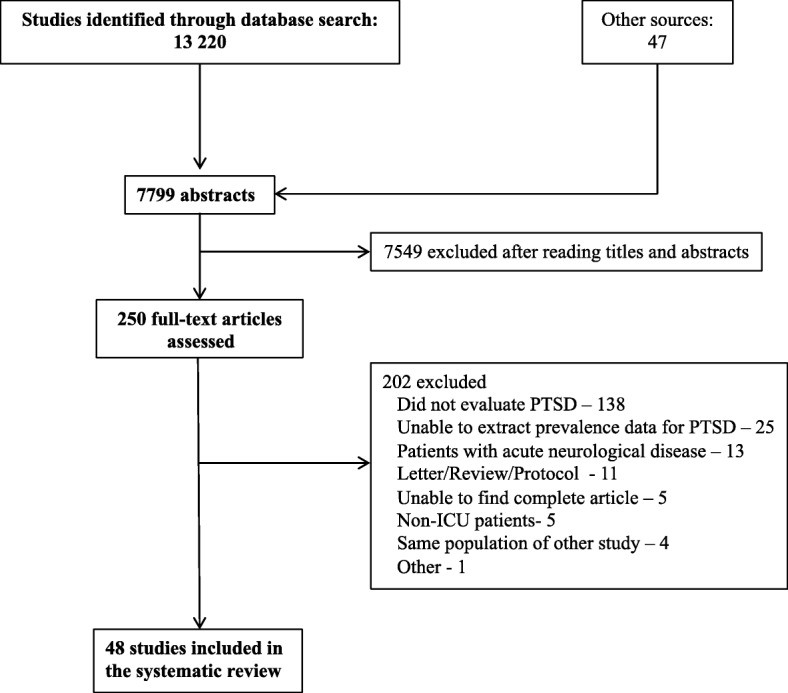
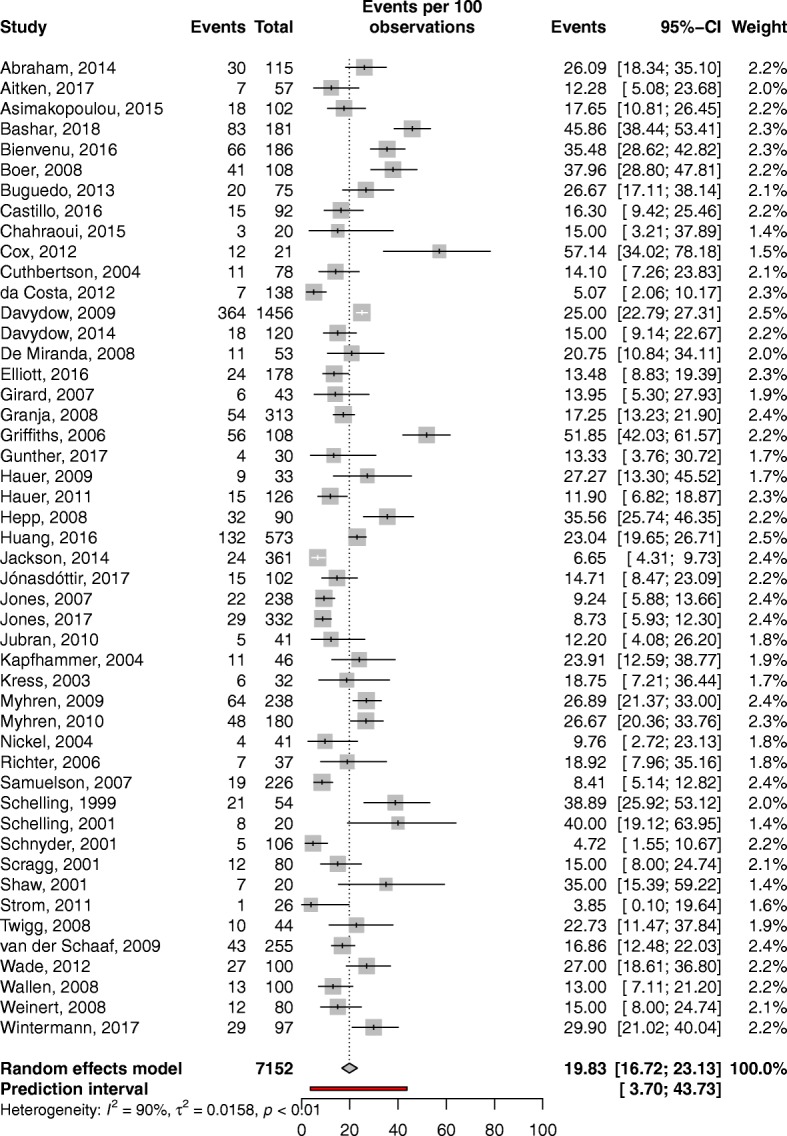
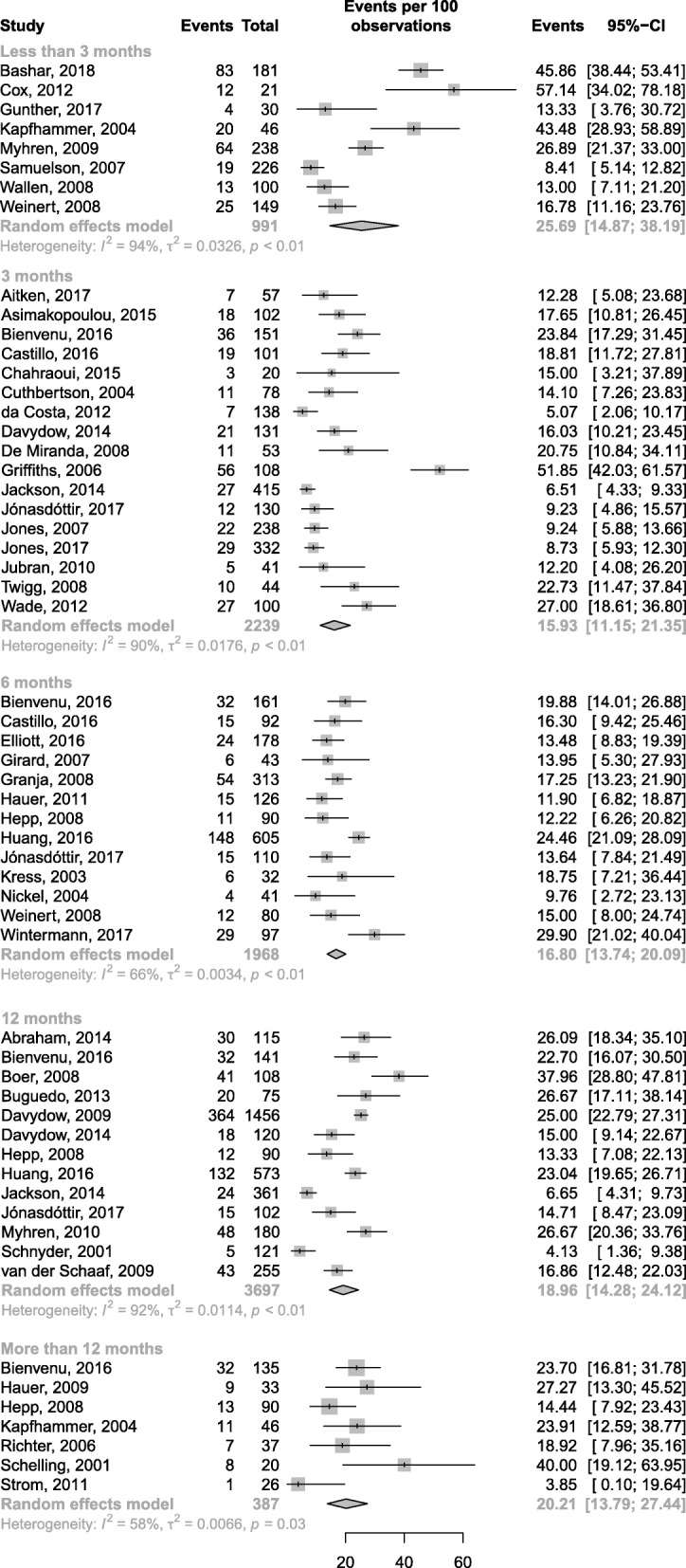
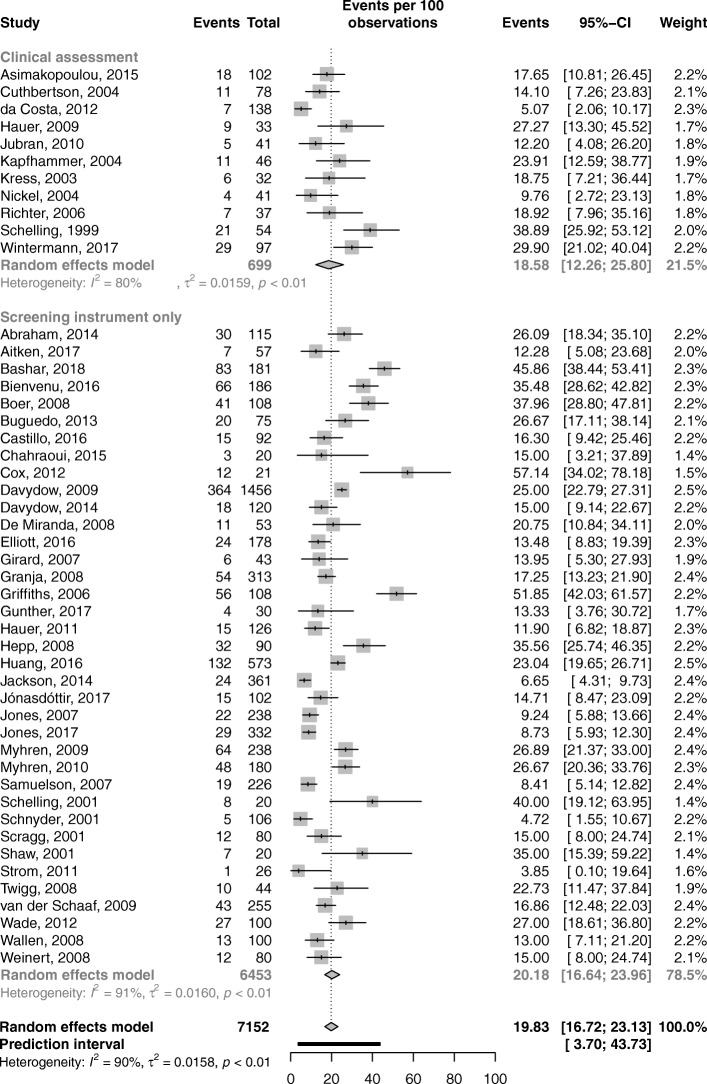
As more patients are surviving intensive care, mental health concerns in survivors have become a research priority. Among these, post-traumatic stress disorder (PTSD) can have an important impact on the quality of life of critical care survivors. However, data on its burden are conflicting. Therefore, this systematic review and meta-analysis aimed to evaluate the prevalence of PTSD symptoms in adult critical care patients after intensive care unit (ICU) discharge. We searched MEDLINE, EMBASE, LILACS, Web of Science, PsycNET, and Scopus databases from inception to September 2018. We included observational studies assessing the prevalence of PTSD symptoms in adult critical care survivors. Two reviewers independently screened studies and extracted data. Studies were meta-analyzed using a random-effects model to estimate PTSD symptom prevalence at different time points, also estimating confidence and prediction intervals. Subgroup and meta-regression analyses were performed to explore heterogeneity. Risk of bias was assessed using the Joanna Briggs Institute tool and the GRADE approach. Of 13,267 studies retrieved, 48 were included in this review. Overall prevalence of PTSD symptoms was 19.83% (95% confidence interval [CI], 16.72–23.13; I2 = 90%, low quality of evidence). Prevalence varied widely across studies, with a wide range of expected prevalence (from 3.70 to 43.73% in 95% of settings). Point prevalence estimates were 15.93% (95% CI, 11.15–21.35; I2 = 90%; 17 studies), 16.80% (95% CI, 13.74–20.09; I2 = 66%; 13 studies), 18.96% (95% CI, 14.28–24.12; I2 = 92%; 13 studies), and 20.21% (95% CI, 13.79–27.44; I2 = 58%; 7 studies) at 3, 6, 12, and > 12 months after discharge, respectively. PTSD symptoms may affect 1 in every 5 adult critical care survivors, with a high expected prevalence 12 months after discharge. ICU survivors should be screened for PTSD symptoms and cared for accordingly, given the potential negative impact of PTSD on quality of life. In addition, action should be taken to further explore the causal relationship between ICU stay and PTSD, as well as to propose early measures to prevent PTSD in this population. PROSPERO, CRD42017075124 , Registered 6 December 2017.
Overview
The claims and statistics of this paper haven’t been checked yet.
Free: it reads the open-access text and checks the first 5 claims that cite a source we can check. Create a free account to check every claim.
Integrity signals
Registry
Cites
Statistics
Figures
Verification
Claims the paper makes
The claims and statistics of this paper haven’t been checked yet.
Free: it reads the open-access text and checks the first 5 claims that cite a source we can check. Create a free account to check every claim.
Claims other papers make about this one
Each is checked against this paper’s own text: does it say what the citing paper says it does?
The source backs part of the claim, not all of it — or backs it for a different population, condition or comparison.
In the citing paper
“Prolonged exposure to stressful hospitalization, complex medical examination procedures, and worries about the difficulty of returning to normal life can lead to long-term psychological harm [44].”
From Mindfulness-based online intervention on mental health and quality of life among COVID-19 patients in China: an intervention design (2021) · cites this paper as [44]
Experimental — accuracy not yet measuredThe cited source says what the claim attributes to it.
In the citing paper
“The estimated psychological morbidity for Intensive Care Unit (ICU) survivors is 55%: with approximately 20%–30% experiencing PTSD; 46% depression, and 44% anxiety.1 –3”
From “It saved me”: A thematic analysis of experiences of psychological therapy following critical illness and intensive care (2024) · cites this paper as [2]
The check wasn’t confident either way, so it gives no verdict — never disputed.
In the citing paper
“The estimated psychological morbidity for Intensive Care Unit (ICU) survivors is 55%: with approximately 20%–30% experiencing PTSD; 46% depression, and 44% anxiety.1 –3”
From “It saved me”: A thematic analysis of experiences of psychological therapy following critical illness and intensive care (2024) · cites this paper as [2]
Experimental — accuracy not yet measuredThe check wasn’t confident either way, so it gives no verdict — never disputed.
In the citing paper
“The estimated psychological morbidity for Intensive Care Unit (ICU) survivors is 55%: with approximately 20%–30% experiencing PTSD; 46% depression, and 44% anxiety.1 –3”
From “It saved me”: A thematic analysis of experiences of psychological therapy following critical illness and intensive care (2024) · cites this paper as [2]
Experimental — accuracy not yet measured
Self-check
Percentages, sums and reported differences re-computed from the paper’s own numbers.
The self-check needs the paper’s full text.
Citations
Cites
Diagnostic and Statistical Manual of Mental Disorders
American Psychiatric Association (2013) · doi:10.1176/appi.books.9780890425596 · Cited by 116,369
Diagnostic and Statistical Manual of Mental Disorders
Williams, J. B. W., & First, M. (2013) · Encyclopedia of Social Work · doi:10.1093/acrefore/9780199975839.013.104 · Cited by 109,519
Preferred Reporting Items for Systematic Reviews and Meta-Analyses: the PRISMA statement
Moher, D., Liberati, A., Tetzlaff, J., Altman, D. G., & for the PRISMA Group (2009) · BMJ · doi:10.1136/bmj.b2535 · Cited by 83,823
Preferred reporting items for systematic reviews and meta-analyses: the PRISMA Statement.
(2009) · PubMed Central · Cited by 44,859
Wickham, H. (2016) · Use R! · doi:10.1007/978-3-319-24277-4 · Cited by 33,115
Liberati, A., Altman, D. G., Tetzlaff, J., Mulrow, C., Gøtzsche, P. C., Ioannidis, J. P. A., Clarke, M., Devereaux, P. J., Kleijnen, J., & Moher, D. (2009) · PLoS Medicine · doi:10.1371/journal.pmed.1000100 · Cited by 28,164
Liberati, A., Altman, D. G., Tetzlaff, J., Mulrow, C., Gotzsche, P. C., Ioannidis, J. P. A., Clarke, M., Devereaux, P. J., Kleijnen, J., & Moher, D. (2009) · BMJ · doi:10.1136/bmj.b2700 · Cited by 17,648
ggplot2: Elegant Graphics for Data Analysis
Wickham, H. (2009) · doi:10.1007/978-0-387-98141-3 · Cited by 14,447
GRADE guidelines: 3. Rating the quality of evidence
Balshem, H., Helfand, M., Schünemann, H. J., Oxman, A. D., Kunz, R., Brozek, J., Vist, G. E., Falck-Ytter, Y., Meerpohl, J., & Norris, S. (2011) · Journal of Clinical Epidemiology · doi:10.1016/j.jclinepi.2010.07.015 · Cited by 8,285
Munn, Z., Moola, S., Lisy, K., Riitano, D., & Tufanaru, C. (2015) · International Journal of Evidence-Based Healthcare · doi:10.1097/xeb.0000000000000054 · Cited by 3,131
Research works printed but not linked: 2
- Joanna Briggs Institute Joanna Briggs Institute reviewers’ manual: 2014 edition 2014 Australia The Joanna Briggs Institute
- Schwarzer G meta: an R package for meta-analysis R News 2007 7 40 45
Cited by
Items 201–300 of 318
Newman, F. W., Wilson, T., & Moore, M. (2021) · Journal of Clinical Practice in Speech-Language Pathology · doi:10.1080/22087168.2021.12370333 · Cited by 1
Ageel, M., Shbeer, A. M., Tawhari, M. M., Darraj, H., Baiti, M. A., Mobaraki, R. A., Hakami, A., Bakri, N. E., Almahdi, R. H., Ageeli, R. S., et al. (2024) · Cureus · doi:10.7759/cureus.60523 · Cited by 1
“Concerning PTSD, A systematic review and meta-analysis found the overall prevalence of PTSD symptoms in adult critical care survivors to be 19.83% [18].”
BackgroundInfluentialEye movement desensitisation and reprocessing for survivors of life-threatening medical events
Bates, A. S., Baldwin, D. S., Pattison, N. A., Moyses, H. E., Huneke, N. T. M., Cortese, S., Grocott, M. P. W., & Cusack, R. (2024) · Cochrane Database of Systematic Reviews · doi:10.1002/14651858.cd015640 · Cited by 1
Nurse Strategies to Improve the Quality of Psychosocial Care During the COVID-19 Pandemic
Pasaribu, J., Keliat, B. A., Daulima, N. H. C., Lisum, K., & Widodo, G. G. (2024) · Iranian Journal of Nursing and Midwifery Research · doi:10.4103/ijnmr.ijnmr_369_22 · Cited by 1
“[1] Notwithstanding these difficulties, nurses should aid patients in addressing both physiological and psychological concerns.”
Nursing Interventions to Prevent Posttraumatic Stress Disorders in People in Intensive Care
Andrade, D. D. F. S., da Silva, C. R. R., Moura, D. B., & Pinto, I. (2024) · Dimensions of Critical Care Nursing · doi:10.1097/dcc.0000000000000677 · Cited by 1
Kang, J., & Yun, S. (2025) · Asian Nursing Research · doi:10.1016/j.anr.2025.03.009 · Cited by 2
A Systematic Review of Transitional Care Visits After Critical Illness
Isenberger, J., Carpenter, D., Menard, A., Stevens, G., & Hebert, D. (2025) · The Journal for Nurse Practitioners · doi:10.1016/j.nurpra.2025.105439 · Cited by 2
Zeng, S., Yao, Z., Guan, C., Cui, S., Quan, Z., Li, Y., Zheng, J., & Wang, H. (2025) · Emergency and Critical Care Medicine · doi:10.1097/ec9.0000000000000152 · Cited by 1
Parke, R. L., Rose, L., Buckley, T. A., Tabah, A., Presneill, J., Mason, K. R., Mills, K., & Marshall, A. P. (2025) · Australian Critical Care · doi:10.1016/j.aucc.2025.101436 · Cited by 1
Changes in child maltreatment occurrence during the COVID-19 pandemic: A systematic review
Rubeis, V. D., Tonmyr, L., Rahman, S., Pagaduan, J. E., Drysdale, M., Morissette, K., MacMillan, H. L., Aylward, E., Nanziba, F., Powell, S., et al. (2025) · Child Abuse & Neglect · doi:10.1016/j.chiabu.2025.107744 · Cited by 3
Ingvarsdóttir, I. L., Helgadóttir, S., Símonardóttir, L., Dellgren, G., & Guðbjartsson, T. (2025) · Journal of Cardiothoracic Surgery · doi:10.1186/s13019-025-03701-6 · Cited by 1
Sanjuan, J., Ruiz, W., Villegas-Gomez, G. A., & Yepes, A. J. O. (2026) · Acta Colombiana de Cuidado Intensivo · doi:10.1016/j.acci.2026.100586 · Cited by 1
Nagasawa, K., Nihashi, T., Iwata, M., & Terasawa, T. (2026) · BMJ Open · doi:10.1136/bmjopen-2025-103045 · Cited by 2
La, N., Rattanapitoon, S. K., Thanchonnang, C., & Rattanapitoon, N. K. (2026) · Critical Care Science · doi:10.62675/2965-2774.20260432 · Cited by 1
Kosilek, R. P., Schröder, N., Sanftenberg, L., Lindemann, D., Beutel, A., Schmidt, K., Brettschneider, C., König, H., Gensichen, J. S., On behalf of the PICTURE study group, et al. (2026) · Scientific Reports · doi:10.1038/s41598-026-49907-z · Cited by 1
Bates, A. S., Cusack, R., Golding, H., Moyses, H. E., Southam, H., Rushbrook, S. C., Highfield, J. A., Pattison, N. A., Baldwin, D. S., & Grocott, M. P. W. (2026) · EClinicalMedicine · doi:10.1016/j.eclinm.2026.104082 · Cited by 1
Home-Based Care for Survivors of Critical Illness
Teixeira, C., & Rosa, R. G. (2021) · Springer eBooks · doi:10.1007/978-3-030-68680-2_16 · Cited by 1
Self-citationPan, Y., Yan, J., Lin, X., Luo, W., Huang, Q., Lin, C., & Lu, W. (2023) · Journal of the Pakistan Medical Association · doi:10.47391/jpma.7194 · Cited by 3
Marmara, S. M., & Kemer, G. (2023) · Journal of Counseling & Development · doi:10.1002/jcad.12499 · Cited by 4
Montenegro, N. V. M., Caisaguano, J. M. L., Cueva, D. C. G., & Romo, M. F. A. (2023) · Revista Criterios · doi:10.31948/rev.criterios/30.2-art12 · Cited by 1
“Por tal motivo, la directriz del Instituto Nacional de Salud y Excelencia Clínica del Reino Unido (s.f.) recomienda que se identifique a los pacientes estresados, se reconozca sus síntomas y se les ofrezca apoyo psicológico como parte de su recuperación, entre otras intervenciones encaminadas en su seguimiento, rehabi…”
BackgroundInfluentialTeixeira, C., & Rosa, R. G. (2024) · Critical Care Science · doi:10.62675/2965-2774.20240265-pt · Cited by 7
Self-citationYoshino, Y., Unoki, T., Hata, K., & Ito, K. (2024) · BMJ Open · doi:10.1136/bmjopen-2023-082810 · Cited by 4
Woźniak, A., Misiąg, W., Leśnik, P., Janc, J., & Chabowski, M. (2024) · Dental and Medical Problems · doi:10.17219/dmp/177329 · Cited by 1
“36 According to the available literature, up to 67% of hospitalized patients suffer from symptoms of anxiety and depression, and 45% are diagnosed with PTSD, 37–48 which has a negative impact on their health-related quality of life (HRQoL).”
Lavoie, A., & Williams, M. (2024) · British Journal of Nursing · doi:10.12968/bjon.2023.0290 · Cited by 1
A National Survey in Belgium on Post-ICU Follow-up Program
Prevedello, D., Silvio, T. F., & Preiser, J. (2020) · International Journal of Critical Care and Emergency Medicine · doi:10.23937/2474-3674/1510109 · Cited by 3
Hughes, L., & McPeake, J. M. (2021) · Evidence-Based Nursing · doi:10.1136/ebnurs-2020-103360 · Cited by 1
Idzerda, L., Gariépy, G., Corrin, T., Tarasuk, V. S., McIntyre, L., Neil‐Sztramko, S., Dobbins, M., Gariépy, G., & Garcia, A. J. (2022) · Promotion de la santé et prévention des maladies chroniques au Canada · doi:10.24095/hpcdp.42.5.01f · Cited by 4
Psychological Recovery after Critical Illness and Stay in Hospital ICU
Casarini, K. A., Prado, A. P. C., & Cardoso, C. L. (2022) · Psicologia Ciência e Profissão · doi:10.1590/1982-3703003235960 · Cited by 1
Khairunisa, P., & Herawati, T. (2023) · BIMIKI (Berkala Ilmiah Mahasiswa Ilmu Keperawatan Indonesia) · doi:10.53345/bimiki.v11i2.453
Mr. Sandman, Bring Me a Dream*
Mohr, N. M., & Sharma, A. (2021) · Critical Care Medicine · doi:10.1097/ccm.0000000000004880 · Cited by 1
Neuropsychiatric disorders and COVID-19
Charlton, E., Nainar, F., & Reyes-Beaman, S. (2021) · The Lancet Psychiatry · doi:10.1016/s2215-0366(21)00177-2 · Cited by 2
Heiniger, Z., & Brandis, S. J. (2021) · Research Square · doi:10.21203/rs.3.rs-1150667/v1 · Cited by 1
Carmassi, C., Pini, S., Martelli, M. I., Fantasia, S., Calvaruso, M., Castellani, L., Pedrinelli, V., Bertelloni, C. A., & Dell’Osso, L. (2023) · Preprints.org · doi:10.20944/preprints202306.1717.v1
Xu, H., & Wang, W. (2024) · Heliyon · doi:10.1016/j.heliyon.2024.e40500 · Cited by 1
RetractedBécel, G., Bouchereau, E., Mazeraud, A., & Sharshar, T. (2019) · Anesthésie & Réanimation · doi:10.1016/j.anrea.2019.11.012
The journey of a COVID-19 patient from admission to recovery and learning to breathe again
Rafique, N. B., Lal, S., Mohammed, Y. A., & Aglan, A. I. (2020) · Anaesthesia Pain & Intensive Care · doi:10.35975/apic.v24i5.1365
Gene MDM2 as Biomarker Proliferation of Abnormal Cells: A Review Article
Gofur, N. R. P., Gofur, A. R. P., Soesilaningtyas, Gofur, R. N. R. P., Kahdina, M., & Putri, H. M. (2021) · doi:10.47829/vjs.2021.1102
Si, M., Xiao, W., Pan, C., Wang, H., Huang, Y., Lian, J., Mak, W. W. S., Leng, Z., Tang, Q., Su, X., et al. (2020) · Research Square · doi:10.21203/rs.3.rs-118300/v1
“[3, 9] Prolonged exposure to stressful hospitalization, complex medical examination procedures, and worries about the di culty of returning to normal life can lead to long-term psychological harm.[42] This will undoubtedly affect the normal operation of many families and bring huge health and economic pressure to the…”
BackgroundPsychological Morbidity After Critical Illness
Bienvenu, O. J., & Hosey, M. M. (2021) · Oxford University Press eBooks · doi:10.1093/oso/9780190077013.003.0005
Vogel, G. (2021) · Figshare
Contributions to Critical Care from Psychological Science and Practice
Merbitz, N. H., Fleishman, J., Kamsky, H., Sundborg, S. A., Tingey, J. L., Ciccolella, N., & Warren, A. M. (2021) · Oxford University Press eBooks · doi:10.1093/oso/9780190077013.003.0004
Mixing African colours into the paradigm shifts in theology of mission
Nel, R. (2011) · Missionalia · Cited by 2
Dyspnea in Patients Receiving Mechanical Ventilation
Decavèle, M., Similowski, T., & Demoule, A. (2021) · Elsevier eBooks · doi:10.1016/b978-0-08-102723-3.00220-1 · Cited by 1
Llerena, R. A. P., & Huisa, N. N. (2022) · Universidad Científica del Sur · doi:10.21142/tl.2022.2377
Patel, D. M., & Jabaley, C. S. (2022) · Critical Care Medicine · doi:10.1097/ccm.0000000000005653 · Cited by 2
Neuropsychiatric side of the COVID-19
Mayorova, M. A., Churilov, L. P., Петрова, Н. Н., & Shoenfeld, Y. (2023) · Elsevier eBooks · doi:10.1016/b978-0-443-18566-3.00007-4
Yoshino, Y., Unoki, T., Hata, K., & Ito, K. (2023) · Research Square · doi:10.21203/rs.3.rs-2632422/v1
Marcinski, W., & Kuisma, R. (2023) · Bulletin of Faculty of Physical Therapy · doi:10.1186/s43161-023-00138-7
“This could be concerning considering the prevalence of psychological trauma resulting from critical illness [40].”
BackgroundPelajaran Dari Pandemi : Strategi Perawat dalam Meningkatkan Mutu Asuhan Keperawatan Psikososial
Pasaribu, J., Keliat, B. A., & Daulima, N. H. C. (2023) · MAHESA Malahayati Health Student Journal · doi:10.33024/mahesa.v4i1.13141
Gobeil, O., Savard, V., & Mayette, M. (2023) · The Canadian Journal of Critical Care Nursing · doi:10.5737/23688653-34425
Precepting in critical care: Building the future of critical care nursing
House-Kokan, M., & Kalan, S. (2023) · The Canadian Journal of Critical Care Nursing · doi:10.5737/23688653-3446
Michaud, M., Gagnon, M., Jacob, J. D., & Lewis, K. B. (2023) · The Canadian Journal of Critical Care Nursing · doi:10.5737/23688653-34431 · Cited by 3
Medication Safety Practice Corner Key learnings: Preventing errors with intravenous acetylcysteine
Hoffman, C., Hyland, S., Harber, M., & Riley, L. (2023) · The Canadian Journal of Critical Care Nursing · doi:10.5737/23688653-3449
Langzeitfolgen nach Intensivtherapie
Druml, W., Buchtele, N., & Staudinger, T. (2024) · DMW - Deutsche Medizinische Wochenschrift · doi:10.1055/a-1825-6553 · Cited by 1
“Im Schnitt sind 20% der Patienten, die einen ICU-Aufenthalt überlebt haben, betroffen [17].”
BackgroundCole, K., & Patterson, C. W. (2024) · FPOP Bulletin Psychology of Older People · doi:10.53841/bpsfpop.2024.1.166.13
Kang, J., & Yun, S. (2024) · Research Square · doi:10.21203/rs.3.rs-4263750/v1
Nelson‐Piercy, C., Luyckx, V. A., & Krawczyk, P. (2024) · Intensive Care Medicine · doi:10.1007/s00134-024-07443-2
“…cause of maternal death in the first postnatal year in high-income countries [2, 8, 9], and birth trauma and critical illness are strongly associated with post-traumatic stress disorder in women [6, 10, 11] as well as their partners [12], more work is required to better identify women at risk.”
Phillips, K., Callaghan, B. L., Webb, A., Kan, J. M., Ooi, C. Y., & Kasparian, N. A. (2024) · Journal of Psychiatric Research · doi:10.1016/j.jpsychires.2024.06.021 · Cited by 2
Santos, E. D. J., Raulino, J. M. D. H., Silva, A. M. B. S., Caetano, L. A. V., dos Santos, T. S., de Oliveira, R. F., Bezerra, A. C., Andrade, K. V., Neto, J. R., Sacramento, F. S., et al. (2024) · Contribuciones a las Ciencias Sociales · doi:10.55905/revconv.17n.8-104
Integrating Compassion and Collaboration into the Care of Intensive Care Unit Survivors
MacDonald, J., Mastalerz, N., Wells, A., & Jackson, J. C. (2024) · Critical Care Clinics · doi:10.1016/j.ccc.2024.08.006
Acute Encephalopathies in SARS-CoV-2 Infection: A Clinical and Neuroimaging Perspective
Zedde, M., Sessa, M., Pezzella, F. R., Napoli, M., Moratti, C., Gerevini, S., Valzania, F., & Pascarella, R. (2024) · Advances in experimental medicine and biology · doi:10.1007/978-3-031-61939-7_7
Assessing Adherence to Posttraumatic Stress Disorder Screening in Young Stroke Survivors
Palmisano, C., O'Neal, M., Bautista, M. A., O'Neil, C. A., & Fitzpatrick, S. S. (2024) · Journal of Neuroscience Nursing · doi:10.1097/jnn.0000000000000808
MENTAL HEALTH OUTCOMES IN COVID-19 SURVIVORS: ROLE OF CLINICAL PREDICTORS
Pierre, M., Claus, L., Berends, K., van den Ameele, S., Crunelle, C. L., & Vanderbruggen, N. (2024) · Psychiatria Danubina · doi:10.24869/psyd.2024.379
Friberg, K., Hofsø, K., Rustøen, T., Raeder, J. C., Hagen, M., Puntillo, K., & Olsen, B. F. (2024) · Heart & Lung · doi:10.1016/j.hrtlng.2024.12.003
The Hospitalized COVID-19 Subjects and Post-traumatic Stress Disorder
Tarsitani, L., Serra, R., Vassalini, P., Pinucci, I., Ceccarelli, G., & d’Ettorre, G. (2025) · Springer eBooks · doi:10.1007/978-3-031-32046-0_82-1
So, R. K. L., & Subbe, C. P. (2024) · Springer eBooks · doi:10.1007/978-3-031-67951-3_4
Belastungsfaktoren von Patient:innen und deren Angehörigen während intensivmedizinischer Behandlung
Rosendahl, J., Reck, J., Gawlytta, R., Böttche, M., Niemeyer, H., Glaesmer, H., Hierundar, A., Deffner, T., & Knaevelsrud, C. (2025) · Trauma und Gewalt · doi:10.21706/tg-19-1-58 · Cited by 1
Living with a benign brain tumour
McDonald, A. (2024) · doi:10.1093/oso/9780198890034.003.0046
Clinical Ethics in Disability: The Role of Decision-Making Competence
Grignoli, N., & Livoti, S. (2025) · Springer eBooks · doi:10.1007/978-3-031-40858-8_253-1
Sato, N., Matsui, K., Arakida, M., Akaho, R., Nishimura, K., & Nomura, T. (2025) · Psychiatry and Clinical Neurosciences Reports · doi:10.1002/pcn5.70081 · Cited by 1
“56 Notably, we found a significant correlation between PTS symptom severity and decreased N3 sleep, which is expected to increase after transfer from the ICU to the ward.”
Videoart in the intensive care unit: A prospective observational study
Arad, T., Kalinchuk, S., Grinas, D., Hellerman-Itzhaki, M., Fishman, G., Bendavid, I., Statlender, L., Kagan, I., & Singer, P. (2025) · Journal of Intensive Medicine · doi:10.1016/j.jointm.2025.02.001
“[ 2 ] These mental health disorders may lead to cognitive impairment [ 3 ] and disabilities in basic activities of daily living that may last for months, or even longer.”
Ngu, C. N., Shete, P. B., Nsagha, D. S., Tanue, E. A., Tendongfor, N., Oke, R. A., Bassah, N., Ukah, C. E., McCoy, S. I., Juillard, C. J., et al. (2025) · medRxiv · doi:10.1101/2025.06.10.25329319
“This gap in mental health care can severely compromise the recovery and overall well-being of victims [25].”
Analgesia First in Critically Ill Adults
Amer, M. R., AlMubayedh, H. O., Bolesta, S., & Gélinas, C. (2025) · Critical Care Clinics · doi:10.1016/j.ccc.2025.05.002 · Cited by 1
What are the needs of critical illness survivors during recovery at home in Aotearoa (New Zealand)?
Sutton, L., Bell, E. M., Every‐Palmer, S., & Skirrow, P. M. (2025) · Kōtuitui New Zealand Journal of Social Sciences Online · doi:10.1080/1177083x.2025.2519170 · Cited by 2
“However, later studies showed there may be improvements in psychological symptoms (depression, post-traumatic stress syndrome) and mental health quality of life (Rosa et al. 2019).”
Peach, B. C., Davis, J. W., Cox, C., & Beidel, D. C. (2025) · Dimensions of Critical Care Nursing · doi:10.1097/dcc.0000000000000711 · Cited by 1
Rodwell, D. (2025) · The Cognitive Behaviour Therapist · doi:10.1017/s1754470x2510010x
“…about or external reminders of the event), negative changes in mood or cognition (e.g. distorted thoughts, reduced interest in activity, feeling detached from others) and alterations in arousal and reactivity (e.g. hypervigilance, reckless behaviour, increased startle response; Righy et al., 2019).”
Jutte, J. E., & Stucky, K. J. (2025) · Oxford University Press eBooks · doi:10.1093/oxfordhb/9780197525456.013.0052
Li, Y., Tong, S., Gao, L., Tian, J., Chen, Z., Bao, Y., & Fu, Y. (2025) · Journal of Critical Care · doi:10.1016/j.jcrc.2025.155242
The Hospitalized COVID-19 Subjects and Post-traumatic Stress Disorder
Tarsitani, L., Serra, R., Vassalini, P., Pinucci, I., Ceccarelli, G., & d’Ettorre, G. (2025) · Springer eBooks · doi:10.1007/978-3-031-73363-5_82
Li, Y., Zhang, J., Chen, W., Liu, M., Xiong, Y., Hu, R., & Yuan, X. (2025) · Scientific Reports · doi:10.1038/s41598-025-22646-3
Additional file 1 of Evaluation of the sensory environment in a large tertiary ICU
Tronstad, O., Flaws, D., Patterson, S., Holdsworth, R., Garcia-Hansen, V., Leonard, F. R., Ong, R., Yerkovich, S. T., & Fraser, J. F. (2024) · Figshare · doi:10.6084/m9.figshare.26645785
Vlake, J. H., van Bommel, J., Wils, E.-J., Korevaar, T. I. M., Hellemons, M. E., Schut, A. F., Labout, J. A. M., Schreuder, L. L., Gommers, D., & Van Genderen, M. E. (2021) · Figshare · doi:10.6084/m9.figshare.14545006
Kawakami, D., Fujitani, S., Morimoto, T., Dote, H., Takita, M., Takaba, A., Hino, M., Nakamura, M., Irie, H., Adachi, T., et al. (2021) · Figshare · doi:10.6084/m9.figshare.14053801
Richardson, B. R., Decavèle, M., Demoule, A., Murtagh, F. E. M., & Johnson, M. (2024) · Figshare · doi:10.6084/m9.figshare.26744420
Tang, S. T., Huang, C.-C., Hu, T.-H., Chou, W.-C., Chuang, L.-P., & Chiang, M. C. (2021) · Figshare · doi:10.6084/m9.figshare.15122262
Tang, S. T., Huang, C.-C., Hu, T.-H., Chou, W.-C., Chuang, L.-P., & Chiang, M. C. (2021) · Figshare · doi:10.6084/m9.figshare.15122259
S3-Leitlinie Sepsis – Prävention, Diagnose, Therapie und Nachsorge – Update 2025
Brunkhorst, F. M., Adamzik, M., Axer, H., Bauer, M., Bode, C., Bone, H.-G., Brenner, T., Bucher, M., David, S., Dietrich, M., et al. (2025) · RWTH Publications (RWTH Aachen) · doi:10.5167/uzh-280465
Bouras, M., Asehnoune, K., Robert-Valli, Y., Mahé, P.-J., Reignier, J., Maamar, A., Lachérade, J.-C., Jonas, M., Jung, B., Ferrandière, M., et al. (2026) · Scientific Reports · doi:10.1038/s41598-025-27423-w
“Prior studies have shown that PTSD symptoms are frequent in the early months after ICU discharge, with pooled estimates of 20–25% within the first three months, and around 15–20% at 12 months 38 .”
Fayyat, T., Qadire, M. I. A., & Abdelrahman, H. (2026) · Seminars in Oncology Nursing · doi:10.1016/j.soncn.2026.152122
Parry, M. J. E. (2026) · European Journal of Cardiovascular Nursing · doi:10.1093/eurjcn/zvag026
Savoric, T., Antlej, K., Arnab, S., Butcher, R., & Subramaniam, A. (2026) · Australian Critical Care · doi:10.1016/j.aucc.2026.101551
Zerbinati, L., Pantuso, M., Allegro, E., Balestrieri, M., Domenicano, I., Murri, M. B., Caruso, R., D’Agostino, A., Ferrara, M., Ferrari, S., et al. (2026) · General Hospital Psychiatry · doi:10.1016/j.genhosppsych.2026.03.023
A Framework for Supporting Patients and Families After a Severe Maternal Event
Bauer, M. E., Summers, K., Cassidy, A. G., Chavez, A., Nath, R., Carr, A., Panelli, D. M., Walczak, C., Tabios, M., & Main, E. K. (2026) · Obstetrics and Gynecology · doi:10.1097/aog.0000000000006279
Functional Testing for Return to Activity with COVID-19
Hudnall, S. R., Jacobs, B. C., & Fields, K. B. (2026) · Current Sports Medicine Reports · doi:10.1249/jsr.0000000000001330
Xiang, B., Gao, Y., Ren, Y., Zhang, L., 马育璇, Li, J., & Zhang, Y. (2026) · General Hospital Psychiatry · doi:10.1016/j.genhosppsych.2026.05.016
Síndrome poscuidados intensivos: epidemiología, fisiopatología y rol del farmacéutico en su manejo
Moral, L. D., Martin-Cerezuela, M., Chiva, E. D., Fernández-Polo, A., García, T. B., García, M. Á. A., González, I. A., Albanell‐Fernández, M., Bastida, C., Pérez, S. O., et al. (2026) · Farmacia Hospitalaria · doi:10.1016/j.farma.2026.03.014
Aerde, N. V., & Hermans, G. (2026) · Best practice & research. Clinical anaesthesiology · doi:10.1016/j.bpa.2026.05.003
Rousseau, A., Guidet, B., Colson, C., Minguet, P., Neis-Gilson, S., Wagener, A., & Lambermont, B. (2026) · European Geriatric Medicine · doi:10.1007/s41999-026-01509-8
“Patients in Group G had lower illness severity at ICU admission, reflected by a lower SOFA score, and experienced shorter durations of mechanical ventilation (median 5 [1–11] vs. 10 [3–19] days, p = 0.0005) and shorter ICU length of stay (11 [8–17] vs. 13 [9–25] days, p = 0.014).”
InfluentialXia, Q., (405), W. Z., Zhuang, J., Zhu, M., & Wu, L. (2026) · PLOS mental health. · doi:10.1371/journal.pmen.0000629
A Trauma-Informed Music Composition Program Fostering Resilience in Survivors of Hospitalization
Levy‐Carrick, N. C., Hall, J. R., Allen, J., Carrick, R. D., Sharma, S., & Lewis-O’Connor, A. (2026) · Journal of Humanistic Psychology · doi:10.1177/00221678261455076
Metadata
- Authors
- Righy, C., Rosa, R. G., da Silva, R. T. A., Kochhann, R., Migliavaca, C. B., Robinson, C. C., Teche, S. P., Teixeira, C., Bozza, F. A., & Falavigna, M.
- Affiliations
- Instituto Estadual do Cérebro Paulo Niemeyer (BR)
- Universidade Federal do Rio Grande do Sul (BR)
- Hospital Moinhos de Vento (BR)
- D’Or Institute for Research and Education (BR)
- ORCID
- Venue
- Critical Care
- Published
- 2019-06-11
- Volume
- 23
- Issue
- 1
- Pages
- 213-213
- ISSN
- 1364-8535 (ISSN-L)
- PMC
- PMC6560853
- OpenAlex
- W2953174290
- Cited by
- 319
- References
- 80
- Citations by year
- 2026: 39 · 2025: 45 · 2024: 61 · 2023: 39 · 2022: 47 · 2021: 62 · 2020: 23 · 2019: 2
- FWCI
- 6.02
- Type
- journal article
- Language
- en
- Open access
- gold
- doi.org
- Licence
- cc-by
- creativecommons.org/licenses/by/4.0/ (tdm)
- creativecommons.org/licenses/by/4.0/ (vor)
- Locations
- Critical Care (publishedVersion, cc-by)
- PubMed Central (publishedVersion, cc-by)
- PubMed (publishedVersion)
- LA Referencia (Red Federada de Repositorios Institucionales de Publicaciones Científicas) (publishedVersion, other-oa)
- Americanae (AECID Library) (submittedVersion, other-oa)
- Arca - Repositório Institucional da Fiocruz (submittedVersion, other-oa)
- DOAJ (DOAJ: Directory of Open Access Journals) (submittedVersion, cc-by-sa)
- Funders
- Ministério da Saúde
- Topics
- Health Sciences › Medicine › Critical Care and Intensive Care Medicine › Intensive Care Unit Cognitive Disorders
- Social Sciences › Psychology › Clinical Psychology › Posttraumatic Stress Disorder Research
- Health Sciences › Medicine › Critical Care and Intensive Care Medicine › Family and Patient Care in Intensive Care Units
- Keywords
- post-traumatic stress disorder, critical illness survivors, intensive care unit discharge, post-intensive care syndrome, PTSD screening, quality of life, adult ICU patients, heterogeneity of prevalence estimates
- MeSH terms
- Adult, Humans, Quality of Life, Stress Disorders, Post-Traumatic, Prevalence, Critical Illness, Survivors
About these checks
Registry, retraction, Cites and statistics results are computed, not judged, with one exception: a printed reference that no index lists is read once by a model before it counts as a citation error. Claims are extracted by a model and kept only when their quote appears verbatim in the text; each cited source is then checked, with a model’s help, for whether it says what the claim relies on. Those verdicts can be wrong — read the claim’s quote and the cited source before relying on one.
Statistics and arithmetic are recomputed, not judged.
Confidence bands are shown only for fields calibrated on our annotated test set. None is calibrated yet, so no band is shown.
What counts as a claim ›How we measure confidence ›How we check this ›
Are you an author, or do you see a problem with this page? Request a review
Data sources
Bibliographic data: Semantic Scholar, OpenAlex, Crossref.
Contains information from the Semantic Scholar Academic Graph Datasets, made available under the ODC Attribution License (ODC-BY 1.0).
Semantic Scholar’s data is described in: Kinney, R., et al. (2023). The Semantic Scholar Open Data Platform. arXiv:2301.10140.
