

Mitosis in circulating tumor cells stratifies highly aggressive breast carcinomas
Open accessThe DOI matches its Crossref record; 34 of the 34 references it cites were found in a registry or an index.
Abstract
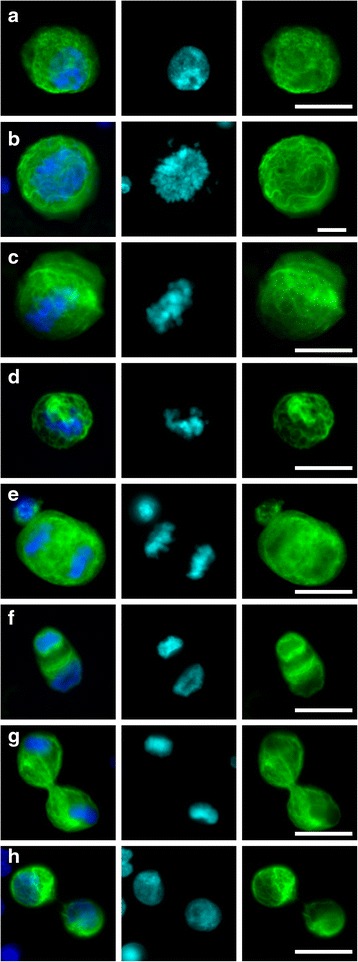
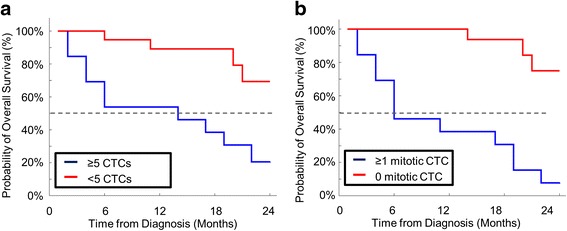
BACKGROUND: Enumeration of circulating tumor cells (CTCs) isolated from the peripheral blood of breast cancer patients holds promise as a clinically relevant, minimally invasive diagnostic test. However, CTC utility has been limited as a prognostic indicator of survival by the inability to stratify patients beyond general enumeration. In comparison, histological biopsy examinations remain the standard method for confirming malignancy and grading malignant cells, allowing for cancer identification and then assessing patient cohorts for prognostic and predictive value. Typically, CTC identification relies on immunofluorescent staining assessed as absent/present, which is somewhat subjective and limited in its ability to characterize these cells. In contrast, the physical features used in histological cytology comprise the gold standard method used to identify and preliminarily characterize the cancer cells. Here, we superimpose the methods, cytologically subtyping CTCs labeled with immunohistochemical fluorescence stains to improve their prognostic value in relation to survival. METHODS: In this single-blind prospective pilot study, we tracked 36 patients with late-stage breast cancer over 24 months to compare overall survival between simple CTC enumeration and subtyping mitotic CTCs. A power analysis (1-β = 0. 9, α = 0.05) determined that a pilot size of 30 patients was sufficient to stratify this patient cohort; 36 in total were enrolled. RESULTS: Our results confirmed that CTC number is a prognostic indicator of patient survival, with a hazard ratio 5.2, p = 0.005 (95 % CI 1.6-16.5). However, by simply subtyping the same population based on CTCs in cytological mitosis, the hazard ratio increased dramatically to 11.1, p < 0.001 (95 % CI 3.1-39.7). CONCLUSIONS: Our data suggest that (1) mitotic CTCs are relativity common in aggressive late-stage breast cancer, (2) mitotic CTCs may significantly correlate with shortened overall survival, and (3) larger and more defined patient cohort studies are clearly called for based on this initial pilot study.
Overview
The claims and statistics of this paper haven’t been checked yet.
Free: it reads the open-access text and checks the first 5 claims that cite a source we can check. Create a free account to check every claim.
Integrity signals
Registry
Cites
Statistics
Figures
Verification
Claims the paper makes
The claims and statistics of this paper haven’t been checked yet.
Free: it reads the open-access text and checks the first 5 claims that cite a source we can check. Create a free account to check every claim.
Claims other papers make about this one
Each is checked against this paper’s own text: does it say what the citing paper says it does?
The source backs part of the claim, not all of it — or backs it for a different population, condition or comparison.
In the citing paper
“Notably, even confined tumors without metastasis can produce CTCs [146].”
From Tumor microenvironment complexity and therapeutic implications at a glance (2020) · cites this paper as [146]
Experimental — accuracy not yet measured
Self-check
Percentages, sums and reported differences re-computed from the paper’s own numbers.
The self-check needs the paper’s full text.
Citations
Cites
Circulating Tumor Cells, Disease Progression, and Survival in Metastatic Breast Cancer
Cristofanilli, M., Budd, G. T., Ellis, M. J., Stopeck, A., Matera, J., Miller, M. C., Reuben, J. M., Doyle, G. V., Allard, W. J., Terstappen, L. W. M. M., et al. (2004) · New England Journal of Medicine · doi:10.1056/nejmoa040766 · Cited by 4,593 · cited 3×
“low numbers of CTC per sample, and the fact that 20–35 % of patients with late-stage cancer have no measurable CTCs, are all confounding factors inhibiting clinical utility [1, 2, 4, 12, 19].”
BackgroundSelf-citationBloom, H. J. G., & Richardson, W. W. (1957) · British Journal of Cancer · doi:10.1038/bjc.1957.43 · Cited by 2,925 · cited 1×
“anaphase, telophase [5, 9, 10]), is considered a primary predictor of survival and an indicator of therapy response [5–10].”
BackgroundAllard, W. J., Matera, J., Miller, M. C., Repollet, M., Connelly, M. C., Rao, C., Tibbe, A. G. J., Uhr, J. W., & Terstappen, L. W. M. M. (2004) · Clinical Cancer Research · doi:10.1158/1078-0432.ccr-04-0378 · Cited by 2,542 · cited 2×
“low numbers of CTC per sample, and the fact that 20–35 % of patients with late-stage cancer have no measurable CTCs, are all confounding factors inhibiting clinical utility [1, 2, 4, 12, 19].”
BackgroundThe Nottingham prognostic index in primary breast cancer
Galea, M. H., Blamey, R. W., Elston, C. E., & Ellis, I. O. (1992) · Breast Cancer Research and Treatment · doi:10.1007/bf01840834 · Cited by 1,070 · cited 8×
“, mitosis, and known to provide predictive information about therapeutic response [5–9].”
BackgroundInfluentialMiller, M. C., Doyle, G. V., & Terstappen, L. W. M. M. (2010) · Journal of Oncology · doi:10.1155/2010/617421 · Cited by 750
Circulating Tumor Cells and Response to Chemotherapy in Metastatic Breast Cancer: SWOG S0500
Smerage, J. B., Barlow, W. E., Hortobagyi, G. N., Winer, E. P., Leyland-Jones, B., Srkalovic, G., Tejwani, S., Schott, A. F., O'Rourke, M. A., Lew, D. L., et al. (2014) · Journal of Clinical Oncology · doi:10.1200/jco.2014.56.2561 · Cited by 648 · cited 6×
“While it has been established that enumerating CTCs using the threshold of ≥5 CTC per sample is prognostically valuable, translating this information into direct treatment for improved patient survival has been difficult [1, 2, 12, 28].”
BackgroundInfluentialStott, S. L., Lee, R. J., Nagrath, S., Yu, M., Miyamoto, D. T., Ulkus, L., Inserra, E. J., Ulman, M., Springer, S., Nakamura, Z., et al. (2010) · Science Translational Medicine · doi:10.1126/scitranslmed.3000403 · Cited by 539 · cited 1×
“In CTCs, the inability to provide detailed cytological assessment in cells has led some groups to rely on the related [11, 12], yet biologically independent [13, 14], proliferation index (PI) in their quantification (i.”
BackgroundWhole-exome sequencing of circulating tumor cells provides a window into metastatic prostate cancer
Lohr, J. G., Adalsteinsson, V. A., Cibulskis, K., Choudhury, A. D., Rosenberg, M., Cruz-Gordillo, P., Francis, J. M., Zhang, C.-Z., Shalek, A. K., Satija, R., et al. (2014) · Nature Biotechnology · doi:10.1038/nbt.2892 · Cited by 535 · cited 1×
“Recently, protein level and genomic phenotyping of single CTCs has shown that they are a heterogeneous population of multiple complicated phenotypes [22, 28–30] and subtyping CTCs by this biomarker heterogeneity is an ongoing area of study.”
BackgroundPowell, A. A., Talasaz, A. H., Zhang, H., Coram, M. A., Reddy, A., Deng, G., Telli, M. L., Advani, R. H., Carlson, R. W., Mollick, J. A., et al. (2012) · PLoS ONE · doi:10.1371/journal.pone.0033788 · Cited by 531
Circulating tumor cell technologies
Ferreira, M. M., Ramani, V. C., & Jeffrey, S. S. (2016) · Molecular Oncology · doi:10.1016/j.molonc.2016.01.007 · Cited by 511 · cited 1×
“As cancer grading is a form of morphological classification, it has been suggested that characterizing additional CTC phenotypes may provide additional prognostic stratification in patients with cancer [3, 21–23].”
Background
Cited by
Tumor microenvironment complexity and therapeutic implications at a glance
Baghban, R., Roshangar, L., Jahanban-Esfahlan, R., Seidi, K., Ebrahimi-Kalan, A., Jaymand, M., Kolahian, S., Javaheri, T., & Zare, P. (2020) · Cell Communication and Signaling · doi:10.1186/s12964-020-0530-4 · Cited by 1,784
“Notably, even confined tumors without metastasis can produce CTCs [146] .”
BackgroundEpithelial-Mesenchymal Transition in Cancer: A Historical Overview
Ribatti, D., Tamma, R., & Annese, T. (2020) · Translational Oncology · doi:10.1016/j.tranon.2020.100773 · Cited by 1,001
Lianidou, E., & Pantel, K. (2019) · Genes, Chromosomes and Cancer · doi:10.1002/gcc.22695 · Cited by 171
“In patients with ≥5 CTC/7.5 mL blood at baseline, morphologic characterization of persistent CTCs could be an important prognostic marker during treatment, in addition to CTC enumeration alone.52 It was also recently reported that mitotic CTCs are relativity common in aggres- sive late-stage breast cancer and may sign…”
BackgroundInfluentialKowalik, A., Kowalewska, M., & Góźdź, S. S. (2017) · Translational research · doi:10.1016/j.trsl.2017.04.002 · Cited by 165
Yan, W.-T., Cui, X., Chen, Q., Li, Y.-F., Cui, Y.-H., Wang, Y., & Jiang, J. (2017) · Scientific Reports · doi:10.1038/srep43464 · Cited by 113
Adams, D. L., Adams, D. K., He, J., Kalhor, N., Zhang, M., Xu, T., Gao, H., Reuben, J. M., Qiao, Y., Komaki, R. R., et al. (2017) · Clinical Cancer Research · doi:10.1158/1078-0432.ccr-17-0802 · Cited by 113
“These methods describe a BBB approach that differentiates CAMLs and the PDCTC/EMTCTC subpopulations by well-defined intrinsic biological indicators, that is, EMTCTCs lose EpCAM and downregulate cytokeratin (6, 10, 11, 13, 14, 43).”
MethodSelf-citationChallenges and achievements of liquid biopsy technologies employed in early breast cancer
Alba-Bernal, A., Lavado-Valenzuela, R., Domínguez-Recio, M. E., Jiménez-Rodríguez, B., Queipo‐Ortuño, M. I., Alba, E., & Comino‐Méndez, I. (2020) · EBioMedicine · doi:10.1016/j.ebiom.2020.103100 · Cited by 108
Oncogenic Signaling Alters Cell Shape and Mechanics to Facilitate Cell Division under Confinement
Matthews, H. K., Ganguli, S., Plak, K., Taubenberger, A. V., Win, Z., Williamson, M., Piel, M., Guck, J. R., & Baum, B. (2020) · Developmental Cell · doi:10.1016/j.devcel.2020.01.004 · Cited by 105
Roles of cell fusion, hybridization and polyploid cell formation in cancer metastasis
Shabo, I., Svanvik, J., Lindström, A., Lechertier, T., Trabulo, S. M. D., Hulit, J., Sparey, T. J., & Pawelek, J. M. (2020) · World Journal of Clinical Oncology · doi:10.5306/wjco.v11.i3.121 · Cited by 96
Miccio, L., Cimmino, F., Kurelac, I., Villone, M. M., Bianco, V., Memmolo, P., Merola, F., Mugnano, M., Capasso, M., Iolascon, A., et al. (2020) · View · doi:10.1002/viw.20200034 · Cited by 92
Manjunath, Y., Venkateshaiah, S. U., Avella, D. M., Deroche, C. B., Kimchi, E. T., Staveley-O’Carroll, K. F., Smith, C. J., Li, G., & Kaifi, J. T. (2019) · Cancers · doi:10.3390/cancers11060806 · Cited by 83
“Within 1 hour, CTCs were enriched by size with an established microfilter platform that has been successfully used by other investigators and our group [25,27,40,41].”
MethodManjunath, Y., Mitchem, J. B., Suvilesh, K. N., Avella, D. M., Kimchi, E. T., Staveley-O’Carroll, K. F., Deroche, C. B., Pantel, K., Li, G., & Kaifi, J. T. (2020) · Journal of Thoracic Oncology · doi:10.1016/j.jtho.2020.04.034 · Cited by 71
Circulating tumor cells: silent predictors of metastasis
Zhou, L., Dicker, D. T., Matthew, E. M., El‐Deiry, W. S., & Alpaugh, R. K. (2017) · F1000Research · doi:10.12688/f1000research.11313.1 · Cited by 50
“Cell cycle staging could give another level of prognosis, and the identification of mitotic CTCs has been correlated with shortened overall survival 44 .”
BackgroundSelf-citationSingh, S., Miglione, A., Raucci, A., Numan, A., & Cinti, S. (2023) · TrAC Trends in Analytical Chemistry · doi:10.1016/j.trac.2023.117050 · Cited by 41
The Potential for Circulating Tumor Cells in Pancreatic Cancer Management
Pimienta, M., Edderkaoui, M., Wang, R., & Pandol, S. J. (2017) · Frontiers in Physiology · doi:10.3389/fphys.2017.00381 · Cited by 40
“In breast cancer, cytological assessment suggests that CTCs actively undergoing mitosis are most common in late-stage disease and have prognostic value (Adams et al., 2016).”
BackgroundMelatonin: An important anticancer agent in colorectal cancer
Mirza‐Aghazadeh‐Attari, M., Mohammadzadeh, A., Mostavafi, S., Mihanfar, A., Darband, S. G., Sadighparvar, S., Gholamzadeh, S., Majidinia, M., & Yousefi, B. (2019) · Journal of Cellular Physiology · doi:10.1002/jcp.29049 · Cited by 40
“Cellular proliferation is such an important indicator of the malignant potential that it is as a prognostic indicator of numerous cancers (Adams et al., 2016).”
BackgroundPhysical confinement alters sarcoma cell cycle progression and division
Moriarty, R. A., & Stroka, K. M. (2018) · Cell Cycle · doi:10.1080/15384101.2018.1533776 · Cited by 40
“Circulating tumor cells have the ability to become mitotic during late stage aggressive cancers [32], and metastatic tumor cells in the blood stream have been shown to attach to the endothelium and proliferate within the vasculature [33].”
BackgroundMechanosensing of Mechanical Confinement by Mesenchymal-Like Cells
Doolin, M. T., Moriarty, R. A., & Stroka, K. M. (2020) · Frontiers in Physiology · doi:10.3389/fphys.2020.00365 · Cited by 36
“Cell Cycle, Division, and Proliferation Circulating tumor cells become mitotic during late stage aggressive cancers, which correlates to poor patient prognosis (Adams et al., 2016).”
BackgroundBlood‐based biopsies—clinical utility beyond circulating tumor cells
Tang, C., Zhu, P., Li, S., Makarova, O. V., Amstutz, P. T., & Adams, D. L. (2018) · Cytometry Part A · doi:10.1002/cyto.a.23573 · Cited by 32
Self-citationKeup, C., Storbeck, M., Hauch, S., Hahn, P. F., Sprenger‐Haussels, M., Tewes, M., Mach, P., Hoffmann, O., Kimmig, R., & Kasimir‐Bauer, S. (2019) · Cancers · doi:10.3390/cancers11020238 · Cited by 30
Assessment of proliferation in breast cancer: cell cycle or mitosis? An observational study
Lashen, A., Toss, M. S., Katayama, A., Gogna, R., Mongan, N. P., & Rakha, E. A. (2021) · Histopathology · doi:10.1111/his.14542 · Cited by 28
“Although not all cycling tumour cells will progress to the mitotic phase and divide, there is concern that the mitosis represents the smallest proportion of cycling cells, thus not precisely reflecting the proliferation rate of tumours.(38,39) Although various studies have demonstrated that mitotic counts and Ki-67 ex…”
BackgroundThe Diversity of Liquid Biopsies and Their Potential in Breast Cancer Management
Keup, C., Kimmig, R., & Kasimir‐Bauer, S. (2023) · Cancers · doi:10.3390/cancers15225463 · Cited by 27
Adachi, Y., Yoshimura, M., Nishida, K., Usuki, H., Shibata, K., Hattori, M., Kondo, N., Yatabe, Y., Iwata, H., Kikumori, T., et al. (2017) · Breast Cancer Research and Treatment · doi:10.1007/s10549-017-4532-x · Cited by 24
Yap, Y.-S., Leong, M. C., Chua, Y. W., Loh, K. W. J., Lee, G. E., Lim, E. H., Dent, R., Ng, R. C. H., Lim, J. H.-C., Singh, G., et al. (2019) · PLOS ONE · doi:10.1371/journal.pone.0221305 · Cited by 23
Zhu, P., Stanton, M., Castle, E. P., Joseph, R. W., Adams, D. L., Li, S., Amstutz, P. T., Tang, C., & Ho, T. H. (2016) · Journal of Translational Medicine · doi:10.1186/s12967-016-0953-2 · Cited by 22
“Microfiltration is an effective method for isolating CTCs and other cells of interest from several types of cancers [1–3, 10–14].”
BackgroundMethodSelf-citationKrawczyk, N., Neubacher, M., Meier-Stiegen, F., Neubauer, H. J., Niederacher, D., Ruckhäberle, E., Mohrmann, S., Hoffmann, J., Kaleta, T., Banys-Paluchowski, M. J., et al. (2019) · BMC Cancer · doi:10.1186/s12885-019-6323-8 · Cited by 20
Borrelli, F., Běhal, J., Cohen, A., Miccio, L., Memmolo, P., Kurelac, I., Capozzoli, A., Curcio, C., Liseno, A., Bianco, V., et al. (2023) · APL Bioengineering · doi:10.1063/5.0153413 · Cited by 16
Clinical Applications of Cancer-Associated Cells Present in the Blood of Cancer Patients
Tang, C., & Adams, D. L. (2022) · Biomedicines · doi:10.3390/biomedicines10030587 · Cited by 13
“An even worse prognosis is associated with the presence of one or more CTCs in mitosis [13].”
BackgroundSelf-citationSu, X.-J., Zhou, P., & Qi, Y.-X. (2022) · Annals of Translational Medicine · doi:10.21037/atm-22-2655 · Cited by 13
“As previously reported (22 ), the prepared HRVECs were sealed with PBS containing 5% BSA for 2 hours.”
Patel, S. A., Park, S., Zhu, D., Torr, E., Dureke, A.-G., McIntyre, A., Muzyka, N., Severson, J., & Skop, A. R. (2024) · Molecular Biology of the Cell · doi:10.1091/mbc.e23-10-0384 · Cited by 12
Mir, R., Javid, J., Ullah, M. F., Alrdahe, S. S., Albalawi, I. A., Mustafa, S. K., Jalal, M. M., Altayar, M. A., Albalawi, A. D., Abunab, M. K., et al. (2025) · Medical Oncology · doi:10.1007/s12032-025-02945-5 · Cited by 15
“[76].”
Lin, T.-C., Liao, Y., Chang, W., Yang, C.-H., Cheng, L.-H., Cheng, M., & Cheng, H.-C. (2018) · Journal of Visualized Experiments · doi:10.3791/56761 · Cited by 8
Circulating Tumor Cells: Applications for Early Breast Cancer
Martos, T., Casadevall, D., & Albanell, J. (2020) · Advances in experimental medicine and biology · doi:10.1007/978-3-030-35805-1_9 · Cited by 6
Beyond Tissue in the Era of Liquid Biopsy: Pathologists' Perspectives and Insights
Urso, M., Seminati, D., Pilla, D., Casati, G., & Pagni, F. (2025) · Cytopathology · doi:10.1111/cyt.70031 · Cited by 3
“Building on this concept, Adams et al. [68] introduced the detection of mitotic CTCs as a marker of tumour aggressiveness.”
Adams, D. L., & Cristofanilli, M. (2017) · Cancer drug discovery and develogment/Cancer drug discovery and development · doi:10.1007/978-3-319-50956-3_5 · Cited by 3
Self-citationQuintana, L., Ortega, S., León, R., Fabelo, H. A., Balea-Fernandez, F., Sauras-Colón, E., Lejeune, M., Bosch, R., López, C., & Callicó, G. M. (2022) · SPIE Medical Imaging: Digital and Computational Pathology · doi:10.1117/12.2611419 · Cited by 2
“Tumor cells, and specifically the ones in mitoses, are evaluated by pathologists to make the cancer diagnosis 4 .”
BackgroundBuilding an ex vivo model of breast cancer lung metastasis
Grey, J. F. E. (2019) · Nottingham ePrints (University of Nottingham)
Adeel, M. (2019) · Pakistan Veterinary Journal · doi:10.29261/pakvetj/2019.084
“tumor cells proliferate, metastasize with the involvement of lymphatic system (Adams et al., 2016).”
BackgroundInfluentialTomographic flow cytometry as the key-enabling technology for label-free liquid biopsy
Memmolo, P., Pirone, D., Miccio, L., Cimmino, F., Kurelac, I., Villone, M. M., Bianco, V., Merola, F., Mugnano, M., Capasso, M., et al. (2021) · Mediterranean Conference on Control and Automation (MED) · doi:10.1109/med51440.2021.9480257
“surface antigen) [9,10] or exploit functional properties that distinguish CTCs from the other blood components, such as their mitotic index [11] or their metabolic characteristics [12,13].”
BackgroundMatsuo, H., Kawakami, H., Kawano, N., Fuchino, H., & Yoshimatsu, K. (2025) · Tetrahedron · doi:10.1016/j.tet.2025.134854
Agrégation des cellules tumorales et cycle cellulaire
Bonnet, J. (2020) · theses.fr (ABES) · doi:10.70675/f2f86ac4zaebaz4b1fz8d98z289629517770
The promising role of flavonoids in inhibiting epithelial to mesenchymal transition
Kashyap, D., Sharma, R., Munda, V. S., Garg, V. K., Thakur, S., Sharma, D., Okpala, C. O. R., & Dhiman, V. (2026) · Elsevier eBooks · doi:10.1016/b978-0-443-42855-5.00010-8
Metadata
- Authors
- Adams, D. L., Adams, D. K., Stefansson, S., Haudenschild, C., Martin, S. S., Charpentier, M., Chumsri, S., Cristofanilli, M., Tang, C.-M., & Alpaugh, R. K.
- Affiliations
- Rutgers, The State University of New Jersey (US)
- George Washington University (US)
- University of Maryland, Baltimore (US)
- Northwestern University (US)
- Creatv MicroTech (United States) (US)
- Fox Chase Cancer Center (US)
- Corresponding author
- Adams, Daniel L.
- ORCID
- Venue
- Breast Cancer Research
- Published
- 2016-05-04
- Volume
- 18
- Issue
- 1
- Pages
- 44-44
- ISSN
- 1465-5411 (ISSN-L)
- 1465-542X
- PMC
- PMC4855427
- OpenAlex
- W2346756257
- Cited by
- 40
- References
- 33
- Citations by year
- 2026: 1 · 2025: 2 · 2024: 1 · 2023: 4 · 2022: 3 · 2021: 2 · 2020: 9 · 2019: 6 · 2018: 4 · 2017: 7 · 2016: 1
- FWCI
- 2.50
- Type
- journal article
- Language
- en
- Open access
- gold
- doi.org
- Licence
- cc-by
- creativecommons.org/licenses/by/4.0/ (tdm)
- creativecommons.org/licenses/by/4.0/ (vor)
- Locations
- Breast Cancer Research (publishedVersion, cc-by)
- PubMed Central (publishedVersion, cc-by)
- PubMed (publishedVersion)
- Funders
- Maryland Technology Development Corporation (MTTCF award)
- National Cancer Institute (grant R01-CA154624)
- Susan G. Komen for the Cure (KG100240)
- U.S. Department of Defense (BC100675)
- Defense Advanced Research Projects Agency (W911NF-14-C-0098)
- Topics
- Life Sciences › Biochemistry, Genetics and Molecular Biology › Cancer Research › Cancer Genomics and Diagnostics
- Health Sciences › Medicine › Oncology › Cancer Cells and Metastasis
- Life Sciences › Biochemistry, Genetics and Molecular Biology › Cancer Research › Breast Cancer Treatment Studies
- Keywords
- circulating tumor cells, mitosis, breast cancer, prognostic factors, overall survival, patient stratification, late-stage breast cancer, minimally invasive diagnosis
- MeSH terms
- Adult, Aged, Breast Neoplasms, Female, Humans, Middle Aged, Mitosis, Neoplastic Cells, Circulating, Neoplasm Staging, Prognosis, Prospective Studies, Biomarkers, Tumor, Proportional Hazards Models, Disease Progression, Kaplan-Meier Estimate, Neoplasm Grading
About these checks
Registry, retraction, Cites and statistics results are computed, not judged, with one exception: a printed reference that no index lists is read once by a model before it counts as a citation error. Claims are extracted by a model and kept only when their quote appears verbatim in the text; each cited source is then checked, with a model’s help, for whether it says what the claim relies on. Those verdicts can be wrong — read the claim’s quote and the cited source before relying on one.
Statistics and arithmetic are recomputed, not judged.
Confidence bands are shown only for fields calibrated on our annotated test set. None is calibrated yet, so no band is shown.
What counts as a claim ›How we measure confidence ›How we check this ›
Are you an author, or do you see a problem with this page? Request a review
Data sources
Bibliographic data: Semantic Scholar, OpenAlex, Crossref.
Contains information from the Semantic Scholar Academic Graph Datasets, made available under the ODC Attribution License (ODC-BY 1.0).
Semantic Scholar’s data is described in: Kinney, R., et al. (2023). The Semantic Scholar Open Data Platform. arXiv:2301.10140.
