

Mitosis in circulating tumor cells stratifies highly aggressive breast carcinomas
Open accessThe DOI matches its Crossref record; 34 of the 34 references it cites were found in a registry or an index.
Abstract
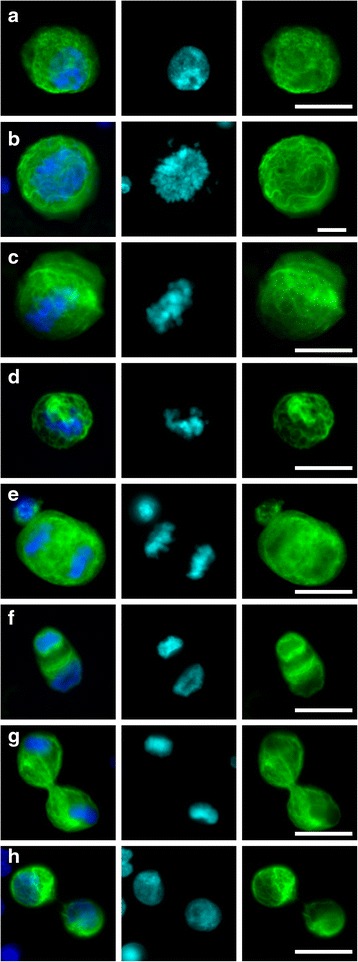
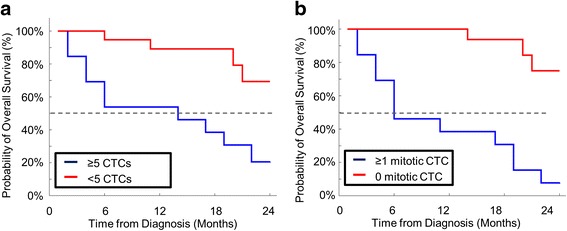
BACKGROUND: Enumeration of circulating tumor cells (CTCs) isolated from the peripheral blood of breast cancer patients holds promise as a clinically relevant, minimally invasive diagnostic test. However, CTC utility has been limited as a prognostic indicator of survival by the inability to stratify patients beyond general enumeration. In comparison, histological biopsy examinations remain the standard method for confirming malignancy and grading malignant cells, allowing for cancer identification and then assessing patient cohorts for prognostic and predictive value. Typically, CTC identification relies on immunofluorescent staining assessed as absent/present, which is somewhat subjective and limited in its ability to characterize these cells. In contrast, the physical features used in histological cytology comprise the gold standard method used to identify and preliminarily characterize the cancer cells. Here, we superimpose the methods, cytologically subtyping CTCs labeled with immunohistochemical fluorescence stains to improve their prognostic value in relation to survival. METHODS: In this single-blind prospective pilot study, we tracked 36 patients with late-stage breast cancer over 24 months to compare overall survival between simple CTC enumeration and subtyping mitotic CTCs. A power analysis (1-β = 0. 9, α = 0.05) determined that a pilot size of 30 patients was sufficient to stratify this patient cohort; 36 in total were enrolled. RESULTS: Our results confirmed that CTC number is a prognostic indicator of patient survival, with a hazard ratio 5.2, p = 0.005 (95 % CI 1.6-16.5). However, by simply subtyping the same population based on CTCs in cytological mitosis, the hazard ratio increased dramatically to 11.1, p < 0.001 (95 % CI 3.1-39.7). CONCLUSIONS: Our data suggest that (1) mitotic CTCs are relativity common in aggressive late-stage breast cancer, (2) mitotic CTCs may significantly correlate with shortened overall survival, and (3) larger and more defined patient cohort studies are clearly called for based on this initial pilot study.
Overview
The claims and statistics of this paper haven’t been checked yet.
Free: it reads the open-access text and checks the first 5 claims that cite a source we can check. Create a free account to check every claim.
Integrity signals
Registry
Cites
Statistics
Figures
Verification
Claims the paper makes
The claims and statistics of this paper haven’t been checked yet.
Free: it reads the open-access text and checks the first 5 claims that cite a source we can check. Create a free account to check every claim.
Claims other papers make about this one
Each is checked against this paper’s own text: does it say what the citing paper says it does?
The source backs part of the claim, not all of it — or backs it for a different population, condition or comparison.
In the citing paper
“Notably, even confined tumors without metastasis can produce CTCs [146].”
From Tumor microenvironment complexity and therapeutic implications at a glance (2020) · cites this paper as [146]
Experimental — accuracy not yet measured
Self-check
Percentages, sums and reported differences re-computed from the paper’s own numbers.
The self-check needs the paper’s full text.
Citations
Cites
Circulating Tumor Cells, Disease Progression, and Survival in Metastatic Breast Cancer
Cristofanilli, M., Budd, G. T., Ellis, M. J., Stopeck, A., Matera, J., Miller, M. C., Reuben, J. M., Doyle, G. V., Allard, W. J., Terstappen, L. W. M. M., et al. (2004) · New England Journal of Medicine · doi:10.1056/nejmoa040766 · Cited by 4,593 · cited 3×
“low numbers of CTC per sample, and the fact that 20–35 % of patients with late-stage cancer have no measurable CTCs, are all confounding factors inhibiting clinical utility [1, 2, 4, 12, 19].”
BackgroundSelf-citationBloom, H. J. G., & Richardson, W. W. (1957) · British Journal of Cancer · doi:10.1038/bjc.1957.43 · Cited by 2,925 · cited 1×
“anaphase, telophase [5, 9, 10]), is considered a primary predictor of survival and an indicator of therapy response [5–10].”
BackgroundAllard, W. J., Matera, J., Miller, M. C., Repollet, M., Connelly, M. C., Rao, C., Tibbe, A. G. J., Uhr, J. W., & Terstappen, L. W. M. M. (2004) · Clinical Cancer Research · doi:10.1158/1078-0432.ccr-04-0378 · Cited by 2,542 · cited 2×
“low numbers of CTC per sample, and the fact that 20–35 % of patients with late-stage cancer have no measurable CTCs, are all confounding factors inhibiting clinical utility [1, 2, 4, 12, 19].”
BackgroundThe Nottingham prognostic index in primary breast cancer
Galea, M. H., Blamey, R. W., Elston, C. E., & Ellis, I. O. (1992) · Breast Cancer Research and Treatment · doi:10.1007/bf01840834 · Cited by 1,070 · cited 8×
“, mitosis, and known to provide predictive information about therapeutic response [5–9].”
BackgroundInfluentialMiller, M. C., Doyle, G. V., & Terstappen, L. W. M. M. (2010) · Journal of Oncology · doi:10.1155/2010/617421 · Cited by 750
Circulating Tumor Cells and Response to Chemotherapy in Metastatic Breast Cancer: SWOG S0500
Smerage, J. B., Barlow, W. E., Hortobagyi, G. N., Winer, E. P., Leyland-Jones, B., Srkalovic, G., Tejwani, S., Schott, A. F., O'Rourke, M. A., Lew, D. L., et al. (2014) · Journal of Clinical Oncology · doi:10.1200/jco.2014.56.2561 · Cited by 648 · cited 6×
“While it has been established that enumerating CTCs using the threshold of ≥5 CTC per sample is prognostically valuable, translating this information into direct treatment for improved patient survival has been difficult [1, 2, 12, 28].”
BackgroundInfluentialStott, S. L., Lee, R. J., Nagrath, S., Yu, M., Miyamoto, D. T., Ulkus, L., Inserra, E. J., Ulman, M., Springer, S., Nakamura, Z., et al. (2010) · Science Translational Medicine · doi:10.1126/scitranslmed.3000403 · Cited by 539 · cited 1×
“In CTCs, the inability to provide detailed cytological assessment in cells has led some groups to rely on the related [11, 12], yet biologically independent [13, 14], proliferation index (PI) in their quantification (i.”
BackgroundWhole-exome sequencing of circulating tumor cells provides a window into metastatic prostate cancer
Lohr, J. G., Adalsteinsson, V. A., Cibulskis, K., Choudhury, A. D., Rosenberg, M., Cruz-Gordillo, P., Francis, J. M., Zhang, C.-Z., Shalek, A. K., Satija, R., et al. (2014) · Nature Biotechnology · doi:10.1038/nbt.2892 · Cited by 535 · cited 1×
“Recently, protein level and genomic phenotyping of single CTCs has shown that they are a heterogeneous population of multiple complicated phenotypes [22, 28–30] and subtyping CTCs by this biomarker heterogeneity is an ongoing area of study.”
BackgroundPowell, A. A., Talasaz, A. H., Zhang, H., Coram, M. A., Reddy, A., Deng, G., Telli, M. L., Advani, R. H., Carlson, R. W., Mollick, J. A., et al. (2012) · PLoS ONE · doi:10.1371/journal.pone.0033788 · Cited by 531
Circulating tumor cell technologies
Ferreira, M. M., Ramani, V. C., & Jeffrey, S. S. (2016) · Molecular Oncology · doi:10.1016/j.molonc.2016.01.007 · Cited by 511 · cited 1×
“As cancer grading is a form of morphological classification, it has been suggested that characterizing additional CTC phenotypes may provide additional prognostic stratification in patients with cancer [3, 21–23].”
BackgroundBreast Cancer Screening and Diagnosis
Bevers, T. B., Anderson, B. O., Bonaccio, E., Buys, S., Daly, M. B., Dempsey, P. J., Farrar, W. B., Fleming, I., Garber, J. E., Harris, R. E., et al. (2009) · Journal of the National Comprehensive Cancer Network · doi:10.6004/jnccn.2009.0070 · Cited by 465
Schag, C. A. C., Ganz, P. A., & Heinrich, R. L. (1991) · Cancer · doi:10.1002/1097-0142(19910915)68:6<1365::aid-cncr2820680630>3.0.co;2-q · Cited by 366
Guidelines on routine cerebrospinal fluid analysis. Report from an EFNS task force
Deisenhammer, F., Bartos, A., Egg, R., Gilhus, N. E., Giovannoni, G., Rauer, S., & Sellebjerg, F. (2006) · European Journal of Neurology · doi:10.1111/j.1468-1331.2006.01493.x · Cited by 341
Circulating giant macrophages as a potential biomarker of solid tumors
Adams, D. L., Martin, S. S., Alpaugh, R. K., Charpentier, M., Tsai, S., Bergan, R. C., Ogden, I. M., Catalona, W., Chumsri, S., Tang, C.-M., et al. (2014) · Proceedings of the National Academy of Sciences · doi:10.1073/pnas.1320198111 · Cited by 272 · cited 3×
“, apoptotic CTCs and dividing CTCs) [3, 17, 18, 24].”
BackgroundSelf-citationLianidou, E. S., & Markou, A. (2011) · Clinical Chemistry · doi:10.1373/clinchem.2011.165068 · Cited by 265
NCCN Task Force Report: Evaluating the Clinical Utility of Tumor Markers in Oncology
Febbo, P. G., Ladanyi, M., Aldape, K. D., De Marzo, A. M., Hammond, M. E., Hayes, D. F., Iafrate, A. J., Kelley, R. K., Marcucci, G., Ogino, S., et al. (2011) · Journal of the National Comprehensive Cancer Network · doi:10.6004/jnccn.2011.0137 · Cited by 255 · cited 5×
“While it has been established that enumerating CTCs using the threshold of ≥5 CTC per sample is prognostically valuable, translating this information into direct treatment for improved patient survival has been difficult [1, 2, 12, 28].”
BackgroundInfluentialMolecular profiling of single circulating tumor cells with diagnostic intention
Polzer, B., Medoro, G., Pasch, S., Fontana, F., Zorzino, L., Pestka, A., Andergassen, U., Meier‐Stiegen, F., Czyz, Z. T., Alberter, B., et al. (2014) · EMBO Molecular Medicine · doi:10.15252/emmm.201404033 · Cited by 254 · cited 2×
“While it has been established that enumerating CTCs using the threshold of ≥5 CTC per sample is prognostically valuable, translating this information into direct treatment for improved patient survival has been difficult [1, 2, 12, 28].”
BackgroundAdams, D. L., Stefansson, S., Haudenschild, C. C., Martin, S. S., Charpentier, M. S., Chumsri, S., Cristofanilli, M., Tang, C., & Alpaugh, R. K. (2014) · Cytometry Part A · doi:10.1002/cyto.a.22613 · Cited by 164
Self-citationThe systematic study of circulating tumor cell isolation using lithographic microfilters
Adams, D. L., Zhu, P., Makarova, O. V., Martin, S. S., Charpentier, M. S., Chumsri, S., Li, S., Amstutz, P. T., & Tang, C. (2013) · RSC Advances · doi:10.1039/c3ra46839a · Cited by 144 · cited 3×
“, apoptotic CTCs and dividing CTCs) [3, 17, 18, 24].”
BackgroundMethodSelf-citationIs the Ki-67 labelling index ready for clinical use?
Jonat, W., & Arnold, N. (2011) · Annals of Oncology · doi:10.1093/annonc/mdq732 · Cited by 143 · cited 2×
“In CTCs, the inability to provide detailed cytological assessment in cells has led some groups to rely on the related [11, 12], yet biologically independent [13, 14], proliferation index (PI) in their quantification (i.”
BackgroundHistologic Grading of Breast Cancer: Linkage of Patient Outcome with Level of Pathologist Agreement
Dalton, L. W., Pinder, S. E., Elston, C., Ellis, I. O., Page, D. L., Dupont, W. D., & Blamey, R. W. (2000) · Modern Pathology · doi:10.1038/modpathol.3880126 · Cited by 142 · cited 1×
“anaphase, telophase [5, 9, 10]), is considered a primary predictor of survival and an indicator of therapy response [5–10].”
BackgroundMitotic internalization of planar cell polarity proteins preserves tissue polarity
Devenport, D., Oristian, D., Heller, E., & Fuchs, E. (2011) · Nature Cell Biology · doi:10.1038/ncb2284 · Cited by 139 · cited 2×
“All CTCs were then sub-classified based on the cytological identification of M phase phenotypes [1–4, 17–20, 27].”
MethodPaoletti, C., Muñiz, M. C., Thomas, D. G., Griffith, K. A., Kidwell, K. M., Tokudome, N., Brown, M. E., Aung, K., Miller, M. C., Blossom, D. L., et al. (2015) · Clinical Cancer Research · doi:10.1158/1078-0432.ccr-14-1913 · Cited by 138 · cited 3×
“While it has been established that enumerating CTCs using the threshold of ≥5 CTC per sample is prognostically valuable, translating this information into direct treatment for improved patient survival has been difficult [1, 2, 12, 28].”
BackgroundLung cancer cytology: potential pitfalls and mimics - a review.
Idowu, M. O., & Powers, C. N. (2010) · Europe PMC (PubMed Central) · Cited by 128
Benchtop Technologies for Circulating Tumor Cells Separation Based on Biophysical Properties
Low, W. S., & Wan Abas, W. A. B. (2015) · BioMed Research International · doi:10.1155/2015/239362 · Cited by 93 · cited 1×
“As cancer grading is a form of morphological classification, it has been suggested that characterizing additional CTC phenotypes may provide additional prognostic stratification in patients with cancer [3, 21–23].”
BackgroundKi67—no evidence for its use in node-positive breast cancer
André, F., Arnedos, M., Goubar, A., Ghouadni, A., & Delaloge, S. (2015) · Nature Reviews Clinical Oncology · doi:10.1038/nrclinonc.2015.46 · Cited by 75 · cited 1×
“Given that there has been at least one case study describing the visualization of mitosis in CTCs [15], we wished to examine whether the more basic visual cytological assessment of cells in mitosis is applicable to CTCs and whether this information gives similar clinical information to standard pathological assessment…”
MethodLianidou, E. S., & Markou, A. (2012) · Laboratory Medicine Online · doi:10.3343/lmo.2012.2.2.59 · Cited by 53
Value of Ki67 in breast cancer: the debate is still open
Colozza, M., Sidoni, A., & Piccart, M. J. (2010) · The Lancet Oncology · doi:10.1016/s1470-2045(10)70089-9 · Cited by 38 · cited 2×
“In CTCs, the inability to provide detailed cytological assessment in cells has led some groups to rely on the related [11, 12], yet biologically independent [13, 14], proliferation index (PI) in their quantification (i.”
BackgroundPrecision microfilters as an all in one system for multiplex analysis of circulating tumor cells
Adams, D. L., Alpaugh, R. K., Martin, S. S., Charpentier, M. S., Chumsri, S., Cristofanilli, M., Adams, D. K., Makarova, O. V., Zhu, P., Li, S., et al. (2016) · RSC Advances · doi:10.1039/c5ra21524b · Cited by 34 · cited 2×
“, apoptotic CTCs and dividing CTCs) [3, 17, 18, 24].”
BackgroundSelf-citationNagrath, S., Stott, S. L., Lee, R. J., Yu, M., Ulkus, L., Iafrate, J., Smith, M. R., Tompkins, R. G., Sequist, L. V. D., Haber, D. A., et al. (2010) · Cancer Research · doi:10.1158/1538-7445.am10-1136 · Cited by 34
Breast Cancer Screening and Diagnosis Clinical Practice Guidelines in Oncology
(2003) · Journal of the National Comprehensive Cancer Network · doi:10.6004/jnccn.2003.0023 · Cited by 16
Demand management in urine cytology: a single cytospin slide is sufficient: Table 1
Burton, J. L., Goepel, J. R., & Lee, J. A. (2000) · Journal of Clinical Pathology · doi:10.1136/jcp.53.9.718 · Cited by 9 · cited 2×
“anaphase, telophase [5, 9, 10]), is considered a primary predictor of survival and an indicator of therapy response [5–10].”
BackgroundCirculating cancer cells in division in an early breast cancer patient
Serrano, M. J., Nadal, R., Lorente, J. A., Salido, M., Rodríguez, R., Rodríguez, M., Macià, M., Sánchez‐Rovira, P., Corominas, J. M., González, L., et al. (2011) · Annals of Oncology · doi:10.1093/annonc/mdr322 · Cited by 7 · cited 1×
“Given that there has been at least one case study describing the visualization of mitosis in CTCs [15], we wished to examine whether the more basic visual cytological assessment of cells in mitosis is applicable to CTCs and whether this information gives similar clinical information to standard pathological assessment…”
Method
Cited by
Tumor microenvironment complexity and therapeutic implications at a glance
Baghban, R., Roshangar, L., Jahanban-Esfahlan, R., Seidi, K., Ebrahimi-Kalan, A., Jaymand, M., Kolahian, S., Javaheri, T., & Zare, P. (2020) · Cell Communication and Signaling · doi:10.1186/s12964-020-0530-4 · Cited by 1,784
“Notably, even confined tumors without metastasis can produce CTCs [146] .”
BackgroundEpithelial-Mesenchymal Transition in Cancer: A Historical Overview
Ribatti, D., Tamma, R., & Annese, T. (2020) · Translational Oncology · doi:10.1016/j.tranon.2020.100773 · Cited by 1,001
Lianidou, E., & Pantel, K. (2019) · Genes, Chromosomes and Cancer · doi:10.1002/gcc.22695 · Cited by 171
“In patients with ≥5 CTC/7.5 mL blood at baseline, morphologic characterization of persistent CTCs could be an important prognostic marker during treatment, in addition to CTC enumeration alone.52 It was also recently reported that mitotic CTCs are relativity common in aggres- sive late-stage breast cancer and may sign…”
BackgroundInfluentialKowalik, A., Kowalewska, M., & Góźdź, S. S. (2017) · Translational research · doi:10.1016/j.trsl.2017.04.002 · Cited by 165
Yan, W.-T., Cui, X., Chen, Q., Li, Y.-F., Cui, Y.-H., Wang, Y., & Jiang, J. (2017) · Scientific Reports · doi:10.1038/srep43464 · Cited by 113
Metadata
- Authors
- Adams, D. L., Adams, D. K., Stefansson, S., Haudenschild, C., Martin, S. S., Charpentier, M., Chumsri, S., Cristofanilli, M., Tang, C.-M., & Alpaugh, R. K.
- Affiliations
- Rutgers, The State University of New Jersey (US)
- George Washington University (US)
- University of Maryland, Baltimore (US)
- Northwestern University (US)
- Creatv MicroTech (United States) (US)
- Fox Chase Cancer Center (US)
- Corresponding author
- Adams, Daniel L.
- ORCID
- Venue
- Breast Cancer Research
- Published
- 2016-05-04
- Volume
- 18
- Issue
- 1
- Pages
- 44-44
- ISSN
- 1465-5411 (ISSN-L)
- 1465-542X
- PMC
- PMC4855427
- OpenAlex
- W2346756257
- Cited by
- 40
- References
- 33
- Citations by year
- 2026: 1 · 2025: 2 · 2024: 1 · 2023: 4 · 2022: 3 · 2021: 2 · 2020: 9 · 2019: 6 · 2018: 4 · 2017: 7 · 2016: 1
- FWCI
- 2.50
- Type
- journal article
- Language
- en
- Open access
- gold
- doi.org
- Licence
- cc-by
- creativecommons.org/licenses/by/4.0/ (tdm)
- creativecommons.org/licenses/by/4.0/ (vor)
- Locations
- Breast Cancer Research (publishedVersion, cc-by)
- PubMed Central (publishedVersion, cc-by)
- PubMed (publishedVersion)
- Funders
- Maryland Technology Development Corporation (MTTCF award)
- National Cancer Institute (grant R01-CA154624)
- Susan G. Komen for the Cure (KG100240)
- U.S. Department of Defense (BC100675)
- Defense Advanced Research Projects Agency (W911NF-14-C-0098)
- Topics
- Life Sciences › Biochemistry, Genetics and Molecular Biology › Cancer Research › Cancer Genomics and Diagnostics
- Health Sciences › Medicine › Oncology › Cancer Cells and Metastasis
- Life Sciences › Biochemistry, Genetics and Molecular Biology › Cancer Research › Breast Cancer Treatment Studies
- Keywords
- circulating tumor cells, mitosis, breast cancer, prognostic factors, overall survival, patient stratification, late-stage breast cancer, minimally invasive diagnosis
- MeSH terms
- Adult, Aged, Breast Neoplasms, Female, Humans, Middle Aged, Mitosis, Neoplastic Cells, Circulating, Neoplasm Staging, Prognosis, Prospective Studies, Biomarkers, Tumor, Proportional Hazards Models, Disease Progression, Kaplan-Meier Estimate, Neoplasm Grading
About these checks
Registry, retraction, Cites and statistics results are computed, not judged, with one exception: a printed reference that no index lists is read once by a model before it counts as a citation error. Claims are extracted by a model and kept only when their quote appears verbatim in the text; each cited source is then checked, with a model’s help, for whether it says what the claim relies on. Those verdicts can be wrong — read the claim’s quote and the cited source before relying on one.
Statistics and arithmetic are recomputed, not judged.
Confidence bands are shown only for fields calibrated on our annotated test set. None is calibrated yet, so no band is shown.
What counts as a claim ›How we measure confidence ›How we check this ›
Are you an author, or do you see a problem with this page? Request a review
Data sources
Bibliographic data: Semantic Scholar, OpenAlex, Crossref.
Contains information from the Semantic Scholar Academic Graph Datasets, made available under the ODC Attribution License (ODC-BY 1.0).
Semantic Scholar’s data is described in: Kinney, R., et al. (2023). The Semantic Scholar Open Data Platform. arXiv:2301.10140.
