

TET1 regulates hypoxia-induced epithelial-mesenchymal transition by acting as a co-activator
Open accessThe DOI matches its Crossref record; 40 of the 40 references it cites were found in a registry or an index.
Abstract
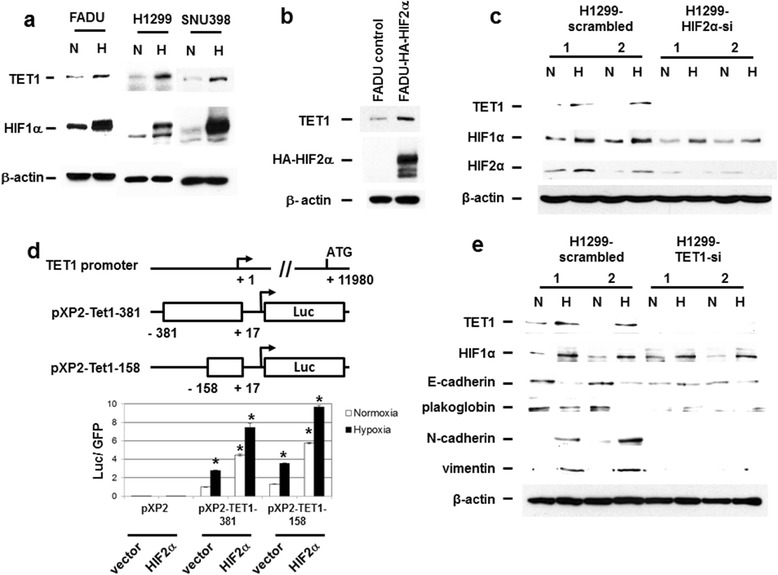
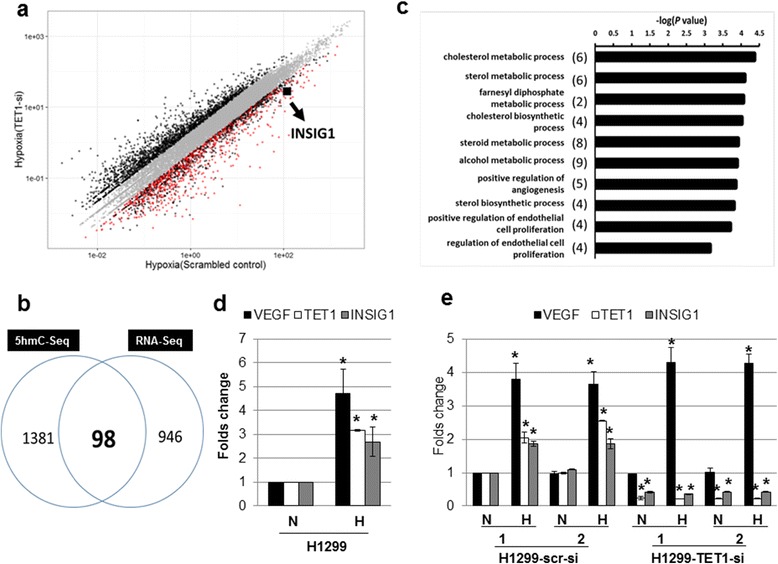
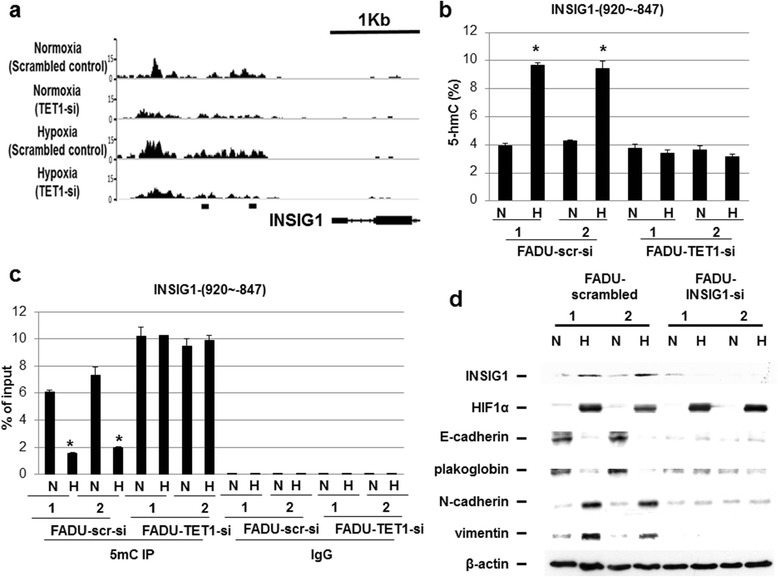
BACKGROUND: Hypoxia induces the epithelial-mesenchymal transition, EMT, to promote cancer metastasis. In addition to transcriptional regulation mediated by hypoxia-inducible factors, HIFs, other epigenetic mechanisms of gene regulation, such as histone modifications and DNA methylation, are utilized under hypoxia. However, whether DNA demethylation mediated by TET1, a DNA dioxygenase converting 5-methylcytosine, 5mC, into 5-hydroxymethylcytosine, 5hmC, plays a role in hypoxia-induced EMT is largely unknown. RESULTS: We show that TET1 regulates hypoxia-responsive gene expression. Hypoxia/HIF-2α regulates the expression of TET1. Knockdown of TET1 mitigates hypoxia-induced EMT. RNA sequencing and 5hmC sequencing identified the set of TET1-regulated genes. Cholesterol metabolic process genes are among the genes that showed high prevalence and statistical significance. We characterize one of the genes, INSIG1 (insulin induced gene 1), to confirm its expression and the 5hmC levels in its promoter. Knockdown of INSIG1 also mitigates hypoxia-induced EMT. Finally, TET1 is shown to be a transcriptional co-activator that interacts with HIF-1α and HIF-2α to enhance their transactivation activity independent of its enzymatic activity. TET1 acts as a co-activator to further enhance the expression of INSIG1 together with HIF-2α. We define the domain in HIF-1α that interacts with TET1 and map the domain in TET1 that confers transactivation to a 200 amino acid region that contains a CXXC domain. The TET1 catalytically inactive mutant is capable of rescuing hypoxia-induced EMT in TET1 knockdown cells. CONCLUSIONS: These findings demonstrate that TET1 serves as a transcription co-activator to regulate hypoxia-responsive gene expression and EMT, in addition to its role in demethylating 5mC.
Overview
The claims and statistics of this paper haven’t been checked yet.
Free: it reads the open-access text and checks the first 5 claims that cite a source we can check. Create a free account to check every claim.
Integrity signals
Registry
Cites
Statistics
Figures
Verification
Claims the paper makes
The claims and statistics of this paper haven’t been checked yet.
Free: it reads the open-access text and checks the first 5 claims that cite a source we can check. Create a free account to check every claim.
Claims other papers make about this one
Each is checked against this paper’s own text: does it say what the citing paper says it does?
The check wasn’t confident either way, so it gives no verdict — never disputed.
In the citing paper
“identifying 22 differentially expressed E3 ligase genes that may undergo epigenetic regulation by Tet1 (supplemental Table 1).”
From RNF217 regulates iron homeostasis through its E3 ubiquitin ligase activity by modulating ferroportin degradation (2021) · cites this paper as [48]
Experimental — accuracy not yet measured
Self-check
Percentages, sums and reported differences re-computed from the paper’s own numbers.
The self-check needs the paper’s full text.
Citations
Cites
Ultrafast and memory-efficient alignment of short DNA sequences to the human genome.
Langmead, B., Trapnell, C., Pop, M., & Salzberg, S. L. (2009) · Genome Biology · doi:10.1186/gb-2009-10-3-r25 · Cited by 21,849 · cited 1×
“7 algorithm (-m 1 -v 3 –best –strata) [36].”
Trapnell, C., Roberts, A., Goff, L., Pertea, G., Kim, D., Kelley, D. R., Pimentel, H., Salzberg, S. L., Rinn, J. L., & Pachter, L. (2012) · Nature Protocols · doi:10.1038/nprot.2012.016 · Cited by 12,116 · cited 1×
“The reads were aligned to the hg19 reference assembly with the TopHat/Cufflinks [34] alignment package using Ensembl annotations.”
MethodEpithelial-Mesenchymal Transitions in Development and Disease
Thiery, J. P., Acloque, H., Huang, R. Y. J., & Nieto, M. A. (2009) · Cell · doi:10.1016/j.cell.2009.11.007 · Cited by 9,931 · cited 3×
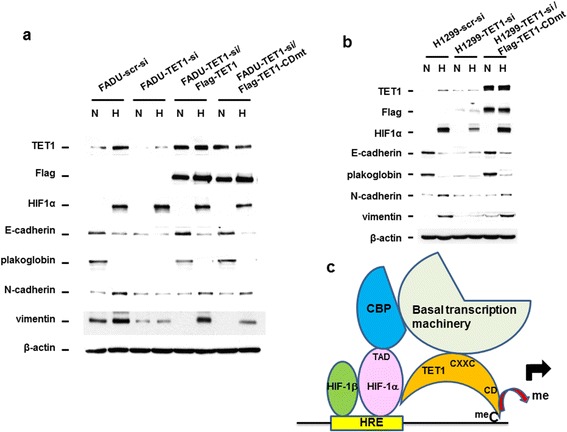
“Exposure of H1299 cells to hypoxia induced EMT as characterized by repression of E-cadherin/plakoglobin and upregulation of vimentin/N-cadherin expression [5,6] (Figure 1e).”
BackgroundSherman, F., Fink, G. R., & Hicks, J. B. (1979) · Cold Spring Harbor Laboratory eBooks · Cited by 7,430
Conversion of 5-Methylcytosine to 5-Hydroxymethylcytosine in Mammalian DNA by MLL Partner TET1
Tahiliani, M., Koh, K. P., Shen, Y., Pastor, W. A., Bandukwala, H., Brudno, Y., Agarwal, S., Iyer, L. M., Liu, D. R., Aravind, L., et al. (2009) · Science · doi:10.1126/science.1170116 · Cited by 5,836
Jacob, H. E. (1988) · Bioelectrochemistry and Bioenergetics · doi:10.1016/0302-4598(88)80052-7 · Cited by 4,792
Hypoxia-inducible factors in physiology and medicine
Semenza, G. L. (2012) · Cell · doi:10.1016/j.cell.2012.01.021 · Cited by 3,645 · cited 2×
“Cells develop various mechanisms to cope with hypoxia and survive [1,2].”
BackgroundResultTet proteins can convert 5-methylcytosine to 5-formylcytosine and 5-carboxylcytosine
Ito, S., Shen, L., Dai, Q., Wu, S. C., Collins, L. B., Swenberg, J. A., He, C., & Zhang, Y. (2011) · Science · doi:10.1126/science.1210597 · Cited by 3,451
Self-citationTet-Mediated Formation of 5-Carboxylcytosine and Its Excision by TDG in Mammalian DNA
He, Y.-F., Li, B.-Z., Li, Z., Liu, P., Wang, Y., Tang, Q., Ding, J., Jia, Y., Chen, Z., Li, L., et al. (2011) · Science · doi:10.1126/science.1210944 · Cited by 2,770
Genomic Libraries and a Host Strain Designed for Highly Efficient Two-Hybrid Selection in Yeast
James, P., Halladay, J., & Craig, E. A. (1996) · Genetics · doi:10.1093/genetics/144.4.1425 · Cited by 2,637
Hypoxia-inducible factors and the response to hypoxic stress
Majmundar, A. J., Wong, W. J., & Simon, M. C. (2010) · Molecular Cell · doi:10.1016/j.molcel.2010.09.022 · Cited by 2,380 · cited 2×
“Cells develop various mechanisms to cope with hypoxia and survive [1,2].”
BackgroundResultTranscriptional regulation of genes encoding glycolytic enzymes by hypoxia-inducible factor 1.
Semenza, G. L., Roth, P. H., Fang, H. M., & Wang, G. L. (1994) · Journal of Biological Chemistry · doi:10.1016/s0021-9258(17)31580-6 · Cited by 1,897 · cited 1×
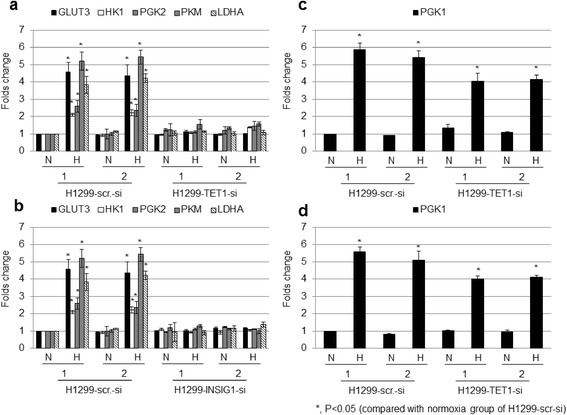
“We tested whether TET1 or INSIG1 regulates glucose metabolism pathway to possibly contribute to hypoxiainduced Warburg effect [24,25].”
MethodHypoxia-inducible factors: mediators of cancer progression and targets for cancer therapy
Semenza, G. L. (2012) · Trends in Pharmacological Sciences · doi:10.1016/j.tips.2012.01.005 · Cited by 1,514 · cited 2×
“Hypoxia induces the epithelial-mesenchymal transition (EMT) to promote cancer metastasis [3-6].”
BackgroundPyruvate Kinase M2 Is a PHD3-Stimulated Coactivator for Hypoxia-Inducible Factor 1
Luo, W., Hu, H., Chang, R., Zhong, J., Knabel, M., O'Meally, R., Cole, R. N., Pandey, A., & Semenza, G. L. (2011) · Cell · doi:10.1016/j.cell.2011.03.054 · Cited by 1,463
Direct regulation of TWIST by HIF-1α promotes metastasis
Yang, M.-H., Wu, M.-Z., Chiou, S.-H., Chen, P.-M., Chang, S.-Y., Liu, C.-J., Teng, S.-C., & Wu, K.-J. (2008) · Nature Cell Biology · doi:10.1038/ncb1691 · Cited by 1,345 · cited 10×
“Hypoxia induces the epithelial-mesenchymal transition (EMT) to promote cancer metastasis [3-6].”
BackgroundMethodSelf-citationSelective chemical labeling reveals the genome-wide distribution of 5-hydroxymethylcytosine
Song, C.-X., Szulwach, K. E., Fu, Y., Dai, Q., Yi, C., Li, X., Li, Y., Chen, C.-H., Zhang, W., Jian, X., et al. (2011) · Nature Biotechnology · doi:10.1038/nbt.1732 · Cited by 1,085 · cited 1×
“TET1 knockdown) [19].”
TET1 and hydroxymethylcytosine in transcription and DNA methylation fidelity
Williams, K., Christensen, J., Pedersen, M. T., Johansen, J. V., Cloos, P. A. C., Rappsilber, J., & Helin, K. (2011) · Nature · doi:10.1038/nature10066 · Cited by 1,021 · cited 1×
“It is possible that TET1 also serves as a co-repressor since Tet1 has dual functions on gene transcription and also interacts with SIN3A [15,33].”
BackgroundCrucial Step in Cholesterol Homeostasis
Yang, T., Espenshade, P. J., Wright, M. E., Yabe, D., Gong, Y., Aebersold, R., Goldstein, J. L., & Brown, M. S. (2002) · Cell · doi:10.1016/s0092-8674(02)00872-3 · Cited by 987
Koh, K. P., Yabuuchi, A., Rao, S., Huang, Y., Cunniff, K., Nardone, J., Laiho, A., Tahiliani, M., Sommer, C. A., Mostoslavsky, G., et al. (2011) · Cell Stem Cell · doi:10.1016/j.stem.2011.01.008 · Cited by 776
Hypoxia and hypoxia-inducible factors: master regulators of metastasis
Lu, X., & Kang, Y. (2010) · Clinical Cancer Research · doi:10.1158/1078-0432.ccr-10-1360 · Cited by 723 · cited 2×
“Hypoxia induces the epithelial-mesenchymal transition (EMT) to promote cancer metastasis [3-6].”
BackgroundMechanisms and functions of Tet protein-mediated 5-methylcytosine oxidation
Wu, H., & Zhang, Y. (2011) · Genes & Development · doi:10.1101/gad.179184.111 · Cited by 672
Dual functions of Tet1 in transcriptional regulation in mouse embryonic stem cells
Wu, H., D’Alessio, A. C., Ito, S., Xia, K., Wang, Z., Cui, K., Zhao, K., Eve Sun, Y., & Zhang, Y. (2011) · Nature · doi:10.1038/nature09934 · Cited by 646 · cited 3×
“TET enzymes have been shown to convert 5mC to 5hmC to regulate gene expression [13-15].”
BackgroundShaw, R. J. (2006) · Current Opinion in Cell Biology · doi:10.1016/j.ceb.2006.10.005 · Cited by 550 · cited 1×
“Due to the ability of INSIG1 to inhibit cholesterol biosynthesis [20,21] that may shun down lipid synthesis to favor glucose utilization similar to the role of AMPK that also inhibits cholesterol synthesis [29], the activation of INSIG1 expression through hypoxia-induced TET1 may also contributes to Warburg effect obs…”
ResultNANOG-dependent function of TET1 and TET2 in establishment of pluripotency
Costa, Y., Ding, J., Theunissen, T. W., Faiola, F., Hore, T. A., Shliaha, P. V., Fidalgo, M., Saunders, A., Lawrence, M., Dietmann, S., et al. (2013) · Nature · doi:10.1038/nature11925 · Cited by 435 · cited 1×
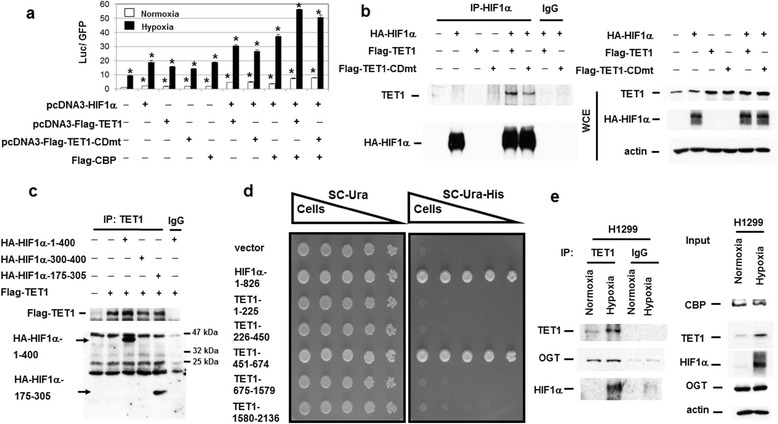
“In contrast to the recruitment of TET1 by NANOG that requires the catalytic activity of TET1 to establish pluripotency [32], synergistic activation by TET1 and HIFs is independent of its enzymatic activity and supports that TET1 is a bona fide transcription co-activator.”
BackgroundTargeting hypoxia, HIF-1, and tumor glucose metabolism to improve radiotherapy efficacy
Meijer, T. W. H., Kaanders, J. H. A. M., Span, P. N., & Bussink, J. (2012) · Clinical Cancer Research · doi:10.1158/1078-0432.ccr-12-0858 · Cited by 433
Genome-scale epigenetic reprogramming during epithelial-to-mesenchymal transition
McDonald, O. G., Wu, H., Timp, W., Doi, A., & Feinberg, A. P. (2011) · Nature Structural & Molecular Biology · doi:10.1038/nsmb.2084 · Cited by 379
Sever, N., Yang, T., Brown, M. S., Goldstein, J. L., & DeBose-Boyd, R. A. (2003) · Molecular Cell · doi:10.1016/s1097-2765(02)00822-5 · Cited by 372 · cited 4×
“INSIG1 sequesters SREBP in ER to inhibit cholesterol synthesis and promotes the degradation of HMG CoA reductase [20,21].”
BackgroundResultInfluentialVella, P., Scelfo, A., Jammula, S., Chiacchiera, F., Williams, K., Cuomo, A., Roberto, A., Christensen, J., Bonaldi, T., Helin, K., et al. (2013) · Molecular Cell · doi:10.1016/j.molcel.2012.12.019 · Cited by 326
TET1 Suppresses Cancer Invasion by Activating the Tissue Inhibitors of Metalloproteinases
Hsu, C.-H., Peng, K.-L., Kang, M.-L., Chen, Y.-R., Yang, Y.-C., Tsai, C.-H., Chu, C.-S., Jeng, Y.-M., Chen, Y.-T., Lin, F.-M., et al. (2012) · Cell Reports · doi:10.1016/j.celrep.2012.08.030 · Cited by 281 · cited 1×
“In addition, the TET1 enzymatically inactive mutant (TET1-CDmt) also had similar activity to increase the ability of HIF-1α to promote Twist1 promoter activity (Figure 5a) [26].”
BackgroundInterplay between HDAC3 and WDR5 Is Essential for Hypoxia-Induced Epithelial-Mesenchymal Transition
Wu, M.-Z., Tsai, Y.-P., Yang, M.-H., Huang, C.-H., Chang, S.-Y., Chang, C.-C., Teng, S.-C., & Wu, K.-J. (2011) · Molecular Cell · doi:10.1016/j.molcel.2011.07.012 · Cited by 273
Xu, Y., Xu, C., Kato, A., Tempel, W., Abreu, J. G., Bian, C., Hu, Y., Hu, D., Zhao, B., Cerovina, T., et al. (2012) · Cell · doi:10.1016/j.cell.2012.11.014 · Cited by 271
Hypoxia induces a novel signature of chromatin modifications and global repression of transcription
Johnson, A. B., Denko, N., & Barton, M. C. (2008) · Mutation Research - Fundamental and Molecular Mechanisms of Mutagenesis · doi:10.1016/j.mrfmmm.2008.01.001 · Cited by 250 · cited 1×
“In addition to transcriptional regulation mediated by hypoxiainducible factors (HIFs), other epigenetic mechanisms of gene regulation, such as histone modifications and DNA methylation, are utilized under hypoxia [7-9].”
BackgroundSensitive and specific single-molecule sequencing of 5-hydroxymethylcytosine
Song, C.-X., Clark, T. A., Lu, X.-Y., Kislyuk, A., Dai, Q., Turner, S. W., He, C., & Korlach, J. (2012) · Nature Methods · doi:10.1038/nmeth.1779 · Cited by 235
Wu, C., Tsai, Y., Wu, M.-Z., Teng, S., & Wu, K. (2012) · Trends in Genetics · doi:10.1016/j.tig.2012.05.005 · Cited by 164 · cited 2×
“In spite of the various epigenetic mechanisms demonstrated to regulate hypoxiaresponsive gene expression [8,9], the role of TET enzymes and DNA demethylation in regulating hypoxia-responsive genes remain largely unknown.”
BackgroundShi, F.-T., Kim, H., Lu, W., He, Q., Liu, D., Goodell, M. A., Wan, M., & Songyang, Z. (2013) · Journal of Biological Chemistry · doi:10.1074/jbc.m113.460386 · Cited by 162
PAVIS: a tool for P eak A nnotation and Vis ualization
Huang, W., Loganantharaj, R., Schroeder, B., Fargo, D., & Li, L. (2013) · Bioinformatics · doi:10.1093/bioinformatics/btt520 · Cited by 156 · cited 2×
“The distribution of 5hmC reads at promoters or in gene body regions were analyzed by PAVIS [37] (Additional file 6a).”
MethodHIF-1α induction suppresses excessive lipid accumulation in alcoholic fatty liver in mice
Nishiyama, Y., Goda, N., Kanai, M., Niwa, D., Osanai, K., Yamamoto, Y., Senoo‐Matsuda, N., Johnson, R. S., Miura, S., Kabe, Y., et al. (2011) · Journal of Hepatology · doi:10.1016/j.jhep.2011.07.024 · Cited by 131
Javaid, S., Zhang, J., Anderssen, E., Black, J. C., Wittner, B. S., Tajima, K., Ting, D. T., Smolen, G. A., Zubrowski, M., Desai, R., et al. (2013) · Cell Reports · doi:10.1016/j.celrep.2013.11.034 · Cited by 118
Tsai, Y., & Wu, K. (2013) · International Journal of Cancer · doi:10.1002/ijc.28190 · Cited by 87 · cited 2×
“In spite of the various epigenetic mechanisms demonstrated to regulate hypoxiaresponsive gene expression [8,9], the role of TET enzymes and DNA demethylation in regulating hypoxia-responsive genes remain largely unknown.”
BackgroundChoi, S., Cho, H., Cho, H., Kim, K. H., Kim, J. B., & Park, H. (2008) · Nucleic Acids Research · doi:10.1093/nar/gkn620 · Cited by 73 · cited 1×
“We further focused on the analysis of INSIG1 gene since HIF-1α inhibits sterol regulatory element binding protein-1c (SREBP-1c) and suppresses excessive lipid accumulation [22,23].”
Background
Research works printed but not linked: 1
- Gietz RD Schiestl RH Transforming yeast with DNA Methods Mol Cell Biol 1995 1995 255 269
Cited by
TET-mediated active DNA demethylation: mechanism, function and beyond
Wu, X., & Zhang, Y. (2017) · Nature Reviews Genetics · doi:10.1038/nrg.2017.33 · Cited by 1,661
Advances in Hypoxia-Inducible Factor Biology
Choudhry, H., & Harris, A. L. (2018) · Cell Metabolism · doi:10.1016/j.cmet.2017.10.005 · Cited by 868
Salinomycin kills cancer stem cells by sequestering iron in lysosomes
Mai, T. T., Hamaï, A., Hienzsch, A., Cañeque, T., Müller, S., Wicinski, J., Cabaud, O., Leroy, C., David, A., Acevedo, V., et al. (2017) · Nature Chemistry · doi:10.1038/nchem.2778 · Cited by 612
Place, T. L., Domann, F. E., & Case, A. J. (2017) · Free Radical Biology and Medicine · doi:10.1016/j.freeradbiomed.2017.10.003 · Cited by 434
CD44 regulates epigenetic plasticity by mediating iron endocytosis
Müller, S., Sindikubwabo, F., Cañeque, T., Lafon, A., Versini, A., Lombard, B., Loew, D., Wu, T.-D., Ginestier, C., Charafe-Jauffret, E., et al. (2020) · Nature Chemistry · doi:10.1038/s41557-020-0513-5 · Cited by 288
Metadata
- Authors
- Tsai, Y.-P., Chen, H.-F., Chen, S.-Y., Cheng, W.-C., Wang, H.-W., Shen, Z.-J., Song, C., Teng, S.-C., He, C., & Wu, K.-J.
- Affiliations
- National Yang Ming University (TW)
- China Medical University (TW)
- National Taiwan University (TW)
- Howard Hughes Medical Institute (US)
- Corresponding author
- Wu, Kou-Juey
- Venue
- Genome biology
- Published
- 2014-12-03
- Volume
- 15
- Issue
- 12
- Pages
- 513-513
- ISSN
- 1465-6906 (ISSN-L)
- 1474-760X
- PMC
- PMC4253621
- OpenAlex
- W2161672422
- Cited by
- 152
- References
- 40
- Citations by year
- 2026: 3 · 2025: 6 · 2024: 8 · 2023: 11 · 2022: 13 · 2021: 15 · 2020: 31 · 2019: 12 · 2018: 12 · 2017: 21 · 2016: 13 · 2015: 6
- FWCI
- 5.46
- Type
- journal article
- Language
- en
- Open access
- gold
- doi.org
- Licence
- cc-by
- creativecommons.org/licenses/by/4.0 (tdm)
- creativecommons.org/licenses/by/4.0 (vor)
- Locations
- Genome biology (publishedVersion, cc-by)
- Europe PMC (PubMed Central) (publishedVersion, cc-by)
- PubMed Central (publishedVersion, cc-by)
- PubMed (publishedVersion)
- Funders
- Howard Hughes Medical Institute
- Wellcome Trust
- National Science Council (NSC102-2321-B-010-001, MOHW103-TD-B-111-02)
- Academia Sinica
- National Health Research Institutes (NSC102-2321-B-010-001, NHRI-EX102)
- National Research Program for Biopharmaceuticals
- Taichung Veterans General Hospital
- Taipei Veterans General Hospital (MOHW103-TD-B-111-02, NSC102-2321-B-010-001)
- Topics
- Life Sciences › Biochemistry, Genetics and Molecular Biology › Molecular Biology › Epigenetics and DNA Methylation
- Life Sciences › Biochemistry, Genetics and Molecular Biology › Cancer Research › Cancer, Hypoxia, and Metabolism
- Health Sciences › Medicine › Oncology › Cancer Cells and Metastasis
- Keywords
- TET1, epithelial-mesenchymal transition, hypoxia, HIF-2α, HIF-1α, transcriptional coactivator, 5-hydroxymethylcytosine, DNA demethylation, INSIG1, cholesterol metabolism, CXXC domain, metastasis, epigenetic regulation
- MeSH terms
- Endothelial PAS Domain-Containing Protein 1, DNA-Binding Proteins, Humans, Mixed Function Oxygenases, Membrane Proteins, Neoplasms, Promoter Regions, Genetic, Proto-Oncogene Proteins, Cell Hypoxia, Gene Expression Regulation, Neoplastic, Catalytic Domain, 5-Methylcytosine, Cell Line, Tumor, Intracellular Signaling Peptides and Proteins, Basic Helix-Loop-Helix Proteins, Hypoxia-Inducible Factor 1, alpha Subunit, HEK293 Cells, Epithelial-Mesenchymal Transition
About these checks
Registry, retraction, Cites and statistics results are computed, not judged, with one exception: a printed reference that no index lists is read once by a model before it counts as a citation error. Claims are extracted by a model and kept only when their quote appears verbatim in the text; each cited source is then checked, with a model’s help, for whether it says what the claim relies on. Those verdicts can be wrong — read the claim’s quote and the cited source before relying on one.
Statistics and arithmetic are recomputed, not judged.
Confidence bands are shown only for fields calibrated on our annotated test set. None is calibrated yet, so no band is shown.
What counts as a claim ›How we measure confidence ›How we check this ›
Are you an author, or do you see a problem with this page? Request a review
Data sources
Bibliographic data: Semantic Scholar, OpenAlex, Crossref.
Contains information from the Semantic Scholar Academic Graph Datasets, made available under the ODC Attribution License (ODC-BY 1.0).
Semantic Scholar’s data is described in: Kinney, R., et al. (2023). The Semantic Scholar Open Data Platform. arXiv:2301.10140.
