

TET1 regulates hypoxia-induced epithelial-mesenchymal transition by acting as a co-activator
Open accessThe DOI matches its Crossref record; 40 of the 40 references it cites were found in a registry or an index.
Abstract
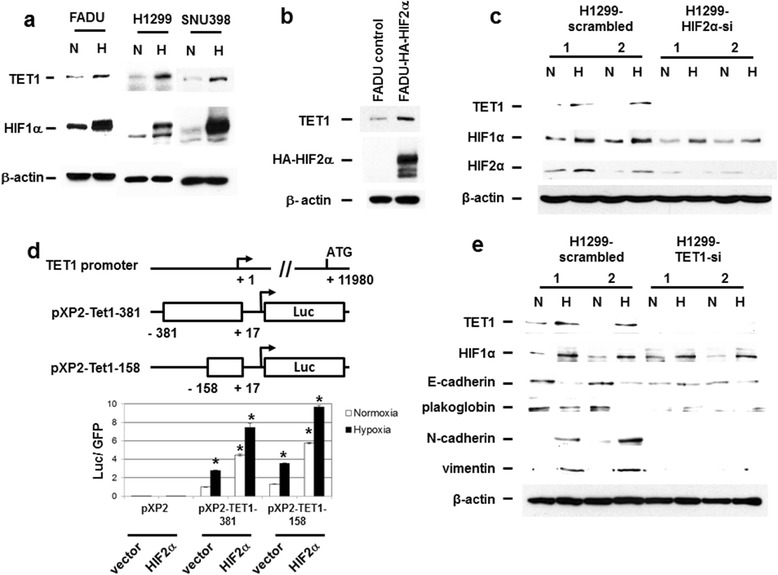
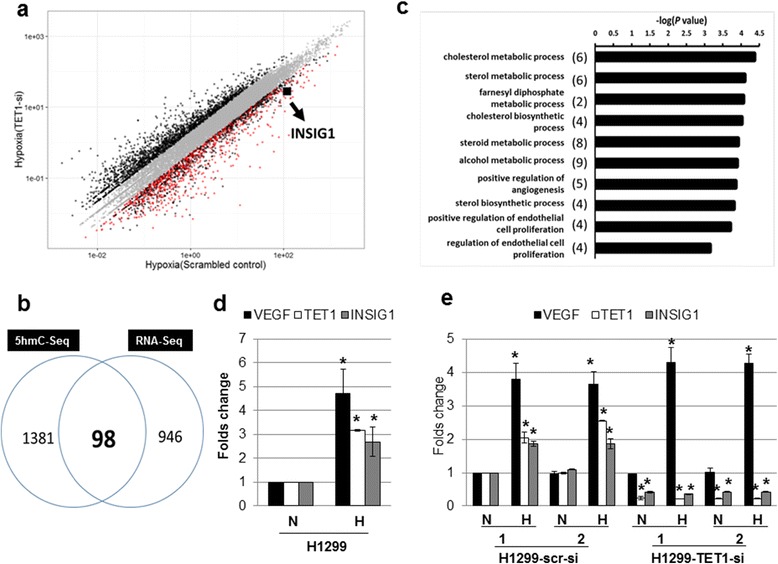
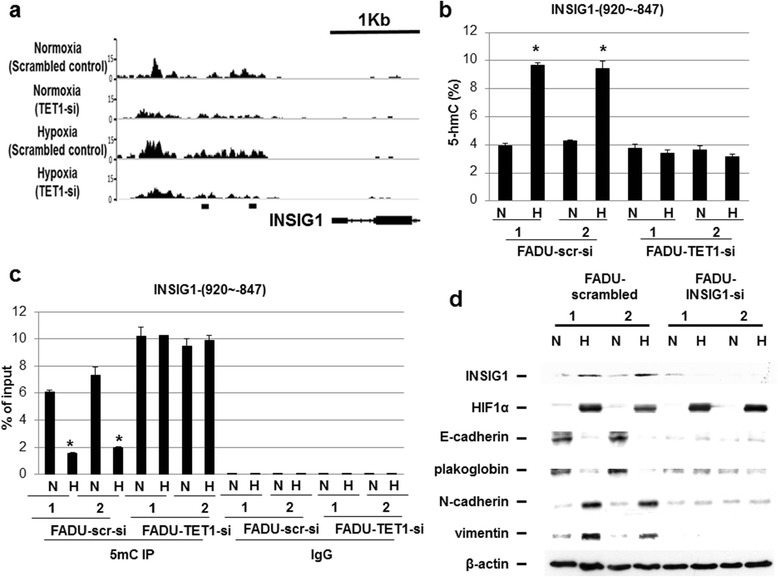
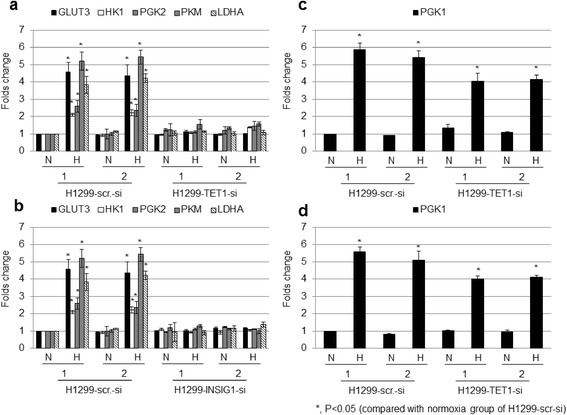
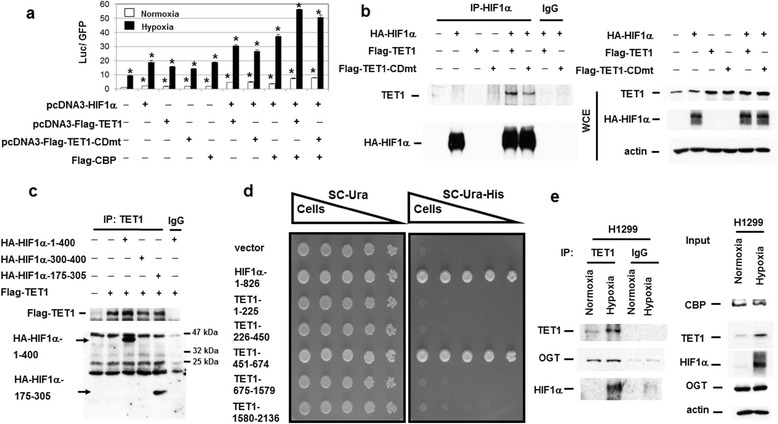
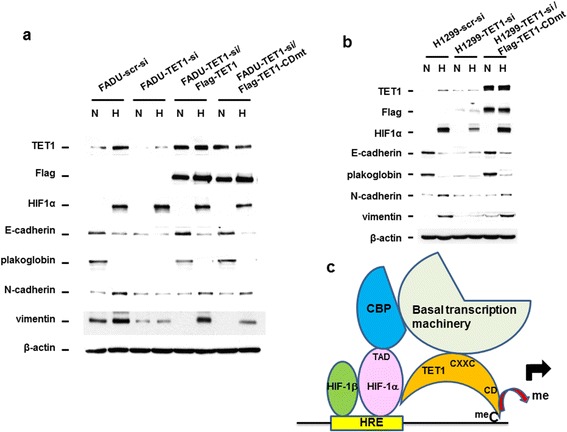
BACKGROUND: Hypoxia induces the epithelial-mesenchymal transition, EMT, to promote cancer metastasis. In addition to transcriptional regulation mediated by hypoxia-inducible factors, HIFs, other epigenetic mechanisms of gene regulation, such as histone modifications and DNA methylation, are utilized under hypoxia. However, whether DNA demethylation mediated by TET1, a DNA dioxygenase converting 5-methylcytosine, 5mC, into 5-hydroxymethylcytosine, 5hmC, plays a role in hypoxia-induced EMT is largely unknown. RESULTS: We show that TET1 regulates hypoxia-responsive gene expression. Hypoxia/HIF-2α regulates the expression of TET1. Knockdown of TET1 mitigates hypoxia-induced EMT. RNA sequencing and 5hmC sequencing identified the set of TET1-regulated genes. Cholesterol metabolic process genes are among the genes that showed high prevalence and statistical significance. We characterize one of the genes, INSIG1 (insulin induced gene 1), to confirm its expression and the 5hmC levels in its promoter. Knockdown of INSIG1 also mitigates hypoxia-induced EMT. Finally, TET1 is shown to be a transcriptional co-activator that interacts with HIF-1α and HIF-2α to enhance their transactivation activity independent of its enzymatic activity. TET1 acts as a co-activator to further enhance the expression of INSIG1 together with HIF-2α. We define the domain in HIF-1α that interacts with TET1 and map the domain in TET1 that confers transactivation to a 200 amino acid region that contains a CXXC domain. The TET1 catalytically inactive mutant is capable of rescuing hypoxia-induced EMT in TET1 knockdown cells. CONCLUSIONS: These findings demonstrate that TET1 serves as a transcription co-activator to regulate hypoxia-responsive gene expression and EMT, in addition to its role in demethylating 5mC.
Overview
The claims and statistics of this paper haven’t been checked yet.
Free: it reads the open-access text and checks the first 5 claims that cite a source we can check. Create a free account to check every claim.
Integrity signals
Registry
Cites
Statistics
Figures
Verification
Claims the paper makes
The claims and statistics of this paper haven’t been checked yet.
Free: it reads the open-access text and checks the first 5 claims that cite a source we can check. Create a free account to check every claim.
Claims other papers make about this one
Each is checked against this paper’s own text: does it say what the citing paper says it does?
The check wasn’t confident either way, so it gives no verdict — never disputed.
In the citing paper
“identifying 22 differentially expressed E3 ligase genes that may undergo epigenetic regulation by Tet1 (supplemental Table 1).”
From RNF217 regulates iron homeostasis through its E3 ubiquitin ligase activity by modulating ferroportin degradation (2021) · cites this paper as [48]
Experimental — accuracy not yet measured
Self-check
Percentages, sums and reported differences re-computed from the paper’s own numbers.
The self-check needs the paper’s full text.
Citations
Cites
Ultrafast and memory-efficient alignment of short DNA sequences to the human genome.
Langmead, B., Trapnell, C., Pop, M., & Salzberg, S. L. (2009) · Genome Biology · doi:10.1186/gb-2009-10-3-r25 · Cited by 21,849 · cited 1×
“7 algorithm (-m 1 -v 3 –best –strata) [36].”
Trapnell, C., Roberts, A., Goff, L., Pertea, G., Kim, D., Kelley, D. R., Pimentel, H., Salzberg, S. L., Rinn, J. L., & Pachter, L. (2012) · Nature Protocols · doi:10.1038/nprot.2012.016 · Cited by 12,116 · cited 1×
“The reads were aligned to the hg19 reference assembly with the TopHat/Cufflinks [34] alignment package using Ensembl annotations.”
MethodEpithelial-Mesenchymal Transitions in Development and Disease
Thiery, J. P., Acloque, H., Huang, R. Y. J., & Nieto, M. A. (2009) · Cell · doi:10.1016/j.cell.2009.11.007 · Cited by 9,931 · cited 3×
“Exposure of H1299 cells to hypoxia induced EMT as characterized by repression of E-cadherin/plakoglobin and upregulation of vimentin/N-cadherin expression [5,6] (Figure 1e).”
BackgroundSherman, F., Fink, G. R., & Hicks, J. B. (1979) · Cold Spring Harbor Laboratory eBooks · Cited by 7,430
Conversion of 5-Methylcytosine to 5-Hydroxymethylcytosine in Mammalian DNA by MLL Partner TET1
Tahiliani, M., Koh, K. P., Shen, Y., Pastor, W. A., Bandukwala, H., Brudno, Y., Agarwal, S., Iyer, L. M., Liu, D. R., Aravind, L., et al. (2009) · Science · doi:10.1126/science.1170116 · Cited by 5,836
Jacob, H. E. (1988) · Bioelectrochemistry and Bioenergetics · doi:10.1016/0302-4598(88)80052-7 · Cited by 4,792
Hypoxia-inducible factors in physiology and medicine
Semenza, G. L. (2012) · Cell · doi:10.1016/j.cell.2012.01.021 · Cited by 3,645 · cited 2×
“Cells develop various mechanisms to cope with hypoxia and survive [1,2].”
BackgroundResultTet proteins can convert 5-methylcytosine to 5-formylcytosine and 5-carboxylcytosine
Ito, S., Shen, L., Dai, Q., Wu, S. C., Collins, L. B., Swenberg, J. A., He, C., & Zhang, Y. (2011) · Science · doi:10.1126/science.1210597 · Cited by 3,451
Self-citationTet-Mediated Formation of 5-Carboxylcytosine and Its Excision by TDG in Mammalian DNA
He, Y.-F., Li, B.-Z., Li, Z., Liu, P., Wang, Y., Tang, Q., Ding, J., Jia, Y., Chen, Z., Li, L., et al. (2011) · Science · doi:10.1126/science.1210944 · Cited by 2,770
Genomic Libraries and a Host Strain Designed for Highly Efficient Two-Hybrid Selection in Yeast
James, P., Halladay, J., & Craig, E. A. (1996) · Genetics · doi:10.1093/genetics/144.4.1425 · Cited by 2,637
Research works printed but not linked: 1
- Gietz RD Schiestl RH Transforming yeast with DNA Methods Mol Cell Biol 1995 1995 255 269
Cited by
TET-mediated active DNA demethylation: mechanism, function and beyond
Wu, X., & Zhang, Y. (2017) · Nature Reviews Genetics · doi:10.1038/nrg.2017.33 · Cited by 1,661
Advances in Hypoxia-Inducible Factor Biology
Choudhry, H., & Harris, A. L. (2018) · Cell Metabolism · doi:10.1016/j.cmet.2017.10.005 · Cited by 868
Salinomycin kills cancer stem cells by sequestering iron in lysosomes
Mai, T. T., Hamaï, A., Hienzsch, A., Cañeque, T., Müller, S., Wicinski, J., Cabaud, O., Leroy, C., David, A., Acevedo, V., et al. (2017) · Nature Chemistry · doi:10.1038/nchem.2778 · Cited by 612
Place, T. L., Domann, F. E., & Case, A. J. (2017) · Free Radical Biology and Medicine · doi:10.1016/j.freeradbiomed.2017.10.003 · Cited by 434
CD44 regulates epigenetic plasticity by mediating iron endocytosis
Müller, S., Sindikubwabo, F., Cañeque, T., Lafon, A., Versini, A., Lombard, B., Loew, D., Wu, T.-D., Ginestier, C., Charafe-Jauffret, E., et al. (2020) · Nature Chemistry · doi:10.1038/s41557-020-0513-5 · Cited by 288
A Systematic Review of miR-29 in Cancer
Kwon, J. J., Factora, T. D., Dey, S., & Kota, J. (2019) · Molecular Therapy Oncolytics · doi:10.1016/j.omto.2018.12.011 · Cited by 263
“Interestingly, TET1 has been shown to act as a potent tumor suppressor in various oncogenic contexts.(65,66) A study in breast cancer cell lines revealed miR-29b overexpression led to increased proliferation, colony formation, and migration through inhibiting TET1 to regulate ZEB2.”
BackgroundThe epigenetic landscape related to reactive oxygen species formation in the cardiovascular system
Kietzmann, T., Petry, A., Shvetsova, A., Gerhold, J. M., & Görlach, A. (2017) · British Journal of Pharmacology · doi:10.1111/bph.13792 · Cited by 253
“Induction of TET1 and TET3 proteins concomitant with either global or local increases in 5hmC marks has also been observed under hypoxia in different tumour cell lines, involving the transcription factors HIF1 or HIF2 (Mariani et al., 2014; Tsai et al., 2014; Wu et al., 2015) (Figure 3).”
BackgroundCommon stemness regulators of embryonic and cancer stem cells
Hadjimichael, C. (2015) · World Journal of Stem Cells · doi:10.4252/wjsc.v7.i9.1150 · Cited by 241
Qiu, G.-Z., Jin, M.-Z., Dai, J.-X., Sun, W., Feng, J.-H., & Jin, W.-L. (2017) · Trends in Pharmacological Sciences · doi:10.1016/j.tips.2017.05.002 · Cited by 245
Epigenetic regulation of epithelial-mesenchymal transition: focusing on hypoxia and TGF-β signaling
Lin, Y.-T., & Wu, K.-J. (2020) · Journal of Biomedical Science · doi:10.1186/s12929-020-00632-3 · Cited by 229
Mechanisms that regulate the activities of TET proteins
Joshi, K., Liu, S., Breslin S.J., P., & Zhang, J. (2022) · Cellular and Molecular Life Sciences · doi:10.1007/s00018-022-04396-x · Cited by 162
Epigenetic regulation of epithelial–mesenchymal transition
Sun, L., & Fang, J. (2016) · Cellular and Molecular Life Sciences · doi:10.1007/s00018-016-2303-1 · Cited by 162
Morandi, A., Taddei, M. L., Chiarugi, P., & Giannoni, E. (2017) · Frontiers in Oncology · doi:10.3389/fonc.2017.00040 · Cited by 159
“Hypoxia-induced expression of TET1 promotes EMT by complexing with HIF-1α and HIF-1β and activating the transcriptional activation of HIF-dependent EMT genes (43, 44).”
BackgroundJiang, L., Wang, J., Wang, K., Wang, H., Wu, Q., Yang, C., Yu, Y., Ni, P., Zhong, Y., Song, Z., et al. (2021) · Blood · doi:10.1182/blood.2020008986 · Cited by 138
“Rnf217 Rnf217(1-384) Rnf217(384-515) Empty Vector Fpn”
Self-citationSomineni, R. P., Zhang, X., Myers, J. M. B., Kovacic, M. B., Ulm, A., Jurcak, N. R., Ryan, P., Hershey, G. K. K., & Ji, H. (2015) · Journal of Allergy and Clinical Immunology · doi:10.1016/j.jaci.2015.10.021 · Cited by 140
“It is well characterized in cellular differentiation, cancer development, and response to hypoxia.(32-41) Recently, by using a mouse model of house dust mite–induced asthma, a study reported an altered methylome, increased levels of 5-hmC, and increased TET1 expression in the lungs,(42) implicating a possible role of…”
BackgroundTranscriptional Response to Hypoxia: The Role of HIF-1-Associated Co-Regulators
Yfantis, A., Mylonis, I., Chachami, G., Nikolaidis, M., Amoutzias, G. D., Paraskeva, E., & Simos, G. (2023) · Cells · doi:10.3390/cells12050798 · Cited by 159
“Both HIF-1 and HIF-2 have been shown to mediate the hypoxic induction of TET1 in various cell lines [49].”
BackgroundLee, J., & Kong, G. (2016) · Cellular and Molecular Life Sciences · doi:10.1007/s00018-016-2313-z · Cited by 137
Lai, X., Li, Q., Wu, F., Lin, J., Chen, J., Zheng, H., & Guo, L. (2020) · Frontiers in Cell and Developmental Biology · doi:10.3389/fcell.2020.00760 · Cited by 143
Function determinants of TET proteins: the arrangements of sequence motifs with specific codes
Liu, D., Li, G., & Zuo, Y. (2019) · Briefings in Bioinformatics · doi:10.1093/bib/bby053 · Cited by 118
Regulation Is in the Air: The Relationship between Hypoxia and Epigenetics in Cancer
Camuzi, D., de Amorim, Í. S. S., Pinto, L. F. R., Trivilin, L. O., Mencalha, A. L., & Soares‐Lima, S. C. (2019) · Cells · doi:10.3390/cells8040300 · Cited by 111
“[44] suggested that hypoxia, through HIF-2α, upregulates TET1 expression, which acts as a co-activator of HIF-1α and HIF-2α, contributing to the regulation of gene expression in response to hypoxia, including the promotion of epithelial-mesenchymal transition.”
BackgroundThe EMT spectrum and therapeutic opportunities
Voon, D. C., Huang, R. Y., Jackson, R. A., & Thiery, J. P. (2017) · Molecular Oncology · doi:10.1002/1878-0261.12082 · Cited by 104
Casalino, L., & Verde, P. (2020) · Genes · doi:10.3390/genes11080922 · Cited by 91
“Interestingly, in addition to its role in demethylating 5-mC, TET1 also works as a coactivator of HIF1, participating to the transcriptional induction of the hypoxia-responsive genes [87].”
BackgroundShi, L., Wu, Z., Miao, J., Du, S., Ai, S., Xu, E., Feng, M., Song, J., & Guan, W. (2019) · Molecular Biology of the Cell · doi:10.1091/mbc.e19-03-0136 · Cited by 79
“HIF-1α, a HIF-1 subunit, promotes tumor metastasis by up-regulating the EMT-TFs (Tsai et al., 2014).”
BackgroundBai, M., Yang, L., Liao, H., Liang, X., Xie, B., Xiong, J., Tao, X., Chen, X., Cheng, Y., Chen, X., et al. (2018) · Oncogene · doi:10.1038/s41388-018-0360-7 · Cited by 82
Zhang, J., Jin, H., Wu, Y., Zheng, Z., Guo, S., Wang, Y., Yang, D., Meng, X., Xu, X., & Zhao, Y. (2019) · Clinical & Translational Oncology · doi:10.1007/s12094-019-02035-9 · Cited by 82
Roles and Regulations of TET Enzymes in Solid Tumors
Bray, J. K., Dawlaty, M. M., Verma, A. K., & Maitra, A. (2021) · Trends in cancer · doi:10.1016/j.trecan.2020.12.011 · Cited by 81
Portraits of TET-mediated DNA hydroxymethylation in cancer
Jeschke, J., Collignon, É., & Fuks, F. (2016) · Current Opinion in Genetics & Development · doi:10.1016/j.gde.2016.01.004 · Cited by 82
CHD4 Promotes Breast Cancer Progression as a Coactivator of Hypoxia-Inducible Factors
Wang, Y., Chen, Y., Bao, L., Zhang, B., Wang, J. E., Kumar, A., Xing, C., Wang, Y., & Luo, W. (2020) · Cancer Research · doi:10.1158/0008-5472.can-20-1049 · Cited by 85
“Previous studies have discovered many transcriptional coactivators for HIF in breast cancer cells (14, 16, 17, 32).”
BackgroundA novel isoform of TET1 that lacks a CXXC domain is overexpressed in cancer
Good, C. R., Madzo, J., Patel, B., Maegawa, S., Engel, N., Jelinek, J., & Issa, J.-P. J. (2017) · Nucleic Acids Research · doi:10.1093/nar/gkx435 · Cited by 73
“Taken together, our data show that TET1ALT is functional but relatively weak when overexpressed alone, likely because it needs to be recruited to DNA by specific cofactors, as previously shown (37,38).”
BackgroundOxygen regulation of TET enzymes
Matulevičiūtė, R., Cunha, P. P., Johnson, R. S., & Foskolou, I. P. (2021) · FEBS Journal · doi:10.1111/febs.15695 · Cited by 71
Hypoxic Regulation of Gene Transcription and Chromatin: Cause and Effect
Kindrick, J. D., & Mole, D. R. (2020) · International Journal of Molecular Sciences · doi:10.3390/ijms21218320 · Cited by 72
TET-Mediated Epigenetic Regulation in Immune Cell Development and Disease
Tsiouplis, N. J., Bailey, D. W., Chiou, L. F., Wissink, F. J., & Tsagaratou, A. (2021) · Frontiers in Cell and Developmental Biology · doi:10.3389/fcell.2020.623948 · Cited by 69
“Furthermore, TET1 was shown to interact with Hypoxia Factor (HIF)−1a and HIF-2a to act as co-activator and promote gene expression in a catalytic-independent manner (Tsai et al., 2014).”
Backgroundp53-Suppressed Oncogene TET1 Prevents Cellular Aging in Lung Cancer
Filipczak, P. T., Leng, S., Tellez, C. S., Kieu, C., Grimes, M. J., Thomas, C. L., Walton-Filipczak, S. R., Picchi, M. A., & Belinsky, S. A. (2019) · Cancer Research · doi:10.1158/0008-5472.can-18-1234 · Cited by 69
“Through a second mechanism independent of its oxygenase activity, TET1 can modulate gene expression by forming protein-to-protein complexes with transcription regulators like HIF-1α that target them to binding 5-mC genomic loci (12).”
BackgroundTET1 is a beige adipocyte-selective epigenetic suppressor of thermogenesis
Villivalam, S. D., You, D., Kim, J., Lim, H., Han, X., Zushin, P.-J. H., Oguri, Y., Amin, P., & Kang, S. (2020) · Nature Communications · doi:10.1038/s41467-020-18054-y · Cited by 69
Hypoxia, Epithelial-Mesenchymal Transition, and TET-Mediated Epigenetic Changes
Kao, S.-H., Wu, K., & Lee, W. (2016) · Journal of Clinical Medicine · doi:10.3390/jcm5020024 · Cited by 68
“further explore the role of TET1 under hypoxia [87].”
InfluentialZhang, J., Wu, Y., Lin, Y.-H., Guo, S., Ning, P.-F., Zheng, Z., Wang, Y., & Zhao, Y. (2018) · World Journal of Gastroenterology · doi:10.3748/wjg.v24.i22.2381 · Cited by 65
Peng, P., Lai, J. C., Hsu, K., & Wu, K. (2020) · Cancer Letters · doi:10.1016/j.canlet.2020.04.014 · Cited by 67
Storebjerg, T. M., Strand, S. H., Høyer, S., Lynnerup, A.-S., Borre, M., Orntoft, T. F., & Sørensen, K. D. (2018) · Clinical Epigenetics · doi:10.1186/s13148-018-0540-x · Cited by 68
Luo, W., & Wang, Y. (2017) · Cellular and Molecular Life Sciences · doi:10.1007/s00018-017-2684-9 · Cited by 66
“It has been reported that TET1 functions as a HIF coactivator and controls HIF-1-dependent epithelial-mesenchymal transition in breast cancer cells [86].”
Tet1 and Tet2 Protect DNA Methylation Canyons against Hypermethylation
Wiehle, L., Raddatz, G., Musch, T., Dawlaty, M. M., Jaenisch, R., Lyko, F., & Breiling, A. (2016) · Molecular and Cellular Biology · doi:10.1128/mcb.00587-15 · Cited by 63
“In addition, especially for Tet1, gene-regulatory functions (repressive and activating) independent of its enzymatic activity have been described (41, 42).”
BackgroundWhom to blame for metastasis, the epithelial–mesenchymal transition or the tumor microenvironment?
Pietilä, M., Ivaska, J., & Mani, S. A. (2016) · Cancer Letters · doi:10.1016/j.canlet.2015.12.033 · Cited by 69
Zhao, Z., Zhang, Z., Li, J., Dong, Q., Xiong, J., Li, Y., Lan, M., Li, G., & Zhu, B. (2020) · eLife · doi:10.7554/elife.61965 · Cited by 60
Wang, J., Yu, Z., Wang, J., Shen, Y., Qiu, J., & Zhuang, Z. (2020) · Cancer Medicine · doi:10.1002/cam4.3544 · Cited by 54
TET1 promotes cisplatin‐resistance via demethylating the vimentin promoter in ovarian cancer
Han, X., Zhou, Y., You, Y., Lu, J., Wang, L., Hou, H., Li, J., Chen, W., Zhao, L., & Li, X. (2017) · Cell Biology International · doi:10.1002/cbin.10734 · Cited by 57
“TET1 acts as a transcriptional co-activator of HIF-1a/ HIF-2a to promote EMT via activating downstream target genes under hypoxia condition (Tsai et al., 2014; Kao et al., 2016).”
BackgroundExercise and the Skeletal Muscle Epigenome
McGee, S. L., & Walder, K. R. (2017) · Cold Spring Harbor Perspectives in Medicine · doi:10.1101/cshperspect.a029876 · Cited by 54
“…in vitro knockdown of DNMT3B was shown to prevent saturated fatty acid-induced methylation of the promoter of PGC1a in a muscle cell line (Barres et al. 2009), and TET1 was induced by hypoxia and associated with the regulation of glycolytic gene expression in various cell lines (Tsai et al. 2014).”
BackgroundEpigenetic silencing of TET2 and TET3 induces an EMT-like process in melanoma
Gong, F., Guo, Y., Niu, Y., Jin, J., Zhang, X., Shi, X., Zhang, L., Li, R., Chen, L., & Ma, R. Z. (2016) · Oncotarget · doi:10.18632/oncotarget.13324 · Cited by 56
“However, TET1 is up regulated by hypoxia and functions as a co-activator in the regulation of EMT and in gene expression as part of the hypoxia-response program [36].”
BackgroundEpigenetics, TET proteins, and hypoxia in epithelial-mesenchymal transition and tumorigenesis
Chen, H., & Wu, K. (2016) · Biomedicine · doi:10.7603/s40681-016-0001-9 · Cited by 56
“explores the role of TET1 under hypoxia and also proves that TET1 plays another role in serving as a transcriptional coactivator and interacts with HIF-1α and HIF-2α to enhance their transactivation activity independent of its enzymatic activity [8].”
BackgroundHsu, K., Lai, J. C., Chang, J., Peng, P., Huang, C.-H., Lee, D., Tsai, Y.-C., Chung, C., Chang, H., Chang, C.-H., et al. (2022) · Genome biology · doi:10.1186/s13059-022-02819-3 · Cited by 61
“MeDIP was performed as previously described [3, 59].”
Qiang, W., Wei, G., Ji, F., Jia, S., Wu, S., Guo, X., He, L., Pan, Z., Miao, X., Mao, Q., et al. (2018) · Neurotherapeutics · doi:10.1007/s13311-018-00689-x · Cited by 52
P4HB, a Novel Hypoxia Target Gene Related to Gastric Cancer Invasion and Metastasis
Zhang, J., Guo, S., Wu, Y., Zheng, Z., Wang, Y., & Zhao, Y. (2019) · BioMed Research International · doi:10.1155/2019/9749751 · Cited by 62
Lian, H., Li, W., & Jin, W. (2016) · Oncotarget · doi:10.18632/oncotarget.11412 · Cited by 52
“com/oncotarget (OGT), the Sin 3A complex and hypoxiainducible factors (HIFs), independent of their enzymatic activity [12-16].”
BackgroundThe many layers of epigenetic dysfunction in B-cell lymphomas
Jiang, Y., Domínguez, P. M., & Melnick, A. M. (2016) · Current Opinion in Hematology · doi:10.1097/moh.0000000000000249 · Cited by 45
Zhu, J., Wang, K., Li, T., Chen, J., Xie, D., Chang, X., Yao, J., Wu, J., Zhou, Q., Jia, Y., et al. (2017) · Scientific Reports · doi:10.1038/s41598-017-07560-7 · Cited by 45
Epigenetic regulation of skeletal muscle metabolism
Howlett, K. F., & McGee, S. L. (2016) · Clinical Science · doi:10.1042/cs20160115 · Cited by 40
Wang, J., Zhang, D., Du, J., Zhou, C., Li, Z., Liu, X., Ouyang, G., & Xiao, W. (2017) · Nucleic Acids Research · doi:10.1093/nar/gkx869 · Cited by 43
“In addition, Tet1 is found to be induced by hypoxia and serves as a coactivator of HIF-1 to regulate hypoxia-induced epithelial-mesenchymal transition, independent of its enzymatic activity (27).”
BackgroundBao, B., Teslow, E. A., Mitrea, C., Boerner, J. L., Dyson, G. E., & Bollig-Fischer, A. B. (2020) · Molecular Cancer Research · doi:10.1158/1541-7786.mcr-20-0359 · Cited by 39
Lv, Q., Xie, B., Yang, B., Ning, C., Shan, W., Gu, C., Luo, X., Chen, X., Zhang, Z.-B., & Feng, Y. (2017) · Journal of Cancer · doi:10.7150/jca.17064 · Cited by 35
Differential expression of ten-eleven translocation genes in endometrial cancers
Ciesielski, P., Jóźwiak, P., Wójcik‐Krowiranda, K., Forma, E., Cwonda, Ł., Szczepaniec, S., Bieńkiewicz, A., Bryś, M., & Krześlak, A. (2017) · Tumor Biology · doi:10.1177/1010428317695017 · Cited by 35
Targeting Cellular Iron Homeostasis with Ironomycin in Diffuse Large B-cell Lymphoma
Devin, J., Cañeque, T., Lin, Y., Mondoulet, L., Veyrune, J., Abouladzé, M., Paco, E. G. D., Gadacha, O. K., Cartron, G., Pasero, P., et al. (2022) · Cancer Research · doi:10.1158/0008-5472.can-21-0218 · Cited by 38
“Iron dependent modifications of histone or DNA methylation have been shown to play a significant role in solid cancers (53, 54).”
BackgroundAssociation of TET1 expression with colorectal cancer progression
Tian, Y., Pan, F., Sun, X., Gan, M., Lin, A., Zhang, D., Zhu, Y., & Lai, M. (2017) · Scandinavian Journal of Gastroenterology · doi:10.1080/00365521.2016.1253767 · Cited by 34
“Through demethylation of hypoxia-induced factors (HIFs), hypoxia-responsive genes are upregulated, thereby promoting tumor progression.[21,22] Considering that tumor progression is always accompanied with hypoxia, TET1 may thus act as an oncogene that contributes to hypoxia-inducible tumorigenesis.”
BackgroundStrand, S. H., Høyer, S., Lynnerup, A.-S., Haldrup, C., Storebjerg, T. M., Borre, M., Orntoft, T. F., & Sørensen, K. D. (2015) · Clinical Epigenetics · doi:10.1186/s13148-015-0146-5 · Cited by 34
“While we did not find significant differential expression of TET1 or common hypoxia response genes (HIF1A, HIF2A, CA9, PGK1, GPI, VEGFA, BNIP, ENO1) [50–52] in ERG+ vs.”
Macedo‐Silva, C., Miranda‐Gonçalves, V., Henrique, R., Jerónimo, C., & Bravo, I. (2019) · Genes · doi:10.3390/genes10110927 · Cited by 36
“TET1 was shown to be a transcriptional co-activator associated with HIF-1α enhancement regulation in several human cancer cell lines from kidney, lung, liver and head and neck [66].”
BackgroundGan, L., Camarena, V., Mustafi, S., & Wang, G. (2019) · Nutrients · doi:10.3390/nu11122997 · Cited by 41
“It was shown that the transcription of HIF-1α is enhanced by KDM4C-mediated histone demethylation, such as of H3K9me3 and H3K9me2, as well as by TET-1-mediated DNA demethylation [26,27], both of which can be promoted by vitamin C, which thus serves as a cofactor for these iron- and 2-oxoglutarate-dependent demethylase…”
BackgroundCarbonic Anhydrase IX-Targeted Near-Infrared Dye for Fluorescence Imaging of Hypoxic Tumors
Mahalingam, S. M., Chu, H., Liu, X., Leamon, C. P., & Low, P. S. (2018) · Bioconjugate Chemistry · doi:10.1021/acs.bioconjchem.8b00509 · Cited by 35
Ali, M. M., Phillips, S. A., & Mahmoud, A. M. (2020) · Cells · doi:10.3390/cells9010134 · Cited by 35
“Hypoxia has been also shown to induce the expression of TET enzymes in hepatoblastoma cells [22], breast cancer cells [39], and other types of cancer [41].”
BackgroundRomance of the three kingdoms in hypoxia: HIFs, epigenetic regulators, and chromatin reprogramming
Chen, Y., Liu, M., Niu, Y.-L., & Wang, Y. (2020) · Cancer Letters · doi:10.1016/j.canlet.2020.09.009 · Cited by 35
The hepatic AMPK-TET1-SIRT1 axis regulates glucose homeostasis
Zhang, C., Zhong, T., Li, Y., Li, X., Yuan, X., Liu, L., Wu, W., Wu, J., Wu, Y., Liang, R., et al. (2021) · eLife · doi:10.7554/elife.70672 · Cited by 35
“Interestingly, studies also suggest that the region within the TET1 catalytic domain (TET1-CD) is responsible for binding to O - linked N - acetylglucosamine (O-GlcNAc) transferase ( Zhong et al., 2017 ; Hrit et al., 2018 ; Bauer et al., 2015 ; Delatte, 2014 ; Zhang et al., 2014 ; Vella et al., 2013 ), hMOF ( Zhong et…”
Zeng, T., Yin, J., Feng, P., Han, F.-R., Tian, Y., Wang, Y., Gu, T., Xu, Y., Liu, Y., Li, G., et al. (2022) · Communications Biology · doi:10.1038/s42003-022-03907-7 · Cited by 31
Kawai, T., Richards, J. S., & Shimada, M. (2021) · Communications Biology · doi:10.1038/s42003-021-02849-w · Cited by 37
TET protein inhibitors: Potential and limitations
Kaplánek, R., Kejík, Z., Hajduch, J., Veselá, K., Kučnirová, K., Skaličková, M., Venhauerova, A., Hosnedlová, B., Hromádka, R., Dytrych, P., et al. (2023) · Biomedicine & Pharmacotherapy · doi:10.1016/j.biopha.2023.115324 · Cited by 39
Bisserier, M., Janoštiak, R., Lezoualc’h, F., & Hadri, L. (2020) · Vascular Biology · doi:10.1530/vb-19-0030 · Cited by 34
“Degradation of TET1 in hypoxia-induced EMT lung cancer cells decreased metastasis rates and cells (68).”
BackgroundYan, Y., Huang, Z., Zhu, Z. Y., Cui, Y., Li, M., Huang, R., Yan, J., & Shen, B. (2020) · Frontiers in Oncology · doi:10.3389/fonc.2020.00667 · Cited by 31
“The induction of TET1 protein coactivates HIF1α and HIF2α to enhance their transcriptional activity independent of its enzymatic activity, which leads to EMT and cancer cell invasion (33).”
Backgrounddo Canto, L. M., Barros‐Filho, M. C., Rainho, C. A., Marinho, D., Kupper, B. E. C., Begnami, M. D. F. D. S., Scapulatempo‐Neto, C., Havelund, B. M., Lindebjerg, J., Marchi, F. A., et al. (2020) · Cancers · doi:10.3390/cancers12113079 · Cited by 33
“INSIG1 has been implicated in epithelial-mesenchymal transition, which is also one of the hallmarks of cancer [52,53].”
BackgroundLongitudinal dynamics of the tumor hypoxia response: From enzyme activity to biological phenotype
Lee, S. C.-E. S., Pyo, A. H. A., & Koritzinsky, M. (2023) · Science Advances · doi:10.1126/sciadv.adj6409 · Cited by 31
“Additionally, further studies have shown that up-regulation of TET1 regulates overexpression of insulin induced gene 1 (INSIG1) to promote hypoxia-induced EMT ( 125 ).”
BackgroundKaur, G., & Batra, S. (2020) · Cell Biology and Toxicology · doi:10.1007/s10565-020-09522-8 · Cited by 30
Hypoxia-mediated changes in bone marrow microenvironment in breast cancer dormancy
Ferrer, A. I., Roser, C. T., El-Far, M. H., Savanur, V. H., Eljarrah, A., Gergues, M., Kra, J., Etchegaray, J., & Rameshwar, P. (2020) · Cancer Letters · doi:10.1016/j.canlet.2020.05.026 · Cited by 32
Karagiota, A., Kanoura, A., Paraskeva, E., Simos, G., & Chachami, G. (2022) · FEBS Journal · doi:10.1111/febs.16694 · Cited by 34
DNA Methylation in the Adaptive Response to Exercise
Bittel, A. J., & Chen, Y.-W. (2024) · Sports Medicine · doi:10.1007/s40279-024-02011-6 · Cited by 33
“The targets of these microRNAs were associated with pathways involved in hypoxia-inducible factor 2 𝛼 (HIF-2 𝛼 ) transcription, which was previously shown to induce TET1 expression by binding to the TET1 proximal promoter [110].”
Salmerón-Bárcenas, E. G., Illades‐Aguiar, B., Moral-Hernández, Ó. D., Ortega, A., & Hernández‐Sotelo, D. (2019) · Cellular Physiology and Biochemistry · doi:10.33594/000000188 · Cited by 30
Hypoxia switches TET1 from being tumor-suppressive to oncogenic
Yang, Q., Dang, H., Liu, J., Wang, X., Wang, J., Lan, X., Ji, M., Xing, M., & Hou, P. (2023) · Oncogene · doi:10.1038/s41388-023-02659-w · Cited by 29
“TET1 has been demonstrated to be a coactivator of HIF2α, depending on its demethylation activity [17].”
BackgroundIron metabolism: backfire of cancer cell stemness and therapeutic modalities
Yu, R., Hang, Y., Tsai, H., Wang, D., & Zhu, H. (2024) · Cancer Cell International · doi:10.1186/s12935-024-03329-x · Cited by 31
“TET1 knockdown mitigated hypoxia-induced EMT by downregulating mesenchymal genes including vimentin and N-cadherin and decreased migration and invasion activity in lung cancer cells [142].”
BackgroundWang, J., Yan, F., Wang, L., Yin, W., Chang, T., Liu, J., & Wu, K. (2019) · Genes Chromosomes and Cancer · doi:10.1002/gcc.22802 · Cited by 27
“RNA sequencing analysis using the RNA samples from FaDu cells under normoxia and hypoxia was performed.(36) We generated two Venn diagrams with the genes F IGURE 1 H3K4Ac is enriched at promoters of transcribed genes and partially removed under hypoxia.”
MethodBowman, W. S., Schmidt, R. J., Sanghar, G. K., Thompson, G. R., Ji, H., Zeki, A. A., & Haczku, A. (2024) · International Archives of Allergy and Immunology · doi:10.1159/000536578 · Cited by 26
“For example, TET1 regulates hypoxia-induced epithelial-mesenchymal transition by acting as a co-activator [179].”
BackgroundHypoxia-induced CTCF promotes EMT in breast cancer
Kakani, P., Dhamdhere, S. G., Pant, D., Joshi, R., Mishra, J., Samaiya, A., & Shukla, S. (2024) · Cell Reports · doi:10.1016/j.celrep.2024.114367 · Cited by 29
Connecting the dots: chromatin and alternative splicing in EMT
Warns, J. A., Davie, J., & Dhasarathy, A. (2015) · Biochemistry and Cell Biology · doi:10.1139/bcb-2015-0053 · Cited by 28
“TET1, which regulates 5-hmC (see section on DNA methylation) was also shown to regulate hypoxia-induced EMT by acting as a co-activator for the hypoxia-inducible factors (HIF-1 and HIF-2 ), to enhance their transactivation activity (Tsai et al. 2014).”
BackgroundPTPRB promotes metastasis of colorectal carcinoma via inducing epithelial-mesenchymal transition
Weng, X., Chen, W., Hu, W., Xu, K., Qi, L., Chen, J., Lu, D., Shao, Y., Zheng, X., Ye, C., et al. (2019) · Cell Death and Disease · doi:10.1038/s41419-019-1554-9 · Cited by 28
Adipose Tissue Hypoxia Correlates with Adipokine Hypomethylation and Vascular Dysfunction
Ali, M. M., Hassan, C., Masrur, M. A., Bianco, F. M., Naquiallah, D., Mirza, I., Frederick, P., Fernandes, E., Cristoforo, G. P., Gangemi, A., et al. (2021) · Biomedicines · doi:10.3390/biomedicines9081034 · Cited by 31
“High levels of hypoxia were shown to induce TET1 expression, 5-hmC accumulation, and global DNA hypomethylation in hepatoblastoma cells [40], breast cancer cells [41], and other malignancies [42,43].”
BackgroundDNA Hydroxymethylation in Smoking-Associated Cancers
Nia, A. B., Caceres, A., & Tommasi, S. (2022) · International Journal of Molecular Sciences · doi:10.3390/ijms23052657 · Cited by 25
Zhao, Z., Lan, M., Li, J., Dong, Q., Li, X., Liu, B., Li, G., Wang, H., Zhang, Z., & Zhu, B. (2019) · Journal of Biological Chemistry · doi:10.1074/jbc.ra118.006255 · Cited by 23
“Transcription factor induced DNA demethylation has been widely reported (37-50).”
BackgroundNishio, K., Belle, R., Katoh, T., Kawamura, A., Sengoku, T., Hanada, K., Ohsawa, N., Shirouzu, M., Yokoyama, S., & Suga, H. (2018) · ChemBioChem · doi:10.1002/cbic.201800047 · Cited by 24
Green, H. L. H., & Brewer, A. C. (2020) · Clinical Epigenetics · doi:10.1186/s13148-020-00848-y · Cited by 22
HIF-1α: A potential therapeutic opportunity in renal fibrosis
Liu, D., Wang, L., Ha, W., Li, K., Shen, R., & Wang, D. (2023) · Chemico-Biological Interactions · doi:10.1016/j.cbi.2023.110808 · Cited by 29
Multiple Functions of Ten-eleven Translocation 1 during Tumorigenesis
Tian, Y., Zhu, Y., Sun, X., & Lai, M. (2016) · Chinese Medical Journal · doi:10.4103/0366-6999.185873 · Cited by 22
“that TET1 could serve as a transcription coactivator in addition to its demethylation function.[80] Hence, TET1 contributes to”
BackgroundMeng, L., Shi, H., Wang, Z., Fan, M., Pang, S., & Lin, R. (2021) · Life Sciences · doi:10.1016/j.lfs.2020.118921 · Cited by 22
Nickel chloride regulates ANGPTL4 via the HIF-1α-mediated TET1 expression in lung cells
Kang, Y., Li, C.-T., Tang, S., Hsin, I., Lai, Y., Hsiao, Y., & Ko, J. (2021) · Toxicology Letters · doi:10.1016/j.toxlet.2021.09.007 · Cited by 19
Al-Awar, A., & Hussain, S. (2024) · Frontiers in Bioscience-Landmark · doi:10.31083/j.fbl2911398 · Cited by 22
Xu, L., Zhou, Y., Chen, L., Bissessur, A. S., Chen, J., Mao, M., Ju, S., Chen, L., Chen, C., Li, Z., et al. (2021) · Frontiers in Cell and Developmental Biology · doi:10.3389/fcell.2021.744990 · Cited by 19
Zhang, D., You, Y., Xu, Y. F., Cheng, Q., Xiao, Z., Chen, T., Shi, C., & Luo, L. (2022) · Journal of Nanobiotechnology · doi:10.1186/s12951-022-01294-z · Cited by 22
Alivand, M. R., Sabouni, F., & Soheili, Z. (2016) · Current Eye Research · doi:10.3109/02713683.2015.1095933 · Cited by 18
“2).(76,77) This hypomethylation may refer to the function of JMDJA which is histone”
BackgroundRea, M., Gripshover, T. C., & Fondufe‐Mittendorf, Y. N. (2017) · Toxicology and Applied Pharmacology · doi:10.1016/j.taap.2017.11.015 · Cited by 18
“These results are in line with other studies showing a positive correlation of hydroxymethylation levels with levels of gene expression (Colquitt et al., 2013; Tsai et al., 2014; Skvortsova et al., 2017).”
Metadata
- Authors
- Tsai, Y.-P., Chen, H.-F., Chen, S.-Y., Cheng, W.-C., Wang, H.-W., Shen, Z.-J., Song, C., Teng, S.-C., He, C., & Wu, K.-J.
- Affiliations
- National Yang Ming University (TW)
- China Medical University (TW)
- National Taiwan University (TW)
- Howard Hughes Medical Institute (US)
- Corresponding author
- Wu, Kou-Juey
- Venue
- Genome biology
- Published
- 2014-12-03
- Volume
- 15
- Issue
- 12
- Pages
- 513-513
- ISSN
- 1465-6906 (ISSN-L)
- 1474-760X
- PMC
- PMC4253621
- OpenAlex
- W2161672422
- Cited by
- 152
- References
- 40
- Citations by year
- 2026: 3 · 2025: 6 · 2024: 8 · 2023: 11 · 2022: 13 · 2021: 15 · 2020: 31 · 2019: 12 · 2018: 12 · 2017: 21 · 2016: 13 · 2015: 6
- FWCI
- 5.46
- Type
- journal article
- Language
- en
- Open access
- gold
- doi.org
- Licence
- cc-by
- creativecommons.org/licenses/by/4.0 (tdm)
- creativecommons.org/licenses/by/4.0 (vor)
- Locations
- Genome biology (publishedVersion, cc-by)
- Europe PMC (PubMed Central) (publishedVersion, cc-by)
- PubMed Central (publishedVersion, cc-by)
- PubMed (publishedVersion)
- Funders
- Howard Hughes Medical Institute
- Wellcome Trust
- National Science Council (NSC102-2321-B-010-001, MOHW103-TD-B-111-02)
- Academia Sinica
- National Health Research Institutes (NSC102-2321-B-010-001, NHRI-EX102)
- National Research Program for Biopharmaceuticals
- Taichung Veterans General Hospital
- Taipei Veterans General Hospital (MOHW103-TD-B-111-02, NSC102-2321-B-010-001)
- Topics
- Life Sciences › Biochemistry, Genetics and Molecular Biology › Molecular Biology › Epigenetics and DNA Methylation
- Life Sciences › Biochemistry, Genetics and Molecular Biology › Cancer Research › Cancer, Hypoxia, and Metabolism
- Health Sciences › Medicine › Oncology › Cancer Cells and Metastasis
- Keywords
- TET1, epithelial-mesenchymal transition, hypoxia, HIF-2α, HIF-1α, transcriptional coactivator, 5-hydroxymethylcytosine, DNA demethylation, INSIG1, cholesterol metabolism, CXXC domain, metastasis, epigenetic regulation
- MeSH terms
- Endothelial PAS Domain-Containing Protein 1, DNA-Binding Proteins, Humans, Mixed Function Oxygenases, Membrane Proteins, Neoplasms, Promoter Regions, Genetic, Proto-Oncogene Proteins, Cell Hypoxia, Gene Expression Regulation, Neoplastic, Catalytic Domain, 5-Methylcytosine, Cell Line, Tumor, Intracellular Signaling Peptides and Proteins, Basic Helix-Loop-Helix Proteins, Hypoxia-Inducible Factor 1, alpha Subunit, HEK293 Cells, Epithelial-Mesenchymal Transition
About these checks
Registry, retraction, Cites and statistics results are computed, not judged, with one exception: a printed reference that no index lists is read once by a model before it counts as a citation error. Claims are extracted by a model and kept only when their quote appears verbatim in the text; each cited source is then checked, with a model’s help, for whether it says what the claim relies on. Those verdicts can be wrong — read the claim’s quote and the cited source before relying on one.
Statistics and arithmetic are recomputed, not judged.
Confidence bands are shown only for fields calibrated on our annotated test set. None is calibrated yet, so no band is shown.
What counts as a claim ›How we measure confidence ›How we check this ›
Are you an author, or do you see a problem with this page? Request a review
Data sources
Bibliographic data: Semantic Scholar, OpenAlex, Crossref.
Contains information from the Semantic Scholar Academic Graph Datasets, made available under the ODC Attribution License (ODC-BY 1.0).
Semantic Scholar’s data is described in: Kinney, R., et al. (2023). The Semantic Scholar Open Data Platform. arXiv:2301.10140.
