

The DOI matches its Crossref record; 69 of the 69 references it cites were found in a registry or an index.
Allele-specific binding of ZFP57 in the epigenetic regulation of imprinted and non-imprinted monoallelic expression
Open accessAbstract
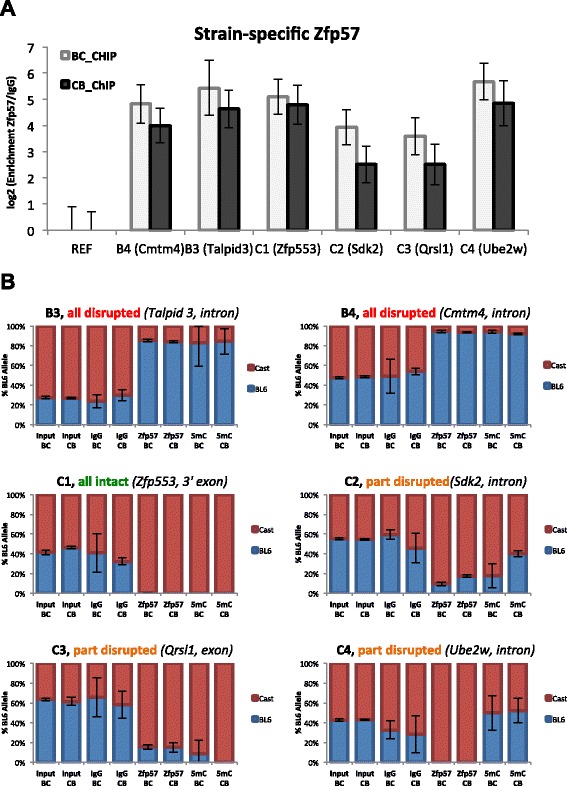
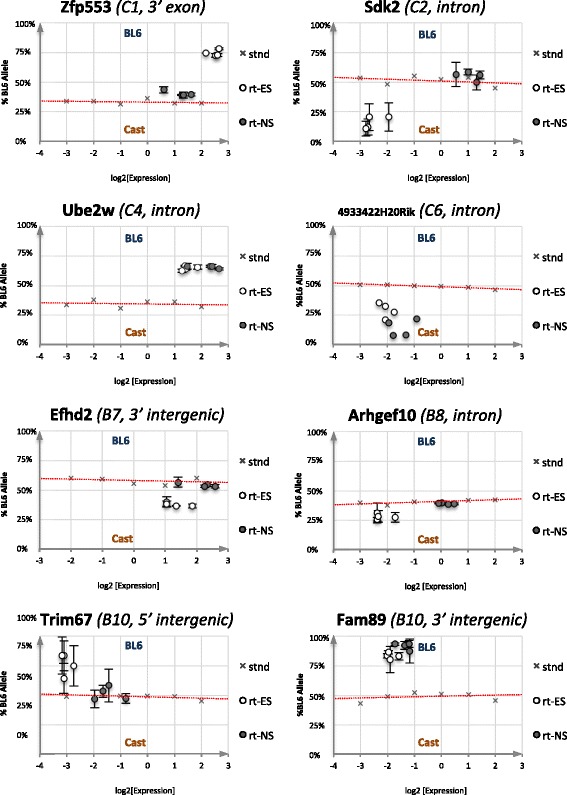
Background: Selective maintenance of genomic epigenetic imprints during pre-implantation development is required for parental origin-specific expression of imprinted genes. The Kruppel-like zinc finger protein ZFP57 acts as a factor necessary for maintaining the DNA methylation memory at multiple imprinting control regions in early mouse embryos and embryonic stem (ES) cells. Maternal-zygotic deletion of ZFP57 in mice presents a highly penetrant phenotype with no animals surviving to birth. Additionally, several cases of human transient neonatal diabetes are associated with somatic mutations in the ZFP57 coding sequence. Results: Here, we comprehensively map sequence-specific ZFP57 binding sites in an allele-specific manner using hybrid ES cell lines from reciprocal crosses between C57BL/6J and Cast/EiJ mice, assigning allele specificity to approximately two-thirds of all binding sites. While half of these are biallelic and include endogenous retrovirus (ERV) targets, the rest show monoallelic binding based either on parental origin or on genetic background of the allele. Parental-origin allele-specific binding is methylation-dependent and maps only to imprinting control differentially methylated regions (DMRs) established in the germline. We identify a novel imprinted gene, Fkbp6, which has a critical function in mouse male germ cell development. Genetic background-specific sequence differences also influence ZFP57 binding, as genetic variation that disrupts the consensus binding motif and its methylation is often associated with monoallelic expression of neighboring genes. Conclusions: The work described here uncovers further roles for ZFP57-mediated regulation of genomic imprinting and identifies a novel mechanism for genetically determined monoallelic gene expression.
Overview
The claims and statistics of this paper haven’t been checked yet.
Run the check — free, no account needed. It reads the open-access text and checks the sources it cites.
Integrity signals
Registry
Cites
Statistics
Figures
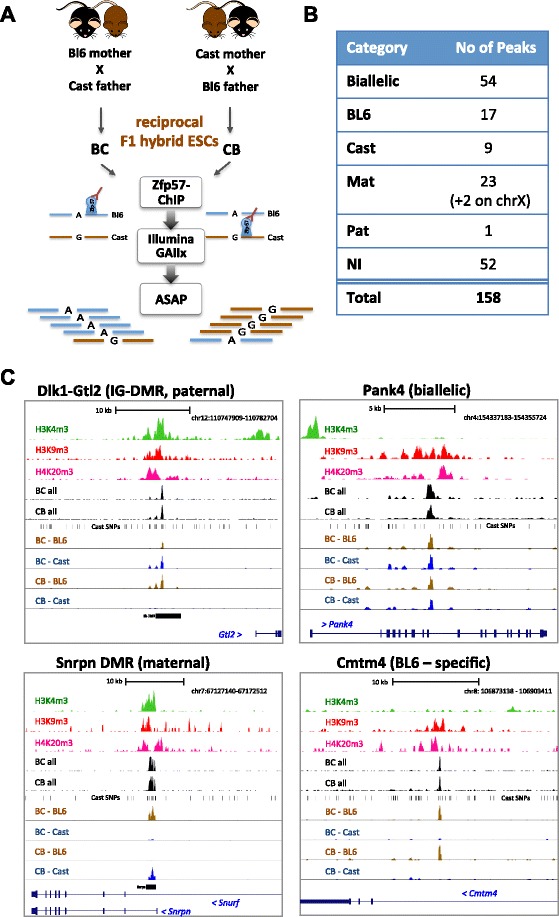
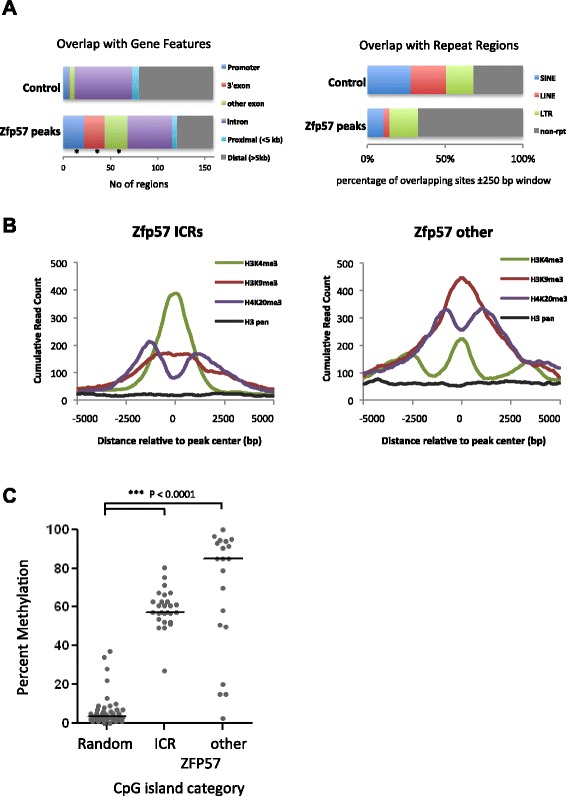
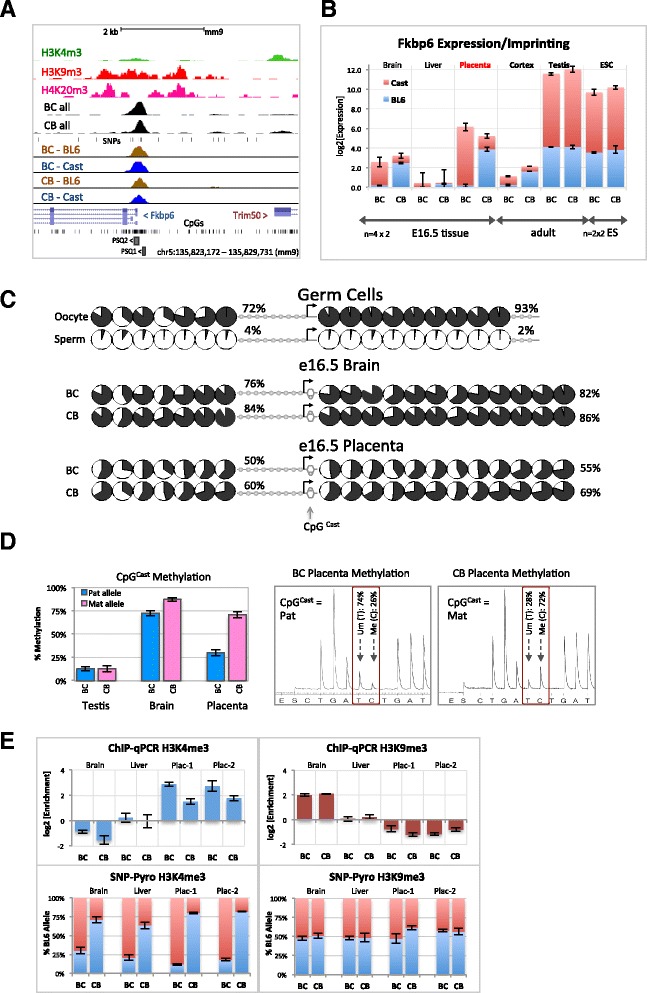
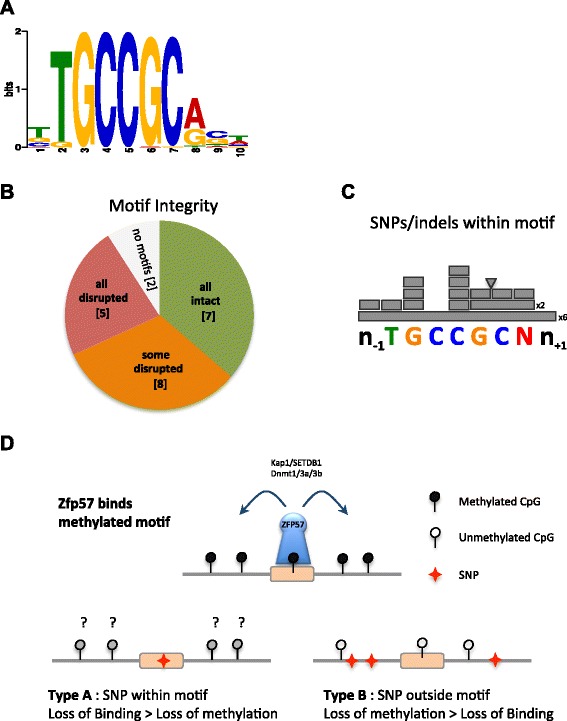
Verification
Claims the paper makes
The claims and statistics of this paper haven’t been checked yet.
Run the check — free, no account needed. It reads the open-access text and checks the sources it cites.
Claims other papers make about this one
Each is checked against this paper’s own text: does it say what the citing paper says it does?
The source backs part of the claim, not all of it — or backs it for a different population, condition or comparison.
In the citing paper
“Alignments to an N-masked reference genome were performed for reciprocal crosses between Black 6 and Cast/EiJ mice using Bowtie 2, followed by SNPsplit sorting. This process was able to identify allele-specific binding of ZFP57 to several different imprinting control regions in a parental origin-specific manner, exemplified for the SNRPN locus in Figure 2.”
From SNPsplit: Allele-specific splitting of alignments between genomes with known SNP genotypes (2016) · cites this paper as [17]
Experimental — accuracy not yet measuredThe cited source says what the claim attributes to it.
In the citing paper
“The binding of ZFB57 is methylation dependent and can be found exclusively on the maternal allele (genetic background of mother in forward cross: Black 6; mother in reverse cross: Cast).”
From SNPsplit: Allele-specific splitting of alignments between genomes with known SNP genotypes (2016) · cites this paper as [17]
In the citing paper
“ZFP57 binding sites were mapped in hybrid ES cells, and ZFP57 was found to interact with the methylated parental-origin allele60.”
From Transcription factors as readers and effectors of DNA methylation (2016) · cites this paper as [60]
Self-check
Percentages, sums and reported differences re-computed from the paper’s own numbers.
The self-check needs the paper’s full text.
Citations
Cites
Primer3 on the WWW for General Users and for Biologist Programmers
Rozen, S., & Skaletsky, H. (2003) · Humana Press eBooks · doi:10.1385/1-59259-192-2:365 · Cited by 15,068
Genome-wide maps of chromatin state in pluripotent and lineage-committed cells
Mikkelsen, T. S., Ku, M., Jaffe, D. B., Issac, B., Lieberman, E., Giannoukos, G., Alvarez, P., Brockman, W., Kim, T.-K., Koche, R. P., et al. (2007) · Nature · doi:10.1038/nature06008 · Cited by 4,129
The ground state of embryonic stem cell self-renewal
Ying, Q.-L., Wray, J., Nichols, J., Batlle-Morera, L., Doble, B., Woodgett, J., Cohen, P., & Smith, A. (2008) · Nature · doi:10.1038/nature06968 · Cited by 3,442
Genome-scale DNA methylation maps of pluripotent and differentiated cells
Meissner, A., Mikkelsen, T. S., Gu, H., Wernig, M., Hanna, J., Sivachenko, A., Zhang, X., Bernstein, B. E., Nusbaum, C., Jaffe, D. B., et al. (2008) · Nature · doi:10.1038/nature07107 · Cited by 2,536
Mouse genomic variation and its effect on phenotypes and gene regulation.
Keane, T. M., Goodstadt, L., Danecek, P., White, M. A., Wong, K., Yalcin, B., Heger, A., Agam, A., Slater, G., Goodson, M., et al. (2011) · Nature · doi:10.1038/nature10413 · Cited by 1,580
Conversion of embryonic stem cells into neuroectodermal precursors in adherent monoculture
Ying, Q.-L., Stavridis, M., Griffiths, D., Li, M., & Smith, A. (2003) · Nature Biotechnology · doi:10.1038/nbt780 · Cited by 1,504
Cassidy, S. B., Schwartz, S., Miller, J. L., & Driscoll, D. J. (2012) · Genetics in Medicine · doi:10.1038/gim.0b013e31822bead0 · Cited by 1,452
A unique regulatory phase of DNA methylation in the early mammalian embryo
Smith, Z. D., Chan, M. M., Mikkelsen, T. S., Gu, H., Gnirke, A., Regev, A., & Meissner, A. (2012) · Nature · doi:10.1038/nature10960 · Cited by 1,005
Niche-Independent Symmetrical Self-Renewal of a Mammalian Tissue Stem Cell
Conti, L., Pollard, S. M., Gorba, T., Reitano, E., Toselli, M., Biella, G. R., Sun, Y., Sanzone, S., Ying, Q., Cattaneo, E. F., et al. (2005) · PLoS Biology · doi:10.1371/journal.pbio.0030283 · Cited by 876
KAP1 controls endogenous retroviruses in embryonic stem cells
Rowe, H. M., Jakobsson, J., Mesnard, D., Rougemont, J., Reynard, S., Aktas, T., Maillard, P. V., Layard-Liesching, H., Verp, S., Marquis, J., et al. (2010) · Nature · doi:10.1038/nature08674 · Cited by 874
Cited by
Sorted by citations
The diverse roles of DNA methylation in mammalian development and disease
Greenberg, M., & Bourc’his, D. (2019) · Nature Reviews Molecular Cell Biology · doi:10.1038/s41580-019-0159-6 · Cited by 2,272
Kosicki, M., Tomberg, K., & Bradley, A. (2018) · Nature Biotechnology · doi:10.1038/nbt.4192 · Cited by 1,883
Transcription factors as readers and effectors of DNA methylation
Zhu, H., Wang, G., & Qian, J. (2016) · Nature Reviews Genetics · doi:10.1038/nrg.2016.83 · Cited by 649
Genomic imprinting disorders: lessons on how genome, epigenome and environment interact
Monk, D., Mackay, D., Eggermann, T., Maher, E. R., & Riccio, A. (2019) · Nature Reviews Genetics · doi:10.1038/s41576-018-0092-0 · Cited by 456
Ecco, G., Imbeault, M., & Trono, D. (2017) · Development · doi:10.1242/dev.132605 · Cited by 413
The Role of KRAB-ZFPs in Transposable Element Repression and Mammalian Evolution
Yang, P., Wang, Y., & Macfarlan, T. S. (2017) · Trends in Genetics · doi:10.1016/j.tig.2017.08.006 · Cited by 227
Boroviak, T., Stirparo, G. G., Dietmann, S., Hernando-Herraez, I., Mohammed, H., Reik, W., Smith, A. G., Sasaki, E., Nichols, J., & Bertone, P. (2018) · Development · doi:10.1242/dev.167833 · Cited by 217
ZNF445 is a primary regulator of genomic imprintingPreprint
Takahashi, N., Coluccio, A., Thorball, C. W., Planet, E., Shi, H., Offner, S., Turelli, P., Imbeault, M., Ferguson‐Smith, A. C., & Trono, D. (2019) · Genes & Development · doi:10.1101/gad.320069.118 · Cited by 221
Self-citationSNPsplit: Allele-specific splitting of alignments between genomes with known SNP genotypes
Krueger, F., & Andrews, S. R. (2016) · F1000Research · doi:10.12688/f1000research.9037.2 · Cited by 163
Self-citationMapping the mouse Allelome reveals tissue-specific regulation of allelic expression
Andergassen, D., Dotter, C. P., Wenzel, D., Sigl, V., Bammer, P. C., Muckenhuber, M., Mayer, D., Kuliński, T. M., Theussl, H., Penninger, J. M., et al. (2017) · eLife · doi:10.7554/elife.25125 · Cited by 163
Shirane, K., Miura, F., Ito, T., & Lorincz, M. C. (2020) · Nature Genetics · doi:10.1038/s41588-020-0689-z · Cited by 161
Cas9-induced large deletions and small indels are controlled in a convergent fashion
Kosicki, M., Allen, F., Steward, F., Tomberg, K., Pan, Y., & Bradley, A. (2022) · Nature Communications · doi:10.1038/s41467-022-30480-8 · Cited by 115
Dynamics of DNA hydroxymethylation and methylation during mouse embryonic and germline development
Yan, R., Cheng, X., Gu, C., Xu, Y., Long, X., Zhai, J., Sun, F., Qian, J., Du, Y., Wang, H., et al. (2022) · Nature Genetics · doi:10.1038/s41588-022-01258-x · Cited by 115
Wolf, G., Greenberg, D., & Macfarlan, T. S. (2015) · Mobile DNA · doi:10.1186/s13100-015-0050-8 · Cited by 111
Recent Advances in Imprinting Disorders
Soellner, L., Begemann, M., Mackay, D., Grønskov, K., Tümer, Z., Maher, E. R., Temple, I. K., Monk, D., Riccio, A., Linglart, A., et al. (2016) · Clinical Genetics · doi:10.1111/cge.12827 · Cited by 106
Oleksiewicz, U., Machnik, M., Raman, A. T., Heyn, H., Mereu, E., Chlebanowska, P., Andrzejewska, A., Sozańska, B., Samant, N. S., Fąk, K., et al. (2017) · Stem Cell Reports · doi:10.1016/j.stemcr.2017.10.031 · Cited by 101
Causes and Consequences of Multi-Locus Imprinting Disturbances in Humans
Sánchez-Delgado, M., Riccio, A., Eggermann, T., Maher, E. R., Lapunzina, P. D., Mackay, D., & Monk, D. (2016) · Trends in Genetics · doi:10.1016/j.tig.2016.05.001 · Cited by 94
MeDReaders: a database for transcription factors that bind to methylated DNA
Wang, G., Luo, X., Wang, J., Wan, J., Xia, S., Zhu, H., Qian, J. X., & Wang, Y. (2017) · Nucleic Acids Research · doi:10.1093/nar/gkx1096 · Cited by 93
Measuring quantitative effects of methylation on transcription factor–DNA binding affinity
Zuo, Z., Roy, B., Chang, Y. K., Granas, D., & Stormo, G. D. (2017) · Science Advances · doi:10.1126/sciadv.aao1799 · Cited by 86
KRAB-ZFP Transcriptional Regulators Acting as Oncogenes and Tumor Suppressors: An Overview
Sobocińska, J., Molenda, S., Machnik, M., & Oleksiewicz, U. (2021) · International Journal of Molecular Sciences · doi:10.3390/ijms22042212 · Cited by 87
Establishment of environmentally sensitive DNA methylation states in the very early human embryo
Kessler, N. J., Waterland, R. A., Prentice, A. M., & Silver, M. J. (2018) · Science Advances · doi:10.1126/sciadv.aat2624 · Cited by 78
Wang, H., Lou, D. W., & Wang, Z. (2019) · Frontiers in Genetics · doi:10.3389/fgene.2018.00695 · Cited by 78
DNA methylation dynamics of genomic imprinting in mouse development†
SanMiguel, J. M., & Bartolomei, M. S. (2018) · Biology of Reproduction · doi:10.1093/biolre/ioy036 · Cited by 75
Wong, E. S. W., Schmitt, B. M., Kazachenka, A., Thybert, D., Redmond, A. M., Connor, F., Rayner, T. F., Feig, C., Ferguson‐Smith, A. C., Marioni, J. C., et al. (2017) · Nature Communications · doi:10.1038/s41467-017-01037-x · Cited by 75
Self-citationEHMT2 directs DNA methylation for efficient gene silencing in mouse embryosPreprint
Auclair, G., Borgel, J., Sanz, L. A., Vallet, J., Guibert, S., Dumas, M., Cavelier, P., Girardot, M., Forné, T., Feil, R., et al. (2015) · Genome Research · doi:10.1101/gr.198291.115 · Cited by 77
Molecular Mechanisms of Facultative Heterochromatin Formation: An X-Chromosome Perspective
Żylicz, J. J., & Heard, É. (2020) · Annual Review of Biochemistry · doi:10.1146/annurev-biochem-062917-012655 · Cited by 74
Riso, V., Cammisa, M., Kukreja, H., Anvar, Z., Verde, G., Sparago, A., Acurzio, B., Lad, S., Lonardo, E., Sankar, A., et al. (2016) · Nucleic Acids Research · doi:10.1093/nar/gkw505 · Cited by 72
Monteagudo, A., Mora, J. R. H., Simón, C., Burton, A., Tenorio, J. A., Lapunzina, P. D., Clark, S. J., Esteller, M., Kelsey, G., López‐Siguero, J. P., et al. (2020) · Nucleic Acids Research · doi:10.1093/nar/gkaa837 · Cited by 69
Regulation of the imprinted Dlk1-Dio3 locus by allele-specific enhancer activityPreprint
Luo, Z., Lin, C., Woodfin, A. R., Bartom, E. T., Gao, X., Smith, E. R., & Shilatifard, A. (2016) · Genes & Development · doi:10.1101/gad.270413.115 · Cited by 67
ZFP57 regulation of transposable elements and gene expression within and beyond imprinted domains
Shi, H., Strogantsev, R., Takahashi, N., Kazachenka, A., Lorincz, M. C., Hemberger, M., & Ferguson‐Smith, A. C. (2019) · Epigenetics & Chromatin · doi:10.1186/s13072-019-0295-4 · Cited by 67
Self-citationHuman imprinting disorders: Principles, practice, problems and progress
Mackay, D., & Temple, I. K. (2017) · European Journal of Medical Genetics · doi:10.1016/j.ejmg.2017.08.014 · Cited by 66
Features and mechanisms of canonical and noncanonical genomic imprintingPreprint
Hanna, C. W., & Kelsey, G. (2021) · Genes & Development · doi:10.1101/gad.348422.121 · Cited by 62
DNA methylation profiles after ART during human lifespan: a systematic review and meta-analysis
Barberet, J., Ducreux, B., Guilleman, M., Simon, E. G., Bruno, C., & Fauque, P. (2022) · Human Reproduction Update · doi:10.1093/humupd/dmac010 · Cited by 58
Mechanisms of DNA methylation and histone modifications
Acharjee, S., Chauhan, S. K., Pal, R., & Tomar, R. S. (2023) · Progress in molecular biology and translational science · doi:10.1016/bs.pmbts.2023.01.001 · Cited by 61
Anvar, Z., Cammisa, M., Riso, V., Baglivo, I., Kukreja, H., Sparago, A., Girardot, M., Lad, S., Feis, I. D., Cerrato, F., et al. (2015) · Nucleic Acids Research · doi:10.1093/nar/gkv1059 · Cited by 61
Methylome profiling of healthy and central precocious puberty girls
Bessa, D. D. S., Maschietto, M. C., Aylwin, C. F., Canton, A. P. M., Brito, V. N., Macedo, D. B., Cunha-Silva, M., Palhares, H. M. D. C., de Resende, E. A. M. R., Borges, M. D. F., et al. (2018) · Clinical Epigenetics · doi:10.1186/s13148-018-0581-1 · Cited by 54
Irwin, R. E., Thursby, S.-J., Ondičová, M., Pentieva, K. D., McNulty, H., Richmond, R. C., Caffrey, A., Lees‐Murdock, D. J., McLaughlin, M., Cassidy, T., et al. (2019) · Clinical Epigenetics · doi:10.1186/s13148-019-0618-0 · Cited by 53
DNA methylation in epigenetic inheritance of metabolic diseases through the male germ line
Illum, L. R. H., Bak, S. T., Lund, S., & Nielsen, A. L. (2018) · Journal of Molecular Endocrinology · doi:10.1530/jme-17-0189 · Cited by 51
Modeling human epigenetic disorders in mice: Beckwith-Wiedemann Syndrome and Silver-Russell Syndrome
Chang, S., & Bartolomei, M. S. (2020) · Disease Models & Mechanisms · doi:10.1242/dmm.044123 · Cited by 51
Butz, S., Schmolka, N., Karemaker, I. D., Villaseñor, R., Schwarz, I., Domcke, S., Uijttewaal, E. C. H., Jude, J., Lienert, F., Krebs, A. R., et al. (2022) · Nature Genetics · doi:10.1038/s41588-022-01210-z · Cited by 44
Yang, H., Bai, D., Li, Y., Yu, Z., Wang, C., Sheng, Y., Liu, W., Gao, S., & Zhang, Y. (2022) · Nature Cell Biology · doi:10.1038/s41556-022-00900-4 · Cited by 47
The Role of N-α-acetyltransferase 10 Protein in DNA Methylation and Genomic Imprinting
Lee, C.-C., Peng, S.-H., Shen, L., Lee, C.-F., Du, T.-H., Kang, M.-L., Xu, G.-L., Upadhyay, A. K., Cheng, X., Yan, Y.-T., et al. (2017) · Molecular Cell · doi:10.1016/j.molcel.2017.08.025 · Cited by 47
A permissive chromatin state regulated by ZFP281-AFF3 in controlling the imprinted Meg3 polycistron
Wang, Y., Shen, Y., Dai, Q., Yang, Q., Zhang, Y., Wang, X., Xie, W., Luo, Z., & Lin, C. (2016) · Nucleic Acids Research · doi:10.1093/nar/gkw1051 · Cited by 46
How Does Reprogramming to Pluripotency Affect Genomic Imprinting?
Perrera, V., & Martello, G. (2019) · Frontiers in Cell and Developmental Biology · doi:10.3389/fcell.2019.00076 · Cited by 48
ZFP57and the Targeted Maintenance of Postfertilization Genomic ImprintsPreprint
Takahashi, N., Gray, D., Strogantsev, R., Noon, A. T., Delahaye, C., Skarnes, W. C., Tate, P. H., & Ferguson‐Smith, A. C. (2015) · Cold Spring Harbor Symposia on Quantitative Biology · doi:10.1101/sqb.2015.80.027466 · Cited by 46
Self-citationColuccio, A., Ecco, G., Duc, J., Offner, S., Turelli, P., & Trono, D. (2018) · Epigenetics & Chromatin · doi:10.1186/s13072-018-0177-1 · Cited by 42
Iouranova, A., Grün, D., Rossy, T., Duc, J., Coudray, A., Imbeault, M., de Tribolet-Hardy, J., Turelli, P., Persat, A., & Trono, D. (2022) · Mobile DNA · doi:10.1186/s13100-021-00260-0 · Cited by 42
Ding, D., Bergmaier, P., Sachs, P., Klangwart, M., Rückert, T., Bartels, N., Demmers, J., Dekker, M. R., Poot, R. A., & Mermoud, J. E. (2017) · Journal of Biological Chemistry · doi:10.1074/jbc.ra117.000959 · Cited by 40
Evolving imprinting control regions: KRAB zinc fingers hold the keyPreprint
Juan, A. M., & Bartolomei, M. S. (2019) · Genes & Development · doi:10.1101/gad.322990.118 · Cited by 38
Host Gene Regulation by Transposable Elements: The New, the Old and the Ugly
Enriquez-Gasca, R., Gould, P. A., & Rowe, H. M. (2020) · Viruses · doi:10.3390/v12101089 · Cited by 35
Self-citationVariably methylated retrotransposons are refractory to a range of environmental perturbations
Bertozzi, T. M., Becker, J. L., Blake, G. E. T., Bansal, A., Nguyen, D. K., Fernandez‐Twinn, D. S., Ozanne, S. E., Bartolomei, M. S., Simmons, R. A., Watson, E. D., et al. (2021) · Nature Genetics · doi:10.1038/s41588-021-00898-9 · Cited by 38
Self-citationStability and Lability of Parental Methylation Imprints in Development and Disease
Farhadova, S., Gómez-Velázquez, M., & Feil, R. (2019) · Genes · doi:10.3390/genes10120999 · Cited by 38
New Developments in Silver–Russell Syndrome and Implications for Clinical Practice
Ishida, M. (2016) · Epigenomics · doi:10.2217/epi-2015-0010 · Cited by 34
Świtońska-Kurkowska, K., Szlachcic, W. J., Handschuh, L., Wojciechowski, P., Marczak, Ł., Stelmaszczuk, M., Figlerowicz, M., & Figiel, M. (2019) · Frontiers in Cellular Neuroscience · doi:10.3389/fncel.2018.00528 · Cited by 33
Mammalian DNA methylome dynamics: mechanisms, functions and new frontiers
Wei, A., & Wu, H. (2022) · Development · doi:10.1242/dev.182683 · Cited by 34
Aronson, B. E., Scourzic, L., Shah, V., Swanzey, E., Kloetgen, A., Polyzos, A., Sinha, A., Azziz, A., Caspi, I., Li, J., et al. (2021) · Developmental Cell · doi:10.1016/j.devcel.2021.10.004 · Cited by 34
Modeling methyl-sensitive transcription factor motifs with an expanded epigenetic alphabet
Viner, C., Ishak, C. A., Johnson, J., Walker, N. J., Shi, H., Sjöberg-Herrera, M. K., Shen, S. Y., Lardo, S. M., Adams, D. J., Ferguson-Smith, A. C., et al. (2024) · Genome Biology · doi:10.1186/s13059-023-03070-0 · Cited by 30
Self-citationGenotype-dependent epigenetic regulation of DLGAP2 in alcohol use and dependence
Meng, W., Sjöholm, L. K., Kononenko, O., Tay, N., Zhang, D., Sarkisyan, D., Geske, J. R., Ing, A., Qiu, W., Watanabe, H., et al. (2019) · Molecular Psychiatry · doi:10.1038/s41380-019-0588-9 · Cited by 30
Albert, J. R., Yeung, W. K. A., Toriyama, K., Kobayashi, H., Hirasawa, R., Brind’Amour, J., Bogutz, A., Sasaki, H., & Lorincz, M. C. (2020) · Nature Communications · doi:10.1038/s41467-020-19279-7 · Cited by 28
ZFP57 dictates allelic expression switch of target imprinted genes
Jiang, W., Shi, J., Zhao, J., Wang, Q., Cong, D., Chen, F., Zhang, Y., Liu, Y., Zhao, J., Chen, Q., et al. (2021) · Proceedings of the National Academy of Sciences · doi:10.1073/pnas.2005377118 · Cited by 28
Do social insects support Haig's kin theory for the evolution of genomic imprinting?
Pegoraro, M., Marshall, H., Lonsdale, Z. N., & Mallon, E. B. (2017) · Epigenetics · doi:10.1080/15592294.2017.1348445 · Cited by 26
Saito, T., Hara, S., Kato, T., Tamano, M., Muramatsu, A., Asahara, H., & Takada, S. (2018) · Human Molecular Genetics · doi:10.1093/hmg/ddy235 · Cited by 28
Functional maps of a genomic locus reveal confinement of an enhancer by its target gene
Eder, M., Moene, C. J. I., Dauban, L., Magnitov, M. D., Drayton, J. A., de Haas, M., Leemans, C., Verkuilen, M., de Wit, E., Hansen, A. S., et al. (2025) · Science · doi:10.1126/science.ads6552 · Cited by 29
Dysregulation of ncRNAs located at the DLK1-DIO3 imprinted domain: involvement in urological cancers
Li, J., Shen, H., Xie, H., Ying, Y., Jin, K., Yan, H., Wang, S., Xu, M., Wang, X., Xu, X., et al. (2019) · Cancer Management and Research · doi:10.2147/cmar.s190764 · Cited by 27
On the relations of phase separation and Hi-C maps to epigenetics
Singh, P. B., & Newman, A. G. (2020) · Royal Society Open Science · doi:10.1098/rsos.191976 · Cited by 27
Maintaining memory of silencing at imprinted differentially methylated regions
Voon, H. P. J., & Gibbons, R. J. (2016) · Cellular and Molecular Life Sciences · doi:10.1007/s00018-016-2157-6 · Cited by 27
Imprinting fidelity in mouse iPSCs depends on sex of donor cell and medium formulation
Arez, M., Eckersley-Maslin, M. A., Klobučar, T., Lopes, J. V. G., Krueger, F., Mupo, A., Raposo, A. C., Oxley, D., Mancino, S., Gendrel, A.-V., et al. (2022) · Nature Communications · doi:10.1038/s41467-022-33013-5 · Cited by 25
Self-citationCys2His2 Zinc Finger Methyl-CpG Binding Proteins: Getting a Handle on Methylated DNA
Hodges, A. J., Hudson, N. O., & Buck‐Koehntop, B. A. (2019) · Journal of Molecular Biology · doi:10.1016/j.jmb.2019.09.012 · Cited by 25
Kaneko‐Ishino, T., & Ishino, F. (2022) · Frontiers in Genetics · doi:10.3389/fgene.2022.832983 · Cited by 24
Aryl hydrocarbon receptor as a DNA methylation reader in the stress response pathway
Habano, W., Miura, T., Terashima, J., & Ozawa, S. (2022) · Toxicology · doi:10.1016/j.tox.2022.153154 · Cited by 24
Conservation and divergence of canonical and non-canonical imprinting in murids
Albert, J. R., Kobayashi, T., Inoue, A., Monteagudo, A., Kumamoto, S., Takashima, T., Miura, A., Oikawa, M., Miura, F., Takada, S., et al. (2023) · Genome biology · doi:10.1186/s13059-023-02869-1 · Cited by 28
Genetic factors contributing to autism spectrum disorder in Williams-Beuren syndrome
Codina‐Solà, M., Costa‐Roger, M., Pérez-García, D., Flores, R., Palacios-Verdú, M. G., Cuscó, I., & Jurado, L. A. P. (2019) · Journal of Medical Genetics · doi:10.1136/jmedgenet-2019-106080 · Cited by 22
The origins of genomic imprinting in mammals
Edwards, C. A., Takahashi, N., Corish, J. A., & Ferguson‐Smith, A. C. (2019) · Reproduction Fertility and Development · doi:10.1071/rd18176 · Cited by 24
Self-citationEdwards, C., Watkinson, W. M. D., Telerman, S., Hülsmann, L. C., Hamilton, R., & Ferguson-Smith, A. (2023) · eLife · doi:10.7554/elife.83364 · Cited by 12
Self-citationGenetic diagnosis of subfertility: the impact of meiosis and maternal effects
Gheldof, A., Mackay, D., Cheong, Y. C., & Verpoest, W. (2019) · Journal of Medical Genetics · doi:10.1136/jmedgenet-2018-105513 · Cited by 19
Genomic Imprinting in the New Omics Era: A Model for Systems-Level Approaches
Hubert, J.-N., & Demars, J. (2022) · Frontiers in Genetics · doi:10.3389/fgene.2022.838534 · Cited by 19
Fanourgakis, G., Gaspa-Toneu, L., Komarov, P. A., Papasaikas, P., Ozonov, E. A., Smallwood, S. A., & Peters, A. H. F. M. (2025) · Nature Communications · doi:10.1038/s41467-024-55441-1 · Cited by 22
Differential regulation of genomic imprinting by TET proteins in embryonic stem cells
Liu, L., Mao, S.-Q., Ray, C., Zhang, Y., Bell, F. T., Ng, S., Xu, G., & Li, X. (2015) · Stem Cell Research · doi:10.1016/j.scr.2015.08.010 · Cited by 18
A Lexicon of DNA Modifications: Their Roles in Embryo Development and the Germline
Zhu, Q., Stöger, R. J., & Alberio, R. (2018) · Frontiers in Cell and Developmental Biology · doi:10.3389/fcell.2018.00024 · Cited by 21
Modeling methyl-sensitive transcription factor motifs with an expanded epigenetic alphabet
Viner, C., Ishak, C. A., Johnson, J., Walker, N. J., Shi, H., Sjöberg-Herrera, M. K., Shen, S. Y., Lardo, S. M., Adams, D. J., Ferguson-Smith, A. C., et al. (2016) · doi:10.1101/043794 · Cited by 18
Self-citationDNA methyltransferases are complementary in maintaining DNA methylation in embryonic stem cells
Liu, Y., Xu, Z., Shi, J., Zhang, Y., Yang, S., Chen, Q., Song, C., Geng, S., Li, Q., Li, J., et al. (2022) · iScience · doi:10.1016/j.isci.2022.105003 · Cited by 17
Anwar, S. L., Krech, T., Hasemeier, B., Schipper, E., Schweitzer, N., Vogel, A., Kreipe, H. H., & Lehmann, U. (2015) · Clinical Epigenetics · doi:10.1186/s13148-015-0145-6 · Cited by 16
Is imprinting the result of “friendly fire” by the host defense system?
Ondičová, M., Oakey, R. J., & Walsh, C. P. (2020) · PLoS Genetics · doi:10.1371/journal.pgen.1008599 · Cited by 18
Chan, D., Ly, L., Rebolledo, E. M. D., Martel, J., Landry, M., Scott‐Boyer, M., Droit, A., & Trasler, J. M. (2023) · Andrology · doi:10.1111/andr.13399 · Cited by 15
Discovering candidate imprinted genes and imprinting control regions in the human genome
Bina, M. (2020) · BMC Genomics · doi:10.1186/s12864-020-6688-8 · Cited by 14
Knaupp, A. S., Mohenska, M., Larcombe, M. R., Ford, E., Lim, S. M., Wong, K. C. Y., Chen, J., Firas, J., Huang, C., Liu, X., et al. (2020) · Stem Cell Reports · doi:10.1016/j.stemcr.2020.11.005 · Cited by 14
Acurzio, B., Verma, A., Polito, A., Giaccari, C., Cecere, F., Fioriniello, S., Ragione, F. D., Fico, A., Cerrato, F., Angelini, C., et al. (2021) · Scientific Reports · doi:10.1038/s41598-021-93297-3 · Cited by 15
Maternal regulation of chromosomal imprinting in animals
Singh, P. B., Shloma, V. V., & Belyakin, S. N. (2019) · Chromosoma · doi:10.1007/s00412-018-00690-5 · Cited by 14
Wesseler, K., Kraft, F., & Eggermann, T. (2019) · International Journal of Molecular Sciences · doi:10.3390/ijms20174219 · Cited by 14
Biology and Physics of Heterochromatin-Like Domains/Complexes
Singh, P. B., Belyakin, S. N., & Laktionov, P. P. (2020) · Cells · doi:10.3390/cells9081881 · Cited by 15
Li, B., Luo, H., Weng, Q., Wang, S., Pan, Z., Xie, Z., Wu, W., Liu, H., & Li, Q. (2016) · Reproduction in Domestic Animals · doi:10.1111/rda.12794 · Cited by 13
Bina, M. (2017) · Genomics · doi:10.1016/j.ygeno.2017.04.008 · Cited by 13
Strain-Specific Epigenetic Regulation of Endogenous Retroviruses: The Role of Trans-Acting Modifiers
Elmer, J. L., & Ferguson‐Smith, A. C. (2020) · Viruses · doi:10.3390/v12080810 · Cited by 13
Self-citationBalasooriya, G. I., & Spector, D. L. (2022) · Nature Communications · doi:10.1038/s41467-022-33722-x · Cited by 10
Domingo-Muelas, A., Morante‐Redolat, J. M., Moncho-Amor, V., Jordán‐Pla, A., Pérez‐Villalba, A., Carrillo-Barberà, P., Belenguer, G., Porlan, E., Kirstein, M., Bachs, O., et al. (2023) · Cellular and Molecular Life Sciences · doi:10.1007/s00018-022-04676-6 · Cited by 10
Hara, S., Terao, M., Tsuji‐Hosokawa, A., Ogawa, Y., & Takada, S. (2021) · Human Molecular Genetics · doi:10.1093/hmg/ddab071 · Cited by 10
A satellite DNA array barcodes chromosome 7 and regulates totipotency via ZFP819
Fernandes, L., Enriquez-Gasca, R., Gould, P. A., Holt, J. H., Conde, L., Ecco, G., Herrero, J., Gifford, R. J., Trono, D., Kassiotis, G., et al. (2022) · Science Advances · doi:10.1126/sciadv.abp8085 · Cited by 10
Self-citationElder, E., Lemieux, A., Legault, L., Caron, M., Bertrand-Lehouillier, V., Dupas, T., Raynal, N. J. ‐., Bourque, G., Sinnett, D., Gévry, N. Y., et al. (2025) · Nucleic Acids Research · doi:10.1093/nar/gkaf130 · Cited by 10
Zhang, H., Li, Y., Ma, Y., Lai, C.-P., Qian, Y., Shi, G., & Li, J. (2021) · Protein & Cell · doi:10.1007/s13238-021-00890-3 · Cited by 9
The dynamic chromatin landscape and mechanisms of DNA methylation during mouse germ cell development
Shirane, K. (2022) · Genes & Genetic Systems · doi:10.1266/ggs.21-00069 · Cited by 9
Metadata
- Authors
- Strogantsev, R., Krueger, F., Yamazawa, K., Shi, H., Gould, P., Goldman-Roberts, M., McEwen, K., Sun, B., Pedersen, R., & Ferguson-Smith, A. C.
- Affiliations
- Babraham Institute (GB)
- University of Cambridge (GB)
- Venue
- Genome Biology
- Published
- 2015-05-30
- Volume
- 16
- Issue
- 1
- Pages
- 112-112
- ISSN
- 1465-6906 (ISSN-L)
- PMC
- PMC4491874
- OpenAlex
- W2098398752
- Cited by
- 152
- References
- 69
- Citations by year
- 2026: 11 · 2025: 8 · 2024: 4 · 2023: 11 · 2022: 24 · 2021: 8 · 2020: 15 · 2019: 22 · 2018: 12 · 2017: 15 · 2016: 15 · 2015: 7
- FWCI
- 11.05
- Type
- journal article
- Language
- en
- Open access
- gold
- doi.org
- Locations
- Genome biology (publishedVersion, cc-by)
- Europe PMC (PubMed Central) (publishedVersion, cc-by)
- PubMed Central (publishedVersion, cc-by)
- PubMed (publishedVersion)
- Apollo (University of Cambridge) (submittedVersion, cc-by)
- Funders
- Wellcome Trust (095606, 095606/Z/11/Z)
- European Commission (317146, 290123)
- Biotechnology and Biological Sciences Research Council (BB/G020930/1)
- Japan Society for the Promotion of Science (15K15478, 25713040)
- Topics
- Life Sciences › Biochemistry, Genetics and Molecular Biology › Genetics › Genetic Syndromes and Imprinting
- Life Sciences › Biochemistry, Genetics and Molecular Biology › Molecular Biology › Epigenetics and DNA Methylation
- Life Sciences › Biochemistry, Genetics and Molecular Biology › Molecular Biology › Genomics and Chromatin Dynamics
- Keywords
- ZFP57, genomic imprinting, monoallelic expression, allele-specific binding, DNA methylation, imprinting control regions, differentially methylated regions, FKBP6, endogenous retroviruses, embryonic stem cells, genetic background effects, male germ cell development, transient neonatal diabetes, Krüppel-like zinc finger protein
- MeSH terms
- Alleles, Animals, Binding Sites, Cell Line, DNA-Binding Proteins, Mice, Inbred C57BL, Repressor Proteins, Genetic Variation, Genomic Imprinting, DNA Methylation, Histone Code, Mice, Kruppel-Like Transcription Factors
About these checks
Registry, retraction, Cites and statistics results are computed, not judged, with one exception: a printed reference that no index lists is read once by a model before it counts as a citation error. Claims are extracted by a model and kept only when their quote appears verbatim in the text; each cited source is then checked, with a model’s help, for whether it says what the claim relies on. Those verdicts can be wrong — read the claim’s quote and the cited source before relying on one.
Statistics and arithmetic are recomputed, not judged.
Confidence bands are shown only for fields calibrated on our annotated test set. None is calibrated yet, so no band is shown.
What counts as a claim ›How we measure confidence ›How we check this ›
Are you an author, or do you see a problem with this page? Request a review
