

Regulation of constitutive and alternative mRNA splicing across the human transcriptome by PRPF8 is determined by 5′ splice site strength
Open accessThe DOI matches its Crossref record; 72 of the 72 references it cites were found in a registry or an index.
Abstract
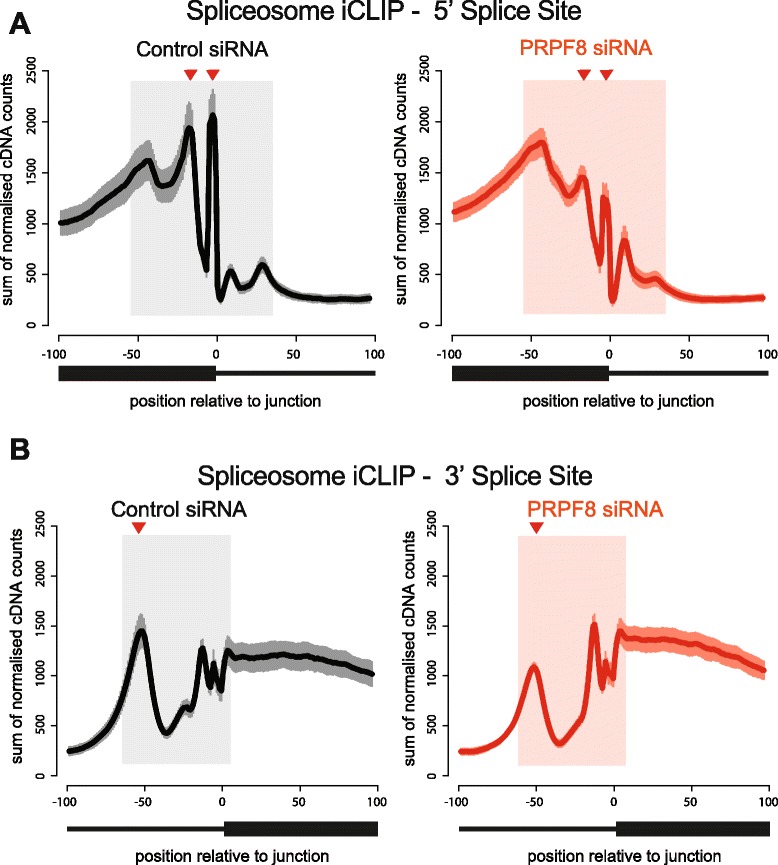
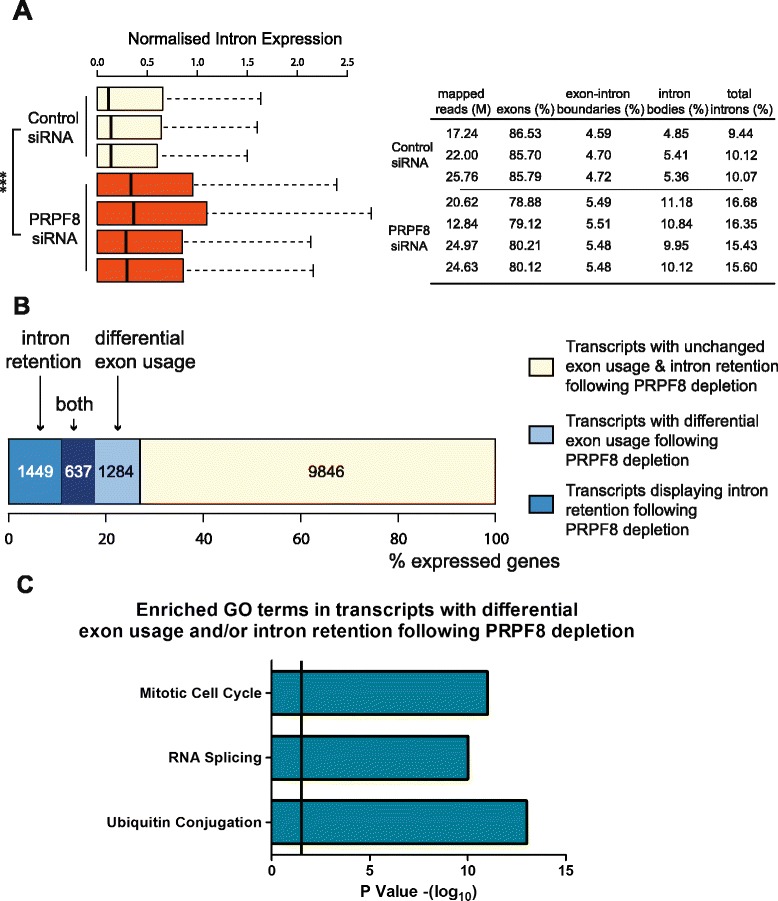
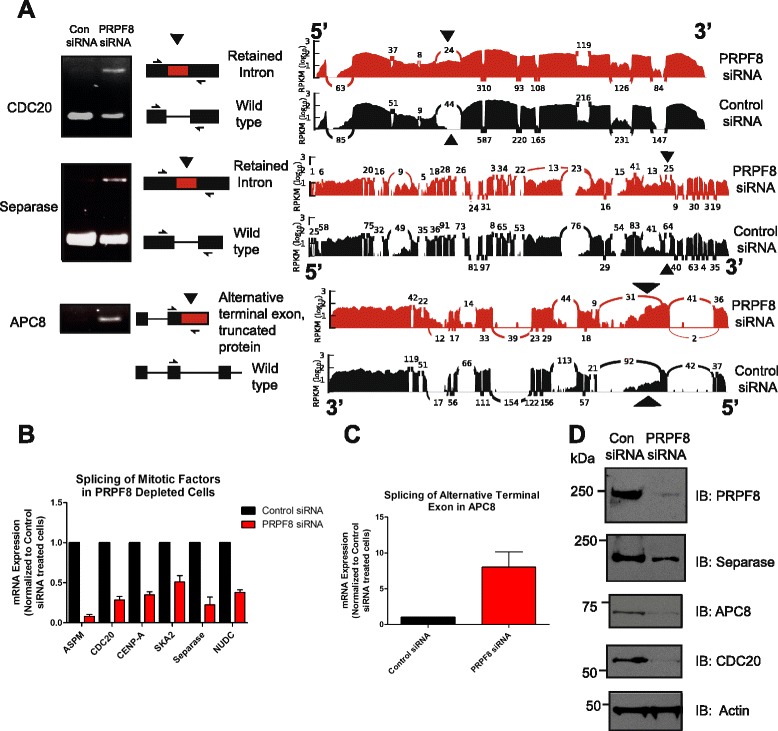
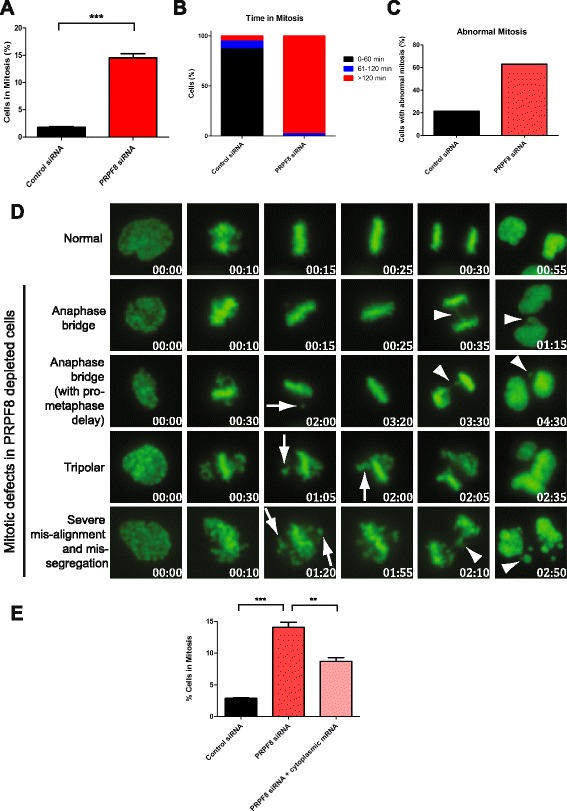
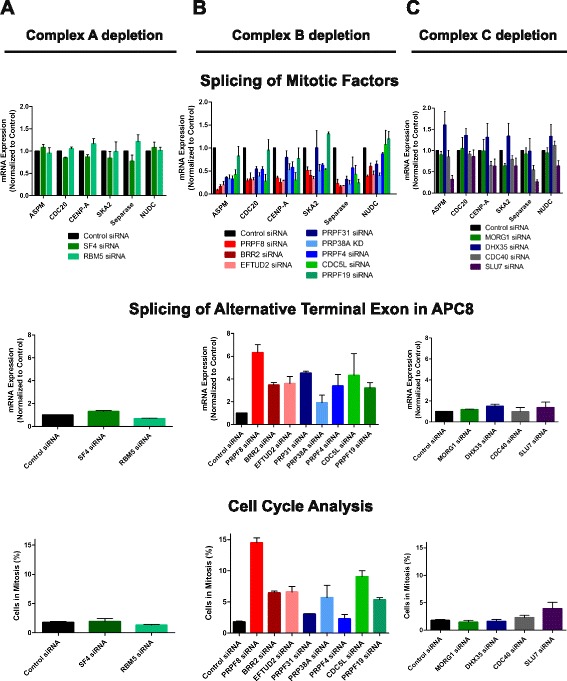
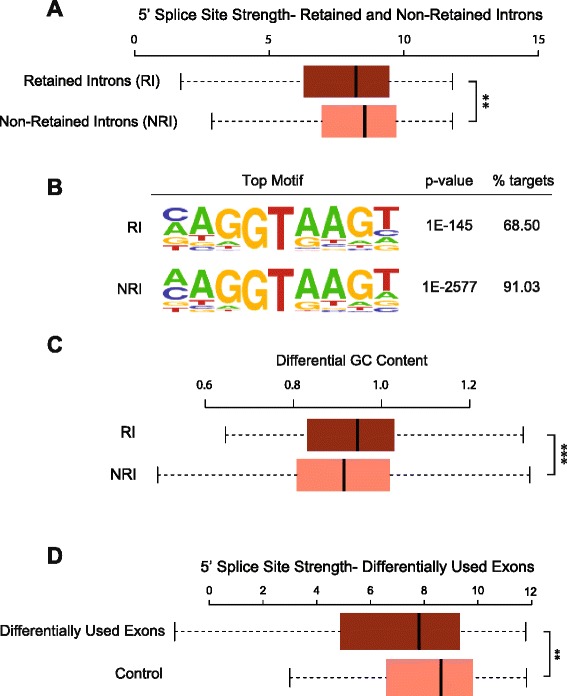
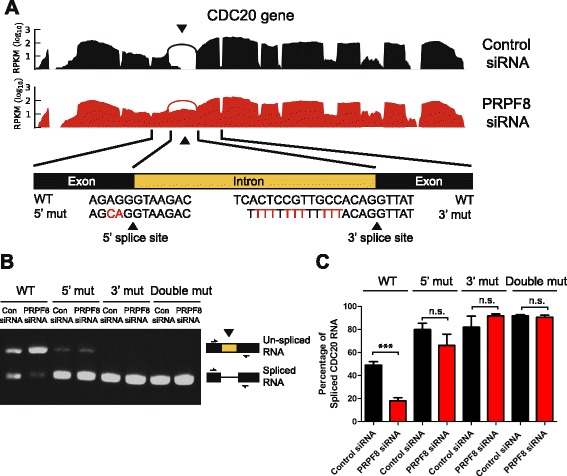
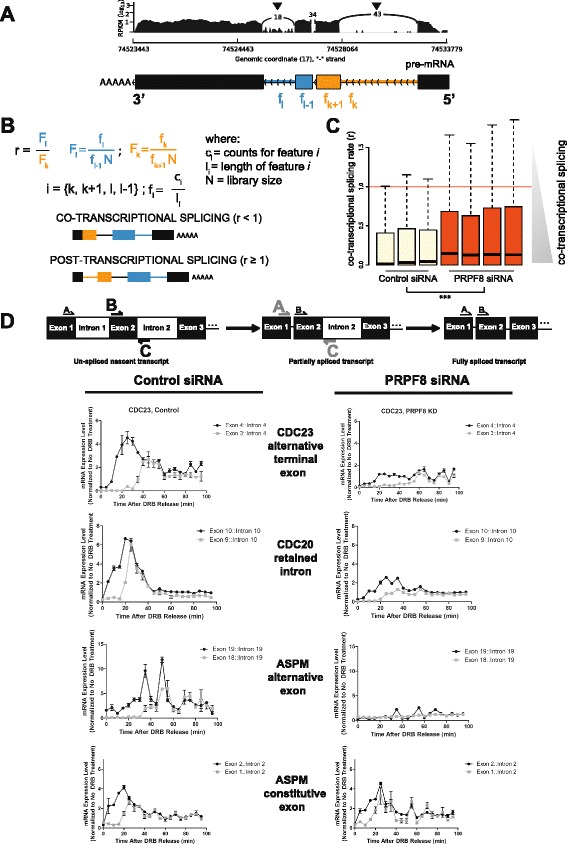
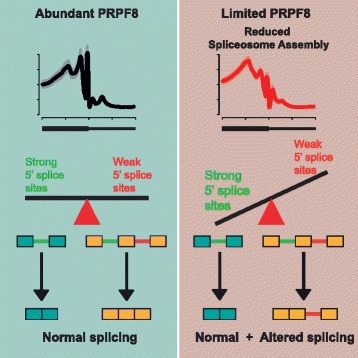
BACKGROUND: Sequential assembly of the human spliceosome on RNA transcripts regulates splicing across the human transcriptome. The core spliceosome component PRPF8 is essential for spliceosome assembly through its participation in ribonucleoprotein (RNP) complexes for splice-site recognition, branch-point formation and catalysis. PRPF8 deficiency is linked to human diseases like retinitis pigmentosa or myeloid neoplasia, but its genome-wide effects on constitutive and alternative splicing remain unclear. RESULTS: Here, we show that alterations in RNA splicing patterns across the human transcriptome that occur in conditions of restricted cellular PRPF8 abundance are defined by the altered splicing of introns with weak 5' splice sites. iCLIP of spliceosome components reveals that PRPF8 depletion decreases RNP complex formation at most splice sites in exon-intron junctions throughout the genome. However, impaired splicing affects only a subset of human transcripts, enriched for mitotic cell cycle factors, leading to mitotic arrest. Preferentially retained introns and differentially used exons in the affected genes contain weak 5' splice sites, but are otherwise indistinguishable from adjacent spliced introns. Experimental enhancement of splice-site strength in mini-gene constructs overcomes the effects of PRPF8 depletion on the kinetics and fidelity of splicing during transcription. CONCLUSIONS: Competition for PRPF8 availability alters the transcription-coupled splicing of RNAs in which weak 5' splice sites predominate, enabling diversification of human gene expression during biological processes like mitosis. Our findings exemplify the regulatory potential of changes in the core spliceosome machinery, which may be relevant to slow-onset human genetic diseases linked to PRPF8 deficiency.
Overview
The claims and statistics of this paper haven’t been checked yet.
Free: it reads the open-access text and checks the first 5 claims that cite a source we can check. Create a free account to check every claim.
Integrity signals
Registry
Cites
Statistics
Figures
Verification
Claims the paper makes
The claims and statistics of this paper haven’t been checked yet.
Free: it reads the open-access text and checks the first 5 claims that cite a source we can check. Create a free account to check every claim.
Claims other papers make about this one
Each is checked against this paper’s own text: does it say what the citing paper says it does?
The cited source says what the claim attributes to it.
In the citing paper
“which constitute only a subset of all expressed protein-coding genes (13,216 genes; expression threshold = 1 fragments per kilobase million [FPKM]) (Wickramasinghe et al., 2015).”
From Impact of Alternative Splicing on the Human Proteome (2017) · cites this paper as Wickramasinghe et al., 2015
The cited source says what the claim attributes to it.
In the citing paper
“Thus, using DEXSeq (Anders et al., 2012), we previously identified 3,370 transcripts with altered splicing patterns after PRPF8 depletion (1,284 with differential exon usage, 1,449 with intron retention, 637 with both), which constitute only a subset of all expressed protein-coding genes (13,216 genes; expression threshold = 1 fragments per kilobase million [FPKM]) (Wickramasinghe et al., 2015).”
From Impact of Alternative Splicing on the Human Proteome (2017) · cites this paper as Wickramasinghe et al., 2015
In the citing paper
“Transcript levels of differently used transcripts were validated by RT-PCR (see Figure 5 and Wickramasinghe et al., 2015 for differently used mitotic transcripts) and genes with differential expression were validated by qRT-PCR (see Figure S5C).”
From Impact of Alternative Splicing on the Human Proteome (2017) · cites this paper as Wickramasinghe et al., 2015
In the citing paper
“Following PRPF8 depletion, we see an increase in the expression levels of intronic reads throughout the genome (p value < 2.2 × 10⁻¹⁶) (Wickramasinghe et al., 2015).”
From Impact of Alternative Splicing on the Human Proteome (2017) · cites this paper as Wickramasinghe et al., 2015
Self-check
Percentages, sums and reported differences re-computed from the paper’s own numbers.
The self-check needs the paper’s full text.
Citations
Cites
Controlling the False Discovery Rate: A Practical and Powerful Approach to Multiple Testing
Benjamini, Y., & Hochberg, Y. (1995) · Journal of the Royal Statistical Society Series B: Statistical Methodology · doi:10.1111/j.2517-6161.1995.tb02031.x · Cited by 109,482 · cited 1×
“01 was used to assess the significance of the detected fold changes (Benjamini and Hochberg p value correction [67]).”
Systematic and integrative analysis of large gene lists using DAVID bioinformatics resources
Huang, D. W., Sherman, B. T., & Lempicki, R. A. (2009) · Nature Protocols · doi:10.1038/nprot.2008.211 · Cited by 35,890
BEDTools: a flexible suite of utilities for comparing genomic features
Quinlan, A. R., & Hall, I. M. (2010) · Bioinformatics · doi:10.1093/bioinformatics/btq033 · Cited by 27,437
Initial sequencing and analysis of the human genome
International Human Genome Sequencing Consortium, Whitehead Institute for Biomedical Research, C. F. G. R., Lander, E. S., Linton, L. M., Birren, B., Nusbaum, C., Zody, M. C., Baldwin, J., Devon, K., Dewar, K., et al. (2001) · Nature · doi:10.1038/35057062 · Cited by 24,216 · cited 1×
“to tens of thousands of base pairs in length [5].”
Ultrafast and memory-efficient alignment of short DNA sequences to the human genome.
Langmead, B., Trapnell, C., Pop, M., & Salzberg, S. L. (2009) · Genome Biology · doi:10.1186/gb-2009-10-3-r25 · Cited by 21,849 · cited 1×
“The obtained reads were mapped to the human genome (hg19) with Bowtie [62] and analyzed as described previously [27].”
Differential expression analysis for sequence count data
Anders, S., & Huber, W. (2010) · Genome Biology · doi:10.1186/gb-2010-11-10-r106 · Cited by 15,581
Heinz, S., Benner, C., Spann, N., Bertolino, E., Lin, Y. C., Laslo, P., Cheng, J. X., Murre, C., Singh, H., & Glass, C. K. (2010) · Molecular Cell · doi:10.1016/j.molcel.2010.05.004 · Cited by 13,382 · cited 1×
“2 [68] using a common set of background sequences.”
TopHat: discovering splice junctions with RNA-Seq
Trapnell, C., Pachter, L., & Salzberg, S. L. (2009) · Bioinformatics · doi:10.1093/bioinformatics/btp120 · Cited by 11,617
The control of the false discovery rate in multiple testing under dependency
Benjamini, Y., & Yekutieli, D. (2001) · The Annals of Statistics · doi:10.1214/aos/1013699998 · Cited by 10,490 · cited 1×
“and Yekutieli correction [71]) and the set of expressed genes as a background (n = 13,216).”
The Spliceosome: Design Principles of a Dynamic RNP Machine
Wahl, M. C., Will, C. L., & Lührmann, R. (2009) · Cell · doi:10.1016/j.cell.2009.02.009 · Cited by 2,665 · cited 2×
“This machinery recognizes pre-mRNA sequences at several motifs — the 5′ and 3′ splice sites, the branch point, and polypyrimidine tracts — positioned at exon–intron boundaries [4].”
Cited by
Goodall, G. J., & Wickramasinghe, V. O. (2021) · Nature Reviews Cancer · doi:10.1038/s41568-020-00306-0 · Cited by 1,066
Self-citationLessons from non-canonical splicing
Sibley, C. R., Blazquez, L., & Ule, J. (2016) · Nature Reviews Genetics · doi:10.1038/nrg.2016.46 · Cited by 316
Self-citationDefective control of pre–messenger RNA splicing in human disease
Chabot, B., & Shkreta, L. (2016) · Journal of Cell Biology · doi:10.1083/jcb.201510032 · Cited by 213
“…for this analysis predicted, with tantalizing accuracy, the impact of mutation on the direction and amplitude of splicing shifts associated with SMA and hereditary colorectal cancer and identified several intronic autism-associated SNVs with a high potential of splicing impact (Xiong et al., 2015).”
BackgroundAlternative Splicing and Protein Diversity: Plants Versus Animals
Chaudhary, S., Khokhar, W., Jabre, I., Reddy, A. S. N., Byrne, L. J., Wilson, C. M., & Syed, N. H. (2019) · Frontiers in Plant Science · doi:10.3389/fpls.2019.00708 · Cited by 205
“Selectively depleted spliceosome U5 component PRPF8 (Wickramasinghe et al., 2015) orchestrated changes at the transcriptome and proteome level that were determined using RNA-Seq and Sequential Window Acquisition of all Theoretical Spectra-Mass Spectrometry (SWATH-MS), respectively.”
BackgroundMethodInfluentialImpact of Alternative Splicing on the Human Proteome
Liu, Y., Gonzàlez-Porta, M., Santos, S., Brazma, A., Marioni, J. C., Aebersold, R., Venkitaraman, A. R., & Wickramasinghe, V. O. (2017) · Cell Reports · doi:10.1016/j.celrep.2017.07.025 · Cited by 190
Self-citationGarrido-Martín, D., Borsari, B., Calvo, M., Reverter, F., & Guigó, R. (2021) · Nature Communications · doi:10.1038/s41467-020-20578-2 · Cited by 164
Meyer, K., Köster, T., Nolte, C., Weinholdt, C., Lewinski, M., Große, I., & Staiger, D. (2017) · Genome biology · doi:10.1186/s13059-017-1332-x · Cited by 166
RNA components of the spliceosome regulate tissue- and cancer-specific alternative splicing
Dvinge, H., Guenthoer, J., Porter, P. L., & Bradley, R. K. (2019) · Genome Research · doi:10.1101/gr.246678.118 · Cited by 162
“Other core spliceosomal proteins participate in regulation of alternative splicing (Perez-Santángelo et al. 2014; Wickramasinghe et al. 2015; Pacheco et al. 2006; Park et al. 2004) and display tissue- or development-specific expression patterns (Grosso et al. 2008).”
BackgroundRegulation of alternative mRNA splicing: old players and new perspectives
Dvinge, H. (2018) · FEBS Letters · doi:10.1002/1873-3468.13119 · Cited by 134
Mutations in spliceosomal proteins and retina degeneration
Rùzicková, Š., & Staněk, D. (2016) · RNA Biology · doi:10.1080/15476286.2016.1191735 · Cited by 129
“reduction of Prpf8 concentration can target only a subset of susceptible genes.(56,57) Interestingly, several somatic PRPF8mis-”
BackgroundRNA Processing and Genome Stability: Cause and Consequence
Wickramasinghe, V. O., & Venkitaraman, A. R. (2016) · Molecular Cell · doi:10.1016/j.molcel.2016.02.001 · Cited by 118
“…components results in mitotic catastrophe (Sundaramoorthy et al., 2014; van der Lelij et al., 2014), owing to the altered splicing of essential mitotic transcripts, which in the case of the core splicing factor PRPF8 has recently been linked to 5’ splice site strength (Wickramasinghe et al., 2015).”
Self-citationDeregulated Splicing Is a Major Mechanism of RNA-Induced Toxicity in Huntington's Disease
Schilling, J., Broemer, M., Atanassov, I., Duernberger, Y., Vorberg, I. M., Dieterich, C., Dagane, A., Dittmar, G., Wanker, E. E., van Roon‐Mom, W., et al. (2019) · Journal of Molecular Biology · doi:10.1016/j.jmb.2019.01.034 · Cited by 93
Blazejewski, S. M., Bennison, S. A., Smith, T. H., & Toyo‐oka, K. (2018) · Frontiers in Genetics · doi:10.3389/fgene.2018.00080 · Cited by 91
Splicing events in the control of genome integrity: role of SLU7 and truncated SRSF3 proteins
Jiménez, M., Urtasun, R., Elizalde, M., Azkona, M., Latasa, M. U., Uriarte, I., Arechederra, M., Alignani, D., Bárcena‐Varela, M., Álvarez‐Sola, G., et al. (2019) · Nucleic Acids Research · doi:10.1093/nar/gkz014 · Cited by 73
“Given that spliceosome components are required for cell division (15,31) we decided to analyze the effect of SLU7 knockdown in cell-cycle progression.”
BackgroundSalovska, B., Zhu, H., Gandhi, T., Frank, M., Li, W., Rosenberger, G., Wu, C., Germain, P., Zhou, H., Hodny, Z., et al. (2020) · Molecular Systems Biology · doi:10.15252/msb.20199170 · Cited by 71
“It was previously reported that a depletion of the splicing core component PRPF8 induced intron retention; i.e., the transcript with retained introns (RI) may not be translated but is retained in the nucleus (Wickramasinghe et al, 2015).”
BackgroundSpliceosomopathies and neurocristopathies: Two sides of the same coin?
Beauchamp, M.-C., Alam, S. S., Kumar, S., & Jerome‐Majewska, L. A. (2020) · Developmental Dynamics · doi:10.1002/dvdy.183 · Cited by 69
Pre-mRNA Processing Factors and Retinitis Pigmentosa: RNA Splicing and Beyond
Yang, C., Γεωργίου, Μ., Atkinson, R., Collin, J., Al-Aama, J. Y., Nagaraja‐Grellscheid, S., Johnson, C. A., Ali, R. R., Armstrong, L., Mozaffari‐Jovin, S., et al. (2021) · Frontiers in Cell and Developmental Biology · doi:10.3389/fcell.2021.700276 · Cited by 62
“…PRPF8 protein displays less effective interaction with SNRNP200, defective splicing site recognition, and U4/U6 unwinding, affecting spliceosome assembly, which contributes to suppression of splicing efficiency (Tanackovic et al., 2011b; Wickramasinghe et al., 2015; Mayerle and Guthrie, 2016).”
BackgroundThe Role of the U5 snRNP in Genetic Disorders and Cancer
Wood, K., Eadsforth, M. A., Newman, W. G., & O’Keefe, R. T. (2021) · Frontiers in Genetics · doi:10.3389/fgene.2021.636620 · Cited by 53
“…of pre-mRNAs which are mis-spliced in RP, MFDGA and BMKS have different conserved sequence properties which makes them more vulnerable to mis-splicing when the corresponding splicing factor genes are mutated or mis-expressed (Wickramasinghe et al., 2015; Lei et al., 2017; Wood et al., 2019, 2020).”
BackgroundMutation in Eftud2 causes craniofacial defects in mice via mis-splicing of Mdm2 and increased P53
Beauchamp, M.-C., Djedid, A., Bareke, E., Merkuri, F., Aber, R., Tam, A., Lines, M. A., Boycott, K. M., Stirling, P. C., Fish, J. L., et al. (2021) · Human Molecular Genetics · doi:10.1093/hmg/ddab051 · Cited by 51
“com regulates and performs the splicing reaction, catalyzes 99% of RNA splicing reactions in human (4).”
BackgroundRenaudin, X., Lee, M.-Y., Shehata, M., Surmann, E., & Venkitaraman, A. R. (2021) · Cell Reports · doi:10.1016/j.celrep.2021.109478 · Cited by 51
Self-citationWhat’s Wrong in a Jump? Prediction and Validation of Splice Site Variants
Riolo, G., Cantara, S., & Ricci, C. (2021) · Methods and Protocols · doi:10.3390/mps4030062 · Cited by 49
Kurzawa‐Akanbi, M., Tzoumas, N., Corral-Serrano, J. C., Guarascio, R., STEEL, D. H., Cheetham, M. E., Armstrong, L., & Lako, M. (2024) · Progress in Retinal and Eye Research · doi:10.1016/j.preteyeres.2024.101248 · Cited by 44
Epigenome-based splicing prediction using a recurrent neural network
Lee, D., Zhang, J., Liu, J. J., & Gerstein, M. (2020) · PLoS Computational Biology · doi:10.1371/journal.pcbi.1008006 · Cited by 44
“At 5’ SSs, RBM22 and PRPF8 were bound at the exonic end, which 147 has been shown to be critical for splicesome assembly [39,40].”
BackgroundThe role of deubiquitinating enzymes in gastric cancer (Review)
Sun, J., Shi, X., Mamun, M., & Gao, Y. (2019) · Oncology Letters · doi:10.3892/ol.2019.11062 · Cited by 43
Epigenetics: An overview of CpG methylation, chromatin remodeling, and regulatory/noncoding RNAs
Clark, J., & Rager, J. E. (2020) · Elsevier eBooks · doi:10.1016/b978-0-12-819968-8.00001-9 · Cited by 43
Regulatory Potential of the RNA Processing Machinery: Implications for Human Disease
Carey, K. T., & Wickramasinghe, V. O. (2018) · Trends in Genetics · doi:10.1016/j.tig.2017.12.012 · Cited by 43
Self-citationLi, J., Liu, F., Lv, Y., Sun, K., Zhao, Y., Reilly, J., Zhang, Y., Tu, J., Yu, S., Liu, X., et al. (2021) · Nucleic Acids Research · doi:10.1093/nar/gkab003 · Cited by 41
“have shown that reducing the expression of PRPF8 impairs the splicing of genes related to the mitotic process (10).”
BackgroundA systems view of spliceosomal assembly and branchpoints with iCLIP
Briese, M., Haberman, N., Sibley, C. R., Faraway, R., Elser, A. S., Chakrabarti, A. M., Wang, Z., König, J., Perera, D., Wickramasinghe, V. O., et al. (2019) · Nature Structural & Molecular Biology · doi:10.1038/s41594-019-0300-4 · Cited by 39
Self-citationShakhmantsir, I., Nayak, S., Grant, G. R., & Sehgal, A. (2018) · eLife · doi:10.7554/elife.39821 · Cited by 41
Lopez-Canovas, J. L., Hermán‐Sánchez, N., del Río-Moreno, M., Fuentes-Fayos, A. C., Lara-López, A., Sánchez‐Frías, M., Amado, V., Ciria, R., Briceño, J., de la Mata, M., et al. (2023) · Experimental & Molecular Medicine · doi:10.1038/s12276-022-00917-7 · Cited by 37
Pormehr, L. A., Ahmadian, S., Daftarian, N., Mousavi, S. A., & Shafiezadeh, M. (2019) · European Journal of Human Genetics · doi:10.1038/s41431-019-0531-1 · Cited by 36
“, study has shown that the PRPF8 depletion in breast adenocarcinoma led to altered splicing of introns with weak 5′ splice sites [39].”
BackgroundsnRNP proteins in health and disease
Krausová, M., & Staněk, D. (2017) · Seminars in Cell and Developmental Biology · doi:10.1016/j.semcdb.2017.10.011 · Cited by 35
Mutations of RNA splicing factors in hematological malignancies
Shukla, G. C., & Singh, J. (2017) · Cancer Letters · doi:10.1016/j.canlet.2017.08.042 · Cited by 32
Comparative transcriptome analysis of Apis mellifera antennae of workers performing different tasks
Nie, H., Xu, S., Xie, C., Geng, H., Zhao, Y., Li, J., Huang, W., Lin, Y., Li, Z., & Su, S. (2017) · Molecular Genetics and Genomics · doi:10.1007/s00438-017-1382-5 · Cited by 32
“Genes were considered to be expressed if the FPKM value was more than one in the corresponding sample (Wickramasinghe et al. 2015).”
BackgroundWang, X., Li, Y., Li, P., Chen, H., Xia, Q., & Zhao, P. (2015) · Insect Biochemistry and Molecular Biology · doi:10.1016/j.ibmb.2015.11.003 · Cited by 30
Arzalluz-Luque, Á., Cabrera, J. L., Skottman, H., Benguría, A., Bolinches-Amorós, A., Cuenca, N., Lupo, V., Dopazo, A., Tarazona, S., Delás, B., et al. (2021) · Frontiers in Neuroscience · doi:10.3389/fnins.2021.636969 · Cited by 28
“This finding is in line with previous reports where PRPF8 was found to affect mitotic cell cycle and RNA splicing GO terms after its depletion by siRNA (Wickramasinghe et al., 2015).”
ResultSnrpb is required in murine neural crest cells for proper splicing and craniofacial morphogenesis
Alam, S. S., Kumar, S., Beauchamp, M.-C., Bareke, E., Boucher, A., Nzirorera, N., Dong, Y., Padilla, R., Zhang, S. J., Majewski, J., et al. (2022) · Disease Models & Mechanisms · doi:10.1242/dmm.049544 · Cited by 27
“The major spliceosome or U2-dependent spliceosome catalyzes 99% of RNA splicing reactions in human (Wickramasinghe et al., 2015), while the minor or U12-dependent spliceosome is responsible for splicing of ∼ 700 minor introns in 666 genes (Olthof et al., 2019).”
Atkinson, R., Γεωργίου, Μ., Yang, C., Szymańska, K., Lahat, A., Vasconcelos, E. J. R., Ji, Y., Molina, M. M., Collin, J., Queen, R. A., et al. (2024) · Nature Communications · doi:10.1038/s41467-024-47253-0 · Cited by 23
“The direct role of PRPF8 in 5 ’ SS recognition and splicing fi delity, which is more critical for genes with weak/suboptimal 5 ’ SS 33 , and its impaired function upon RP mutations in the C-terminal tail corroborates the regulatory role of PRPF8/hBrr2 within the spliceosome in splice site selection…”
WBP11 is required for splicing the TUBGCP6 pre-mRNA to promote centriole duplication
Park, E. M., Scott, P. M., Clutario, K. M., Cassidy, K. B., Zhan, K. H., Gerber, S. A., & Holland, A. J. (2019) · The Journal of Cell Biology · doi:10.1083/jcb.201904203 · Cited by 23
“Previous work has shown that 59 splice sites are critical elements in determining the efficiency of intron-splicing reactions (Roca et al., 2013; Wickramasinghe et al., 2015).”
BackgroundWang, M. F. Z., Mantri, M., Chou, S., Scuderi, G. J., McKellar, D. W., Butcher, J. T., Danko, C. G., & Vlaminck, I. D. (2021) · Nature Communications · doi:10.1038/s41467-021-22496-3 · Cited by 21
Hepburn, L. A., McHugh, A. T., Fernandes, K., Boag, G., Proby, C. M., Leigh, I. M., & Saville, M. K. (2018) · Oncotarget · doi:10.18632/oncotarget.25196 · Cited by 22
“Selected splicing events known to be dependent on PRPF8 and/or SF3B1 were assessed (Figure 5C) [49, 66, 67].”
BackgroundChen, T., Zhang, B., Ziegenhals, T., Prusty, A. B., Fröhler, S., Grimm, C., Hu, Y., Schaefke, B., Fang, L., Zhang, M., et al. (2019) · PLoS Genetics · doi:10.1371/journal.pgen.1008460 · Cited by 22
Kurata, M., Fujiwara, N., Fujita, K., Yamanaka, Y., Seno, S., Kobayashi, H., Miyamae, Y., Takahashi, N., Shibuya, Y., & Masuda, S. (2019) · iScience · doi:10.1016/j.isci.2019.11.033 · Cited by 19
PRPF8 is important for BRCA1-mediated homologous recombination
Onyango, D. O., Lee, G., & Stark, J. M. (2017) · Oncotarget · doi:10.18632/oncotarget.21555 · Cited by 19
“Furthermore, transcriptome studies of cells depleted of PRPF8 and XAB2 have not revealed obvious gene expression changes that could explain defects in BRCA1-mediated HR [56, 57].”
BackgroundCarazo, F., Gimeno, M., Ferrer-Bonsoms, J. A., & Rubio, Á. (2019) · BMC Genomics · doi:10.1186/s12864-019-5900-1 · Cited by 18
Abramczuk, M. K., Burkard, T. R., Rolland, V., Steinmann, V., Duchek, P., Jiang, Y., Wissel, S., Reichert, H., & Knoblich, J. A. (2017) · Development · doi:10.1242/dev.152199 · Cited by 18
Hernandez, V. A., Carvajal‐Moreno, J., Papa, J. L., Shkolnikov, N., Li, J., Özer, H. G., Yalowich, J. C., & Elton, T. S. (2021) · Molecular Pharmacology · doi:10.1124/molpharm.120.000173 · Cited by 18
“Importantly, several studies have demonstrated that the strengthening of a weak 5 9 SS by mutagenesis could enhance the splicing out of retained introns (Huang et al., 2012; Wickramasinghe et al., 2015; Eckert et al., 2016; Yue and Ogawa, 2018).”
BackgroundResultStemm-Wolf, A. J., O'Toole, E. T., Sheridan, R. M., Morgan, J. T., & Pearson, C. G. (2021) · Molecular Biology of the Cell · doi:10.1091/mbc.e21-06-0305 · Cited by 17
“Some have roles in cell cycle progression (SON and PRPF8; Ahn et al., 2011; Wickramasinghe et al., 2015), regulation of alternative splicing (SON and PNN; Chiu and Ouyang, 2006; Hickey et al., 2014), and assembly of core splicing snRNP complexes (SNRPD2 and SF3A3; Urlaub et al., 2001; Tanackovic…”
BackgroundYang, W., Hong, L., Guo, L., Wang, Y., Han, X., Han, B.-Y., Xing, Z., Zhang, G., Zhou, H., Chen, C., et al. (2024) · Cell Discovery · doi:10.1038/s41421-024-00715-7 · Cited by 18
“Emerging evidence suggests that mutations in core spliceosome components do not generally affect splicing but preferentially lead to changes in speci fi c AS events 47,59 .”
Escher, P., Passarin, O., Munier, F. L., Tran, H. V., & Vaclavik, V. (2017) · Ophthalmic Genetics · doi:10.1080/13816810.2017.1393825 · Cited by 17
Cwc27, associated with retinal degeneration, functions as a splicing factorin vivo
Bertrand, R. E., Wang, J., Li, Y., Cheng, X., Wang, K., Stoilov, P., & Chen, R. (2021) · Human Molecular Genetics · doi:10.1093/hmg/ddab319 · Cited by 17
Etiology of craniofacial and cardiac malformations in a mouse model of SF3B4 -related syndromes
Kumar, S., Bareke, E., Lee, J., Carlson, E., Merkuri, F., Schwager, E. E., Maglio, S., Fish, J. L., Majewski, J., & Jerome‐Majewska, L. A. (2024) · Proceedings of the National Academy of Sciences · doi:10.1073/pnas.2405523121 · Cited by 16
Elton, T. S., Hernandez, V. A., Carvajal‐Moreno, J., Wang, X., Ipinmoroti, D., & Yalowich, J. C. (2022) · Cancers · doi:10.3390/cancers14133148 · Cited by 16
Dykstra-Aiello, C., Sharp, F. R., Jickling, G. C., Hull, H., Hamade, F., Shroff, N., Durocher, M., Cheng, X., Zhan, X., Liu, D.-Z., et al. (2020) · Frontiers in Neurology · doi:10.3389/fneur.2020.584695 · Cited by 16
“These results, when combined with the differential expression in men of PRPF8, a gene that plays a distinct role in spliceosome assembly (55), suggest that AS may be playing a role in the differential expression of these newly identified stroke risk genes.”
ResultVijayakumari, D., Sharma, A. K., Bawa, P., Kumar, R., Srinivasan, S., & Vijayraghavan, U. (2019) · RNA Biology · doi:10.1080/15476286.2019.1585737 · Cited by 15
“ment in introns as a feature that governs its splice-site utilization across the human transcriptome [67].”
BackgroundRNA splicing: Novel star in pulmonary diseases with a treatment perspective
Niu, Z., Xu, B., Li, X., Sun, J., & Liang, H. (2025) · Acta Pharmaceutica Sinica B · doi:10.1016/j.apsb.2025.03.023 · Cited by 13
“PRPF8 depletion may partially decouple these processes, providing additional time for intron removal at weak sites 65 .”
Nazlamova, L., Vasquez, S. S. V., Lord, J., Karthik, V., Cheung, M., Lakowski, J., & Wheway, G. (2022) · Frontiers in Genetics · doi:10.3389/fgene.2022.1009430 · Cited by 12
“Depletion of PRPF8 has similarly been shown to lead to defects in mitotic progression, with specific defects in splicing of transcripts involved in mitotic progression, especially those with weak 5′ splice sites (Wickramasinghe et al., 2015).”
BackgroundResultGohr, A., Iñiguez, L., Torres-Méndez, A., Bonnal, S., & Irimia, M. (2023) · Nucleic Acids Research · doi:10.1093/nar/gkad244 · Cited by 12
“Therefore, to fully comprehend the universal AISO code, it will be necessary to not only dissect the role of spliceosomal components and RBPs in intron splicing order (15,16,38), but also to expand and integrate recently developed mathematical modelling of cotranscriptional splicing (42) and splicing decisions based o…”
BackgroundSpliceosomal factor mutations and mis-splicing in MDS
Hershberger, C. E., Daniels, N. J., & Padgett, R. A. (2020) · Best Practice & Research Clinical Haematology · doi:10.1016/j.beha.2020.101199 · Cited by 11
“Decreased expression of PRPF8 alters splicing of introns with weak 5’ splice sites [96].”
BackgroundGenetic control of RNA editing in neurodegenerative disease
Wu, S., Xue, Q., Yang, M., Wang, Y., Kim, P., Zhou, X., & Huang, L. (2023) · Briefings in Bioinformatics · doi:10.1093/bib/bbad007 · Cited by 11
Melangath, G., Sen, T., Kumar, R., Bawa, P., Srinivasan, S., & Vijayraghavan, U. (2017) · PLoS ONE · doi:10.1371/journal.pone.0188159 · Cited by 10
The Ski2-family helicase Obelus regulates Crumbs alternative splicing and cell polarity
Vichas, A., Laurie, M. T., & Zallen, J. A. (2015) · The Journal of Cell Biology · doi:10.1083/jcb.201504083 · Cited by 10
“…mechanisms, including interactions with the actin and microtubule cytoskeleton (Brieher and Yap, 2013), trafficking of junctional complexes to and from the plasma membrane (Wirtz-Peitz and Zallen, 2009), and spatial cues provided by the apical–basal polarity machinery (Harris and Tepass, 2010).”
BackgroundLaloum, T., Martín, G., Lewinski, M., Yanez, R. J. R., Köster, T., Paixão, T., Staiger, D., & Duque, P. (2026) · The Plant Cell · doi:10.1093/plcell/koag127 · Cited by 9
PRPF8 controls alternative splicing of PIRH2 to modulate the p53 pathway and survival of human ESCs
Sun, Y., Zhang, L., Fang, Z., Liu, D., Shao, M., Liu, Y., Liao, B., & Jin, Y. (2023) · Journal of Cellular Physiology · doi:10.1002/jcp.31066 · Cited by 9
“PRPF8 is known to be essential for spliceosome assembly and its mutation is linked to human inherited diseases such as retinitis pigmentosa (Wickramasinghe et al., 2015).”
BackgroundZimmann, F., McNicoll, F., Thakur, P. K., Blažíková, M., Kubovčiak, J., Cañás, M. C. H., Nováková, Z., Bařinka, C., Kolář, M., Staněk, D., et al. (2025) · Cellular and Molecular Life Sciences · doi:10.1007/s00018-025-05621-z · Cited by 8
Hernandez, V. A., Carvajal‐Moreno, J., Wang, X., Pietrzak, M., Yalowich, J. C., & Elton, T. S. (2022) · PLoS ONE · doi:10.1371/journal.pone.0265794 · Cited by 7
Harnessing Synthetic Riboswitches for Tunable Gene Regulation in Mammalian Cells
Khadake, R. M., Arora, V., Gupta, P., & Rode, A. B. (2025) · ChemBioChem · doi:10.1002/cbic.202401015 · Cited by 5
Zimmann, F., Banik, P., Kubovčiak, J., Delattre, M., Thakur, P. K., Čapek, M., Kolář, M., Hrubá, E., Dobrovolný, R., Cvačková, Z., et al. (2026) · Scientific Reports · doi:10.1038/s41598-026-40376-y · Cited by 5
Mouse nuclear RNAi-defective 2 promotes splicing of weak 5′ splice sites
Flemr, M., Schwaiger, M., Heß, D., Iešmantavičius, V., Ahel, J., Tuck, A., Mohn, F., & Bühler, M. (2023) · RNA · doi:10.1261/rna.079465.122 · Cited by 5
“…splicing of weak 5’SSs are therefore crucial for accurate gene expression, i.e. mutations decreasing splice site strength or impairing activity of splicing factors are a frequent cause of human genetic disorders (Anna and Monika, 2018; Scotti and Swanson, 2016; Wickramasinghe et al., 2015).”
BackgroundAkcan, T. S., Вилов, С. А., & Heinig, M. (2023) · Nucleic Acids Research · doi:10.1093/nar/gkac1272 · Cited by 4
“The presence of several splicing-associated factors (RB-FOX2, PRPF8, RBM15, RBM22, KHSRP, YBX3, AQR) further strengthens the intricate connection to co-transcriptional splicing events (33,74,99,100).”
BackgroundInfluentialCritical Differential Expression Assessment for Individual Bulk RNA-Seq ProjectsPreprint
Warden, C., & Wu, X. (2024) · bioRxiv (Cold Spring Harbor Laboratory) · doi:10.1101/2024.02.10.579728 · Cited by 4
Hansen, J., Siddiq, M. M., Yadaw, A. S., Tolentino, R. E., Rabinovich, V., Jayaraman, G., Jain, M. R., Liu, T., Li, H., Xiong, Y., et al. (2022) · Journal of Biological Chemistry · doi:10.1016/j.jbc.2022.102325 · Cited by 3
“In agreement with our hypothesis, it was documented in other model systems that restriction of spliceosomal components alters splicing of a subset of mammalian mRNAs with weak 50 splice sites (52).”
ResultGautam, P., Srivastava, V., Bammidi, S., Ghosh, S., Babu, V. S., & Banerjee, A. (2025) · Biochemical and Biophysical Research Communications · doi:10.1016/j.bbrc.2025.151795 · Cited by 3
C9ORF78 partially localizes to centromeres and plays a role in chromosome segregation
Koranne, R., Brown, K., Vandenbroek, H. E., & Taylor, W. R. (2022) · Experimental Cell Research · doi:10.1016/j.yexcr.2022.113063 · Cited by 3
Reporting a Homozygous Case of Neurodevelopmental Disorder Associated With a Novel PRPF8 Variant
Mirinezhad, M. R., Mirzaei, F., Salmaninejad, A., Esfehani, R. J., Seyedtaghia, M. R., Farahmand, S., Toosi, M. B., Hashemian, S., & Lewis, M. E. S. (2025) · Molecular Genetics & Genomic Medicine · doi:10.1002/mgg3.70084 · Cited by 2
“Mutations in PRPF genes lead to delayed spliceosome assembly, resulting in splicing defects that are transcript-specific and changes in alternative splicing patterns (Tanackovic et al. 2011; Wickramasinghe et al. 2015).”
Qin, J., & Tse, W. K. F. (2025) · Free Radical Biology and Medicine · doi:10.1016/j.freeradbiomed.2025.07.026 · Cited by 2
Ku limits aberrant mRNA splicing promoted by intronic antisense Alu elementsPreprint
Pascarella, G., Turley, M. P., Mikhova, M., Parkhi, G., Godfrey, J., Heyza, J., Janovič, T., Han, L., Yu, K., Olive, A., et al. (2025) · bioRxiv (Cold Spring Harbor Laboratory) · doi:10.1101/2025.11.20.689478 · Cited by 2
Li, L., Xiao, M., Zhang, L., Zhao, S., Zhang, G., Wu, S., Jin, C., Yang, J., & Lu, X. (2025) · Free Radical Biology and Medicine · doi:10.1016/j.freeradbiomed.2025.04.027 · Cited by 1
Zhao, X., Cassel, S. R., Eaton, S., Li, J., Wang, X., Elton, T. S., & Yalowich, J. C. (2026) · Journal of Pharmacology and Experimental Therapeutics · doi:10.1016/j.jpet.2026.104946 · Cited by 1
Pan, Y., Liu, B., & Pei, D. (2022) · DNA and Cell Biology · doi:10.1089/dna.2022.0322 · Cited by 1
“Generally, intronic sequences are excluded, whereas exonic sections are included after the DNA transcript into the pre-mRNA, generating the final mRNA by matching the retained sequences together (Wickramasinghe et al. , 2015).”
Sen, A., Qu, W., Nuga, O. O., Liu, J., Burl, R. B., Gurdziel, K., Piqué-Regi, R., Hüttemann, M., & Ruden, D. M. (2016) · bioRxiv (Cold Spring Harbor Laboratory) · doi:10.1101/077214 · Cited by 1
Ciamponi, F. E., Lovci, M., da Cruz, P. R. S., & Massirer, K. B. (2018) · bioRxiv (Cold Spring Harbor Laboratory) · doi:10.1101/279612 · Cited by 1
“Among the identified preferential regions for the RBPs, some were already known from the literature (such as U2AF1 [72], U2AF2 [72], SF3A3 [73], PRPF8 [74], FMR1 [75], PUM2 [76], TIA1 [77], TARDBP [78] and RBFOX2 [37]), which demonstrates that our algorithm correctly identified their binding region preferences.”
BackgroundIn vivo shRNA screen reveals PRMT5 as a key regulator in glioblastoma
Stanciu, M. (2017) · DSpace@MIT (Massachusetts Institute of Technology) · Cited by 1
Hansen, J., Yadaw, A. S., Siddiq, M. M., Tolentino, R. E., Rabinovitch, V., Liu, T., Li, H., Goldfarb, J., & Iyenagar, R. (2018) · bioRxiv (Cold Spring Harbor Laboratory)
Splicing The Clock Is Timeless: From Fruit Fly Behavior To Mammalian Retinal Degeneration
Shakhmantsir, I. (2018) · ScholarlyCommons (University of Pennsylvania)
Dissecting cellular mechanisms of neurite formation in the developing cortex
Blazejewski, S. M., Toyo‐oka, K., & Baas, P. W. (2021) · iDEA - Drexel University Institutional Repository · doi:10.17918/00000570
Xie, H., Liu, X., Luan, P., Wang, J., Wang, L., & Chen, X. (2025) · Gene · doi:10.1016/j.gene.2025.149778
Choi, M., Hwang, S., Kim, K., Choi, J., Park, K., & Kim, D.-G. (2025) · bioRxiv (Cold Spring Harbor Laboratory) · doi:10.1101/2025.10.01.679749
MOLECULAR AND DATA ANALYSIS METHODS TO EXPAND THE SCOPE OF SINGLE-CELL TRANSCRIPTOMICS
Wang, M. (2022) · eCommons (Cornell University) · doi:10.7298/361v-c453
Targeting alternative splicing as a novel approach to chemotherapy induced peripheral neuropathy
Swift, M. N. (2021) · Nottingham ePrints (University of Nottingham)
Assessing splicing accuracy and its determinants across human tissues using RNA-sequencing
García-Ruiz, S. (2023) · UCL Discovery (University College London)
Targeting the splice factor kinases SRPK1 and CLK1 in leukaemia
Wodi, C. (2021) · UWE Research Repository (UWE Bristol)
Tissue specific characterization of splicing factor transcriptional regulation
Peirone, S. (n.d.) · Institutional Research Information System University of Turin (University of Turin)
Intron retention and 3’ UTR lengthening mediate mRNA nuclear retention
JIANG, Q.-Y., & CHENG, H. (2026) · Shengming kexue · doi:10.3724/cbls.2026142
Retinitis Pigmentosa: A Review of Its Pathogenesis and Emerging Molecular and Cellular Therapies
Tuli, N., Baeshen, M., Echbicheb, M., Kulbay, M., Ayalon, A., Ali, S. K., & Qian, C. X. (2026) · Vision · doi:10.3390/vision10040083
“The small nuclear ribonucleoprotein U5 subunit 200 (snRNP200) is also implicated in RP, as snRNP200 mutations disrupt spliceosome function by impairing U4/U6 unwinding [42] (Figure 2) [43,44].”
Metadata
- Authors
- Wickramasinghe, V. O., Gonzàlez-Porta, M., Perera, D., Bartolozzi, A. R., Sibley, C. R., Hallegger, M., Ule, J., Marioni, J. C., & Venkitaraman, A. R.
- Affiliations
- University of Cambridge (GB)
- European Bioinformatics Institute (GB)
- National Hospital for Neurology and Neurosurgery (GB)
- Corresponding author
- Venkitaraman, Ashok R.
- ORCID
- Venue
- Genome Biology
- Published
- 2015-09-21
- Volume
- 16
- Issue
- 1
- Pages
- 201-201
- ISSN
- 1465-6906 (ISSN-L)
- 1474-760X
- PMC
- PMC4578845
- OpenAlex
- W2157561436
- Cited by
- 91
- References
- 72
- Citations by year
- 2026: 6 · 2025: 9 · 2024: 5 · 2023: 6 · 2022: 7 · 2021: 13 · 2020: 8 · 2019: 12 · 2018: 9 · 2017: 9 · 2016: 5 · 2015: 2
- FWCI
- 3.62
- Type
- journal article
- Language
- en
- Open access
- gold
- doi.org
- Licence
- cc-by
- creativecommons.org/licenses/by/4.0/ (tdm)
- Locations
- Genome biology (publishedVersion, cc-by)
- Europe PMC (PubMed Central) (publishedVersion, cc-by)
- PubMed Central (publishedVersion, cc-by)
- PubMed (publishedVersion)
- Minerva Access (University of Melbourne) (submittedVersion, cc-by)
- UCL Discovery (University College London) (submittedVersion)
- Edinburgh Research Explorer (University of Edinburgh) (submittedVersion, cc-by)
- Spiral (Imperial College London) (submittedVersion, other-oa)
- Apollo (University of Cambridge) (submittedVersion, cc-by)
- Apollo (cc-by)
- Funders
- Medical Research Council (MC_UU_12022/8, MC_UU_12022/1)
- Topics
- Life Sciences › Biochemistry, Genetics and Molecular Biology › Molecular Biology › RNA Research and Splicing
- Life Sciences › Biochemistry, Genetics and Molecular Biology › Molecular Biology › RNA and protein synthesis mechanisms
- Life Sciences › Biochemistry, Genetics and Molecular Biology › Molecular Biology › RNA regulation and disease
- Keywords
- PRPF8, alternative splicing, constitutive splicing, spliceosome assembly, ribonucleoprotein complexes, iCLIP, intron retention, mitotic cycle, mitotic arrest, splice site recognition, retinitis pigmentosa, myeloid neoplasms
- MeSH terms
- Exons, Humans, Introns, Mutation, Retinitis Pigmentosa, Ribonucleoproteins, RNA, Messenger, RNA-Binding Proteins, Genome, Spliceosomes, Alternative Splicing, RNA Splice Sites, Transcriptome
About these checks
Registry, retraction, Cites and statistics results are computed, not judged, with one exception: a printed reference that no index lists is read once by a model before it counts as a citation error. Claims are extracted by a model and kept only when their quote appears verbatim in the text; each cited source is then checked, with a model’s help, for whether it says what the claim relies on. Those verdicts can be wrong — read the claim’s quote and the cited source before relying on one.
Statistics and arithmetic are recomputed, not judged.
Confidence bands are shown only for fields calibrated on our annotated test set. None is calibrated yet, so no band is shown.
What counts as a claim ›How we measure confidence ›How we check this ›
Are you an author, or do you see a problem with this page? Request a review
Data sources
Bibliographic data: Semantic Scholar, OpenAlex, Crossref.
Contains information from the Semantic Scholar Academic Graph Datasets, made available under the ODC Attribution License (ODC-BY 1.0).
Semantic Scholar’s data is described in: Kinney, R., et al. (2023). The Semantic Scholar Open Data Platform. arXiv:2301.10140.
