

A novel ATAC-seq approach reveals lineage-specific reinforcement of the open chromatin landscape via cooperation between BAF and p63
Open accessThe DOI matches its Crossref record; 57 of the 57 references it cites were found in a registry or an index.
Abstract
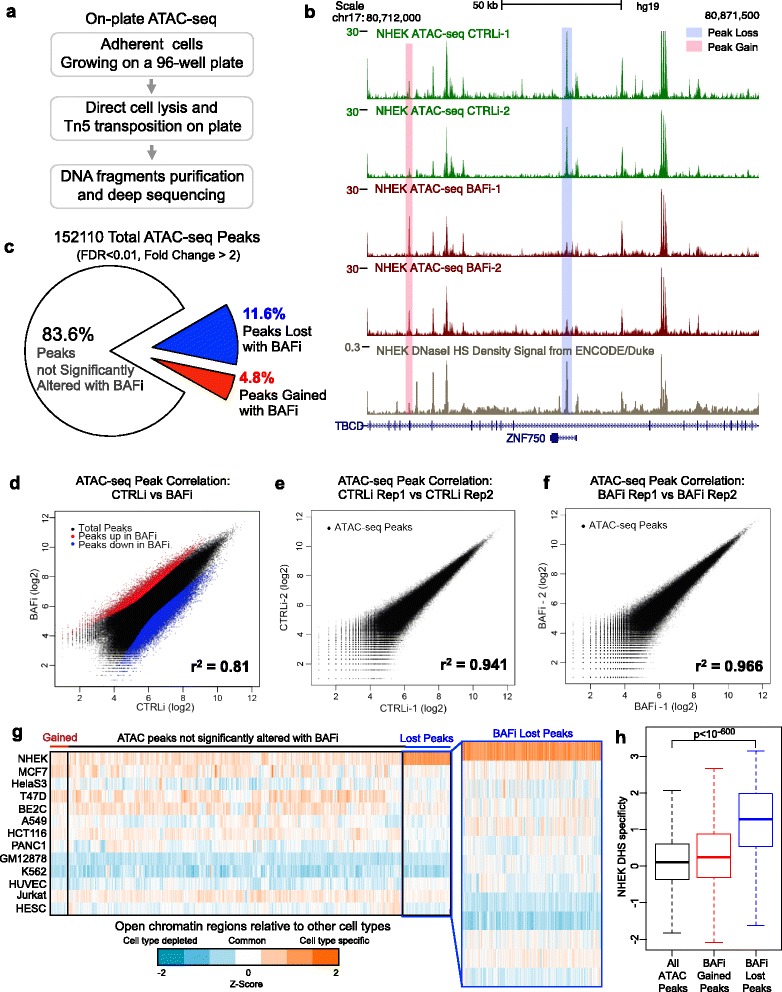
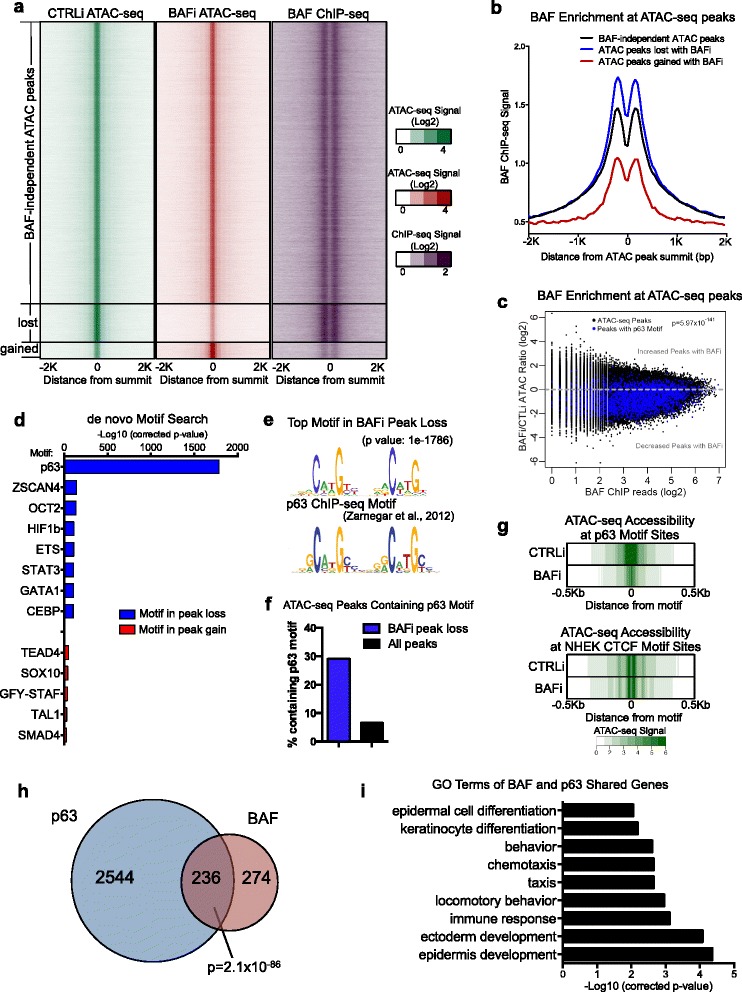
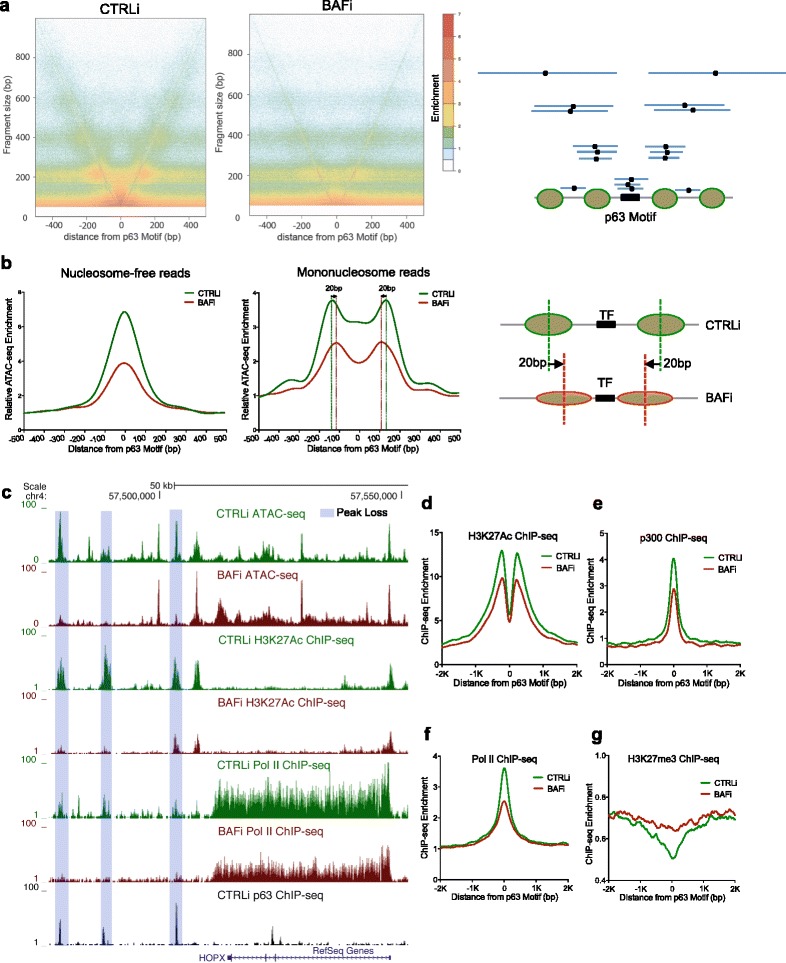
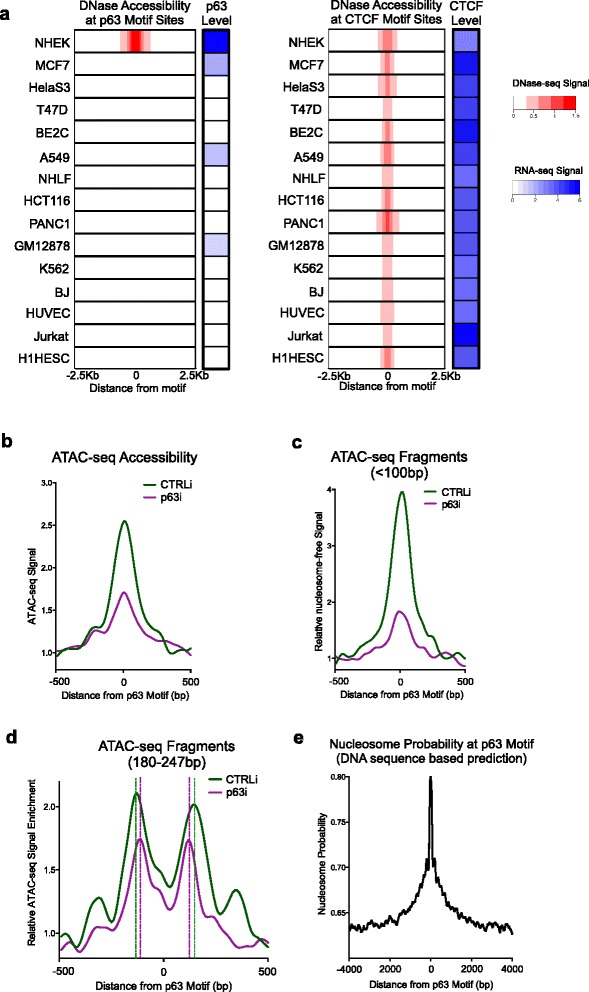
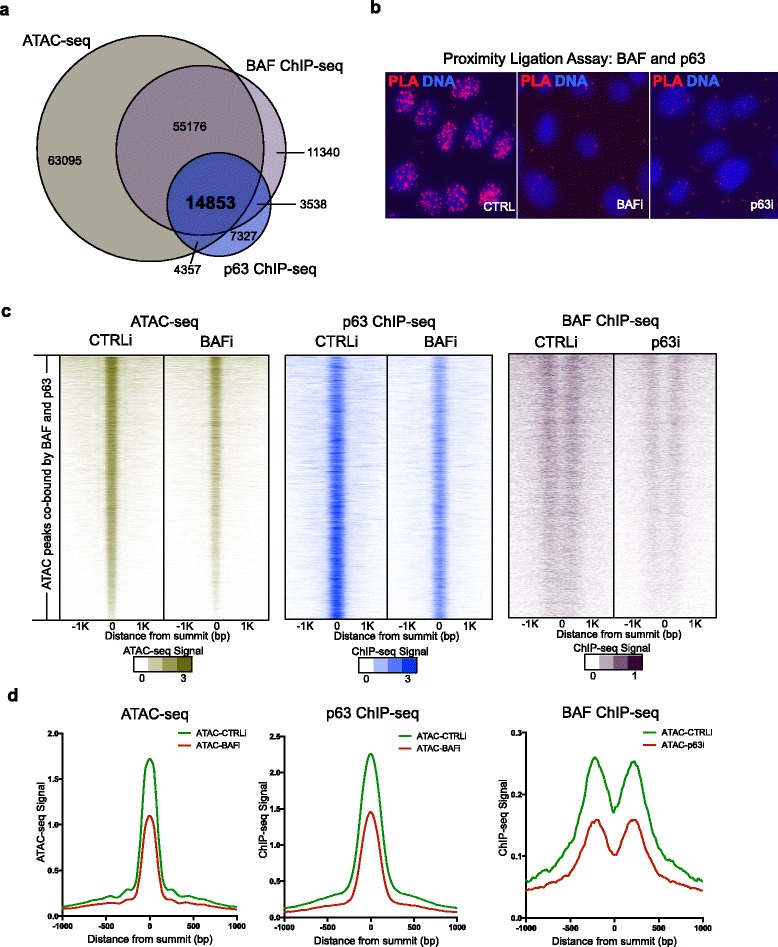
BACKGROUND: Open chromatin regions are correlated with active regulatory elements in development and are dysregulated in diseases. The BAF (SWI/SNF) complex is essential for development, and has been demonstrated to remodel reconstituted chromatin in vitro and to control the accessibility of a few individual regions in vivo. However, it remains unclear where and how BAF controls the open chromatin landscape to regulate developmental processes, such as human epidermal differentiation. RESULTS: Using a novel "on-plate" ATAC-sequencing approach for profiling open chromatin landscapes with a low number of adherent cells, we demonstrate that the BAF complex is essential for maintaining 11.6 % of open chromatin regions in epidermal differentiation. These BAF-dependent open chromatin regions are highly cell-type-specific and are strongly enriched for binding sites for p63, a master epidermal transcription factor. The DNA sequences of p63 binding sites intrinsically favor nucleosome formation and are inaccessible in other cell types without p63 to prevent ectopic activation. In epidermal cells, BAF and p63 mutually recruit each other to maintain 14,853 open chromatin regions. We further demonstrate that BAF and p63 cooperatively position nucleosomes away from p63 binding sites and recruit transcriptional machinery to control tissue differentiation. CONCLUSIONS: BAF displays high specificity in controlling the open chromatin landscape during epidermal differentiation by cooperating with the master transcription factor p63 to maintain lineage-specific open chromatin regions.
Overview
The claims and statistics of this paper haven’t been checked yet.
Free: it reads the open-access text and checks the first 5 claims that cite a source we can check. Create a free account to check every claim.
Integrity signals
Registry
Cites
Statistics
Figures
Verification
Claims the paper makes
The claims and statistics of this paper haven’t been checked yet.
Free: it reads the open-access text and checks the first 5 claims that cite a source we can check. Create a free account to check every claim.
Claims other papers make about this one
Each is checked against this paper’s own text: does it say what the citing paper says it does?
The source backs part of the claim, not all of it — or backs it for a different population, condition or comparison.
In the citing paper
“The mechanisms of pioneer factor action are still being established [37], but at least some of them (such as FOXA, OCT4 and SOX2/SOX11) have been shown to initiate chromatin opening by direct displacement of histones [38–41], whilst many others recruit chromatin remodelers [42–50].”
From Transcriptional enhancers and their communication with gene promoters (2021) · cites this paper as [46]
Experimental — accuracy not yet measuredThe cited source says what the claim attributes to it.
In the citing paper
“TP63, a master regulator of epidermal homeostasis and differentiation”
From Coupled Single-Cell CRISPR Screening and Epigenomic Profiling Reveals Causal Gene Regulatory Networks (2019) · cites this paper as Bao et al., 2015
Self-check
Percentages, sums and reported differences re-computed from the paper’s own numbers.
The self-check needs the paper’s full text.
Citations
Cites
Buenrostro, J. D., Giresi, P. G., Zaba, L. C., Chang, H. Y., & Greenleaf, W. J. (2013) · Nature Methods · doi:10.1038/nmeth.2688 · Cited by 6,422 · cited 6×
“These ranges were used previously [23] to distinguish transposase”
BackgroundMethodSelf-citationThe Biology of Chromatin Remodeling Complexes
Clapier, C. R., & Cairns, B. R. (2009) · Annual Review of Biochemistry · doi:10.1146/annurev.biochem.77.062706.153223 · Cited by 2,380 · cited 1×
“One plausible possibility is that the other regions are controlled by the remodeling activity of other chromatin remodeling complexes, such as CHD, ISWI, and INO80 family members [48].”
Backgroundp63 is a p53 homologue required for limb and epidermal morphogenesis
Mills, A. A., Zheng, B., Wang, X.-J., Vogel, H., Roop, D. R., & Bradley, A. (1999) · Nature · doi:10.1038/19531 · Cited by 1,988 · cited 1×
“p63 is the lineage-specifying TF essential for epidermal development as well as the TF required post-natally to maintain stratified epithelial tissue identity and terminal differentiation [32, 33].”
BackgroundA genomic code for nucleosome positioning
Segal, E., Fondufe-Mittendorf, Y., Chen, L., Thåström, A., Field, Y., Moore, I. K., Wang, J.-P. Z., & Widom, J. (2006) · Nature · doi:10.1038/nature04979 · Cited by 1,499 · cited 1×
“Because local DNA sequence can directly impact nucleosome positioning, we calculated the intrinsic nucleosome binding probability based on genomic sequence [36, 37].”
MethodKadoch, C., Hargreaves, D. C., Hodges, C., Elias, L., Ho, L., Ranish, J., & Crabtree, G. R. (2013) · Nature Genetics · doi:10.1038/ng.2628 · Cited by 1,458 · cited 1×
“BAF has been demonstrated to associate with a variety of TFs from both in vitro and in vivo evidence [16, 25, 40, 41, 44, 45].”
BackgroundHigh-Resolution Mapping and Characterization of Open Chromatin across the Genome
Boyle, A. P., Davis, S., Shulha, H. P., Meltzer, P., Margulies, E. H., Weng, Z., Furey, T. S., & Crawford, G. E. (2008) · Cell · doi:10.1016/j.cell.2007.12.014 · Cited by 1,415 · cited 1×
“These open chromatin regions span an average of 300 base pairs [6], comprise 1–3 % of the total genome [7], and can be identified by DNase I hypersensitive sites sequencing (DNase-seq) [8] or formaldehyde-assisted isolation of regulatory elements sequencing (FAIRE-seq) [9].”
BackgroundDynamic Regulation of Nucleosome Positioning in the Human Genome
Schones, D. E., Cui, K., Cuddapah, S., Roh, T.-Y., Barski, A., Wang, Z., Wei, G., & Zhao, K. (2008) · Cell · doi:10.1016/j.cell.2008.02.022 · Cited by 1,394 · cited 1×
“At the TSSs for active genes, a total of eight (three upstream and five downstream of the TSS) well-positioned nucleosomes are detected; however, only one +1 nucleosome is detected for silenced genes [49].”
BackgroundSWI/SNF nucleosome remodellers and cancer
Wilson, B. G., & Roberts, C. W. M. (2011) · Nature Reviews Cancer · doi:10.1038/nrc3068 · Cited by 1,282 · cited 1×
“cers [16, 17].”
The DNA-encoded nucleosome organization of a eukaryotic genome
Kaplan, N., Moore, I. K., Fondufe-Mittendorf, Y., Gossett, A. J., Tillo, D., Field, Y., LeProust, E. M., Hughes, T. R., Lieb, J. D., Widom, J., et al. (2009) · Nature · doi:10.1038/nature07667 · Cited by 1,194 · cited 2×
“Because local DNA sequence can directly impact nucleosome positioning, we calculated the intrinsic nucleosome binding probability based on genomic sequence [36, 37].”
MethodGiresi, P. G., Kim, J., McDaniell, R. M., Iyer, V. R., & Lieb, J. D. (2007) · Genome Research · doi:10.1101/gr.5533506 · Cited by 955
Self-citation
Cited by
Items 101–177 of 177
Smirnov, A., Lena, A. M., Tosetti, G., Yang, X., Cappello, A., Helmer‐Citterich, M., Melino, G., & Candi, E. (2023) · Cell Death Discovery · doi:10.1038/s41420-023-01716-3 · Cited by 11
“All the data used in the study are available on GEO NCBI: RNA-seq of human keratinocytes after p63 knock-down (GSE67382) [31], scRNA-seq of human skin (GSE202352) [43], RNA-seq and ChIP-seq for H3K27ac, p63, and Pol2 in human keratinocytes differentiated in vitro (GSE59827) [44], ChIP-seq for CTCF…”
MethodTP63–TRIM29 axis regulates enhancer methylation and chromosomal instability in prostate cancer
Sultanov, R., Mulyukina, A., Zubkova, O. A., Fedoseeva, A., Bogomazova, A. N., Klimina, K. M., Larin, A. K., Zatsepin, T. S., Prikazchikova, T. A., Lukina, M. M., et al. (2024) · Epigenetics & Chromatin · doi:10.1186/s13072-024-00529-7 · Cited by 11
“TP63 is a pioneer transcription factor [53], that establishes the epigenetic landscape of epidermal enhancers and super-enhancers in squamous-like types of cancer [25–28].”
BackgroundMapping Genome-wide Accessible Chromatin in Primary Human T Lymphocytes by ATAC-Seq
Grbeša, I., Tannenbaum, M., Sarusi-Portuguez, A., Schwartz, M., & Hakim, O. (2017) · Journal of Visualized Experiments · doi:10.3791/56313 · Cited by 11
CASZ1 Is Essential for Skin Epidermal Terminal Differentiation
Droll, S. H., Zhang, B. J., Levine, M. C., Xue, C., Ho, P. J., & Bao, X. (2024) · Journal of Investigative Dermatology · doi:10.1016/j.jid.2024.02.014 · Cited by 10
Self-citationVasilaki, E., Bai, Y., Ali, M. M., Sundqvist, A., Moustakas, A., & Heldin, C. (2024) · Cell Communication and Signaling · doi:10.1186/s12964-024-01794-5 · Cited by 10
“…both BAF, an ATP-dependent nucleosome modifier and a member of the SWI/SNF complex, and KMT2D, a lysine-specific histone methyltransferase, controlling keratino-cyte-specific open chromatin structure and expression of genes involved in epithelial development, adhesion, and differentiation [25, 26].”
BackgroundBioinformatics of Epigenomic Data Generated From Next-Generation Sequencing
Hsu, F., Gohain, M., Chang, P. P.-C., Lu, R. J.-H., & Chen, P. (2018) · Elsevier eBooks · doi:10.1016/b978-0-12-812215-0.00004-2 · Cited by 9
Li, R., Li, Y.-Y., Qin, H., & Li, S. (2021) · OncoTargets and Therapy · doi:10.2147/ott.s288807 · Cited by 9
Centore, R. C., Soares, L. M. M., Topal, S., Vaswani, R. G., Ichikawa, K., Li, Z., Fan, H. B., Setser, J. W., Lahr, D. L., Zawadzke, L. E., et al. (2023) · bioRxiv (Cold Spring Harbor Laboratory) · doi:10.1101/2023.09.11.557162 · Cited by 9
ΔNp63α-mediated epigenetic regulation in keratinocyte senescence
Kuang, L., & Li, C. (2023) · Epigenetics · doi:10.1080/15592294.2023.2173931 · Cited by 8
“As mentioned above, BRG1 is the core subunit of SWI/SNF-like BAF remodeller, which directly binds to p63 protein and cooperatively modulates DNA accessibility during epidermal differentiation [106].”
BackgroundInfluentialLena, A. M., Smirnov, A., Mancini, M., Montanaro, M., Ciccosanti, F., Foti, V., Nardacci, R., Fimia, G. M., Mavilio, M., Federici, M., et al. (2025) · Proceedings of the National Academy of Sciences · doi:10.1073/pnas.2503866122 · Cited by 7
“…modifier SWItch/Sucrose Non - Fermentable (BRG1 - or BRM - associated factors) complex, and the insulator protein CCCTC - binding factor CTCF ( 27 , 28 ), to organize the three - dimensional chromatin structure and regulate chromatin accessibility, leading to a specific transcriptional signature.”
Peng, A., Lin, X., Yang, Q., Sun, Y., Chen, R., Liu, B., & Yu, X. (2023) · Cell Death and Disease · doi:10.1038/s41419-023-06309-7 · Cited by 7
Wilson, P. D., Yu, X., Handelmann, C. R., & Buck, M. J. (2025) · Genome Research · doi:10.1101/gr.279541.124 · Cited by 7
“TP63, on the other hand, plays an extensive role in establishing and sustaining chromatin accessibility at regulatory sites linked to epithelial-cell maturation (Bao et al. 2015; Kouwenhoven et al. 2015b; Qu et al. 2018).”
Crosstalk between paralogs and isoforms influences p63-dependent regulatory element activity
Baniulyte, G., McCann, A. A., Woodstock, D. L., & Sammons, M. A. (2024) · Nucleic Acids Research · doi:10.1093/nar/gkae1143 · Cited by 6
Multi-omics integration identifies cell-state-specific repression by PBRM1-PIAS1 cooperation
Ho, P. J., Kweon, J., Blumensaadt, L. A., Neely, A. E., Kalika, E., Leon, D. B., Oh, S., Stringer, C. W. P., Lloyd, S. M., Ren, Z., et al. (2024) · Cell Genomics · doi:10.1016/j.xgen.2023.100471 · Cited by 6
Self-citationCloudATAC: a cloud-based framework for ATAC-Seq data analysis
Veerappa, A. M., Rowley, M. J., Maggio, A., Beaudry, L., Hawkins, D., Kim, A., Sethi, S., Sorgen, P. L., & Guda, C. (2024) · Briefings in Bioinformatics · doi:10.1093/bib/bbae090 · Cited by 6
“Modules 1 to 3 utilize ATAC-seq data from a study by Bao, Rubin [ 17], which focused on human epidermal differentiation processes from adherent cells cultured in vitro .”
MethodInfluentialChromatin dynamics and epigenetics in skin stress adaptation
Shibata, S. (2021) · Journal of Dermatological Science · doi:10.1016/j.jdermsci.2021.06.008 · Cited by 6
SeATAC: a tool for exploring the chromatin landscape and the role of pioneer factors
Dsouza, N., Gong, W., & Garry, D. J. (2023) · Genome biology · doi:10.1186/s13059-023-02954-5 · Cited by 6
Nucleoporin downregulation modulates progenitor differentiation independent of nuclear pore numbers
Neely, A. E., Zhang, Y., Blumensaadt, L. A., Mao, H., Brenner, B., Sun, C., Zhang, H. F., & Bao, X. (2023) · Communications Biology · doi:10.1038/s42003-023-05398-6 · Cited by 5
Self-citationBiochemical role of FOXM1-dependent histone linker H1B in human epidermal stem cells
Polito, M. P., Marini, G., Fabrizi, A., Sercia, L., Enzo, E., & Luca, M. D. (2024) · Cell Death and Disease · doi:10.1038/s41419-024-06905-1 · Cited by 5
Lin, H., Pan, Y., & Cai, S. (2023) · Stem Cells Translational Medicine · doi:10.1093/stcltm/szad019 · Cited by 5
Role of the SWI/SNF Chromatin Remodeling Complex in Regulation of Inflammation Gene Expression
Feoktistov, A. V., Georgieva, S. G., & Soshnikova, N. V. (2022) · Molecular Biology · doi:10.1134/s0026893322020054 · Cited by 5
ROCCO : a robust method for detection of open chromatin via convex optimization
Hamilton, N. H., & Furey, T. S. (2023) · Bioinformatics · doi:10.1093/bioinformatics/btad725 · Cited by 4
“Protocols in the spirit of this general method have been utilized in many open chromatin studies (Bao et al. 2015, Wang et al. 2018, Bentsen et al. 2020, Ming et al. 2021).”
MethodKellett, C., Bhogal, R. K., Botchkareva, N. V., & Fessing, M. Y. (2024) · Experimental Dermatology · doi:10.1111/exd.15100 · Cited by 4
“14–16 These complexes consist of either BRG1 also known as SMARCA4 or Brahma (BRM) also known as SMARCA2 core ATPase in addition to other subunits.”
BackgroundBioinformatics of epigenetic data generated from next-generation sequencing
Sheu, C.-Y. L., Huang, Y., Lin, P.-Y., Lin, G.-J., & Chen, P. (2023) · Elsevier eBooks · doi:10.1016/b978-0-443-18661-5.00006-3 · Cited by 5
Lazar, J. E., Stehling-Sun, S., Nandakumar, V., Wang, H., Chee, D. R., Howard, N. P., Acosta, R., Dunn, D., Diegel, M., Neri, F. J., et al. (2020) · Cell Reports · doi:10.1016/j.celrep.2020.107788 · Cited by 4
SUN2 mediates epigenetic remodeling to drive mechanotransduction during skin fibrosisPreprint
Nassereddine, A., Davidson, K. A., Sandria, S., Antani, J. D., Das, S., Rivera, R., Tran, V. A., Hinchcliff, M., King, M. C., & Horsley, V. (2026) · bioRxiv (Cold Spring Harbor Laboratory) · doi:10.64898/2026.03.19.712957 · Cited by 3
“ATAC-sequencing libraries were generated as previously described Bao et al. ( 2015 ).”
Differential Transcriptional Activity of ΔNp63β Is Encoded by an Isoform-Specific C-Terminus
McCann, A. A., & Sammons, M. A. (2025) · Molecular and Cellular Biology · doi:10.1080/10985549.2025.2514529 · Cited by 2
“8,10,42,43 Isoform-specific binding is only weakly correlated with differential gene expression, as most specific transcriptional differences are associated with common binding events (Figure 4C to E).”
Droll, S. H., Xue, C., Dewar, E. I. O., Chamberlain, N. K., Zhang, B. J., Levine, M. C., & Bao, X. (2025) · Journal of Investigative Dermatology · doi:10.1016/j.jid.2025.07.022 · Cited by 2
Self-citationTalabot‐Ayer, D., Díaz-Barreiro, A., Modarressi, A., & Palmer, G. (2022) · Gene · doi:10.1016/j.gene.2022.146800 · Cited by 2
Molecular aspects governing epidermal stem cell niches
Kuri, P., Rice, G., & Rompolas, P. (2019) · Advances in stem cells and their niches · doi:10.1016/bs.asn.2019.05.001 · Cited by 2
Yi, M., Tan, Y., Wang, L., Cai, J., Li, X., Zeng, Z., Xiong, W., Li, G., Li, X., Tan, P., et al. (2021) · Cellular and Molecular Life Sciences · doi:10.1007/s00018-021-03982-9 · Cited by 2
ASCL1 interacts with the mSWI/SNF at distal regulatory elements to regulate neural differentiationPreprint
Păun, O., Tan, Y. X., Patel, H., Strohbuecker, S., Ghanate, A. D., Gigli, C. C., Llorian, M., Gerontogianni, L., Goldstone, R. J., Ang, S., et al. (2022) · bioRxiv (Cold Spring Harbor Laboratory) · doi:10.1101/2022.10.09.510609 · Cited by 2
“We found that 90.3% SMARCB1 binding sites overlapped with nucleosome-depleted regions previously identified by ATAC-seq (Figure S4C) consistent with its role in chromatin remodeling (Bao et al., 2015; Iurlaro et al., 2021; Schick et al., 2019).”
BackgroundInfluentialHijacking the transcriptional activation potential of the BAF complex via Induced ProximityPreprint
Chia, L., Mayhew, D. L., Sherbanee, B., Lahr, D. L., & Taherbhoy, A. M. (2023) · bioRxiv (Cold Spring Harbor Laboratory) · doi:10.1101/2023.12.18.572217 · Cited by 2
Centore, R. C., Soares, L. M. M., Topal, S., Vaswani, R. G., Ichikawa, K., Li, Z., Fan, H. B., Setser, J. W., Lahr, D. L., Zawadzke, L. E., et al. (2025) · eLife · doi:10.7554/elife.93478 · Cited by 2
Centore, R. C., Soares, L. M. M., Topal, S., Vaswani, R. G., Ichikawa, K., Li, Z., Fan, H. B., Setser, J. W., Lahr, D. L., Zawadzke, L. E., et al. (2024) · eLife · doi:10.7554/elife.93478.1 · Cited by 2
Centore, R. C., Soares, L. M. M., Topal, S., Vaswani, R. G., Ichikawa, K., Li, Z., Fan, H. B., Setser, J. W., Lahr, D. L., Zawadzke, L. E., et al. (2025) · eLife · doi:10.7554/elife.93478.2 · Cited by 2
An intronic SNP affects skeletal muscle development by regulating the expression of TP63
Chen, Y., Wang, Z., Qu, X., Song, B., Tang, Y., Li, B., Cao, G., & Yi, G. (2024) · Frontiers in Veterinary Science · doi:10.3389/fvets.2024.1396766 · Cited by 1
“Recent investigations have unveiled the pivotal regulatory role of TP63 in orchestrating chromatin accessibility and enhancer reprogramming in keratin-forming cells (41, 42).”
BackgroundTranscriptional and epigenetic mechanisms governing epidermal stem cell regulation
Lamb, S., Omari, Z., & Seldin, L. (2026) · Frontiers in Cell and Developmental Biology · doi:10.3389/fcell.2026.1733472 · Cited by 1
“In IFE stem cells, BAF depletion decreases both chromatin accessibility at p63 binding regions and p63 binding itself, indicating that p63 also relies on BAF-mediated chromatin accessibility for its function (Bao et al., 2015).”
Dynamic Chromatin Architecture of the Epidermal Differentiation Complex ( EDC )
Mathyer, M. E., & Strong, C. D. G. (2018) · Wiley eBooks · doi:10.1002/9780470015902.a0027960 · Cited by 1
Decoding the Spatial and Epigenetic Logic of Early Skin DevelopmentPreprint
Hammond, N. L., Baker, S. M., McGovern, A., Adamson, A. D., Sharrocks, A. D., Rattray, M., Dixon, J., & Dixon, M. J. (2025) · bioRxiv (Cold Spring Harbor Laboratory) · doi:10.1101/2025.09.19.677295 · Cited by 1
“…we lifted over conserved cis -regulatory enhancer-gene interactions to the human genome (UCSC: hg19), retaining 75% of epithelial interactions, and integrated with P63 occupancy data 30 and histone methylation and acetylation profiles from primary keratinocytes 31 to support enhancer activity (Fig.”
Centore, R. C., Soares, L. M. M., Topal, S., Vaswani, R. G., Ichikawa, K., Li, Z., Fan, H. B., Setser, J. W., Lahr, D. L., Zawadzke, L. E., et al. (2025) · eLife · doi:10.7554/elife.93478.3 · Cited by 1
Regulation and Repair of Neural Stem Cells and the Neurogenic Niche
Fatt, M. P. (2017) · TSpace (University of Toronto)
Rogerson, C., Britton, E., Withey, S., Hanley, N. A., Ang, Y. S., & Sharrocks, A. D. (2018) · bioRxiv (Cold Spring Harbor Laboratory) · doi:10.1101/373068
“, 2016), epidermal differentiation (Bao et al., 2015) and embryonic development (Cusanovich et al.”
BackgroundMolecular mechanisms regulating CD8+ T cell differentiation following external cues
Cullen, J. G. (2018) · Minerva Access (University of Melbourne)
Genome-wide discovery of gene regulatory networks in the midgestation mouse placenta
Starks, R. R. (2020) · Iowa State University Digital Repository (Iowa State University) · doi:10.31274/etd-20210114-144
Regulation of RNA expression in nephron progenitor cells
Clugston, A. S. (2021) · D-Scholarship@Pitt (University of Pittsburgh)
Dong, A., & Bao, X. (2021) · Bioinformatics · doi:10.1093/bioinformatics/btab728
Self-citation(2022) · Molecular Plant-Microbe Interactions · doi:10.1094/mpmi-35-4
Genome-Wide Approaches to Defining Macrophage Identity and Function
Fonseca, G. J., Seidman, J. S., & Glass, C. K. (2017) · ASM Press eBooks · doi:10.1128/9781555819194.ch30
Yip, K. Y.-L. (2019) · Faculty Opinions – Post-Publication Peer Review of the Biomedical Literature · doi:10.3410/f.734659860.793556264
Seervai, R. N. H., Taylor, M. M., Rahbar, Z., Patel, S. P., Nelson, K. C., Prieto, V. G., & Curry, J. L. (2024) · JAMA Dermatology · doi:10.1001/jamadermatol.2024.1137
The dynamic gene regulatory landscape of the mouse brain in response to sleep deprivationPreprint
Bafna, A., Dang, Q., Taylor, L., Walsh, S., Sims, D., George, C. L., & Jagannath, A. (2024) · bioRxiv (Cold Spring Harbor Laboratory) · doi:10.1101/2024.07.04.602083
Gray, O. A. (2021) · Knowledge@UChicago (University of Chicago) · doi:10.6082/8s4pv-eqm63 · Cited by 1
Giles, K. A., Gould, C. M., Achinger-Kawecka, J., Page, S. G., Kafer, G. R., Rogers, S., Luu, P.-L., Cesare, A. J., Clark, S. J., & Taberlay, P. C. (2021) · Figshare · doi:10.6084/m9.figshare.14053101
Gong, W., Dsouza, N., & Garry, D. J. (2024) · Figshare · doi:10.6084/m9.figshare.26591003
Giles, K. A., Gould, C. M., Achinger-Kawecka, J., Page, S. G., Kafer, G. R., Rogers, S., Luu, P.-L., Cesare, A. J., Clark, S. J., & Taberlay, P. C. (2021) · Figshare · doi:10.6084/m9.figshare.14053107
Yu, X., Singh, P. K., Tabrejee, S., Sinha, S., & Buck, M. J. (2021) · Figshare · doi:10.6084/m9.figshare.14444943
Vasilaki, E., Bai, Y., Ali, M. M., Sundqvist, A., Moustakas, A., & Heldin, C.-H. (2024) · Figshare · doi:10.6084/m9.figshare.26825480
Vasilaki, E., Bai, Y., Ali, M. M., Sundqvist, A., Moustakas, A., & Heldin, C.-H. (2024) · Figshare · doi:10.6084/m9.figshare.26942745
Giles, K. A., Gould, C. M., Achinger-Kawecka, J., Page, S. G., Kafer, G. R., Rogers, S., Luu, P.-L., Cesare, A. J., Clark, S. J., & Taberlay, P. C. (2021) · Figshare · doi:10.6084/m9.figshare.14053086
Vasilaki, E., Bai, Y., Ali, M. M., Sundqvist, A., Moustakas, A., & Heldin, C.-H. (2024) · Figshare · doi:10.6084/m9.figshare.26825456
Giles, K. A., Gould, C. M., Achinger-Kawecka, J., Page, S. G., Kafer, G. R., Rogers, S., Luu, P.-L., Cesare, A. J., Clark, S. J., & Taberlay, P. C. (2021) · Figshare · doi:10.6084/m9.figshare.14053095
Yu, X., Singh, P. K., Tabrejee, S., Sinha, S., & Buck, M. J. (2021) · Figshare · doi:10.6084/m9.figshare.14444946
Sultanov, R., Mulyukina, A., Zubkova, O. A., Fedoseeva, A., Bogomazova, A., Klimina, K., Larin, A., Zatsepin, T. S., Prikazchikova, T. A., Lukina, M., et al. (2024) · Figshare · doi:10.6084/m9.figshare.25405929
Cappello, A., Tosetti, G., Smirnov, A., Ganini, C., Yang, X., Shi, Y., Wang, Y., Melino, G., Bernassola, F., & Candi, E. (2023) · Figshare · doi:10.6084/m9.figshare.24540560
Gong, W., Dsouza, N., & Garry, D. J. (2024) · Figshare · doi:10.6084/m9.figshare.26591000
Dumoulin-Gagnon, J. (2023) · Papyrus : Institutional Repository (Université de Montréal) · doi:10.71781/29741
Galindo-Angel, I. (2022) · Institutional Repository of the University of Granada (University of Granada)
p63 in skin homeostasis and disease: molecular mechanisms and therapeutic potentials
Cong, Y., He, Z., Hao, H., Chen, L., Chen, A., Li, C., Hu, Y., & Cong, X. (2026) · Cell Death Discovery · doi:10.1038/s41420-026-03060-8
“During epidermal development, p63 collaborates with chromatin remodelers (e.g., mammalian SWI/SNF) to control the chromatin landscape [78, 81, 82]. p63 directly regulates various chromatin factors, including SMARCA4 (BRG1) and HELLS (LSH) [83, 84], and interacts with multiple remodeling complex…”
Omote, R., Hamano, R., Otsuka, S., Tanaka, T., & Yanai, H. (2026) · Case Reports in Gastrointestinal Medicine · doi:10.1155/crgm/8863202
Farr, A. S., Orr, J. C., Ahmed, B. M., Hascher, L., Brooks, T., & Hynds, R. E. (2026) · bioRxiv (Cold Spring Harbor Laboratory) · doi:10.64898/2026.07.22.740085
Jung, N., Lopez-Pajares, V., Donohue, L. K. H., Guo, M. G., Srinivasan, S., Siprashvili, Z., & Khavari, P. A. (2026) · Science Advances · doi:10.1126/sciadv.adz9441
“Functioning as a “pioneer” TF, p63 opens previously closed chromatin ( 12 , 13 ) and establishes a differentiation stage-specific epigenetic landscape to maintain cell identity ( 12 , 14 – 17 ). p63 plays a significant role in homeostasis, regulating both progenitor cell self-renewal and epithelial…”
Self-citationDemarinis, A., Esmaeili, S., Swarbrick, C. M. D., Ranno, S., Pavan, S., Roman, N., Forwood, J. K., McSharry, B. P., Pál, M., Iorio, E. D., et al. (2026) · Cell Death and Disease · doi:10.1038/s41419-026-09176-0
Antonini, D., Ferniani, M., Palumbo, S., Franciosi, M., Girolamo, D. D., Russo, C., D’Auria, L., 曲洁琼, South, A. P., Walko, G., et al. (2026) · Cell Reports · doi:10.1016/j.celrep.2026.118030
NF-κB phosphorylation controls enhancer selection to shape the inflammatory gene program
Leão, F. B., Bhatt, D., Vaughn, L. T., Liao, W., Maloney, D., Guichard, V., Hampton, B., Yang, A. Y., Postler, T. S., Yang-Fischer, R., et al. (2026) · Immunity · doi:10.1016/j.immuni.2026.09.025
Zhang, B., Lin, J., Zhang, J., Wang, X., & Deng, X. (2022) · doi:10.3389/fcell.2022.838332.s008
Self-citation
Metadata
- Authors
- Bao, X., Rubin, A. J., Qu, K., Zhang, J., Giresi, P. G., Chang, H. Y., & Khavari, P. A.
- Affiliations
- Stanford University (US)
- Howard Hughes Medical Institute (US)
- VA Palo Alto Health Care System (US)
- Corresponding author
- Bao, Xiaomin
- Khavari, Paul A.
- Venue
- Genome Biology
- Published
- 2015-12
- Volume
- 16
- Issue
- 1
- Pages
- 284-284
- ISSN
- 1465-6906 (ISSN-L)
- 1474-760X
- PMC
- PMC4699366
- OpenAlex
- W2216103240
- Cited by
- 164
- References
- 57
- Citations by year
- 2026: 6 · 2025: 7 · 2024: 19 · 2023: 16 · 2022: 13 · 2021: 28 · 2020: 17 · 2019: 24 · 2018: 14 · 2017: 14 · 2016: 6
- FWCI
- 4.92
- Type
- journal article
- Language
- en
- Open access
- gold
- doi.org
- Licence
- cc-by
- creativecommons.org/licenses/by/4.0/ (tdm)
- creativecommons.org/licenses/by/4.0/ (vor, 17 d)
- Locations
- Genome biology (publishedVersion, cc-by)
- PubMed Central (publishedVersion, cc-by)
- PubMed (publishedVersion)
- Funders
- National Institute of Arthritis and Musculoskeletal and Skin Diseases (AR06123, AR06548, AR45192, AR49737)
- National Human Genome Research Institute (HG007735, HG007919)
- U.S. Department of Veterans Affairs
- Topics
- Life Sciences › Biochemistry, Genetics and Molecular Biology › Molecular Biology › Genomics and Chromatin Dynamics
- Life Sciences › Biochemistry, Genetics and Molecular Biology › Molecular Biology › Chromatin Remodeling and Cancer
- Life Sciences › Biochemistry, Genetics and Molecular Biology › Molecular Biology › Epigenetics and DNA Methylation
- Keywords
- SWI/SNF complex, SWI/SNF chromatin remodeling, p63, open chromatin, epidermal differentiation, nucleosome positioning, transcription factor binding sites, transcriptional regulation
- MeSH terms
- Cell Differentiation, Cells, Cultured, Chromatin, Chromosomal Proteins, Non-Histone, Humans, Transcription Factors, Keratinocytes, Sequence Analysis, DNA, Gene Expression Regulation, Developmental, Cell Lineage, Tumor Suppressor Proteins, Chromatin Assembly and Disassembly
About these checks
Registry, retraction, Cites and statistics results are computed, not judged, with one exception: a printed reference that no index lists is read once by a model before it counts as a citation error. Claims are extracted by a model and kept only when their quote appears verbatim in the text; each cited source is then checked, with a model’s help, for whether it says what the claim relies on. Those verdicts can be wrong — read the claim’s quote and the cited source before relying on one.
Statistics and arithmetic are recomputed, not judged.
Confidence bands are shown only for fields calibrated on our annotated test set. None is calibrated yet, so no band is shown.
What counts as a claim ›How we measure confidence ›How we check this ›
Are you an author, or do you see a problem with this page? Request a review
Data sources
Bibliographic data: Semantic Scholar, OpenAlex, Crossref.
Contains information from the Semantic Scholar Academic Graph Datasets, made available under the ODC Attribution License (ODC-BY 1.0).
Semantic Scholar’s data is described in: Kinney, R., et al. (2023). The Semantic Scholar Open Data Platform. arXiv:2301.10140.
