

A novel ATAC-seq approach reveals lineage-specific reinforcement of the open chromatin landscape via cooperation between BAF and p63
Open accessThe DOI matches its Crossref record; 57 of the 57 references it cites were found in a registry or an index.
Abstract
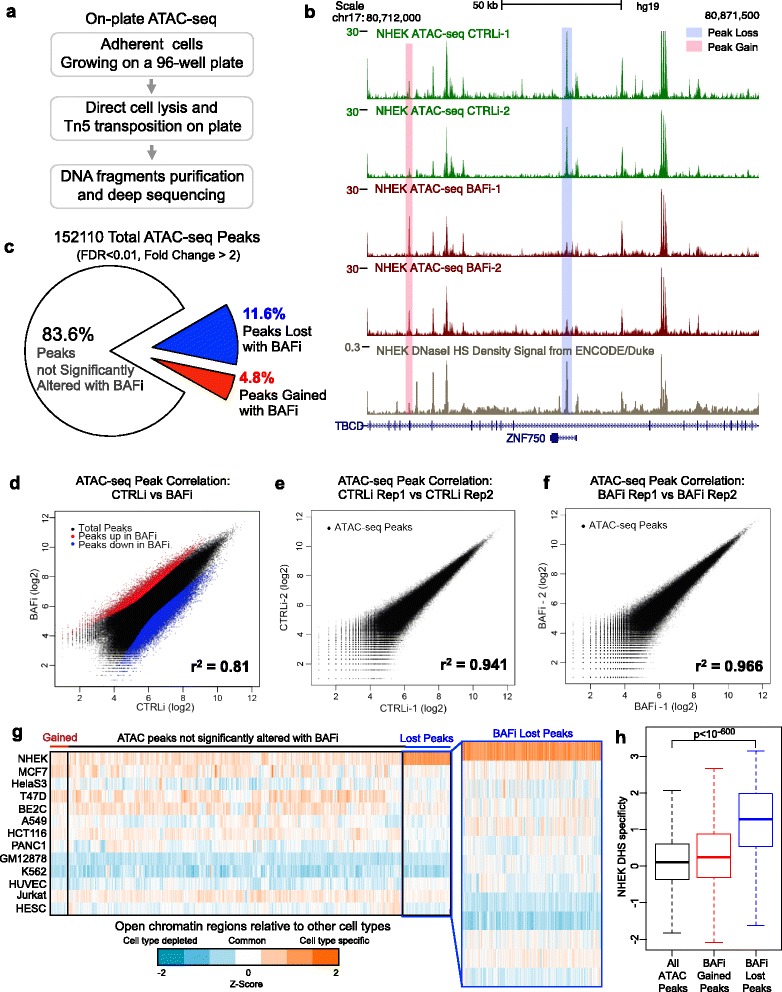
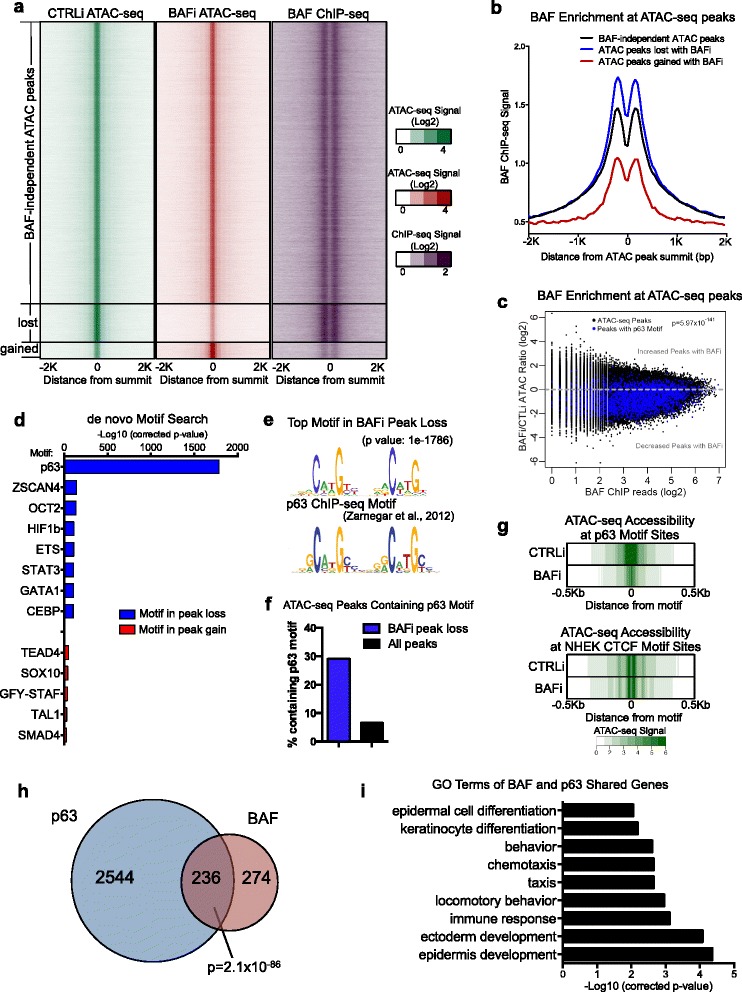
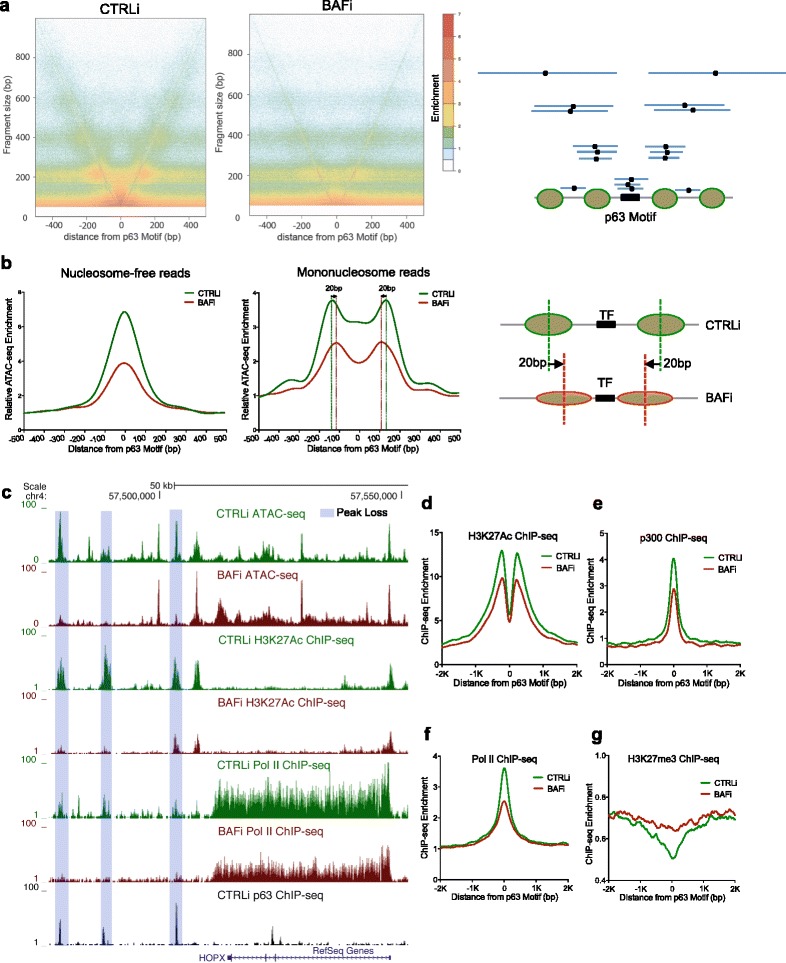
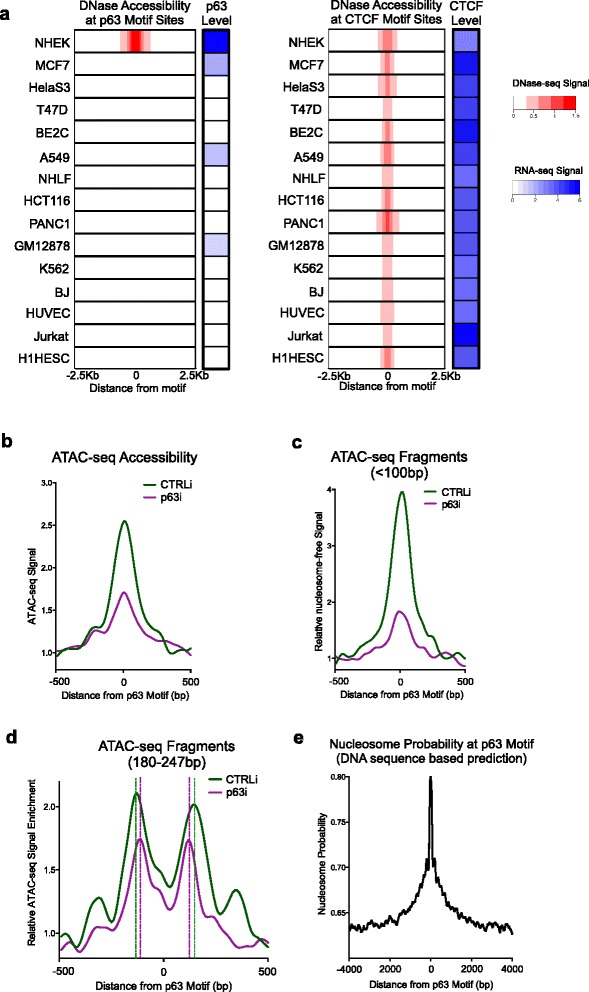
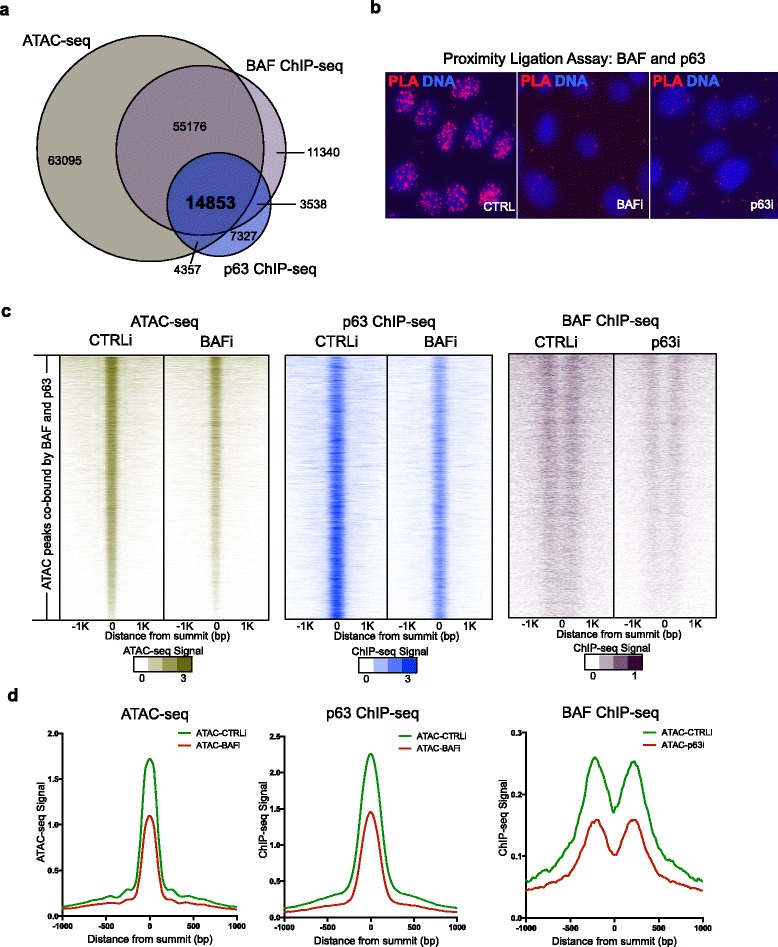
BACKGROUND: Open chromatin regions are correlated with active regulatory elements in development and are dysregulated in diseases. The BAF (SWI/SNF) complex is essential for development, and has been demonstrated to remodel reconstituted chromatin in vitro and to control the accessibility of a few individual regions in vivo. However, it remains unclear where and how BAF controls the open chromatin landscape to regulate developmental processes, such as human epidermal differentiation. RESULTS: Using a novel "on-plate" ATAC-sequencing approach for profiling open chromatin landscapes with a low number of adherent cells, we demonstrate that the BAF complex is essential for maintaining 11.6 % of open chromatin regions in epidermal differentiation. These BAF-dependent open chromatin regions are highly cell-type-specific and are strongly enriched for binding sites for p63, a master epidermal transcription factor. The DNA sequences of p63 binding sites intrinsically favor nucleosome formation and are inaccessible in other cell types without p63 to prevent ectopic activation. In epidermal cells, BAF and p63 mutually recruit each other to maintain 14,853 open chromatin regions. We further demonstrate that BAF and p63 cooperatively position nucleosomes away from p63 binding sites and recruit transcriptional machinery to control tissue differentiation. CONCLUSIONS: BAF displays high specificity in controlling the open chromatin landscape during epidermal differentiation by cooperating with the master transcription factor p63 to maintain lineage-specific open chromatin regions.
Overview
The claims and statistics of this paper haven’t been checked yet.
Free: it reads the open-access text and checks the first 5 claims that cite a source we can check. Create a free account to check every claim.
Integrity signals
Registry
Cites
Statistics
Figures
Verification
Claims the paper makes
The claims and statistics of this paper haven’t been checked yet.
Free: it reads the open-access text and checks the first 5 claims that cite a source we can check. Create a free account to check every claim.
Claims other papers make about this one
Each is checked against this paper’s own text: does it say what the citing paper says it does?
The source backs part of the claim, not all of it — or backs it for a different population, condition or comparison.
In the citing paper
“The mechanisms of pioneer factor action are still being established [37], but at least some of them (such as FOXA, OCT4 and SOX2/SOX11) have been shown to initiate chromatin opening by direct displacement of histones [38–41], whilst many others recruit chromatin remodelers [42–50].”
From Transcriptional enhancers and their communication with gene promoters (2021) · cites this paper as [46]
Experimental — accuracy not yet measuredThe cited source says what the claim attributes to it.
In the citing paper
“TP63, a master regulator of epidermal homeostasis and differentiation”
From Coupled Single-Cell CRISPR Screening and Epigenomic Profiling Reveals Causal Gene Regulatory Networks (2019) · cites this paper as Bao et al., 2015
Self-check
Percentages, sums and reported differences re-computed from the paper’s own numbers.
The self-check needs the paper’s full text.
Citations
Cites
Buenrostro, J. D., Giresi, P. G., Zaba, L. C., Chang, H. Y., & Greenleaf, W. J. (2013) · Nature Methods · doi:10.1038/nmeth.2688 · Cited by 6,422 · cited 6×
“These ranges were used previously [23] to distinguish transposase”
BackgroundMethodSelf-citationThe Biology of Chromatin Remodeling Complexes
Clapier, C. R., & Cairns, B. R. (2009) · Annual Review of Biochemistry · doi:10.1146/annurev.biochem.77.062706.153223 · Cited by 2,380 · cited 1×
“One plausible possibility is that the other regions are controlled by the remodeling activity of other chromatin remodeling complexes, such as CHD, ISWI, and INO80 family members [48].”
Backgroundp63 is a p53 homologue required for limb and epidermal morphogenesis
Mills, A. A., Zheng, B., Wang, X.-J., Vogel, H., Roop, D. R., & Bradley, A. (1999) · Nature · doi:10.1038/19531 · Cited by 1,988 · cited 1×
“p63 is the lineage-specifying TF essential for epidermal development as well as the TF required post-natally to maintain stratified epithelial tissue identity and terminal differentiation [32, 33].”
BackgroundA genomic code for nucleosome positioning
Segal, E., Fondufe-Mittendorf, Y., Chen, L., Thåström, A., Field, Y., Moore, I. K., Wang, J.-P. Z., & Widom, J. (2006) · Nature · doi:10.1038/nature04979 · Cited by 1,499 · cited 1×
“Because local DNA sequence can directly impact nucleosome positioning, we calculated the intrinsic nucleosome binding probability based on genomic sequence [36, 37].”
MethodKadoch, C., Hargreaves, D. C., Hodges, C., Elias, L., Ho, L., Ranish, J., & Crabtree, G. R. (2013) · Nature Genetics · doi:10.1038/ng.2628 · Cited by 1,458 · cited 1×
“BAF has been demonstrated to associate with a variety of TFs from both in vitro and in vivo evidence [16, 25, 40, 41, 44, 45].”
BackgroundHigh-Resolution Mapping and Characterization of Open Chromatin across the Genome
Boyle, A. P., Davis, S., Shulha, H. P., Meltzer, P., Margulies, E. H., Weng, Z., Furey, T. S., & Crawford, G. E. (2008) · Cell · doi:10.1016/j.cell.2007.12.014 · Cited by 1,415 · cited 1×
“These open chromatin regions span an average of 300 base pairs [6], comprise 1–3 % of the total genome [7], and can be identified by DNase I hypersensitive sites sequencing (DNase-seq) [8] or formaldehyde-assisted isolation of regulatory elements sequencing (FAIRE-seq) [9].”
BackgroundDynamic Regulation of Nucleosome Positioning in the Human Genome
Schones, D. E., Cui, K., Cuddapah, S., Roh, T.-Y., Barski, A., Wang, Z., Wei, G., & Zhao, K. (2008) · Cell · doi:10.1016/j.cell.2008.02.022 · Cited by 1,394 · cited 1×
“At the TSSs for active genes, a total of eight (three upstream and five downstream of the TSS) well-positioned nucleosomes are detected; however, only one +1 nucleosome is detected for silenced genes [49].”
BackgroundSWI/SNF nucleosome remodellers and cancer
Wilson, B. G., & Roberts, C. W. M. (2011) · Nature Reviews Cancer · doi:10.1038/nrc3068 · Cited by 1,282 · cited 1×
“cers [16, 17].”
The DNA-encoded nucleosome organization of a eukaryotic genome
Kaplan, N., Moore, I. K., Fondufe-Mittendorf, Y., Gossett, A. J., Tillo, D., Field, Y., LeProust, E. M., Hughes, T. R., Lieb, J. D., Widom, J., et al. (2009) · Nature · doi:10.1038/nature07667 · Cited by 1,194 · cited 2×
“Because local DNA sequence can directly impact nucleosome positioning, we calculated the intrinsic nucleosome binding probability based on genomic sequence [36, 37].”
MethodGiresi, P. G., Kim, J., McDaniell, R. M., Iyer, V. R., & Lieb, J. D. (2007) · Genome Research · doi:10.1101/gr.5533506 · Cited by 955
Self-citation
Cited by
An improved ATAC-seq protocol reduces background and enables interrogation of frozen tissues
Corces, M. R., Trevino, A. E., Hamilton, E. G., Greenside, P. G., Sinnott-Armstrong, N. A., Vesuna, S., Satpathy, A. T., Rubin, A. J., Montine, K. S., Wu, B., et al. (2017) · Nature Methods · doi:10.1038/nmeth.4396 · Cited by 2,496
Self-citationChromatin accessibility and the regulatory epigenome
Klemm, S. L., Shipony, Z., & Greenleaf, W. J. (2019) · Nature Reviews Genetics · doi:10.1038/s41576-018-0089-8 · Cited by 1,793
The Many Roles of BAF (mSWI/SNF) and PBAF Complexes in Cancer
Hodges, C., Kirkland, J. G., & Crabtree, G. R. (2016) · Cold Spring Harbor Perspectives in Medicine · doi:10.1101/cshperspect.a026930 · Cited by 414
“BAF activity and transcription factor (TF) binding appear to be coupled idiosyncratically, as examples can be found in which TF binding requires BAF activity (Ho et al. 2011; Bao et al. 2015) or, alternatively, in which recruitment of BAF requires existing TF binding (Liu et al.”
Mechanisms and functions of nuclear envelope remodelling
Ungricht, R., & Kutay, U. (2017) · Nature Reviews Molecular Cell Biology · doi:10.1038/nrm.2016.153 · Cited by 346
Rubin, A. J., Parker, K. R., Satpathy, A. T., Qi, Y., Wu, B., Ong, A. J., Mumbach, M. R., Ji, A. L., Kim, D. S., Cho, S. W., et al. (2019) · Cell · doi:10.1016/j.cell.2018.11.022 · Cited by 314
Self-citationRubin, A. J., Barajas, B. C., Furlan-Magaril, M., Lopez-Pajares, V., Mumbach, M. R., Howard, I., Kim, D. S., Boxer, L. D., Cairns, J., Spivakov, M., et al. (2017) · Nature Genetics · doi:10.1038/ng.3935 · Cited by 293
Self-citationATP-dependent chromatin remodeling during mammalian development
Hota, S. K., & Bruneau, B. G. (2016) · Development · doi:10.1242/dev.128892 · Cited by 239
“A SNF2L-containing NURF remodeling complex (Barak et al., 2003) is required shortly after embryo implantation (Landry et al., 2008).”
BackgroundMyt1l safeguards neuronal identity by actively repressing many non-neuronal fates
Mall, M., Kareta, M. S., Chanda, S., Ahlenius, H., Perotti, N., Zhou, B., Grieder, S. D., Ge, X., Drake, S., Euong Ang, C., et al. (2017) · Nature · doi:10.1038/nature21722 · Cited by 225
Saladi, S. V., Ross, K., Karaayvaz, M., Tata, P. R., Mou, H., Rajagopal, J., Ramaswamy, S., & Ellisen, L. W. (2017) · Cancer Cell · doi:10.1016/j.ccell.2016.12.001 · Cited by 197
“Similarly, other recent work points to p63 as a prominent contributor to SWI/SNF-dependent function in the normal epidermis, in keeping with our findings and with its established role as a master epidermal transcription factor (Bao et al., 2015; Senoo et al., 2007).”
BackgroundResultChromatin accessibility underlies synthetic lethality of SWI/SNF subunits in ARID1A-mutant cancers
Kelso, T. W. R., Porter, D. K., Amaral, M. L., Shokhirev, M. N., Benner, C., & Hargreaves, D. C. (2017) · eLife · doi:10.7554/elife.30506 · Cited by 192
“We found that the majority of SMARCA4 and SMARCC1 binding occurred in accessible regions (Figure 2A), consistent with previous reports showing strong overlap between chromatin remodelers and DNA accessibility (Bao et al., 2015; Morris et al., 2014).”
BackgroundResultInfluentialChromatin accessibility dynamics reveal novel functional enhancers in C. elegans
Daugherty, A. C., Yeo, R. W., Buenrostro, J. D., Greenleaf, W. J., Kundaje, A., & Brunet, A. (2017) · Genome Research · doi:10.1101/gr.226233.117 · Cited by 182
“To examine if EOR-1 is found at closed chromatin, we quantified not only ATAC-seq signal but also ATAC-seq fragment size, as larger ATAC-seq fragments correlate with higher nucleosome occupancy and less accessible chromatin regions (Buenrostro et al. 2013; Bao et al. 2015; Schep et al. 2015).”
Master regulatory role of p63 in epidermal development and disease
Soares, E., & Zhou, H. (2018) · Cellular and Molecular Life Sciences · doi:10.1007/s00018-017-2701-z · Cited by 182
“Taken together, these observations support an appealing model where p63, probably together with co-regulating transcription and chromatin factors, such as BAF [61], acts as a pioneer factor to open chromatin in epithelial cells and shapes the enhancer landscape.”
BackgroundAcute BAF perturbation causes immediate changes in chromatin accessibility
Schick, S., Grosche, S., Kohl, K. E., Drpic, D., Jaeger, M. G., Marella, N. C., Imrichova, H., Lin, J.-M. G., Hofstätter, G., Schuster, M., et al. (2021) · Nature Genetics · doi:10.1038/s41588-021-00777-3 · Cited by 162
Dravis, C., Chung, C.-Y., Lytle, N. K., Herrera-Valdez, J., Luna, G., Trejo, C. L., Reya, T., & Wahl, G. M. (2018) · Cancer Cell · doi:10.1016/j.ccell.2018.08.001 · Cited by 141
“ATAC-seq analysis was performed as previously described (Bao et al., 2015b).”
Feng, W., Kawauchi, D., Körkel-Qu, H., Deng, H., Serger, E., Sieber, L., Lieberman, J. A., Jimeno-González, S., Lambo, S., Hanna, B. S., et al. (2017) · Nature Communications · doi:10.1038/ncomms14758 · Cited by 132
Molecular Mechanisms of p63-Mediated Squamous Cancer Pathogenesis
Moses, M. A., George, A. L., Sakakibara, N., Mahmood, K., Ponnamperuma, R. M., King, K. E., & Weinberg, W. C. (2019) · International Journal of Molecular Sciences · doi:10.3390/ijms20143590 · Cited by 114
“This supports a role for ∆Np63α in maintaining a chromatin landscape which directs an epithelial phenotype [34,35].”
BackgroundThe Tumor Suppressor ARID1A Controls Global Transcription via Pausing of RNA Polymerase II
Trizzino, M., Barbieri, E., Petracovici, A., Wu, S., Welsh, S. A., Owens, T. A., Licciulli, S., Zhang, R., & Gardini, A. (2018) · Cell Reports · doi:10.1016/j.celrep.2018.05.097 · Cited by 97
“Previous studies revealed a role for SWI/SNF components (especially BRG1) as modulators of accessibility at enhancers (Bao et al., 2015; Laurette et al., 2015), but we find that the contribution of ARID1A is limited to the weakest enhancer regions, displaying the lowest enrichment for ARID1A by ChIP-seq.”
BackgroundDetect accessible chromatin using ATAC-sequencing, from principle to applications
Sun, Y., Miao, N., & Sun, T. (2019) · Hereditas · doi:10.1186/s41065-019-0105-9 · Cited by 106
p63 and SOX2 Dictate Glucose Reliance and Metabolic Vulnerabilities in Squamous Cell Carcinomas
Hsieh, M.-H., Choe, J. H., Gadhvi, J. G., Kim, Y. J., Arguez, M. A., Palmer, M., Gerold, H., Nowak, C. M., Do, H., Mazambani, S., et al. (2019) · Cell Reports · doi:10.1016/j.celrep.2019.07.027 · Cited by 99
“Global DNA binding of p63 across the genome has been well characterized (Bao et al., 2015; Kouwenhoven et al., 2015).”
BackgroundYi, M., Tan, Y., Wang, L., Cai, J., Li, X., Zeng, Z., Xiong, W., Li, X., Li, X., Tan, P., et al. (2020) · Cellular and Molecular Life Sciences · doi:10.1007/s00018-020-03539-2 · Cited by 96
“Interestingly, either ΔNp63α or KLF4 alone could not induce expression of keratin 14 [66], suggesting the interaction between ΔNp63α and KLF4 is required for full epidermal commitment.”
BackgroundInfluentialXu, Q., Georgiou, G., Frölich, S., van der Sande, M., Veenstra, G. J. C., Zhou, H., & van Heeringen, S. J. (2021) · Nucleic Acids Research · doi:10.1093/nar/gkab598 · Cited by 95
Miller, E. L., Hargreaves, D. C., Kadoch, C., Chang, C.-Y., Calarco, J. P., Hodges, C., Buenrostro, J. D., Cui, K., Greenleaf, W. J., Zhao, K., et al. (2017) · Nature Structural & Molecular Biology · doi:10.1038/nsmb.3384 · Cited by 90
“It is not fully understood how the chromatin remodeling activities of BAF complexes translate to its instructive roles in cell identity, although there is some evidence showing that it may involve assisting fate-determining transcription factors to bind chromatin 8,10,27,28 .”
The mechanistic basis for chromatin regulation by pioneer transcription factors
Iwafuchi‐Doi, M. (2019) · WIREs Systems Biology and Medicine · doi:10.1002/wsbm.1427 · Cited by 82
“Similarly, a C-terminal domain of EBF1, a key transcription factor for B cell programming, is required for chromatin opening at the majority of EBF1-inducible DNase-hypersensitive sites (Boller et al., 2016).”
Tumor suppressor p53: from engaging DNA to target gene regulation
Sammons, M. A., Nguyen, T.-A. T., McDade, S. S., & Fischer, M. (2020) · Nucleic Acids Research · doi:10.1093/nar/gkaa666 · Cited by 77
“Appropriate nucleosome structure at p63-bound regulatory regions was related to p63 interactions with BAF chromatin remodeling complex (187), providing a direct biochemical mechanism for these observed activities.”
BackgroundTranscriptional enhancers and their communication with gene promoters
Ray-Jones, H., & Spivakov, M. (2021) · Cellular and Molecular Life Sciences · doi:10.1007/s00018-021-03903-w · Cited by 81
A Unique Epigenomic Landscape Defines Human Erythropoiesis
Schulz, V., Yan, H., Lezon-Geyda, K., An, X., Hale, J., Hillyer, C. D., Mohandas, N., & Gallagher, P. G. (2019) · Cell Reports · doi:10.1016/j.celrep.2019.08.020 · Cited by 80
“The mapping of DHS sites and ATAC peaks to genetic loci associated with various genetic traits by genome-wide association studies is a powerful technique that has yielded novel insights into quantitative trait variation and genetic disease (Kumasaka et al., 2016; Abraham et al.; 2013; Bao et al., 2015; Degner et al.,…”
Single Cell and Open Chromatin Analysis Reveals Molecular Origin of Epidermal Cells of the Skin
Fan, X., Wang, D., Burgmaier, J. E., Teng, Y., Romano, R.-A., Sinha, S., & Yi, R. (2018) · Developmental Cell · doi:10.1016/j.devcel.2018.08.010 · Cited by 72
Xie, H., Zhang, W., Zhang, M., Akhtar, T., Li, Y., Yi, W., Sun, X., Zuo, Z., Wei, M., Fang, X., et al. (2020) · Science Advances · doi:10.1126/sciadv.aay5247 · Cited by 69
“As accessible DNA sites are often obligated if TFs bind to their cognate DNA motifs, the integration of TF motifs and DNA accessibility data from ATAC-seq can predict TF occupancy on chromatin and thus create regulatory networks (16, 17, 22, 23).”
BackgroundSelf-citationHo, P. J., Lloyd, S. M., & Bao, X. (2019) · Development · doi:10.1242/dev.178780 · Cited by 73
“Bao et al. (2015) PDX1 Unclear PDX1 recruits BRG1- or BRM-containing BAF to antagonistically modulate gene expression in β cells in response to different glucose concentrations.”
BackgroundMethodInfluentialSelf-citationInterplay of BAF and MLL4 promotes cell type-specific enhancer activation
Park, Y.-K., Lee, J., Yan, Z., McKernan, K. E., O’Haren, T., Wang, W., Peng, W., & Ge, K. (2021) · Nature Communications · doi:10.1038/s41467-021-21893-y · Cited by 72
CSNK1a1 Regulates PRMT1 to Maintain the Progenitor State in Self-Renewing Somatic Tissue
Bao, X., Siprashvili, Z., Zarnegar, B. J., Shenoy, R. M., Rios, E. J., Nady, N., Qu, K., Mah, A., Webster, D. E., Rubin, A. J., et al. (2017) · Developmental Cell · doi:10.1016/j.devcel.2017.08.021 · Cited by 71
Self-citationXist RNA antagonizes the SWI/SNF chromatin remodeler BRG1 on the inactive X chromosome
Jégu, T., Blum, R., Cochrane, J. C., Yang, L., Wang, C., Gilles, M.-E., Colognori, D., Szántó, A., Marr, S. K., Kingston, R. E., et al. (2019) · Nature Structural & Molecular Biology · doi:10.1038/s41594-018-0176-8 · Cited by 68
“4b-h), but promotes open chromatin 30,31 .”
Păun, O., Tan, Y. X., Patel, H., Strohbuecker, S., Ghanate, A. D., Gigli, C. C., Llorian, M., Gerontogianni, L., Goldstone, R. J., Ang, S., et al. (2023) · Genes & Development · doi:10.1101/gad.350269.122 · Cited by 67
“S4C), consistent with its role in chromatin remodeling (Bao et al. 2015; Schick et al. 2019; Iurlaro et al. 2021).”
BackgroundEpigenetic Applications in Adverse Outcome Pathways and Environmental Risk Evaluation
Angrish, M. M., Allard, P., McCullough, S. D., Druwe, I. L., Chadwick, L. H., Hines, E. P., & Chorley, B. N. (2018) · Environmental Health Perspectives · doi:10.1289/ehp2322 · Cited by 66
Nuclear RIPK1 promotes chromatin remodeling to mediate inflammatory response
Li, W., Shan, B., Zou, C., Wang, H., Zhang, M., Zhu, H., Naito, M. G., Xu, D., Manuel, V. J., Mifflin, L., et al. (2022) · Cell Research · doi:10.1038/s41422-022-00673-3 · Cited by 64
“The BAF complex is known to regulate nucleosome positioning and recruit transcriptional machinery.(32,33) Our results suggest that in cells stimulated by TNFα, transcription factors bind to their target enhancers and recruit RIPK1/BAF complex to the genomic target sites where RIPK1 binds to H3K4me1 directly.”
BackgroundMutant p63 Affects Epidermal Cell Identity through Rewiring the Enhancer Landscape
Qu, J., Tanis, S. E. J., Smits, J. P. H., Kouwenhoven, E. N., Oti, M., van den Bogaard, E. H., Logie, C., Stunnenberg, H. G., van Bokhoven, H., Mulder, K. W., et al. (2018) · Cell Reports · doi:10.1016/j.celrep.2018.11.039 · Cited by 58
p63 establishes epithelial enhancers at critical craniofacial development genes
Lin-Shiao, E., Lan, Y., Welzenbach, J., Alexander, K. A., Zhang, Z., Knapp, M., Mangold, E., Sammons, M. A., Ludwig, K. U., & Berger, S. L. (2019) · Science Advances · doi:10.1126/sciadv.aaw0946 · Cited by 55
Pioneer and repressive functions of p63 during zebrafish embryonic ectoderm specification
Santos-Pereira, J. M., Gallardo-Fuentes, L., Neto, A., Acemel, R. D., & Tena, J. J. (2019) · Nature Communications · doi:10.1038/s41467-019-11121-z · Cited by 55
Smirnov, A., Lena, A. M., Cappello, A., Panatta, E., Anemona, L., Bischetti, S., Annicchiarico‐Petruzzelli, M., Mauriello, A., Melino, G., & Candi, E. (2018) · Oncogene · doi:10.1038/s41388-018-0509-4 · Cited by 54
“shown that p63 acts as a co-activator binding enhancer regions rather than promoter regions [26].”
BackgroundChromatin accessibility identifies diversity in mesenchymal stem cells from different tissue origins
Ho, Y.-T., Shimbo, T., Wijaya, E., Ouchi, Y., Takaki, E., Yamamoto, R., Kikuchi, Y., Kaneda, Y., & Tamai, K. (2018) · Scientific Reports · doi:10.1038/s41598-018-36057-0 · Cited by 52
The native cistrome and sequence motif families of the maize ear
Savadel, S. D., Hartwig, T., Turpin, Z. M., Vera, D. L., Lung, P.-Y., Sui, X., Blank, M., Frommer, W. B., Dennis, J. H., Zhang, J., et al. (2021) · PLoS Genetics · doi:10.1371/journal.pgen.1009689 · Cited by 53
“Recent progress in footprint calling approaches have offered multiple strategies of increasingly high-resolution for motif discovery using open chromatin assays such as ATACseq [16,50].”
BackgroundSelf-citationRogerson, C., Britton, E., Withey, S., Hanley, N. A., Ang, Y. S., & Sharrocks, A. D. (2019) · Genome Research · doi:10.1101/gr.243345.118 · Cited by 52
“…www.genome.org landscape as this has been successfully applied to studying cell fate transitions such as neuron differentiation from fibroblasts (Wapinski et al. 2017), hematopoiesis (Yu et al. 2016), epidermal differentiation (Bao et al. 2015), and embryonic development (Cusanovich et al. 2018).”
BackgroundWang, X., Yan, J., Shen, B., & Wei, G. (2021) · Frontiers in Cell and Developmental Biology · doi:10.3389/fcell.2021.708066 · Cited by 51
“As TFs binding to their cognate motifs, often obligates nucleosome eviction and creation of accessible chromatin regions, the integration of known TF motifs and chromatin accessibility data from ATACseq can predict TF occupancy on the chromatin across the whole genome (Buenrostro et al., 2013; Bao et al., 2015; Qu et…”
Backgroundp63 cooperates with CTCF to modulate chromatin architecture in skin keratinocytes
Qu, J., Yi, G., & Zhou, H. (2019) · Epigenetics & Chromatin · doi:10.1186/s13072-019-0280-y · Cited by 50
“Besides, p63 interacts with the chromatin 17 remodelling factor BAF1 to maintain the open chromatin regions [5] and with Dnmt3a to locate 18 enhancers [12].”
BackgroundInfluentialDissecting the DNA binding landscape and gene regulatory network of p63 and p53
Riege, K., Kretzmer, H., Sahm, A., McDade, S. S., Hoffmann, S., & Fischer, M. (2020) · eLife · doi:10.7554/elife.63266 · Cited by 51
Zhao, Y., Zheng, D., & Cvekl, A. (2019) · Epigenetics & Chromatin · doi:10.1186/s13072-019-0272-y · Cited by 48
The long non‐coding RNA LINC00941 and SPRR5 are novel regulators of human epidermal homeostasis
Ziegler, C., Graf, J., Faderl, S. H., Schedlbauer, J., Strieder, N., Förstl, B., Spang, R., Bruckmann, A., Merkl, R., Hombach, S., et al. (2019) · EMBO Reports · doi:10.15252/embr.201846612 · Cited by 47
“Analysis of LINC00941 regulated genes per [20] (GSE59827) and Bao et al [21] (GSE67382) keratinocytes were downloaded from the Gene Expression Omnibus (GEO) database [40] and uploaded into UCSC [41] to visualize the peak location with respect to SPRR5.”
Control of Stimulus-Dependent Responses in Macrophages by SWI/SNF Chromatin Remodeling Complexes
Gatchalian, J., Liao, J., Maxwell, M. B., & Hargreaves, D. C. (2020) · Trends in Immunology · doi:10.1016/j.it.2019.12.002 · Cited by 46
“to a requirement for chromatin remodeling at TF binding sites [2, 4, 5, 7, 8, 11, 12, 24, 25].”
BackgroundSastre-Perona, A., Hoang-Phou, S. A., Leitner, M.-C., Okuniewska, M., Meehan, S. A., & Schöber, M. (2019) · Cell stem cell · doi:10.1016/j.stem.2019.01.003 · Cited by 45
“Indeed, SWI/ SNF2 complex activity is already known to govern epidermal self-renewal and differentiation (Bao et al., 2015; 2013).”
BackgroundMiroshnikova, Y. A., Cohen, I., Ezhkova, E., & Wickström, S. A. (2019) · Current Opinion in Genetics & Development · doi:10.1016/j.gde.2019.04.014 · Cited by 44
“BAF and p63 mutually recruit each other to a subset of open chromatin regions during differentiation [29].”
BackgroundPanatta, E., Lena, A. M., Mancini, M., Smirnov, A., Marini, A., Ponti, R. D., Botta‐Orfila, T., Tartaglia, G. G., Mauriello, A., Zhang, X., et al. (2020) · EMBO Reports · doi:10.15252/embr.201846734 · Cited by 44
“Conversely, histone demethylase Jumonji domain-containing 3 [7], adenosine triphosphate-depen-dent (ATP-dependent) chromatin remodeller Brg1/BAF complex [6,8,9] and genome organizer Satb1 [10] promote terminal keratinocyte differentiation [11 – 15].”
Sethi, I., Gluck, C. B., Zhou, H., Buck, M. J., & Sinha, S. (2017) · Nucleic Acids Research · doi:10.1093/nar/gkx416 · Cited by 46
Control of p53-dependent transcription and enhancer activity by the p53 family member p63
Uzunbas, G. K., Ahmed, F., & Sammons, M. A. (2019) · Journal of Biological Chemistry · doi:10.1074/jbc.ra119.007965 · Cited by 42
“Similarly, inactivation of the BAF chromatin remodeling complex is correlated with reduced chromatin accessibility at p63-binding sites (40).”
BackgroundChromatin regulation and dynamics in stem cells
Klein, D. C., & Hainer, S. J. (2019) · Current topics in developmental biology/Current Topics in Developmental Biology · doi:10.1016/bs.ctdb.2019.11.002 · Cited by 43
“Along with OCT4 and SOX2, additional pioneer factors, such as p63, GATA, and AP-1 have been reported to recruit nucleosome remodeling factors to their target sites (Bao et al., 2015; Engelen et al., 2011; Hu et al., 2011; Takaku et al., 2016; Vierbuchen et al., 2017).”
Backgroundp63 Is a Promising Marker in the Diagnosis of Unusual Skin Cancer
Smirnov, A., Anemona, L., Novelli, F., Piro, M. C., Annicchiarico‐Petruzzelli, M., Melino, G., & Candi, E. (2019) · International Journal of Molecular Sciences · doi:10.3390/ijms20225781 · Cited by 38
The foggy world(s) of p63 isoform regulation in normal cells and cancer
Pokorná, Z., Vysloužil, J., Hrabal, V., Vojtĕsek, B., & Coates, P. J. (2021) · The Journal of Pathology · doi:10.1002/path.5656 · Cited by 37
ATAC-pipe: general analysis of genome-wide chromatin accessibility
Zuo, Z.-Q., Jin, Y., Zhang, W., Lu, Y., Li, B., & Qu, K. (2018) · Briefings in Bioinformatics · doi:10.1093/bib/bby056 · Cited by 36
Self-citationΔNp63 is a pioneer factor that binds inaccessible chromatin and elicits chromatin remodeling
Yu, X., Singh, P. K., Tabrejee, S., Sinha, S., & Buck, M. J. (2021) · Epigenetics & Chromatin · doi:10.1186/s13072-021-00394-8 · Cited by 36
“ΔNp63 has been shown to require the BAF complex to maintain a nucleosome-depleted region at its binding sites [18], and has been shown to interact with H3K4 methyl-transferase, KMT2D [19].”
BackgroundEngineered Microenvironments to Direct Epidermal Stem Cell Behavior at Single-Cell Resolution
Watt, F. M. (2016) · Developmental Cell · doi:10.1016/j.devcel.2016.08.010 · Cited by 36
p63 and p53: Collaborative Partners or Dueling Rivals?
Woodstock, D. L., Sammons, M. A., & Fischer, M. (2021) · Frontiers in Cell and Developmental Biology · doi:10.3389/fcell.2021.701986 · Cited by 35
“Modulation of local and distal chromatin states, be it to facilitate transcriptional activation (Fessing et al., 2011; Bao et al., 2015; Li et al., 2019; Catizone et al., 2020) or repression (Gallant-Behm et al., 2012; Pattison et al., 2018) appears to be a key function of 1Np63 and paves the way…”
BackgroundTissue signals imprint Aiolos expression in ILC2s to modulate type 2 immunity
Qiu, J., Zhang, J., Ji, Y., Sun, H., Gu, Z., 孙强玲, Bai, M., Tang, J., Tang, J., Zhang, Y., et al. (2021) · Mucosal Immunology · doi:10.1038/s41385-021-00431-5 · Cited by 35
Self-citationHigh Quality ATAC-Seq Data Recovered from Cryopreserved Breast Cell Lines and Tissue
Fujiwara, S., Baek, S., Varticovski, L., Kim, S., & Hager, G. L. (2019) · Scientific Reports · doi:10.1038/s41598-018-36927-7 · Cited by 35
Epigenetic biomarkers and preterm birth
Park, B., Khanam, R., Vinayachandran, V., Baqui, A. H., London, S. J., & Biswal, S. S. (2020) · Environmental Epigenetics · doi:10.1093/eep/dvaa005 · Cited by 34
“ATAC-seq is specifically designed to effectively sequence samples consisting of a relatively small number of cells; for instance, blood ATAC-seq requires only 5000 cells [102].”
MethodEpigenetic and metabolic regulation of epidermal homeostasis
Wagner, R. N., Hofbauer, J. P., Wally, V., Kofler, B., Schmuth, M., Rosa, L. D., Luca, M. D., & Bauer, J. W. (2021) · Experimental Dermatology · doi:10.1111/exd.14305 · Cited by 34
Distinct interactors define the p63 transcriptional signature in epithelial development or cancer
Pecorari, R., Bernassola, F., Melino, G., & Candi, E. (2022) · Biochemical Journal · doi:10.1042/bcj20210737 · Cited by 34
Unraveling cancer lineage drivers in squamous cell carcinomas
Guan, Y., Wang, G., Fails, D. M., Nagarajan, P., & Ge, Y. (2019) · Pharmacology & Therapeutics · doi:10.1016/j.pharmthera.2019.107448 · Cited by 35
“Genome-wide search of TP63 targets in human and mouse epithelia further expanded squamous lineage defining target network of TP63, solidifying its active suppression of ectopic mesenchymal lineage, and interaction with other epigenetic regulators (Bao et al., 2015; Fan et al., 2018; Kouwenhoven et al., 2010; Medawar e…”
BackgroundSoares, E., Xu, Q., Li, Q., Qu, J., Zheng, Y., Raeven, H. H. M., Brandão, K. O., Petit, I., van den Akker, W. M. R., van Heeringen, S. J., et al. (2019) · Proceedings of the National Academy of Sciences · doi:10.1073/pnas.1908180116 · Cited by 36
Biophysically Motivated Regulatory Network Inference: Progress and Prospects
Äijö, T., & Bonneau, R. (2016) · Human Heredity · doi:10.1159/000446614 · Cited by 30
Chen, X., Lloyd, S. M., Kweon, J., Gamalong, G. M., & Bao, X. (2021) · Nature Communications · doi:10.1038/s41467-020-20674-3 · Cited by 30
Self-citationThe mTOR chromatin-bound interactome in prostate cancer
Dufour, C. R., Scholtes, C., Yan, M., Chen, Y., Han, L., Li, T., Xia, H., Deng, Q., Vernier, M., & Giguère, V. (2022) · Cell Reports · doi:10.1016/j.celrep.2022.110534 · Cited by 30
Isoform-Specific Roles of Mutant p63 in Human Diseases
Osterburg, C., Osterburg, S., Zhou, H., Missero, C., & Dötsch, V. (2021) · Cancers · doi:10.3390/cancers13030536 · Cited by 31
“In keratinocytes, p63 and the ATP-dependent chromatin remodeling BAF complex (SWI/SNF in yeast) mutually recruit each other to DNA sequences to remodel the chromatin structure and to recruit the transcriptional machinery to sites important for cell-type specific gene expression [106].”
BackgroundBrg1 restrains the pro-inflammatory properties of ILC3s and modulates intestinal immunity
Qi, X., Qiu, J., Chang, J., Ji, Y., Yang, Q., Cui, G., Sun, L., Chai, Q., Qin, J., & Qiu, J. (2020) · Mucosal Immunology · doi:10.1038/s41385-020-0317-3 · Cited by 29
Epigenetic memory contributing to the pathogenesis of AKI-to-CKD transition
Tanemoto, F., Nangaku, M., & Mimura, I. (2022) · Frontiers in Molecular Biosciences · doi:10.3389/fmolb.2022.1003227 · Cited by 29
“the concentrations of TFs and active chromatin remodelers that modulate nucleosome turnover rates raises the possibility of such replacement and promotes accessibility remodeling (Bao et al., 2015).”
BackgroundAmorim, M. J. B., Peijnenburg, W. J. G. M., Greco, D., Saarimäki, L. A., Dumit, V. I., Bahl, A., Haase, A., Tran, L., Hackermüller, J., Canzler, S., et al. (2022) · Nano Today · doi:10.1016/j.nantod.2022.101735 · Cited by 29
A Kaleidoscope of Keratin Gene Expression and the Mosaic of Its Regulatory Mechanisms
Kalabusheva, E. P., Shtompel, A. S., Rippa, A. L., Ulianov, S. V., Razin, S. V., & Vorotelyak, E. A. (2023) · International Journal of Molecular Sciences · doi:10.3390/ijms24065603 · Cited by 30
BRG1 knockdown inhibits proliferation through multiple cellular pathways in prostate cancer
Giles, K. A., Gould, C. M., Achinger-Kawecka, J., Page, S. G., Kafer, G. R., Rogers, S., Luu, P., Cesare, A. J., Clark, S. J., & Taberlay, P. C. (2021) · Clinical Epigenetics · doi:10.1186/s13148-021-01023-7 · Cited by 28
Guan, Y., Yang, Y. J., Nagarajan, P., & Ge, Y. (2020) · Experimental Dermatology · doi:10.1111/exd.14247 · Cited by 28
Long non‐coding RNAs in diabetic wound healing: Current research and clinical relevance
Kuai, L., Jiang, J., Li, W., Li, B., & Yin, S. (2021) · International Wound Journal · doi:10.1111/iwj.13655 · Cited by 26
Bcl11b/Ctip2 in Skin, Tooth, and Craniofacial System
Daher, M., Bausero, P., Agbulut, O., Li, Z., & Parlakian, A. (2020) · Frontiers in Cell and Developmental Biology · doi:10.3389/fcell.2020.581674 · Cited by 26
Chromatin openness requires continuous SWI/SNF activity
Hargreaves, D. C. (2021) · Nature Genetics · doi:10.1038/s41588-021-00781-7 · Cited by 26
Leão, F. B., Vaughn, L. S., Bhatt, D. M., Liao, W., Maloney, D., Carvalho, B. C., de Oliveira, L. C., Ghosh, S., & Silva, A. M. (2020) · The International Journal of Biochemistry & Cell Biology · doi:10.1016/j.biocel.2020.105840 · Cited by 25
IL ‐38 orchestrates proliferation and differentiation in human keratinocytes
Mermoud, L., Shutova, M. S., Díaz-Barreiro, A., Talabot‐Ayer, D., Drukała, J., Wolnicki, M., Kaya, G., Boehncke, W., Palmer, G., & Borowczyk, J. (2022) · Experimental Dermatology · doi:10.1111/exd.14644 · Cited by 23
RN7SK small nuclear RNA controls bidirectional transcription of highly expressed gene pairs in skin
Bandiera, R., Wagner, R. E., Britto‐Borges, T., Dieterich, C., Dietmann, S., Bornelöv, S., & Frye, M. (2021) · Nature Communications · doi:10.1038/s41467-021-26083-4 · Cited by 22
Zhang, B., Lin, J., Zhang, J., Wang, X., & Deng, X. (2022) · Frontiers in Cell and Developmental Biology · doi:10.3389/fcell.2022.838332 · Cited by 22
“The integration of open chromatin regions identified by ATAC-seq and TF binding motifs can predict TF occupancy and TFBSs on the chromatin (Bao et al., 2015; Corces et al., 2018; Qu et al., 2017).”
Self-citationZhang, Z., Lin, L., Chen, H., Ye, W., Dong, S., Zheng, X., & Wang, Y. (2022) · Molecular Plant-Microbe Interactions · doi:10.1094/mpmi-11-21-0291-ta · Cited by 18
Single Cell and Open Chromatin Analysis Reveals Molecular Origin of Epidermal Cells of the Skin
Fan, X., Wang, D., Burgmaier, J. E., Teng, Y., Romano, R., Sinha, S., & Yi, R. (2018) · Developmental Cell · doi:10.1016/j.devcel.2018.09.019 · Cited by 17
“Although extensive efforts have been dedicated to study the functions of ΔNp63 (Bao et al., 2015; Laurikkala et al., 2006; Medawar et al., 2008; Romano et al., 2012; Senoo et al., 2007; Shalom-Feuerstein et al., 2011; Truong et al., 2006; Yang et al., 2006), the genome-wide effect of ΔNp63 in governing epidermal fate…”
BackgroundTranscriptional and epigenetic regulation in thymic epithelial cells*
Martinez‐Ruíz, G. U., Morales‐Sánchez, A., & Bhandoola, A. (2021) · Immunological Reviews · doi:10.1111/imr.13034 · Cited by 16
Lazar, J. E., Stehling-Sun, S., Nandakumar, V., Wang, H., Chee, D. R., Howard, N. P., Acosta, R., Dunn, D., Diegel, M., Neri, F. J., et al. (2020) · Cell Reports · doi:10.1016/j.celrep.2020.107676 · Cited by 15
Shidlovskii, Y. V., Bylino, O. V., Shaposhnikov, A. V., Kachaev, Z. M., Lebedeva, L. A., Kolesnik, V. V., Amendola, D., Simone, G. D., Formicola, N., Schedl, P. D., et al. (2021) · International Journal of Molecular Sciences · doi:10.3390/ijms22062856 · Cited by 15
“Previous investigations have shown that recruitment of the remodeler to a definite site is not always accompanied by local chromatin remodeling [59,60].”
BackgroundBasu, J., Madhulika, S., Murmu, K. C., Mohanty, S., Samal, P., Das, A., Mahapatra, S., Saha, S., Sinha, I., & Prasad, P. (2023) · Frontiers in Cell and Developmental Biology · doi:10.3389/fcell.2023.1060537 · Cited by 11
“Generally, the open chromatin structure is compacted systematically in a manner that lineage-specific chromatin is not condensed (Bao et al., 2015; Allshire and Madhani, 2018) (Figure 2A).”
BackgroundKumegawa, K., Saeki, S., Takahashi, Y., Yang, L., Osako, T., Nakadai, T., Amino, S., Maeda, T., Takahata, C., Mori, S., et al. (2023) · British Journal of Cancer · doi:10.1038/s41416-023-02178-1 · Cited by 14
“nucleosome-free and nucleosome-containing reads, might generate artifacts [31], we also performed motif analysis using only nucleosome-free reads.”
Methodp63: A Master Regulator at the Crossroads Between Development, Senescence, Aging, and Cancer
Murari, L. S. S., Kunkel, S., Shetty, A. V., Bents, A., Bhandary, A., & Rivera‐Mulia, J. C. (2025) · Cells · doi:10.3390/cells14010043 · Cited by 14
Epigenetic regulation and signalling pathways in Merkel cell development
Oss-Ronen, L., & Cohen, I. (2021) · Experimental Dermatology · doi:10.1111/exd.14415 · Cited by 14
Epigenomics-based identification of oestrogen-regulated long noncoding RNAs in ER+ breast cancer
Zhang, Z., Yu, W., Tang, D., Zhou, Y., Bi, M., Wang, H., Zheng, Y., Chen, M.-Q., Li, L., Xu, X.-P., et al. (2020) · RNA Biology · doi:10.1080/15476286.2020.1777769 · Cited by 11
“ARID1A and ARID1B are mutually exclusive subunits of the BAF subfamily of SWI/SNF chromatin remodelling complex that controls accessibility at most promoters and enhancers [46,47].”
BackgroundGenome-Wide Approaches to Defining Macrophage Identity and Function
Fonseca, G. J., Seidman, J. S., & Glass, C. K. (2016) · Microbiology Spectrum · doi:10.1128/microbiolspec.mchd-0039-2016 · Cited by 13
“This method has also been used to de fi ne several LDTFs, including BAF and p63 mutual recruitment to almost 15,000 open chromatin regions in adherent human keratinocytes (88); PDX1 and NKX6.”
MethodLander, J. M., Supp, D. M., He, H., Martin, L. J., Chen, X., Weirauch, M. T., Boyce, S. T., & Kopan, R. (2017) · PLoS ONE · doi:10.1371/journal.pone.0184500 · Cited by 12
Molecular and Cellular Function of p63 in Skin Development and Genetic Diseases
Girolamo, D. D., Iorio, E. D., & Missero, C. (2024) · Journal of Investigative Dermatology · doi:10.1016/j.jid.2024.08.011 · Cited by 11
The Role of Nucleosomes in Epigenetic Gene Regulation
Giles, K. A., & Taberlay, P. C. (2019) · Springer eBooks · doi:10.1007/978-981-13-8958-0_4 · Cited by 11
p63 orchestrates serine and one carbon metabolism enzymes expression in head and neck cancer
Cappello, A., Tosetti, G., Smirnov, A., Ganini, C., Yang, X. F., Shi, Y., Wang, Y., Melino, G., Bernassola, F., & Candi, E. (2023) · Biology Direct · doi:10.1186/s13062-023-00426-1 · Cited by 12
Smirnov, A., Lena, A. M., Tosetti, G., Yang, X., Cappello, A., Helmer‐Citterich, M., Melino, G., & Candi, E. (2023) · Cell Death Discovery · doi:10.1038/s41420-023-01716-3 · Cited by 11
“All the data used in the study are available on GEO NCBI: RNA-seq of human keratinocytes after p63 knock-down (GSE67382) [31], scRNA-seq of human skin (GSE202352) [43], RNA-seq and ChIP-seq for H3K27ac, p63, and Pol2 in human keratinocytes differentiated in vitro (GSE59827) [44], ChIP-seq for CTCF…”
Method
Metadata
- Authors
- Bao, X., Rubin, A. J., Qu, K., Zhang, J., Giresi, P. G., Chang, H. Y., & Khavari, P. A.
- Affiliations
- Stanford University (US)
- Howard Hughes Medical Institute (US)
- VA Palo Alto Health Care System (US)
- Corresponding author
- Bao, Xiaomin
- Khavari, Paul A.
- Venue
- Genome Biology
- Published
- 2015-12
- Volume
- 16
- Issue
- 1
- Pages
- 284-284
- ISSN
- 1465-6906 (ISSN-L)
- 1474-760X
- PMC
- PMC4699366
- OpenAlex
- W2216103240
- Cited by
- 164
- References
- 57
- Citations by year
- 2026: 6 · 2025: 7 · 2024: 19 · 2023: 16 · 2022: 13 · 2021: 28 · 2020: 17 · 2019: 24 · 2018: 14 · 2017: 14 · 2016: 6
- FWCI
- 4.92
- Type
- journal article
- Language
- en
- Open access
- gold
- doi.org
- Licence
- cc-by
- creativecommons.org/licenses/by/4.0/ (tdm)
- creativecommons.org/licenses/by/4.0/ (vor, 17 d)
- Locations
- Genome biology (publishedVersion, cc-by)
- PubMed Central (publishedVersion, cc-by)
- PubMed (publishedVersion)
- Funders
- National Institute of Arthritis and Musculoskeletal and Skin Diseases (AR06123, AR06548, AR45192, AR49737)
- National Human Genome Research Institute (HG007735, HG007919)
- U.S. Department of Veterans Affairs
- Topics
- Life Sciences › Biochemistry, Genetics and Molecular Biology › Molecular Biology › Genomics and Chromatin Dynamics
- Life Sciences › Biochemistry, Genetics and Molecular Biology › Molecular Biology › Chromatin Remodeling and Cancer
- Life Sciences › Biochemistry, Genetics and Molecular Biology › Molecular Biology › Epigenetics and DNA Methylation
- Keywords
- SWI/SNF complex, SWI/SNF chromatin remodeling, p63, open chromatin, epidermal differentiation, nucleosome positioning, transcription factor binding sites, transcriptional regulation
- MeSH terms
- Cell Differentiation, Cells, Cultured, Chromatin, Chromosomal Proteins, Non-Histone, Humans, Transcription Factors, Keratinocytes, Sequence Analysis, DNA, Gene Expression Regulation, Developmental, Cell Lineage, Tumor Suppressor Proteins, Chromatin Assembly and Disassembly
About these checks
Registry, retraction, Cites and statistics results are computed, not judged, with one exception: a printed reference that no index lists is read once by a model before it counts as a citation error. Claims are extracted by a model and kept only when their quote appears verbatim in the text; each cited source is then checked, with a model’s help, for whether it says what the claim relies on. Those verdicts can be wrong — read the claim’s quote and the cited source before relying on one.
Statistics and arithmetic are recomputed, not judged.
Confidence bands are shown only for fields calibrated on our annotated test set. None is calibrated yet, so no band is shown.
What counts as a claim ›How we measure confidence ›How we check this ›
Are you an author, or do you see a problem with this page? Request a review
Data sources
Bibliographic data: Semantic Scholar, OpenAlex, Crossref.
Contains information from the Semantic Scholar Academic Graph Datasets, made available under the ODC Attribution License (ODC-BY 1.0).
Semantic Scholar’s data is described in: Kinney, R., et al. (2023). The Semantic Scholar Open Data Platform. arXiv:2301.10140.
