

A novel ATAC-seq approach reveals lineage-specific reinforcement of the open chromatin landscape via cooperation between BAF and p63
Open accessThe DOI matches its Crossref record; 57 of the 57 references it cites were found in a registry or an index.
Abstract
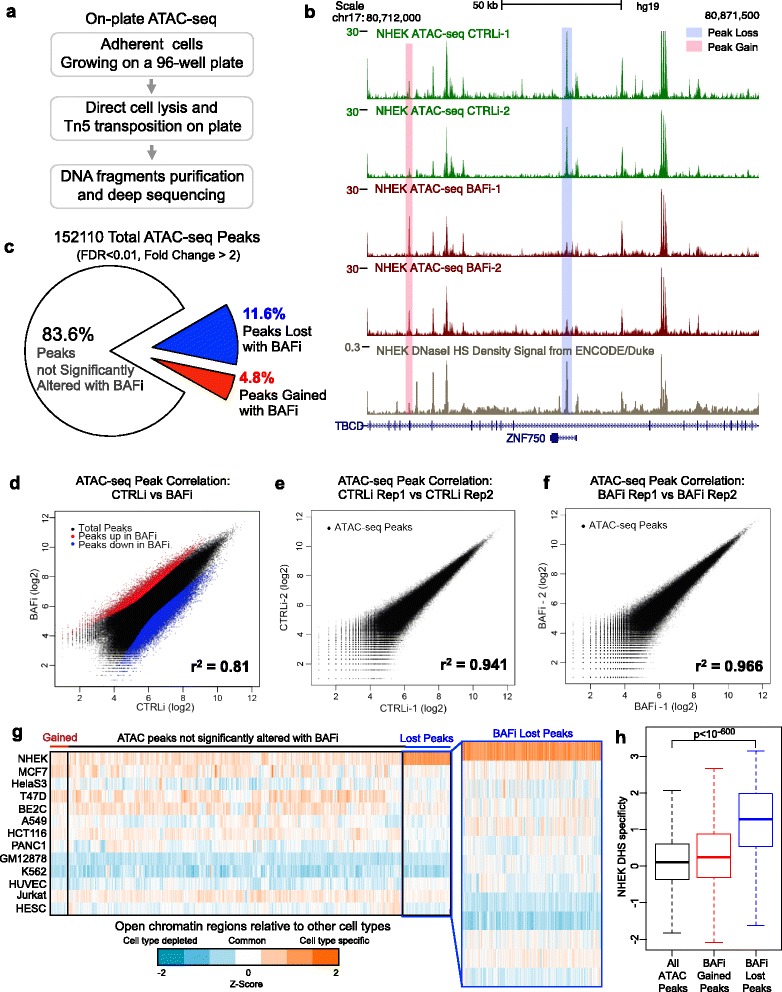
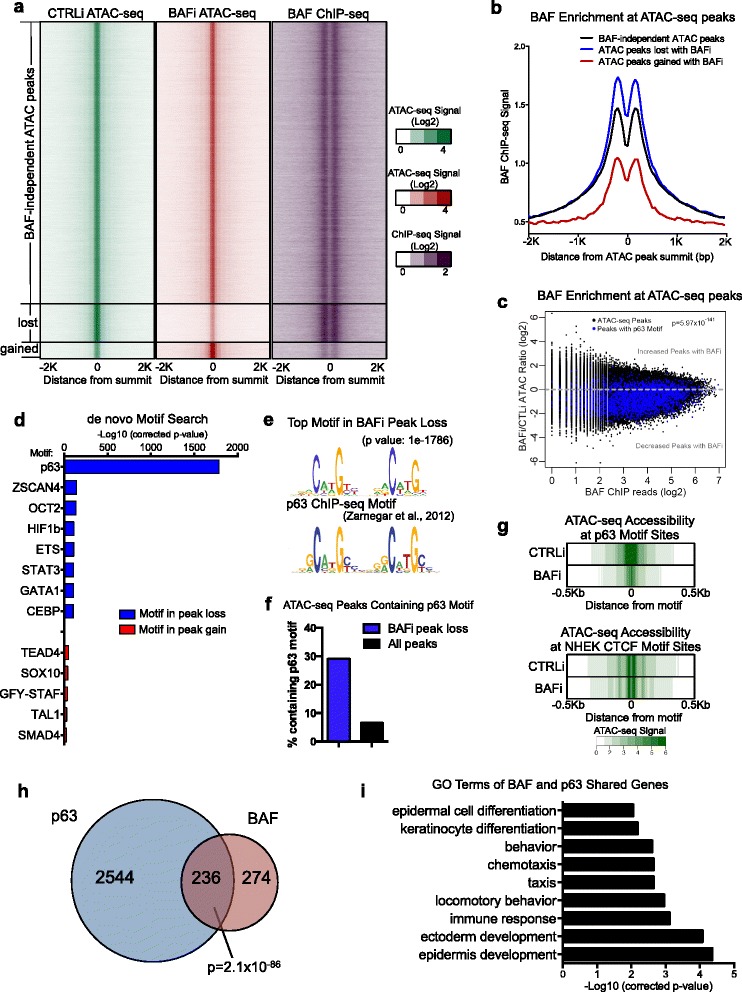
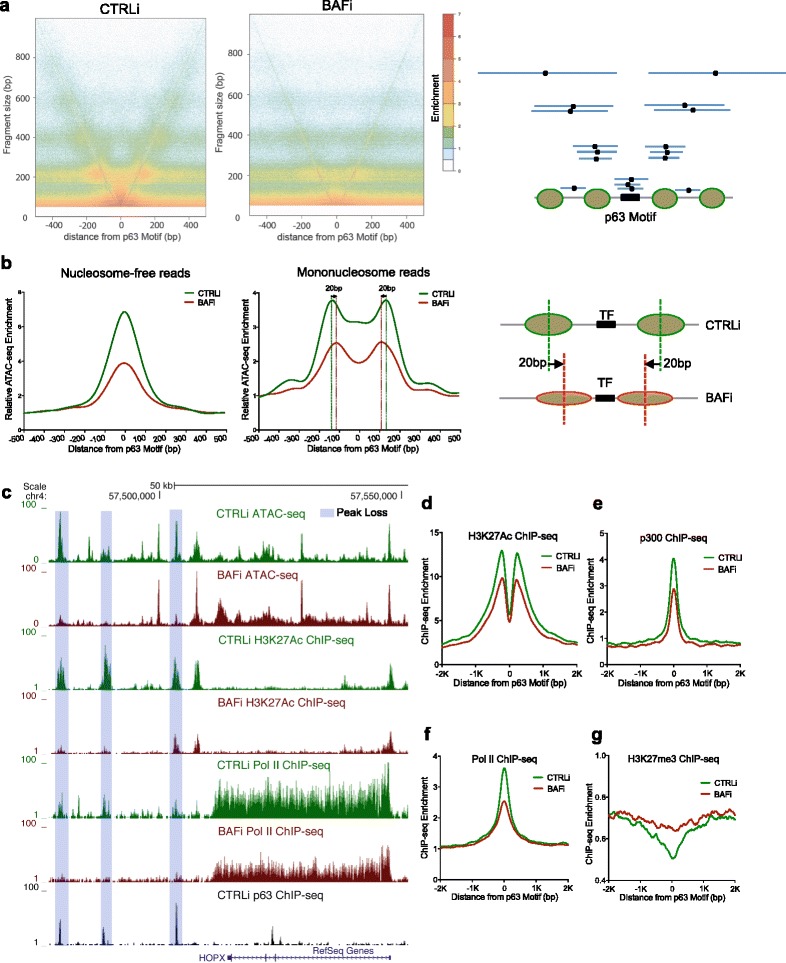
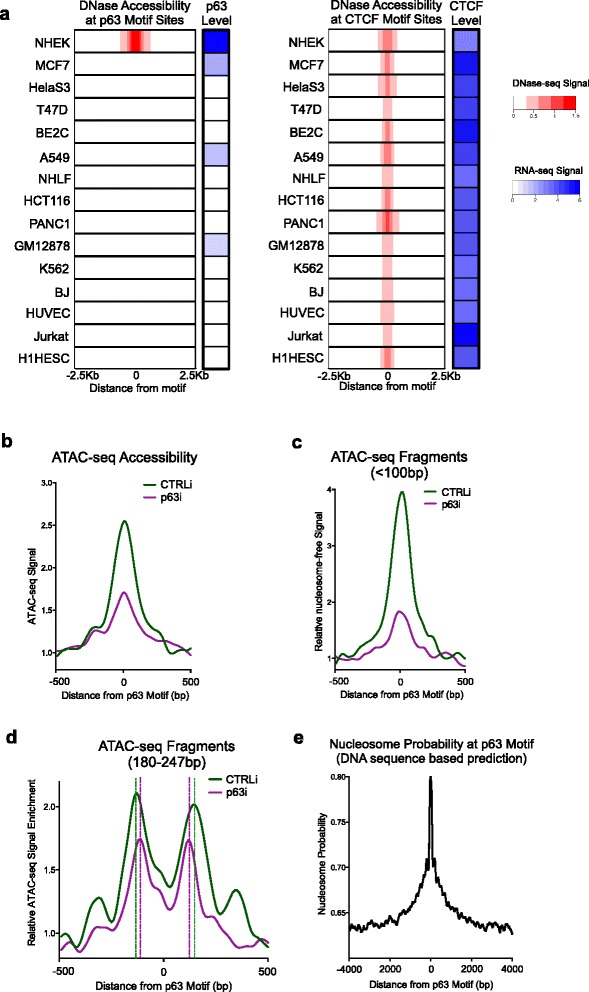
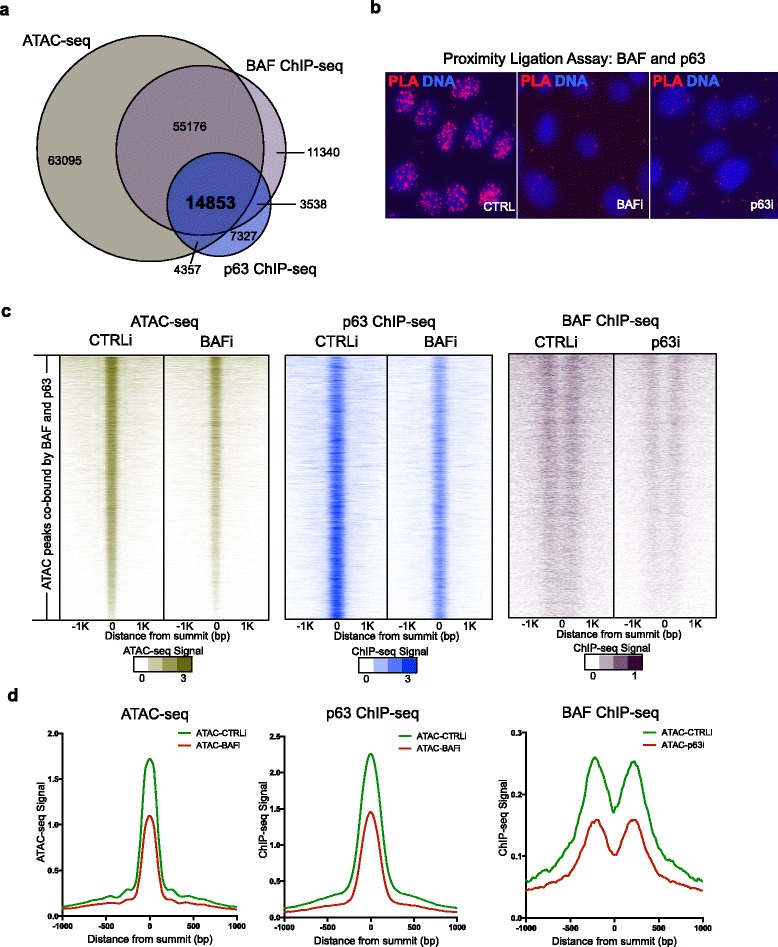
BACKGROUND: Open chromatin regions are correlated with active regulatory elements in development and are dysregulated in diseases. The BAF (SWI/SNF) complex is essential for development, and has been demonstrated to remodel reconstituted chromatin in vitro and to control the accessibility of a few individual regions in vivo. However, it remains unclear where and how BAF controls the open chromatin landscape to regulate developmental processes, such as human epidermal differentiation. RESULTS: Using a novel "on-plate" ATAC-sequencing approach for profiling open chromatin landscapes with a low number of adherent cells, we demonstrate that the BAF complex is essential for maintaining 11.6 % of open chromatin regions in epidermal differentiation. These BAF-dependent open chromatin regions are highly cell-type-specific and are strongly enriched for binding sites for p63, a master epidermal transcription factor. The DNA sequences of p63 binding sites intrinsically favor nucleosome formation and are inaccessible in other cell types without p63 to prevent ectopic activation. In epidermal cells, BAF and p63 mutually recruit each other to maintain 14,853 open chromatin regions. We further demonstrate that BAF and p63 cooperatively position nucleosomes away from p63 binding sites and recruit transcriptional machinery to control tissue differentiation. CONCLUSIONS: BAF displays high specificity in controlling the open chromatin landscape during epidermal differentiation by cooperating with the master transcription factor p63 to maintain lineage-specific open chromatin regions.
Overview
The claims and statistics of this paper haven’t been checked yet.
Free: it reads the open-access text and checks the first 5 claims that cite a source we can check. Create a free account to check every claim.
Integrity signals
Registry
Cites
Statistics
Figures
Verification
Claims the paper makes
The claims and statistics of this paper haven’t been checked yet.
Free: it reads the open-access text and checks the first 5 claims that cite a source we can check. Create a free account to check every claim.
Claims other papers make about this one
Each is checked against this paper’s own text: does it say what the citing paper says it does?
The source backs part of the claim, not all of it — or backs it for a different population, condition or comparison.
In the citing paper
“The mechanisms of pioneer factor action are still being established [37], but at least some of them (such as FOXA, OCT4 and SOX2/SOX11) have been shown to initiate chromatin opening by direct displacement of histones [38–41], whilst many others recruit chromatin remodelers [42–50].”
From Transcriptional enhancers and their communication with gene promoters (2021) · cites this paper as [46]
Experimental — accuracy not yet measuredThe cited source says what the claim attributes to it.
In the citing paper
“TP63, a master regulator of epidermal homeostasis and differentiation”
From Coupled Single-Cell CRISPR Screening and Epigenomic Profiling Reveals Causal Gene Regulatory Networks (2019) · cites this paper as Bao et al., 2015
Self-check
Percentages, sums and reported differences re-computed from the paper’s own numbers.
The self-check needs the paper’s full text.
Citations
Cites
Buenrostro, J. D., Giresi, P. G., Zaba, L. C., Chang, H. Y., & Greenleaf, W. J. (2013) · Nature Methods · doi:10.1038/nmeth.2688 · Cited by 6,422 · cited 6×
“These ranges were used previously [23] to distinguish transposase”
BackgroundMethodSelf-citationThe Biology of Chromatin Remodeling Complexes
Clapier, C. R., & Cairns, B. R. (2009) · Annual Review of Biochemistry · doi:10.1146/annurev.biochem.77.062706.153223 · Cited by 2,380 · cited 1×
“One plausible possibility is that the other regions are controlled by the remodeling activity of other chromatin remodeling complexes, such as CHD, ISWI, and INO80 family members [48].”
Backgroundp63 is a p53 homologue required for limb and epidermal morphogenesis
Mills, A. A., Zheng, B., Wang, X.-J., Vogel, H., Roop, D. R., & Bradley, A. (1999) · Nature · doi:10.1038/19531 · Cited by 1,988 · cited 1×
“p63 is the lineage-specifying TF essential for epidermal development as well as the TF required post-natally to maintain stratified epithelial tissue identity and terminal differentiation [32, 33].”
BackgroundA genomic code for nucleosome positioning
Segal, E., Fondufe-Mittendorf, Y., Chen, L., Thåström, A., Field, Y., Moore, I. K., Wang, J.-P. Z., & Widom, J. (2006) · Nature · doi:10.1038/nature04979 · Cited by 1,499 · cited 1×
“Because local DNA sequence can directly impact nucleosome positioning, we calculated the intrinsic nucleosome binding probability based on genomic sequence [36, 37].”
MethodKadoch, C., Hargreaves, D. C., Hodges, C., Elias, L., Ho, L., Ranish, J., & Crabtree, G. R. (2013) · Nature Genetics · doi:10.1038/ng.2628 · Cited by 1,458 · cited 1×
“BAF has been demonstrated to associate with a variety of TFs from both in vitro and in vivo evidence [16, 25, 40, 41, 44, 45].”
BackgroundHigh-Resolution Mapping and Characterization of Open Chromatin across the Genome
Boyle, A. P., Davis, S., Shulha, H. P., Meltzer, P., Margulies, E. H., Weng, Z., Furey, T. S., & Crawford, G. E. (2008) · Cell · doi:10.1016/j.cell.2007.12.014 · Cited by 1,415 · cited 1×
“These open chromatin regions span an average of 300 base pairs [6], comprise 1–3 % of the total genome [7], and can be identified by DNase I hypersensitive sites sequencing (DNase-seq) [8] or formaldehyde-assisted isolation of regulatory elements sequencing (FAIRE-seq) [9].”
BackgroundDynamic Regulation of Nucleosome Positioning in the Human Genome
Schones, D. E., Cui, K., Cuddapah, S., Roh, T.-Y., Barski, A., Wang, Z., Wei, G., & Zhao, K. (2008) · Cell · doi:10.1016/j.cell.2008.02.022 · Cited by 1,394 · cited 1×
“At the TSSs for active genes, a total of eight (three upstream and five downstream of the TSS) well-positioned nucleosomes are detected; however, only one +1 nucleosome is detected for silenced genes [49].”
BackgroundSWI/SNF nucleosome remodellers and cancer
Wilson, B. G., & Roberts, C. W. M. (2011) · Nature Reviews Cancer · doi:10.1038/nrc3068 · Cited by 1,282 · cited 1×
“cers [16, 17].”
The DNA-encoded nucleosome organization of a eukaryotic genome
Kaplan, N., Moore, I. K., Fondufe-Mittendorf, Y., Gossett, A. J., Tillo, D., Field, Y., LeProust, E. M., Hughes, T. R., Lieb, J. D., Widom, J., et al. (2009) · Nature · doi:10.1038/nature07667 · Cited by 1,194 · cited 2×
“Because local DNA sequence can directly impact nucleosome positioning, we calculated the intrinsic nucleosome binding probability based on genomic sequence [36, 37].”
MethodGiresi, P. G., Kim, J., McDaniell, R. M., Iyer, V. R., & Lieb, J. D. (2007) · Genome Research · doi:10.1101/gr.5533506 · Cited by 955
Self-citationATP-dependent chromatin remodeling: genetics, genomics and mechanisms
Hargreaves, D. C., & Crabtree, G. R. (2011) · Cell Research · doi:10.1038/cr.2011.32 · Cited by 923 · cited 1×
“Very little has been determined, however, regarding how the BAF complex remodels genome-wide open chromatin landscape to regulate gene expression in vivo [43].”
BackgroundNucleosome disruption and enhancement of activator binding by a human SW1/SNF complex
Kwon, H., Imbalzano, A. N., Khavari, P. A., Kingston, R. E., & Green, M. R. (1994) · Nature · doi:10.1038/370477a0 · Cited by 779 · cited 2×
“BAF has been demonstrated to associate with a variety of TFs from both in vitro and in vivo evidence [16, 25, 40, 41, 44, 45].”
BackgroundSelf-citationKhavari, P. A., Peterson, C. L., Tamkun, J. W., Mendel, D. B., & Crabtree, G. R. (1993) · Nature · doi:10.1038/366170a0 · Cited by 669 · cited 21×
“For siRNA knockdown of BRG1/BRM, 1 × 10⁶ cells were electroporated with 1 nmol siRNA of each (ON-TARGETplus SMARTpool, Dharmacon, Lafayette, Colorado, USA) using Amaxa Human Keratinocyte Nucleofector Kit (Lonza, Basel, Switzerland, VPD-1002).”
MethodSelf-citationAdey, A., Morrison, H. G., Asan, Xun, X., Kitzman, J. O., Turner, E. H., Stackhouse, B., MacKenzie, A. P., Caruccio, N. C., Zhang, X., et al. (2010) · Genome Biology · doi:10.1186/gb-2010-11-12-r119 · Cited by 583 · cited 1×
“Because the Tn5 transposon binds as a dimer and inserts two adaptors separated by 9 bp [54], all reads aligning to the + strand were offset by +4 bp, and all reads aligning to the – strand were offset −5 bp.”
BackgroundSong, L., Zhang, Z., Grasfeder, L. L., Boyle, A. P., Giresi, P. G., Lee, B.-K., Sheffield, N. C., Gräf, S., Huss, M., Keefe, D., et al. (2011) · Genome Research · doi:10.1101/gr.121541.111 · Cited by 505 · cited 3×
“Second, both DNase-seq and FAIRE-seq typically require tens of millions of cells [6, 7].”
BackgroundMethodSelf-citationp63 regulates proliferation and differentiation of developmentally mature keratinocytes
Truong, A. B., Kretz, M., Ridky, T. W., Kimmel, R., & Khavari, P. A. (2006) · Genes & Development · doi:10.1101/gad.1463206 · Cited by 479 · cited 2×
“p63 is the lineage-specifying TF essential for epidermal development as well as the TF required post-natally to maintain stratified epithelial tissue identity and terminal differentiation [32, 33].”
BackgroundMethodSelf-citationNucleosome dynamics define transcriptional enhancers
He, H. H., Meyer, C. A., Shin, H., Bailey, S. T., Wei, G., Wang, Q., Zhang, Y., Xu, K., Ni, M., Lupien, M., et al. (2010) · Nature Genetics · doi:10.1038/ng.545 · Cited by 475 · cited 1×
“1 sites in macrophages [50] and the androgen receptor sites in prostate cancer cells [51], although the basis for this positioning is unclear.”
BackgroundChromatin regulation by Brg1 underlies heart muscle development and disease
Hang, C. T., Yang, J., Han, P., Cheng, H.-L., Shang, C., Ashley, E., Zhou, B., & Chang, C.-P. (2010) · Nature · doi:10.1038/nature09130 · Cited by 470 · cited 1×
“epidermis [10–15].”
Suppression of progenitor differentiation requires the long noncoding RNA ANCR
Kretz, M., Webster, D. E., Flockhart, R. J., Lee, C. S., Zehnder, A., Lopez-Pajares, V., Qu, K., Zheng, G. X. Y., Chow, J., Kim, G. E., et al. (2012) · Genes & Development · doi:10.1101/gad.182121.111 · Cited by 434
Self-citationHo, L., Jothi, R., Ronan, J. L., Cui, K., Zhao, K., & Crabtree, G. R. (2009) · Proceedings of the National Academy of Sciences · doi:10.1073/pnas.0812888106 · Cited by 426 · cited 1×
“Previous studies indicate that BAF binds broadly on chromatin, and the binding sites are divergent in various cell types [27, 28].”
BackgroundUnderstanding the Words of Chromatin Regulation
Wu, J. I., Lessard, J., & Crabtree, G. R. (2009) · Cell · doi:10.1016/j.cell.2009.01.009 · Cited by 364 · cited 1×
“The expression of BAF subunits differs in various cell types, and specific BAF subunits function to control specific gene expression [52].”
BackgroundRecent advances in understanding chromatin remodeling by Swi/Snf complexes
Martens, J. A., & Winston, F. (2003) · Current Opinion in Genetics & Development · doi:10.1016/s0959-437x(03)00022-4 · Cited by 353 · cited 1×
“Because BAF ATPase activity has been demonstrated to directly regulate nucleosome positioning on DNA templates in vitro [34, 35], we next tested whether BAF also controls nucleosome positioning in living cells at p63 motif sites across the genome.”
BackgroundDevelopmental Fate and Cellular Maturity Encoded in Human Regulatory DNA Landscapes
Stergachis, A. B., Neph, S., Reynolds, A., Humbert, R., Miller, B., Paige, S. L., Vernot, B., Cheng, J. B., Thurman, R. E., Sandstrom, R., et al. (2013) · Cell · doi:10.1016/j.cell.2013.07.020 · Cited by 338 · cited 2×
“An increasingly appreciated correlate of cell fate is the cell-type-specific open chromatin landscape [5], as defined by the specific regions of chromatin exhibiting high DNA accessibility in a given cell or tissue type.”
BackgroundMammalian SWI/SNF complexes promote MyoD-mediated muscle differentiation
de la Serna, I. L., Carlson, K. A., & Imbalzano, A. N. (2001) · Nature Genetics · doi:10.1038/84826 · Cited by 335
Trypsin-induced proteome alteration during cell subculture in mammalian cells
Huang, H.-L., Hsing, H.-W., Lai, T.-C., Chen, Y.-W., Lee, T.-R., Chan, H.-T., Lyu, P.-C., Wu, C.-L., Lu, Y.-C., Lin, S.-T., et al. (2010) · Journal of Biomedical Science · doi:10.1186/1423-0127-17-36 · Cited by 312 · cited 1×
“ing on a 96-well plate, bypassing the disruptive trypsinization process [24, 25].”
Self-citationArmstrong, J. A., Bieker, J. J., & Emerson, B. M. (1998) · Cell · doi:10.1016/s0092-8674(00)81785-7 · Cited by 303 · cited 1×
“Because BAF ATPase activity has been demonstrated to directly regulate nucleosome positioning on DNA templates in vitro [34, 35], we next tested whether BAF also controls nucleosome positioning in living cells at p63 motif sites across the genome.”
BackgroundA C/EBPβ Isoform Recruits the SWI/SNF Complex to Activate Myeloid Genes
Kowenz-Leutz, E., & Leutz, A. (1999) · Molecular Cell · doi:10.1016/s1097-2765(00)80384-6 · Cited by 301
de la Serna, I. L., Ohkawa, Y., Berkes, C. A., Bergstrom, D. A., Dacwag, C. S., Tapscott, S. J., & Imbalzano, A. N. (2005) · Molecular and Cellular Biology · doi:10.1128/mcb.25.10.3997-4009.2005 · Cited by 287
Predicting cell-type–specific gene expression from regions of open chromatin
Natarajan, A., Yardımcı, G. G., Sheffield, N. C., Crawford, G. E., & Ohler, U. (2012) · Genome Research · doi:10.1101/gr.135129.111 · Cited by 253 · cited 2×
“Second, both DNase-seq and FAIRE-seq typically require tens of millions of cells [6, 7].”
BackgroundMethodEuskirchen, G. M., Auerbach, R. K., Davidov, E., Gianoulis, T. A., Zhong, G., Rozowsky, J., Bhardwaj, N., Gerstein, M. B., & Snyder, M. (2011) · PLoS Genetics · doi:10.1371/journal.pgen.1002008 · Cited by 219 · cited 2×
“ChIP assays were performed essentially as previously described [28] with minor modifications.”
BackgroundMethodInvasive three-dimensional organotypic neoplasia from multiple normal human epithelia
Ridky, T. W., Chow, J. M., Wong, D. J., & Khavari, P. A. (2010) · Nature Medicine · doi:10.1038/nm.2265 · Cited by 217 · cited 1×
“Failure to engage tissue-specific differentiation underlies a spectrum of human diseases, including lipodystrophies [1], psoriasis [2], and cancers [3, 4].”
BackgroundSelf-citationCharacterization of genome-wide p53-binding sites upon stress response
Smeenk, L., van Heeringen, S. J., Koeppel, M., van Driel, M. A., Bartels, S. J. J., Akkers, R. C., Denissov, S., Stunnenberg, H. G., & Lohrum, M. (2008) · Nucleic Acids Research · doi:10.1093/nar/gkn232 · Cited by 211 · cited 1×
“2d–f ) [30, 31].”
Barozzi, I., Simonatto, M., Bonifacio, S., Yang, L., Rohs, R., Ghisletti, S., & Natoli, G. (2014) · Molecular Cell · doi:10.1016/j.molcel.2014.04.006 · Cited by 209 · cited 1×
“1 sites in macrophages [50] and the androgen receptor sites in prostate cancer cells [51], although the basis for this positioning is unclear.”
BackgroundPedersen, T. Å., Kowenz-Leutz, E., Leutz, A., & Nerlov, C. (2001) · Genes & Development · doi:10.1101/gad.209901 · Cited by 196 · cited 1×
“BAF has been demonstrated to associate with a variety of TFs from both in vitro and in vivo evidence [16, 25, 40, 41, 44, 45].”
BackgroundA LncRNA-MAF:MAFB transcription factor network regulates epidermal differentiation
Lopez-Pajares, V., Qu, K., Zhang, J., Webster, D. E., Barajas, B. C., Siprashvili, Z., Zarnegar, B. J., Boxer, L. D., Rios, E. J., Tao, S., et al. (2015) · Developmental Cell · doi:10.1016/j.devcel.2015.01.028 · Cited by 194 · cited 1×
“Epidermal tissue differentiation is a dynamic process that involves the repression of progenitor genes and the induction of differentiation genes [39].”
BackgroundSelf-citationSeo, S., Richardson, G. A., & Kroll, K. L. (2005) · Development · doi:10.1242/dev.01548 · Cited by 187 · cited 1×
“BAF has been demonstrated to associate with a variety of TFs from both in vitro and in vivo evidence [16, 25, 40, 41, 44, 45].”
BackgroundHu, G., Schones, D. E., Cui, K., Ybarra, R., Northrup, D., Tang, Q., Gattinoni, L., Restifo, N. P., Huang, S., & Zhao, K. (2011) · Genome Research · doi:10.1101/gr.121145.111 · Cited by 186 · cited 1×
“In mouse CD36 cells, knocking down Brg1 alone also only modestly affected the nucleosome positioning at GATA1 sites without affecting GATA1 genomic binding [14].”
BackgroundCôté, J., Peterson, C. L., & Workman, J. L. (1998) · Proceedings of the National Academy of Sciences · doi:10.1073/pnas.95.9.4947 · Cited by 177 · cited 2×
“BAF has been demonstrated to associate with a variety of TFs from both in vitro and in vivo evidence [16, 25, 40, 41, 44, 45].”
BackgroundFessing, M. Y., Mardaryev, A. N., Gdula, M. R., Sharov, A. A., Sharova, T. Y., Rapisarda, V., Gordon, K. B., Smorodchenko, A. D., Poterlowicz, K., Ferone, G., et al. (2011) · Journal of Cell Biology · doi:10.1083/jcb.201101148 · Cited by 168 · cited 1×
“In addition, it has been shown in mouse skin that p63 regulates Satb1 expression to further control chromatin architecture [47].”
BackgroundTranscription factor p63 bookmarks and regulates dynamic enhancers during epidermal differentiation
Kouwenhoven, E. N., Oti, M., Niehues, H., van Heeringen, S. J., Schalkwijk, J., Stunnenberg, H. G., van Bokhoven, H., & Zhou, H. (2015) · EMBO reports · doi:10.15252/embr.201439941 · Cited by 164 · cited 1×
“Previous motif analysis indicated that a number of other TFs, such as RUNX1, RXRA, and TFAP2a, may function as co-activators for p63 [46].”
BackgroundThélu, J., Rossio, P., & Favier, B. (2002) · BMC Dermatology · doi:10.1186/1471-5945-2-7 · Cited by 163 · cited 1×
“Failure to engage tissue-specific differentiation underlies a spectrum of human diseases, including lipodystrophies [1], psoriasis [2], and cancers [3, 4].”
BackgroundOverlapping chromatin-remodeling systems collaborate genome wide at dynamic chromatin transitions
Morris, S. A., Baek, S., Sung, M.-H., John, S., Wiench, M., Johnson, T. A., Schiltz, R. L., & Hager, G. L. (2014) · Nature Structural & Molecular Biology · doi:10.1038/nsmb.2718 · Cited by 159 · cited 2×
“First, the BAF-dependent open chromatin regions cannot be simply represented by its chromatin immunoprecipitation sequencing (ChIP-seq) data, because the chromatin binding of the BAF complex can be mediated by its non-catalytic subunits in addition to the catalytic subunits, and because many BAF binding sites are also…”
BackgroundGenetic disorders of adipose tissue development, differentiation, and death.
Agarwal, A. K., & Garg, A. (2006) · Annual Review of Genomics and Human Genetics · doi:10.1146/annurev.genom.7.080505.115715 · Cited by 150 · cited 1×
“Failure to engage tissue-specific differentiation underlies a spectrum of human diseases, including lipodystrophies [1], psoriasis [2], and cancers [3, 4].”
BackgroundBoxer, L. D., Barajas, B., Tao, S., Zhang, J., & Khavari, P. A. (2014) · Genes & Development · doi:10.1101/gad.246579.114 · Cited by 147 · cited 1×
“group [55, 56].”
Self-citationRecurrent point mutations in the kinetochore gene KNSTRN in cutaneous squamous cell carcinoma
Lee, C. S., Bhaduri, A., Mah, A., Johnson, W. L., Ungewickell, A., Aros, C. J., Nguyen, C. B., Rios, E. J., Siprashvili, Z., Straight, A., et al. (2014) · Nature Genetics · doi:10.1038/ng.3091 · Cited by 143 · cited 3×
“Testing whether p63BAF cooperativity in differentiation gene induction is compromised in SCC in a manner that inhibits tissue terminal differentiation and promotes cancer progression is also an intriguing future avenue of research.”
BackgroundSelf-citationFunctional Differentiation of SWI/SNF Remodelers in Transcription and Cell Cycle Control
Moshkin, Y. M., Mohrmann, L., van Ijcken, W. F. J., & Verrijzer, C. P. (2007) · Molecular and Cellular Biology · doi:10.1128/mcb.01257-06 · Cited by 131 · cited 1×
“This amount of input material is more challenging in the context of BAF loss, which impairs the proliferation of many cell types [21].”
BackgroundActivation domains drive nucleosome eviction by SWI/SNF
Gutiérrez, J. L., Chandy, M., Carrozza, M. J., & Workman, J. L. (2007) · The EMBO Journal · doi:10.1038/sj.emboj.7601524 · Cited by 123 · cited 1×
“Using similar in vitro systems, it has also been indicated that transactivation domains, such as VP16, could facilitate BAF targeting to chromatin to stimulate its remodeling activity in vitro [42].”
BackgroundACTL6a Enforces the Epidermal Progenitor State by Suppressing SWI/SNF-Dependent Induction of KLF4
Bao, X., Tang, J., Lopez-Pajares, V., Tao, S., Qu, K., Crabtree, G. R., & Khavari, P. A. (2013) · Cell Stem Cell · doi:10.1016/j.stem.2012.12.014 · Cited by 121 · cited 2×
“We and others have demonstrated previously that loss of the BAF catalytic subunits BRG1 and BRM abolished epidermal tissue differentiation [12, 13], yet the mechanism underlying how BAF controls epidermal differentiation remains unclear.”
BackgroundSelf-citationIndra, A. K., Dupé, V., Bornert, J.-M., Messaddeq, N., Yaniv, M., Mark, M., Chambon, P., & Metzger, D. (2005) · Development · doi:10.1242/dev.02019 · Cited by 115 · cited 3×
“We and others have demonstrated previously that loss of the BAF catalytic subunits BRG1 and BRM abolished epidermal tissue differentiation [12, 13], yet the mechanism underlying how BAF controls epidermal differentiation remains unclear.”
BackgroundThe SWI/SNF chromatin‐remodeling complex subunit SNF5 is essential for hepatocyte differentiation
Gresh, L., Bourachot, B., Reimann, A., Guigas, B., Fiette, L., Garbay, S., Muchardt, C., Hue, L., Pontoglio, M., Yaniv, M., et al. (2005) · The EMBO Journal · doi:10.1038/sj.emboj.7600802 · Cited by 109 · cited 1×
“epidermis [10–15].”
Reuter, J. A., Ortiz-Urda, S., Kretz, M., Garcia, J., Scholl, F. A., Pasmooij, A. M. G., Cassarino, D., Chang, H. Y., & Khavari, P. A. (2009) · Cancer Cell · doi:10.1016/j.ccr.2009.04.002 · Cited by 88 · cited 1×
“Failure to engage tissue-specific differentiation underlies a spectrum of human diseases, including lipodystrophies [1], psoriasis [2], and cancers [3, 4].”
BackgroundSelf-citationUtley, R. T., Côté, J., Owen-Hughes, T., & Workman, J. L. (1997) · Journal of Biological Chemistry · doi:10.1074/jbc.272.19.12642 · Cited by 85
Willis, M. S., Homeister, J. W., Rosson, G. B., Annayev, Y., Holley, D., Holly, S. P., Madden, V. J., Godfrey, V., Parise, L. V., & Bultman, S. J. (2012) · Circulation Research · doi:10.1161/circresaha.112.265587 · Cited by 60 · cited 1×
“Lastly, the two BAF catalytic subunits BRG1 and BRM have been demonstrated to share redundant functions in somatic tissue development [12, 22].”
BackgroundZarnegar, B. J., Webster, D. E., Lopez-Pajares, V., Hunt, B. V. S., Qu, K., Yan, K., Berk, D. R., Sen, G. L., & Khavari, P. A. (2012) · The American Journal of Human Genetics · doi:10.1016/j.ajhg.2012.07.007 · Cited by 53 · cited 2×
“p63 ChIP-seq data in normal keratinocytes and the p63 transcriptome profiling analysis were extracted from previously published data sets generated by our group [30].”
MethodSelf-citationSethi, I., Sinha, S., & Buck, M. J. (2014) · BMC Genomics · doi:10.1186/1471-2164-15-1042 · Cited by 43 · cited 2×
“In keratinocytes, p63 binding is enriched in enhancers, and has a strong correlation with the histone modification H3K4me1 [26].”
BackgroundA New Bibliometric Index Based on the Shape of the Citation Distribution
Lando, T., & Barsotti, L. B. (2014) · PLoS ONE · doi:10.1371/journal.pone.0115962 · Cited by 18
Keratinocyte Detachment-Differentiation Connection Revisited, or Anoikis-Pityriasi Nexus Redux
Banno, T., & Blumenberg, M. (2014) · PLoS ONE · doi:10.1371/journal.pone.0100279 · Cited by 14 · cited 2×
“BAF has been demonstrated to associate with a variety of TFs from both in vitro and in vivo evidence [16, 25, 40, 41, 44, 45].”
Background
Cited by
An improved ATAC-seq protocol reduces background and enables interrogation of frozen tissues
Corces, M. R., Trevino, A. E., Hamilton, E. G., Greenside, P. G., Sinnott-Armstrong, N. A., Vesuna, S., Satpathy, A. T., Rubin, A. J., Montine, K. S., Wu, B., et al. (2017) · Nature Methods · doi:10.1038/nmeth.4396 · Cited by 2,496
Self-citationChromatin accessibility and the regulatory epigenome
Klemm, S. L., Shipony, Z., & Greenleaf, W. J. (2019) · Nature Reviews Genetics · doi:10.1038/s41576-018-0089-8 · Cited by 1,793
The Many Roles of BAF (mSWI/SNF) and PBAF Complexes in Cancer
Hodges, C., Kirkland, J. G., & Crabtree, G. R. (2016) · Cold Spring Harbor Perspectives in Medicine · doi:10.1101/cshperspect.a026930 · Cited by 414
“BAF activity and transcription factor (TF) binding appear to be coupled idiosyncratically, as examples can be found in which TF binding requires BAF activity (Ho et al. 2011; Bao et al. 2015) or, alternatively, in which recruitment of BAF requires existing TF binding (Liu et al.”
Mechanisms and functions of nuclear envelope remodelling
Ungricht, R., & Kutay, U. (2017) · Nature Reviews Molecular Cell Biology · doi:10.1038/nrm.2016.153 · Cited by 346
Rubin, A. J., Parker, K. R., Satpathy, A. T., Qi, Y., Wu, B., Ong, A. J., Mumbach, M. R., Ji, A. L., Kim, D. S., Cho, S. W., et al. (2019) · Cell · doi:10.1016/j.cell.2018.11.022 · Cited by 314
Self-citation
Metadata
- Authors
- Bao, X., Rubin, A. J., Qu, K., Zhang, J., Giresi, P. G., Chang, H. Y., & Khavari, P. A.
- Affiliations
- Stanford University (US)
- Howard Hughes Medical Institute (US)
- VA Palo Alto Health Care System (US)
- Corresponding author
- Bao, Xiaomin
- Khavari, Paul A.
- Venue
- Genome Biology
- Published
- 2015-12
- Volume
- 16
- Issue
- 1
- Pages
- 284-284
- ISSN
- 1465-6906 (ISSN-L)
- 1474-760X
- PMC
- PMC4699366
- OpenAlex
- W2216103240
- Cited by
- 164
- References
- 57
- Citations by year
- 2026: 6 · 2025: 7 · 2024: 19 · 2023: 16 · 2022: 13 · 2021: 28 · 2020: 17 · 2019: 24 · 2018: 14 · 2017: 14 · 2016: 6
- FWCI
- 4.92
- Type
- journal article
- Language
- en
- Open access
- gold
- doi.org
- Licence
- cc-by
- creativecommons.org/licenses/by/4.0/ (tdm)
- creativecommons.org/licenses/by/4.0/ (vor, 17 d)
- Locations
- Genome biology (publishedVersion, cc-by)
- PubMed Central (publishedVersion, cc-by)
- PubMed (publishedVersion)
- Funders
- National Institute of Arthritis and Musculoskeletal and Skin Diseases (AR06123, AR06548, AR45192, AR49737)
- National Human Genome Research Institute (HG007735, HG007919)
- U.S. Department of Veterans Affairs
- Topics
- Life Sciences › Biochemistry, Genetics and Molecular Biology › Molecular Biology › Genomics and Chromatin Dynamics
- Life Sciences › Biochemistry, Genetics and Molecular Biology › Molecular Biology › Chromatin Remodeling and Cancer
- Life Sciences › Biochemistry, Genetics and Molecular Biology › Molecular Biology › Epigenetics and DNA Methylation
- Keywords
- SWI/SNF complex, SWI/SNF chromatin remodeling, p63, open chromatin, epidermal differentiation, nucleosome positioning, transcription factor binding sites, transcriptional regulation
- MeSH terms
- Cell Differentiation, Cells, Cultured, Chromatin, Chromosomal Proteins, Non-Histone, Humans, Transcription Factors, Keratinocytes, Sequence Analysis, DNA, Gene Expression Regulation, Developmental, Cell Lineage, Tumor Suppressor Proteins, Chromatin Assembly and Disassembly
About these checks
Registry, retraction, Cites and statistics results are computed, not judged, with one exception: a printed reference that no index lists is read once by a model before it counts as a citation error. Claims are extracted by a model and kept only when their quote appears verbatim in the text; each cited source is then checked, with a model’s help, for whether it says what the claim relies on. Those verdicts can be wrong — read the claim’s quote and the cited source before relying on one.
Statistics and arithmetic are recomputed, not judged.
Confidence bands are shown only for fields calibrated on our annotated test set. None is calibrated yet, so no band is shown.
What counts as a claim ›How we measure confidence ›How we check this ›
Are you an author, or do you see a problem with this page? Request a review
Data sources
Bibliographic data: Semantic Scholar, OpenAlex, Crossref.
Contains information from the Semantic Scholar Academic Graph Datasets, made available under the ODC Attribution License (ODC-BY 1.0).
Semantic Scholar’s data is described in: Kinney, R., et al. (2023). The Semantic Scholar Open Data Platform. arXiv:2301.10140.
