

MATCHER: manifold alignment reveals correspondence between single cell transcriptome and epigenome dynamics
Open accessPublished version of a preprint
The DOI matches its Crossref record; 57 of the 58 references it cites were found in a registry or an index.
Abstract
Single cell experimental techniques reveal transcriptomic and epigenetic heterogeneity among cells, but how these are related is unclear. We present MATCHER, an approach for integrating multiple types of single cell measurements. MATCHER uses manifold alignment to infer single cell multi-omic profiles from transcriptomic and epigenetic measurements performed on different cells of the same type. Using scM&T-seq and sc-GEM data, we confirm that MATCHER accurately predicts true single cell correlations between DNA methylation and gene expression without using known cell correspondences. MATCHER also reveals new insights into the dynamic interplay between the transcriptome and epigenome in single embryonic stem cells and induced pluripotent stem cells.
Overview
The claims and statistics of this paper haven’t been checked yet.
Free: it reads the open-access text and checks the first 5 claims that cite a source we can check. Create a free account to check every claim.
Integrity signals
Registry
Cites
Statistics
Figures
Verification
Claims the paper makes
The claims and statistics of this paper haven’t been checked yet.
Free: it reads the open-access text and checks the first 5 claims that cite a source we can check. Create a free account to check every claim.
Claims other papers make about this one
Each is checked against this paper’s own text: does it say what the citing paper says it does?
In the citing paper
“One example of a computational approach is shown by Welch et al. [87], using the MATCHER tool, which integrates multiple omics layers, e.g. scRNA-seq with scMT-seq.”
From Mapping gene regulatory networks from single-cell omics data (2018) · cites this paper as [87]
Self-check
Percentages, sums and reported differences re-computed from the paper’s own numbers.
The self-check needs the paper’s full text.
Citations
Cites
Gaussian Processes for Machine Learning
Rasmussen, C. E., & Williams, C. K. I. (2005) · doi:10.7551/mitpress/3206.001.0001 · Cited by 11,705
Domain-Adversarial Training of Neural Networks
Ganin, Y., Ustinova, E., Ajakan, H., Germain, P., Larochelle, H., Laviolette, F., Marchand, M., & Lempitsky, V. (2017) · Advances in Computer Vision and Pattern Recognition · doi:10.1007/978-3-319-58347-1_10 · Cited by 8,318
Trapnell, C., Cacchiarelli, D., Grimsby, J., Pokharel, P., Li, S., Morse, M., Lennon, N. J., Livak, K. J., Mikkelsen, T. S., & Rinn, J. L. (2014) · Nature Biotechnology · doi:10.1038/nbt.2859 · Cited by 7,314
A bivalent chromatin structure marks key developmental genes in embryonic stem cells
Bernstein, B. E., Mikkelsen, T. S., Xie, X., Kamal, M., Huebert, D. J., Cuff, J., Fry, B., Meissner, A., Wernig, M., Plath, K., et al. (2006) · Cell · doi:10.1016/j.cell.2006.02.041 · Cited by 5,361 · cited 1×
“The TrxG proteins are chromatin activators that regulate lineage differentiation genes [47 – 49], suggesting that the activation of certain differentiation genes is occurring while their repression by PRC2 is being lifted.”
BackgroundFIMO: scanning for occurrences of a given motif
Grant, C. E., Bailey, T. L., & Noble, W. S. (2011) · Bioinformatics · doi:10.1093/bioinformatics/btr064 · Cited by 4,247 · cited 1×
“Then we used FIMO [53] to identify, for each peak, which of the 186 transcription factor motifs in the JASPAR database [54] occurs in the peak region.”
The Polycomb complex PRC2 and its mark in life
Margueron, R., & Reinberg, D. (2011) · Nature · doi:10.1038/nature09784 · Cited by 3,347 · cited 1×
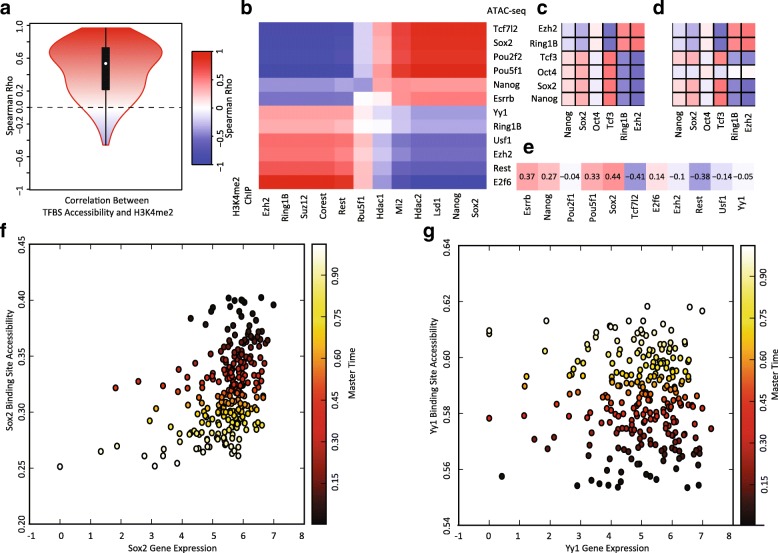
“The accessibility of binding sites for OCT4 (also known as POU5F1), NANOG, and SOX2, well-established plur-ipotency transcription factors, is strongly anticorrelated with the accessibility of binding sites for EZH2, RING1B, and SUZ12, which are Polycomb Group (PcG) proteins [45].”
BackgroundSingle-cell chromatin accessibility reveals principles of regulatory variation
Buenrostro, J. D., Wu, B., Litzenburger, U. M., Ruff, D., Gonzales, M. L., Snyder, M. P., Chang, H. Y., & Greenleaf, W. J. (2015) · Nature · doi:10.1038/nature14590 · Cited by 2,308 · cited 4×
“…are not publicly available, so we implemented the data processing pipeline described by Buenrostro et al. [13] For each cell, we aligned reads to mm10 using bowtie2, removed PCR duplicates, and counted the number of reads aligning to each of the 50,000 peaks identified in the initial paper [13].”
BackgroundMethodInfluentialSingle-cell Hi-C reveals cell-to-cell variability in chromosome structure
Nagano, T., Lubling, Y., Stevens, T. J., Schoenfelder, S., Yaffe, E., Dean, W., Laue, E. D., Tanay, A., & Fraser, P. (2013) · Nature · doi:10.1038/nature12593 · Cited by 1,589
The Technology and Biology of Single-Cell RNA Sequencing
Kolodziejczyk, A. A., Kim, J. K., Svensson, V., Marioni, J. C., & Teichmann, S. A. (2015) · Molecular Cell · doi:10.1016/j.molcel.2015.04.005 · Cited by 1,487 · cited 1×
“In such experiments, each sequenced cell is assumed to be at one point in the process and sequencing enough cells can reveal the progression of gene expression changes that occur during the process [8, 9].”
BackgroundDNA-binding factors shape the mouse methylome at distal regulatory regions
Stadler, M. B., Murr, R., Burger, L., Ivanek, R., Lienert, F., Schöler, A., Nimwegen, E. V., Wirbelauer, C., Oakeley, E. J., Gaidatzis, D., et al. (2011) · Nature · doi:10.1038/nature10716 · Cited by 1,383
Cited by
Single-cell RNA sequencing technologies and bioinformatics pipelines
Hwang, B., Lee, J. H., & Bang, D. (2018) · Experimental & Molecular Medicine · doi:10.1038/s12276-018-0071-8 · Cited by 1,781
A comparison of single-cell trajectory inference methods
Saelens, W., Cannoodt, R., Todorov, H., & Saeys, Y. (2019) · Nature Biotechnology · doi:10.1038/s41587-019-0071-9 · Cited by 1,670
Integrative single-cell analysis
Stuart, T., & Satija, R. (2019) · Nature Reviews Genetics · doi:10.1038/s41576-019-0093-7 · Cited by 1,460
Eleven grand challenges in single-cell data science
Lähnemann, D., Köster, J., Szczurek, E., McCarthy, D. J., Hicks, S. C., Robinson, M. D., Vallejos, C. A., Campbell, K. R., Beerenwinkel, N., Mahfouz, A., et al. (2020) · Genome Biology · doi:10.1186/s13059-020-1926-6 · Cited by 1,327
Deep learning and alignment of spatially resolved single-cell transcriptomes with Tangram
Biancalani, T., Scalia, G., Buffoni, L., Avasthi, R., Lu, Z., Sanger, A., Tokcan, N., Vanderburg, C. R., Segerstolpe, Å., Zhang, M., et al. (2021) · Nature Methods · doi:10.1038/s41592-021-01264-7 · Cited by 931
Zitnik, M., Nguyen, F., Wang, B., Leskovec, J., Goldenberg, A., & Hoffman, M. M. (2019) · Information Fusion · doi:10.1016/j.inffus.2018.09.012 · Cited by 675
Applications of multi‐omics analysis in human diseases
Chen, C., Wang, J., Pan, D., Wang, X., Xu, Y., Yan, J., Wang, L., Yang, X., Yang, M., & Liu, G. (2023) · MedComm · doi:10.1002/mco2.315 · Cited by 545
Computational principles and challenges in single-cell data integration
Argelaguet, R., Cuomo, A. S. E., Stegle, O., & Marioni, J. C. (2021) · Nature Biotechnology · doi:10.1038/s41587-021-00895-7 · Cited by 472
Direct cell reprogramming: approaches, mechanisms and progress
Wang, H., Yang, Y., Liu, J., & Qian, L. (2021) · Nature Reviews Molecular Cell Biology · doi:10.1038/s41580-021-00335-z · Cited by 444
Cai, Y., Song, W., Li, J., Jing, Y., Liang, C., Zhang, L., Zhang, X., Zhang, W., Liu, B., An, Y., et al. (2022) · Science China Life Sciences · doi:10.1007/s11427-022-2161-3 · Cited by 408
Crow, M., Paul, A., Ballouz, S., Huang, Z. J., & Gillis, J. (2018) · Nature Communications · doi:10.1038/s41467-018-03282-0 · Cited by 365
Current progress and open challenges for applying deep learning across the biosciences
Sapoval, N., Aghazadeh, A., Nute, M. G., Antunes, D. A., Balaji, A., Baraniuk, R., Barberan, C. J., Dannenfelser, R., Dun, C., Edrisi, M., et al. (2022) · Nature Communications · doi:10.1038/s41467-022-29268-7 · Cited by 359
Integrative Methods and Practical Challenges for Single-Cell Multi-omics
Ma, A., McDermaid, A., Xu, J., Chang, Y., & Ma, Q. (2020) · Trends in Biotechnology · doi:10.1016/j.tibtech.2020.02.013 · Cited by 273
Characterizing cis-regulatory elements using single-cell epigenomics
Preissl, S., Gaulton, K. J., & Ren, B. (2023) · Nature Reviews Genetics · doi:10.1038/s41576-022-00509-1 · Cited by 251
Multi-omics integration in the age of million single-cell data
Miao, Z., Humphreys, B. D., McMahon, A. P., & Kim, J. (2021) · Nature Reviews Nephrology · doi:10.1038/s41581-021-00463-x · Cited by 246
Mapping gene regulatory networks from single-cell omics data
Fiers, M. W. E. J., Minnoye, L., Aibar, S., Bravo González-Blas, C., Kalender Atak, Z., & Aerts, S. (2018) · Briefings in Functional Genomics · doi:10.1093/bfgp/elx046 · Cited by 235
Computational methods for single-cell omics across modalities
Efremova, M., & Teichmann, S. A. (2020) · Nature Methods · doi:10.1038/s41592-019-0692-4 · Cited by 201
Jin, S., Zhang, L., & Nie, Q. (2020) · Genome Biology · doi:10.1186/s13059-020-1932-8 · Cited by 179
Undisclosed, unmet and neglected challenges in multi-omics studies
Tarazona, S., Arzalluz-Luque, A., & Conesa, A. (2021) · Nature Computational Science · doi:10.1038/s43588-021-00086-z · Cited by 176
SCOT: Single-Cell Multi-Omics Alignment with Optimal Transport
Demetci, P., Santorella, R., Sandstede, B., Noble, W. S., & Singh, R. (2022) · Journal of Computational Biology · doi:10.1089/cmb.2021.0446 · Cited by 175
Single-cell DNA methylation profiling: technologies and biological applications
Karemaker, I. D., & Vermeulen, M. (2018) · Trends in Biotechnology · doi:10.1016/j.tibtech.2018.04.002 · Cited by 170
scJoint integrates atlas-scale single-cell RNA-seq and ATAC-seq data with transfer learning
Lin, Y., Wu, T.-Y., Wan, S., Yang, J. Y. H., Wong, W. H., & Wang, Y. X. R. (2022) · Nature Biotechnology · doi:10.1038/s41587-021-01161-6 · Cited by 166
BABEL enables cross-modality translation between multiomic profiles at single-cell resolution
Wu, K. E., Yost, K. E., Chang, H. Y., & Zou, J. (2021) · Proceedings of the National Academy of Sciences · doi:10.1073/pnas.2023070118 · Cited by 165
Single-Cell Transcriptomics: Current Methods and Challenges in Data Acquisition and Analysis
Adil, A., Kumar, V., Jan, A. T., & Asger, M. (2021) · Frontiers in Neuroscience · doi:10.3389/fnins.2021.591122 · Cited by 132
Unsupervised topological alignment for single-cell multi-omics integration
Cao, K., Bai, X., Hong, Y., & Wan, L. (2020) · Bioinformatics · doi:10.1093/bioinformatics/btaa443 · Cited by 128
Computational approaches and challenges in spatial transcriptomics
Fang, S., Chen, B., Zhang, Y., Sun, H., Liu, L., Liu, S., Li, Y., & Xu, X. (2023) · Genomics, Proteomics & Bioinformatics · doi:10.1016/j.gpb.2022.10.001 · Cited by 159
Uncovering pseudotemporal trajectories with covariates from single cell and bulk expression data
Campbell, K. R., & Yau, C. (2018) · Nature Communications · doi:10.1038/s41467-018-04696-6 · Cited by 153
An integrative approach for building personalized gene regulatory networks for precision medicine
van der Wijst, M. G. P., de Vries, D. H., Brugge, H., Westra, H.-J., & Franke, L. (2018) · Genome Medicine · doi:10.1186/s13073-018-0608-4 · Cited by 143
Manifold alignment for heterogeneous single-cell multi-omics data integration using Pamona
Cao, K., Hong, Y., & Wan, L. (2021) · Bioinformatics · doi:10.1093/bioinformatics/btab594 · Cited by 103
Zuo, C., & Chen, L. (2021) · Briefings in Bioinformatics · doi:10.1093/bib/bbaa287 · Cited by 134
Advances in bulk and single-cell multi-omics approaches for systems biology and precision medicine
Li, Y., Ma, L., Wu, D., & Chen, G. (2021) · Briefings in Bioinformatics · doi:10.1093/bib/bbab024 · Cited by 133
Multiview learning for understanding functional multiomics
Nguyen, N. D., & Wang, D. (2020) · PLOS Computational Biology · doi:10.1371/journal.pcbi.1007677 · Cited by 107
Stone, N. R., Gifford, C. A., Thomas, R., Pratt, K. J. B., Samse-Knapp, K., Mohamed, T. M. A., Radzinsky, E. M., Schricker, A., Ye, L., Yu, P., et al. (2019) · Cell Stem Cell · doi:10.1016/j.stem.2019.06.012 · Cited by 116
Integrated analysis of multimodal single-cell data with structural similarity
Cao, Y., Fu, L., Wu, J., Peng, Q., Nie, Q. H., Zhang, J., & Xie, X. S. (2022) · Nucleic Acids Research · doi:10.1093/nar/gkac781 · Cited by 123
Computational strategies for single-cell multi-omics integration
Adossa, N., Khan, S., Rytkönen, K. T., & Elo, L. L. (2021) · Computational and Structural Biotechnology Journal · doi:10.1016/j.csbj.2021.04.060 · Cited by 111
Machine learning: its challenges and opportunities in plant system biology
Hesami, M., Alizadeh, M., Jones, A. M. P., & Torkamaneh, D. (2022) · Applied Microbiology and Biotechnology · doi:10.1007/s00253-022-11963-6 · Cited by 103
Principles and challenges of modeling temporal and spatial omics data
Velten, B., & Stegle, O. (2023) · Nature Methods · doi:10.1038/s41592-023-01992-y · Cited by 101
Single-cell omics: experimental workflow, data analyses and applications
Sun, F., Li, H., Sun, D., Fu, S., Gu, L., Shao, X., Wang, Q., Dong, X., Duan, B., Xing, F., et al. (2024) · Science China Life Sciences · doi:10.1007/s11427-023-2561-0 · Cited by 102
Recent advances in trajectory inference from single-cell omics data
Deconinck, L., Cannoodt, R., Saelens, W., Deplancke, B., & Saeys, Y. (2021) · Current Opinion in Systems Biology · doi:10.1016/j.coisb.2021.05.005 · Cited by 90
Zhang, Z., Yang, C., & Zhang, X. (2022) · Genome biology · doi:10.1186/s13059-022-02706-x · Cited by 87
Zhang, L., Zhang, J., & Nie, Q. H. (2022) · Science Advances · doi:10.1126/sciadv.abl7393 · Cited by 81
Statistical single cell multi-omics integration
Colomé-Tatché, M., & Theis, F. J. (2018) · Current Opinion in Systems Biology · doi:10.1016/j.coisb.2018.01.003 · Cited by 68
Cacchiarelli, D., Qiu, X., Srivatsan, S., Manfredi, A., Ziller, M., Overbey, E., Grimaldi, A., Grimsby, J., Pokharel, P., Livak, K. J., et al. (2018) · Cell Systems · doi:10.1016/j.cels.2018.07.006 · Cited by 76
Cuevas-Diaz Duran, R., González-Orozco, J. C., Velasco, I., & Wu, J. Q. (2022) · Frontiers in Cell and Developmental Biology · doi:10.3389/fcell.2022.884748 · Cited by 66
Graph Neural Networks for Multimodal Single-Cell Data Integration
Wen, H., Ding, J., Jin, W., Wang, Y., Xie, Y., & Tang, J. (2022) · Proceedings of the 28th ACM SIGKDD Conference on Knowledge Discovery and Data Mining · doi:10.1145/3534678.3539213 · Cited by 77
Computational methods for single-cell multi-omics integration and alignment
Stanojevic, S., Li, Y., Ristivojevic, A., & Garmire, L. X. (2022) · Genomics, Proteomics & Bioinformatics · doi:10.1016/j.gpb.2022.11.013 · Cited by 74
“Method Programming language Link Dataset tested on Clonealign R GitHub EGAD00001004552, EGAD00001004553, EGAS00001002170 MUSIC R GitHub E-MTAB-5061, E-MTAB-5060 , GSE81608, GSE81433, GSE50244, GSE107585, GSE81492, GSE56743, GSE65267, GSE79443 MATCHER Python GitHub, documentation E-MTAB-2600, GSE70253, GSE74535, GSE568…”
BackgroundInfluentialBi-order multimodal integration of single-cell data
Dou, J., Liang, S., Mohanty, V., Miao, Q., Huang, Y., Liang, Q., Cheng, X., Kim, S., Choi, J., Li, Y., et al. (2022) · Genome Biology · doi:10.1186/s13059-022-02679-x · Cited by 66
Computational methods for the integrative analysis of single-cell data
Forcato, M., Romano, O., & Bicciato, S. (2021) · Briefings in Bioinformatics · doi:10.1093/bib/bbaa042 · Cited by 71
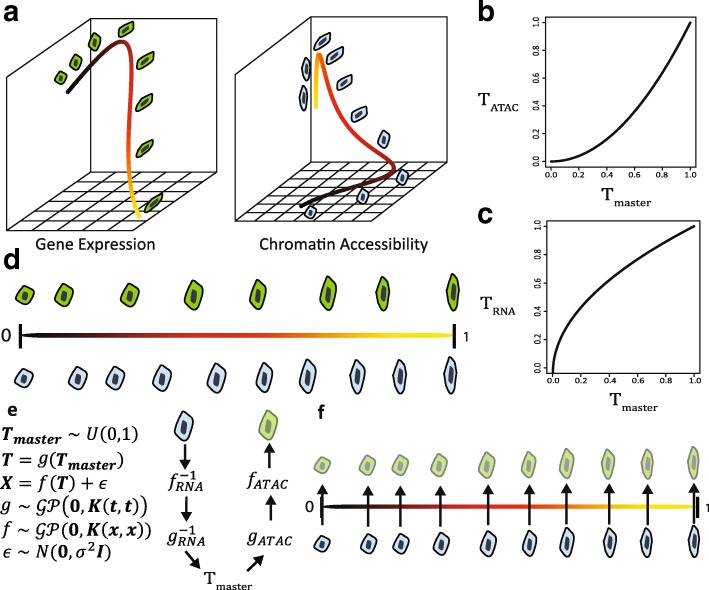
“The approach implemented in MATCHER (Manifold Alignment to CHaracterize Experimental Relationships) determines this onedimensional alignment space first inferring, separately for each dataset, a single latent variable (pseudotime) with a Gaussian process latent variable model and then aligning the pseudotime values fr…”
MethodSingle-Cell Analysis of Circulating Tumor Cells: How Far Have We Come in the -Omics Era?
Rossi, E. M. C., & Zamarchi, R. (2019) · Frontiers in Genetics · doi:10.3389/fgene.2019.00958 · Cited by 67
Unsupervised manifold alignment for single-cell multi-omics data
Singh, R., Demetci, P., Bonora, G., Ramani, V., Lee, C., Fang, H., Duan, Z., Deng, X., Shendure, J., Disteche, C., et al. (2020) · Proceedings of the 11th ACM International Conference on Bioinformatics, Computational Biology and Health Informatics · doi:10.1145/3388440.3412410 · Cited by 63
SCIM: universal single-cell matching with unpaired feature sets
Stark, S. G., Ficek, J., Locatello, F., Bonilla, X., Chevrier, S., Singer, F., Tumor Profiler Consortium, Aebersold, R., Al-Quaddoomi, F. S., Albinus, J., et al. (2020) · Bioinformatics · doi:10.1093/bioinformatics/btaa843 · Cited by 56
Probing infectious disease by single-cell RNA sequencing: Progresses and perspectives
Luo, G., Gao, Q., Zhang, S., & Yan, B. (2020) · Computational and Structural Biotechnology Journal · doi:10.1016/j.csbj.2020.10.016 · Cited by 66
Latent periodic process inference from single-cell RNA-seq data
Liang, S., Wang, F., Han, J., & Chen, K. (2020) · Nature Communications · doi:10.1038/s41467-020-15295-9 · Cited by 63
Flynn, E., Almonte-Loya, A., & Fragiadakis, G. K. (2023) · Annual Review of Biomedical Data Science · doi:10.1146/annurev-biodatasci-020422-050645 · Cited by 54
Unpaired Multi-Domain Causal Representation Learning
Sturma, N., Squires, C., Drton, M., & Uhler, C. (2023) · neural information processing systems · doi:10.52202/075280-1496 · Cited by 54
Intricacies of single-cell multi-omics data integration
Rautenstrauch, P., Vlot, A. H. C., Saran, S., & Ohler, U. (2021) · Trends in Genetics · doi:10.1016/j.tig.2021.08.012 · Cited by 51
Single‐Cell Multi‐Omics and Its Prospective Application in Cancer Biology
Peng, A., Mao, X., Zhong, J., Fan, S., & Hu, Y. (2020) · PROTEOMICS · doi:10.1002/pmic.201900271 · Cited by 51
Profiling Chromatin Accessibility at Single-Cell Resolution
Sinha, S., Satpathy, A. T., Zhou, W., Ji, H., Stratton, J. A., Jaffer, A., Bahlis, N. J., Morrissy, A. S., & Biernaskie, J. A. (2021) · Genomics Proteomics & Bioinformatics · doi:10.1016/j.gpb.2020.06.010 · Cited by 50
Deep Learning in Single-cell Analysis
Molho, D., Ding, J., Tang, W., Li, Z., Wen, H., Wang, Y., Venegas, J., Jin, W., Liu, R., Su, R., et al. (2024) · ACM Transactions on Intelligent Systems and Technology · doi:10.1145/3641284 · Cited by 51
scBridge embraces cell heterogeneity in single-cell RNA-seq and ATAC-seq data integration
Li, Y., Zhang, D., Yang, M., Peng, D., Yu, J., Liu, Y., Lv, J., Chen, L., & Peng, X. (2023) · Nature Communications · doi:10.1038/s41467-023-41795-5 · Cited by 49
A deep manifold-regularized learning model for improving phenotype prediction from multi-modal data
Nguyen, N. D., Huang, J., & Wang, D. (2022) · Nature Computational Science · doi:10.1038/s43588-021-00185-x · Cited by 42
SCMarker: Ab initio marker selection for single cell transcriptome profiling
Wang, F., Liang, S., Kumar, T., Navin, N. E., & Chen, K. (2019) · PLoS Computational Biology · doi:10.1371/journal.pcbi.1007445 · Cited by 42
Madan, E., Palma, A. M., Vudatha, V., Kumar, A., Bhoopathi, P., Wilhelm, J., Bernaś, T., Martin, P. C. N., Bilolikar, G., Gogna, A., et al. (2024) · Nature Biotechnology · doi:10.1038/s41587-024-02453-3 · Cited by 40
A universal framework for single-cell multi-omics data integration with graph convolutional networks
Gao, H., Zhang, B., Liu, L., Li, S., Gao, X., & Yu, B. (2023) · Briefings in Bioinformatics · doi:10.1093/bib/bbad081 · Cited by 37
Diagonal integration of multimodal single-cell data: potential pitfalls and paths forward
Xu, Y., & McCord, R. P. (2022) · Nature Communications · doi:10.1038/s41467-022-31104-x · Cited by 39
Machine learning integrative approaches to advance computational immunology
Curion, F., & Theis, F. J. (2024) · Genome Medicine · doi:10.1186/s13073-024-01350-3 · Cited by 39
Vlachavas, E., Bohn, J. R., Ückert, F., & Nürnberg, S. (2021) · International Journal of Molecular Sciences · doi:10.3390/ijms22062822 · Cited by 38
Chandrashekar, P. B., Alatkar, S., Wang, J., Hoffman, G. E., He, C., Jin, T., Khullar, S., Bendl, J., Fullard, J. F., Roussos, P., et al. (2023) · Genome Medicine · doi:10.1186/s13073-023-01248-6 · Cited by 37
Multi-omics at single-cell resolution: comparison of experimental and data fusion approaches
Leonavicius, K., Nainys, J., Kučiauskas, D., & Mažutis, L. (2018) · Current Opinion in Biotechnology · doi:10.1016/j.copbio.2018.09.012 · Cited by 37
Single-Cell Computational Strategies for Lineage Reconstruction in Tissue Systems
Herring, C. A., Chen, B., McKinley, E. T., & Lau, K. S. (2018) · Cellular and Molecular Gastroenterology and Hepatology · doi:10.1016/j.jcmgh.2018.01.023 · Cited by 35
Antigen-Specific Treg Therapy in Type 1 Diabetes – Challenges and Opportunities
Serr, I., Drost, F., Schubert, B., & Daniel, C. (2021) · Frontiers in Immunology · doi:10.3389/fimmu.2021.712870 · Cited by 36
Machine learning for deciphering cell heterogeneity and gene regulation
Scherer, M., Schmidt, F., Lazareva, O., Walter, J., Baumbach, J., Schulz, M. H., & List, M. (2021) · Nature Computational Science · doi:10.1038/s43588-021-00038-7 · Cited by 33
Nguyen, N. D., Blaby, I. K., & Wang, D. (2019) · BMC Genomics · doi:10.1186/s12864-019-6329-2 · Cited by 32
Unbiased integration of single cell multi-omics dataPreprint
Dou, J., Liang, S., Mohanty, V., Cheng, X., Kim, S., Choi, J., Li, Y., Rezvani, K., Chen, R., & Chen, K. (2020) · Research Square · doi:10.1101/2020.12.11.422014 · Cited by 32
Xing, Q. R., Cipta, N. O., Hamashima, K., Liou, Y., Koh, C.-G., & Loh, Y. (2020) · Frontiers in Genetics · doi:10.3389/fgene.2020.00662 · Cited by 31
Kong, S., Li, R., Tian, Y., Zhang, Y., Lu, Y., Ou, Q., Gao, P., Li, K., & Zhang, Y. (2023) · Frontiers in Genetics · doi:10.3389/fgene.2022.1100016 · Cited by 30
Single-cell multi-omics sequencing: application trends, COVID-19, data analysis issues and prospects
Huo, L., Li, J. J., Chen, L., Yu, Z., Hutvágner, G., & Li, J. (2021) · Briefings in Bioinformatics · doi:10.1093/bib/bbab229 · Cited by 30
He, C., Kalafut, N. C., Sandoval, S. O., Risgaard, R. D., Sirois, C. L., Yang, C., Khullar, S., Suzuki, M., Huang, X., Chang, Q., et al. (2023) · Cell Reports Methods · doi:10.1016/j.crmeth.2023.100409 · Cited by 29
An introduction to representation learning for single-cell data analysis
Gunawan, I., Vafaee, F., Meijering, E. H. W., & Lock, J. G. (2023) · Cell Reports Methods · doi:10.1016/j.crmeth.2023.100547 · Cited by 29
Single-Cell Analysis of the Transcriptome and Epigenome
Mazan-Mamczarz, K., Ha, J., De, S., & Sen, P. (2022) · Methods in molecular biology · doi:10.1007/978-1-0716-1831-8_3 · Cited by 29
SCOTv2: Single-Cell Multiomic Alignment with Disproportionate Cell-Type Representation
Demetçi, P., Santorella, R., Chakravarthy, M., Sandstede, B., & Singh, R. (2022) · Journal of Computational Biology · doi:10.1089/cmb.2022.0270 · Cited by 28
Durham, T., Daza, R. M., Gevirtzman, L., Cusanovich, D. A., Bolonduro, O., Noble, W. S., Shendure, J., & Waterston, R. (2021) · Genome Research · doi:10.1101/gr.271791.120 · Cited by 28
Computational Methods for Single-Cell DNA Methylome Analysis
Iqbal, W., & Zhou, W. (2022) · Genomics Proteomics & Bioinformatics · doi:10.1016/j.gpb.2022.05.007 · Cited by 24
Wang, X., Hu, Z., Yu, T., Wang, Y., Wang, R., Wei, Y., Shu, J., Ma, J., & Li, Y. (2023) · Bioinformatics · doi:10.1093/bioinformatics/btad162 · Cited by 24
Edrisi, M., Huang, X., Ogilvie, H. A., & Nakhleh, L. K. (2023) · Nature Communications · doi:10.1038/s41467-023-44014-3 · Cited by 17
Fouché, A., & Zinovyev, A. Y. (2023) · Frontiers in Bioinformatics · doi:10.3389/fbinf.2023.1191961 · Cited by 16
Entropy-based inference of transition states and cellular trajectory for single-cell transcriptomics
Gan, Y., Guo, C., Guo, W., Xu, G., & Zou, G. (2022) · Briefings in Bioinformatics · doi:10.1093/bib/bbac225 · Cited by 16
Forecasting cellular states: from descriptive to predictive biology via single-cell multiomics
Stein-O’Brien, G., Ainslie, M. C., & Fertig, E. J. (2021) · Current Opinion in Systems Biology · doi:10.1016/j.coisb.2021.03.008 · Cited by 15
GPseudoRank: a permutation sampler for single cell orderings
Strauß, M. E., Reid, J. E., & Wernisch, L. (2018) · Bioinformatics · doi:10.1093/bioinformatics/bty664 · Cited by 14
Angiogenesis goes computational – The future way forward to discover new angiogenic targets?
Subramanian, A., Zakeri, P., Mousa, M., Alnaqbi, H., Alshamsi, F. Y., Bettoni, L., Damiani, E., AlSafar, H. S., Saeys, Y., & Carmeliet, P. (2022) · Computational and Structural Biotechnology Journal · doi:10.1016/j.csbj.2022.09.019 · Cited by 14
Studying temporal dynamics of single cells: expression, lineage and regulatory networks
Pan, X., & Zhang, X. (2023) · Biophysical Reviews · doi:10.1007/s12551-023-01090-5 · Cited by 14
Demetçi, P., Santorella, R., Sandstede, B., & Singh, R. (2021) · bioRxiv (Cold Spring Harbor Laboratory) · doi:10.1101/2021.11.09.467903 · Cited by 14
Gille, A., Lapoujade, C., Wolf, J., Fouchet, P., & Barraud‐Lange, V. (2019) · International Journal of Molecular Sciences · doi:10.3390/ijms20225773 · Cited by 14
Multi-Omics Profiling of the Tumor Microenvironment
Oekelen, O. V., & Laganà, A. (2022) · Advances in experimental medicine and biology · doi:10.1007/978-3-030-91836-1_16 · Cited by 13
Mircea, M., & Semrau, S. (2021) · Biochemical Society Transactions · doi:10.1042/bst20210135 · Cited by 12
Dissecting and improving gene regulatory network inference using single-cell transcriptome data
Xue, L., Wu, Y., & Lin, Y. (2023) · Genome Research · doi:10.1101/gr.277488.122 · Cited by 12
Single cell multiomics systems biology for molecular toxicity
Diamante, G., Ha, S. M., Wijaya, D., & Yang, X. (2024) · Current Opinion in Toxicology · doi:10.1016/j.cotox.2024.100477 · Cited by 11
Interpretable multi-modal data integration
Osorio, D. (2022) · Nature Computational Science · doi:10.1038/s43588-021-00186-w · Cited by 11
Multi-omics to study chronic respiratory diseases and viral infections
Idrees, S., Chen, H., Sadaf, T., Rehman, S. F., Johansen, M. D., Paudel, K. R., Liu, G., Wang, Y., Luecken, M. D., Hortle, E., et al. (2026) · European Respiratory Review · doi:10.1183/16000617.0286-2024 · Cited by 10
Yao, Z., Li, M., & Lv, G. (2023) · Frontiers in Immunology · doi:10.3389/fimmu.2023.1058296 · Cited by 10
Metadata
- Authors
- Welch, J. D., Hartemink, A. J., & Prins, J. F.
- Affiliations
- University of North Carolina at Chapel Hill (US)
- Duke University (US)
- Corresponding author
- Prins, Jan F.
- Venue
- Genome Biology
- Published
- 2017-07-24
- Volume
- 18
- Issue
- 1
- Pages
- 138-138
- ISSN
- 1465-6906 (ISSN-L)
- 1474-760X
- PMC
- PMC5525279
- OpenAlex
- W2950030509
- Cited by
- 140
- References
- 58
- Citations by year
- 2026: 3 · 2025: 10 · 2024: 8 · 2023: 20 · 2022: 32 · 2021: 26 · 2020: 16 · 2019: 13 · 2018: 11 · 2017: 1
- FWCI
- 4.58
- Type
- journal article
- Language
- en
- Open access
- gold
- doi.org
- Licence
- cc-by
- creativecommons.org/licenses/by/4.0/ (tdm)
- creativecommons.org/licenses/by/4.0/ (vor)
- Locations
- Genome biology (publishedVersion, cc-by)
- bioRxiv (Cold Spring Harbor Laboratory) (acceptedVersion, other-oa)
- PubMed Central (publishedVersion, cc-by)
- PubMed (publishedVersion)
- Carolina Digital Repository (University of North Carolina at Chapel Hill) (submittedVersion)
- DOAJ (DOAJ: Directory of Open Access Journals) (submittedVersion, cc-by-sa)
- Funders
- National Human Genome Research Institute (1F31HG008912-01, R01HG006272)
- Topics
- Life Sciences › Biochemistry, Genetics and Molecular Biology › Molecular Biology › Single-cell and spatial transcriptomics
- Life Sciences › Biochemistry, Genetics and Molecular Biology › Molecular Biology › Epigenetics and DNA Methylation
- Life Sciences › Biochemistry, Genetics and Molecular Biology › Molecular Biology › Genomics and Chromatin Dynamics
- Keywords
- manifold alignment, single-cell multi-omics integration, DNA methylation, gene expression, embryonic stem cells, induced pluripotent stem cells, epigenetic heterogeneity
- MeSH terms
- Mouse Embryonic Stem Cells, Algorithms, Animals, Histones, Humans, Genome, Human, Sequence Analysis, RNA, DNA Methylation, Epigenesis, Genetic, Mice, Induced Pluripotent Stem Cells, Single-Cell Analysis, Transcriptome
About these checks
Registry, retraction, Cites and statistics results are computed, not judged, with one exception: a printed reference that no index lists is read once by a model before it counts as a citation error. Claims are extracted by a model and kept only when their quote appears verbatim in the text; each cited source is then checked, with a model’s help, for whether it says what the claim relies on. Those verdicts can be wrong — read the claim’s quote and the cited source before relying on one.
Statistics and arithmetic are recomputed, not judged.
Confidence bands are shown only for fields calibrated on our annotated test set. None is calibrated yet, so no band is shown.
What counts as a claim ›How we measure confidence ›How we check this ›
Are you an author, or do you see a problem with this page? Request a review
Data sources
Bibliographic data: Semantic Scholar, OpenAlex, Crossref.
Contains information from the Semantic Scholar Academic Graph Datasets, made available under the ODC Attribution License (ODC-BY 1.0).
Semantic Scholar’s data is described in: Kinney, R., et al. (2023). The Semantic Scholar Open Data Platform. arXiv:2301.10140.
