

RefSeq database growth influences the accuracy of k-mer-based lowest common ancestor species identification
Open accessPublished version of a preprint
The DOI matches its Crossref record; 50 of the 52 references it cites were found in a registry or an index.
Abstract
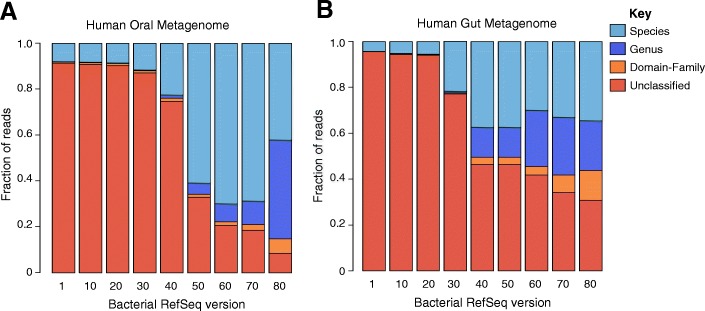
Accurate species-level taxonomic classification and profiling of complex microbial communities remains a challenge due to homologous regions shared among closely related species and a sparse representation of non-human associated microbes in the database. Although the database undoubtedly has a strong influence on the sensitivity of taxonomic classifiers and profilers, to date, no study has carefully explored this topic on historical RefSeq releases and explored its impact on accuracy. In this study, we examined the influence of the database, over time, on k -mer based sequence classification and profiling. We present three major findings: ( i ) database growth over time resulted in more classified reads, but fewer species-level classifications and more species-level misclassifications; ( ii ) Bayesian re-estimation of abundance helped to recover species-level classifications when the exact target strain was present; and ( iii ) Bayesian reestimation struggled when the database lacked the target strain, resulting in a notable decrease in accuracy. In summary, our findings suggest that the growth of RefSeq over time has strongly influenced the accuracy of k -mer based classification and profiling methods, resulting in different classification results depending on the particular database used. These results suggest a need for new algorithms specially adapted for large genome collections and better measures of classification uncertainty.
Overview
The claims and statistics of this paper haven’t been checked yet.
Free: it reads the open-access text and checks the first 5 claims that cite a source we can check. Create a free account to check every claim.
Integrity signals
Registry
Cites
Statistics
Figures
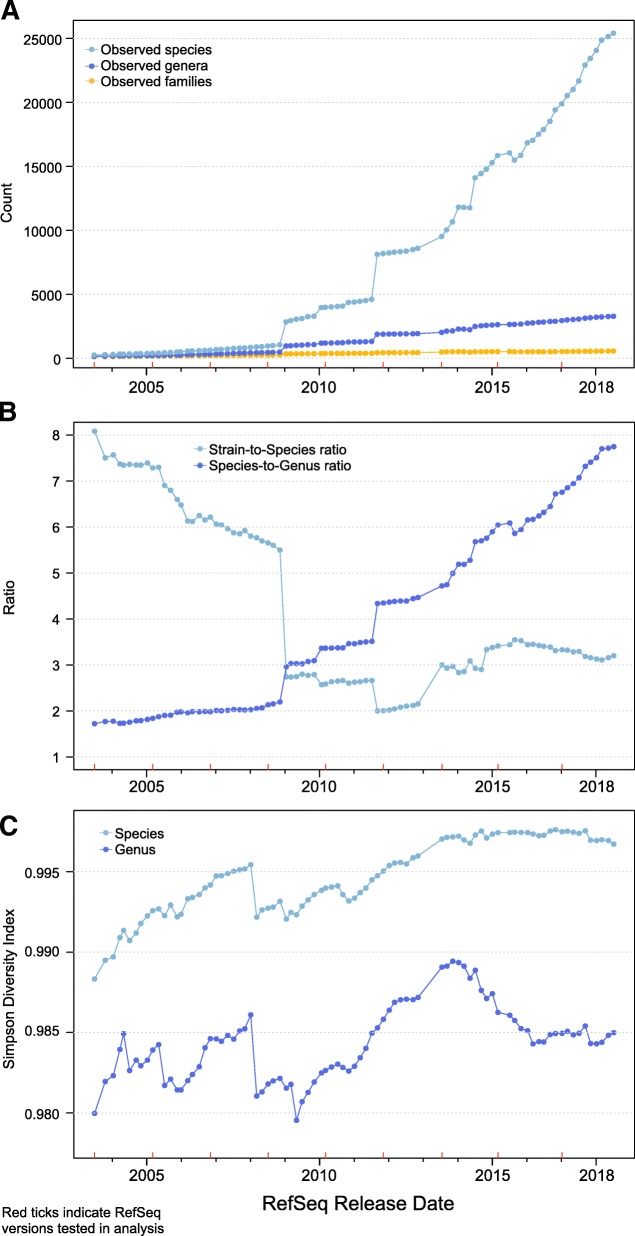
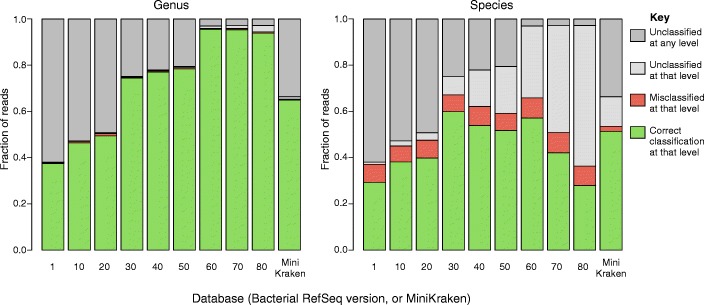
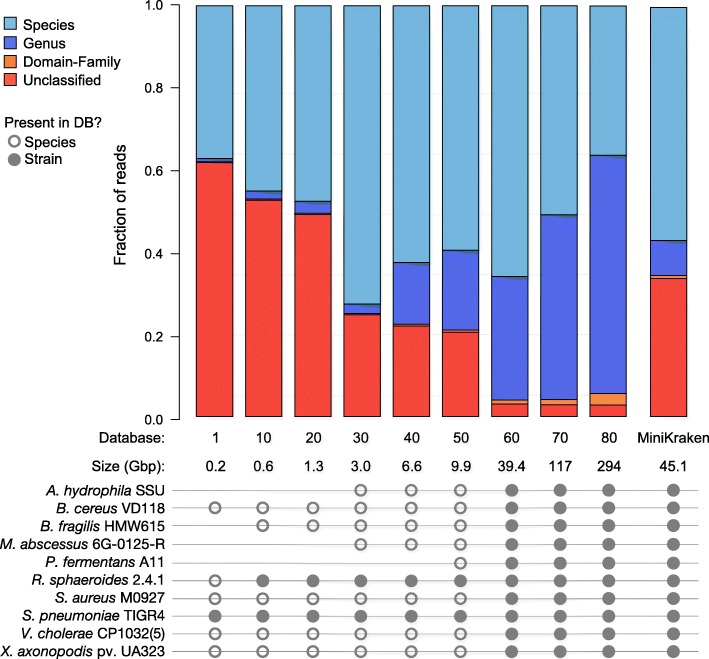
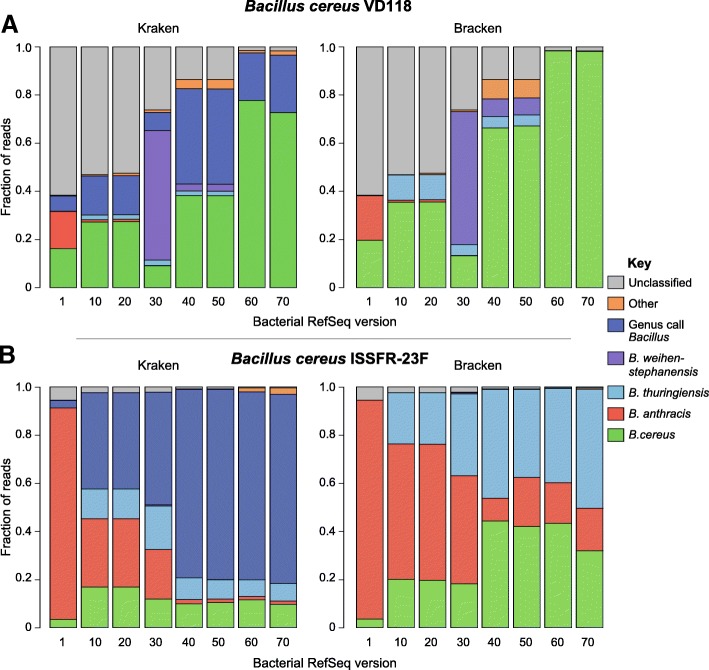
Verification
Claims the paper makes
The claims and statistics of this paper haven’t been checked yet.
Free: it reads the open-access text and checks the first 5 claims that cite a source we can check. Create a free account to check every claim.
Claims other papers make about this one
Each is checked against this paper’s own text: does it say what the citing paper says it does?
In the citing paper
“As genome reference databases expand, historical, microbiology-based taxonomic assignments do not reflect population-level relationships inferred from genome sequencing.”
From Gut microbiome stability and dynamics in healthy donors and patients with non-gastrointestinal cancers (2021) · cites this paper as Nasko et al., 2018
Self-check
Percentages, sums and reported differences re-computed from the paper’s own numbers.
The self-check needs the paper’s full text.
Citations
Cites
Trimmomatic: a flexible trimmer for Illumina sequence data
Bolger, A. M., Lohse, M., & Usadel, B. (2014) · Bioinformatics · doi:10.1093/bioinformatics/btu170 · Cited by 65,548 · cited 1×
“0.23 (leading:20, trailing:20, slidingwindow:4:30 minlen:40) [40].”
InfluentialQIIME allows analysis of high-throughput community sequencing data
Caporaso, J. G., Kuczynski, J., Stombaugh, J., Bittinger, K., Bushman, F. D., Costello, E. K., Fierer, N., Peña, A. G., Goodrich, J. K., Gordon, J. I., et al. (2010) · Nature Methods · doi:10.1038/nmeth.f.303 · Cited by 34,887 · cited 1×
“MacQIIME 1.9.1-20150604) [41].”
InfluentialStructure, function and diversity of the healthy human microbiome
The Human Microbiome Project Consortium (2012) · Nature · doi:10.1038/nature11234 · Cited by 11,726 · cited 1×
“To assess classification trends in real metagenomic data, two shotgun metagenomes were used: a fecal metagen-ome (SRS105153) and oral metagenome (SRS050029) from the Human Microbiome Project [37].”
MethodNear-optimal probabilistic RNA-seq quantification
Bray, N. L., Pimentel, H., Melsted, P., & Pachter, L. (2016) · Nature Biotechnology · doi:10.1038/nbt.3519 · Cited by 9,723 · cited 1×
“Lastly, alternative approaches to traditional k-mer-based LCA identification methods, such as those featured within KrakenHLL [23], Kallisto [35], and DUDes [36], will be required to maximize the benefit of longer reads coupled with ever-increasing reference sequence databases and improve sequence classification accur…”
MethodShifting the genomic gold standard for the prokaryotic species definition
Richter, M., & Rosselló-Móra, R. (2009) · Proceedings of the National Academy of Sciences · doi:10.1073/pnas.0906412106 · Cited by 6,359 · cited 1×
“This, coupled with an often ambiguous species concept in microbial genomes due to horizontal gene transfer and mobile elements [27, 28], brings into question the reliance on the current taxonomic structure for assigning names to microbes sequenced and identified in metagenomic samples.”
BackgroundUniProt: a hub for protein information
The UniProt Consortium (2015) · Nucleic Acids Research · doi:10.1093/nar/gku989 · Cited by 5,106
Kraken: ultrafast metagenomic sequence classification using exact alignments
Wood, D. E., & Salzberg, S. L. (2014) · Genome Biology · doi:10.1186/gb-2014-15-3-r46 · Cited by 4,521
A standardized bacterial taxonomy based on genome phylogeny substantially revises the tree of life
Parks, D. H., Chuvochina, M., Waite, D. W., Rinke, C., Skarshewski, A., Chaumeil, P.-A., & Hugenholtz, P. (2018) · Nature Biotechnology · doi:10.1038/nbt.4229 · Cited by 3,603
MEGAN analysis of metagenomic data
Huson, D. H., Auch, A. F., Qi, J., & Schuster, S. C. (2007) · Genome Research · doi:10.1101/gr.5969107 · Cited by 3,312
Bracken: estimating species abundance in metagenomics data
(2016) · doi:10.7717/peerj-cs.104 · Cited by 2,333 · cited 3×
“Bracken, a Bayesian method that refines Kraken results, is capable of estimating how much of each species is present among a set of ambiguous species classifications by probabilistically re-distributing reads in a taxonomic tree [10].”
BackgroundMethodInfluentialMetaPhlAn2 for enhanced metagenomic taxonomic profiling
Truong, D. T., Franzosa, E. A., Tickle, T. L., Scholz, M., Weingart, G., Pasolli, E., Tett, A., Huttenhower, C., & Segata, N. (2015) · Nature Methods · doi:10.1038/nmeth.3589 · Cited by 2,185 · cited 2×
“An interesting avenue of future work will be to investigate how generalizable these observations are by testing these effects on other databases (e.g., SEED [31], UniProt [32]) and classification approaches (e.g., MetaPhlan [29], MEGAN [8]).”
BackgroundUncovering the novel characteristics of Asian honey bee, Apis cerana, by whole genome sequencing
Park, D., Jung, J. W., Choi, B.-S., Jayakodi, M., Lee, J., Lim, J., Yu, Y., Choi, Y.-S., Lee, M.-L., Park, Y., et al. (2015) · BMC Genomics · doi:10.1186/1471-2164-16-1 · Cited by 1,199
Helgason, E., Økstad, O. A., Caugant, D. A., Johansen, H. A., Fouet, A., Mock, M., Hegna, I., & Kolstø, A.-B. (2000) · Applied and Environmental Microbiology · doi:10.1128/aem.66.6.2627-2630.2000 · Cited by 1,071
Critical Assessment of Metagenome Interpretation—a benchmark of metagenomics software
Sczyrba, A., Hofmann, P., Belmann, P., Koslicki, D., Janssen, S., Dröge, J., Gregor, I., Majda, S., Fiedler, J., Dahms, E., et al. (2017) · Nature Methods · doi:10.1038/nmeth.4458 · Cited by 870 · cited 1×
“…and approaches for taxonomic identification of DNA sequences have emerged [3 – 5], in addition to community-driven “ bake-offs ” and benchmarks [6]. k -mer-based classification methods such as Kraken or CLARK [3, 7] are notable for their exceptional speed and specificity, as both are capable…”
Mathers, T. C., Chen, Y., Kaithakottil, G., Legeai, F., Mugford, S. T., Baa-Puyoulet, P., Bretaudeau, A., Clavijo, B., Colella, S., Collin, O., et al. (2017) · Genome Biology · doi:10.1186/s13059-016-1145-3 · Cited by 822
Greenblum, S., Turnbaugh, P. J., & Borenstein, E. (2012) · Proceedings of the National Academy of Sciences · doi:10.1073/pnas.1116053109 · Cited by 821 · cited 1×
“Specifically, there have been numerous studies highlighting the utility of metagenomic datasets for pathogen detection, disease indicators, and health [1, 2].”
BackgroundFast Identification and Removal of Sequence Contamination from Genomic and Metagenomic Datasets
Schmieder, R., & Edwards, R. (2011) · PLoS ONE · doi:10.1371/journal.pone.0017288 · Cited by 744 · cited 1×
“While several custom tools have been built to deal with imperfect data [26], there is a need for database “ cleaning ” tools that can pre-process a database and evaluate it for both contamination (genome assemblies that contain a mixture of species) and misclassified species and strains (genomes…”
Xanthomonas citri MinC Oscillates from Pole to Pole to Ensure Proper Cell Division and Shape
Lorenzoni, A. S. G., Dantas, G. C., Bergsma, T., Ferreira, H., & Scheffers, D.-J. (2017) · Frontiers in Microbiology · doi:10.3389/fmicb.2017.01352 · Cited by 727
Cohan, F. M. (2002) · Annual Review of Microbiology · doi:10.1146/annurev.micro.56.012302.160634 · Cited by 723 · cited 1×
“This, coupled with an often ambiguous species concept in microbial genomes due to horizontal gene transfer and mobile elements [27, 28], brings into question the reliance on the current taxonomic structure for assigning names to microbes sequenced and identified in metagenomic samples.”
BackgroundBetulin Is a Potent Anti-Tumor Agent that Is Enhanced by Cholesterol
Mullauer, F. B., Kessler, J. H., & Medema, J. P. (2009) · PLoS ONE · doi:10.1371/journal.pone.0005361 · Cited by 688
Ounit, R., Wanamaker, S., Close, T. J., & Lonardi, S. (2015) · BMC Genomics · doi:10.1186/s12864-015-1419-2 · Cited by 632
KrakenUniq: confident and fast metagenomics classification using unique k-mer counts
Breitwieser, F. P., Baker, D. N., & Salzberg, S. L. (2018) · Genome Biology · doi:10.1186/s13059-018-1568-0 · Cited by 474
Hi-C: A Method to Study the Three-dimensional Architecture of Genomes.
van Berkum, N. L., Lieberman-Aiden, E., Williams, L., Imakaev, M., Gnirke, A., Mirny, L. A., Dekker, J., & Lander, E. S. (2010) · Journal of Visualized Experiments · doi:10.3791/1869 · Cited by 473
Open science resources for the discovery and analysis of Tara Oceans data
Pesant, S., Not, F., Picheral, M., Kandels-Lewis, S., Le Bescot, N., Gorsky, G., Iudicone, D., Karsenti, E., Speich, S., Troublé, R., et al. (2015) · Scientific Data · doi:10.1038/sdata.2015.23 · Cited by 431 · cited 1×
“Additionally, a soil (SRR5381886) [38] and aquatic (ERR315857) [39] metagenome were analyzed to provide some environmental insights.”
BackgroundGenetic Structure of Europeans: A View from the North–East
Nelis, M., Esko, T., Mägi, R., Zimprich, F., Zimprich, A., Toncheva, D., Karachanak, S., Piskáčková, T., Balaščák, I., Peltonen, L., et al. (2009) · PLoS ONE · doi:10.1371/journal.pone.0005472 · Cited by 428
Comprehensive benchmarking and ensemble approaches for metagenomic classifiers
McIntyre, A. B. R., Ounit, R., Afshinnekoo, E., Prill, R. J., Hénaff, E., Alexander, N., Minot, S. S., Danko, D., Foox, J., Ahsanuddin, S., et al. (2017) · Genome Biology · doi:10.1186/s13059-017-1299-7 · Cited by 342 · cited 1×
“A comprehensive benchmarking survey indicated that Kraken offered the best F1 score (a measure considering both precision and recall) among the k-mer-based taxonomic classifiers evaluated at the species level [9].”
Keim, P., Van Ert, M. N., Pearson, T., Vogler, A. J., Huynh, L. Y., & Wagner, D. M. (2004) · Infection, Genetics and Evolution · doi:10.1016/j.meegid.2004.02.005 · Cited by 339 · cited 1×
“anthracis clade is commonly denoted by a single nonsense mutation in the plcR gene [16] which is conserved in all known B.”
BackgroundGeospatial Resolution of Human and Bacterial Diversity with City-Scale Metagenomics
Afshinnekoo, E., Meydan, C., Chowdhury, S., Jaroudi, D., Boyer, C., Bernstein, N., Maritz, J. M., Reeves, D., Gandara, J., Chhangawala, S., et al. (2015) · Cell Systems · doi:10.1016/j.cels.2015.01.001 · Cited by 336 · cited 2×
“One clear example of misidentification within this group was the false identification of anthrax in public transit systems [21, 22].”
BackgroundMethodNakamura, S., Yang, C.-S., Sakon, N., Ueda, M., Tougan, T., Yamashita, A., Goto, N., Takahashi, K., Yasunaga, T., Ikuta, K., et al. (2009) · PLoS ONE · doi:10.1371/journal.pone.0004219 · Cited by 266 · cited 1×
“Specifically, there have been numerous studies highlighting the utility of metagenomic datasets for pathogen detection, disease indicators, and health [1, 2].”
BackgroundGrinder: a versatile amplicon and shotgun sequence simulator
Angly, F. E., Willner, D., Rohwer, F., Hugenholtz, P., & Tyson, G. W. (2012) · Nucleic Acids Research · doi:10.1093/nar/gks251 · Cited by 244
A hybrid approach for de novo human genome sequence assembly and phasing
Mostovoy, Y., Levy-Sakin, M., Lam, J., Lam, E. T., Hastie, A. R., Marks, P., Lee, J., Chu, C., Lin, C., Džakula, Ž., et al. (2016) · Nature Methods · doi:10.1038/nmeth.3865 · Cited by 216 · cited 1×
“Furthermore, as sequencing technologies change, the increased prevalence of long read (e.g., Pac-Bio and Nanopore) and other emerging technologies (e.g., Hi-C [33], 10x [34]) may present new opportunities and challenges to the taxonomic classification of unknown DNA sequences.”
BackgroundTaxonomy annotation and guide tree errors in 16S rRNA databases
Edgar, R. (2018) · PeerJ · doi:10.7717/peerj.5030 · Cited by 215 · cited 1×
“The genomic data deluge has helped to expand public repositories with a broader and deeper view of the tree of life but has also brought with it contamination and misclassification [24].”
BackgroundKlee, S. R., Brzuszkiewicz, E. B., Nattermann, H., Brüggemann, H., Dupke, S., Wollherr, A., Franz, T., Pauli, G., Appel, B., Liebl, W., et al. (2010) · PLoS ONE · doi:10.1371/journal.pone.0010986 · Cited by 180 · cited 1×
“However, not all B . anthracis strains cause disease in humans, such as B . anthracis Sterne (missing the pXO2 plasmid), and some B . cereus strains do cause anthrax-like disease [18], complicating a precise species definition.”
BackgroundZwick, M. E., Joseph, S. J., Didelot, X., Chen, P. E., Bishop-Lilly, K. A., Stewart, A. C., Willner, K., Nolan, N., Lentz, S., Thomason, M. K., et al. (2012) · Genome Research · doi:10.1101/gr.134437.111 · Cited by 167 · cited 1×
“The challenging nature of classifying sequences belonging to the Bacillus cereus sensu lato group has been previously documented [14, 15].”
BackgroundUnexpected cross-species contamination in genome sequencing projects
Merchant, S., Wood, D. E., & Salzberg, S. L. (2014) · PeerJ · doi:10.7717/peerj.675 · Cited by 162 · cited 1×
“Numerous cases of contamination in public databases are well-documented [25], and databases that continue to harbor these contaminants represent an additional confounding factor for k-mer-based methods.”
BackgroundThe MetaSUB International Consortium (2016) · Microbiome · doi:10.1186/s40168-016-0168-z · Cited by 159
Mignot, T., Mock, M., Robichon, D., Landier, A., Lereclus, D., & Fouet, A. (2001) · Molecular Microbiology · doi:10.1046/j.1365-2958.2001.02692.x · Cited by 144 · cited 1×
“…is commonly denoted by a single non-sense mutation in the plcR gene [16] which is conserved in all known B . anthracis genomes and has been shown to confer a regulatory mutation essential for maintaining the pXO1 and pXO2 plasmids that carry the virulence factors characteristic of anthrax [17].”
BackgroundHeraud-Farlow, J. E., Chalk, A. M., Linder, S. E., Li, Q., Taylor, S., White, J. M., Pang, L., Liddicoat, B., Gupte, A., Li, J. B., et al. (2017) · Genome biology · doi:10.1186/s13059-017-1301-4 · Cited by 126
TIPP: taxonomic identification and phylogenetic profiling
Nguyen, N.-P., Mirarab, S., Liu, B., Pop, M., & Warnow, T. (2014) · Bioinformatics · doi:10.1093/bioinformatics/btu721 · Cited by 94
The SEED: a peer-to-peer environment for genome annotation
Overbeek, R., Disz, T., & Stevens, R. (2004) · Communications of the ACM · doi:10.1145/1029496.1029525 · Cited by 85 · cited 3×
“The SEED: a peer-to-peer environment for genome.”
BackgroundNourishment level affects caste-related gene expression in Polistes wasps
Berens, A. J., Hunt, J. H., & Toth, A. L. (2015) · BMC Genomics · doi:10.1186/s12864-015-1410-y · Cited by 81
DUDes: a top-down taxonomic profiler for metagenomics
Piro, V. C., Lindner, M. S., & Renard, B. Y. (2016) · Bioinformatics · doi:10.1093/bioinformatics/btw150 · Cited by 55 · cited 1×
“…approaches to traditional k -mer-based LCA identification methods, such as those featured within Kra-kenHLL [23], Kallisto [35], and DUDes [36], will be required to maximize the benefit of longer reads coupled with ever-increasing reference sequence databases and improve sequence…”
MethodAinsworth, D., Sternberg, M. J. E., Raczy, C., & Butcher, S. (2016) · Nucleic Acids Research · doi:10.1093/nar/gkw1248 · Cited by 50 · cited 1×
“Several new tools and approaches for taxonomic identification of DNA sequences have emerged [3 – 5], in addition to community-driven “ bake-offs ” and benchmarks [6]. k -mer-based classification methods such as Kraken or CLARK [3, 7] are notable for their exceptional speed and specificity, as both…”
MethodThe Public Health Impact of a Publically Available, Environmental Database of Microbial Genomes
Stevens, E. L., Timme, R., Brown, E. W., Allard, M. W., Strain, E. A., Bunning, K., & Musser, S. M. (2017) · Frontiers in Microbiology · doi:10.3389/fmicb.2017.00808 · Cited by 50 · cited 1×
“We suspect this is due to recent sequencing efforts that have focused on a handful of pathogenic species for outbreak detection [13].”
BackgroundVecScreen_plus_taxonomy: imposing a tax(onomy) increase on vector contamination screening
Schäffer, A. A., Nawrocki, E. P., Choi, Y., Kitts, P., Karsch‐Mizrachi, I., & McVeigh, R. (2017) · Bioinformatics · doi:10.1093/bioinformatics/btx669 · Cited by 34 · cited 1×
“…investigations have examined the influence of contamination in specific database releases and identified idiosyncrasies specific to a release [11, 12], no study has examined the specific influence of perhaps the most popular database from which to build classification databases, the…”
BackgroundReprDB and panDB: minimalist databases with maximal microbial representation
Zhou, W. L., Gay, N. R., & Oh, J. (2018) · Microbiome · doi:10.1186/s40168-018-0399-2 · Cited by 26
The importance of recognizing and reporting sequence database contamination for proteomics
Pible, O., Hartmann, E. M., Imbert, G., & Armengaud, J. (2014) · EuPA Open Proteomics · doi:10.1016/j.euprot.2014.04.001 · Cited by 22
Venkateswaran, K. J., Sielaff, A. C., Ratnayake, S., Pope, R. K., Blank, T. E., Stepanov, V. G., Fox, G. E., van Tongeren, S. P., Torres, C., Allen, J., et al. (2017) · Genome Announcements · doi:10.1128/genomea.00680-17 · Cited by 15 · cited 2×
“The first, B . cereus VD118, is a strain available in RefSeq version 60 and beyond, and the second, B . cereus ISSFR-23F [19], was recently isolated from the International Space Station and is not present in any of the RefSeq releases tested.”
BackgroundSelf-citationCrovadore, J., Torres, A. A., Rodríguez-Heredia, R., Cochard, B., Chablais, R., & Lefort, F. (2017) · Genome Announcements · doi:10.1128/genomea.00511-17 · Cited by 7 · cited 1×
“Additionally, a soil (SRR5381886) [38] and aquatic (ERR315857) [39] metagenome were analyzed to provide some environmental insights.”
BackgroundWood, D. (2018) · Figshare · doi:10.6084/m9.figshare.7090697 · Cited by 1
Code to rollback versions of RefSeq
Nasko, D. (2018) · Zenodo (CERN European Organization for Nuclear Research) · doi:10.5281/zenodo.1414403 · Cited by 1
Self-citationCode to rollback versions of RefSeq
Nasko, D. (2018) · Zenodo · doi:10.5281/zenodo.1414404
Self-citation
Research works printed but not linked: 1
- NBACC. Genome sequencing and assembly of 11 Bacillus cereus sensu lato isolates from various quarters of the International Space Station. [Data set] https://www.ncbi.nlm.nih.gov/sra/?term=SRR3954740. Accessed 13 July 2018.
Cited by
Szklarczyk, D., Kirsch, R., Koutrouli, M., Nastou, K., Mehryary, F., Hachilif, R., Gable, A. L., Fang, T., Doncheva, N. T., Pyysalo, S., et al. (2023) · Nucleic Acids Research · doi:10.1093/nar/gkac1000 · Cited by 9,726
“However, new genomes are sequenced and assembled daily, and existing genomes are re-sequenced or reannotated; overall, the number of taxonomically distinct species that are being sequenced has been doubling roughly every 3 years (56).”
BackgroundLi, W., O’Neill, K. R., Haft, D. H., DiCuccio, M., Chetvernin, V., Badretdin, A., Coulouris, G., Chitsaz, F., Derbyshire, M. K., Durkin, A. S., et al. (2021) · Nucleic Acids Research · doi:10.1093/nar/gkaa1105 · Cited by 1,116
“This poses a challenge for some uses, such as sequence homology searching, or k -mer indexing (20,21).”
MethodMetagenome analysis using the Kraken software suite
Lu, J., Rincon, N., Wood, D. E., Breitwieser, F. P., Pockrandt, C., Langmead, B., Salzberg, S. L., & Steinegger, M. (2022) · Nature Protocols · doi:10.1038/s41596-022-00738-y · Cited by 756
Benchmarking Metagenomics Tools for Taxonomic Classification
Ye, S. H., Siddle, K. J., Park, D. J., & Sabeti, P. C. (2019) · Cell · doi:10.1016/j.cell.2019.07.010 · Cited by 593
“The growth of reference databases such as RefSeq can result in methods changing performance characteristics over time, as exemplified by the decrease in accuracy of k-mer based methods (Nasko et al., 2018).”
MethodBaseline human gut microbiota profile in healthy people and standard reporting template
King, C. H., Desai, H., Sylvetsky, A. C., LoTempio, J., Ayanyan, S., Carrie, J., Crandall, K. A., Fochtman, B. C., Gasparyan, L., Gulzar, N., et al. (2019) · PLOS ONE · doi:10.1371/journal.pone.0206484 · Cited by 235
Metadata
- Authors
- Nasko, D. J., Koren, S., Phillippy, A. M., & Treangen, T. J.
- Affiliations
- University of Maryland, College Park (US)
- National Institutes of Health (US)
- Corresponding author
- Treangen, Todd J.
- Venue
- Genome Biology
- Published
- 2018-10-30
- Volume
- 19
- Issue
- 1
- Pages
- 165-165
- ISSN
- 1465-6906 (ISSN-L)
- 1474-760X
- PMC
- PMC6206640
- OpenAlex
- W2897603717
- Cited by
- 170
- References
- 51
- Citations by year
- 2026: 16 · 2025: 23 · 2024: 30 · 2023: 14 · 2022: 19 · 2021: 23 · 2020: 23 · 2019: 15 · 2018: 7
- FWCI
- 6.05
- Type
- journal article
- Language
- en
- Open access
- gold
- doi.org
- Licence
- cc-by
- creativecommons.org/licenses/by/4.0/ (tdm)
- creativecommons.org/licenses/by/4.0/ (vor)
- Locations
- Genome biology (publishedVersion, cc-by)
- bioRxiv (Cold Spring Harbor Laboratory) (acceptedVersion, cc-by)
- Europe PMC (PubMed Central) (publishedVersion, other-oa)
- PubMed Central (publishedVersion, cc-by)
- PubMed (publishedVersion)
- DOAJ (DOAJ: Directory of Open Access Journals) (submittedVersion, cc-by-sa)
- Rice Research Repository (Rice University) (submittedVersion, cc-by)
- Funders
- Army Research Office (W911NF-17-2-0089)
- Topics
- Life Sciences › Biochemistry, Genetics and Molecular Biology › Molecular Biology › Genomics and Phylogenetic Studies
- Physical Sciences › Environmental Science › Ecology › Environmental DNA in Biodiversity Studies
- Physical Sciences › Environmental Science › Ecology › Microbial Community Ecology and Physiology
- Keywords
- NCBI RefSeq, lowest common ancestor, species-level classification, metagenomic reads
- MeSH terms
- Algorithms, Bacillus, Computer Simulation, Species Specificity, Time Factors, Genetic Variation, Sequence Analysis, DNA, Databases, Genetic, Metagenome
About these checks
Registry, retraction, Cites and statistics results are computed, not judged, with one exception: a printed reference that no index lists is read once by a model before it counts as a citation error. Claims are extracted by a model and kept only when their quote appears verbatim in the text; each cited source is then checked, with a model’s help, for whether it says what the claim relies on. Those verdicts can be wrong — read the claim’s quote and the cited source before relying on one.
Statistics and arithmetic are recomputed, not judged.
Confidence bands are shown only for fields calibrated on our annotated test set. None is calibrated yet, so no band is shown.
What counts as a claim ›How we measure confidence ›How we check this ›
Are you an author, or do you see a problem with this page? Request a review
Data sources
Bibliographic data: Semantic Scholar, OpenAlex, Crossref.
Contains information from the Semantic Scholar Academic Graph Datasets, made available under the ODC Attribution License (ODC-BY 1.0).
Semantic Scholar’s data is described in: Kinney, R., et al. (2023). The Semantic Scholar Open Data Platform. arXiv:2301.10140.
