

A new look at an old question: when did the second whole genome duplication occur in vertebrate evolution?
Open accessThe DOI matches its Crossref record; 10 of the 10 references it cites were found in a registry or an index.
Abstract
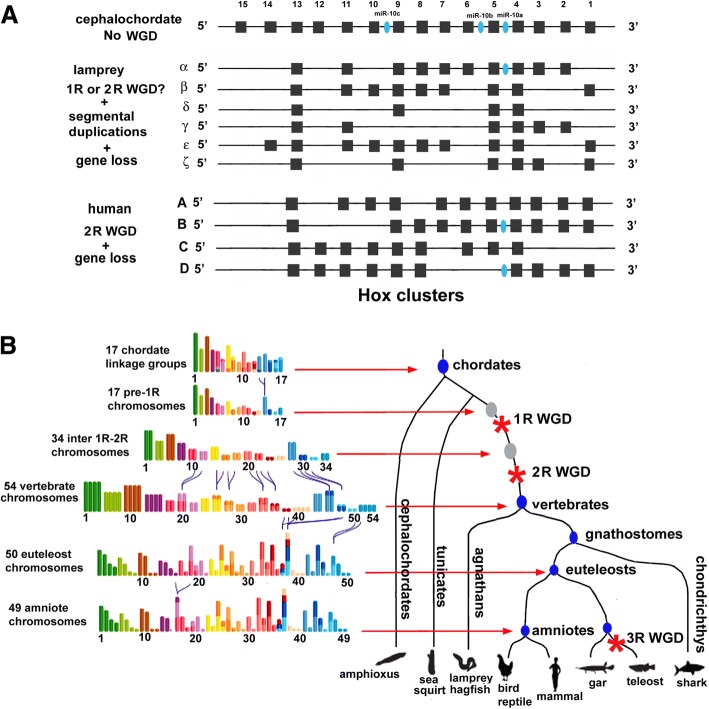
A recent study used 61 extant animal genomes to reconstruct the chromosomes of the hypothetical amniote ancestor. Comparison of this karyotype to the 17 chordate linkage groups previously inferred in the ancestral chordate indicated that two whole genome duplications probably occurred in the lineage preceding the ancestral vertebrate.
Overview
The claims and statistics of this paper haven’t been checked yet.
Free: it reads the open-access text and checks the first 5 claims that cite a source we can check. Create a free account to check every claim.
Integrity signals
Registry
Cites
Statistics
Figures
Verification
Claims the paper makes
The claims and statistics of this paper haven’t been checked yet.
Free: it reads the open-access text and checks the first 5 claims that cite a source we can check. Create a free account to check every claim.
Claims other papers make about this one
Each is checked against this paper’s own text: does it say what the citing paper says it does?
The source backs part of the claim, not all of it — or backs it for a different population, condition or comparison.
In the citing paper
“Drosophila also tends to lack partial redundancy between closely related paralogs, as in humans this arose in many gene families from the 2 whole-genome duplications that occurred early in vertebrate evolution [28].”
From Functional unknomics: Systematic screening of conserved genes of unknown function (2023) · cites this paper as [28]
Experimental — accuracy not yet measured
Self-check
Percentages, sums and reported differences re-computed from the paper’s own numbers.
The self-check needs the paper’s full text.
Citations
Cites
Ohno, S. (1970) · doi:10.1007/978-3-642-86659-3 · Cited by 7,833 · cited 1×
“rounds of WGD; one included Hox andMHC, a second included ParaHox and NPYR and the third included RAR Introduction Since Susumu Ohno proposed nearly 50 years ago that the genomes of birds and mammals had evolved by tetraploidization, that is, by whole genome duplication (WGD) [1], it has been hotly debated when in evo…”
The amphioxus genome and the evolution of the chordate karyotype
Putnam, N. H., Butts, T., Ferrier, D. E. K., Furlong, R. F., Hellsten, U., Kawashima, T., Robinson-Rechavi, M., Shoguchi, E., Terry, A., Yu, J.-K., et al. (2008) · Nature · doi:10.1038/nature06967 · Cited by 1,580
Self-citationThe amphioxus genome illuminates vertebrate origins and cephalochordate biology
Holland, L. Z., Albalat, R., Azumi, K., Benito-Gutiérrez, È., Blow, M. J., Bronner-Fraser, M., Brunet, F., Butts, T., Candiani, S., Dishaw, L. J., et al. (2008) · Genome Research · doi:10.1101/gr.073676.107 · Cited by 512
Self-citationSmith, J. J., Timoshevskaya, N., Ye, C., Holt, C., Keinath, M. C., Parker, H. J., Cook, M. E., Hess, J. E., Narum, S. R., Lamanna, F., et al. (2018) · Nature Genetics · doi:10.1038/s41588-017-0036-1 · Cited by 305 · cited 4×
“Taken together, the data supported three chromosomescale duplications, followed by one WGD at the base of the vertebrates, although two WGDs were not ruled out [4].”
InfluentialChromosome evolution at the origin of the ancestral vertebrate genome
Sacerdot, C., Louis, A., Bon, C., Berthelot, C., & Roest Crollius, H. (2018) · Genome Biology · doi:10.1186/s13059-018-1559-1 · Cited by 206
Evidence for at least six Hox clusters in the Japanese lamprey ( Lethenteron japonicum )
Mehta, T. K., Ravi, V., Yamasaki, S., Lee, A. P., Lian, M. M., Tay, B.-H., Tohari, S., Yanai, S., Tay, A., Brenner, S., et al. (2013) · Proceedings of the National Academy of Sciences · doi:10.1073/pnas.1315760110 · Cited by 192
The sea lamprey meiotic map improves resolution of ancient vertebrate genome duplications
Smith, J. J., & Keinath, M. C. (2015) · Genome Research · doi:10.1101/gr.184135.114 · Cited by 152
Hagfish and lamprey Hox genes reveal conservation of temporal colinearity in vertebrates
Pascual‐Anaya, J., Sato, I., Sugahara, F., Higuchi, S., Paps, J., Ren, Y., Takagi, W., Ruiz‐Villalba, A., Ota, K. G., Wang, W., et al. (2018) · Nature Ecology & Evolution · doi:10.1038/s41559-018-0526-2 · Cited by 70
The 3D Organization of Chromatin Explains Evolutionary Fragile Genomic Regions
Berthelot, C., Muffato, M., Abecassis, J., & Roest Crollius, H. (2015) · Cell Reports · doi:10.1016/j.celrep.2015.02.046 · Cited by 68
Chromosome evolution at the origin of the ancestral vertebrate genome
Sacerdot, C., Louis, A., Bon, C., & Crollius, H. R. (2018) · doi:10.1101/253104
Cited by
Functional Long Non-coding RNAs Evolve from Junk Transcripts
Palazzo, A. F., & Koonin, E. V. (2020) · Cell · doi:10.1016/j.cell.2020.09.047 · Cited by 249
Sodium channelopathies in neurodevelopmental disorders
Meisler, M. H., Hill, S. F., & Yu, W. (2021) · Nature Reviews Neuroscience · doi:10.1038/s41583-020-00418-4 · Cited by 192
Yu, D., Ren, Y., Uesaka, M., Beavan, A. J. S., Muffato, M., Shen, J., Li, Y., Sato, I., Wan, W., Clark, J., et al. (2024) · Nature Ecology & Evolution · doi:10.1038/s41559-023-02299-z · Cited by 174
“4a and Supplementary Files 5–8).”
MethodInfluentialCollagen, stiffness, and adhesion: the evolutionary basis of vertebrate mechanobiology
Tang, V. W. (2020) · Molecular Biology of the Cell · doi:10.1091/mbc.e19-12-0709 · Cited by 106
“…new biology that comes with a stiffer environment, vertebrates are provided with a new toolbox, brought in part by a major evolutionary event consisting of two rounds of whole genome duplications (Vandepoele et al., 2004; Dehal and Boore, 2005; Holland and Ocampo Daza, 2018; Marletaz et al., 2018).”
BackgroundDufour, S., Quérat, B., Tostivint, H., Pasqualini, C., Vaudry, H., & Rousseau, K. (2019) · Physiological Reviews · doi:10.1152/physrev.00009.2019 · Cited by 94
Vertebrate Chromosome Evolution
Damas, J., Corbo, M., & Lewin, H. A. (2020) · Annual Review of Animal Biosciences · doi:10.1146/annurev-animal-020518-114924 · Cited by 76
Functional unknomics: Systematic screening of conserved genes of unknown function
Rocha, J. J., Jayaram, S. A., Stevens, T. J., Muschalik, N., Shah, R. D., Emran, S., Robles, C., Freeman, M., & Munro, S. (2023) · PLOS Biology · doi:10.1371/journal.pbio.3002222 · Cited by 70
The role of junctophilin proteins in cellular function
Lehnart, S. E., & Wehrens, X. H. T. (2022) · Physiological Reviews · doi:10.1152/physrev.00024.2021 · Cited by 67
“While these events most likely occurred during the Cambrian explosion, a 13- to 25-million-year period during, which most modern metazoan phyla emerged (38), the exact timing of the serial gene duplications could not be established due to the lack of JPH sequences from organisms that emerged during specific Cambrian p…”
BackgroundDynamics of Gene Loss following Ancient Whole-Genome Duplication in the Cryptic Paramecium Complex
Goût, J.-F., Hao, Y., Johri, P., Arnaiz, O., Doak, T. G., Bhullar, S., Couloux, A., Guèrin, F., Malinsky, S., Potekhin, A. A., et al. (2023) · Molecular Biology and Evolution · doi:10.1093/molbev/msad107 · Cited by 59
Demeter, A., Romero-Mulero, M. C., Csabai, L., Olbei, M. L., Sudhakar, P., Haerty, W., & Korcsmáros, T. (2020) · Scientific Reports · doi:10.1038/s41598-020-67780-2 · Cited by 62
Randall, T. A., Gu, C., Li, X., Wang, H., & Shears, S. B. (2020) · Advances in Biological Regulation · doi:10.1016/j.jbior.2019.100674 · Cited by 48
A Hox-TALE regulatory circuit for neural crest patterning is conserved across vertebrates
Parker, H. J., Kumar, B. D., Green, S. A., Prummel, K. D., Hess, C., Kaufman, C. K., Mosimann, C., Wiedemann, L. M., Bronner-Fraser, M. E., & Krumlauf, R. K. (2019) · Nature Communications · doi:10.1038/s41467-019-09197-8 · Cited by 48
Evolution and function of the epithelial cell-specific ER stress sensor IRE1β
Cloots, E., Simpson, M. S., De Nolf, C., Lencer, W. I., Janssens, S., & Grey, M. J. (2021) · Mucosal Immunology · doi:10.1038/s41385-021-00412-8 · Cited by 42
Chromosomal Instability in Genome Evolution: From Cancer to Macroevolution
Comaills, V., & Castellano‐Pozo, M. (2023) · Biology · doi:10.3390/biology12050671 · Cited by 47
“Recent studies demonstrated the occurrence of two whole-genome duplications in the lineage that preceded the ancestor of vertebrates [38,39] (Figure 3).”
BackgroundShaughnessy, C. A., & McCormick, S. D. (2019) · American Journal of Physiology-Regulatory, Integrative and Comparative Physiology · doi:10.1152/ajpregu.00125.2019 · Cited by 45
Zebrafish: unraveling genetic complexity through duplicated genes
Tasnim, M., Wahlquist, P., & Hill, J. T. (2024) · Development Genes and Evolution · doi:10.1007/s00427-024-00720-6 · Cited by 43
Evolution of the Spider Homeobox Gene Repertoire by Tandem and Whole Genome Duplication
Aase-Remedios, M. E., Janßen, R., Leite, D. J., Sumner‐Rooney, L. H., & McGregor, A. P. (2023) · Molecular Biology and Evolution · doi:10.1093/molbev/msad239 · Cited by 46
Unravelling the Complex Duplication History of Deuterostome Glycerol Transporters
Yılmaz, Ö., Chauvigné, F., Ferré, A., Nilsen, F., Fjelldal, P. G., Cerdà, J., & Finn, R. N. (2020) · Cells · doi:10.3390/cells9071663 · Cited by 36
Roadmap to the study of gene and protein phylogeny and evolution—A practical guide
Jacques, F., Bolívar, P., Pietras, K., & Hammarlund, E. U. (2023) · PLoS ONE · doi:10.1371/journal.pone.0279597 · Cited by 32
Валерьевич, А. Д., Filatova, T. S., Pustovit, K. B., Алексеевна, В. Я., Kuzmin, V. S., & Vornanen, M. (2022) · Comparative Biochemistry and Physiology Part A Molecular & Integrative Physiology · doi:10.1016/j.cbpa.2022.111204 · Cited by 27
Diversification and Functional Evolution of HOX Proteins
Singh, N. P., & Krumlauf, R. K. (2022) · Frontiers in Cell and Developmental Biology · doi:10.3389/fcell.2022.798812 · Cited by 28
“…have multiple copies of many invertebrate genes, including those that regulate development, differentiation and physiological processes, such as transcription factors, cell signaling pathways, odorant receptor genes etc. (Paps and Holland, 2018; Richter et al., 2018; Fernandez and Gabaldon, 2020).”
BackgroundUnveiling an ancient whole-genome duplication event in Stentor, the model unicellular eukaryotes
Zheng, W., Li, C., Zhou, Z., Chen, X., Lynch, M., & Yan, Y. (2025) · Science China Life Sciences · doi:10.1007/s11427-024-2651-2 · Cited by 22
“While WGD events have been extensively studied in plants (Clark and Donoghue, 2017; Shi et al., 2020; Soltis and Soltis, 2016) and vertebrates (Holland and Ocampo Daza, 2018; Qian et al., 2015; Singh et al., 2015), reports from unicellular organisms have been scarce, mainly due to the lack of…”
Phylogeny, Structure, Functions, and Role of AIRE in the Formation of T-Cell Subsets
Shevyrev, D., Tereshchenko, V., Va, K., & Sennikov, S. V. (2022) · Cells · doi:10.3390/cells11020194 · Cited by 23
“The emergence of vertebrates, and later, gnathostomes was closely related to two consecutive whole genomic duplications that occurred around 650–500 million years ago [20,21].”
BackgroundGenome Duplications as the Basis of Vertebrates’ Evolutionary Success
Bayramov, A. V., Ermakova, G. V., Kucheryavyy, A. V., & Zaraisky, A. G. (2021) · Russian Journal of Developmental Biology · doi:10.1134/s1062360421030024 · Cited by 21
Discovery of four Noggin genes in lampreys suggests two rounds of ancient genome duplication
Ermakova, G. V., Kucheryavyy, A. V., Zaraisky, A. G., & Bayramov, A. V. (2020) · Communications Biology · doi:10.1038/s42003-020-01234-3 · Cited by 20
Engelman, R. K. (2023) · Diversity · doi:10.3390/d15030318 · Cited by 19
Paramecium Genetics, Genomics, and Evolution
Long, H., Johri, P., Goût, J.-F., Ni, J., Hao, Y., Licknack, T. J., Wang, Y., Pan, J., Jiménez‐Marín, B., & Lynch, M. (2023) · Annual Review of Genetics · doi:10.1146/annurev-genet-071819-104035 · Cited by 20
“Unlike multicellular lifeforms such as flowering plants (95) and vertebrates (28, 55, 94), in which polyploidy events putatively gave rise to morphological diversity and evolutionary novelties, despite the two rounds of WGDs, the P. aurelia species remain morphologically and ecologically…”
BackgroundConnexins during 500 Million Years—From Cyclostomes to Mammals
Mikalsen, S., Kongsstovu, S. Í., & Tausen, M. (2021) · International Journal of Molecular Sciences · doi:10.3390/ijms22041584 · Cited by 19
“The genome duplications occurred after the split between tunicates and vertebrates, but there is somewhat conflicting evidence as to whether genome duplications occurred or were completed before the Cyclostomata–Gnathostomata split [66,67] or after [68], although the present evidence seems to weigh in at the earlier p…”
BackgroundRegulatory and Sensing Iron–Sulfur Clusters: New Insights and Unanswered Questions
SantaMaria, A. M., & Rouault, T. A. (2024) · Inorganics · doi:10.3390/inorganics12040101 · Cited by 19
“…in how they are regulated, as many genes in the mammalian genome likely arose during the whole genome duplication of an evolutionary precursor [170] enabling organisms to develop systems that are robustly supported by multiple pathways [171], some of which have mechanistically diverged over…”
Barany-Ruiz, A., Shaughnessy, C. A., Pelis, R. M., Fuentes, J., Mancera, J. M., & McCormick, S. D. (2021) · Scientific Reports · doi:10.1038/s41598-021-02125-1 · Cited by 20
Stankiewicz, K. H., Guiglielmoni, N., Kitchen, S. A., Flot, J., Barott, K. L., Davies, S. W., Finnerty, J. R., Grace, S. P., Kaufman, L., Putnam, H. M., et al. (2025) · G3 Genes Genomes Genetics · doi:10.1093/g3journal/jkaf033 · Cited by 14
“WGD can generate new genetic material upon which selection or genetic drift may act (Ohno 1970; Holland and Ocampo Daza 2018).”
Aase-Remedios, M. E., & Ferrier, D. E. K. (2021) · Frontiers in Ecology and Evolution · doi:10.3389/fevo.2021.703163 · Cited by 18
Immune Equilibrium Depends on the Interaction Between Recognition and Presentation Landscapes
Shevyrev, D., Tereshchenko, V., & Va, K. (2021) · Frontiers in Immunology · doi:10.3389/fimmu.2021.706136 · Cited by 17
“The development of adaptive immunity is associated with the appearance of RAG (recombination-activating gene) and two consecutive whole-genome duplications (4) that could be associated with the appearance of vertebrates and a transition from Agnatha to gnathostomes, which occurred around 500 million years ago (5, 6).”
BackgroundTheofanopoulou, C. (2021) · Developmental Biology · doi:10.1016/j.ydbio.2021.07.012 · Cited by 14
Grone, B. P., Butler, J. M., Wayne, C. R., & Maruska, K. P. (2021) · The Journal of Comparative Neurology · doi:10.1002/cne.25113 · Cited by 13
Vertebrate Alpha2,8-Sialyltransferases (ST8Sia): A Teleost Perspective
Venuto, M. T., Decloquement, M., Ribera, J. M., Noël, M., Rebl, A., Cogez, V., Petit, D. P., Galuska, S. P., & Harduin‐Lepers, A. (2020) · International Journal of Molecular Sciences · doi:10.3390/ijms21020513 · Cited by 12
“Thus, the e genes might have arisen from th ancestral st8sia6/7/8 gene aft r th fi st WGD R1 ev t (~552 MYA), although timing of these events with respect to the divergence of agnathans is till a mat er of d bate [41,42].”
BackgroundRoot, Z. D., Gould, C., Brewer, M., Jandzík, D., & Medeiros, D. M. (2021) · Diversity · doi:10.3390/d13090435 · Cited by 13
Vision and retina evolution: How to develop a retina
Fritzsch, B., & Martin, P. R. (2022) · IBRO Neuroscience Reports · doi:10.1016/j.ibneur.2022.03.008 · Cited by 12
“Lancelets did not experience the two whole genome duplications that underly the genetic makeup of vertebrates, and they possess fewer bHLH genes than humans do (Holland and Daza, 2018; Holland and Holland, 2022).”
BackgroundInfluentialStepwise neofunctionalization of the NF-κB family member Rel during vertebrate evolution
Daly, A. E., Chang, A. B., Purbey, P. K., Williams, K. J., Li, S., Redelings, B. D., Yeh, G. K., Wu, Y., Pope, S. D., Venkatesh, B., et al. (2025) · Nature Immunology · doi:10.1038/s41590-025-02138-2 · Cited by 10
Nuclear import of IRF11 via the importin α/β pathway is essential for its antiviral activity
Li, W., Zhao, G., Jiao, Z., Xiang, C., Liang, Y., Huang, W., Nie, P., & Huang, B. (2023) · Developmental & Comparative Immunology · doi:10.1016/j.dci.2023.104649 · Cited by 10
Fritzsch, B. (2021) · Diversity · doi:10.3390/d13080364 · Cited by 11
“Adding these differences in chordates, gene duplication [8], followed by diversification [9,10], is the basis for the unique brainstem, neurons and hair cells that developed in vertebrates [11].”
BackgroundLinking Vertebrate Gene Duplications to the New Head Hypothesis
Ray, L., & Medeiros, D. M. (2023) · Biology · doi:10.3390/biology12091213 · Cited by 9
The functional diversity of the POUV-class proteins across vertebrates
Bakhmet, E. I., & Tomilin, A. N. (2022) · Open Biology · doi:10.1098/rsob.220065 · Cited by 9
“Two subsequent WGDs took place between tunicates and lampreys [33,34] and perhaps account for the switching from a ‘mosaic’ type of development to a ‘regulative’ development.”
BackgroundNatural cortisol production is not linked to the sexual fate of European sea bass
Goikoetxea, A., Servili, A., Houdelet, C., Mouchel, O., Hermet, S., Clota, F., Aerts, J., Fernandino, J. I., Allal, F., Vandeputte, M., et al. (2022) · Fish Physiology and Biochemistry · doi:10.1007/s10695-022-01104-1 · Cited by 9
“Gene cyp19a1b is the brain-specific paralogue of cyp19a, which resulted from a third wholegenome duplication unique to teleost fish (Holland and Ocampo Daza 2018).”
BackgroundKoper, K., Han, S., Kothadia, R. B., Salamon, H., Yoshikuni, Y., & Maeda, H. A. (2024) · Proceedings of the National Academy of Sciences · doi:10.1073/pnas.2405524121 · Cited by 8
Bayramov, A. V., Ermakova, G. V., Kucheryavyy, A. V., Meintser, I. V., & Zaraisky, A. G. (2022) · Journal of Ichthyology · doi:10.1134/s0032945222060029 · Cited by 9
“The researchers agree, as a rule, that one round event occurs at the level of the common ancestor of vertabrates (Holland and Ocampo Daza, 2018).”
BackgroundMiccoli, A., Pianese, V., Bidoli, C., Fausto, A. M., Scapigliati, G., & Picchietti, S. (2023) · Fish & Shellfish Immunology · doi:10.1016/j.fsi.2023.109319 · Cited by 8
Dores, R. M., McKinley, G., Meyers, A., Martin, M., & Shaughnessy, C. A. (2022) · Biomolecules · doi:10.3390/biom12111681 · Cited by 8
Silva, L., Mendes, T., Ramos, L., Zhang, G., & Antunes, A. (2023) · Journal of genetics and genomics/Journal of Genetics and Genomics · doi:10.1016/j.jgg.2023.03.006 · Cited by 8
Evolutionary diversification of the canonical Wnt signaling effector TCF/LEF in chordates
Torres‐Aguila, N. P., Salonna, M., Hoppler, S., & Ferrier, D. E. K. (2022) · Development Growth & Differentiation · doi:10.1111/dgd.12771 · Cited by 9
“Our phylogenetic analysis also provides greater detail to more robustly support the hypothesis that the four gnathostome TCF/ LEF subfamilies originated from the 2R WGD that occurred early in vertebrate evolution (Aase- Remedios & Ferrier, 2021; Holland & Ocampo Daza, 2018).”
BackgroundIRE1β evolves to be a guardian of respiratory and gastrointestinal mucosa
Luo, H., Gong, W., Zhang, Y., Liu, Y., Chen, Z., Feng, X. L., Jiao, Q., & Zhang, X.-W. (2024) · Heliyon · doi:10.1016/j.heliyon.2024.e39011 · Cited by 7
Fritzsch, B., & Glover, J. C. (2024) · Frontiers in Cell and Developmental Biology · doi:10.3389/fcell.2024.1340157 · Cited by 9
Daza, D. O., & Haitina, T. (2019) · Genome Biology and Evolution · doi:10.1093/gbe/evz274 · Cited by 7
Bursts of novel composite gene families at major nodes in animal evolutionPreprint
Mulhair, P. O., Moran, R. J., Pathmanathan, J. S., Sussfeld, D., Creevey, C. J., Siu-Ting, K., Whelan, F., Pisani, D., Constantinides, B., Pelletier, É., et al. (2023) · bioRxiv (Cold Spring Harbor Laboratory) · doi:10.1101/2023.07.10.548381 · Cited by 7
“Multiple whole genome duplication (WGD) events within the vertebrate clade (62), coincide with nodes containing a large number of composite genes.”
BackgroundEvolution of the lamin protein family at the base of the vertebrate lineage
Stick, R., & Peter, A. (2019) · Cell and Tissue Research · doi:10.1007/s00441-019-03156-x · Cited by 6
Szeligowski, R. V., Miros, F. N., Saez, A., DeCiucis, M., Wagner, G. P., & Shen, H. (2022) · bioRxiv (Cold Spring Harbor Laboratory) · doi:10.1101/2022.06.17.496652 · Cited by 6
“The timings of the two rounds (2R) WGD of the early vertebrate lineage have been reported before 71 and after 41 the gnathostome-agnathan divergence occurring around 465-428 Ma.”
Co-translational assembly promotes functional diversification of paralogous proteinsPreprint
Mallik, S., Cisneros, A. F., Landry, C. R., & Levy, E. D. (2025) · bioRxiv (Cold Spring Harbor Laboratory) · doi:10.1101/2025.01.22.634331 · Cited by 6
Chromosomal Instability and Chromoanagenesis as Forces for Genomic Evolution
Castellano‐Pozo, M., & Comaills, V. (2025) · Methods in molecular biology · doi:10.1007/978-1-0716-4750-9_36 · Cited by 4
Olazabal‐Herrero, A., Bilbao‐Arribas, M., Carlevaris, O., Sendino, M., Varela-Martínez, E., Jugo, B. M., Berra, E., & Rodríguez, J. A. (2021) · FEBS Journal · doi:10.1111/febs.15875 · Cited by 4
Geng, M., Hua, Y., Liu, Y., Quan, J., Hu, X., Su, P., Li, Y., Liu, X., Li, Q., & Zhu, T. (2021) · Genomics · doi:10.1016/j.ygeno.2021.06.022 · Cited by 4
Ouyang, X., Wang, Z., Wu, B., Yang, X., & Dong, B. (2023) · Biomolecules · doi:10.3390/biom13020283 · Cited by 4
“As a branch of chordate, ascidian Ciona’s genome does not duplicate and remains much ancestral single-copy gene [26,27].”
BackgroundSu, L., Li, G., Chow, B., & Cardoso, J. C. R. (2024) · Molecular and Cellular Endocrinology · doi:10.1016/j.mce.2024.112324 · Cited by 4
Quantifying the Influence of Genetic Context on Duplicated Mammalian Genes
Moffett, A. S., Falcón-Cortés, A., & Pierro, M. D. (2026) · Molecular Biology and Evolution · doi:10.1093/molbev/msag122 · Cited by 3
Deep-time gene expression shift reveals an ancient change in avian muscle phenotypes
Harvey, C. M., Fuxjager, M. J., & Pease, J. B. (2025) · PLoS Genetics · doi:10.1371/journal.pgen.1011663 · Cited by 3
Reynolds, S., Pierce, C., Powell, B., Kite, A., Hall‐Ruiz, N., Schilling, T. F., & Pabic, P. L. (2021) · Developmental Dynamics · doi:10.1002/dvdy.380 · Cited by 3
Gamete-exporting organs of vertebrates: dazed and confused
Kanamori, A., & Kobayashi, Y. (2023) · Frontiers in Cell and Developmental Biology · doi:10.3389/fcell.2023.1328024 · Cited by 3
Hill-Terán, G., Petrich, J., Ferreyra, M. L. F., Aybar, M. J., & Coux, G. (2024) · Journal of Molecular Evolution · doi:10.1007/s00239-024-10200-0 · Cited by 4
“…phylogenetic tree sequences the elephant shark ( Cal-lorhinchus milii ), possessing the most slowly evolving vertebrate genome identified to date (Holland and Ocampo Daza 2018; Sacerdot et al. 2018) and the sea lamprey ( Petromyzon marinus ), which underwent the two WGDs at the base of…”
Shaughnessy, C. A., Kuhn, E., Hahs, S., Bouyoucos, I. A., Anderson, W. G., & Dores, R. M. (2026) · General and Comparative Endocrinology · doi:10.1016/j.ygcen.2026.114910 · Cited by 2
Dakarapu, T., & Friedrich, M. (2024) · Arthropoda · doi:10.3390/arthropoda2010007 · Cited by 2
The Evolution of Hypothalamic-Pituitary-Thyroid Axis
Lazcano, I., Joseph‐Bravo, P., & Orozco, A. (2025) · Masterclass in neuroendocrinology · doi:10.1007/978-3-031-80209-6_7 · Cited by 1
Méreau, A., Lerivray, H., Viet, J., Hardy, S., Paillard, L., & Audic, Y. (2025) · Biochimie · doi:10.1016/j.biochi.2025.07.009 · Cited by 1
Molecular evolution of the ependymin-related gene epdl2 in African weakly electric fish
Losilla, M., & Gallant, J. R. (2022) · G3 Genes Genomes Genetics · doi:10.1093/g3journal/jkac331 · Cited by 1
Szeligowski, R. V., Miros, F. N., Saez, A., DeCiucis, M., Wagner, G. P., & Shen, H. (2025) · eLife · doi:10.7554/elife.108012 · Cited by 1
Ruiz, A. B. (2021) · RODIN (Universidad de Cádiz) · Cited by 2
Szeligowski, R. V., Miros, F. N., Saez, A., DeCiucis, M., Wagner, G. P., & Shen, H. (2025) · eLife · doi:10.7554/elife.108012.1
Carr, J. A. (2025) · Elsevier eBooks · doi:10.1016/b978-0-443-29218-7.00001-8
The role of cathepsins in fillet freshness of the European seabass (Dicentrarchus labrax)
Σοφούλης, Μ. (2021) · University of Thessaly Institutional Repository (University of Thessaly)
Investigating the Impact of Vertebrate Genome Duplications on Neural Crest Evolution
Ray, L. (2024) · CU Scholar (University of Colorado Boulder) · Cited by 1
Identifying remote homology and gene remodelling using network-based approaches
Sussfeld, D. (2024) · theses.fr (ABES) · doi:10.70675/16bae834z8f7fz4918zbf55zb905a74f7bdf
Yan, X., Xiong, X., Pan, J., Yin, L., Liu, X., & Jia, Y. (2026) · Nitrogen · doi:10.3390/nitrogen7020043
“However, their expansion is primarily attributed to two rounds of whole-genome duplication in the early vertebrate ancestor, a major driver of genomic innovation in this lineage [35].”
Phylogeny of SK channels and functional characterization of the conserved Phe in the S3-S4 loop
Mouchet, A., Lupo, V., Grignard, A., Nadenoen, T., Vitello, R., Brans, A., Seutin, V., Liégeois, J.-F., & Kerff, F. (2026) · Biophysical Journal · doi:10.1016/j.bpj.2026.06.031
Evolution of developmental regulatory landscapes across chordates
Puntieri, F. (2026) · doi:10.18452/37710
Comparative genomics analysis of the white muscle metalloproteases in European seabass
Μαραβελάκης, Ι.-Δ. (2022) · University of Thessaly Institutional Repository (University of Thessaly)
Asaeda, Y., Fujii, S., Ogino, H., Hough, M. A., Igawa, T., & Sambongi, Y. (2026) · Molecular Biology and Evolution · doi:10.1093/molbev/msag243
Fine-tuning neuron number: Lzts as a key regulator of neurogenesis and cell proliferation in CionaPreprint
Olivo, P., Coppola, U., Passero, M., Johnson, C., Hernandez, S. A., Stolfi, A., & Ristoratore, F. (2026) · bioRxiv (Cold Spring Harbor Laboratory) · doi:10.64898/2026.09.24.754029
Στούπα, Μ.-Ν. Ι. (2026) · University of Thessaly Institutional Repository (University of Thessaly)
The hand of evolution: conservation and divergence of hand paralogs in cyclostomes and gnathostomes
Ermakova, G. V., Meyntser, I. V., Kucheryavyy, A., Zaraisky, A. G., & Bayramov, A. V. (2026) · Frontiers in Cell and Developmental Biology · doi:10.3389/fcell.2026.1944613
Metadata
- Authors
- Holland, L. Z., & Ocampo Daza, D.
- Affiliations
- Scripps Institution of Oceanography (US)
- Corresponding author
- Holland, Linda Z.
- ORCID
- Holland, Linda Z.
- Venue
- Genome Biology
- Published
- 2018-11-28
- Volume
- 19
- Issue
- 1
- Pages
- 209-209
- ISSN
- 1465-6906 (ISSN-L)
- 1474-760X
- PMC
- PMC6260733
- OpenAlex
- W2903005412
- Semantic Scholar
- cb9ba7c0b84e7057f5fb471b6dbb725a3537d9a5
- Cited by
- 78
- References
- 9
- Citations by year
- 2026: 3 · 2025: 11 · 2024: 8 · 2023: 14 · 2022: 14 · 2021: 14 · 2020: 7 · 2019: 7
- FWCI
- 6.19
- Type
- journal article
- Language
- en
- Open access
- gold
- doi.org
- Licence
- cc-by
- creativecommons.org/licenses/by/4.0/ (tdm)
- Locations
- Genome biology (publishedVersion, cc-by)
- Europe PMC (PubMed Central) (publishedVersion, other-oa)
- PubMed Central (publishedVersion, cc-by)
- PubMed (publishedVersion)
- KTH Publication Database DiVA (KTH Royal Institute of Technology) (submittedVersion, other-oa)
- DOAJ (DOAJ: Directory of Open Access Journals) (submittedVersion, cc-by-sa)
- eScholarship (California Digital Library) (submittedVersion, cc-by)
- Funders
- Vetenskapsrådet (2016-00552)
- Topics
- Life Sciences › Biochemistry, Genetics and Molecular Biology › Genetics › Chromosomal and Genetic Variations
- Life Sciences › Biochemistry, Genetics and Molecular Biology › Genetics › Genome Rearrangement Algorithms
- Life Sciences › Biochemistry, Genetics and Molecular Biology › Molecular Biology › Genomics and Phylogenetic Studies
- Keywords
- whole-genome duplication, vertebrate evolution, karyotype evolution, linkage groups
- MeSH terms
- Animals, Chromosomes, Vertebrates, Genome, Evolution, Molecular, Gene Duplication
About these checks
Registry, retraction, Cites and statistics results are computed, not judged, with one exception: a printed reference that no index lists is read once by a model before it counts as a citation error. Claims are extracted by a model and kept only when their quote appears verbatim in the text; each cited source is then checked, with a model’s help, for whether it says what the claim relies on. Those verdicts can be wrong — read the claim’s quote and the cited source before relying on one.
Statistics and arithmetic are recomputed, not judged.
Confidence bands are shown only for fields calibrated on our annotated test set. None is calibrated yet, so no band is shown.
What counts as a claim ›How we measure confidence ›How we check this ›
Are you an author, or do you see a problem with this page? Request a review
Data sources
Bibliographic data: Semantic Scholar, OpenAlex, Crossref.
Contains information from the Semantic Scholar Academic Graph Datasets, made available under the ODC Attribution License (ODC-BY 1.0).
Semantic Scholar’s data is described in: Kinney, R., et al. (2023). The Semantic Scholar Open Data Platform. arXiv:2301.10140.
