

Analysis of cluster randomised stepped wedge trials with repeated cross-sectional samples
Open accessThe DOI matches its Crossref record; 42 of the 42 references it cites were found in a registry or an index.
Abstract
BACKGROUND: The stepped wedge cluster randomised trial (SW-CRT) is increasingly being used to evaluate policy or service delivery interventions. However, there is a dearth of trials literature addressing analytical approaches to the SW-CRT. Perhaps as a result, a significant number of published trials have major methodological shortcomings, including failure to adjust for secular trends at the analysis stage. Furthermore, the commonly used analytical framework proposed by Hussey and Hughes makes several assumptions. METHODS: We highlight the assumptions implicit in the basic SW-CRT analytical model proposed by Hussey and Hughes. We consider how simple modifications of the basic model, using both random and fixed effects, can be used to accommodate deviations from the underlying assumptions. We consider the implications of these modifications for the intracluster correlation coefficients. In a case study, the importance of adjusting for the secular trend is illustrated. RESULTS: The basic SW-CRT model includes a fixed effect for time, implying a common underlying secular trend across steps and clusters. It also includes a single term for treatment, implying a constant shift in this trend under the treatment. When these assumptions are not realistic, simple modifications can be implemented to allow the secular trend to vary across clusters and the treatment effect to vary across clusters or time. In our case study, the naïve treatment effect estimate (adjusted for clustering but unadjusted for time) suggests a beneficial effect. However, after adjusting for the underlying secular trend, we demonstrate a reversal of the treatment effect. CONCLUSION: Due to the inherent confounding of the treatment effect with time, analysis of a SW-CRT should always account for secular trends or risk-biased estimates of the treatment effect. Furthermore, the basic model proposed by Hussey and Hughes makes a number of important assumptions. Consideration needs to be given to the appropriate model choice at the analysis stage. We provide a Stata code to implement the proposed analyses in the illustrative case study.
Overview
The claims and statistics of this paper haven’t been checked yet.
Free: it reads the open-access text and checks the first 5 claims that cite a source we can check. Create a free account to check every claim.
Integrity signals
Registry
Cites
Statistics
Figures
Verification
Claims the paper makes
The claims and statistics of this paper haven’t been checked yet.
Free: it reads the open-access text and checks the first 5 claims that cite a source we can check. Create a free account to check every claim.
Claims other papers make about this one
Each is checked against this paper’s own text: does it say what the citing paper says it does?
The cited source says what the claim attributes to it.
In the citing paper
“In addition, contamination between participants who have received the intervention and those awaiting roll-out may occur, and analyses can be complex due to time-varying effects and intra-cluster correlation, requiring appropriate analytic approaches (3, 8, 16, 19).”
From Applications and implementation considerations for stepped-wedge designs in sub-Saharan Africa: a systematic review (2026) · cites this paper as [19]
Self-check
Percentages, sums and reported differences re-computed from the paper’s own numbers.
The self-check needs the paper’s full text.
Citations
Cites
Fitzmaurice, G. M., Laird, N. M., & Ware, J. H. (2011) · Wiley Series in Probability and Statistics · doi:10.1002/9781119513469 · Cited by 4,639 · cited 1×
“With more than about four or five measurement occasions (or when time is measured continuously), fitting a parametric trend for time might result in more powerful statistical tests assuming that the modelled parametric trend actually provides a reasonable approximation to the true underlying shape [33].”
BackgroundModern Epidemiology 3rd edition
Rothman, K. J., Lash, T. L., & Greenland, S. (1986) · Cited by 3,101
Rothman, K. J., Greenland, S., & Lash, T. L. (1998) · Cited by 2,096
The stepped wedge cluster randomised trial: rationale, design, analysis, and reporting
Hemming, K., Haines, T. P., Chilton, P. J., Girling, A. J., & Lilford, R. J. (2015) · BMJ · doi:10.1136/bmj.h391 · Cited by 1,410 · cited 2×
“do not allow for the possibility of secular trends) are, therefore, potentially biased [3].”
BackgroundSelf-citationDesign and analysis of stepped wedge cluster randomized trials
Hussey, M. A., & Hughes, J. P. (2007) · Contemporary Clinical Trials · doi:10.1016/j.cct.2006.05.007 · Cited by 1,393 · cited 2×
“Another important consideration in stepped wedge trials is that the basic analytical model proposed by Hussey and Hughes [16] makes a number of assumptions.”
BackgroundMethodDesign and Analysis of Cluster Randomization Trials in Health Research
DONNER, A. P., & Klar, N. S. (2000) · Cited by 1,236
Hubbard (2010) · doi:10.1097/ede.0b013e3181caeb90 · Cited by 1,139 · cited 1×
“We limited our consideration to the generalised linear mixed model, but generalised estimating equations (GEEs) also allow for nonindependence in cluster trials [37].”
MethodThe stepped wedge trial design: a systematic review
Brown, C. A., & Lilford, R. J. (2006) · BMC Medical Research Methodology · doi:10.1186/1471-2288-6-54 · Cited by 907
Hayes, R. J., & Moulton, L. H. (2009) · Chapman & Hall/CRC eBooks · doi:10.1201/9781584888178 · Cited by 887
Design and Analysis of Cluster Randomization Trials in Health Research
Davis, W. W. (2001) · Journal of the American Statistical Association · doi:10.1198/jasa.2001.s433 · Cited by 442 · cited 1×
“Including cluster as a fixed effect is a possibility; as too is an analysis using cluster-level means [39]; or something described by others as a vertical analysis [40].”
Background
Cited by
Hemming, K., Taljaard, M., McKenzie, J. E., Hooper, R., Copas, A., Thompson, J. A., Dixon-Woods, M., Aldcroft, A., Doussau, A., Grayling, M., et al. (2018) · BMJ · doi:10.1136/bmj.k1614 · Cited by 475
Self-citationMa, L., Hu, X., Song, L., Chen, X., Ouyang, M., Billot, L., Li, Q., Malavera, A., Li, X., Muñoz-Venturelli, P., et al. (2023) · The Lancet · doi:10.1016/s0140-6736(23)00806-1 · Cited by 407
Hemming, K., Kasza, J., Hooper, R., Forbes, A., & Taljaard, M. (2020) · International Journal of Epidemiology · doi:10.1093/ije/dyz237 · Cited by 232
Li, F., Hughes, J. P., Hemming, K., Taljaard, M., Melnick, E. R., & Heagerty, P. J. (2021) · Statistical Methods in Medical Research · doi:10.1177/0962280220932962 · Cited by 196
“In general, including many fixed-effects parameters with a limited number of clusters may decrease the precision of the intervention effect, so that it becomes much less likely to locate a true effect signal.(47,51) In this particular case, it seems attractive to look at a parsimonious specification of F0ðjÞ0b, such a…”
BackgroundMethodInfluentialHemming, K., & Taljaard, M. (2020) · International Journal of Epidemiology · doi:10.1093/ije/dyaa077 · Cited by 155
Kasza, J., Hemming, K., Hooper, R., Matthews, J., & Forbes, A. (2019) · Statistical Methods in Medical Research · doi:10.1177/0962280217734981 · Cited by 143
Automated Large Vessel Occlusion Detection Software and Thrombectomy Treatment Times
Martínez-Gutiérrez, J. C., Kim, Y., Salazar‐Marioni, S. A., Tariq, M. B., Abdelkhaleq, R., Niktabe, A., Ballekere, A. N., Iyyangar, A. S., Le, M., Azeem, H., et al. (2023) · JAMA Neurology · doi:10.1001/jamaneurol.2023.3206 · Cited by 112
Gurol‐Urganci, I., Bidwell, P., Sevdalis, N., Silverton, L. I., Novis, V., Freeman, R., Hellyer, A., van der Meulen, J., & Thakar, R. (2020) · BJOG An International Journal of Obstetrics & Gynaecology · doi:10.1111/1471-0528.16396 · Cited by 106
Kenny, A., Voldal, E. C., Xia, F., Heagerty, P. J., & Hughes, J. P. (2022) · Statistics in Medicine · doi:10.1002/sim.9511 · Cited by 80
“Hemming et al17 described a model that includes fixed effects corresponding to study time by treatment interaction terms (as opposed to exposure time by treatment interactions), with study time treated as a categorical variable.”
BackgroundResultRobust analysis of stepped wedge trials using cluster‐level summaries within periods
Thompson, J. A., Davey, C., Fielding, K., Hargreaves, J. R., & Hayes, R. J. (2018) · Statistics in Medicine · doi:10.1002/sim.7668 · Cited by 62
Meadows, G., Brophy, L., Shawyer, F., Enticott, J. C., Fossey, E., Thornton, C. D., Weller, P. J., Wilson-Evered, E., Edan, V., & Slade, M. (2019) · The Lancet Psychiatry · doi:10.1016/s2215-0366(18)30429-2 · Cited by 59
Essential Ingredients and Innovations in the Design and Analysis of Group-Randomized Trials
Murray, D. M., Taljaard, M., Turner, E. L., & George, S. M. (2019) · Annual Review of Public Health · doi:10.1146/annurev-publhealth-040119-094027 · Cited by 63
“Extensions allow treatment effects to vary across groups (65, 66, 72).”
BackgroundGraham, H. R., Bakare, A. A., Ayede, A. I., Gray, A. Z., McPake, B., Peel, D., Olatinwo, O., Oyewole, O. B., Neal, E. F. G., Nguyen, C. D., et al. (2019) · PLOS Medicine · doi:10.1371/journal.pmed.1002951 · Cited by 52
“To decide whether extensions to the basic model were warranted, we looked for evidence of hospital–time interaction (using a variance component for random hospital-by-time effects in an extended analysis model and comparing this with the simpler model that assumed random hospital effects only, using a likelihood ratio…”
MethodKasza, J., & Forbes, A. B. (2018) · Statistical Methods in Medical Research · doi:10.1177/0962280218797151 · Cited by 56
Akuze, J., Annerstedt, K. S., Beňová, L., Chipeta, E. K., Dossou, J., Groß, M. M., Kidanto, H. L., Marchal, B., Alvesson, H. M., Pembe, A. B., et al. (2021) · BMC Health Services Research · doi:10.1186/s12913-021-07155-z · Cited by 50
“[56] Considering the limited number of clusters, we will use generalised estimating equations (GEE) adjusting for clusters and for the small sample [57].”
MethodInformation Content of Cluster–Period Cells in Stepped Wedge Trials
Kasza, J., & Forbes, A. B. (2018) · Biometrics · doi:10.1111/biom.12959 · Cited by 53
“In further work, we intend to investigate the information content of cells when there is cluster by treatment heterogeneity, as occurs in some of the models considered in Hughes et al. (2015) and Hemming et al. (2017), for example.”
Hsueh, Y.-C., Batchelor, R., Liebmann, M., Dhanani, A., Vaughan, L., Fett, A.-K. J., Mann, F., & Pitman, A. (2022) · International Journal of Environmental Research and Public Health · doi:10.3390/ijerph19084766 · Cited by 49
Effect of Tele-ICU on Clinical Outcomes of Critically Ill Patients
Pereira, A. J., Noritomi, D. T., dos Santos, M. C., Corrêa, T. D., Ferraz, L. J. R., Schettino, G. D. P. P., Cordioli, E., Morbeck, R. A., de Morais, L. C., Salluh, J. I., et al. (2024) · JAMA · doi:10.1001/jama.2024.20651 · Cited by 44
Fotheringham, J., Barnes, T., Dunn, L., Lee, S., Ariss, S., Young, T. A., Walters, S. J., Laboi, P., Henwood, A., Gair, R., et al. (2021) · PLoS ONE · doi:10.1371/journal.pone.0253966 · Cited by 39
Arabi, Y. M., Alsaawi, A., Alzahrani, M., Khathaami, A. M. A., AlHazme, R. H., Mutrafy, A. A., Qarni, A. A. A., Vishwakarma, R. K., Anazi, R. E. A., Qasim, E. A., et al. (2024) · JAMA · doi:10.1001/jama.2024.25982 · Cited by 51
Stepped wedge cluster randomized trials: a methodological overview
Li, F., & Wang, R. (2022) · World Neurosurgery · doi:10.1016/j.wneu.2021.10.136 · Cited by 37
Wroe, E. B., Nhlema, B., Dunbar, E. L., Kulinkina, A. V., Kachimanga, C., Aron, M., Dullie, L., Makungwa, H., Chabwera, B., Phiri, B., et al. (2021) · BMJ Global Health · doi:10.1136/bmjgh-2021-006535 · Cited by 36
Implementation Support for a Social Risk Screening and Referral Process in Community Health Centers
Gold, R. B., Kaufmann, J., Cottrell, E., Bunce, A., Sheppler, C. R., Hoopes, M. J., Krancari, M., Gottlieb, L. M., Bowen, M., Bava, J., et al. (2023) · NEJM Catalyst · doi:10.1056/cat.23.0034 · Cited by 44
Yapa, H. M., De Neve, J.-W., Chetty, T., Herbst, C., Post, F. A., Jiamsakul, A., Geldsetzer, P., Harling, G., Dhlomo-Mphatswe, W., Moshabela, M., et al. (2020) · PLOS Medicine · doi:10.1371/journal.pmed.1003150 · Cited by 31
“This extension is recommended by Hemming and colleagues [58], because it allows secular time trends to vary randomly by clinic.”
BackgroundMidgard, H., Malme, K. B., Pihl, C. M., Berg‐Pedersen, R. M., Tanum, L., Klundby, I., Haug, A., Tveter, I., Bjørnestad, R., Olsen, I. C., et al. (2023) · Clinical Infectious Diseases · doi:10.1093/cid/ciad711 · Cited by 32
“We analyzed treatment completion using mixed-effects logistic regression adjusted for calendar time with cluster as random effect, according to the Hussey and Hughes model [23].”
MethodLenguerrand, E., Winter, C., Siassakos, D. M., MacLennan, G., Innes, K., Lynch, P., Cameron, A., Crofts, J. F., McDonald, A. M., McCormack, K., et al. (2019) · BMJ Quality & Safety · doi:10.1136/bmjqs-2018-008625 · Cited by 34
The staircase cluster randomised trial design: A pragmatic alternative to the stepped wedge
Grantham, K. L., Forbes, A. B., Hooper, R., & Kasza, J. (2023) · Statistical Methods in Medical Research · doi:10.1177/09622802231202364 · Cited by 34
“14 A more conservative sample size or power calculation could therefore be conducted by assuming categorical rather than linear period effects.”
BackgroundWestbrook, J. I., Li, L., Raban, M. Z., Mumford, V., Badgery‐Parker, T., Gates, P., Fitzpatrick, E., Merchant, A., Woods, A. J., Baysari, M. T., et al. (2022) · npj Digital Medicine · doi:10.1038/s41746-022-00739-x · Cited by 32
“As observations for each day were available, we modelled the secular trend as continuous using restricted cubic splines with 4 degrees of freedom 40,41 .”
Stepped-wedge cluster-randomised trials: level of evidence, feasibility and reporting
Haines, T. P., & Hemming, K. (2017) · Journal of physiotherapy · doi:10.1016/j.jphys.2017.11.008 · Cited by 32
Cykert, S., Keyserling, T. C., Pignone, M. P., DeWalt, D. A., Weiner, B. J., Trogdon, J. G., Wroth, T. H., Halladay, J. R., Mackey, M., Fine, J. P., et al. (2020) · Health Services Research · doi:10.1111/1475-6773.13571 · Cited by 34
Hemming, K., Carroll, K., Thompson, J., Forbes, A., Taljaard, M., Dutton, S. J., Madurasinghe, V., Morgan, K., Stuart, B., Fielding, K., et al. (2019) · Journal of Clinical Epidemiology · doi:10.1016/j.jclinepi.2018.11.017 · Cited by 26
“Furthermore, the design is also susceptible to several risks of biases particular to the SW-CRT, including confounding with time [10,11], complex within-cluster correlation patterns [12-15], the risk of within-cluster contamination [9,7], the possibility of time varying treatment effects [16,10,11], and risks of recru…”
BackgroundSelf-citationA novel rule-based evolving Fuzzy System applied to the thermal modeling of power transformers
Alves, K. S. T. R., & de Aguiar, E. P. (2021) · Applied Soft Computing · doi:10.1016/j.asoc.2021.107764 · Cited by 30
Larsen, A. K., Thygesen, L. C., Mortensen, O. S., Punnett, L., & Jørgensen, M. B. (2019) · Scandinavian Journal of Work Environment & Health · doi:10.5271/sjweh.3801 · Cited by 35
Health Economic Evaluation Alongside Stepped Wedge Trials: A Methodological Systematic Review
Lung, T. W.-C., Si, L., Hooper, R., & Tanna, G. L. D. (2020) · PharmacoEconomics · doi:10.1007/s40273-020-00963-x · Cited by 26
“Accounting for secular and within-cluster trends is an additional complexity that needs to be properly accounted for in an SWT design [4, 6, 17, 90].”
BackgroundTyrovolas, S., Giné-Vázquez, I., Fernández, D., Morena, M., Koyanagi, A., Janko, M., Haro, J. M., Yang, L., Lee, P. H., Pan, W., et al. (2021) · Journal of Medical Internet Research · doi:10.2196/22999 · Cited by 25
Sunner, C., Giles, M., Parker, V., Dilworth, S., Bantawa, K., Kable, A. K., Oldmeadow, C. J., & Foureur, M. J. (2020) · BMC Health Services Research · doi:10.1186/s12913-020-05539-1 · Cited by 22
Marcy, O., Wobudeya, E., Font, H., Vessière, A., Chabala, C., Khosa, C., Taguebue, J.-V., Moh, R., Mwanga‐Amumpaire, J., Lounnas, M., et al. (2022) · SSRN Electronic Journal · doi:10.1016/s1473-3099(22)00668-5 · Cited by 25
Kasza, J., Taljaard, M., & Forbes, A. B. (2019) · Statistics in Medicine · doi:10.1002/sim.8327 · Cited by 25
Influential methods reports for group-randomized trials and related designs
Murray, D. M. (2022) · Clinical Trials · doi:10.1177/17407745211063423 · Cited by 19
Wilson, K. S., Mugo, C., Bukusi, D. E., Inwani, I. W., Wagner, A. D., Moraa, H., Owens, T. L., Babigumira, J. B., Richardson, B. A., John-Stewart, G. C., et al. (2017) · Trials · doi:10.1186/s13063-017-2266-z · Cited by 26
“Temporal trends that change over time can confound the effect estimate in a stepped-wedge trial design [32, 48].”
BackgroundMethodWilliams, A., Rushton, A., Lewis, J. J., & Phillips, C. J. (2019) · PLoS ONE · doi:10.1371/journal.pone.0220110 · Cited by 23
McCreedy, E. M., Gutman, R., Baier, R. R., Rudolph, J. L., Thomas, K. S., Dvorchak, F., Uth, R., Ogarek, J. A., & Mor, V. (2021) · Trials · doi:10.1186/s13063-021-05620-y · Cited by 26
Richards, J. A., Cruz, M., Stewart, C. C., Lee, A. K., Ryan, T. C., Ahmedani, B. K., & Simon, G. E. (2024) · Annals of Internal Medicine · doi:10.7326/m24-0024 · Cited by 21
“Descriptive analyses summarized the study fl ow consistent with guidelines for cluster randomized trials (49), and demographic and clinical characteristics of the patient population in the SC and usual care (UC) periods, using the fi rst and last visit in the study periods.”
Andreasen, C. H., Dahl, C., Frihagen, F., Borgen, T. T., Basso, T., Gjertsen, J., Figved, W., Wisløff, T. F., Hagen, G., Apalset, E. M., et al. (2025) · Osteoporosis International · doi:10.1007/s00198-024-07376-y · Cited by 22
“Time is a potential confounder that must be accounted for to avoid misinterpreting reduction in fracture rates by time to be an effect of FLS [30].”
Adisso, É. L., Taljaard, M., Stacey, D., Brière, N., Zomahoun, H. T. V., Durand, P. J., Rivest, L., & Légaré, F. (2022) · JMIR Aging · doi:10.2196/39386 · Cited by 19
Coronado, G. D., Nyongesa, D. B., Escaron, A. L., Petrik, A. F., Thompson, J. H., Smith, D., Davis, M. M., Schneider, J. L., Rivelli, J. S., Laguna, T., et al. (2023) · Cancer Epidemiology Biomarkers & Prevention · doi:10.1158/1055-9965.epi-23-0597 · Cited by 18
Suntornsut, P., Teparrukkul, P., Wongsuvan, G., Chaowagul, W., Michie, S., Day, N., & Limmathurotsakul, D. (2021) · PLoS neglected tropical diseases · doi:10.1371/journal.pntd.0009060 · Cited by 19
Caeymaex, L., Astruc, D., Biran, V., Marcus, L., Flamein, F., Bouëdec, S. L., Guillois, B., Remichi, R., Harbi, F., Durrmeyer, X., et al. (2022) · The Lancet · doi:10.1016/s0140-6736(21)01899-7 · Cited by 19
How should a cluster randomized trial be analyzed?
Billot, L., Copas, A. J., Leyrat, C., Forbes, A. B., & Turner, E. L. (2024) · Journal of Epidemiology and Population Health · doi:10.1016/j.jeph.2024.202196 · Cited by 17
“Extensions to Model 2 can be implemented to allow the effect of time or treatment to vary across clusters [11].”
BackgroundShulman, M., Greiner, M. G., Tafessu, H. M., Opara, O., Ohrtman, K., Potter, K. M., Hefner, K. R., Jelstrom, E., Rosenthal, R. N., Wenzel, K. R., et al. (2024) · JAMA Network Open · doi:10.1001/jamanetworkopen.2024.9744 · Cited by 19
Ouyang, Y., Taljaard, M., Forbes, A. B., & Li, F. (2024) · Statistical Methods in Medical Research · doi:10.1177/09622802241248382 · Cited by 28
“15,16 The existing literature has demonstrated the potential impact of random-effects misspecification in linear mixed models and generalized linear mixed models.”
BackgroundVessière, A., Font, H., Gabillard, D., Adonis-Koffy, L. Y., Borand, L., Chabala, C., Khosa, C., Mavale, S., Moh, R., Mulenga, V., et al. (2021) · BMC Pediatrics · doi:10.1186/s12887-021-02576-5 · Cited by 19
Pathare, S., Joag, K., Kalha, J., Pandit, D., Krishnamoorthy, S., Chauhan, A., & Shields‐Zeeman, L. (2023) · PLoS ONE · doi:10.1371/journal.pone.0285385 · Cited by 19
“1 based on our previous study [8] also to confirm that we would have adequate power under the plausible circumstances for a cross-sectional SWCRCT likely to be more efficient [22].”
On behalf of the Thistle group, Lenguerrand, E., Winter, C., Innes, K., MacLennan, G., Siassakos, D. M., Lynch, P., Cameron, A., Crofts, J. F., McDonald, A. M., et al. (2017) · BMC Pregnancy and Childbirth · doi:10.1186/s12884-017-1455-9 · Cited by 16
“…period/step vs. intervention effect/step considering follow-up steps as intervention steps) and be adjusted for the effect of time-period to account for potential confounding effect of time, i.e. an underlying time-trend in the prevalence rate of Apgar score 7 during the study period [38].”
BackgroundUnni, R. R., Lee, S. F., Thabane, L., Connolly, S. J., & Spall, H. G. C. V. (2019) · American Heart Journal · doi:10.1016/j.ahj.2019.08.017 · Cited by 18
Szefler, S. J., Cicutto, L. C., Brewer, S. E., Gleason, M. C., McFarlane, A. E., DeCamp, L. R., Brinton, J. T., & Huebschmann, A. G. (2022) · Journal of Allergy and Clinical Immunology · doi:10.1016/j.jaci.2022.04.029 · Cited by 16
Done, N., Oh, D. H., Weinstock, M. A., Whited, J. D., Jackson, G. L., King, H. A., Peracca, S. B., Elwy, A. R., & Prentice, J. C. (2018) · BMJ Open · doi:10.1136/bmjopen-2018-022218 · Cited by 15
Kinchin, I., Jacups, S. P., Mann, J., Quigley, R., Harvey, D., Doran, C. M., & Strivens, E. (2018) · Trials · doi:10.1186/s13063-018-3038-0 · Cited by 17
Hayes‐Ryan, D., Hemming, K., Breathnach, F., Cotter, A. M., Devane, D., Hunter, A. J., McAuliffe, F. M., Morrison, J. J., Murphy, D. J., Khashan, A. S., et al. (2019) · BMJ Open · doi:10.1136/bmjopen-2018-023562 · Cited by 14
“Calendar time will also be adjusted for since the intervention is sequentially rolled-out both by including fixed categorical time effects and random cluster by categorical time effects.(40) The primary estimate of the treatment effects will therefore be cluster and time adjusted.”
BackgroundLangford, B. J., Brown, K. A., Chan, A. J., & Downing, M. (2019) · Infection Control and Hospital Epidemiology · doi:10.1017/ice.2019.189 · Cited by 16
Lange, K. M., Kasza, J., Sullivan, T., & Yelland, L. N. (2023) · Clinical Trials · doi:10.1177/17407745221146987 · Cited by 38
Peden, C. J., Stephens, T., Martin, G. P., Kahan, B. C., Thomson, A., Everingham, K., Kocman, D., Lourtie, J., Drake, S., Girling, A. J., et al. (2019) · Health Services and Delivery Research · doi:10.3310/hsdr07320 · Cited by 23
Caeymaex, L., Lebeaux, C., Rozé, J., Danan, C., Reynaud, A., Jung, C., & Audureau, É. (2020) · Medicine · doi:10.1097/md.0000000000020912 · Cited by 13
“The results will be published in peer-reviewed journals and disseminated through presentation at scienti fi c conferences”
Sturt, J., Griffiths, F., Ajisola, M., Akinyemi, J. O., Chipwaza, B., Fayehun, O., Harris, B., Owoaje, E., Rogers, R., Pemba, S., et al. (2023) · The Lancet Global Health · doi:10.1016/s2214-109x(23)00411-4 · Cited by 13
“19 The primary outcomes are of two types: count data (the number of consultations by mode of delivery and the number of prescriptions), and a continuous score (the Physician Humanistic Behaviour Questionnaire score).”
Laborie, S., Denis, A., Horsch, A., Occelli, P., Margier, J., Harari, M. M., Claris, O., Touzet, S., & Fumeaux, C. J. F. (2020) · BMJ Open · doi:10.1136/bmjopen-2019-032910 · Cited by 17
Joag, K., Kalha, J., Pandit, D., Chatterjee, S., Krishnamoorthy, S., Shields‐Zeeman, L., & Pathare, S. (2020) · Trials · doi:10.1186/s13063-020-4133-6 · Cited by 13
Federico, C. A., Heagerty, P. J., Lantos, J., O'Rourke, P., Rahimzadeh, V., Sugarman, J., Weinfurt, K., Wendler, D., Wilfond, B. S., & Magnus, D. (2022) · Contemporary Clinical Trials · doi:10.1016/j.cct.2022.106703 · Cited by 11
Caille, A., Billot, L., & Kasza, J. (2024) · Journal of Epidemiology and Population Health · doi:10.1016/j.jeph.2024.202199 · Cited by 18
Caminiti, C., Annunziata, M. A., Verusio, C., Pinto, C., Airoldi, M., Aragona, M., Caputo, F., Cinieri, S., Giordani, P., Gori, S., et al. (2021) · JAMA Network Open · doi:10.1001/jamanetworkopen.2021.28667 · Cited by 15
Power analysis for stepped wedge trials with multiple interventions
Sundin, P., & Crespi, C. M. (2022) · Statistics in Medicine · doi:10.1002/sim.9301 · Cited by 15
Carney, P. A., Hatch, B., Stock, I., Dickinson, C., Davis, M. M., Larsen, R., Valenzuela, S. H., Marino, M., Darden, P. M., Gunn, R., et al. (2019) · Implementation Science · doi:10.1186/s13012-019-0871-9 · Cited by 13
“correlated outcomes such as immunization rates to the intervention timing, while the remaining practices serve as waitlisted controls [20, 21].”
BackgroundHughes, J. P., Lee, W.-Y., Troxel, A. B., & Heagerty, P. J. (2023) · Prevention Science · doi:10.1007/s11121-023-01587-1 · Cited by 14
“…research, clinical research, and implementation science, the stepped wedge design is often used to evaluate interventions as they are rolled out across schools, health clinics, communities, or other clusters (Hussey & Hughes, 2007; Copas et al., 2015; Hemming et al., 2017; Hemming et al., 2018).”
Worster, D. T., Franke, M. F., Bazúa, R., Flores, H., Garcia, Z. I., Krupp, J., Maza, J., Palazuelos, L., Rodriguez, K. A., Newman, P. M., et al. (2020) · BMJ Open · doi:10.1136/bmjopen-2019-034749 · Cited by 16
Elkington, K. S., Nunes, E. V., Schachar, A., Ryan, M. E., García, A., DeVelde, K. V., Reilly, D. M., O’Grady, M. A., Williams, A. R., Tross, S., et al. (2021) · Journal of Substance Abuse Treatment · doi:10.1016/j.jsat.2021.108277 · Cited by 14
“We will use standard generalized linear mixed-effects modeling (GLMM) for stepped-wedge designs to test the effect of the opioid court on each of the outcomes in the opioid care cascade (Hemming et al., 2017).”
MethodWinters, M., Christie, S., Lepage, C., Malik, A. A., Bokemper, S., Abeyesekera, S., Boye, B., Moini, M., Jamil, Z., Tariq, T., et al. (2023) · PLOS Global Public Health · doi:10.1371/journal.pgph.0002357 · Cited by 14
Fasugba, O., Cheng, A. C., Russo, P. L., Northcote, M. T., Rosebrock, H., & MITCHELL, B. G. (2018) · BMJ Open · doi:10.1136/bmjopen-2017-020469 · Cited by 11
“Given the potential for secular changes in the outcome due to the influence of external forces such as changes in healthcare delivery, calendar time might have a confounding effect on intervention exposure and will be adjusted for in the data analysis.(31) A Hawthorne effect(32) may occur from study awareness and impe…”
MethodO’Brien, S., Lenguerrand, E., Jordan, S., Cornthwaite, K., Burden, C., Timlin, L., & Siassakos, D. M. (2019) · BMC Pregnancy and Childbirth · doi:10.1186/s12884-019-2222-x · Cited by 10
Lule, H., Mugerwa, M., Ssebuufu, R., Kyamanywa, P., Bärnighausen, T., Posti, J. P., & Wilson, M. L. (2024) · JMIR Research Protocols · doi:10.2196/55297 · Cited by 8
“To determine the training-effect heterogeneity across time periods, we will use an extension of Hussey and Hughes fixed effects model [49] for determining whether the intervention effect differs for each training period as summarized in the schematic representation of the study design (Multimedia…”
MethodStatistical Considerations for Embedded Pragmatic Clinical Trials in People Living with Dementia
Allore, H. G., Goldfeld, K. S., Gutman, R., Li, F., Monin, J. K., Taljaard, M., & Travison, T. G. (2020) · Journal of the American Geriatrics Society · doi:10.1111/jgs.16616 · Cited by 12
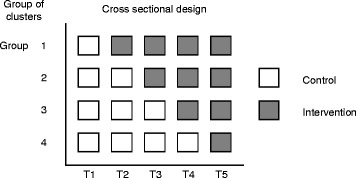
“A major methodological consideration in a stepped wedge trial is that the intervention effect is confounded with time by design—the control protocol always precedes the intervention protocol (Figure 1)—and failure to account for any secular trends in the analysis may therefore bias intervention effect estimates.(11,30…”
Backgroundfor the MONARCH study team, Chetty, T., Yapa, H. M., Herbst, C., Geldsetzer, P., Naidu, K., Neve, J. D., Herbst, K., Matthews, P., Pillay, D., et al. (2018) · BMC Health Services Research · doi:10.1186/s12913-018-3404-3 · Cited by 9
Rennert, L., Heo, M., Litwin, A. H., & Gruttola, V. D. (2021) · BMC Medical Research Methodology · doi:10.1186/s12874-021-01229-6 · Cited by 9
Natural computing and unsupervised learning methods in smart healthcare data-centric operations
Awotunde, J. B., Adeniyi, A. E., Ajagbe, S. A., & González‐Briones, A. (2022) · Elsevier eBooks · doi:10.1016/b978-0-323-85751-2.00005-0 · Cited by 9
Robler, S. K., Bettger, J. P., Turner, E. L., Platt, A. C., Arthur, D., Hofstetter, P., Lane, H., Srinivasan, T., Deshpande, S., Hirschfeld, M. J., et al. (2025) · Trials · doi:10.1186/s13063-025-08864-0 · Cited by 10
“An example outcome is provided to be illustrative of types of data that will be collected from these checklists (comparable to the 42-percentage point difference seen during the prior trial) [46–48].”
Shete, P. B., Kadota, J. L., Nanyunja, G., Namale, C., Nalugwa, T., Oyuku, D., Turyahabwe, S., Kiwanuka, N., Cattamanchi, A., & Katamba, A. (2023) · ERJ Open Research · doi:10.1183/23120541.00182-2023 · Cited by 8
Impact of immediate initiation of antiretroviral therapy on HIV patient satisfaction
Ogbuoji, O., Geldsetzer, P., Wong, C., Khan, S., Mafara, E., Lejeune, C., Walsh, F., Okello, V., & Bärnighausen, T. (2020) · AIDS · doi:10.1097/qad.0000000000002392 · Cited by 8
D’Hulster, L., Abrams, S., Bruyndonckx, R., Anthierens, S., Adriaenssens, N., Butler, C., Verheij, T. J., Goossens, H., Little, P. S., & Coenen, S. (2022) · JAC-Antimicrobial Resistance · doi:10.1093/jacamr/dlac070 · Cited by 8
Bowden, R. A., Forbes, A. B., & Kasza, J. (2021) · Statistics & Probability Letters · doi:10.1016/j.spl.2020.109022 · Cited by 10
Gyedu, A., Loglo, L., Ablorh, K., Brobbey-Kyei, I. A., Donkor, P., & Mock, C. (2024) · Injury · doi:10.1016/j.injury.2024.111569 · Cited by 8
Chirambo, G. B., Thompson, M., Hardy, V., Ide, N., Hwang, P. H., Dharmayat, K., Mastellos, N., Heavin, C., O'Connor, Y., Muula, A. S., et al. (2021) · Journal of Medical Internet Research · doi:10.2196/25777 · Cited by 7
“For the primary analysis, urgent referrals to higher-level facilities were evaluated at the patient level using multilevel mixed effects models [29].”
McBain, R. K., Mwale, O., Ruderman, T., Kayira, W., Connolly, E., Chalamanda, M., Kachimanga, C., Khongo, B. D., Wilson, J., Wroe, E. B., et al. (2021) · Trials · doi:10.1186/s13063-021-05601-1 · Cited by 9
“The data from the trial will be analyzed using a generalized linear mixed model framework, which is standard for stepped-wedge cluster designs [86, 87].”
MethodKwizera, A., Kabatoro, D., Owachi, D., Kansiime, J., Kateregga, G., Nanyunja, D., Sendagire, C., Nyakato, D., Olaro, C., Audureau, É., et al. (2024) · BMJ Open · doi:10.1136/bmjopen-2023-082223 · Cited by 6
Wimmesberger, N., Rau, D., Schuchardt, F. F., Meier, S., Herrmann, M. L., Bergmann, U., Farin‐Glattacker, E., & Brich, J. (2024) · JMIR Research Protocols · doi:10.2196/51683 · Cited by 6
“This study’s team will extend the model as proposed by Hemming et al [27] and Li et al [28] to control for the secular trend to avoid potential bias.”
Appelboam, A., Osborne, R., Ukoumunne, O. C., Black, S., Cox, M., Richards, N., Rhodes, S., Cook, H., Ou, Y., Hawker, R., et al. (2025) · Annals of Emergency Medicine · doi:10.1016/j.annemergmed.2025.06.623 · Cited by 6
Russell, G. M., Gunatillaka, N., Lewis, V. J., Cheng, I., Enticott, J., Marsh, G., Vasi, S., Advocat, J. R., Song, H. J., Saito, S., et al. (2019) · BMC Health Services Research · doi:10.1186/s12913-019-4235-6 · Cited by 5
Patterson, C. G., Leland, N. E., Mormer, E., & Palmer, C. V. (2022) · Journal of Speech Language and Hearing Research · doi:10.1044/2022_jslhr-21-00522 · Cited by 6
Staggered interventions with no control groups
Batomen, B., & Benmarhnia, T. (2024) · International Journal of Epidemiology · doi:10.1093/ije/dyae137 · Cited by 5
“30 Although we did not assess the mean squared error or confidence interval coverage, statistical properties of the proposed model specification have been extensively assessed in previous studies and have demonstrated good performance.”
MethodMcGillivray, L., Torok, M. H., Calear, A. L., Shand, F., Mackinnon, A. J., Kuhnert, R., Batterham, P. J., Rosebrock, H., Mok, K., Zbukvic, I., et al. (2019) · Mental Health & Prevention · doi:10.1016/j.mhp.2019.200178 · Cited by 5
Improving Vaccination for Young Children (IVY): A Stepped-Wedge Cluster Randomized Trial
Williams, S. E., Adams, L. E., & Sommer, E. C. (2021) · Academic Pediatrics · doi:10.1016/j.acap.2021.06.001 · Cited by 3
Jiang, H., Tian, Y., Bannon, J. E., Krefman, A. E., An, L. C., French, D. D., Maechling, C. R., Holl, J. L., Chagnon, R., Walunas, T. L., et al. (2025) · Contemporary Clinical Trials Communications · doi:10.1016/j.conctc.2025.101444 · Cited by 4
“Within each company stratum, the timing of the implementation introduction was randomly allocated [29].”
Wong, D., Bonnici, T., Gerry, S., Birks, J., & Watkinson, P. (2024) · Journal of Medical Internet Research · doi:10.2196/46691 · Cited by 15
“We conducted a sensitivity analysis using 5 variants of the basic Hussey and Hughes model, as originally proposed by Hemming et al [25].”
Metadata
- Authors
- Hemming, K., Taljaard, M., & Forbes, A.
- Affiliations
- University of Birmingham (GB)
- University of Ottawa (CA)
- Monash University (AU)
- Corresponding author
- Hemming, Karla
- Venue
- Trials
- Published
- 2017-03-04
- Volume
- 18
- Issue
- 1
- Pages
- 101-101
- ISSN
- 1745-6215 (ISSN-L)
- PMC
- PMC5336660
- OpenAlex
- W2594511273
- Cited by
- 166
- References
- 42
- Citations by year
- 2026: 14 · 2025: 16 · 2024: 19 · 2023: 20 · 2022: 22 · 2021: 25 · 2020: 17 · 2019: 19 · 2018: 10 · 2017: 4
- FWCI
- 9.51
- Type
- journal article
- Language
- en
- Open access
- gold
- doi.org
- Licence
- cc-by
- Locations
- Trials (publishedVersion, cc-by)
- PubMed Central (publishedVersion, cc-by)
- PubMed (publishedVersion)
- Monash University Research Portal (Monash University) (submittedVersion, other-oa)
- University of Birmingham Research Portal (University of Birmingham) (submittedVersion, cc-by)
- uO Research (University of Ottawa) (submittedVersion, public-domain)
- Funders
- National Institute for Health and Care Research (WMCLAHRC-2014-1)
- Topics
- Physical Sciences › Mathematics › Statistics and Probability › Statistical Methods in Clinical Trials
- Physical Sciences › Mathematics › Statistics and Probability › Advanced Causal Inference Techniques
- Health Sciences › Health Professions › General Health Professions › Health Policy Implementation Science
- Keywords
- stepped-wedge cluster randomized trial, secular trends, intra-cluster correlation, treatment effect estimation, time-varying treatment effects, risk bias
- MeSH terms
- Amnion, Data Interpretation, Statistical, Female, Humans, Labor, Induced, Pregnancy, Research Design, Time Factors, Models, Statistical, Multicenter Studies as Topic, Confounding Factors, Epidemiologic, Cluster Analysis, Randomized Controlled Trials as Topic, Parturition
About these checks
Registry, retraction, Cites and statistics results are computed, not judged, with one exception: a printed reference that no index lists is read once by a model before it counts as a citation error. Claims are extracted by a model and kept only when their quote appears verbatim in the text; each cited source is then checked, with a model’s help, for whether it says what the claim relies on. Those verdicts can be wrong — read the claim’s quote and the cited source before relying on one.
Statistics and arithmetic are recomputed, not judged.
Confidence bands are shown only for fields calibrated on our annotated test set. None is calibrated yet, so no band is shown.
What counts as a claim ›How we measure confidence ›How we check this ›
Are you an author, or do you see a problem with this page? Request a review
Data sources
Bibliographic data: Semantic Scholar, OpenAlex, Crossref.
Contains information from the Semantic Scholar Academic Graph Datasets, made available under the ODC Attribution License (ODC-BY 1.0).
Semantic Scholar’s data is described in: Kinney, R., et al. (2023). The Semantic Scholar Open Data Platform. arXiv:2301.10140.
