

Reducing depressive symptomatology with a smartphone app: study protocol for a randomized, placebo-controlled trial
Open accessThe DOI matches its Crossref record; 56 of the 58 references it cites were found in a registry or an index.
Abstract
BACKGROUND: Depression has become one of the leading contributors to the global disease burden. Evidence-based treatments for depression are available, but access to them is still limited in some instances. As technology has become more integrated into mental health care, computerized cognitive behavioral therapy (CBT) protocols have become available and have been recently transposed to mobile environments (e.g., smartphones) in the form of "apps." Preliminary research on some depression apps has shown promising results in reducing subthreshold or mild to moderate depressive symptoms. However, this small number of studies reports a low statistical power and they have not yet been replicated. Moreover, none of them included an active placebo comparison group. This is problematic, as a "digital placebo effect" may explain some of the positive effects documented until now. The aim of this study is to test a newly developed mobile app firmly grounded in the CBT theory of depression to determine whether this app is clinically useful in decreasing moderate depressive symptoms when compared with an active placebo. Additionally, we are interested in the app's effect on emotional wellbeing and depressogenic cognitions. METHODS/DESIGN: Romanian-speaking adults (18 years and older) with access to a computer and the Internet and owning a smartphone are included in the study. A randomized, three-arm clinical trial is being conducted (i.e., active intervention, placebo intervention and delayed intervention). Two hundred and twenty participants with moderate depressive symptoms (i.e., obtaining scores >9 and ≤16 on the Patient Health Questionnaire, PHQ-9) will be randomized to the three conditions. Participants undergoing therapy, presenting serious mental health problems, or legal or health issues that would prevent them from using the app, as well as participants reporting suicidal ideation are excluded. Participants randomized to the active and placebo interventions will use the smartphone app for 6 weeks. A short therapist check-in via phone will take place every week. Participants in the delayed-intervention condition will be given access to the app after 6 weeks from randomization. The primary outcome is the level of depressive symptomatology. The intervention delivered through the app to the active condition includes psychoeducational materials and exercises based on CBT for depression, while the placebo intervention uses a sham version of the app (i.e., similar structure of courses and exercises). DISCUSSION: To our knowledge, this study protocol is the first to test the efficacy of a smartphone app for depressive symptomatology in the form of a randomized controlled trial (RCT) that includes an active placebo condition. As such, this can substantially add to the body of evidence supporting the use of apps designed to decrease depression. TRIAL REGISTRATION: ClinicalTrials.gov, identifier: NCT03060200 . Registered on 1 February 2017. The first participant was enrolled on 17 February 2017.
Overview
The claims and statistics of this paper haven’t been checked yet.
Free: it reads the open-access text and checks the first 5 claims that cite a source we can check. Create a free account to check every claim.
Integrity signals
Registry
Cites
Statistics
Figures
Verification
Claims the paper makes
The claims and statistics of this paper haven’t been checked yet.
Free: it reads the open-access text and checks the first 5 claims that cite a source we can check. Create a free account to check every claim.
Claims other papers make about this one
Each is checked against this paper’s own text: does it say what the citing paper says it does?
In the citing paper
“Several recent protocols include a placebo intervention (a sham version of the app) [53]; unfortunately, only some of the studies assessed in the included meta-review involved such placebo app control.”
From Mobile Apps for Mental Health Issues: Meta-Review of Meta-Analyses (2020) · cites this paper as [53]
Self-check
Percentages, sums and reported differences re-computed from the paper’s own numbers.
The self-check needs the paper’s full text.
Citations
Cites
Faul, F., Erdfelder, E., Lang, A.-G., & Buchner, A. (2007) · Behavior Research Methods · doi:10.3758/bf03193146 · Cited by 65,971 · cited 1×
“An a priori sample size calculation was conducted with G*Power 3.1.9.2 [58, 59] for analysis of variance (ANOVA) (repeated measures, be-tween factors), assuming an alpha level of 0.05, a statistical power of 0.80, and a small to medium effect size ( f = 0.2).”
MethodInfluentialThe CES-D Scale: A Self-Report Depression Scale for Research in the General Population
Radloff, L. S. (1977) · Applied Psychological Measurement · doi:10.1177/014662167700100306 · Cited by 53,267 · cited 1×
“The level of depressive symptomatology is assessed with the Center for Epidemiologic Studies Depression Scale – Revised (CESD-R) [37, 38].”
MethodThe PHQ-9: Validity of a brief depression severity measure
Kroenke, K., Spitzer, R. L., & Williams, J. B. W. (2001) · Journal of General Internal Medicine · doi:10.1046/j.1525-1497.2001.016009606.x · Cited by 44,910
Statistical power analyses using G∗Power 3.1: tests for correlation and regression analyses
Faul, F., Erdfelder, E., Buchner, A., & Lang, A.-G. (2009) · Behavior Research Methods · doi:10.3758/brm.41.4.1149 · Cited by 37,615 · cited 1×
“An a priori sample size calculation was conducted with G*Power 3.1.9.2 [58, 59] for analysis of variance (ANOVA) (repeated measures, be-tween factors), assuming an alpha level of 0.05, a statistical power of 0.80, and a small to medium effect size ( f = 0.2).”
MethodInfluentialDevelopment and validation of brief measures of positive and negative affect: The PANAS scales.
Watson, D., Clark, L. A., & Tellegen, A. (1988) · Journal of Personality and Social Psychology · doi:10.1037/0022-3514.54.6.1063 · Cited by 32,433 · cited 1×
“The Positive and Negative Affect Scale (PANAS) [40] is a 20-item self-report questionnaire designed to assess mood.”
BackgroundThe satisfaction with life scale
Diener, E., Emmons, R. A., Larsen, R. J., & Griffin, S. (1985) · Journal of Personality Assessment · doi:10.1207/s15327752jpa4901_13 · Cited by 31,768 · cited 1×
“Satisfaction with Life (SWL) [43] is a five-item scale designed to measure global cognitive judgments of one ’ s life satisfaction.”
BackgroundCONSORT 2010 Statement: updated guidelines for reporting parallel group randomised trials
the CONSORT Group, Schulz, K. F., Altman, D. G., & Moher, D. (2010) · BMC Medicine · doi:10.1186/1741-7015-8-18 · Cited by 13,371
CONSORT 2010 Statement: updated guidelines for reporting parallel group randomised trials
Schulz, K. F., Altman, D. G., Moher, D., & for the CONSORT Group (2010) · BMJ · doi:10.1136/bmj.c332 · Cited by 9,329
SPIRIT 2013 Statement: Defining Standard Protocol Items for Clinical Trials
Chan, A.-W., Tetzlaff, J. M., Altman, D. G., Laupacis, A., Gøtzsche, P. C., Krleža-Jerić, K., Hróbjartsson, A., Mann, H., Dickersin, K., Berlin, J. A., et al. (2013) · Annals of Internal Medicine · doi:10.7326/0003-4819-158-3-201302050-00583 · Cited by 7,363 · cited 1×
“…of Reporting Trials (CON-SORT) guidelines [25] and the Standard Protocol Items: Recommendations for Interventional Trials (SPIRIT) Statement 2013 [26] are followed (see also Additional file 1: SPIRIT 2013 Checklist: recommended items to address in a clinical trial protocol and related documents).”
(1975) · Medical Entomology and Zoology · Cited by 7,245
(1962) · Medical Entomology and Zoology · Cited by 4,856
Review of the Satisfaction With Life Scale.
Pavot, W., & Diener, E. (1993) · Psychological Assessment · doi:10.1037/1040-3590.5.2.164 · Cited by 3,611
Review of the Satisfaction With Life Scale
Pavot, W., & Diener, E. (2009) · Social Indicators Research Series · doi:10.1007/978-90-481-2354-4_5 · Cited by 3,460 · cited 1×
“The SWL has been shown to be a valid and reliable measure of life satisfaction which can be used with a wide range of age groups [44, 45].”
MethodGamification by Design: Implementing Game Mechanics in Web and Mobile Apps
Zichermann, G., & Cunningham, C. J. L. (2011) · Cited by 2,378
Pavot, W., Diener, E., Colvin, C. R., & Sandvik, E. (1991) · Journal of Personality Assessment · doi:10.1207/s15327752jpa5701_17 · Cited by 1,866 · cited 1×
“The SWL has been shown to be a valid and reliable measure of life satisfaction which can be used with a wide range of age groups [44, 45].”
MethodThe Use of Psychological Testing for Treatment Planning and Outcomes Assessment
(2004) · doi:10.4324/9781410610614 · Cited by 1,503
Cognitive self-statements in depression: Development of an automatic thoughts questionnaire
Hollon, S. D., & Kendall, P. C. (1980) · Cognitive Therapy and Research · doi:10.1007/bf01178214 · Cited by 1,480 · cited 1×
“The Automatic Thoughts Questionnaire (ATQ) [51] is a 15-item self-report measure used to assess depression-related cognitions.”
MethodInternet-Based and Other Computerized Psychological Treatments for Adult Depression: A Meta-Analysis
Andersson, G., & Cuijpers, P. (2009) · Cognitive Behaviour Therapy · doi:10.1080/16506070903318960 · Cited by 1,368 · cited 1×
“Furthermore, computerized CBT programs for depression show a higher moderate effect size compared to control conditions, with even better results in the case of assisted programs [15].”
BackgroundAndrews, G., Cuijpers, P., Craske, M. G., McEvoy, P., & Titov, N. (2010) · PLoS ONE · doi:10.1371/journal.pone.0013196 · Cited by 1,311 · cited 1×
“…therapy (CBT), one of the best empirically supported psychological treatments for depression [12], has been adapted for online formats, and research has shown that computerized CBT protocols for depression could yield results comparable to face-to-face CBT in both adult and youth samples [13, 14].”
ResultCuijpers, P., Berking, M., Andersson, G., Quigley, L., Kleiboer, A., & Dobson, K. S. (2013) · The Canadian Journal of Psychiatry · doi:10.1177/070674371305800702 · Cited by 1,066 · cited 1×
“Cognitive behavioral therapy (CBT), one of the best empirically supported psychological treatments for depression [12], has been adapted for online formats, and research has shown that computerized CBT protocols for depression could yield results comparable to face-to-face CBT in both adult and…”
ResultMohr, D. C., Burns, M. N., Schueller, S. M., Clarke, G., & Klinkman, M. (2013) · General Hospital Psychiatry · doi:10.1016/j.genhosppsych.2013.03.008 · Cited by 693 · cited 1×
“As technology has become more integrated into mental health care [5, 6] and Internet access has increased [7], computerized treatment protocols have been proposed as potential solutions to overcome the issue of treatment accessibility [8 – 11].”
Background(1978) · Cited by 684
Van Dam, N. T., & Earleywine, M. (2011) · Psychiatry Research · doi:10.1016/j.psychres.2010.08.018 · Cited by 647 · cited 1×
“The CESD-R exhibited good psychometric properties, including high internal consistency, strong factor loadings, and theoretically consistent convergent and divergent validity with anxiety, schizotypy, and positive and negative affect [39].”
BackgroundHarnessing context sensing to develop a mobile intervention for depression
Burns, M. N., Begale, M., Duffecy, J., Gergle, D., Karr, C. J., Giangrande, E., & Mohr, D. C. (2011) · Journal of Medical Internet Research · doi:10.2196/jmir.1838 · Cited by 646
A Brief Behavioral Activation Treatment for Depression: Treatment Manual
Lejuez, C. W., Hopko, D. R., & Hopko, S. D. (2001) · Behavior Modification · doi:10.1177/0145445501252005 · Cited by 611 · cited 1×
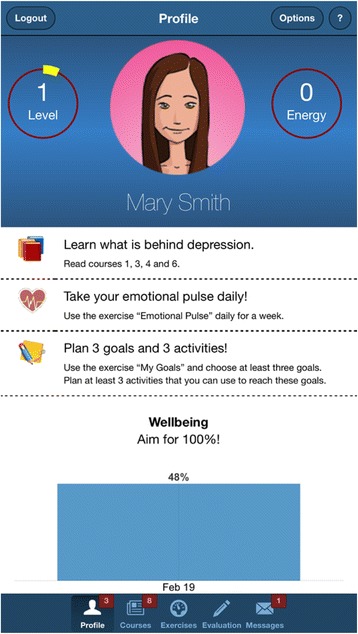
“1 App screenshot with the “ profile ” and overview section Behavioral Activation Treatment for Depression described by Lejuez, Hopko, and Hopko [32], respectively.”
BackgroundA Behavior Change Model for Internet Interventions
Ritterband, L. M., Thorndike, F. P., Cox, D. J., Kovatchev, B. P., & Gonder-Frederick, L. A. (2009) · Annals of Behavioral Medicine · doi:10.1007/s12160-009-9133-4 · Cited by 591 · cited 1×
“The app incorporates an attractive design in both the visual presentation and flow of activities [27, 28].”
BackgroundKanter, J. W., Mulick, P. S., Busch, A. M., Berlin, K. S., & Martell, C. R. (2007) · Journal of Psychopathology and Behavioral Assessment · doi:10.1007/s10862-006-9038-5 · Cited by 493 · cited 1×
“The Behavioral Activation for Depression Scale – Short Form (BADS-SF) [56] is an instrument designed to be administered weekly to measure changes in avoidance and activation over the course of the BA treatment for depression.”
MethodAwareness, diagnosis, and treatment of depression
the Council on Scientific Affairs, A. M. A., Goldman, L. S., Nielsen, N. H., & Champion, H. C. (1999) · Journal of General Internal Medicine · doi:10.1046/j.1525-1497.1999.03478.x · Cited by 466 · cited 1×
“Barriers to treatment access include stigma, logistical costs, or the limited availability of adequately trained therapists [3, 4].”
BackgroundStructured Clinical Interview for DSM-IV (SCID)
Kübler, U. (2013) · Encyclopedia of Behavioral Medicine · doi:10.1007/978-1-4419-1005-9_66 · Cited by 442
Kauer, S. D., Reid, S. C., Crooke, A. H. D., Khor, A., Hearps, S. J. C., Jorm, A. F., Sanci, L., & Patton, G. (2012) · Journal of Medical Internet Research · doi:10.2196/jmir.1858 · Cited by 404
McCrone, P., Knapp, M., Proudfoot, J., Ryden, C., Cavanagh, K., Shapiro, D. A., Ilson, S., Gray, J. A., Goldberg, D., Mann, A., et al. (2004) · British Journal of Psychiatry · doi:10.1192/bjp.185.1.55 · Cited by 371 · cited 1×
“As technology has become more integrated into mental health care [5, 6] and Internet access has increased [7], computerized treatment protocols have been proposed as potential solutions to overcome the issue of treatment accessibility [8 – 11].”
BackgroundThe Practice of Rational Emotive Behavior Therapy
Ellis, A., & Dryden, W. (2007) · Springer Publishing Company eBooks · doi:10.1891/9780826122179 · Cited by 360
Mental health: there’s an app for that
Anthes, E. (2016) · Nature · doi:10.1038/532020a · Cited by 333 · cited 4×
“This is problematic, as a “ digital placebo effect ” may explain – at least partially – some of the positive effects documented by the few existing studies [18].”
BackgroundResultInfluentialCBT for depression: a pilot RCT comparing mobile phone vs. computer
Watts, S., Mackenzie, A., Thomas, C., Griskaitis, A., Mewton, L., Williams, A., & Andrews, G. (2013) · BMC Psychiatry · doi:10.1186/1471-244x-13-49 · Cited by 329 · cited 3×
“Several preliminary studies on some depression apps have shown promising results in reducing subthreshold or mild to moderate depressive symptoms [19 – 24].”
BackgroundMethodResultThe Behavioral Activation for Depression Scale–Short Form: Development and Validation
Manos, R. C., Kanter, J. W., & Luo, W. (2011) · Behavior Therapy · doi:10.1016/j.beth.2011.04.004 · Cited by 276 · cited 1×
“The scale enjoys good psychometric properties [57].”
Richardson, T., Stallard, P., & Velleman, S. (2010) · Clinical Child and Family Psychology Review · doi:10.1007/s10567-010-0069-9 · Cited by 272 · cited 1×
“…therapy (CBT), one of the best empirically supported psychological treatments for depression [12], has been adapted for online formats, and research has shown that computerized CBT protocols for depression could yield results comparable to face-to-face CBT in both adult and youth samples [13, 14].”
ResultProudfoot, J., Clarke, J., Birch, M.-R., Whitton, A. E., Parker, G., Manicavasagar, V., Harrison, V., Christensen, H., & Hadzi-Pavlovic, D. (2013) · BMC Psychiatry · doi:10.1186/1471-244x-13-312 · Cited by 264
MARKS, I. M., KENWRIGHT, M., McDONOUGH, M., WHITTAKER, M., & MATAIX-COLS, D. (2004) · Psychological Medicine · doi:10.1017/s003329170300878x · Cited by 226
de Graaf, L. E., Roelofs, J., & Huibers, M. J. H. (2009) · Cognitive Therapy and Research · doi:10.1007/s10608-009-9229-y · Cited by 186 · cited 2×
“The DAS-SF possesses good psychometric properties in terms of model fit, reliability and convergent construct validity [48].”
MethodPragmatic evaluation of computer-aided self-help for anxiety and depression
Marks, I. M., Mataix-Cols, D., Kenwright, M., Cameron, R., Hirsch, S., & Gega, L. (2003) · British Journal of Psychiatry · doi:10.1192/bjp.183.1.57 · Cited by 185
Harrell, T. H., & Ryon, N. B. (1983) · Journal of Consulting and Clinical Psychology · doi:10.1037//0022-006x.51.5.721 · Cited by 177 · cited 1×
“The psychometric properties of the ATQ have been adequately demonstrated in previous studies [52].”
MethodBirney, A. J., Gunn, R., Russell, J. K., & Ary, D. V. (2016) · JMIR mHealth and uHealth · doi:10.2196/mhealth.4231 · Cited by 159
Development and validation of a measure of irrational belief.
Malouff, J. M., & Schutte, N. S. (1986) · Journal of Consulting and Clinical Psychology · doi:10.1037//0022-006x.54.6.860 · Cited by 141 · cited 1×
“The Beliefs Scale (BS) [49] measures irrational beliefs.”
BackgroundComputer‐supported cognitive behavioral treatment of anxiety disorders
Anderson, P., Jacobs, C., & Rothbaum, B. O. (2004) · Journal of Clinical Psychology · doi:10.1002/jclp.10262 · Cited by 132 · cited 1×
“As technology has become more integrated into mental health care [5, 6] and Internet access has increased [7], computerized treatment protocols have been proposed as potential solutions to overcome the issue of treatment accessibility [8 – 11].”
BackgroundSo, M., Yamaguchi, S., Hashimoto, S., Sado, M., Furukawa, T. A., & McCrone, P. (2013) · BMC Psychiatry · doi:10.1186/1471-244x-13-113 · Cited by 129 · cited 1×
“Moreover, the benefits of treatment have been reported to be rather short lived, the impact on functioning was found to be minimal, and high attrition rates seriously limited the potential clinical benefits [17].”
BackgroundTelepsychiatry in the 21(st) century: transforming healthcare with technology.
Deslich, S., Stec, B. A., Tomblin, S., & Coustasse, A. (2013) · Europe PMC (PubMed Central) · Cited by 105
Crutzen, R., de Nooijer, J., Brouwer, W., Oenema, A., Brug, J., & de Vries, N. K. (2009) · Health Promotion International · doi:10.1093/heapro/dap018 · Cited by 60 · cited 1×
“The app incorporates an attractive design in both the visual presentation and flow of activities [27, 28].”
BackgroundLevine, E. L., Xu, X. L., Yang, L., Ispas, D., Pitariu, H. D., Bian, R., Ding, D., Capotescu, R., Che, H., & Musat, S. (2011) · Human Performance · doi:10.1080/08959285.2011.614302 · Cited by 52
Using a mobile phone application in youth mental health - an evaluation study.
Reid, S., Kauer, S. D., Khor, A. S., Hearps, S. J. C., Sanci, L. A., Kennedy, A. D. M., & Patton, G. C. (2012) · PubMed · Cited by 49
Moldovan, R., Cobeanu, O., & David, D. (2013) · Clinical Psychology & Psychotherapy · doi:10.1002/cpp.1814 · Cited by 46
Self-citationInternet‐Based Psychotherapy for Adult Depression: What About the Mechanisms of Change?
Mogoașe, C., Cobeanu, O., David, O., Giosan, C., & Szentagotai, A. (2017) · Journal of Clinical Psychology · doi:10.1002/jclp.22326 · Cited by 45 · cited 1×
“Yet, many studies testing computerized CBT for depression are of low quality, few included an active placebo group, and even fewer have investigated the mechanisms of change [16].”
BackgroundSelf-citationFurther validation of a measure of irrational belief
Malouff, J. M., Valdenegro, J., & Schutte, N. S. (1987) · Journal of Rational-Emotive & Cognitive-Behavior Therapy · doi:10.1007/bf01080527 · Cited by 36 · cited 1×
“The BS shows good psychometric properties regarding construct and discriminant validity [50].”
BackgroundThe patient perspective in research on major depression
Cuijpers, P. (2011) · BMC Psychiatry · doi:10.1186/1471-244x-11-89 · Cited by 35 · cited 1×
“Barriers to treatment access include stigma, logistical costs, or the limited availability of adequately trained therapists [3, 4].”
BackgroundCore beliefs, automatic thoughts and response expectancies in predicting public speaking anxiety
Vîslă, A., Cristea, I. A., Tâtar, A. S., & David, D. (2013) · Personality and Individual Differences · doi:10.1016/j.paid.2013.06.003 · Cited by 32 · cited 1×
“The ATQ has been successfully used previously on the Romanian population [53 – 55].”
MethodCristea, I. A., Matu, S. A., Tâtar, A. S., & David, D. (2012) · Anxiety Stress & Coping · doi:10.1080/10615806.2012.725469 · Cited by 22 · cited 1×
“The PANAS has been used previously on the Romanian population and was found to have adequate psychometric properties [41, 42].”
MethodGiosan, C., Cobeanu, O., Mogoaşe, C., Szentágotai Tătar, A., Mureşan, V., & Boian, R. (2016) · Trials · doi:10.1186/s13063-016-1740-3 · Cited by 13 · cited 2×
“The following measures have been adapted into Romanian and successfully used in two previous trials testing another version of the app, and they have shown adequate psychometric properties [36].”
BackgroundMethodSelf-citation
Research works printed but not linked: 1
- American Psychiatric Association. Diagnostic and Statistical Manual of Mental Disorders, Fourth Edition: DSM-IV-TR®. Washington: American Psychiatric Pub; 2000.
Cited by
Mobile Apps for Mental Health Issues: Meta-Review of Meta-Analyses
Lecomte, T., Potvin, S., Corbière, M., Guay, S., Samson, C., Cloutier, B., Francoeur, A., Pennou, A., & Khazaal, Y. (2020) · JMIR mHealth and uHealth · doi:10.2196/17458 · Cited by 336
“Several recent protocols include a placebo intervention (a sham version of the app) [53]; unfortunately, only some of the studies assessed in the included meta-review involved such placebo app control.”
BackgroundSmartphone Apps for the Treatment of Mental Disorders: Systematic Review
Miralles, I., Granell, C., Díaz-Sanahuja, L., Van Woensel, W., Bretón-López, J., Mira, A., Castilla, D., & Casteleyn, S. (2020) · JMIR mHealth and uHealth · doi:10.2196/14897 · Cited by 188
“7Cups [160], Be Good to Yourself [18], BlueWatch [161], Dcombat [162], Get Happy Program [163], HeadGear [164], iCare Prevent [165], MedLink [166], Mobile Sensing and Support [167], MoodHacker [168], Moodivate [169], MyGamePlan [170], PRIME-D [171], Push-D [172], SocioEmpathy [173], SPSRS [174], SuperBetter [175], The…”
BackgroundKumar, V., Sattar, Y., Bseiso, A., Khan, S., & Rutkofsky, I. H. (2017) · Cureus · doi:10.7759/cureus.1626 · Cited by 105
“[1] 2017/England Reducing depressive symptomatology with a smart phone app: study protocol for a randomized, placebo-controlled trial Trials Moderate depression One of the first active study protocols to involve an active digital placebo group”
BackgroundMethodInfluentialHuman Support in App-Based Cognitive Behavioral Therapies for Emotional Disorders: Scoping Review
Bernstein, E. E., Weingarden, H., Wolfe, E. C., Hall, M. D., Snorrason, I., & Wilhelm, S. (2022) · Journal of Medical Internet Research · doi:10.2196/33307 · Cited by 54
“No No Giosan et al, 2017 [41] 1 DCombat”
BackgroundRecent developments in the use of smartphone interventions for mental health
Mehrotra, S., & Tripathi, R. (2018) · Current Opinion in Psychiatry · doi:10.1097/yco.0000000000000439 · Cited by 45
Metadata
- Authors
- Giosan, C., Cobeanu, O., Mogoaşe, C., Szentagotai, A., Mureşan, V., & Boian, R.
- Affiliations
- Berkeley College (US)
- Babeș-Bolyai University (RO)
- Corresponding author
- Giosan, Cezar
- Venue
- Trials
- Published
- 2017-05-12
- Volume
- 18
- Issue
- 1
- Pages
- 215-215
- ISSN
- 1745-6215 (ISSN-L)
- PMC
- PMC5427551
- OpenAlex
- W2612511966
- Cited by
- 23
- References
- 58
- Citations by year
- 2025: 2 · 2023: 3 · 2022: 4 · 2021: 2 · 2020: 4 · 2019: 4 · 2018: 3 · 2017: 1
- FWCI
- 3.76
- Type
- journal article
- Language
- en
- Open access
- gold
- doi.org
- Licence
- cc-by
- Locations
- Trials (publishedVersion, cc-by)
- PubMed Central (publishedVersion, cc-by)
- PubMed (publishedVersion)
- DOAJ (DOAJ: Directory of Open Access Journals) (submittedVersion, cc-by-sa)
- Funders
- EEA Grants (EEA-JRP-RO-NO-2013-1-0358.)
- Topics
- Social Sciences › Psychology › Applied Psychology › Digital Mental Health Interventions
- Social Sciences › Psychology › Experimental and Cognitive Psychology › Anxiety, Depression, Psychometrics, Treatment, Cognitive Processes
- Health Sciences › Health Professions › General Health Professions › Mobile Health and mHealth Applications
- Keywords
- depression, mobile application, digital mental health interventions, active placebo, depressive symptoms, emotional well-being, psychoeducation, PHQ-9, access to mental health care, delayed intervention
- MeSH terms
- Smartphone, Affect, Clinical Protocols, Cognition, Depression, Emotions, Health Services Accessibility, Humans, Health Knowledge, Attitudes, Practice, Patient Education as Topic, Psychiatric Status Rating Scales, Surveys and Questionnaires, Research Design, Romania, Therapy, Computer-Assisted, Time Factors, Cognitive Behavioral Therapy, Treatment Outcome, Mobile Applications
About these checks
Registry, retraction, Cites and statistics results are computed, not judged, with one exception: a printed reference that no index lists is read once by a model before it counts as a citation error. Claims are extracted by a model and kept only when their quote appears verbatim in the text; each cited source is then checked, with a model’s help, for whether it says what the claim relies on. Those verdicts can be wrong — read the claim’s quote and the cited source before relying on one.
Statistics and arithmetic are recomputed, not judged.
Confidence bands are shown only for fields calibrated on our annotated test set. None is calibrated yet, so no band is shown.
What counts as a claim ›How we measure confidence ›How we check this ›
Are you an author, or do you see a problem with this page? Request a review
Data sources
Bibliographic data: Semantic Scholar, OpenAlex, Crossref.
Contains information from the Semantic Scholar Academic Graph Datasets, made available under the ODC Attribution License (ODC-BY 1.0).
Semantic Scholar’s data is described in: Kinney, R., et al. (2023). The Semantic Scholar Open Data Platform. arXiv:2301.10140.
