

Cultivation of algal biofilm using different lignocellulosic materials as carriers
Open accessThe DOI matches its Crossref record; 37 of the 37 references it cites were found in a registry or an index.
Abstract
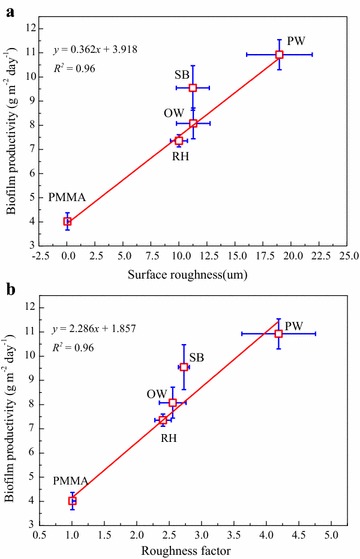
Algal biofilm technology is recently supposed to be a promising method to produce algal biomass as the feedstock for the production of biofuels. However, the carrier materials currently used to form algal biofilm are either difficult to be obtained at a low price or undurable. Commercialization of the biofilm technology for algal biomass production extremely requires new and inexpensive materials as biofilm carriers with high biomass production performances. Four types of lignocellulosic materials were investigated to evaluate their performance of acting as carriers for algal cells attachment and the relevant effects on the algal biomass production in this study. The cultivation of algal biofilm was processed in a self-designed flat plate photo-bioreactor. The biofilm production and chemical composition of the harvested biomass were determined. The surface physics properties of the materials were examined through a confocal laser-scanning microscopy. Algal biomass production varied significantly with the variation of the carriers ( P < 0.05). All the lignocellulosic materials showed better performances in biofilm production than poly methyl methacrylate, and the application of pine sawdust as the carrier could gain the maximum biofilm productivity of 10.92 g m −2 day −1 after 16-day cultivation. In addition, 20.10–23.20% total lipid, 30.35–36.73% crude proteins, and 20.29–25.93% carbohydrate were achieved from the harvested biomasses. Biomass productivity increased linearly as the increase of surface roughness, and Wenzel’s roughness factor of the tested materials, and surface roughness might significantly affect the biomass production through the size of surface morphology and the area of surface ( P < 0.05). The results showed that lignocellulosic materials can be efficient carriers for low-cost cultivation of algal biofilm and the enhancement of biomass productivity.
Overview
The claims and statistics of this paper haven’t been checked yet.
Free: it reads the open-access text and checks the first 5 claims that cite a source we can check. Create a free account to check every claim.
Integrity signals
Registry
Cites
Statistics
Figures
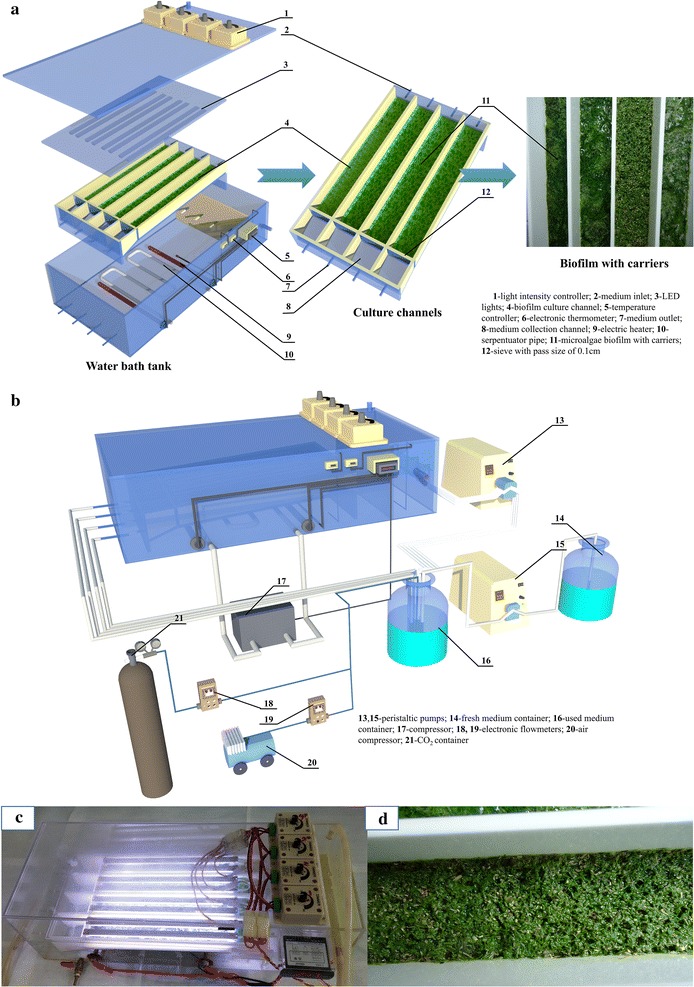
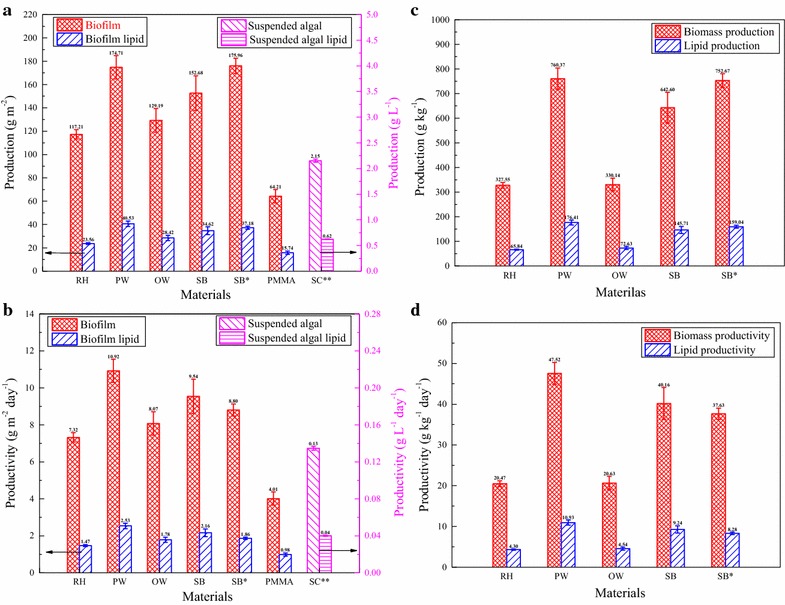
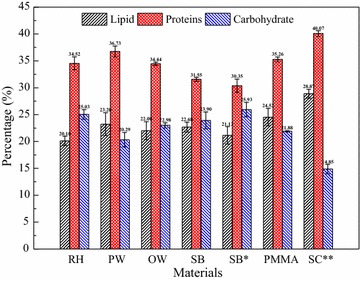
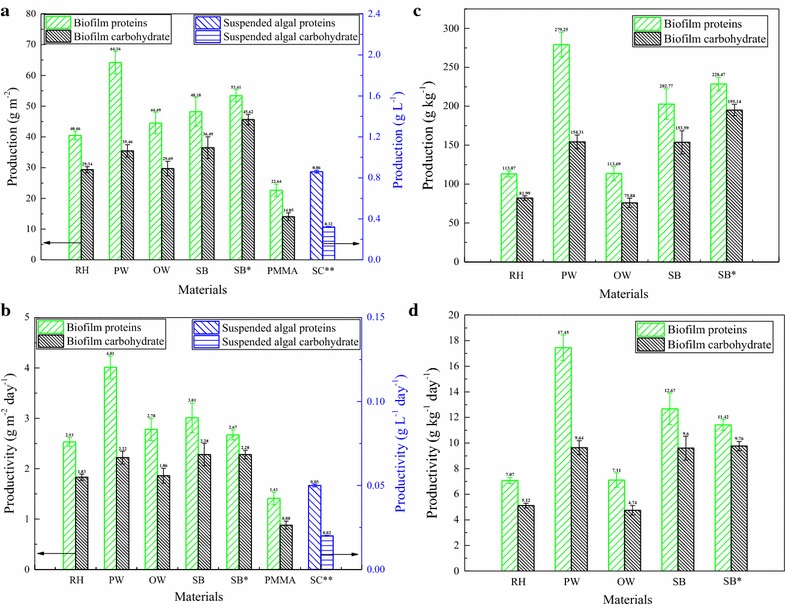
Verification
Claims the paper makes
The claims and statistics of this paper haven’t been checked yet.
Free: it reads the open-access text and checks the first 5 claims that cite a source we can check. Create a free account to check every claim.
Claims other papers make about this one
Each is checked against this paper’s own text: does it say what the citing paper says it does?
The cited source says what the claim attributes to it.
In the citing paper
“The selected materials for algal cell attachment need to be durable, inexpensive, easy to be obtained, and non-toxic to algal cells (cotton rope, membranes, stainless steel woven meshes, etc.) [66].”
From Overview and Challenges of Large-Scale Cultivation of Photosynthetic Microalgae and Cyanobacteria (2023) · cites this paper as [66]
The cited source says what the claim attributes to it.
In the citing paper
“Recently Zhang et al. [66] proposed the cultivation of algal biofilm using lignocellulosic materials.”
From Overview and Challenges of Large-Scale Cultivation of Photosynthetic Microalgae and Cyanobacteria (2023) · cites this paper as [66]
The cited source says what the claim attributes to it.
In the citing paper
“The results showed that lignocellulosic materials could be efficient carriers for low-cost cultivation of algal biofilm and the enhancement of biomass productivity.”
From Overview and Challenges of Large-Scale Cultivation of Photosynthetic Microalgae and Cyanobacteria (2023) · cites this paper as [66]
The cited source says what the claim attributes to it.
In the citing paper
“Moreover, after cultivation, algal biomass can be harvested together with the lignocellulosic materials. Amazingly, the harvested blend (mixture of the lignocellulosic materials and algal biomass) can be directly utilized as a feedstock for bioenergy conversion [66].”
From Overview and Challenges of Large-Scale Cultivation of Photosynthetic Microalgae and Cyanobacteria (2023) · cites this paper as [66]
The cited source says what the claim attributes to it.
In the citing paper
“This is the first attempt to develop a new biofilm technology using lignocellulosic materials as biofilm carriers, such as pine sawdust, rice husk, sugar bagasse, and oak sawdust, all of which are environmentally friendly, cheap, and renewable with a wide range of distribution around the world.”
From Overview and Challenges of Large-Scale Cultivation of Photosynthetic Microalgae and Cyanobacteria (2023) · cites this paper as [66]
Self-check
Percentages, sums and reported differences re-computed from the paper’s own numbers.
The self-check needs the paper’s full text.
Citations
Cites
Brennan, L., & Owende, P. (2010) · Renewable and Sustainable Energy Reviews · doi:10.1016/j.rser.2009.10.009 · Cited by 4,894 · cited 1×
“Owing to (1) the low dry biomass content, (2) similar density to water and (3) micron-size of cells or clusters [4, 5], the harvesting process of algal biomass from suspended culture is the main challenge for the commercialization of algae-based bioenergy, since it involves high-energy consumption processes such as fl…”
BackgroundMicrobial Cellulose Utilization: Fundamentals and Biotechnology
Lynd, L. R., Weimer, P. J., van Zyl, W. H., & Pretorius, I. S. (2002) · Microbiology and Molecular Biology Reviews · doi:10.1128/mmbr.66.3.506-577.2002 · Cited by 4,726 · cited 1×
“As a kind of lignocellulosic material, the tested carrier could be degraded by a wide range of microorganism including bacteria and fungi with anaerobic and aerobic habit [24].”
BackgroundJoelsson, E., Erdei, B., Galbe, M., & Wallberg, O. (2016) · Biotechnology for Biofuels · doi:10.1186/s13068-015-0423-8 · Cited by 669
Emission of Air Pollutants from Crop Residue Burning in India
Jain, N., Bhatia, A., & Pathak, H. (2014) · Aerosol and Air Quality Research · doi:10.4209/aaqr.2013.01.0031 · Cited by 631 · cited 1×
“Therefore, this paper made the first attempt to develop a new biofilm technology using lignocellulosic materials as biofilm carriers such as pine sawdust, rice husk, sugar bagasse and oak sawdust, all of which are environmentally friendly, cheap, and renewable with a wide range of distribution around the world [17].”
BackgroundDevelopment of an attached microalgal growth system for biofuel production
Johnson, M. B., & Wen, Z. (2010) · Applied Microbiology and Biotechnology · doi:10.1007/s00253-009-2133-2 · Cited by 418
Christenson, L. B., & Sims, R. C. (2012) · Biotechnology and Bioengineering · doi:10.1002/bit.24451 · Cited by 399 · cited 6×
“They were generally characterized by high surface energy and achieved greater attachment than synthetic polymers which just had low surface energy [15].”
BackgroundInfluentialOzkan, A., Kinney, K., Katz, L., & Berberoglu, H. (2012) · Bioresource Technology · doi:10.1016/j.biortech.2012.03.055 · Cited by 349 · cited 2×
“Due to easier harvesting and system operation, higher mass transfer rate and dry mass content, less water consumption and even lower capital construction cost, algal biofilm technology has been regarded as a promising approach to produce biomass for algae-based bioenergy [12].”
BackgroundAttached cultivation technology of microalgae for efficient biomass feedstock production
Liu, T., Wang, J., Hu, Q., Cheng, P., Ji, B., Liu, J., Chen, Y., Zhang, W., Chen, X., Chen, L., et al. (2013) · Bioresource Technology · doi:10.1016/j.biortech.2012.09.100 · Cited by 328 · cited 2×
“Such decrease is consistent with the findings of other reports [3, 14].”
MethodResultGross, M., Henry, W., Michael, C., & Wen, Z. (2013) · Bioresource Technology · doi:10.1016/j.biortech.2013.10.016 · Cited by 298 · cited 5×
“Such decrease is consistent with the findings of other reports [3, 14].”
BackgroundResultInfluentialA novel method to harvest microalgae via co-culture of filamentous fungi to form cell pellets
Zhang, J., & Hu, B. (2012) · Bioresource Technology · doi:10.1016/j.biortech.2012.03.054 · Cited by 276 · cited 4×
“Owing to (1) the low dry biomass content, (2) similar density to water and (3) micron-size of cells or clusters [4, 5], the harvesting process of algal biomass from suspended culture is the main challenge for the commercialization of algae-based bioenergy, since it involves high-energy consumption processes such as fl…”
BackgroundInfluentialFactors Affecting Algae Biofilm Growth and Lipid Production: A Review
Schnurr, P. J., & Allen, D. G. (2015) · Renewable and Sustainable Energy Reviews · doi:10.1016/j.rser.2015.07.090 · Cited by 276 · cited 3×
“In recent years, algal-based bioenergy, like biodiesel, bioethanol, and biogas, has been increasingly considered as a promising alternative for fossil fuels to deal with the energy crisis and global climate change [2].”
BackgroundInfluentialAtta, M., Idris, A., Bukhari, A., & Wahidin, S. (2013) · Bioresource Technology · doi:10.1016/j.biortech.2013.08.162 · Cited by 269
Zhou, W., Min, M., Hu, B., Ma, X., Liu, Y., Wang, Q., Shi, J., Chen, P., & Ruan, R. (2013) · Separation and Purification Technology · doi:10.1016/j.seppur.2013.01.030 · Cited by 195 · cited 1×
“Algal-fungal based bio-flocculation has been proven to be reliable and efficient in harvesting planktonic algal cells [9, 10], but the efficient separation of the fungi and algal cells challenges its scale-up process [7].”
BackgroundShi, J., Podola, B., & Melkonian, M. (2014) · Bioresource Technology · doi:10.1016/j.biortech.2013.11.100 · Cited by 181 · cited 1×
“Recently, glass fiber nonwoven and plain printing paper were applied to benefit nutrient supplement and algae cell attachment in a TwinLayer algal biofilm photo-bioreactor, respectively [13].”
MethodBioflocculation as an innovative harvesting strategy for microalgae
Alam, M. A., Vandamme, D., Chun, W., Zhao, X., Foubert, I., Wang, Z., Muylaert, K., & Yuan, Z. (2016) · Reviews in Environmental Science and Bio/Technology · doi:10.1007/s11157-016-9408-8 · Cited by 179 · cited 6×
“However, this technology is currently not widely applied, due to the challenge to control bio-flocculation at scale [7].”
BackgroundInfluentialGrowing microalgae as aquaculture feeds on twin-layers: a novel solid-state photobioreactor
Naumann, T., Çebi, Z., Podola, B., & Melkonian, M. (2012) · Journal of Applied Phycology · doi:10.1007/s10811-012-9962-6 · Cited by 166 · cited 1×
“Filter paper can also be used as support substrata for algal growth vertically [20].”
MethodLipid accumulation and growth of Chlorella zofingiensis in flat plate photobioreactors outdoors
Feng, P., Deng, Z., Hu, Z., & Fan, L. (2011) · Bioresource Technology · doi:10.1016/j.biortech.2011.08.109 · Cited by 165 · cited 1×
“Higher light intensity generally promotes lipid accumulation [26].”
BackgroundSelf-citationAlgae biofilm growth and the potential to stimulate lipid accumulation through nutrient starvation
Schnurr, P. J., Espie, G. S., & Allen, D. G. (2013) · Bioresource Technology · doi:10.1016/j.biortech.2013.03.036 · Cited by 164 · cited 2×
“1a, 6) inside the biofilm might also contribute to this lower lipid content because of the lower lipid content of indigenous microorganisms compared to the algal cells [8, 27].”
BackgroundBiofilm growth of Chlorella sorokiniana in a rotating biological contactor based photobioreactor
Blanken, W., Janssen, M., Cuaresma, M., Libor, Z., Bhaiji, T., & Wijffels, R. H. (2014) · Biotechnology and Bioengineering · doi:10.1002/bit.25301 · Cited by 162 · cited 2×
“Similar trend commonly existed in many reports [16, 28].”
BackgroundResultEfficient coagulation of microalgae in cultures with filamentous fungi
Xie, S., Sun, S., Dai, S. Y., & Yuan, J. S. (2013) · Algal Research · doi:10.1016/j.algal.2012.11.004 · Cited by 154 · cited 1×
“Algal-fungal based bio-flocculation has been proven to be reliable and efficient in harvesting planktonic algal cells [9, 10], but the efficient separation of the fungi and algal cells challenges its scale-up process [7].”
BackgroundAlam, M. A., Wan, C., Guo, S.-L., Zhao, X., Huang, Z., Yang, Y., Chang, J., & Bai, F. (2014) · Journal of Bioscience and Bioengineering · doi:10.1016/j.jbiosc.2013.12.021 · Cited by 152 · cited 2×
“Algal–algal-based bio-flocculation does not require the separation process of the harvested biomass, and energy consumption is negligible [11].”
BackgroundLaboratory studies on adhesion of microalgae to hard substrates
Sekar, R., Venugopalan, V. P., Satpathy, K. K., Nair, K. V. K., & Rao, V. N. R. (2004) · Hydrobiologia · doi:10.1023/b:hydr.0000020315.40349.38 · Cited by 146 · cited 1×
“Similar trend commonly existed in many reports [16, 28].”
ResultGross, M., Zhao, X., Mascarenhas, V., & Wen, Z. (2016) · Biotechnology for Biofuels · doi:10.1186/s13068-016-0451-z · Cited by 136 · cited 2×
“Background Algae that are rich in lipids, proteins, and carbohydrates can be utilized as a feedstock for biofuels production [1].”
BackgroundMethodShen, Y., Monroy, G. L., Derlon, N., Janjaroen, D., Huang, C., Morgenroth, E., Boppart, S. A., Ashbolt, N. J., Liu, W., & Nguyen, T. H. (2015) · Environmental Science & Technology · doi:10.1021/es505842v · Cited by 135 · cited 1×
“coli, Legionella pneumophila) number and material surface roughness had also been reported in many studies [30, 31].”
ResultJanjaroen, D., Ling, F., Monroy, G. L., Derlon, N., Mogenroth, E., Boppart, S. A., Liu, W., & Nguyen, T. H. (2013) · Water Research · doi:10.1016/j.watres.2013.02.032 · Cited by 128
Laboratory studies on adhesion of microalgae to hard substrates
Sekar, R., Venugopalan, V. P., Satpathy, K. K., Nair, K. V. K., & Rao, V. N. R. (2004) · Springer eBooks · doi:10.1007/978-94-007-0944-7_14 · Cited by 127
Genin, S. N., Aitchison, J. S., & Allen, D. G. (2013) · Bioresource Technology · doi:10.1016/j.biortech.2013.12.060 · Cited by 123 · cited 2×
“Therefore, larger amount of inoculum was guaranteed and shorter colonization time was needed [27], and then higher biomass productivity was obtained [19].”
BackgroundHigh light and carbon dioxide optimize surface productivity in a Twin-Layer biofilm photobioreactor
Schultze, L. K. P., Simon, M.-V., Li, T., Langenbach, D., Podola, B., & Melkonian, M. (2015) · Algal Research · doi:10.1016/j.algal.2015.01.007 · Cited by 117
Attached cultivation for improving the biomass productivity of spirulina platensis
Zhang, L., Chen, L., Wang, J., Chen, Y., Gao, X., Zhang, Z., & Liu, T. (2015) · Bioresource Technology · doi:10.1016/j.biortech.2015.01.025 · Cited by 115 · cited 1×
“The hydrophilic material with good liquid-holding capacity can be preferable for the attachment cultivation [22].”
BackgroundBioprocess considerations for microalgal-based wastewater treatment and biomass production
Zeng, X., Guo, X., Su, G., Danquah, M. K., Zhang, S., Lu, Y., Sun, Y. Q., & Lin, L. (2014) · Renewable and Sustainable Energy Reviews · doi:10.1016/j.rser.2014.11.033 · Cited by 103 · cited 1×
“Many algal species such as Chlorella, Chroococcus, Chlorosarcinopsis, Synechococcus, and Scenedesmus could be immobilized by hydrophilic polymers [23].”
BackgroundCao, J., Yuan, W., Pei, Z. J., Davis, T., Cui, Y., & Beltran, M. (2009) · Journal of Manufacturing Science and Engineering · doi:10.1115/1.4000562 · Cited by 80 · cited 1×
“[29] confirmed that corrosionresistant steel sheets with micro-dimple surface features could significantly enhance the attachment of algal cells to the substrata, compared to a surface without microdimple features.”
BackgroundBacterial l-leucine catabolism as a source of secondary metabolites
Díaz-Pérez, A. L., Díaz‐Pérez, C., & Campos‐García, J. (2015) · Reviews in Environmental Science and Bio/Technology · doi:10.1007/s11157-015-9385-3 · Cited by 61
The contribution of bacteria to algal growth by carbon cycling
Bai, X., Lant, P., & Pratt, S. (2015) · Biotechnology and Bioengineering · doi:10.1002/bit.25475 · Cited by 58 · cited 1×
“Meanwhile, algal productivity could be enhanced by respiration of the microorganism which could provide CO2 and decrease O2 inhibition for algal growth [25].”
BackgroundMoliner, C., Bosio, B., Arato, E., & Ribes-Greus, A. (2016) · Fuel · doi:10.1016/j.fuel.2016.04.021 · Cited by 41 · cited 1×
“Moreover, lignocellulosic materials mainly composed of cellulose, hemicellulose, and lignose were hydrophilic natural polymers and had good liquid-holding capacity [21].”
BackgroundEffects of surface texturing on microalgal cell attachment to solid carriers
Cui, Y., Yuan, W. W., & Cao, J. (2013) · International journal of agricultural and biological engineering · doi:10.25165/ijabe.v6i4.965 · Cited by 39 · cited 5×
“Therefore, larger amount of inoculum was guaranteed and shorter colonization time was needed [27], and then higher biomass productivity was obtained [19].”
BackgroundMethodInfluentialNovel Filtration Photobioreactor for Efficient Biomass Production
Zhang, D., Fung, K. Y., & Ng, K. M. (2014) · Industrial & Engineering Chemistry Research · doi:10.1021/ie501913k · Cited by 20 · cited 2×
“In addition, these processes generally account for about 20–30% of the total algal biomass production cost [6].”
BackgroundMicro-structured surfaces for algal biofilm growth
Sathananthan, S., Genin, S. N., Aitchison, J. S., & Allen, D. G. (2013) · Proceedings of SPIE, the International Society for Optical Engineering/Proceedings of SPIE · doi:10.1117/12.2033794 · Cited by 18 · cited 2×
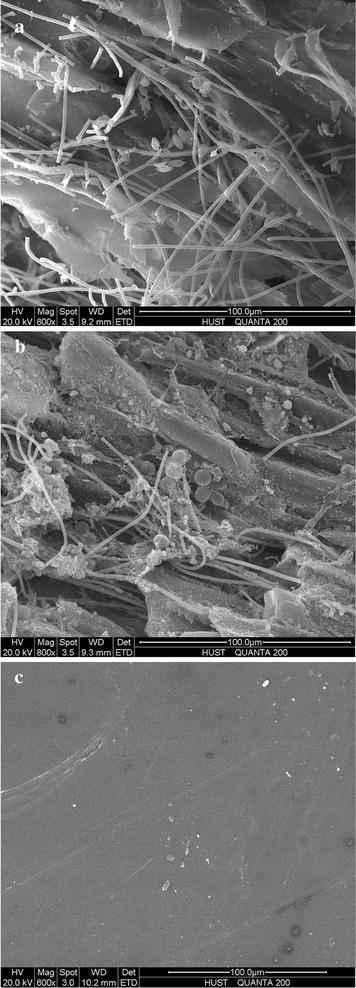
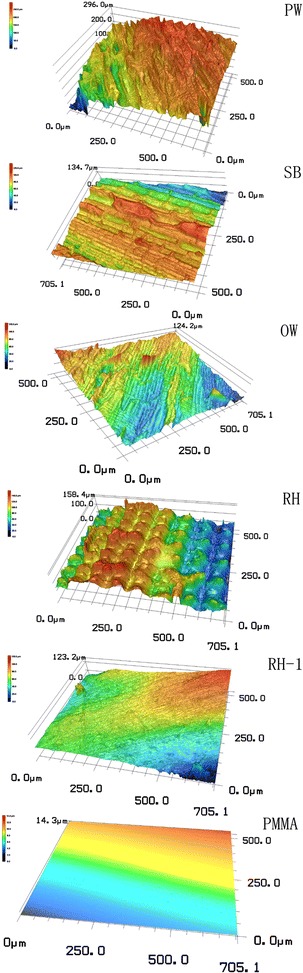
“98 μm) had the most complicate surface topography with various grooves, similar to the manmade V-groove patterns [19, 32].”
Background
Cited by
Overview and Challenges of Large-Scale Cultivation of Photosynthetic Microalgae and Cyanobacteria
Novoveská, L., Nielsen, S. L., Eroldoğan, O. T., Haznedaroglu, B. Z., Rinkevich, B., Fazi, S., Robbens, J., Vasquez, M., & Einarsson, H. (2023) · Marine Drugs · doi:10.3390/md21080445 · Cited by 368
“[66] proposed the cultivation of algal biofilm using lignocellulosic materials.”
BackgroundBiomass from microalgae: the potential of domestication towards sustainable biofactories
Benedetti, M., Vecchi, V., Barera, S., & Dall’Osto, L. (2018) · Microbial Cell Factories · doi:10.1186/s12934-018-1019-3 · Cited by 362
“Algal biofilm system thus appears a good option for low-cost productions [81, 82], however more research is needed to move from bench-scale to pilot plant.”
BackgroundPhysiology of microalgal biofilm: a review on prediction of adhesion on substrates
Cheah, Y. T., & Chan, D. J. C. (2021) · Bioengineered · doi:10.1080/21655979.2021.1980671 · Cited by 154
“As an example, hydrophilic materials with good liquidholding capacity are preferable for Chlorella, Chroococcus, Chlorosarcinopsis, Synechococcus and Scenedemus, which are easily immobilized by the hydrophilic polymers [114].”
BackgroundA Review of Microalgal Biofilm Technologies: Definition, Applications, Settings and Analysis
Osorio, J. H. M., Pollio, A., Frunzo, L., Lens, P. N. L., & Esposito, G. (2021) · Frontiers in Chemical Engineering · doi:10.3389/fceng.2021.737710 · Cited by 144
Yadav, G., Shanmugam, S., Sivaramakrishnan, R., Kumar, D., Mathimani, T., Brindhadevi, K., Pugazhendhi, A., & Rajendran, K. (2020) · Fuel · doi:10.1016/j.fuel.2020.119093 · Cited by 124
Metadata
- Authors
- Zhang, Q., Liu, C., Li, Y., Yu, Z., Chen, Z., Ye, T., Wang, X., Hu, Z., Liu, S., Xiao, B., & Jin, S.
- Affiliations
- Huazhong University of Science and Technology (CN)
- Zhongyuan University of Technology (CN)
- Wuhan University of Technology (CN)
- Hong Kong University of Science and Technology (HK)
- Henan Normal University (CN)
- Corresponding author
- Jin, Shiping
- Venue
- Biotechnology for Biofuels
- Published
- 2017-05-04
- Volume
- 10
- Issue
- 1
- Pages
- 115-115
- ISSN
- 1754-6834 (ISSN-L)
- PMC
- PMC5418734
- OpenAlex
- W2611283209
- Cited by
- 97
- References
- 37
- Citations by year
- 2026: 3 · 2025: 10 · 2024: 16 · 2023: 14 · 2022: 15 · 2021: 14 · 2020: 10 · 2019: 5 · 2018: 9 · 2017: 1
- FWCI
- 1.83
- Type
- journal article
- Language
- en
- Open access
- gold
- doi.org
- Licence
- cc-by
- Locations
- Biotechnology for Biofuels (publishedVersion, cc-by)
- PubMed Central (publishedVersion, cc-by)
- PubMed (publishedVersion)
- Rare & Special e-Zone (The Hong Kong University of Science and Technology) (submittedVersion)
- DOAJ (DOAJ: Directory of Open Access Journals) (submittedVersion, cc-by-sa)
- Funders
- National Science and Technology Support Program of China (2015BAD21B05)
- Fundamental Research Funds for the Central Universities of China (0118120122)
- Topics
- Physical Sciences › Energy › Renewable Energy, Sustainability and the Environment › Algal biology and biofuel production
- Physical Sciences › Chemical Engineering › Fluid Flow and Transfer Processes › Fluid Dynamics and Mixing
- Physical Sciences › Environmental Science › Environmental Chemistry › Aquatic Ecosystems and Phytoplankton Dynamics
- Keywords
- algal biofilms, algal biomass production, biofilm carriers, pine sawdust, surface roughness, flat panel photobioreactor, algal lipid content, algal carbohydrates, low-cost cultivation, biofuel feedstock
About these checks
Registry, retraction, Cites and statistics results are computed, not judged, with one exception: a printed reference that no index lists is read once by a model before it counts as a citation error. Claims are extracted by a model and kept only when their quote appears verbatim in the text; each cited source is then checked, with a model’s help, for whether it says what the claim relies on. Those verdicts can be wrong — read the claim’s quote and the cited source before relying on one.
Statistics and arithmetic are recomputed, not judged.
Confidence bands are shown only for fields calibrated on our annotated test set. None is calibrated yet, so no band is shown.
What counts as a claim ›How we measure confidence ›How we check this ›
Are you an author, or do you see a problem with this page? Request a review
Data sources
Bibliographic data: Semantic Scholar, OpenAlex, Crossref.
Contains information from the Semantic Scholar Academic Graph Datasets, made available under the ODC Attribution License (ODC-BY 1.0).
Semantic Scholar’s data is described in: Kinney, R., et al. (2023). The Semantic Scholar Open Data Platform. arXiv:2301.10140.
