

The physiological effect of heavy metals and volatile fatty acids on Methanococcus maripaludis S2
Open accessThe DOI matches its Crossref record; 78 of the 78 references it cites were found in a registry or an index.
Abstract
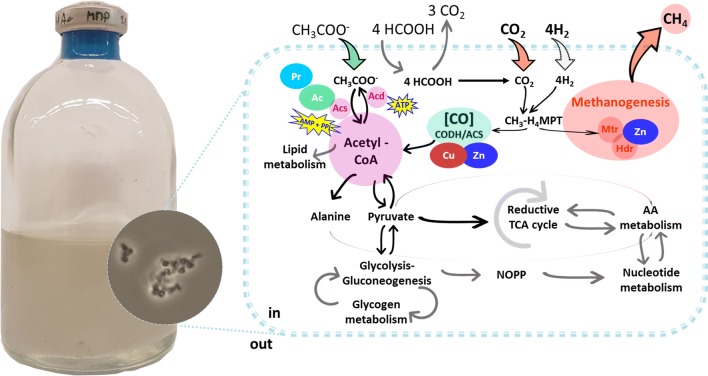
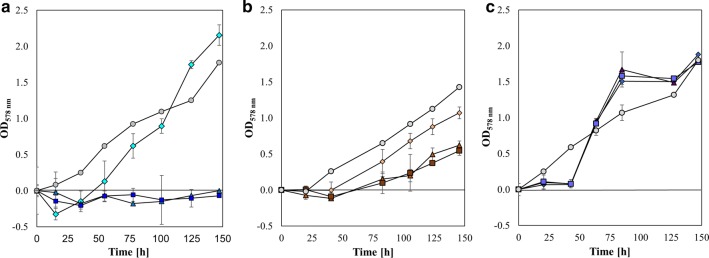
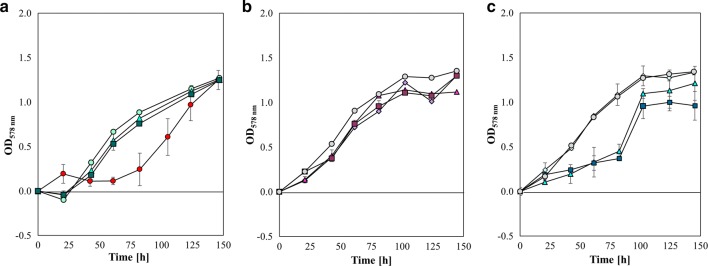
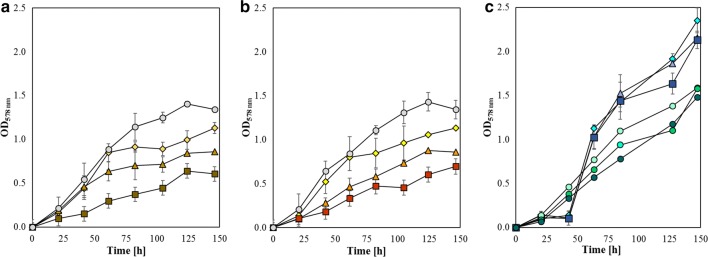
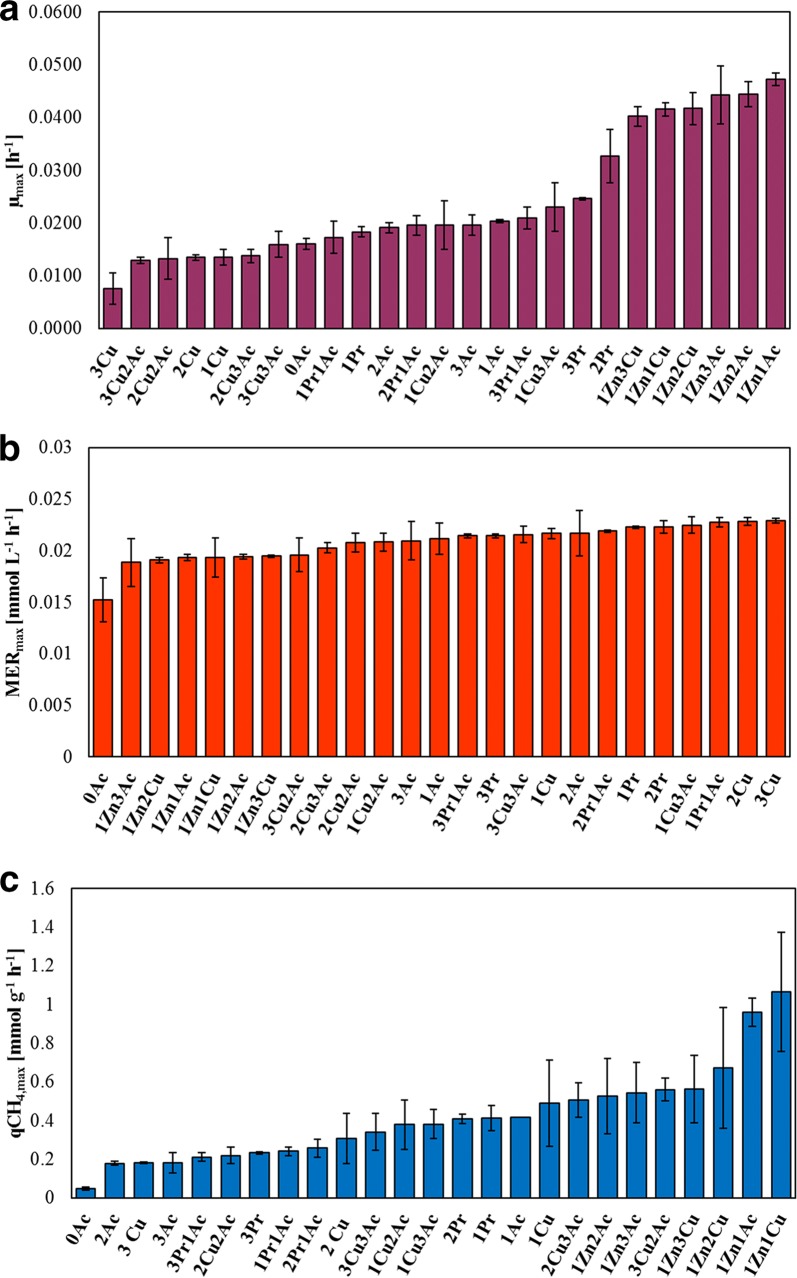
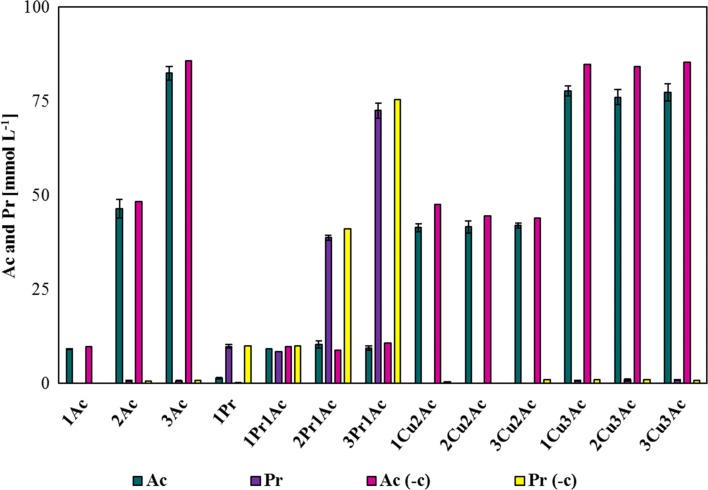
Methanogenic archaea are of importance to the global C-cycle and to biological methane (CH 4 ) production through anaerobic digestion and pure culture. Here, the individual and combined effects of copper (Cu), zinc (Zn), acetate, and propionate on the metabolism of the autotrophic, hydrogenotrophic methanogen Methanococcus maripaludis S2 were investigated. Cu, Zn, acetate, and propionate may interfere directly and indirectly with the acetyl-CoA synthesis and biological CH 4 production. Thus, these compounds can compromise or improve the performance of M. maripaludis , an organism which can be applied as biocatalyst in the carbon dioxide (CO 2 )-based biological CH 4 production (CO 2 -BMP) process or of methanogenic organisms applied in anaerobic digestion. Here, we show that Cu concentration of 1.9 µmol L −1 reduced growth of M. maripaludis , whereas 4.4 and 6.3 µmol L −1 of Cu even further retarded biomass production. However, 1.0 mmol L −1 of Zn enhanced growth, but at Zn concentrations > 2.4 mmol L −1 no growth could be observed. When both, Cu and Zn, were supplemented to the medium, growth and CH 4 production could even be observed at the highest tested concentration of Cu (6.3 µmol L −1 ). Hence, it seems that the addition of 1 mmol L −1 of Zn enhanced the ability of M. maripaludis to counteract the toxic effect of Cu. The physiological effect to rising concentrations of acetate (12.2, 60.9, 121.9 mmol L −1 ) and/or propionate (10.3, 52.0, 104.1 mmol L −1 ) was also investigated. When instead of acetate 10.3 mmol L −1 propionate was provided in the growth medium, M. maripaludis could grow without reduction of the specific growth rate ( µ ) or the specific CH 4 productivity (qCH 4 ). A combination of inorganic and/or organic compounds resulted in an increase of µ and qCH 4 for Zn/Cu and Zn/acetate beyond the values that were observed if only the individual concentrations of Zn, Cu, acetate were used. Our study sheds light on the physiological effect of VFAs and heavy metals on M. maripaludis . Differently from µ and qCH 4 , MER was not influenced by the presence of these compounds. This indicated that each of these compounds directly interacted with the C-fixation machinery of M. maripaludis . Until now, the uptake of VFAs other than acetate was not considered to enhance growth and CH 4 production of methanogens. The finding of propionate uptake by M. maripaludis is important for the interpretation of VFA cycling in anaerobic microenvironments. Due to the importance of methanogens in natural and artificial anaerobic environments, our results help to enhance the understanding the physiological and biotechnological importance with respect to anaerobic digestion, anaerobic wastewater treatment, and CO 2 -BMP. Finally, we propose a possible mechanism for acetate uptake into M. maripaludis supported by in silico analyses.
Overview
The claims and statistics of this paper haven’t been checked yet.
Free: it reads the open-access text and checks the first 5 claims that cite a source we can check. Create a free account to check every claim.
Integrity signals
Registry
Cites
Statistics
Figures
Verification
Claims the paper makes
The claims and statistics of this paper haven’t been checked yet.
Free: it reads the open-access text and checks the first 5 claims that cite a source we can check. Create a free account to check every claim.
Claims other papers make about this one
Each is checked against this paper’s own text: does it say what the citing paper says it does?
The cited source says what the claim attributes to it.
In the citing paper
“Plants that are obtained in the phytostabilization of trace element-contaminated soil may affect biomass biodegradability [12], while HMs affect the physiological and biotechnological environments in AD [1,106].”
Self-check
Percentages, sums and reported differences re-computed from the paper’s own numbers.
The self-check needs the paper’s full text.
Citations
Cites
Heavy Metal Toxicity and the Environment
Tchounwou, P. B., Yedjou, C. G., Patlolla, A. K., & Sutton, D. J. (2012) · Experientia Supplementum · doi:10.1007/978-3-7643-8340-4_6 · Cited by 7,192
Methanogenic archaea: ecologically relevant differences in energy conservation
Thauer, R. K., Kaster, A.-K., Seedorf, H., Buckel, W., & Hedderich, R. (2008) · Nature Reviews Microbiology · doi:10.1038/nrmicro1931 · Cited by 2,184
Template-based protein structure modeling using the RaptorX web server
Källberg, M., Wang, H., Wang, S., Peng, J., Wang, Z., Lu, H., & Xu, J. (2012) · Nature Protocols · doi:10.1038/nprot.2012.085 · Cited by 1,597
Perspectives on the use of organic acids and short chain fatty acids as antimicrobials
Ricke, S. (2003) · Poultry Science · doi:10.1093/ps/82.4.632 · Cited by 1,030
Radhakrishnan, A., Nanjappa, V., Raja, R., Sathe, G., Puttamallesh, V. N., Jain, A. P., Pinto, S. M., Balaji, S. A., Chavan, S., Sahasrabuddhe, N. A., et al. (2017) · Scientific Reports · doi:10.1038/srep46864 · Cited by 825
Effects of volatile fatty acid concentrations on methane yield and methanogenic bacteria
Wang, Y., Zhang, Y., Wang, J., & Meng, L. (2009) · Biomass and Bioenergy · doi:10.1016/j.biombioe.2009.01.007 · Cited by 681
Organic acids as antimicrobials to control Salmonella in meat and poultry products
Mani-López, E., García, H. S., & López-Malo, A. (2012) · Food Research International · doi:10.1016/j.foodres.2011.04.043 · Cited by 615
Franke-Whittle, I. H., Walter, A., Ebner, C., & Insam, H. (2014) · Waste Management · doi:10.1016/j.wasman.2014.07.020 · Cited by 515
Bioavailability: Physical, Chemical, and Biological Interactions
Hamelink, J. L., Bergman, H. L., & Landrum, P. F. (1994) · Medical Entomology and Zoology · Cited by 481
Methanogens: biochemical background and biotechnological applications
Enzmann, F., Mayer, F., Rother, M., & Holtmann, D. (2018) · AMB Express · doi:10.1186/s13568-017-0531-x · Cited by 437
Kaster, A.-K., Moll, J., Parey, K., & Thauer, R. K. (2011) · Proceedings of the National Academy of Sciences · doi:10.1073/pnas.1016761108 · Cited by 389
Raptorx: Exploiting structure information for protein alignment by statistical inference
Peng, J., & Xu, J. (2011) · Proteins: Structure, Function, and Bioinformatics · doi:10.1002/prot.23175 · Cited by 361
Inhibition of the Fermentation of Propionate to Methane by Hydrogen, Acetate, and Propionate
Fukuzaki, S., Nishio, N., Shobayashi, M., & Nagai, S. (1990) · Applied and Environmental Microbiology · doi:10.1128/aem.56.3.719-723.1990 · Cited by 292
Bioenergetics and anaerobic respiratory chains of aceticlastic methanogens
Welte, C., & Deppenmeier, U. (2014) · Biochimica et Biophysica Acta (BBA) - Bioenergetics · doi:10.1016/j.bbabio.2013.12.002 · Cited by 286
Mudhoo, A., & Kumar, S. (2013) · International Journal of Environmental Science and Technology · doi:10.1007/s13762-012-0167-y · Cited by 281
Biological biogas upgrading capacity of a hydrogenotrophic community in a trickle-bed reactor
Rachbauer, L., Voitl, G., Bochmann, G., & Fuchs, W. (2016) · Applied Energy · doi:10.1016/j.apenergy.2016.07.109 · Cited by 259
Self-citationUncoupling by Acetic Acid Limits Growth of and Acetogenesis by Clostridium thermoaceticum
Baronofsky, J. J., Schreurs, W. J. A., & Kashket, E. R. (1984) · Applied and Environmental Microbiology · doi:10.1128/aem.48.6.1134-1139.1984 · Cited by 243
Hendrickson, E. L., Kaul, R., Zhou, Y., Bovee, D., Chapman, P., Chung, J., Conway de Macario, E., Dodsworth, J. A., Gillett, W., Graham, D. E., et al. (2004) · Journal of Bacteriology · doi:10.1128/jb.186.20.6956-6969.2004 · Cited by 223
Acetyl-coenzyme A synthetase (AMP forming)
Starai, V. J., & Escalante-Semerena, J. C. (2004) · Cellular and Molecular Life Sciences · doi:10.1007/s00018-004-3448-x · Cited by 214 · cited 1×
“maripaludis, acetate serves as a precursor for acetyl-CoA, which is synthetized via an AMP-forming acetate-CoA synthetase [30, 31] and is subsequently assimilated into cell carbon; however, aceticlastic methanogenesis does not occur [32, 33].”
BackgroundThe Ni-Containing Carbon Monoxide Dehydrogenase Family: Light at the End of the Tunnel?
Lindahl, P. A. (2002) · Biochemistry · doi:10.1021/bi015932+ · Cited by 204
Particle-size effect of CuO and ZnO on biogas and methane production during anaerobic digestion
Luna-delRisco, M., Orupõld, K., & Dubourguier, H.-C. (2011) · Journal of Hazardous Materials · doi:10.1016/j.jhazmat.2011.02.085 · Cited by 191
Ma, J., Frear, C., Wang, Z.-W., Yu, L., Zhao, Q., Li, X., & Chen, S. (2013) · Bioresource Technology · doi:10.1016/j.biortech.2013.02.014 · Cited by 178
Isolation and characterization of 22 mesophilic methanococci
Whitman, W. B., Shieh, J., Sohn, S., Caras, D. S., & Premachandran, U. (1986) · Systematic and Applied Microbiology · doi:10.1016/s0723-2020(86)80012-1 · Cited by 175
Methanogens, sulphate and heavy metals: a complex system
Paulo, L. M., Stams, A. J. M., & Sousa, D. Z. (2015) · Reviews in Environmental Science and Bio/Technology · doi:10.1007/s11157-015-9387-1 · Cited by 158
Ady2p is essential for the acetate permease activity in the yeast Saccharomyces cerevisiae
Paiva, S., Devaux, F., Barbosa, S., Jacq, C., & Casal, M. (2004) · Yeast · doi:10.1002/yea.1056 · Cited by 154
Biologically Produced Methane as a Renewable Energy Source
Holmes, D. E., & Smith, J. A. (2016) · Advances in applied microbiology · doi:10.1016/bs.aambs.2016.09.001 · Cited by 154
Takai, K., Inoue, A., & Horikoshi, K. (2002) · INTERNATIONAL JOURNAL OF SYSTEMATIC AND EVOLUTIONARY MICROBIOLOGY · doi:10.1099/00207713-52-4-1089 · Cited by 153 · cited 1×
“marburgensis, acetate can be assimilated and integrated in amino acids although it is not required for growth [28].”
BackgroundFuchs, G., Stupperich, E., & Thauer, R. K. (1978) · Archives of Microbiology · doi:10.1007/bf00689352 · Cited by 152
Inhibition of methane production from whey by heavy metals - protective effect of sulfide
Zayed, G., & Winter, J. U. (2000) · Applied Microbiology and Biotechnology · doi:10.1007/s002530000336 · Cited by 147
Herrero, A. A., Gomez, R. F., Snedecor, B., Tolman, C. J., & Roberts, M. (1985) · Applied Microbiology and Biotechnology · doi:10.1007/bf00252157 · Cited by 146
Seifert, A. H., Rittmann, S. K. ‐. R., & Herwig, C. (2014) · Applied Energy · doi:10.1016/j.apenergy.2014.07.002 · Cited by 143
Self-citationTransformation ofMethanococcus maripaludisand identification of aPstI-like restriction system
Tumbula, D. L., Makula, R. A., & Whitman, W. B. (1994) · FEMS Microbiology Letters · doi:10.1111/j.1574-6968.1994.tb07118.x · Cited by 138
Rittmann, S., Seifert, A., & Herwig, C. (2015) · Critical Reviews in Biotechnology · doi:10.3109/07388551.2013.820685 · Cited by 134
Self-citationEffect of heavy metals on volatile fatty acid degradation in anaerobic digestion
Lin, C. (1992) · Water Research · doi:10.1016/0043-1354(92)90217-r · Cited by 131
Jarrell, K. F., Saulnier, M., & Ley, A. (1987) · Canadian Journal of Microbiology · doi:10.1139/m87-093 · Cited by 118
A multiple‐template approach to protein threading
Peng, J., & Xu, J. (2011) · Proteins Structure Function and Bioinformatics · doi:10.1002/prot.23016 · Cited by 114
Genetic Systems for Hydrogenotrophic Methanogens
Sarmiento, F., Leigh, J. A., & Whitman, W. B. (2011) · Methods in enzymology on CD-ROM/Methods in enzymology · doi:10.1016/b978-0-12-385112-3.00003-2 · Cited by 104
Metabolic processes of Methanococcus maripaludis and potential applications
Goyal, N., Zhou, Z., & Karimi, I. A. (2016) · Microbial Cell Factories · doi:10.1186/s12934-016-0500-0 · Cited by 101
A conditional neural fields model for protein threading
Ma, J., Peng, J., Wang, S., & Xu, J. (2012) · Bioinformatics · doi:10.1093/bioinformatics/bts213 · Cited by 92
Zhitnitsky, D., Rose, J., & Lewinson, O. (2017) · Scientific Reports · doi:10.1038/srep44554 · Cited by 88
Glasemacher, J., Bock, A., Schmid, R., & Schönheit, P. (1997) · European Journal of Biochemistry · doi:10.1111/j.1432-1033.1997.00561.x · Cited by 87
Evidence That NiNi Acetyl-CoA Synthase Is Active and That the CuNi Enzyme Is Not
Seravalli, J., Xiao, Y., Gu, W., Cramer, S. P., Antholine, W. E., Krymov, V., Gerfen, G. J., & Ragsdale, S. W. (2004) · Biochemistry · doi:10.1021/bi036194n · Cited by 83
The nif Gene Operon of the Methanogenic Archaeon Methanococcus maripaludis
Kessler, P. S., Blank, C. E., & Leigh, J. A. (1998) · Journal of Bacteriology · doi:10.1128/jb.180.6.1504-1511.1998 · Cited by 83
SATP (YaaH), a succinate–acetate transporter protein in Escherichia coli
Sá-Pessoa, J., Paiva, S., Ribas, D., Silva, I. J., Viegas, S. C., Arraiano, C. M., & Casal, M. (2013) · Biochemical Journal · doi:10.1042/bj20130412 · Cited by 78
A Critical Assessment of Microbiological Biogas to Biomethane Upgrading Systems
Rittmann, S. K. ‐. R. (2015) · Advances in biochemical engineering, biotechnology · doi:10.1007/978-3-319-21993-6_5 · Cited by 76
Self-citationInactivation of Acetyl-CoA Synthase/Carbon Monoxide Dehydrogenase by Copper
Bramlett, M. R., Tan, X., & Lindahl, P. A. (2003) · Journal of the American Chemical Society · doi:10.1021/ja0352855 · Cited by 76
Pathway of acetate assimilation in autotrophic and heterotrophic methanococci
Shieh, J.-S., & Whitman, W. B. (1987) · Journal of Bacteriology · doi:10.1128/jb.169.11.5327-5329.1987 · Cited by 75
Proton conductance through phospholipid bilayers: Water wires or weak acids?
Gutknecht, J. (1987) · Journal of Bioenergetics and Biomembranes · doi:10.1007/bf00770028 · Cited by 74
Rittmann, S. K. ‐. R., Seifert, A. H., & Herwig, C. (2011) · Biomass and Bioenergy · doi:10.1016/j.biombioe.2011.10.038 · Cited by 71
Self-citationFunctional copper at the acetyl-CoA synthase active site
Seravalli, J., Gu, W., Tam, A., Strauss, E., Begley, T. P., Cramer, S. P., & Ragsdale, S. W. (2003) · Proceedings of the National Academy of Sciences · doi:10.1073/pnas.0436720100 · Cited by 71
Engineering the Autotroph Methanococcus maripaludis for Geraniol Production
Lyu, Z., Jain, R., Smith, A. P., Fetchko, T., Yan, Y., & Whitman, W. B. (2016) · ACS Synthetic Biology · doi:10.1021/acssynbio.5b00267 · Cited by 69
Metal centers in the anaerobic microbial metabolism of CO and CO2
Bender, G., Pierce, E., Hill, J. A., Darty, J. E., & Ragsdale, S. W. (2011) · Metallomics · doi:10.1039/c1mt00042j · Cited by 68
Hamann, N., Mander, G. J., Shokes, J. E., Scott, R. A., Bennati, M., & Hedderich, R. (2007) · Biochemistry · doi:10.1021/bi700679u · Cited by 66
Musfeldt, M., & Schönheit, P. (2002) · Journal of Bacteriology · doi:10.1128/jb.184.3.636-644.2002 · Cited by 60
Osuna, M. B., Zandvoort, M. H., Iza, J., Lettinga, G., & Lens, P. N. L. (2003) · Environmental Technology · doi:10.1080/09593330309385592 · Cited by 60
Richards, M. A., Lie, T. J., Zhang, J., Ragsdale, S. W., Leigh, J. A., & Price, N. D. (2016) · Journal of Bacteriology · doi:10.1128/jb.00571-16 · Cited by 60
Methyl‐coenzyme M formation in methanogenic archaea: Involvement of zinc in coenzyme M activation
Sauer, K., & Thauer, R. K. (2000) · European Journal of Biochemistry · doi:10.1046/j.1432-1327.2000.01245.x · Cited by 59
Neomycin resistance as a selectable marker in Methanococcus maripaludis
Argyle, J., Tumbula, D. L., & Leigh, J. A. (1996) · Applied and Environmental Microbiology · doi:10.1128/aem.62.11.4233-4237.1996 · Cited by 56 · cited 1×
“Among the methanogens, the physiology and metabolism of Methanococcus maripaludis S2 harbours intriguing characteristics, including a high specific growth rate (μ), mild growth temperature (35–39 °C), genetically manipulability due to the presence of selectable markers [3], and an effective method for transformation […”
BackgroundGoyal, N., Widiastuti, H., Karimi, I. A., & Zhou, Z. (2014) · Molecular BioSystems · doi:10.1039/c3mb70421a · Cited by 54
Tan, X., Surovtsev, I. V., & Lindahl, P. A. (2006) · Journal of the American Chemical Society · doi:10.1021/ja0627702 · Cited by 50
Rittmann, S. K. ‐. R., Seifert, A. H., & Bernacchi, S. (2018) · Applied Energy · doi:10.1016/j.apenergy.2018.01.075 · Cited by 47
Self-citationThe physiology of trace elements in biological methane production
Azim, A. A., Pruckner, C., Kolar, P., Taubner, R.-S., Fino, D., Saracco, G., Sousa, F. L., & Rittmann, S. K. ‐. R. (2017) · Bioresource Technology · doi:10.1016/j.biortech.2017.05.211 · Cited by 46
Self-citationCopper, lead, and zinc pollution of soil environment
Haque, M. A., Subramanian, V., & Gibbs, R. J. (1982) · C R C Critical Reviews in Environmental Control · doi:10.1080/10643388209381693 · Cited by 45
Gómez, D. K. V., Papirio, S., van Hullebusch, E. D., Farges, F., Nikitenko, S. G., Kramer, H. J. M., & Lens, P. N. L. (2012) · Bioresource Technology · doi:10.1016/j.biortech.2012.01.041 · Cited by 44
Jiang, Y., Zhang, Y., Banks, C. J., Heaven, S., & Longhurst, P. (2017) · Water Research · doi:10.1016/j.watres.2017.09.010 · Cited by 44
Taubner, R.-S., & Rittmann, S. K. ‐. R. (2016) · Frontiers in Microbiology · doi:10.3389/fmicb.2016.00532 · Cited by 42
Self-citationMori, K., Hatsu, M., Kimura, R., & Takamizawa, K. (2000) · Journal of Bioscience and Bioengineering · doi:10.1016/s1389-1723(00)80079-1 · Cited by 36
Mayer, F., Küper, U., Meyer, C., Daxer, S., Müller, V., Rachel, R., & Huber, H. (2012) · Journal of Bacteriology · doi:10.1128/jb.06130-11 · Cited by 36
Influential Parameters on Biomethane Generation in Anaerobic Wastewater Treatment Plants
Tabatabaei, M., Sulaiman, A., Ali, M., Yusof, N., & Najafpour, G. D. (2011) · InTech eBooks · doi:10.5772/24681 · Cited by 34
Physiology and methane productivity of Methanobacterium thermaggregans
Mauerhofer, L., Reischl, B., Schmider, T., Schupp, B., Nagy, K., Pappenreiter, P., Zwirtmayr, S., Schuster, B., Bernacchi, S., Seifert, A. H., et al. (2018) · Applied Microbiology and Biotechnology · doi:10.1007/s00253-018-9183-2 · Cited by 34
Self-citationMechanisms of acetate formation and acetate activation in halophilic archaea
Br�sen, C., & Sch�nheit, P. (2001) · Archives of Microbiology · doi:10.1007/s002030100273 · Cited by 32
Krüer, M., Haumann, M., Meyer‐Klaucke, W., Thauer, R. K., & Dau, H. (2002) · European Journal of Biochemistry · doi:10.1046/j.1432-1033.2002.02860.x · Cited by 30
Zinc−Thiolate Intermediate in Catalysis of Methyl Group Transfer in Methanosarcina barkeri
Gencic, S., Leclerc, G. M., Gorlatova, N. V., Peariso, K., Penner‐Hahn, J. E., & Grahame, D. A. (2001) · Biochemistry · doi:10.1021/bi0112917 · Cited by 29
Tan, X., Bramlett, M. R., & Lindahl, P. A. (2004) · Journal of the American Chemical Society · doi:10.1021/ja039600z · Cited by 28
Mechanisms of acetate formation and acetate activation in halophilic archaea
Br�sen, C., & Sch�nheit, P. (2003) · Archives of Microbiology · doi:10.1007/s00203-003-0619-3 · Cited by 27 · cited 1×
“The ADP-forming acetyl-CoA synthetase catalyses a reversible reaction, which is responsible for acetate formation and ATP synthesis from acetyl-CoA, ADP, and Pi in halophilic archaea [54], and in hyperthermophilic archaea, i.”
BackgroundInhibition of methanogenesis by several heavy metals using pure cultures
Sanchez, J. M., do Valle, L. A. R., Rodriguez, F., Moríñigo, M. Á., & Borrego, J. J. (1996) · Letters in Applied Microbiology · doi:10.1111/j.1472-765x.1996.tb01354.x · Cited by 26
Qiu, B., Xia, B., Zhou, Q., Lu, Y., He, M., Hasegawa, K., Ma, Z., Zhang, F., Gu, L., Mao, Q., et al. (2018) · Cell Research · doi:10.1038/s41422-018-0032-8 · Cited by 22
2.8 angstrom crystal structure of Succinate-Acetate Permease from Citrobacter koseri
Qiu, B., & Liao, J. (2017) · Worldwide Protein Data Bank · doi:10.2210/pdb5ys8/pdb · Cited by 13 · cited 1×
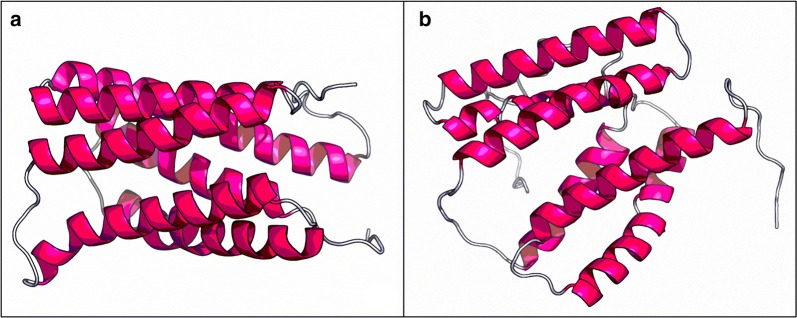
“4e−06 is based on a succinate–acetate permease from Citrobacter koseri (see Additional file 2: Table S1) [71].”
Background
Research works printed but not linked: 2
- Shieh JS Whitman WB Pathway of acetate assimilation in autotrophic and heterotrophic methanococci J Bacteriol 1987 169 5327 5329 10.1128/jb.169.11.5327-5329.1987 3667534 PMC213948 · DOI
- BLAST: Basic Local Alignment Search Tool. https://blast.ncbi.nlm.nih.gov/Blast.cgi.
Cited by
Pfeifer, K., Ergal, İ., Koller, M., Basen, M., Schuster, B., & Rittmann, S. K. ‐. R. (2020) · Biotechnology Advances · doi:10.1016/j.biotechadv.2020.107668 · Cited by 173
Self-citationImproving biogas production using additives in anaerobic digestion: A review
Liu, M., Wei, Y., & Leng, X. (2021) · Journal of Cleaner Production · doi:10.1016/j.jclepro.2021.126666 · Cited by 131
Cai, Y., Zheng, Z., & Wang, X. (2020) · Journal of Hazardous Materials · doi:10.1016/j.jhazmat.2020.123938 · Cited by 109
Todde, G., Carboni, G., Marras, S., Caria, M., & Sirca, C. (2022) · Sustainable Energy Technologies and Assessments · doi:10.1016/j.seta.2022.102081 · Cited by 63
Hyperthermophilic methanogenic archaea act as high-pressure CH4 cell factories
Mauerhofer, L., Zwirtmayr, S., Pappenreiter, P., Bernacchi, S., Seifert, A. H., Reischl, B., Schmider, T., Taubner, R.-S., Paulik, C., & Rittmann, S. K. ‐. R. (2021) · Communications Biology · doi:10.1038/s42003-021-01828-5 · Cited by 73
Self-citation
Metadata
- Authors
- Abdel Azim, A., Rittmann, S. K.-M. R., Fino, D., & Bochmann, G.
- Affiliations
- University of Vienna (AT)
- Politecnico di Torino (IT)
- BOKU University (AT)
- Corresponding author
- Rittmann, Simon K.-M. R.
- Venue
- Biotechnology for Biofuels
- Published
- 2018-11-02
- Volume
- 11
- Issue
- 1
- Pages
- 301-301
- ISSN
- 1754-6834 (ISSN-L)
- PMC
- PMC6214177
- OpenAlex
- W2898643449
- Cited by
- 30
- References
- 78
- Citations by year
- 2026: 2 · 2025: 2 · 2024: 1 · 2023: 6 · 2022: 6 · 2021: 5 · 2020: 4 · 2019: 4
- FWCI
- 2.60
- Type
- journal article
- Language
- en
- Open access
- gold
- doi.org
- Licence
- cc-by
- creativecommons.org/licenses/by/4.0/ (tdm)
- Locations
- Biotechnology for Biofuels (publishedVersion, cc-by)
- Europe PMC (PubMed Central) (publishedVersion, other-oa)
- PubMed Central (publishedVersion, cc-by)
- PubMed (publishedVersion)
- PORTO@Iris (submittedVersion, cc-by)
- Phaidra (Universität Wien) (submittedVersion, cc-by-nc-nd)
- DOAJ (DOAJ: Directory of Open Access Journals) (submittedVersion, cc-by-sa)
- Funders
- Österreichische Forschungsförderungsgesellschaft (853615, 859293, 854156)
- Horizon 2020 (679050)
- Topics
- Physical Sciences › Energy › Renewable Energy, Sustainability and the Environment › Anaerobic Digestion and Biogas Production
- Life Sciences › Biochemistry, Genetics and Molecular Biology › Molecular Biology › Microbial metabolism and enzyme function
- Physical Sciences › Chemical Engineering › Catalysis › Catalysts for Methane Reforming
- Keywords
- methanogenic archaea, copper toxicity, zinc, acetate, propionate, volatile fatty acids, biomethane production, anaerobic digestion, acetyl-CoA biosynthesis, hydrogenotrophic methanogenesis, biocatalysts, carbon cycle
About these checks
Registry, retraction, Cites and statistics results are computed, not judged, with one exception: a printed reference that no index lists is read once by a model before it counts as a citation error. Claims are extracted by a model and kept only when their quote appears verbatim in the text; each cited source is then checked, with a model’s help, for whether it says what the claim relies on. Those verdicts can be wrong — read the claim’s quote and the cited source before relying on one.
Statistics and arithmetic are recomputed, not judged.
Confidence bands are shown only for fields calibrated on our annotated test set. None is calibrated yet, so no band is shown.
What counts as a claim ›How we measure confidence ›How we check this ›
Are you an author, or do you see a problem with this page? Request a review
Data sources
Bibliographic data: Semantic Scholar, OpenAlex, Crossref.
Contains information from the Semantic Scholar Academic Graph Datasets, made available under the ODC Attribution License (ODC-BY 1.0).
Semantic Scholar’s data is described in: Kinney, R., et al. (2023). The Semantic Scholar Open Data Platform. arXiv:2301.10140.
