

Acceptability of genetically engineered algae biofuels in Europe: opinions of experts and stakeholders
Open accessThe DOI matches its Crossref record; 35 of the 36 references it cites were found in a registry or an index.
Abstract
Background: The development of alternative pathways for sustainable fuel production is a crucial task for politics, industry and research, since the current use of fossil fuels contributes to resource depletion and climate change. Microalgae are a promising option, but the technology readiness level (TRL) is low and cannot compete economically with fossil fuels. Novel genetic engineering technologies are being investigated to improve productivity and reduce the cost of harvesting products extracted from or excreted by microalgae for fuel production. However, high resource efficiency and low costs alone are no guarantee that algae fuels will find their way into the market. Technologies must be accepted by the public to become valuable for society. Despite strong efforts in algae research and development, as well as political commitments at different scales to promote algae biofuels for transport sectors, little is known about public acceptance of this alternative transport fuel. Despite the advantages of algae technology, genetically engineered (GE) microalgae can be controversial in Europe due to risk perception. Therefore, the aim of this study was to investigate, for the first time, the knowledge and views of European experts and stakeholders on the conditions and requirements for acceptability of GE microalgae for next generation biofuel production. Results: The results of the survey-based study indicate that the majority of the respondents believe that GE algae biofuels could provide strong benefits compared to other fuels. The majority would choose to be final consumers of engineered algae biofuels, if there is clear evidence of their benefits and open communication of potential risks. They believe that closed production systems with high security standards and rigorous risk assessment should be applied to avoid unintended impacts on humans and nature. Some respondents, however, are not convinced about the need to alter natural occurring algae strains to increase productivity, arguing that there is a huge unexplored variety, and that the consequences of using genome editing are still unknown. Conclusions: This evaluation of the opinions held by European experts and stakeholders regarding GE algae biofuels provides valuable and differentiated insights, both for future research and for the development of feasible socio-technical algae systems for next generation biofuel production. The identified conditions and requirements for achieving public acceptability can support the (re-)design of this innovative technology and adaptation of the framework conditions towards the implementation of algae biofuels in Europe.
Overview
The claims and statistics of this paper haven’t been checked yet.
Free: it reads the open-access text and checks the first 5 claims that cite a source we can check. Create a free account to check every claim.
Integrity signals
Registry
Cites
Statistics
Figures
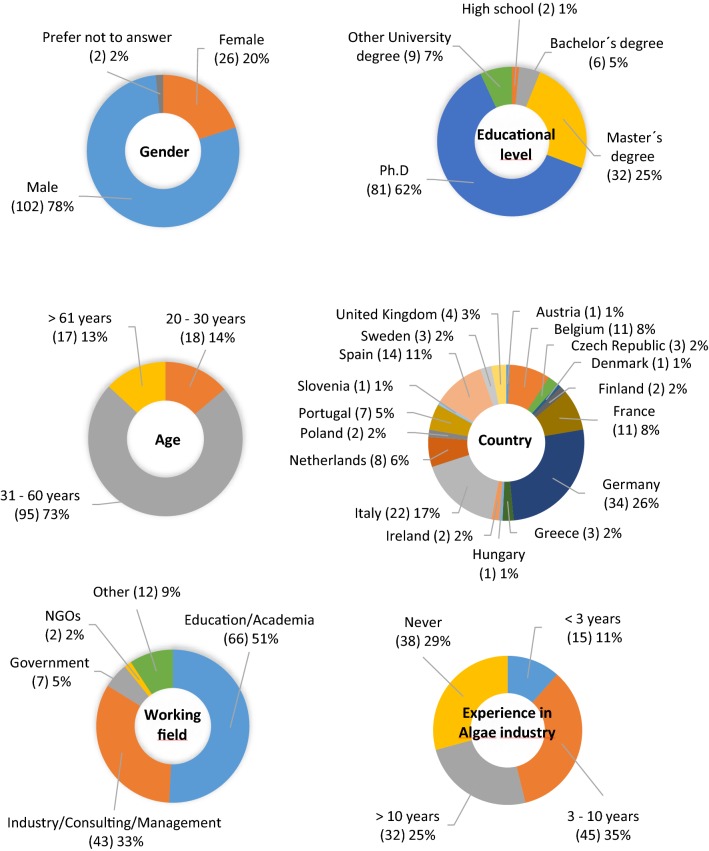
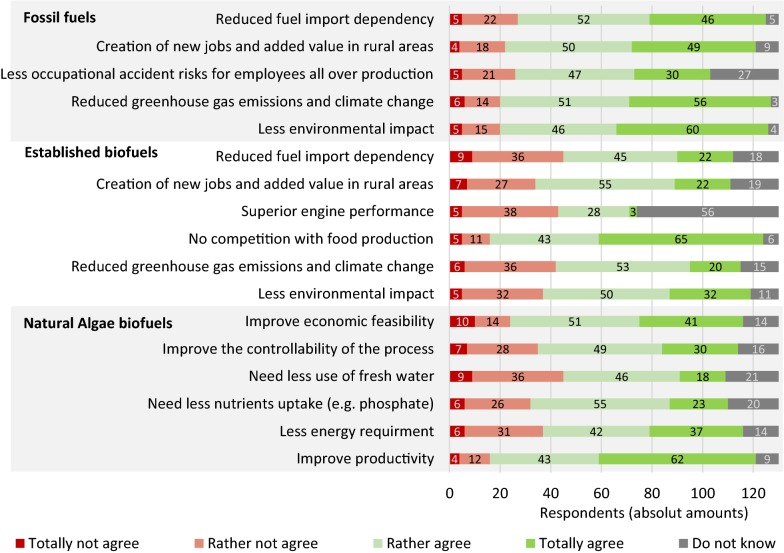
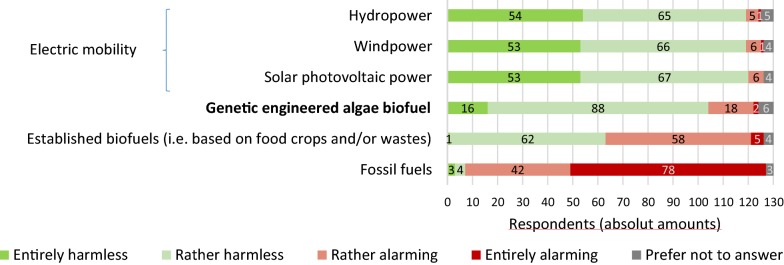
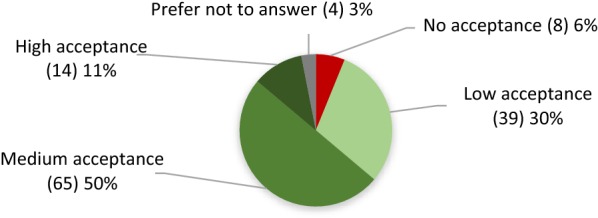
Verification
Claims the paper makes
The claims and statistics of this paper haven’t been checked yet.
Free: it reads the open-access text and checks the first 5 claims that cite a source we can check. Create a free account to check every claim.
Claims other papers make about this one
Each is checked against this paper’s own text: does it say what the citing paper says it does?
The check wasn’t confident either way, so it gives no verdict — never disputed.
In the citing paper
“Another approach to avoid contamination is genetic engineering by making the microalgae more resistant against contamination [192, 193].”
From Lab-scale photobioreactor systems: principles, applications, and scalability (2022) · cites this paper as [192]
Experimental — accuracy not yet measuredIn the citing paper
“However, with proper containment methods and carefully selected locations, such risks could be drastically minimized.”
From The potential of biofuels from first to fourth generation (2023) · cites this paper as [80]
In the citing paper
“A European-based study came to the conclusion that genetically engineered algae for biofuel production would be accepted by the majority of consumers, when the safety of the systems can be guaranteed [80].”
From The potential of biofuels from first to fourth generation (2023) · cites this paper as [80]
Self-check
Percentages, sums and reported differences re-computed from the paper’s own numbers.
The self-check needs the paper’s full text.
Citations
Cites
1 retracted
Plant genetic engineering for biofuel production: towards affordable cellulosic ethanol
Sticklen, M. B. (2008) · Nature Reviews Genetics · doi:10.1038/nrg2336 · Cited by 612
Retracted(1932) · Medical Entomology and Zoology · Cited by 9,568
Second Generation Biofuels: High-Efficiency Microalgae for Biodiesel Production
Schenk, P. M., Thomas-Hall, S. R., Stephens, E., Marx, U. C., Mussgnug, J. H., Posten, C., Kruse, O., & Hankamer, B. (2008) · BioEnergy Research · doi:10.1007/s12155-008-9008-8 · Cited by 2,333
Genetic Engineering of Algae for Enhanced Biofuel Production
Radakovits, R., Jinkerson, R. E., Darzins, A., & Posewitz, M. C. (2010) · Eukaryotic Cell · doi:10.1128/ec.00364-09 · Cited by 1,142
Diffusion of preventive innovations
Rogers, E. M. (2002) · Addictive Behaviors · doi:10.1016/s0306-4603(02)00300-3 · Cited by 1,040
Algae biofuel: Current status and future applications
Adeniyi, O. M., Azimov, U., & Burluka, A. (2018) · Renewable and Sustainable Energy Reviews · doi:10.1016/j.rser.2018.03.067 · Cited by 475
Public Acceptance of Plant Biotechnology and GM Crops
Lucht, J. (2015) · Viruses · doi:10.3390/v7082819 · Cited by 409
Frewer, L. J., van der Lans, I. A., Fischer, A. R. H., Reinders, M. J., Menozzi, D., Zhang, X., van den Berg, I., & Zimmermann, K. L. (2013) · Trends in Food Science & Technology · doi:10.1016/j.tifs.2013.01.003 · Cited by 369 · cited 1×
“In the EU, the use of GE crops and GMOs in agriculture is subject to extensive restrictions since public opposition to GM technology is widespread [9].”
BackgroundGenome editing of model oleaginous microalgae Nannochloropsis spp. by CRISPR /Cas9
Wang, Q., Lu, Y., Xin, Y., Wei, L., Huang, S., & Xu, J. (2016) · The Plant Journal · doi:10.1111/tpj.13307 · Cited by 312
Crozet, P., Navarro, F. J., Willmund, F., Mehrshahi, P., Bakowski, K., Lauersen, K. J., Pérez-Pérez, M.-E., Auroy, P., Gorchs Rovira, A., Sauret-Gueto, S., et al. (2018) · ACS Synthetic Biology · doi:10.1021/acssynbio.8b00251 · Cited by 297
Research works printed but not linked: 1
- Miao R. Metabolic engineering of synechocystis PCC 6803 for butanol production (PhD dissertation). Uppsala. 2018. Retrieved from http://urn.kb.se/resolve?urn=urn:nbn:se:uu:diva-360031.
Cited by
The Role of Carbon Capture and Storage in the Energy Transition
Lau, H. C., Ramakrishna, S., Zhang, K., & Radhamani, A. V. (2021) · Energy & Fuels · doi:10.1021/acs.energyfuels.1c00032 · Cited by 326
The potential of biofuels from first to fourth generation
Cavelius, P., Engelhart-Straub, S., Mehlmer, N., Lercher, J., Awad, D., & Brück, T. (2023) · PLOS Biology · doi:10.1371/journal.pbio.3002063 · Cited by 224
“Therefore, closed production systems with high security standards are expected to be built [80].”
BackgroundLab-scale photobioreactor systems: principles, applications, and scalability
Benner, P., Meier, L., Pfeffer, A., Krüger, K., Oropeza Vargas, J. E., & Weuster-Botz, D. (2022) · Bioprocess and Biosystems Engineering · doi:10.1007/s00449-022-02711-1 · Cited by 215
Verdía Barbará, P., Choudhary, H., Nakasu, P. S., Al-Ghatta, A., Han, Y., Hopson, C., Aravena, R. I., Mishra, D. K., Ovejero-Pérez, A., Simmons, B. A., et al. (2025) · Chemical Reviews · doi:10.1021/acs.chemrev.4c00754 · Cited by 181
Mixotrophic cultivation of microalgae: An alternative to produce high-value metabolites
Castillo, T., Ramos, D., García-Beltrán, T., Brito‐Bazán, M., & Galindo, E. (2021) · Biochemical Engineering Journal · doi:10.1016/j.bej.2021.108183 · Cited by 174
Karpagam, R., Jawaharraj, K., & Gnanam, R. (2021) · Science of The Total Environment · doi:10.1016/j.scitotenv.2020.144236 · Cited by 146
Yong, J. J. J. Y., Chew, K. W., Khoo, K. S., Show, P. L., & Chang, J.-S. (2021) · Biotechnology Advances · doi:10.1016/j.biotechadv.2020.107684 · Cited by 139
Cao, K., Cui, Y., Sun, F., Zhang, H., Fan, J., Ge, B., Cao, Y., Wang, X., Zhu, X., Wei, Z., et al. (2023) · Biotechnology Advances · doi:10.1016/j.biotechadv.2023.108236 · Cited by 119
Singh, K., Meena, R. S., Kumar, S., Dhyani, S., Sheoran, S., Singh, H. M., Pathak, V. V., Khalid, Z., Singh, A., Chopra, K., et al. (2023) · Biomass and Bioenergy · doi:10.1016/j.biombioe.2023.106944 · Cited by 126
Chlorella vulgaris, a microalgae important to be used in Biotechnology: a review
Coronado-Reyes, J. A., Salazar-Torres, J. A., Juárez-Campos, B., & González‐Hernández, J. C. (2020) · Food Science and Technology · doi:10.1590/fst.37320 · Cited by 149
“…they consume; such as lipids and proteins where lipids can be used as raw material for biofuel synthesis where production control is important, which is recommended to be done in closed systems and above all to apply high standards of safety and evaluation of risks (Villareal et al., 2020).”
BackgroundRanjbari, M., Esfandabadi, Z. S., Ferraris, A., Quatraro, F., Rehan, M., Nizami, A., Gupta, V. K., Lam, S. S., Aghbashlo, M., & Tabatabaei, M. (2022) · Chemosphere · doi:10.1016/j.chemosphere.2022.133968 · Cited by 88
Biotechnological approaches to enhance biofuel producing potential of microalgae
Xue, J., Balamurugan, S., Li, T., Cai, J.-X., Chen, T., Wang, X., Yang, W., & Li, H. (2021) · Fuel · doi:10.1016/j.fuel.2021.121169 · Cited by 72
Recent advances in biotechnology and bioengineering for efficient microalgal biofuel production
Zhang, C., Singh, R. P., Yadav, P., Kumar, I., Kaushik, A., Roychowdhury, R., Mubeen, M., Singh, S. K., Kumar, A., & Wang, J. (2025) · Fuel Processing Technology · doi:10.1016/j.fuproc.2025.108199 · Cited by 77
Implications of CRISPR-Cas9 in Developing Next Generation Biofuel: A Mini-review
Sharma, P. K., Lakhawat, S. S., Malik, N., Kumar, V., & Kumar, S. (2022) · Current Protein and Peptide Science · doi:10.2174/1389203723666220907110310 · Cited by 48
Microalgae biomass deconstruction using green solvents: Challenges and future opportunities
Raj, T., Morya, R., Chandrasekhar, K., Kumar, D., Soam, S., Kumar, R., Patel, A. K., & Kim, S. (2022) · Bioresource Technology · doi:10.1016/j.biortech.2022.128429 · Cited by 49
Enhancing algal production strategies: strain selection, AI-informed cultivation, and mutagenesis
Alzahmi, A. S., Daakour, S., Nelson, D., Al-Khairy, D., Twizere, J.-C., & Salehi-Ashtiani, K. (2024) · Frontiers in Sustainable Food Systems · doi:10.3389/fsufs.2024.1331251 · Cited by 44
A review of public opinion on liquid biofuels in the EU: Current knowledge and future challenges
Løkke, S., Aramendia, E., & Malskær, J. (2021) · Biomass and Bioenergy · doi:10.1016/j.biombioe.2021.106094 · Cited by 42
Biofuels, E-Fuels, and Waste-Derived Fuels: Advances, Challenges, and Future Directions
Yılbaşı, Z. (2025) · Sustainability · doi:10.3390/su17136145 · Cited by 41
Ansari, F. A., Nasr, M., Rawat, I., & Bux, F. (2021) · Biomass Conversion and Biorefinery · doi:10.1007/s13399-021-01661-0 · Cited by 38
Guo, B., Yang, B., Su, Y., Zhang, S., Hornung, U., & Dahmen, N. (2021) · ACS ES&T Engineering · doi:10.1021/acsestengg.1c00261 · Cited by 42
Naaz, F., Samuchiwal, S., Dalvi, V., Bhattacharya, A., Pant, K. K., & Malik, A. (2023) · Energy Conversion and Management · doi:10.1016/j.enconman.2023.116887 · Cited by 39
Khan, N. T., Sudhakar, K., & Mamat, R. (2022) · Heliyon · doi:10.1016/j.heliyon.2023.e15168 · Cited by 43
“[66], there is no proof of doubts or even resistance to the GE algae.”
BackgroundLatest Expansions in Lipid Enhancement of Microalgae for Biodiesel Production: An Update
Rawat, J., Gupta, P. K., Pandit, S., Priya, K., Agarwal, D., Pant, M., Thakur, V. K., & Pande, V. (2022) · Energies · doi:10.3390/en15041550 · Cited by 36
van Dijk, M., Goedegebure, R. P. G., & Nap, J.-P. (2024) · Renewable and Sustainable Energy Reviews · doi:10.1016/j.rser.2024.114670 · Cited by 35
Zambare, V., Patankar, R. S., Bhusare, B. P., & Christopher, L. P. (2021) · Processes · doi:10.3390/pr9101743 · Cited by 33
Villacreses-Freire, D., Ketzer, F., & Rösch, C. (2022) · BioEnergy Research · doi:10.1007/s12155-021-10323-y · Cited by 26
Self-citationEckerstorfer, M. F., Dolezel, M., Miklau, M., Greiter, A., Heissenberger, A., Kastenhofer, K., Schulz, F., Hagen, K., Otto, M., & Engelhard, M. (2025) · International Journal of Molecular Sciences · doi:10.3390/ijms26073174 · Cited by 35
“Three TA institutes, ITAS and TAB in Germany as well as the Rathenau Institute in the Netherlands, have addressed the use of oil produced from GM microalgae [165–167].”
InfluentialPanchal, B. M., Su, C., Fu, C.-C., Wu, S., & Juan, H.-Y. (2025) · Fuel Processing Technology · doi:10.1016/j.fuproc.2025.108277 · Cited by 28
Engineering Biocatalytic Solar Fuel Production: The PHOTOFUEL Consortium
Wichmann, J., Lauersen, K. J., Biondi, N., Christensen, M., Guerra, T., Hellgardt, K., Kühner, S., Kuronen, M. A., Lindberg, P., Rösch, C., et al. (2021) · Trends in biotechnology · doi:10.1016/j.tibtech.2021.01.003 · Cited by 23
Self-citationLaPanse, A. J., Burch, T. A., Tamburro, J. M., Traller, J. C., Pinowska, A., & Posewitz, M. C. (2022) · MicrobiologyOpen · doi:10.1002/mbo3.1343 · Cited by 17
“Due to the complexity of thermal adaptation from a metabolic perspective, as well as regulatory limitations on the deployment of genetically modified organisms (GMOs) using recombinant DNA approaches, ALE was selected for strain thermal tolerance improvements (Varela Villarreal et al., 2020).”
MethodPrajapati, A. K., Mahajan, A., Jadhav, S. M., & Kumar, K. (2025) · Renewable and Sustainable Energy Reviews · doi:10.1016/j.rser.2025.116103 · Cited by 24
Environmental impact of algae-based biofuel production: A review
Mobin, S. M. A., Alam, F., & Chowdhury, H. (2022) · AIP conference proceedings · doi:10.1063/5.0117093 · Cited by 19
Hu, L., Ye, Y.-Q., Li, Y., Tan, X., Liu, X., Zhang, T., Wang, J., Du, Z., & Ye, M. (2025) · Biotechnology Advances · doi:10.1016/j.biotechadv.2025.108655 · Cited by 22
Balamurugan, S., Ramalingam, S., & Li, H. (2020) · Journal of Water Process Engineering · doi:10.1016/j.jwpe.2020.101713 · Cited by 16
The conventional microalgal biofuel production process and the alternative milking pathway: A review
Grira, S., Khalifeh, H. A., AlKhedher, M. A., & Ramadan, M. (2023) · Energy · doi:10.1016/j.energy.2023.127547 · Cited by 15
Khosravitabar, F., & Mamedov, F. (2023) · International Journal of Hydrogen Energy · doi:10.1016/j.ijhydene.2023.06.050 · Cited by 12
“According to a recent study, utilization of the GMOs for biofuel production is still a big concern for experts and stakeholders [59].”
Advanced biofuels: a path to sustainable energy
Maharjan, A., Kim, M.-R., Choi, W., Kim, H.-C., & Park, J. (2024) · Sustainable Energy & Fuels · doi:10.1039/d4se00536h · Cited by 13
Naaz, F., Dhali, S., Dey, S., Bhattacharya, A., Choudhary, P., Pant, K. K., & Malik, A. (2024) · Algal Research · doi:10.1016/j.algal.2024.103644 · Cited by 12
Food security and biofuel production: solving the dilemma on the example of Ukraine
Tokarchuk, D. M., Pryshliak, N., Shynkovych, A., & Березюк, С. (2022) · Polityka Energetyczna – Energy Policy Journal · doi:10.33223/epj/150496 · Cited by 20
Erdoğan, E. M., Yılmaz, H., Topuz, E., & Özkan, M. (2024) · Renewable Energy · doi:10.1016/j.renene.2024.121464 · Cited by 20
Zhao, Q., & Huang, H. (2021) · Advances in bioenergy · doi:10.1016/bs.aibe.2021.05.003 · Cited by 10
Poornapushpakala, S., Dawn, S. S., Govind, M. A., Santhosh, A., Nirmala, N., Barani, S., & Nirmala, M. (2020) · Biocatalysis and Agricultural Biotechnology · doi:10.1016/j.bcab.2020.101874 · Cited by 8
Public Perception and Awareness of Sustainable Aviation Fuel in South Central United States
Rogachuk, B. E., Prigmore, S. M., Ogbaga, C. C., & Okolie, J. A. (2025) · Sustainability · doi:10.3390/su17094019 · Cited by 6
Perception of EU citizens on engineered biocatalytic solar fuels
Rösch, C., & Villarreal, J. V. (2021) · Renewable and Sustainable Energy Reviews · doi:10.1016/j.rser.2021.111366 · Cited by 5
Self-citationSocioeconomic aspects of third-generation biofuels
Paravantis, J. A. (2022) · Elsevier eBooks · doi:10.1016/b978-0-323-90971-6.00046-2 · Cited by 8
Recent Advancements in Microalgae-Based Biofuel Production
Singh, A. K. (2024) · Environmental science and engineering · doi:10.1007/978-3-031-52167-6_14 · Cited by 7
Younes, S., Arnold, N. D., Paper, M., Keil, L., Awad, D., & Brueck, T. (2023) · Springer eBooks · doi:10.1007/978-3-031-42026-9_13 · Cited by 6
Taiwanese high school students’ perspectives on artificial intelligence and its applications
Huang, Y. K., Chang, M.-C., & Liu, S. (2024) · Computers in Human Behavior Reports · doi:10.1016/j.chbr.2024.100550 · Cited by 7
Bottlenecks in applications of algal-based technologies toward industrial commercialization
Thevarajah, B., Nimarshana, P. H. V., Sandani, W. P., Wasath, W. A. J., & Ariyadasa, T. U. (2025) · Elsevier eBooks · doi:10.1016/b978-0-443-23967-0.00024-3 · Cited by 6
Biotechnological Approaches for the Production of Bioenergy
Ali, H., Qureshi, M. K., Islam, B., & Altaf, M. T. (2023) · Springer eBooks · doi:10.1007/978-981-99-4954-0_3 · Cited by 4
Support for the research and monitoring of marine algae: a study of Italian coastal users
Lucrezi, S. (2021) · Mediterranean Marine Science · doi:10.12681/mms.27949 · Cited by 3
Algae as a feedstock for biofuel production
Karpagam, R. (2022) · Elsevier eBooks · doi:10.1016/b978-0-323-91159-7.00016-3 · Cited by 4
Novel Feedstocks for Biofuels: Current Scenario and Recent Advancements
Khalid, Z., Alam, S. N., Guldhe, A., & Singh, B. (2022) · Clean Energy Production Technologies · doi:10.1007/978-981-19-3582-4_2 · Cited by 4
Comparative Perspectives of Biofuel Generations: New Insights into Challenges and Opportunities
Mir, M. Y. (2025) · Synthesis lectures on renewable energy technologies · doi:10.1007/978-3-031-97337-6_4 · Cited by 3
Biochemistry and Biotechnology of Algae
El-Chaghaby, G. A., & Rashad, S. (2022) · Practice, progress, and proficiency in sustainability · doi:10.4018/978-1-6684-2438-4.ch002 · Cited by 2
Algal biomass pretreatment and developments for better biofuel production
Mateescu, C. (2022) · Elsevier eBooks · doi:10.1016/b978-0-12-824270-4.00007-9 · Cited by 4
Kumar, S., Kumar, D., Sharma, P., & Punia, A. (2022) · International Journal of Current Microbiology and Applied Sciences · doi:10.20546/ijcmas.2022.1105.027 · Cited by 3
Algal Biohydrogen Production: Opportunities and Challenges
Jain, M., Mital, M., & Gupta, P. (2023) · Clean Energy Production Technologies · doi:10.1007/978-981-19-6810-5_4 · Cited by 2
An introduction to algae materials
Umashree, V. R., Anjana, K., Vidya, D., Vinod, B., Nayana, K., Sreelakshmi, M., Raja, R., & Arunkumar, K. (2023) · Elsevier eBooks · doi:10.1016/b978-0-443-18816-9.00021-6 · Cited by 7
Conclusion and Future Perspectives
Bhat, R. A., Singh, D. V., Tonelli, F. M. P., & Hakeem, K. R. (2022) · Springer eBooks · doi:10.1007/978-3-030-94074-4_9 · Cited by 1
Technical Challenges of Biofuel Obtainment
Bhat, R. A., Singh, D. V., Tonelli, F. M. P., & Hakeem, K. R. (2022) · Springer eBooks · doi:10.1007/978-3-030-94074-4_8 · Cited by 1
Social acceptance of third-generation biofuels
Karytsas, S. (2022) · Elsevier eBooks · doi:10.1016/b978-0-323-90971-6.00035-8
Genetic engineering of algae material
Shailaja, V. L., John, C. M., & Kalaivani, M. (2023) · Elsevier eBooks · doi:10.1016/b978-0-443-18816-9.00012-5 · Cited by 1
Harnessing Biotechnology for a Sustainable One Health Policy Amidst Climate Change
Mawanda, J. (2025) · Springer eBooks · doi:10.1007/978-3-030-98067-2_171-1
The future of green microbiology: innovations and challenges
Onyeaka, H. N., & Akinsemolu, A. A. (2025) · Elsevier eBooks · doi:10.1016/b978-0-443-24040-9.00012-4
Harnessing Biotechnology for a Sustainable One Health Policy Amidst Climate Change
Mawanda, J. (2025) · Springer eBooks · doi:10.1007/978-3-031-34967-6_171
Biofuels: Sustainable Alternatives for Green Aviation and Global Energy Transition
Bandara, S. M. D. C., & Ratnayake, R. R. (2025) · Springer tracts in electrical and electronics engineering · doi:10.1007/978-981-96-7925-6_7
PHYCOVIR : diversity and dynamics of viruses in a high-density microalgae culture
Chase, E. E. (2021) · theses.fr (ABES) · doi:10.70675/58ca1bfbz7427z4786z8cf7z37ea8b940532
Genetic engineering and biotechnological approaches for enhanced biodiesel yield
Singh, R. P., Yadav, P., Kumar, A., & Gupta, R. K. (2026) · Elsevier eBooks · doi:10.1016/b978-0-443-29269-9.00007-1
Upstream processes for aquatic biorefineries: Feed characterization and pretreatment
Hashemi, M., Alavijeh, R. S., Mirmohamadsadeghi, S., Peeters, E., Denayer, J. F. M., & Karimi, K. (2026) · Elsevier eBooks · doi:10.1016/b978-0-443-33034-6.00015-7
Hussain, M., Rayamajhi, V., Shabbir, A., Aslam, F., Siddiqui, F., Khan, H., Shin, H., & Jung, S.-M. (2026) · Waste and Biomass Valorization · doi:10.1007/s12649-026-03779-6
Jia, Y., Chia, S. R., Huo, Z., Milano, J., Ong, M. Y., Zaitone, B. A., & Chew, K. W. (2026) · Renewable and Sustainable Energy Reviews · doi:10.1016/j.rser.2026.117374
Microalgal Synthetic Biotechnology: From Genetic Models to Deployable Photosynthetic Chassis
Liu, J. (2026) · Research · doi:10.34133/research.1449
“Clear evidence of benefit, together with practical containment and monitoring measures, can make the risks easier to assess and communicate [ 190 , 191 ].”
Keil, M., & Arning, K. (2026) · Energy Research & Social Science · doi:10.1016/j.erss.2026.104989
Metadata
- Authors
- Varela Villarreal, J., Burgués, C., & Rösch, C.
- Affiliations
- Karlsruhe Institute of Technology (DE)
- Venue
- Biotechnology for Biofuels
- Published
- 2020-05-22
- Volume
- 13
- Issue
- 1
- Pages
- 92-92
- ISSN
- 1754-6834 (ISSN-L)
- PMC
- PMC7245023
- OpenAlex
- W3029312157
- Semantic Scholar
- 9c4613abb1bfd51e4ab5d799499925b748ce5273
- Cited by
- 74
- References
- 36
- Citations by year
- 2026: 6 · 2025: 14 · 2024: 7 · 2023: 12 · 2022: 17 · 2021: 14 · 2020: 4
- FWCI
- 7.59
- Type
- journal article
- Language
- en
- Open access
- gold
- doi.org
- Licence
- cc-by
- creativecommons.org/licenses/by/4.0 (tdm)
- creativecommons.org/licenses/by/4.0 (vor)
- Locations
- Biotechnology for Biofuels (publishedVersion, cc-by)
- PubMed Central (publishedVersion, cc-by)
- PubMed (publishedVersion)
- Repository KITopen (Karlsruhe Institute of Technology) (submittedVersion, cc-by)
- DOAJ (DOAJ: Directory of Open Access Journals) (submittedVersion, cc-by-sa)
- KITopen (cc-by)
- Funders
- Horizon 2020 (64072)
- Topics
- Life Sciences › Agricultural and Biological Sciences › Plant Science › Genetically Modified Organisms Research
- Social Sciences › Sociology and Political Science › Social Acceptance of Renewable Energy
- Social Sciences › Sociology and Political Science › Risk Perception and Management
- Keywords
- algal biofuels, public acceptance, risk perception, stakeholder perspectives, genome editing, risk assessment, transportation fuels, socio-technical systems
About these checks
Registry, retraction, Cites and statistics results are computed, not judged, with one exception: a printed reference that no index lists is read once by a model before it counts as a citation error. Claims are extracted by a model and kept only when their quote appears verbatim in the text; each cited source is then checked, with a model’s help, for whether it says what the claim relies on. Those verdicts can be wrong — read the claim’s quote and the cited source before relying on one.
Statistics and arithmetic are recomputed, not judged.
Confidence bands are shown only for fields calibrated on our annotated test set. None is calibrated yet, so no band is shown.
What counts as a claim ›How we measure confidence ›How we check this ›
Are you an author, or do you see a problem with this page? Request a review
Data sources
Bibliographic data: Semantic Scholar, OpenAlex, Crossref.
Contains information from the Semantic Scholar Academic Graph Datasets, made available under the ODC Attribution License (ODC-BY 1.0).
Semantic Scholar’s data is described in: Kinney, R., et al. (2023). The Semantic Scholar Open Data Platform. arXiv:2301.10140.
