

The DOI matches its Crossref record; 132 of the 133 references it cites were found in a registry or an index.
Biotechnologies for bulk production of microalgal biomass: from mass cultivation to dried biomass acquisition
Open accessAbstract
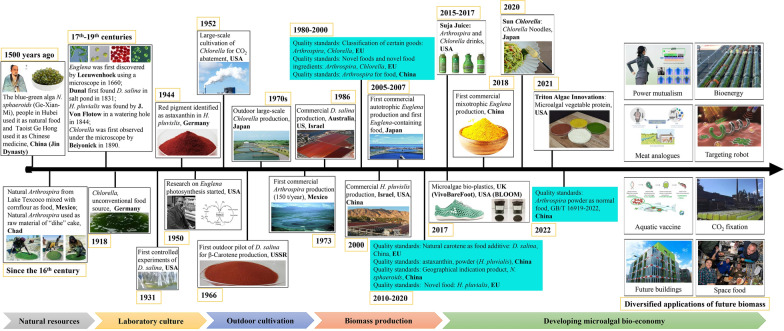
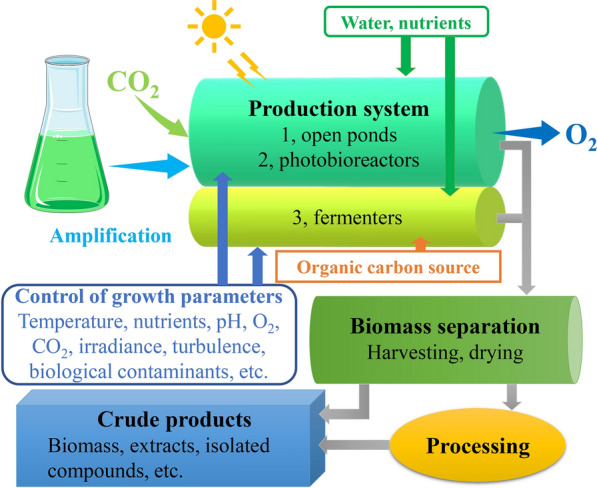
Microalgal biomass represents a sustainable bioresource for various applications, such as food, nutraceuticals, pharmaceuticals, feed, and other bio-based products. For decades, its mass production has attracted widespread attention and interest. The process of microalgal biomass production involves several techniques, mainly cultivation, harvesting, drying, and pollution control. These techniques are often designed and optimized to meet optimal growth conditions for microalgae and to produce high-quality biomass at acceptable cost. Importantly, mass production techniques are important for producing a commercial product in sufficient amounts. However, it should not be overlooked that microalgal biotechnology still faces challenges, in particular the high cost of production, the lack of knowledge about biological contaminants and the challenge of loss of active ingredients during biomass production. These issues involve the research and development of low-cost, standardized, industrial-scale production equipment and the optimization of production processes, as well as the urgent need to increase the research on biological contaminants and microalgal active ingredients. This review systematically examines the global development of microalgal biotechnology for biomass production, with emphasis on the techniques of cultivation, harvesting, drying and control of biological contaminants, and discusses the challenges and strategies to further improve quality and reduce costs. Moreover, the current status of biomass production of some biotechnologically important species has been summarized, and the importance of improving microalgae-related standards for their commercial applications is noted.
Overview
The claims and statistics of this paper haven’t been checked yet.
Run the check — free, no account needed. It reads the open-access text and checks the sources it cites.
Integrity signals
Registry
Cites
Statistics
Figures
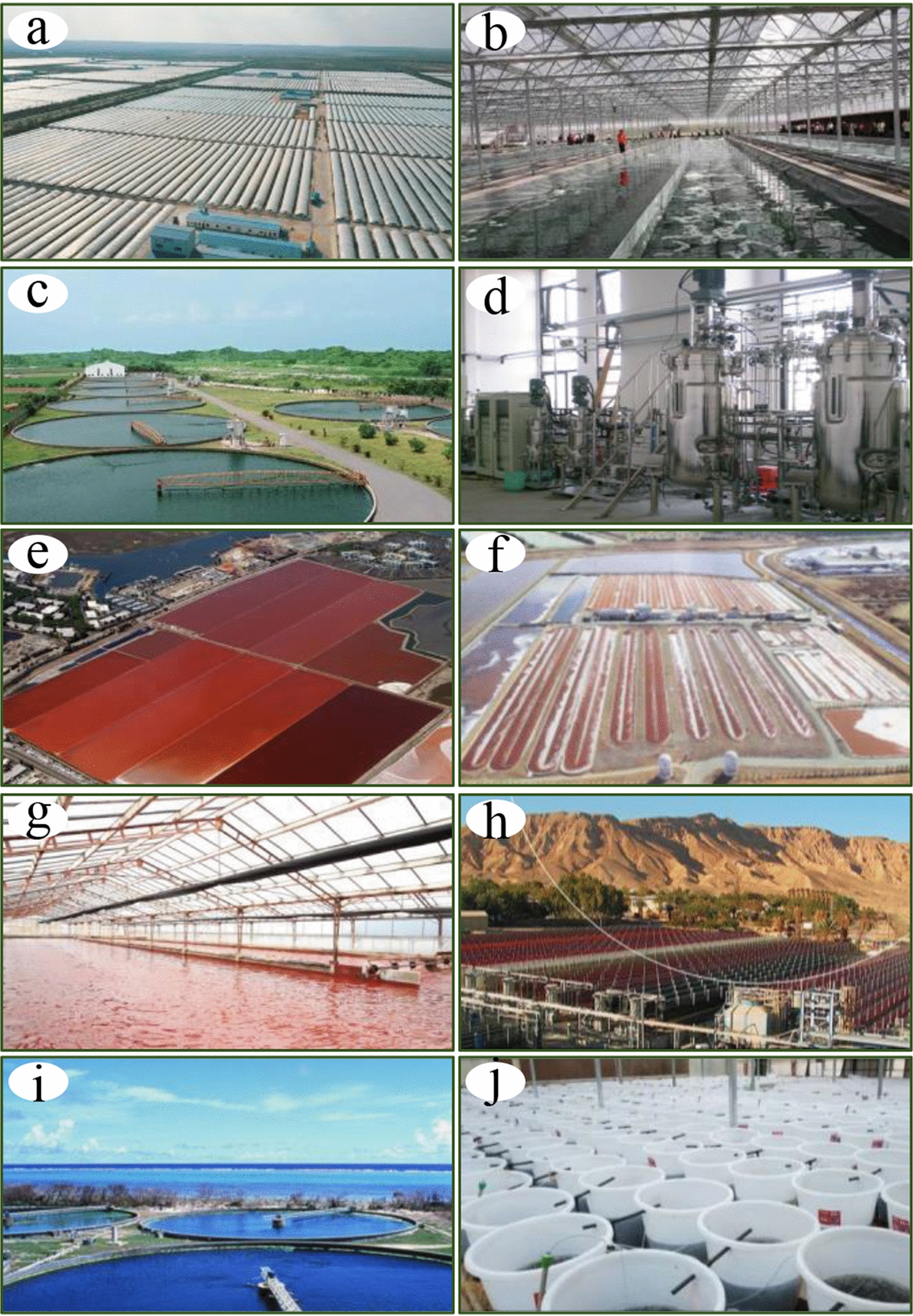
Verification
Claims the paper makes
The claims and statistics of this paper haven’t been checked yet.
Run the check — free, no account needed. It reads the open-access text and checks the sources it cites.
Claims other papers make about this one
Each is checked against this paper’s own text: does it say what the citing paper says it does?
The source backs part of the claim, not all of it — or backs it for a different population, condition or comparison.
In the citing paper
“Open systems are generally used for more resilient species, such as Arthrospira spp., Chlorella spp., and Dunaliella spp., which can tolerate extremes of salinity or pH and reduce contamination pressure.”
From Microalgae biotechnology and its role in sustainable and healthy food design (2025) · cites this paper as Qin et al., 2023
Experimental — accuracy not yet measuredThe cited source says what the claim attributes to it.
In the citing paper
“For instance, Dunaliella salina thrives in saline environments, whereas Arthrospira platensis tolerates alkaline conditions (Qin et al., 2023).”
From Microalgae biotechnology and its role in sustainable and healthy food design (2025) · cites this paper as Qin et al., 2023
The cited source says what the claim attributes to it.
In the citing paper
“For instance, Dunaliella salina thrives in saline environments, whereas Arthrospira platensis tolerates alkaline conditions (Qin et al., 2023).”
From Microalgae biotechnology and its role in sustainable and healthy food design (2025) · cites this paper as Qin et al., 2023
Self-check
Percentages, sums and reported differences re-computed from the paper’s own numbers.
The self-check needs the paper’s full text.
Citations
Cites
Microalgae: A potential alternative to health supplementation for humans
Koyande, A. K., Chew, K. W., Rambabu, K., Tao, Y., Chu, D.-T., & Show, P.-L. (2019) · Food Science and Human Wellness · doi:10.1016/j.fshw.2019.03.001 · Cited by 908
Harmful algal blooms: causes, impacts and detection
Sellner, K. G., Doucette, G. J., & Kirkpatrick, G. J. (2003) · Journal of Industrial Microbiology & Biotechnology · doi:10.1007/s10295-003-0074-9 · Cited by 700
A review of the harvesting of micro-algae for biofuel production
Milledge, J. J., & Heaven, S. (2012) · Reviews in Environmental Science and Bio/Technology · doi:10.1007/s11157-012-9301-z · Cited by 679
Microalgae Harvesting Techniques: A Review
Singh, G., & Patidar, S. K. (2018) · Journal of Environmental Management · doi:10.1016/j.jenvman.2018.04.010 · Cited by 647
Photobioreactors for the production of microalgae
Acién, F. G., Fernández-Sevilla, J. M., & Grima, E. M. (2013) · Reviews in Environmental Science and Bio/Technology · doi:10.1007/s11157-012-9307-6 · Cited by 457
Algal Culture from Laboratory to Pilot Plant
(1953) · AIBS Bulletin · doi:10.1093/aibsbulletin/3.5.11 · Cited by 457
Microalgae, old sustainable food and fashion nutraceuticals
García, J. L., de Vicente, M., & Galán, B. (2017) · Microbial Biotechnology · doi:10.1111/1751-7915.12800 · Cited by 422
Potential utilization of bioproducts from microalgae for the quality enhancement of natural products
Tang, D. Y. Y., Khoo, K. S., Chew, K. W., Tao, Y., Ho, S., & Show, P. L. (2020) · Bioresource Technology · doi:10.1016/j.biortech.2020.122997 · Cited by 407
The Contamination and Control of Biological Pollutants in Mass Cultivation of Microalgae
Wang, H., Zhang, W., Chen, L., Wang, J., & Liu, T. (2013) · Bioresource Technology · doi:10.1016/j.biortech.2012.10.158 · Cited by 364
Olaizola, M. (2000) · Journal of Applied Phycology · doi:10.1023/a:1008159127672 · Cited by 359
Research works printed but not linked: 16
- Ponnuswamy I, Madhavan S, Shabudeen S. Isolation and characterization of green microalgae for carbon sequestration, waste water treatment and bio-fuel production. Int J Bio-Sci Bio-Technol. 2013;5(2):17–26.
- Gummert F, Meffert M-E, Stratmann H. Nonsterile large-scale culture of Chlorella in greenhouse and open air. In: Burlew JS, editor. Algal culture from laboratory to pilot plant. Washington: Carnegie Institute of Washington Publication; 1953. p. 166–76.
- Soong P. Production and development of Chlorella and Spirulina in Taiwan. In: Shelef G, Soeder C, editors. Algae biomass. Amsterdam: Elsevier/North-Holland Biomedical Press; 1980. p. 9–20.
- Pirie NW. The Spirulina algae. In: Pirie NW, editor. Food protein sources. New York: Cambridge University Press; 1975. p. 33–9.
- Hu I-C. Production of potential coproducts from microalgae. In: Pandey A, Chang J-S, Soccol CR, Lee D-J, Chisti Y, editors. Biofuels from algae. New York: Elsevier; 2019. p. 345–58.
- Gao FZ, Ge BS, Xiang WZ, Qin S. Development of microalgal industries in the past 60 years due to biotechnological research in China: a review. Sci Sin Vitae. 2020;51:26–39.
- Behera B, Unpaprom Y, Ramaraj R, Maniam BP, Govindan N, Paramasivan B. Integrated biomolecular and bioprocess engineering strategies for enhancing the lipid yield from microalgae. Renew Sust Energy Rev. 2022;148: 111270.
- Tamiya H, Hase E, Shibata K, Mituya A, Iwamura T, Nihei T, et al. Kinetics of growth of Chlorella, with special reference to its dependence on quantity of available light and on temperature. In: Burlew JS, editor., et al., Algal culture from laboratory to pilot plant. Washington: Carnegie Institute of Washington Publication; 1953. p. 204–32.
- Milledge JJ, Heaven S. Disc stack centrifugation separation and cell disruption of microalgae: a technical note. Environ Nat Resour Res. 2011;1(1):17–24.
- Al Hattab M, Ghaly A, Hammouda A. Microalgae harvesting methods for industrial production of biodiesel: critical review and comparative analysis. J Fundam Renew Energy Appl. 2015;5(2):1000154.
- Min C, Kim JE, Shon HK, Kim S-H. Low energy resonance vibration submerged membrane system for microalgae harvesting: performance and feasibility. Desalination. 2022;539: 115895.
- Morowvat MH, Ghasemi Y. Spray-drying microencapsulation of β-carotene contents in powdered Dunaliella salina biomass. Int J Pharm Clin Res. 2016;8(11):1533–6.
- Yang BJ, Xiang WZ, Jin XJ, Chen ZS, Wang L, Wu HB. Isolation and identification of an algicidal bacterium CBA02 and its algae-lysing characteristics. Biotechnol Bull. 2020;36(11):55.
- Wang M, Yuan W. Bacterial lysis of microalgal cells. J Sustain Bioenergy Syst. 2014;4(04):52205.
- Wang M, Chen S, Zhou W, Yuan W, Wang D. Algal cell lysis by bacteria: a review and comparison to conventional methods. Algal Res. 2020;46: 101794.
- Becher EW. Microalgae biotechnology microbiology. Cambridge: Cambridge University Press; 1994.
Cited by
Sorted by citations
Ye, L., Bogićević, B., Bolten, C. J., & Wittmann, C. (2024) · Current Opinion in Biotechnology · doi:10.1016/j.copbio.2024.103171 · Cited by 48
Sahu, S., Kunj, P., Kaur, A., Khatri, M., Singh, G., & Arya, S. K. (2024) · Energy Conversion and Management · doi:10.1016/j.enconman.2024.118467 · Cited by 44
Enhancing algal production strategies: strain selection, AI-informed cultivation, and mutagenesis
Alzahmi, A. S., Daakour, S., Nelson, D. R., Al-Khairy, D., Twizere, J., & Salehi‐Ashtiani, K. (2024) · Frontiers in Sustainable Food Systems · doi:10.3389/fsufs.2024.1331251 · Cited by 54
Advancements of astaxanthin production in Haematococcus pluvialis: Update insight and way forward
Cui, H., Zhu, X., Xiao, Y., Li, S., Wang, K., Wei, L., Li, R., & Qin, S. (2025) · Biotechnology Advances · doi:10.1016/j.biotechadv.2025.108519 · Cited by 46
Self-citationRaza, B., Ramzan, M. N., & Yang, W. (2024) · Aquaculture · doi:10.1016/j.aquaculture.2024.741959 · Cited by 45
Metadata
- Authors
- Qin, S., Wang, K., Gao, F., Ge, B., Cui, H., & Li, W.
- Affiliations
- Chinese Academy of Sciences (CN)
- ETH Zurich (CH)
- China University of Petroleum, East China (CN)
- Corresponding author
- Qin, Song
- Venue
- Biotechnology for Biofuels and Bioproducts
- Published
- 2023-08-29
- Volume
- 16
- Issue
- 1
- Pages
- 131-131
- ISSN
- 2731-3654 (ISSN-L)
- PMC
- PMC10466707
- OpenAlex
- W4386245486
- Cited by
- 111
- References
- 133
- Citations by year
- 2026: 36 · 2025: 49 · 2024: 24 · 2023: 2
- FWCI
- 1.70
- Type
- journal article
- Language
- en
- Open access
- gold
- doi.org
- Locations
- Biotechnology for Biofuels and Bioproducts (publishedVersion, cc-by)
- PubMed Central (publishedVersion, cc-by)
- PubMed (publishedVersion)
- Socio-Environmental Systems Modeling (submittedVersion, cc-by)
- DOAJ (DOAJ: Directory of Open Access Journals) (submittedVersion, cc-by-sa)
- Knowledge Repository of Yantai Institute of Coastal Zone Research, CAS (Yantai Institute of Coastal Zone Research) (submittedVersion)
- Repository for Publications and Research Data (ETH Zurich) (submittedVersion, cc-by)
- ETH Zürich Research Collection
- Funders
- National Natural Science Foundation of China (42061134020)
- Topics
- Physical Sciences › Energy › Renewable Energy, Sustainability and the Environment › Algal biology and biofuel production
- Physical Sciences › Environmental Science › Environmental Chemistry › Aquatic Ecosystems and Phytoplankton Dynamics
- Life Sciences › Biochemistry, Genetics and Molecular Biology › Molecular Biology › Microbial Metabolic Engineering and Bioproduction
- Keywords
- microalgal biomass, microalgae cultivation, microalgae harvesting, biomass drying, biological contaminants, production cost reduction, bioproducts
About these checks
Registry, retraction, Cites and statistics results are computed, not judged, with one exception: a printed reference that no index lists is read once by a model before it counts as a citation error. Claims are extracted by a model and kept only when their quote appears verbatim in the text; each cited source is then checked, with a model’s help, for whether it says what the claim relies on. Those verdicts can be wrong — read the claim’s quote and the cited source before relying on one.
Statistics and arithmetic are recomputed, not judged.
Confidence bands are shown only for fields calibrated on our annotated test set. None is calibrated yet, so no band is shown.
What counts as a claim ›How we measure confidence ›How we check this ›
Are you an author, or do you see a problem with this page? Request a review
