

Sustainable production of photosynthetic isobutanol and 3-methyl-1-butanol in the cyanobacterium Synechocystis sp. PCC 6803
Open accessThe DOI matches its Crossref record; 44 of the 44 references it cites were found in a registry or an index.
Abstract
Background: Cyanobacteria are emerging as green cell factories for sustainable biofuel and chemical production, due to their photosynthetic ability to use solar energy, carbon dioxide and water in a direct process. The model cyanobacterial strain Synechocystis sp. PCC 6803 has been engineered for the isobutanol and 3-methyl-1-butanol production by introducing a synthetic 2-keto acid pathway. However, the achieved productions still remained low. In the present study, diverse metabolic engineering strategies were implemented in Synechocystis sp. PCC 6803 for further enhanced photosynthetic isobutanol and 3-methyl-1-butanol production. Results: Long-term cultivation was performed on two selected strains resulting in maximum cumulative isobutanol and 3-methyl-1-butanol titers of 1247 mg L−1 and 389 mg L−1, on day 58 and day 48, respectively. Novel Synechocystis strain integrated with a native 2-keto acid pathway was generated and showed a production of 98 mg isobutanol L−1 in short-term screening experiments. Enhanced isobutanol and 3-methyl-1-butanol production was observed when increasing the kivdS286T copy number from three to four. Isobutanol and 3-methyl-1-butanol production was effectively improved when overexpressing selected genes of the central carbon metabolism. Identified genes are potential metabolic engineering targets to further enhance productivity of pyruvate-derived bioproducts in cyanobacteria. Conclusions: Enhanced isobutanol and 3-methyl-1-butanol production was successfully achieved in Synechocystis sp. PCC 6803 strains through diverse metabolic engineering strategies. The maximum cumulative isobutanol and 3-methyl-1-butanol titers, 1247 mg L−1 and 389 mg L−1, respectively, represent the current highest value reported. The significantly enhanced isobutanol and 3-methyl-1-butanol production in this study further pave the way for an industrial application of photosynthetic cyanobacteria-based biofuel and chemical synthesis from CO 2.
Overview
The claims and statistics of this paper haven’t been checked yet.
Free: it reads the open-access text and checks the first 5 claims that cite a source we can check. Create a free account to check every claim.
Integrity signals
Registry
Cites
Statistics
Figures
Verification
Claims the paper makes
The claims and statistics of this paper haven’t been checked yet.
Free: it reads the open-access text and checks the first 5 claims that cite a source we can check. Create a free account to check every claim.
Claims other papers make about this one
Each is checked against this paper’s own text: does it say what the citing paper says it does?
The source backs part of the claim, not all of it — or backs it for a different population, condition or comparison.
In the citing paper
“The cyanobacterial cumulative titre of 1247 mg/L over 58 days equates to approximately 21.5 mg L−1 d−1 average daily productivity, compared to approximately 10,900 mg L−1 d−1 for E. coli—a several-hundred-fold difference reflecting light-dependent growth constraints rather than poor pathway design.”
From Cyanobacteria as a Photosynthetic Chassis for Metabolic Pathway Engineering with Heterologous Gene Expression (2026) · cites this paper as [174]
Experimental — accuracy not yet measuredThe source backs part of the claim, not all of it — or backs it for a different population, condition or comparison.
In the citing paper
“Based on the maximum OD750 of 5.95 reported in the same study and a standard DCW conversion factor of ~0.25 g L−1 per OD750 unit for Synechocystis sp. PCC 6803, the estimated specific isobutanol productivity is approximately 21 mg g DCW−1 d−1.”
From Cyanobacteria as a Photosynthetic Chassis for Metabolic Pathway Engineering with Heterologous Gene Expression (2026) · cites this paper as [174]
Experimental — accuracy not yet measuredThe cited source says what the claim attributes to it.
In the citing paper
“Xie et al. [174] demonstrated the successful engineering of Synechocystis sp. PCC 6803 for the photosynthetic production of isobutanol and 3-methyl-1-butanol via a synthetic 2-keto acid pathway.”
From Cyanobacteria as a Photosynthetic Chassis for Metabolic Pathway Engineering with Heterologous Gene Expression (2026) · cites this paper as [174]
The cited source says what the claim attributes to it.
In the citing paper
“Long-term cultivation of the engineered strains yielded cumulative titres of 1247 mg/L isobutanol and 389 mg/L 3-methyl-1-butanol, underscoring the potential of cyanobacteria for direct production of advanced alcohols from photosynthetically fixed carbon.”
From Cyanobacteria as a Photosynthetic Chassis for Metabolic Pathway Engineering with Heterologous Gene Expression (2026) · cites this paper as [174]
Self-check
Percentages, sums and reported differences re-computed from the paper’s own numbers.
The self-check needs the paper’s full text.
Citations
Cites
Generic Assignments, Strain Histories and Properties of Pure Cultures of Cyanobacteria
Rippka, R., Stanier, R. Y., Deruelles, J., Herdman, M., & Waterbury, J. B. (1979) · Microbiology · doi:10.1099/00221287-111-1-1 · Cited by 7,606 · cited 1×
“PCC 6803 cultivation Synechocystis seed cultures were routinely cultivated and maintained in liquid BG11 medium [19] or 1.”
MethodKaneko, T., Sato, S., Kotani, H., Tanaka, A., Asamizu, E., Nakamura, Y., Miyajima, N., Hirosawa, M., Sugiura, M., Sasamoto, S., et al. (1996) · DNA Research · doi:10.1093/dnares/3.3.185 · Cited by 2,432
Kaneko, T., Sato, S., Kotani, H., Tanaka, A., Asamizu, E., Nakamura, Y., Miyajima, N., Hirosawa, M., Sugiura, M., Sasamoto, S., et al. (1996) · DNA Research · doi:10.1093/dnares/3.3.109 · Cited by 2,132 · cited 4×
“In Synechocystis, both class I and class II FBAs are present, encoded by slr0943 and sll0018, respectively [24].”
BackgroundInfluentialNon-fermentative pathways for synthesis of branched-chain higher alcohols as biofuels
Atsumi, S., Hanai, T., & Liao, J. C. (2008) · Nature · doi:10.1038/nature06450 · Cited by 1,945 · cited 1×
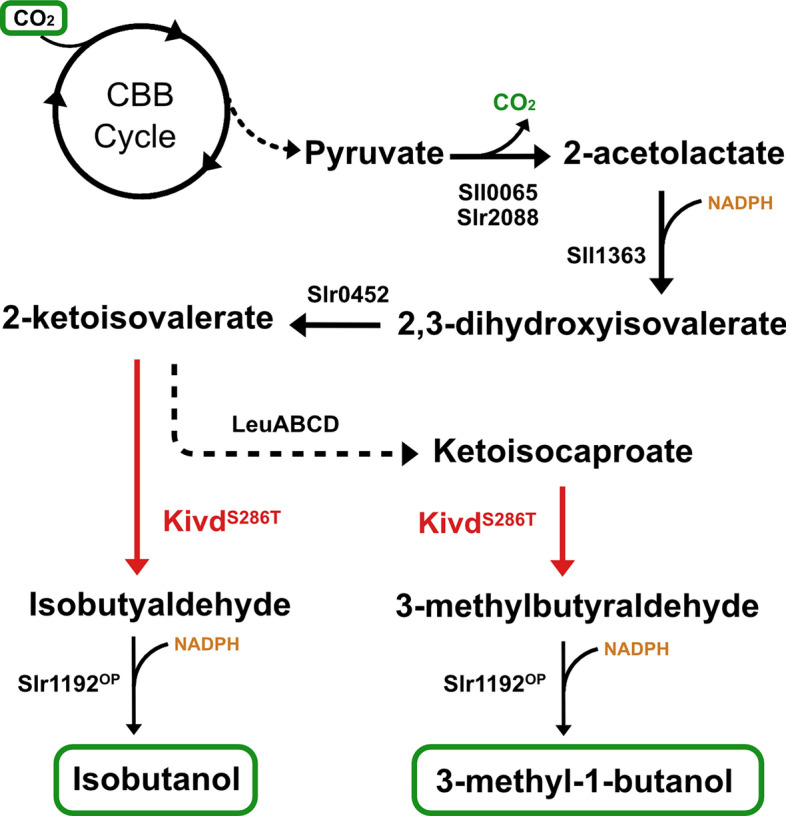
“Biological IB production was first demonstrated in Escherichia coli ( E. coli ) by introduction of a synthetic 2-keto acid pathway [7].”
BackgroundDirect photosynthetic recycling of carbon dioxide to isobutyraldehyde
Atsumi, S., Higashide, W., & Liao, J. C. (2009) · Nature Biotechnology · doi:10.1038/nbt.1586 · Cited by 870 · cited 1×
“In that regard, the 2-keto acid pathway was successfully introduced into cyanobacteria for IB biosynthesis, first reported in Synechococcus elongatus PCC 7942 [11].”
BackgroundMicrobial production of advanced biofuels
Keasling, J., Garcia Martin, H., Lee, T. S., Mukhopadhyay, A., Singer, S. W., & Sundstrom, E. (2021) · Nature Reviews Microbiology · doi:10.1038/s41579-021-00577-w · Cited by 294 · cited 1×
“In face of the rapid climate change and increasing energy demand, it is urgent to gradually replace traditional fossil resources with renewable energy, such as biofuels produced, e.g., by metabolically engineered microorganisms feeding on renewable carbon sources [2, 3].”
BackgroundBaez, A., Cho, K.-M., & Liao, J. C. (2011) · Applied Microbiology and Biotechnology · doi:10.1007/s00253-011-3173-y · Cited by 255 · cited 2×
“Dotted lines indicate multiple reactions Similar to IB, 3M1B is a superior candidate for gasoline additive and is widely used as a precursor for various chemical synthesis [10].”
BackgroundMetabolic Flux Analysis in Synechocystis Using Isotope Distribution from 13C-Labeled Glucose
Yang, C., Hua, Q., & Shimizu, K. (2002) · Metabolic Engineering · doi:10.1006/mben.2002.0226 · Cited by 241 · cited 1×
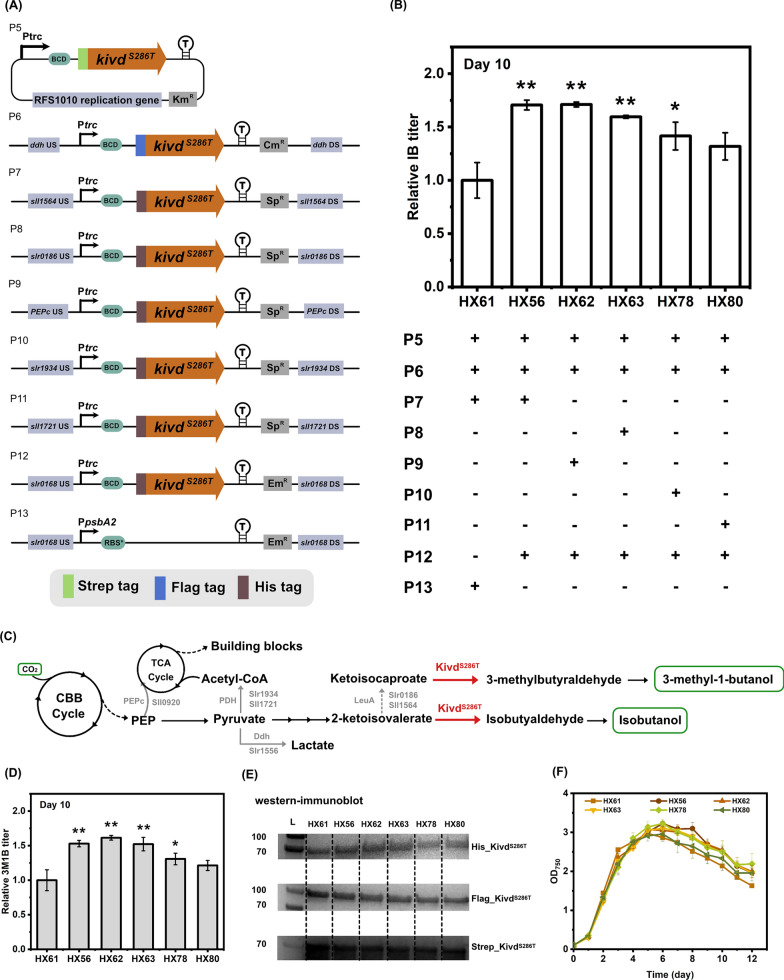
“It was reported that 25% of inorganic carbon assimilation may be through the PEPc catalyzed reaction in Synechocystis under mixotrophic or heterotrophic conditions [39].”
BackgroundCRISPR-Cas9 for the genome engineering of cyanobacteria and succinate production
Li, H., Shen, C. R., Huang, C.-H., Sung, L.-Y., Wu, M.-Y., & Hu, Y.-C. (2016) · Metabolic Engineering · doi:10.1016/j.ymben.2016.09.006 · Cited by 233 · cited 1×
“The marker-less-based CRISPR (clustered regularly interspaced short palindromic repeats) editing has been successfully applied in cyanobacteria for succinate production [34].”
MethodBarriers and opportunities in bio-based production of hydrocarbons
Zhou, Y. J., Kerkhoven, E. J., & Nielsen, J. (2018) · Nature Energy · doi:10.1038/s41560-018-0197-x · Cited by 215 · cited 1×
“In face of the rapid climate change and increasing energy demand, it is urgent to gradually replace traditional fossil resources with renewable energy, such as biofuels produced, e.g., by metabolically engineered microorganisms feeding on renewable carbon sources [2, 3].”
BackgroundMetabolic Engineering of Synechocystis sp. Strain PCC 6803 for Isobutanol Production
Varman, A. M., Xiao, Y., Pakrasi, H. B., & Tang, Y. J. (2013) · Applied and Environmental Microbiology · doi:10.1128/aem.02827-12 · Cited by 177 · cited 1×
“PCC 6803 (Synechocystis) was demonstrated to have the ability to produce IB after a single heterologous expression of Kivd, originating from Lactococcus lactis [12, 13].”
BackgroundWide-dynamic-range promoters engineered for cyanobacteria
Huang, H.-H., & Lindblad, P. (2013) · Journal of Biological Engineering · doi:10.1186/1754-1611-7-10 · Cited by 172 · cited 1×
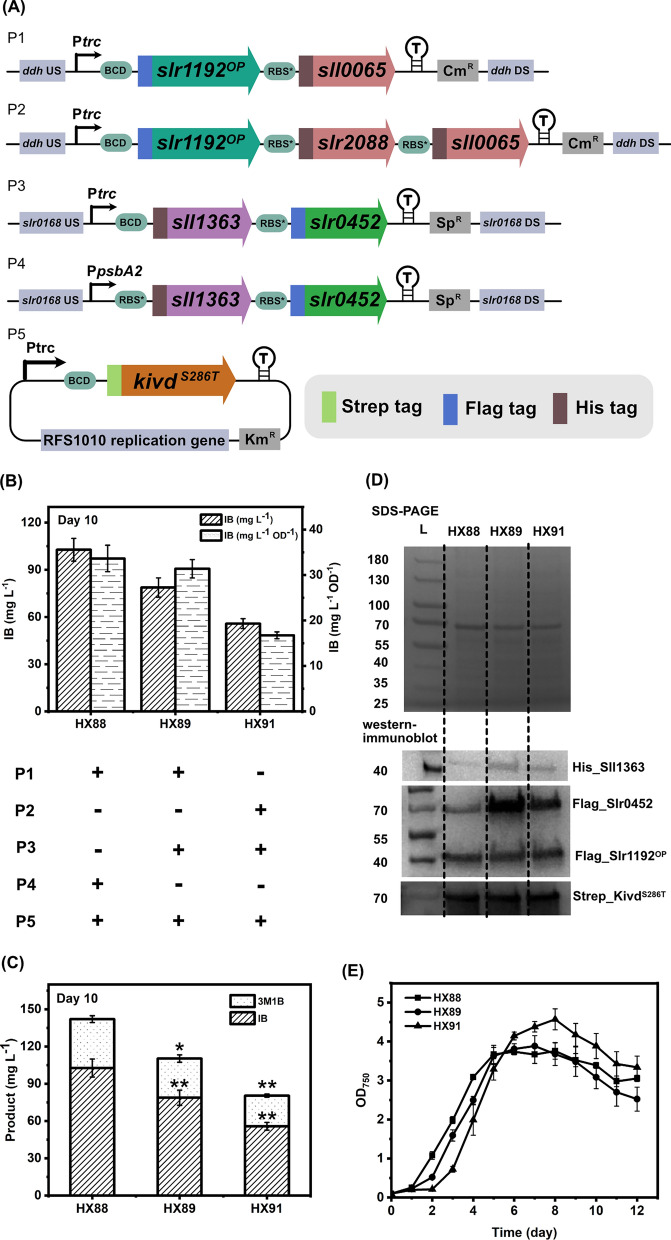
“To further increase protein expression level, the promoter used to drive Sll1363 and Slr0452 expression was changed from P psbA2 to the stronger P trc [25, 26], resulting in the engineered strain HX89 (Fig.”
BackgroundSelf-citationEnglund, E., Liang, F., & Lindberg, P. (2016) · Scientific Reports · doi:10.1038/srep36640 · Cited by 166
Li, S., Wen, J., & Jia, X. (2011) · Applied Microbiology and Biotechnology · doi:10.1007/s00253-011-3280-9 · Cited by 160 · cited 1×
“On the basis of the first report, the same strategy was applied in various micro-organisms for IB biosynthesis [8, 9].”
MethodEnglund, E., Andersen-Ranberg, J., Miao, R., Hamberger, B., & Lindberg, P. (2015) · ACS Synthetic Biology · doi:10.1021/acssynbio.5b00070 · Cited by 152
Studies on the production of branched-chain alcohols in engineered Ralstonia eutropha
Lu, J., Brigham, C. J., Gai, C. S., & Sinskey, A. J. (2012) · Applied Microbiology and Biotechnology · doi:10.1007/s00253-012-4320-9 · Cited by 150 · cited 1×
“Isobu-tanol (IB), a four-carbon advanced alcohol, is recognized as a superior substitution as drop-in fuel, due to the following advantages: higher energy density, lower water solubility, lower vapor pressure and lower hygroscopicity compared to ethanol [5].”
BackgroundInfluentialLiang, F., Englund, E., Lindberg, P., & Lindblad, P. (2018) · Metabolic Engineering · doi:10.1016/j.ymben.2018.02.006 · Cited by 141 · cited 1×
“Overexpression of FBA and TK has positive effects on cell growth as well as ethanol production in engineered Synechocystis strains [36, 37].”
BackgroundSelf-citationLiang, F., & Lindblad, P. C. (2016) · Metabolic Engineering · doi:10.1016/j.ymben.2016.06.005 · Cited by 121 · cited 1×
“Overexpression of FBA and TK has positive effects on cell growth as well as ethanol production in engineered Synechocystis strains [36, 37].”
BackgroundSelf-citationEnglund, E., Shabestary, K., Hudson, E. P., & Lindberg, P. (2018) · Metabolic Engineering · doi:10.1016/j.ymben.2018.07.004 · Cited by 116 · cited 1×
“Singly overexpression of PK in Synechococcus resulted in significantly improved isobutyraldehyde production through the 2-keto acid pathway [44] and singly overexpression of Gpm or Eno also had positive effects on pyruvate-derived isoprene production in Synechocystis [45].”
BackgroundSatoh, S., Ikeuchi, M., Mimuro, M., & Tanaka, A. (2001) · Journal of Biological Chemistry · doi:10.1074/jbc.m008238200 · Cited by 112 · cited 4×
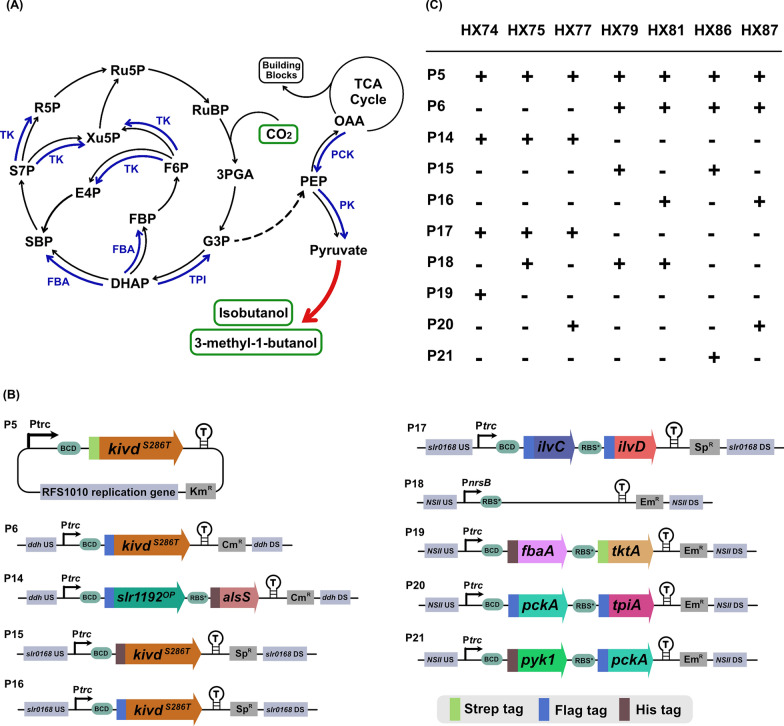
“HX77 was constructed by integrating tpiA and pckA in the neutral site II (NSII) [43] of strain HX42 [15], and strain HX87 was constructed by integrating tpiA and pckA in the NSII of strain HX28 [15].”
InfluentialMills, L. A., McCormick, A. J., & Lea-Smith, D. J. (2020) · Bioscience Reports · doi:10.1042/bsr20193325 · Cited by 110 · cited 1×
“Furthermore, as recently commented [27], the large catalytic subunit Slr2088 may form a complex with”
BackgroundLee, W.-H., Seo, S.-O., Bae, Y.-H., Nan, H., Jin, Y., & Seo, J. (2012) · Bioprocess and Biosystems Engineering · doi:10.1007/s00449-012-0736-y · Cited by 107 · cited 1×
“On the basis of the first report, the same strategy was applied in various microorganisms for IB biosynthesis [8, 9].”
MethodNakahara, K., Yamamoto, H., Miyake, C., & Yokota, A. (2003) · Plant and Cell Physiology · doi:10.1093/pcp/pcg044 · Cited by 99 · cited 1×
“Class II FBA contributes to approximately 90% of total activity of the reversible alcohol condensation of dihydroxyacetone phosphate (DHAP) and glyceraldehyde 3-phosphate (G3P) [38].”
BackgroundIsobutanol production freed from biological limits using synthetic biochemistry
Sherkhanov, S., Korman, T. P., Chan, S., Faham, S., Liu, H., Sawaya, M. R., Hsu, W.-T., Vikram, E. P., Cheng, T., & Bowie, J. U. (2020) · Nature Communications · doi:10.1038/s41467-020-18124-1 · Cited by 97 · cited 1×
“Even with substantial progress reported on 2-keto acid pathway for photosynthetic IB and 3M1B production, the achieved production is still far behind to that of heterotrophic microorganisms [10] or cell-free system using a synthetic biochemistry approach [16].”
BackgroundMiao, R., Liu, X., Englund, E., Lindberg, P., & Lindblad, P. (2017) · Metabolic Engineering Communications · doi:10.1016/j.meteno.2017.07.003 · Cited by 87 · cited 3×
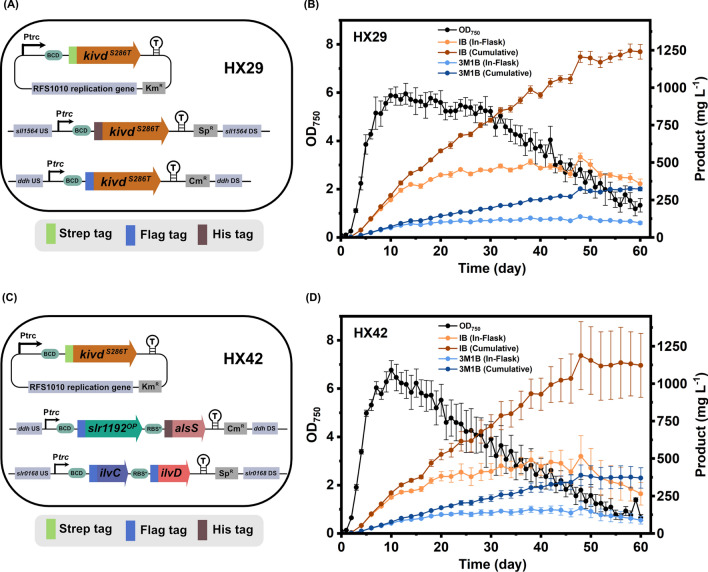
“Furthermore, a by-product 3M1B was produced simultaneously with Kivd expression [12].”
BackgroundSelf-citationIsotopically nonstationary 13C flux analysis of cyanobacterial isobutyraldehyde production
Jazmin, L. J., Xu, Y., Cheah, Y. E., Adebiyi, A. O., Johnson, C. H., & Young, J. D. (2017) · Metabolic Engineering · doi:10.1016/j.ymben.2017.05.001 · Cited by 80 · cited 1×
“Singly overexpression of PK in Synechococcus resulted in significantly improved isobutyraldehyde production through the 2-keto acid pathway [44] and singly overexpression of Gpm or Eno also had positive effects on pyruvate-derived isoprene production in Synechocystis [45].”
BackgroundStockhardt, J. S., & Hull, C. M. (1931) · Industrial & Engineering Chemistry · doi:10.1021/ie50264a034 · Cited by 75
Enhancement of photosynthetic isobutanol production in engineered cells of Synechocystis PCC 6803
Miao, R., Xie, H., & Lindblad, P. (2018) · Biotechnology for Biofuels · doi:10.1186/s13068-018-1268-8 · Cited by 75 · cited 4×
“In consistence with previous report [20], the highest in-flask production rate was observed in Stage I, corresponding to exponential phase, which is significantly higher than the other stages (Table 2).”
BackgroundResultInfluentialSelf-citationMiao, R., Xie, H., M. Ho, F., & Lindblad, P. (2018) · Metabolic Engineering · doi:10.1016/j.ymben.2018.02.014 · Cited by 61
Self-citationCheah, Y. E., Xu, Y., Sacco, S. A., Babele, P. K., Zheng, A. O., Johnson, C. H., & Young, J. D. (2020) · Metabolic Engineering · doi:10.1016/j.ymben.2020.03.007 · Cited by 52 · cited 3×
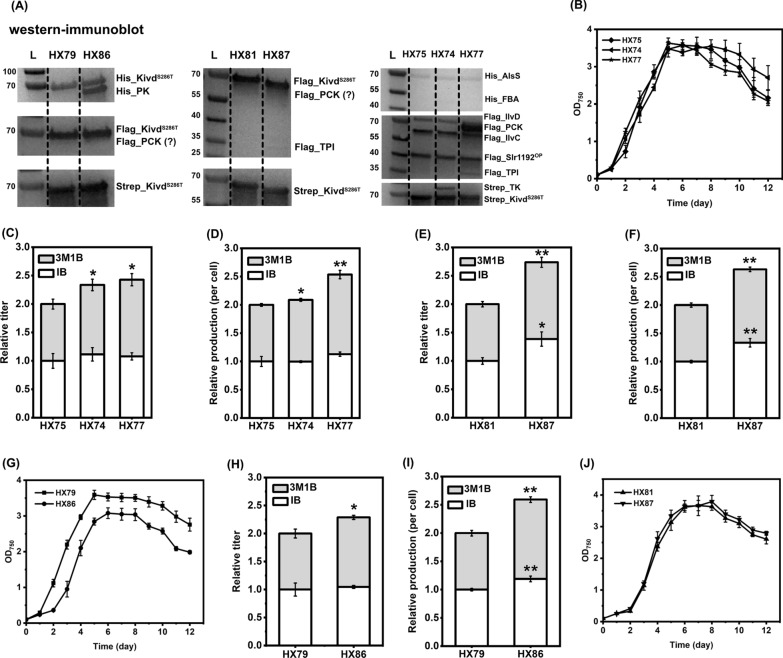
“The observed severe growth retardation may be caused by PCK expression, similar to what was observed in an engineered Synechococcus strain with PCK expressed using a metal-inducible promoter [41].”
BackgroundResultInfluentialWang, Y., Chen, L., & Zhang, W. (2016) · Biotechnology for Biofuels · doi:10.1186/s13068-016-0627-6 · Cited by 51 · cited 1×
“High-throughput-omics approaches [28, 29] may provide new insights to reveal this observation.”
BackgroundA requirement for phosphoenolpyruvate carboxylase in the cyanobacterium Synechococcus PCC 7942
Luinenburg, I., & Coleman, J. R. (1990) · Archives of Microbiology · doi:10.1007/bf00245230 · Cited by 40 · cited 1×
“Complete knock-out of PEPc in Synechocystis is challenging due to its essential role in phototrophic growth in cyanobacteria [40].”
BackgroundCengic, I., Cañadas, I. C., Minton, N. P., & Hudson, E. P. (2022) · ACS Synthetic Biology · doi:10.1021/acssynbio.2c00375 · Cited by 36 · cited 1×
“As one of the solutions, marker-less genome editing strategy [31–33] may make it possible to generate engineered Synechocystis strains with higher kivd S286T copy number.”
BackgroundGeneration of Marked and Markerless Mutants in Model Cyanobacterial Species
Lea-Smith, D. J., Vasudevan, R., & Howe, C. J. (2016) · Journal of Visualized Experiments · doi:10.3791/54001 · Cited by 35
Lai, M. J., Tsai, J. C., & Lan, E. I. (2022) · Bioresource Technology · doi:10.1016/j.biortech.2022.128131 · Cited by 35 · cited 1×
“…IB and 3M1B was observed between day 0–20 during the long-term cultivation (Table 2), the second approach to further enhance products titer is to employ a re-inocula-tion strategy [21] with a cycle of e.g., 20 days, aiming to maintain in highest production rate throughout the cultivation period.”
BackgroundMaestri, O., & Joset, F. (2000) · Molecular Microbiology · doi:10.1046/j.1365-2958.2000.02048.x · Cited by 32 · cited 11×
“subtilis [23], while slr2088- and sll0065-encoded proteins are homologous to acetohydroxy-acid synthase (AHAS) [24].”
BackgroundInfluentialSoh, L. M. J., Mak, W. S., Lin, P. P.-C., Mi, L., Chen, F. Y.-H., Damoiseaux, R. D., Siegel, J. B., & Liao, J. C. (2017) · ACS Synthetic Biology · doi:10.1021/acssynbio.6b00240 · Cited by 32 · cited 1×
“Starting from KivdS286T, directed evolution [35] may be employed to screen for superior Kivd variants, with further enhanced catalytic activity and/or specificity.”
BackgroundGlobal Landscape of Native Protein Complexes in Synechocystis sp. PCC 6803
Xu, C., Wang, B., Yang, L., Hu, L. Z., Yi, L., Wang, Y., Chen, S., Emili, A., & Wan, C. (2021) · Genomics Proteomics & Bioinformatics · doi:10.1016/j.gpb.2020.06.020 · Cited by 23 · cited 1×
“RT-PCR on the overexpressed genes encoding native AlsS will be the first step to validate the above hypotheses, and for further characterization, native AlsS could be defined by using a newly developed technique [30], followed by kinetic determinations.”
MethodKojima, K., Keta, S., Uesaka, K., Kato, A., Takatani, N., Ihara, K., Omata, T., & Aichi, M. (2016) · Applied Microbiology and Biotechnology · doi:10.1007/s00253-016-7850-8 · Cited by 20
Applications of targeted proteomics in metabolic engineering: advances and opportunities
Yunus, I. S., & Lee, T. S. (2022) · Current Opinion in Biotechnology · doi:10.1016/j.copbio.2022.102709 · Cited by 18 · cited 1×
“High-throughput-omics approaches [28, 29] may provide new insights to reveal this observation.”
BackgroundExpressing 2-keto acid pathway enzymes significantly increases photosynthetic isobutanol production
Xie, H., & Lindblad, P. (2022) · Microbial Cell Factories · doi:10.1186/s12934-022-01738-z · Cited by 17 · cited 10×
“The cell growth of each culture was monitored by measuring optical density at 750 nm (OD 750 ), as previously detailed [15].”
BackgroundMethodInfluentialSelf-citationLiu, W., Zhang, R., Wei, M., Cao, Y., & Xian, M. (2020) · Biotechnology Letters · doi:10.1007/s10529-020-02812-5 · Cited by 13 · cited 1×
“It has been suggested that overexpression of triosephosphate isomerase ( TPI) in E. coli could effectively enhance pyru-vate-derived phloroglucinol production [42] by directing the glycolysis flux into pyruvate formation.”
BackgroundKouhen, O. M., & Joset, F. (2002) · Current Microbiology · doi:10.1007/s00284-001-0097-2 · Cited by 9 · cited 1×
“In Synechocystis, it is still not settled which gene(s) encode(s) the native AlsS [20], though it was reported that three endogenous genes are potential candidates: sll0065 encodes the regulatory subunit, while slr2088 and sll1981 encode the catalytic subunits [22].”
BackgroundGallagher, J. (2017) · Nature Energy · doi:10.1038/nenergy.2017.65 · Cited by 7
Research works printed but not linked: 1
- 17. Fu C, Li Z, Jia C, Zhang W, Zhang Y, Yi C, Xie S. Recent advances on bio- based isobutanol separation. Energy Convers Manag: X. 2021;10: 100059.
Cited by
Pu, X., Wu, Y., Liu, J., & Wu, B. (2024) · Chem & Bio Engineering · doi:10.1021/cbe.4c00024 · Cited by 77
Cyanobacterial biofilms: from natural systems to applications
Bozan, M., Berreth, H., Lindberg, P., & Bühler, K. (2024) · Trends in biotechnology · doi:10.1016/j.tibtech.2024.08.005 · Cited by 35
Cyanobacteria: Photosynthetic cell factories for biofuel production
Majhi, B. K. (2024) · Journal of Bioresources and Bioproducts · doi:10.1016/j.jobab.2024.10.001 · Cited by 60
Customized molecular tools to strengthen metabolic engineering of cyanobacteria
Klähn, S., Opel, F., & Hess, W. R. (2024) · Green Carbon · doi:10.1016/j.greenca.2024.05.002 · Cited by 27
Pandey, P., Pandey, D., Gupta, A., Gupta, R., Tiwari, S., & Singh, S. P. (2025) · RSC Sustainability · doi:10.1039/d4su00448e · Cited by 29
Metadata
- Authors
- Xie, H., Kjellström, J., & Lindblad, P.
- Affiliations
- Uppsala University (SE)
- Corresponding author
- Lindblad, Peter
- Venue
- Biotechnology for Biofuels and Bioproducts
- Published
- 2023-09-09
- Volume
- 16
- Issue
- 1
- Pages
- 134-134
- ISSN
- 2731-3654 (ISSN-L)
- PMC
- PMC10492371
- OpenAlex
- W4386564573
- Semantic Scholar
- 400ea8e1cb2ab7769d949b0573f811ad1c9bb2b7
- Cited by
- 31
- References
- 44
- Citations by year
- 2026: 10 · 2025: 14 · 2024: 7
- FWCI
- 2.75
- Type
- journal article
- Language
- en
- Open access
- gold
- doi.org
- Licence
- cc-by
- creativecommons.org/licenses/by/4.0 (tdm)
- creativecommons.org/licenses/by/4.0 (vor)
- Locations
- Biotechnology for Biofuels and Bioproducts (publishedVersion, cc-by)
- PubMed Central (publishedVersion, cc-by)
- PubMed (publishedVersion)
- Uppsala University Publications (Uppsala University) (submittedVersion, other-oa)
- DOAJ (DOAJ: Directory of Open Access Journals) (submittedVersion, cc-by-sa)
- Funders
- Energimyndigheten (P46607-1)
- NordForsk (82845)
- Uppsala University
- Topics
- Life Sciences › Biochemistry, Genetics and Molecular Biology › Molecular Biology › Microbial Metabolic Engineering and Bioproduction
- Physical Sciences › Energy › Renewable Energy, Sustainability and the Environment › Algal biology and biofuel production
- Physical Sciences › Engineering › Biomedical Engineering › Biofuel production and bioconversion
- Keywords
- isobutanol, isoamyl alcohol, Synechocystis sp. PCC 6803, cyanobacteria, central carbon metabolism, metabolic engineering, CO2 utilization, biofuel production
About these checks
Registry, retraction, Cites and statistics results are computed, not judged, with one exception: a printed reference that no index lists is read once by a model before it counts as a citation error. Claims are extracted by a model and kept only when their quote appears verbatim in the text; each cited source is then checked, with a model’s help, for whether it says what the claim relies on. Those verdicts can be wrong — read the claim’s quote and the cited source before relying on one.
Statistics and arithmetic are recomputed, not judged.
Confidence bands are shown only for fields calibrated on our annotated test set. None is calibrated yet, so no band is shown.
What counts as a claim ›How we measure confidence ›How we check this ›
Are you an author, or do you see a problem with this page? Request a review
Data sources
Bibliographic data: Semantic Scholar, OpenAlex, Crossref.
Contains information from the Semantic Scholar Academic Graph Datasets, made available under the ODC Attribution License (ODC-BY 1.0).
Semantic Scholar’s data is described in: Kinney, R., et al. (2023). The Semantic Scholar Open Data Platform. arXiv:2301.10140.
