

Sustainable production of photosynthetic isobutanol and 3-methyl-1-butanol in the cyanobacterium Synechocystis sp. PCC 6803
Open accessThe DOI matches its Crossref record; 44 of the 44 references it cites were found in a registry or an index.
Abstract
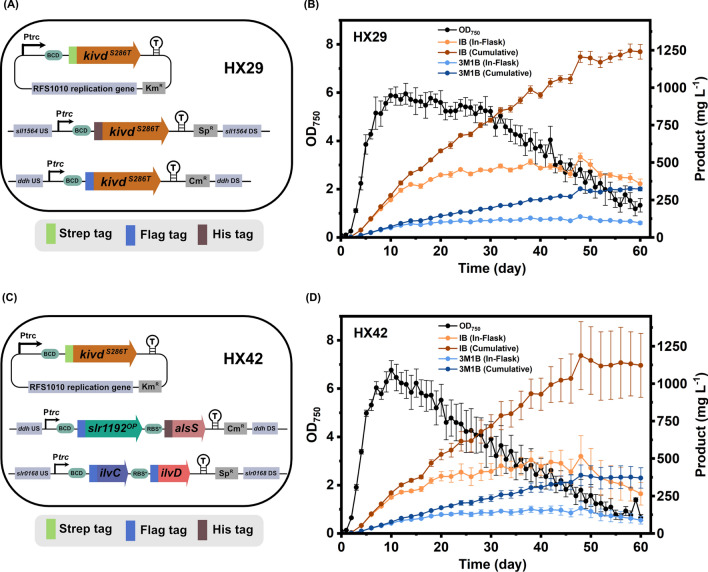
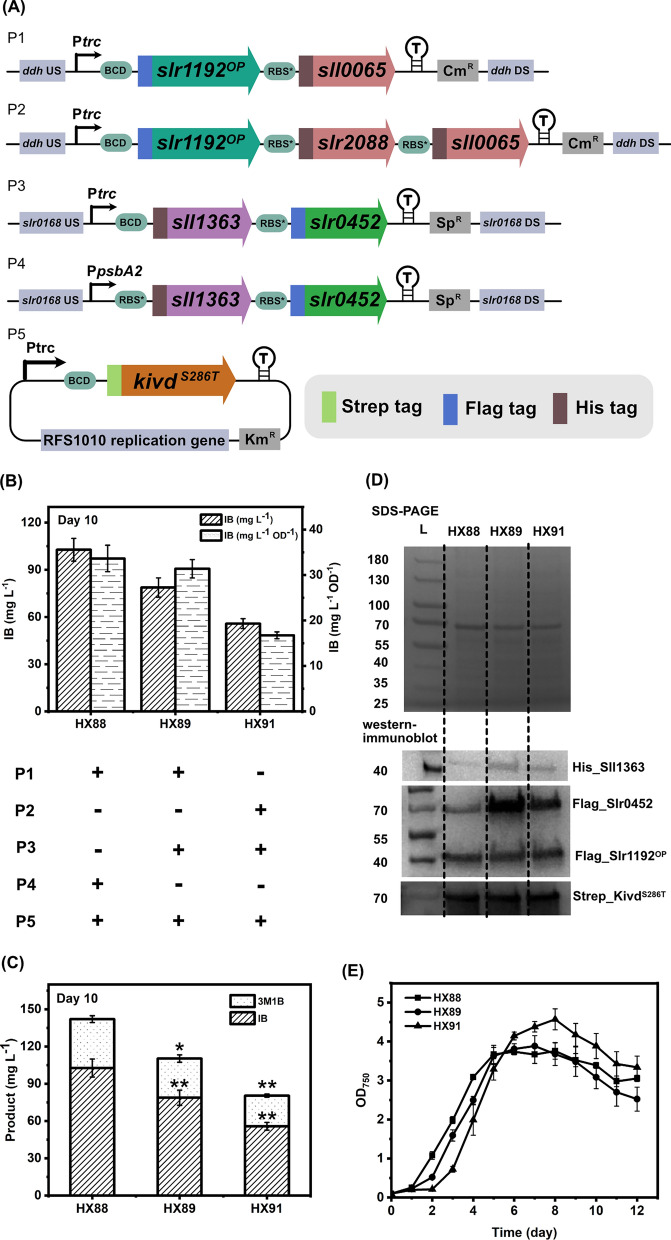
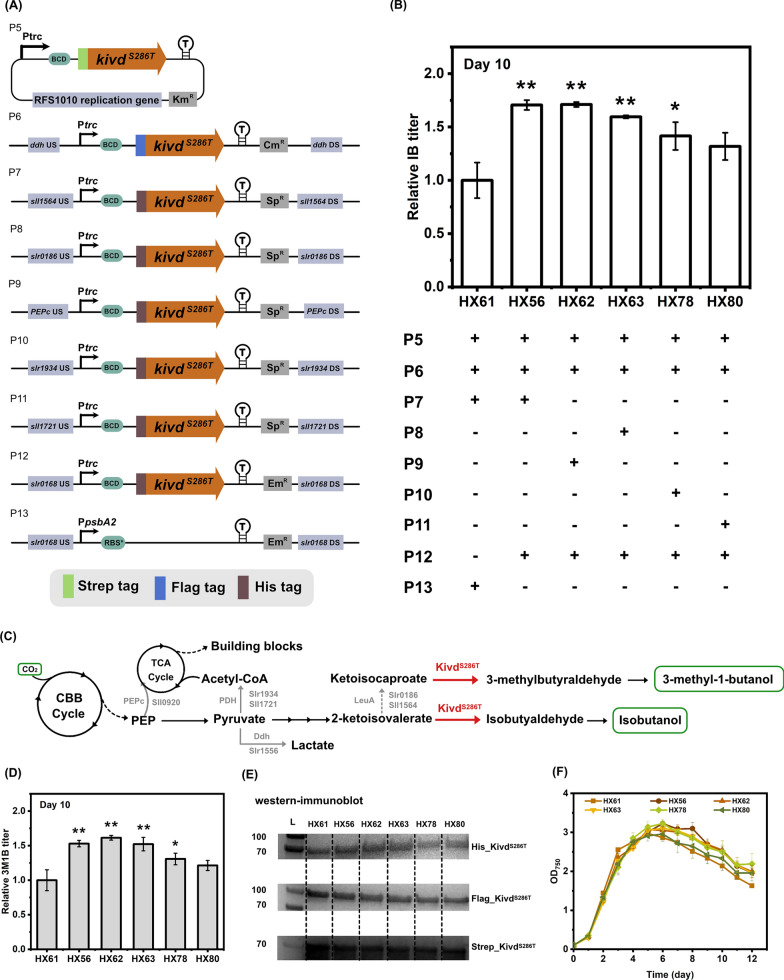
Background: Cyanobacteria are emerging as green cell factories for sustainable biofuel and chemical production, due to their photosynthetic ability to use solar energy, carbon dioxide and water in a direct process. The model cyanobacterial strain Synechocystis sp. PCC 6803 has been engineered for the isobutanol and 3-methyl-1-butanol production by introducing a synthetic 2-keto acid pathway. However, the achieved productions still remained low. In the present study, diverse metabolic engineering strategies were implemented in Synechocystis sp. PCC 6803 for further enhanced photosynthetic isobutanol and 3-methyl-1-butanol production. Results: Long-term cultivation was performed on two selected strains resulting in maximum cumulative isobutanol and 3-methyl-1-butanol titers of 1247 mg L−1 and 389 mg L−1, on day 58 and day 48, respectively. Novel Synechocystis strain integrated with a native 2-keto acid pathway was generated and showed a production of 98 mg isobutanol L−1 in short-term screening experiments. Enhanced isobutanol and 3-methyl-1-butanol production was observed when increasing the kivdS286T copy number from three to four. Isobutanol and 3-methyl-1-butanol production was effectively improved when overexpressing selected genes of the central carbon metabolism. Identified genes are potential metabolic engineering targets to further enhance productivity of pyruvate-derived bioproducts in cyanobacteria. Conclusions: Enhanced isobutanol and 3-methyl-1-butanol production was successfully achieved in Synechocystis sp. PCC 6803 strains through diverse metabolic engineering strategies. The maximum cumulative isobutanol and 3-methyl-1-butanol titers, 1247 mg L−1 and 389 mg L−1, respectively, represent the current highest value reported. The significantly enhanced isobutanol and 3-methyl-1-butanol production in this study further pave the way for an industrial application of photosynthetic cyanobacteria-based biofuel and chemical synthesis from CO 2.
Overview
The claims and statistics of this paper haven’t been checked yet.
Free: it reads the open-access text and checks the first 5 claims that cite a source we can check. Create a free account to check every claim.
Integrity signals
Registry
Cites
Statistics
Figures
Verification
Claims the paper makes
The claims and statistics of this paper haven’t been checked yet.
Free: it reads the open-access text and checks the first 5 claims that cite a source we can check. Create a free account to check every claim.
Claims other papers make about this one
Each is checked against this paper’s own text: does it say what the citing paper says it does?
The source backs part of the claim, not all of it — or backs it for a different population, condition or comparison.
In the citing paper
“The cyanobacterial cumulative titre of 1247 mg/L over 58 days equates to approximately 21.5 mg L−1 d−1 average daily productivity, compared to approximately 10,900 mg L−1 d−1 for E. coli—a several-hundred-fold difference reflecting light-dependent growth constraints rather than poor pathway design.”
From Cyanobacteria as a Photosynthetic Chassis for Metabolic Pathway Engineering with Heterologous Gene Expression (2026) · cites this paper as [174]
Experimental — accuracy not yet measuredThe source backs part of the claim, not all of it — or backs it for a different population, condition or comparison.
In the citing paper
“Based on the maximum OD750 of 5.95 reported in the same study and a standard DCW conversion factor of ~0.25 g L−1 per OD750 unit for Synechocystis sp. PCC 6803, the estimated specific isobutanol productivity is approximately 21 mg g DCW−1 d−1.”
From Cyanobacteria as a Photosynthetic Chassis for Metabolic Pathway Engineering with Heterologous Gene Expression (2026) · cites this paper as [174]
Experimental — accuracy not yet measuredThe cited source says what the claim attributes to it.
In the citing paper
“Xie et al. [174] demonstrated the successful engineering of Synechocystis sp. PCC 6803 for the photosynthetic production of isobutanol and 3-methyl-1-butanol via a synthetic 2-keto acid pathway.”
From Cyanobacteria as a Photosynthetic Chassis for Metabolic Pathway Engineering with Heterologous Gene Expression (2026) · cites this paper as [174]
The cited source says what the claim attributes to it.
In the citing paper
“Long-term cultivation of the engineered strains yielded cumulative titres of 1247 mg/L isobutanol and 389 mg/L 3-methyl-1-butanol, underscoring the potential of cyanobacteria for direct production of advanced alcohols from photosynthetically fixed carbon.”
From Cyanobacteria as a Photosynthetic Chassis for Metabolic Pathway Engineering with Heterologous Gene Expression (2026) · cites this paper as [174]
Self-check
Percentages, sums and reported differences re-computed from the paper’s own numbers.
The self-check needs the paper’s full text.
Citations
Cites
Generic Assignments, Strain Histories and Properties of Pure Cultures of Cyanobacteria
Rippka, R., Stanier, R. Y., Deruelles, J., Herdman, M., & Waterbury, J. B. (1979) · Microbiology · doi:10.1099/00221287-111-1-1 · Cited by 7,606 · cited 1×
“PCC 6803 cultivation Synechocystis seed cultures were routinely cultivated and maintained in liquid BG11 medium [19] or 1.”
MethodKaneko, T., Sato, S., Kotani, H., Tanaka, A., Asamizu, E., Nakamura, Y., Miyajima, N., Hirosawa, M., Sugiura, M., Sasamoto, S., et al. (1996) · DNA Research · doi:10.1093/dnares/3.3.185 · Cited by 2,432
Kaneko, T., Sato, S., Kotani, H., Tanaka, A., Asamizu, E., Nakamura, Y., Miyajima, N., Hirosawa, M., Sugiura, M., Sasamoto, S., et al. (1996) · DNA Research · doi:10.1093/dnares/3.3.109 · Cited by 2,132 · cited 4×
“In Synechocystis, both class I and class II FBAs are present, encoded by slr0943 and sll0018, respectively [24].”
BackgroundInfluentialNon-fermentative pathways for synthesis of branched-chain higher alcohols as biofuels
Atsumi, S., Hanai, T., & Liao, J. C. (2008) · Nature · doi:10.1038/nature06450 · Cited by 1,945 · cited 1×
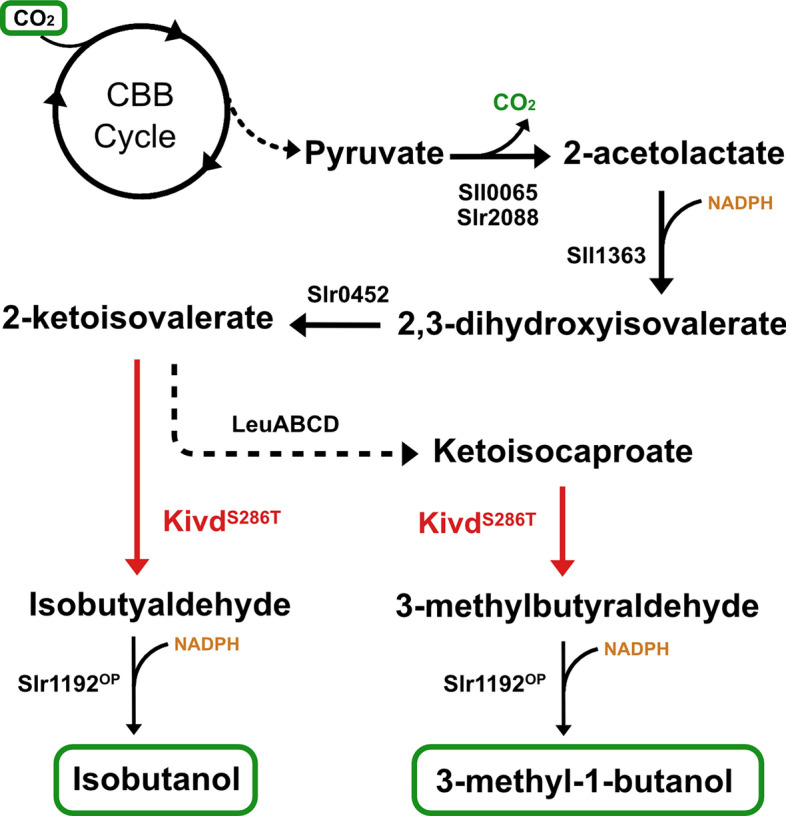
“Biological IB production was first demonstrated in Escherichia coli ( E. coli ) by introduction of a synthetic 2-keto acid pathway [7].”
BackgroundDirect photosynthetic recycling of carbon dioxide to isobutyraldehyde
Atsumi, S., Higashide, W., & Liao, J. C. (2009) · Nature Biotechnology · doi:10.1038/nbt.1586 · Cited by 870 · cited 1×
“In that regard, the 2-keto acid pathway was successfully introduced into cyanobacteria for IB biosynthesis, first reported in Synechococcus elongatus PCC 7942 [11].”
BackgroundMicrobial production of advanced biofuels
Keasling, J., Garcia Martin, H., Lee, T. S., Mukhopadhyay, A., Singer, S. W., & Sundstrom, E. (2021) · Nature Reviews Microbiology · doi:10.1038/s41579-021-00577-w · Cited by 294 · cited 1×
“In face of the rapid climate change and increasing energy demand, it is urgent to gradually replace traditional fossil resources with renewable energy, such as biofuels produced, e.g., by metabolically engineered microorganisms feeding on renewable carbon sources [2, 3].”
BackgroundBaez, A., Cho, K.-M., & Liao, J. C. (2011) · Applied Microbiology and Biotechnology · doi:10.1007/s00253-011-3173-y · Cited by 255 · cited 2×
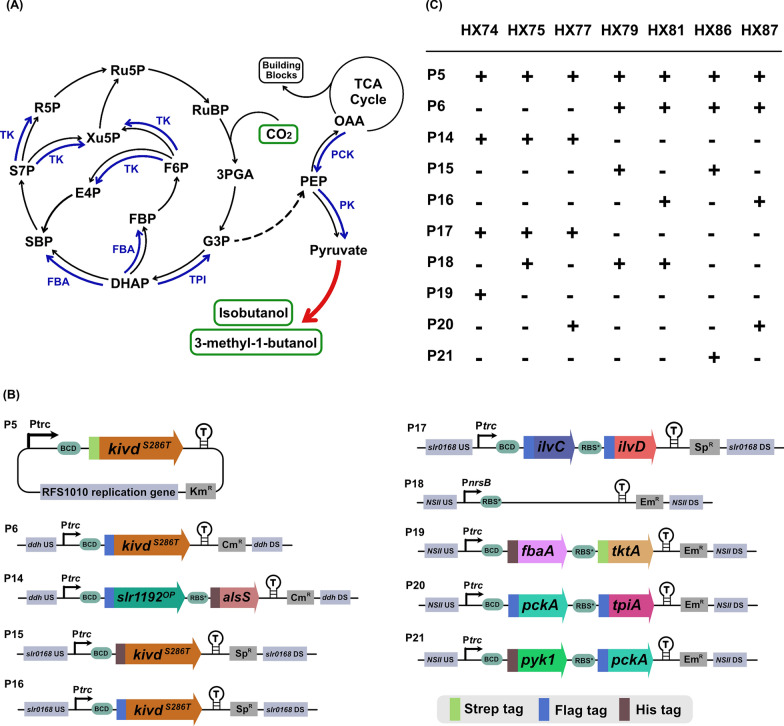
“Dotted lines indicate multiple reactions Similar to IB, 3M1B is a superior candidate for gasoline additive and is widely used as a precursor for various chemical synthesis [10].”
BackgroundMetabolic Flux Analysis in Synechocystis Using Isotope Distribution from 13C-Labeled Glucose
Yang, C., Hua, Q., & Shimizu, K. (2002) · Metabolic Engineering · doi:10.1006/mben.2002.0226 · Cited by 241 · cited 1×
“It was reported that 25% of inorganic carbon assimilation may be through the PEPc catalyzed reaction in Synechocystis under mixotrophic or heterotrophic conditions [39].”
BackgroundCRISPR-Cas9 for the genome engineering of cyanobacteria and succinate production
Li, H., Shen, C. R., Huang, C.-H., Sung, L.-Y., Wu, M.-Y., & Hu, Y.-C. (2016) · Metabolic Engineering · doi:10.1016/j.ymben.2016.09.006 · Cited by 233 · cited 1×
“The marker-less-based CRISPR (clustered regularly interspaced short palindromic repeats) editing has been successfully applied in cyanobacteria for succinate production [34].”
MethodBarriers and opportunities in bio-based production of hydrocarbons
Zhou, Y. J., Kerkhoven, E. J., & Nielsen, J. (2018) · Nature Energy · doi:10.1038/s41560-018-0197-x · Cited by 215 · cited 1×
“In face of the rapid climate change and increasing energy demand, it is urgent to gradually replace traditional fossil resources with renewable energy, such as biofuels produced, e.g., by metabolically engineered microorganisms feeding on renewable carbon sources [2, 3].”
Background
Research works printed but not linked: 1
- 17. Fu C, Li Z, Jia C, Zhang W, Zhang Y, Yi C, Xie S. Recent advances on bio- based isobutanol separation. Energy Convers Manag: X. 2021;10: 100059.
Cited by
Pu, X., Wu, Y., Liu, J., & Wu, B. (2024) · Chem & Bio Engineering · doi:10.1021/cbe.4c00024 · Cited by 77
Cyanobacterial biofilms: from natural systems to applications
Bozan, M., Berreth, H., Lindberg, P., & Bühler, K. (2024) · Trends in biotechnology · doi:10.1016/j.tibtech.2024.08.005 · Cited by 35
Cyanobacteria: Photosynthetic cell factories for biofuel production
Majhi, B. K. (2024) · Journal of Bioresources and Bioproducts · doi:10.1016/j.jobab.2024.10.001 · Cited by 60
Customized molecular tools to strengthen metabolic engineering of cyanobacteria
Klähn, S., Opel, F., & Hess, W. R. (2024) · Green Carbon · doi:10.1016/j.greenca.2024.05.002 · Cited by 27
Pandey, P., Pandey, D., Gupta, A., Gupta, R., Tiwari, S., & Singh, S. P. (2025) · RSC Sustainability · doi:10.1039/d4su00448e · Cited by 29
Bourgade, B., Xie, H., Lindblad, P. C., & Stensjö, K. (2025) · Communications Biology · doi:10.1038/s42003-025-08164-y · Cited by 21
“This approach has previously increased phloroglucinol biosynthesis in E. coli 34 while over-expression of E. coli TPI, in conjunction with other enzymes, has improved IB/3M1B formation 4 in Synechocystis .”
Self-citationGrimm, H. C., Erlsbacher, P., Medipally, H., Malihan-Yap, L., Sovic, L., Zöhrer, J., Kosourov, S. N., Allahverdiyeva, Y., Paul, C. E., & Kourist, R. (2025) · Green Chemistry · doi:10.1039/d4gc05686h · Cited by 13
Tailoring regulatory components for metabolic engineering in cyanobacteria
Bolay, P., Dodge, N., Janssen, K., Jensen, P. E., & Lindberg, P. (2024) · Physiologia Plantarum · doi:10.1111/ppl.14316 · Cited by 13
“…state of Precursors of BCAAs can be used for biofuel production, such as iso-butene (Mustila et al., 2021), isobutanol and 3-methyl-1-butanol (Xie et al., 2023), whereas aromatic amino acids are valuable precursors for the production of phenylpropanoids (Brey et al., 2020; Kukil et al.,…”
BackgroundBuilding complex biochemicals from one-carbon compounds
Rasor, B. J., Giaveri, S., Küffner, A. M., & Erb, T. J. (2025) · Nature Synthesis · doi:10.1038/s44160-025-00835-2 · Cited by 14
“Long-term cultivation of cyanobacteria can even produce gram per litre titres of C4 41 and C8 42 alcohols.”
Xie, H., Bourgade, B., Stensjö, K., & Lindblad, P. (2025) · Microbial Cell Factories · doi:10.1186/s12934-025-02727-8 · Cited by 11
“Conventional metabolic engineering strategies have been employed in Synechocystis strains for IB and 3M1B production, with enhancements achieved incrementally [33, 45, 47], reaching approximately 150 mg L − 1 in IB production over 14-day experiments [47].”
InfluentialSelf-citationDas, M., & Maiti, S. K. (2024) · Journal of Biotechnology · doi:10.1016/j.jbiotec.2024.07.014 · Cited by 9
Interfacing solar energy with bacterial metabolism for sustainable chemical synthesis
Trotter, C. L., Clouston, K., Steele, J. F. C., Marlow, L., & Wallace, S. C. (2026) · Nature Reviews Clean Technology · doi:10.1038/s44359-025-00141-2 · Cited by 6
Recent advances in microbial 3-methyl-1-butanol production
Yogiswara, S., & Verstrepen, K. J. (2026) · Frontiers in Microbiology · doi:10.3389/fmicb.2025.1753983 · Cited by 6
“Synechocystis sp. expressing a synthetic Ehrlich pathway (Bs alsS , Ec ilvC , Ec ilvD , and a mutant Ll kivD S286T ) produced 0.389 g/L 3MB and 1.15 g/L isobutanol directly from CO₂ and light over 48 days (Xie et al., 2023).”
InfluentialHe, H., Gao, K., Mao, B., Shi, G., Li, Y., & Deng, X. (2025) · Biotechnology Journal · doi:10.1002/biot.70162 · Cited by 4
“The integration and optimization of multiple modules, such as central carbon metabolism, also significantly boosted the production of photosynthetic isobutanol [85].”
Pre-mRNA splicing and its regulation in microalgae and cyanobacteria
Do, S., Liu, Y., Huynh, H., Liu, Y., Li, W., Chen, M., & Du, Z. (2025) · Advanced Biotechnology · doi:10.1007/s44307-025-00087-3 · Cited by 4
“Furthermore, cyanobacteria can be engineered to become a source of prized compounds, like isobutanol, which can be utilized in the synthesis of bio-fuel (Xie et al. 2023a, b).”
Xiao, Q., Shi, J., Wang, L., Zhao, G., & Zhang, Y. (2024) · Synthetic and Systems Biotechnology · doi:10.1016/j.synbio.2024.12.010 · Cited by 4
Wang, Y., Dong, W., Gao, Y., Kuang, J., Zhou, X., Wang, F., Tian, S., & Li, Y. (2025) · Journal of Biotechnology · doi:10.1016/j.jbiotec.2025.04.023 · Cited by 3
Xie, H., Begum, A., Gunn, L. H., & Lindblad, P. C. (2025) · Biotechnology for Biofuels and Bioproducts · doi:10.1186/s13068-025-02687-6 · Cited by 4
“Further enhancement of IB production was achieved by manipulating kivd S286T copy numbers and optimizing expression units at both the transcriptional and translational levels [19, 20].”
Self-citationCarbon capture, storage, and utilization in cyanobacteria
Majhi, B. K. (2026) · Carbon Resources Conversion · doi:10.1016/j.crcon.2025.100388 · Cited by 2
Wada, K., Toya, Y., Matsuda, F., & Shimizu, H. (2025) · Applied Biochemistry and Biotechnology · doi:10.1007/s12010-024-05138-4 · Cited by 2
Walshe, J., & Saha, S. K. (2026) · Current Issues in Molecular Biology · doi:10.3390/cimb48060638 · Cited by 1
“Xie et al. [174] demonstrated the successful engineering of Synechocystis sp. PCC 6803 for the photosynthetic production of isobutanol and 3-methyl-1-butanol via a synthetic 2-keto acid pathway.”
Das, M., & Maiti, S. K. (2025) · Bioprocess and Biosystems Engineering · doi:10.1007/s00449-025-03217-2 · Cited by 2
Das, M., & Maiti, S. K. (2026) · Chemical Engineering Science · doi:10.1016/j.ces.2026.123626 · Cited by 1
Synthetic biology development of microbial strains for liquid biofuel production
Li, K., Xuan, J., & Feng, Y. (2026) · Biotechnology Advances · doi:10.1016/j.biotechadv.2026.108891 · Cited by 1
Cyanobolites: Future Prospects in Therapeutics and Biological Innovation
Ojha, K. K., Dubey, S., Singh, A., Dixit, A. K., & Kumari, P. (2025) · IntechOpen eBooks · doi:10.5772/intechopen.1010149
Cyanobacteria: A Biological Chassis for Industrial Applications
Majhi, B. K. (2025) · IntechOpen eBooks · doi:10.5772/intechopen.1012978 · Cited by 2
Systematically Engineering for Efficient Production of 3‐Methyl‐1‐Butanol in Escherichia coli
Geng, N., Liu, H., Han, H., Meng, M., Wang, S., Tan, T., & Su, H. (2026) · Advanced Science · doi:10.1002/advs.202520521
Biosynthesis of advanced biofuels in microbial cell factories
Liu, C., Yue, 徐. X., Lv, B., Qin, L., & Li, C. (2026) · Current Opinion in Biotechnology · doi:10.1016/j.copbio.2026.103495
Dao, O. T., Woo, J. E., Lee, S. Y., & Jang, Y. (2026) · Springer eBooks · doi:10.1007/978-3-319-31421-1_389-2
Kundu, A., Sen, A., Bhattacharya, R., Spagnuolo, D., Sindhu Sree, B., Mandal, S., Dastidar, S. G., Rath, J., Pandit, S., Singh, H. M., et al. (2026) · Preparative Biochemistry & Biotechnology · doi:10.1080/10826068.2026.2741198
Pan, K., Liu, D., Chen, L., Sun, T., & Zhang, W. (2026) · Critical Reviews in Biotechnology · doi:10.1080/07388551.2026.2741611
Metadata
- Authors
- Xie, H., Kjellström, J., & Lindblad, P.
- Affiliations
- Uppsala University (SE)
- Corresponding author
- Lindblad, Peter
- Venue
- Biotechnology for Biofuels and Bioproducts
- Published
- 2023-09-09
- Volume
- 16
- Issue
- 1
- Pages
- 134-134
- ISSN
- 2731-3654 (ISSN-L)
- PMC
- PMC10492371
- OpenAlex
- W4386564573
- Semantic Scholar
- 400ea8e1cb2ab7769d949b0573f811ad1c9bb2b7
- Cited by
- 31
- References
- 44
- Citations by year
- 2026: 10 · 2025: 14 · 2024: 7
- FWCI
- 2.75
- Type
- journal article
- Language
- en
- Open access
- gold
- doi.org
- Licence
- cc-by
- creativecommons.org/licenses/by/4.0 (tdm)
- creativecommons.org/licenses/by/4.0 (vor)
- Locations
- Biotechnology for Biofuels and Bioproducts (publishedVersion, cc-by)
- PubMed Central (publishedVersion, cc-by)
- PubMed (publishedVersion)
- Uppsala University Publications (Uppsala University) (submittedVersion, other-oa)
- DOAJ (DOAJ: Directory of Open Access Journals) (submittedVersion, cc-by-sa)
- Funders
- Energimyndigheten (P46607-1)
- NordForsk (82845)
- Uppsala University
- Topics
- Life Sciences › Biochemistry, Genetics and Molecular Biology › Molecular Biology › Microbial Metabolic Engineering and Bioproduction
- Physical Sciences › Energy › Renewable Energy, Sustainability and the Environment › Algal biology and biofuel production
- Physical Sciences › Engineering › Biomedical Engineering › Biofuel production and bioconversion
- Keywords
- isobutanol, isoamyl alcohol, Synechocystis sp. PCC 6803, cyanobacteria, central carbon metabolism, metabolic engineering, CO2 utilization, biofuel production
About these checks
Registry, retraction, Cites and statistics results are computed, not judged, with one exception: a printed reference that no index lists is read once by a model before it counts as a citation error. Claims are extracted by a model and kept only when their quote appears verbatim in the text; each cited source is then checked, with a model’s help, for whether it says what the claim relies on. Those verdicts can be wrong — read the claim’s quote and the cited source before relying on one.
Statistics and arithmetic are recomputed, not judged.
Confidence bands are shown only for fields calibrated on our annotated test set. None is calibrated yet, so no band is shown.
What counts as a claim ›How we measure confidence ›How we check this ›
Are you an author, or do you see a problem with this page? Request a review
Data sources
Bibliographic data: Semantic Scholar, OpenAlex, Crossref.
Contains information from the Semantic Scholar Academic Graph Datasets, made available under the ODC Attribution License (ODC-BY 1.0).
Semantic Scholar’s data is described in: Kinney, R., et al. (2023). The Semantic Scholar Open Data Platform. arXiv:2301.10140.
