

YMAP: a pipeline for visualization of copy number variation and loss of heterozygosity in eukaryotic pathogens
Open accessThe DOI matches its Crossref record; 44 of the 45 references it cites were found in a registry or an index.
Abstract
The design of effective antimicrobial therapies for serious eukaryotic pathogens requires a clear understanding of their highly variable genomes. To facilitate analysis of copy number variations, single nucleotide polymorphisms and loss of heterozygosity events in these pathogens, we developed a pipeline for analyzing diverse genome-scale datasets from microarray, deep sequencing, and restriction site associated DNA sequence experiments for clinical and laboratory strains of Candida albicans, the most prevalent human fungal pathogen. The Y MAP pipeline (http://lovelace.cs.umn.edu/Ymap/) automatically illustrates genome-wide information in a single intuitive figure and is readily modified for the analysis of other pathogens with small genomes.
Overview
The claims and statistics of this paper haven’t been checked yet.
Free: it reads the open-access text and checks the first 5 claims that cite a source we can check. Create a free account to check every claim.
Integrity signals
Registry
Cites
Statistics
Figures
Verification
Claims the paper makes
The claims and statistics of this paper haven’t been checked yet.
Free: it reads the open-access text and checks the first 5 claims that cite a source we can check. Create a free account to check every claim.
Claims other papers make about this one
Each is checked against this paper’s own text: does it say what the citing paper says it does?
The check wasn’t confident either way, so it gives no verdict — never disputed.
In the citing paper
“It is therefore unlikely that aneuploidy represents the main mechanism underlying tolerance.”
From Antifungal tolerance is a subpopulation effect distinct from resistance and is associated with persistent candidemia (2018) · cites this paper as [64]
Experimental — accuracy not yet measured
Self-check
Percentages, sums and reported differences re-computed from the paper’s own numbers.
The self-check needs the paper’s full text.
Citations
Cites
The Sequence Alignment/Map format and SAMtools
Li, H., Handsaker, B., Wysoker, A., Fennell, T., Ruan, J., Homer, N., Marth, G., Abecasis, G., Durbin, R., & 1000 Genome Project Data Processing Subgroup (2009) · Bioinformatics · doi:10.1093/bioinformatics/btp352 · Cited by 62,041 · cited 1×
“SAMtools [30] is used to compress this into a BAM file.”
MethodFast gapped-read alignment with Bowtie 2
Langmead, B., & Salzberg, S. L. (2012) · Nature Methods · doi:10.1038/nmeth.1923 · Cited by 56,400 · cited 1×
“The single-or paired-end reads are aligned to one of the installed reference genomes using Bowtie2 with SAM output mode set to ‘ very sensitive ’ [29], resulting in a Sequence Alignment/ Mapping (SAM) file.”
MethodThe Genome Analysis Toolkit: A MapReduce framework for analyzing next-generation DNA sequencing data
McKenna, A., Hanna, M., Banks, E., Sivachenko, A., Cibulskis, K., Kernytsky, A., Garimella, K., Altshuler, D., Gabriel, S., Daly, M., et al. (2010) · Genome Research · doi:10.1101/gr.107524.110 · Cited by 27,895 · cited 1×
“…identify the quality coding system used in the input FASTQ files, as a prelude to defining the input parameters for processing by the Genome Analysis ToolKit (GATK) [33], which performs indel-realignment of the BAM files, removing spurious apparent SNPs around true indels in the primary alignment.”
MethodRobinson, J. T., Thorvaldsdóttir, H., Winckler, W., Guttman, M., Lander, E. S., Getz, G., & Mesirov, J. P. (2011) · Nature Biotechnology · doi:10.1038/nbt.1754 · Cited by 15,390 · cited 1×
“One of the most versatile visualization tools, IGV [22,23], can display different types of genomic variants (for example, copy number variation (CNV), SNPs, loss of heterozygosity (LOH), sequence coverage, among others), but visualization is limited to one genomic phenotype at a time, and thus it…”
MethodRobust Locally Weighted Regression and Smoothing Scatterplots
Cleveland, W. S. (1979) · Journal of the American Statistical Association · doi:10.1080/01621459.1979.10481038 · Cited by 11,594 · cited 1×
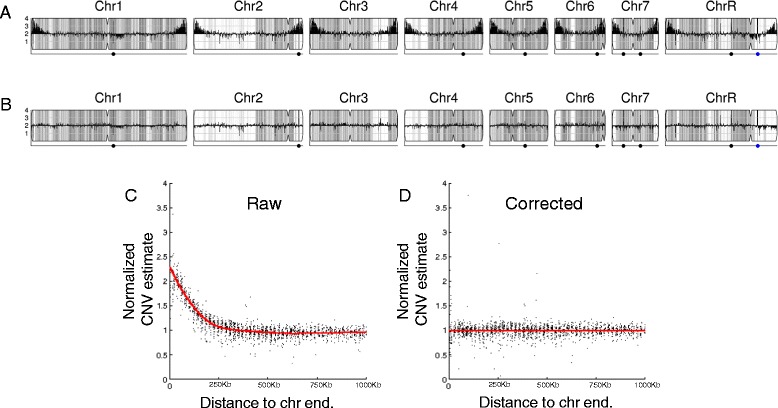
“The chromosome-end bias is normalized using locally weighted scatterplot smoothing (LOWESS) normalization [37] of average read depth versus distance to the nearest chromosome end, for 5,000 bp windows tiled along each chromosome (Figure 2C).”
MethodDatabase resources of the National Center for Biotechnology Information: update
Wheeler, D. L. (2004) · Nucleic Acids Research · doi:10.1093/nar/gkh073 · Cited by 10,641
Integrative Genomics Viewer (IGV): high-performance genomics data visualization and exploration
Thorvaldsdottir, H., Robinson, J. T., & Mesirov, J. P. (2013) · Briefings in Bioinformatics · doi:10.1093/bib/bbs017 · Cited by 9,049 · cited 1×
“One of the most versatile visualization tools, IGV [22,23], can display different types of genomic variants (for example, copy number variation (CNV), SNPs, loss of heterozygosity (LOH), sequence coverage, among others), but visualization is limited to one genomic phenotype at a time, and thus it…”
MethodA survey of cross-validation procedures for model selection
Arlot, S., & Célisse, A. (2010) · LillOA (Université de Lille (University Of Lille)) · Cited by 3,662
A survey of cross-validation procedures for model selection
Arlot, S., & Celisse, A. (2010) · Statistics Surveys · doi:10.1214/09-ss054 · Cited by 3,522 · cited 1×
“The LOWESS fitting is performed with a smoothing window size determined for each dataset as that which produces the least error between the fit and the raw data, using 10-fold cross-validation [38].”
MethodEvolution of pathogenicity and sexual reproduction in eight Candida genomes
Butler, G., Rasmussen, M. D., Lin, M. F., Santos, M. A. S., Sakthikumar, S., Munro, C. A., Rheinbay, E., Grabherr, M., Forche, A., Reedy, J. L., et al. (2009) · Nature · doi:10.1038/nature08064 · Cited by 1,065 · cited 1×
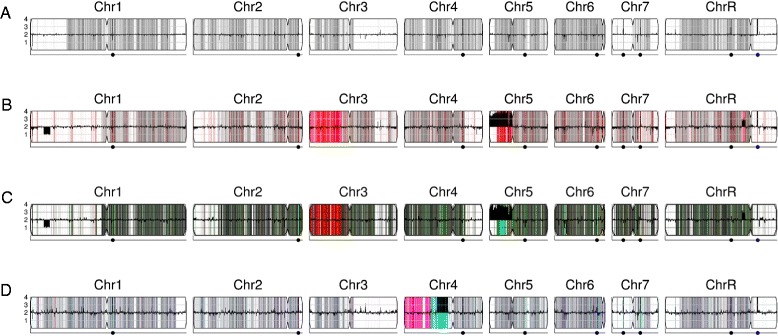
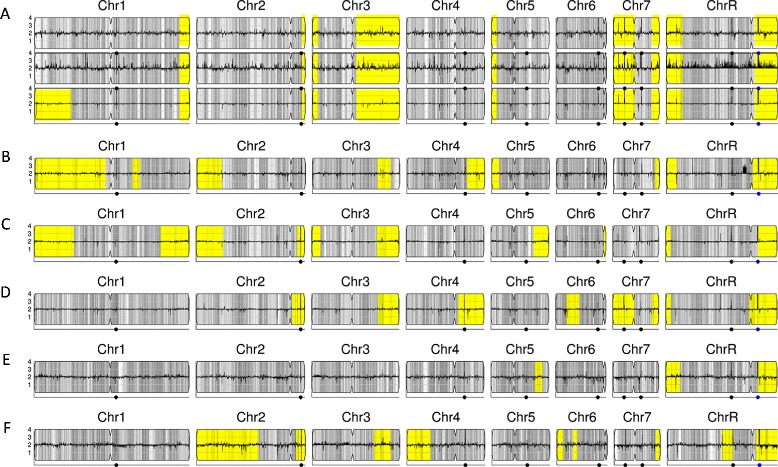
“For example, reference strain SC5314 (Figure 9A) has large LOHs at the telomeres of chromosomes 3, 7, and R and smaller LOHs at the telomeres of chromosomes 2, 3, and 5 (as illustrated in [40]).”
BackgroundSelf-citation
Cited by
Items 101–147 of 147
Grf10 regulates the response to copper, iron, and phosphate in Candida albicans
Wangsanut, T., Arnold, S. J. Y., Jilani, S. Z., Marzec, S., Monsour, R. C., & Rolfes, R. J. (2023) · G3 Genes Genomes Genetics · doi:10.1093/g3journal/jkad070 · Cited by 7
Tsai, C., Wu, A. C., Chiang, B., Yang, Y., Hung, S.-P., Su, M., Chang, Y., & Lee, Y. L. (2020) · Thorax · doi:10.1136/thoraxjnl-2019-214132 · Cited by 8
Ramesh, A., Nakielny, S., Hsu, J., Kyohere, M., Byaruhanga, O., de Bourcy, C. F. A., Egger, R., Dimitrov, B., Juan, Y.-F., Sheu, J., et al. (2018) · bioRxiv (Cold Spring Harbor Laboratory) · doi:10.1101/385005 · Cited by 7
Adey, B. N., Cooper‐Knock, J., Khleifat, A. A., Fogh, I., Damme, P. V., Corcia, P., Couratier, P., Hardiman, O. M., McLaughlin, R. L., Gotkine, M., et al. (2023) · Frontiers in Cellular Neuroscience · doi:10.3389/fncel.2023.1112405 · Cited by 7
Aneuploidy enables adaptation to brefeldin A in Candida albicans
Wang, W., Wang, C., Dong, Y., Yang, F. J., & Xu, Y. (2025) · Frontiers in Cellular and Infection Microbiology · doi:10.3389/fcimb.2025.1562726 · Cited by 7
The origins of haplotype 58 (H58) Salmonella enterica serovar TyphiPreprint
Carey, M. E., Nguyen, T. N. T., Nhu, T. D. H., Dyson, Z. A., Duy, P. T., Mylona, E., Nair, S., Chattaway, M. A., & Baker, S. G. (2022) · bioRxiv (Cold Spring Harbor Laboratory) · doi:10.1101/2022.10.03.510628 · Cited by 5
Zhou, X., Hilk, A. L., Solis, N. V., Hogan, B. M., Bierbaum, T. A., Filler, S. G., Burrack, L. S., & Selmecki, A. M. (2024) · bioRxiv (Cold Spring Harbor Laboratory) · doi:10.1101/2024.03.06.583770 · Cited by 5
Strain background of Candida albicans interacts with SIR2 to alter phenotypic switching
Woodruff, A. L., Berman, J. G., & Anderson, M. Z. (2024) · Microbiology · doi:10.1099/mic.0.001444 · Cited by 5
“Ploidy and heterozygosity were interrogated using Y MAP [70].”
MethodSelf-citationInduction of Antifungal Tolerance Reveals Genetic and Phenotypic Changes in Candida glabrata
Chedraoui, C., Fattouh, N., Hachem, S. E., Younes, M., & Khalaf, R. A. (2025) · Journal of Fungi · doi:10.3390/jof11040284 · Cited by 5
“The Yeast Mapping Analysis Pipeline (YMAP) (http://lovelace.cs.umn.edu/Ymap/) [40] was used to perform a comparative chromosomal abnormality analyses of the CS-4R and FL-2R strains versus the reference strain C. glabrata CBS138/ATCC 2001.”
Wei, Y., Wang, J., Tang, N., Lin, Z., Li, W., Xu, Y., & Guo, L. (2025) · Frontiers in Cellular and Infection Microbiology · doi:10.3389/fcimb.2025.1618815 · Cited by 7
Virulence phenotypes result from interactions between pathogen ploidy and genetic background
Feistel, D. J., Elmostafa, R., & Hickman, M. A. (2020) · Ecology and Evolution · doi:10.1002/ece3.6619 · Cited by 4
“…and ploidy variation, including loss-of-heterozygosity, aneuploidy, and polyploidy, are well-documented in laboratory and clinical C. albicans isolates (Abbey et al., 2014; Abbey et al., 2011; Ford et al., 2015; Hirakawa et al., 2015; Jones et al., 2004; Muzzey et al., 2013; Ropars et al., 2018).”
InfluentialLocus-Specific DNA Methylation Editing in Mammalian Cells using a CRISPR-Based SystemPreprint
Smith, J., Banerjee, R., Waly, R., Urbano, A., Gimenez, G., Day, R. C., Eccles, M. R., Weeks, R. J., & Chatterjee, A. (2021) · bioRxiv (Cold Spring Harbor Laboratory) · doi:10.1101/2021.10.12.463855 · Cited by 4
Mishra, A. K., Solis, N. V., Dietz, S. M., Crouch, A. L., Filler, S. G., & Anderson, M. Z. (2025) · PLoS Genetics · doi:10.1371/journal.pgen.1011650 · Cited by 3
Emergence of Flucytosine-Resistant Candida tropicalis Clade, the Netherlands
Delma, F. Z., Spruijtenburg, B., Meis, J. F. G. M., de Jong, A. W., Groot, J. A., Rhodes, J. L., Melchers, W. J. G., Verweij, P. E., de Groot, T., Meijer, E. F. J., et al. (2025) · Emerging infectious diseases · doi:10.3201/eid3107.241918 · Cited by 5
Fu, C., Xiong, E. H., Kupczok, L., Archambault, L. S., Wang, T. R. W., Holleran, C., Carruthers-Lay, D., Zhuang, T. X., Marcoccia, S., Zhang, H., et al. (2025) · PLoS Biology · doi:10.1371/journal.pbio.3003409 · Cited by 4
“Read depth along the x axis indicating chromosome position (Chr1–ChrR) was plotted as the log2 ration that was converted to 0–4 as the y axis indicating chromosome copy number [100].”
InfluentialDay, A. W., & Kumamoto, C. A. (2024) · PLoS ONE · doi:10.1371/journal.pone.0298724 · Cited by 4
“582 Chromosome copy number variations were analyzed using the Yeast Mapping Analysis 583 Pipeline [51].”
InfluentialLo, T. L., Wang, Q., Nickson, J., van Denderen, B. J. W., Lucas, D. D., Chai, H. X., Knott, G. J., Weerasinghe, H., & Traven, A. (2024) · mSphere · doi:10.1128/msphere.00696-23 · Cited by 6
Zhang, M., Ma, W., Wang, J., Yang, F. J., Zhong, J., & Xu, Y. (2025) · Frontiers in Cellular and Infection Microbiology · doi:10.3389/fcimb.2025.1664896 · Cited by 2
Dong, Y., Ma, C., Wang, J., Bai, S., Wang, C., & Xu, Y. (2025) · Frontiers in Microbiology · doi:10.3389/fmicb.2025.1675175 · Cited by 2
Hamilton, W. L., Coscione, S., Maes, M., Warne, B., Pike, L. J., Khokhar, F., Blane, B., Brown, N. M., Gouliouris, T., Dougan, G., et al. (2023) · Microbial Genomics · doi:10.1099/mgen.0.001122 · Cited by 2
Molecular Epidemiology and Antifungal Susceptibility Profile of Candidozyma Isolates From Argentina
Taverna, C. G., Córdoba, S. B., Haim, M. S., Lombardo, M., Vivot, M. E., Arias, B. A., Vivot, W., Szusz, W., Abbey, D., Poklépovich, T., et al. (2025) · Mycoses · doi:10.1111/myc.70025 · Cited by 2
Self-citationStrategies for robust, accurate, and generalizable benchmarking of drug discovery platforms
Norden, M. V., Mangione, W., Falls, Z., & Samudrala, R. (2025) · Bioinformatics · doi:10.1093/bioinformatics/btaf604 · Cited by 4
SYSMut: decoding the functional significance of rare somatic mutations in cancer
Khalighi, S., Joseph, P. L., Babu, D., Singh, S., LaFramboise, T., Guda, K., & Varadan, V. (2022) · Briefings in Bioinformatics · doi:10.1093/bib/bbac280 · Cited by 3
Berman, J. G., & Forche, A. (2017) · Methods in molecular biology · doi:10.1007/978-1-4939-6750-6_7 · Cited by 3
Self-citationPerSVade: Personalized Structural Variation detection in your species of interestPreprint
Schikora-Tamarit, M. À., & Gabaldón, T. (2021) · bioRxiv (Cold Spring Harbor Laboratory) · doi:10.1101/2021.11.23.469703 · Cited by 2
“com/livingsocial/cylowess) as in (40)).”
BackgroundJuyal, G., Sood, A., Midha, V., Singh, A., Singh, D., Mahajan, R., Verma, V., Bhatnagar, R., & Joshi, M. C. (2021) · medRxiv · doi:10.1101/2021.12.12.21267614 · Cited by 3
Rêgo, A., Stajic, D., Bautista, C., Rouot, S., Celorio‐Mancera, M. D. L. P., & Stelkens, R. (2024) · bioRxiv (Cold Spring Harbor Laboratory) · doi:10.1101/2024.01.24.577006 · Cited by 4
“This is a common pattern described in previous work, but is not associated with average sample coverage, flow-cell, or sequencing machine (Abbey et al. 2014; Ament-Velásquez et al. 2022; Sun et al. 2023).”
Fleres, G., Cheng, S., Badrane, H., Dupont, C. L., Espinoza, J. L., Abbey, D., Driscoll, E., Newbrough, A., Hao, B., Mansour, A., et al. (2024) · bioRxiv (Cold Spring Harbor Laboratory) · doi:10.1101/2024.10.16.618724 · Cited by 2
Self-citationTsang, K. K., Amke, I., Aanensen, D. M., Abdulahi, J. A., Aiken, A. M., Bachman, M. A., Baker, S. G., Barry, K., Biffignandi, G. B., Belitardo, E. M. M. D. A., et al. (2026) · Genome Medicine · doi:10.1101/2025.09.24.678318 · Cited by 4
Bukari, A.-R. A., Kukurudz-Gorowski, R., de Graaf, A., Habon, D. A., Manyaz, B., Syvolos, Y., Sumanarathne, A., Poliquin, V., & Gerstein, A. C. (2025) · mSystems · doi:10.1128/msystems.00157-25 · Cited by 3
“LOH and CNV analyses were conducted using the web-based yeast analysis pipeline (Y MAP ) (42) N. glabratus isolates were compared to the CBS138 reference genome (CGD: s05-m01-r09).”
InfluentialTransposon-mediated, cell type-specific transcription factor recording in the mouse brainPreprint
Cammack, A. J., Moudgil, A., Lagunas, T., Vasek, M. J., Shabsovich, M., He, J., Chen, X., Wilkinson, M., Miller, T. M., Mitra, R. D., et al. (2019) · bioRxiv (Cold Spring Harbor Laboratory) · doi:10.1101/538504 · Cited by 2
Direct Quantification of in vivo Mutagenesis and Carcinogenesis Using Duplex SequencingPreprint
Valentine, C. C., Young, R. R., Fielden, M. R., Kulkarni, R., Williams, L. N., Li, T., Minocherhomji, S., & Salk, J. J. (2020) · bioRxiv (Cold Spring Harbor Laboratory) · doi:10.1101/2020.06.28.176685 · Cited by 1
Loss of heterozygosity spectrum varies with ploidy levels in natural yeast populationsPreprint
Dutta, A., Dutreux, F., & Schacherer, J. (2022) · bioRxiv (Cold Spring Harbor Laboratory) · doi:10.1101/2022.05.23.493037 · Cited by 1
“events are widespread (up to 20% of the genome) (Abbey et al., 2014; Feldmesser et al., 2000; Mba et al., 2022; Selmecki et al., 2010; Smith and Hickman, 2020).”
BackgroundMylona, E., Duy, P. T., Keane, J. A., Dongol, S., Basnyat, B., Dolecek, C., Vinh, P. V., Thieu, N. T. V., Nguyen, T. N. T., Karkey, A., et al. (2024) · medRxiv · doi:10.1101/2024.01.08.23300021 · Cited by 1
Bloomfield, S. J., Zomer, A., & Mather, A. E. (2024) · bioRxiv (Cold Spring Harbor Laboratory) · doi:10.1101/2024.03.25.586564 · Cited by 1
Xu, Y., & Yang, F. J. (2020) · bioRxiv (Cold Spring Harbor Laboratory) · doi:10.1101/2020.04.07.031112
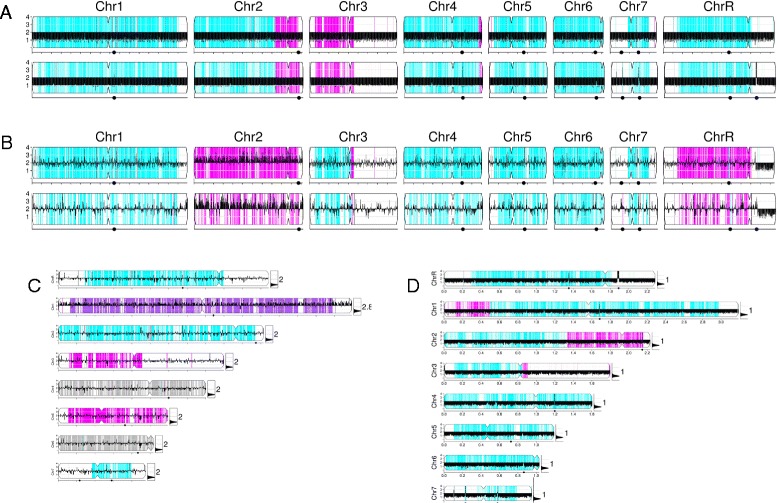
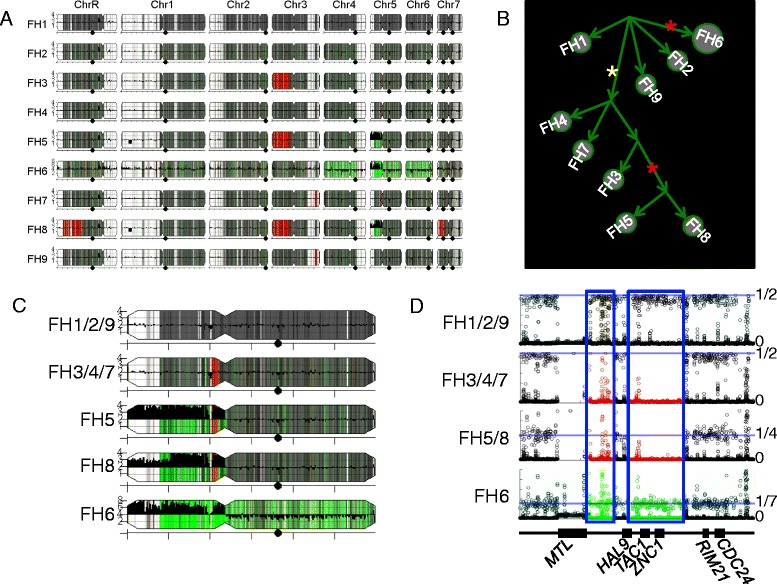
“These two strains were deep sequenced and the karyotypes 100 were visualized by using YMAP (D)(32).”
MethodHost association induces genome changes in Candida albicans which alters its virulencePreprint
Smith, A. C., & Hickman, M. A. (2020) · bioRxiv (Cold Spring Harbor Laboratory) · doi:10.1101/2020.04.22.056002
“These sequencing studies also detected chromosomal aneuploidy in a small number of clinical strains (28, 29).”
BackgroundRizzo, M., Soisangwan, N., Soetaert, J., Vega, S. B. P., Selmecki, A. M., & Buscaino, A. (2021) · bioRxiv (Cold Spring Harbor Laboratory) · doi:10.1101/2021.12.06.471441
Sundstrom, P. (2020) · Faculty Opinions – Post-Publication Peer Review of the Biomedical Literature · doi:10.3410/f.735147942.793570106
Whiteway, M. S. (2019) · Faculty Opinions – Post-Publication Peer Review of the Biomedical Literature · doi:10.3410/f.736669503.793566063
A Weights-based variant ranking pipeline for familial complex disordersPreprint
Ralli, S., Vira, T., Robles‐Espinoza, C. D., Adams, D. J., & Brooks-Wilson, A. R. (2023) · bioRxiv (Cold Spring Harbor Laboratory) · doi:10.1101/2023.08.14.553248
Zande, P. V., Gautier, C., Kawar, N., Maufrais, C., Metzner, K., Wash, E., Beach, A., Bracken, R., Maciel, E. I., Fernandes, C. M., et al. (2024) · bioRxiv (Cold Spring Harbor Laboratory) · doi:10.1101/2024.03.05.583528
Self-citationScott, N. E., Zhou, X., Wash, E., Zajac, C., Kline, S. E., Erayil, S. E., & Selmecki, A. M. (2025) · bioRxiv (Cold Spring Harbor Laboratory) · doi:10.1101/2025.10.27.684856
Scott, N. E., Zhou, X., Wash, E., Zajac, C., Kline, S. E., Erayil, S. E., & Selmecki, A. M. (2026) · Microbial Genomics · doi:10.1099/mgen.0.001659 · Cited by 5
Micafungin exposure drives multidrug resistance in Clavispora lusitaniaePreprint
Wash, E., Scott, N. E., Metzner, K., Zhou, X., Dasilva, D., de Sá, N. P., Usmani, S. A., Sa, N. F. V. D., Poeta, M. D., & Selmecki, A. M. (2026) · bioRxiv (Cold Spring Harbor Laboratory) · doi:10.64898/2026.06.29.735437
Yang, F., Sun, L., Li, H., Fang, T., Guo, Q., Chen, N., & Jiang, Y. (2026) · Frontiers in Microbiology · doi:10.3389/fmicb.2026.1845986
Gifford, H., Pradhan, A., Caswall, B. A., Murphy, S. E., Leaves, I., Edmondson, M. B., Chakraborty, T., Wilson, D., Taori, S. K., Gow, N. A. R., et al. (2026) · Nature Communications · doi:10.1038/s41467-026-76954-x · Cited by 3
“Stress-induced changes in ploidy have been proposed to precede the emergence in drug resistance in C. albicans 66,67 , and tetraploidy has been described in C. albicans clinical isolates from human hosts 68 – 71 .”
Metadata
- Authors
- Abbey, D. A., Funt, J., Lurie-Weinberger, M. N., Thompson, D. A., Regev, A., Myers, C. L., & Berman, J.
- Affiliations
- University of Minnesota (US)
- Broad Institute (US)
- Tel Aviv University (IL)
- ORCID
- Venue
- Genome Medicine
- Published
- 2014-11-20
- Volume
- 6
- Issue
- 11
- Pages
- 100-100
- ISSN
- 1756-994X (ISSN-L)
- PMC
- PMC4263066
- OpenAlex
- W2132284327
- Cited by
- 147
- References
- 45
- Citations by year
- 2026: 5 · 2025: 17 · 2024: 25 · 2023: 19 · 2022: 18 · 2021: 16 · 2020: 12 · 2019: 14 · 2018: 6 · 2017: 8 · 2016: 3 · 2015: 4
- FWCI
- 2.04
- Type
- journal article
- Language
- en
- Open access
- gold
- doi.org
- Licence
- creativecommons.org/licenses/by/4.0 (tdm)
- creativecommons.org/licenses/by/4.0 (vor)
- Locations
- Genome Medicine (publishedVersion)
- Genome Medicine (publishedVersion, cc-by)
- PubMed Central (publishedVersion, cc-by)
- PubMed (publishedVersion)
- Funders
- National Science Foundation (0953881, FP7/2007-2013, T32GM007287)
- Howard Hughes Medical Institute (T32GM007287)
- Burroughs Wellcome Fund
- University of Minnesota
- Canadian Institute for Advanced Research
- Broad Institute
- European Commission (303635, 2007–2013, FP7 2007-2013, FP7/2007)
- National Institutes of Health (FP7/2007-2013, 5r01ca119176-10)
- National Cancer Institute (R01-CA119176)
- National Institute of General Medical Sciences (T32GM007287)
- National Institute of Allergy and Infectious Diseases
- FP7 Ideas: European Research Council (340087)
- Topics
- Life Sciences › Biochemistry, Genetics and Molecular Biology › Molecular Biology › Fungal and yeast genetics research
- Life Sciences › Biochemistry, Genetics and Molecular Biology › Genetics › Genomic variations and chromosomal abnormalities
- Life Sciences › Biochemistry, Genetics and Molecular Biology › Molecular Biology › Genomics and Phylogenetic Studies
- Keywords
- copy number variation, loss of heterozygosity, Candida albicans, eukaryotic pathogens, genome visualization, single nucleotide polymorphisms, restriction site-associated DNA sequencing, microarray data analysis, antimicrobial therapy, fungal genomics
About these checks
Registry, retraction, Cites and statistics results are computed, not judged, with one exception: a printed reference that no index lists is read once by a model before it counts as a citation error. Claims are extracted by a model and kept only when their quote appears verbatim in the text; each cited source is then checked, with a model’s help, for whether it says what the claim relies on. Those verdicts can be wrong — read the claim’s quote and the cited source before relying on one.
Statistics and arithmetic are recomputed, not judged.
Confidence bands are shown only for fields calibrated on our annotated test set. None is calibrated yet, so no band is shown.
What counts as a claim ›How we measure confidence ›How we check this ›
Are you an author, or do you see a problem with this page? Request a review
Data sources
Bibliographic data: Semantic Scholar, OpenAlex, Crossref.
Contains information from the Semantic Scholar Academic Graph Datasets, made available under the ODC Attribution License (ODC-BY 1.0).
Semantic Scholar’s data is described in: Kinney, R., et al. (2023). The Semantic Scholar Open Data Platform. arXiv:2301.10140.
