

An assessment of sex bias in neurodevelopmental disorders
Open accessThe DOI matches its Crossref record; 66 of the 66 references it cites were found in a registry or an index.
Abstract
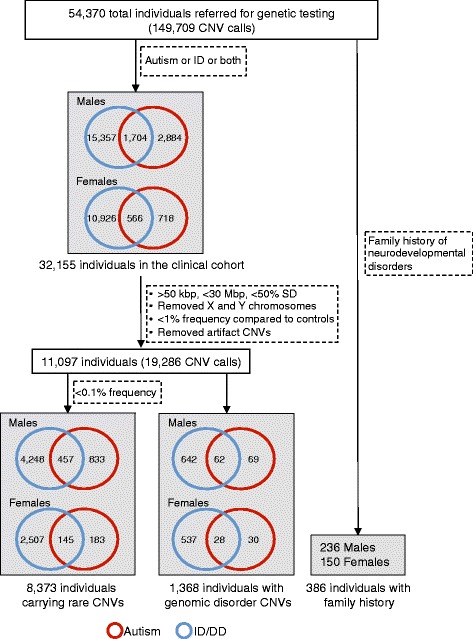
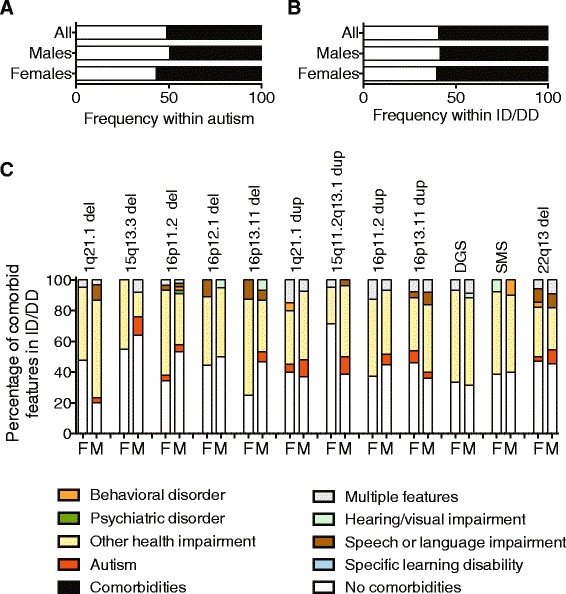
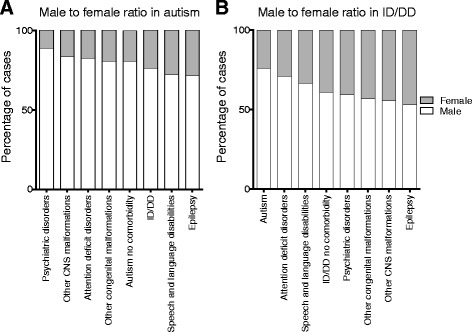
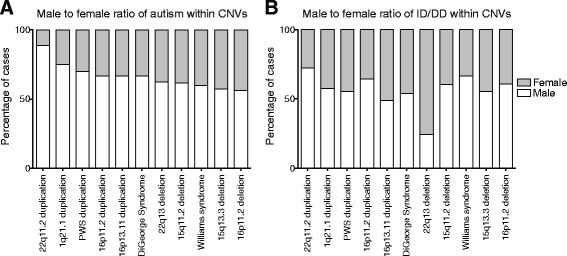
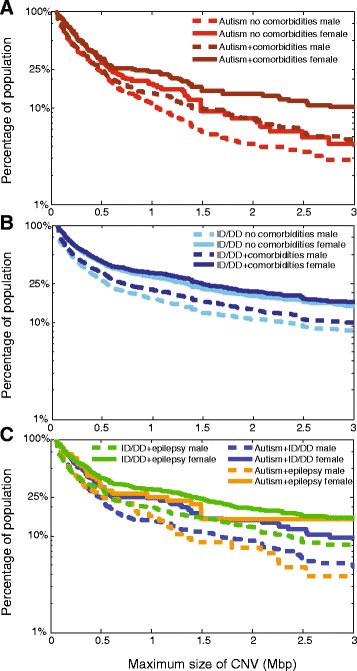
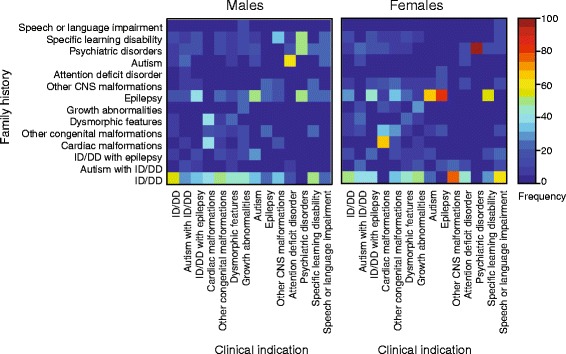
BACKGROUND: Neurodevelopmental disorders such as autism and intellectual disability have a sex bias skewed towards boys; however, systematic assessment of this bias is complicated by the presence of significant genetic and phenotypic heterogeneity of these disorders. METHODS: To assess the extent and characteristics of sex bias, we analyzed the frequency of comorbid features, the magnitude of genetic load, and the existence of family history within 32,155 individuals ascertained clinically for autism or intellectual disability/developmental delay (ID/DD), including a subset of 8,373 individuals carrying rare copy-number variants (CNVs). RESULTS: We find that girls were more likely than boys to show comorbid features within both autism (P = 2.9 × 10(-6), OR = 1.34) and ID/DD (P = 7.2 × 10(-4), OR = 1.08) cohorts. The frequency of comorbid features in ID/DD was higher in boys (1q21.1 deletion, 15q11.2q13.1 duplication) or girls (15q13.3 deletion, 16p11.2 deletion) carrying specific CNVs associated with variable expressivity while such differences were the smallest for syndromic CNVs (Smith-Magenis syndrome, DiGeorge syndrome). The extent of the male sex bias also varied according to the specific comorbid feature, being most extreme for autism with psychiatric comorbidities and least extreme for autism comorbid with epilepsy. The sex ratio was also specific to certain CNVs, from an 8:1 male:female ratio observed among autistic individuals carrying the 22q11.2 duplication to 1.3:1 male:female ratio in those carrying the 16p11.2 deletion. Girls carried a higher burden of large CNVs compared to boys for autism or ID/DD, and this difference diminished when severe comorbidities were considered. Affected boys showed a higher frequency of neuropsychiatric family histories such as autism (P = 0.01) or specific learning disability (P = 0.03), while affected girls showed a higher frequency of developmental family histories such as growth abnormalities (P = 0.02). CONCLUSIONS: The sex bias within neurodevelopmental disorders is influenced by the presence of specific comorbidities, specific CNVs, mutational burden, and pre-existing family history of neurodevelopmental phenotypes.
Overview
The claims and statistics of this paper haven’t been checked yet.
Free: it reads the open-access text and checks the first 5 claims that cite a source we can check. Create a free account to check every claim.
Integrity signals
Registry
Cites
Statistics
Figures
Verification
Claims the paper makes
The claims and statistics of this paper haven’t been checked yet.
Free: it reads the open-access text and checks the first 5 claims that cite a source we can check. Create a free account to check every claim.
Claims other papers make about this one
Each is checked against this paper’s own text: does it say what the citing paper says it does?
The source backs part of the claim, not all of it — or backs it for a different population, condition or comparison.
In the citing paper
“In relation to structural variants, some neurodevelopmental condition-related copy number variations display phenotypic sex differences; autism is more common in males with 22q11.2 duplication and 16p11.2 deletion syndromes than in females with these syndromes238.”
From Sex and gender in neurodevelopmental conditions (2023) · cites this paper as [238]
Experimental — accuracy not yet measuredThe check wasn’t confident either way, so it gives no verdict — never disputed.
In the citing paper
“Deafness or partial hearing loss was observed in 2.90% (2.40/4.90% in males/females) vs. 0.50% in the general population for the younger age group (0–15 years), and 3.90% (3.20/6.30% in males/females) vs. 0.80% for the older age group (16–24 years). The study concluded that hearing impairment was nine times more prevalent in the autistic individuals compared to the general population.”
From Prevalence of Autism Spectrum Disorder and Co-morbidities in Children and Adolescents: A Systematic Literature Review (2021) · cites this paper as [34]
Experimental — accuracy not yet measuredIn the citing paper
“Prevalence of hearing impairment ranged from ~0% (females) in Polyak et al. (31) a study investigating sex bias in ASD comorbidities to 4.90% in Rydzewska et al. (34) (Figure 8 and Supplementary Material 6).”
From Prevalence of Autism Spectrum Disorder and Co-morbidities in Children and Adolescents: A Systematic Literature Review (2021) · cites this paper as [34]
In the citing paper
“Prevalence for vision impairment ranged from ~0% (males and females) in Polyak et al. (34) study examining the impact of sex bias on comorbidities in ASD, to 14.9% in Aldinger et al. (51) (Figure 11 and Supplementary Material 6).”
From Prevalence of Autism Spectrum Disorder and Co-morbidities in Children and Adolescents: A Systematic Literature Review (2021) · cites this paper as [34]
In the citing paper
“In agreement with this, the ratio of males to females with either ASD or ID shows a male predominance in both 16p11.2 CNVs [57], suggesting that being female is a protective factor when predicting overall ASD severity in either 16p11.2 CNV [58].”
From 16p11.2 Copy Number Variations and Neurodevelopmental Disorders (2020) · cites this paper as [57]
Self-check
Percentages, sums and reported differences re-computed from the paper’s own numbers.
The self-check needs the paper’s full text.
Citations
Cites
Baio, J., Wiggins, L., Christensen, D. L., Maenner, M. J., Daniels, J., Warren, Z., Kurzius-Spencer, M., Zahorodny, W., Robinson, C., Rosenberg, et al. (2018) · MMWR. Surveillance Summaries · doi:10.15585/mmwr.ss6706a1 · Cited by 6,078
Large recurrent microdeletions associated with schizophrenia.
GROUP, Stefansson, H., Rujescu, D., Cichon, S., Pietiläinen, O. P. H., Ingason, A., Steinberg, S., Fossdal, R., Sigurdsson, E., Sigmundsson, T., et al. (2008) · Nature · doi:10.1038/nature07229 · Cited by 1,745 · cited 1×
“3 deletion [27–29], 22q11.”
Patterns and rates of exonic de novo mutations in autism spectrum disorders
Neale, B. M., Kou, Y., Liu, L., Ma’ayan, A., Samocha, K. E., Sabo, A., Lin, C.-F., Stevens, C., Wang, L.-S., Makarov, V., et al. (2012) · Nature · doi:10.1038/nature11011 · Cited by 1,734 · cited 1×
“2 deletion [30–32], and gene disruptive mutations in CHD2 [33–35] and SYNGAP1 [34–37] have all been significantly associated with ID/DD, autism, and schizophrenia phenotypes from independent cohort studies.”
Association between Microdeletion and Microduplication at 16p11.2 and Autism
Weiss, L. A., Shen, Y., Korn, J. M., Arking, D. E., Miller, D. T., Fossdal, R., Saemundsen, E., Stefansson, H., Ferreira, M. A. R., Green, T., et al. (2008) · New England Journal of Medicine · doi:10.1056/nejmoa075974 · Cited by 1,666 · cited 1×
“2 deletion [21–23], 17q12 deletion [24–26], 15q13.”
De novo mutations in schizophrenia implicate synaptic networks
Fromer, M., Pocklington, A. J., Kavanagh, D. H., Williams, H. J., Dwyer, S., Gormley, P., Georgieva, L., Rees, E., Palta, P., Ruderfer, D. M., et al. (2014) · Nature · doi:10.1038/nature12929 · Cited by 1,617 · cited 1×
“Second, hundreds of genes and genomic regions have been identified for each of these neurodevelopmental disorders from studies of copy number variants (CNVs) and exome sequencing, suggesting significant genetic heterogeneity [14–17].”
Diagnostic exome sequencing in persons with severe intellectual disability
de Ligt, J., Willemsen, M. H., van Bon, B. W. M., Kleefstra, T., Yntema, H. G., Kroes, T., Vulto-van Silfhout, A. T., Koolen, D. A., de Vries, P., Gilissen, C., et al. (2012) · New England Journal of Medicine · doi:10.1056/nejmoa1206524 · Cited by 1,546
De Novo Gene Disruptions in Children on the Autistic Spectrum
Iossifov, I., Ronemus, M., Levy, D., Wang, Z., Hakker, I., Rosenbaum, J., Yamrom, B., Lee, Y.-H., Narzisi, G., Leotta, A., et al. (2012) · Neuron · doi:10.1016/j.neuron.2012.04.009 · Cited by 1,446 · cited 1×
“2 deletion [30–32], and gene disruptive mutations in CHD2 [33–35] and SYNGAP1 [34–37] have all been significantly associated with ID/DD, autism, and schizophrenia phenotypes from independent cohort studies.”
A polygenic burden of rare disruptive mutations in schizophrenia
Purcell, S. M., Moran, J. L., Fromer, M., Ruderfer, D., Solovieff, N., Roussos, P., O’Dushlaine, C., Chambert, K., Bergen, S. E., Kähler, A., et al. (2014) · Nature · doi:10.1038/nature12975 · Cited by 1,385 · cited 1×
“2 deletion [30–32], and gene disruptive mutations in CHD2 [33–35] and SYNGAP1 [34–37] have all been significantly associated with ID/DD, autism, and schizophrenia phenotypes from independent cohort studies.”
Naarden Braun, K. V., Lopez, M., White, T., et al. (2023) · Carolina Digital Repository (University of North Carolina at Chapel Hill) · doi:10.17615/y3kk-5x30 · Cited by 1,381
Cited by
Genetic Causes and Modifiers of Autism Spectrum Disorder
Rylaarsdam, L., & Guemez-Gamboa, A. (2019) · Frontiers in Cellular Neuroscience · doi:10.3389/fncel.2019.00385 · Cited by 560
Incomplete Penetrance and Variable Expressivity: From Clinical Studies to Population Cohorts
Kingdom, R., & Wright, C. F. (2022) · Frontiers in Genetics · doi:10.3389/fgene.2022.920390 · Cited by 287
“Girls diagnosed with ASD have an increased number of CNVs compared to boys with the same diagnosis, and asymptomatic mothers with children diagnosed with NDDs or ASD had a higher genetic burden of deleterious variants than fathers (Polyak et al., 2015), suggesting there may be some other cause for the incomplete penet…”
BackgroundBougeard, C., Picarel-Blanchot, F., Schmid, R., Campbell, R., & Buitelaar, J. (2021) · Frontiers in Psychiatry · doi:10.3389/fpsyt.2021.744709 · Cited by 330
“(34) study examining the impact of sex bias on comorbidities in ASD, to 14.”
BackgroundInfluentialSex and gender in neurodevelopmental conditions
Bölte, S., Neufeld, J., Marschik, P. B., Williams, Z. J., Gallagher, L., & Lai, M.-C. (2023) · Nature Reviews Neurology · doi:10.1038/s41582-023-00774-6 · Cited by 249
Pizzo, L., Jensen, M., Polyak, A., Rosenfeld, J. A., Mannik, K., Krishnan, A., McCready, E., Pichon, O., Le Caignec, C., Van Dijck, A., et al. (2019) · Genetics in Medicine · doi:10.1038/s41436-018-0266-3 · Cited by 193
Self-citationBojović, K., Ignjatović, Ð. D. I., Soković Bajić, S., Vojnović Milutinović, D., Tomić, M., Golić, N., & Tolinački, M. (2020) · Frontiers in Cellular and Infection Microbiology · doi:10.3389/fcimb.2020.00223 · Cited by 171
“En. faecalis, En. gallinarum, and S. pasteurianus, which are part of the commensal microbiota (Layton et al., 2010; Alex et al., 2013; Rajilic-Stojanovic and De Vos, 2014), were detected in low numbers or even absent in some NDD patients’ groups.”
Background16p11.2 Copy Number Variations and Neurodevelopmental Disorders
Rein, B., & Yan, Z. (2020) · Trends in Neurosciences · doi:10.1016/j.tins.2020.09.001 · Cited by 160
“2 CNVs [55], suggesting that being female is a protective factor when predicting overall ASD severity in either 16p11.”
BackgroundSex-Based Analysis of De Novo Variants in Neurodevelopmental Disorders
Turner, T. N., Wilfert, A. B., Bakken, T. E., Bernier, R. A., Pepper, M. R., Zhang, Z., Torene, R. I., Retterer, K., & Eichler, E. E. (2019) · The American Journal of Human Genetics · doi:10.1016/j.ajhg.2019.11.003 · Cited by 159
Imaging sex/gender and autism in the brain: Etiological implications
Lai, M., Lerch, J. P., Floris, D. L., Ruigrok, A. N. V., Pohl, A., Lombardo, M. V., & Baron‐Cohen, S. (2017) · Journal of Neuroscience Research · doi:10.1002/jnr.23948 · Cited by 140
“In contrast, studies focusing on females with diagnosed autism (Turner et al., 2015) or on how males and females with autism differ from each other (Polyak et al., 2015) provide a direct examination of the risk mechanisms of autism and how sex/gender moderates the risk mechanisms.”
Hall, M. B., Willis, D. E., Rodriguez, E. L., & Schwarz, J. M. (2023) · Frontiers in Neuroscience · doi:10.3389/fnins.2023.1135559 · Cited by 134
“Males are, on average, twice as likely than females to be diagnosed with developmental disorders, including ADHD, ASD, schizophrenia, and general learning disabilities (Polyak et al., 2015; Pinares-Garcia et al., 2018).”
Background(2022) · American Psychiatric Association Publishing eBooks · doi:10.1176/appi.books.9780890425787.x01_neurodevelopmental_disorders · Cited by 107
Hiremath, C., Kommu, J. V. S., Yamini, B. K., Girimaji, A. S., Kumar, K. R., Sravanti, S. L., Padmanabha, H., Raju, K. N. V., Kishore, M. T., Jacob, P., et al. (2021) · Translational Psychiatry · doi:10.1038/s41398-020-01178-6 · Cited by 118
Harris, H. K., Nakayama, T., Lai, J. F., Zhao, B., Argyrou, N., Gubbels, C. S., Soucy, A., Genetti, C. A., Suslovitch, V., Rodan, L. H., et al. (2021) · Genetics in Medicine · doi:10.1038/s41436-021-01114-z · Cited by 97
Dupont, C., Ryan, N. C., Séguin, J. R., Muckle, G., Simard, M., Shapiro, G. D., Herba, C. M., Fraser, W. D., & Lippé, S. (2018) · Scientific Reports · doi:10.1038/s41598-018-28165-8 · Cited by 86
Increased Risk for Neurodevelopmental Disorders in Children With Orofacial Clefts
Tillman, K. K., Hakelius, M. M., Höijer, J., Ramklint, M., Ekselius, L., Nowinski, D. J., & Papadopoulos, F. C. (2018) · Journal of the American Academy of Child & Adolescent Psychiatry · doi:10.1016/j.jaac.2018.06.024 · Cited by 84
Bramble, M. S., Roach, L., Lipson, A., Vashist, N., Eskin, A., Ngun, T. C., Gosschalk, J. E., Klein, S. D., Barseghyan, H., Arboleda, V. A., et al. (2016) · Scientific Reports · doi:10.1038/srep36916 · Cited by 62
“These activational and persisting changes that occur as a result of hormonal exposures demonstrate the long-term effects of hormonal influence and shed light on the biological basis of sex-biased neuro-psychiatric disorders 18 .”
Chen, G., Chiang, W., Shu, B., Guo, Y. L., Chiou, S.-T., & Chiang, T. (2017) · BMJ Open · doi:10.1136/bmjopen-2017-017086 · Cited by 61
“However, recent literature has revealed that the increased risk of neurodevelopmental disorders in boys cannot exclude sex bias.(24) 25 In this study, children with neurodevelopmental disorders were diagnosed and evaluated by paediatric psychiatrists and clinical psychologists, which might help to avoid the male bias.”
Kumar, V. J., Grissom, N. M., McKee, S. E., Schoch, H., Bowman, N., Havekes, R., Kumar, M., Pickup, S., Poptani, H., Reyes, T. M., et al. (2018) · Translational Psychiatry · doi:10.1038/s41398-018-0157-z · Cited by 54
Kctd13-deficient mice display short-term memory impairment and sex-dependent genetic interactions
Arbogast, T., Razaz, P., Ellegood, J., McKinstry, S. U., Erdin, S., Currall, B., Aneichyk, T., Lerch, J. P., Qiu, L. R., Rodriguiz, R. M., et al. (2019) · Human Molecular Genetics · doi:10.1093/hmg/ddy436 · Cited by 52
Wang, Y., Guo, X., Hong, X., Wang, G., Pearson, C., ZUCKERMAN, B. S., Clark, A. G., O'Brien, K. O., Wang, X., & Gu, Z. (2022) · Nature Communications · doi:10.1038/s41467-022-30805-7 · Cited by 54
Patel, A., & Rosenfeld, J. A. (2016) · Journal of Pediatric Genetics · doi:10.1055/s-0036-1584306 · Cited by 58
Self-citationMassey, S. C., Whitmire, P., Doyle, T. E., Ippolito, J. E., Mrugała, M. M., Hu, L., Canoll, P., Anderson, A. R. A., Wilson, M. A., Fitzpatrick, S. M., et al. (2020) · Cancer Letters · doi:10.1016/j.canlet.2020.07.030 · Cited by 56
Dissecting the genetic basis of comorbid epilepsy phenotypes in neurodevelopmental disorders
Chow, J. C., Jensen, M., Amini, H., Hormozdiari, F., Penn, O., Shifman, S., Girirajan, S., & Hormozdiari, F. (2019) · Genome Medicine · doi:10.1186/s13073-019-0678-y · Cited by 48
Self-citationRinat, S., Izadi‐Najafabadi, S., & Zwicker, J. G. (2020) · NeuroImage Clinical · doi:10.1016/j.nicl.2020.102309 · Cited by 47
“[1-4] DCD is 2 to 7 times more common in males compared to females,[5-6] as in many other neurodevelopmental disorders.[7-8] Children with DCD tend to have lower academic achievement, as well as reduced participation in self-care, social, and leisure activities.”
Alpha-7 Nicotinic Receptors in Nervous System Disorders: From Function to Therapeutic Perspectives
Jaco, A. D., Bernardini, L., Rosati, J. D., & Tata, A. M. (2016) · Central Nervous System Agents in Medicinal Chemistry · doi:10.2174/1871524916666160729111446 · Cited by 44
Bougeard, C., Picarel-Blanchot, F., Schmid, R., Campbell, R., & Buitelaar, J. K. (2024) · FOCUS The Journal of Lifelong Learning in Psychiatry · doi:10.1176/appi.focus.24022005 · Cited by 49
Medical Therapies for Children With Autism Spectrum Disorder—An Update
Edwin Williamson, M. D., Sathe, N. A., & Andrews, J. C. (2017) · doi:10.23970/ahrqepccer189 · Cited by 50
Kildahl, A. N., Oddli, H. W., & Helverschou, S. B. (2023) · Journal of Intellectual Disabilities · doi:10.1177/17446295231154119 · Cited by 36
“Furthermore, the relationship between gender and neurodevelopmental conditions is complex (Polyak et al., 2015), as are the relationships between these conditions and race/ethnicity (Hellerud and Bakken, 2019; Morinaga et al., 2021; Roman-Urrestarazu et al., 2021; Schwartz et al., 2022; Scior et…”
BackgroundKim, S.-W., Lee, H., Song, D. Y., Lee, G., Ji, J., Park, J. W., Han, J. H., Lee, J., Byun, H. J., Son, J. H., et al. (2024) · Genome Medicine · doi:10.1186/s13073-024-01385-6 · Cited by 43
Self-citationReggiani, C., Coppens, S., Sekhara, T., Dimov, I., Pichon, B., Lufin, N., Addor, M.-C., Belligni, E. F., Digilio, M. C., Faletra, F., et al. (2017) · Genome Medicine · doi:10.1186/s13073-017-0452-y · Cited by 35
Parent-of-Origin Effects in 15q11.2 BP1-BP2 Microdeletion (Burnside-Butler) Syndrome
Davis, K., Serrano, M. A., Loddo, S., Robinson, C., Alesi, V., Dallapiccola, B., Novelli, A., & Butler, M. G. (2019) · International Journal of Molecular Sciences · doi:10.3390/ijms20061459 · Cited by 35
“Differences in clinical features between males and females has been noted in other neurodevelopmental conditions [21].”
BackgroundMethodPotential Sex Differences Relative to Autism Spectrum Disorder and Metals
Dickerson, A. S., Rotem, R. S., Christian, M. A., Nguyen, V. T., & Specht, A. J. (2017) · Current Environmental Health Reports · doi:10.1007/s40572-017-0164-x · Cited by 34
“However, there has been a recognized potential sex bias in assessment of neurodevelopmental disorders due to frequency of comorbidities in boys [9, 10].”
Hudac, C. M., Bove, J., Barber, S., Duyzend, M., Wallace, A., Martin, C. L., Ledbetter, D. H., Hanson, E., Goin‐Kochel, R. P., Green‐Snyder, L., et al. (2020) · Autism Research · doi:10.1002/aur.2332 · Cited by 31
A Unifying Theory for Autism: The Pathogenetic Triad as a Theoretical Framework
Sarovic, D. (2021) · Frontiers in Psychiatry · doi:10.3389/fpsyt.2021.767075 · Cited by 23
“Over the course of a lifetime, the difference in social learning and adaptive ability may lead to different life trajectories and subsequent differences in observable clinical phenotype [at least in the subgroup with higher cognitive ability, which has the highest sex-ratio bias (165, 166)].”
BackgroundLiu, Y., Lv, Y., Zarrei, M., Dong, R., Yang, X., Higginbotham, E. J., Li, Y., Zhao, D., Song, F., Yang, Y., et al. (2022) · npj Genomic Medicine · doi:10.1038/s41525-021-00271-z · Cited by 32
Maternal Allergic Asthma Induces Prenatal Neuroinflammation
Tamayo, J. M., Rose, D. R., Church, J. S., Schwartzer, J. J., & Ashwood, P. (2022) · Brain Sciences · doi:10.3390/brainsci12081041 · Cited by 34
“Sex differences are commonly noted in neurodevelopmental disorders [56,57].”
BackgroundClinical characterization of individuals with the distal 1q21.1 microdeletion
Edwards, S. D., Schulze, K., Rosenfeld, J. A., Westerfield, L. E., Gerard, A., Yuan, B., Grigorenko, E. L., Posey, J. E., Bi, W., & Liu, P. (2021) · American Journal of Medical Genetics Part A · doi:10.1002/ajmg.a.62104 · Cited by 30
“In addition, a study by Polyak et al. (2015) reported that, among individuals with autism, comorbidities were more frequent in females than males.”
BackgroundSelf-citationLang, J., Wylie, G., Haig, C. E., Gillberg, C., & Minnis, H. (2024) · PLoS ONE · doi:10.1371/journal.pone.0296077 · Cited by 28
Senarathne, U. D., Indika, N.-L. R., Jezela‐Stanek, A., Ciara, E., Frye, R. E., Chen, C., & Stępień, K. M. (2023) · Genes · doi:10.3390/genes14040803 · Cited by 29
Children with Autism Spectrum Disorder and Abnormalities of Clinical EEG: A Qualitative Review
Bosetti, C., Ferrini, L., Ferrari, A. R., Bartolini, E., & Calderoni, S. (2024) · Journal of Clinical Medicine · doi:10.3390/jcm13010279 · Cited by 27
“…ratio frequently reported is approximately 4:1 [2,3,27], the M:F prevalence ratio decreases to 2.5:1 in samples of individuals with both ASD and epilepsy [28]; • Idiopathic versus non-idiopathic ASD: the prevalence of epilepsy in syndromic autism is typically higher than in idiopathic autism [23].”
BackgroundInfluentialWang, B., Ji, T., Zhou, X., Wang, J., Wang, X., Wang, J., Zhu, D., Zhang, X., Sham, P. C., Zhang, X., et al. (2016) · Scientific Reports · doi:10.1038/srep25954 · Cited by 27
“The de novo occurrences in the above cases add further support for the causal involvement of dosage sensitivity of KDM4B and PPP3CC in NDD.”
InfluentialNonsyndromic Craniosynostosis Is Associated with Increased Risk for Psychiatric Disorders
Tillman, K. K., Höijer, J., Ramklint, M., Ekselius, L., Nowinski, D. J., & Papadopoulos, F. C. (2020) · Plastic & Reconstructive Surgery · doi:10.1097/prs.0000000000007009 · Cited by 25
Mellone, S., Puricelli, C., Vurchio, D., Ronzani, S., Favini, S., Maruzzi, A., Peruzzi, C., Papa, A., Spano, A., Sirchia, F., et al. (2022) · Frontiers in Genetics · doi:10.3389/fgene.2022.875182 · Cited by 27
“Epidemiologic studies report a 30%–50% excess of males in ID (Polyak et al., 2015) and, in ASD, a male-to-female ratio of 4: 1 that increases to 7:1 in high-functioning autism (McLaren and Bryson, 1987).”
BackgroundKretz, P. F., Wagner, C., Mikhaleva, A., Montillot, C., Hugel, S., Morella, I., Kannan, M., Fischer, M., Milhau, M., Yalçın, İ., et al. (2023) · Genome biology · doi:10.1186/s13059-023-03092-8 · Cited by 23
“2 locus is susceptible to a 600-kb deletion (OMIM #611913) which is among the most frequent known etiologies of ASDs [13] with a male-female ratio of about two [14].”
Sex differences in gene expression in the human fetal brainPreprint
O’Brien, H., Hannon, E. J., Jeffries, A. R., Davies, W., Hill, M., Anney, R., O’Donovan, M. C., Mill, J. S., & Bray, N. J. (2018) · bioRxiv (Cold Spring Harbor Laboratory) · doi:10.1101/483636 · Cited by 22
The pleiotropic spectrum of proximal 16p11.2 CNVs
Auwerx, C., Kutalik, Z., & Reymond, A. (2024) · The American Journal of Human Genetics · doi:10.1016/j.ajhg.2024.08.015 · Cited by 23
“282 The sex ratio across 16p11.”
Savory, K., Manivannan, S., Zaben, M., Uzun, O., & Syed, Y. A. (2019) · Neuroscience & Biobehavioral Reviews · doi:10.1016/j.neubiorev.2019.10.020 · Cited by 20
“In previous studies, sex differences have been found in specific CNVs, and some have found that males were slightly more likely than girls to have ID (1.6:1)[48].”
BackgroundInfluentialNovel Compound Heterozygous Mutation in TRAPPC9 Gene: The Relevance of Whole Genome Sequencing
Álvarez‐Mora, M. I., Corominas, J., Gilissen, C., Sánchez, A., Madrigal, I., & Rodríguez‐Revenga, L. (2021) · Genes · doi:10.3390/genes12040557 · Cited by 20
Quantitative multidimensional phenotypes improve genetic analysis of laterality traits
Schmitz, J., Zheng, M., Lui, K. F. H., McBride, C. A., Ho, C. S.-H., & Paracchini, S. (2022) · Translational Psychiatry · doi:10.1038/s41398-022-01834-z · Cited by 20
“A similar buffering effect has been proposed to explain the higher prevalence of neurodevelopmental disorders in males [64].”
BackgroundDissecting Molecular Genetic Mechanisms of 1q21.1 CNV in Neuropsychiatric Disorders
Yoon, J., & Mao, Y. (2021) · International Journal of Molecular Sciences · doi:10.3390/ijms22115811 · Cited by 19
Yang, Y., Shi, L., Jin, X., & Tong, S. (2023) · BMC Pediatrics · doi:10.1186/s12887-022-03819-9 · Cited by 21
“The severity and variability of neurodevelopmental features is contingent upon family history of neuropsychiatric disease [46].”
BackgroundGardner, R. M., Dalman, C., Rai, D., Lee, B. K., & Karlsson, H. (2019) · Journal of the American Academy of Child & Adolescent Psychiatry · doi:10.1016/j.jaac.2019.04.004 · Cited by 19
Autistic spectrum disorder and epilepsy: diagnostic challenges
Loussouarn, A., Dozières‐Puyravel, B., & Auvin, S. (2019) · Expert Review of Neurotherapeutics · doi:10.1080/14737175.2019.1617699 · Cited by 19
Neurodevelopment of children who are HIV‐exposed and uninfected in Kenya
Bulterys, M. A., Njuguna, I. N., King’e, M., Chebet, D. J., Moraa, H., Gómez, L., Onyango, A., Malavi, K., Nzia, G., Chege, M. W., et al. (2023) · Journal of the International AIDS Society · doi:10.1002/jia2.26149 · Cited by 19
Choi, K. H., & Martinson, M. L. (2018) · Annals of Epidemiology · doi:10.1016/j.annepidem.2018.08.001 · Cited by 17
The effects of sex on prevalence and mechanisms underlying neurodevelopmental disorders
Nowak, S., & Jacquemont, S. (2020) · Handbook of clinical neurology · doi:10.1016/b978-0-444-64150-2.00025-3 · Cited by 22
Postma, J. K., Harrison, M., Kutcher, S., Webster, R. J., Cloutier, M., Bourque, D. K., Yu, A. C., & Carter, M. T. (2024) · American Journal of Medical Genetics Part A · doi:10.1002/ajmg.a.63791 · Cited by 14
Sex chromosome-encoded protein homologs: current progress and open questions
Owens, M. C., Yanas, A. M., & Liu, K. F. (2024) · Nature Structural & Molecular Biology · doi:10.1038/s41594-024-01362-y · Cited by 15
“Genetic and mechanistic studies of these homologous pairs have put forth the hypothesis that some of them are responsible for sex biases in several human diseases 8,16,22,23 , including (but not limited to) autoimmune disorders 24 , neurodevelopmental disorders 25 and several cancers 26 .”
Rusu, A., Chevalier, C., de Chaumont, F., Nalesso, V., Brault, V., Hérault, Y., & Ey, E. (2023) · Frontiers in Behavioral Neuroscience · doi:10.3389/fnbeh.2023.1294558 · Cited by 14
“2 deletion displayed comorbid features more frequently than males (Polyak et al., 2015).”
BackgroundPediatrician and parental evaluation of child neurodevelopment at 2 years of age
Segre, G., Clavenna, A., Roberti, E., Scarpellini, F., Cartabia, M., Pandolfini, C., Tessarollo, V., Costantino, I., & Bonati, M. R. (2024) · BMC Pediatrics · doi:10.1186/s12887-024-04616-2 · Cited by 14
“Consistent with the findings of other studies [50– 52], signs of potential neurodevelopmental disorders resulted more frequently in males.”
ResultBesterman, A. D., Adams, D. J., Wong, N. R., Schneider, B. N., Mehta, S., DiStefano, C., Wilson, R. B., Martínez-Agosto, J. A., & Jeste, S. (2024) · Genetics in Medicine · doi:10.1016/j.gim.2024.101333 · Cited by 12
High Performance of a Dominant/X-Linked Gene Panel in Patients with Neurodevelopmental Disorders
Spataro, N., Trujillo‐Quintero, J. P., Manso, C., Gabau, E., Capdevila, N., Martínez‐Glez, V., Berenguer, A., Reyes, S., Brunet‐Vega, A., Baena, N., et al. (2023) · Genes · doi:10.3390/genes14030708 · Cited by 13
Growing points in attachment disorganization: looking back to advance forward
Haltigan, J. D., Giudice, M. D., & Khorsand, S. (2021) · Attachment & Human Development · doi:10.1080/14616734.2021.1918454 · Cited by 13
“, 2004; Wells, 2000) and more vulnerable to most types of neurodevelopmental disorders (Polyak et al., 2015).”
BackgroundGut Microbiome and Sex Bias in Autism Spectrum Disorders
El-Ansary, A. K., Bhat, R. S., & Zayed, N. (2020) · Current Behavioral Neuroscience Reports · doi:10.1007/s40473-020-00197-3 · Cited by 11
Jung, B., Ahn, K., Justice, C., Norman, L., Price, J., Sudre, G., & Shaw, P. (2023) · Molecular Psychiatry · doi:10.1038/s41380-022-01906-y · Cited by 10
Al‐Huseini, S., Al-Barhoumi, A., Al-Balushi, M., Al-Hosni, A., Al-Mahrouqi, T., Al-Mahrizi, B., Jaju, S., & Mirza, H. (2022) · Autism Research and Treatment · doi:10.1155/2022/2313851 · Cited by 14
Lorenzo, S. M., Moreno, M. D. M. M., Atas-Özcan, H., Pellen, M., Nalesso, V., Raffelsberger, W., Prevost, G., Lindner, L., Birling, M., Ménoret, S., et al. (2023) · Frontiers in Neuroscience · doi:10.3389/fnins.2023.1148683 · Cited by 10
“2 deletion in patients with intellectual disability / developmental delay (Polyak et al., 2015).”
The inactive X chromosome as a female protector in autism and beyond
Talukdar, M., & Page, D. C. (2026) · Nature Genetics · doi:10.1038/s41588-026-02534-w · Cited by 8
Evaluation of familial phenotype deviation to measure the impact of de novo mutations in autism
Kim, S.-W., Lee, H., Song, D. Y., Lee, G., Han, J. H., Lee, J., Byun, H. J., Son, J. H., Kim, Y. R., Lee, Y., et al. (2025) · Genome Medicine · doi:10.1186/s13073-025-01532-7 · Cited by 9
Voltage-Gated Sodium Channel β1 Gene: An Overview
Al-Ward, H., Liu, C., Liu, N., Shaher, F., Al‐Nusaif, M., Mao, J., & Xu, H. (2020) · Human Heredity · doi:10.1159/000516388 · Cited by 7
Does cesarean delivery increase the occurrence of neurodevelopmental disorders in childhood?
Chen, G., Chiang, W., & Chiang, T. (2021) · International Journal of Gynecology & Obstetrics · doi:10.1002/ijgo.14055 · Cited by 7
Karimi, K., Esmailizadeh, A., Wu, D., & Gondro, C. (2017) · Animal Production Science · doi:10.1071/an16384 · Cited by 6
Wu, D., Wu, Y., Lan, Y., Lan, S., Zhong, Z., Li, D., Zheng, Z., Wang, H., & Ma, L. (2023) · Pediatric Neurology · doi:10.1016/j.pediatrneurol.2023.06.001 · Cited by 7
Kutnyánszky, V., Hargitai, B., Hotzi, B., Kosztelnik, M., Ortutay, C., Kovács, T., Győry, E., Bördén, K., Princz, A., Tavernarakis, N., et al. (2019) · Molecular Genetics and Genomics · doi:10.1007/s00438-019-01625-0 · Cited by 6
Jašarević, E., Hecht, P. M., Fritsche, K. L., Geary, D. C., Rivera, R. M., & Beversdorf, D. Q. (2021) · Biology of Sex Differences · doi:10.1186/s13293-020-00356-x · Cited by 7
Hosni, Z., Gillet, V. J., & Robinson, R. M. (2026) · ACS Omega · doi:10.1021/acsomega.5c11875 · Cited by 5
Katzourou, I. K., van den Bree, M. B. M., George, K., Owen, M. J., Walters, J. T., Holmans, P., Lynch, J., Katzourou, I. K., Underwood, J. F. J., van Heel, D. A., et al. (2026) · The American Journal of Human Genetics · doi:10.1016/j.ajhg.2026.02.021 · Cited by 6
Burden of Neurodevelopmental Disorders in Kenyan Children
Kariuki, S. M., Kipkemoi, P., Kombe, M. Z., Bitta, M. A., Phillips, J., Abubakar, A. A., & Newton, C. R. J. C. (2025) · JAMA Network Open · doi:10.1001/jamanetworkopen.2025.48853 · Cited by 6
Friedman, L., & Kahen, B. (2019) · Behavioural Brain Research · doi:10.1016/j.bbr.2019.112046 · Cited by 5
Autism Spectrum Disorder: Epidemiological Perspective
Safwi, S. R., Rizvi, A., & Usmani, M. A. (2024) · Springer eBooks · doi:10.1007/978-3-031-40858-8_120-1 · Cited by 5
Sex Differences in Neurodevelopment and Its Disorders
Brown, R. E. (2023) · Springer eBooks · doi:10.1007/978-3-031-20792-1_11 · Cited by 4
Süsgün, S., Yücesan, E., Göncü, B. S., Hasanoğlu, S., Kina, U. Y., Özgül, C., Düzenli, Ö. F., Kocatürk, Ö., Çalık, M., Özbek, U., et al. (2023) · Neurological Sciences · doi:10.1007/s10072-023-07211-y · Cited by 4
“The phenotypic heterogeneity of NDDs has been attributed both to the variable expressivity of the phenotype within the distinct NDD category and also to the comorbid features, including epilepsy, motor deficits, behavioral and psychiatric issues, and other congenital malformations [2].”
Abdulqader, S. A., & Saeed, B. A. (2019) · PLoS ONE · doi:10.1371/journal.pone.0209418 · Cited by 4
Maksimović, N., Damnjanović, T., Jekić, B., Novaković, I. V., Đurić-Zdravković, A., Pjević, M. D., Grk, M., Pešić, M., Djuranovic, A., Rasic, M., et al. (2025) · Early Human Development · doi:10.1016/j.earlhumdev.2025.106269 · Cited by 3
Linking SOX3, SRY, and disorders of neurodevelopment
Tahira, A. C., de Toledo, V. H. C., Feltrin, A. S., Barbosa, A. D. L., Euclydes, V. L. V., Maschietto, M. C., & Brentani, H. (2021) · Elsevier eBooks · doi:10.1016/b978-0-12-817986-4.00013-4 · Cited by 3
Miyazaki, K., Yamada, M., Akashi, K., Jwa, S. C., Utsuno, H., Kamijo, S., Arimitsu, T., Hida, M., Sato, Y., Hirota, Y., et al. (2025) · Scientific Reports · doi:10.1038/s41598-025-12445-1 · Cited by 3
“These results support the known higher risk of developmental disorders in males 27 and suggest that having siblings promotes developmental progress 28 .”
Elie-Fortier, J., & Braun, C. M. J. (2019) · Neurology Psychiatry and Brain Research · doi:10.1016/j.npbr.2019.03.003 · Cited by 3
Lee, F. Y., Larimore, J. L., Faúndez, V., Dell’Angelica, E. C., & Ghiani, C. A. (2020) · Journal of Neuroscience Research · doi:10.1002/jnr.24620 · Cited by 3
“…disorders exhibit sex bias in the onset, presentation and magnitude of the symptoms, prevalence, although the influence of genetic heterogeneity and family history, plus the co-morbidity of intellectual and behavioral deficits might also be accountable for such divergencies (Polyak et al., 2015).”
BackgroundSex difference contributes to phenotypic diversity in individuals with neurodevelopmental disorders
Cuppens, T., Shatto, J., Mangnier, L., Kumar, A. A., Ng, A. C., Kaur, M., Bui, T. A., Leclercq, M., Droit, A., Dunham, I., et al. (2023) · Frontiers in Pediatrics · doi:10.3389/fped.2023.1172154 · Cited by 3
“Previous studies have shown a bias toward male individuals with GDD (2:1) (12), but did not investigate phenotypic differences This male bias also depended on the genes investigated (13, 14).”
BackgroundMotor Impairment in Children with 16p11.2-Deletion and -Duplication Syndromes
Soliman, P., Goin‐Kochel, R. P., & Alexander, G. (2025) · Journal of Autism and Developmental Disorders · doi:10.1007/s10803-025-06874-0 · Cited by 3
“2 CNVs are at higher risk for ASD and intellectual disability than their female counterparts, but it is unclear whether this pattern is concordant with DCD and related motor deficits (Polyak et al., 2015).”
Hafström, M., Salvesen, Ø. O., & Kjellmer, I. (2018) · Acta Paediatrica · doi:10.1111/apa.14703 · Cited by 3
Marquardt, A. E., Basu, M., VanRyzin, J. W., Ament, S. A., & McCarthy, M. M. (2025) · Cell Reports · doi:10.1016/j.celrep.2025.115782 · Cited by 2
“20 By investigating the causes and consequences of sex differences in play, we gain insight into how brain sex differences are typically established in a manner that may prove useful for understanding why boys and girls are differentially at risk for these disorders.”
Agarwal, U., Paliwal, S., Yadav, V., Pannu, A. S., Tonk, R. K., & Verma, S. K. (2025) · CNS & Neurological Disorders - Drug Targets · doi:10.2174/0118715273402657250905055635 · Cited by 2
Nayar, K., Bush, L., & Scott, M. (2025) · Springer eBooks · doi:10.1007/978-3-031-87228-0_2 · Cited by 2
Pracoholizm i rutyna: specyficzne formy niskiego zaangażowania w pracę i wypalenia zawodowego
Czarnota‐Bojarska, J. (2020) · Wydawnictwo Liberi Libri eBooks · doi:10.47943/lib.9788363487423.rozdzial05 · Cited by 1
A brief introduction to neurodevelopmental disorders
Karuppusamy, P. A., Uvarajan, D., Iyer, M., Wander, A., Narayanasamy, A., & Kinoshita, M. (2025) · Elsevier eBooks · doi:10.1016/b978-0-443-29898-1.00004-6 · Cited by 1
Esposito, M., Tremble, S. M., & Cipolla, M. J. (2025) · Microcirculation · doi:10.1111/micc.70044 · Cited by 1
Milone, R., Cesario, C., Bernardini, L., Battini, R., Goldoni, M., Pasquariello, R., Fusilli, C., Giovannetti, A., Giglio, S., Novelli, A., et al. (2020) · Journal of Pediatric Genetics · doi:10.1055/s-0040-1716398 · Cited by 1
Paradoks dostępności: perspektywa psychologiczna
Ledzińska, M. (2020) · Wydawnictwo Liberi Libri eBooks · doi:10.47943/lib.9788363487423.rozdzial04 · Cited by 14
Sex Differences in Autism Spectrum Disorders: A Multidisciplinary ReviewPreprint
Nayar, K., Hunter, S. J., & Scott, M. (2022) · PsyArXiv (OSF Preprints) · doi:10.31234/osf.io/bv5yw · Cited by 2
Metadata
- Authors
- Polyak, A., Rosenfeld, J. A., & Girirajan, S.
- Affiliations
- Pennsylvania State University (US)
- Baylor College of Medicine (US)
- Corresponding author
- Girirajan, Santhosh
- Venue
- Genome Medicine
- Published
- 2015-08-27
- Volume
- 7
- Issue
- 1
- Pages
- 94-94
- ISSN
- 1756-994X (ISSN-L)
- PMC
- PMC4549901
- OpenAlex
- W1950769362
- Cited by
- 129
- References
- 65
- Citations by year
- 2026: 8 · 2025: 11 · 2024: 20 · 2023: 18 · 2022: 11 · 2021: 12 · 2020: 18 · 2019: 13 · 2018: 8 · 2017: 5 · 2016: 5
- FWCI
- 4.12
- Type
- journal article
- Language
- en
- Open access
- gold
- doi.org
- Locations
- Genome Medicine (publishedVersion)
- PubMed Central (publishedVersion, cc-by)
- PubMed (publishedVersion)
- Funders
- March of Dimes Foundation (US) (#5-FY14-66)
- Brain and Behavior Research Foundation (US) (22535)
- Topics
- Life Sciences › Biochemistry, Genetics and Molecular Biology › Genetics › Genetics and Neurodevelopmental Disorders
- Life Sciences › Neuroscience › Cognitive Neuroscience › Autism Spectrum Disorder Research
- Life Sciences › Biochemistry, Genetics and Molecular Biology › Genetics › Genomic variations and chromosomal abnormalities
- Keywords
- sex bias, neurodevelopmental disorders, autism spectrum disorder, intellectual disability, developmental delay, copy number variation, comorbidities, psychiatric comorbidity, epilepsy, 1q21.1 deletion, 16p11.2 deletion, 22q11.2 duplication, variable expressivity, family history (medicine), genetic load, sex ratio
- MeSH terms
- Adolescent, Adult, Child, Child, Preschool, Female, Humans, Infant, Male, Phenotype, Sex Factors, Comorbidity, Odds Ratio, Young Adult, DNA Copy Number Variations, Neurodevelopmental Disorders
About these checks
Registry, retraction, Cites and statistics results are computed, not judged, with one exception: a printed reference that no index lists is read once by a model before it counts as a citation error. Claims are extracted by a model and kept only when their quote appears verbatim in the text; each cited source is then checked, with a model’s help, for whether it says what the claim relies on. Those verdicts can be wrong — read the claim’s quote and the cited source before relying on one.
Statistics and arithmetic are recomputed, not judged.
Confidence bands are shown only for fields calibrated on our annotated test set. None is calibrated yet, so no band is shown.
What counts as a claim ›How we measure confidence ›How we check this ›
Are you an author, or do you see a problem with this page? Request a review
Data sources
Bibliographic data: Semantic Scholar, OpenAlex, Crossref.
Contains information from the Semantic Scholar Academic Graph Datasets, made available under the ODC Attribution License (ODC-BY 1.0).
Semantic Scholar’s data is described in: Kinney, R., et al. (2023). The Semantic Scholar Open Data Platform. arXiv:2301.10140.
