

An assessment of sex bias in neurodevelopmental disorders
Open accessThe DOI matches its Crossref record; 66 of the 66 references it cites were found in a registry or an index.
Abstract
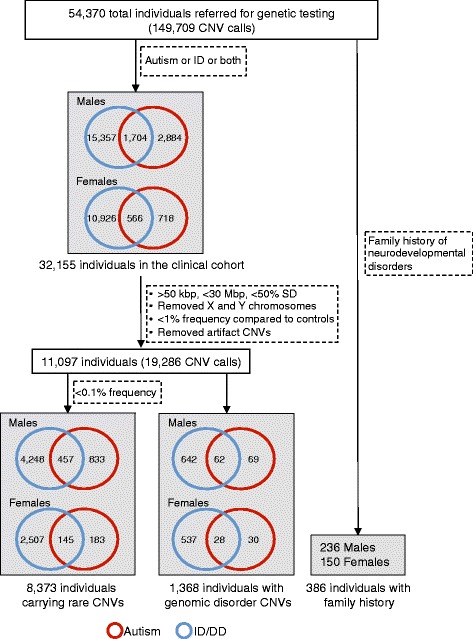
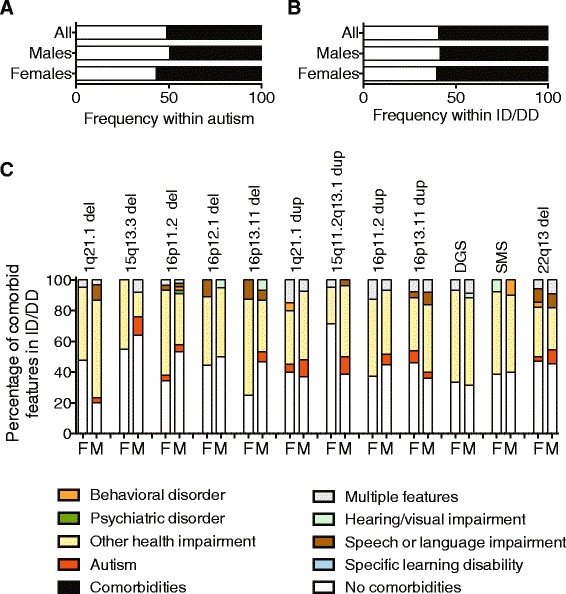
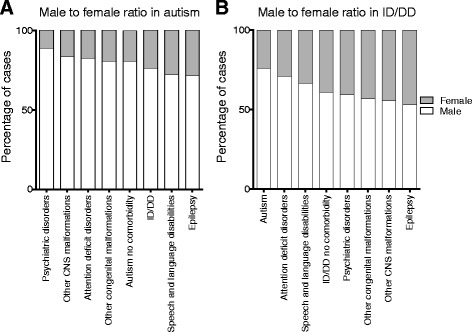
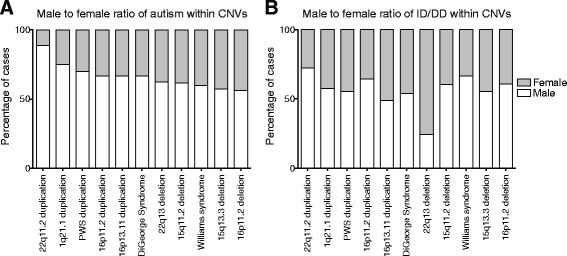
BACKGROUND: Neurodevelopmental disorders such as autism and intellectual disability have a sex bias skewed towards boys; however, systematic assessment of this bias is complicated by the presence of significant genetic and phenotypic heterogeneity of these disorders. METHODS: To assess the extent and characteristics of sex bias, we analyzed the frequency of comorbid features, the magnitude of genetic load, and the existence of family history within 32,155 individuals ascertained clinically for autism or intellectual disability/developmental delay (ID/DD), including a subset of 8,373 individuals carrying rare copy-number variants (CNVs). RESULTS: We find that girls were more likely than boys to show comorbid features within both autism (P = 2.9 × 10(-6), OR = 1.34) and ID/DD (P = 7.2 × 10(-4), OR = 1.08) cohorts. The frequency of comorbid features in ID/DD was higher in boys (1q21.1 deletion, 15q11.2q13.1 duplication) or girls (15q13.3 deletion, 16p11.2 deletion) carrying specific CNVs associated with variable expressivity while such differences were the smallest for syndromic CNVs (Smith-Magenis syndrome, DiGeorge syndrome). The extent of the male sex bias also varied according to the specific comorbid feature, being most extreme for autism with psychiatric comorbidities and least extreme for autism comorbid with epilepsy. The sex ratio was also specific to certain CNVs, from an 8:1 male:female ratio observed among autistic individuals carrying the 22q11.2 duplication to 1.3:1 male:female ratio in those carrying the 16p11.2 deletion. Girls carried a higher burden of large CNVs compared to boys for autism or ID/DD, and this difference diminished when severe comorbidities were considered. Affected boys showed a higher frequency of neuropsychiatric family histories such as autism (P = 0.01) or specific learning disability (P = 0.03), while affected girls showed a higher frequency of developmental family histories such as growth abnormalities (P = 0.02). CONCLUSIONS: The sex bias within neurodevelopmental disorders is influenced by the presence of specific comorbidities, specific CNVs, mutational burden, and pre-existing family history of neurodevelopmental phenotypes.
Overview
The claims and statistics of this paper haven’t been checked yet.
Free: it reads the open-access text and checks the first 5 claims that cite a source we can check. Create a free account to check every claim.
Integrity signals
Registry
Cites
Statistics
Figures
Verification
Claims the paper makes
The claims and statistics of this paper haven’t been checked yet.
Free: it reads the open-access text and checks the first 5 claims that cite a source we can check. Create a free account to check every claim.
Claims other papers make about this one
Each is checked against this paper’s own text: does it say what the citing paper says it does?
The source backs part of the claim, not all of it — or backs it for a different population, condition or comparison.
In the citing paper
“In relation to structural variants, some neurodevelopmental condition-related copy number variations display phenotypic sex differences; autism is more common in males with 22q11.2 duplication and 16p11.2 deletion syndromes than in females with these syndromes238.”
From Sex and gender in neurodevelopmental conditions (2023) · cites this paper as [238]
Experimental — accuracy not yet measuredThe check wasn’t confident either way, so it gives no verdict — never disputed.
In the citing paper
“Deafness or partial hearing loss was observed in 2.90% (2.40/4.90% in males/females) vs. 0.50% in the general population for the younger age group (0–15 years), and 3.90% (3.20/6.30% in males/females) vs. 0.80% for the older age group (16–24 years). The study concluded that hearing impairment was nine times more prevalent in the autistic individuals compared to the general population.”
From Prevalence of Autism Spectrum Disorder and Co-morbidities in Children and Adolescents: A Systematic Literature Review (2021) · cites this paper as [34]
Experimental — accuracy not yet measuredIn the citing paper
“Prevalence of hearing impairment ranged from ~0% (females) in Polyak et al. (31) a study investigating sex bias in ASD comorbidities to 4.90% in Rydzewska et al. (34) (Figure 8 and Supplementary Material 6).”
From Prevalence of Autism Spectrum Disorder and Co-morbidities in Children and Adolescents: A Systematic Literature Review (2021) · cites this paper as [34]
In the citing paper
“Prevalence for vision impairment ranged from ~0% (males and females) in Polyak et al. (34) study examining the impact of sex bias on comorbidities in ASD, to 14.9% in Aldinger et al. (51) (Figure 11 and Supplementary Material 6).”
From Prevalence of Autism Spectrum Disorder and Co-morbidities in Children and Adolescents: A Systematic Literature Review (2021) · cites this paper as [34]
In the citing paper
“In agreement with this, the ratio of males to females with either ASD or ID shows a male predominance in both 16p11.2 CNVs [57], suggesting that being female is a protective factor when predicting overall ASD severity in either 16p11.2 CNV [58].”
From 16p11.2 Copy Number Variations and Neurodevelopmental Disorders (2020) · cites this paper as [57]
Self-check
Percentages, sums and reported differences re-computed from the paper’s own numbers.
The self-check needs the paper’s full text.
Citations
Cites
Baio, J., Wiggins, L., Christensen, D. L., Maenner, M. J., Daniels, J., Warren, Z., Kurzius-Spencer, M., Zahorodny, W., Robinson, C., Rosenberg, et al. (2018) · MMWR. Surveillance Summaries · doi:10.15585/mmwr.ss6706a1 · Cited by 6,078
Large recurrent microdeletions associated with schizophrenia.
GROUP, Stefansson, H., Rujescu, D., Cichon, S., Pietiläinen, O. P. H., Ingason, A., Steinberg, S., Fossdal, R., Sigurdsson, E., Sigmundsson, T., et al. (2008) · Nature · doi:10.1038/nature07229 · Cited by 1,745 · cited 1×
“3 deletion [27–29], 22q11.”
Patterns and rates of exonic de novo mutations in autism spectrum disorders
Neale, B. M., Kou, Y., Liu, L., Ma’ayan, A., Samocha, K. E., Sabo, A., Lin, C.-F., Stevens, C., Wang, L.-S., Makarov, V., et al. (2012) · Nature · doi:10.1038/nature11011 · Cited by 1,734 · cited 1×
“2 deletion [30–32], and gene disruptive mutations in CHD2 [33–35] and SYNGAP1 [34–37] have all been significantly associated with ID/DD, autism, and schizophrenia phenotypes from independent cohort studies.”
Association between Microdeletion and Microduplication at 16p11.2 and Autism
Weiss, L. A., Shen, Y., Korn, J. M., Arking, D. E., Miller, D. T., Fossdal, R., Saemundsen, E., Stefansson, H., Ferreira, M. A. R., Green, T., et al. (2008) · New England Journal of Medicine · doi:10.1056/nejmoa075974 · Cited by 1,666 · cited 1×
“2 deletion [21–23], 17q12 deletion [24–26], 15q13.”
De novo mutations in schizophrenia implicate synaptic networks
Fromer, M., Pocklington, A. J., Kavanagh, D. H., Williams, H. J., Dwyer, S., Gormley, P., Georgieva, L., Rees, E., Palta, P., Ruderfer, D. M., et al. (2014) · Nature · doi:10.1038/nature12929 · Cited by 1,617 · cited 1×
“Second, hundreds of genes and genomic regions have been identified for each of these neurodevelopmental disorders from studies of copy number variants (CNVs) and exome sequencing, suggesting significant genetic heterogeneity [14–17].”
Diagnostic exome sequencing in persons with severe intellectual disability
de Ligt, J., Willemsen, M. H., van Bon, B. W. M., Kleefstra, T., Yntema, H. G., Kroes, T., Vulto-van Silfhout, A. T., Koolen, D. A., de Vries, P., Gilissen, C., et al. (2012) · New England Journal of Medicine · doi:10.1056/nejmoa1206524 · Cited by 1,546
De Novo Gene Disruptions in Children on the Autistic Spectrum
Iossifov, I., Ronemus, M., Levy, D., Wang, Z., Hakker, I., Rosenbaum, J., Yamrom, B., Lee, Y.-H., Narzisi, G., Leotta, A., et al. (2012) · Neuron · doi:10.1016/j.neuron.2012.04.009 · Cited by 1,446 · cited 1×
“2 deletion [30–32], and gene disruptive mutations in CHD2 [33–35] and SYNGAP1 [34–37] have all been significantly associated with ID/DD, autism, and schizophrenia phenotypes from independent cohort studies.”
A polygenic burden of rare disruptive mutations in schizophrenia
Purcell, S. M., Moran, J. L., Fromer, M., Ruderfer, D., Solovieff, N., Roussos, P., O’Dushlaine, C., Chambert, K., Bergen, S. E., Kähler, A., et al. (2014) · Nature · doi:10.1038/nature12975 · Cited by 1,385 · cited 1×
“2 deletion [30–32], and gene disruptive mutations in CHD2 [33–35] and SYNGAP1 [34–37] have all been significantly associated with ID/DD, autism, and schizophrenia phenotypes from independent cohort studies.”
Naarden Braun, K. V., Lopez, M., White, T., et al. (2023) · Carolina Digital Repository (University of North Carolina at Chapel Hill) · doi:10.17615/y3kk-5x30 · Cited by 1,381
A copy number variation morbidity map of developmental delay
Cooper, G. M., Coe, B. P., Girirajan, S., Rosenfeld, J. A., Vu, T. H., Baker, C., Williams, C., Stalker, H., Hamid, R., Hannig, V., et al. (2011) · Nature Genetics · doi:10.1038/ng.909 · Cited by 1,351 · cited 2×
“1 % frequency compared to 8,329 controls [30, 56].”
MethodSelf-citationSanders, S. J., Ercan-Sencicek, A. G., Hus, V., Luo, R., Murtha, M. T., Moreno-De-Luca, D., Chu, S. H., Moreau, M. P., Gupta, A. R., Thomson, S. A., et al. (2011) · Neuron · doi:10.1016/j.neuron.2011.05.002 · Cited by 1,263
Prevalence of Autism in a US Metropolitan Area
Yeargin-Allsopp, M., Rice, C., Karapurkar, T., Doernberg, N., Boyle, C., & Murphy, C. (2003) · JAMA · doi:10.1001/jama.289.1.49 · Cited by 1,248 · cited 1×
“For example, a comorbidity of intellectual disability has been observed in as high as 70 % of individuals diagnosed with autism [4, 8, 9].”
BackgroundSex differences in autism spectrum disorders
Werling, D. M., & Geschwind, D. H. (2013) · Current Opinion in Neurology · doi:10.1097/wco.0b013e32835ee548 · Cited by 1,245 · cited 1×
“When a family history of other affected individuals exist, it is known that the sex of the affected individual will impact recurrence risk and higher risks associated with male probands, suggesting that girls may require a higher familial etiologic load to manifest neurodevelopmental phenotypes [51–54].”
A case-control family history study of autism
Bolton, P., Macdonald, H., Pickles, A., Rios, P., Goode, S., Crowson, M., Bailey, A., & Rutter, M. (1994) · Journal of Child Psychology and Psychiatry · doi:10.1111/j.1469-7610.1994.tb02300.x · Cited by 1,094 · cited 1×
“Third, there has been a pervasive existence of family history of neuropsychiatric phenotypes reported within these disorders which may explain why affected individuals present with certain features over others [43–47].”
Rauch, A., Wieczorek, D., Graf, E., Wieland, T., Endele, S., Schwarzmayr, T., Albrecht, B., Bartholdi, D., Beygo, J., Di Donato, N., et al. (2012) · The Lancet · doi:10.1016/s0140-6736(12)61480-9 · Cited by 1,041 · cited 1×
“2 deletion [30–32], and gene disruptive mutations in CHD2 [33–35] and SYNGAP1 [34–37] have all been significantly associated with ID/DD, autism, and schizophrenia phenotypes from independent cohort studies.”
The epidemiology of autism: a review
FOMBONNE, E. (1999) · Psychological Medicine · doi:10.1017/s0033291799008508 · Cited by 981 · cited 1×
“Our results are also supported by previous studies that show a sex ratio of 6:1 [62] in high-functioning individuals with autism and 2:1 within individuals with autism manifesting intellectual disability [63].”
ResultEffects of Family History and Place and Season of Birth on the Risk of Schizophrenia
Mortensen, P. B., Pedersen, C. B., Westergaard, T., Wohlfahrt, J., Ewald, H., Mors, O., Andersen, P. K., & Melbye, M. (1999) · New England Journal of Medicine · doi:10.1056/nejm199902253400803 · Cited by 822 · cited 1×
“Third, there has been a pervasive existence of family history of neuropsychiatric phenotypes reported within these disorders which may explain why affected individuals present with certain features over others [43–47].”
Recurrent 16p11.2 microdeletions in autism
Kumar, R. A., KaraMohamed, S., Sudi, J., Conrad, D. F., Brune, C., Badner, J. A., Gilliam, T. C., Nowak, N. J., Cook, E. H., Dobyns, W. B., et al. (2007) · Human Molecular Genetics · doi:10.1093/hmg/ddm376 · Cited by 731 · cited 1×
“2 deletion [21–23], 17q12 deletion [24–26], 15q13.”
Tuchman, R., & Rapin, I. (2002) · The Lancet Neurology · doi:10.1016/s1474-4422(02)00160-6 · Cited by 706
A recurrent 16p12.1 microdeletion supports a two-hit model for severe developmental delay
Girirajan, S., Rosenfeld, J. A., Cooper, G. M., Antonacci, F., Siswara, P., Itsara, A., Vives, L., Walsh, T., McCarthy, S. E., Baker, C., et al. (2010) · Nature Genetics · doi:10.1038/ng.534 · Cited by 667 · cited 1×
“CNVs were identified and analyzed using whole genome oligonucleotide microarrays (customized SignatureChipOS v2 and v3 with 135,000 probes from Roche NimbleGen, Madison, WI, USA and customized SignatureChipOS v1 and v4 with 105,000 probes from Agilent Technologies, Santa Clara, CA, USA) and validated by fluorescence i…”
MethodSelf-citationAssociation Between Microdeletion and Microduplication at 16p11.2 and Autism
Weiss, L. A., Shen, Y., Korn, J. M., Arking, D. E., Miller, D. T., Fossdal, R., Saemundsen, E., Stefansson, H., Ferreira, M. A. R., Green, T., et al. (2008) · Obstetrical & Gynecological Survey · doi:10.1097/01.ogx.0000316305.61461.6f · Cited by 647
Schizophrenia susceptibility associated with interstitial deletions of chromosome 22q11.
Karayiorgou, M., Morris, M. A., Morrow, B., Shprintzen, R. J., Goldberg, R., Borrow, J., Gos, A., Nestadt, G., Wolyniec, P. S., & Lasseter, V. K. (1995) · Proceedings of the National Academy of Sciences · doi:10.1073/pnas.92.17.7612 · Cited by 628 · cited 1×
“2 deletion [30–32], and gene disruptive mutations in CHD2 [33–35] and SYNGAP1 [34–37] have all been significantly associated with ID/DD, autism, and schizophrenia phenotypes from independent cohort studies.”
Phenotypic Heterogeneity of Genomic Disorders and Rare Copy-Number Variants
Girirajan, S., Rosenfeld, J. A., Coe, B. P., Parikh, S., Friedman, N., Goldstein, A., Filipink, R. A., McConnell, J. S., Angle, B., Meschino, W. S., et al. (2012) · New England Journal of Medicine · doi:10.1056/nejmoa1200395 · Cited by 621 · cited 5×
“From this cohort, 1,368 individuals carried rare CNVs associated with genomic disorders that were either syndromic or variable in clinical presentation [56], and 8,373 individuals carried rare CNVs seen in less than 0.”
BackgroundMethodSelf-citationJacquemont, S., Coe, B. P., Hersch, M., Duyzend, M. H., Krumm, N., Bergmann, S., Beckmann, J. S., Rosenfeld, J. A., & Eichler, E. E. (2014) · The American Journal of Human Genetics · doi:10.1016/j.ajhg.2014.02.001 · Cited by 605 · cited 2×
“This is consistent with the recently reported female protective model for neurodevelopmental disorders [6].”
BackgroundResultSelf-citationPopulation analysis of large copy number variants and hotspots of human genetic disease
Itsara, A., Cooper, G. M., Baker, C., Girirajan, S., Li, J., Absher, D., Krauss, R. M., Myers, R. M., Ridker, P. M., Chasman, D. I., et al. (2009) · The American Journal of Human Genetics · doi:10.1016/j.ajhg.2008.12.014 · Cited by 591 · cited 1×
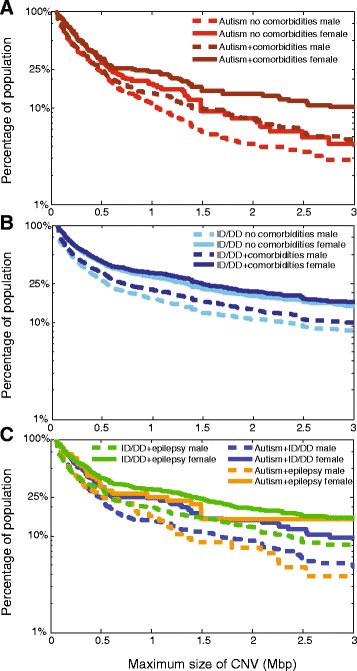
“CNV burden was calculated as the population frequency of the largest CNV and plotted as a survivor function [58].”
MethodSelf-citationA recurrent 15q13.3 microdeletion syndrome associated with mental retardation and seizures.
Sharp, A. J., Mefford, H. C., Li, K., Baker, C., Skinner, C., Stevenson, R. E., Schroer, R. J., Novara, F., De Gregori, M., Ciccone, R., et al. (2008) · Nature Genetics · doi:10.1038/ng.93 · Cited by 582 · cited 1×
“3 deletion [27–29], 22q11.”
Examining and interpreting the female protective effect against autistic behavior
Robinson, E. B., Lichtenstein, P., Anckarsäter, H., Happé, F., & Ronald, A. (2013) · Proceedings of the National Academy of Sciences · doi:10.1073/pnas.1211070110 · Cited by 531 · cited 1×
“It is likely that individuals with a family history of affected individuals are more predisposed to a condition due to an increased genetic liability within their family, and our results suggest that sex also affects the likelihood of a child in these families having a neurodevelopmental disorder [52].”
BackgroundAmiet, C., Gourfinkel-An, I., Bouzamondo, A., Tordjman, S., Baulac, M., Lechat, P., Mottron, L., & Cohen, D. (2008) · Biological Psychiatry · doi:10.1016/j.biopsych.2008.04.030 · Cited by 499 · cited 1×
“Within specific categories of comorbidities, girls were more likely than boys to manifest epilepsy with either autism or ID/DD, consistent with previous reports [59–61].”
Mattila, M.-L., Kielinen, M., Linna, S.-L., Jussila, K., Ebeling, H., Bloigu, R., Joseph, R. M., & Moilanen, I. (2011) · Journal of the American Academy of Child & Adolescent Psychiatry · doi:10.1016/j.jaac.2011.04.001 · Cited by 373 · cited 1×
“Our results are also supported by previous studies that show a sex ratio of 6:1 [62] in high-functioning individuals with autism and 2:1 within individuals with autism manifesting intellectual disability [63].”
ResultThe 22q11.2 Deletion in Children
VORSTMAN, J. A. S., MORCUS, M. E. J., DUIJFF, S. N., KLAASSEN, P. W. J., HEINEMAN-de BOER, J. A., BEEMER, F. A., SWAAB, H., KAHN, R. S., & van ENGELAND, H. (2006) · Journal of the American Academy of Child & Adolescent Psychiatry · doi:10.1097/01.chi.0000228131.56956.c1 · Cited by 345 · cited 1×
“2 deletion [30–32], and gene disruptive mutations in CHD2 [33–35] and SYNGAP1 [34–37] have all been significantly associated with ID/DD, autism, and schizophrenia phenotypes from independent cohort studies.”
Developmental brain dysfunction: revival and expansion of old concepts based on new genetic evidence
Moreno-De-Luca, A., Myers, S. M., Challman, T. D., Moreno-De-Luca, D., Evans, D. W., & Ledbetter, D. H. (2013) · The Lancet Neurology · doi:10.1016/s1474-4422(13)70011-5 · Cited by 330 · cited 1×
“In one recent example, phenotypic manifestations in individuals carrying de novo CNVs associated with variable expressivity correlated with parental phenotypes; parents with lower IQ scores were more likely to have children with a diagnosis of ID/DD and parents with higher social responsive scores (SRS) were more like…”
BackgroundRelative Burden of Large CNVs on a Range of Neurodevelopmental Phenotypes
Girirajan, S., Brkanac, Z., Coe, B. P., Baker, C., Vives, L., Vu, T. H., Shafer, N., Bernier, R., Ferrero, G. B., Silengo, M., et al. (2011) · PLoS Genetics · doi:10.1371/journal.pgen.1002334 · Cited by 324 · cited 1×
“In fact, the CNV load as assessed by the frequency and size of rare CNVs in an individual has been correlated with a range of distinct disorders including dyslexia, bipolar disorder, schizophrenia, autism, and ID/DD [40–42].”
Self-citationDeletion 17q12 is a recurrent copy number variant that confers high risk of autism and schizophrenia
Moreno-De-Luca, D., Mulle, J. G., Kaminsky, E. B., Sanders, S. J., Myers, S. M., Adam, M. P., Pakula, A. T., Eisenhauer, N. J., Uhas, K., Weik, L., et al. (2010) · The American Journal of Human Genetics · doi:10.1016/j.ajhg.2010.10.004 · Cited by 324 · cited 1×
“2 deletion [21–23], 17q12 deletion [24–26], 15q13.”
Severe Expressive-Language Delay Related to Duplication of the Williams–Beuren Locus
Somerville, M. J., Mervis, C. B., Young, E. J., Seo, E.-J., del Campo, M., Bamforth, S., Peregrine, E., Loo, W., Lilley, M., Pérez-Jurado, L. A., et al. (2005) · New England Journal of Medicine · doi:10.1056/nejmoa051962 · Cited by 312
Epilepsy in autism spectrum disorders
Canitano, R. (2007) · European Child & Adolescent Psychiatry · doi:10.1007/s00787-006-0563-2 · Cited by 309 · cited 1×
“epilepsy has been documented in 30 % to 40 % of individuals with autism [10, 11].”
BackgroundWheelwright, S., Auyeung, B., Allison, C., & Baron-Cohen, S. (2010) · Molecular Autism · doi:10.1186/2040-2392-1-10 · Cited by 308 · cited 1×
“Other studies have also reported that parents of children with autism more frequently manifest autistic, schizophrenic, or bipolar features than parents of typically developing children [45, 50].”
ResultBijlsma, E. K., Gijsbers, A. C. J., Schuurs-Hoeijmakers, J. H. M., van Haeringen, A., Fransen van de Putte, D. E., Anderlid, B.-M., Lundin, J., Lapunzina, P., Pérez Jurado, L. A., Delle Chiaie, B., et al. (2009) · European Journal of Medical Genetics · doi:10.1016/j.ejmg.2009.03.006 · Cited by 282 · cited 1×
“2 deletion [21–23], 17q12 deletion [24–26], 15q13.”
Phenotypic variability and genetic susceptibility to genomic disorders
Girirajan, S., & Eichler, E. E. (2010) · Human Molecular Genetics · doi:10.1093/hmg/ddq366 · Cited by 277 · cited 1×
“Further, these genetic factors can compound to create severe or variable presentations [38, 39].”
BackgroundSelf-citationMefford, H. C., Clauin, S., Sharp, A. J., Moller, R. S., Ullmann, R., Kapur, R., Pinkel, D., Cooper, G. M., Ventura, M., Ropers, H. H., et al. (2007) · The American Journal of Human Genetics · doi:10.1086/522591 · Cited by 268 · cited 1×
“2 deletion [21–23], 17q12 deletion [24–26], 15q13.”
Family History of Schizophrenia and Bipolar Disorder as Risk Factors for Autism
Sullivan, P. F., Magnusson, C., Reichenberg, A., Boman, M., Dalman, C., Davidson, M., Fruchter, E., Hultman, C. M., Lundberg, M., Långström, N., et al. (2012) · Archives of General Psychiatry · doi:10.1001/archgenpsychiatry.2012.730 · Cited by 258 · cited 1×
“Other studies have also reported that parents of children with autism more frequently manifest autistic, schizophrenic, or bipolar features than parents of typically developing children [45, 50].”
ResultClinical characteristics of children with autism spectrum disorder and co-occurring epilepsy.
Viscidi, E. W., Triche, E. W., Pescosolido, M. F., McLean, R. L., Joseph, R. M., Spence, S. J., & Morrow, E. M. (2013) · PLoS ONE · doi:10.1371/journal.pone.0067797 · Cited by 235 · cited 1×
“Within specific categories of comorbidities, girls were more likely than boys to manifest epilepsy with either autism or ID/DD, consistent with previous reports [59–61].”
Neurodevelopmental and neuropsychiatric disorders represent an interconnected molecular system
Cristino, A. S., Williams, S. M., Hawi, Z., An, J.-Y., Bellgrove, M. A., Schwartz, C. E., Costa, L. D. F., & Claudianos, C. (2014) · Molecular Psychiatry · doi:10.1038/mp.2013.16 · Cited by 231 · cited 1×
“Second, hundreds of genes and genomic regions have been identified for each of these neurodevelopmental disorders from studies of copy number variants (CNVs) and exome sequencing, suggesting significant genetic heterogeneity [14–17].”
Brief Report: “The Autism Epidemic”. The Registered Prevalence of Autism in a Swedish Urban Area
Gillberg, C., Cederlund, M., Lamberg, K., & Zeijlon, L. (2006) · Journal of Autism and Developmental Disorders · doi:10.1007/s10803-006-0081-6 · Cited by 226 · cited 1×
“For example, a male:female ratio of 2:1 exists among individuals with ID/DD [1, 2] and a 4:1 ratio for individuals with autism diagnoses [3, 4].”
BackgroundChapter 20 Psychiatric Comorbidities in Epilepsy
LaFrance, W. C., Kanner, A. M., & Hermann, B. (2008) · International Review of Neurobiology · doi:10.1016/s0074-7742(08)00020-2 · Cited by 225
Autism and intellectual disability: a study of prevalence on a sample of the Italian population
La Malfa, G., Lassi, S., Bertelli, M., Salvini, R., & Placidi, G. F. (2004) · Journal of Intellectual Disability Research · doi:10.1111/j.1365-2788.2003.00567.x · Cited by 212 · cited 1×
“In fact, 6 % to 50 % of individuals with epilepsy were reported to also have some psychiatric disorder [12] and 28 % to 40 % of individuals with intellectual disability were reported to have autistic features [9, 13].”
BackgroundA Family History Study of Neuropsychiatric Disorders in the Adult Siblings of Autistic Individuals
PIVEN, J., GAYLE, J., CHASE, G. A., FINK, B., LANDA, R., WZOREK, M. M., & FOLSTEIN, S. E. (1990) · Journal of the American Academy of Child & Adolescent Psychiatry · doi:10.1097/00004583-199003000-00004 · Cited by 204 · cited 1×
“Third, there has been a pervasive existence of family history of neuropsychiatric phenotypes reported within these disorders which may explain why affected individuals present with certain features over others [43–47].”
Diagnostic Exome Sequencing in Persons With Severe Intellectual Disability
de Ligt, J., Willemsen, M. H., van Bon, B. W. M., Kleefstra, T., Yntema, H. G., Kroes, T., Vulto-van Silfhout, A. T., Koolen, D. A., de Vries, P., Gilissen, C., et al. (2013) · Obstetrical & Gynecological Survey · doi:10.1097/01.ogx.0000428160.59063.a6 · Cited by 204
Scott, F. J., Baron-Cohen, S., Bolton, P., & Brayne, C. (2002) · Autism · doi:10.1177/1362361302006003002 · Cited by 199
Genetics of intellectual disability
Ropers, H. H. (2008) · Current Opinion in Genetics & Development · doi:10.1016/j.gde.2008.07.008 · Cited by 199 · cited 1×
“For example, a male:female ratio of 2:1 exists among individuals with ID/DD [1, 2] and a 4:1 ratio for individuals with autism diagnoses [3, 4].”
BackgroundA 15q13.3 microdeletion segregating with autism
and the International Molecular Genetic Study of Autism Consortium (IMGSAC), Pagnamenta, A. T., Wing, K., Sadighi Akha, E., Knight, S. J., Bölte, S., Schmötzer, G., Duketis, E., Poustka, F., Klauck, S. M., et al. (2009) · European Journal of Human Genetics · doi:10.1038/ejhg.2008.228 · Cited by 174 · cited 1×
“3 deletion [27–29], 22q11.”
Clinical spectrum associated with recurrent genomic rearrangements in chromosome 17q12
Nagamani, S. C. S., Erez, A., Shen, J. J., Li, C. C., Roeder, E. R., Cox, S., Karaviti, L. P., Pearson, M., Kang, S.-H. L., Sahoo, T., et al. (2009) · European Journal of Human Genetics · doi:10.1038/ejhg.2009.174 · Cited by 145 · cited 1×
“2 deletion [21–23], 17q12 deletion [24–26], 15q13.”
Robinson, E. B., Samocha, K. E., Kosmicki, J. A., McGrath, L., Neale, B. M., Perlis, R. H., & Daly, M. J. (2014) · Proceedings of the National Academy of Sciences · doi:10.1073/pnas.1409204111 · Cited by 142 · cited 1×
“Third, there has been a pervasive existence of family history of neuropsychiatric phenotypes reported within these disorders which may explain why affected individuals present with certain features over others [43–47].”
Moreno-De-Luca, A., Evans, D. W., Boomer, K. B., Hanson, E., Bernier, R., Goin-Kochel, R. P., Myers, S. M., Challman, T. D., Moreno-De-Luca, D., Slane, M. M., et al. (2015) · JAMA Psychiatry · doi:10.1001/jamapsychiatry.2014.2147 · Cited by 137 · cited 1×
“In one recent example, phenotypic manifestations in individuals carrying de novo CNVs associated with variable expressivity correlated with parental phenotypes; parents with lower IQ scores were more likely to have children with a diagnosis of ID/DD and parents with higher social responsive scores (SRS) were more like…”
BackgroundPrevalence of Autism among Adolescents with Intellectual Disabilities
Bryson, S. E., Bradley, E. A., Thompson, A., & Wainwright, A. (2008) · The Canadian Journal of Psychiatry · doi:10.1177/070674370805300710 · Cited by 128 · cited 2×
“In fact, 6 % to 50 % of individuals with epilepsy were reported to also have some psychiatric disorder [12] and 28 % to 40 % of individuals with intellectual disability were reported to have autistic features [9, 13].”
BackgroundAutism Spectrum Disorders: Clinical Features and Diagnosis
Nazeer, A., & Ghaziuddin, M. (2012) · Pediatric Clinics of North America · doi:10.1016/j.pcl.2011.10.007 · Cited by 122 · cited 1×
“epilepsy has been documented in 30 % to 40 % of individuals with autism [10, 11].”
BackgroundUnderstanding variable expressivity in microdeletion syndromes
Veltman, J. A., & Brunner, H. G. (2010) · Nature Genetics · doi:10.1038/ng0310-192 · Cited by 119 · cited 1×
“Further, these genetic factors can compound to create severe or variable presentations [38, 39].”
BackgroundWerling, D. M., & Geschwind, D. H. (2015) · Molecular Autism · doi:10.1186/s13229-015-0004-5 · Cited by 107
A genetic model for neurodevelopmental disease
Coe, B. P., Girirajan, S., & Eichler, E. E. (2012) · Current Opinion in Neurobiology · doi:10.1016/j.conb.2012.04.007 · Cited by 84 · cited 1×
“While most studies assign individuals into one broader-yet-distinct disease nosology, such as autism or ID/DD disorders, a range of developmental and behavioral phenotypes are comorbid to a large extent in these cohorts [7].”
BackgroundSelf-citationMulle, J. G., Pulver, A. E., McGrath, J. A., Wolyniec, P. S., Dodd, A. F., Cutler, D. J., Sebat, J., Malhotra, D., Nestadt, G., Conrad, D. F., et al. (2014) · Biological Psychiatry · doi:10.1016/j.biopsych.2013.05.040 · Cited by 72 · cited 1×
“23 duplication [18–20], 16p11.”
Steinberg, J., & Webber, C. (2013) · The American Journal of Human Genetics · doi:10.1016/j.ajhg.2013.09.013 · Cited by 71 · cited 1×
“Second, hundreds of genes and genomic regions have been identified for each of these neurodevelopmental disorders from studies of copy number variants (CNVs) and exome sequencing, suggesting significant genetic heterogeneity [14–17].”
Global increases in both common and rare copy number load associated with autism
Girirajan, S., Johnson, R. L., Tassone, F., Balciuniene, J., Katiyar, N., Fox, K., Baker, C., Srikanth, A., Yeoh, K. H., Khoo, S. J., et al. (2013) · Human Molecular Genetics · doi:10.1093/hmg/ddt136 · Cited by 60 · cited 2×
“For replication of results obtained from the Signature cohort, we also utilized CNV data from individuals with autism from two independently ascertained cohorts: the Simons Simplex Collection (1,124 children) [19] and the Childhood Autism Risks from Genetics and Environment (CHARGE) study (272 children with autism and…”
MethodResultSelf-citationNoh, H. J., Ponting, C. P., Boulding, H. C., Meader, S., Betancur, C., Buxbaum, J. D., Pinto, D., Marshall, C. R., Lionel, A. C., Scherer, S. W., et al. (2013) · PLoS Genetics · doi:10.1371/journal.pgen.1003523 · Cited by 54 · cited 1×
“Second, hundreds of genes and genomic regions have been identified for each of these neurodevelopmental disorders from studies of copy number variants (CNVs) and exome sequencing, suggesting significant genetic heterogeneity [14–17].”
Desachy, G., Croen, L. A., Torres, A. R., Kharrazi, M., Delorenze, G. N., Windham, G. C., Yoshida, C. K., & Weiss, L. A. (2015) · Molecular Psychiatry · doi:10.1038/mp.2014.179 · Cited by 54
Mandic-Maravic, V., Pejovic-Milovancevic, M., Mitkovic-Voncina, M., Kostic, M., Aleksic-Hil, O., Radosavljev-Kircanski, J., Mincic, T., & Lecic-Tosevski, D. (2015) · Scientific Reports · doi:10.1038/srep10418 · Cited by 51
De Novo CNVs in Bipolar Disorder: Recurrent Themes or New Directions?
Girirajan, S., & Eichler, E. E. (2011) · Neuron · doi:10.1016/j.neuron.2011.12.008 · Cited by 15
Self-citation
Cited by
Genetic Causes and Modifiers of Autism Spectrum Disorder
Rylaarsdam, L., & Guemez-Gamboa, A. (2019) · Frontiers in Cellular Neuroscience · doi:10.3389/fncel.2019.00385 · Cited by 560
Incomplete Penetrance and Variable Expressivity: From Clinical Studies to Population Cohorts
Kingdom, R., & Wright, C. F. (2022) · Frontiers in Genetics · doi:10.3389/fgene.2022.920390 · Cited by 287
“Girls diagnosed with ASD have an increased number of CNVs compared to boys with the same diagnosis, and asymptomatic mothers with children diagnosed with NDDs or ASD had a higher genetic burden of deleterious variants than fathers (Polyak et al., 2015), suggesting there may be some other cause for the incomplete penet…”
BackgroundBougeard, C., Picarel-Blanchot, F., Schmid, R., Campbell, R., & Buitelaar, J. (2021) · Frontiers in Psychiatry · doi:10.3389/fpsyt.2021.744709 · Cited by 330
“(34) study examining the impact of sex bias on comorbidities in ASD, to 14.”
BackgroundInfluentialSex and gender in neurodevelopmental conditions
Bölte, S., Neufeld, J., Marschik, P. B., Williams, Z. J., Gallagher, L., & Lai, M.-C. (2023) · Nature Reviews Neurology · doi:10.1038/s41582-023-00774-6 · Cited by 249
Pizzo, L., Jensen, M., Polyak, A., Rosenfeld, J. A., Mannik, K., Krishnan, A., McCready, E., Pichon, O., Le Caignec, C., Van Dijck, A., et al. (2019) · Genetics in Medicine · doi:10.1038/s41436-018-0266-3 · Cited by 193
Self-citation
Metadata
- Authors
- Polyak, A., Rosenfeld, J. A., & Girirajan, S.
- Affiliations
- Pennsylvania State University (US)
- Baylor College of Medicine (US)
- Corresponding author
- Girirajan, Santhosh
- Venue
- Genome Medicine
- Published
- 2015-08-27
- Volume
- 7
- Issue
- 1
- Pages
- 94-94
- ISSN
- 1756-994X (ISSN-L)
- PMC
- PMC4549901
- OpenAlex
- W1950769362
- Cited by
- 129
- References
- 65
- Citations by year
- 2026: 8 · 2025: 11 · 2024: 20 · 2023: 18 · 2022: 11 · 2021: 12 · 2020: 18 · 2019: 13 · 2018: 8 · 2017: 5 · 2016: 5
- FWCI
- 4.12
- Type
- journal article
- Language
- en
- Open access
- gold
- doi.org
- Locations
- Genome Medicine (publishedVersion)
- PubMed Central (publishedVersion, cc-by)
- PubMed (publishedVersion)
- Funders
- March of Dimes Foundation (US) (#5-FY14-66)
- Brain and Behavior Research Foundation (US) (22535)
- Topics
- Life Sciences › Biochemistry, Genetics and Molecular Biology › Genetics › Genetics and Neurodevelopmental Disorders
- Life Sciences › Neuroscience › Cognitive Neuroscience › Autism Spectrum Disorder Research
- Life Sciences › Biochemistry, Genetics and Molecular Biology › Genetics › Genomic variations and chromosomal abnormalities
- Keywords
- sex bias, neurodevelopmental disorders, autism spectrum disorder, intellectual disability, developmental delay, copy number variation, comorbidities, psychiatric comorbidity, epilepsy, 1q21.1 deletion, 16p11.2 deletion, 22q11.2 duplication, variable expressivity, family history (medicine), genetic load, sex ratio
- MeSH terms
- Adolescent, Adult, Child, Child, Preschool, Female, Humans, Infant, Male, Phenotype, Sex Factors, Comorbidity, Odds Ratio, Young Adult, DNA Copy Number Variations, Neurodevelopmental Disorders
About these checks
Registry, retraction, Cites and statistics results are computed, not judged, with one exception: a printed reference that no index lists is read once by a model before it counts as a citation error. Claims are extracted by a model and kept only when their quote appears verbatim in the text; each cited source is then checked, with a model’s help, for whether it says what the claim relies on. Those verdicts can be wrong — read the claim’s quote and the cited source before relying on one.
Statistics and arithmetic are recomputed, not judged.
Confidence bands are shown only for fields calibrated on our annotated test set. None is calibrated yet, so no band is shown.
What counts as a claim ›How we measure confidence ›How we check this ›
Are you an author, or do you see a problem with this page? Request a review
Data sources
Bibliographic data: Semantic Scholar, OpenAlex, Crossref.
Contains information from the Semantic Scholar Academic Graph Datasets, made available under the ODC Attribution License (ODC-BY 1.0).
Semantic Scholar’s data is described in: Kinney, R., et al. (2023). The Semantic Scholar Open Data Platform. arXiv:2301.10140.
