

An expansion of rare lineage intestinal microbes characterizes rheumatoid arthritis
Open accessThe DOI matches its Crossref record; 53 of the 53 references it cites were found in a registry or an index.
Abstract
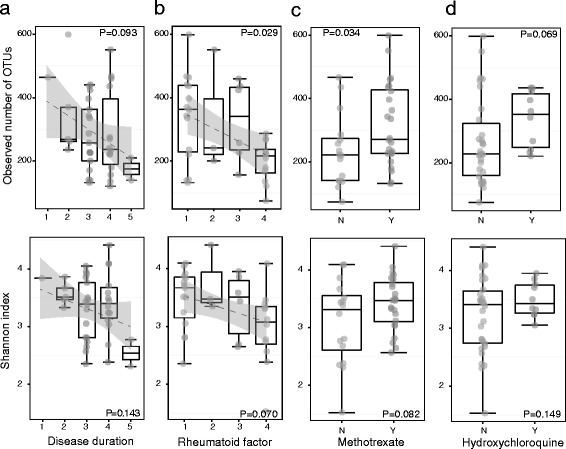
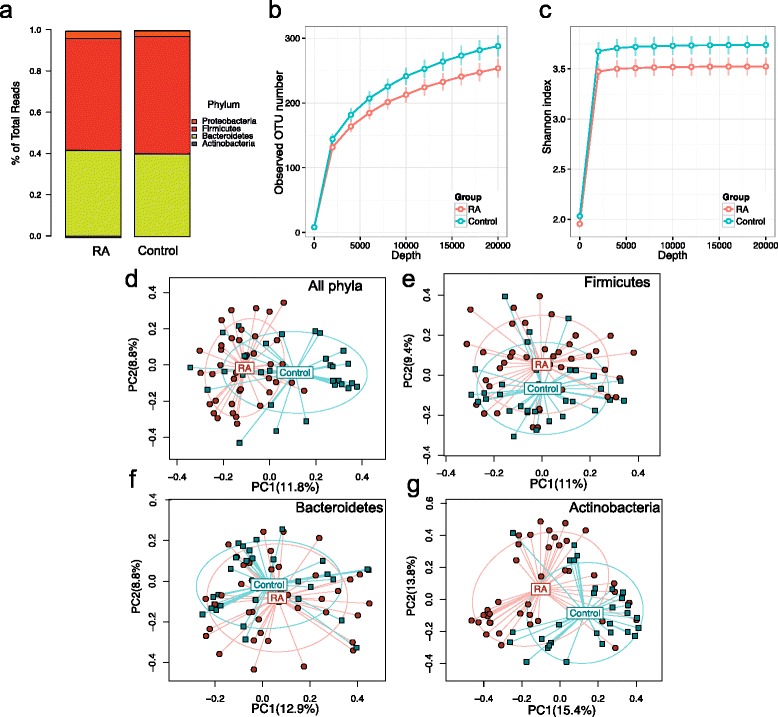
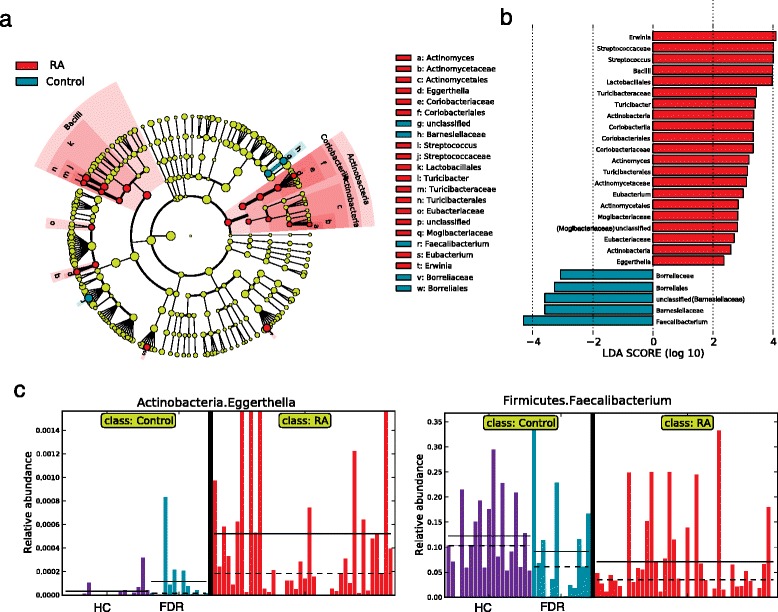
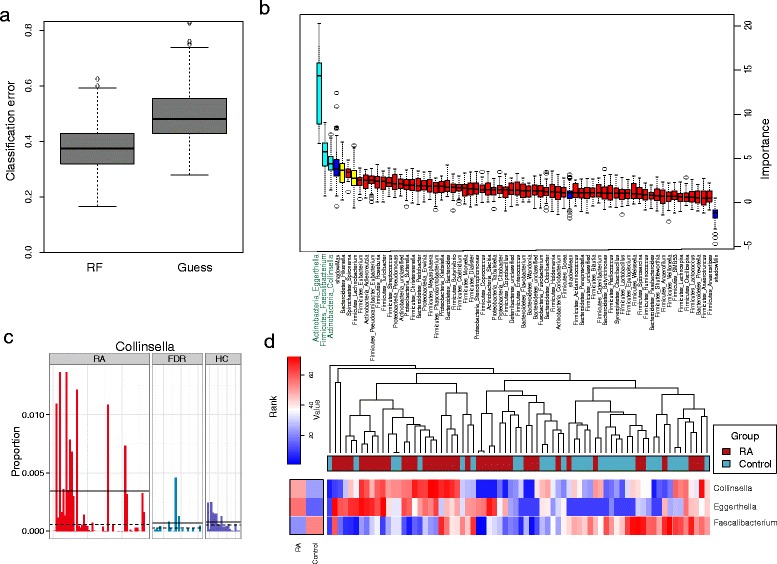
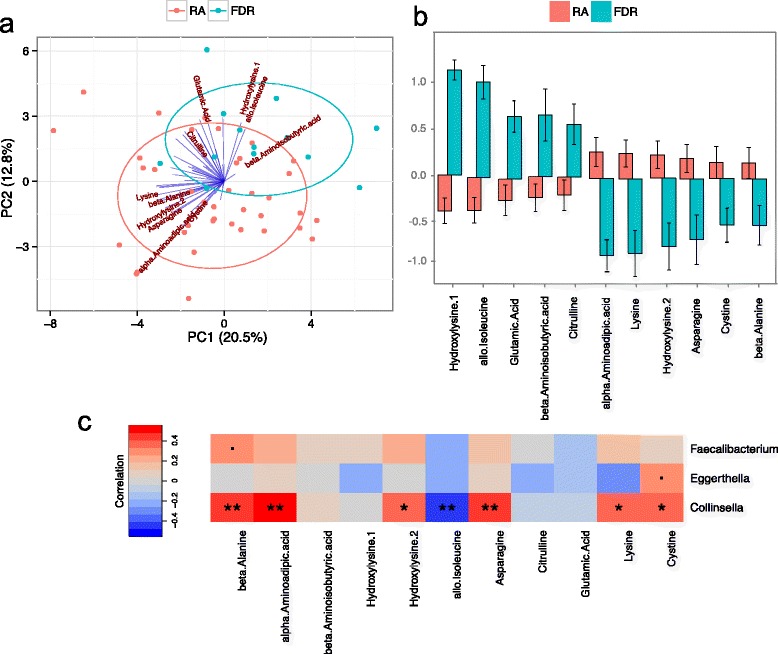
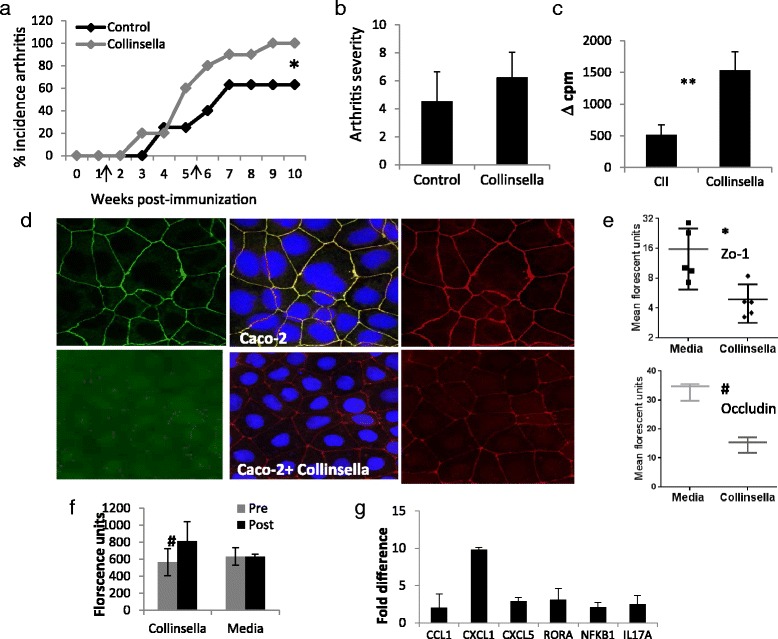
BACKGROUND: The adaptive immune response in rheumatoid arthritis (RA) is influenced by an interaction between host genetics and environment, particularly the host microbiome. Association of the gut microbiota with various diseases has been reported, though the specific components of the microbiota that affect the host response leading to disease remain unknown. However, there is limited information on the role of gut microbiota in RA. In this study we aimed to define a microbial and metabolite profile that could predict disease status. In addition, we aimed to generate a humanized model of arthritis to confirm the RA-associated microbe. METHODS: To identify an RA biomarker profile, the 16S ribosomal DNA of fecal samples from RA patients, first-degree relatives (to rule out environment/background as confounding factors), and random healthy non-RA controls were sequenced. Analysis of metabolites and their association with specific taxa was performed to investigate a potential mechanistic link. The role of an RA-associated microbe was confirmed using a human epithelial cell line and a humanized mouse model of arthritis. RESULTS: Patients with RA exhibited decreased gut microbial diversity compared with controls, which correlated with disease duration and autoantibody levels. A taxon-level analysis suggested an expansion of rare taxa, Actinobacteria, with a decrease in abundant taxa in patients with RA compared with controls. Prediction models based on the random forests algorithm suggested that three genera, Collinsella, Eggerthella, and Faecalibacterium, segregated with RA. The abundance of Collinsella correlated strongly with high levels of alpha-aminoadipic acid and asparagine as well as production of the proinflammatory cytokine IL-17A. A role for Collinsella in altering gut permeability and disease severity was confirmed in experimental arthritis. CONCLUSIONS: These observations suggest dysbiosis in RA patients resulting from the abundance of certain rare bacterial lineages. A correlation between the intestinal microbiota and metabolic signatures could determine a predictive profile for disease causation and progression.
Overview
The claims and statistics of this paper haven’t been checked yet.
Free: it reads the open-access text and checks the first 5 claims that cite a source we can check. Create a free account to check every claim.
Integrity signals
Registry
Cites
Statistics
Figures
Verification
Claims the paper makes
The claims and statistics of this paper haven’t been checked yet.
Free: it reads the open-access text and checks the first 5 claims that cite a source we can check. Create a free account to check every claim.
Claims other papers make about this one
Each is checked against this paper’s own text: does it say what the citing paper says it does?
The source backs part of the claim, not all of it — or backs it for a different population, condition or comparison.
In the citing paper
“Another study identified a strong link between three rare genera (Collinsella, Eggerthella and Faecalibacterium) and RA”
From Interaction between microbiota and immunity in health and disease (2020) · cites this paper as [171]
Experimental — accuracy not yet measuredThe cited source says what the claim attributes to it.
In the citing paper
“among which Collinsella is associated with proinflammatory IL-17A production.171”
From Interaction between microbiota and immunity in health and disease (2020) · cites this paper as [171]
Self-check
Percentages, sums and reported differences re-computed from the paper’s own numbers.
The self-check needs the paper’s full text.
Citations
Cites
Breiman, L. (2001) · Machine Learning · doi:10.1023/a:1010933404324 · Cited by 133,538
Metagenomic biomarker discovery and explanation
Segata, N., Izard, J., Waldron, L., Gevers, D., Miropolsky, L., Garrett, W. S., & Huttenhower, C. (2011) · Genome Biology · doi:10.1186/gb-2011-12-6-r60 · Cited by 16,192 · cited 1×
“Using LFfSe analysis [26], we observed 26 differentially abundant taxa at different taxonomic levels.”
MethodPredictive functional profiling of microbial communities using 16S rRNA marker gene sequences
Langille, M. G. I., Zaneveld, J., Caporaso, J. G., McDonald, D., Knights, D., Reyes, J. A., Clemente, J. C., Burkepile, D. E., Vega Thurber, R. L., Knight, R., et al. (2013) · Nature Biotechnology · doi:10.1038/nbt.2676 · Cited by 9,116
A core gut microbiome in obese and lean twins
Turnbaugh, P. J., Hamady, M., Yatsunenko, T., Cantarel, B. L., Duncan, A., Ley, R. E., Sogin, M. L., Jones, W. J., Roe, B. A., Affourtit, J. P., et al. (2009) · Nature · doi:10.1038/nature07540 · Cited by 7,823 · cited 1×
“RA [8, 9], diabetes, and obesity [11, 12].”
Enterotypes of the human gut microbiome
MetaHIT Consortium (additional members), Arumugam, M., Raes, J., Pelletier, E., Le Paslier, D., Yamada, T., Mende, D. R., Fernandes, G. R., Tap, J., Bruls, T., et al. (2011) · Nature · doi:10.1038/nature09944 · Cited by 7,548 · cited 1×
“The Human Microbiome Project and other studies have documented the diversity of the gut microbiome in healthy individuals and gut-related diseases [16–19].”
BackgroundTurnbaugh, P. J., Ley, R. E., Hamady, M., Fraser-Liggett, C. M., Knight, R., & Gordon, J. I. (2007) · Nature · doi:10.1038/nature06244 · Cited by 6,091 · cited 1×
“The Human Microbiome Project and other studies have documented the diversity of the gut microbiome in healthy individuals and gut-related diseases [16–19].”
BackgroundFeature Selection with the Boruta Package
Kursa, M. B., & Rudnicki, W. R. (2010) · Journal of Statistical Software · doi:10.18637/jss.v036.i11 · Cited by 5,659 · cited 1×
“We next applied Boruta feature selection, which is a feature selection method built around random forests and selects features that have significantly more discriminatory power than random permuted features [29].”
MethodDysfunction of the intestinal microbiome in inflammatory bowel disease and treatment
Morgan, X. C., Tickle, T. L., Sokol, H., Gevers, D., Devaney, K. L., Ward, D. V., Reyes, J. A., Shah, S. A., LeLeiko, N., Snapper, S. B., et al. (2012) · Genome Biology · doi:10.1186/gb-2012-13-9-r79 · Cited by 2,713 · cited 1×
“The Human Microbiome Project and other studies have documented the diversity of the gut microbiome in healthy individuals and gut-related diseases [16–19].”
BackgroundExpansion of intestinal Prevotella copri correlates with enhanced susceptibility to arthritis
Scher, J. U., Sczesnak, A., Longman, R. S., Segata, N., Ubeda, C., Bielski, C., Rostron, T., Cerundolo, V., Pamer, E. G., Abramson, S. B., et al. (2013) · eLife · doi:10.7554/elife.01202 · Cited by 2,047
Nielen, M. M. J., van Schaardenburg, D., Reesink, H. W., van de Stadt, R. J., van der Horst‐Bruinsma, I. E., de Koning, M. H. M. T., Habibuw, M. R., Vandenbroucke, J. P., & Dijkmans, B. A. C. (2004) · Arthritis & Rheumatism · doi:10.1002/art.20018 · Cited by 1,861 · cited 1×
“Autoreactive T-cell responses and auto-antibody production leading up to the onset of RA occur much earlier than the clinical presentation of RA [34].”
BackgroundZhang, X., Zhang, D., Jia, H., Feng, Q., Wang, D., Liang, D., Wu, X., Li, J., Tang, L., Li, Y., et al. (2015) · Nature Medicine · doi:10.1038/nm.3914 · Cited by 1,690 · cited 8×
“(XLSX 36 kb) Abbreviations BMI: body mass index; CII: type II collagen; DC: dendritic cell; FDR: first-degree relative; FITC: fluorescein isothiocyanate; HC: healthy control; IL: interleukin; KEGG: Kyoto Encyclopedia of Genes and Genomes; LDA: linear discriminant analysis; MTX: methotrexate; OTU: operational taxonomic…”
ResultInfluentialT Helper 17 Lineage Differentiation Is Programmed by Orphan Nuclear Receptors RORα and RORγ
Yang, X. O., Pappu, B. P., Nurieva, R., Akimzhanov, A., Kang, H. S., Chung, Y., Ma, L., Shah, B., Panopoulos, A. D., Schluns, K. S., et al. (2008) · Immunity · doi:10.1016/j.immuni.2007.11.016 · Cited by 1,605 · cited 7×
“Compared with controls, culturing with Collinsella led to more than a twofold increase in the expression of interleukin (IL)-17A as well as RORα and chemokines CXCL1 and CXCL5, which are known to regulate production of IL-17 [30, 31].”
BackgroundInfluentialGut-Residing Segmented Filamentous Bacteria Drive Autoimmune Arthritis via T Helper 17 Cells
Wu, H.-J., Ivanov, I. I., Darce, J., Hattori, K., Shima, T., Umesaki, Y., Littman, D. R., Benoist, C., & Mathis, D. (2010) · Immunity · doi:10.1016/j.immuni.2010.06.001 · Cited by 1,577 · cited 1×
“Introduction of segmented filamentous bacteria restores the presence of TH17 cells and contributes to the onset of arthritis in germ-free mice [14].”
BackgroundAssociating microbiome composition with environmental covariates using generalized UniFrac distances
Chen, J., Bittinger, K., Charlson, E. S., Hoffmann, C., Lewis, J., Wu, G. D., Collman, R. G., Bushman, F. D., & Li, H. (2012) · Bioinformatics · doi:10.1093/bioinformatics/bts342 · Cited by 1,145 · cited 1×
“4 for unweighted and weighted UniFrac, respectively), suggesting that the major microbiota difference was in the presence and abundance of rare and less abundant taxa [25].”
BackgroundSelf-citationRaychaudhuri, S., Sandor, C., Stahl, E. A., Freudenberg, J., Lee, H.-S., Jia, X., Alfredsson, L., Padyukov, L., Klareskog, L., Worthington, J., et al. (2012) · Nature Genetics · doi:10.1038/ng.1076 · Cited by 946
Interleukin-17 and its target genes: mechanisms of interleukin-17 function in disease
Onishi, R. M., & Gaffen, S. L. (2010) · Immunology · doi:10.1111/j.1365-2567.2009.03240.x · Cited by 894 · cited 1×
“IL-17A, a major cytokine involved in arthritis, upregulates CXCL1, which is known to cause increased cell migration, angiogenesis, and activation of the STAT-3 pathway [40].”
BackgroundDynamics and associations of microbial community types across the human body
Ding, T., & Schloss, P. D. (2014) · Nature · doi:10.1038/nature13178 · Cited by 885 · cited 1×
“An interesting observation was the loss of sex-biased differences in RA patients, as a healthy human microbiota is sex-dependent [49].”
BackgroundGreenblum, S., Turnbaugh, P. J., & Borenstein, E. (2012) · Proceedings of the National Academy of Sciences · doi:10.1073/pnas.1116053109 · Cited by 821 · cited 1×
“The Human Microbiome Project and other studies have documented the diversity of the gut microbiome in healthy individuals and gut-related diseases [16–19].”
BackgroundInnate immune recognition of the microbiota promotes host-microbial symbiosis
Chu, H., & Mazmanian, S. K. (2013) · Nature Immunology · doi:10.1038/ni.2635 · Cited by 630 · cited 1×
“During the past decade, our understanding of the interaction between microbes and host has evolved from a passive commensal relationship to recognition that the gut microbiota is essential for maintaining immune homeostasis [5, 6].”
BackgroundTWIN CONCORDANCE RATES FOR RHEUMATOID ARTHRITIS: RESULTS FROM A NATIONWIDE STUDY
SILMAN, A. J., MACGREGOR, A. J., THOMSON, W., HOLLIGAN, S., CARTHY, D., FARHAN, A., & OLLIER, W. E. R. (1993) · Rheumatology · doi:10.1093/rheumatology/32.10.903 · Cited by 616 · cited 1×
“However, low concordance of RA in monozygotic twins indicates involvement of other factors [2]—perhaps an interaction between genetic and environmental factors—in the development of RA [3].”
BackgroundThe multifactorial role of neutrophils in rheumatoid arthritis
Wright, H. L., Moots, R. J., & Edwards, S. W. (2014) · Nature Reviews Rheumatology · doi:10.1038/nrrheum.2014.80 · Cited by 590 · cited 1×
“Recently, a multifactorial role of neutrophils has been suggested in RA [37].”
BackgroundLeflunomide: mode of action in the treatment of rheumatoid arthritis
Breedveld, F. C., & Dayer, J.-M. (2000) · Annals of the Rheumatic Diseases · doi:10.1136/ard.59.11.841 · Cited by 485 · cited 1×
“This pathway is upregulated in RA patients and typically treated with pyrimidine synthesis inhibitors such as leflunomide [44].”
Background2-Aminoadipic acid is a biomarker for diabetes risk
Wang, T. J., Ngo, D., Psychogios, N., Dejam, A., Larson, M. G., Vasan, R. S., Ghorbani, A., O’Sullivan, J., Cheng, S., Rhee, E. P., et al. (2013) · Journal of Clinical Investigation · doi:10.1172/jci64801 · Cited by 452 · cited 1×
“Alpha-aminoadipic acid is a marker for autoimmunity and age-associated changes in human collagen [41, 42], while asparagine is a non-essential amino acid involved in the tricarboxylic acid cycle and blocking apoptosis [43].”
BackgroundAsparagine Plays a Critical Role in Regulating Cellular Adaptation to Glutamine Depletion
Zhang, J., Fan, J., Venneti, S., Cross, J. R., Takagi, T., Bhinder, B., Djaballah, H., Kanai, M., Cheng, E. H., Judkins, A. R., et al. (2014) · Molecular Cell · doi:10.1016/j.molcel.2014.08.018 · Cited by 439 · cited 1×
“Alpha-aminoadipic acid is a marker for autoimmunity and age-associated changes in human collagen [41, 42], while asparagine is a non-essential amino acid involved in the tricarboxylic acid cycle and blocking apoptosis [43].”
BackgroundFecal microbiota in early rheumatoid arthritis.
Vaahtovuo, J., Munukka, E., Korkeamäki, M., Luukkainen, R., & Toivanen, P. (2008) · PubMed · Cited by 426
Khan, M. T., Duncan, S. H., Stams, A. J. M., van Dijl, J. M., Flint, H. J., & Harmsen, H. J. M. (2012) · The ISME Journal · doi:10.1038/ismej.2012.5 · Cited by 340 · cited 1×
“Faecalibacterium is one of the most abundant Firmicutes in the human gut that produces butyrate [45].”
BackgroundProbiotic supplementation improves inflammatory status in patients with rheumatoid arthritis
Vaghef-Mehrabany, E., Alipour, B., Homayouni-Rad, A., Sharif, S.-K., Asghari-Jafarabadi, M., & Zavvari, S. (2014) · Nutrition · doi:10.1016/j.nut.2013.09.007 · Cited by 311 · cited 1×
“The therapeutic potential of the only probiotics, lactobacilli, used as treatment for RA is inconclusive, with some studies in favor of their use while others did not show significant improvement with lactobacilli using the American College of Rheumatology (ACR) response criteria for RA [50–53].”
MethodQin, B., Yang, M., Fu, H., Ma, N., Wei, T., Tang, Q., Hu, Z., Liang, Y., Yang, Z., & Zhong, R. (2015) · Arthritis Research & Therapy · doi:10.1186/s13075-015-0601-x · Cited by 239 · cited 1×
“Obesity and elevated BMI are associated with both the incidence [46, 47] and prognosis of RA [48].”
BackgroundContribution of obesity to the rise in incidence of rheumatoid arthritis
Crowson, C. S., Matteson, E. L., Davis, J. M., & Gabriel, S. E. (2013) · Arthritis Care & Research · doi:10.1002/acr.21660 · Cited by 238 · cited 1×
“Obesity and elevated BMI are associated with both the incidence [46, 47] and prognosis of RA [48].”
BackgroundSelf-citationGomez, A., Luckey, D., Yeoman, C. J., Marietta, E. V., Berg Miller, M. E., Murray, J. A., White, B. A., & Taneja, V. (2012) · PLoS ONE · doi:10.1371/journal.pone.0036095 · Cited by 236 · cited 4×
“dysbiotic fecal microbiome compared with mice carrying an RA-resistant gene [15].”
BackgroundMethodResultInfluentialSelf-citationHatakka, K., Martio, J., Korpela, M., Herranen, M., Poussa, T., Laasanen, T., Saxelin, M., Vapaatalo, H., Moilanen, E., & Korpela, R. (2003) · Scandinavian Journal of Rheumatology · doi:10.1080/03009740310003695 · Cited by 235 · cited 1×
“The therapeutic potential of the only probiotics, lactobacilli, used as treatment for RA is inconclusive, with some studies in favor of their use while others did not show significant improvement with lactobacilli using the American College of Rheumatology (ACR) response criteria for RA [50–53].”
MethodNouailles, G., Dorhoi, A., Koch, M., Zerrahn, J., Weiner, J., Faé, K. C., Arrey, F., Kuhlmann, S., Bandermann, S., Loewe, D., et al. (2014) · Journal of Clinical Investigation · doi:10.1172/jci72030 · Cited by 220 · cited 7×
“Compared with controls, culturing with Collinsella led to more than a twofold increase in the expression of interleukin (IL)-17A as well as RORα and chemokines CXCL1 and CXCL5, which are known to regulate production of IL-17 [30, 31].”
BackgroundInfluentialKlareskog, L., Padyukov, L., Lorentzen, J., & Alfredsson, L. (2006) · Nature Clinical Practice Rheumatology · doi:10.1038/ncprheum0249 · Cited by 207 · cited 1×
“Discussion Accumulating evidence suggests that RA is a multifactorial disease dependent on an interaction between genetic and environmental factors [32, 33].”
BackgroundInfluence of microbial environment on autoimmunity
Chervonsky, A. V. (2009) · Nature Immunology · doi:10.1038/ni.1801 · Cited by 185 · cited 1×
“RA [8, 9], diabetes, and obesity [11, 12].”
Uncooked, lactobacilli-rich, vegan food and rheumatoid arthritis
Nenonen, M. T., Helve, T. A., Rauma, A. L., & Hanninen, O. O. (1998) · Rheumatology · doi:10.1093/rheumatology/37.3.274 · Cited by 137 · cited 1×
“The therapeutic potential of the only probiotics, lactobacilli, used as treatment for RA is inconclusive, with some studies in favor of their use while others did not show significant improvement with lactobacilli using the American College of Rheumatology (ACR) response criteria for RA [50–53].”
MethodEnvironmental Exposures and Rheumatoid Arthritis Risk
Hoovestol, R. A., & Mikuls, T. R. (2011) · Current Rheumatology Reports · doi:10.1007/s11926-011-0203-9 · Cited by 135 · cited 1×
“However, low concordance of RA in monozygotic twins indicates involvement of other factors [2]—perhaps an interaction between genetic and environmental factors—in the development of RA [3].”
BackgroundObesity and the Gut Microbiota
Flint, H. J. (2011) · Journal of Clinical Gastroenterology · doi:10.1097/mcg.0b013e31821f44c4 · Cited by 134 · cited 1×
“In support of previous findings [24], our data demonstrate a decreased species richness of the Chen et al.”
ResultThe Gut Microbiome in Health and Disease
Owyang, C., & Wu, G. D. (2014) · Gastroenterology · doi:10.1053/j.gastro.2014.03.032 · Cited by 132
Arthritis susceptibility and the gut microbiome
Taneja, V. (2014) · FEBS Letters · doi:10.1016/j.febslet.2014.05.034 · Cited by 128 · cited 2×
“Differences in the abundance of certain commonly present gut commensals between RA patients and those with other rheumatologic diseases, as well as with healthy controls (HCs), suggests the gut microbiota has a possible association with RA [7, 9, 10].”
BackgroundSelf-citationRheumatoid arthritis, Proteus, anti-CCP antibodies and Karl Popper
Ebringer, A., Rashid, T., & Wilson, C. (2009) · Autoimmunity Reviews · doi:10.1016/j.autrev.2009.10.006 · Cited by 105 · cited 1×
“A role for the gut microbiota in RA pathogenesis is further supported by the success of antibiotic treatment in some RA patients [13].”
BackgroundNew humanized HLA–DR4–transgenic mice that mimic the sex bias of rheumatoid arthritis
Taneja, V., Behrens, M. D., Mangalam, A. K., Griffiths, M. M., Luthra, H. S., & David, C. S. (2006) · Arthritis & Rheumatism · doi:10.1002/art.22213 · Cited by 99 · cited 2×
“The arthritic severity of the mice was evaluated with a grading system of 0–3 for each paw as described previously [21].”
MethodSelf-citationIM-TORNADO: A Tool for Comparison of 16S Reads from Paired-End Libraries
Jeraldo, P., Kalari, K., Chen, X., Bhavsar, J., Mangalam, A., White, B., Nelson, H., Kocher, J.-P., & Chia, N. (2014) · PLoS ONE · doi:10.1371/journal.pone.0114804 · Cited by 99 · cited 3×
“High quality 16S rDNA V3-V5 sequences obtained from fecal samples were processed by IM TORNADO (median 122,028 reads per sample, range 21,045 to 894,587) [20].”
MethodInfluentialSelf-citationKim, J. M., Oh, Y. K., Kim, Y. J., Oh, H. B., & Cho, Y. J. (2008) · Clinical and Experimental Immunology · doi:10.1046/j.1365-2249.2001.01462.x · Cited by 93 · cited 1×
“CXCL5 production by epithelial cells in response to Bacteroides fragilis is associated with an inflammatory response [38].”
BackgroundTaneja, V., & David, C. S. (2009) · Immunological Reviews · doi:10.1111/j.0105-2896.2009.00858.x · Cited by 69 · cited 1×
“AEo mice used in this study have been characterized and the collagen-induced arthritis model in the HLA-DQ8 transgenic mice has been described previously [21, 22].”
MethodSelf-citationKim, J. M., Lee, J. Y., Yoon, Y. M., Oh, Y. ‐., Youn, J., & Kim, Y. ‐. (2006) · Scandinavian Journal of Immunology · doi:10.1111/j.1365-3083.2006.001756.x · Cited by 69 · cited 1×
“Additionally, Collinsella influences the epithelial production of IL-17A and the chemokines CXCL1 and CXCL5, which may result in recruitment of neutrophils and activation of NFkB, which has been observed to be involved in the pathologic effects of a gut pathobiont [36].”
BackgroundMechanism by which HLA-DR4 regulates sex-bias of arthritis in humanized mice
Behrens, M. D., Trejo, T., Luthra, H. S., Griffiths, M. M., David, C. S., & Taneja, V. (2010) · Journal of Autoimmunity · doi:10.1016/j.jaut.2009.12.007 · Cited by 63 · cited 1×
“A recent study showed shared sequences between Collinsella and DRB1*0401, suggesting that Collinsella might contribute to RA via molecular mimicry [8], further supporting the current observations that HLA class II molecules can present self-HLA-derived peptides [35] and mimicry with a pathogen can result in enhanced s…”
ResultSelf-citationAnti-CXCL5 therapy ameliorates IL-17-induced arthritis by decreasing joint vascularization
Pickens, S. R., Chamberlain, N. D., Volin, M. V., Gonzalez, M. H., Pope, R. M., Mandelin, A. M., Kolls, J. K., & Shahrara, S. (2011) · Angiogenesis · doi:10.1007/s10456-011-9227-z · Cited by 54 · cited 1×
“Both CXCL1 and CXCL5 are increased in arthritis [39].”
BackgroundBugs & us: the role of the gut in autoimmunity.
Luckey, D. H., Gomez, A. M., Murray, J. A., White, B. A., & Taneja, V. (2013) · PubMed Central · Cited by 53
Self-citationInfection and rheumatoid arthritis: still an open question
Hitchon, C. A., & El-Gabalawy, H. S. (2011) · Current Opinion in Rheumatology · doi:10.1097/bor.0b013e3283477b7b · Cited by 44 · cited 1×
“An infectious etiology of RA has been proposed for decades, although conclusive evidence is lacking [4].”
BackgroundEllerby, N., Mattey, D. L., Packham, J., Dawes, P. T., & Hider, S. (2014) · Annals of the Rheumatic Diseases · doi:10.1136/annrheumdis-2014-206254 · Cited by 39 · cited 1×
“Obesity and elevated BMI are associated with both the incidence [46, 47] and prognosis of RA [48].”
BackgroundSell, D. R., Strauch, C., Shen, W., & Monnier, V. M. (2008) · Annals of the New York Academy of Sciences · doi:10.1196/annals.1433.065 · Cited by 27 · cited 1×
“Alpha-aminoadipic acid is a marker for autoimmunity and age-associated changes in human collagen [41, 42], while asparagine is a non-essential amino acid involved in the tricarboxylic acid cycle and blocking apoptosis [43].”
BackgroundBedaiwi, M. K., & Inman, R. D. (2014) · Current Opinion in Rheumatology · doi:10.1097/bor.0000000000000075 · Cited by 26 · cited 1×
“The therapeutic potential of the only probiotics, lactobacilli, used as treatment for RA is inconclusive, with some studies in favor of their use while others did not show significant improvement with lactobacilli using the American College of Rheumatology (ACR) response criteria for RA [50–53].”
MethodTaneja, V., Griffiths, M. M., Behrens, M. D., Luthra, H. S., & David, C. S. (2003) · Journal of Clinical Investigation · doi:10.1172/jci17450 · Cited by 26 · cited 1×
“T-cell proliferation was measured by routine (3)H-thymidine incorporation [23].”
MethodSelf-citation
Cited by
Interaction between microbiota and immunity in health and disease
Zheng, D., Liwinski, T., & Elinav, E. (2020) · Cell Research · doi:10.1038/s41422-020-0332-7 · Cited by 3,947
“Another study identified a strong link between three rare genera (Collinsella, Eggerthella and Faecalibacterium) and RA, among which Collinsella is associated with proinflammatory IL-17A production.(171) In a Chinese cohort, RA patients displayed an over-representation of Lactobacillus salivarius and reduced levels of…”
BackgroundSmolen, J. S., Aletaha, D., Barton, A., Burmester, G. R., Emery, P., Firestein, G. S., Kavanaugh, A., McInnes, I. B., Solomon, D. H., Strand, V., et al. (2018) · Nature Reviews Disease Primers · doi:10.1038/nrdp.2018.1 · Cited by 2,445
Rheumatoid arthritis: pathological mechanisms and modern pharmacologic therapies
Guo, Q., Wang, Y., Xu, D., Nossent, J., Pavlos, N. J., & Xu, J. (2018) · Bone Research · doi:10.1038/s41413-018-0016-9 · Cited by 1,767
“It is well documented that gut microbiota may contribute to the pathogenesis of RA via multiple molecular mechanisms.(40,41) Several studies have established the role of dietary factors in RA.”
BackgroundThe etiology of rheumatoid arthritis
Scherer, H. U., Häupl, T., & Burmester, G. R. (2020) · Journal of Autoimmunity · doi:10.1016/j.jaut.2019.102400 · Cited by 881
Impact of commonly used drugs on the composition and metabolic function of the gut microbiota
Vich Vila, A., Collij, V., Sanna, S., Sinha, T., Imhann, F., Bourgonje, A. R., Mujagic, Z., Jonkers, D. M. A. E., Masclee, A. A. M., Fu, J., et al. (2020) · Nature Communications · doi:10.1038/s41467-019-14177-z · Cited by 791
Metadata
- Authors
- Chen, J., Wright, K., Davis, J. M., Jeraldo, P., Marietta, E. V., Murray, J., Nelson, H., Matteson, E. L., & Taneja, V.
- Affiliations
- Mayo Clinic (US)
- Corresponding author
- Taneja, Veena
- ORCID
- Venue
- Genome Medicine
- Published
- 2016-04-21
- Volume
- 8
- Issue
- 1
- Pages
- 43-43
- ISSN
- 1756-994X (ISSN-L)
- PMC
- PMC4840970
- OpenAlex
- W2336817596
- Cited by
- 858
- References
- 53
- Citations by year
- 2026: 81 · 2025: 80 · 2024: 97 · 2023: 116 · 2022: 111 · 2021: 128 · 2020: 67 · 2019: 66 · 2018: 62 · 2017: 39 · 2016: 10
- FWCI
- 30.65
- Type
- journal article
- Language
- en
- Open access
- gold
- doi.org
- Licence
- cc-by
- creativecommons.org/licenses/by/4.0/ (tdm)
- creativecommons.org/licenses/by/4.0/ (vor)
- Locations
- Genome Medicine (publishedVersion, cc-by)
- Europe PMC (PubMed Central) (publishedVersion, cc-by)
- PubMed Central (publishedVersion, cc-by)
- PubMed (publishedVersion)
- Funders
- National Institute of Arthritis and Musculoskeletal and Skin Diseases (AR30752)
- Mark and Mary Davis
- Topics
- Life Sciences › Biochemistry, Genetics and Molecular Biology › Molecular Biology › Gut microbiota and health
- Health Sciences › Medicine › Rheumatology › Rheumatoid Arthritis Research and Therapies
- Health Sciences › Medicine › Gastroenterology › Inflammatory Bowel Disease
- Keywords
- rheumatoid arthritis, gut microbiota, rare bacterial taxa, dysbiosis, Collinsella, Eggerthella, Faecalibacterium, actinobacteria, intestinal permeability, IL-17A, alpha-aminoadipic acid, asparagine, metabolites, humanized mice, disease biomarkers, autoantibodies, gut-immune interaction
- MeSH terms
- Gastrointestinal Microbiome, Adult, Aged, Animals, Arthritis, Rheumatoid, Cell Line, Disease Models, Animal, Feces, Female, Humans, Intestinal Mucosa, Male, Middle Aged, Models, Biological, Permeability, Phylogeny, RNA, Ribosomal, 16S, Severity of Illness Index, Case-Control Studies, Cytokines, Chemokines, Computational Biology, Biodiversity, Mice, Metagenome, Metabolome, Metagenomics
About these checks
Registry, retraction, Cites and statistics results are computed, not judged, with one exception: a printed reference that no index lists is read once by a model before it counts as a citation error. Claims are extracted by a model and kept only when their quote appears verbatim in the text; each cited source is then checked, with a model’s help, for whether it says what the claim relies on. Those verdicts can be wrong — read the claim’s quote and the cited source before relying on one.
Statistics and arithmetic are recomputed, not judged.
Confidence bands are shown only for fields calibrated on our annotated test set. None is calibrated yet, so no band is shown.
What counts as a claim ›How we measure confidence ›How we check this ›
Are you an author, or do you see a problem with this page? Request a review
Data sources
Bibliographic data: Semantic Scholar, OpenAlex, Crossref.
Contains information from the Semantic Scholar Academic Graph Datasets, made available under the ODC Attribution License (ODC-BY 1.0).
Semantic Scholar’s data is described in: Kinney, R., et al. (2023). The Semantic Scholar Open Data Platform. arXiv:2301.10140.
