

Role of the intestinal microbiome and microbial-derived metabolites in immune checkpoint blockade immunotherapy of cancer
Open accessThe DOI matches its Crossref record; 70 of the 70 references it cites were found in a registry or an index.
Abstract
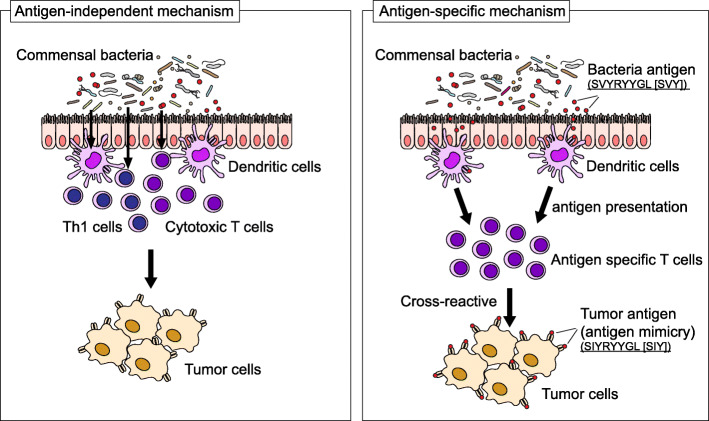
Immune checkpoint inhibitors (ICIs) are monoclonal antibodies that block immune inhibitory pathways. Administration of ICIs augments T cell-mediated immune responses against tumor, resulting in improved overall survival in cancer patients. It has emerged that the intestinal microbiome can modulate responses to ICIs via the host immune system and that the use of antibiotics can lead to reduced efficacy of ICIs. Recently, reports that fecal microbiota transplantation can lead to ICI therapy responses in patients previously refractory to therapy suggest that targeting the microbiome may be a viable strategy to reprogram the tumor microenvironment and augment ICI therapy. Intestinal microbial metabolites may also be linked to response rates to ICIs. In addition to response rates, certain toxicities that can arise during ICI therapy have also been found to be associated with the intestinal microbiome, including in particular colitis. A key mechanistic question is how certain microbes can enhance anti-tumor responses or, alternatively, predispose to ICI-associated colitis. Evidence has emerged that the intestinal microbiome can modulate outcomes to ICI therapies via two major mechanisms, including those that are antigen-specific and those that are antigen-independent. Antigen-specific mechanisms occur when epitopes are shared between microbial and tumor antigens that could enhance, or, alternatively, reduce anti-tumor immune responses via cross-reactive adaptive immune cells. Antigen-independent mechanisms include modulation of responses to ICIs by engaging innate and/or adaptive immune cells. To establish microbiome-based biomarkers of outcomes and specifically modulate the intestinal microbiome to enhance efficacy of ICIs in cancer immunotherapy, further prospective interventional studies will be required.
Overview
The claims and statistics of this paper haven’t been checked yet.
Free: it reads the open-access text and checks the first 5 claims that cite a source we can check. Create a free account to check every claim.
Integrity signals
Registry
Cites
Statistics
Figures
Verification
Claims the paper makes
The claims and statistics of this paper haven’t been checked yet.
Free: it reads the open-access text and checks the first 5 claims that cite a source we can check. Create a free account to check every claim.
Claims other papers make about this one
Each is checked against this paper’s own text: does it say what the citing paper says it does?
In the citing paper
“SCFAs, such as acetate, propionate, and butyrate, are products of microbial conversion of ingested dietary fiber and mucosal glycans and exert an impact on immune responses [73].”
From A Clinical Outcome of the Anti-PD-1 Therapy of Melanoma in Polish Patients Is Mediated by Population-Specific Gut Microbiome Composition (2022) · cites this paper as [73]
Self-check
Percentages, sums and reported differences re-computed from the paper’s own numbers.
The self-check needs the paper’s full text.
Citations
Cites
1 retracted
RETRACTED ARTICLE: Microbiome analyses of blood and tissues suggest cancer diagnostic approach
Poore, G. D., Kopylova, E., Zhu, Q., Carpenter, C., Fraraccio, S., Wandro, S., Kosciolek, T., Janssen, S., Metcalf, J., Song, S. J., et al. (2020) · Nature · doi:10.1038/s41586-020-2095-1 · Cited by 989 · cited 1×
“While sequencing center heterogeneity in technical and computational procedures are known to impact substantially on microbiome readouts [31, 32], this is primarily a challenge only when attempting to combine microbiome results from different groups and should not impact on single-center study results.”
BackgroundRetractedAdverse Renal Effects of Immune Checkpoint Inhibitors: A Narrative Review
Wanchoo, R., Karam, S., Uppal, N. N., Barta, V. S., Deray, G., Devoe, C., Launay-Vacher, V., Jhaveri, K. D., & on behalf of Cancer and Kidney International Network Workgroup on Immune Checkpoint Inhibitors (2017) · American Journal of Nephrology · doi:10.1159/000455014 · Cited by 15,256
Improved Survival with Ipilimumab in Patients with Metastatic Melanoma
Hodi, F. S., O'Day, S. J., McDermott, D. F., Weber, R. W., Sosman, J. A., Haanen, J. B., Gonzalez, R., Robert, C., Schadendorf, D., Hassel, J. C., et al. (2010) · New England Journal of Medicine · doi:10.1056/nejmoa1003466 · Cited by 15,155
Combined Nivolumab and Ipilimumab or Monotherapy in Untreated Melanoma
Larkin, J., Chiarion-Sileni, V., Gonzalez, R., Grob, J. J., Cowey, C. L., Lao, C. D., Schadendorf, D., Dummer, R., Smylie, M., Rutkowski, P., et al. (2015) · New England Journal of Medicine · doi:10.1056/nejmoa1504030 · Cited by 8,157
Safety and activity of anti-PD-L1 antibody in patients with advanced cancer
Brahmer, J. R., Tykodi, S. S., Chow, L. Q. M., Hwu, W.-J., Topalian, S. L., Hwu, P., Drake, C. G., Camacho, L. H., Kauh, J., Odunsi, K., et al. (2012) · New England Journal of Medicine · doi:10.1056/nejmoa1200694 · Cited by 7,945 · cited 1×
“treatments have been found to improve overall survival in patients with multiple cancer types [3, 5].”
BackgroundGut microbiome influences efficacy of PD-1-based immunotherapy against epithelial tumors
Routy, B., Le Chatelier, E., Derosa, L., Duong, C. P. M., Alou, M. T., Daillère, R., Fluckiger, A., Messaoudene, M., Rauber, C., Roberti, M. P., et al. (2018) · Science · doi:10.1126/science.aan3706 · Cited by 5,671
Gut microbiome modulates response to anti-PD-1 immunotherapy in melanoma patients
Gopalakrishnan, V., Spencer, C. N., Nezi, L., Reuben, A., Andrews, M. C., Karpinets, T. V., Prieto, P. A., Vicente, D., Hoffman, K., Wei, S. C., et al. (2018) · Science · doi:10.1126/science.aan4236 · Cited by 4,812 · cited 1×
“Ruminococcaceae family members in melanoma patients responding to anti-PD-1 antibody [26].”
BackgroundSelf-citationNivolumab plus Ipilimumab in Advanced Melanoma
Wolchok, J. D., Kluger, H., Callahan, M. K., Postow, M. A., Rizvi, N. A., Lesokhin, A. M., Segal, N. H., Ariyan, C. E., Gordon, R.-A., Reed, K., et al. (2013) · New England Journal of Medicine · doi:10.1056/nejmoa1302369 · Cited by 4,230
Interactions Between the Microbiota and the Immune System
Hooper, L. V., Littman, D. R., & Macpherson, A. J. (2012) · Science · doi:10.1126/science.1223490 · Cited by 4,173 · cited 1×
“The intestinal microbiome plays a particularly important role in shaping systemic immune responses [14, 15].”
BackgroundCommensal Bifidobacterium promotes antitumor immunity and facilitates anti–PD-L1 efficacy
Sivan, A., Corrales, L., Hubert, N., Williams, J. B., Aquino-Michaels, K., Earley, Z. M., Benyamin, F. W., Man Lei, Y., Jabri, B., Alegre, M.-L., et al. (2015) · Science · doi:10.1126/science.aac4255 · Cited by 3,888 · cited 1×
“Profiling of the intestinal bacterial composition of these mice using 16S ribosomal RNA (16S rRNA) analysis found that intestinal Bifidobacterium was associated with superior anti-tumor effects of antiPD-L1 antibody [25].”
Background
Cited by
Cullin, N., Azevedo Antunes, C., Straussman, R., Stein-Thoeringer, C. K., & Elinav, E. (2021) · Cancer Cell · doi:10.1016/j.ccell.2021.08.006 · Cited by 578
“For instance, high fecal SCFA levels have been associated with longer progression-free survival or increased antitumor responses, whereas high systemic levels were associated with poorer treatment responses (Hayase and Jenq, 2021).”
Backgroundγδ T cells: origin and fate, subsets, diseases and immunotherapy
Hu, Y., Hu, Q., Li, Y., Lu, L., Xiang, Z., Yin, Z., Kabelitz, D., & Wu, Y. (2023) · Signal Transduction and Targeted Therapy · doi:10.1038/s41392-023-01653-8 · Cited by 382
Drug-microbiota interactions: an emerging priority for precision medicine
Zhao, Q., Chen, Y., Huang, W., Zhou, H., & Zhang, W. (2023) · Signal Transduction and Targeted Therapy · doi:10.1038/s41392-023-01619-w · Cited by 268
Potential Role of the Gut Microbiome In Colorectal Cancer Progression
Kim, J., & Lee, H. K. (2022) · Frontiers in Immunology · doi:10.3389/fimmu.2021.807648 · Cited by 259
The coming decade in precision oncology: six riddles
Wahida, A., Buschhorn, L., Fröhling, S., Jost, P. J., Schneeweiss, A., Lichter, P., & Kurzrock, R. (2023) · Nature Reviews Cancer · doi:10.1038/s41568-022-00529-3 · Cited by 205
“The intestinal microbiota might also affect the outcome of checkpoint blockade and chimeric antigen receptor T cell immunotherapy 94,95 , and there is now ample evidence that the abundance of specific bacterial taxa such as Akkermansia are associated with favourable immunotherapy outcomes 96 .”
The role of gut microbiota in intestinal disease: from an oxidative stress perspective
Sun, Y., Wang, X., Li, L., Zhong, C., Zhang, Y., Yang, X., Li, M., & Yang, C. (2024) · Frontiers in Microbiology · doi:10.3389/fmicb.2024.1328324 · Cited by 180
Neoadjuvant immunotherapy in primary and metastatic colorectal cancer
Kanani, A. N., Veen, T., & Søreide, K. (2021) · British journal of surgery · doi:10.1093/bjs/znab342 · Cited by 150
Combination of Whole Genome Sequencing and Metagenomics for Microbiological Diagnostics
Purushothaman, S., Meola, M., & Egli, A. (2022) · International Journal of Molecular Sciences · doi:10.3390/ijms23179834 · Cited by 129
Iranzo, P., Callejo, A., Assaf, J. D., Molina, G., López-Valbuena, D., García-Illescas, D., Pardo, N., Navarro, A., Martínez‐Martí, A., Cedrés, S., et al. (2022) · Frontiers in Medicine · doi:10.3389/fmed.2022.875974 · Cited by 113
Rizzo, A., Ricci, A. D., Federico, A. D., Frega, G., Palloni, A., Tavolari, S., & Brandi, G. (2021) · Frontiers in Oncology · doi:10.3389/fonc.2021.803133 · Cited by 111
Cai, L., Chen, A., & Tang, D. (2024) · Immunology · doi:10.1111/imm.13785 · Cited by 96
Immune checkpoint inhibitors in colorectal cancer: limitation and challenges
Yan, S., Wang, W., Feng, Z., Xue, J., Liang, W., Wu, X., Tan, Z., Zhang, X., Zhang, S., Li, X., et al. (2024) · Frontiers in Immunology · doi:10.3389/fimmu.2024.1403533 · Cited by 93
Microbial metabolites in colorectal tumorigenesis and cancer therapy
Liu, Y., Lau, H. C.-H., & Yu, J. Q. (2023) · Gut Microbes · doi:10.1080/19490976.2023.2203968 · Cited by 89
Which role for predictors of response to immune checkpoint inhibitors in hepatocellular carcinoma?
Rizzo, A., Cusmai, A., Gadaleta‐Caldarola, G., & Palmiotti, G. (2022) · Expert Review of Gastroenterology & Hepatology · doi:10.1080/17474124.2022.2064273 · Cited by 87
Fakharian, F., Asgari, B., Nabavi-Rad, A., Sadeghi, A., Soleimani, N., Yadegar, A., & Zali, M. R. (2022) · Frontiers in Cellular and Infection Microbiology · doi:10.3389/fcimb.2022.953718 · Cited by 87
Bitar, S. A., El-Sabban, M. E., Doughan, S., & Abou-Kheir, W. G. (2023) · World Journal of Gastroenterology · doi:10.3748/wjg.v29.i9.1395 · Cited by 74
Bifidobacterium modulation of tumor immunotherapy and its mechanism
Pei, B., Peng, S., Huang, C., & Zhou, F. (2024) · Cancer Immunology Immunotherapy · doi:10.1007/s00262-024-03665-x · Cited by 73
Zhu, C., Zhang, C., Wang, S., Xun, Z., Zhang, D., Lan, Z., Zhang, L., Chao, J., Liang, Y., Pu, Z., et al. (2024) · Journal for ImmunoTherapy of Cancer · doi:10.1136/jitc-2023-008686 · Cited by 71
Microbiome bacterial influencers of host immunity and response to immunotherapy
Yousefi, Y., Baines, K. J., & Vareki, S. M. (2024) · Cell Reports Medicine · doi:10.1016/j.xcrm.2024.101487 · Cited by 71
Current Progress and Future Perspectives of Immune Checkpoint in Cancer and Infectious Diseases
Cai, X., Zhan, H., Ye, Y., Yang, J., Zhang, M., Li, J., & Zhuang, Y. (2021) · Frontiers in Genetics · doi:10.3389/fgene.2021.785153 · Cited by 66
Biomarkers and computational models for predicting efficacy to tumor ICI immunotherapy
Qin, Y., Huo, M., Liu, X., & Li, S. C. (2024) · Frontiers in Immunology · doi:10.3389/fimmu.2024.1368749 · Cited by 62
Cancer Immunotherapy: Fecal Microbiota Transplantation Brings Light
Zhang, J., Wu, K.-H., Shi, C., & Li, G. (2022) · Current Treatment Options in Oncology · doi:10.1007/s11864-022-01027-2 · Cited by 56
Impact of KRAS mutation on the tumor microenvironment in colorectal cancer
Zhou, Y., Kuang, Y., Wang, C., Yu, Y., Pan, L., & Hu, X. (2024) · International Journal of Biological Sciences · doi:10.7150/ijbs.88779 · Cited by 56
Shan, T., Wang, W., Fan, M., Bi, J., He, T., Sun, Y., Zheng, M., & Yan, D. (2024) · Journal of Controlled Release · doi:10.1016/j.jconrel.2024.04.043 · Cited by 54
Dóra, D., Bokhari, S. M. Z., Aloss, K., Takacs, P., Desnoix, J. Z., Szklenárik, G., Hurley, P. D., & Lohinai, Z. (2023) · International Journal of Molecular Sciences · doi:10.3390/ijms24032769 · Cited by 51
The triple interactions between gut microbiota, mycobiota and host immunity
Yang, J., Yang, H., & Li, Y. (2022) · Critical Reviews in Food Science and Nutrition · doi:10.1080/10408398.2022.2094888 · Cited by 49
Zhu, C., Wang, Y., Zhu, R., Wang, S., Xue, J., Zhang, D., Lan, Z., Zhang, C., Liang, Y., Zhang, N., et al. (2024) · Biomarker Research · doi:10.1186/s40364-024-00607-8 · Cited by 49
Rosario, S. R., Long, M. D., Chilakapati, S. R., Gomez, E. C., Battaglia, S., Singh, P. K., Wang, J., Wang, K., Attwood, K. M., Hess, S. M., et al. (2024) · Nature Communications · doi:10.1038/s41467-024-54565-8 · Cited by 49
Cardio-Oncology: Mechanisms, Drug Combinations, and Reverse Cardio-Oncology
Liang, Z., He, Y., & Hu, X. (2022) · International Journal of Molecular Sciences · doi:10.3390/ijms231810617 · Cited by 53
Liu, Y., Altreuter, J., Bodapati, S., Cristea, S., Wong, C. J., Wu, C. J., & Michor, F. (2023) · Cell Genomics · doi:10.1016/j.xgen.2023.100444 · Cited by 48
Su, X., Li, J., Xu, X., Ye, Y., Wang, C., Pang, G., Liu, W., Liu, A., Zhao, C., & Hao, X. (2024) · Journal of Translational Medicine · doi:10.1186/s12967-024-05552-6 · Cited by 50
The Evolving Landscape of Fecal Microbial Transplantation
Shao, T., Hsu, R., Hacein-Bey, C., Zhang, W., Gao, L., Kurth, M. J., Zhao, H., Shuai, Z., & Leung, P. S. C. (2023) · Clinical Reviews in Allergy & Immunology · doi:10.1007/s12016-023-08958-0 · Cited by 48
Targeting the Tumor Microenvironment: A Close Up of Tumor-Associated Macrophages and Neutrophils
Russo, M., & Nastasi, C. (2022) · Frontiers in Oncology · doi:10.3389/fonc.2022.871513 · Cited by 48
Macandog, A. D. G., Catozzi, C., Capone, M., Nabinejad, A., Nanaware, P. P., Liu, S., Vinjamuri, S., Stunnenberg, J. A., Galiè, S., Jodice, M. G., et al. (2024) · Cell Host & Microbe · doi:10.1016/j.chom.2024.10.006 · Cited by 40
The impact of microbiota on PD-1/PD-L1 inhibitor therapy outcomes: A focus on solid tumors
Najafi, S., Majidpoor, J., & Mortezaee, K. (2022) · Life Sciences · doi:10.1016/j.lfs.2022.121138 · Cited by 38
Zhao, H., Wang, D., Zhang, Z., Xian, J., & Bai, X. (2022) · Molecules · doi:10.3390/molecules27154799 · Cited by 38
Microbiome influencers of checkpoint blockade–associated toxicity
Wang, Y., Jenq, R. R., Wargo, J. A., & Watowich, S. S. (2023) · The Journal of Experimental Medicine · doi:10.1084/jem.20220948 · Cited by 37
Self-citationInfluence of Microbiota on Tumor Immunotherapy
Yu, X., Li, W., Li, Z., Wu, Q., & Sun, S. (2024) · International Journal of Biological Sciences · doi:10.7150/ijbs.91771 · Cited by 37
Pietrzak, B., Tomela, K., Olejnik-Schmidt, A., Galus, Ł., Mackiewicz, J., Kaczmarek, M., Mackiewicz, A., & Schmidt, M. (2022) · Cancers · doi:10.3390/cancers14215369 · Cited by 36
“SCFAs, such as acetate, propionate, and butyrate, are products of microbial conversion of ingested dietary fiber and mucosal glycans and exert an impact on immune responses [73].”
BackgroundYan, S., Yu, L., Tian, F., Zhao, J., Chen, W., Chen, H., & Zhai, Q. (2023) · Food & Function · doi:10.1039/d3fo03867j · Cited by 36
Miao, J., Sise, M. E., & Herrmann, S. M. (2022) · Frontiers in Nephrology · doi:10.3389/fneph.2022.1017921 · Cited by 34
Yang, S., Zhao, S., Ye, Y., Jia, L., & Lou, Y. (2022) · Frontiers in Immunology · doi:10.3389/fimmu.2022.952546 · Cited by 35
Biomarkers for response to immunotherapy in hepatobiliary malignancies
Lin, Z., Qin, L., & Chen, J. (2022) · Hepatobiliary & pancreatic diseases international · doi:10.1016/j.hbpd.2022.08.002 · Cited by 32
The Efficacy of Cancer Immunotherapies Is Compromised by Helicobacter pylori Infection
Oster, P., Vaillant, L., McMillan, B., & Velin, D. (2022) · Frontiers in Immunology · doi:10.3389/fimmu.2022.899161 · Cited by 32
Duttagupta, S., Hakozaki, T., Routy, B., & Messaoudene, M. (2023) · Current Oncology · doi:10.3390/curroncol30110681 · Cited by 31
Microbiota Regulates Pancreatic Cancer Carcinogenesis through Altered Immune Response
Chai, Y., Huang, Z., Shen, X., Lin, T., Zhang, Y., Xu, F., Mao, Q., & Liang, Y. (2023) · Microorganisms · doi:10.3390/microorganisms11051240 · Cited by 29
Li, T., Han, L., Ma, S., Lin, W., Ba, X. W., Yan, J., Huang, Y., Tu, S., & Qin, K. (2023) · Frontiers in Molecular Biosciences · doi:10.3389/fmolb.2023.1140325 · Cited by 29
Li, R., Huang, X., Yang, L., Xiao, L., Huang, W., Lai, K. P., & Zhou, L. (2022) · Frontiers in Nutrition · doi:10.3389/fnut.2022.867692 · Cited by 29
Sen, G., Öztaş, N. Ş., Değerli, E., Can, G., Turna, H., & Özgüroğlu, M. (2023) · Lung Cancer · doi:10.1016/j.lungcan.2023.107347 · Cited by 27
Weng, C., Wang, L., Liu, G., Guan, M., & Lu, L. (2021) · Frontiers in Oncology · doi:10.3389/fonc.2021.763027 · Cited by 27
The Emerging Roles of Human Gut Microbiota in Gastrointestinal Cancer
Guo, Q., Qin, H., Liu, X., Zhang, X., Chen, Z., Qin, T., Chang, L., & Zhang, W. (2022) · Frontiers in Immunology · doi:10.3389/fimmu.2022.915047 · Cited by 25
The Interaction Between the Microbiome and Tumors
Zong, Y., Zhou, Y., Liao, B., Liao, M., Shi, Y., Yu, W., Huang, Y., Zhou, X., Cheng, L., & Ren, B. (2021) · Frontiers in Cellular and Infection Microbiology · doi:10.3389/fcimb.2021.673724 · Cited by 25
Chen, L., Li, B., Zu, M., Reis, R. L., Kundu, S. C., & Xiao, B. (2025) · Seminars in Cancer Biology · doi:10.1016/j.semcancer.2025.06.012 · Cited by 24
How Can the Microbiome Induce Carcinogenesis and Modulate Drug Resistance in Cancer Therapy?
Mendes, I., & Vale, N. (2023) · International Journal of Molecular Sciences · doi:10.3390/ijms241411855 · Cited by 24
The crosstalk of the human microbiome in breast and colon cancer: A metabolomics analysis
Mukherjee, A. G., Wanjari, U. R., Bradu, P., Murali, R., Kannampuzha, S., Loganathan, T., Doss, C. G. P., Arun Prakash, B. P., Renu, K., Dey, A., et al. (2022) · Critical Reviews in Oncology/Hematology · doi:10.1016/j.critrevonc.2022.103757 · Cited by 23
Obesity, dysbiosis and inflammation: interactions that modulate the efficacy of immunotherapy
Yende, A. S., & Sharma, D. (2024) · Frontiers in Immunology · doi:10.3389/fimmu.2024.1444589 · Cited by 22
Immune‐related adverse events of antibody‐based biological medicines in cancer therapy
Rajagopal, D., MacLeod, E., Corogeanu, D., & Vessillier, S. (2024) · Journal of Cellular and Molecular Medicine · doi:10.1111/jcmm.18470 · Cited by 22
Towards Novel Gene and Cell Therapy Approaches for Cervical Cancer
Polten, R., Kutle, I., Hachenberg, J., Klapdor, R., Morgan, M. A., & Schambach, A. (2022) · Cancers · doi:10.3390/cancers15010263 · Cited by 22
Yang, J., Meng, L., Li, Y., & Huang, H. (2023) · Food & Function · doi:10.1039/d3fo02110f · Cited by 21
The Influence of the Microbiome on Immunotherapy for Gastroesophageal Cancer
Dadgar, N., Keshava, V. E., Raj, M. S., & Wagner, P. L. (2023) · Cancers · doi:10.3390/cancers15184426 · Cited by 22
Alshammari, K. M., Alotaibi, F., Alsugheir, F., Aldawoud, M., Alolayan, A. A. M., Algarni, M., Sabatin, F., Mohammad, M. F., Alosaimi, A., Sanai, F. M., et al. (2023) · Cancers · doi:10.3390/cancers16010133 · Cited by 20
Rallis, K. S., Makrakis, D., Ziogas, I. A., & Tsoulfas, G. (2022) · World Journal of Clinical Oncology · doi:10.5306/wjco.v13.i6.448 · Cited by 19
The gut microbiota can be a potential regulator and treatment target of bone metastasis
Contino, K. F., Yadav, H., & Shiozawa, Y. (2022) · Biochemical Pharmacology · doi:10.1016/j.bcp.2022.114916 · Cited by 17
Xie, Z., Zhu, R., Huang, X., Yao, F., Jin, S., Huang, Q., Wang, D., Li, H., Wang, Q., Long, H., et al. (2023) · Oncology Letters · doi:10.3892/ol.2023.13944 · Cited by 17
Hackett, J. B., Glassbrook, J. E., Muñiz, M. C., Bross, M., Fielder, A. M., Dyson, G. E., Movahhedin, N., McCasland, J., McCarthy, C. E., & Gibson, H. M. (2022) · OncoImmunology · doi:10.1080/2162402x.2022.2064958 · Cited by 17
Biennier, S., Fontaine, M., Duquenoy, A., Schwintner, C., Dore, J. M., & Corvaïa, N. (2024) · Microorganisms · doi:10.3390/microorganisms12112256 · Cited by 15
Lee, J., Cho, H., Kim, J., Lim, J., Kang, Y., & Kim, W. J. (2025) · Journal of Controlled Release · doi:10.1016/j.jconrel.2025.02.072 · Cited by 15
Checkpoint Blockade: Not Yet NINJA Status in Ovarian Cancer
Porter, R. L., & Matulonis, U. A. (2021) · Journal of Clinical Oncology · doi:10.1200/jco.21.01886 · Cited by 15
The gut-tumor connection: the role of microbiota in cancer progression and treatment strategies
Wei, Z., Gao, G., He, Q., Kwok, L. Y., & Sun, Z. (2025) · Journal of Advanced Research · doi:10.1016/j.jare.2025.08.038 · Cited by 14
Shi, Y., Guo, Z., Wang, Q., & Deng, H. (2024) · Journal of Cancer Research and Therapeutics · doi:10.4103/jcrt.jcrt_41_24 · Cited by 14
Gut microbiota affects PD-L1 therapy and its mechanism in melanoma
Liu, S., Liu, J., Mei, Y., & Zhang, W. (2025) · Cancer Immunology Immunotherapy · doi:10.1007/s00262-025-04018-y · Cited by 14
Wang, X., Geng, Q., Jiang, H., Yue, J., Qi, C., & Qin, L. (2025) · BMC Immunology · doi:10.1186/s12865-025-00710-x · Cited by 14
Drug and gut microbe relationships: Moving beyond antibiotics
Kumbhare, S. V., Pedroso, I., Ugalde, J. A., Márquez‐Miranda, V., Sinha, R., & Almonacid, D. E. (2023) · Drug Discovery Today · doi:10.1016/j.drudis.2023.103797 · Cited by 14
Gut microbiome as a treatment in colorectal cancer
Khan, M., Shah, S., Shah, W., Khan, I., Ali, H., Ali, I., Ullah, R., Wang, X., Mehmood, A., & Wang, Y. (2024) · International Reviews of Immunology · doi:10.1080/08830185.2024.2312294 · Cited by 14
Santamaria, F., Roberto, M., Buccilli, D., Civita, M. A. D., Giancontieri, P., Maltese, G., Nicolella, F., Torchia, A., Scagnoli, S., Pisegna, S., et al. (2024) · Critical Reviews in Oncology/Hematology · doi:10.1016/j.critrevonc.2024.104405 · Cited by 13
Bi, Y., Meng, D., Wan, M., Xu, N., Xu, Y., Yuan, K., Liu, P., Fang, H., Hu, H. X., & Lan, S. (2022) · Computational Intelligence and Neuroscience · doi:10.1155/2022/9315283 · Cited by 13
A conserved pilin from uncultured gut bacterial clade TANB77 enhances cancer immunotherapy
Kim, C. Y., Park, D. J., Ahn, B., Baek, S., Hong, M. H., Nguyen, L. T., Hwang, S. H., Kim, N., Podlesny, D., Orakov, A. N., et al. (2024) · Nature Communications · doi:10.1038/s41467-024-55388-3 · Cited by 12
Microbiota-derived metabolites in cancer: Dual roles in pathogenesis and opportunities for therapy
Rajak, M., Dash, D., & Koiri, R. K. (2025) · Medicine in Drug Discovery · doi:10.1016/j.medidd.2025.100245 · Cited by 12
Communication between gut microbiota-derived metabolites and the tumor microenvironment
Hu, X., Li, B., Li, Y., Liang, Y., & Huang, T. (2025) · Frontiers in Immunology · doi:10.3389/fimmu.2025.1649438 · Cited by 11
Fan, Y., Li, Y., Gu, X., Chen, N., Chen, Y., Fang, C., Wang, Z., Yin, Y., Deng, H., & Dai, L. (2025) · Chinese Medical Journal · doi:10.1097/cm9.0000000000003430 · Cited by 11
Harnessing microbial antigens as cancer antigens: a promising avenue for cancer immunotherapy
Zhang, T., Zhang, X., Chen, J., Zhang, X., & Zhang, Y. (2024) · Frontiers in Immunology · doi:10.3389/fimmu.2024.1411490 · Cited by 10
Immunotherapy as a potential treatment approach for currently incurable bone metastasis
Yu, Y., Ollodart, J., Contino, K. F., & Shiozawa, Y. (2023) · Journal of Bone and Mineral Metabolism · doi:10.1007/s00774-023-01404-3 · Cited by 10
Vilbert, M., Koch, E. C., Rose, A. A. N., Laister, R. C., Gray, D., Sotov, V., Penny, S. L., Spreafico, A., Hogg, D., Pinto, D. M., et al. (2023) · Cancers · doi:10.3390/cancers15143708 · Cited by 10
Molecular Ensembles of Microbiotic Metabolites in Carcinogenesis
Shatova, O. P., Zabolotneva, A. A., & Shestopalov, A. V. (2023) · Biochemistry (Moscow) · doi:10.1134/s0006297923070027 · Cited by 9
Zhang, C., Zhang, C., Wang, K., & Wang, H. (2023) · Journal of Translational Medicine · doi:10.1186/s12967-023-04338-6 · Cited by 9
The Value of Microbes in Cancer Neoantigen Immunotherapy
Tian, J., & Ma, J. (2023) · Pharmaceutics · doi:10.3390/pharmaceutics15082138 · Cited by 8
Zhang, L., Zhou, D., Feng, J., Liao, Z.-J., Shu, X.-L., Yang, R., Gao, Y., Zhou, H., Zhang, W., Zou, Y. F., et al. (2025) · npj Biofilms and Microbiomes · doi:10.1038/s41522-025-00827-2 · Cited by 8
Microbiota and immune-related adverse events in cancer immunotherapy
Schneider, S. M., Fan, C., Wang, Y., Jenq, R. R., & Watowich, S. S. (2026) · Nature reviews. Cancer · doi:10.1038/s41568-026-00921-3 · Cited by 8
Self-citationLeveraging gut microbiota for enhanced immune checkpoint blockade in solid tumor therapy
Hu, J., Feng, T., Zhang, L., Zhou, Q., & Zhu, L. (2025) · Chinese Medical Journal · doi:10.1097/cm9.0000000000003687 · Cited by 8
The microbiome-immune cell interaction network: Advancing tumor immunotherapy
Liu, W., Lan, Z., Lin, Z., Zhao, Y., Lian, J., & Yu, G. (2025) · Seminars in Cancer Biology · doi:10.1016/j.semcancer.2025.06.009 · Cited by 8
Interaction between intestinal flora and gastric cancer in tumor microenvironment
Yang, M. (2024) · Frontiers in Oncology · doi:10.3389/fonc.2024.1402483 · Cited by 8
Noori, M., Fayyaz, F., & Rezaei, N. (2023) · Immunotherapy · doi:10.2217/imt-2022-0250 · Cited by 7
Bifidobacterium and the Immune System: A Key Player Against Gastrointestinal Cancers
Daneshpour, N. (2024) · Journal of Microbiota · doi:10.5812/jmb-154264 · Cited by 8
Research Progress in Intestinal Microecology in Pancreatic Cancer Diagnosis and Treatment
Han, Z., Zhang, H., Lu, L., Li, X., Zhang, C., Zhu, J., Li, C., Wang, Q., & Chen, K. (2022) · Journal of Oncology · doi:10.1155/2022/6069403 · Cited by 6
Endale, H. T., Tesfaye, W., Hasen, F. S., Asrat, W. B., Temesgen, E. Y., Shibabaw, Y. Y., & Asefa, T. (2024) · SAGE Open Medicine · doi:10.1177/20503121241274724 · Cited by 6
Jeng, L., Wang, J. C. K., & Teng, C. (2023) · Journal of Cancer · doi:10.7150/jca.90128 · Cited by 6
SITC strategic vision: prevention, premalignant immunity, host and environmental factors
Stanton, S. E., Anderson, K. G., Bruno, T. C., Capitini, C. M., Disis, M. L., McQuade, J. L., Radvanyi, L. G., Vanpouille‐Box, C., Wargo, J. A., Baines, K. J., et al. (2025) · Journal for ImmunoTherapy of Cancer · doi:10.1136/jitc-2024-010419 · Cited by 6
Zhang, N., Li, R., Shen, H., Huang, L., Liu, S., Liao, H., Cong, W., Hu, X. M., & Hu, H. (2025) · ACS Applied Materials & Interfaces · doi:10.1021/acsami.5c02939 · Cited by 6
Check this out: treatment paradigms in immune-checkpoint inhibitor colitis
Kiparizoska, S., Murphy, M. E., & Mattar, M. C. (2022) · Current Opinion in Gastroenterology · doi:10.1097/mog.0000000000000892 · Cited by 6
The progress on the relationship between gut microbiota and immune checkpoint blockade in tumors
Jiang, H., Ye, Y., Wang, M., Sun, X., Sun, T., Chen, Y., Li, P., Zhang, M., & Wang, T. (2023) · Biotechnology and Genetic Engineering Reviews · doi:10.1080/02648725.2023.2212526 · Cited by 5
Metadata
- Authors
- Hayase, E., & Jenq, R. R.
- Affiliations
- The University of Texas MD Anderson Cancer Center (US)
- Corresponding author
- Jenq, Robert R.
- Venue
- Genome Medicine
- Published
- 2021-06-23
- Volume
- 13
- Issue
- 1
- Pages
- 107-107
- ISSN
- 1756-994X (ISSN-L)
- PMC
- PMC8220726
- OpenAlex
- W3173553906
- Cited by
- 145
- References
- 70
- Citations by year
- 2026: 21 · 2025: 20 · 2024: 33 · 2023: 33 · 2022: 31 · 2021: 7
- FWCI
- 3.15
- Type
- journal article
- Language
- en
- Open access
- gold
- doi.org
- Licence
- cc-by
- creativecommons.org/licenses/by/4.0 (tdm)
- creativecommons.org/licenses/by/4.0 (vor)
- Locations
- Genome Medicine (publishedVersion, cc-by)
- PubMed Central (publishedVersion, cc-by)
- PubMed (publishedVersion)
- DOAJ (DOAJ: Directory of Open Access Journals) (submittedVersion, cc-by-sa)
- Funders
- Cancer Prevention and Research Institute of Texas (RR160089)
- Foundation for the National Institutes of Health (R01HL124112 and P30CA016672)
- Topics
- Health Sciences › Medicine › Oncology › Cancer Immunotherapy and Biomarkers
- Life Sciences › Biochemistry, Genetics and Molecular Biology › Molecular Biology › Gut microbiota and health
- Life Sciences › Immunology and Microbiology › Immunology › Immunotherapy and Immune Responses
- Keywords
- gut microbiota, immune checkpoint inhibitors, cancer immunotherapy, microbial metabolites, fecal microbiota transplantation, tumor microenvironment, microbiome biomarkers, immune checkpoint blockade
- MeSH terms
- Gastrointestinal Microbiome, Antineoplastic Agents, Immunological, Host Microbial Interactions, Immune Checkpoint Inhibitors, Anti-Bacterial Agents, Antineoplastic Combined Chemotherapy Protocols, Colitis, Humans, Models, Biological, Neoplasms, Metabolomics, Metabolome, Dysbiosis
About these checks
Registry, retraction, Cites and statistics results are computed, not judged, with one exception: a printed reference that no index lists is read once by a model before it counts as a citation error. Claims are extracted by a model and kept only when their quote appears verbatim in the text; each cited source is then checked, with a model’s help, for whether it says what the claim relies on. Those verdicts can be wrong — read the claim’s quote and the cited source before relying on one.
Statistics and arithmetic are recomputed, not judged.
Confidence bands are shown only for fields calibrated on our annotated test set. None is calibrated yet, so no band is shown.
What counts as a claim ›How we measure confidence ›How we check this ›
Are you an author, or do you see a problem with this page? Request a review
Data sources
Bibliographic data: Semantic Scholar, OpenAlex, Crossref.
Contains information from the Semantic Scholar Academic Graph Datasets, made available under the ODC Attribution License (ODC-BY 1.0).
Semantic Scholar’s data is described in: Kinney, R., et al. (2023). The Semantic Scholar Open Data Platform. arXiv:2301.10140.
